LONDON – Nike’s ongoing struggles are giving Adidas a chance to keep taking market share from its larger U.S. rival, but the German brand will have to work harder to keep shoppers interested in its key Samba and Gazelle terrace sneakers.
The shoes have boosted Adidas sales over the past year, and analysts expect it to report third-quarter revenues of 6.4 billion euros, a 10% increase on a year ago in currency-adjusted terms, when it reports earnings on Oct. 29.
But, more than a year into the trend, the Samba won’t remain the “it shoe” for much longer, industry experts say.
“The sneakerheads, the more fashion-forward consumer, they already have the shoes. We’re now looking at them (Adidas) milking the rest of the trend on the way down by introducing lower price points within terrace,” said Aneesha Sherman, analyst at Bernstein.
“They can still get a tonne of growth out of that because there are still laggards who don’t have these shoes yet or maybe didn’t want to pay the $100 price point but are willing to pay a $60 price point,” she added.
In a bid to attract shoppers who want to buy into the trend but still want to feel unique, Adidas has kept churning out new colourways for the Samba, Gazelle and Spezial, with some models featuring tongues like football boots, and contrast stripes in new materials like velvet.
That has kept third-party retailers like JD Sports happy for now. At half-year results on July 31, Adidas CEO Bjorn Gulden said the brand was still “chasing demand” from retailers.
“There’s always this push and pull, the consumer wants more, retailers want more, but the brand has to step back and say we’re going to dial this back to make sure we preserve it for a long time,” said Matt Powell, sneaker industry expert and senior advisor at BCE Consulting.
“Adidas would be right to really tap the brakes on the Samba and Gazelle, to make sure they promote the sell-through,” he said. Sell-through refers to the percentage of product a retailer sells after receiving it from a supplier.
There are signs the brand’s focus is shifting onto other shoes like the Campus and the SL72 “retro running” sneaker, while Stella McCartney’s Paris Fashion Week show featured a new Adidas shoe modelled on motorsport racing shoes, tapping into the growing trend around Formula 1, which last week announced a 10-year partnership with luxury group LVMH.
Adidas can also no longer rely on strong revenues and profits from its remaining stock of Yeezy sneakers, as demand for the shoes designed by disgraced rapper Kanye West has fallen. In August, an Adidas mail to its sneaker club members advertised discounts of up to 70% on Yeezys.
Still, with Nike withdrawing its annual guidance and signalling a weak holiday trading season as a new CEO takes the helm, Adidas has a unique opportunity to grow, especially in the U.S. where Nike is especially dominant and Adidas was highly reliant on its Yeezy range.
In Europe, Adidas has taken market share over the past year while Nike’s share has fallen, according to direct to consumer sales data from Consumer Edge which also shows significant gains by On Running, Puma, and Hoka.
Bernstein’s Sherman expects Adidas to keep gaining share for the next year, as it will take time for Nike to turn its performance around.
“It could change, if Nike were to put out a strong lifestyle shoe in the spring, and if that were to catch and gain some traction in the summer, we could see a shift – where the it shoes of summer 2024 were the Samba and Gazelle, the it shoe of next summer could be something from Nike,” she said. — Reuters
BEIJING – China is “fully confident” of achieving its full-year economic and social development targets, with some funds from 2025’s budget being brought forward to support projects, chairman of the country’s economic planner Zheng Shanjie said on Tuesday.
China stocks blasted to two-year highs after a slew of stimulus steps announced in recent weeks supported sentiment in early trade, but later retreated. Hong Kong shares also slid as investors walked back some of the stimulus excitement.
Zheng, chairman of the National Development and Reform Commission (NDRC), told a press conference China’s economy remains largely stable but is facing more complex internal and external environments.
“The international market is volatile, global trade protectionism has intensified, and uncertain and unstable factors have increased. These will have an adverse impact on my country through trade, investment, finance and other channels,” Zheng said.
Downward pressure on the domestic economy has increased, he added.
To support local governments, China will issue 100 billion yuan ($14.12 billion) from next year’s central government budget and another 100 billion yuan for key investment projects by the end of this year, Zheng said.
The country will also quicken fiscal spending and “all sides should keep making efforts more forcefully” to strengthen macroeconomic policies, he added.
Investors and economists expect more policy support on the fiscal side to sustain the market’s optimism. They said it will take time to restore consumer and business confidence and get the economy back on more solid footing. A housing market recovery, in particular, could be a long slog.
“We anticipate that the government will arrange 1-3 trillion yuan of additional fiscal support this year and next to boost the real economy, recapitalise banks, and stabilise the property market,” said Yue Su, principal China economist at the Economist Intelligence Unit.
“This, along with investments from special long-term bonds planned for next year, is expected to primarily impact 2025’s economic growth.”
The government set a growth target of around 5% this year, but economic indicators showed growth momentum waned since the second quarter, weighing on households spending and business sentiment amid a severe property downturn.
A private report by recruiting platform Zhaopin showed on Tuesday that average pay offered by recruiters in China’s 38 major cities fell 2.5% in the third quarter from the second, and down 0.6% from a year earlier.
In an effort to reverse the economic downturn, China unveiled in late September its most aggressive monetary stimulus package since the COVID-19 pandemic, coupled with extensive property market support.
Zheng said that to address insufficient domestic demand, policymakers will focus on enhancing people’s livelihood to stimulate consumption and investment, such as supporting disadvantaged people, consumer goods trade-ins, elderly care and births. No further details were announced.
Vice Chairman of the NDRC, Liu Sushe, stated that most of the 6 trillion yuan in government investment this year was allocated to specific projects, with 90% of local government special bonds used for project construction issued by September.
At the same press conference, another vice chairman of the NDRC, Zhao Chenxin, said that China’s economic growth remained “generally stable” over the first three quarters. — Reuters
Survivorship care – or the physical, psychosocial, non-medical, and economic impact of any person living with and beyond a cancer diagnosis – is an underrepresented part of the disease’s journey, according to breast cancer survivors at an October 4 forum by the non-profit ICanServe Foundation (ICS).
Survivorship care seeks to prevent and control the adverse effects of treatment, and can include chronic fatigue, bone density loss, and financial toxicity.
“A lot think that after radiotherapy, after chemotherapy, tapos na [it’s done],” said Doris Nuval of the ICS board of trustees. “That’s just the start.”
Survivorship starts at the point of diagnosis, according to Dr. Don S. Dizon, the director of medical oncology at Rhode Island Hospital and a women’s cancers specialist.
“You are not the “only” survivor; it encompasses your family, friends, and loved ones,” he said at the October 4 event.
The four essential components of survivorship care, he said, are:
detection and surveillance of recurrent or new cancers;
intervention for the long-term and late effects of cancer;
prevention of recurrent or new cancers; and
coordination between providers to ensure that all health needs are met.
“This fourth one is critical because if you had breast cancer, you are less likely to be screened for colon cancer. You are also less likely to get the flu shot because no one took ownership of that care,” Dr. Dizon said.
Cancer survivors will need to get used to their new normal, which may include the long-lasting complication of fatigue.
“One way to manage fatigue and not just accept it as a known complication is to correct any underlying factors, like anemia,” Dr. Dizon said. “Maintain or increase physical activity too and get psychological support.”
Trust what your body tells you, he also told the audience.
“The way someone looks and feels in their skin tells them something,” he said. “Bone pain that wakes you up at night is something you need to talk about with your doctor.”
“If your doctor isn’t answering questions that are worrying you,” he added, “do not be afraid to say, ‘I think I may be recurring.’ That will prompt more direct conversations.”
The World Health Organization reported 33,079 new cases of breast cancer in the Philippines in 2022 – one of the highest in Asia.
A study by the Philippine Cancer Society and the Department of Health’s Rizal Cancer Registry documented 1,615 breast cancer patients in 2009, indicating a rise in incidence from 1980 to 2022.
Access to world-class education opens more international job opportunities, an expert said.
“Imagine using that diploma… all of a sudden, doors will be open for you which are not open before when you do not have that kind of degree,” Bonifacio T. Doma Jr., Mapúa University EVP for International Alliances and Cintana Partnership Executive Director said on Thursday.
According to Mr. Doma, students can earn two degrees from Philippine-based (PH) and United States-based (US) universities through the Transnational Education Program.
“Let’s face the reality, a US degree is definitely an advantage to be hired by top firms in the United States,” he said.
Mr. Doma added that earning a degree from an overseas university can level the playing field for fresh graduates seeking opportunities abroad.
“You don’t need to anymore explain to them the quality of education you received,” he said.
As stated in the Republic Act 11448 or the Transnational Higher Education Act, the government must modernize Philippine higher education by bringing “international quality standards and expertise” into the country.
Further, the State must also “encourage, promote, and accelerate the establishment of transnational higher education programs, the internationalization of higher education in the country, and the development of the transnational higher education sector.”
“This law encourages innovation, fosters collaboration, and improves competitiveness in the higher education field,” the Commission on Higher Education said.
Some universities offering the program include Mapúa University, Ateneo De Manila University, De La Salle University, University of Santo Thomas, and University of the Philippines.
Following her launch of the Unconventional Bride Collection last June 2024, Sofia has kept herself focused on her clients and their preparations for their own big day.
When asked how the key event affected her creative process and her design philosophy, Sofia notes that they have remained the same. She adds, “I always keep in mind to draw my inspirations from the story of my clients to Sofia make it personal… No matter how simple or grand the silhouettes are, there is always a purposeful intention to every stitch and detail.”
To her, attention to detail is important in telling her story. “I tell my story through the details I put in. May it be from the pattern of the beads, or the design of the fabric.” This self-expression shown through her art form is clear. Each and every creation that Sofia has brought to life is abundant with stories — both big and small.
With the recurring theme of the unconventional bride, Sofia looks forward to the promising changes and fresh looks on bridal gowns— a symbol of love and the start of a new shared journey. “I am most excited about the whimsical and bold approach of brides-to-be… I honestly think it is a challenge for us designers but I am here to have fun in the process.”
New trends on bridal gowns and reconciling them with traditional designs has always been Sofia’s strong suit. But ultimately, Sofia highlights, her designs are for the unconventional bride. “It is so enjoyable to be able to witness this new trend in the industry as brides become more accepting of their sense of style without any hesitation.”
As she goes through a rather unfamiliar dimension of bridal wear, Sofia emphasizes the excitement she feels in chartering an unexplored area of bridal wear and what it means to her as well as her clients. “I always love it when I get the sense of their own personal style, and it is what will make their wedding dress unique! I always encourage my brides to stick to what they like because it is their very own special day.”
The design process, to Sofia, is storytelling. Like a fairytale author, Sofia brings to life fantastical sights that always start with an exposition. “The first step in Sofia Carmela Atelier is always connecting with the client and knowing her story. For me, this is all about HER day and I am her fairy godmother to make her wishes for her dress come to life!” And like any princess, brides-to-be are in good hands as they make their way to their happily ever after.
Her designs are showcased at @sofiacarmelaatelier on Instagram. Featuring exclusive collaborations as well as her personal works, Sofia Carmela’s feed makes for a rather original collection.
“For a designer like me, this is a dream come true as this gives me a playground to have fun without limitations.”
Spotlight is BusinessWorld’s sponsored section that allows advertisers to amplify their brand and connect with BusinessWorld’s audience by publishing their stories on the BusinessWorld Web site. For more information, send an email to online@bworldonline.com.
Join us on Viber at https://bit.ly/3hv6bLA to get more updates and subscribe to BusinessWorld’s titles and get exclusive content through www.bworld-x.com.
North Korean leader Kim Jong Un waves as he boards his train at a railway station in the town of Artyom outside Vladivostok in the Primorsky region, Russia, Sept. 17, 2023. — GOVERNMENT OF RUSSIA’S PRIMORSKY KRAI/HANDOUT VIA REUTERS
SEOUL – North Korean leader Kim Jong Un said his country will speed up steps toward becoming a military superpower with nuclear weapons and would not rule out using them if it came under enemy attack, state news agency KCNA said on Tuesday.
Kim mentioned South Korean President Yoon Suk Yeol by name for the second time in a week in denouncing Seoul for colluding with Washington to destabilize the region to gloss over the fact it does not even have proper strategic weapons.
“Yoon Suk Yeol made some tasteless and vulgar comment about the end of the Republic in his speech, and it shows he is totally consumed by his blind faith in his master’s strength,” KCNA quoted Kim as saying, referring to the South’s alliance with the U.S.
“To be honest, we have absolutely no intention of attacking South Korea,” he said in the speech at the Kim Jong Un National Defense University, a training ground for elite military specialists. “Every time I stated our position on the use of military force, I clearly and consistently used the qualification ‘if.'”
“If the enemies try to use force against our country, the Republic’s military will use all offensive power without hesitation. This does not preclude the use of nuclear weapons.”
“Our footsteps towards becoming a military superpower and a nuclear power will accelerate,” he added.
North Korea has for decades pursued a nuclear weapons program and is believed to have enough fissile materials to build dozens of the weapons. It has conducted six underground nuclear detonation tests.
Last week, South Korea marked an annual armed forces day with a large military parade showcasing a ballistic missile capable of carrying a massive warhead and featuring a flypast of a U.S. strategic bomber.
In his address that day, Yoon warned the North against using nuclear weapons. “That day will see the end of the North Korean regime.”
KCNA said Kim made the remarks on Monday, the same day the North has said its Supreme People’s Assembly would meet to discuss amending the country’s constitution. The news agency has made no mention of the assembly’s deliberations since Monday.
The session is being closely watched because of the likelihood it would approve a constitutional amendment to reflect Kim’s statement that unification is no longer possible and the South was a separate country and “a principal enemy.”
Such a move would formalize Kim’s break with decades-old goal espoused by both countries of national unification and attempts to improve ties, including a 2018 summit where their leaders declared there will be no more war and a new era of peace has opened.
In a separate report, KCNA said Kim sent a birthday message to Russian President Vladimir Putin, calling him his “closest Comrade and saying “strategic and cooperative relations” between the two countries will be raised to a new level. — Reuters
Puregold Price Club, Inc. reinforces its commitment to inclusive growth and sustainable development through its social responsibility initiative, Pusong Panalo. The multichannel retailer has extended support to Laiban Elementary School in Tanay, Rizal. This recent effort marks a pivotal step in Puregold’s ongoing mission to enhance lives and foster development in rural areas.
The Pusong Panalo program, known for its community-centered approach to giving back, brought significant changes to the Laiban Elementary School. Puregold installed solar panels in the school, ensuring a sustainable and reliable energy source that will benefit students and faculty in the coming years. The initiative also included the construction of a new playground and replenishment of the canteen, providing students with a more complete and enjoyable learning environment.
In addition, the retailer donated new laptops to the school’s teachers, addressing the growing need for technological tools in education. Both students and teachers also received grocery packs for their families.
“Puregold believes that education is a powerful tool that can transform lives,” said Ferdinand Vincent Co, President of Puregold Price Club, Inc. “It is a privilege to partner with these communities and help give tools that students and teachers need to thrive,” added Vincent.
Laiban Elementary School is located in the remote and mountainous region of Tanay, Rizal, and has limited access to resources and infrastructure. With Puregold’s support, the school is now better equipped to meet the needs of its students and staff.
Puregold’s Pusong Panalo program has been instrumental in bridging the gap between urban and rural communities, offering much-needed aid to areas that are often overlooked. The company’s continuous efforts, which include infrastructure improvements, technology donations, and essential goods distribution, demonstrate its steadfast dedication to creating lasting positive impacts on the communities it serves.
As part of its long-term vision, Puregold pledges to extend its support to 30 schools in remote areas by 2028. Puregold plans to help four more schools in 2024. To pay it forward, Laiban Elementary School has nominated another school in Tanay to get additional solar panels, a new learning center, and improved comfort rooms.
“Our goal is to unite our growing community and establish a referral network among the schools we’ve supported, inspired by the Filipino Bayanihan spirit,” said Vincent.
To help more schools in need, please reach out through one of the following channels: email at alingpuring@puregold.com.ph, send a message to Puregold’s official Facebook page at www.facebook.com/puregold.shopping, or write to Aling Puring at Puregold Price Club, Inc., Head Office-New Building, 900 D. Romualdez St., Paco, Manila, Philippines, 1007.
Spotlight is BusinessWorld’s sponsored section that allows advertisers to amplify their brand and connect with BusinessWorld’s audience by publishing their stories on the BusinessWorld Web site. For more information, send an email to online@bworldonline.com.
Join us on Viber at https://bit.ly/3hv6bLA to get more updates and subscribe to BusinessWorld’s titles and get exclusive content through www.bworld-x.com.
NEW YORK – Federal Reserve Bank of St. Louis President Alberto Musalem said on Monday he supports more interest rate cuts as the economy moves forward, while noting that its performance will determine the path of monetary policy.
“Further gradual reductions in the policy rate will likely be appropriate over time,” the official said, noting that “patience” has served the Fed well.
“I will not prejudge the size or timing of future adjustments to policy.”
Musalem’s comments came from the text of his speech prepared for delivery before a meeting of the Money Marketeers of New York University, held in New York. The official, who took office earlier this year and who does not hold a vote on the rate-setting Federal Open Market Committee, was scheduled to speak as the interest rate outlook has once again been upended.
On Friday the government reported data showing unexpected and very vigorous strength in the job market, which called into question widespread concerns that the labor sector was weakening. Last month, the Fed cut its interest rate target by half a percentage point, to between 4.75% and 5%, because inflation pressures have waned considerably with ample signs the job market was growing softer.
The Fed had also penciled in half a percentage point’s worth of cuts into the close of the year. But the strength of hiring in September has now called into question how aggressive the Fed will need to be with rate cuts.
Musalem noted he supported the Fed’s latest rate decision and said his outlook for monetary policy is “slightly above the median” projected by his colleagues.
Musalem argued for a cautious pace of rate cuts, while noting that he expects inflation to move back to 2% on a 12-month basis over the next few quarters and sees the current state of the job market as consistent with a strong economy.
“Given where the economy is today, I view the costs of easing too much too soon as greater than the costs of easing too little too late,” Musalem said. “That is because sticky or higher inflation would pose a threat to the Fed’s credibility and to future employment and economic activity,” he said.
“It is possible that inflation will cease to converge” on the 2% target, Musalem added, “but I believe the risks that inflation becomes stuck above 2% or rises from here have diminished.”
In his remarks, Musalem also said financial conditions generally remain supportive of economic activity. He said he expects the expansion to continue but noted that uncertainty about the outcome of the Nov. 5 U.S. elections was causing some firms to hold back until they had more clarity. — Reuters
A U.S. judge on Monday ordered Alphabet’s Google to overhaul its mobile app business to give Android users more options to download apps and to pay for transactions within them, following a jury verdict last year for “Fortnite” maker Epic Games.
The injunction by U.S. District Judge James Donato in San Francisco outlined the changes Google must undertake to open up its lucrative app store, Play, to greater competition, including making Android apps available from rival sources.
Donato’s order said that for three years Google cannot prohibit the use of in-app payment methods and must allow users to download competing third-party Android app platforms or stores.
The order restricts Google from making payments to device makers to preinstall its app store and from sharing revenue generated from the Play store with other app distributors.
Google in a statement said it will appeal the verdict that led to the injunction to the San Francisco-based 9th U.S. Circuit Court of Appeals, and will ask the U.S. courts to pause Donato’s order pending appeal.
“Ultimately, while these changes presumably satisfy Epic, they will cause a range of unintended consequences that will harm American consumers, developers and device makers,” Google said.
Epic Chief Executive Tim Sweeney posted to the social media platform X on Monday that Donato’s order was “big news” and said his Epic Games Store and other app stores will come to Google Play in 2025.
Sweeney said app developers, store makers and others have three years “to build a vibrant and competitive Android ecosystem with such critical mass that Google can’t stop it.”
Alphabet shares closed 2.5% lower at $164.39 on Monday, following the ruling. Donato said Epic and Google must establish a three-person technical committee to implement and monitor the injunction. Epic and Google each get a pick, and those two members will select the third person.
Donato said his injunction would go into effect on Nov. 1, which he said will give Google time to “bring its current agreements and practices into compliance.”
Epic’s lawsuit, filed in 2020, accused Google of monopolizing how consumers access apps on Android devices and how they pay for in-app transactions.
The Cary, North Carolina-based company persuaded a jury in December 2023 that Google unlawfully stifled competition through its controls over app distribution and payments, paving the way for Donato’s injunction.
Google had urged Donato to reject Epic’s proposed reforms, arguing they were costly, overly restrictive and could harm consumer privacy and security. The judge mostly dismissed those arguments during an August hearing.
“You’re going to end up paying something to make the world right after having been found to be a monopolist,” he told Google’s lawyers.
In a separate antitrust case in Washington, U.S. District Judge Amit Mehta on Aug. 5 ruled for the U.S. Justice Department and said Google had illegally monopolized Web search, spending billions to become the internet’s default search engine.
Google also began a trial in September in Virginia federal court in a Justice Department lawsuit over its dominance in the market for advertising technology.
Google has denied the claims in all three cases. — Reuters
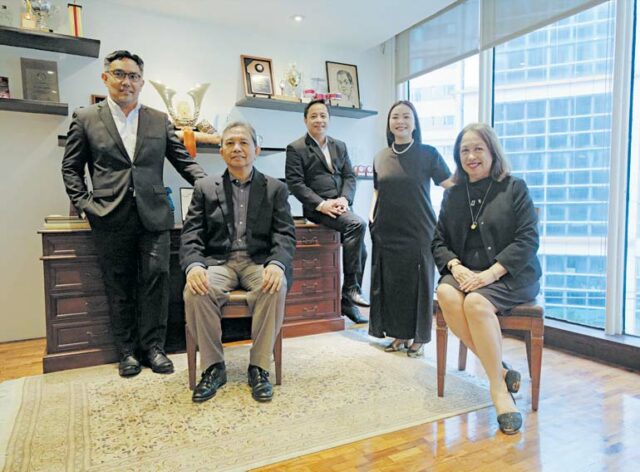
Board of Directors (left to right): Gene A. Gangan, AlexanderM. Genil, Hernan C. Saringan, Regina Zulueta-Perlas, Jeanette B. Zulueta
More than the service or product it provides, the core of a company is its people, embodied in the value they bring to the community and the vision they strive to cultivate. Even as time changes every part of a business, that fundamental core determines a company’s success.
This is the principle that ZMG Ward Howell and the other member companies of the ZMG Group are founded on.
In 1979, Jesus M. Zulueta Jr. established ZMG Ward Howell as a management consulting firm, initially operating as the Philippines practice of the Australian firm WD Scott. The company began working with prominent Philippine institutions, including Central Bank of the Philippines, Philippine National Bank, Land Bank of the Philippines, and the Government Service Insurance System.
At the time, Mr. Zulueta was approached by Citibank New York for guidance on who to lead the bank’s first retail banking branch in the Philippines. As someone who wanted to champion Filipino talent, believing it to be globally competitive, he took up the challenge, and successfully revectored the business to focus on executive search. ZMG Asia was later incorporated, and served as the precursor to what would later become ZMG Ward Howell.
For over 45 years now, ZMG Ward Howell has been continuing the legacy of its founder and showcasing the best of Filipino talent all over the globe. It continues to be a trusted partner of long-standing local and multinational companies in the Philippines, as well as companies in emerging industries in meeting their human capital requirements.
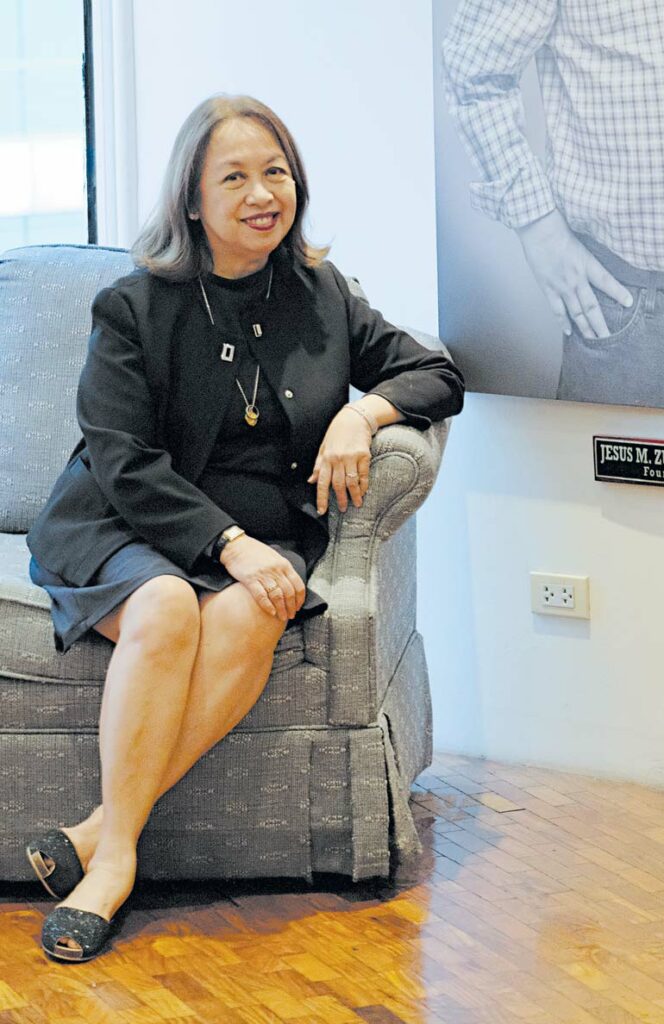
Jeanette B. Zulueta, Chairman and Co-Founder of the ZMG Group
Jeanette B. Zulueta, co-founder and chairman of the ZMG Group, attributes much of the company’s success to this solid foundation: “[Mr. Zulueta] naturally showed everybody his commitment , his way of work and that his intention was unstintingly to elevate the lives of Filipinos and showcase their talents in the workplace. This is the core of our business.”
Future-proofing
What once started as a small company of less than 30 employees, the ZMG Group has now grown to a headcount of 200, with another 1,500 more staff deployed to client sites. The group’s current portfolio spans about 700 clients across the business units, with an average of 1,500 searches closed per year.
One of the companies included in the ZMG Group today is Asia Select, Inc., which delivers executive and contingency search, recruitment process outsourcing, HR consultancy, and learning & development services. Another company, AsiaPeople Search covers mid-level and volume hiring, while Asia PeopleWorks provides outsourced manpower services. Across Southeast Asia, ZMG Ward Howell has a presence in Indonesia and Myanmar. Wynn Ward Howell Myanmar provides learning & development services, while Asia Select Indonesia handles executive and mid-level searches.
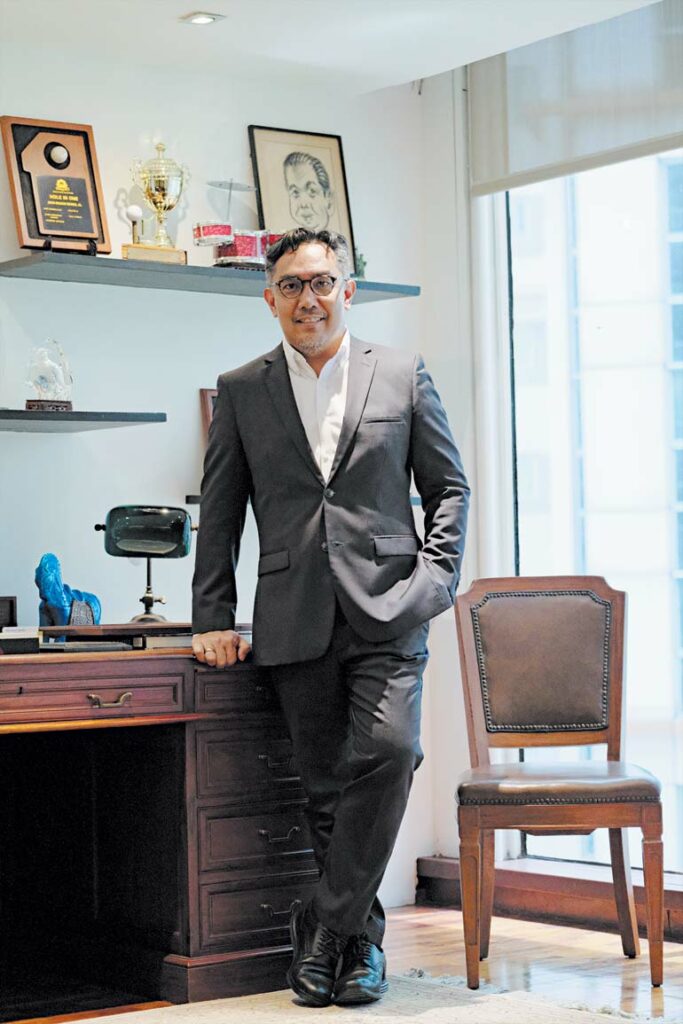
Alexander M. Genil, Vice-Chairman of the ZMG Group
Alexander M. Genil, vice-chairman of the ZMG Group, noted that they have managed to grow a good reputation in the industry both from the strength of the group’s foundational values and from key strategic investments in people and technology.
“We are not very big in terms of traditional marketing investments, but we’re able to grow our business by word of mouth because of the positive experience of our candidates,” he said.
“At the same time, having understood what’s happening in the industries and across businesses, we also invested in people, bringing in added value in terms of new expertise and competencies alongside new technologies.”
One such investment is in its Research and Talent Intelligence (RTI) service that offers innovative research solutions across sectors and geographies. Through a rigorous four-step research process, along with the proprietary techniques to assess the hiring landscape, RTI provides detailed reports on attrition, hiring difficulty, salary analysis, and talent movement, among others—the first of its kind in the Philippine job market.
These insights are designed to support strategic workforce planning and improve recruitment efficiency while allowing companies to proactively adapt to the ever-evolving needs of the market.
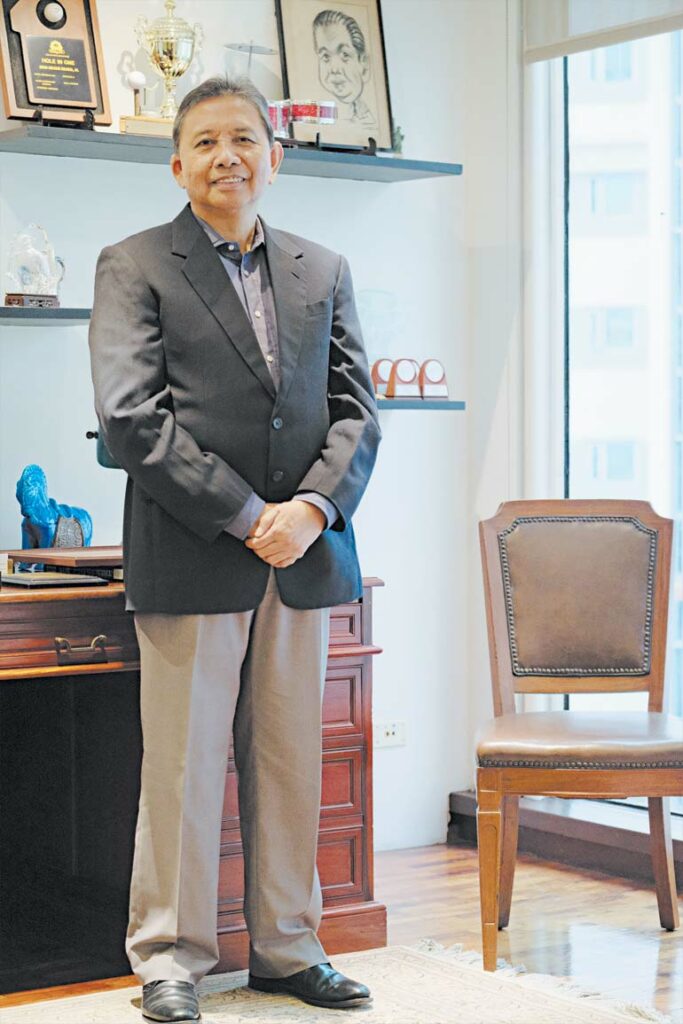
Gene A. Gangan, Executive Director of the ZMG Group, Practice Head for IT
“The market has really shifted a lot since the pandemic. It’s a very dynamic talent market right now where a lot of change happens in a very short amount of time,” Gene Gangan, executive director of the ZMG Ward Howell, and head of its IT practice, said.
“So, you need to be responsive to all of those changes. And we need to constantly be able to advise our clients on what’s happening, be it a shift in the compensation or in the behavior of the talent pool. We should be able to provide that advice to our clients so that they can think about how to better respond to those changes.”
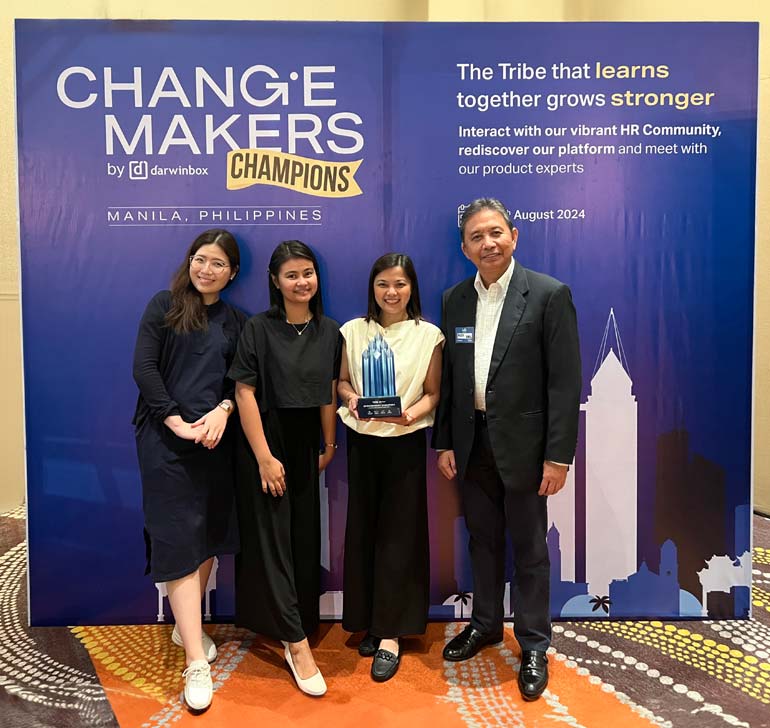
Future-proofing is a crucial aspect of the ZMG Group’s business, and the company has launched similar initiatives across its roster to achieve this. For instance, the Group, launched Vincere (ATS CRM), a recruitment platform which helps the company streamline its recruitment workflow, from job postings to candidate management. They also partnered with Darwinbox, a cloud-based HRIS software solution, to create a more efficient and effective HR management system.
Towards a hundred-year legacy
1 of 2
ZMG Group is given the Engagement Champion award by DarwinBox (August 13, 2024)
Tatak ZMG Group – 2023 Christmas Party at The Fifth Rockwell
Amid the many shifts in the talent market are the increasingly discerning criteria that qualified candidates have when evaluating companies. Mr. Genil noted that today’s candidates value factors beyond just financial compensation, such as company culture, organizational purpose, leadership style, and flexibility, before deciding to join.
Culture, he stressed, is an integral aspect of a successful organization, and more important than the technological investments that the ZMG Group has made throughout its operation is the value it has placed in understanding the ‘human’ element that both its clients and candidates demand.
“We provide that human factor. We can sense what makes a good fit, we can look at talent in the eye and tell which ones are just playing or buttering us up. To be able to tell whether a person is genuine or authentic. That is the value of the recruiter,” Mr. Genil said, adding that this will hold true no matter how sophisticated technology becomes.
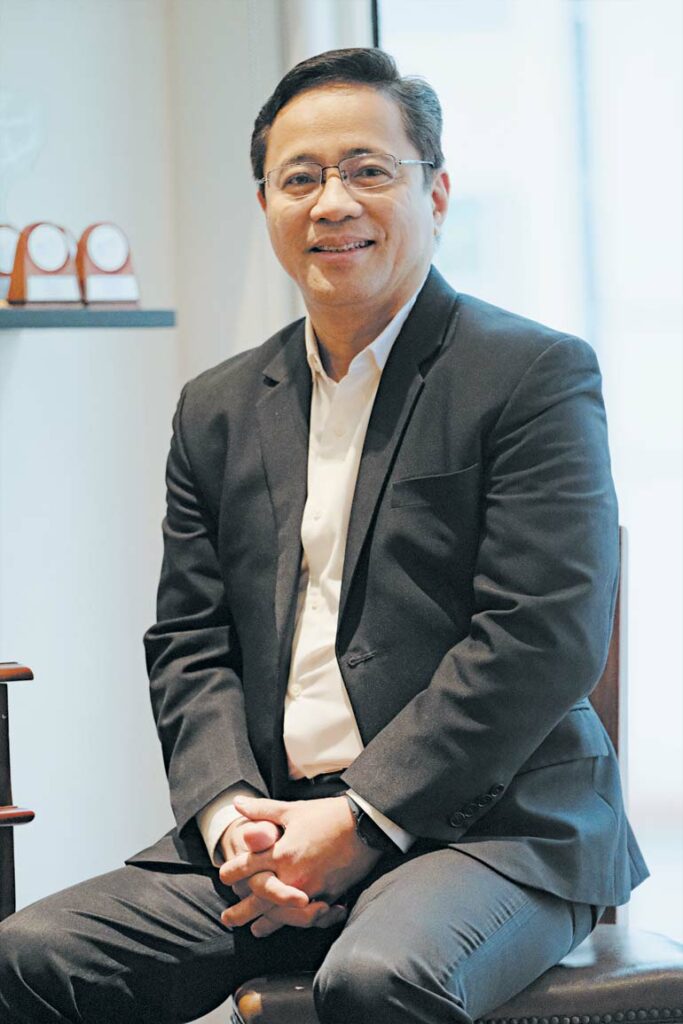
Hernan C. Saringan, President and CEO of Asia PeopleWorks, CFO of the ZMG Group
Conversely, the ZMG Group also understands the expectations that new talents have when searching for a company to work for and leaders to follow. One of the things that Hernan Saringan, CFO of the ZMG Group and president & CEO of Asia PeopleWorks, learned about leading a team is to respect and put more trust in their capabilities to achieve results.
“You give them directions and you ask them what to do. Make their jobs easier if you can. And then just wait for them to get results without directly helping them. That’s how they can respect you and follow you as a leader,” he said. Alongside financial considerations, professional opportunities, fairness in administering feedback, all these factors help in cultivating talent loyalty.
“It’s also about having understanding. Empathy. It’s important that you have the emotional intelligence to pick up the needs of your employees, give them support so that they know you are with them as you collectively reach for a goal.”
Regina Zulueta-Perlas, President and CEO of Asia Select, EVP of the ZMG Group
“You’re trying to have that balance between the needs of the business and your compassion for your people,” Regina Zulueta-Perlas, executive vice-president of the ZMG Group and president & CEO of Asia Select Inc., added.
The vast differences between the distinct generations in the workforce today make this easier said than done, as the needs vary from generation to generation. Younger employees, especially those in their late 20s for instance, have different priorities compared to older generations like their preference for the flexibility of hybrid work set-ups over compensation packages.
Ms. Zulueta-Perlas noted the difficulties that many companies have in managing a multigenerational workforce, saying that different management styles are required for different generations. The culture of an organization, however, always emanates from the top. Harmony and alignment with the leader’s values is crucial for successful adaptation.
1 of 3
Naisa J. Santos, Director and Practice Head for Banking and Financial Services
Cristina C. Vivas, Director and Practice Head for FMCG and Healthcare
Chris Ann Pilapil, Business Unit Head for APW Tech
“One of the requirements for companies today is that understanding of the nuances of all of these different generations and being able to balance all of those preferences,” Mr. Gangan pointed out. “We at the ZMG Group come from different generations as well. So that puts us in a really good position to be able to help our clients fill those requirements that they have in their organizations.”
“One of the biggest factors as to why we have reached this 45th milestone – and why we are going to reach the next 55 years – is because aside from investing in technology, we are investing in the right people,” Ms. Zulueta-Perlas continued.
“The investment we put into the relationships we have with our clients and candidates… that’s really the best way to future-proof our business.”
1 of 3
ZMG Ward Howell Photo – Research, Talent and Intelligence launch at the Manila Polo Club, 2022
ZMG Ward Howell’s 40th Anniversary at The Fifth Rockwell, 2019
ASIA Best Exec Search award from Vincere, The Vinny Awards 2022
ZMG Ward Howell’s brand today reflects the core values championed by Mr. Jesus M. Zulueta Jr. 45 years ago: delivering service excellence, a commitment to continuous learning, and fostering deep, long-lasting relationships with clients and candidates.
Ms. Jeanette B. Zulueta hopes in the next 55 years, the companies under the ZMG Group can strengthen that legacy even further.
“Thanks to the efforts of my colleagues, we have really moved forward. ZMG Ward Howell now rings a stronger bell in the industry; and there’s a picture of our legacy, of harmony, collaboration and the interest to grow even stronger alongside all our clients and candidates.”
Spotlight is BusinessWorld’s sponsored section that allows advertisers to amplify their brand and connect with BusinessWorld’s audience by publishing their stories on the BusinessWorld Web site. For more information, send an email to online@bworldonline.com.
Join us on Viber at https://bit.ly/3hv6bLA to get more updates and subscribe to BusinessWorld’s titles and get exclusive content through www.bworld-x.com.
A bank employee counts US dollar notes in this file photo, May 16, 2016. — REUTERS
By Luisa Maria Jacinta C. Jocson, Reporter
THE PHILIPPINES’ gross international reserves (GIR) rose to a record high at end-September, the Bangko Sentral ng Pilipinas (BSP) said on Monday.
Central bank data showed dollar reserves increased by 3.8% to $112 billion at the end of September from $107.9 billion at the end of August.
“The month-on-month increase in the GIR level reflected mainly the National Government’s (NG) net foreign currency deposits with the BSP, which include proceeds from the NG issuance of Republic of the Philippines global bonds,” the BSP said in a statement.
In August, the NG raised $2.5 billion from its sale of triple-tranche US dollar-denominated global bonds. This was the government’s second global bond offering this year.
Year on year, gross international reserves jumped by 14.2% from $98.1 billion.
BSP data showed the level of dollar reserves was enough to cover about 6.3 times the country’s short-term external debt based on original maturity and 4.4 times based on residual maturity.
It was also equivalent to 8.1 months’ worth of imports of goods and payments of services and primary income.
Ample foreign exchange buffers protect an economy from market volatility and ensure that a country can pay its debts in the event of an economic downturn.
VALUATION OF GOLD RESERVES RISE The central bank also attributed the rise in dollar reserves to “upward valuation adjustments in the BSP’s gold holdings due to the increase in the price of gold in the international market, and net income from the BSP’s investments abroad.”
The central bank’s foreign investments went up by 2.4% to $94.5 billion as of September from $92.3 billion in the previous month. Year on year, foreign investments climbed by 13.9% from $83 billion.
Reserves in the form of gold were valued at $10.9 billion as of end-September, up by 6.9% from $10.2 billion as of end-August. It was also higher by 11.2% from $9.8 billion a year ago.
The BSP earlier defended its sale of gold holdings in the first half, saying that it took advantage of favorable prices as part of its active management strategy.
The sale of gold had “generated additional income without compromising the primary objectives for holding gold, which are insurance and safety,” it added.
Data from the central bank showed foreign currency deposits soared by 157% to $2.03 billion in September from $789.5 million a month earlier. It likewise surged from $834.4 million in the previous year.
Net international reserves increased to $112 billion at end-September from $107.8 billion at end-August, the BSP said.
Net international reserves are the difference between the BSP’s reserve assets or GIR and reserve liabilities, such as short-term foreign debt and credit and loans from the International Monetary Fund (IMF).
The country’s reserve position in the IMF inched up by 0.7% to $731.1 million as of September from $725.9 million in the prior month but declined by 6% from $778.1 million a year ago.
Special drawing rights — the amount the country can tap from the IMF — was unchanged at $3.85 billion for the second straight month.
“It’s very possible the BSP proactively built up its GIR. If not for some healthy FX (foreign exchange) market intervention, the peso would have overshot (strengthened) too quickly,” Bank of the Philippine Islands (BPI) Lead Economist Emilio S. Neri, Jr. said in a Viber message.
Rizal Commercial Banking Corp. Chief Economist Michael L. Ricafort said international reserves increased due to proceeds from the NG’s dollar bond issuance, as well as continued growth in remittances, foreign tourism receipts, and foreign direct investments.
“The country’s strong external position would also support the country’s favorable credit ratings of one to three notches above the minimum investment grade,” he added.
John Paolo R. Rivera, a senior research fellow at the Philippine Institute for Development Studies, likewise said this was mainly due to the surge in remittances.
“It’s that time of the year again when remittances surge as the holiday season enters, the enrollment period comes in. Also, returns and dividends to foreign investments are being collected,” he said via Viber message.
“The sale of gold may have also contributed when the BSP did asset reclassification from gold to US dollars. In short, there have been inflows recently,” he added.
In the January-July period, cash remittances went up by 2.9% year on year to $19.332 billion.
Mr. Neri noted that the start of the US Federal Reserve’seasing cycle also supported the GIR.
“The space to build import cover and debt coverage usually opens up whenever the Federal Reserve pivots to policy easing,” he said.
The US central bank reduced its benchmark policy rate by 50 basis points (bps) to the 4.75%-5% range in September, its first rate cut in four years.
“The import cover is more than double the international standard of 3-4 months that would continue to provide buffer support for the peso exchange rate,” Mr. Ricafort added.
Mr. Neri said the current $112-billion GIR level is just around $20 billion less than the country’s external debt.
Outstanding external debt hit a record $130.182 billion at the end of June, separate data from the BSP showed.
“With more US rate cuts expected, the BSP can accumulate further as long as it doesn’t cut the reverse repurchase rate much more aggressively than the Fed,” Mr. Neri added.
BSP chief Eli M. Remolona, Jr. has said the Monetary Board can possibly deliver 25-bp rate cuts at its remaining two meetings this year on Oct. 16 and Dec. 19.
The BSP expects the country’s GIR to hit $106 billion by end-2024.
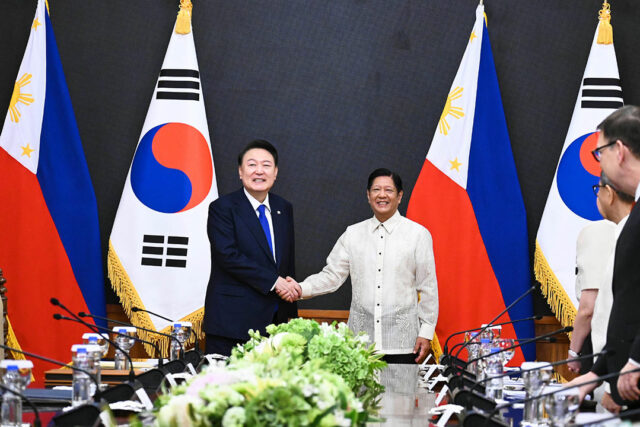
PRESIDENT Ferdinand R. Marcos, Jr. (right)meets Republic of Korea President Yoon Suk Yeol in Malacañang, Oct. 7, 2024. — REVOLI S. CORTEZ/PPA POOL
By Kyle Aristophere T. Atienza, Reporter
THE PHILIPPINES and South Korea on Monday signed six agreements, including one that calls for a feasibility study on the rehabilitation of the mothballed Bataan Nuclear Power Plant (BNPP), as they upgraded bilateral ties to a strategic partnership.
At the center of this development is the effort by the two nations to boost bilateral trade, especially after the Philippine Senate last month ratified the free trade agreement (FTA) with South Korea.
“The time has come for us to elevate the ties between the Philippines and the Republic of Korea to a strategic relationship,” President Ferdinand R. Marcos, Jr. told South Korean President Yoon Suk Yeol during a bilateral meeting at the Presidential Palace in Manila.
“As the geopolitical environment is only becoming more complex, we must work together to achieve prosperity for our peoples and to promote a rules-based order governed by international law,” he said, citing the 1982United Nations Convention on the Law of the Sea (UNCLOS) and the 2016 arbitration ruling that invalidated China’s expansive claims in the South China Sea.
Mr. Yoon arrived on Sunday for a two-day visit to the Philippines, the first leg of his three-nation Southeast Asian trip. He and his wife Kim Keon Hee visited the Korean War Memorial Hall at the Libingan Ng Mga Bayani to pay tribute to Filipino soldiers who died during the 1950-53 Korean War. Around 7,400 Philippine troops were deployed to Korea during the war, 112 of whom were killed.
Mr. Yoon said his visit was an “opportunity to not only further enhance our trade and economic cooperation, but also widen the scope of our partnership to include future-oriented sectors such as security, digital technology, and energy.”
During their meeting, Mr. Marcos and Mr. Yoon signed several memoranda of understanding(MoU), including one for the conduct of a feasibility study of the Bataan Nuclear Power Plant, which was completed in 1985 but was never used due to safety concerns.
The Department of Energy said the two-phase feasibility study that will commence in January is designed to generate critical information to guide the Philippine government’s decision-making process not only on the BNPP but also in “exploring other nuclear technologies and potential alternative sites for nuclear energy development.”
“This study will play a key role in assessing the feasibility, safety, and sustainability of various nuclear energy options, helping the government make well-informed choices that align with the country’s long-term energy goals,” the DoE said in a statement.
All costs associated with the feasibility study will be shouldered by the Korea Hydro & Nuclear Power Co., Ltd. (KHNP) while the Philippine government is “under no legal obligation to proceed with the rehabilitation of the BNPP or to engage KHNP based on the study’s findings,” it added.
“The study is exploratory in nature, and any subsequent actions will be subject to further evaluation and decision by the government,” it said.
The DoE said the first phase of the study will involve an assessment of the BNPP’s condition, while the second phase will involve an evaluation on whether or not the plant can be refurbished using the most optimal model.
SECURITY Following their bilateral meeting, Mr. Yoon said the two nations agreed to “strengthen strategic partnershipon the security front,” with Seoul vowing to take an active part in the third phase of the modernization program for the Armed Forces of the Philippines.
“Also based on the maritime cooperation MoU signed today, our two countries will reinforce maritime security partnership in such areas as tackling transnational crime, information sharing and conducting search and rescue missions,” he added.
Mr. Yoon said he and his Philippine counterpart also agreed to “work together in order to deliver tangible benefits to the citizens of both countries by stepping up economic cooperation.”
Bilateral trade between the two nations hit $17.5 billion in 2022, $12.3 billion of which were exports and $5.2 billion were imports, according to data from South Korea’s foreign ministry.
The Philippine Senate in September ratified the FTA between the Philippines and South Korea. South Korea’s National Assembly has yet to ratify the deal.
Mr. Yoon said he and Mr. Marcos agreed to make sure the FTA enters into force “at the earliest date possible.”
Manila and Seoul also signed MoUs on an economic innovation partnership program, which seeks to advance national, regional, and urban development in the Philippines, and for strategic cooperation on critical raw material supply chains.
They also signed a loan agreement for the Samar Coastal Road II Project, as well as MoUs for the Laguna Lakeshore Road Network Project Phase I (Stage I) and the Panay-Guimaras-Negros Island Bridges Project.
The Philippines and South Korea also signed an MoU to boost maritime cooperation between their coast guards.
The Philippine Coast Guard (PCG) has been at the receiving end of China’s aggression into Manila’s exclusive economic zone in the South China Sea, which Beijing claims almost in its entirety based on a 1940s map that a 2016 arbitration award said had no basis.
Joshua Bernard B. Espeña, vice-president at the Manila-based International Development and Security Cooperation, said helping boost the PCG is strategic for Seoul since it’s known for shipbuilding and as it has a growing concern over China’s aggression at sea.
“The Republic of Korea, like others, realizes that China frames its creeping invasion of the waters as a matter of law enforcement. So, anything that can counter such a feat is needed, like in the case of boosting PCG capabilities, whose principal surface combatants are limited,” he said in a Facebook Messenger chart.
Mr. Espeña said the strategic partnership between the Philippines and South Korea is timely “given how the two states have been diversifying their relations with other regional states.”
The Philippines and South Korea are also US allies which share common concerns over China, “a revisionist power against the rules-based order,” Mr. Espeña said.
Aside from Mr. Yoon’s visit, Seoul had initiated 10 high-level engagements with Manila since 2010, most of which were in 2015, according to its foreign ministry.
“Seoul and Manila are not treaty allies, but since they are co-US allies confronted by a revisionist power, a more flexible yet proactive approach is needed,” Mr. Espeña said, noting that the six deals signed between the countries were largely addressing development issues.
The Philippines under Mr. Marcos has been active in condemning nuclear threats from North Korea, saying in July that its ballistic missile test provoked “tensions” and undermined “economic progress, peace, and stability in the Korean Peninsula and the lndo-Pacific region.”
“South Korea is becoming a more strategic economic and security partner given the geopolitical issues in the South China Sea and also in East Asia,” said Philip Arnold P. Tuaño, dean of the Ateneo School of Government.
Mr. Tuaño said via Messenger chat that it is important for the Philippines to strengthen its alliance with partners to ensure security issues are adddressed.
“South Korea has been seen to be an important supplier of maritime and aeronautical defensive capabilities and an important technological partner to strengthen our manufacturing capacities,” he said.
Mr. Marcos, speaking at a business forum organized by the Philippine Chamber of Commerce and Industry and the Federation of Korean Industries, touted that the Philippine Congress was already at the last stages of the legislative process to enact a bill that seeks to further lower corporate income tax.
“Anchored on the Corporate Recovery and Tax Incentives for Enterprises (CREATE) Act of 2021, it will further strengthen our fiscal and non-fiscal incentives in strategic industries,” he said in a speech.
The bill seeks to simplify the approval process for tax deductions, streamline the value-added tax refund system, and align tax incentives with global standards.
“We aim to make the Philippines a top destination for sustainability, and to be sustainable in our strategic investments,” he said.







 To her, attention to detail is important in telling her story. “I tell my story through the details I put in. May it be from the pattern of the beads, or the design of the fabric.” This self-expression shown through her art form is clear. Each and every creation that Sofia has brought to life is abundant with stories — both big and small.
 New trends on bridal gowns and reconciling them with traditional designs has always been Sofia’s strong suit. But ultimately, Sofia highlights, her designs are for the unconventional bride. “It is so enjoyable to be able to witness this new trend in the industry as brides become more accepting of their sense of style without any hesitation.”
 The design process, to Sofia, is storytelling. Like a fairytale author, Sofia brings to life fantastical sights that always start with an exposition. “The first step in Sofia Carmela Atelier is always connecting with the client and knowing her story. For me, this is all about HER day and I am her fairy godmother to make her wishes for her dress come to life!” And like any princess, brides-to-be are in good hands as they make their way to their happily ever after.

 In addition, the retailer donated new laptops to the school’s teachers, addressing the growing need for technological tools in education. Both students and teachers also received grocery packs for their families.
 As part of its long-term vision, Puregold pledges to extend its support to 30 schools in remote areas by 2028. Puregold plans to help four more schools in 2024. To pay it forward, Laiban Elementary School has nominated another school in Tanay to get additional solar panels, a new learning center, and improved comfort rooms.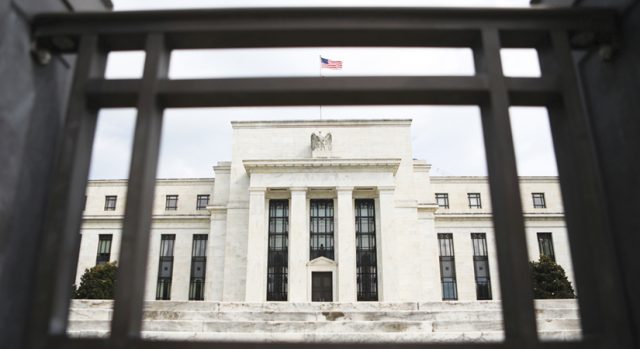


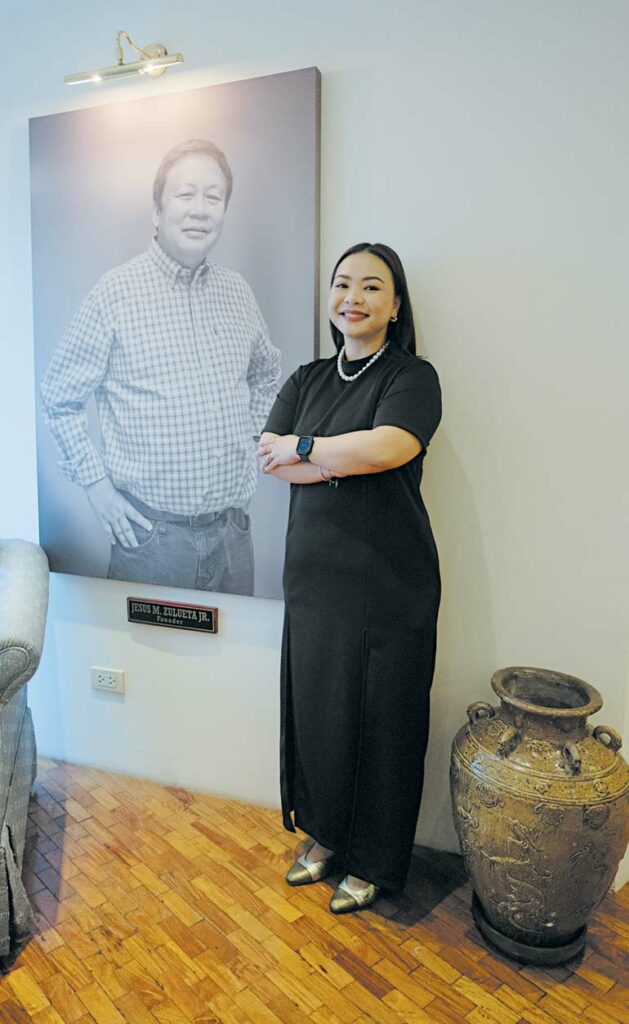






 “Thanks to the efforts of my colleagues, we have really moved forward. ZMG Ward Howell now rings a stronger bell in the industry; and there’s a picture of our legacy, of harmony, collaboration and the interest to grow even stronger alongside all our clients and candidates.”