Home Blog Page 2499

Washington Post reports Elon Musk briefly worked illegally in US in 1990s

ELON MUSK — REUTERS

WASHINGTON — The Washington Post reported on Saturday that South African-born billionaire businessman Elon Musk worked illegally in the United States during a brief period in the 1990s while building a startup company.

The news outlet reported that Mr. Musk arrived in Palo Alto, California, in 1995 to attend Stanford University but never enrolled in his graduate studies program there. Instead, he developed software company Zip2, which sold in 1999 for around $300 million, according to the outlet.

Two immigration law experts quoted by the Post said Mr. Musk would have needed to be enrolled in a full course of study in order to maintain a valid work authorization as a student.

Mr. Musk did not respond to requests for comment sent to four of his companies — SpaceX, Tesla, the social media company X and The Boring Company — nor did Mr. Musk’s lawyer Alex Spiro.

Mr. Musk in a 2020 podcast cited by the Post said: “I was legally there, but I was meant to be doing student work. I was allowed to do work sort of supporting whatever.”

The Washington Post cited two former Musk colleagues who recalled Mr. Musk receiving his US work authorization in or around 1997.

Mr. Musk has endorsed Republican presidential candidate Donald Trump in the Nov. 5 US election.

Mr. Trump has for years portrayed migrants as invaders and criminals, and during his 2017-2021 presidency took stringent steps to curb legal and illegal migration. He is promising the biggest deportation effort in US history if he is reelected. — Reuters

Prince William says visit with Diana to homeless shelter was eye-opener

Britain's Prince William attends a groundbreaking ceremony at The Royal Marsden in Surrey, Britain October 21, 2020. — JACK HILL/POOL VIA REUTERS-RC22NJ9X72BN/FILE PHOTO

LONDON — Prince William has recalled how his late mother Princess Diana took him to a shelter for homeless people when he was just 11 years old, saying how the visit opened his eyes to how others lived a different life to him.

In an extract from a documentary about his efforts to end homelessness to be broadcast this week, the heir to the British throne said how Diana how introduced him and his younger brother Prince Harry to the cause as part of her determination to raise wider awareness of social issues from AIDS to mental health.

“I’d never been to anything like that before, and I was a bit anxious as to what to expect. My mother went about her usual part of making everyone feel relaxed and having a laugh and joking with everyone,” William said of the 1993 visit to The Passage charity in London.

Last June, the elder son of King Charles launched a five-year project “Homewards” which he said was inspired by Diana.

Homeless charities say it is hard to know exactly how many people are living on the streets but statistics released this month said 178,560 households were assessed as homeless in England in 2023-24, up 12.3% on the year before.

In focusing on homelessness, William said he was “desperately trying to help people who are in need, and I see that as part of my role.”

He recalled during his visit to The Passage playing chess and chatting with those there.

“That’s when it informed me that there are other people out there who don’t have the same life as you do,” he says in the documentary. “When you’re quite small… you just think life is what you see in front of you. You don’t really have concept to look elsewhere.

“And it’s when you meet people that I did then who put a different perspective in your head and say… I was living on the street last night.”

The full ITV documentary, “Prince William: We Can End Homelessness,” will be shown on Oct. 30 and 31. — Reuters

Fuji-Haya, LS Electric power up at 49th IIEE Annual National Convention

On its 45th year, Fuji-Haya Electric Corp., the Philippines’ longest pioneering manufacturer of power distribution equipment, with its strategic partner, LS Electric of Korea, is set to join the 49th IIEE Annual National Convention hosted by the Institute of Integrated Electrical Engineers of the Philippines from Nov. 27 to Dec. 1 at the SMX Convention Center, Pasay City. This convention is the biggest, most awaited gathering of power equipment manufacturers and design consultants in the electrical engineering field, showcasing the latest advancements not only in the power industry but in sustainable and renewable energy solutions as well.

Banking on both Japanese & Korean technologies, Fuji-Haya Electric has been serving the country’s power protection needs since 1979, catering to mixed use, commercial and residential developments, mining, and utility companies, ensuring safe and continuous supply of electricity from utility companies.

Fuji Haya Electric boasts of the only Type Tested Medium & Low Voltage Switchgear designs in the country. These locally designed switchgear were fully type tested abroad in internationally recognized third party laboratories, successfully hurdling the harshest conditions demanded by various IEC standards and in strict compliance with the Philippine Electrical Code.

This year, their exhibit will feature their type tested switchgear fitted with their patented arc relief device together with other superior products such as super capacitors with self-healing (SH) metalized electrodes that enable spontaneous internal isolation of faulty segments, making them safe, highly reliable and longer lasting.

To see more of Fuji-Haya’s industry innovations, visit Booths 71-76 at the 49th IIEE Annual National Convention.

To explore Fuji-Haya’s products and facilities, please visit their website or their Facebook page.


Spotlight is BusinessWorld’s sponsored section that allows advertisers to amplify their brand and connect with BusinessWorld’s audience by publishing their stories on the BusinessWorld Web site. For more information, send an email to online@bworldonline.com.

Join us on Viber at https://bit.ly/3hv6bLA to get more updates and subscribe to BusinessWorld’s titles and get exclusive content through www.bworld-x.com.

Rediscover the charm of the Philippines: Plantation Bay Resort and Spa’s vibrant cultural tour in Japan

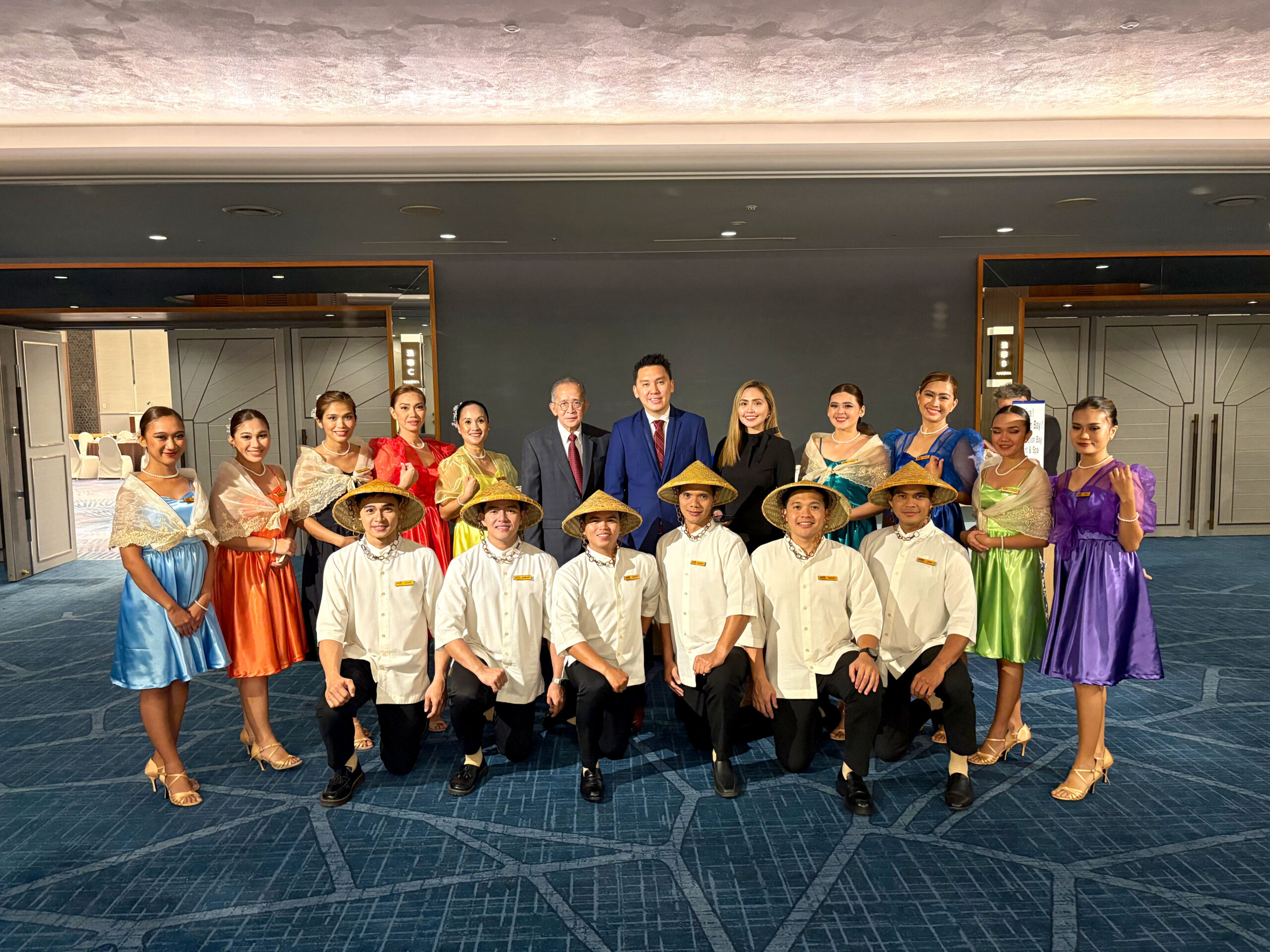
From L-R: Plantation Bay Resort and Spa's Former General Manager Efren Belarmino, Department of Tourism's Assistant Director of Travel Trade Yasuhiko Yokoyama, Plantation Bay Resort and Spa's Sales Manager Kim Villacampa, Philippine Airlines Country Manager Tomoyuki Nagao, and Plantation Bay Resort and Spa's General Manager Brian Noel

This October, Plantation Bay Resort and Spa made an exciting return to Japan, inviting guests to rediscover the beauty and charm of the Philippines. From Oct. 1 to 13, the Plantation Bay Sales Team visited four major cities—Tokyo, Osaka, Nagoya, and Fukuoka—on a mission to encourage Japanese travelers to experience the wonders of the Philippines, particularly the renowned Plantation Bay Resort and Spa in Cebu.

Leading the tour were key members of the resort’s Sales Team, including General Manager Brian Noel, Sales Manager Kim Villacampa, Events Manager Paige Ginete, Former General Manager Efren Belarmino, and Public Relations Officer Charie Borres. They were accompanied by a talented group of Plantation Bay’s performing staff who showcased the resort’s unique ability to blend relaxation with vibrant cultural experiences.

At each stop, attendees were treated to a spectacular themed dinner show designed to give a taste of different tropical celebrations. The “Brazilian Fever” performance set the stage with high-energy dances and vibrant costumes that transported the audience to the colorful streets of Rio. The “Hawaiian Luau” brought the calm, island vibes of the Pacific with hula-inspired performances. But the highlight for many was the “Filipino Fiesta”—a lively celebration of Filipino traditions, music, and dance, designed to immerse Japanese guests in the warmth and festivity of the Philippines.

These performances offered more than entertainment; they gave guests a glimpse into the cultural richness and hospitality that Plantation Bay prides itself on. Each show was a reminder of the experiences that await travelers at the resort—from themed events to luxurious amenities, and of course, the unmistakable warmth of Filipino hospitality.

Plantation Bay’s return to Japan was not only a cultural spectacle but also an exciting opportunity for potential travelers. Philippine Airlines, in collaboration with the resort, sponsored a major prize—a roundtrip ticket from Japan to the Philippines—sparking even more enthusiasm among attendees in the four cities. This partnership further emphasized the resort’s commitment to making the Philippines a dream destination for Japanese travelers.

Plantation Bay Resort and Spa’s Sales Team (standing in the middle, from left to right): Former General Manager Efren Belarmino, General Manager Brian Noel, and Sales Manager Kim Villacampa, together with the dancing staff

This initiative, which began in 2012, paused during the pandemic but has now returned to the delight of Japanese audiences. As it resumes, Plantation Bay invites everyone to take part in this cultural journey and discover why it remains one of the Philippines’ most beloved resort destinations.

Located in Cebu, Plantation Bay Resort and Spa is one of the Philippines’ premier luxury resorts, known for its vast saltwater lagoons, world-class spa treatments, and a wide range of activities that cater to guests of all ages. With its serene surroundings and outstanding service, the resort is a perfect destination for those seeking a peaceful retreat or a fun-filled family vacation.

Makiko Komatsuzaki of HIS, who won a two-night stay in a lagoon view room with buffet breakfast for two, awarded by Plantation Bay Resort and Spa’s General Manager Brian Noel and Sales Manager Kim Villacampa.

Whether you’re lounging in a private villa, exploring the resort’s vast lagoons, or indulging in a traditional Filipino massage, every moment at Plantation Bay is crafted to offer a unique and unforgettable experience.

Plantation Bay invites you to discover what makes it one of the most celebrated resorts in the Philippines. Visit www.plantationbay.com to learn more about our offerings and start planning your dream vacation today.


Spotlight is BusinessWorld’s sponsored section that allows advertisers to amplify their brand and connect with BusinessWorld’s audience by publishing their stories on the BusinessWorld Web site. For more information, send an email to online@bworldonline.com.

Join us on Viber at https://bit.ly/3hv6bLA to get more updates and subscribe to BusinessWorld’s titles and get exclusive content through www.bworld-x.com.

Sam Shoaf returns with a new single that’s sure to get you in your feelings

Sam Shoaf

From TV screens to the airwaves, Sam Shoaf is making his presence felt once again, and he’s got something special for your playlist. After charming the nation as a standout contestant on The Voice Kids Philippines back in 2013, and dazzling audiences on Your Face Sounds Familiar Kids and The Kids Choice, Mr. Shoaf is back and ready to make waves with his latest single, “Di Ka Na Maalis”, released under Viva Records.

This time around, Mr. Shoaf teams up with Kyle “Paraluman” Raphael, crafting a track that’ll have you humming its irresistible chorus on repeat. “Di Ka Na Maalis” is a fresh take on modern alt-pop, with melodies that stick like glue and lyrics that will make anyone with a pulse swoon. The song’s got all the pakilig lines and vibes you’d expect from someone who’s grown up under the spotlight, yet it’s clear Sam Shoaf has matured into an artist with something new to say.

Infatuation never sounded this good! If you’re ready for a feel-good anthem that’s equal parts catchy and heartfelt, Sam Shoaf’s “Di Ka Na Maalis” is the perfect addition to your playlist. After all, who can resist a track that tugs at your heartstrings and makes your head bop at the same time?

Sam Shoaf may have started young, but with this new release, it’s clear he’s in it for the long haul.


Spotlight is BusinessWorld’s sponsored section that allows advertisers to amplify their brand and connect with BusinessWorld’s audience by publishing their stories on the BusinessWorld Web site. For more information, send an email to online@bworldonline.com.

Join us on Viber at https://bit.ly/3hv6bLA to get more updates and subscribe to BusinessWorld’s titles and get exclusive content through www.bworld-x.com.

No ‘external force’ can change our future, Taiwan president says on frontline islands

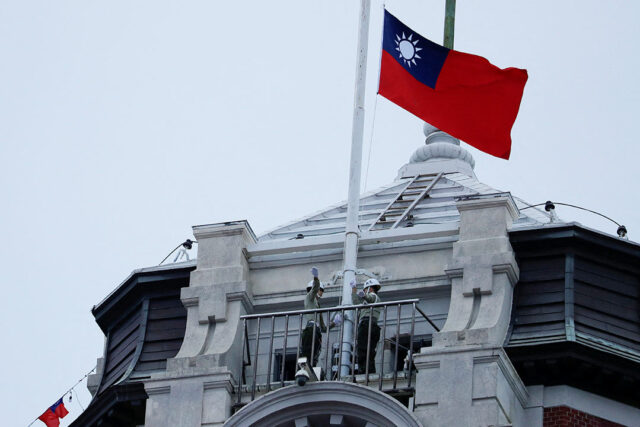
Honor guards raise a Taiwanese flag at the Presidential Palace in Taipei, Taiwan Oct. 10, 2023. — REUTERS

 – Taiwan cherishes its freedom and democracy and no “external force” can change its future, Taiwan President Lai Ching-te said on Friday, visiting sensitive frontline islands next to China for the 75th anniversary of a key victory over communist forces.

Taiwan has controlled Kinmen, and the Matsu islands to the north, since the defeated Republic of China government fled to Taipei in 1949 after losing a civil war with Mao Zedong’s communists.

Lai told veterans and family members that the October 1949 Battle of Guningtou, when republican forces beat off an invasion attempt of Kinmen by the People’s Liberation Army “represents our determination to protect our country”.

“The Battle of Guningtou makes us realize that democracy and freedom are not something to be taken for granted,” Lai said.

“We treasure a democratic and free way of life, and we cannot, and will not, allow any external force to change the future of Taiwan, Penghu, Kinmen and Matsu, right?” Lai added, referring to all the island groups the government controls, though without directly mentioning China.

Beijing detests Lai as a “separatist” and views democratically governed Taiwan as its own territory, a claim he rejects, saying only Taiwan’s people can decide their future.

China staged a day of war games around Taiwan earlier this month it said were a warning to “separatist acts”.

Lai reiterated his determination to maintain peace and stability and defend Taiwan’s sovereignty, as well as his willingness to talk to Beijing.

“Our insistence on safeguarding a democratic and free lifestyle for generations to come has not changed and will remain unchanged,” he added.

The Kinmen battle was a rare victory for Chiang Kai-shek’s forces in the final days of China’s civil war.

In December of that year, the republican government fled to Taiwan and in the following years and months would lose a string of other islands and islets to communist forces. The Republic of China remains Taiwan’s formal name.

Late Thursday, Taiwan’s military staged nighttime live fire drills on the Penghu islands, home to a major air force and navy base and which sit in the Taiwan Strait though are closer to Taiwan than China, practicing repelling an assault from the sea.

It was Lai’s second trip to Kinmen since he took office in May.

Kinmen is today a popular tourist destination due in part to its Cold War history.

Taiwan retains a sizeable military presence.

No peace treaty or armistice has ever been signed between Taiwan and China and neither government officially recognizes the other. – Reuters

World Bank rolls out new strategy to boost economic opportunities for women

REUTERS

 – The World Bank announced on Thursday a new gender strategy aimed at boosting economic opportunities for women and enabling their participation in the global economy through social protection and access to broadband and capital.

The Gender Strategy 2024-2030, unveiled during the International Monetary Fund and World Bank annual meetings in Washington, has set goals by 2030 that aim to enable 300 million more women to use broadband internet, unlocking essential services, financial services, education and job opportunities.

It also aims to support 250 million women with social protection programs focusing on the poorest and most vulnerable, and to provide 80 million more women and women-led businesses with capital, addressing constraints to entrepreneurship growth.

“When we increase women’s economic participation, it not only boosts the global economy, but also strengthens families and communities,” World Bank President Ajay Banga said in a statement. “Through economic empowerment we are building a ladder out of poverty and extending hope and dignity as far as possible.” – Reuters

Apple’s Q3 China smartphone sales slip, Huawei’s soar

STOCK PHOTO | Image by matcuz from Pixabay

 – Apple’s iPhone sales in China slipped 0.3% while rival Huawei posted a 42% surge in the third quarter of 2024, as competition intensifies in the world’s largest smartphone market.

Apple reached second place with a 15.6% market share, though down 0.5 percentage points year-on-year, while Huawei claimed third place with 15.3%, gaining 4.2 percentage points, showed data from researcher IDC on Friday.

Vivo, which primarily sells budget phones, was the top vendor with a market share of 18.6%.

The contrasting performances follow Huawei’s comeback last year in the premium segment with its Mate 60 series, featuring what analysts said is a domestically produced chip.

The Chinese tech giant further challenged Apple’s position with its latest Pura 70 model released earlier this year.

Apple has faced additional headwind in China, including restrictions on iPhone use by some government agencies.

The U.S. tech giant has since responded with multiple discount campaigns to boost sales.

The third-quarter performance was partly helped by the new iPhone 16, which went on sale on Sept. 20. On the same day, Huawei launched a competing product– a tri-foldable phone.

The new iPhones got off to a strong start in China, with sales 20% higher in the first three weeks since launch compared with the 2023 models, showed separate data from researcher Counterpoint.

“With its annual new product launch, Apple returned to China’s top five market rankings with a 15.6% market share,” IDC said.

“With subsequent increases in market promotions and the launch of Apple Vision Pro, the market demand for the iPhone 16 series is expected to gradually materialize in the future.”

Overall, China smartphone sales for the third quarter rose 3.2% to 68.78 million units. – Reuters

Indonesia wants to join BRICS, ministry says

REUTERS

 – Indonesia has expressed its desire to join the BRICS group of major emerging economies, which accounts for 35% of global economic output, as a means to strengthen emerging countries, its foreign ministry said in a statement.

As BRICS world leaders convened in Kazan for a summit this week, Indonesia’s foreign ministry said late on Thursday that the process of joining the group has begun.

“Indonesia joining BRICS is a manifestation of its independent-active foreign policy,” said Sugiono, the newly appointed foreign minister, who like many Indonesians goes by one name. “That does not mean we join a certain bloc, but we actively participate in every forum.”

Indonesia, the world’s fourth most populous nation, holds a non-aligned foreign policy.

President Prabowo Subianto, who took office on Sunday, has stressed repeatedly that he will befriend all countries, be they China or the United States, and that Indonesia will not be joining any military bloc.

Sugiono added BRICS suits Prabowo’s main government programs “especially with regards to food and energy security, poverty eradication, and the advancement of human resources,” adding that Indonesia sees the group as a “vehicle” to further the interests of the global south.

Russian President Vladimir Putin said more than 30 countries had expressed a desire to join the BRICS, though there was little immediate clarity on how the expansion would work.

Current members include Brazil, China, Egypt, Ethiopia, India, Iran, Russia, South Africa and the United Arab Emirates.

Yohanes Sulaiman, an international relations professor at Jenderal Achmad Yani University, questioned the benefits of Indonesia joining BRICS as they can be gleaned from bilateral relations, but it shows Indonesia does not want to miss out.

“It’s better to follow than to be left behind,” he said, adding it does not necessarily mean Prabowo’s foreign policy adheres more to the east than to the west.

In a bid to attract more investment and trade deals from its members, Indonesia said earlier this year before Prabowo took office that it aims to complete the accession to become the member of Paris-based Organization for Economic Co-operation and Development (OECD) within two to three years.

The BRICS summit in Kazan touched on the war in the Middle East and Ukraine, though there were no signs that anything specific would be done to end either conflict. – Reuters

How an anxious China is backing Myanmar’s faltering junta in civil war

REUTERS

 – When an alliance led by three rebel armies seized swathes of territory near Myanmar’s border with China from the military junta last October, Beijing looked the other way.

A year on, rebel forces have ground down the junta, pushing the military out of vital borderlands and making inroads into the contested heart of Myanmar.

In response, China has sealed the border and shut off key imports to territory under rebel control, said a rebel leader and five border-area residents, a move analysts say aims to dissuade the alliance from further advances, including attacking the cultural capital of Mandalay.

After initially backing the Three Brotherhood Alliance to crack down on rampant border crime going unchecked by the junta, Beijing is increasingly alarmed at the rapid degeneration of the military, which it still sees as a guarantor of stability in its neighbor, said two analysts who track Myanmar-China relations. China is also anxious about the ascendancy of rebel groups that have been helping the alliance and are also tied to the U.S.-backed parallel National Unity Government, one of them said.

The previously unreported details of how Beijing is pressuring rebel forces, including by blocking imports – leading at least one group to withdraw from the fight – were described to Reuters by nine people with knowledge of the conflict.

One inflection point came in August, when the alliance took the northeastern town of Lashio, marking the first seizure of a regional military command in Myanmar’s history.

The town of about 130,000 fell to the rebels twice as quickly as they had expected, said Ni Ni Kyaw, secretary of a communist resistance group fighting in support of Operation 1027, as the alliance-led offensive is known.

Myanmar’s junta said in a statement responding to Reuters’ questions that it cooperates with Beijing to ensure stability and rule of law along the frontier, and will not accept the demands of “armed terrorists,” as it calls the rebels.

“We will continue to solve the situation using political methods,” it said.

China’s foreign ministry told Reuters it “resolutely opposes the emergence of chaos and war in Myanmar” and urges involved parties to “jointly push for a soft landing of the situation” near the border. The Chinese consulate in Mandalay was partially damaged by a blast last week, though there were no casualties.

Some rebel groups hope to build on the recent momentum and chart a course south to Mandalay, two rebel leaders and analysts said. From there, the capital of Naypyidaw is a mere 300km (190 miles) away.

Beijing would likely oppose such a move, said international security expert Zhu Jiangming, who has written about the border situation for Chinese state media.

“Mandalay is the second largest city in Myanmar, equivalent to Shanghai,” he said, adding that the fall of Mandalay would be a turning point in the conflict that Beijing would try to prevent.


‘DIFFICULT SITUATION’

Operation 1027, named after the date when fighting commenced last year, started at a time when crime ensnarling Chinese victims was taking place near the border. That prompted Beijing not to object when the Three Brotherhood Alliance started routing the junta.

The alliance is composed of three groups – including the ethnic Chinese Myanmar National Democratic Alliance Army (MNDAA) – over which Beijing has influence but not direct control.

But China opposes the collapse of the junta, which ousted Aung San Suu Kyi’s civilian government in a 2021 coup. It fears perpetual turmoil along its 1,250-mile border with Myanmar would jeopardize investments and trade, analysts say.

Cracking down on crime should not eclipse the bigger picture, Zheng Gang of CITIC Reform and Development Research Foundation, a division of a Chinese state-owned enterprise developing a port in Myanmar, wrote in a March analysis.

He said greater unrest in Myanmar could benefit China’s rivals, including the U.S. and Japan, whom he said were viewed favorably by influential groups like the NUG.

Beijing previously flexed its muscles when it negotiated a ceasefire between some ethnic militias and the junta in January. But fighting later continued and by mid August, Lashio had fallen.

Shortly after Lashio’s collapse, Chinese foreign minister Wang Yi met junta leader Min Aung Hlaing in Myanmar. Wang told him Beijing “opposes chaos and conflicts” and urged him to “safeguard Chinese personnel and projects,” according to a Chinese government readout. China’s military held joint-fire exercises on the border later that month.

Pressure on the Three Brotherhood Alliance followed. China closed border gates, cutting off supplies to territory newly under MNDAA control, according to Maung Saungkha, leader of another army which supported the alliance in the fighting, as well as five residents.

Even medical supplies like children’s vaccines have not been getting through, leaving the rebels running a public health system amid conflict “in a very difficult situation”, said Maung Saungkha.

The tightened border controls have slowed the flow of arms and ammunition to resistance groups, he said, adding that his forces would try to seize more ammunition from defeated junta troops.

In September, the MNDAA, which has longstanding ties with China, declared it would not work with allies to expand territory, nor engage with or cooperate with “foreign nations” that opposed China or Myanmar. It also announced it was ready for a ceasefire under China’s guidance, though it remains part of the alliance.

Late that month, the junta invited rebel forces to peace talks. The proposal was swiftly rejected by rebel leaders like Maung Saungkha, who said China’s role in backing such negotiations could pave the way for a sham election.

A senior National Unity Government official, who spoke on condition of anonymity because they were not authorized to discuss relations with Beijing, said China was trying to create divisions among anti-junta forces. Beijing has urged some groups to stop fighting the military and cease cooperating with the NUG, said the official, without providing evidence.

The NUG has a loose alliance with some rebel groups, while others sit within its chain of command.

An assault on Mandalay would be difficult for the Three Brotherhood Alliance to engage in while maintaining ties with China, said Jason Tower, an analyst with the Washington-based U.S. Institute of Peace. He added that it would be risky for the rebels to try and take Mandalay without alliance backing.

Soe Thuya Zaw, a commander of the Mandalay People’s Defense Forces, which reports to the NUG, said China’s influence was a “reality,” but that groups like his farther from the border could lead in the fight for Mandalay.

“We must unite, we must prepare, and we must do our training to overcome the pressure from China,” he said.


INSTABILITY AT THE TOP

Beijing’s latest intervention came after seeing how quickly junta forces disintegrated in Lashio.

“China has now become even more proactive and shifted its posture quite remarkably,” said Tower.

Rebels believed the junta would use the temporary halt in combat forced by China to prepare a strong defense there, said Soe Thuya Zaw. Instead, the military struggled to put up a fight when conflict resumed, with its high command losing communication with senior officers at regional headquarters.

There has also been instability at the top.

Since the 2021 coup, Min Aung Hlaing has rotated his regional military commanders at a much faster rate. Between June 2017 and the Feb. 2021 coup, the 14 regional military commands that form the bedrock of the general’s hold over Myanmar saw 36 people serve as commanders, according to Security Force Monitor, a research group at Columbia University.

In the same 44-month period after the coup, there were 49 commanders, an increase of 36%.

Many of the rotations – the details of which have not been previously reported – occurred in the area abutting China where the military has lost significant ground.

“According to the latest data available, the majority of currently serving regional military commanders have never commanded a regional military command before,” said Tony Wilson, the research group’s director.

The quick-fire rotation of commanders reflected a bid by Min Aung Hlaing to assert greater control over the military and forestall dissent, said analyst Ye Myo Hein. The general has come under unprecedented pressure and criticism – even from loyalists – for the defeats over the past year.

During the rebel offensive, Min Aung Hlaing sacked Lashio’s regional commander for insubordination after an argument, according to analyst Min Zaw Oo, who has interacted with junta officials, and Ye Myo Hein.

The replacement was not able to enter Lashio during the fighting, they said, nor were reinforcements from other areas.

“You don’t change a commander in a crisis just for insubordination,” Min Zaw Oo said. – Reuters

Operational power plant by 2032 unlikely without BNPP revival – lawmaker

BW FILE PHOTO

By Almira Louise S. Martinez, Reporter

A commercially operational power plant by 2032 can be achieved through the Bataan Nuclear Power Plant (BNPP) revival, a congressman said on Monday. 

As mentioned in the Philippine Nuclear Energy Roadmap, the country aims to include nuclear power plants in the power mix by introducing at least 1,200 megawatts and gradually increasing to 4,800 megawatts by 2050. 

Chairman of the House Committee on Nuclear Energy and Pangasinan 2nd District Rep. Marcos Juan Bruno O. Cojuangco said this goal is unattainable unless the government strives to operationalize the BNPP. 

“They have not even identified the kind of nuclear plant they want to buy,” he told BusinessWorld. “If they were to tell me that they will run the Bataan Nuclear Plant by 2032, I would believe them because it is 100% complete,” he added. 

Re-opening the 1986 mothballed power plant would take four to five years to commission, according to Mr. Cojuangco. “Bataan can supply 620 megawatts, and you can build the three AP-1000 there, which can supply 1100 megawatts each for a total capacity of 3920.” 

Since the BNPP closure, the government has tried different energy sources, such as wind, solar, and geothermal. The committee head pointed out that these technologies have failed to supply adequate power for the country over the past 38 years. 

“They need to increase their ambition for nuclear power, which is a clean yet reliable source that’s cheap,” he said. 

Mr. Cojuangco pointed out that the AP-1000 of Westinghouse Electric Company, APR-1000 of Korea Hydro and Nuclear Power Co., Ltd. (KHNP), and the CANDU 6 of Canada are the three readily deliverable nuclear plants fit for the country. 

 “If there will be a constraint in developing nuclear in the Philippines, it will be our financial capability to finance.” 

The Philippines and South Korea inked a memorandum of understanding (MOU) on October 7 to commence the feasibility study of the BNPP by January 2025. 

The study will be divided into two phases – an assessment of the plant’s current condition and an evaluation of its viability to operate. 

“KHNP may recommend alternative options, including the construction of a conventional plant or the development of a small modular reactor,” the Department of Energy (DOE) said.

Related story:

The Promise of Power: The Bataan Nuclear Power plant

Budget gap widens in September

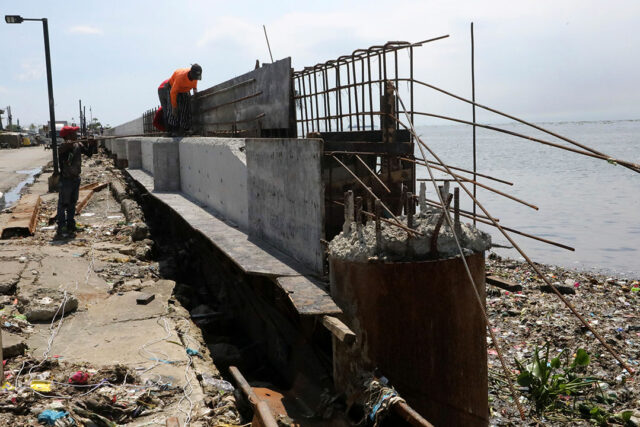
A flood wall is being built in Manila. Government spending jumped by 13.15% to P572.9 billion in September. — PHILIPPINE STAR/EDD GUMBAN

THE NATIONAL Government’s (NG) budget deficit widened to P273.3 billion in September, as revenues and expenditures posted double-digit growth, the Bureau of the Treasury (BTr) said on Thursday.

Latest data from the Treasury showed the fiscal gap rose by 8.9% in September from P250.9-billion deficit in the same month a year ago, “as the increase of nominal value of expenditures outpaced the increase in revenues.”

Month on month, the budget gap ballooned by 404% from the P54.21-billion deficit in August.

National Government fiscal performanceRevenue collections jumped by 17.32% to P299.7 billion in September from P255.4 billion last year.

Tax revenues rose by 8.53% to P253.5 billion in September, driven by the Bureau of Internal Revenue (BIR) collection which climbed by 14.79% to P174.7 billion.

The Treasury attributed the rise in BIR collection to “higher personal income tax particularly on withholding on wages due to the release of salary differentials of civilian government personnel,” and increased documentary stamp tax collection.

However, revenues from the Bureau of Customs (BoC) fell by an annual 3.31% to P76.3 billion in September amid a double-digit decline in import duties. An executive order reducing import tariffs on rice and other commodities took effect on July 5.

“Also, the decline (in BoC collection) is due to an alarming increase in smuggling activities within the year, as the current amount of the BoC’s seized goods has already surpassed their total haul in 2023,” the Treasury said.

On the other hand, nontax revenues surged by 111.16% to P46.2 billion in September from P21.9 billion a year ago “primarily due to the one-off windfall from the Public-Private Partnership (PPP) concession agreement.”

Treasury income jumped by 24.86% year on year to P9.9 billion in September “driven by higher NG share from PAGCOR (Philippine Amusement and Gaming Corp.) income, interest income from NG deposits, and guarantee fee collection.”

Nontax revenues collected from other offices surged by an annual 160.39% to P36.3 billion.

Meanwhile, government spending jumped by 13.15% to P572.9 billion in September from P506.3 billion in the same month in 2023.

“The notable increase was mainly attributed to non-interest expenses, particularly due to the implementation of capital outlay projects of the Department of Public Works and Highways,” according to the Treasury.

Expenditures rose as the government implemented the first tranche of salary adjustments of civilian government employees in August. The government also increased payments for healthcare workers’ health emergency allowance claims, BTr added.

Primary spending — which refers to total expenditures minus interest payments — increased by 14.75% to P499.1 billion in September.

Interest payments picked up by 3.36% year on year to P73.9 billion, as the NG serviced new loans from the International Bank for Reconstruction and Development, and the impact of foreign exchange fluctuations.

Rizal Commercial Banking Corp. Chief Economist Michael L. Ricafort said the uptick in revenues was offset by “increased debt servicing/interest costs that increased government expenditure.”

“With fiscal consolidation in place, it might be that revenue generation has been constrained, not allowing it to grow as much as it can,” Philippine Institute for Development Studies Senior Research Fellow John Paolo R. Rivera said in a Viber message.

NINE-MONTH DEFICIT
For the first nine months of 2024, the budget deficit narrowed by 1.35% to P970.2 billion from P983.5 billion a year ago.

“The total deficit for the first three quarters was 9.08% short of the P1.1 trillion program for the 9-month period and is at 65.36% of the P1.5-trillion revised full-year program,” the Treasury said.

Revenues in the January-to-September period rose by 16.04% to P3.29 trillion from P2.84 trillion in the same period in 2023. It also exceeded the P3.15-trillion target for the period by 4.53%.

Tax revenues, which comprised 85.39% of total collections, grew by 10.62% to P2.81 trillion as of end-September. However, this was 0.79% lower than the P2.83-trillion target for the nine-month period.

BIR collections also climbed by 12.73% to P2.09 trillion in the nine-month period, but fell short of the P2.12-trillion goal by 0.98%. This was also 73.52% of the P2.8-trillion revised target for 2024.

“The double-digit year-on-year growth is underscored by higher collection on VAT (value-added tax), followed by income taxes, other domestic taxes, and percentage taxes,” the Treasury said.

BTr attributed the uptick in VAT collections to changes in the payment schedule under the Tax Reform for Acceleration and Inclusion law, which allowed taxpayers to file their VAT returns quarterly.

Customs revenues increased by 4.59% to P690.7 billion in the nine-month period “due to higher VAT and import duties despite the negative performance in September,” BTr said.

However, Customs collection was 0.46% short of the P693.9-billion target. The tally as of end-September accounted for 73.5% of the P939.7-billion revised full-year program.

Nontax revenues as of end-September jumped by 62.54% to P481.1 billion, as collections from other offices nearly doubled to P270.9 billion and Treasury income surged by 33.02% to P210.2 billion.

“The higher outturn for the period was attributed to the P30-billion remittance from the Manila International Airport Authority (MIAA), representing the upfront payment for the MIAA-Ninoy Aquino International Airport PPP Project,” the BTr said.

As of end-September, nontax revenue collections already exceeded the government’s P449.6-billion full-year target by 7%.

Meanwhile, government spending jumped by 11.56% to P4.26 trillion in the first nine months from P3.82 trillion in the same period in 2023.

State expenditure for the period breached the P4.22-trillion nine-month program by 1.09%. To date, the NG has already disbursed 74.09% of the P5.8-trillion revised full-year program.

Primary spending grew by 9.48% year on year to P3.7 trillion as of end-September while interest payments jumped by 26.77% to P583.3 billion.

“Likely, the deficit could still widen further on more expenditures due to infrastructure spending, interest rate expense and the impact of calamities,” Jonathan L. Ravelas, senior adviser at professional service firm Reyes Tacandong & Co., said via Viber.

Mr. Ricafort said wider budget deficits “would still lead to more NG borrowings and overall debt, thereby requiring more tax and other fiscal reform measures.”

The recently imposed VAT on digital service providers and the 1% withholding tax on online sellers would help increase revenue take and narrow the budget deficit, he said. — B.M.D.Cruz