Home Blog Page 248

Peru installs Jose Balcazar as interim president after Jeri ousted in political upheaval 

FREEPIK

PERUVIAN lawmakers on Wednesday elected Jose Balcazar as the country’s new interim president ahead of general elections in April, making him the country’s eighth president in as many years.

Mr. Balcazar will also assume the role of head of Congress.

Peru’s Congress on Tuesday voted to oust President Jose Jeri after just four months in office due to a scandal over undisclosed meetings with a Chinese businessman.

Mr. Balcazar was immediately sworn in as Peru’s head of congress on Wednesday, following political upheaval that led to the removal of his predecessor.

In a session lasting several hours after none of the four candidates secured a simple majority, Peruvian lawmakers voted to elect Mr. Balcazar over Maria del Carmen Alva.

Mr. Balcazar’s interim mandate comes less than two months before Peruvians head to the polls on April 12 to elect a new president, with a run-off vote expected in June. Mr. Balcazar will remain in the post until the end of the current presidential term on July 28, when the elected president is due to take office.

The Andean nation’s Congress a day earlier voted to oust President Jose Jeri after just four months in office, a dramatic turn that deepened the leadership crisis gripping the country and raised urgent questions about what comes next.

Since 2018, Peru has cycled through a rapid succession of presidents, exposing a deep rupture between the executive branch and Congress and a fragmented party system unable to form lasting governing coalitions.

Mr. Jeri became the third Peruvian president in a row to be ousted, his brief tenure cut short by a string of political scandals, including one over undisclosed meetings he held with a Chinese businessman.

Peru’s is the world’s third-biggest copper producer, and its heavily mining-reliant economy has thus far shown resilience to political shocks, posting solid growth and relatively low inflation last year compared with many regional peers.

Still, Mr. Balcazar now faces a narrow and high-stakes mandate of steadying markets, preserving public order, and overseeing credible elections.

“It is difficult to believe that Jeri’s substitute would fail to last until July; yet another change of president over the next five months would mark a new nadir in Peruvian politics,” said Nicolas Watson, managing director of consultancy Teneo. — Reuters

Indonesia, US firms sign over $7 billion in trade, investment deals

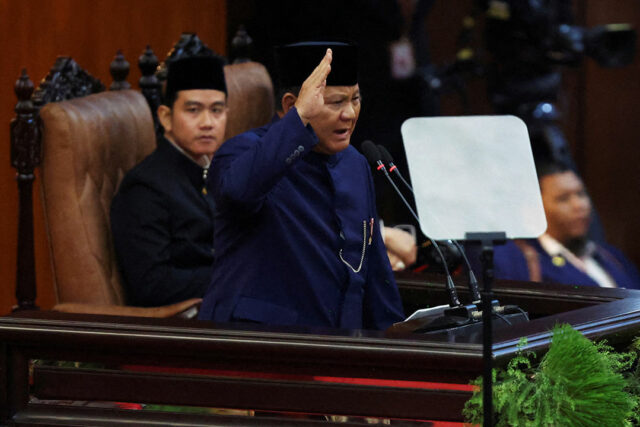
INDONESIA’S new president, Prabowo Subianto, shouts after being inaugurated at the House of Representative building in Jakarta, Oct. 20, 2024. — REUTERS

WASHINGTON — Indonesian and US companies on Wednesday signed deals valued at more than $7 billion a day ahead of Indonesian President Prabowo Subianto’s meeting with US President Donald Trump to sign a final trade pact, the US-ASEAN Business Council said.

The agreements, signed at a dinner for Mr. Prabowo hosted by the US Chamber of Commerce, include purchases by Indonesian firms of 1 million metric tons of US soybeans, 1.6 million tons of corn, and 93,000 tons of cotton over unspecified periods, according to a US-ASEAN Business Council (USABC) fact sheet.

It added that Indonesia will buy 1 million tons of wheat this year and up to 5 million tons by 2030.

The deals include a memorandum of understanding between US mining group Freeport-McMoRan and the Indonesian Ministry of Investment for critical minerals cooperation and an agreement between state oil producer Pertamina and Halliburton Co. to cooperate on oilfield recovery, USABC said.

Freeport and the investment ministry signed an initial deal to extend its mining permit beyond 2041, Freeport-McMoRan Chairman Richard Adkerson said at the dinner.

“It is a life of resource extension, and we cannot wait to undertake delineation drilling of what that ore body will be for many decades to come in the future,” he said.

The deals also include two semiconductor joint venture agreements, including one valued at $4.89 billion between Essence Global Group and an Indonesian partner and another unvalued venture involving Tynergy Technology Group.

USABC valued Indonesia’s purchases of soybeans at $685 million, wheat at $1.25 billion, cotton at $122 million and an additional purchase of US shredded worn clothing for recycling at $200 million.

In the decade from 2015 to 2024, Indonesia averaged annual imports of 2.3 million metric tons of US soybeans, nearly 800,000 tons of wheat, about 180,000 tons of cotton, and less than 100,000 tons of corn, according to US Census Bureau trade data.

The Southeast Asian country has imported around $3 billion worth of US agricultural products annually in recent years, making it the 11th largest market for all US farm goods.

Not all of the deals were given price tags, and these included Indonesian purchases of US lumber and furniture products.

Indonesia announced in July a string of business deals with the US worth $34 billion as part of its tariff negotiations, including wheat and soybean import deals similar to those signed on Wednesday.

Mr. Prabowo said at the dinner that the deals were among the implementing agreements to the US-Indonesian trade deal that he is due to sign on Thursday with Mr. Trump. He said these would help reduce Indonesia’s trade surplus with the US, adding: “I’m very optimistic about the future of our relationship.”

The Indonesian leader arrived in Washington this week for Mr. Trump’s Board of Peace meeting, with hopes Jakarta can secure a slight tariff reduction to 18% from 19% agreed last year. That would match the rate Mr. Trump granted to India earlier in February.

In remarks at the dinner, Deputy US Trade Representative Rick Switzer did not mention the final tariff rate for Indonesia but said the Agreement on Reciprocal Trade between the two democracies “will mean more trade — bilateral trade. It will mean more investment. It’ll mean deeper, more comprehensive economic, investment and trade ties.” — Reuters

Martial law gambit made convict of South Korea’s Yoon, once a lawman

South Korean President Yoon Suk-yeol. — REUTERS

SEOUL — Ousted South Korean leader Yoon Suk Yeol, a former prosecutor who took gambles to win power, finally fell victim to his own recklessness, people who knew him said, through a belief that he could crush political enemies by declaring martial law.

Yoon, 65, was sentenced on Thursday to life in prison by the Seoul Central District Court, for masterminding insurrection, capping a spectacular fall from grace that saw him stripped of office and landed behind bars.

There were some early signs, colleagues say in hindsight of Yoon, who used his career as a prosecutor as a springboard to become president in his first run for elected office, just a year after entering politics.

“If I had gone to the military academy, I would have staged a coup,” former judge Han Dong-soo quotes Yoon, then a powerful prosecutor, as saying in 2020, at a dinner the future president hosted with free-flowing drinks.

On Thursday, the court found Yoon guilty of declaring martial law in a subversion of constitutional order, by deploying troops to storm parliament and drag his opponents to jail.

Yoon, wearing a dark suit and noticeably slimmer since his arrest a year ago, stood ashen-faced listening to the verdict. His lawyer protested against it and said the defence team would discuss with the former president whether to appeal.

Yoon has previously denied wrongdoing, saying his action was meant to send a warning that democracy and freedom were under threat from “anti-state” forces trying to take over South Korea.

RAPID RISE TO POWER
As a prosecutor who investigated two incumbent presidents, Yoon became a household name.

“Yoon Suk Yeol was the most powerful prosecutor-general ever,” said Han, who headed internal inspection at the prosecutors’ office under Yoon.

“He used the office to carry out his plan to become president and in doing so, his actions were daring.”

By 2022, after leading a graft investigation of the justice minister, he had become a darling of conservatives frustrated with the liberal policies of then-President Moon Jae-in, setting him up to become their candidate for president.

But once in office, he became increasingly embittered by unrelenting battles with opponents that a former prosecution rival, Lee Sung-yoon, said drew out a recklessness that had been Yoon’s defining trait.

By the time he imposed martial law in December 2024, Yoon was badly bruised politically, overshadowed by scandals centering on his wife, Kim Keon Hee, accused of inappropriately accepting gifts, though she faced no charges at the time.

An inquiry by a special prosecutor after Yoon’s ouster resulted in her conviction for bribery in January, however, and she is now serving a 20-month jail term.

Opposition clashes marred the year before Yoon’s martial law declaration, ensuring his policies and legislative agenda were stymied.

But the struggles at home contrasted with Yoon’s relative success on the world stage.

His drive to resolve a decades-long diplomatic row with Japan and join it in three-way security cooperation with mutual ally the United States are widely seen as one of his few policy achievements.

On full display at a White House event in 2023 was Yoon’s winning trait of bonding on a personal level, when he took the stage and belted out the 1970s pop hit “American Pie” for an astonished then-President Joe Biden and a delighted crowd.

SHAMAN, ‘YES MEN’
Born in a well-to-do family, Yoon excelled at school and entered the elite Seoul National University law school. But his penchant for partying led him to repeatedly fail the bar exam before he passed on the ninth try at age 30.

As a prosecutor, he was known for an easy-going style, but acquaintances said he became more ambitious after marrying Kim, a successful art curator.

His presidency got off to a rocky start when he moved the presidential office from the traditional Blue House compound, sparking questions about whether it was motivated by a feng shui belief that the site was cursed.

Yoon denied that the first couple had any involvement with a shaman.

When he refused to fire top officials after a Halloween crowd crush killed 159 people, Yoon was accused of protecting his “yes men”.

One was Safety Minister Lee Sang-min, a graduate of Yoon’s high school, who was later tried and jailed for seven years for his role in Yoon’s martial law declaration.

Another high school alumnus was Defence Minister Kim Yong-hyun, a former chief of presidential security, who is on trial for insurrection, accused of being the main figure advising Yoon to declare martial law. He has denied wrongdoing.

Yoon’s downfall came about through listening to the wrong people, said Shin Yul, a professor of political science at Myongji University, adding that he probably “still thinks he did the right thing” in declaring martial law. — Reuters

SureVax, Intellicare, Avega forge groundbreaking partnership to expand life-saving rabies care

In photo (from left): Intellicare Medical Director Dr. Gerardo J. Jiao, SureVax CEO Ryan Abis, and Avega Medical Director Dr. Michael John Encarnacion

SureVax has entered into a landmark partnership with Intellicare and Avega to dramatically expand access to life-saving rabies post-exposure care in the Philippines.

The collaboration is a pioneering effort by two leading health maintenance organizations to build partnerships with a dedicated network of standalone Animal Bite Centers focused on frontline rabies treatment.

The partnership also provides Intellicare and Avega members with access to animal bite management and postexposure rabies treatment services across SureVax clinics nationwide, with coverage based on their plan benefits. It enhances timely access to care while helping ease the burden on hospitals and local health facilities.

Intellicare and Avega are also SureVax’s first HMO partners, signaling a major milestone in the company’s expansion.

Rabies remains one of the country’s deadliest yet most preventable diseases. Department of Health (DoH) data recorded 426 rabies-related deaths in 2024, with all reported human cases proving fatal.

Despite its near 100% fatality rate once symptoms appear, rabies can be fully prevented when post-exposure treatment is administered promptly. Delays in access and overcrowded facilities continue to undermine outcomes, particularly in rabies-endemic and densely populated areas.

SureVax was established to serve as a focused frontline provider for rabies and animal bite care, delivering rapid treatment in community-based clinics while helping decongest emergency rooms and public hospitals.

“This partnership changes how frontline rabies care is accessed,” said Ryan Abis, CEO of SureVax. “Rabies is time-critical. Access determines survival. By working with Intellicare and Avega, we are ensuring patients receive immediate post-exposure care in clinics designed specifically for rabies and animal bite treatment.”

The collaboration reflects a broader shift toward decentralizing healthcare delivery by bringing essential, rapid-response services closer to communities.

“This signing inaugurates a strategic alliance in preventive care, committing to enhanced coverage, faster treatment, and broader public health impact,” said Dr. Gerardo Jiao, Chief Medical Director of Intellicare.

Dr. Michael John Encarnacion, Medical Director of Avega Managed Care Medical Provider Relations Department, said that “rabies is a highly preventable viral disease.”

“Through SureVax, vaccines are now within reach for both Intellicare and Avega members, ensuring they are covered. Accessible and affordable care may seem like small steps, but they create a big impact,” Dr. Encarnacion added.

SureVax Animal Bite Center and Vaccination Services is a Philippine clinic chain providing affordable, FDA-approved anti-rabies and anti-tetanus vaccines, while Intellicare is a leading HMO offering prevention-focused healthcare, and Avega Managed Care, Inc. is the country’s first specialized Third-Party Administrator (TPA) and the Best Performing HMO in 2023.

SureVax’s inclusion in Intellicare and Avega’s provider networks marks a significant milestone as they become the company’s first HMO partners. The development comes as SureVax continues to expand its standalone clinics nationwide to meet the growing demand for rabies post-exposure services.

Beyond immediate access, the partnership sets a precedent for how HMOs and specialized community-based providers can collaborate to address endemic public health threats such as rabies.


Spotlight is BusinessWorld’s sponsored section that allows advertisers to amplify their brand and connect with BusinessWorld’s audience by publishing their stories on the BusinessWorld Web site. For more information, send an email to online@bworldonline.com.

Join us on Viber at https://bit.ly/3hv6bLA to get more updates and subscribe to BusinessWorld’s titles and get exclusive content through www.bworld-x.com.

Philippine central bank cuts policy rate to 4.25%

BW FILE PHOTO

The Bangko Sentral ng Pilipinas (BSP) on Thursday cut policy rates by 25-basis-point (bp) for a sixth straight meeting, a move seen to help the economy regain its momentum following a slump last year.

On Thursday, the Monetary Board lowered the target reverse repurchase rate (RRP) by 25 bps to 4.25%, the lowest in over three years or since the 3.75% in August 2022. It likewise matched the rate set in September 2022.

Rates on the overnight deposit and lending facilities were also trimmed by 25 bps each to 3.75% and 4.75%, respectively.

The Monetary Board’s latest move met market expectations, as all 16 analysts polled by the BusinessWorld anticipated a 25-bp cut.

This brought the BSP’s total reductions to 225 bps since it began its series of monetary policy easing in August 2024.

The sixth straight rate cut came amid a still manageable inflation outlook and weaker-than-expected economic growth, triggered by the flood control corruption scandal which broke out last year.

“Economic growth has undershot the BSP’s expectations due to weaker domestic demand,” the central bank said in a statement on Thursday. “Latest indicators point to a recovery in the second half of the year, but growth will depend largely on how quickly confidence recovers.”

In the fourth quarter of 2025, the Philippine economy grew by 3%, its worst performance in 16 years (excluding pandemic period). This brought the full-year gross domestic product (GDP) growth to a post-pandemic low of 4.4%.

In 2025, the BSP delivered a 25-bp cut at each of its meetings in April, June, August, October and December, with the last two prompted by a clouded growth outlook as governance issues weakened consumer and business sentiment. — Katherine K. Chan

From entertainment to education: How the Puregold Channel is helping revitalize ‘last mile’ schools

Puregold Price Club, Inc. President Vincent Co is investing the total streaming revenue from the Puregold Channel on YouTube in his Pusong Panalo Program.

In a move that aims to revitalize the country’s ‘last mile’ schools, Puregold Price Club, Inc. President Vincent Co is investing Puregold Channel’s total streaming revenue in his Pusong Panalo Program.

A personal initiative of Vincent, himself, the Pusong Panalo Program seeks to aid underserved public schools nationwide through interventions that address both immediate needs and structural gaps: solar panels for schools with limited access to electricity; livelihood packages for teachers; grocery support for students; classroom renovations; and assorted learning equipment. The program aspires to reach at least 10,000 students in 30 public schools around the archipelago by 2028.

A personal initiative of Vincent Co himself, the Pusong Panalo Program seeks to aid underserved public schools around the country.

The Puregold Channel on YouTube serves as the company’s hub for its “retailtainment” strategy, an integrated content ecosystem spanning free digital series, music collaborations with leading OPM artists, and original Filipino storytelling through the annual Puregold CinePanalo Film Festival. The channel has surpassed 300,000 subscribers, earning YouTube’s Silver Play Button and establishing itself as one of the most robust brand-owned media platforms in Philippine retail.

But the metric that matters most is not just Puregold Channel‘s subscriber growth. Vincent’s success with these retailtainment ventures has allowed him to direct more resources towards one of the company’s strongest advocacies. Every view on the channel translates into revenue, and every peso of that revenue is reinvested in public education. With this model, audience engagement is no longer a vanity metric; it is a funding mechanism. Performance drives purpose, scale enables service.

Vincent Co’s Pusong Panalo Program aims to reach at least 10,000 students in 30 public schools nationwide by 2028.

For Vincent Co, the convergence of business growth and social investment is not a communications narrative but a leadership mandate. Retailtainment, in this context, is not merely a growth lever, but a means to mobilize capital toward outcomes that endure beyond quarterly performance.

Under Vincent Co’s stewardship, Puregold content with a social impact is not treated as a byproduct of success, but as one of its clearest indicators.


Spotlight is BusinessWorld’s sponsored section that allows advertisers to amplify their brand and connect with BusinessWorld’s audience by publishing their stories on the BusinessWorld Web site. For more information, send an email to online@bworldonline.com.

Join us on Viber at https://bit.ly/3hv6bLA to get more updates and subscribe to BusinessWorld’s titles and get exclusive content through www.bworld-x.com.

Germany will seek strategic partnerships with China amid US tariffs, Merz says

Christian Democratic Union (CDU) party leader Friedrich Merz speaks at the party headquarters, after the exit poll results are announced for the 2025 general election, in Berlin, Germany, Feb. 23, 2025. — REUTERS

BERLIN — German Chancellor Friedrich Merz said on Wednesday he would seek “strategic partnerships” with China during a trip next week, as he looks to discuss future cooperation between Europe and the world’s second-biggest economy while the United States leans on tariffs.

“We have a strategic interest in finding partners in the world who think the way we do, who act the way we do, and who above all are prepared to shape the future together so that we remain a country with prosperity and a high level of social security,” Mr. Merz said at his party’s Ash Wednesday event in Passau, Bavaria.

He said foreign policy and economic policy could no longer be separated.

“If the Americans believe that, with their tariff policy, they should exert influence around the world — if they believe that tariffs are more important than taxes at home — then that is something Americans can, of course, decide for themselves. But it is not our policy,” Mr. Merz said.

US President Donald Trump’s tariff push is testing relations between the allies, threatening their two-way trade and raising the risk of further damage to Germany’s already struggling economy.

“You can do it, but we will not go along with it,” Mr. Merz said on tariffs. “And if you overdo it, then we Europeans are certainly able to defend ourselves against it.”

Mr. Merz said Europeans had shown they could act together during a recent flare-up linked to Greenland and warned the European Union would respond if Washington raised tariffs again.

“That is our double strategy: an outstretched hand and, at any time, a renewed partnership — but also enough cohesion and unity within the European Union so that we can defend ourselves sufficiently against things we do not want,” he said. — Reuters

Eleven held in France over killing of far-right activist

Members of Parliament during a discussion before the final vote on the Social Security Financing Bill (PLFSS) for 2026 at the National Assembly in Paris, France, December 16, 2025. — REUTERS

PARIS — Eleven people, including two aides to a French far-left lawmaker, were arrested in France overnight and early on Wednesday on suspicion of involvement in the killing of a far-right activist last weekend in Lyon, according to the Lyon prosecutor’s office, which has opened a murder investigation.

Among those arrested were at least one aide and two other people connected to Raphael Arnault, a lawmaker from far-left party France Unbowed (LFI), who said on Tuesday that the aide, Jacques-Elie Favrot, had “stopped all parliamentary work”.

“It is now up to the investigation to determine responsibility,” Mr. Arnault said on X.

Another of Mr. Arnault’s assistants and one of his former interns were also among the detained, French media outlets reported. The prosecutor did not immediately confirm the report and Mr. Arnault did not respond to emailed requests for comment.

Far-right activist Quentin Deranque, 23, died on Saturday after being beaten by hard-left activists outside a conference center in Lyon where Rima Hassan, a member of the European Parliament, was speaking.

Mr. Favrot’s lawyer Bertrand Sayn said his client has acknowledged committing violence and being present at the site, but said he was not “the author of the blows that caused the death of Mr. Deranque.”

Videos of the confrontation were widely shared on social media. Ms. Hassan and other members of the LFI have condemned the killing.

Seven of the suspects detained were investigated for possible murder while the other four were investigated for helping others escape police searches, the prosecutor’s office said.

The suspects detained on Tuesday evening will remain in police custody for at least 48 hours.

Both the hard left and hard right have been capitalizing on frustration with the minority centrist government ahead of local elections next month and a presidential vote next year, set to take place in a highly polarized environment.

Jordan Bardella, party president of the far-right National Rally, has called for Mr. Arnault’s resignation.

“The left and the far-left have crossed an unacceptable red line in our democracy: respect for the opinions and physical integrity of their opponents,” he told reporters on Wednesday.

The death of Mr. Deranque has echoed in neighboring countries such as Italy, where Prime Minister Giorgia Meloni said it was “a wound for the whole of Europe”, where “a climate of ideological hatred” is spreading.

The LFI’s national coordinator Manuel Bompard said his party was in no way responsible for Mr. Deranque’s death, and that it now felt threatened itself.

Shortly after the announcement of the arrests on Wednesday morning, the Paris headquarters of LFI received a bomb threat and had to be evacuated after police secured the scene and found no explosives. — Reuters

Canada revises express entry immigration rules, adds military roles

A Canadian flag flies in front of the Peace Tower on Parliament Hill in Ottawa, Ontario, Canada, March 22, 2017. — REUTERS

TORONTO — Canada introduced new immigration priority categories on Wednesday to bring in skilled workers in fields ranging from research and health care to aviation, and to include certain military recruits.

The new categories align with Prime Minister Mark Carney’s goals of broadly reducing the number of new permanent residents in Canada while recruiting skilled workers and scholars and boosting defense capabilities to lessen dependence on the United States.

The government said the shift was aimed at restoring immigration to sustainable levels while finding workers for key industries. Canada’s government in recent years has sought to reduce the number of immigrants to ease strains on housing and social services.

Immigration Minister Lena Metlege Diab said the 2026 changes to the Express Entry system will help to attract talent that can “contribute from day one” as Canada faces labor shortages in critical sectors.

The new categories include researchers, senior managers, transport‑sector workers such as pilots and aircraft mechanics, and foreign medical doctors with Canadian experience. They will also include highly skilled foreign military applicants recruited by the Canadian Armed Forces, including military doctors, nurses, and pilots.

“Canada’s future depends on a workforce ready for a changing economy,” Ms. Diab said in a statement.

Mr. Carney, seeking to reduce reliance on the United States, announced a new defense strategy on Tuesday that aims over the next decade to lift government investment in defense-related research and development by 85%, boost defense industry revenues by more than 240%, increase defense exports by 50% and create up to 125,000 quality new jobs.

Like other NATO members, Canada has pledged to raise defense spending to 5% of gross domestic product by 2035.

Invitation rounds in existing Express Entry categories — including French-language candidates, health-care workers and skilled trades — will continue alongside the new targeted streams. — Reuters

Metrobank posts record P49.7-B profit in 2025

PHILSTAR FILE PHOTO

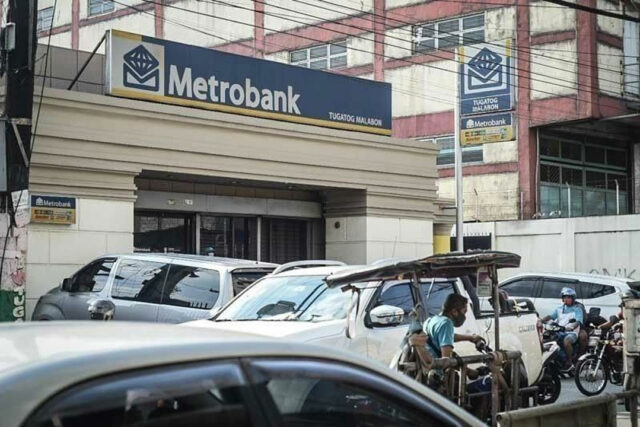
METROPOLITAN BANK & Trust Co. (Metrobank) booked a record P49.7-billion net income in 2025, backed by steady loan growth and strong trading gains.

Before provisions, its operating profit grew by 17.1% to P78.4 billion, it said in a disclosure to the stock exchange on Thursday.

“This full-year performance reflects the trust of our clients, the dedication of our people, and our commitment to disciplined growth. We continue to strengthen our balance sheet while expanding support to businesses and consumers who drive the Philippine economy. Our focus remains clear, and that is, to grow alongside our stakeholders and contribute to the country’s sustained progress,” Metrobank President Fabian S. Dee said.

The bank’s net interest income climbed by 9.2% year on year to P124.6 billion. This was supported by an 8.8% increase in its gross loans as its corporate and commercial loan book rose by 7.4%, while its consumer portfolio grew by 13.9%.

Its non-interest earnings went up by 11.6% to P33.5 billion, backed by a 47.2% increase in its trading and foreign exchange gains and a 6% growth in fee and trust income. — BVR

Gov’t raises P107 billion from FXTNs

BW FILE PHOTO

By Aaron Michael C. Sy, Reporter

THE GOVERNMENT on Wednesday raised an initial P107.072 billion from its second offering of new fixed-rate Treasury notes (FXTNs) that target institutional investors. 

The amount raised for the 10-year papers was more than three times the initial P30-billion target as tenders reached P328.467 billion.

The new Treasury bonds (T-bonds) fetched a coupon rate of 5.925%, producing an average rate of 5.893%, results of the rate-setting auction posted on the Treasury’s website showed.

Accepted bid yields ranged from 5.75% to 5.928%.

The coupon rate was 5 basis points (bps) above the 5.875% seen for the same bond series but 0.9 bp lower than the 5.934% seen for the 10-year notes based on PHP Bloomberg Valuation Service Reference Rates data as of Feb. 18 published on the Philippine Dealing System’s website before the auction. 

The public offer period as well as the exchange offer for the holders of bonds maturing over the next year will end on Feb. 20. The notes are scheduled to be issued on Feb. 23.

In April last year, the government raised P300 billion via new 10-year benchmark notes, well above the P30-billion program. It had initially raised P135 billion from the rate-setting auction.

National Treasurer Sharon P. Almanza told reporters after the auction that they are aiming to raise at least P200 billion from the issuance but noted the total will also depend on the demand from the exchange program. 

The FXTN offering includes an exchange program for holders of securities maturing on April 8, Sept. 7, Sept. 20, Oct. 20, and Jan. 4, 2027.

Ms. Almanza said the coupon rate fetched by the notes was a “fair rate” despite investors asking for a higher yield ahead of the central bank’s policy meeting on Thursday.

“The demand for the 5.95% was higher, the concentration of bids was there…. And the main thing is the expectation that rates will still go down,” she said.

“If we awarded at 5.95%, we don’t need an offer period, since that was P200 billion already.”

All 16 analysts in a BusinessWorld poll conducted last week expect the Monetary Board to deliver a sixth straight 25-bp cut at its first meeting for the year on Thursday. If realized, this will bring the policy rate to 4.25%.

The Bangko Sentral ng Pilipinas has lowered benchmark borrowing costs by a cumulative 200 bps since its easing cycle began in August 2024.

Ms. Almanza said that the strong liquidity in the country’s financial system also drove demand for the offering following the maturity of a Treasury bond on Feb. 16.

Rizal Commercial Banking Corp. Chief Economist Michael L. Ricafort also said in a Viber message that the P232.8 billion in liquidity injected into the financial system due to the maturity of seven-year bonds on Feb. 13 added to the demand for fresh notes.

The offering of fresh fixed-rate Treasury notes is part of the Bureau of the Treasury’s (BTr) consolidation of issuances, Ms. Almanza said.

“We don’t want to introduce new ISIN (International Securities Identification Number) [bonds] so that the yield curve is not fragmented. There are already too much active ISIN series [bonds], so we’re retiring [them] and then we’re only introducing one or two [FXTN],” she said.

For this year, she said they will only issue FXTN once.

The awarded coupon rate was at the lower end of market expectations, a trader likewise said in a text message.

“Average yield and coupon are lower due to the continuous downward trend of yields this past week or so. Demand was incredibly high, leading to higher likelihood that the BTr will surpass the P200-billion target.”

DOLLAR BONDS
Meanwhile, Ms. Almanza said the government could tap the offshore debt market in the second half of the year to raise the remaining $2.5 billion from the government’s external borrowing plan.

“We have a remaining $2.5 billion. So, we’re monitoring US dollars because that’s the cheapest. But timing wise, we did just issue (global bonds in January).”

In January, the government raised P2.75 billion from a triple-tranche dollar-denominated bond offering of 5.5-, 10-, and 25-year notes.

Asked if the government could issue offshore bonds in the second half, Ms. Almanza said: “Most probably. We’re also monitoring yen and euro.”

The BTr is also working with the Privatization and Management Office to identify assets the government could finance that will fall into the Sukuk category for an Islamic issuance this year.

The BTr first issued Sukuk bonds in December 2023, raising $1 billion from the sale of 5.5-year Sukuk bonds.

Sukuk or Islamic bonds are certificates that represent a proportional undivided ownership right in tangible assets, or a pool of tangible assets. These assets could be in a specific project or investment activity that is Shari’ah-compliant.

The markup takes the place of interest, which is illegal in Islamic law. Murabaha is not an interest-bearing loan but is an acceptable form of credit sale under Islamic law. A Sukuk al-Murabaha certificate cannot be traded on the secondary market.

Unlike usual bonds, Sukuk bond issuances must adhere to Islamic principles and must be structured to prohibit elements such interest, uncertainty and investments in businesses that deal with prohibited goods or services.

The government aims to raise P308 billion from the domestic market this month or P108 billion via Treasury bills and up to P200 billion through T-bonds.

The government borrows from local and foreign sources to help fund its budget deficit, which is capped at P1.647 trillion or 5.3% of gross domestic product this year.


DoE to launch auction for coal areas on Feb. 27

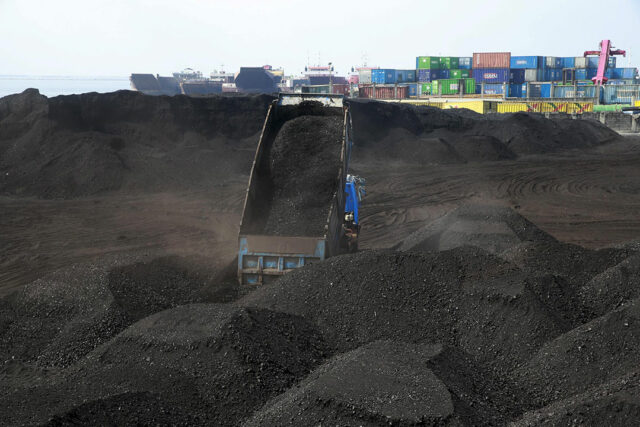
A truck unloads tons of coal inside a warehouse in Tondo, Manila, Jan. 11, 2016. — REUTERS

By Sheldeen Joy Talavera, Reporter

THE DEPARTMENT of Energy (DoE) is set to open a bid round on Feb. 27 for coal areas with verified reserves, including the area operated by the country’s largest coal miner.

In a statement on Wednesday, the DoE said it will hold a bidding process dedicated to offering pre-determined areas for coal development and production, as part of efforts to support broader energy security.

Under the bid round, three coal areas will be offered covering 18 coal blocks. These include 10 blocks in Semirara Island in Caluya, Antique; five blocks across the municipalities of Benito Soliven, Naguilian, Cauayan in Isabela; and three blocks spanning the municipalities of Amulung and Iguig in Cagayan province.

The auction will include the blocks covered under the coal operating contract that is currently held by Consunji-led Semirara Mining and Power Corp., the largest coal producer in the Philippines.

The government plans to open bidding for the contract, which ends next year, following the legal opinion that says it cannot be renewed.

From the day of the launch, interested parties will have 60 calendar days to submit their application documents. Opening of applications will be held on the same day as the deadline.

A pre-submission conference will be held 20 days after the launch to accommodate bidders’ inquiries and clarify requirements.

The bid round for pre-determined areas is a competitive process where identified resource areas are offered for development and production under a transparent evaluation and award mechanism.

The DoE said the auction aims to ensure “the orderly and responsible development and production of indigenous coal resources, while maintaining strict safeguards for public safety, environmental protection, and host-community welfare.”

The awarding of the contracts will be governed by the recently issued rules, which introduced a new type of contract that will accelerate the development of confirmed coal deposits.

Energy Secretary Sharon S. Garin said the government aims to “uphold the rule of law while safeguarding our indigenous energy resources.”

“Any future contract or continuation of operations must strictly comply with constitutional limits and demonstrably protect both the national interest and our host communities,” she said.

Asked for comment, Michael T. Toledo, chairman and president of Chamber of Mines of the Philippines, said that structured bid rounds show policy consistency, which helps build investor confidence, especially for long-term projects.

“Investors value stable rules, transparency, and responsible standards. Strengthening these benefits not only coal but the wider mining and natural resource sectors,” Mr. Toledo told BusinessWorld.

While coal dominates the Philippines’ power generation, it imports more than 90% of its requirements.

In 2024, the country imported 39.87 million metric tons of coal, up 12.2% from the previous year, data from the DoE as of April 2025 showed.

The country, however, is trying to move away from fossil fuels by aiming to increase the utilization of renewable energy to reduce exposure to volatile global prices and reduce carbon emissions.

“While the energy transition is underway, indigenous resources such as coal still play a role in ensuring reliable power supply and reducing dependence on imports,” Mr. Toledo said.

“Strategic development must therefore be guided by strong governance, environmental standards, and clear long-term policy direction,” he added.