LNG market will remain tight until 2027
AT THE HEIGHT of summer, Europe had hoped that the coming winter would be its last difficult one to secure enough natural gas. By the middle of next year, liquefied natural gas (LNG) was expected to turn into a buyer’s market, easing the squeeze the region has suffered since Russia invaded Ukraine. No longer.
After a series of project delays and stronger-than-expected demand for the fuel in Asia, the LNG market is set to remain tight next year and, probably, until mid-2026. The buyers won’t have the upper hand until early 2027 when new supply will finally arrive, potentially flooding the market for years to come.
The beauty of LNG is it can be loaded into ocean-going tankers. Gas shipped via pipeline remains in its gaseous state, limiting transportation options. The LNG market broadens how importing nations buy the fuel, opening the door to distant suppliers. For Europe, that means moving away from its typical suppliers of Russia, Norway, Algeria and Libya, all within pipeline distance, and reaching out to LNG sellers in the US, Qatar and Australia.
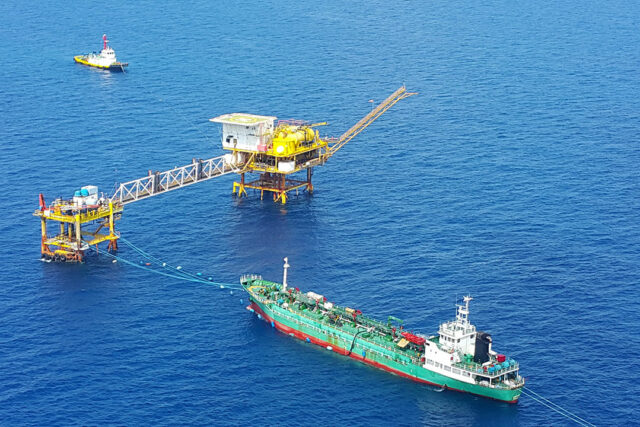
LNG liquefaction plants are multibillion-dollar marvels of engineering, often located in far-flung corners of the world. Even industry leaders — such as Exxon Mobil Corp., Shell Plc and QatarEnergy — often struggle with delays and cost overruns.
Call it the Murphy’s Law of the LNG industry: Any project that’s scheduled to be built on time will be delayed — always. With its corollary: If there’s a particularly bad time to reveal the delay, the announcement will happen exactly at the worst possible time.
For long, the LNG market was a relatively quiet corner of the energy sector, dominated by long-term contracts linked to the price of Brent crude. But the fuel was catapulted into the limelight after Russia, the biggest gas supplier to Europe, invaded Ukraine, forcing the continent to turn to it as an alternative.
From an average price of about $9 per million British thermal unit (Btu) from 2000 to 2020, the cost of LNG surged in 2022 to an all-time high of more than $50 per million Btu. Prices have cooled since then — still, at around $13 per million Btu now, they remain about 40% higher than they were before the war. The buyers’ hope was that next-year prices would fall further. The law of Murphy had other plans, however.
The startup of the Golden Pass LNG export project in Texas, co-owned by QatarEnergy and Exxon, has been postponed for six months until at least the end of 2025, following a contractor dispute. The project, one of the largest expected in the 2025 to 2027 period, may be delayed further, according to the consensus in the industry.
Another big project, the Corpus Christie 3, run by Cheniere Energy, Inc., is scheduled to start at the end of this year, but full production isn’t likely until late 2025 or even early 2026.
The Energia Costa Azul development in Mexico, a smaller LNG plant that US-based Sempra is building, has been delayed a year until mid-2026. And even when projects suffer minor delays, they still have teething problems. Plaquemines LNG, a large export project by US-based Venture Global LNG, Inc., probably won’t ship until January or February. Initially, the company had aimed to start the project this year.
“Significant LNG supply increases which could comfortably exceed demand are now expected in 2027, rather than during 2025 or 2026,” Anne-Sophie Corbeau, an LNG expert at the Center on Global Energy Policy at Columbia University, told me.
To be sure, a few other LNG projects will start on time and budget. But generally, buyers will have fewer options than they had hoped.
The sellers, who had feared losing their control, are rejoicing. “What we’re seeing now is a supply-constrained market,” Anatol Feygin, chief commercial officer at Cheniere, told investors in August. The head of LNG at TotalEnergies SE, Gregory Joffroy, had the same message earlier this month: “We see some LNG projects that were due to come on stream in the coming months have been delayed.”
It won’t last forever. The US and Qatar are still aiming to boost LNG production significantly over the next few years. Even if some projects are delayed, the sheer size of planned LNG facilities means that by 2027, it’s almost impossible that the sellers will remain in control of the market. But that’s two winters away for Europe.
BLOOMBERG OPINION