Home Blog Page 2356

Rower Joanie Delgaco faces tall odds for the biggest race of her life

ROWER JOANIE DELGACO — FACEBOOK.COM/PHILIPPINEROWINGASSOCIATION

PARIS — Rower Joanie Delgaco returns to the posh Vaires-sur-Marne Nautical Stadium Tuesday afternoon for the biggest race of her life.

Drawn with no less than the reigning champ and tough bets from Europe on Heat 3 of the quarterfinals, Ms. Delgaco faces tall odds in the race for the top three who will advance to the semifinals A and B (medal contention).

But there’s no turning back for the 26-year-old Iriga native, one of only four Asians who made the top 24 of the women’s single sculls in the Paris Games.

She has achieved the goal to be among the top five Asians here, and she now wants to raise the bar of cracking the top 20 overall.

Ms. Delgaco will automatically be in the top 12 if she makes the semifinals A and B.

But with mere clocking of 7:55.00 in the repechage and 7:56.26 in the heats, Ms. Delgaco would definitely need miles of waters to navigate if she’s ever to catch up on the world powers.

In her quarterfinals heat alone, there are Tokyo gold medalist Emma Twigg from New Zealand, former under-23 world champion Katharina Jansen of Switzerland, Virginia Diaz of Spain, Diana Dymchenko of Azerbaijan and Jovana Arsic of Serbia.

Ms. Twigg, also a former world champion, four-time silver winner and three-bronze holder, had a remarkable 7:13.97 clocking in taking top podium finish in Tokyo.

And the rest clocked better than Ms. Delgaco in the previous races here.

The call by the Filipino officials on Ms. Delgaco is just to stay focused and give her best.

The other Asians vying in the quarterfinals are Iranian Fatemeh Mojallaltopraghghale, Vietnamese Thi Hue Pham and Uzbek Anna Prakaten. — Nelson Beltran

Fil-Am Lee Kiefer wins second straight Olympic gold in fencing

FENCING is one sport in the Paris Olympics where the country has “technically” three reasons to be proud about.

Lee Kiefer, a Filipino-American, was the biggest of them all, delivering an effort for the ages by capturing her second straight Olympic gold medal in women’s individual foil at the expense of fellow American Lauren Scruggs in a one-sided 15-6 victory.

While she carried the United States flag, the country somehow cheered for the 30-year-old Lexington, Kentucky native as her mother, Teresa, was from Tagum, Davao del Norte.

It was a proud moment not just for Ms. Kiefer, but also for a gold-starved country like the Philippines, which is still in search of a second Olympic gold after weightlifter Hidilyn Diaz’s breakthrough triumph in Tokyo three years ago.

Filipinos also rooted for Sam Catantan, the country’s top fencer who was valiant before falling short in a heartbreaking 15-12 defeat to top seed Arianna Errigo of Italy in the table-of-32.

Same with Maxine Esteban, also Filipina who represented Ivory Coast and eventually succumbed in the same round to France’s Pauline Ranvier, 15-7.

Good thing Ms. Kiefer was there to save the day and give the country something to celebrate about. — Joey Villar

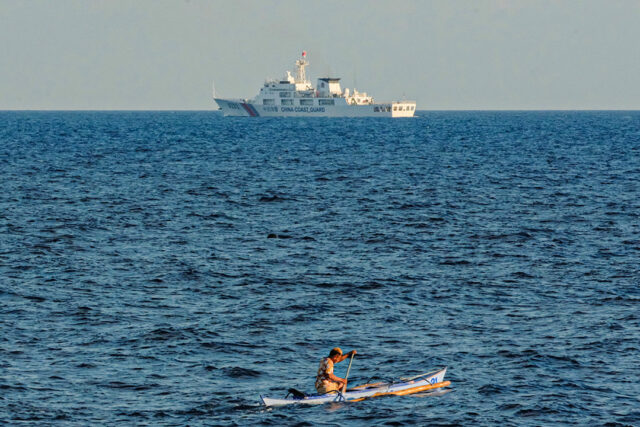
Quad foreign ministers decry dangerous South China Sea actions

PHILIPPINE STAR/RYAN BALDEMOR

TOKYO — Foreign ministers from Australia, India, Japan and the United States said on Monday they were seriously concerned about intimidating and dangerous maneuvers in the South China Sea and pledged to bolster maritime security in the region.

The joint statement came after talks between the so-called ‘Quad’ countries in Tokyo, attended by Australia’s Penny Wong, India’s Subrahmanyam Jaishankar, Japan’s Yoko Kamikawa and Antony Blinken from the US.

In security talks between the US and Japan on Sunday, the two allies labeled China the “greatest strategic challenge” facing the region.

“We are seriously concerned about the situation in the East and South China Seas and reiterate our strong opposition to any unilateral actions that seek to change the status quo by force or coercion,” the ministers said in the statement, which did not directly mention China.

They also expressed serious concern about the militarization of disputed features and coercive and intimidating maneuvers in the South China Sea, including dangerous use of coast guard and maritime militia vessels.

Chinese vessels have repeatedly clashed with Philippine ships seeking to resupply its troops on the disputed Second Thomas Shoal in recent months, although the two countries in July reached a provisional agreement that aims to ease tensions.

The Quad group said they were working on a series of initiatives to maintain “the free and open maritime order” including helping partners improve domain awareness via satellite data, training and capacity building. They also announced a plan to set up a new maritime legal dialogue.

“We are charting a course for a more secure and open Indo-Pacific and Indian Ocean region by bolstering maritime security,” Mr. Blinken said in remarks to reporters after the meeting.

“In practical terms what does this mean? It means strengthening the capacity of partners across the region to know what’s happening in their own waters,” he added.

He said the US would continue to work with its partners to ensure freedom of navigation and the unimpeded flow of lawful maritime commerce.

The US announced plans on Sunday for a major revamp of its military command in Japan. It was among several measures announced by the allies to address what they said was an “evolving security environment,” noting various threats from China including its muscular maritime activities.

“Uncertainty surrounding the international order as well as the international situation has been increasing with Russia continuing its aggression in Ukraine, attempts to unilaterally change the status quo by force in the East China Sea and South China Sea, and the launch of ballistic missiles by North Korea,” Japan’s Ms. Kamikawa said after the talks.

The Quad ministers also pledged to advance cooperation in cybersecurity to protect supply chains and critical infrastructure, including undersea cables.

After leaving Tokyo, Blinken and Austin will hold security talks with another Asian ally, the Philippines, as the Biden administration seeks to counter an increasingly bold China. — Reuters

Climate threat spurs London’s Kew Gardens to look for resilient trees

THE PALM HOUSE is seen at Kew Gardens, as Kew says around half of its trees may be at long-term risk from climate change, South West London, Britain, July 26, 2024. — REUTERS

LONDON — Behind the lush greenery, roses in bloom and birdsong at London’s famous Kew Gardens lies the darker reality of climate change, which threatens to kill thousands of its trees in the coming decades.

Some trees at the botanical gardens, which were first opened in 1759 and today are a UNESCO World Heritage Site, are already in a state of irreversible decline.

Experts at Kew have used climate modeling to show that over half of the gardens’ 11,000 trees may be at risk of dying by 2090, as a warming climate makes the soil drier and reduces the amount of water trees can access.

Kew’s problem is worsened by the warmth radiating from London’s dense metropolis towards the gardens, known as the urban heat island effect, which makes night-time temperatures much warmer than in rural regions.

Kew’s 8.5 million plant and fungal specimens have long been drawn not just from Britain but from around the world — from the cherry blossoms of Japan to the water lilies of the Amazon — and solutions to withstanding climate change may also lie thousands of miles away.

Plant material from the Hyrcanian forest of Iran and Azerbaijan, the great steppes of Eurasia, the southwestern United States or parts of continental Europe would all be resilient enough to withstand climate change in Britain, experts said in a report published last week.

This sort of replacement could also become a model for urban planners to mitigate the effects of climate change, the report said.

Kew is warmer by about 3 degrees Celsius than it was in the 1980s, putting much-loved British natives such as the English oak (Quercus robur) at risk, said Kevin Martin, head of tree collections at the gardens and a former tree surgeon.

A drought in 2022, when temperatures around the British capital reached a record 40 C (104 Fahrenheit), killed 400 of Kew’s trees, spurring the need to think about introducing more resilient species, said Martin, who will travel to Georgia in September to collect seeds to plant at Kew.

“It’s going to be vitally important, not only for our generation, but for the next generation,” he said, standing beside a 124-year-old weeping beech (Fagus sylvatica ‘Pendula’) in decline. — Reuters

Beirut flights canceled, delayed amid fears of Israeli attack

STOCK PHOTO | Image from Pixabay

FLIGHTS at Beirut airport have been cancelled or delayed with Lebanon’s Middle East Airlines (MEA) saying disruptions to its schedule were related to insurance risks, as tensions escalate between Israel and armed political group Hezbollah.

Lufthansa on Monday said it had suspended five routes to and from Beirut by the group’s carriers Swiss International Air Lines, Eurowings and Lufthansa up to and including July 30 “in an abundance of caution.”

A rocket strike that killed 12 teenagers and children in the Israeli-occupied Golan Heights on Saturday has added to concerns that Israel and the Iran-backed group could engage in a full-scale war.

Israel’s security cabinet on Sunday authorized the government to respond to the strike. Hezbollah denied any responsibility for the attack, the deadliest in Israel or Israeli-annexed territory since Hamas’ Oct. 7 assault sparked the war in Gaza, which has since spread to several fronts.

Beirut airport’s flight information board and flight tracking website Flightradar24 show Turkish Airlines also cancelled two flights overnight on Sunday.

Turkey-based budget carrier SunExpress, Turkish Airlines subsidiary AJet, Greek carrier Aegean Airlines, Ethiopian Air and MEA have also canceled flights scheduled to land in Beirut on Monday, Flightradar24 shows.

The airlines did not immediately respond to requests for comment.

Beirut-Rafic Hariri International Airport is Lebanon’s only airport. It has been targeted in the country’s civil war, and previous fighting with Israel, including in the last war between Hezbollah and Israel in 2006.

On Sunday, MEA said it had delayed the departure of some flights set to land in Beirut overnight. Additional delays to flights landing on Monday were then announced due to “technical reasons related to the distribution of insurance risks for aircraft between Lebanon and other destinations,” MEA said.

Hezbollah and the Israeli military have increased cross-border exchanges of fire since the Gaza war began. The conflict has disrupted flights and shipping across the region, including during reciprocal drone and missile attacks between Israel and Iran in April.

Lufthansa has already suspended night-time flights to and from Beirut for July due to “current developments” in the Middle East. — Reuters

Trump effect in clean tech sector deepens angst in Europe’s boardrooms

JEAN LUI-PISTON-UNSPLASH

FRANKFURT/GDANSK – European companies focused on clean energy are abandoning expansion plans, bracing for lower sales or see funding of U.S projects in doubt because of fears over what a potential election victory for Donald Trump could mean for their sector.

Mr. Trump has dismissed President Joe Biden’s policies to fight climate change as a “green new scam” and is expected to try to undo much of his administration’s work, including the Inflation Reduction Act (IRA) that offers tax breaks and subsidies to U.S. and foreign companies investing in sustainable energy.

The law passed in 2022 has acted as a powerful incentive for European companies from the sector to expand or establish their U.S. presence, but a specter of a second Trump presidency is giving them a pause.

“With a Donald Trump who A) is very opportunistic, B) is also very polemic and C) is also fairly unpredictable, you have to ask yourself whether it makes sense to make such a bet,” Peter Roessner, chief executive of Luxembourg-based hydrogen firm H2Apex told Reuters.

Under the IRA, the company could have built a hydrogen tank production plant in the United States for around a third of the $15 million in costs. In February, however, Roessner decided to cancel the plan over concerns that Trump could be reelected even though the company already had held initial talks with potential customers.

Market bets that Mr. Trump would win back the White House in November have intensified this month after he was shot at during an election rally and days later secured the Republican Party nomination.

Recent polls show a narrowing gap between Mr. Trump and Kamala Harris, the likely Democratic candidate with similar views on climate to Biden’s. Yet Mr. Roessner’s comments reflect anxiety among Europe’s clean tech firms over what a Trump presidency could mean and how they are trying to prepare for such a scenario.

Wood Mackenzie energy data and analytics company reckons it would put a projected $1 trillion in low-carbon energy investments at risk by 2050.

Consultancy Roland Berger said that while a full repeal of the IRA was improbable, a Trump administration could still jeopardize incentives for electric vehicles, EV charging, solar power and energy efficiency.

German solar firm SMA Solar issued a profit warning last month, citing a possible government change in the United States, the world’s second-largest solar market after China, as one of the risk factors.

The world’s largest maker of solar inverters initially aimed to choose a location for a planned factory in the United States by the end of June, but is yet to find one, saying it is still evaluating possible sites in a number of states.

‘BOARDROOM HEADACHES’
While SMA is not abandoning its expansion plans for now, the company told Reuters on July 4 that it “is observing that the unclear outcome of the presidential elections in the USA is currently leading to a certain reluctance to invest in renewable energies locally.”

That hesitation is reflected in the performance of clean tech shares, with the RENIXX index, which tracks the world’s 30 biggest renewable firms, underperforming global stocks since the assassination attempt.

Orsted, the world’s largest offshore wind farm developer, has been hit particularly hard after Trump said in May he would target the sector on his first day in office if he got reelected. Orsted declined to comment.

Some renewable energy companies appear undeterred by the uncertainty.

German wind turbine maker Nordex, for example, last month said it would resume production at a mothballed plant in Iowa, saying the U.S. would remain an important and sufficiently big market in the future “regardless of political developments”.

Several others, however, report delays as prospective partners expected to co-fund projects hold off with their commitments.

Hydrogen firm Thyssenkrupp Nucera has spoken of delays to final investment decisions concerning U.S. projects, a factor that drove an outlook cut at its alkaline water electrolysis unit earlier this year.

The company said while it continued to focus on the U.S., it was vital how the IRA program would look like after the election. It said strategic investors with a long-term focus on the cleantech sector were likely to resume projects earlier in the face of continuing uncertainty than those who are more opportunistic.

Norwegian rival Nel said it was yet to make a final investment decision for a planned production facility in Michigan, which was contingent on the demand for its products in the U.S. market.

The uncertainly over the U.S. election outcome and its impact is starting to affect industries beyond the clean tech sector. For example, German machinery firm Trumpf reported earlier this month a 12% drop in U.S. sales for its 2023/24 fiscal year, blaming “geopolitical uncertainties” that made industrial customers cautious.

This growing complexity companies have to navigate globally can create “analysis paralysis” when it comes to investment decisions, said Marcus Berret, global managing director at Roland Berger.

“Boardroom headaches have increased considerably as a result.” — Reuters

Nominations ongoing for ING-FINEX 2024 top CFO Award

Now in its 18th year, the Award accepts entries until Aug. 31

The beacon of excellence in financial leadership shines anew with the return of the ING-FINEX CFO of the Year Award, back for its 18th year to honor the practice’s most impactful game-changers.

Nominations are now open for the 2024 edition of the Philippines’ longest-running and most prestigious award for outstanding chief financial officers. Launched in 2006 to recognize the country’s top CFOs and inspire the next generation of Philippine financial leaders, the ING-FINEX CFO of the Year Award is presented through a permanent partnership between Dutch financial giant ING Bank N.V. and the Financial Executives Institute of the Philippines (FINEX), the country’s premier organization for finance and business professionals.

“We’ve seen a tremendous impact on the perception of financial leadership in the Philippines over the years, as the ING-FINEX CFO of the Year Award highlighted the CFO’s role as a strategic driver of change, not just a number cruncher,” says Jun Palanca, country manager of ING in the Philippines. “The Award has helped elevate the understanding that CFOs are instrumental in achieving long-term organizational growth. Today, CFOs are seen as strategic partners, shaping the overall direction of the company.”

This year, the search focuses once more on game-changing CFOs who perform a multi-faceted function, including being a strategist and catalyst to create value for the corporations, as well as a steward and operator. These four qualities serve as the guidelines for the search’s rigorous selection process, which utilizes clearly defined qualitative and quantitative criteria designed by the FINEX Foundation and the Ateneo Graduate School of Business. The search involves a thorough endorsement and nomination system to go with a stringent set of panel interviews.

“The game-changing CFO leads the ‘Transformational Growth’ agenda for his or her company, incorporating sustainability, diversity and digitalization initiatives, and creating value for all stakeholders,” says FINEX President Augusto D. Bengzon.

The search for the ING-FINEX CFO of the Year is open to CFOs of any company operating in the Philippines, whether local or foreign-owned, privately held or publicly listed. Nominations for this year’s award is open until Aug. 31, 2024.

The winner will be honored in an exclusive awarding ceremony in November, and will receive the prestigious trophy designed by renowned Filipino artist Ramon Orlina, titled The Everlasting Light. The awardee will also have the opportunity to share their insights and experiences during a thought leadership event jointly organized by ING and FINEX, providing inspiration to aspiring financial leaders.

Past winners of the ING-FINEX CFO of the Year Award include Delfin Gonzalez, Jr., who won the inaugural trophy when he was CFO of Globe Telecom, followed by Sherisa Nuesa, who was recognized as CFO of Manila Water. The awardees in the succeeding years were Jose Sio, Ysmael Baysa, Jaime Ysmael, Jeffrey Lim, Felipe Yalong, Jose Jerome Pascual III, Luis Juan Oreta, Danny Yu, Jose Teodoro Limcaoco, Ferdinand Constantino, Augusto D. Bengzon, Mylene Kasiban, Anabelle Lim-Chua, and Grant Cheng. Last year, the coveted award went to Cora Dizon of ACEN.

For more information about the ING-FINEX CFO of the Year Award and the nomination process, visit www.ingfinexcfooftheyear.com, or contact michael.vinluan@finex.org.ph or +63 917-312-3044. Follow the ING-FINEX CFO of the Year on Facebook, Instagram and LinkedIn.


Spotlight is BusinessWorld’s sponsored section that allows advertisers to amplify their brand and connect with BusinessWorld’s audience by publishing their stories on the BusinessWorld Web site. For more information, send an email to online@bworldonline.com.

Join us on Viber at https://bit.ly/3hv6bLA to get more updates and subscribe to BusinessWorld’s titles and get exclusive content through www.bworld-x.com.

Huge step for gender inclusivity: Filipina appointed to advisory board of global cybersecurity news sites

Mel Migriño

The Cyber Express, a global cybersecurity news site, recently announced that Mel Migriño, Southeast Regional Director and Adviser of Gogolook, will join its international advisory board, becoming the only cybersecurity representative from the Philippines.

The Cyber Express welcomed Ms. Migriño through its social media post. “The Cyber Express is thrilled to welcome Mel Migriño as a valued member of our advisory board,” it said. “Her profound expertise in cybersecurity will greatly enhance our community’s ability to tackle cyber threats effectively,” The Cyber Express added.

Ms. Migriño expressed gratitude for her appointment and appreciation for the opportunity to serve as an adviser in Cyber Express. 

“As an adviser, I am responsible for providing insights on areas of interest like Artificial Intelligence (AI), Digital Transformation, scams and fraud, and cybersecurity in general,” Ms. Migriño said, explaining her role in her newly acquired position.

The Cyber Express, described on its website as “your trusted companion in navigating the complex and ever-evolving world of cybersecurity,” is an international cybersecurity-centric media news outlet.

Powered by “Cyble,” a pioneer in AI-driven Threat Intelligence, The Cyber Express is more than just a news outlet — it’s a dedicated guardian of the digital realm. 

‘AI trustworthiness’

It is noteworthy that Ms. Migriño aims to share insights on AI trustworthiness and continue her quest to protect everyone against scams, which have grown out of proportion, as she joins the news outlet.

Gogolook’s Southeast Regional Director pointed out that she is apprehensive about the evasion of security controls and detection caused by the weaponization of AI. 

“We have seen a growing attack surface of enterprises, a massive spread of scams, fake brands, fake news, and identity theft, and these are all because of the wrong use of technology and the increasing number of adversaries,” she said.

Ms. Migriño, a multi-awarded technology leader and international keynote speaker, highlighted that the power of artificial intelligence, combined with potent computers and the absence of ethical guidelines, poses a significant concern.

If not addressed promptly, this issue could escalate into a major disaster.

Filipinas in cybersecurity

Moreover, Ms. Migriño applauded Filipinas’ growing interest in cybersecurity, highlighting the Philippines’ commitment to a gender-inclusive cyber society.

She dedicated this milestone to all the aspiring and remarkable female practitioners in cyber and technology.

“May they (Filipinas) be more inspired to excel and contribute more to society. Our country needs more cyber defenders with various skills and talents embedded in our Filipina practitioners,” she said.

“Female cyber defenders coexisting with male cyber defenders working with various stakeholders in the country will form a strong cyber army. It is not an overnight effort, but we are getting there,” she added.

Ms. Migriño explained that being a cyber warrior requires more than just technical proficiency; it also demands deep situational awareness across all community segments.

“Let us all work together for the common good — help one another, think first about what is beneficial to many over what will benefit us,” she concluded.


Spotlight is BusinessWorld’s sponsored section that allows advertisers to amplify their brand and connect with BusinessWorld’s audience by publishing their stories on the BusinessWorld Web site. For more information, send an email to online@bworldonline.com.

Join us on Viber at https://bit.ly/3hv6bLA to get more updates and subscribe to BusinessWorld’s titles and get exclusive content through www.bworld-x.com.

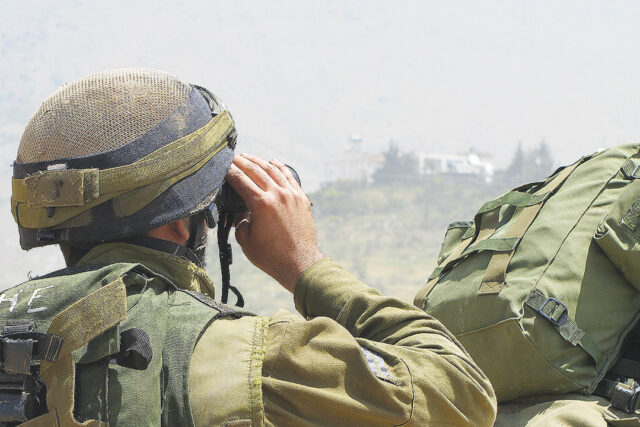
EXPLAINER | Why the Israel-Hezbollah conflict is heating up again

ISRAEL DEFENSE FORCES-WIKIMEDIA

A deadly rocket strike in the Israeli-occupied Golan Heights has added to concerns that Israel and the Iran-backed Lebanese group Hezbollah could be sucked into a full-scale war – something they have both previously indicated they want to avoid but for which they have also said they are ready.

Israel said on Sunday it would strike hard at Hezbollah after accusing the group of killing 12 children and teenagers in a rocket attack on a football field in the Israeli-occupied Golan Heights. Hezbollah denied any responsibility for the attack on Majdal Shams, the deadliest in Israel or Israeli-annexed territory since Hamas’ Oct. 7 assault sparked the war in Gaza.

This is the background to hostilities between Israel and Hezbollah:


WHY ARE THEY FIGHTING?

Hezbollah began trading fire with Israel on Oct. 8, a day after the Palestinian militant group Hamas attacked communities in southern Israel and sparked the Gaza war.

Hezbollah, a Hamas ally, says its attacks aim to support Palestinians who are under Israeli bombardment in Gaza.

The Gaza war has drawn in Iran-backed militants across the region. Hezbollah is widely deemed the most powerful member of the Iran-backed network, known as the Axis of Resistance.

Hezbollah has said repeatedly it will not halt its attacks on Israel unless a ceasefire in Gaza comes into force.

While linked to Gaza, the conflict has its own dynamics.

Israel and Hezbollah have fought numerous wars.

The last was in 2006.

Israel has long viewed Hezbollah as the biggest threat at its borders and has been deeply alarmed by its growing arsenal, and the foothold it has established in Syria.

Hezbollah’s ideology is largely defined by conflict with Israel. It was founded by Iran’s Revolutionary Guards in 1982 to fight Israeli forces that had invaded Lebanon that year, and waged years of guerrilla war that led Israel to withdraw from south Lebanon in 2000.

Hezbollah deems Israel an illegitimate state established on occupied Palestinian lands and wants to see it gone.


WHAT’S THE IMPACT SO FAR?

The current conflict has already taken a toll on both sides.

Tens of thousands of people have been forced to flee their homes on both sides of the border. Israeli airstrikes have pounded areas where Hezbollah operates in southern Lebanon and struck the Bekaa Valley near the Syrian border.

Israel has also occasionally hit elsewhere, notably killing a senior Hamas commander in Beirut on Jan. 2.

Israeli strikes have killed some 350 Hezbollah fighters in Lebanon and more than 100 civilians, including medics, children and journalists, according to security and medical sources and a Reuters tally of death notifications issued by Hezbollah.

The Israeli military said after Saturday’s attack the death toll among civilians killed in Hezbollah attacks had risen to 23 since October, along with at least 17 soldiers. Hezbollah denied it was responsible for Saturday’s attack.

In Israel, the displacement of so many Israelis is a big political issue. Officials had hoped they would be able to go home for the school year beginning Sept. 1 but that has looked increasingly unlikely as the standoff has continued.


HOW MUCH WORSE COULD IT GET?

A lot. Despite the ferocity of these hostilities, this is still seen as a relatively contained confrontation.

Israeli Prime Minister Benjamin Netanyahu warned in December that Beirut would be turned “into Gaza” if Hezbollah started an all-out war.

Hezbollah has previously signaled it is not seeking to widen the conflict while also saying it is ready to fight any war imposed on it and warning that it has used only a small part of its capabilities so far.

Any move by Israel to expand the conflict would be met by “devastation, destruction and displacement” in Israel, Hezbollah deputy leader Sheikh Naim Qassem said in an interview with Al Jazeera in June.

Past wars have inflicted heavy damage.

In 2006, Israeli strikes levelled large areas of Beirut’s Hezbollah-controlled southern suburbs, knocked out Beirut airport, and hit roads, bridges and other infrastructure. Nearly 1 million people in Lebanon fled their homes.

In Israel, the impact included 300,000 people fleeing their homes to escape Hezbollah rockets and some 2,000 homes destroyed.

Hezbollah has a far bigger arsenal than in 2006, including rockets it says can hit all parts of Israel.

It has demonstrated advances in its weaponry since October, shooting down Israeli drones, launching its own explosive drones into Israel, and firing more sophisticated guided missiles.

Israeli troops have invaded Lebanon several times in the past, reaching as far as Beirut in the 1982 invasion that aimed to crush Lebanon-based Palestinian guerrillas.


IS ESCALATION AVOIDABLE?

Much will depend on what happens in Gaza, where efforts to agree a ceasefire and a return of Israeli hostages have faltered. A ceasefire there could help bring about a rapid de-escalation of tensions in southern Lebanon.

The United States, which deems Hezbollah a terrorist group, has been at the heart of diplomatic efforts aimed at easing the conflict.

Hezbollah has signaled its eventual openness to an agreement that benefits Lebanon, but has said there can be no discussions until Israel halts the Gaza offensive.

Israel has also said it would prefer a diplomatic settlement that would restore security in the north, but says it is also prepared for a military offensive to achieve the same goal.

The U.S. official at the heart of diplomatic contacts, Amos Hochstein, brokered an unlikely diplomatic deal between Lebanon and Israel in 2022 over their disputed maritime boundary.

Hochstein said on May 30 he did not expect peace between Hezbollah and Israel but that a set of understandings could remove some of the impetus for conflict and establish a recognized border between Lebanon and Israel.

French proposal submitted to Beirut in February included elite Hezbollah fighters withdrawing 10 km (6 miles) from the frontier and negotiations aimed at settling disputes over the land border. – Reuters


Maduro wins third term, electoral authority says, contradicting exit polls

STOCK PHOTO | Image by Pete Linforth from Pixabay

 – Venezuelan President Nicolas Maduro has won a third term with 51% of the vote, the country’s electoral authority said just after midnight on Monday, despite multiple exit polls which pointed to an opposition win.

The authority said opposition candidate Edmundo Gonzalez won 44% of the vote, though the opposition had earlier said it had “reasons to celebrate” and asked supporters to continue monitoring vote counts.

Maduro, appearing at the presidential palace before cheering supporters, said his reelection is a triumph of peace and stability and reiterated his campaign trail assertion that Venezuela’s electoral system is transparent.

A poll from Edison Research, known for its polling of US elections, had predicted in an exit poll that Gonzalez would win 65% of the vote, while Maduro would win 31%.

Local firm Meganalisis predicted a 65% vote for Mr. Gonzalez and just under 14% for Maduro.

About 80% of ballot boxes have been counted, said national electoral council (CNE) president Elvis Amoroso in a televised statement, adding results had been delayed because of an “aggression” against the electoral data transmission system.

The CNE has asked the attorney general to investigate the “terrorist actions” Mr. Amoroso said, adding participation was 59%.

The opposition had earlier said voters had chosen a change after 25 years of socialist party rule.

“The results cannot be hidden. The country has peacefully chosen a change,” Mr. Gonzalez said in a post on X at around 11 p.m. local time, before the results were announced.

Opposition leader Maria Corina Machado reiterated a call for the country’s military to uphold the results of the vote.

“A message for the military. The people of Venezuela have spoken: they don’t want Maduro,” she said earlier on X. “It is time to put yourselves on the right side of history. You have a chance and it’s now.”

Venezuela’s military has always supported Mr. Maduro, a 61-year-old former bus driver and foreign minister, and there have been no public signs that leaders of the armed forces are breaking from the government. – Reuters

South Korea to support vendors hit by Qoo10 payment delays, founder pledges compensation

STOCK PHOTO | Image by Vilius Kukanauskas from Pixabay

 – South Korea will provide $400 million in financial support to small businesses hit by payment delays at two Qoo10 e-commerce platforms and the Singapore-based firm’s founder pledged to use his own assets to help compensate customers and vendors.

Seoul-based TMON and WeMakePrice have failed to make payments to merchants using their platforms since early July, with Qoo10 saying the problem was triggered by a glitch in its payment system.

The payment delays have prompted South Korean financial authorities to launch an investigation, some vendors to cut ties and long lines of customers at offices of both platforms last week demanding refunds. Vendors and customers are planning a protest later on Monday.

Missed payments by the e-commerce platforms have grown to around 210 billion won ($152 million), the government estimates.

South Korean financial authorities said they will provide low-interest loans for affected small businesses as well as extensions on repayments of existing loans and on tax payments.

“The government will utilize all available resources to minimize the damage,” Vice Finance Minister Kim Beom-seok told reporters.

Ku, the South Korean founder and CEO of Qoo10, apologized on Monday and said Qoo10 would secure emergency liquidity by drawing on overseas funds or by disposing of assets and stakes or using them as collateral.

“I will sell or use my entire stake in Qoo10, which is most of my assets, as collateral and use it to resolve this situation,” he said in a statement.

Qoo10 said it estimated damages to customers at around 50 billion won but it was difficult to give a figure for vendors.

The company has told authorities it aims to secure $50 million to remedy the situation but no detailed plan has been submitted, according to South Korea’s Financial Services Commission.

Qoo10 also has operations in Japan, North America, China, Hong Kong, Malaysia and Indonesia and owns two other South Korean e-commerce firms.

The company has not responded to Reuters requests for comment about the health of its other operations. – Reuters

Quad foreign ministers meet in Tokyo for talks on maritime, cyber security

STOCK IMAGE | Pixabay.com

 – Foreign ministers from Australia, India, Japan and the United States – a grouping known as the ‘Quad’ – met in Tokyo on Monday for talks expected to focus on maritime security and initiatives to build up cyber defenses.

The talks attended by Australia’s Penny Wong, India’s Subrahmanyam Jaishankar, Japan’s Yoko Kamikawa and Antony Blinken from the US, follow security discussions between Tokyo and Washington on Sunday where the allies labelled China the “greatest strategic challenge” facing the region.

“We all know our region and our world are being reshaped. We all understand we face the most confronting circumstances in our region in decades,” Ms. Wong said in opening remarks at the start of the Quad talks on Monday.

“We all cherish the region’s peace, stability and prosperity and we all know it is not a given, we all know we can’t take it for granted.”

In her opening remarks, Ms. Kamikawa highlighted the need to build up cybersecurity capability and provide training opportunities in maritime security to protect and develop prosperity in Indo-Pacific.

The US announced plans on Sunday for a major revamp of its military command in Japan to deepen coordination with its ally’s forces.

It was among several measures taken to address what the US and Japan said was an “evolving security environment”, noting various threats from China including its increasingly muscular maritime activities in the East and South China Seas.

“Now, we have conflicts: Gaza, Ukraine, South Sudan, they get a lot of attention, understandably,” Mr. Blinken said in his opening remarks to the Quad group.

“But even as we’re doing what we need to do, what we must to try to bring these conflicts to an end… we have not lost sight and indeed we are resolutely focused on this region that we share.”

After leaving Tokyo, Mr. Blinken and Mr. Austin will hold security talks with another Asian ally, the Philippines, as the Biden administration seeks to counter an increasingly bold China.

Mr. Blinken met his Chinese counterpart Wang Yi in Laos on Saturday and repeated that Washington and its partners want to maintain a “free and open Indo-Pacific”, according to a US readout of the meeting.