Home Blog Page 228

Panel report on flood mess sought

SENATE PRIB

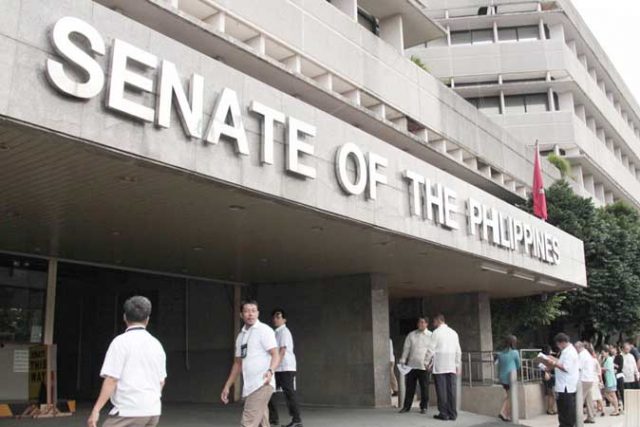
LEGAL practitioners have filed a petition with the Supreme Court (SC) seeking to compel the Senate Blue Ribbon Committee to officially release a draft partial report on its investigation into alleged anomalies in national flood control projects.

Petitioners Eldrige Marvin B. Aceron, Sikini C. Labastilla, and Purificacion Bartolome-Bernabe argued that the Senate’s refusal to disclose the document violates the constitutional right to information and that its invocation of deliberative process privilege is no longer valid.

The lawyers asserted that Committee Chairman Senator Panfilo “Ping” M. Lacson effectively waived this privilege through three weeks of detailed public disclosures regarding the report’s evidentiary basis and specific recommendations between Feb. 4 and 23.

“The Senate cannot use Chairman Lacson’s public statements to build public confidence in the investigation — as it clearly has —while simultaneously invoking privilege to deny citizens the document those statements describe,” part of the petition read.

“The right to information is not a gift from the state to the citizen. It is a guarantee the citizen holds against the state. It is time this Honorable Court enforced it,” the petitioners added.

In response, Mr. Lacson maintained that the draft remains a work in progress and is not subject to court intervention.

“What I know, and this is in consultation with a recently retired SC justice and an incumbent Court of Appeals justice is that matters that are ministerial in nature are not subject to mandamus and/or certiorari,” he said in a statement.

“This, aside from the fact that the draft partial committee report, unless adopted in plenary with all the amendments and finally approved by the body, is just a draft,” Mr. Lacson added.

According to the petitioners, the draft report names Senators Francis Joseph “Chiz” G. Escudero, Joel J. Villanueva, and Jose “Jinggoy” P. Ejercito Estrada, Jr. as subjects of recommended criminal and administrative charges.

Mr. Lacson previously assured the public and the Office of the Ombudsman that the recommendations were evidence-driven, based on testimonial and documentary materials gathered during hearings into systemic corruption, kickbacks, and ghost projects.

The filing also flagged the withdrawal of signatures by Senators Juan Miguel F. Zubiri, Joseph Victor G. Ejercito, and Sherwin T. Gatchalian. The petitioners also noted a “severe” conflict of interest involving Mr. Ejercito, who chairs the Ethics committee handling a complaint against Mr. Escudero while simultaneously withdrawing his signature from the Blue Ribbon report.

The petitioners are seeking an urgent temporary restraining order to prevent the Senate from altering or destroying versions of the draft that contain original signatures. They are also asking the High Court to order the three senators to provide written explanations for their signature withdrawals and to compel the release of the “full, complete, and unredacted” document as it existed in early February. — Erika Mae P. Sinaking

Removal of party-list limit backed

PHILIPPINE STAR/KJ ROSALES

THE Commission on Elections (Comelec) backed proposals to scrap the limit on party-list seats in the House of Representatives, noting that the cap undermines representation of marginalized groups.

“It is really unfair that we are putting a cap, when the votes of the people matter and should be based on proportional representation,” Comelec Chairman George Erwin M. Garcia told a Senate hearing on Monday, in mixed English and Filipino.

The Election chief added that Comelec sees no risks in the removal of the seat limit for party-lists, “to a certain extent it will give more weight to the votes of the electorate.”

Party-lists are limited to three seats in the House of Representatives, with parties receiving at least 2% of the total votes entitled to one seat and an additional seat for every 2% vote cast.

Mr. Garcia said that Comelec is also backing a proposal to implicate party-lists in the disqualification of their nominees.

“If the nominee is disqualified, the party-list should also be implicated, because that means… they allowed someone who is not qualified to run,” he added.

He said that this would allow parties to screen out their potential nominees for potential conflicts of interest.

The Senate Electoral Reforms panel conducted a public hearing on proposed measures to amend the country’s party-list system including the removal of the three-seat limit for party-lists, amid alleged failure to represent marginalized sectors.

The Philippine party-list system was created by the 1987 Constitution, with its framers seeing the system as allowing underrepresented sectors to participate in the lawmaking process. — Adrian H. Halili

March-May most fire-prone months

The Bureau of Fire Protection said March, April, and May are the most fire-prone months — BFP-NCR

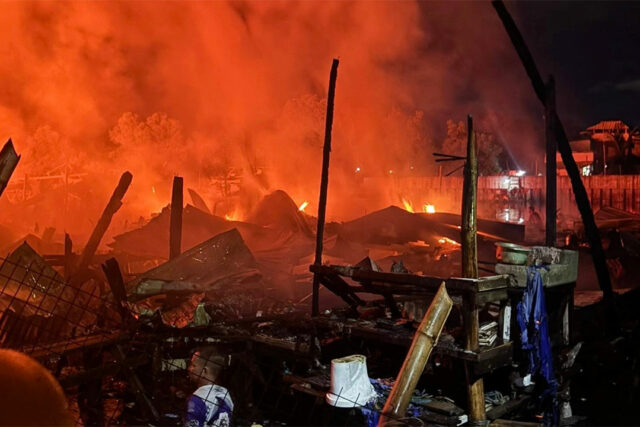
THE Bureau of Fire Protection (BFP) on Monday urged the public to be vigilant as March, April, and May remain the most fire-prone months in the country.

In a statement, the BFP said fire incidents in Metro Manila peak in March and April, with the highest number of fire incidents consistently being recorded in April.
In the past five years, 2024 recorded the highest number of fire incidents at 22,301, higher than 16,228 logged in 2025. The lowest was seen in 2021 at 12,812.
The BFP also identified the following villages as the most fire-prone areas: Payatas in Quezon City, Baseco Compound in Manila, Bagong Silang in Caloocan, the Maricaban area in Pasay, Barangay Western Bicutan in Taguig, and Barangay Tejeros in Makati.

“Fires don’t start big,” the BFP said. “They grow exponentially, doubling in size every 30 seconds. The first minutes of a fire are crucial, and the proper relay of complete and accurate information can make all the difference in emergency response.”

The BFP has improved the average nationwide fire emergency response time to 3-4.5 minutes through the Unified 911 system, which has centralized dispatch, GPS-based caller location, and stronger inter-agency coordination.
While a faster response can make a difference in saving lives, the BFP urged the public to closely monitor heat sources and avoid unattended stoves and open flames, noting that prevention remains the strongest defense.

The BFP also advised the public to check electrical systems for overloaded outlets, exposed wiring practice safe smoking habits, address malfunctioning appliances, and prepare a clear fire escape plan. — CAT

Senate OKs BARMM polls in Sept.

PHILSTAR FILE PHOTO

A MEASURE resetting the first parliamentary election for the Bangsamoro Autonomous Region in Muslim Mindanao (BARMM) in early September hurdled the Senate on Monday.

Through a unanimous vote, 21 senators approved on third and final reading Senate Bill No. 1823, which sets the first BARMM elections to Sept. 2026 from March 2026.

“Hopefully, this measure is passed on third reading in the House, so that the people of BARMM can also be confident that elections will be held and that there would no longer be postponements,” Senator Juan Miguel F. Zubiri, who sponsored the measure, told senators.

The BARMM polls were initially set for Oct. 2025 but were deferred to March 2026 after the Supreme Court declared two Bangsamoro parliamentary redistricting laws unconstitutional.

In January, the Commission on Elections (Comelec) deferred the elections anew due to operational hurdles and the belated approval of Parliament Bill No. 415 on Jan. 13, which establishes parliamentary districts in BARMM.

Under the Senate bill, the term of office for elected BARMM officials will start on Oct. 30, 2026, at noon and will end on June 11, 2031.

Subsequent elections will be held on the second Monday of May every three years starting in 2031, simultaneous with national and local elections. Elected officials will assume office on the 30th day following their elections.

The Comelec is ordered to draft implementing rules and regulations for the conduct of the polls, as well as enforce and administer national and local laws.

Republic Act No. 11054, the Bangsamoro Organic Law, which was signed in 2019, mandates parliamentary elections every three years. Since then, elections have faced multiple delays due to legal, operational, and political hurdles.

The September poll is seen as a critical step in consolidating the region’s autonomy, enabling residents to elect representatives to a fully functioning regional Parliament for the first time. — Adrian H. Halili

Senate concurs with PHL-UK treaty on transfer of sentenced persons

BW FILE PHOTO

THE Senate on Monday concurred with the ratification of a treaty between Manila and London, which would allow imprisoned Filipinos in the United Kingdom to serve their sentences in the Philippines.

During a Plenary session, 20 senators voted in favor of Senate Resolution No. 315, which concurs with the ratification of the treaty on the transfer of sentenced persons.

“This treaty will allow Filipinos convicted of crimes in the UK to serve their remaining sentence in the Philippines and facilitate their effective rehabilitation as they will be close to their families and friends, and be with other inmates with whom they share the same language and culture,” Senator Erwin T. Tulfo, who sponsored the resolution, said.

Under the agreement, a prisoner can be transferred back to their home country upon the consent of both governments, and the consent of the prisoner before a transfer can take place.

The treaty states that a sentencing country must authorize the transfer, while the receiving country must agree to enforce the judgment. The prisoner, on the other hand, must provide informed, voluntary consent after being made aware of the transfer conditions.

“The human rights and dignity of each person remain, whether they are inside or outside the prison. Under our Constitution, the government’s protection of a Filipino does not end just because he or she has committed a mistake in another country,” the senator added. — Adrian H. Halili

Comelec says voter registration in Middle East continues

PHILSTAR FILE PHOTO

THE Commission on Elections (Comelec) said on Monday that overseas voter registration activities in the Middle East are still ongoing amid heightened alert following direct military engagements involving Iran and coalition forces led by the United States and Israel.

“As of today, 2 March 2026 (Monday), overseas voter registration activities in Philippine Embassies and Consulates in the Middle East affected by the ongoing tensions and escalations in the region continue as Philippine Foreign Posts remain operational and open for consular services, including overseas voter registration,” the poll body said in a statement.

Comelec also urged the Filipino community in the region to remain vigilant against misinformation and disinformation, which tend to surge during periods of geopolitical instability.

“The Commission on Elections highly encourages our fellow Filipinos in the Middle East to stay alert and keep updated of the current situation in their respective areas, be vigilant against misinformation/disinformation and trust only reliable sources of information,” the Comelec added. “Take heed of the notice and advise from the Department of Foreign Affairs as well as the Philippine Embassy or Consulate, and contact help lines if in distress.”

The ongoing registration drive, which began on Dec. 1, 2025, is part of preparations for the 2028 Philippine national and local elections and runs until Sept. 30, 2027. — Erika Mae P. Sinaking

BoC seizes P112-M illegal drugs in NAIA operations

PHILIPPINE STAR/MIGUEL DE GUZMAN

THE Bureau of Customs (BoC) on Monday said it seized more than P112 million worth of illegal drugs upon the arrest of a Malaysian national at the Ninoy Aquino International Airport (NAIA) Terminal 1.

“The baggage of the arrested individual was flagged by Customs personnel for inspection, which led to the discovery of the illegal drugs concealed inside his checked-in luggage,” the BoC said in a statement on Monday.

“Authorities recovered approximately 16.526 kilograms of white crystalline substance suspected to be methamphetamine hydrochloride, commonly known as shabu,” it added.

The suspect was subjected to inquest proceedings for violation of the Comprehensive Dangerous Drugs Act of 2002.

The operation was led by the BoC through its Customs Anti-Illegal Drugs Task Force, in close coordination with the NAIA-Inter-Agency Drug Interdiction Task Group.

Customs Commissioner Ariel F. Nepomuceno said that the operation aligns with the directive of President Ferdinand R. Marcos, Jr. to intensify the campaign against illegal drugs and strengthen border protection measures. — Justine Irish D. Tabile

PSEi plummets to 6,400 level amid Iran conflict

PHILIPPINE STAR/KRIZ JOHN ROSALES

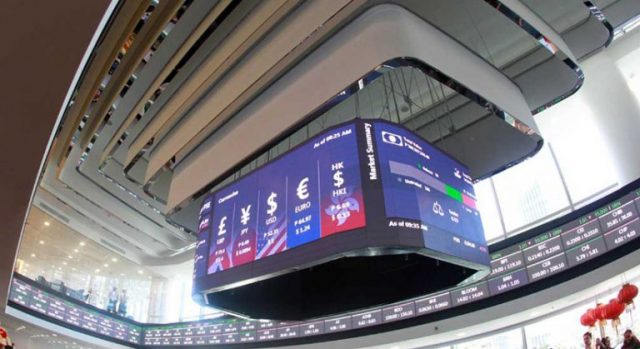
PHILIPPINE STOCKS closed lower on Monday, with the main index sliding back to the 6,400 range as worries over the escalating conflict in the Middle East triggered a sell-off.

The Philippine Stock Exchange index (PSEi) decreased by 2.78% or 184.41 points to close at 6,426.83, while the broader all shares index went down by 2.01% or 73.38 points to end at 3,567.86.

This was the biggest single-day drop posted by the PSEi since it plunged by 4.3% or 261.34 points on April 7, 2025.

It was also the benchmark’s lowest close since Feb. 19’s 6,407.15.

“The local market plunged by the week’s open as investors digested the ongoing conflict between the US and Iran, which is expected to negatively affect the local economy mainly through higher oil prices,” Philstocks Financial, Inc. Research Manager Japhet Louis O. Tantiangco said in a Viber message.

“The local index closed sharply lower as escalating global conflict triggered a broad-based sell-off across sectors, dampening overall market sentiment,” Regina Capital Development Corp. Head of Sales Luis A. Limlingan said in a Viber message.

Oil prices surged 9% on Monday after shipping in the crucial Strait of Hormuz was disrupted by retaliatory Iranian attacks following initial bombing by Israel and the United States that killed Iranian Supreme Leader Ali Khamenei, Reuters reported.

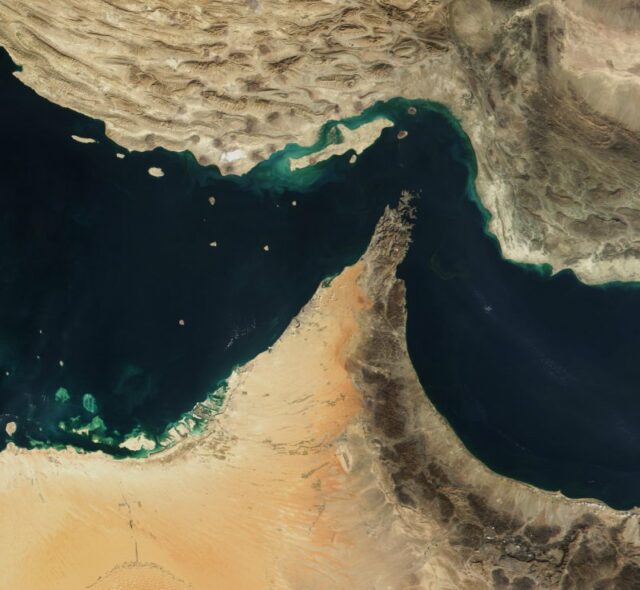
A sustained exchange of counterattacks damaged tankers and sharply disrupted shipments in the Strait of Hormuz, a waterway between Iran and Oman that connects the Gulf to the Arabian Sea.

Most sectoral indices ended lower on Monday. Services slid by 4.11% or 117.20 points to 2,732.86; holding firms plunged by 2.74% or 143.04 points to 5,076.53; industrials retreated by 2.33% or 220.50 points to 9,228.59; financials dropped by 1.77% or 38.56 points to 2,129.64; and property decreased by 0.82% or 18.16 points to 2,176.56.

Mining and oil was the lone gainer, rising by 0.1% or 20.14 points to 19,943.29.

“Only the miners posted gains as investors went for precious metal related stocks amid geopolitical tensions offshore,” Mr. Tantiangco said.

“Risk-off sentiment prevailed throughout the session, with investors trimming exposure amid heightened geopolitical uncertainty, while some rotated into commodity-backed assets, such as gold and oil, which are traditionally viewed as defensive hedges during market stress,” Mr. Limlingan added.

Decliners overwhelmed advancers, 159 to 53, while 52 names closed unchanged.

Value turnover dropped to P9.12 billion with 1.19 billion shares traded from the P19.62 billion with 1.23 billion issues that changed hands on Friday.

Net foreign selling was at P784.64 million, a reversal of the P915.72 million in net buying recorded in the previous session. — Alexandria Grace C. Magno with Reuters

First offshore wind auction set for August

WORLDBANK.ORG

THE FIRST green energy auction (GEA) round dedicated to offshore wind power projects is set to take place on Aug. 27, according to the Department of Energy (DoE).

The auction was scheduled after the Energy Regulatory Commission issued the green energy auction reserve (GEAR) price to guide bidders. It was set at P11 per kilowatt-hour.

Interested parties have 14 days to register starting March 2, with the list of qualified bidders scheduled to be published on July 3, the DoE said in a statement on Monday.

A pre-bid conference will be held on July 16 to outline the bidding rules and technical, and financial requirements for prospective developers.

After the auction proper, the bids will undergo evaluation by the Bids Evaluation and Awards Committee, followed by validation by the technical working group.

The list of winning bidders will be announced starting Sept. 23.

The fifth GEA (GEA-5) round focuses on fixed-bottom offshore wind technology, with an installation target of 3,300 megawatts and a delivery commencement period of 2028 to 2030.

“GEA-5 marks a major stride towards a more sustainable energy future for the Philippines,” the DoE said. “The initiative aims to expand the share of renewable energy in the national energy mix, strengthen grid reliability, and enhance long-term energy security through large-scale offshore wind development.”

The Philippines is hoping to start generating offshore wind power by 2028 in the course of diversifying its energy sources and reducing dependence on fossil fuels.

It expects offshore wind to play a key role in achieving the target of increasing renewable energy’s share in the power mix to 35% by 2030 and 50% by 2040. — Sheldeen Joy Talavera

Iran crisis seen driving up agri production costs

THE STRAIT OF HORMUZ — WIKIPEDIA

By Vonn Andrei E. Villamiel, Reporter

RISING OIL PRICES triggered by the recent US-Israeli attacks on Iran are expected to increase production costs for Philippine farmers and fisherfolk, adding pressure on producer incomes and consumer food prices, analysts said.

Former Agriculture Secretary William D. Dar said the main risk comes from the closure of the Strait of Hormuz, a key shipping lane through which 20% of the world’s oil passes.

“If the closure is long, this will increase oil prices, impacting countries including the Philippines. Higher cost of food production will happen with increased oil prices,” he told BusinessWorld via Viber.

Roehlano M. Briones, senior research fellow at state think tank Philippine Institute for Development Studies, told BusinessWorld via Viber that the impact on agriculture will depend on the extent of fuel price increases, with fisheries likely to be the hardest hit.

Even before the attacks on Iran, fisherfolk group Pambansang Lakas ng Kilusang Mamamalakaya ng Pilipinas (PAMALAKAYA) pointed to the successive diesel price hikes, which it said are limiting the time fisherfolk can spend at sea, cutting into their income.

“From the usual six to eight hours at sea, fisherfolk now spend only about four hours fishing, as this is all they can afford,” the group said in an earlier statement.

PAMALAKAYA estimates that fuel expenses account for about 80% of total production costs for small-scale fishers.

Rosendo O. So, chairman of the Samahang Industriya ng Agrikultura, said increased oil prices will also affect the farming sector, as diesel powers mechanized farm equipment, irrigation pumps, and transportation.

“Farmers use fuel at every stage, for irrigation pumps and tractors during planting, for harvesters, and for transporting produce to the market. Any increase significantly raises production costs,” he told BusinessWorld by phone.

Danilo V. Fausto, president of the Philippine Chamber of Agriculture and Food, Inc. said the Middle East crisis will likely raise costs for fertilizer users.

“The war on Iran is expected to increase prices of fuel (and) will likely increase the cost of agricultural inputs, especially inorganic fertilizers that are by-products of oil,” he told BusinessWorld via Viber.

Agriculture Secretary Francisco P. Tiu Laurel, Jr. told BusinessWorld that the Department of Agriculture is currently assessing possible interventions for farmers and fisherfolk.

“We are studying now what we can assist them with. I hope this conflict in the Middle East does not last long,” he said via WhatsApp.

Fish landed at regional ports up 2.7% in Jan.

PHILIPPINE STAR/ MICHAEL VARCAS

THE Philippine Fisheries Development Authority (PFDA) said fish landed at regional fish ports totaled 40,460 metric tons (MT) in January, up 2.7% from a year earlier.

In a statement, the PFDA said the General Santos Fish Port Complex posted the highest volume for the month, with 24,908 MT of fish landed.

The Navotas Fish Port complex recorded the second-highest volume of fish landed in January at 14,843 MT.

The PFDA said the Davao Fish Port Complex posted the largest year-on-year increase, with volume rising almost fourfold to 1,719 MT.

Fish unloaded at the Iloilo Fish Port Complex rose 9.91% in January to 1,750 MT.

The volume of fish landed at the Lucena Fish Port Complex in Quezon inched up to 1,602 MT, while fish landed at the Zamboanga Fish Port Complex rose 22.8% to 425 MT.

The Bulan Fish Port Complex in Sorsogon posted landed volume of 1,041 MT.

“A further increase in unloading is also expected in February with the opening of the annual fishing season in the waters of the Zamboanga Peninsula, Northern Palawan, and the Visayan Sea,” the PFDA said. — Vonn Andrei E. Villamiel

Gypsum board imports subject to anti-dumping duties

NATURLOOP.COM

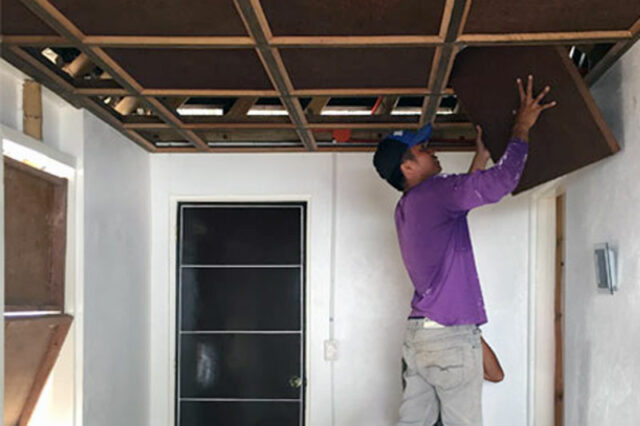
THE PHILIPPINES started imposing an anti-dumping measure against gypsum board imports on Feb. 27 that will run for five years, the Bureau of Customs (BoC) said.

In a memo issued last week, the BoC said the measure was implemented in the Electronic-to-Mobile System on Friday.

The measure covers imports of standard gypsum board, those faced or reinforced with paper, or paperboard only.

According to the Department of Trade and Industry’s (DTI) Bureau of Import Services (BIS), the measure will be in place for five years from Feb. 27, 2026.

The DTI had recommended a dumping margin of 8.52%, calculated based on the export price, on products from Thailand’s Gypman Tech Co. Ltd.

Meanwhile, a dumping margin of 9.18% was imposed on products from Thai Gypsum Products PCL and other Thai exporters.

Anti-dumping investigators found that the volume of imports of standard gypsum board at dumped prices accounted for 71% of total Philippine imports of standard gypsum board between 2019 and September 2024.

The dumped imports, the DTI said, accounted for almost 40% of consumption during the period.

As of March 2, the BIS said the BoC has released the memorandum circulars required to impose anti-safeguard and dumping measures.

From 2018 to 2025, the government investigated 18 trade remedy cases, which include safeguard or anti-dumping measures for cement, ceramic tiles, float glass, liquefied petroleum gas, and corrugating medium.

Collections from trade remedy measures are part of BoC collections.

In the first two months, the BoC collected P154.75 billion, up 2.5% from P151.02 billion a year earlier.

Last month, the BoC collected P73.8 billion, up 1.7% from a year earlier.

“The entire bureau delivered more than the expected financial target for February. This is contrary to the expectation that, during the month of the Chinese New Year, bababa ’yung collection natin (collections will fall),” Customs Commissioner Ariel F. Nepomuceno said in a statement on Monday.

“We were able to prove, with the efforts of everyone, especially our port collectors, that it can be done — with the proper assessment, with the stricter implementation of enforcement rules, and with the due diligence of our deputy commissioners,” he added. — Justine Irish D. Tabile

ADVERTISEMENT
ADVERTISEMENT