Home Blog Page 2211

Islamic finance

FREEPIK

When I began my career as a reporter for BusinessWorld more than 30 years ago, I was assigned to the Banking beat under Gert Chavez after a brief stint in Research with Dick Puig. Coming from a background in Political Science and a minor in Economics, my knowledge of banking and finance was rudimentary at best. Suffice to say, I was as clueless as a blank ledger back then.

Looking back, I am deeply grateful for that stint in Banking, which forced me to learn about the intricate world of government financial institutions, foreign banks with full operations (of which there were only four at the time: Bank of America, Standard Chartered, Citibank, and Hong Kong and Shanghai Banking Corp.), development and rural banking, and Islamic finance.

Admittedly, I initially struggled to understand why there was a need for a separate banking system specifically for Islamic finance and how it differed from mainstream banks. However, after thorough briefings on its principles, I came to realize that Islamic banking is not merely a religious mandate but an alternative financial system. It provides profit-based financing instead of interest-based loans, as prescribed by Shari’ah or Islamic law.

Based on the 2020 census, Muslims comprise about 6% of the Philippine population, roughly seven million people. Islamic banking primarily caters to this community, but its significance goes beyond providing services to Filipino Muslims. Promoting the growth of Islamic finance in the Philippines could help attract investments from Arab countries and regional neighbors such as Indonesia, Malaysia, and Brunei.

In 2022, the Philippine government issued its first-ever Islamic or “Sukuk” bonds. These 5.5-year dollar-denominated bonds raised approximately $1 billion, with 30% reportedly purchased by Middle Eastern investors. Unlike conventional bonds, Sukuk grants investors ownership rights in assets or projects instead of interest payments, adhering to the principles of Islamic finance.

Over three decades ago, the government-owned Al-Amanah Islamic Investment Bank was the sole institution engaged in Islamic banking in the Philippines. Fast forward to today, only Maybank Philippines and CARD Bank, Inc., which recently opened an Islamic banking branch in Cotabato City, have joined the field. Additionally, two insurance companies now offer Islamic insurance or takaful, further expanding Sharia-compliant financial services in the country.

Islamic banking deserves a closer look for its potential and growth prospects. However, many policymakers, businesses, and the public remain unfamiliar with the principles of Islamic finance. Addressing this knowledge gap is essential to ensure successful implementation. Congress may also need to revisit the Islamic Banking Act (RA 11439) to explore ways of better supporting Sharia-compliant banking, such as through tax incentives for investors.

Equally important, Islamic banks must clearly differentiate themselves in the market and prove their value proposition not just to the Muslim community but to non-Muslims as well. Collaboration with international Islamic financial institutions may play a critical role in achieving this. The Islamic banking industry needs to prove itself capable, reliable, and dependable.

While deeply rooted in Islamic law, Islamic banking emphasizes universal values such as ethics, equity, and shared prosperity — principles that resonate with both Muslims and non-Muslims. It prioritizes ethical investments and risk-sharing, setting it apart from conventional banking, which relies on interest (riba) and speculative practices (gharar). Moreover, it prohibits investments in haram industries like gambling and alcohol.

The Philippines stands to benefit from promoting Islamic banking. For one, it discourages exploitative practices like charging or earning interest. Instead, investments are tied to tangible assets and real economic activities. Islamic banking also discourages excessive speculation and emphasizes sustainable, ethical growth.

Key Islamic banking principles include Murabaha (Cost-Plus Financing), where the bank purchases an asset and sells it to the client at a markup, ensuring transparency and shared risk; Ijara (Leasing), where the bank buys an asset and leases it to the client, allowing the client to benefit without ownership burdens; Musharaka (Partnership), where the bank and the client contribute capital, sharing profits and losses equitably; and, Mudaraba (Profit-Sharing), where the bank provides the capital, and the client manages the investment, dividing profits based on pre-agreed terms.

Approximately 20 years ago, during a visit to Singapore, I had the opportunity to listen to then Senior Minister Goh Chok Tong explain Singapore’s strategy to attract Middle Eastern investments. In the wake of the 9/11 attacks, when Arab investors faced increased scrutiny in the West, Singapore seized the opportunity to position itself as a hub for Islamic finance. This strategic foresight is something the Philippines could emulate.

Islamic finance can empower Filipino Muslims, particularly in underserved regions like BARMM, by providing access to culturally sensitive banking services. It can also encourage financial inclusion, bringing more of the unbanked population into the formal economy. This, in turn, fosters greater economic participation and regional development.

Globally, countries like the United Kingdom have embraced Islamic finance through institutions such as Al Rayan Bank and sovereign Sukuk issuances. Japan and South Korea are also exploring Islamic finance to attract Middle Eastern investments, while Singapore and Hong Kong have emerged as regional hubs for Islamic banking in Asia. These initiatives highlight the potential of Islamic finance to strengthen trade relations and economic ties with Islamic nations.

The Philippines, too, can leverage Islamic banking to attract investments in halal industries, infrastructure, and renewable energy. Additionally, it could target tourism from Islamic countries, not just in the Middle East but also in Africa and Southeast Asia. Islamic banking is more than an alternative financial system; it serves as a bridge to inclusivity, cultural recognition, and economic prosperity.


Marvin Tort is a former managing editor of BusinessWorld, and a former chairman of the Philippine Press Council


matort@yahoo.com

Punters throng London’s historic Christmas meat auction

MEAT TRADERS flung cheap turkeys to the highest bidders in a public auction at London’s historic Smithfield Market on Tuesday, a long-standing Christmas tradition whose future now hangs in the balance.

For around 900 years, the site in the City of London financial district has been a hub for meat and livestock trading, at one point attracting sellers from all over England and produce from as far as Argentina and Australia.

But city authorities’ decision last month to close Smithfield Market, a move that will free up prime real estate for future redevelopment, means its future is uncertain.

The market can operate at Smithfield until 2028 and most meat traders have said they plan to move to a new location after that within London.

For decades crowds of punters have braved the cold and thronged Smithfield Market on Christmas Eve to snap up surplus produce at bargain prices, exchanging cash — and only cash — for legs of lamb or cuts of red meat tossed into the crowd.

“The atmosphere is fantastic,” Smithfield Market Tenants Chairman Greg Lawrence said. “To a lot of people it’s the beginning of Christmas. They come up here early, they go to breakfast, they come to the auction, they purchase their goods, then they go to the pub.”

Hundreds of people, some in Santa hats and others holding up placards with meat orders, gathered in Smithfield’s Victorian market building.

Punters held up banknotes to grab the attention of butchers in white coats often throwing a turkey or ribeye into the crowd, eliciting loud cheers.

Some in the crowd said they came for the bargains, while others said they loved the atmosphere.

“Everyone’s so friendly and everyone’s rooting for everyone to get something for Christmas Day,” Sharon, who only gave one name, said. “It’s amazing.” — Reuters

BoJ’s Ueda expects further progress in hitting price target next year

WIKIPEDIA.ORG

TOKYO — The Bank of Japan (BoJ) expects the economy to move closer to sustainably achieving the central bank’s 2% inflation target next year, Governor Kazuo Ueda said on Wednesday, suggesting the timing of its next interest rate increase was nearing.

But he warned of the need to scrutinize the fallout from “high uncertainties” surrounding overseas economies, especially the economic policies of the incoming US administration of President-elect Donald J. Trump.

The outlook for next year’s wage negotiations between Japanese firms and unions is also key, Mr. Ueda said in explaining factors the central bank would scrutinize in setting policy.

“The timing and pace of adjusting the degree of monetary accommodation will depend on developments in economic activity and prices as well as financial conditions going forward,” Mr. Ueda said in a speech to business lobby Keidanren.

The remarks underscore the BoJ’s resolve to keep pushing up short-term rates from the current 0.25% next year. Most analysts expect the bank to raise rates to 0.5% in January or March.

The BoJ ended negative interest rates in March and raised its short-term policy target to 0.25% in July. It has signaled a readiness to hike again if wages and prices move as projected.

Consumption has shown signs of improvement as intensifying labor shortages push up wages, Mr. Ueda said, stressing progress Japan has made in durably achieving the BoJ’s price target after years of aggressive monetary stimulus.

In the current phase of transition towards achieving 2% inflation in a sustainable manner, the BoJ will support the economy by keeping its policy rate lower that levels neutral to the economy, Mr. Ueda said.

But if the economy continues to improve, the BoJ will raise rates, as maintaining excessive monetary support for too long could heighten inflationary risks, he said.

“Our projection is that the virtuous cycle will further intensify and that Japan’s economy will move closer to sustainable and stable 2% inflation, accompanied by wage increases,” Mr. Ueda said on the prospects for 2025.

“Prices of a wide range of goods and services have begun to rise moderately recently, reflecting increasing wages. Against this background, we judge that sustainable and stable achievement of our 2% inflation target is now within sight.”

The speech followed remarks Mr. Ueda made last week calling for the need to await more information on Mr. Trump’s policy stance and domestic wage developments before hiking borrowing costs again.

Those remarks at a press conference after the BoJ kept rates steady, were interpreted by investors as dovish, helping push the yen to its weakest since July and triggering warnings by Japanese authorities.

Japan must see wages rise at levels consistent with 2% inflation, Mr. Ueda said on Wednesday, adding that high profits achieved by big firms must be distributed to smaller firms and households for the economy to durably meet the BoJ’s inflation target.

“We will examine how wage hikes by small and midsize firms will evolve, using our network of branches,” Mr. Ueda said.

The BoJ will release its quarterly report on regional economic conditions on Jan. 9, which will likely include its view on whether wage hikes are spreading nationwide.

The report will likely be among factors the BoJ’s board will scrutinize for its next policy decision on Jan. 24. Reuters

Microsoft works to add non-OpenAI models into 365 Copilot products, sources say

REUTERS

MICROSOFT has been working on adding internal and third-party artificial intelligence (AI) models to power its flagship AI product Microsoft 365 Copilot, in a bid to diversify from the current underlying technology from OpenAI and reduce costs, sources familiar with the effort told Reuters.

It is the latest effort by Microsoft, which is a major backer of OpenAI, to lessen its dependence on the AI startup — a departure from recent years when Microsoft touted its early access to OpenAI’s models. When Microsoft announced 365 Copilot in March 2023, a major selling point was that it used OpenAI’s GPT-4 model.

Microsoft is also seeking to reduce 365 Copilot’s reliance on OpenAI due to concerns about cost and speed for enterprise users, according to the sources, who requested anonymity to discuss private matters.

A Microsoft spokesperson said OpenAI continues as the company’s partner on frontier models, a term for the most advanced AI models available. The original agreement between the two companies allows the software giant to customize OpenAI’s models.

“We incorporate various models from OpenAI and Microsoft depending on the product and experience,” Microsoft said in a statement. OpenAI declined to comment.

In addition to training its own smaller models including the latest Phi-4, Microsoft is also working to customize other open-weight models to make 365 Copilot faster and more efficient, the sources added.

The goal is to make it less expensive for Microsoft to run 365 Copilot, and potentially pass along those savings to the end customer, one of the sources said.

Microsoft’s leaders, including Chief Executive Officer Satya Nadella, are tracking the efforts closely, the same source added.

The move mirrors those of other Microsoft business units which have changed the ways in which they use OpenAI models. GitHub, which Microsoft acquired in 2018, added models from Anthropic and Google in October as alternatives to OpenAI’s GPT-4o. Its consumer chatbot Copilot, revamped in October, is now powered by in-house models as well as OpenAI models.

Microsoft 365 Copilot, an AI assistant built in to Microsoft’s suite of enterprise software including Word and PowerPoint, is still trying to prove its return on investment to enterprises. Microsoft has not shared specific sales data on the number of licenses sold, and there have been concerns about pricing and utility. A survey of 152 information technology companies showed the vast majority of them had not progressed their 365 Copilot initiatives past the pilot stage, research firm Gartner said in August.

Still, analysts at BNP Paribas Exane said they have seen an acceleration in adoption, and expect Microsoft to sell 365 Copilot to more than 10 million paid users this year. Microsoft also said in a November blog post that 70% of Fortune 500 companies are using 365 Copilot. — Reuters

Regulation of Philippine crypto service providers may encourage adoption

BW FILE PHOTO

By Revin Mikhael D. Ochave, Reporter

A PLAN by the Securities and Exchange Commission (SEC) to regulate cryptocurrency asset service providers in the Philippines could boost investor protection and entice more Filipinos to adopt the digital currency, analysts said. 

“This marks an important step toward a more organized and secure crypto landscape in the Philippines,” Arlone P. Abello, founding chairman at Innovative Movement of the Philippine Association of Crypto Traders, said in an e-mailed reply to questions.

“The proposed rules are an important milestone in providing investor protection, while creating a structure that can guide both new and established players in the crypto space,” he added.

Mr. Abello, also the chief executive officer at Global Miranda Miner Group, a crypto education platform, said the draft rules are also critical for traders. “Clearer regulations will help prevent fraud, reduce risks for traders and foster a more transparent market.”

“As the crypto industry in the Philippines continues to grow, these rules can help ensure that traders have a clearer understanding of their rights and obligations, creating a safer environment for everyone involved,” he added.

On Dec. 20, the corporate regulator issued draft rules on crypto service providers. Comments on the draft rules may be submitted until Jan. 18, 2025.

Under the rules, crypto providers must be a SEC-registered stock corporation, have at least four staff members living in the Philippines and meet the minimum capital requirements.

Service providers must be able to prevent and detect market abuse. The rules prohibit market manipulation, insider trading and disclosure of material and nonpublic information.

“Overall, it is very good to see… local regulations toward crypto players,” Jiro Luis S. Reyes, chief executive officer at crypto education platform Bitskwela, said in an e-mail. “I would like to stress the importance of support for educational efforts in the Philippines.”

He suggested a separate subclassification for crypto service providers that operate differently, such as a company offering trading of crypto assets versus a marketing company.

Mr. Reyes also sought clearer rules on the circumstances where the SEC can remove a crypto asset on an exchange to protect investors. “The phrase ‘in the interest of investor protection’ has been misused locally and internationally a lot of times.”

Nancy M. Ocampo-Omadto, chief legal counsel at crypto over-the-counter service Moneybees, said the SEC might have forgotten to include transitory provisions for the benefit of existing virtual asset service providers registered with the Bangko Sentral ng Pilipinas (BSP).

BSP Circular No. 1108, dated Jan. 26, 2021 treats crypto as virtual assets.

The government imposed a three-year moratorium on virtual asset service provider licenses due to risks to the financial system. The moratorium may be lifted next year.

Turning the tables

FREEPIK

PLAYING the persecuted victim, after being portrayed as a bully and villain, turns the tables on critics and adversaries. It is a marketing technique like “rebranding” of a product or personality.

Can a road rage incident caught on video turn an overbearing VIP berating a traffic enforcer from bully to the victim of police abuse instead? The traffic cop relates catching the car owner using the bus lane illegally, complete with flashing lights and horn-blowing. His narrative is one of being picked on by an abusive VIP just for doing his job. Add to that the fancy car of the apprehended traffic violator. The plate number of the vehicle is identified, with the car owner’s full name and address. 

With all the media coverage, the VIP comes out of hiding. He is exclusively interviewed in an undisclosed place by invited media. The traffic violator presents himself as a victim. He was accosted while in his car on the special bus lane. Was this apprehending cop a hitchhiker, or worse a highway robber? Who knew?

The original beaten-up traffic enforcer, now healed of the bruises inflicted on him, is now projected as the villain who provoked the incident. (Why did he not identify himself? Anybody can wear a fake uniform of a traffic enforcer.)

There is then the convenient surfacing of “other victims” of abusive cops. As if following a script, apprehended Grab drivers, sidewalk vendors, and other vagrants denounce the now abusive traffic enforcer by name.

So, this teleserye ends with the bruised and battered enforcer now looking healed, assuming a new role as villain. (Does he have a good lawyer too?)

The growing PR function of lawyers now includes being the spokesperson of the accused and dealing with media. The client is made to look contrite and misunderstood (I thought he wanted to extort me) while the lawyer makes sure the script is holding together — we wish to settle this case, even if our client is the victim here. (Did you hear the table creak when it turned?)

The pattern of playing the victim card seems to be a standard defense tactic. It can be used for road rage as well as other crimes of personal violence like wife-beating (I was the victim of her infidelity) or even rape (her attire was provocative, and she seemed to consent to my advances. I was entrapped.)

Does turning the tables work in political situations too? Is it possible to rebrand a bully being investigated for unaccounted expenditures into the sympathetic victim of political intrigue? (I could have headed the ticket.)

What is needed to rebrand a natural bully and overlook charges of unaccounted budget depletion into a victim of powerful forces out to get her? Defenders of the bully who publicly issues threats if “something happens to her” are not limited to defining such pronouncements as “conditional threats.” Is it okay to dismiss a threat if it is on condition of being first its casualty?

The victim card requires the coverage of media which always likes this sort of mayhem, switching the interviewer from one side to the other and assisting in the obfuscation of the issue by bringing in other character witnesses who play supporting roles in the drama.

Supporters of the bully jump into the fray. They change the topic to the higher dollar remittances from OFWs, then, if they ever go back to the subject of traffic enforcers or congressional investigations, they may include infrastructure, and not missing intelligence funds.

There will always be stories of conflicts, complete with villains and victims. Switching roles, especially when one has already been a media personality in the past, can be challenging. Sometimes, villains just get too comfortable with their old roles. Investigations only reinforce past misdeeds.

This tale of villain and victim switching roles doesn’t always go according to plan. Sometimes, a long history of being a villain makes it difficult to turn the tables and be convincing as a victim. Certain villains with their aggressive bullying tactics from before are always perceived as rogues.

While the wolf in sheep’s clothing may prey on the flock, one that growls too loudly may find it difficult to blend in. Some wolves just can’t behave like sheep. They just stand out in the herd.


Tony Samson is chairman and CEO, TOUCH xda

ar.samson@yahoo.com

Greece’s former royal family regains citizenship

GREECE’S former royal family has been granted Greek citizenship and pledged loyalty to the republic in a landmark move 50 years after the country abolished the monarchy.

Ten members of the family, including the children and grandchildren of former King Constantine who died in 2023, applied for citizenship last week.

The former royals welcomed the decision with a statement on Monday saying that the passing of their father and grandfather had marked the end of an era.

However, their choice to use the surname De Gréce – which in French means “of Greece” – has angered leftwing politicians who claim a nobility title is unconstitutional.

“The surname they have chosen proves that they want to maintain a myth,” said Nikos Androulakis, leader of the center-left PASOK party, the main opposition.

The former royals said picking a surname was a prerequisite for the reinstatement of their nationality, the loss of which had rendered them stateless and caused significant emotional distress. The family, they said, was and would be loyal to Greece.

“It is with deep emotion that, after thirty years, we hold the Greek citizenship again,” they said.

Greece’s former King Constantine II ascended to the throne in 1964 but his reign was marred by political instability that culminated in a military coup on April 21, 1967.

After the fall of the junta in 1974, Greeks rejected monarchy in a referendum, making Constantine the last king of Greece. Athens stripped him of his citizenship in 1994 and defined the terms under which he and his family could be recognized as Greek nationals.

Leftist parties said that migrants working in Greece were having to wait for decades to get citizenship, despite meeting the criteria, and accused the conservative government of trying to win votes.

The government says the issue is a formality and that democracy can protect itself. — Reuters

Thai government candidate for key central bank role in doubt

REUTERS

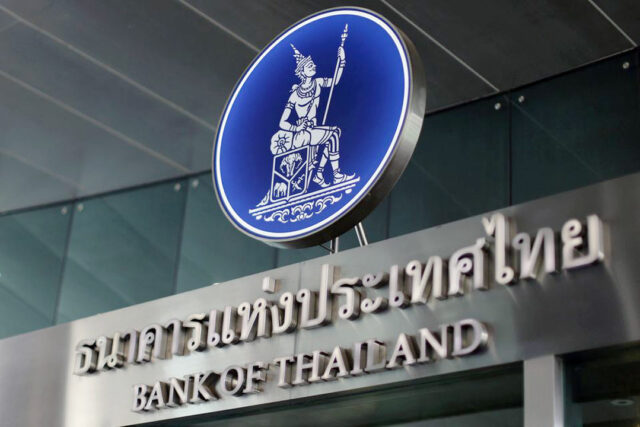
BANGKOK — The selection of a Thai ruling party loyalist for an influential central bank role looked in doubt on Tuesday after media reports and a source said the state advisory council had deemed him unqualified for the position.

The nomination of Kittiratt na Ranong by the government, first reported by Reuters, was met by strong opposition and concern about political influence on the independent Bank of Thailand, including from more than 800 economists and academics, and several former central bank chiefs.

If confirmed as the central bank’s new board chair, Kittiratt would not be able to direct interest rates, but the board can influence policy by selecting the monetary policy committee.

The next chair will also have some influence on the selection of the successor to governor Sethaput Suthiwartnarueput, who completes his term in September 2025.

The government has been pressuring the central bank this past year to cut interest rates and Kittiratt has been a critic of its governor. He also clashed frequently with the central bank when he was finance minister between 2012 and 2014.

Despite the opposition, an independent panel selected Kittiratt last month but the cabinet waited with its approval for the advice of the Office of the Council of State, which governments consult on legal issues, policy and appointments.

Several Thai media outlets on Tuesday said the council saw Kittiratt as unqualified because he had served in the past year as a government adviser and could not be deemed politically neutral.

The information was confirmed by a person with knowledge of the proceedings, who declined to be identified because he was not authorized to speak on the issue.

The council did not immediately respond to a Reuters request for comment, but Thai media quoted its secretary-general as saying a conclusion had not yet been reached.

Another source with knowledge of the matter also said the council was still discussing the matter.

Kittiratt thanked for the nomination in a Facebook post without addressing the media reports.

“I have volunteered to work for the country,” he said on Tuesday, without elaborating.

Finance Minister Pichai Chunhavajira said that if the council deemed Kittiratt unqualified, new candidates would need to be chosen.

“Suppose (Kittiratt) doesn’t pass, we have to talk about it. We have to hurry and propose again. The selection committee is on standby, ready for everything,” he told reporters on Tuesday.

Kittiratt, a former stock exchange president, last week stressed that as a board chair he would have no power to influence monetary policy and would only “intervene with thoughts.” Reuters

Apple seeks to defend Google’s billion-dollar payments in search case

The Apple logo hangs in a glass enclosure above the 5th Ave Apple Store in New York, Sept. 20, 2012. — REUTERS

APPLE has asked to participate in Google’s upcoming US antitrust trial over online search, saying it cannot rely on Google to defend revenue-sharing agreements that send the iPhone maker billions of dollars each year for making Google the default search engine on its Safari browser.

Apple does not plan to build its own search engine to compete with Alphabet’s Google, whether or not the payments continue, the company’s lawyers said in court papers filed in Washington on Monday. Apple received an estimated $20 billion from its agreement with Google in 2022 alone.

Apple wants to call witnesses to testify at an April trial. Prosecutors will seek to show Google must take several measures, including selling its Chrome web browser and potentially its Android operating system, to restore competition in online search.

“Google can no longer adequately represent Apple’s interests: Google must now defend against a broad effort to break up its business units,” Apple said.

The Department of Justice’s prosecution of Google is a landmark case that could reshape how users find online information.

Google has proposed to loosen its default agreements with browser developers, mobile-device manufacturers and wireless carriers, but not to end its agreements to share a portion of ad revenue Google generates from search.

A spokesperson for Google declined to comment on Tuesday. — Reuters

Philippines drops in Good Country Index

The Philippines fell seven places to 94th out of 174 countries in the latest version of the Good Country Index (GCI), published by the government advisory firm Anholt & Co. The index measures how much each country contributes to the planet and the global population relative to its size, which is measured by gross domestic product (GDP).

Philippines drops in Good Country Index

Reinsurance seen shielding gov’t from PhilHealth cost blowouts

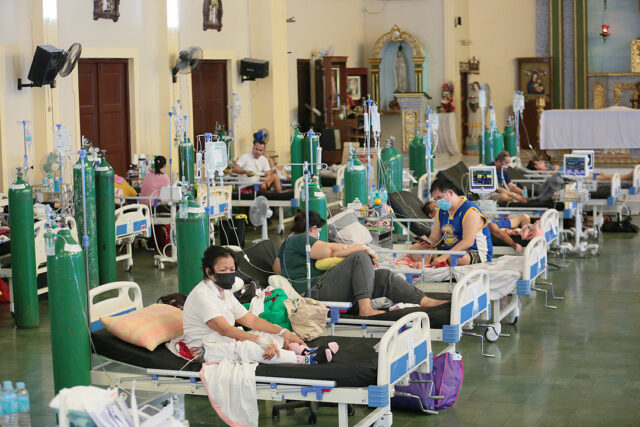
A CHAPEL was converted into an intensive care unit for coronavirus disease 2019 (COVID-19) patients as hospitals struggled with a surge in infections in August 2021. — PHILIPPINE STAR/ MICHAEL VARCAS

THE Asian Development Bank (ADB) said the government needs to consider reinsurance to mitigate the government’s exposure to healthcare costs during epidemics and pandemics.

“Reinsurance would allow for either a category of risk (such as pandemic risk) or a proportion of claim risk to be transferred out of PhilHealth’s portfolio,” the ADB said in a paper released on Dec. 24. 

It also added that reinsurance options are commercially available to limit pandemic and epidemic risk.

The ADB said among the common options for pandemics and epidemics is stop-loss reinsurance, which provides coverage when claims exceed a certain threshold, protecting PhilHealth from sudden increases in claims during such events.

“In this model, PhilHealth and the reinsurer would share proportionally in all premiums and losses from a pandemic or epidemic event,” the ADB said.

It added that reinsurance leads to pandemic risk modeling, risk-based pricing, capital relief, and more.

The ADB highlighted several advantages of reinsurance, including access to pandemic risk models, risk-based pricing, and capital relief.

At the same time, it also emphasized the need for PhilHealth to have clear coverage policies for pandemics and epidemics to manage its premiums and reserves effectively.

PhilHealth said it has P281 billion in reserves set aside to meet benefit payments for two years and P150 billion in surplus as of October.

It also had an investment portfolio of P489 billion as of November.

The ADB said while PhilHealth was able to provide policyholder benefits for coronavirus disease 2019 (COVID-19) as the result of considerable reserves, this may not always be the case and is an “unreliable method of approaching disaster risk financing.”

Social insurers often exclude coverage for pandemic-related prevention, treatment, and immunization due to insufficient data on their severity and frequency, it noted.

However, during the COVID-19 pandemic, PhilHealth was instructed to extend benefits to close the protection gap.

Last week, the bicameral conference committee stripped PhilHealth of its subsidy for the proposed budget for 2025.

In response, PhilHealth President and Chief Executive Officer Emmanuel R. Ledesma, Jr. assured that users will still have “uninterrupted access” to benefits and no reduction despite zero subsidies for next year. — Aubrey Rose A. Inosante

Negotiations with UAE on CEPA enter homestretch

REUTERS

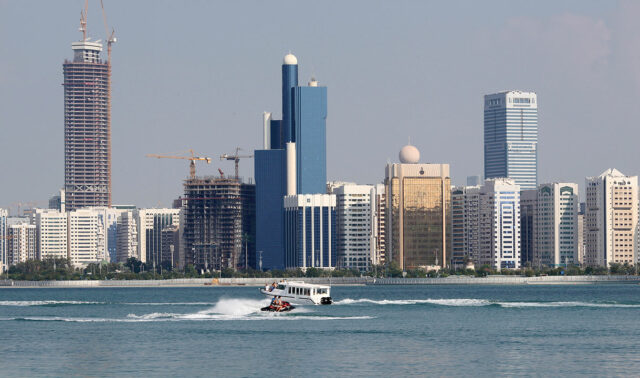
THE PHILIPPINES and the United Arab Emirates (UAE) are in the final stages of negotiations for a Comprehensive Economic Partnership Agreement (CEPA), the Department of Trade and Industry (DTI) said.

“We are almost there, and then we should be able to get things done,” Trade Secretary Ma. Cristina A. Roque said.

“But of course, just like every negotiation, there’s going to be back and forth because it needs to be win-win for both countries,” she added.

Asked for an updated timeline, she said the goal is to conclude the CEPA negotiations next year.

“Definitely not this year. I can’t really say exactly when, but we’re just ironing out a little bit because we just started four months ago,” she said.

“Negotiations do not happen overnight; sometimes it takes years. But of course, we will try to move quickly,” she added.

She said she remains confident that investments from the Middle East will continue to flow. 

“It is not necessarily that with no CEPA, no investments will come in. Other investors want to come in because we also have the CREATE MORE,” she said, citing the Corporate Recovery and Tax Incentives for Enterprises to Maximize Opportunities for Reinvigorating the Economy Act.

“And we also have other incentives. So it’s not necessarily all just dependent on a free trade agreement (FTA) or on a CEPA,” she added.

The DTI has said that the Philippines was hoping to conclude negotiations for a CEPA within 2024. When asked about the delay, Ms. Roque said both sides are hoping the deal will cover a long list of products.

“Actually, there’s really no delay. It’s just that there are many products that we want to export to them … and they want to export also to us,” she said. — Justine Irish D. Tabile