Home Blog Page 216

Xiaomi 17 series launched with top-tier Snapdragon chip, Leica-tuned cameras

The Xiaomi 17 series is made in partnership with Leica and powered by Qualcomm's Snapdragon 8 Elite Gen 5 chip. — EDG ADRIAN A. EVA

Xiaomi Corporation, the world’s third-largest phone brand, officially released its flagship Xiaomi 17 series in the Philippines on Monday, powered by Qualcomm’s Snapdragon 8 Elite Gen 5 chip and featuring a camera system co-engineered with renowned camera brand Leica.

The base model, Xiaomi 17, starts at P53,999 for the 12 GB + 256 GB variant and P55,999 for the 12 GB + 512 GB variant. Its bigger sibling, the Xiaomi 17 Ultra, is priced at P99,999 with 16 GB + 512 GB storage. The new series is available at official Xiaomi stores and on the e-commerce platform Shopee.

Louise Klarke So, marketing manager for Xiaomi Philippines, said that a highlight of the series is the continued partnership with Leica, co-engineering the camera systems—a feature first seen in its predecessor.

“We are launching the Xiaomi 17 series, our latest flagship smartphone that brings essential life-like imagery with powerful camera systems and so much more,” Mr. So said during the local launch event in Manila.

The Xiaomi 17 Ultra, dubbed the “Master of Night” for its enhanced low-light capabilities, is equipped with a 50 MP 23mm main camera powered by the Light Fusion 1050L sensor and LOFIC HDR technology for improved dynamic range. Like the rest of the device’s cameras, it features optical image stabilization (OIS). The flagship also comes with a 200 MP Leica 75–100mm telephoto lens that supports 30 cm macro photography, along with a 50 MP 14mm ultra-wide camera.

Meanwhile, the Xiaomi 17 offers a versatile Leica imaging system with OIS across its rear cameras, including a 50 MP 23mm main camera using the Light Fusion 950 sensor, a 50 MP 60mm floating telephoto lens with 10  cm macro support, and a 50 MP ultra-wide camera at 17mm equivalent. Both devices boast a 50 MP front camera and support up to 8K video recording.

Both phones are powered by Qualcomm’s most powerful 3 -nanometer Snapdragon 8 Elite Gen 5, delivering high-performance performance. Battery capacity for the Ultra is 6,000 mAh, supporting 90 W wired charging and 50 W wireless charging, while the base model has a 6,330 mAh battery with 100 W wired charging and 50 W wireless charging.

Both devices feature OLED displays capable of 3,500 nits peak brightness, HDR10+, and Dolby Vision. The Xiaomi 17 Ultra comes in Black, Starlit Green, and White, while the Xiaomi 17 is available in Black, Alpine Pink, Ice Blue, and Venture Green.

OTHER XIAOMI PRODUCTS LAUNCHED
Xiaomi also unveiled its latest Pad series, along with AIoT and lifestyle products. Both the Xiaomi Pad 8 Pro and Pad 8 feature an 11.2‑inch display with a 144 Hz refresh rate and a sleek, ultra-thin design.

The Xiaomi Pad 8 Pro retails at P38,999 (8 GB + 256 GB variant) and is powered by the Snapdragon 8 Elite Mobile Platform with 67 W wired charging. The Pad 8, priced at P29,999 (same storage), is powered by the Snapdragon 8s Gen 4.

Xiaomi launched the Ultra-Thin Magnetic Power Bank, measuring only 6 mm thick and weighing 98 g, with a 5,000 mAh battery and 15 W charging, priced from P3,699.

For the mobility line, the Xiaomi Electric Scooter 6 Ultra, priced at P46,999, features a 1,200 W motor, Boost mode, 12‑inch all-terrain tires, and a maximum range of 75 km.

Other devices include the Xiaomi Watch 5 (P18,999) with Wear OS and Google Gemini for advanced health and fitness tracking, the Xiaomi Tag (P899) with up to one year of battery life, and the Redmi Buds 8 Pro (P3,999) featuring Dolby Audio, active noise cancellation, and up to 33 hours of total playback. — Edg Adrian A. Eva

Attack on Iran could buoy Trump in talks with China’s Xi

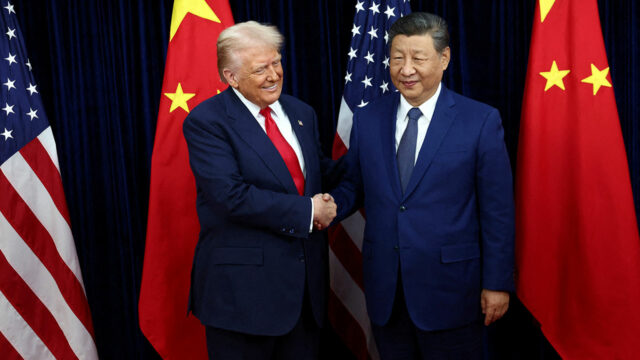
US PRESIDENT Donald J. Trump shakes hands with Chinese President Xi Jinping as they hold a bilateral meeting at Gimhae International Airport on the sidelines of the Asia-Pacific Economic Cooperation (APEC) summit in Busan, South Korea, Oct. 30, 2025. — REUTERS/EVELYN HOCKSTEIN

WASHINGTON/BEIJING — The US military campaign against Iran has put Chinese leader Xi Jinping on the back foot ahead of an expected summit with US President Donald J. Trump, who for the second time in as many months has turned America’s military against one of Beijing’s close partners.

Mr. Trump is set to arrive in Beijing at the end of March following the US capture of Venezuelan President Nicolas Maduro in a risky Caracas raid in January and the US-Israeli air war that on Saturday killed Iran’s Supreme Leader Ayatollah Ali Khamenei, the former leaders of two countries that have been major oil suppliers for China.

It is far from clear how that meeting, which the Trump administration has said will focus on trade, will play out, or whether it will even go ahead.

Just last week, it appeared Mr. Trump would go to Beijing in a weakened position following a US Supreme Court decision invalidating many of his tariffs. But now it is Mr. Xi who may be off-balance and struggling to mount a forceful response to the biggest US military operation since the Iraq war.

While Beijing has condemned the US-led operations as “unacceptable” and called for restraint, its measured response shows both its limited ability to influence US military action and the transactional nature of its diplomatic partnerships, experts say.

China is “proving to be a feckless friend for its authoritarian allies,” Nicholas Burns, the former US ambassador to Beijing under President Joseph R. Biden, said on X.

Mr. Xi now faces the awkward prospect of feting Mr. Trump on the world stage or backing out of the proposed March 31 to April 2 meeting. Beijing has yet to confirm the summit dates.

Should Mr. Xi decide to proceed, he may do so betting that in the long run it is Washington that will be diminished if it becomes entangled in a drawn-out Middle East conflict.

Mr. Trump has said the operation against Iran could run for about four weeks, which would bring it close to the eve of the China trip.

China’s embassy in Washington did not respond to a request for comment on whether the Iran situation had changed plans to host Mr. Trump. Asked about the implications of the Iran strikes on talks with Mr. Xi, a White House official said Mr. Trump was “taking decisive action to eliminate major national security threats,” but did not mention China.

CHINA UNIQUELY EXPOSED
For China, the danger from the US military operation is both practical and symbolic.

China, the world’s largest buyer of Iranian oil, last year got 13.4% of its total oil imported by sea from the country. That makes it uniquely exposed to any supply disruption as the conflict unfolds, particularly in the event of a blockage of the Strait of Hormuz, the world’s most vital oil export route.

While China can diversify its imports, it would suffer significant price pressure from a near-term loss of Iranian oil, tightening margins for its manufacturing base on which the Chinese economy is heavily reliant, analysts say.

The US attack on Iran also serves as a reminder to Beijing — and its partners — of the US military’s ability to strike not only in its backyard, but around the world.

“The strikes on Iran and the potential regime change will severely impact China’s interests,” said Zhao Minghao, international relations expert at Shanghai’s Fudan University.

“China is assessing the deeper intentions behind US actions in Venezuela and Iran, as the US may increase pressure on China by controlling the international energy market,” Mr. Zhao said.

None of that would have been lost on the White House, which published the dates for Mr. Trump’s China trip as it was staging for the Iran attack. A source familiar with US-China discussions told Reuters the White House was still awaiting a formal invitation from Chinese officials.

COUNTING ON LIMITED CHINESE RESPONSE
For now, the United States is betting that its Iran operation will not trigger any Chinese military response.

One US official told Reuters there wasn’t an expectation that China would provide material support to Iran during US operations, or that a continued US focus on the Middle East would embolden Beijing in the short term in the Indo-Pacific, where it has pursued a historic military buildup.

The main US concern is that difficulty in rapidly replenishing reserves of munitions would reduce “medium-term deterrence” over the threat of Chinese military action against Taiwan, the official said.

Constrained in its ability to counter the US military’s global reach, China is likely to stand back and let the United States own any Middle East chaos that results, reinforcing Beijing’s narrative that Washington is reckless and destabilizing, say analysts.

Zha Daojiong, an expert in energy security at China’s Peking University, told Reuters that Chinese officials would not feel compelled to aid Iran in the conflict and would push back against the “purely rhetorical construction” in the West that it had an alliance with Iran.

“The direct parties to the conflict make their own bed and get to sleep in it,” Mr. Zha said. — Reuters

India most vulnerable to prolonged disruptions to Mideast oil — analysts

A WORKER folds an Indian flag at a workshop in India, Aug. 11, 2005. — REUTERS

INDIA, a fast-growing oil consumer, is the country most vulnerable to crude supply shocks if the Middle East conflict leads to a prolonged disruption in shipments from the region, mainly because of its thin reserves, analysts said.

Both China and India, Asia’s top energy consumers, source around half of their crude imports from the Middle East, but India has far less oil in storage than its neighbor and is more dependent on that region’s crude now than in the last three-plus years.

“China has at least six months’ worth of crude supplies in storage. Indian inventories are much lower though, and so (it) is much more vulnerable in this situation,” said Ajay Parmar, director of energy and refining at ICIS, a commodities research group.

The risks to two of the leading Asian economies reflect the far-reaching consequences of the Israeli and US strikes on Iran, which have triggered a regional conflict and effectively closed the Strait of Hormuz, a key bottleneck through which a fifth of the world’s oil is shipped. Global benchmark Brent crude LCOc1 rose about 7% on Monday, and a prolonged war could send the cost of fuel supplies even higher.

As of January, the Middle East accounted for about 55% of India’s crude imports, at about 2.74 million barrels per day (bpd). That’s the highest since late 2022, as the country’s refiners reduced their intake of Russian oil under pressure from Washington.

India can store enough crude and fuel to last about 74 days, Oil Minister Hardeep Singh Puri told lawmakers last month. Refining sources told Reuters that India’s current inventories cover only about 20 to 25 days.

UNCLEAR OPTIONS
The potential crunch could force India to seek oil elsewhere. The country will take all necessary steps to ensure fuel is available at affordable rates, the federal oil ministry said in a post on X on Monday.

The White House and the Office of Foreign Assets Control did not immediately respond to requests for comment about whether the US would assure India it could resume buying Russian oil without the re-imposition of 25% US tariffs on imports.

Secretary of State Marco Rubio said the Departments of Treasury and Energy would announce action on Tuesday to mitigate rising energy prices.

Asia buys close to 90% of the Middle East’s oil exports. Japan and South Korea source about 95% and 70% of their oil from the Middle East, respectively, but both have much bigger inventory buffers than India and China.

Japan’s oil reserves are equivalent to 254 days of consumption, while a South Korean government official said on Monday the country’s stockpiles can cover about 208 days.

BROADER GLOBAL RISKS
Europe and the United States aren’t major buyers of Middle East crude but would feel the pain from a prolonged interruption in oil flows through the Strait of Hormuz in the form of higher global prices, analysts said.

“If we see a prolonged war, with the Strait out of use for an extended period, it would mean all countries globally competing for every incremental barrel of oil possible,” said Mr. Parmar.

Matt Smith, an analyst at Kpler, said Europe could face some challenges accessing jet fuel, as the Mideast Gulf “accounts for around 45% of (Europe’s) waterborne jet fuel imports,” he said.

The United States has cut its Middle East oil imports in recent years as it has become the world’s largest oil and gas producer. Last year it bought less than 900,000 bpd from Gulf countries, US data say.

Washington is not currently discussing a release from US Strategic Petroleum Reserve, according to a US official, but past administrations have tapped the stockpile during times of war. — Reuters

Airline ticket prices soar on Asia-Europe routes after Gulf airport closures

STOCK PHOTO | Image by L.Filipe C.Sousa from Unsplash

HONG KONG — The price of flights between Asia and Europe has soared after the closure of key Middle Eastern hubs due to the US-Israel war against Iran, with airline websites showing tickets on many popular routes booked out for days.

Major Gulf hubs, including the world’s busiest international airport Dubai — which normally handles over 1,000 flights a day — remained closed for a fourth day on Tuesday, slashing capacity on popular routes like Australia to Europe, where Emirates and Qatar Airways normally have a high market share.

Australia’s Flight Centre Travel Group has experienced a 75% increase in calls to its stores and emergency assistance lines since the crisis began and has teams working around the clock to help disrupted customers, its Global Managing Director Andrew Stark said.

“Australians are very resilient and are already rebooking flights to the UK/Europe via alternative routes via China, Singapore, and other Asian hubs, as well as North America via hubs such as Houston,” he said.

Carriers that offer non-stop Asia-Europe flights are able to bypass the closed Middle Eastern airspace by flying north via the Caucasus then Afghanistan or south via Egypt then Saudi then Oman.

But it may add to flight times and fuel usage, driving up costs at a time when oil prices have spiked, in a move that could lead to higher fares over the longer term.

“Right now, the whole of the Middle East is out of bounds, which is a high price for some airlines,” said Subhas Menon, head of the Association of Asia Pacific Airlines.

“If then Europe can only be served at a high cost, airline profitability will be undermined. At the end of the day, the price to pay is connectivity.”

ALTERNATIVE OPTIONS
Alton Aviation Consultancy said airlines operating non-stop services or through alternate hubs outside the affected region — including Hong Kong’s Cathay Pacific Airways, Singapore Airlines and Turkish Airlines — may see short-term gains as passengers shift away from Gulf-based carriers.

Reuters’ checks of several airlines’ websites on Tuesday showed few near-term bookings available and high prices on offer for flights from Asia to London.

Cathay Pacific’s website showed no available economy-class seats on the Hong Kong-London route until March 11, with a one-way ticket on that day costing at least HK$21,158 ($2,705.28, $1 = 7.8210 Hong Kong dollars), falling to a more normal HK$5,054 later in the month.

For flights from Sydney to London, Qantas Airways is not offering any economy-class tickets on flights via its normal Perth and Singapore routings until March 17, when one is available for A$3,129 ($2,220.03, $1 = 1.4094 Australian dollars) one-way. For earlier dates, it has pricey options with non-traditional stopovers such as Los Angeles and Johannesburg.

Thai Airways is experiencing fully booked Europe-bound flights as European tourists opt for direct routes rather than transiting through the Middle East, according to Thailand’s Transport Minister Phiphat Ratchakitprakarn.

A search of the Thai Airways site for travel from Bangkok to London showed tickets were sold out until late next week, and then fares were high. An economy-class ticket for a one-way flight was available for 71,190 baht ($2,265) on March 15, with prices dropping to 27,045 baht by March 18.

Taiwan’s EVA Airways said bookings for its Europe-bound flights had surged as Asian and European passengers seek alternative routing options.

Mainland Chinese airlines’ websites showed fares on China-UK routes have also surged far above normal levels, with economy-class seats largely unavailable on near-term departures.

A return economy-class ticket from Beijing to London typically costs under 10,000 yuan ($1,452.71, $1 = 6.8805 Chinese yuan renminbi), but Air China’s only option for Wednesday is business class, with a one-way ticket priced at 50,490 yuan. — Reuters

Why more Filipino families are choosing Online Education (OEd) for Senior High and lifelong learning

As education continues to evolve in response to changing lifestyles, technology, and family priorities, more Filipino households are rethinking what quality learning looks like today. Increasingly, that conversation is leading parents and students to Online Education (OEd) — particularly for its Online Senior High School (SHS) and Short Courses, which have seen growing interest nationwide.

For many, the shift is not simply about convenience. It reflects a deeper belief that education should adapt to the learner — not the other way around.

Learning That Fits Real Life

OEd students often describe their learning experience as more personal and empowering than traditional classroom setups. With fully online access to lessons, modules, and assessments, students are able to study at their own pace while managing other responsibilities at home.

Senior High School learners, in particular, say the flexibility has allowed them to focus better, revisit lessons when needed, and develop stronger self-discipline — skills that are increasingly essential beyond the classroom. Adult learners taking short courses echo the same sentiment, citing how OEd allows them to upskill or reskill without disrupting work or family commitments.

For these learners, education becomes less of a routine obligation and more of a meaningful journey — one they choose to stay committed to.

Parents Prioritize Flexibility, Safety, and Continuity

Parents play a central role in this shift. Many cite flexibility as a key reason for enrolling their children in OEd’s Online Senior High School. With learning accessible anytime and anywhere, families are better able to manage schedules, health considerations, and household responsibilities — without compromising academic progress.

Safety is another factor. Home-based online learning provides reassurance, especially for parents who prefer a controlled and familiar environment for their children during crucial academic years. At the same time, OEd’s structured curriculum ensures students remain on track toward graduation and future academic or career pathways.

Parents also point to continuity. OEd offers a clear progression from Senior High School to higher education and skills-based programs, giving families confidence that their children’s learning journey is supported over the long term.

SHS and Short Courses Drive Enrollment Growth

OEd’s Online Senior High School and Short Courses have emerged as two of its most in-demand offerings.

The SHS program follows national academic standards while delivering content through a flexible online platform. It prepares students for college, employment, or entrepreneurship — without the constraints of a physical classroom.

Meanwhile, OEd’s Short Courses respond to the growing demand for practical, targeted learning. These certificate programs are designed for learners who want to develop specific skills, explore new fields, or strengthen their credentials in a shorter time frame. For many working professionals and adult learners, this format offers a practical entry point into continuous education.

Together, these programs reflect a broader trend: Filipinos are increasingly valuing education that is adaptable, efficient, and aligned with real-world needs.

Education, Reimagined — and Within Reach

As learning environments continue to change, OEd positions itself not just as an online school, but as a partner in lifelong learning. Its growing enrollment in Senior High School and Short Courses underscores a shift in mindset — one where education is seen as a personal investment, a family decision, and a long-term commitment.

For students and parents who want an education experience designed around real life, the option is no longer distant — it’s already here.

To learn more about Online Senior High School and Short Courses, visit www.oed.com.ph.

Inquire now and explore how flexible learning can work for you and your family.


Spotlight is BusinessWorld’s sponsored section that allows advertisers to amplify their brand and connect with BusinessWorld’s audience by publishing their stories on the BusinessWorld Web site. For more information, send an email to online@bworldonline.com.

Join us on Viber at https://bit.ly/3hv6bLA to get more updates and subscribe to BusinessWorld’s titles and get exclusive content through www.bworld-x.com.

Vietnam is booming, but foreign cash is fleeing from stocks

AN EMPLOYEE WORKS at a shoe factory for export in Hanoi, Vietnam, Dec. 29, 2021. — REUTERS

SINGAPORE/HANOI — Vietnam is on the cusp of joining the emerging-markets club and stocks have notched their biggest rally in years, but foreigners have been sellers and say investing is handicapped by tariff risks, ownership limits and one firm’s dominance of the index.

That could hold back global capital from Southeast Asia’s fastest-growing economy at a time when money is flowing to smaller markets, even after a likely bump from FTSE Russell’s upgrade of Vietnam’s market from frontier into secondary emerging status, expected to be effective from September.

A confirmation of the upgrade could come in March or April, when FTSE publishes its review of Vietnam’s regulatory progress.

Another potential boost may follow if index provider MSCI adds Vietnam to its watchlist — a step J.P. Morgan says could happen as early as June — although an actual upgrade is not expected before the end of the decade.

Vietnam’s benchmark index  gained 41% in 2025, its strongest rise in eight years, as the export-reliant nation expanded 8%.

Flows of overseas capital can lift Vietnamese companies’ stocks and lower their funding costs, supporting economic growth and the currency.”

But foreign investors are leaning toward other markets, worried that Vietnam’s growth, in part due to trade re-routed from China, is at risk from fickle US trade policy and of the contribution that developer-to-carmarker conglomerate Vingroup has made to the market gains.

“Foreign investors were cautious on Vietnam heading into the Trump presidency due to concerns around potential tariffs,” said Sean Taylor, chief investment officer at San Francisco-based asset management firm Matthews Asia.

“We felt there were many opportunities to make money in more liquid and transparent markets in the index like Taiwan, South Korea, and China.”

Net equity outflows hit a record $5.1 billion in 2025, according to LSEG data, and extended in January and February to leave foreigners holding roughly 14.5% of the shares on issue in a market worth $332 billion, government figures show.

London-listed Vietnam Enterprise Investments Limited, Dragon Capital’s flagship closed-end fund, also had a rush for the exits, with more than two-thirds of shareholders voting to participate in a tender offer to cash out some of their holdings.

The fund, which counts the Gates Foundation Trust and hedge fund manager Boaz Weinstein among investors, has long traded at a discount to the value of its assets – a symptom of the illiquidity of the local market.

Vietnam’s market regulator told Reuters in a statement that “several of the world’s largest global investment institutions … have actively prepared to invest in Vietnam,” but did not name anyone in particular.

OUTSIZED INFLUENCE
Foreign exchange, access and ownership caps have also long tempered overseas interest in Vietnamese stocks, but last year’s rally has also bent a lopsided market further out of shape.

A benchmark dominated by banks and developers is being increasingly driven by a single stock, Vingroup, which rose 736% last year. It is Vietnam’s most valuable company and together with subsidiaries comprises more than 20% of the benchmark.

“For foreign funds that care about diversification and liquidity, that makes it harder to add exposure without taking on too much single-stock risk,” said Tran Thi Mong Tuyen, a researcher at the Hawaii-based Pacific Forum.

Owned by Pham Nhat Vuong, a businessman who made his first fortune selling instant noodles in Ukraine, Vingroup was founded in 1993 and has expanded from real estate into a conglomerate spanning railways, steel, energy, entertainment, and space.

Now it’s almost a $50 billion behemoth despite a recent slide. Vingroup’s stock last year drove up the broader market amid government support and a pledge from the ruling Communist Party for “preferential policies” for private domestic firms.

“A few related stocks account for a disproportionate share of the index and exert outsized influence over market movements,” said Thu Nguyen, deputy head of Vietnamese fund VinaCapital.

Vingroup, which floated loss-making electric vehicle maker VinFast on the Nasdaq in 2023, said last year’s stock price gains reflected supportive government policies and its units’ achievements.

Its net profit doubled last year, however the stratospheric stock price move means it currently trades at a lofty price-to-earnings multiple of 96.

That valuation “is quite challenging for a fundamental investor like ourselves to get comfortable with at the present moment, when there remain significant uncertainties about the timing of the future cash flows from the many projects it is involved with,” said Craig Martin, Singapore-based chairman of Dynam Capital, which manages a London-listed Vietnam fund.

Eight brokers and other fund managers contacted by Reuters either said they did not advise clients to buy Vingroup stock or declined to talk about the company, with some citing fears of reprisals.

To be sure, Vietnam has loosened funding and trading rules, making access easier and making progress toward a market upgrade.

Global investors aren’t wholesale bearish about Vietnam either, with some buying companies listed elsewhere, but doing business in Vietnam, in order to gain exposure.

But with prices for locally-listed firms sometimes at 20-30% premiums for international buyers, due to caps on foreign holdings, few see the value in rushing in just yet.

“A lot of managers have mentioned stocks have potential, but the liquidity needs to be there,” said Hunter Beaudoin from research firm Morningstar. “Foreign ownership limits are creating some constraints.” — Reuters

Malaysia PM tells parliament of plot to destabilize government

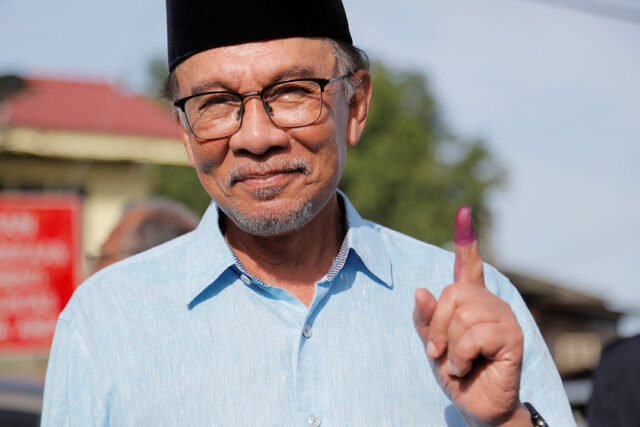
Malaysia’s Prime Minister Anwar Ibrahim — REUTERS

KUALA LUMPUR — Malaysia’s prime minister said a suspect in an alleged plot to topple the government had engaged an international public relations firm to launch a coordinated attack aimed at undermining national institutions before the next election.

Police said last week they were investigating an alleged conspiracy to “sabotage national stability”, under laws against undermining parliamentary democracy.

In an address to parliament on Tuesday, Prime Minister Anwar Ibrahim provided further details of the alleged plot, saying the suspect had engaged the PR firm as part of a response to being the subject of a large-scale graft investigation by the Malaysian Anti-Corruption Commission (MACC).

Neither Mr. Anwar, nor the police, have identified the individual suspect or the PR firm.

Mr. Anwar said the PR strategy, which began in August 2024 and included engaging media agencies, banks, and lawmakers, was to run until the next general election, due by early 2028.

“Their strategy… was to contact all foreign media with a strategy of undermining the government’s efforts, especially the MACC’s,” Mr. Anwar told parliament, citing documents obtained by authorities.

“And then to use their power and contacts in foreign countries to shape a narrative questioning the authority of the Malaysian government and organize a movement through the Malaysian parliament. That is what worries us.”

Mr. Anwar said documents identified media firm Bloomberg as one of the agencies targeted by the alleged conspiracy.

A Bloomberg spokesperson did not immediately respond to an emailed request for comment on Mr. Anwar’s remarks.

A special government committee is conducting a separate investigation into allegations in a Bloomberg report last month that head of MACC, Azam Baki, may have breached shareholding laws.

Mr. Azam has said he is willing to be investigated as he had “nothing to hide” and all his financial declarations have been made according to public service laws.

Lawmakers, including a key party in Mr. Anwar’s ruling coalition, have called for a royal inquiry into another Bloomberg article alleging broader misconduct at the anti-graft agency.

The MACC has said the allegations were “baseless”, and that they were an attempt to discredit its investigations and enforcement actions within the corporate sector.

On Tuesday, Mr. Anwar said a royal inquiry into the matter was “premature” as the special committee was expected to complete its probe this week. — Reuters

Progress on rules for lethal autonomous weapons urgently needed, says chair of Geneva talks

A combat-ready STM Kargu drone on display at the Asian Defense and Security Exhibition (ADAS) 2024. — ED GERONIA

GENEVA — Progress on a potential international framework to prohibit and restrict Lethal Autonomous Weapons Systems (LAWS) is urgently needed, as talks on the matter in Geneva enter a crucial phase, their chair said.

From this week to the mandate’s end in September, 128 states will discuss whether to agree by consensus a non-binding text that could pave the way for future negotiations on prohibitions and regulations on LAWS.

Since 2014, more than a hundred states party to the Convention on Certain Conventional Weapons have met in the Swiss city to discuss banning LAWS that do not comply with existing international law while regulating others.

“If we wait then it almost gets to a stage where you’re too late… We will be overtaken by technological developments,” Robert in den Bosch, the Dutch Disarmament Ambassador in Geneva and Chair of the CCW Group of Governmental Experts on LAWS, told Reuters.

There are mounting concerns over the role of AI-assisted semi-autonomous weapons that have been used in conflicts in Ukraine, Sudan, Gaza, and in Iran and the Gulf.

While states agree international humanitarian law (IHL) applies to LAWS, specific internationally binding standards for these systems remain virtually non-existent.

Russia and the United States, among others, oppose new legally binding instruments, arguing existing laws suffice.

Mr. In den Bosch stated that others say new rules are needed to bridge supposed accountability gaps in IHL, which place obligations on states and individuals, not on machines.

The Rolling Text under discussion in Geneva proposes “context appropriate human judgment and control” as a measure to ensure that systems that “identify, select and engage” targets without human intervention comply with IHL.

Despite growing calls for urgent regulation, UN Secretary-General Antonio Guterres’ deadline for agreeing a legally binding instrument on LAWS this year will realistically be missed, Mr. In den Bosch said.

While the deadline is outside the Geneva talks’ remit, the challenge of securing consensus on even non-binding elements underscores the difficulty of making progress, Mr. In den Bosch stated.

The talks are set within a challenging context of geopolitical tensions and recent European withdrawals from the landmine ban treaty over Russian threats.

The Review Conference of the CCW in November could decide to launch negotiations for a binding protocol after the Geneva talks end. However, in the absence of agreement, there is a risk some countries might pursue a breakaway treaty elsewhere, Mr. In den Bosch stated. — Reuters

Marcos eyes fuel tax cut amid Middle East strikes

Smoke rises after reported Iranian missile attacks, following strikes by the United States and Israel against Iran, in Manama, Bahrain, February 28, 2026. — REUTERS/STRINGER TPX IMAGES OF THE DAY

Philippine President Ferdinand R. Marcos, Jr. on Tuesday said he would ask Congress to grant him emergency powers to reduce excise taxes on petroleum products if global oil prices surge amid the escalating war in the Middle East.

The President said he plans to discuss the proposal with lawmakers should Dubai crude hit $80 per barrel.

“We are discussing, and it could be helpful to give the President the authority to reduce the excise tax on petroleum products should Dubai crude exceed $80 per barrel,” he told a news briefing. “We’re not yet there. But if that happens, then maybe this is one tool that we will have.”

Mr. Marcos added that he would raise the matter with congressional leaders to determine whether it should be treated as an emergency measure rather than a permanent policy change.

“I will discuss it with the leadership of Congress and see if it’s going to be an emergency measure — not a permanent measure — something that we will dispose of as soon as the crisis is over,” he added.

The Philippines imports most of its oil requirements from the Middle East, leaving it exposed to geopolitical tensions that could drive domestic pump prices higher if disruptions persist.

The crisis erupted after the US and Israel carried out coordinated airstrikes on multiple Iranian military and nuclear facilities, part of what officials described as a major joint campaign targeting Tehran’s strategic capabilities.

In response, Iran launched widespread missile and drone strikes against US military bases and allied territories across the Middle East, including in Iraq, the United Arab Emirates, Qatar, Bahrain, Kuwait and Saudi Arabia.

The retaliatory attacks prompted airspace closures, air defense interceptions and reports of civilian casualties, further deepening regional tensions and raising concerns about potential disruptions to global energy supplies.

Under the Tax Reform for Acceleration and Inclusion (TRAIN) law, excise taxes on petroleum products were increased in three tranches from Jan. 1, 2018 to Jan. 1, 2020.

The measure imposed higher levies on all oil and fuel products. However, it also allows the suspension of scheduled excise tax increases if the three-month average Dubai crude price, based on Mean of Platts Singapore (MOPS), hits $80 per barrel.

From 2018 to 2020, the biggest excise tax increases were applied to diesel fuel oil, liquefied petroleum gas and bunker fuel oil, with rates rising from P2.50 to P6 per liter. — Chloe Mari A. Hufana

Netanyahu says war against Iran may take ‘some time’, but not years

Image via Wikipedia

WASHINGTON — Israeli Prime Minister Benjamin Netanyahu said on Monday that the US and Israel’s war against Iran may take “some time” but it will not take years.

The US and Israeli air war ⁠against ​Iran began with attacks against Tehran on Saturday, killing Iranian Supreme Leader Ali Khamenei, and prompting Iranian retaliation against Israel and missile attacks at Arab nations with US bases across the Middle East.

President Donald Trump initially projected the war to last four to five weeks, but added it could go on longer, and has since sought to justify a broad, open-ended war on Iran.

Mr. Netanyahu rejected the idea of the conflict lasting years, like previous wars in the region.

“I said it could be quick and decisive. It may take some time, but it’s not going to take years. It’s not an endless war,” Mr. Netanyahu said on Fox News’ “Hannity” program.

The assault on Iran formed part of a list of Mr. Trump’s foreign policy actions that have marked a striking shift from his “America First” rhetoric against US interventions when he campaigned in the 2024 elections.

Mr. Netanyahu said he saw the war as an opportunity for lasting peace in the Middle East, including between Israel and Saudi Arabia.

“Yes I do,” he said, when asked if he saw a lasting path to peace in the region.

A Reuters/Ipsos poll showed over the weekend that only one in four Americans approved of ​US strikes on Iran that have plunged the Middle East into chaos.

US wars in Iraq and Afghanistan that lasted several years made many Americans skeptical of Washington’s direct involvement in wars on foreign soil.

Mr. Netanyahu said the US and Israel’s war against Iran was creating a scenario for the Iranian people to topple their government.

“Now, of course, it’s up to the people of Iran in the final count to change the government, but we are creating – America and Israel together are creating – the conditions for them to do so,” he said.

Mr. Trump’s stated aims and timeline for the war have shifted since it began over the weekend. On Saturday when he announced the strikes, he urged Iranians to “take back your country” and implied a goal of toppling the government.

In comments on Monday, Mr. Trump made no mention of toppling Iran’s government and said the war was needed to prevent Iran from developing a nuclear weapon, which Tehran denies seeking, and to thwart its long-range ballistic missile program.

Israel is widely believed to be the only Middle Eastern country with nuclear weapons. Washington also has nuclear weapons. — Reuters

Philippines has sufficient oil supply, says President Marcos

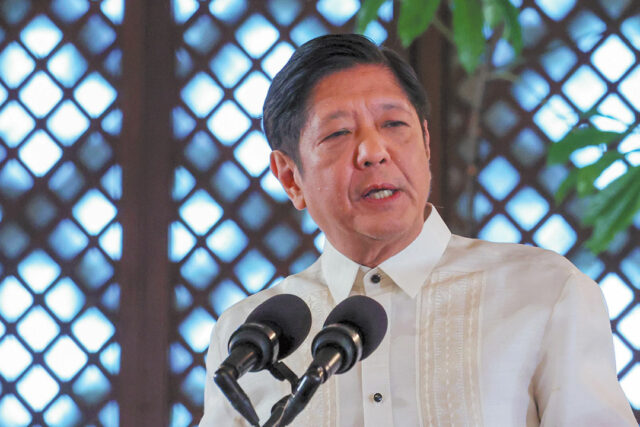
PRESIDENT FERDINAND R. MARCOS, JR. — PHILIPPINE STAR/KJ ROSALES
MANILA — Philippine President Ferdinand Marcos Jr said on Tuesday that the country has sufficient oil supply, but warned of higher prices as the US-Israeli conflict with Iran widens.
Marcos also said at a press conference that the government was studying targeted fuel subsidies for the transport and agriculture sectors.
  • Marcos said the government will watch “very, very closely” the impact of the crisis on the foreign exchange rate.
  • He said he may ask Congress for authority to suspend excise taxes on oil.
  • Marcos urged Filipinos in Israel and other countries in the Middle East affected by the crisis to move to safety, saying the government will arrange repatriation flights once it is secure to do so.
  • More than 2.4 million Filipinos are living and working in the Middle East, including 31,000 in Israel and 800 in Iran.
  • More than a thousand Filipino migrant workers have requested to be repatriated

— Reuters

Amazon cloud unit’s data centers in UAE, Bahrain damaged in drone strikes

The Amazon Web Services signage in Bonifacio Global City. — EDG A. EVA

AMAZON said on Monday some of its data centers in the United Arab Emirates and Bahrain were damaged by drone strikes in the Middle East conflict, disrupting cloud services and making a recovery “prolonged”.

Iran fired a barrage of drones and missiles at Gulf States in retaliation for US and Israeli strikes that killed Supreme Leader Ayatollah Ali Khamenei on Saturday.

A strike on the UAE facility marks the first time a major US tech company’s data center has been disrupted by military action. It raises questions around Big Tech’s pace of expansion in the region.

“In the UAE, two of our facilities were directly struck, while in Bahrain, a drone strike in close proximity to one of our facilities caused physical impact to our infrastructure,” Amazon’s cloud unit Amazon Web Services (AWS) said in an update on its status page.

“These strikes have caused structural damage, disrupted power delivery to our infrastructure, and in some cases required fire suppression activities that resulted in additional water damage,” AWS said.

“We are working to restore full service availability as quickly as possible, though we expect recovery to be prolonged given the nature of the physical damage involved,” it added.

AWS had previously said “objects” had triggered a fire on Sunday that forced authorities to eventually cut power to a cluster of Amazon data centers in the UAE, with restoration expected to take at least a day.

Financial institutions that use AWS services have been affected by the outage, one person with direct knowledge of the situation told Reuters, requesting anonymity because of the sensitivity of the matter.

“Even as we work to restore these facilities, the ongoing conflict in the region means that the broader operating environment in the Middle East remains unpredictable,” AWS said.

REGIONAL AI HUB
US tech giants have been positioning the UAE as a regional hub for artificial intelligence computing needed to power services such as ChatGPT. Microsoft said in November it plans to bring its total investment in the UAE to $15 billion by the end of 2029 and will use Nvidia chips for its data centers there.

“In previous conflicts, regional adversaries such as Iran and its proxies targeted pipelines, refineries, and oil fields in Gulf partner states. In the compute era, these actors could also target data centers, energy infrastructure supporting compute, and fiber chokepoints,” Washington-based think tank Center for Strategic and International Studies said last week.

Microsoft as well as Google and Oracle – which also operate facilities in the UAE – did not immediately respond to Reuters’ requests for comment.

The AWS outage disrupted a dozen core cloud services and the company advised customers to back up critical data and shift operations to servers in unaffected AWS regions.

Abu Dhabi Commercial Bank said its platforms and mobile app were unavailable due to a region-wide IT disruption, although it did not directly link the outage to the AWS incident.  — Reuters