Home Blog Page 2100

Meta ditching fact-checkers could worsen disinformation before Philippine elections

UNSPLASH

By Beatriz Marie D. Cruz, Reporter

TECH GIANT Meta Platforms, Inc.’s move to do away with fact-checkers on its social media platforms could aid disinformation ahead of midterm elections in May, analysts said.

Karl Patrick R. Mendoza, an associate professor at the Polytechnic University of the Philippines Department of Communication Research, said the move reinforces Filipinos’ view that social media platforms have been politicized.

“Meta’s decision to remove fact-checkers highlights a broader issue — the perception of truth is not just about the accuracy of information but about the political and cultural frameworks through which people interpret facts,” he said in a Facebook Messenger chat.

Meta, which owns Facebook, on Tuesday said it would end its third-party fact checking program on all its platforms including Facebook, Instagram and WhatsApp.

“We’re going to get back to our roots and focus on reducing mistakes, simplifying our policies and restoring free expression on our platforms,” Meta Chief Executive Officer Mark Zuckerberg said in a video posted on his Facebook page.

The removal of fact-checkers would make it harder to fight disinformation in the country, National Union of Journalists of the Philippines Chairman Jonathan de Santos said.

“Even if fact-checking was never meant to be a silver bullet against misinformation and disinformation, having that service has helped,” he said in a Viber message. “This decision will make it even more difficult for Filipinos, and the audience in general, to sift through the flood of information online.”

About 62% of Filipinos get their news from social media, particularly on Facebook, according to a 2024 survey by political consultancy firm Publicus Asia.

Mr. De Santos noted that Meta’s decision forms part of a long campaign to discredit fact checking and legitimate news sources in general. It also puts pressure on legitimate news sources to be more strict in verifying information while being transparent about its methods and errors, he added.

FREE SPEECH
Mr. Zuckerberg noted that last year’s US presidential election felt like a “cultural tipping point towards once again prioritizing speech.”

In 2016, Meta introduced its fact-checking program amid criticisms of Facebook’s role in spreading false information during the 2016 US election.

“But the fact-checkers have just been too politically biased and have destroyed more trust than they’ve created,” Mr. Zuckerberg said.

Fact-checkers will be replaced by Community Notes similar to X (formerly Twitter), a tool that allows users to add context to posts, Mr. Zuckerberg said. However, researchers have criticized the feature for being unreliable.

The notion that fact-checking limits free speech comes from a misunderstanding of its purpose, Mr. Mendoza said. “Fact-checkers do not prevent people from expressing their views; rather, they provide a corrective lens to help audiences critically evaluate information.”

“The key is to foster a media environment that encourages critical thinking, where fact-checking complements rather than replaces individual discernment,” he added.

To balance free speech and mitigate the spread of lies, social media platforms should recognize that the mere existence of false information is not the root problem “but the dominance of hegemonic narratives that shape how facts are framed and understood.”

“Platforms should prioritize transparency in how content is promoted and provide users with greater control over what they see,” Mr. Mendoza said.

Michael Henry Ll. Yusingco, a lawyer and senior research fellow at the Ateneo Policy Center, said social media platforms have unreliably advocated free speech.

“They can proclaim adherence to free speech all they want, but the reality is revenue and profit will always be their primary concern,” he said in a Facebook Messenger chat.

The Philippine government should pass an anti-disinformation law to protect free speech across the public sphere including social media platforms, Mr. Yusingco said.

Influenza-like diseases in PHL fell by 17% in 2024, says Health dep’t

PHILIPPINE STAR/ WALTER BOLLOZOS

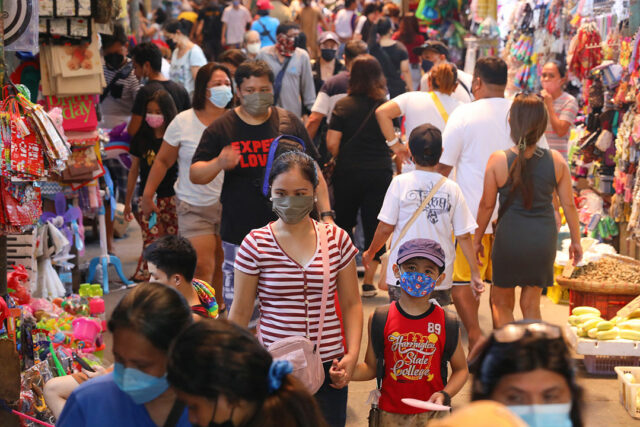
THE PHILIPPINES’ influenza-like cases fell by 17% or 37,000 last year, according to health authorities, as the World Health Organization (WHO) flagged rising respiratory infections earlier this month.

The Southeast Asian nation logged 179,227 influenza-like illnesses in 2024, the Department of Health (DoH) said in a statement on Wednesday.

“This decrease may be attributed to better health-seeking behaviors and practices and better preparations by the health sector,” it said.

Influenza-like diseases, characterized by coughs, colds and fever, are commonly caused by respiratory viruses, with rhinovirus, enterovirus, influenza A, respiratory syncytial virus and adenovirus on the top five, the DoH said.

The WHO reported in its disease outbreak news on Jan. 7 that rising common acute respiratory infections including respiratory syncytial virus and human metapneumovirus.

“This upward trend is expected during the winter season in China and other countries in the Northern Hemisphere,” the DoH said. “Chinese authorities have also clarified to the WHO that the Chinese healthcare system is not overwhelmed and that no emergency declarations or responses have been triggered.”

The WHO said human metapneumovirus (hMPV), which was discovered in 2001 by Dutch researchers in nasal samples from children with respiratory infections caused by unknown pathogens, is “not a new disease.”

In the Philippines, hMPV is being tested as part of an expanded panel for specimens that test negative on panel 1 (for Influenza, SARS-CoV-2, and RSV) as part of Influenza-like diseases and severe acute respiratory illness surveillance, it added.

The DoH said hMPV ranked sixth among the causes of influenza-like illnesses in the Philippines last year. It noted that 5.8% or 284 of the 4,921 positive influenza-like illness samples taken from Jan. 1 to Dec. 21 were due to hMPV.

“More recently from Dec. 1 to 21, 2024, 10 of 339 (2.9%) positive samples were due to hMPV,” it said. “hMPV is being detected sporadically, with no unusual clustering or pattern, throughout the year.”

The DoH said most people infected with hMPV only have mild upper respiratory symptoms including cough, fever, nasal congestion and wheezing.

“The rare severe cases can result in bronchitis or pneumonia, particularly among infants, the elderly and immunocompromised individuals,” it said. “Those with pre-existing lung conditions, such as asthma, chronic obstructive pulmonary disease or emphysema are at higher risk of severe outcomes.”

“hMPV is not a new virus,” Health Secretary Teodoro J. Herbosa said. “We have been able to identify it for a long time. Its symptoms are not severe. Like the common cough and cold, it heals on its own as long as our resistance is strong.” — Kyle Aristophere T. Atienza

Newly signed IRR codifies seafarers’ rights based on international standards

U.S. NAVY

PRESIDENT Ferdinand R. Marcos, Jr. on Wednesday approved the Implementing Rules and Regulations (IRR) of the Republic Act No. 12021, the Magna Carta of Filipino Seafarers, codifying seafarer’s rights based on international laws, standards and practices, and conventions.

The IRR is “designed to strengthen the rights, welfare, and dignity of our Filipino seafarers who traverse the seas of the world,” Migrant Workers Secretary Hans Leo J. Cacdac said in a statement.

“This document reflects months of thorough consultation, rigorous review, and sincere dialogue among all stakeholders, ensuring that every provision serves the interests of our seafarers and their families,” he added. “This process encapsulates the essence of the principles of tripartism.”

The IRR particularly provided for seafarers’ rights to information, to information of seafarer’s family, to safe passage and safe travel, to consultation, against discrimination, to be protected against all forms of harassment and bullying, right to free legal representation, to an appropriate grievance mechanism, to immediate medical attention, to access to communication, to record of employment, to fair treatment in the event of maritime accident, to fair medical assessment, and to vote in national elections. 

The IRR, in particular, mandated that contracts between seafarers and their employers should include specific terms regarding working hours, rest periods, job descriptions, compensation, and working conditions.

The Department of Migrant Workers (DMW) is mandated to conduct periodic reviews of the Standard Employment Contract (SEC) every 10 years, or sooner as may be deemed necessary, in consultation with the Maritime Industry Tripartite Council (MITC), to cope with prevailing maritime industry standards.

The law was signed in September 2024, more than a year after the European Commission cited deficiencies in the Philippines’ seafarer education, training and certification system.

Mr. Marcos, in a speech at a signing ceremony, said the IRR promotes a “well-prepared and competitive maritime workforce.”

“By enhancing access to advanced training and requiring maritime education institutions to adopt cutting-edge facilities, we are equipping our seafarers and cadets to compete in the global arena,” he said.

The law signed in September 2024 emphasized training and education, requiring the provision of training programs that meet international standards to enhance the seafarers’ skills and qualifications.

The IRR said the Maritime Industry Authority has jurisdiction over maritime education.

The Magna Carta also emphasizes the importance of health and safety for seafarers, requiring employers to provide proper medical care, facilities, and occupational safety training, providing for the protection of seafarers from epidemics, pandemics, and other public health emergencies, and mandating shipowners to institute measures on health emergency prevention in accordance with flag state health regulations and World Health Organization guidelines.

Under the IRR, seafarers who have contracted a disease after departing from the point of hire, while in transit, or under quarantine, shall be entitled to paid sick leave or sickness benefits as long as they are incapacitated to work until the seafarer joins the vessel or until the seafarer returns to the point of hire.

The IRR also provides a financial security system to assist seafarers in case of injury and other causes.

The IRR also provides a detailed list of rules on dispute resolution for overseas seafarers, institutionalizing onboard and onshore grievance machinery.

A pool of trained maritime industry conciliator mediators, labor arbiters, and accredited maritime industry voluntary arbitrators will be established to handle the mediation, conciliation, or arbitration of all issues relating to the employment of seafarers.

In case of conflict between the company’s and seafarer’s physicians, the disability or fitness to work of a seafarer should be determined by a third doctor duly accredited by the Health department and is an expert on the illness or injury of the seafarer.

The IRR also mandated the creation of seafarer welfare facilities in major crew-change ports, which should offer services that promote the welfare of and cater to the recreational, cultural, religious, communication, and legal needs of all seafarers.

It also required the creation of one-stop shop centers for seafarers.

The IRR also highlighted women’s participation in the maritime industry, mandating shipowners, manning agencies, and maritime training institutions to formulate and implement policies on gender and development. — Kyle Aristophere T. Atienza

DMW to help 220 OFWs from UAE

PHILIPPINE STAR/WALTER BOLLOZOS

THE DEPARTMENT of Migrant Workers (DMW) on Wednesday committed to provide more than 200 Filipino workers pardoned by the United Arab Emirates (UAE) with reintegration programs to help them find quality jobs when they return to the Philippines.

In a statement, the agency said it will coordinate with the Philippine Embassy in the UAE to process their repatriation.

“We are also committed to providing comprehensive support to ensure their smooth and successful reintegration into Philippine society, through a whole-of-government collaboration with other government agencies,” it said.

“This very welcome gesture highlights the strong and enduring relationship between the Philippines and the UAE…”

The Department of Foreign Affairs said the UAE and the Philippines agreed on the deal in view of the “distinguished friendship” between both countries.

“It is the direct result of President Ferdinand R. Marcos, Jr.’s meeting with His Highness Sheikh Mohamed Bin Zayed Al Nahyan, president of the United Arab Emirates, last November,” it said.

In June last year, 143 Filipinos detained in the UAE were also pardoned on the occasion of Eid al-Adha.

Foreign Affairs Undersecretary Eduardo Jose A. De Vega last year said their offenses ranged from drug abuse, theft, to immigration-related violations such as absconding and overstaying.

The UAE was the second-leading destination of overseas Filipino workers in 2023 among Asian countries, according to the local statistics agency. — John Victor D. Ordoñez

SSS urged to collect firms’ debt

BW FILE PHOTO

A PHILIPPINE senator on Wednesday called on the Social Security System (SSS) to double its efforts to collect the more than P90-billion debt from firms before it raises contribution rates.

“We also need to look at their shortcomings and what management is not doing, like collecting debts,” Senator Sherwin T. Gatchalian told a news briefing.

“The idea is that when you contribute to a pension, the money is invested, and the investment returns pay for the benefits, making it self-sustaining.”

The senator said he plans on filing a resolution that seeks to look into the agency’s management practices and debt collection efforts.

The SSS on Tuesday said it does not see the need for further increases in its contribution rate as the last tranche of hikes would double the fund life to 28 years.

Robert Joseph M. de Claro, SSS president and chief executive officer (CEO), said the SSS fund is projected to last until 2053 with the scheduled 1% increase in the contribution rate to 15%, which takes effect this month.

The SSS also raised the monthly salary credits to P5,000 from P4,000, and the maximum credits to P35,000 from the previous P30,000.

Under Republic Act (RA) No. 11199 or the Social Security Act of 2018, the SSS implemented incremental contribution rate hikes of one percentage point every two years starting in 2019 from the original contribution rate of 11%.

Of the 15% contribution rate, employers will shoulder 10% of the contribution, while employees will pay the rest. 

“I don’t want to jump the gun, but definitely, the P93 billion in debt is a sign that there is a management problem, and the P93 billion must be collected,” Mr. Gatchalian said in mixed English and Filipino.

Meanwhile, a resolution seeking to defer the SSS contribution rate hike was filed at the House of Representatives on Wednesday, with lawmakers calling for the pension fund to make its collections “more efficient.”

In a statement, Baguio Rep. Mark O. Go said he filed House Resolution No. 2157 to ease the economic burden faced by Filipinos by suspending the scheduled SSS rate hike this year.

“There is a wide clamor from all sectors to defer the implementation of the scheduled increase in the rate of contribution for SSS for year 2025 in consideration of the current economic situation that affects our low income earners,” the resolution stated.

In a separate statement, Rizal Rep. Juan Fidel Felipe F. Nograles urged President Ferdinand R. Marcos, Jr. to suspend the pension fund’s rate hike and mandate SSS to make its collections efficient first.

“The SSS should address systemic bottlenecks and gaps first to ensure that our collection efforts are maximized,” he said. — John Victor D. Ordoñez with Kenneth Christiane L. Basilio

BI sets reimbursement guidelines

PHILSTAR FILE PHOTO

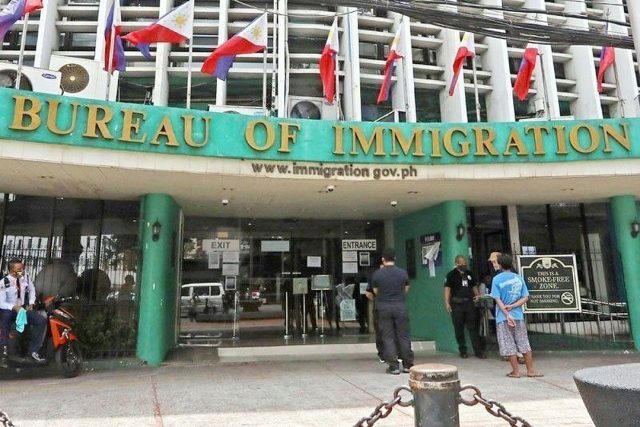
THE Bureau of Immigration (BI) has issued guidelines for reimbursing the travel expenses of offloaded passengers.

The agency’s joint memorandum circular outlines the criteria and procedures for reimbursing all international-bound Filipino passengers who were deferred by the Immigration department from Jan. 1 to Dec. 31, 2024.

Signed by the bureau, the departments of Budget and Management, and Justice, the memorandum circular will be effective 15 days after its publication in the newspaper of general circulation.

According to the joint memorandum circular, passengers shall personally file a claim with the international port of entry and exit management office.

It said that the BI will not receive and process claims without complete documents.

BI noted that passengers eligible for claims are only entitled to one reimbursement claim per year, regardless of the number of deferred departures.

“Only travel expenses that a passenger or a declared sponsor personally paid for will be considered for reimbursement,” it said,

Further, funding for the reimbursement will be sourced from the special trust fund collected for the year, the Immigration department said. — Ashley Erika O. Jose

BoC seizes P84.36-B smuggled goods

BUREAU OF CUSTOMS

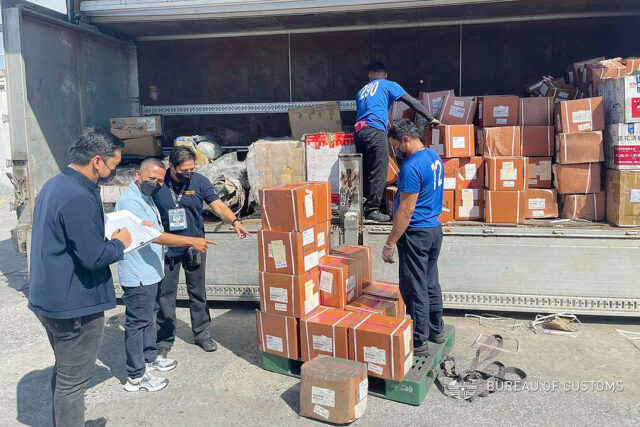
THE BUREAU of Customs (BoC) seized a total of 1,572 smuggled goods last year, amounting to P84.36 billion.

“Turning to our enforcement efforts, the Bureau of Customs intensified its campaign against smuggling. So from January to November 2024, we conducted 1,572 seizure operations resulting in the confiscation of smuggled goods valued at P84.356 billion,” BoC Assistant Commissioner Vincent Philip C. Maronilla said in a speech on Wednesday.

In terms of volume, the BoC conducted the most collections at 977 of agricultural products worth P856.79 million.

“This focus reflects our dedication to protecting local industries and ensuring food security by preventing the unlawful entry of contraband agriculture,” Mr. Maronilla said.

In terms of value, counterfeit goods were worth the most at P34.698 billion with only 16 collections.

Meanwhile, the BoC revoked the Customs Accreditation of 48 exporters and customs brokers.

It also filed 39 criminal cases with the Department of Justice for violation of customs regulations.

Under its fuel marking program, the BoC also marked 18.23 billion liters of fuel, generating P220.77 billion in taxes.

“Additionally, the Bureau seized 209,634 liters of on-market fuel, further preventing the leakage and ensuring proper taxation,” Mr. Maronilla said. — Aaron Michael C. Sy

SC adopts rule on family mediation

FREEPIK

THE Supreme Court (SC) has adopted the Rule on Family Mediation (Rule) to address the growing demand for domestic and international family mediation, improve family courts’ efficiency, alleviate court backlogs and prioritize children’s welfare, it reported on Wednesday.

It also introduces new approaches to handling family-related cases.

“Family mediation, a non-adversarial process, should include children and give them a chance to share their thoughts on issues that impact them,” the top court said in a statement on Wednesday.

“The process must focus on what is best for the child and the family.”

The court en banc adopted the Rule through a resolution dated Nov. 5, 2024, but was only publicized on Jan. 8.

It applies exclusively to disputes involving spouses, parents and children, other ascendants and descendants, siblings, relatives within the fourth civil degree of consanguinity (by blood) or affinity (by marriage), and individuals in common-law, dating, or sexual relationships, past or present.

The mediation period of 30 days must be strictly observed, with a court-approved extension of up to 30 days allowed.

The Rule also addresses family mediation aspects such as suspension, termination, mediator withdrawal, refusal to mediate, and sanctions.

It further outlines qualifications, training, accreditation, and ethical standards for family mediators. — Chloe Mari A. Hufana

P7.7B earmarked for airports upgrade

STOCK PHOTO | Image by Stela Di from Pixabay

THE Philippine government has allotted P7.7 billion for infrastructure upgrades to 15 airports nationwide, which could help bolster tourism and improve the country’s aging and outdated air facilities, a congressman said on Wednesday.

The 15 airports were provided the funding under the Aviation Infrastructure Program line-item in the 2025 General Appropriations Act, according to Makati City Rep. Luis N. Campos, Jr., who is a vice-chairperson of the House of Representatives appropriations committee.

Funds allocated for aviation infrastructure upgrades would be used to improve the airports’ runways, taxiways, ramps, control towers, passenger terminals, and navigational systems.

“We are counting on these upgrades to enhance the overall air travel experience for passengers, attract more tourists, support the growth of small businesses, and create new jobs,” Mr. Campos said in a statement.

President Ferdinand R. Marcos, Jr. has set his eyes on upgrading the country’s airports and piers before his government ends in 2028, he said during his 2024 State of the Nation Address.

The Tacloban City Airport is set to receive the lion’s share of the fund at P2.3 billion.

The Pag-asa Island Airport on Thitu Island (Pag-asa Island), located 172 kilometers away from the contested Spratly Island, will be given P1.65 billion to develop its infrastructure amid lingering tensions with Beijing.

Mr. Marcos had also said in July 2024 that his government is developing an airport on the remote island to bolster Philippine presence within the contested South China Sea by improving access.

The Basuanga Airport in Coron, Palawan and Laoag International Airport will receive P1 billion and P750 million, respectively.

The Bacon Airport of Sorsogon Province was allotted P360 million, while Virac Airport in the province of Catanduanes was given P280 million. The Candon Airport located in Ilocos Sur province will have P250 million for infrastructure development.

New Dumaguete Airport in Negros Oriental province, Bulacan province’s New Manila International Airport and the Camotes Airport of Cebu province will all receive P200 million from the government.

The Camiguin province’s airport will get P180 million, while the New Zamboanga International Airport in Zamboanga City will have P130 million.

The Central Mindanao Airport in Cotabato province is given P100 million, with the New Bohol International Airport on Panglao Island, Bohol province receiving P52.1 million.

Topping off the list is Bukidnon province’s airport, which is set to get P50 million for developments. — Kenneth Christiane L. Basilio

Group wants impeachment cases vs VP fast-tracked

A POLITICAL GROUP on Wednesday urged the Philippine House of Representatives to hasten deliberations on Vice-President Sara Z. Duterte-Carpio’s ouster raps so the Senate could hold its trial by February.

“We want this (impeachment complaint) to reach the Senate by February 7 so they can start the trial,” Teodoro A. Casiño, chairman of political group Bayan Muna, said in a media briefing in Filipino.

His group would hold rallies to show support for the three ouster complaints against Ms. Duterte, aiming to motivate the Philippine Congress to expedite its hearings and trial on the impeachment cases. They are hoping to unseat Ms. Duterte from public office before year-end.

The embattled vice-president has been the subject of impeachment moves due to her alleged misuse of P612.5 million worth of confidential and intelligence funds in 2022 and 2023, which she has refuted.

The Office of the Vice President did not immediately respond to an e-mail seeking comment.

Any Filipino can file impeachment complaints at the House of Representatives, but it requires at least a third of the chamber to approve it for it to be heard by the Senate, which decides on them.

Moves to impeach Ms. Duterte comes ahead of the Philippines’ upcoming midterm elections.

Mr. Casiño said they are not worried about the impeachment coinciding with the midterm election as it would be the opportune time to unseat Ms. Duterte. “This is, in fact, the perfect timing.”

“Our objective is for it (impeachment complaint) to take a ‘front seat’ during the election,” he said. “The impeachment will be a key issue… and we will have to shift the campaign to ensure the victory of pro-impeachment senators.”

Meanwhile, a Social Weather Station (SWS) survey found that four in 10 Filipinos are supportive of efforts to remove Ms. Duterte from office.

In a statement, the pollster said 41% of Filipinos back the ouster moves against the vice-president, with the highest level of support in Luzon at 50%. In the capital region, 45% of Filipinos are in favor of it.

The survey also revealed that 35% of Filipinos are against removing Ms. Duterte, while 19% are undecided.

“The call for Duterte’s impeachment resonates most strongly in Balance Luzon, where 50% of Filipinos advocate for her removal,” the pollster said.

“This [is a] stark contrast to Mindanao, Ms. Duterte’s traditional bailiwick, where 56% oppose the impeachment, underscores the growing cracks in her support base,” it added.

The SWS interviewed 2,160 respondents from December 12 to 18 for the poll, which had an error margin of ±2.

“The Visayas region stands out as the most undecided regarding Ms. Duterte’s impeachment,” it said, as 24% of Visayans stood undecided while 18% of those living in Luzon and Mindanao are also unsure.

The poll results also showed that 41% of Filipinos living in urban and rural communities are supportive of impeachment efforts, with 37% of urban residents and 33% of rural residents opposing it.

“Among socio-economic classes, support for impeachment is strongest in Classes ABC, where 50% agree with the impeachment complaint,” the pollster said. — Kenneth Christiane L. Basilio

P600K worth of smuggled cigarettes confiscated in Dipolog City 

STOCK PHOTO | Image by Shaun Meintjes from Unsplash

COTABATO CITY — Plainclothes policemen arrested a smuggler keeping P600,000 worth of imported cigarettes in an entrapment operation in Barangay Minaog in Dipolog City on Tuesday afternoon.

Brig. Gen. Bowenn Joey M. Masauding, director of the Police Regional Office-9, told reporters on Wednesday that they have taken the suspect into custody.

Mr. Masauding said combined personnel of the Dipolog City Police Office and the Zamboanga del Norte Provincial Police Office immediately frisked and cuffed the suspect after selling them several reams of cigarettes in a tradeoff laid with the support of local executives.

Mr. Masauding said the P600,000 worth of imported cigarettes seized from the suspect shall be turned over to the Bureau of Customs for its disposition. — John Felix M. Unson

Barangay road projects in Cotabato completed

COTABATO CITY — Local executives launched on Tuesday four newly accomplished barangay road projects in Kabacan town in Cotabato, implemented in support of the socio-economic agenda of the Mindanao peace process.

Kabacan Mayor Evangeline P. Guzman told reporters on Wednesday that they are grateful to the office of Cotabato Gov. Emmylou T. Mendoza for the farm-to-market roads in Upper Paatan, Lower Paatan, Bannawag and Magatos that connect Moro and non-Moro farmers to the markets in their town center where they sell their farm products.

In the same event, Ms. Mendoza launched her administration’s newly accomplished multi-purpose building in Barangay Malanduage, also home to mixed Moro and non-Moro villagers.

Ms. Guzman said the facility can be used as a venue for Muslim-Christian peace dialogues and for meetings of barangay leaders together implementing their local government unit’s socio-economic projects in the area.

The office of Mendoza spent P47 million on the projects, Ms. Guzman and other barangay officials said.

Ms. Mendoza said the projects are meant to boost the mobility of farmers in the beneficiary-barangays, which are covered by the separate peace overtures of Malacañang with the Moro National Liberation Front and the Moro Islamic Liberation Front. — John Felix M. Unson