Home Blog Page 2083

Boggi Milano opens first flagship store in PHL at Greenbelt

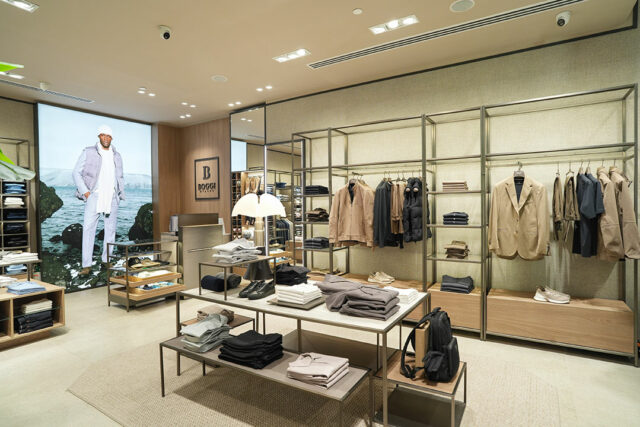
BOGGI MILANO, the renowned Italian menswear brand, has opened its first flagship store in the Philippines, located in Greenbelt 5, Makati City, adding to the diverse array of luxury retail and lifestyle options in the high-end mall.

Boggi Milano showcases its latest collection for men, featuring a selection of cross-seasonal looks that highlight the Fall/Winter wardrobe.

The new FW24/25 collection draws inspiration from Iceland, an island known for its diverse and striking natural landscapes which is reinterpreted in a distinctive and cosmopolitan style.

The collection features a blend of technical, innovative, and high-performance fabrics alongside traditional fabrics. This includes flannel, known for its warmth and lightweight quality, as well as merino wool and cashmere, both soft and supple to the touch.  Jersey, organic cotton, and Tencel are also among the fabrics used.

The collection’s palette ranges from taupe to black, along with blue denim and neutral tones like beige, cream, and dark brown, along with grey and charcoal, which are key colors of the collection. It embraces more versatile shades centered around grey, diverging from the traditional office aesthetic.

With the opening of its first flagship store in the country, Boggi Milano positions itself as a luxury brand that combines competitive pricing with high-quality menswear.

The store is found on the first floor of Greenbelt 5 Mall, Makati Ave., Makati City.  — Edg Adrian A. Eva

Arbolo eyes Manila as ticket to global expansion

ARTIFICIAL INTELLIGENCE (AI)-powered coaching and simulation platform Arbolo has set up a headquarters in the Philippines as a gateway to its global expansion.

“The Philippines is not just a strategic location — it’s the heart of the call center industry, which makes it ideal for us to scale globally,” Arbolo co-founder and Chief Executive Officer (CEO) Martin Tan said in a statement at the weekend. “Our presence here gives us a launchpad to rapidly expand across Southeast Asia and beyond.”

Arbolo has secured an undisclosed amount of funding from angel investors, including Kendrick Kho, founder and managing partner of Hyperparameter, a US-based venture capital firm that specializes in AI solutions for traditional industries.

The firm said its generative AI (genAI)-driven solutions are developed at its innovation hub in Chile, where cofounder and chief technology officer Nicolas Rivas leads the technology team.

Arbolo’s platform has delivered operational improvement for major call centers in the Latin American country, it said.

An outsourcing provider in Latin America, iBr, has used Arbolo’s AI-driven coaching solution to enhance service delivery and deepen client relationships, doubling the number of agents managing its most critical account, the company said.

“We have seen a significant improvement in service quality, and Arbolo has played a key role in our growth with a major client,” iBr CEO Luis Gomez said in the same statement.

Similarly, Entel Connect Center, the customer service division of Chile’s largest telecommunication provider, experienced improvements using Arbolo’s. “Entel, which employs 9,000 agents, integrated AI-driven role-play simulations to boost customer satisfaction scores by 15% in the first month,” Arbolo said, adding that the platform cut coaching hours by 80%.

Another Chilean firm, Esencial, a health insurance provider, first adopted Arbolo for its sales team to improve customer interaction through customized simulations.

After seeing results, it expanded the platform use to customer service. Grupo Alemana, the firm’s parent company, is now evaluating the possibility of deploying the platform across its 500-agent network.

Arbolo is now set to replicate its early success across Southeast Asia, beginning with the call center industry in the Philippines, the company said.

“We’ve shown how our platform can deliver tangible results in Latin America, and we believe that approach will resonate in our country’s rapidly evolving business process outsourcing industry,” Mr. Tan said. — Aubrey Rose A. Inosante

Term deposit yields decline on oil prices, reserve requirement ratio cut

PHILIPPINE STAR/WALTER BOLLOZOS

YIELDS on the central bank’s term deposits fell on Friday amid volatile global oil prices due to ongoing geopolitical tensions in the Middle East and as the cut in lenders’ reserve ratios took effect, releasing liquidity into the financial system.

The term deposit facility (TDF) of the Bangko Sentral ng Pilipinas (BSP) fetched bids amounting to P286.874 billion on Friday, well above the P170-billion offering as well as the P191.794 billion tenders for a P190-billion offer seen a week ago.

Last week’s TDF auction was rescheduled to Friday from Wednesday amid the suspension of work in government offices due to the typhoon. The tenors of the term deposits auctioned off were also adjusted accordingly.

Broken down, tenders for the five-day papers reached P169.976 billion on Friday, higher than the P90 billion auctioned off by the central bank and the P98.069 billion in bids fetched for the P100-billion offering of seven-day term deposits the previous week.

Banks asked for yields ranging from 5.99% to 6.14%, lower than the 6.2355% to 6.28% band seen a week earlier. This caused the average rate of the five-day deposits to drop by 17.06 basis points (bps) to 6.0936% from 6.2642% previously.

Meanwhile, bids for the 12-day term deposits amounted to P116.898 billion on Friday, above the P80-billion offering and the P93.725 billion in tenders for the P90 billion in 14-day papers auctioned off on Oct. 16.

Accepted rates for the tenor were from 5.998% to 6.2%, below the 6.19% to 6.35% margin seen a week ago. With this, the average rate for the 12-day deposits fell by 16.45 bps to 6.1374% from 6.3019% logged in the prior auction.

The central bank has not auctioned off 28-day term deposits for more than four years to give way to its weekly offerings of securities with the same tenor.

The term deposits and the BSP bills are used by the central bank to mop up excess liquidity in the financial system and to better guide market rates.

Term deposit yields went down on Friday as global oil prices recently reached three-week lows amid easing geopolitical tensions in the Middle East, Rizal Commercial Banking Corp. Chief Economist Michael L. Ricafort said in a Viber message.

Oil prices eased about 1% in volatile trade on Thursday on reports the US and Israel will try to restart talks on a possible ceasefire in Gaza, Reuters reported.

Brent futures settled 58 cents, or 0.8%, lower at $74.38 a barrel, while US West Texas Intermediate crude (WTI) slipped 58 cents, or 0.8%, to end at $70.19.

Earlier in the session, both benchmarks traded up over $1 a barrel on concerns the ongoing conflict in the Middle East could result in oil supply disruptions and from uncertainty ahead of the US presidential election on Nov. 5.

After Iran fired missiles at Israel on Oct. 1, Brent crude surged about 8% during the week ended Oct. 4 on worries Israel would attack Iran’s oil infrastructure. It fell about 8% in the week ended Oct. 18 on reports Israel would not hit energy infrastructure, easing fears of supply disruptions.

However, oil prices settled higher on Friday and gained 4% on the week, with investors taking stock of the ongoing conflict in the Middle East as well as the US election next month.

Brent settled 4% up on the week, while WTI settled 3.7% higher on the week.

The recent reserve requirement ratio (RRR) cut, which took effect on Friday (Oct. 25), also affected TDF yield movements as the cash released into the financial system because of the reduction could go into the central bank’s monetary instruments, Mr. Ricafort added.

“Banks will have the flexibility to increase loans, investments in bonds and other fixed-income securities, equities, as well as other investments,” he said.

“There would also be more pesos that could be used to buy US dollars and other foreign currencies, though the excess pesos could be siphoned off through higher interest rates offered by the BSP TDF, in view of larger bids (on Friday) to reflect the RRR cut that increased banks’ peso liquidity.”

Effective on Friday, the BSP reduced the RRR for universal and commercial banks and nonbank financial institutions with quasi-banking functions by 250 bps to 7% from 9.5%.

It also cut the RRR for digital banks by 200 bps to 4%, while the ratio for thrift lenders was brought down by 100 bps to 1%. Rural and cooperative banks’ reserve requirement was slashed by 100 bps to 0%. — Luisa Maria Jacinta C. Jocson with Reuters

Flu vaccination provides many benefits

PHILIPPINE STAR/EDD GUMBAN

Seasonal influenza or the flu is one of the most common illnesses in the Philippines. The flu season in the country is from June to November, coinciding with the rainy season.

The Department of Health (DoH) said that 9,491 flu-like cases nationwide were recorded from July 28 to Aug. 10, 55% higher compared to 6,124 cases reported in the previous week. All regions except the Bangsamoro in southern Philippines showed an increase in flu-like cases during this four-week period. Annual seasonal influenza epidemics have a substantial economic impact through reduced workforce productivity and increased pressure on healthcare services.

Seasonal influenza is an acute respiratory infection caused by influenza viruses. There are four types of influenza viruses, types A, B, C, and D. Influenza A and B viruses circulate and cause seasonal epidemics, according to the World Health Organization (WHO).

Symptoms of influenza usually begin around two days after being infected by someone who has the virus. These include sudden onset of fever, cough (usually dry and can be severe and last two weeks or more), headache, muscle and joint pain, severe malaise (feeling unwell), a sore throat, and a runny nose.

Seasonal influenza spreads easily, with rapid transmission in crowded areas including schools and nursing homes. When an infected person coughs or sneezes, droplets containing viruses (infectious droplets) are dispersed into the air and can infect persons in close proximity. The virus can also be spread by hands contaminated with influenza viruses. To prevent transmission, people should cover their mouth and nose with a tissue when coughing and wash their hands regularly.

While most people recover from fever and other symptoms within a week without requiring medical attention, influenza can cause severe illness or death, especially in people at high risk. Hospitalization and death due to influenza occur mainly among high-risk groups, warns the WHO.

High-risk groups include pregnant women, children under five years of age, older people, individuals with chronic medical conditions (such as chronic cardiac, pulmonary, renal, metabolic, neurodevelopmental, liver or hematologic diseases) and individuals with immunosuppressive conditions/treatments (such as HIV, those receiving chemotherapy or steroids, or who have a malignancy). Healthcare workers are at high risk of acquiring influenza virus infections due to increased exposure to the patients, and of further spreading it particularly to vulnerable individuals.

Influenza can worsen symptoms of other chronic diseases. Severe influenza can lead to pneumonia and sepsis (a serious condition caused by the body’s severe reaction to an infection). The WHO strongly advises people with other medical issues or who have severe flu symptoms to seek medical care.

Vaccination is the best way to prevent influenza, the WHO stresses. Safe and effective flu vaccines have been used for more than 60 years. Immunity from vaccination wanes over time; as such, the WHO recommends an annual flu vaccination. Moreover, flu viruses are constantly changing. This is why flu vaccines are updated routinely, with new vaccines developed that contain influenza viruses that match circulating strains.

The flu vaccine oftentimes makes the illness less severe and reduces the chance of complications and death, the WHO explains. Vaccination is especially important for people at high risk of influenza complications and their carers. The WHO recommends annual flu vaccination for pregnant women, children aged six months to five years, people over the age of 65, people with chronic medical conditions, and health workers.

Flu vaccination provides numerous benefits, according to the US Centers for Disease Control and Prevention (CDC). The flu vaccine prevents millions of illnesses and flu-related doctor’s visits each year. During seasons when flu vaccine viruses are similar to the circulating flu viruses, the flu vaccine has been shown to reduce the risk of having to go to the doctor with flu by 40-60%.

A 2021 study showed that among adults hospitalized with flu, vaccinated patients had a 26% lower risk of intensive care unit (ICU) admission and a 31% lower risk of death from flu compared with those who were unvaccinated. A 2018 study in New Zealand showed that among adults hospitalized with flu, vaccinated patients were 59% less likely to be admitted to the ICU than those who had not been vaccinated. Among adults in the ICU with flu, vaccinated patients spent on average four fewer days in the hospital than those who were not vaccinated.

A 2018 study showed that from 2012 to 2015, flu vaccination among adults reduced the risk of being admitted to an ICU with flu by 82%. A 2017 systematic review found that during 2010 to 2011 through 2014 to 2015, flu vaccines reduced the risk of flu-associated hospitalization among older adults by about 40% on average.

Flu vaccination can also be life-saving for children. It can reduce children’s risk of severe life-threatening influenza by 75%, flu-related hospitalization by 41%, and flu-related emergency department visits by half among children aged six months to 17 years. A 2014 study showed that flu vaccination reduced children’s risk of flu-related pediatric intensive care unit (PICU) admission by 74% during flu seasons from 2010 to 2012.

Flu vaccination is important for people with certain chronic health conditions, including heart disease, chronic obstructive pulmonary disease (COPD), and diabetes, as it reduces disease severity and the risk of hospitalization. Flu vaccination during pregnancy also helps protect pregnant people from flu during and after pregnancy and helps protect their infants from flu in their first few months of life.

Last but not the least, getting flu shots may also protect the people around them, including those who are more vulnerable and at high risk.


Teodoro B. Padilla is the executive director of the Pharmaceutical and Healthcare Association of the Philippines which represents the biopharmaceutical medicines and vaccines industry in the country. Its members are in the forefront of research and development efforts for COVID-19 and other diseases that affect Filipinos.

Agriculture ‘most problematic’ area in India-EU free trade talks, German economy minister says

STOCK PHOTO | Image by Jeevan Singla from Pixabay

NEW DELHI — Agriculture is the “most problematic” area in talks to secure a free trade deal between India and the European Union (EU), German Economy Minister Robert Habeck said on Thursday, suggesting that it would be better to focus on the industrial sector first.

Mr. Habeck is in India for a regional business conference and is part of a high-level delegation that aims to build better trade and business relations between two of the world’s biggest economies.

Agriculture is a problematic area as there is a huge variation in the number of people working in the farm sector in India and Germany, he told reporters, adding that it was 2% of the population in Germany compared to about 60% in India.

“So you can’t compare the two agricultural systems. If you were to open the markets completely… the disruption to the Indian market will be tremendous,” Mr. Habeck said.

It would be faster, smoother, and practical to focus on the industrial sector instead, he said.

Although this is “not in line” with what the EU normally does, a “shortcut” may be the way forward as clubbing agriculture, services, and industry was making it difficult, Mr. Habeck added.

India and the EU agreed in 2022 to relaunch talks on a free trade agreement, initially aiming to complete talks by the end of 2023, but have failed to make significant progress on a deal, with India blaming “irrational” standards set by the EU as one of the reasons.

The visit of the delegation comes at a delicate time for Germany, whose export-oriented economy faces a second year of contraction and worries over a trade dispute between the EU and China that could rebound on German companies.

Chancellor Olaf Scholz, who is traveling with most of his cabinet, will hold talks with Indian Prime Minister Narendra Modi on Friday before presiding over the seventh round of Indian-German government consultations.

During his last visit to India in Feb. 2023, Mr. Scholz said that he and Mr. Modi were committed to sealing a free trade deal between India and the EU. — Reuters

Metro Pacific, SM Investments cited in sustainability awards for ESG principles

METRO PACIFIC Investments Corp. and SM Investments Corp. were among the companies cited during the inaugural Triple P Sustainability Awards 2024 in Pasay City on Friday.

The awards recognized sustainability efforts across various industries, the International Association of Business Communicators (IABC) Philippines said in an e-mailed statement at the weekend. IABC Philippines, in collaboration with Deloitte and the Makati Business Club, hosted the first Triple P Awards.

“This event reflects the evolving role of business communications as a driver of sustainable change,” IABC Philippines President Belle Tiongco said. “It’s inspiring to witness the commitment of these organizations to responsible business practices, proving that progress is not only possible but imperative in today’s world.”

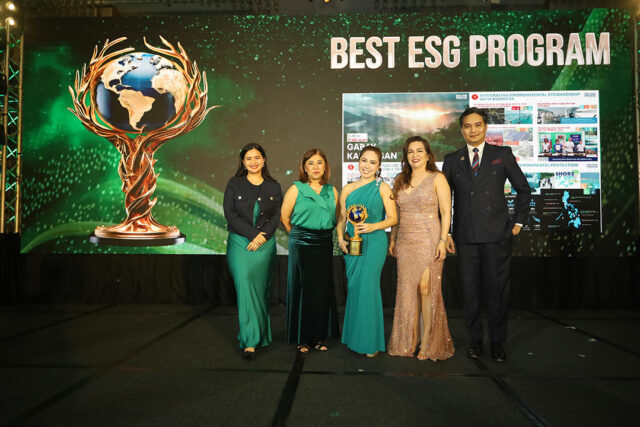
MPIC bagged the best environmental, social and governance (ESG) program award for its Gabay Kalikasan Program, as well as the Triple P award for its commitment to net-zero emissions by 2050, proactive climate risk management and efforts to reduce emissions within its value chain.

The conglomerate stood out for encouraging a people-centered culture, ensuring fair wages, career development, and healthcare access for all employees, while investing 75% of its portfolio in sustainable ventures.

Meanwhile, SM was cited for its leadership in social sustainability among holding companies, while Light Rail Manila Corp. was awarded for promoting social responsibility within the mass transportation industry.

Mondelez International Philippines bagged the excellence in environmental sustainability for the food manufacturing sector, while Maynilad Water Services, Inc. showed exemplary performance in both environmental and social sustainability within water utilities.

Manila Electric Co. bagged the excellence in environmental and social sustainability for energy distribution.

“Through these awards, we honored companies that truly embodied the spirit of sustainability and set new standards within their respective industries,” IABC ESG Committee Chairperson Melody M. del Rosario said. “These winners exemplify the power of strategic sustainability in not just enhancing reputation but creating real, measurable impact in society, the environment and for people.”

IABC Philippines represents professionals in the field of business communications in the country.

MPIC is one of the three key Philippine units of Hong Kong-based First Pacific Co. Ltd., the others being Philex Mining Corp. and PLDT Inc.

Hastings Holdings, Inc., a unit of PLDT Beneficial Trust Fund subsidiary MediaQuest Holdings, Inc., has a majority share in BusinessWorld through the Philippine Star Group, which it controls. — Revin Mikhael D. Ochave

Revuelto ushers Lamborghini into electrified era with 1,015cv of power

The Lamborghini Revuelto can reach 100kph from a standstill in 2.5 seconds. — PHOTO FROM LAMBORGHINI

NAMED AFTER an 1880s fighting bull, the Revuelto is the fitting heir to the Lamborghini Aventador which completed a historic 11-year run atop the hallowed Lamborghini lineup as its most potent sports car since it was launched in 2011.

While technically not the first hybrid from the Sant’Agata Bolognese-headquartered super car maker (that honor belongs to the Sián FKP 37, rolled out in 2019), the Revuelto is the most powerful ever — developing an incredible 1,015cv of power (one cv equals 0.985hp). It is the brand’s first super sports V12 hybrid plug-in HPEV (or high-performance electrified vehicle), and the Revuelto’s recent arrival in the Philippines represents the dawn of a new era in electrification here.

The Revuelto features a “perfect balance between enhanced driving emotions and reducing emissions,” a tenet now available to local Lamborghini customers and fans. In terms of performance, the model is a true top-tier Lambo as it rockets from a standstill to 100kph in a scant 2.5 seconds, and reaches 200kph in seven ticks — on the way to a top speed that is said to exceed 350kph.

Making this possible is a powertrain comprised of a 6.5-liter V12 engine supplemented by three electric motors — helped along with a mass-conscious design that leads to a marque-best weight-to-power ratio of 1.75kg/cv. This cements the Revuelto’s leadership in the super sports car segment. This is made possible in part with the hefty use of carbon fiber — produced via artisan craftmanship at the factory. The material is deployed not only in the monofuselage and frame but also “in all elements of the bodywork,” along with the doors and bumpers.

The mill’s massive potential is realized through the Revuelto’s eight-speed double-clutch transmission — the first time it appears on a 12-cylinder model from the brand. What it brings, said Lamborghini, is seamless gear shifting while enhancing overall driving dynamics. The Revuelto also boasts electric-only driving for even more versatility — as well as emissions-free driving.

A lot of high technology is put to work as well, such as electric torque vectoring and a sophisticated four-wheel drive system for maximum agility and stability whether on track or the road. Significantly, versus the Aventador Ultimae, the Revuelto boasts a 30% reduction in CO2 emissions.

The Revuelto design, including the hexagonal elements that occur throughout the vehicle, draws on the rich history of the iconic brand, combining it with “modern aesthetics,” and resulting in a familiar wedge shape that lies close to the ground, and showcasing aerospace-inspired features. In the cabin are multiple digital displays, underpinning a so-called “Feel Like a Pilot” concept through “simple volumes, symmetry, and a driver-focused approach.”

It draws inspiration from the V12 models that preceded it — from the 1971 Countach’s proportions and scissor doors, to the Diablo’s presence and floating blade on the rear fender, and the muscularity and inclined front of the Murciélago.

A “double-bubble” roof provides space vertically, and a compact central tunnel gives more lateral room. Lamborghini said the trunk can fit two cabin-size rollers, while the rear bench can store up to two soft bags. Buyers can choose from over 400 exterior colors and a range of luxurious materials available to personalize the driving experience.

For more information about the Revuelto, contact (+632) 8553-9693.

Style (10/28/24)


Malbon teases entry to Philippines

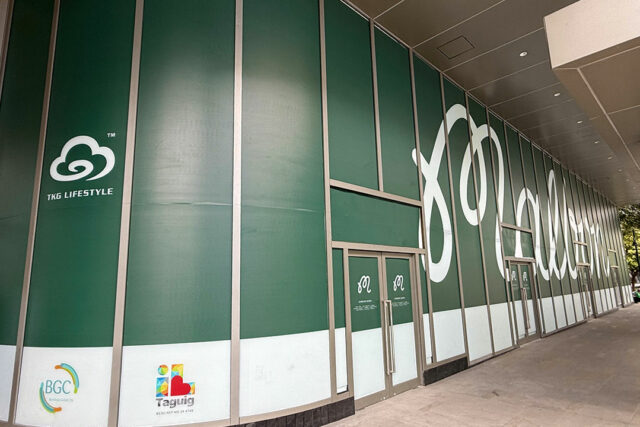
MALBON, the lifestyle brand that fuses fashion with golf, will be opening their largest store worldwide right in the Philippines. It will be in the heart of BGC at the Shangri-La, facing 5th Avenue. Founded by Stephen and Erica Malbon, the brand was established in 2017 in Los Angeles and has quickly become a Hollywood favorite (Justin Bieber is a regular). They have biweekly collection drops and a diverse portfolio of collaborations ranging from Footjoy to Coca Cola to Jimmy Choo to Wu Tang Clan. Malbon has a Buckets Club, a community for golfers, athletes, artists, and creatives, offering members unique benefits like early access to product drops, invitations to special store events, and participation in golf events around the country. Malbon will be brought to the country by TKG Lifestyle, a local group behind the franchises for Gentle Monster and % Arabica, and the fitness facility Pretty Huge. The Malbon store is slated to open next year.


Rustan’s celebrates Christmas

THIS YEAR’S window display at Rustan’s Makati depicts Santa’s modern journey. Instead of a sleigh, Santa is seen driving a vintage car loaded with gifts, while Mrs. Claus is seen zipping through town on a Vespa. As for their Christmas promos, Rustan’s presents an array of these available from Oct. 5 to Dec. 31. Enjoy up to 60% off at Rustan’s Beauty, featuring brands like K-Palette, Phyto, Babyliss, and bath and body brands. In Women’s Fashion, selections ranging from apparel, accessories, shoes, and bags from Natori, Swarovski, and Nava, among others, will have discounts of up to 30% off. For men, Banana Republic offers 45% off for FSP members and 35% off for non-FSP members on regular-priced men’s items. Get 10% off on all regular items from Tumi and receive a complimentary 19D Aluminum Card with a minimum purchase of P40,000. The Kids section features playful clothing and accessories from Mommy Hugs, Yumbox, Cuddlebug, and more, offering up to 25% off. Dazzle this holiday season with pieces from Montblanc, Tiffany & Co., Swarovski, and Chow Sang Sang, all available at up to 20% off. The Silver Vault features exclusive items at up to 25% off. The Home Collection, with brands like Royal Albert, Vista Alegre, Rustan’s Our Very Own, Tefal, Beka, Breville, and more, has offers of up to 40% off. Select Rustan’s brands will extend gift-with-purchase offers during the promo period. They’re also releasing a new giveaway, the Rustan’s Christmas Bear, tied to a cause. FSP and Beauty Addict members who make a minimum purchase of P20,000 between Nov. 1 to 30 will receive a bear. A portion of the proceeds collected will benefit the Servants of Charity, an organization dear to the late Rustan’s head Zenaida R. Tantoco, dedicated to caring for children with mental disabilities.


SM Stationery launches stand-alone concept store

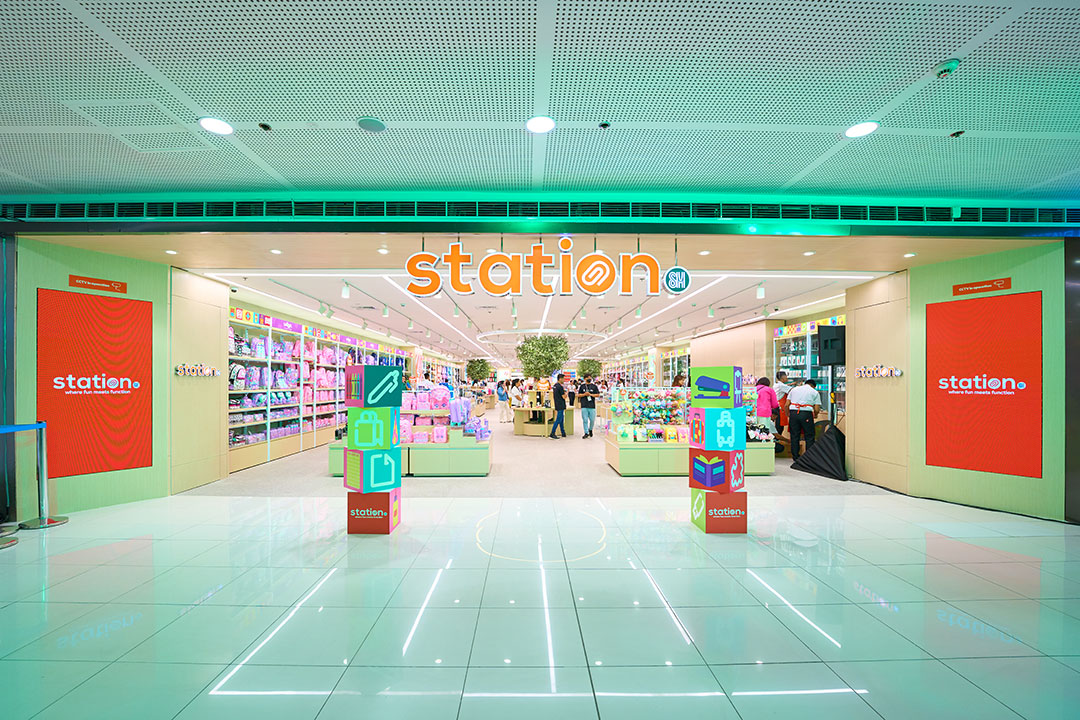
SUPPLIES STATION, INC., the company behind homegrown brands SM Stationery and SM Gadgets, opens its first stand-alone concept store in Quezon City. The new store, called Station by SM, opened its doors to the public on Oct. 18. It offers customers school and office supplies, art materials, and novelty items. “We are excited to introduce our first stand-alone concept store to our customers,” said Jessalyn Uy, SVP and Business Unit Head of Supplies Station, Inc., in a statement. “This new store represents our dedication to providing a fresh shopping experience for our customers and showcasing our extensive range of products in a whole new way. From Gen Zs to young moms and to corporate professionals, Station by SM is truly a one-stop destination where fun meets function.” The store carries stationery brands like Mongol, Pilot, Crayola, Sharpie, Faber Castell, and Stabilo. Customers can also find brands such as Jisulife, Aquaflask, and Smiggle. Station by SM is open daily and is located at the Lower Ground Level, Central Walk of SM Fairview.

Yields on government debt end higher

By Abigail Marie P. Yraola, Deputy Research Head

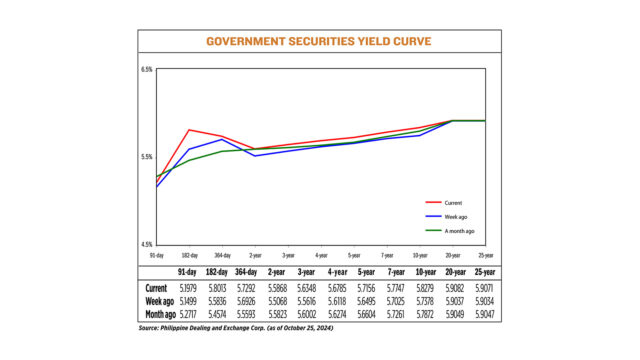
YIELDS on government securities (GS) traded in the secondary market rose across the board last week as the market remained cautious amid monetary easing expectations here and in the United States and uncertainty ahead of the upcoming US presidential elections.

GS yields, which move opposite to prices, rose by an average of 6.90 basis points (bps) week on week, according to the PHP Bloomberg Valuation Service Reference Rates as of Oct. 25 published on the Philippine Dealing System’s website.

Rates at the short end of the curve rose, with the 91-, 182-, and 364-day Treasury bills (T-bills) climbing by 4.8 bps (to 5.1979%), 21.77 bps (5.8013%), and 3.66 bps (5.7292%) week on week, respectively.

At the belly, yields likewise went up across all tenors. The two-, three-, four-, five-, and seven-year Treasury bonds (T-bond) saw their rates increase by 8 bps (to 5.5868%), 7.32 bps (5.6348%), 6.67 bps (5.6785%), 6.61 bps (5.7156%), and 7.22 bps (5.7747%), respectively.

Tenors at the long end also saw their rates climb. The 10-, 20-, and 25-year T-bonds rose by 9.01 bps, 0.45 bp and 0.37 bp to fetch 5.8279%, 5.9082%, and 5.9071%, respectively.

GS volume traded was at P39.31 billion on Friday, higher than the P25.76 billion recorded a week earlier.

“Bond yields broadly moved higher during the week as traders remained cautious due to uncertainty concerning the future US monetary and fiscal policy. This was mainly due to lack of clear lead on the US presidential race polling,” a bond trader said in an e-mail.

The trader said market expectations have shifted towards more gradual Fed rate cuts after various officials discussed the implications of the 50-bps rate cut made in September.

“On the local front, demand for Treasury bills (T-bills) remained consistently strong as investors maximize the higher yields for short-term issuances in anticipation of future BSP (Bangko Sentral ng Pilipinas) policy rate cuts,” the trader added.

The Bureau of the Treasury last week raised P20 billion as planned from the T-bills it auctioned off, with total bids amounting to P55.069 billion, higher than the P51.735 billion a week earlier.

ATRAM Trust Corp. Vice-President and Head of Fixed Income Strategies Lodevico M. Ulpo, Jr. said that the GS yields rose following the T-bill auction results and by volatility in US Treasuries amid strong economic data and mixed signals from Federal Reserve officials on their policy easing path.

“Late in the week, stabilizing global rates and an anticipated P300-billion liquidity boost from the BSP’s RRR (reserve requirement ratio) cut led to improved liquidity, nudging local yields slightly lower,” Mr. Ulpo said.

Effective Friday, the BSP reduced the RRR for universal and commercial banks and nonbank financial institutions with quasi-banking functions by 250 bps to 7% from 9.5%.

It also cut the RRR for digital banks by 200 bps to 4%, while the ratio for thrift lenders was brought down by 100 bps to 1%. Rural and cooperative banks’ reserve requirement was slashed by 100 bps to 0%.

Republican former President Donald Trump and Democratic Vice President Kamala Harris are polling neck-and-neck in crucial swing states ahead of the Nov. 5 election. Investors are anxious about a contested result roiling world markets and unleashing fresh geopolitical uncertainty, Reuters reported.

Mr. Trump is neck and neck with Ms. Harris in the polls. Yet investors are taking their cues from betting markets, where the odds have shifted in Mr. Trump’s favor.

The dollar has rallied more than 3% so far in October as bond yields have climbed towards three-month highs, partly because markets are preparing for potentially higher US tariffs flagged by Mr. Trump if he wins that could push up inflation and force the Federal Reserve to keep rates higher.

Traders are pricing in near-95% odds of a 25-bp cut at the Fed’s November meeting, according to the CME Group’s FedWatch Tool. The yield on benchmark US 10-year notes rose 3.8 bps to 4.24%.

Four Fed policy makers on Monday expressed support for further interest rate cuts, but appeared to differ on how fast or far they believe any cuts should go.

Three of them, citing the strength of the economy and an uncertain outlook, expressed a preference for going slow, using words like “modest” and “gradual” to describe their views on the right pace for rate cuts.

The fourth, San Francisco Fed President Mary Daly, said she feels Fed policy is “very tight” and does not believe that a strong economy, as long as inflation continues to fall, should keep the central bank from continuing to reduce rates.

The remarks provide a small taste of what’s expected to be a broad but closed-door debate of the appropriate path for policy at the Fed’s upcoming policy meeting, on Nov. 6-7.

Meanwhile, the BSP has so far cut borrowing costs by a total of 50 bps this year since it began its easing cycle in August, with its policy rate currently at 6%.

BSP Governor Eli M. Remolona, Jr. has signaled another 25-bp cut at the Monetary Board’s last policy review for the year on Dec. 19.

For this week, GS yields may continue to climb as the market remains cautious, both analysts said.

“Investors are expected to remain cautious, balancing duration risk against near-term volatility as monetary policy expectations evolve. In the near term, many may stay on the sidelines, awaiting clearer signals from global policy makers and developments in US politics,” Mr. Ulpo said.

“Yields might continue fetching higher amid domestic inflationary concerns emanating from the recent peso weakening and potential supply disruptions from the impact of Typhoon Kristine,” the bond trader added.

Yields could remain range-bound in the coming weeks, supported by improved liquidity from the BSP’s RRR cut, dovish signals from the BSP, as well as lower bond supply due to the reduced number of Treasury bond auctions this quarter, Mr. Ulpo said.

“However, volatility in US Treasuries will likely apply upward pressure, particularly on the medium to long end of the curve,” he said.

“In the longer term, yields could gradually decline as investors anticipate easing amid a slowdown and limited government bond issuance. Further dovish BSP signals or global market stability may add downward momentum on yields, though US Treasuries and inflation data will continue to be key short-term factors to balance direction,” Mr. Ulpo added. — with Reuters


Philippines improves in property rights ranking

(But still one of the laggards in the region)

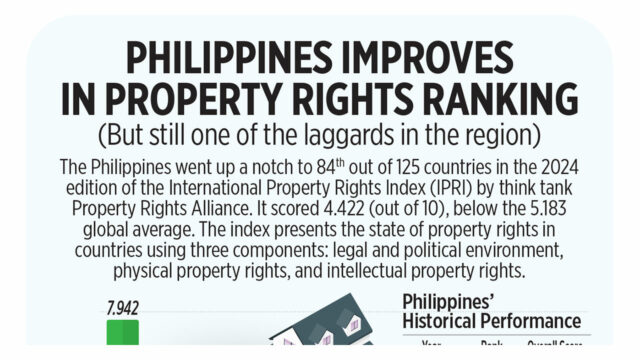
The Philippines went up a notch to 84th out of 125 countries in the 2024 edition of the International Property Rights Index (IPRI) by think tank Property Rights Alliance. It scored 4.422 (out of 10), below the 5.183 global average. The index presents the state of property rights in countries using three components: legal and political environment, physical property rights, and intellectual property rights.

Philippines improves in property rights ranking

How PSEi member stocks performed — October 25, 2024

Here’s a quick glance at how PSEi stocks fared on Friday, October 25, 2024.


Firms’ results, window dressing may lift stocks

BW FILE PHOTO

CORPORATE RESULTS, month-end window dressing and market bets ahead of the US presidential vote may push up Philippine stocks this week.

On Friday, the benchmark Philippine Stock Exchange index (PSEi) climbed by 0.41% or 30.44 points to 7,314.23, while the broader all shares index went up by 0.24% or 9.88 points to 4,017.27.

Week on week, however, the PSEi dropped by 1.37% or 101.50 points from its 7,415.73 close on Oct. 18.

“Local equities pulled back as Tropical Storm Kristine wreaked havoc, washing away built-up optimism early this month,” online brokerage firm 2TradeAsia.com said in a market note.

“The local market is having a hard time getting past the 7,400-7,500 resistance range as the weakening of the peso together with offshore uncertainties weigh on sentiment. Consequently, the market is being hindered from continuing its bull run,” Philstocks Financial, Inc. Senior Research Analyst Japhet Louis O. Tantiangco said in a Viber message.

On Friday, the peso closed at P58.32 per dollar, dropping by 44 centavos from its P57.88 finish on Tuesday, Bankers Association of the Philippines data showed. This was its weakest finish in almost three months or since it ended at P58.333 per dollar on Aug. 1.

Week on week, the local unit fell by 80.90 centavos from its P57.511 finish on Oct. 18.

For this week, Philippine shares may rise on bargain hunting as prices remain attractive, Mr. Tantiangco said.

“Investors are expected to look forward to the corporate sector’s third-quarter reports. Upbeat corporate results are seen as one of the possible catalysts that could drive the market higher,” he said.

“The dovish monetary policy outlook of the Bangko Sentral ng Pilipinas (BSP) is still expected to give the market support… Investors are also expected to monitor the movement of the local currency.”

Mr. Tantiangco put the market’s support at 7,150.

“Absent other catalysts, [this] week’s month-end window dressing period might be an opening for traders to position and bet ahead of the US polls, especially given the timing of the earlier RRR (reserve requirement ratio) cut implementation that should further inject available cash flow for trading,” 2TradeAsia.com said.

2TradeAsia.com put the PSEi’s immediate support at 7,000 and resistance at 7,500.

Effective Friday, the BSP reduced the RRR for universal and commercial banks and nonbank financial institutions with quasi-banking functions by 250 basis points (bps) to 7% from 9.5%.

It also cut the RRR for digital banks by 200 bps to 4%, while the ratio for thrift lenders was brought down by 100 bps to 1%. Rural and cooperative banks’ reserve requirement was slashed by 100 bps to 0%.

Rizal Commercial Banking Corp. Chief Economist Michael L. Ricafort placed the PSEi’s immediate support at 7,050-7,260 and resistance at 7,600-7,800. — R.M.D. Ochave