Home Blog Page 2075

Woods rues decision to move Genesis to Torrey Pines due to California wildfires

TIGER WOODS admitted that it was “very difficult” to relocate the Genesis Invitational to Torrey Pines Golf Course in San Diego in the wake of the wildfires in California.

Riviera Country Club is in the hard-hit Pacific Palisades section of Los Angeles and was set to hold the Feb. 13-16 tournament, which is hosted by Woods and his foundation.

“The meeting we had was very difficult with the Watanabes (Riviera CC’s owners),” Woods said Monday after his Jupiter Links Golf Club team posted a 4-3 win in overtime against Rory McIlroy’s Boston Common Golf squad in TGL action. “Riv is just not ready. We want to stay on the West Coast, and it narrowed those options down to possibly up near Pebble or to Phoenix or to Vegas or to San Diego or to Palm Springs.

There were so many different options out on the table, and we were trying to be understanding to all the victims.”

“I think it’s important that we were able to stay in Southern California because everyone who was born and raised out in Southern Cal can all relate to the fires. It’s a difficult situation, and we want to be very sensitive to that.”

Woods was born and raised in Southern California.

Torrey Pines, an annual tour stop since 1968, was the site of last week’s Farmers Insurance Open. The municipal course also hosted the 2008 and 2021 US Opens, won by Woods and Spaniard Jon Rahm, respectively.

The PGA Tour said the Genesis Invitational is expected to return to Riviera in 2026. The course also is scheduled to host the golf events in the 2028 Los Angeles Olympics. Reuters

Trump still expected to impose Feb. 1 tariffs on Canada and Mexico

STOCK PHOTO | Image by Pexels from Pixabay

WASHINGTON — US President Donald Trump still plans to make good on his promise to issue tariffs on Canada and Mexico on Saturday, White House spokeswoman Karoline Leavitt said on Tuesday.

Ms. Leavitt told reporters in her first White House press briefing that Mr. Trump also is still “very much” considering fresh tariffs on China for Saturday.

Shortly after taking office last week, Mr. Trump set a Feb. 1 deadline for imposing 25% tariffs on imports from Mexico and Canada unless the countries move to halt flows of illegal immigrants and the deadly opioid fentanyl into the US. He also said he would slap a 10% tariff on Chinese goods over that country’s role in the fentanyl trade.

Asked about the Saturday deadline for Canada and Mexico, Ms. Leavitt said Trump has said it “still holds.”

“The president has also put out specific statements in terms of Canada and Mexico, when it comes to what he expects in terms of border security.” Ms. Leavitt added. “We have seen a historic level of cooperation from Mexico. But again, as far as I’m still tracking, and that was last night talking to the president directly, Feb. 1 is still on the books.”

She did not specify what actions Canada, Mexico and China needed to take to avert the tariffs. Trump, who first threatened the punitive duties in late November, has said that the tariffs would remain in place until the flows of migrants and drugs stop.

On Sunday, Trump forced Colombia to accept US deportations of illegal immigrants, including via military aircraft, after threatening Latin America’s fourth largest economy with 25% tariffs. For about 10 hours, Colombian President Gustavo Petro’s refusal to accept military aircraft loaded with deported Colombian nationals and threats to match Trump’s tariffs had the two free trade partners reeling toward an unexpected tariff war.

FAR BIGGER STAKES
The stakes are far higher in Trump’s tariff threats against Mexico, Canada and China, the three largest US trading partners accounting for over $2.1 trillion in annual imports and exports.

Colombia was the US’ 23rd largest trading partner in 2023, accounting for $33.8 billion worth of two-way trade, and a $1.6-billion US trade surplus, according to US Census Bureau data. Colombia’s economy is highly dependent on exports to the US, which made up 29% of its total exports for the first 11 months of 2024, according to the country’s statistics agency.

Disrupting trade flows within the highly integrated North American economy would be very costly, said Mary Lovely, a trade economist at the Peterson Institute for International Economics.

Among the biggest impacts would be the auto industry, where parts and components can cross national borders several times before a vehicle’s final assembly in the US, Canada or Mexico.

“That’s kind of a sobering fact that lays in the direction of doing something that either pushes this can down the road or which finds a way to resolve this,” Ms. Lovely said.

She added that Canada and Mexico “have to be thinking the US has a lot to lose here, too. They’re not Colombia.”

Howard Lutnick, Trump’s nominee for Commerce secretary who has been designated leader of trade strategy, faces senators on Wednesday for a confirmation hearing. His prepared remarks revealed no new details about Trump’s trade plans. — Reuters

Atomic scientists adjust ‘Doomsday Clock’ closer than ever to midnight

A PHOTOGRAPHER stands by the Doomsday Clock during a news conference after the Bulletin of the Atomic Scientists announced the location of the clock’s minute hand, indicating what world developments mean for the perceived likelihood of nuclear catastrophe, at the US Institute of Peace in Washington, US on Jan. 28, 2025. — REUTERS

WASHINGTON — Atomic scientists on Tuesday moved their “Doomsday Clock” closer to midnight than ever before, citing Russian nuclear threats amid its invasion of Ukraine, tensions in other world hot spots, military applications of artificial intelligence (AI) and climate change as factors underlying the risks of global catastrophe.

The Bulletin of the Atomic Scientists set the clock to 89 seconds before midnight — the theoretical point of annihilation. That is one second closer than it was set last year. The Chicago-based nonprofit created the clock in 1947 during the Cold War tensions that followed World War II to warn the public about how close humankind was to destroying the world.

“The factors shaping this year’s decision — nuclear risk, climate change, the potential misuse of advances in biological science and a variety of other emerging technologies such as artificial intelligence — were not new in 2024. But we have seen insufficient progress in addressing the key challenges, and in many cases this is leading to increasingly negative and worrisome effects,” said Daniel Holz, chair of the Bulletin’s Science and Security Board.

“Setting the Doomsday Clock at 89 seconds to midnight is a warning to all world leaders,” Mr. Holz added.

The organization said the United States, China and Russia have the prime responsibility to pull the world back from the brink, and urged good-faith international dialogue. At a news conference announcing the decision, Nobel Peace Prize Laureate Juan Manuel Santos, Colombia’s former president, said, “This is a bleak picture but it is not yet irreversible.”

Russia’s 2022 invasion of Ukraine launched Europe’s bloodiest conflict since World War II.

“The war in Ukraine continues to loom as a large source of nuclear risk. That conflict could escalate to include nuclear weapons at any moment due to a rash decision or through accident and miscalculation,” Mr. Holz said.

Russian President Vladimir Putin in November lowered the threshold for a nuclear strike in response to a broader range of conventional attacks, a move the Kremlin described as a signal to the West amid a war in which Ukraine has received arms supplied by the United States and its allies. Russia’s updated doctrine set a framework for conditions under which Mr. Putin could order a strike from the world’s biggest nuclear arsenal.

Russia said in October it will not discuss signing a new treaty with the United States to replace the New Strategic Arms Reduction Treaty limiting each side’s strategic nuclear weapons that expires in 2026 because Moscow believes it must be broadened and expanded to cover other countries.

“Russian aggression in Ukraine, including repeated use of nuclear threats since the war began, has been disturbing. In addition, Russia’s recent backtracking from important arms control treaties is an alarming sign of increasing nuclear risk,” Mr. Holz said.

‘DANGEROUSLY UNSTABLE’
The Middle East has been another source of instability with the Israel-Gaza war and broader regional hostilities involving countries including Iran. Nuclear-armed China has stepped up military pressure near Taiwan and nuclear-armed North Korea continues testing various ballistic missiles.

“We are watching closely and hope that the ceasefire in Gaza will hold. Tensions in the Middle East including with Iran are still dangerously unstable,” Mr. Holz said. “There are other potential hot spots around the world, including Taiwan and North Korea. Any of these could turn into a conflagration involving nuclear powers, with unpredictable and potentially devastating outcomes.”

Artificial intelligence made rapid gains in capability and popularity in 2024, prompting increasing concern among some experts about its military applications and its risks to global security. In the United States, then-President Joseph Biden in October signed an executive order intended to reduce the risks that AI poses to national security, the economy and public health or safety. His successor Donald Trump last week revoked it.

“Advances in AI are beginning to show up on the battlefield in tentative but worrisome ways, and of particular concern is the future possibility of AI applications to nuclear weapons. In addition, AI is increasingly disrupting the world’s information ecosystem. AI-fueled disinformation and misinformation will only add to this dysfunction,” Mr. Holz said.

Last year was the hottest in recorded history, according to the UN World Meteorological Organization. Climate change is worsening storms and raising the risk of wildfires, according to scientists.

“While there has been impressive growth in wind and solar energy, the world is still falling short of what is necessary to prevent the worst aspects of climate change,” Mr. Holz said.

The Bulletin was founded in 1945 by scientists including Albert Einstein and J. Robert Oppenheimer. — Reuters

Thailand expects high-speed rail link to China to operate from 2030

REUTERS

BANGKOK — Thailand expects its 609-kilometer (378 miles) portion of a high-speed railway that will connect it with China through Laos to begin operations in 2030, its government said on Wednesday, nearly a decade later than originally planned.

More than a third of construction has been completed in the segment connecting the capital Bangkok to the city of Nakhon Ratchasima, about 220 km away and the whole line to Nong Khai at the border with Laos would be ready by 2030, said Thai government spokesperson Jirayu Houngsub.

A $6 billion, 1000 km rail line from the Laotian capital Vientiane to the southwestern Chinese city of Kunming began service in 2021, a venture 70% owned by Beijing. That line will connect with Thailand’s Nong Khai via Vientiane, about 25 km away.

“This is an opportunity for Thailand to connect to the global economy,” Mr. Jirayu said, adding it would bring Thailand closer to its goal of becoming a logistics hub.

The announcement comes a year after China urged Thailand to progress faster on the rail link.

Discussions on the rail line started nearly two decades ago and Thailand and China signed agreements on its construction in 2017 with plans to begin operations in 2021. But construction met delays over disagreements on financing and design, and disruption from the COVID-19 pandemic.

The plan is part of Chinese President Xi Jinping’s ambitious Belt and Road trade and infrastructure initiative, which includes plans for three routes originating in Kunming that pass through Myanmar, Thailand and Vietnam.

Vietnam plans to build a 1,541 km (958-mile) high-speed rail line linking its two biggest cities, Hanoi and Ho Chi Minh City, at a cost of more than $67 billion, targeting the start of operations in 2035. It also plans a $7.2-billion railway from its border with China’s Yunnan province to Hanoi, the port city of Haiphong and Ha Long City. — Reuters

Poll: 85% of Greenlanders do not want to be part of the US

STOCKHOLM — An opinion poll indicated on Tuesday that 85% of Greenlanders do not wish their Arctic island — a semi-autonomous Danish territory —  to become a part of the United States, Danish daily Berlingske reported.

US President Donald Trump said earlier this month that Greenland was vital to US security and Denmark should give up control of the strategically important island.

The survey by pollster Verian, commissioned by the Danish paper, showed only 6% of Greenlanders are in favor of becoming part of the US, with 9% undecided, Berlingske said.

Denmark said on Monday it would spend 14.6 billion crowns ($2.04 billion) on boosting its military presence in the Arctic.

Greenland — with a land mass larger than Mexico and a population of 57,000 — was granted broad self-governing autonomy in 2009, including the right to declare independence from Denmark through a referendum.

Greenland Prime Minister Mute Egede, who has stepped up a push for independence, has repeatedly said the island is not for sale and that it is up to its people to decide their future.

The US military has a permanent presence at the Pituffik Space Base in northwestern Greenland, a strategic location for its ballistic missile early-warning system, as the shortest route from Europe to North America runs via the island. — Reuters

Trump’s freeze on US aid rings alarm bells from Thailand to Ukraine

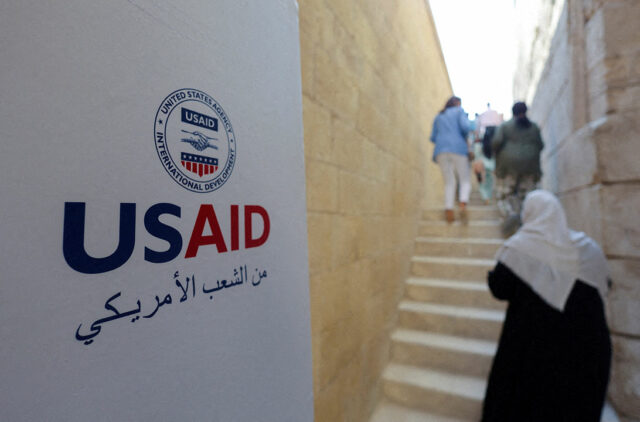
Visitors walk up a stair during the opening of the restoration project at the historic Bimaristan Al-Muayyad Sheikh, one of the oldest hospitals following extensive renovations carried out in partnership between Egypt’s Tourism and Antiquities Ministry and the United States Agency for International Development (USAID) in Old Cairo, Egypt Aug. 18, 2024. — REUTERS

BERLIN/BANGKOK/LONDON — Field hospitals in Thai refugee camps, landmine clearance in war zones, and drugs to treat millions suffering from diseases such as HIV are among the programs facing the chop as President Donald Trump contemplates massive cuts to US foreign aid.

Mr. Trump last week paused development assistance from the US Agency for International Development for 90 days to assess compatibility with his “America First” policy, setting alarm bells ringing among aid groups around the world that depend on US largesse.

Humanitarian organizations and UN agencies say they could face drastic curbs on their ability to distribute food, shelter and healthcare if the freeze becomes permanent.

The US is by far the biggest contributor to global humanitarian aid, supplying an estimated $13.9 billion in 2024, accounting for 42% of all aid tracked by the United Nations.

Clinics at camps in Thailand providing shelter for about 100,000 refugees from Myanmar were ordered to shut after the US froze funding to the International Rescue Committee, according to a senior aid worker.

Washington said it would grant waivers to the freeze in some areas including emergency food assistance, according to a memo seen by Reuters. Bangladesh’s government said in a statement that the US had granted a waiver for emergency food aid to more than a million Rohingya refugees sheltering in Bangladesh.

But the exemption does not apply to other humanitarian programming. A Bangladesh-based aid worker said organizations working on shelter, for example, would not be able to buy new materials for building and fixing homes for refugees.

The cuts will also affect the supply of lifesaving drugs for HIV, malaria and tuberculosis around the globe, which millions of people depend on, according to another memo seen by Reuters.

On Tuesday, contractors and partners who work with USAID began receiving such memos to stop work immediately.

‘CATASTROPHIC’
“This is catastrophic,” said Atul Gawande, former head of global health at USAID who left the agency this month. “Donated drug supplies keeping 20 million people living with HIV alive. That stops today.”

The cuts will affect organizations working with 6.5 million orphans and vulnerable children with HIV in 23 countries, Gawande said.

World Food Program Country Director for Afghanistan Hsiao-Wei Lee told Reuters she was concerned about the freeze given that the WFP was already only receiving about half the aid it needed for Afghanistan, and that over 6 million people were surviving on “just bread and tea.”

The WFP received $4.7 billion from the US last year, accounting for 54% of its funding, according to the UN.

Some NGOs are resorting to donations from the public to fund the shortfall caused by the freeze. The Freeland Foundation, a counter-trafficking group in Bangkok, has started a GoFundMe to get it through the 90-day freeze.

“Two days ago, the new Trump administration suddenly froze all foreign aid, including our wildlife protection programs,” the group said. “Poachers and traffickers will not freeze their operations. Can you help us keep our frontline teams going for 90 days until the freeze is lifted?”

The order to freeze funding has thrown USAID missions and their partners into chaos, with many organizations unsure whether to lay off staff, start selling assets such as cars or tell employees to take unpaid leave, according to a source at the agency. USAID has been forbidden from communicating with implementing partners except to say funds have been paused, the person said.

“These are people we work with on a daily basis,” the source added. “We can’t speak with them any more.”

Other agencies said they would be unaffected by the freeze. United Nations High Commissioner for Refugees spokesperson Matthew Saltmarsh said the agency didn’t receive funding from USAID.

Independent media outlets that receive external funding in countries with authoritarian governments may struggle to survive, say media freedom activists.

In Georgia, where a “foreign agents law” passed last year established punitive fines for NGOs that fail to declare receiving more than 20% of their funding from overseas, Shalva Papuashvili, speaker of parliament from the Georgian Dream ruling party, welcomed the US aid freeze.

“I was pleasantly surprised when Trump’s executive order was based on the fact that international assistance, in some cases, is used to create certain… chaos on the ground, including harming US interests,” he was quoted as saying by Georgian media.

LANDMINES AND EDUCATION
In 2023, the US was the largest landmine action donor with a total contribution of $310 million, representing 39% of all international support, according to the International Campaign to Ban Landmines. Syria, Myanmar, Ukraine and Afghanistan were among the countries where uncleared mines claim most lives.

The State Department said on Sunday that the US government must refocus on American national interests in its role as steward of taxpayer dollars.

“President Trump stated clearly that the United States is no longer going to blindly dole out money with no return for the American people. Reviewing and realigning foreign assistance on behalf of hardworking taxpayers is not just the right thing to do, it is a moral imperative,” the State Department said.

Oksana Matiiash, board chair at Teach for Ukraine, an NGO that trains graduates and specialists as teachers to improve the education system, said there was growing panic in Ukraine’s NGO sector.

“It’s not just funding that’s frozen. Behind every grant are real people working in unimaginable conditions,” Matiiash wrote on LinkedIn. — Reuters

Taiwan may offer help for industry over Trump tariff threats

REUTERS

TAIPEI — Taiwan’s government will soon look at whether it needs to help its domestic industry over threats by U.S. President Donald Trump to put tariffs on semiconductors, Premier Cho Jung-tai said on Wednesday.

Home to the world’s largest contract chipmaker, Taiwan Semiconductor Manufacturing Co. (TSMC) , the island is a key link in the global technology supply chain for companies such as Apple and Nvidia.

Trump said on Monday he plans to impose tariffs on imported chips, pharmaceuticals and steel to get the producers to make them in the United States.

Responding to a question on Trump’s remarks, Cho said the economy ministry and other departments have been paying close attention to the “developments of the past few days.”

“In a day or two we will urgently look at whether we need to make more cooperative plans and future assistance programs for the industrial sector,” he added. “I would like to reassure our compatriots that Taiwan’s position in the world’s industrial chain is not to be ignored, and that we will continue to maintain such an advantage.”

Taiwan has to continue to strive for more cooperation externally and to maintain its leadership in the industrial and technological sectors, Cho added.

In 2020, under the first Trump administration, TSMC announced that it would build a $12 billion factory in Arizona in a win for efforts by the US government to wrestle global tech supply chains back from China. It later boosted those plans with the total investment now standing at $65 billion.

TSMC has declined to comment on Trump’s latest tariff remarks.

This month, Taiwan Economy Minister Kuo Jyh-huei said he only expected a small impact from any tariffs imposed by Trump on semiconductor exports given their technological superiority.

In another potential challenge for Taiwan, Mr. Trump last week directed federal agencies to investigate persistent US trade deficits and unfair trade practices and alleged currency manipulation by other countries.

Taiwan’s trade surplus with the United States surged 83% last year compared with 2023, with exports to the U.S. hitting a record $111.4 billion driven by demand for high-tech products such as semiconductors. — Reuters

Priests in Philippines accused of sex abuse remain in active ministry, US-based group says

SAINT PETER’S BASILICA is silhouetted in this photo taken at the Vatican, Dec. 16, 2023. — REUTERS

MANILA — Philippine priests accused of sex abuse remain in active ministry in the Catholic-majority country, a U.S.-based abuse tracking group said on Wednesday, urging the country’s bishops to take action and hold the alleged perpetrators accountable.

BishopAccountability.org, which tracks abuse in the Catholic Church, said 82 priests and brothers from the Philippines and some who served in the country for a period in their lives had been accused of sex abuse.

At least seven of the accused priests continue to serve in parishes across the archipelago, some as recently as last month, the group’s co-director Anne Barrett Doyle said in a press conference on Wednesday.

Philippine bishops have a “deep sense of entitlement” in withholding information on the abuse of priests in their diocese, she said.

“These are men who fear nothing”.

Cardinal Pablo Virgilio David, president of the Philippine bishops conference, the Church’s top policy body, said in a statement that it has put up an office headed by an archbishop and a team of bishops and experts to safeguard minors.

“Our mandate from Rome is to take the issue of accountability very seriously, especially those related to alleged abuse cases involving priests,” David said.

Individual bishops, David said, have authority over the accused priests. The papal nuncio – Pope Francis’ representative to the country – is usually the next level of authority to act on the complaints.

“As a conference of bishops, we merely build a consensus among ourselves about common policies to be adopted. Only Rome, represented by the Nuncio, has direct disciplinary authority over individual bishops,” he said.

The Pope’s nuncio to the Philippines did not immediately respond to a request for comment.

Nearly 80% of the 109 million Filipinos identify as Catholic, the most populous in Asia due to the lasting legacy of Spanish colonization for three centuries.

‘SMALL FRACTION’
Barrett Doyle also urged the government to prosecute the alleged offenders, saying none of those accused have been convicted for wrongdoing.

“Zero tolerance does not exist in the Philippine church,” she added.

The justice ministry did not immediately respond to a request for comment on a public holiday in Manila.

The group said its first report involving the Philippines was far from exhaustive.

“We know from Catholic abuse data published elsewhere that such cases comprise a small fraction of the total scope of the problem,” the group said in its report.

Catholic institutions have significant cultural and social influence in the Philippines beyond parishes, including schools, hospitals, charities, and politics.

BishopAccountability.org’s data is based on news reports, court documents made public, church announcements and other public sources such as social media posts of local parishes.

For decades, sex abuse scandals have shaken the Catholic Church across the world. Paedophile priests and efforts to cover up their crimes have damaged its credibility and cost hundreds of millions of dollars in settlements.

A Vatican child protection commission said in a report last year that the Church must do a better job of handling compensation for victims of clergy abuse, including a broader spectrum of actions that include acknowledging mistakes and public apologies. Critics have also said the Church must do more.

BishopAccountability.org has previously published similar databases for the United States, Argentina, Chile and Ireland. — Reuters

2024 farm output shrinks 2.2%

A farmer checks the dry soil in San Jose, Occidental Mindoro. Agricultural output was affected by the El Niño in the first semester, followed by La Niña in the second half. — PHILIPPINE STAR/EDD GUMBAN

By Adrian H. Halili, Reporter

THE PHILIPPINES’ agricultural output contracted by a record 2.2% in 2024, as farm production continued to decline in the fourth quarter.

Data from the Philippine Statistics Authority (PSA) showed the value of production in agriculture and fisheries at constant 2018 prices shrank by 2.2% to P1.73 trillion, a reversal of 0.4% growth in 2023.

The 2024 print was below the Department of Agriculture’s (DA) 1-2% growth target.

Performance of Philippine Agriculture Q4 and Full-Year 2024The farm sector’s dismal performance last year was mainly due to the contraction in the value of crops (-4.2%), livestock (-4.3%) and fishery (-1.1%) production. On the other hand, poultry output grew by 6.6%.

In the fourth quarter, the value of agricultural production contracted by 2.2% to P483.58 billion, a reversal of 0.9% growth a year earlier.

However, it marked the third successive quarter of decline, although slower than the 3.6% drop in the July-to-September period.

At current prices, the value of production in agriculture and fisheries went up by 0.4% year on year to P663.06 billion in the fourth quarter. 

“The 2.2% decline in Philippine agriculture in 2024 was attributed to various challenges. El Niño in the first half and La Niña in the fourth quarter disrupted production in crops, livestock, and fisheries,” University of Asia and the Pacific (UA&P) Center for Food and Agribusiness Executive Director Marie Annette Galvez-Dacul said in a Viber message.

The country faced below-normal rainfall conditions during the first half of 2024 due to El Niño. This was followed by La Niña that brought a series of storms that wreaked havoc on several agricultural areas.

“The decline in agricultural output in 2024 is the result of the confluence of events which includes impacts of El Niño and La Niña, typhoons and flooding, and lack of technical assistance at the local level,” former Agriculture Secretary William D. Dar said in a text message.

El Niño, which started in June 2023, brought prolonged cases of low rainfall, dry spells, and drought. The state weather bureau declared its end in June 2024.

On the other hand, La Niña conditions are expected to persist until the end of the first quarter.

“The primary reason for the (contraction) was due to the damage that was reported for El Niño, the series of typhoons from La Niña, other plant and pest diseases, the volcanic eruption, and other weather systems,” DA spokesperson Arnel V. de Mesa said at a media briefing.

Data from the DA showed total agricultural damage from these events reached P57.78 billion, with total volume lost at 2.18 million metric tons (MT) covering 993,823 hectares of farmland.

Federation of Free Farmers National Manager Raul Q. Montemayor said the decline had been expected amid natural calamities and animal diseases that hit the farm sector.

“It points also to the lack of resiliency of the sector — slow growth during normal times, but vulnerable when calamities and disturbances arise,” he added.

CROPS, LIVESTOCK
Crop output, which accounted for more than half of total agricultural production, declined 3.1% in the October-to-December period, a reversal of 0.3% growth a year ago.

For the full year, crop production shrank by 4.2%, reversing the 0.8% increase in 2023.

Former Agriculture Undersecretary Fermin D. Adriano said in a Viber message that crop production was severely affected by El Niño and La Niña. 

PSA data showed that palay or unmilled rice production slipped by 0.1% in the fourth quarter from the 0.2% gain a year earlier. For 2024, palay production plunged by 5%, a reversal of 1.5% growth in 2023.

The volume of palay production declined by an annual 4.84% to a four-year low of 19.09 million MT in 2024. This was the weakest production since the 19.29 million MT logged in 2020.

In the fourth quarter, corn output slipped by 0.6%, easing from the 1.8% drop a year ago. For the full year, corn production declined by 3.2%, a reversal of 1.8% growth in 2023.

Other crops that posted double-digit declines in the fourth quarter were mongo (-48.2%), sugarcane (-23.5%) and onion (-11.1%).

PSA data showed that livestock production plunged by 6.2% in the fourth quarter, a reversal of the 2.7% increase a year earlier.

In 2024, livestock output declined by 4.3%, a reversal of 2.5% growth a year prior.

In the fourth quarter, declines were seen in hogs (-7.3%), goat (-4.1%) and cattle (-2.7%).

On the other hand, dairy production rose by 4.8%, slowing from 16.4% growth a year ago.

In a Viber message, National Federation of Hog Farmers, Inc. (NatFed) Vice-Chairman Alfred Ng said the impact of the African Swine Fever (ASF) on hog production dragged the livestock sector. Hogs accounted for 14.6% of the total livestock production.

“Many farmers sold their pig inventory before ASF hit their animals. Some have not repopulated for fear of disease recurrence, and some are waiting for the monitored vaccine trial results,” he added.

Mr. Ng said increased rains and flooding due to La Niña led to a spike in ASF cases “as viruses from shallow graves of previous pig mortalities may have resurfaced and infected the animals.”

FISHERIES
Meanwhile, fishery production slumped by 2.1% in the fourth quarter, slower than the 5.3% decline a year ago. For 2024, fishery output slid by 1.1%, slower than the 6.6% drop in 2023.

For the October-to-December period, double-digit declines were seen in the production of  mudcrab or alimango (-28.9%), cavalla or talakitok (-24.9%), big-eyed scad or matangbaka (-20.6%), Indian mackerel or alumahan (-20%), skipjack or gulyasan (-19.1%), slipmouth or sapsap (-17.7%), frigate tuna or tulingan (-17%), yellowfin tuna (15%),  round scad or galunggong (-14.3%), seaweed (-12.7%), and squid (-12.4%).

Meanwhile, growth in production was recorded for P. Vannamei (59.4%), milkfish or bangus (10.9%), blue crab or alimasag (7.2%), threadfin or bisugo (4%), and bigeye tuna (0.1%),

Mr. Adriano said the decline in fishery output could also be attributed to “climate factors” and the slow development of the country’s aquaculture industry.

“The closed fishing season is a necessity, hence the need to enhance more investments in aquaculture,” Mr. Dar added.

Closed fishing seasons are declared over certain areas to help fish stocks to regenerate, as mandated by Republic Act No. 8550 or the Fisheries Code. These closures typically last for three months.

POULTRY
The PSA reported that poultry output grew by 6.1% in the fourth quarter, slower than 7.8% a year earlier.

For the full year, poultry production rose by 6.6%, better than 3.8% growth in 2023. 

Higher production was seen for chicken (5%), chicken egg (9.8%) and duck (0.3%), while duck eggs declined by 3.1%.

“The poultry subsector was able to grow with efforts and investments of the private sector including medium-sized companies. There was a quicker turnaround in poultry,” Mr. Dar said.

UA&P’s Ms. Dacul said growth in the poultry sector was mainly due to stronger demand and shorter production cycles.

“Poultry is still in recovery mode, so as long as they keep diseases in check, the industry will keep on expanding. But excessive imports will put a brake on this growth trend,” Mr. Montemayor said.

The agriculture sector accounts for about a tenth of the country’s gross domestic product (GDP) and provides about a quarter of all jobs. The PSA is scheduled to release fourth-quarter GDP data on Jan. 30 (Thursday).


Maharlika interested in Chinese stake in NGCP

BW FILE PHOTO

By Aubrey Rose A. Inosante and Sheldeen Joy Talavera, Reporters

MAHARLIKA Investment Corp. (MIC) is interested in acquiring State Grid Corp. of China’s (SGCC) stake in the sole operator of the Philippines’ power grid.

MIC President and Chief Executive Officer Rafael D. Consing, Jr. told a Palace briefing that the sovereign wealth fund would be interested in SGCC’s shares in the National Grid Corp. of the Philippines (NGCP) “if it becomes available.”

China’s State Grid has a 40% stake in NGCP, while the rest is effectively controlled by Synergy Grid & Development Phils., Inc. (SGP).

“We have not spoken basically to the Chinese. We only saw this opportunity at the SGP level. We’re not having any discussions with the State Grid of China at this point in time,” Mr. Consing said.

On Monday, MIC signed a deal to acquire a 20% stake in SGP for P19.7 billion or about P15 per preferred share, giving it a “foothold” in NGCP.

Mr. Consing said MIC could convert the preferred stocks into common shares later on at a conversion price of P22.50 each.

“The preferred shares will guarantee us a 6.5% dividend yield over the first three years… Within those three years, we’ve got the option to convert to common shares… Failing that, the dividend rate would then rise to 8%,” he said, estimating this would generate about P1.7 billion to P1.8 billion annually for MIC.

MIC aims to finalize the deal within 90 days, with an option to extend it for another 90 days, he added.

Meanwhile, Mr. Consing said MIC expects to announce four more investments this year.

“This (NGCP deal) is going to be our first announcement and intuitively I would say in the next 30 days we could have another one,” he said. “For the year, we will aim for three to four material ones. By the end of this year, we should already have quite a number of foreign investors.”

‘LEVEL OF INFLUENCE’
However, Mr. Consing clarified that the objective of the NGCP investment was not to take control but “rather just to be able to achieve some level of influence through the acquired board seats.”

The deal gave MIC two board seats each on the boards of SGP and NGCP.

Mr. Consing said MIC would not be involved in the day-to-day operations of the grid operator as it is a financial investor.

But MIC will have access to NGCP’s financial statements and a view of how the grid operator is run, he noted.

NGCP is a private corporation that operates, maintains, and develops the country’s power grid. It started operations as a power transmission service provider in 2009.

Energy Secretary Raphael P.M. Lotilla said at the same briefing that MIC’s investment would help lower electricity costs across the country by providing security in power supply.

He noted that the government’s seats in the NGCP board would also enable greater transparency.

“As NGCP is stating, there is nothing to fear from the presence, then we’ll be in a better position to confirm or affirm that,” he said.

“On the other hand, if there are other things that need to be strengthened — for example the cybersecurity of the transmission lines of the country and the transmission facilities — then the government would also be better able to contribute to addressing those issues,” he added.

Lawmakers have expressed concern over the involvement of SGCC, a government-owned enterprise of the Chinese Communist Party, in the grid operator, citing national security.

NGCP earlier reiterated that it is Filipino-controlled, allaying concerns over its Chinese shareholder’s role in operations.

“I was hoping that the 40% share owned by State Grid Corporation of China be the one that will also be reacquired by the government for national security reasons,” Senator Joseph Victor G. Ejercito told reporters in a Viber message on Tuesday.

He also expressed support for MIC in pursuing SGCC’s shares in NGCP. “Especially with the conflict with China in the West Philippine Sea, it should be prioritized.”

Meanwhile, Alfred Benjamin R. Garcia, research head at AP Securities, Inc., said MIC’s entry in SGP is likely “to give the government visibility into the operations and corporate actions of NGCP in order to address national security concerns.”

“Cash-wise, NGCP (or SGP) doesn’t really need the capital infusion since they are very cash-rich. What the company can benefit from is that there would be fewer regulatory barriers with the government as a shareholder,” Mr. Garcia said in a Viber message.

He said MIC’s involvement could ease the approvals of certain permits and address right-of-way issues that have hindered NGCP projects.

Shares in SGP rose by 4.74% or 52 centavos to close at P11.50 on Tuesday. At the opening of trading, SGP requested a one-hour trading halt in view of the signing of a binding term sheet with MIC for the subscription of preferred shares.

At the same time, Noel M. Baga, co-convenor of think tank Center for Energy Research and Policy (CERP), said MIC’s investment in NGCP serves as “a step toward strengthening energy security for Filipinos.”

He said representation of MIC in NGCP’s board of directors “can help accelerate critical transmission projects and improve grid management — priorities that directly impact power reliability and affordability.”

“While this development may enhance oversight of transmission infrastructure, CERP maintains that comprehensive reforms, particularly amendments to the National Grid Code and Philippine Distribution Code, remain essential for ensuring secure and reliable power delivery to all Filipinos,” Mr. Baga said in a Viber message.

While the government’s greater stake in the power sector including transmission can in principle “be desirable,” the Maharlika investment fund which underpins the deal, however, has “still not resolved vital issues of transparency, accountability and potential conflict of interest,” said Jose Enrique “Sonny” A. Africa, executive director at think tank IBON Foundation.

“Left unresolved, the deal may just reinforce corporate and regulatory capture of the private sector-dominated power sector under the guise of greater government control,” he said in a Viber message. — with Kyle Aristophere T. Atienza

Q3 GDP growth maintained at 5.2%

People shop for gifts in Divisoria market, Manila. — PHILIPPINE STAR /EDD GUMBAN

THE PHILIPPINE Statistics Authority (PSA) on Tuesday said it kept the country’s gross domestic product (GDP) growth rate at 5.2% for the third quarter.

The PSA said gross national income remained unchanged at 6.8%. Net primary income from the rest of the world for the third quarter was lowered to 19.2% from 19.3%.

The PSA also noted some changes in some components of the national accounts.

On the demand side, private consumption was raised to 5.2% in the third quarter from the 5.1% initially reported. Likewise, gross capital formation — the investment component of the economy — was raised to 13.7% from 13.1%.

Meanwhile, the contraction in exports of goods and services deepened to 1.4% in July to September from the 1% drop initially estimated.

Growth rates for government spending (5%) and imports of goods and services (6.4%) were unchanged.

On the supply side, the decline in agriculture was lowered to 2.7% from the 2.8% contraction previously reported.

Growth in industry was raised to 5.1% from 5%, largely thanks to manufacturing, which rose to 3% from 2.8%.

Service sector growth was kept at 6.3%, but some of its subsectors saw changes.

Upward revisions were recorded in education to 4.1% from 2.6%, human health and social work activities to 12.7% from 11.9%, and financial and insurance activities to 9.1% from 8.8%.

Meanwhile, other services’ growth was trimmed to 6.5%  from 7.3%.

Subsectors that saw downward revisions were wholesale and retail trade to 4.9% from 5.2%, information and communication to 4.1% from 4.3%, real estate and ownership of dwellings to 5.2% from 5.4%, and professional and business services to 8.2% from 8.3%.

The revision came ahead of the fourth-quarter and full-year 2024 GDP data on Thursday, Jan. 30.

A BusinessWorld poll of 18 economists late last week showed a median estimate of 5.8% GDP growth in the October-to-December period, matching growth in the fourth quarter of 2023.

The poll also yielded a 5.7% growth estimate for 2024. This would be below the government’s 6-6.5% GDP growth target for the year, but faster than 5.5% growth in 2023. — Kenneth H. Hernandez

Low rates not enough to boost lending — study

BW FILE PHOTO

RATE CUTS do not necessarily boost credit activity even as monetary policy is seen to influence bank lending, a study by researchers from the Bangko Sentral ng Pilipinas (BSP) showed.

“Central banks can ‘pull’ back economic activity by raising interest rates, but they cannot ‘push’ it forward simply by lowering rates,” BSP researchers said in a recent discussion paper.

The paper, authored by BSP Research Academy Principal Researcher Carolina A. Escranda and BSP Department of Economic Research Bank Officer Bernadette Marie M. Bondoc-Quiban, discussed the impact of monetary policy on bank lending.

“We found that monetary policy affects the lending activity of universal and commercial banks in the Philippines. However, the impact is asymmetric, with evidence of transmission during restrictive periods but not during accommodative ones,” the BSP researchers said.

“During restrictive periods, higher interest rates increase borrowing costs, reducing loan demand and tightening credit supply. Conversely, during accommodative periods, lower interest rates may not suffice to boost lending.”

The BSP began its easing cycle in August last year. It had slashed borrowing costs by a total of 75 basis points (bps) to 5.75% by end-2024.

From mid-2022 to late 2023, the BSP was the most aggressive central bank in the region as it hiked key rates by 450 bps to tame inflation, which soared to as high as 8.7% in January 2023.

The Monetary Board is set to hold its first rate-setting meeting of the year on Feb. 13. The BSP has signaled further easing, though in “baby steps.”

“Banks may be reluctant to lend due to heightened perceptions of borrower risk or diminished profitability. Borrowers may also be unwilling to take on new debt amid economic uncertainty,” according to the BSP researchers.

Separate data from the BSP showed outstanding loans of big banks jumped by 11.1% to P12.68 trillion in November, the fastest in close to two years.

The BSP researchers noted that when central banks raise interest rates, market rates increase, as banks pass these on to borrowers, citing another study.

“While that is true in most cases, banks may limit their interest rate hikes to avoid defaults. Instead, they may ration credit during high-interest rate periods, lending only to certain borrowers.”

“This credit rationing can lead to a bigger decline in output, magnifying the impact of contractionary monetary policy. However, this is not the case for expansionary monetary policy.”

Lower policy rates do not necessarily boost borrowing “if there is no demand for additional credit given economic conditions,” they added.

“The central bank’s tightening policy impacts credit supply in smaller institutions, while its influence on larger banks remains minimal,” the researchers said.

The bank lending channel of monetary policy was found to be “relatively weaker” for larger banks than the smallest banks.

“The limited responsiveness of larger institutions may dilute the effectiveness of monetary policy in influencing aggregate lending,” they said.

“However, the sensitivity of the smallest banks indicates that policy rate increases could still have a contractionary effect on credit supply, particularly for borrowers who depend on smaller financial institutions.”

Meanwhile, larger banks are “largely unaffected” because their diverse funding sources and robust liquidity management make them more resilient to policy changes.

“Therefore, if the BSP aims to influence aggregate credit growth, employing complementary tools targeting smaller banks could enhance monetary policy transmission, especially if the goal is to curb lending across the entire banking sector,” the BSP researchers said.

BSP Governor Eli M. Remolona, Jr. earlier said that the Philippines’ monetary transmission mechanism has long lags. — Luisa Maria Jacinta C. Jocson

ADVERTISEMENT
ADVERTISEMENT