Home Blog Page 2033

Doctor pleads guilty in death of Friends star Matthew Perry

MATTHEW PERRY

LOS ANGELES — One of two California doctors who were among the five people charged in the overdose death of Friends star Matthew Perry pleaded guilty on Wednesday to illegally distributing the drug ketamine.

Dr. Mark Chavez of San Diego entered the plea during an appearance in US District Court in Los Angeles. He could face up to 10 years in prison at his sentencing, which was scheduled for April.

Another physician charged in the case, Dr. Salvador Plasencia, has pleaded not guilty, as has co-defendant Jasveen Sangha, who authorities said was an illicit supplier of the drug and was known as the “ketamine queen.” The pair are scheduled to go on trial in March.

Mr. Perry’s live-in personal assistant, Kenneth Iwamasa, who admitted to injecting Mr. Perry with the drug, and the alleged middleman who said he obtained ketamine from Ms. Sangha, have already pleaded guilty to charges they faced.

Authorities said Mr. Plasencia purchased ketamine from Mr. Chavez, and in text messages to Mr. Chavez discussing the amount to charge Mr. Perry for the drug wrote: “I wonder how much this moron will pay.”

In court on Wednesday, Mr. Chavez, 54, stood at a podium and answered “yes, your honor” to a series of questions.

The defendant admitted to obtaining ketamine with a fraudulent prescription written for another patient and that he knew the drug was intended for Mr. Perry.

He also acknowledged providing ketamine, a short-acting anesthetic, to Mr. Plasencia, and that he understood it should only be administered under medical supervision with proper safety equipment nearby.

According to court documents, Mr. Plasencia administered ketamine to Mr. Perry at the actor’s home and supplied vials that were injected by the assistant. Mr. Plasencia’s lawyer has said his client properly prescribed and administered ketamine to Mr. Perry.

Mr. Perry died at age 54 in October 2023 from “acute effects” of ketamine and other factors that caused him to lose consciousness and drown in his hot tub, according to a December 2023 autopsy report.

The actor had publicly acknowledged decades of substance abuse, including during the years he starred as Chandler Bing on the hit 1990s television sitcom Friends.

Mr. Chavez pleaded guilty under an agreement with prosecutors, who offered him lesser charges for his assistance in their case against Mr. Plasencia and Ms. Sangha.

“He has accepted responsibility. He is cooperating,” Matt Binninger, Mr. Chavez’ attorney, said in court.

Mr. Chavez has relinquished his medical license and remains free on bond until his sentencing. — Reuters

FINEX Academy launches the Digital Transformation Program

In today’s rapidly evolving business landscape, digital transformation has become a critical imperative for organizations seeking to maintain competitiveness and drive growth. The Digital Transformation Program, organized and offered by FINEX Academy, is designed to equip participants with the necessary skills and knowledge to navigate this complex journey. This comprehensive program focuses on strategy, execution, and governance, ensuring that participants are well-prepared to lead their organizations through successful digital transformations.

Digital transformation refers to the integration of digital technology into all areas of a business, fundamentally changing how organizations operate and deliver value to customers. It encompasses a cultural shift that requires organizations to continually challenge the status quo, experiment, and get comfortable with failure. The goal is to enhance operational efficiency, improve customer experiences, and create new business models that leverage technology.

The Digital Transformation Program is structured to provide a holistic understanding of the principles and practices necessary for successful digital transformation. Conducted virtually, the program allows participants to engage with experts and peers from the comfort of their own locations. The course will consist of multiple modules, each focusing on different aspects of digital transformation, governance, and technology strategy.

The first module, which will be delivered by Hungry Workhorse, introduces participants to the digital transformation framework, emphasizing the importance of governance and strategic alignment with business objectives. Participants will learn about the roles and responsibilities of executives and boards in overseeing technology initiatives.

Following this, a module delivered by KPMG focuses on how organizations can foster innovation and measure the value generated from digital transformation initiatives. Participants will explore various methodologies for assessing the impact of these programs on business outcomes.

Another critical module in the program is enterprise risk management, which will be delivered by SGV, where participants will learn how to navigate risks and opportunities during digital transformation. Understanding risk management principles is crucial for ensuring that organizations can adapt to changes while minimizing potential setbacks. The program also addresses the importance of maintaining business operations during times of change, equipping participants with insights into developing robust business continuity  plans that can withstand disruptions.

The next module is about business continuity which will be delivered by the Business Continuity Managers Association of the Philippines. Participants will learn about the components of a business continuity plan and professional practices outlined by the Disaster Recovery Institute International. This includes program initiation and management, risk assessment, business impact analysis, and the development of effective business continuity strategies. The program will also cover incident response, awareness and training programs, and the importance of conducting exercises and assessments to maintain a robust business continuity plan. Additionally, participants will explore crisis communications and coordination with external agencies to ensure comprehensive preparedness.

As the program progresses, participants will delve into the practical aspects of executing digital transformation initiatives. This module, led by KPMG, covers topics such as change management, stakeholder management, and agile transformation execution, ensuring that participants are equipped to implement their strategies effectively. The final module focuses on driving transformational program success through effective risk management. Participants will learn about the challenges of delivering large and complex programs and how to increase the likelihood of success through strategic planning and execution.

The last module focuses on Program Risk Management (PRM) which will be run by SGV. Participants will learn about the need for PRM in addressing the challenges of successfully delivering large and complex programs. The module will define what constitutes program success and explore strategies to increase the likelihood of achieving it. Participants will differentiate between portfolios, programs, and projects, gaining insights into the program life cycle

By the end of the Digital Transformation Program, participants are expected to achieve several key outcomes. They will gain a solid understanding of good governance practices and the responsibilities of leadership in relation to technology and information management. The program will equip them with the tools to assess how digital transformation initiatives contribute to business success and add value to the organization.

The fee for the entire course is P25,000.00 per participant, which includes access to all modules, pre-reading materials, and interactive sessions with industry experts. The first module is set to run on Nov. 5, 2024. The program is designed for professionals across various sectors who are involved in digital transformation initiatives, including executives, managers, and IT professionals.

As organizations continue to face unprecedented challenges and opportunities in the digital age, the Digital Transformation Program offers a timely and relevant solution for those looking to lead their organizations through this critical transition. By providing a comprehensive understanding of digital transformation, governance, and execution strategies, the program prepares participants to drive meaningful change within their organizations.

Don’t miss the chance to gain from his expertise and drive your organization forward in the digital age. Register here: https://bit.ly/3MeQs1J to secure your spot!

For more information, visit https://lnkd.in/gxH9Kpw2. For any questions, feel free to reach out to the FINEX Academy Secretariat at sarah.parapara@finex.org.ph.

The views and opinions expressed above are those of the author and do not necessarily represent the views of FINEX.


Reynaldo C. Lugtu, Jr. is the founder and CEO of Hungry Workhorse, a digital, culture, and customer experience transformation consulting firm. He is a fellow at the US-based Institute for Digital Transformation. He is the chair of the IT Governance and Digital Transformation Committee at the FINEX Academy. He teaches strategic management and digital transformation in the MBA Program at De La Salle University. The author may be e-mailed at rey.lugtu@hungryworkhorse.com

Figaro Coffee unit gets PEZA approval for pizza manufacturing project in Laguna

BW FILE PHOTO

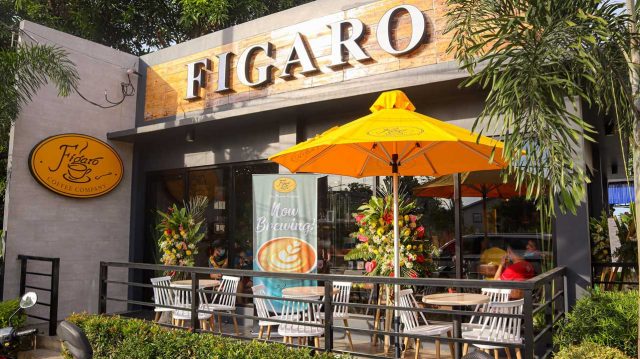
LISTED Figaro Coffee Group, Inc. (FCG) said its unit has secured the green light from the Philippine Economic Zone Authority (PEZA) for a planned pizza manufacturing project in Laguna.

During a board meeting on Sept. 23, PEZA approved the application of Figaro Innovation and Development, Inc. (FIDI), a subsidiary of Figaro Coffee Systems, Inc. (FCSI), for the registration of a project to produce pizza products and frozen pizza, FCG said in a regulatory filing on Thursday.

The pizza manufacturing project will be situated at Laguna Technopark Special Economic Zone, Mamplasan, Biñan City, Laguna. FCSI is the operating unit of FCG.

With PEZA’s approval, FIDI’s pizza production project will be eligible for a five-year income tax holiday and a ten-year special corporate income tax of 5% under Republic Act No. 11534, or the Corporate Recovery and Tax Incentives for Enterprises (CREATE) law.

The incentives are subject to FIDI’s signing of a supplemental agreement with PEZA, under standard registration terms and conditions, and to the prescribed preregistration and registration requirements.

In September last year, FIDI received certification from the Trade department as a duly accredited coffee exporter.

FIDI has been designated as an economic zone export enterprise authorized to engage in the production of different roasted coffee blends such as house reserve, espresso blend, and French roast.

FCG has various brands such as Angel’s Pizza, Figaro Coffee, Tien Ma’s, Café Portofino, and one Koobideh Kebabs.

As of October, FCG has 65 Figaro Coffee branches, 127 Angel’s Pizza branches, nine Tien Ma’s branches, four Café Portofino branches, and one Koobideh Kebabs branch.

On Thursday, FCG shares dropped 1.23% or one centavo to 80 centavos per share. — Revin Mikhael D. Ochave

The Philippines has done its part, it’s time for the West to step up in the West Philippine Sea

SHIPS from Australia, Japan, New Zealand, the United States, and the Philippines at the 4th Multilateral Maritime Cooperative Activity on Sept. 28, 2024. — PFC CARMELOTES/PAOAFP

A June 2024 survey by OCTA Research saw 76% of Filipinos seeing China as the “greatest threat” to the Philippines. And indeed, the Philippine defense budget reflects this, with significant increases in recent years. The General Appropriations Act pegs Philippine defense spending rising from P204 billion in 2023 to P238 billion in 2024. That the defense budget is projected to expand by another 6.4% in 2025 could only be gratifying.

Yet, compare that with United States’ defense spending being 3.38% of its GDP. Singapore’s defense budget is around 2.5% of its GDP, followed by South Korea at 2%, and Japan increasing its defense budget to 1.6% (from its formerly flat spending of around 1% for the past couple of years). Philippine GDP currently P26.55 trillion, this means that the country’s defense spending share to GDP is only at 0.896% (see “The existential importance of Philippine defense spending,” Rocio Salle Gatdula, Manila Times, Sept. 15).

Although the Constitution does prioritize spending for education, nevertheless, Article II.IV does mandate that: “The prime duty of the Government is to serve and protect the people. The Government may call upon the people to defend the State and, in the fulfillment thereof, all citizens may be required, under conditions provided by law, to render personal, military or civil service.” So clearly more must be done.

Indeed, the government admirably undertook the upgrade in defense industry standards, modernized regulations, and established linkages through various trade and investment frameworks, signed the Arms Trade Treaty, and enacted the Strategic Trade Management Law. Yet with the upgrade of capabilities is the need for our legal framework to maintain consistency with such developments. Our rules of engagement must be responsive to our defense capabilities, ensuring not merely the upholding of human rights in relation to combatants and civilians, but also to align the Philippine response to the variety of potential political and military scenarios that could ensue.

Speaking of legal frameworks, a recent report (“Investing in Narratives: How Beijing promotes its development projects in the Philippines”) by AidData found China resorting to thousands of troll accounts, PRC-sponsored journalist training in China to socialize Filipino journalists to Beijing’s perspectives, as well as heavy reliance on mainstream and social media.

This should be enough for the government to initiate prosecution for violations of CA 616, PD 79, and the Revised Penal Code (including updating the laws on treason to cover “peacetime” scenarios). Also, prosecutions for possible violations of tax laws, media, lawyers’ ethics, and others.

Quite significant in the aforementioned report is that Chinese objectives circle around three main narratives involving development financing assistance to the Philippines: that cooperation with the People’s Republic of China is a win-win, its rise is inevitable, and Asia should be led by Asians. China’s propaganda thus emphasizes its investments, focusing on infrastructure projects and their economic benefits.

Which leads us therefore to the fact that, in the same way it is axiomatic in domestic economics that citizens vote daily with their wallets, so the same is true in international relations.

And here we see the Philippine Economic Zone Authority (PEZA) announcing that it is expecting applications within the year for six expansion projects by Chinese locators valued at around P4.6 billion. Many of these are for expansion projects of existing registered business enterprises, construction, and energy. There are now reportedly 189 Chinese Registered Business Enterprises in PEZA, which have generated P47.3 billion in investment and 46,501 direct jobs.

For the Philippines, total external trade reached $17.37 billion in July, up from $16.62 billion a year earlier. Of the total, imports accounted for 64%, while exports made up the remaining 36%. This means that the Philippines had a trade deficit of $4.87 billion in July and $29.9 billion for the first seven months of the year.

Our main export market remains the United States, with $1.06 billion in goods. Japan followed with $872.43 million, then China with $791.29 million, Hong Kong with $744.82 million, and South Korea with $305.17 million.

China was the Philippines’ largest supplier of imported goods in July, with shipments valued at $3.08 billion. Indonesia followed with $947.55 million, Japan with $893.54 million, South Korea with $810.32 million, and the United States with $675.58 million.

Matters certainly are not improved when the EU, for example, would suspend a few years back our GSP (generalized system of preferences) privileges due to alleged “human rights” abuses, while not doing the commensurate acts to China (not exactly the most compliant in terms of human rights). The point is that while our allies laud the Philippines’ stand against China, declaring our common allegiance to the rule of law and the international legal order, yet it is those same countries that continue to have China as their main trading partner. This is unfortunate considering a substantial amount of their trade passes by our seas.

In the recent 60 Minutes piece on the West Philippine Sea, this exchange involving Defense Secretary Gilbert Teodoro occurred:

Gilbert Teodoro: If China were to take the Sierra Madre, that is a clear act of war on a Philippine vessel.

Cecilia Vega: And you would expect American intervention…

Gilbert Teodoro: And we will react. And naturally, we would expect it.

It was a good answer. But the question actually should not have been asked of Teodoro but of our American allies and the West in general.

The discussion that we should be having is not what the Philippine response is — we’ve been doing already all that we can — but rather (considering the admitted common stakes we all have involving our area in the world) is what is the West prepared to do and commit to protect our common interests and values?


Jemy Gatdula is the dean of UA&P Law, as well as a Philippine Judicial Academy law lecturer for constitutional philosophy and jurisprudence.

https://www.facebook.com/jigatdula/

Twitter  @jemygatdula

Motivating employees with nonmaterial rewards

We can’t afford to pay high salaries and benefits. This results in an average attrition rate of 15% per annum. How do we solve this? — Water Lily

CONTRARY to the general belief, employee motivation is not about giving cash or material things. It’s a misinterpretation of the old carrot and stick method that evolved when farmers raised donkeys. Lazy donkeys were enticed with carrots or beaten with sticks.

This method entrenched itself in the minds of early managers, who thought that people could be treated like donkeys. Such a theory, even if proven ineffective, persists today with new managers displaying old thinking. It happens all the time because managers are not creative and they don’t positively communicate with people on a regular basis, except when castigating them.

In my more than four decades of experience in human resources (HR), I’ve long realized that money is not everything. If money is the only motivator for employees, then it’s only a matter of time before they move to another company with a higher offer, resulting in high turnover.

That’s happening in many organizations. Fortunately, there are people who are not attracted solely to high pay for whatever reason. However, you need to know how to identify and cultivate them.

MANAGEMENT BY KINDNESS
Aside from material things, some workers find work meaningful and satisfying, with the help of nurturing employers, thereby ensuring corporate growth and profitability. So, how do we motivate people without paying them good money? There are many ways. To summarize them all would point us to a common denominator — management by kindness.

Here are ten examples:

One, give workers a sense of ownership. If it does not adversely affect product quality, allow workers to stamp their names or insert a “calling card” inside the box containing the products which they made. It makes them fully responsible for product quality.

Two, be accessible and readily visible to all. Do management by walking around, not as a “snoopervisor” but as a boss offering assistance to all who may need them. Make visits casual and “accidental” and not viewed as routine.

Three, listen carefully to ideas and complaints. Don’t rush a judgment. Take time without appearing to delay the process. If necessary, ask for more details in a separate face-to-face meeting. Don’t require people to put it down in writing. Many loathe writing.

Four, offer employees the chance to work near home. Daily traffic is a hassle. It robs many of productive hours. If people work near home, you’ll take away their commuting stress and give them time to be with their families.

Five, organize an annual skills Olympics. If you’re in a fast-food restaurant, conduct a time-based competition in fried rice making, veggie-slicing, pizza dough making (and catching). For administrative work, you can showcase people skills in customer service.

Six, remove discriminatory practices. Ban exclusive perks. Allow everyone to enjoy executive dining, executive elevators, and even executive parking. Generally, executives have drivers who can easily park their cars somewhere.

Seven, establish an honesty bakeshop with concessionaires. If not, allow the workers to buy bread at a special volume discount for family consumption. This requires only a small space inside the cafeteria and need not incur costs for the company.

Eight, invite the workers’ families to company parties. It’s easy to create theme parties for this purpose. One example is Halloween or Christmas parties for kids. Give prizes or other freebies for participants.

Nine, allow employee flexible work hours. This will vary with the company’s business and the specific tasks that must be performed. Focus on productive results rather than the workers’ physical presence or hours they spend in the office.

Ten, empower people to make simple decisions. Document their best practices that you can share with other workers who are similarly situated. Over the long term, this can help them develop an interest in problem-solving as well.

EXPIRY DATE
You will only be limited by your creativity. You can create your own “management by kindness” policy to fit the workers’ specific needs and wants. Experiment, monitor, and adjust as the need arises. Be dynamic. These examples are not written in stone.

Treat your workers as valuable assets.

But do more than lip service. In due time, your organization should obtain impressive results. Once again, you’ll realize that money is not everything. But I must warn you that kindness has an expiry date. Be aware of this every step of the way.


Send your comments or questions to elbonomics@gmail.com or via Facebook, LinkedIn, or X. Receive free insights that we may publish in this space. Anonymity is guaranteed.

Fashion designer Hedi Slimane leaves LVMH’s Celine

PARIS — Fashion designer Hedi Slimane has left LVMH’s Celine brand, the company said on Wednesday, marking the latest high-profile departure from a fashion label as the industry grapples with a sales downturn.

LVMH has named Michael Rider as Mr. Slimane’s successor. Mr. Rider, who will start his new job early next year, worked alongside former Celine designer Phoebe Philo at Celine for over a decade.

Mr. Slimane’s departure will intensify speculation about upheaval in the industry, where a number of top designers have moved jobs. One of the most coveted roles, creative director of Chanel, remains unfilled after the departure of Virginie Viard in June.

Creative directors most often depart when they no longer have a positive impact on sales, said Luca Solca, an analyst with Bernstein.

“I don’t think this is an exception,” he said of Mr. Slimane’s exit, noting that, like artists, creative directors tend to produce variations on a theme, which can become predictable.

Mr. Solca said Mr. Slimane had done well at the label, likely more than doubling brand revenue to around 2.5 billion euros.

Mr. Slimane could not be reached for comment.

Mr. Slimane joined Celine in 2018, quickly making his mark at the historic fashion house with his distinctive rocker-chic aesthetic.

He is also known for the skinny silhouettes that he offered when he was at Dior Homme and at Kering’s Yves Saint Laurent, famously inspiring Karl Lagerfeld to slim down to fit into his Dior designs.

The designer rarely granted interviews and maintained tight control of all aspects of brand image, shooting advertising images himself and holding fashion shows outside of the traditional calendar.

At Celine, Mr. Slimane sought to update the brand’s French bourgeois aesthetic for a younger audience, with ad campaigns featuring model Kaia Gerber in cropped tops and faded jeans, accessorized with a baseball cap and small, leather purse.

He also introduced a menswear line at Celine, as well as fragrances and makeup.

LVMH chairman and CEO Bernard Arnault set ambitious targets for Mr. Slimane, telling investors shortly after he joined that LVMH aimed to grow annual revenue at Celine to between 2 billion to 3 billion euros within five years, from close to 1 billion euros ($1.10 billion) at the time.

In January, at LVMH’s annual results presentation, Mr. Arnault said that Celine was enjoying “great success” thanks to Mr. Slimane, and topping 2 billion euros in sales.

The company does not break down revenue by brand in its published earnings statements.

Growth in sales in the luxury goods industry in general has slowed sharply this year, as middle-class shoppers in China hold off on purchases due to the property slump and job insecurity.

Barclays analyst Carole Madjo noted during a recent trip to China that Celine was facing “brand fatigue” and was likely to be underperforming in the country.

The change follows other moves at LVMH, including its investment in one of the industry’s strongest performers in recent years, Moncler.

It said this week it had sold off streetwear label Off-White, founded by the late Louis Vuitton menswear designer Virgil Abloh. — Reuters

Salmon completes $30-million funding round

SALMON Group Ltd. has completed its $30-million Series A-2 equity financing round, which will help fund its lending business and the launch of new products in the Philippines, it said on Thursday.

“Salmon’s mission has always been to drive financial inclusion, and the Philippines is one of the most exciting markets globally for unlocking access to credit. With this latest investment round, we are positioned to scale our operations even further, bring new products to market, and deepen our partnerships across the financial ecosystem,” Salmon Co-Founder Pavel Fedorov said in a statement on Thursday.

“The recent success of the Rural Bank of Sta. Rosa (Laguna), Inc., with its exceptional growth and market-leading return on equity, is a testament to the potential of combining innovation with a strong commitment to local communities,” Mr. Fedorov added.

Part of the proceeds will help raise the capital of Rural Bank of Sta. Rosa (Laguna) to P1.2 billion by end-2025, subject to regulatory approvals, Salmon said.

Some will also go to marketing in retail locations in the country and the expansion of its online offerings.

Salmon’s latest equity funding round saw participation from the International Finance Corp. (IFC) and Lunate of Abu Dhabi, with both committing amounts in excess of their pro-rata allocation rights, it said.

“This new investment round underscores the confidence that global institutional investors have in Salmon’s ability to continue delivering transformative financial solutions in the Philippines and beyond,” Salmon said.

As of end-May, the Rural Bank of Sta. Rosa (Laguna) saw its revenues surge by 432% year on year to P66 million.

The bank’s loans also jumped by 648% to P400 million in the period from P54 million last year.

On the funding side, deposits soared by 439% to P440 million from P82 million.

The rural lender’s equity climbed by 1,075% year on year to P385 million in June following a capital injection from Salmon.

Salmon received its banking license from the Bangko Sentral ng Pilipinas through its acquisition of a 59.7% controlling stake in Rural Bank of Sta. Rosa (Laguna) in January. — AMCS

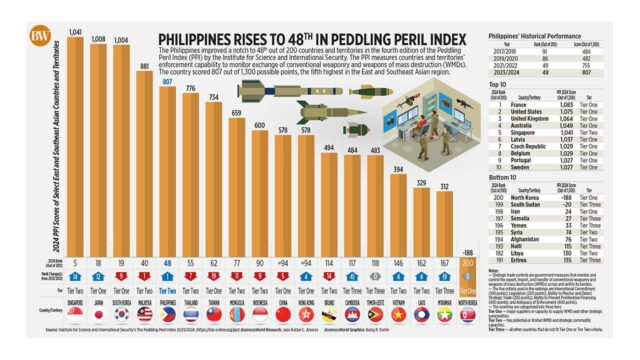
Philippines rises to 48th in Peddling Peril Index

The Philippines improved a notch to 48th out of 200 countries and territories in the fourth edition of the Peddling Peril Index (PPI) by the Institute for Science and International Security. The PPI measures countries and territories’ enforcement capability to monitor exchange of conventional weaponry and weapons of mass destruction (WMDs). The country scored 807 out of 1,300 possible points, the fifth highest in the East and Southeast Asian region.

Philippines rises to 48<sup>th</sup> in peddling peril index

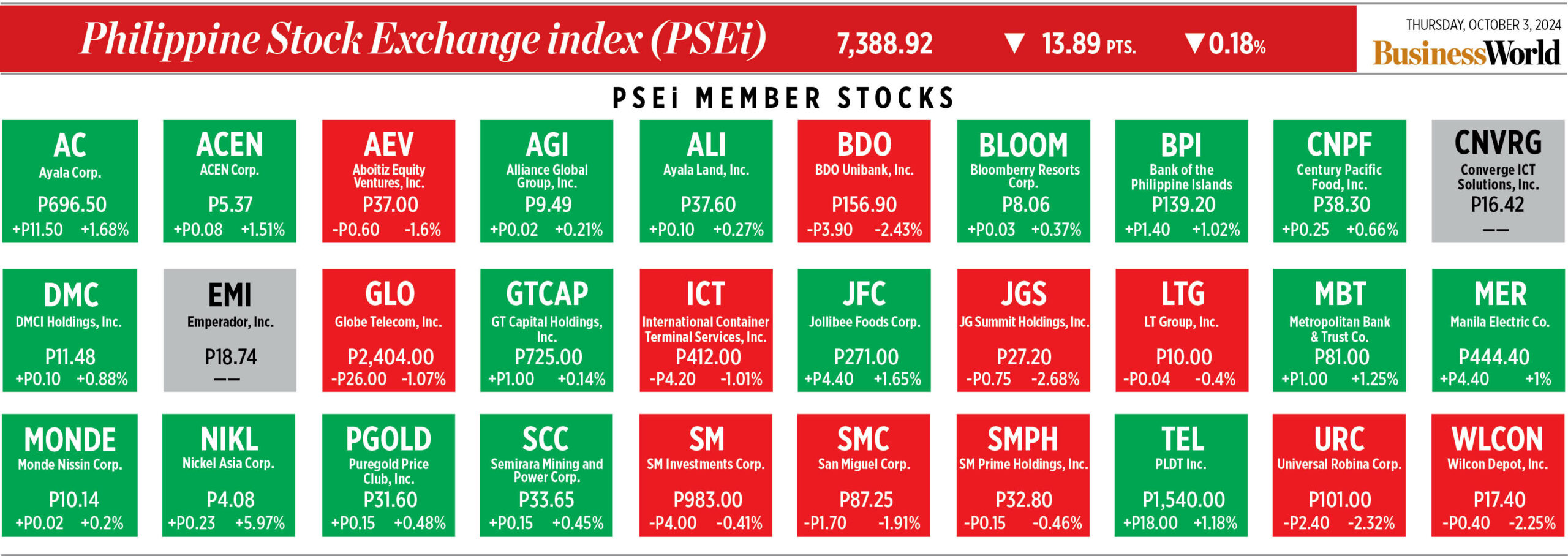
How PSEi member stocks performed — October 3, 2024

Here’s a quick glance at how PSEi stocks fared on Thursday, October 3, 2024.


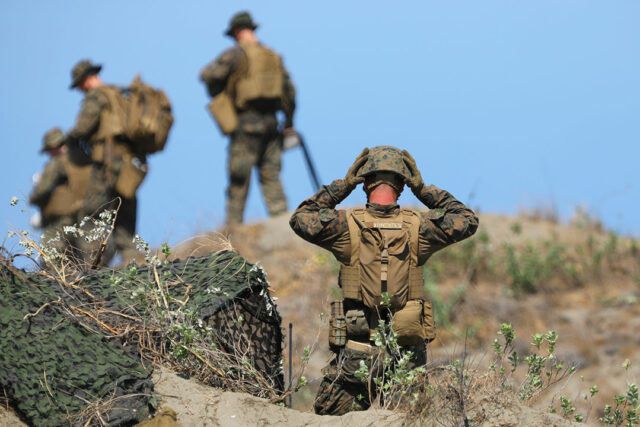
US Marines prepare for military drills with Filipino counterparts this month

PHILIPPINE STAR/ WALTER BOLLOZOS

US MARINES and sailors arrived in Manila on Thursday to gear up for joint military exercises with their Filipino counterparts on Oct. 7 to 24 as part of their six-month stint in Southeast Asia, according to the US Defense department.

In a statement, the agency’s Defense Visual Information Distribution Service said the visit to Manila of the Marine Rotational Force in Southeast Asia (MRF-SEA) seeks to boost interoperability with allied forces in the Indo-Pacific region.

“We train together to strengthen our relationships and collective capabilities, and the intent of MRF-SEA is to cultivate and reinforce the common values and capabilities between our partners and to preserve a rules-based international order,” Colonel Stuart W. Glenn, commanding officer of the force, said in a statement.

He said the deployment of US Marines in Southeast Asia is aimed at building upon “cooperative relationships” with regional allies and partners.

“The Marine Corps is committed to preserving the freedom of the region and its people,” Mr. Glenn said.

The training exercises will involve ground and aircraft combat, combat medical care, military operations in urban terrain and at sea (amphibious operations), the US Defense department said.

If the intention of joint military exercises is to strengthen Philippine-US interoperability for humanitarian disaster response, counterterrorism, combatting international crimes and other nontraditional security concerns, it is vital for Philippine capability building,” Rommel C. Banlaoi, president of the Philippine Society for International Security Studies, said in a Viber message.

“But if its intention is to counter China, the exercises will only cause regional anxieties,” he added.

Tensions between the Philippines and China have worsened in the past year as Beijing continues to block resupply missions to Second Thomas Shoal, where Manila has a handful of troops stationed at a beached vessel.

Washington had left its Typhon missile system in the Philippines after joint exercises in April amid Chinese demands to withdraw it from the Southeast Asian nation. The US does plan to pull it out and is studying its use in a regional conflict, Reuters earlier reported.

China and Russia have criticized the move, saying it could fuel an arms race in the region.

Manila is considering all security options that would deter Chinese aggression in the waterway, Philippine Defense Secretary Gilberto Eduardo Gerardo C. Teodoro, Jr. earlier said.

The US Army flew the Typhon, which can launch missiles including SM-6 missiles and Tomahawks with a range exceeding 1,600 kilometers (994 miles), to the Philippines in April in what it called a “historic first” and a “significant step in our partnership with the Philippines.”

The Philippines is open to acquiring the Typhon midrange missile system, Agusan del Norte Rep. Jose “Joboy” S. Aquino II said last month, as he sponsored the 2025 budget of the Defense department.

“The MRF-SEA is commendable since while it’s reinforcing allies in maritime Southeast Asia, it also involves Thailand, which despite being in mainland Southeast Asia and affected by Chinese presence, is industrialized enough to not be dependent on it,” Hansley A. Juliano, who teaches political science at the Ateneo de Manila University, said in a Facebook Messenger chat.

Senate President Francis “Chiz” G. Escudero earlier told foreign journalists that the Senate aims to ratify Manila’s reciprocal access agreement with Tokyo before the year ends.

The military pact, which was signed in July, eases the entry of equipment and troops for combat training from Japan and to ensure stability in the region amid growing tensions with China.

The Philippines has a visiting forces agreement with the United States and Australia. Tokyo, which hosts the biggest concentration of US forces abroad, has a similar deal with Australia and Britain, and is negotiating another with France.

A United Nations-backed tribunal based in the Hague in 2016 voided China’s expansive claims in the South China Sea for being illegal. Beijing has rejected the ruling. — John Victor D. Ordoñez

Marcos says authorities monitoring Taal Volcano

FILE PHOTO of Taal Volcano — LAURENT BUGNION-FLICKR

PRESIDENT Ferdinand R. Marcos, Jr. on Thursday said authorities were monitoring the situation around Taal Volcano south of the capital after a minor eruption on Oct. 2.

The volcano had been silent after its phreatomagmatic eruption on Wednesday, according to Philippine Institute of Volcanology and Seismology.

It had not detected any quakes within 24 hours since it spewed a plume of steam that was more than 2 kilometers (1.24 miles) high.

“When the volcano erupts or the storm comes or if there’s an earthquake or whatever, they know what to do,” Mr. Marcos told reporters in Pasig City, referring to local authorities. “What we have to do is to monitor the situation and continue to see where are the areas, because not every situation is the same.”

Taal, located about 70 km south of Manila, is one of the world’s smallest active volcanoes, and some of its previous eruptions had affected the capital and air travel.

The agency’s chief Teresito Bacolcol on Wednesday described the eruption as phreatomagmatic, where magma interacts with water and produces a plume of steam. He added that there was no need for people to evacuate yet.

The volcano sits inside a large lake near the town of Tagaytay in Cavite province.

Mr. Bacolcol said the alert level remained at the lowest on the scale and there were no immediate reports of injuries.

Despite standing at only 311 meters (1,020 feet), it can be deadly and an eruption in 1911 killed more than 1,300 people.

In July 2021, thousands of people were evacuated after it spewed a kilometer-high plume of gas and steam.

A year earlier, Taal volcano shot a column of ash and steam as high as 15 km into the sky, forcing more than 100,000 people to abandon their homes and triggered widespread disruption in the capital.

The Philippines lies in the so-called Pacific Ring of Fire, a belt of volcanoes around the Pacific Ocean where most of the world’s earthquakes strike. I also lies along the typhoon belt in the Pacific and experiences about 20 storms each year. — KATA

VP’s ratings at risk after dodging fund misuse raps

OFFICIAL FACEBOOK PAGE OF VP INDAY SARA DUTERTE

VICE-PRESIDENT Sara Duterte-Carpio’s popularity would continue to suffer if she keeps ignoring allegations of confidential fund misuse, a congressman said on Thursday.

In a statement, Senior Deputy Speaker and Pampanga Rep. Aurelio D. Gonzales, Jr. said public officials should be transparent in public spending and face congressional scrutiny.

Her office did not immediately reply to an e-mail seeking comment.

Ms. Duterte refused to attend congressional hearings on her office’s 2025 budget, and a separate House of Representatives probe of her alleged misuse of P125 million in secret funds in 2022. State auditors disallowed P73.3 million of the funds.

She earlier accused congressmen of using House hearings to revive old issues against her.

“People expect public officials to be transparent in the use of government funds,” Mr. Gonzales said in mixed English and Filipino. “That’s why it’s not surprising to see her ratings drop as she continues to skip questions about her fund spending.”

Ms. Carpio’s approval rating fell to 60% in September from 69% in June, according to a Pulse Asia Research, Inc. poll. Her trust ratings also dropped by 10 points to 61%.

“I expect it to drop further,” Mr. Gonzales said. “The people are angry about her fund usage, especially as she continues to skip congressional hearings to explain irregularities.”

Congressmen last month cut her budget by 64% to P733 million, noting that her social projects are already covered by the budgets of the Health and Social Welfare departments. — K.C.L. Basilio