Home Blog Page 201

Aboitiz Foundation expands digital skills, AI training

Aboitiz Foundation, the corporate social responsibility arm of Aboitiz Group, marked the start of the year with the graduation of 231 women from across Luzon, Visayas, and Mindanao under its Elevate AIDA program — an initiative that expands access to digital skills and income opportunities for women.

Implemented in partnership with Connected Women, the Department of the Interior and Local Government (DILG), the Office of the Presidential Adviser on Peace, Reconciliation and Unity (OPAPRU), and various local government units, Elevate AIDA equips women who face barriers to traditional employment with foundational skills in data annotation, which is an essential component in training artificial intelligence systems.

Through an online learning model, the program allows participants to pursue flexible, home-based work while managing caregiving and household responsibilities.

Graduation ceremonies held throughout January recognized participants from several communities, with the training of each cohort supported by Aboitiz Group business units and local government units. Sponsored by Union Bank of the Philippines, the training programs benefited 44 participants in Ifugao with the help of SN Aboitiz Power, 48 in Malvar, Batangas with the support of Aboitiz Construction, and 49 in Cebu City in partnership with Visayan Electric. Additionally, Davao Light supported 90 graduates from Davao Del Norte, consisting of 68 individuals from Tagum City and 22 from Samal Island.

An orientation session held at the Benguet Capitol in the same month introduced the Elevate AIDA program to 148 female participants and community stakeholders, underscoring the strong interest in digital livelihood opportunities and helping pave the way for future cohorts. The session also highlighted Aboitiz Foundation’s commitment to expanding access to skills development in underserved communities.

Elevate AIDA forms part of a broader nationwide goal to upskill 300,000 women and expand access to digital work opportunities. Through sustained collaboration with local governments, community partners, and Aboitiz business units, the program reflects a shared commitment to inclusive growth and to ensuring that more women can participate in and benefit from the digital economy.

“Aboitiz Foundation believes that when women are equipped with future-ready skills, they are better positioned to uplift not only themselves but also their families and communities,” Ginggay Hontiveros-Malvar, president of Aboitiz Foundation, said.

“Through Elevate AIDA, we are helping open doors to the digital economy for women who may otherwise be left behind. These graduations are not just the culmination of training — they mark the beginning of new possibilities for sustainable income, greater confidence, and more resilient communities across the country.”

After graduation, Connected Women will provide the graduates with upskilling sessions and assistance in accessing online job platforms to help translate their training into real income opportunities. To further strengthen their readiness for remote work, Aboitiz Foundation, in collaboration with UnionBank, will conduct an online session on financial literacy and cybersecurity to support safe and responsible participation in digital work.

As Elevate AIDA continues to scale, Aboitiz Foundation remains committed to work alongside communities, as well as partners from the government and private sector to equip women with future-ready skills to unlock more income opportunities to support their families.


SparkUp is BusinessWorld’s multimedia brand created to inform, inspire, and empower the Philippine startups; micro, small and medium enterprises (MSMEs); and future business leaders. This section will be published every other Monday. For pitches and releases about startups, e-mail to bmbeltran@bworldonline.com (cc: abconoza@bworldonline.com). Materials sent become BW property.

PLDT deploys agentic AI to strengthen risk management

INSTAGRAM.COM/PLDT

PLDT INC. has announced its first use of agentic artificial intelligence (AI) to enhance enterprise risk management across its operations.

In a media release on Sunday, the Pangilinan-led telecommunications company said it has deployed the Enterprise Risk Intelligence Companion Agent (ERICA), an autonomous system built on its platform.

“For the PLDT Group, the real value of ERICA goes beyond the technology itself… It reflects how we are embedding innovation into core enterprise functions in a way that is deliberate, disciplined, and aligned with how the business actually works,” said PLDT and Smart Communications, Inc. First Vice-President and Group Head of Information Technology and Transformation Office Gilbert O. Gaw.

ERICA was developed by the PLDT Group’s Enterprise Risk Management team in partnership with PLDT and Smart’s Information Technology team and UiPath, an enterprise automation software provider.

PLDT said ERICA is designed to strengthen enterprise risk management across the organization by enhancing risk assessment, identification, and management.

“ERICA was introduced to make risk assessments more seamless and consistent across the organization. By reducing the effort required at each stage, the solution allows teams to focus on insights and decision-making, rather than administrative efforts,” the company said.

The technology is expected to make risk assessment faster and translate complex operational information into comprehensible insights that can be validated, allowing the company to respond efficiently.

ERICA is built to adapt to the needs of different business units, PLDT added, noting that it supports teams in understanding the impact of operational changes and in pinpointing critical risk areas that need to be managed.

“Human oversight remains central to ERICA’s design. All outputs are reviewed and validated by risk professionals, with full traceability maintained through existing governance systems. This ensures transparency and accountability while supporting the Group’s broader commitment to the responsible use of AI,” the company said.

PLDT is also planning to expand agentic AI adoption with UiPath and may extend ERICA’s use across its business units to strengthen enterprise-wide resilience.

Hastings Holdings, Inc., a unit of the PLDT Beneficial Trust Fund subsidiary MediaQuest Holdings, Inc., holds a majority stake in BusinessWorld through the Philippine Star Group, which it controls. — Ashley Erika O. Jose

BSP bill yields rise as demand weakens

BW FILE PHOTO

YIELDS on the Bangko Sentral ng Pilipinas’ (BSP) short-term securities rose on Friday after demand fell short of the central bank’s offer.

Total bids for the 28-day BSP bills reached P45.15 billion, below the P70 billion on offer and the P80.15 billion in tenders recorded for the same volume last week, according to data posted on the central bank’s website.

The lower demand translated to a bid-to-cover ratio of 0.65 times. The BSP awarded only P45.15 billion in securities.

Accepted yields ranged from 4.35% to 4.56%, wider than the 4.35% to 4.529% in the previous auction. The average yield on the one-month bills rose by 4.99 basis points week on week to 4.4995%.

The BSP has not offered the 56-day bill since November 2025.

The central bank uses BSP securities alongside its term deposit facility to absorb excess liquidity from the financial system and guide short-term market rates closer to its policy rate.

BSP Deputy Governor Zeno Ronald R. Abenoja earlier said the central bank had scaled back issuance of short-term papers to improve monetary policy transmission and encourage banks to manage their liquidity more actively.

Data from the BSP showed that about half of its market operations are conducted through short-term securities.

As of mid-November 2025, the central bank had absorbed about P1.5 trillion in liquidity from the financial system, with 42.4% accounted for by BSP securities.

The BSP also said its bills help improve price discovery for debt instruments whilst supporting the transmission of monetary policy.

The central bank began auctioning short-term securities weekly in 2020, initially offering only the 28-day tenor before introducing the 56-day bill in 2023. — Katherine K. Chan

Hongqi is The Bellevue Manila’s mobility provider

From left are The Bellevue Manila Assistant Director for Group Marketing Justine Delacerna, The Bellevue Manila Managing Director John Patrick Chan, Hongqi Philippines Vice-President and General Manager David Zaballero, and Hongqi Philippines Sales and Marketing Head Brian Badilla. — PHOTO FROM HONGQI PHILIPPINES

HONGQI PHILIPPINES has partnered with The Bellevue Manila, a premium hotel in Alabang, to add “chauffeur-driven luxury mobility” to the establishment’s “high-level guest experiences.” Weddings and VIP guests will have access to Hongqi’s lineup, to “extend the experience beyond the venue.”

As part of the partnership, Hongqi’s flagship models, the E-HS9 full-size SUV and the HQ9 luxury MPV will be available for hotel guests and VIPs. The vehicles offer “a composed and refined ride defined by spacious interiors, premium materials, and features suited for milestone occasions.” Said EVOxTerra and TDG Group President and Co-CEO Rashid Delgado, “Hongqi has always stood for luxury, where design, comfort, and experience come together seamlessly, and we are proud that this partnership allows us to push that philosophy further.”

Hongqi Philippines has a vehicle display at the Grand Ballroom lobby of The Bellevue Manila. Browsers who would like to test-drive the other Hongqi models may experience them firsthand at the brand’s showrooms in Alabang, BGC, Manila Bay, or Quezon City. For information, visit www.hongqi.ph or follow Hongqi Philippines on Facebook (hongqi.philippines) and Instagram (@hongqi_ph).

Paris Fashion Week:  Biker looks at Hermès; Victoria Beckham shows sheer dresses, sharp suits; Stella McCartney goes equestrian; lace dresses and power suits at Saint Laurent; flower power at Dior

SAINT LAURENT — YOUTUBE.COM/@FASHIONFEED

PARIS — Hermès designer Nadege Vanhee took inspiration from the ambience of twilight for a fall/winter collection featuring fluid leather coats, zip-front mini dresses, and biker shorts.

(See the show here: https://tinyurl.com/5287jtn3)

Guests entering the Garde Republicaine, the sprawling barracks of Paris’ mounted gendarmes, stepped onto a floor of thick moss extending across the show space. Models emerged from a luminous circular opening in the far wall evoking the moon and marched along a winding raised catwalk, above the vegetation.

The looks came in dusky blue and green tones, with pops of orange, oxblood and yellow.

Tight dresses in dark leather had asymmetrical zips revealing a contrasting shirt underneath, while long brown overcoats featured huge sheepskin collars.

Aviator jackets and trench coats were paired with glossy cycle shorts made out of lambskin. Ostrich leather was used throughout for jackets, jodhpurs, and an orange biker-inspired jumpsuit that was zipped up the front and belted at the waist.

Tailoring featured double-breasted jackets and cigarette trousers in browns and iridescent burgundy.

Ms. Vanhee has been womenswear creative director since 2014 for Hermès, which caters to the ultra-wealthy and tightly controls access to its products, with years-long waiting lists for its most exclusive handbags.

VICTORIA BECKHAM
Victoria Beckham presented sculptural gowns in sheer fabrics, tightly cut suits and voluminous coats in Paris on Friday for a fall/winter 2026 collection that played with shape and texture. (See the show here: https://tinyurl.com/3z6yhkcw)

Dresses in dark blues and greens featured bodices of three-dimensional rosettes, a motif that repeated across skirts, contrasting with sober suits in navy and black.

Large overcoats were paired with sheer white skirts or drainpipe trousers, while knitwear had giant collars and cut-outs revealing the models’ backs.

According to the show notes, the collection was inspired by the work of Art Deco artist Tamara de Lempicka, famous for her cubist portraits of aristocrats in sumptuous clothing.

STELLA MCCARTNEY
Stella McCartney, known for her commitment to animal rights and sustainability, put horses at the center of her eponymous brand’s Paris Fashion Week show set in a riding hall in Paris’ Bois de Boulogne. (See the show here: https://tinyurl.com/2zk6pddh)

Five black horses and five white horses charged in and began performing an intricate equestrian choreography, walking in circles and weaving around each other, before the first models emerged on an oval catwalk surrounding the sandy ring.

The winter 2026 collection continued the equestrian theme, with thigh-high riding boots, and suit trousers or jeans fashioned into stirrup pants and paired with bright preppy sweatshirts.

“There’s a lot of new innovations in the show,” Ms. McCartney told Reuters in an interview after the show. “Everything’s plant-based, vegan, so there are no animal glues, there’s no dead animals.

“That’s why I always like to sort of remind people and celebrate and bring animals into the conversation,” she added, saying the show also honored the Lunar New Year of the Horse.

Dresses and skirts covered in plastic-free sequins featured hip bustles, pleats and bows, while multicolored crochet scarves provided a pop of color to tailored suits.

Stella McCartney, founded 25 years ago, became fully independent once more last year after Ms. McCartney bought the minority stake held by LVMH back from the luxury group.

SAINT LAURENT
Saint Laurent presented a contrasting collection of oversized suits and delicate lace dresses for its winter collection on Tuesday at Paris Fashion Week. (Watch the show here: https://tinyurl.com/4kmrscr9)

The show opened with a string of power suits in black with large lapels and shoulder pads — evoking the tuxedo for women which French designer Yves Saint Laurent created in 1966 in a break with tradition.

See-through lace dresses and skirts in earthy tones of red, orange, and brown were paired with huge fur coats or balanced with chunky jewelry.

Saint Laurent, owned by struggling luxury group Kering, has suffered three years of declining revenue as a post-pandemic boom in spending on expensive handbags and clothes evaporated. Creative director Anthony Vaccarello, leading the brand since 2016, is credited with growing Saint Laurent’s revenue and reach.

DIOR
Dior creative director Jonathan Anderson showed floating flower-shaped dresses and heels decorated with water lilies for his first autumn/winter womenswear collection at the Parisian fashion house on Tuesday, as luxury conglomerate LVMH tries to breathe new life into the brand and revive sales. (Watch the show here: https://tinyurl.com/57v8tr6j)

Staged above an octagonal pond in Paris’ Tuileries gardens on a sunny spring day, the collection continued Mr. Anderson’s nature theme with ostrich feather trims on coats and the hem of one dress evoking a bunch of arum lilies. Jeans covered in silver sequins were paired with intricately ruffled shirts and jackets.

“This marks Jonathan Anderson’s fifth show for the house and his second for women’s ready-to-wear, and, for me, it is his strongest collection to date,” said Simon Longland, director of fashion buying at Harrods.

Alongside Louis Vuitton, Dior is a key pillar of LVMH’s fashion and leather goods business, and Bernstein analyst Luca Solca estimates the brand’s sales declined 6-8% last year.

Mr. Anderson, who previously led LVMH-owned Loewe for 11 years, has already made his mark on Dior, releasing a new take on Dior’s classic cotton canvas tote bags featuring stylized book titles, such as Bram Stoker’s Dracula and French classics Madame Bovary, Les Liaisons Dangereuses, and Bonjour Tristesse. Reuters

The bold next step for EDSA

HEAVY TRAFFIC builds up along EDSA at the corner of Roxas Boulevard. — PHILIPPINE STAR/RYAN BALDEMOR

EDSA has always been more than just a road. It is Metro Manila’s main artery, carrying millions of people daily as we head to work, to school, to take care of errands, and — at the end of each day — as we head home to our loved ones.

So, when we talk about rehabilitating EDSA, we need to look beyond simply improving the asphalt.

Conversations around improving mobility must now shift toward bolder action. As EDSA’s rehabilitation gets underway, this moment presents a rare opportunity to correct decades of inequitable road space allocation and ensure the corridor finally serves the majority of people who travel without private cars.

For too long, transport decisions have been guided by how to move vehicles faster, rather than how to move people better. The result is all too familiar: broken, narrow, or non-existent sidewalks, inconsistent bike lanes, difficult station access for public transport users, and private vehicles dominating limited road space.

A practical next step is clear: coordinated government action to expand sidewalks and bicycle lanes, and to provide better station access for the Busway and MRT.

This direction is consistent with President Ferdinand Marcos, Jr.’s call in his State of the Nation Address for safer, more inclusive infrastructure. This aligns with the priorities laid out in the Philippine Development Plan 2023-2028 to promote sustainable, people-centered mobility.

Improving infrastructure to prioritize active and public transport is not an untested theory. This has been proven around the world, in the cities we enjoy visiting — from Tokyo, Seoul, and Taipei, to Seville, Paris, and New York — cities have made a conscious decision to design and build streets that put people first.

Wider sidewalks and protected bike lanes are foundational elements of modern, people-centered transport systems. They make walking safer and more dignified, give cyclists protected space, and strengthen first- and last-mile connections to high-capacity public transport.

These upgrades would help move us toward a transport system that restores dignity to the daily commute of pedestrians, cyclists, and public transport users.

At its core, this is about fairness.

Most people who use EDSA do not drive. They walk, ride buses, bike, or transfer between modes. Yet much of the corridor’s design continues to prioritize private vehicles, which carry far fewer people while consuming far more space. Rebalancing EDSA is not anti-car. Instead, it promotes efficiency, safety, and commuter welfare.

While reallocating road space along a corridor as busy as EDSA can challenge long-held assumptions, we need to remember that the long-term efficiency of any corridor depends on how many people it moves, not how many vehicles it accommodates.

Global evidence consistently shows that cities investing in wider sidewalks and protected bike lanes see improvements in safety, mobility, and overall corridor performance. These changes reduce conflict points, encourage mode shift, and create more predictable travel conditions for everyone including motorists.

In other words, prioritizing people over vehicles leads to better outcomes across the board.

This matters even more in Metro Manila, where road space is finite, congestion is chronic, and transport demand continues to grow. We cannot build our way out of traffic by adding lanes for cars. What we can do is invest in infrastructure that supports walking, cycling, and public transport — modes that move the most people using the least space.

EDSA already offers proof of what is possible. The Busway has shown that dedicating road space to high-capacity public transport delivers real mobility gains. Expanding sidewalks and bike lanes builds on that success, creating a more complete and inclusive corridor.

Yes, change will come with short-term adjustments. But with traffic congestion getting progressively worse despite the number coding schemes, elevated crosswalks, and toll roads, isn’t it time to try something new? These long-term solutions, at least, have been shown to improve safety, accessibility, and quality of life for the millions of daily commuters and tourists in cities that have dared to try.

This is a moment for leadership.

EDSA’s rehabilitation should not be treated as routine maintenance. It should be embraced as a chance to rethink how our most important corridor works — and who it works for.

Let’s seize this opportunity to design streets that serve people first, strengthen public transport, protect vulnerable road users, and move Metro Manila toward a more livable future.

Because a truly modern city is not measured by how fast cars move, but by how well people live. 


Patricia Mariano is a director and co-founder of AltMobility PH, a group of urban transport experts advocating sensible and humane transport policies. For more information regarding their advocacy for #CommutersNaman, visit: linktr.ee/altmobilityph.

Aboitiz completes runway upgrades at Laguindingan airport

THE DEPARTURE ENTRANCE at Laguindingan International Airport (LIA) in Misamis Oriental. — ABOITIZ INFRACAPITAL, INC.

ABOITIZ InfraCapital, Inc. (AIC) has completed upgrades on most of the runway surfaces at Laguindingan International Airport, advancing its plan to enhance the facility’s overall infrastructure.

“As the operator of Laguindingan International Airport, we take a proactive approach to maintaining and improving critical airside infrastructure. These runway enhancements reflect our ongoing responsibility to ensure that the airport remains capable of supporting current operations while preparing for future demand,” AIC Vice-President and Head of Airports Rafael M. Aboitiz said in a media release on Sunday.

AIC, the infrastructure arm of the Aboitiz group, said the runway surface upgrades cover regular rehabilitation works, including runway repainting, rubber removal, and crack repair, which improve optimal runway surface conditions.

The airport operator said the maintenance works were carried out in coordination with aviation authorities to ensure compliance with national safety and operational standards.

“Sustaining airport infrastructure is an ongoing process that relies on cooperation between regulators and airport operators. Continued coordination across stakeholders helps ensure that facilities like Laguindingan International Airport remain well-maintained and capable of supporting the region’s growing connectivity needs,” said Civil Aviation Authority of the Philippines Director-General Raul L. Del Rosario.

These technical upgrades will enable smoother and safer takeoffs and landings, the company said, adding that they also make airport services more reliable.

Laguindingan International Airport logged 2.35 million passengers with three airlines in 2025.

The company officially took over the operations and maintenance of the airport in April 2025. It has committed to enhancing the airport to increase its capacity and improve its infrastructure.

For the first phase of the airport’s capacity expansion, AIC is working to raise the current capacity of 1.6 million passengers per year to 3.9 million, with plans to further scale it up to 6.3 million in the second phase.

The company has partnered with Ireland-based daa International for the upgrade and operation of Laguindingan International Airport. — Ashley Erika O. Jose

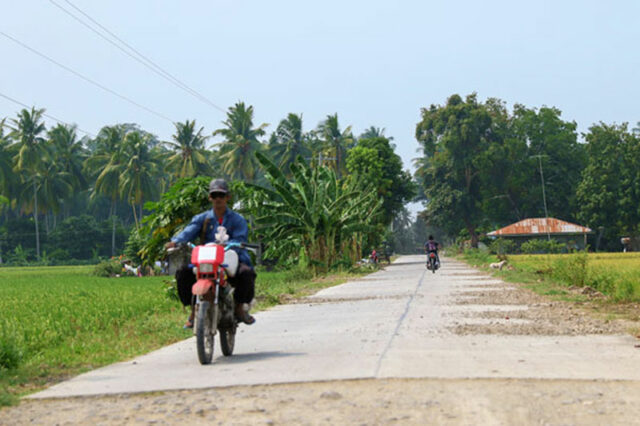
190 farm-to-market roads set for procurement in second quarter

PHILSTAR FILE PHOTO

THE DEPARTMENT of Agriculture (DA) said 190 farm-to-market road (FMR) projects are due to be offered for procurement in the second quarter.

“Procurement will start in the second quarter. The DA will jumpstart the implementation of around 190 projects nationwide,” Cristy Cecilia P. Polido, director of the Bureau of Agricultural and Fisheries Engineering (BAFE), told BusinessWorld via Viber.

This year, the DA is taking over the construction of FMR projects from the Department of Public Works and Highways (DPWH), with BAFE serving as the lead office for the program.

The DPWH was partly defunded because of the 2025 flood control corruption scandal, with FMRs taken away from it and the DA promising to build roads more attuned to farmer needs and more efficiently.

The FMR program was allocated P33 billion in the 2026 national budget to fund more than 1,600 projects, covering over 2,000 kilometers of roads.

With the takeover, the DA expects to accelerate project implementation and reduce the previously estimated cost of around P15 million per kilometer for a five-meter-wide FMR.

According to Administrative Order (AO) No. 4, signed by Agriculture Secretary Francisco P. Tiu Laurel, Jr. on March 6, the DA will identify priority FMR projects based on commodity roadmaps, the location of the majority of farmers and fisherfolk, and poverty rates.

Local government units (LGUs), community-based organizations, and farmers’ groups may also propose FMR projects, according to AO No. 4, a copy of which was obtained by BusinessWorld.

The order assigned FMR projects mainly to the BAFE and DA regional field offices, especially for high-impact commodity projects.

However, the DA may also enter into memoranda of agreement with the DPWH, qualified LGUs, other partners, or resort to public-private partnerships as authorized by the General Appropriations Act.

In cases where the DPWH implements the projects, it will be held to DA standards, specifications, costing, and technical guidelines.

“The DPWH shall utilize the FMR Transparency Portal to ensure transparency, accountability, and public access to project information,” according to the order.

LGUs will only be allowed to implement FMR projects if they demonstrate sufficient technical capability, financial capacity, administrative and legal compliance, and a commitment to sustainability.

“The LGU shall likewise provide 10% project counterpart funding, in cash or in kind, which may be utilized to fund expenses identified in the (memorandum of agreement),” the order read. — Vonn Andrei E. Villamiel

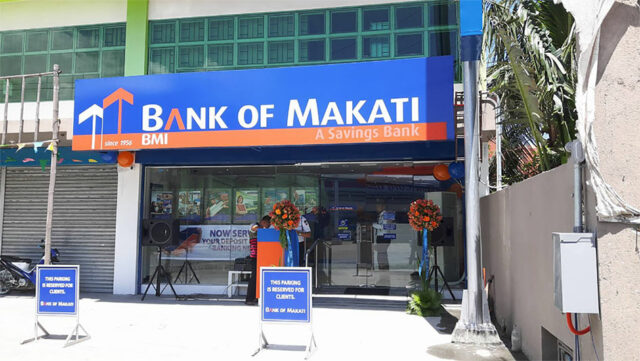
Bank of Makati looks to rebalance its loan book

FACEBOOK.COM/BANKOFMAKATIOFFICIAL

BANK OF MAKATI (A Savings Bank), Inc. plans to rebalance its loan portfolio this year by expanding its personal loan segment to reduce its reliance on car and motorcycle loans amid rising oil prices.

“If our target market is consumers, our concern is how rising oil prices will affect consumer spending, especially our motorcycle business,” Bank of Makati President Luis M. Chua told BusinessWorld last week.

The thrift bank’s loan book has traditionally been dominated by motorcycle financing, but the lender is now exploring ways to diversify its consumer lending products.

Mr. Chua said the bank is investing more in information technology this year as it prepares to offer digital personal loans through a mobile app.

The platform will allow borrowers to access personal loans that can be used for various purposes, including housing, vehicle purchases and other expenses.

“It’s basically capability-building,” he said, noting that the bank is upgrading its deposit and lending systems to support the mobile app and other digital banking services.

The upgrades are also aimed at expanding the bank’s lending capabilities beyond its core motorcycle financing business.

Mr. Chua added that the lender is refining its credit-scoring models as it works to improve its bad loan ratio.

“We are calibrating it to be consistent with our experience in the past year. That will improve our credit profile,” he said, adding that the bank also plans to become more aggressive in expanding its loan portfolio.

Despite concerns about economic growth and consumer sentiment, Mr. Chua said he still expects consumer lending demand to remain resilient.

Meanwhile, Bank of Makati said it is preparing to comply with the fraud management system and additional security requirements under the Anti-Financial Account Scamming Act , although Mr. Chua noted that many thrift banks are struggling to meet the deadline.

The Bangko Sentral ng Pilipinas (BSP) has given financial institutions until June 25 to implement enhanced fraud monitoring systems and introduce alternative security measures to one-time passwords.

Mr. Chua noted that while Bank of Makati is working to meet the requirements, many lenders in the thrift banking sector would prefer the deadline to be extended by at least a year.

He noted that from the banks he had spoken with, many are not yet ready.

He added that fraud management systems available in the local market remain costly for smaller lenders and might not fully suit the operational needs of thrift banks.

“For us, the offerings are still too expensive and the features do not necessarily match what we need,” he said. — Aaron Michael C. Sy

Hyundai Motor PHL gives 2 Elantras to PNP

From left are Hyundai Motor Philippines, Inc. (HMPH) Directing Coordinator for Sales and Dealer Network Development Seungjae Lee, HMPH Managing Director Cecil Capacete, HMPH President Jiho Son, PNP Chief of the Directorial Staff PMGen. Neri Vincent D. Ignacio, and PNP Director for Logistics PMGen. Martin E. Defensor, Jr. — PHOTO FROM HYUNDAI MOTOR PHILIPPINES

HYUNDAI MOTOR PHILIPPINES, INC. (HMPH) recently donated two Hyundai Elantra units to the Philippine National Police (PNP) in a ceremonial turnover attended by Acting Chief PNP PGen. Jose Melencio C. Nartatez, Director for Logistics PMGen. Martin E. Defensor, Jr., Deputy Director for Logistics PBGen Roel C. Rodolfo, members of the PNP Command Group, and other guests.

Representing HMPH were President Jiho Son and Managing Director Cecil Capacete, who reaffirmed the support of the company to the PNP in its thrust to enhance public safety and national security. “These Elantra patrol cars are purpose-built to support the PNP’s vital mission of protecting the nation. This handover reflects Hyundai’s belief that mobility should evolve with the needs of modern law enforcement,” said Mr. Son. “Hyundai is privileged to stand with the PNP as a partner in building safer and more progressive communities.”

The units turned over were an Elantra GL Std and Elantra HEV, which are modeled after the advanced systems used by the Korea National Police Agency. Equipped with the latest police technologies, the Hyundai Elantra patrol cars are designed to ensure efficient operations and the safety of police personnel in all situations.

The Elantra Hybrid Smart Patrol Car comes with surround cameras, radar-based speed detection, and an intelligent plate recognition system — tools that significantly enhance operational response. These innovations are aligned with Hyundai’s global vision of “Progress for Humanity,” demonstrating the brand’s dedication to meaningful contributions to peace and order nationwide.

For more information, visit https://www.hyundai.com/ph/en/hyundai-story/ or follow @HyundaiMotorPhilippines on Facebook and Instagram.

Fast fashion garments pile up as Iran war grounds planes

DHAKA — Shipments of garments for Zara owner Inditex and other major clothing retailers are stranded at airports in Bangladesh and India, according to three manufacturers, as the conflict in the Middle East forces airlines such as Emirates and Qatar Airways to cancel flights.

South Asia is a clothes manufacturing powerhouse and fast fashion brands around the world rely on factories in Bangladesh, India, and Pakistan for a constant stream of new T-shirts, dresses, and jeans.

“Some of my apparel consignments are currently stuck at Dhaka airport,” said Shovon Islam, managing director of manufacturer Sparrow Group, whose European clients include Inditex, M&S, Next, and Primark.

“They were supposed to be flown to the UK via Dubai, but with operations at Dubai airport suspended, we are now in a very difficult position. We’re trying to figure out alternative routes, but none of them are simple or cost-effective,” Mr. Islam added.

Most airspace in the Middle East is still closed since the conflict began, forcing the world’s busiest airport, Dubai, to shut down for several days with airlines including Qatar Airways, Emirates, and Etihad canceling many flights.

Much of South Asia relies on Gulf airlines to send cargo, usually in commercial flights with some cargo-only aircraft, said Frederic Horst, managing director at Trade and Transport Group in Sydney.

More than half of Bangladesh’s air cargo travels via the Gulf, he said, and 41% of India’s, with Emirates and Qatar Airways the most important carriers.

Inditex has 150 suppliers in Bangladesh, 122 in India, and 69 in Pakistan, according to its 2023 annual report. Its most recent annual report does not disclose country-specific supplier numbers. The company did not reply to Reuters’ questions about the disruption.

FREIGHT COSTS DOUBLE AS CAPACITY SHRINKS
As air capacity has reduced sharply, prices have shot up.

Alexander Nathani, managing partner at Mumbai-based Kira Leder, which produces leather jackets for Inditex and for Austrian retailers Cigno Nero, Fussl, and Wiedner, said freight charges to fly his products from Mumbai to Austria have doubled because of the cancellations.

“The whole freight capacity is being blocked now on the airlines that are flying, so prices are increasing,” Mr. Nathani said. “One consignment in Pakistan is stuck in the factory, and the other consignment from Mumbai is being accepted for Swiss Air on Monday — let’s hope they’re also flying and that it all goes.”

Asked about the disruption to shipments from South Asia, Primark, H&M and M&S said the majority of their shipments is made by sea. Next did not immediately reply to Reuters’ questions.

“The suspension of cargo flights due to airspace closures in the Middle East is already disrupting air shipments,” said Mohammad Hatem, president of the Bangladesh Knitwear Manufacturers and Exporters Association, adding that if the Strait of Hormuz, a key shipping channel separating Iran from Oman and the United Arab Emirates, remains closed, it will drive up the cost of sea transport, too.

“All in all, we are worried — we can see another major crisis ahead.” — Reuters

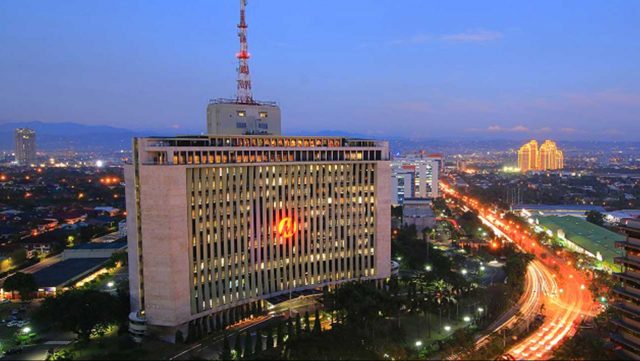
Meralco shares fall despite developments

MERALCO.COM.PH

By Abigail Marie P. Yraola, Deputy Research Head

MANILA ELECTRIC CO. (Meralco) shares dipped last week despite favorable developments concerning the power distributor and its position as one of the most traded stocks by value turnover.

Despite the week’s volatility, the movement signaled ongoing investor confidence, supported by the company’s earnings report.

From Feb. 27 to March 6, Meralco recorded a value turnover of P860.55 million from 1.40 million shares, making it the 11th most actively traded stock for the week, according to Philippine Stock Exchange (PSE) data.

Shares closed at P617 apiece on Friday, down 3.3% from a week earlier. The industrial index fell 4.8%, while the benchmark PSE index declined 4.4%.

Year to date, the Pangilinan-led company rose 7.5%, compared with a 4.3% gain in the industrial sector and a 4.4% increase in the PSE index.

Juan Alfonso G. Teodoro, equity trader at Timson Securities, said the slight downward trend reflected cautious market sentiment and some profit taking after earlier gains.

He added that trading activity was supported by key developments involving the company.

“Despite the pullback, the stock remained among the most actively traded by value as investors continued to focus on large-cap defensive companies with stable earnings and dividend income,” he said in a Viber message.

Aniceto K. Pangan, equity trader at Diversified Securities, Inc., noted that Meralco’s downtrend also reflects concerns over the ongoing Middle East crisis, which could bring prolonged economic and inflationary effects to the Philippines.

Recent company developments include a review of its fuel mix, which comprises liquefied natural gas, coal, and diesel. Shifts in global fuel prices driven by Middle East conflicts could affect electricity costs.

Meralco said that even if it does not source oil for its power supply, the Middle East conflict may indirectly impact electricity rates through upward inflationary pressure.

“If global prices of fuels such as liquefied natural gas, coal, and diesel increase due to geopolitical tensions, this could lead to higher generation charges and slightly higher electricity rates in the coming months,” Mr. Teodoro said.

He added that investors will likely monitor global fuel price movements, as these can influence short-term electricity costs for consumers.

Meralco is also awaiting a decision from the Energy Regulatory Commission (ERC) on its application to recover P7.98 billion in under-recoveries filed nearly three years ago.

In 2023, the company filed an application to recover P8.01 billion for generation, transmission, system losses, and pass-through taxes from January to December 2022. This would translate to an increase of about 21.91 centavos per kilowatt-hour (kWh) over a 12-month period.

Meralco also reported over-recoveries totaling P30.62 million from lifeline subsidies, senior citizen discounts, and local franchise taxes, equivalent to a refund of about 0.09 centavos per kWh to consumers.

“Investors think the approval is possible since these were legitimate expenses,” Mr. Teodoro said. He added that, if approved, electricity rates may marginally increase but are unlikely to significantly change consumption.

The company plans to fund its P247.14 billion capital expenditure program using a combination of cash, loans, and potential partnerships.

“Meralco expects around 3% growth in energy sales this year, which is generally seen as sustainable since electricity demand tends to grow steadily with economic activity and population growth,” Mr. Teodoro said.

He added that projected recovery in the next few quarters is primarily based on favorable weather, higher electricity usage during summer, and continued business and economic activity.

Meralco expects a 3% gain in energy sales volume for 2026, with flat growth in the first quarter and a recovery from the second quarter onward.

In 2025, Meralco’s net income rose 9.4% to P50.84 billion, while consolidated revenues grew 5.7% to P497.33 billion.

Mr. Teodoro said the company’s financial health remains solid, supported by stable cash flows from its regulated distribution business and consistent electricity demand. “Our Q1 2026 forecast for Meralco is approximately P13.52 billion,” he said.

Mr. Pangan described Meralco’s move to review its electricity supply amid rising fuel prices as a positive step to ease the burden on consumers.

“The under-recoveries are still under review by ERC. ERC will decide on how to apply this for consumers without creating a significant burden,” he said.

He added that the generation business contributed to Meralco’s growth in 2025, with an anticipated 3% increase in energy sales for 2026. He placed support at P600 per share and resistance at P640.

Mr. Teodoro described the developments as “fairly significant.”

“It also highlights Meralco’s advantage over other distribution utilities since it serves the country’s largest and most economically active areas, where electricity demand is typically stronger and more consistent,” he said.

He noted that traders and investors may consider Meralco a stable utility company with consistent earnings and dividends. “Our next resistance for Meralco would be around P640-650 per share. Current support would be around P610-600 per share, short-term.”

Meralco’s controlling stakeholder, Beacon Electric Asset Holdings, Inc., is partly owned by PLDT Inc. Hastings Holdings, Inc., a unit of PLDT Beneficial Trust Fund subsidiary MediaQuest Holdings, Inc., holds an interest in BusinessWorld through the Philippine Star Group, which it controls.

ADVERTISEMENT
ADVERTISEMENT