EDSA has always been more than just a road. It is Metro Manila’s main artery, carrying millions of people daily as we head to work, to school, to take care of errands, and — at the end of each day — as we head home to our loved ones.
So, when we talk about rehabilitating EDSA, we need to look beyond simply improving the asphalt.
Conversations around improving mobility must now shift toward bolder action. As EDSA’s rehabilitation gets underway, this moment presents a rare opportunity to correct decades of inequitable road space allocation and ensure the corridor finally serves the majority of people who travel without private cars.
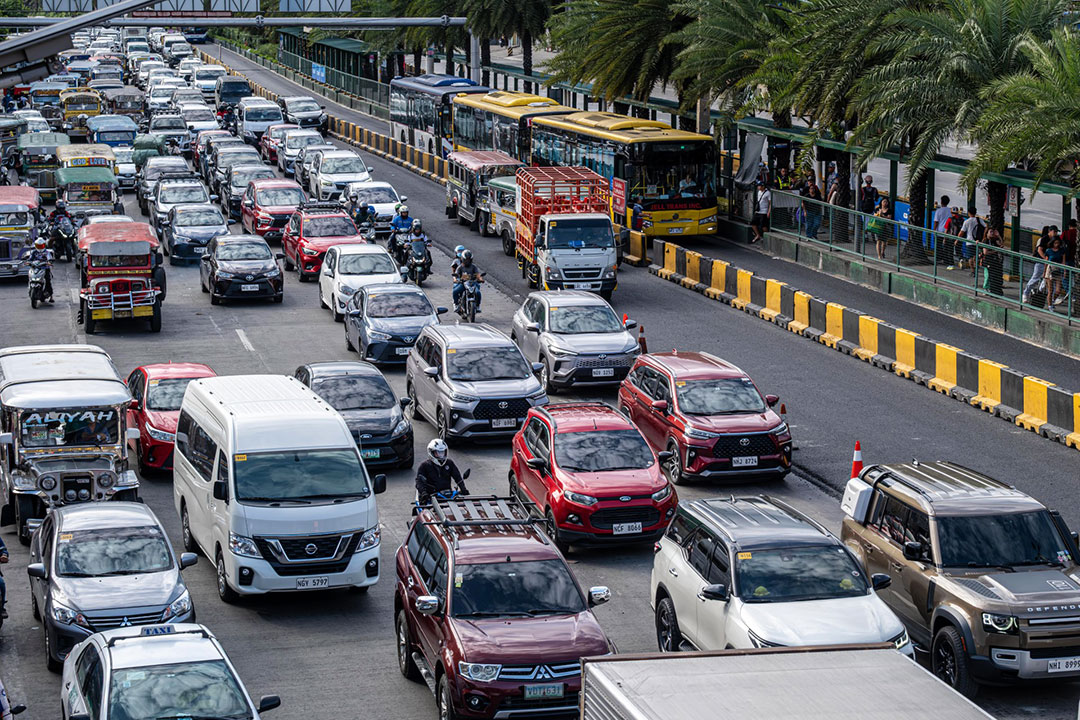
For too long, transport decisions have been guided by how to move vehicles faster, rather than how to move people better. The result is all too familiar: broken, narrow, or non-existent sidewalks, inconsistent bike lanes, difficult station access for public transport users, and private vehicles dominating limited road space.
A practical next step is clear: coordinated government action to expand sidewalks and bicycle lanes, and to provide better station access for the Busway and MRT.
This direction is consistent with President Ferdinand Marcos, Jr.’s call in his State of the Nation Address for safer, more inclusive infrastructure. This aligns with the priorities laid out in the Philippine Development Plan 2023-2028 to promote sustainable, people-centered mobility.
Improving infrastructure to prioritize active and public transport is not an untested theory. This has been proven around the world, in the cities we enjoy visiting — from Tokyo, Seoul, and Taipei, to Seville, Paris, and New York — cities have made a conscious decision to design and build streets that put people first.
Wider sidewalks and protected bike lanes are foundational elements of modern, people-centered transport systems. They make walking safer and more dignified, give cyclists protected space, and strengthen first- and last-mile connections to high-capacity public transport.
These upgrades would help move us toward a transport system that restores dignity to the daily commute of pedestrians, cyclists, and public transport users.
At its core, this is about fairness.
Most people who use EDSA do not drive. They walk, ride buses, bike, or transfer between modes. Yet much of the corridor’s design continues to prioritize private vehicles, which carry far fewer people while consuming far more space. Rebalancing EDSA is not anti-car. Instead, it promotes efficiency, safety, and commuter welfare.
While reallocating road space along a corridor as busy as EDSA can challenge long-held assumptions, we need to remember that the long-term efficiency of any corridor depends on how many people it moves, not how many vehicles it accommodates.
Global evidence consistently shows that cities investing in wider sidewalks and protected bike lanes see improvements in safety, mobility, and overall corridor performance. These changes reduce conflict points, encourage mode shift, and create more predictable travel conditions for everyone including motorists.
In other words, prioritizing people over vehicles leads to better outcomes across the board.
This matters even more in Metro Manila, where road space is finite, congestion is chronic, and transport demand continues to grow. We cannot build our way out of traffic by adding lanes for cars. What we can do is invest in infrastructure that supports walking, cycling, and public transport — modes that move the most people using the least space.
EDSA already offers proof of what is possible. The Busway has shown that dedicating road space to high-capacity public transport delivers real mobility gains. Expanding sidewalks and bike lanes builds on that success, creating a more complete and inclusive corridor.
Yes, change will come with short-term adjustments. But with traffic congestion getting progressively worse despite the number coding schemes, elevated crosswalks, and toll roads, isn’t it time to try something new? These long-term solutions, at least, have been shown to improve safety, accessibility, and quality of life for the millions of daily commuters and tourists in cities that have dared to try.
This is a moment for leadership.
EDSA’s rehabilitation should not be treated as routine maintenance. It should be embraced as a chance to rethink how our most important corridor works — and who it works for.
Let’s seize this opportunity to design streets that serve people first, strengthen public transport, protect vulnerable road users, and move Metro Manila toward a more livable future.
Because a truly modern city is not measured by how fast cars move, but by how well people live.
Patricia Mariano is a director and co-founder of AltMobility PH, a group of urban transport experts advocating sensible and humane transport policies. For more information regarding their advocacy for #CommutersNaman, visit: linktr.ee/altmobilityph.