Home Blog Page 1975

Los Angeles passes ‘sanctuary city’ ordinance to protect migrants

STOCK PHOTO | Image by xiSerge from Pixabay

 – The Los Angeles City Council on Tuesday unanimously passed a “sanctuary city” ordinance to protect immigrants living in the city, a policy that would prohibit the use of city resources and personnel to carry out federal immigration enforcement.

The move by the Southern California city, the second most populated city in the U.S. after New York City, follows President-elect Donald Trump’s vow to carry out mass deportations of immigrants.

The ordinance codifies the protection of migrants in municipal law. Council member Paul Krekorian said the measure addresses “the need to ensure that our immigrant community here in Los Angeles understands that we understand their fear.”

Pro-immigrant protesters spoke on the steps of Los Angeles City Hall before the vote, holding up signs saying “Los Angeles Sanctuary City Now!” They chanted in Spanish “What do we want? Sanctuary. When do we want it? Now.”

The city is home to 1.3 million migrants, council members said, without specifying how many entered the country legally.

“We are extremely concerned, given that this is a city where about a third of the population is immigrants,” Shiu-Ming Cheer said at the rally. She is deputy director of immigrant and racial justice at the California Immigration Policy Center.

People were “afraid that the National Guard or other people are going to be forced to execute Trump’s mass deportation plans,” she said. “But, you know, we’re also organized.”

Eleven states have, to varying degrees, taken steps towards reducing cooperation with federal immigration enforcement, according to the non-profit Immigrant Legal Resource Center. Trump, winner of the Nov. 5 election, takes office on Jan. 20.

The Trump transition team did not respond to a request for comment. – Reuters

Bitcoin breaches $94,000 for the first time

PIXABAY

 – Bitcoin rose to a record high above $94,000 as a report that Donald Trump’s social media company was in talks to buy crypto trading firm Bakkt added to hopes of a cryptocurrency-friendly regime under the incoming Trump administration.

Bitcoin, the world’s biggest and best-known cryptocurrency, has more than doubled this year. It was last at $92,104 in Asian hours on Wednesday, having touched a record high $94,078 just toward the end of the previous session.

The Financial Times, citing two people with knowledge, said Trump Media and Technology Group, which operates Truth Social, is close to an all-stock acquisition of Bakkt, which is backed by NYSE-owner Intercontinental Exchange.

Tony Sycamore, market analyst at IG, said bitcoin’s rise to a record high was supported by the Trump deal talk report as well as traders taking advantage of the first day of options trading on the Nasdaq over BlackRock’s Bitcoin ETF.

Cryptocurrencies have soared since the Nov. 5 U.S. election as traders bet President-elect Trump’s promised support for digital assets would lead to a less restrictive regulatory regime and inject some life back into bitcoin after a listless few months.

The growing excitement has taken the global cryptocurrency market’s value above $3 trillion to a record high, based on analytics and data aggregator CoinGecko.

Chris Weston, head of research at Australian online broker Pepperstone, said there is real underlying buying pressure for bitcoin, and “another kick higher should bring in a fresh chase from those who like to buy what’s strong”. – Reuters

Australia critical infrastructure faces cyber threats, report says

FLATART-FREEPIK

 – Australia said it was concerned that one in ten cybersecurity incidents last year involved critical infrastructure, with state-sponsored actors targeting the country’s government, infrastructure and businesses using evolving tradecraft.

The Australian Signals Directorate said in a report on Wednesday over 11% of cyber security incidents last year related to critical infrastructure, including electricity, gas, water, education and transport services.

Of these, a quarter were phishing incidents, 21% were exploitation of a public-facing interface, and 15% brute-force activities.

“We are worryingly seeing an increased focus by both cyber criminals and state actors on our critical infrastructure,” Defence Minister Richard Marles said in a radio interview with the Australian Broadcasting Corporation.

Australia had joined international partners in attributing cyber incidents over the year to ChinaRussia and Iran, he added.

China was evolving cyber techniques, with the choice of targets and behavior “consistent with pre-positioning for disruptive effects rather than traditional cyber espionage operations”, the report said.

Beijing has repeatedly denied claims by the U.S. and Australian governments that it has used hackers to break into foreign computer systems. – Reuters

Philippines to repatriate Filipina drug convict from Indonesia

PHILSTAR FILE PHOTO

MANILA – A Filipina spared from execution on drug trafficking charges in Indonesia in 2015 will be transferred to the Philippines after years of negotiations between the two Southeast Asian neighbors, President Ferdinand Marcos Jr said on Wednesday.

“After over a decade of diplomacy and consultations with the Indonesian government, we managed to delay her execution long enough to reach an agreement to finally bring her back to the Philippines,” Mr. Marcos said in a statement.

Mary Jane Veloso, a domestic helper and mother of two, was arrested in the city of Yogyakarta, for carrying 2.6 kilograms (5.73 pounds) of heroin hidden in her suitcase in 2010.

She was spared from firing squad at the last minute in 2015 after Philippine officials asked then Indonesian President Joko Widodo to allow her to testify against members of a human and drug-smuggling ring.

The execution of eight other drug convicts went ahead, and at the time Widodo described Ms. Veloso’s reprieve as a postponement. Widodo’s term as president ended last month.

“This outcome is a reflection of the depth of our nation’s partnership with Indonesia-united in a shared commitment to justice and compassion,” Mr. Marcos said. “We look forward to welcoming Mary Jane home.” – Reuters

Easing cycle still underway — BSP

BW FILE PHOTO

By Luisa Maria Jacinta C. Jocson, Reporter

CEBU — The Philippine central bank’s easing cycle is still underway though it may opt to keep rates steady at its December meeting, its top official said.

“We’re still in the easing cycle. Either we cut in December, or we cut in the next meeting, but gradually,” Bangko Sentral ng Pilipinas (BSP) Governor Eli M. Remolona, Jr. told reporters on the sidelines of the BSP-International Monetary Fund (IMF) Systemic Risk Dialogue in Mactan, Cebu on Tuesday.

Asked if the central bank could keep interest rates steady at its December meeting, Mr. Remolona said in mixed English and Filipino: “Yes, of course. It depends on the data. We are still not sure about December.”

Mr. Remolona reiterated that the central bank will continue to make rate cuts in 25-basis-point (bp) increments.

He earlier said the BSP may not necessarily reduce rates at every quarter or every meeting.

Since it began its easing cycle in August, the BSP has reduced borrowing costs by a total of 50 bps so far.

The Monetary Board has delivered a 25-bp cut at its meetings in August and October, bringing the benchmark to 6%.

Mr. Remolona had earlier signaled the possibility of a 25-bp cut on Dec. 19, the Monetary Board’s final policy meeting this year.

Meanwhile, he said the weak gross domestic product (GDP) growth in the third quarter was likely an “aberration” and that growth would likely recover in the fourth quarter.

The Philippine economy grew by a weaker-than-expected 5.2% in the third quarter, its slowest growth in five quarters.

This brought GDP growth in the nine-month period to 5.8%. The economy needs to grow by at least 6.5% in the fourth quarter to ensure it can hit the low end of the government’s 6-7% full-year target.

Instead, the central bank is monitoring closely the latest inflation data, Mr. Remolona said.

“The next number to expect is the November inflation number, we’ll see what that is. Our expectation is that it will still be within the target band.”

Headline inflation picked up to 2.3% in October, bringing the 10-month average to 3.3%. This was still within the BSP’s 2-4% target range.

For 2025, the BSP chief said that the Monetary Board could likely deliver rate cuts at the 100-bp range.

“That’s not exact. It could be more, could be less, but that’s in the ballpark,” he added.

PESO PERFORMANCE
Meanwhile, the BSP governor said he is not worried about the peso’s recent performance.

“It’s below P59. We don’t worry so much about whether the peso depreciates, appreciates. We worry about the pass-through effect. Right now, it’s still okay,” Mr. Remolona said.

The peso closed at P58.81 per dollar on Tuesday, depreciating by 13 centavos from its P58.68 finish on Monday, Bankers Association of the Philippines data showed.

Markets are keeping an eye out for whether the peso will sink to the P59-per-dollar level. The peso fell to the record low of P59 per dollar in October 2022.

However, he said the central bank has been intervening in “small amounts.” “A little bit just so it won’t (depreciate sharply against the dollar),” he said.

“We leave it to the guys in the financial markets area, but if it depreciates very sharply, then we talk. If it’s not too sharp, it doesn’t become inflationary. It’s inflationary if it’s sharp and persistent.”

He said the recent peso weakness was expected after Donald J. Trump was elected US president. The US dollar has been on the rise amid market expectations Mr. Trump would implement higher tariffs that could fuel inflation and slow the Federal Reserve’s planned rate cuts.

“We monitor the swings that take place over a few months, not day by day. It is usually expected that the night before, this kind of news will put pressure on the peso.”

Gaming, energy firms seen to lead IPOs in ’25

The Philippine Stock Exchange only saw three initial public offerings this year. — BW FILE PHOTO

By Revin Mikhael D. Ochave, Reporter

PROFESSIONAL SERVICES company Deloitte is cautiously optimistic about the initial public offerings (IPOs) at the Philippine Stock Exchange (PSE) for 2025, which could be led by the gaming and energy firms.

“The buzzword is cautious optimism,” Deloitte Singapore Transactions Accounting Support Partner Darren Ng said in a virtual briefing on Tuesday.

“I think from that perspective, if you look at what’s in the pipeline for the Philippines as well, there should be more IPOs happening in 2025 and in a mix of different industries.”

There could be IPOs from companies in the gaming, energy and resources sectors in 2025.

“There are two gaming companies, Okada Manila and Hann Resorts, and with a continued interest in energy and resources, we do think that there should be more IPOs coming for the Philippines,” Mr. Ng said.

The PSE previously said it expects to have six IPOs for 2025.

Several big names such as SM Prime Holdings, Inc.’s real estate investment trust, Razon-led Prime Infrastructure Capital, Inc., Maynilad Water Services, Inc. and electronic wallet GCash, are said to be planning IPOs but with no definite timeline.

This year, there were only three IPOs, falling short of the PSE’s target of six. These were mining company OceanaGold Philippines, Inc. and renewable energy companies Citicore Renewable Energy Corp. and NexGen Energy Corp.

“In the first three quarters of 2024, the PSE saw three IPOs in energy and resources industry that raised $203 million, achieving market capitalization of $972 million,” Mr. Ng said.

A fourth IPO was initially scheduled this year, but Cebu-based fuel retailer Top Line Business Development Corp. (Topline) decided to postpone it.

Topline announced on Monday that it is moving the offer period of its maiden issuance to the first quarter of 2025 as the company accommodates institutional investors.

Based on Deloitte data, the Philippines is fourth among Southeast Asian countries in terms of IPO amount raised this year. Malaysia topped the region with $1.54 billion, followed by Thailand ($756 million), and Indonesia ($368 million).

The country is ahead of Vietnam ($37 million) and Singapore ($34 million).

“Southeast Asia’s strong consumer base, growing middle class, and strategic importance in sectors like real estate, healthcare, and renewable energy remain attractive to investors,” Deloitte said.

“On the same breadth, momentum for real estate investment trusts and artificial intelligence infrastructure are expected to pick up as large tech companies are investing into the region, which offers lower costs, reliable power source, and geopolitical neutrality,” it added.

Local analysts had blamed the lackluster market conditions for the lack of IPOs this year. The Philippine Stock Exchange index (PSEi) has been on a slump since closing at a near five-year high of 7,554.68 on Oct. 7. On Tuesday, the PSEi closed at 6,803.19, up 0.61% from Monday’s close.

Luna Securities, Inc. President and Co-Founder Francis Patrick T. Diaz said they have adopted a “wait-and-see” stance when it comes to IPOs next year.

“Given our recent slide, we are more wait-and-see. Aside from waiting on specifics on United States policy such as interest rates, note that next year is also an election year,” he said in a Viber message.

“Ultimately, it will be the economy and consequent market conditions that will set the pace for IPO activity. You can see how easy it is for prospective companies to postpone their IPO plans if market conditions are not as bullish as they expect,” he added.

Rizal Commercial Banking Corp. Chief Economist Michael L. Ricafort said in a Viber message rising volatility in markets since Donald J. Trump’s victory may prompt investors to stay on the sidelines.

“The increased volatility in the global and local financial markets since Mr. Trump won the US presidential elections could realistically lead to some wait-and-see attitude for some stock market fundraising deals as issuers would like to sell shares at the highest prices and valuations as much as possible as a matter of financial prudence,” he said.

Mr. Ricafort noted Mr. Trump’s protectionist policies and tougher immigration rules could stoke inflation in the US.

“There are also possible pro-US business and economic policies such as tax cuts which would lead to higher US inflation and could reduce the need for future Fed rate cuts that in turn could temper the gains in the financial markets, including the local stock market,” he added.

IMF says ‘tit-for-tat’ tariffs can hurt Asia’s growth

Shipping containers are seen at a port in Shanghai, China, July 10, 2018. US President-elect Donald J. Trump is proposing to impose a 60% tariff on Chinese goods. — REUTERS

CEBU — “Tit-for-tat” retaliatory tariffs could hurt the growth outlook for the Asia-Pacific region, the International Monetary Fund (IMF) said.

“In a region like Asia, which has benefited a lot from globalization, from greater integration with the rest of the world, any kind of tariff or trade restrictions will have an impact,” Krishna Srinivasan, director of the IMF’s Asia and Pacific Department, said at the Bangko Sentral ng Pilipinas (BSP)-IMF Systemic Risk Dialogue here on Tuesday.

“Our analysis shows that over the long run, everybody hurts because the size of the pie becomes that much smaller. So, every country, including the Philippines, will hurt in the long run.”

Mr. Srinivasan said that “tit-for-tat retaliatory tariffs” could threaten growth prospects across the region as it could disrupt supply chains.

“When you have fragmentation, which is across trade and investment and so on, all the work we have done shows that in the long run, every country hurts.”

Global trade could be upended if US President-elect Donald J. Trump pushes through with his campaign promise to impose a 60% tariff on Chinese-made goods and at least a 10% tariff on all other imports.

Such a move could stoke inflation and derail the Federal Reserve’s easing cycle, as well as negatively impact growth in exporting countries like the Philippines.

National Economic and Development Authority Secretary Arsenio M. Balisacan earlier said Mr. Trump’s tariff plan is a cause for worry due to its potential impact on the global economy.

The Philippines heavily relies on the United States for business and economic activity, as it is the top destination of Philippine-made goods and is the biggest source of overseas Filipino worker remittances.

“If China slows down because of fragmentation, it’s going to affect you. If the US slows down, it’s going to affect you,” Mr. Srinivasan said.

“One way or the other, over the long run, all countries will hurt from fragmentation and the risks we have seen have only increased over the past few years,” he added.

Escalating trade tensions could impact financial markets, increase trade costs and affect domestic demand, Mr. Srinivasan said.

In its World Economic Outlook, the IMF expects economic growth in Asia to average 4.4% in 2025, faster than the 3.2% growth for the global economy.

IMF data show that Asia is forecasted to contribute about 60% to global growth this year.

“Growth outlook in Asia remains robust and inflation pressures have eased, thanks to the region’s central banks’ ability to anchor inflation and inflation expectations effectively,” Mr. Srinivasan said.

The IMF sees Philippine gross domestic product (GDP) expanding by 6.1% in 2025.

On the other hand, BSP Governor Eli M. Remolona, Jr. said that the exact spillover effects from Mr. Trump’s policies on the Philippines remain to be seen.

“We don’t know exactly what the tariffs will be because of the size of the tariffs that are being contemplated. We don’t really know what the effects will be. So we have to wait and see, and then we’ll figure it out,” he said.

The BSP chief said that the country’s balance of payments (BoP) is less likely to be impacted by tariff measures.

“In the case of the Philippines, our BoP shows that our service exports are just as large as our goods exports. Our services exports, you have business process outsourcing (BPO) revenues and then we have remittances from abroad,” he said.

“These are less easily subject to tariffs, because these things, BPO business goes over the internet. Whereas remittances, the workers are abroad, or they’re on ships. So maybe we’re a little bit insulated from the tariffs.”

Mr. Remolona also noted the impact of the tariff restriction on Chinese-made goods.

“At the same time, China remains our number one source of imports to the Philippines. If those imports cannot enter the United States easily, then they might send us more of those imports, probably less expensive imports than before. Those are kind of second-round effects that we have to figure out.”

OTHER RISKS
Meanwhile, Mr. Srinivasan also flagged the risks that less regulated, nonbank financial institutions (NBFI) pose to the overall financial system.

“These developments could amplify negative shocks, especially given the worsening risk landscape and increased uncertainties with significant implications for financial stability.”

“For instance, the nonbank financial institutions being more agile and subject to fewer constraints can leverage AI in many ways that pose challenges for financial regulators.”

Mr. Remolona also noted the rapid growth of NBFIs.

“The nonbank financial sector has noticeably grown since the Global Financial Crisis. On one hand, this is welcome news because it addresses some of the concentration risks that arise from relying too much on the banking industry,” he said.

Latest data from the BSP showed that NBFIs’ total resources rose by 5.3% to P5.525 trillion as of end-June from P5.248 trillion a year ago.

“On the other hand, financial markets are never an ‘either- or.’ There is much diversity within nonbank financial institutions, just as there are inter linkages with nonbanks and banks,” Mr. Remolona said.

“In exchanging interlinkages, its opportunities and risks should be of great interest to regulators and practitioners.” — Luisa Maria Jacinta C. Jocson


#SMthing Magical is Coming to GH Mall

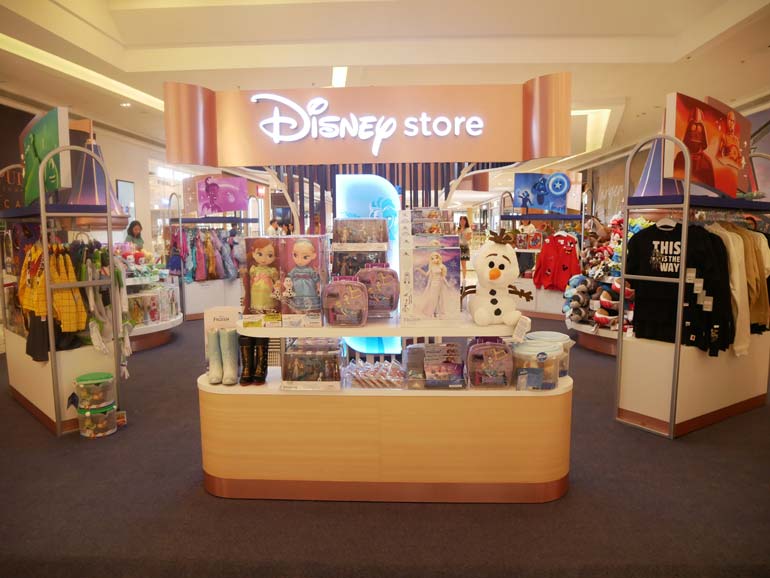
Shop the stories you love at Disney Store’s first pop-up in the Philippines

Disney fans, get ready to ring in an enchanting holiday season! Disney Store is opening a pop-up store at GH Mall from Nov. 15 to Dec. 31.

Disney Store is the official home to shop the stories you love from Disney, Pixar, Marvel and Star Wars. With authentic products for all ages, shoppers can look forward to high-quality toys, collectibles, apparel, home products and more, including select products from Disney Parks.

It’s never too early to prep for the most magical time of the year! Visit the Disney Store pop-up to bring home beloved characters and must-have merch — treat yourself or pick up the perfect gift ahead of the holiday season. There’s something for everyone!

Location: Ground Floor, Exhibit Area, Greenhills Mall

Dates: Nov. 15 – Dec. 31, 2024

Opening hours: 10:00 a.m. to 9:00 p.m.

Follow @DisneyStorebySM on Facebook, Instagram, Twitter, and TikTok, for updates and join us in spreading the excitement using #DisneyStorePH and #DisneyStorebySM.


Spotlight is BusinessWorld’s sponsored section that allows advertisers to amplify their brand and connect with BusinessWorld’s audience by publishing their stories on the BusinessWorld Web site. For more information, send an email to online@bworldonline.com.

Join us on Viber at https://bit.ly/3hv6bLA to get more updates and subscribe to BusinessWorld’s titles and get exclusive content through www.bworld-x.com.

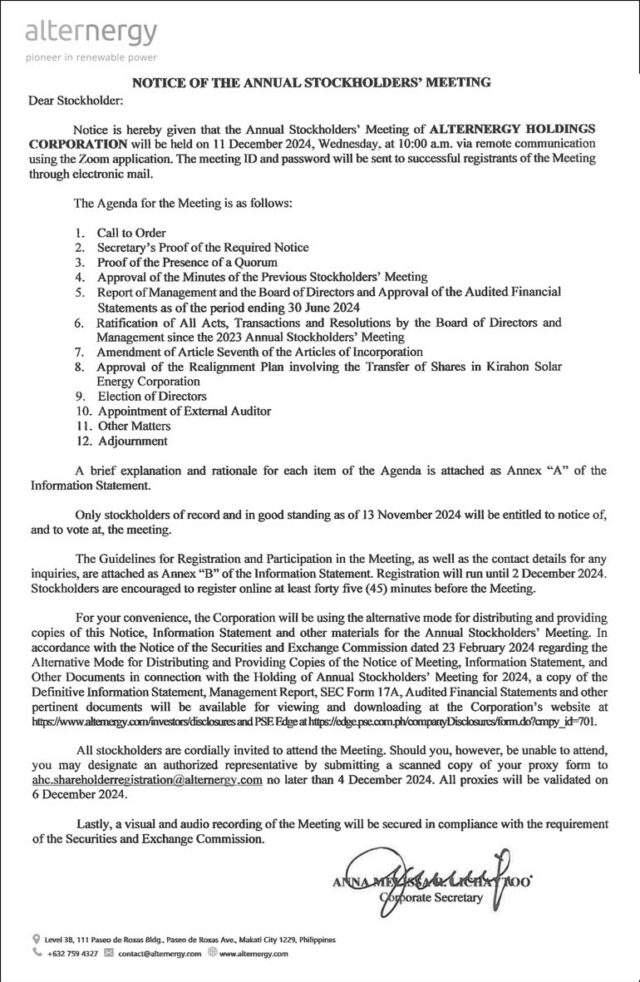
Alternergy Holdings Corp. to hold Annual Stockholders’ Meeting on Dec. 11 via Zoom


Spotlight is BusinessWorld’s sponsored section that allows advertisers to amplify their brand and connect with BusinessWorld’s audience by publishing their stories on the BusinessWorld Web site. For more information, send an email to online@bworldonline.com.

Join us on Viber at https://bit.ly/3hv6bLA to get more updates and subscribe to BusinessWorld’s titles and get exclusive content through www.bworld-x.com.

TMP says auto parts exports may rise 5% next year

IN 2023, the Toyota group accounted for 30% or $1.26 billion of the total Philippine auto parts exports. — YUMMIE DINGDING / PPA POOL

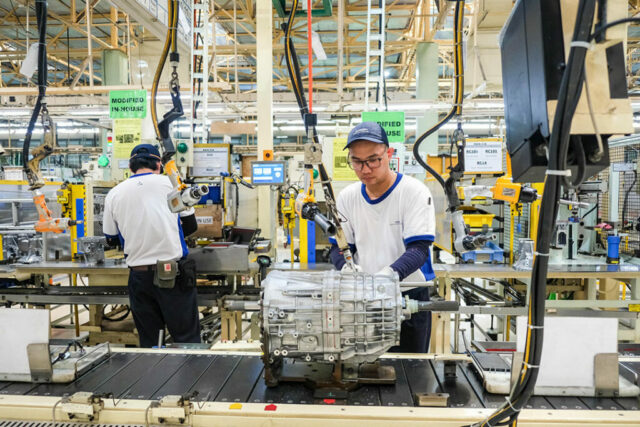
TOYOTA Motor Philippines Corp. (TMP) is projecting a potential 5% growth in auto parts exports next year as demand recovers in other countries, a company official said.

“If next year it will increase, more or less… it will be 5%,” TMP First Vice-President for Purchasing Richard B. Valdez told reporters on Tuesday.

Exports are so far flat this year, he noted. “Every year, at least we would like to increase, but that will still depend on the sales of other countries.”

In 2023, the Toyota group accounted for 30% or $1.26 billion of the total Philippine auto parts exports. These represented $665 million in export revenues.

However, the car manufacturer’s share in the auto parts exports that year was lower than 33% a year prior.

“It’s a little bit down because since we are exporting, these (represent) the sales of other countries like Thailand and other ASEAN (Association of Southeast Asian Nations) markets,” Mr. Valdez said.

There are lower sales in other markets due to issues with financing as interest rates remain elevated, he noted.

Data from the ASEAN Automotive Federation (AAF) showed that motor vehicle sales in Thailand declined 9% to 775,780 units last year.

Meanwhile, Thailand’s motor vehicle sales from January to September dropped 23.5% to 438,303 units.

Rizal Commercial Banking Corp. Chief Economist Michael L. Ricafort said it is possible for the country’s total auto parts exports to increase next year.

“This is consistent with the fact that the Philippines is one of the fastest growing in vehicle sales and production in ASEAN in recent years,” he said.

AAF statistics showed that Philippine motor vehicle production grew 18.3% in the January-to-September period to 97,139 units. It was the second-fastest in the region.

Meanwhile, a joint report by the Chamber of Automotive Manufacturers of the Philippines, Inc. and Truck Manufacturers Association showed that auto sales grew 8.9% to 384,310 units as of October.

Mr. Ricafort added that since Toyota is one of the world’s biggest automakers, it is possible for the company to further diversify its global supply chains.

“It will be prudent for them to diversify the auto parts exported from the Philippines to the rest of [its] production facilities worldwide,” he said.

In 2016, TMP established Toyota Motor Philippines Logistics, Inc. (TLI) to strengthen its indirect exports of OEM (original equipment manufacturer) and aftermarket parts and accessories to Toyota’s global network.

As of the end of 2023, TLI has 13 indirect export suppliers, which generate around $200 million annually.

According to Mr. Valdez, the top destinations for Philippine-made parts last year were Thailand, South Africa, Brazil, Taiwan, and India. — Justine Irish D. Tabile

ERC clears NGCP’s P38.09-B transmission projects

PHILSTAR FILE PHOTO

THE ENERGY Regulatory Commission (ERC) has approved three capital expenditure (capex) transmission projects for the National Grid Corp. of the Philippines (NGCP), amounting to P38.09 billion.

In separate resolutions, the regulator approved the development of the P17.09-billion Bolo-Balaoan 500-kilovolt (kV) Transmission Line, P16.8-billion Northern Luzon 230-kV Loop, and P4.2-billion Nabas-Caticlan-Boracay Transmission projects.

The grid projects are expected to improve the reliability and stability of the transmission grid in key Luzon and Visayas provinces.

“The approval of these projects underscores our commitment to ensuring the reliability, security, and affordability of our country’s electricity supply,” ERC Chairperson and Chief Executive Officer Monalisa C. Dimalanta said.

“It is thus critical for the NGCP to ensure the efficient and timely completion of the projects so we can further boost the ability of our grid to absorb new power capacities needed to meet the growing demand of our communities, businesses, and industries,” she added.

The Bolo-Balaoan 500-kV line, which will serve as a backbone in the northwestern part of the island grid, is expected to support the integration of offshore wind and other committed renewable energy projects, as well as liquefied natural gas.

Along with the approval, the ERC ordered the grid operator to complete the project by Nov. 30, 2026.

The Northern Luzon 230-kV Loop project is designed to upgrade the existing transmission corridor and harness the generation potential in the provinces of Cagayan, Kalinga, Apayao, and Ilocos Norte.

The project is expected to be finished by March 2028.

To help bridge power in the Visayas, the Nabas-Caticlan-Boracay Transmission project will address the overloading issues in the existing Nabas-Caticlan 69-kV transmission line, Caticlan-Boracay transmission line, and Manoc-Manoc 69-kV load end substation.

The project, which is seen to enhance the reliability of power supply to the Panay Islands, is directed to be finished by May 2025.

Last week, NGCP Spokesperson Cynthia P. Alabanza said that the company would allocate more than P600 billion in capex for over 100 transmission projects. — Sheldeen Joy Talavera

SPNEC taps Energy China for Terra Solar construction

TERRA SOLAR awards engineering, procurement, and construction contract to Energy China for world’s largest solar power plant.

TERRA SOLAR Philippines, Inc. (TSPI), a subsidiary of SP New Energy Corp. (SPNEC), has tapped China Energy Engineering Group Co. Ltd. (Energy China) to develop a portion of its solar project in Central Luzon.

TSPI awarded the engineering, procurement, and construction (EPC) contract to Energy China, which operates in 140 countries, the company said in a statement on Tuesday.

“Our partnership with Energy China guarantees a seamless, turnkey delivery of key components for the Terra Solar project,” TSPI said.

SPNEC’s TSPI is constructing a P200-billion project consisting of a 3,500-megawatt-peak (MWp) solar power plant and a 4,500-megawatt-hour (MWh) battery energy storage system, aimed at providing power to two million households.

SPNEC is now controlled by the Pangilinan group through MGen Renewable Energy, Inc., the renewable energy development arm of Meralco Power Gen Corp. (MGen). The latter is a unit of Manila Electric Co. (Meralco).

“Choosing Energy China as our EPC partner was not a mere whim; we made sure that we selected a company with an exceptional track record in delivering complex, large-scale renewable energy projects around the world,” TSPI President and Executive Director Dennis B. Jordan said.

Energy China and its affiliates will oversee all aspects, including procurement, design, engineering, permitting, manufacturing, testing, logistics, and on-site delivery, ensuring the project is executed “efficiently and comprehensively,” TSPI said.

Under the agreement, Energy China will also provide warranty coverage, promptly address any defects, and implement robust operational and maintenance protocols to ensure the project’s long-term reliability and success.

Moreover, the company will develop specialized training programs for local teams and collaborate closely with stakeholders to facilitate the smooth integration of the project into the national grid, including the incorporation of the battery energy storage system.

“This partnership is more than just a business deal — it is a catalyst for progress and development. Through this collaboration for Terra Solar, we aim to accelerate the nation’s energy transition journey and contribute to a cleaner, more sustainable future,” MGen President and Chief Executive Officer (CEO) Emmanuel V. Rubio said.

Meralco Chairman and CEO Manuel V. Pangilinan said that the agreement “goes beyond what it is but a commitment by Meralco and MGen to change the energy landscape.”

“By combining variable renewable energy from solar with advanced battery storage, Terra Solar will provide 850 MW of mid-merit, clean, and reliable energy, making it competitive with conventional power plants,” TSPI said.

Meralco’s controlling stakeholder, Beacon Electric Asset Holdings, Inc., is partly owned by PLDT Inc.

Hastings Holdings, Inc., a unit of PLDT Beneficial Trust Fund subsidiary MediaQuest Holdings, Inc., has an interest in BusinessWorld through the Philippine Star Group, which it controls. — Sheldeen Joy Talavera