Home Blog Page 193

Obesity cost Philippines P1.9 trillion in 2025— study

KENNY ELIASON-UNSPLASH

Obesity, a condition that increases the risk of severe chronic diseases such as diabetes, is estimated to have cost the Philippines around P1.9 trillion in 2025, according to the Epidemiological Burden and Cost of Obesity in the Philippines (EpiCOb-PH) study released Monday.

The EpiCOb-PH study was led by Dr. Madeleine de Rosas-Valera and funded by Novo Nordisk Pharmaceutical (Philippines) Inc., aiming to assess obesity’s demographic distribution and economic burden in the country.

It also found that obesity’s total economic cost is equivalent to 7.3% of last year’s gross domestic product (GDP). The cost could rise to as much as P2.7 trillion if overweight-related expenses are also included.

Of the total cost, P551 billion was attributed to healthcare expenses, which could reach P790 billion when overweight is included. These cover direct medical costs such as hospital confinement, based on normative estimates assuming patients are diagnosed and treated according to medical guidelines.

Non-medical costs were also taken into account, reaching P165.39 billion, including expenses such as transportation.

Meanwhile, productivity losses, including workdays missed due to obesity-related conditions, were estimated at P1.17 trillion.

On an individual level, obesity’s average annual cost is estimated at around P66,696 per person, which could significantly increase when complications occur.
The study also estimated that of the 72 million Filipino adults, about 41% or 29.5 million people are overweight or obese based on the Asia-Pacific BMI threshold, placing more than four in 10 Filipino adults at risk of obesity-related health problems.

The EpiCOb-PH study, whose key aims include calculating the economic costs associated with obesity and estimating its health burden among Filipinos, used a modelling approach that combined multiple national data sources.

Researchers used data from the National Nutrition Survey and Expanded National Nutrition Survey from 1993 to 2023 to estimate obesity’s current and future trends and health impacts. — Edg Adrian A. Eva

New Clark City eyed to boost PHL’s sports tourism

Ceremonial signing of the Memorandum of Understanding between the Department of Tourism and Bases Conversion and Development Authority. — ALMIRA S. MARTINEZ

THE BASES Conversion and Development Authority (BCDA), in collaboration with the Department of Tourism (DoT), said it aims to highlight the “world-class facilities” in New Clark City (NCC) to boost the country’s sports tourism and economic growth.

“We are aligning infrastructure with destination marketing, we are aligning event hosting with visitor experience,” BCDA President and Chief Executive Officer Joshua M. Bingcang said in his speech on Monday.

“And we are aligning sports development with economic opportunity,” he added.

The NCC houses the only 20,000-seater athletics stadium in the Philippines certified by the International Association of Athletics Federations (IAAF), a 2,000-seater aquatics center, and the Athletes’ Village.

It also became the central hub for the 30th Southeast Asian Games in 2019.

“We are having this partnership to further develop these facilities as engines,” Mr. Bingcang said. “Engines for sports excellence, engines for local enterprise, and engines for regional growth.”

Under the partnership, the Tourism department will assist in marketing and promotion of the NCC’s sports facilities to attract local and international sports events and activities.

Tourism Secretary Ma. Esperanza Christina G. Frasco said hosting more athletic events in the NCC will drive more economic opportunities for local businesses.

“Partnerships such as this reflect a principle that has guided our work in tourism, that growth must translate into real opportunity for our people,” she said in a speech.

“We aim to maximize the potential of destinations such as New Clark City and other BCDA-managed properties as venues for international events and as drivers of tourism activity, investments, and jobs,” she added.

To complement the agency’s sports tourism initiatives, strategic programs and tour packages will also be promoted.

“We will work with local governments and tourism stakeholders to develop experiences around these sporting events,” Ms. Frasco said.

In line with its target to become a sports tourism hub, the BCDA has partnered with the Philippine Sports Commission (PSC) to develop an additional 10-hectare indoor gym facility in NCC for basketball, volleyball, and pickleball.

A separate 10-hectare tennis center development, in collaboration with the Philippine Tennis Association (PhilTA), is also scheduled for completion in 2027.

The budget for both of the facilities is P2.5 billion.

“We’re merging those two properties, 20 hectares, to develop these facilities… We’re going to finalize the concept plan with the Philippine Sports Commission,” Mr. Bingcang told BusinessWorld in an interview.

“This will translate to a PPP arrangement with the private sector to build,” he added.

Last week, the BCDA broke ground for the John Hay Sports Center in Baguio City – a regional training center positioned as another sports tourism destination. — Reuters

US says UN aid to Afghanistan needs evaluation

A MAN pulls a girl to get inside Hamid Karzai International Airport in Kabul, Afghanistan, Aug. 16. — REUTERS

DESPITE what it called a humanitarian “disaster” in Afghanistan, the US said on Monday international assistance to the country should be evaluated, given Taliban “intransigence” and its exclusion of the female population from basic rights.

Speaking to a UN Security Council meeting on Afghanistan, the US ambassador to the United Nations, Mike Waltz, noted that the budget for the United Nations Assistance Mission in Afghanistan (UNAMA), the mandate of which is up for renewal next week, is the largest of any special UN mission in the world.

“In light of the Taliban’s intransigence, we must carefully evaluate the utility of international assistance and engagement in Afghanistan,” Mr. Waltz said, even as he highlighted an ongoing “humanitarian disaster” there.

“This council must consider carefully the funds we collectively provide for this mission’s budget, when the mission’s female national staff are not even able to go into the office to work,” he added.

Afghanistan under the Taliban faces one of the world’s most pressing humanitarian crises.

According to the UN World Food Programme, more than 17 million Afghans – or one-third of the population – are facing acute food shortages, including 4.7 million facing emergency levels of hunger.

The temporary head of UNAMA, Georgette Gagnon, told the meeting Afghanistan had “urgent” humanitarian needs and the humanitarian crisis there had worsened due to funding cuts. She said humanitarian agencies aimed to assist 17.5 million Afghans in 2026 through an appeal for $1.71 billion, but this was currently only 10% funded.

Ms. Gagnon said Afghanistan’s nearly two-week conflict with Pakistan had had “punishing human and economic costs” and the Iran war on its other border was causing prices of basic commodities to rise.

She said some positive developments showed the value of international engagement, including the Taliban ban on opium poppy cultivation. She warned that if rights and humanitarian issues were not dealt with, Afghanistan could “once again become a driver of regional and global instability in the form of outmigration, terrorism, narcotics and more.” — Reuters

Canada says it will let TikTok continue operations in the country

STOCK PHOTO | Image by amrothman from Pixabay

WASHINGTON — The Canadian government said on Monday that it will let TikTok continue to operate in Canada and allow an investment by the tech platform to proceed after completing a national security review.

The approval is subject to new legally binding undertakings provided by TikTok Canada, Canadian Industry Minister Melanie Joly said in a statement.

“Further, this decision will protect Canadian jobs, ensuring that TikTok Canada maintains a physical presence in Canada, with commitments to invest in its cultural sector,” the Canadian government said.

In November 2024, Canada’s industry ministry had ordered TikTok’s business be dissolved, citing national security risks.

But Canada’s federal court in January overturned the government order, allowing the short-video app to keep operating, and told Ottawa to review the case. The industry ministry said at the time that Ms. Joly would conduct a national security review.

TikTok also acknowledged the undertakings and said on Monday it had reached an agreement with Canada’s government that will keep its local operations in place.

The platform will implement enhanced protection for Canadians’ personal information, including new security gateways and privacy-enhancing technologies to control access to Canadian user data in order to reduce the risk of unauthorized or prohibited access, the Canadian government said.

It also said TikTok will implement enhanced protections for minors.

An independent third-party monitor will be appointed to audit and continuously verify data access controls, the Canadian government added.

Prime Minister Mark Carney has been seeking closer ties to China to help offset the damage done to the Canadian economy by US import tariffs.

Canada and other nations have been scrutinizing TikTok because of concerns China could use the app to harvest users’ data or advance its interests. TikTok is owned by Chinese company ByteDance.

Last September, TikTok agreed to improve its measures to keep children off its Canadian website and app after an investigation found its efforts to block children and protect personal information were inadequate. — Reuters

Peso, stocks sink as oil prices surge

PHILSTAR FILE PHOTO

THE PHILIPPINE PESO plunged to a new record low against the dollar on Monday while the main stock benchmark recorded its steepest single-day drop since 2020 as global oil prices spiked, threatening to drive up inflation as the war in the Middle East rages on.

The local unit fell by 50 centavos to close at a new all-time low of P59.50 against the greenback from its P59 finish on Friday, data from the Bankers Association of the Philippines showed. This surpassed the previous record-low close of P59.46 logged on Jan. 15.

Year to date, the peso is now down by 1.19% or 71 centavos from its end-2025 close of P58.79.

The peso opened Monday’s trading session sharply weaker at P59.25 per dollar, which was already its peak for the day. Its weakest showing was at P59.71, which is now the lowest intraday level the local unit has touched.

Dollars traded surged to $2.597 billion from $1.847 billion on Friday.

The peso’s intraday low was likely a knee-jerk reaction to oil prices hitting $100 per barrel early in the trading day, the first trader said in a Viber message.

The peso’s decline on Monday was driven by global risk-off sentiment and stronger dollar demand amid the conflict in the Middle East, Philippine Institute for Development Studies Senior Research Fellow John Paolo R. Rivera said in a Viber message.

“Heightened geopolitical tensions, particularly the conflict in the Middle East, have pushed investors toward safe-haven assets like the US dollar, putting pressure on emerging-market currencies including the peso. At the same time, higher global oil prices raise concerns about the Philippines’ import bill since the country is a net energy importer, increasing demand for dollars in the local market,” he said.

“Also, expectations that US interest rates may stay higher for longer tend to strengthen the US dollar relative to regional currencies. When these external factors coincide with thin market liquidity or speculative positioning, the Philippine peso can experience sharper intraday moves.”

The US dollar jumped on Monday as soaring oil prices sent investors scrambling for cash on worries that a protracted Middle East war could severely disrupt energy supplies and hurt global growth, Reuters reported.

It pared some gains in the Asian afternoon on a Financial Times report that the Group of Seven finance ministers will discuss on Monday a joint release of oil from emergency reserves coordinated by the International Energy Agency. The report sent oil prices retreating slightly after they earlier spiked to just shy of $120 per barrel.

Analysts have said Asia could bear the brunt of the energy price shock, due to the region’s heavy reliance on oil and gas from the Middle East.

Rizal Commercial Banking Corp. Chief Economist Michael L. Ricafort added in a Viber message that the peso was also dragged by signals of potential monetary tightening from Bangko Sentral ng Pilipinas (BSP) Governor Eli M. Remolona, Jr.

Mr. Remolona said Philippine inflation could breach 4% if oil prices surge past $100 per barrel, which could force them to hike rates again.

For Tuesday, the first trader expects the peso to move between P59.40 and P59.65 per dollar, while Mr. Ricafort sees it ranging from P59.35 to P59.60.

In the near term, Mr. Rivera said the peso may remain under pressure due to persisting external pressures and range from P59 to P60 per dollar before the BSP’s next policy meeting on April 23. He added that the country’s gross international reserves are sufficient to manage short-term pressures without significantly weakening the country’s external position.

“At current levels, we are expecting the peso to test the key P60 level but as the recent movement in the peso has been driven by a sudden event, BSP intervention cannot be ruled out as this sudden FX (foreign exchange) movement could endanger domestic inflation expectations,” the first trader added.

The second trader said the peso will likely track other Asian currencies in the near term, but will likely continue to be one of the worst performers in the region as the conflict could also affect remittances.

STOCKS
Worsening sentiment due to the prolonged conflict also affected the equities market, with the Philippine Stock Exchange index (PSEi) plunging 4.97% or 314.19 points to close at 6,006.22, while the broader all shares index went down by 4.24% or 148.24 points to end at 3,346.75.

This was the bellwether’s largest single-day drop since April 16, 2020, when it went down by 7.07% or 420.45 points to 5,525.60. This was also its lowest finish in almost three months or since it closed at 5,920.87 on Dec. 19, 2025.

The PSEi opened Monday’s session at 6,198.45, dropping 1.93% from Friday’s finish of 6,320.41 and already its high for the day. It crashed to an intraday low of 5,938.39, down 6.04% versus Friday’s level, but managed to climb back above the 6,000 mark before the closing bell.

“Financial markets are now in full risk-off mode in the face of $100 oil and the prospect of a prolonged war in the Middle East,” China Bank Capital Corp. Managing Director Juan Paolo E. Colet said in a Viber message.

Unicapital Securities Research Head Wendy B. Estacio-Cruz said the spike in crude oil prices presents short-term inflation threats for the Philippines, a net oil importer, which would affect the BSP’s easing cycle and further erode investor sentiment.

“For equities, higher oil effectively acts as a tax on consumption and corporate margins, weighing on consumer, property, and transport-related sectors that dominate the PSEi, while global risk aversion could trigger foreign outflows from emerging markets, putting additional pressure on valuations and the peso,” she said in a Viber message.

“In this environment, defensive sectors such as utilities, power producers, and telecommunications may prove more resilient given their stable cash flows and pricing pass-through mechanisms, while companies with dollar revenues or export exposure could also benefit from potential peso weakness.”

F. Yap Securities Investment Analyst Marky Carunungan likewise said that rising oil prices could drive up inflation expectations and lead to tighter financial conditions.

“If the conflict leads to a sustained spike in oil prices, the main macro risks would be higher inflation and a delayed easing cycle from the BSP. That could keep interest rates elevated for longer, which historically weighs on equity valuations.”

“The near-term impact centers on rising inflation and growth concerns. With oil prices surging, fears are mounting that the cost of goods and services could accelerate, as transportation and logistics rely heavily on fuel. At the same time, with GDP (gross domestic product) growth already at relatively modest levels, the risk of stagflation — slowing growth combined with rising prices — could begin to emerge,” DragonFi Securities analyst Jarrod Leighton M. Tin added. — Aaron Michael C. Sy and Alexandria Grace C. Magno

Big-time fuel price hikes set as war throttles supply

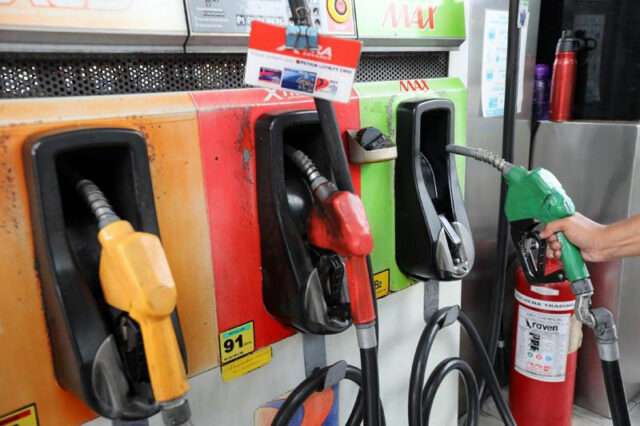
MOTORISTS queue at a gasoline station along Norzagaray Road in San Jose del Monte on Sunday, March 8. Oil companies are set to roll out staggered price hikes starting Tuesday, March 10, 2026. — PHILIPPINE STAR/RYAN BALDEMOR

By Sheldeen Joy Talavera, Reporter

SEVERAL OIL COMPANIES have agreed to spread out this week’s increases in fuel costs to temper the big-time adjustments reaching as much as P38.50 per liter as a widening war in the Middle East continues to threaten oil supply, driving up global prices.

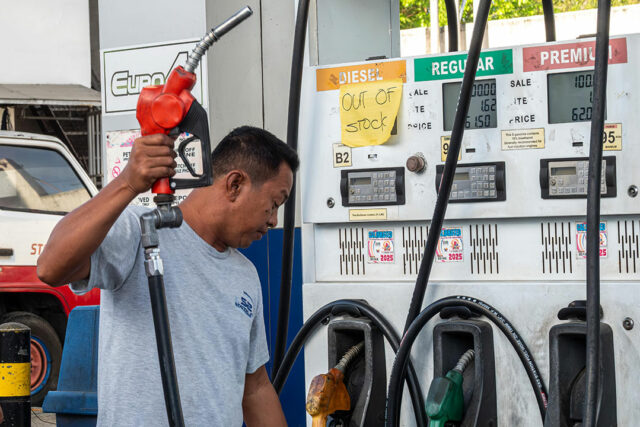
Motorists should brace for a sharp spike in pump prices starting on Tuesday, March 10, ranging from P7 to P38.50 per liter, data from the Department of Energy (DoE) showed. Gasoline prices are set to increase by P7 to P13 per liter, diesel prices will rise by P17.50 to P24.25 per liter, while kerosene is expected to go up by P32 to P38.50 per liter.

The hikes will result in pump prices ranging from P53.10-P73.40 per liter for gasoline, P63-P87.44 per liter for diesel, and P92.17-P125.17 per liter for kerosene.

At a press briefing on Monday, Energy Secretary Sharon S. Garin said several oil companies agreed to stagger the implementation of increases instead of imposing one-time hikes. This is as Energy Undersecretary Alessandro O. Sales said that this week’s price increases would be “the largest single-week adjustment” in fuel costs.

Some of the major oil companies that will implement a gradual rollout of price hikes over periods of two to seven days are Shell Pilipinas Corp.; Petron Corp.; Total (Philippines) Corp.; Chevron Philippines, Inc.; Jetti Petroleum, Inc.; and Seaoil Philippines, Inc.

Seaoil and Total will split the increases in gasoline and diesel prices over March 10-11, while Shell and Petron will implement a three-day rollout of increases.

For its part, Jetti implemented a staggered increase in gasoline and diesel prices as early as March 8, which will continue until March 13, as acknowledged by the DoE.

Meanwhile, Chevron will have the slowest movement in price adjustments as it plans to spread the increases from March 10-16.

Fuel retailers have implemented several rounds of price increases this year as global oil prices continue to climb. This week’s price adjustments mark the 11th consecutive weekly increase for diesel and kerosene prices and the ninth straight week for gasoline.

“We do not dictate the companies what price they will charge the public. What DoE can do is monitor and have them explain why their prices are like that, but we cannot impose in that sense,” Ms. Garin said.

Under the revised guidelines for the monitoring of prices in the sale of petroleum products issued by the DoE in 2019, price adjustments for liquid fuel should be implemented beginning every Tuesday of the week.

The DoE has flagged several fuel stations for allegedly implementing unscheduled or unauthorized price adjustments. Of over 80 reports reviewed, Ms. Garin said the department will issue 55 show-cause orders to the fuel stations.

“(We are) giving them 24 hours to answer DoE if there is a valid reason not to cancel their permits,” she said.

Fuel shipments are currently disrupted following the closure of the Strait of Hormuz, where about 20% of the world’s oil and liquefied natural gas pass through, amid the conflict involving Iran, the United States, and Israel.

As a net importer of crude oil, the Philippines is vulnerable to global crude price swings, which geopolitical tensions often trigger. Around 98% of Philippine crude imports come from the Middle East. The remaining 2% is sourced from Brunei and Malaysia.

Ms. Garin assured the public that the country has enough supply until the end of April and enough time to order for more.

Currently, oil companies are required to maintain at least a 30-day inventory of crude oil and a 15-day inventory of finished petroleum products.

The Energy chief said that some fuel retailers have secured enough stockpile that could cover 50 days of consumption.

Mr. Sales added that the DoE is currently monitoring the threshold level of Dubai crude prices, as hitting $80 per barrel over a period of one month would trigger the release of fuel subsidies allocated for various beneficiaries.

“As per our calculation, the average 30-day is close to $75 per barrel already. So, we’re keeping a watch on this,” he said.

FUEL PRICE CAP?
Meanwhile, asked if the Philippines can cap prices as a relief measure, Ms. Garin said Republic Act No. 8479, or the Oil Deregulation Law, which liberalized the country’s downstream oil industry, prevents them from doing this.

“We are constrained by the law and the deregulation that we do not have the power to control the prices, unless maybe they give us authority or an amendment of the law or emergency powers,” she said.

Enacted in 1998, the law allows oil companies to set and adjust pump prices based on global oil prices and other market factors, instead of awaiting government approval. It aims to promote competition among oil companies and ensure adequate and continuous supply of petroleum products.

Ms. Garin said the department is open to discuss with the Congress any potential amendments to the law.

“If there’s a change, then I think it would be a welcome change also for us to be able to scrutinize more how the prices are computed and if we should limit or make a uniform pricing. That’s something that they can discuss and consider,” she said.

This, as governments in Asia are scrambling to limit the impact on economies and consumers from the widening Iran war, which fueled a record surge in oil prices on Monday after key producers cut output and Tehran signaled that hardliners will remain in charge, Reuters reported.

In South Korea, which buys 70% of its oil from the Middle East, President Lee Jae Myung said Seoul would cap fuel prices for the first time in nearly 30 years and warned against panic buying.

A senior Japanese parliament member said on Sunday that the government had instructed a national oil reserve storage site to prepare for a possible crude release, although the country’s chief Cabinet secretary said on Monday that no decision had been made to release stockpiles.

Elsewhere, Vietnam removed import tariffs on fuels and Bangladesh shut universities to conserve electricity and fuel, while China last week asked refiners to halt fuel exports and try to cancel shipments already committed.

Oil jumped 25%, with Brent on track for a record one-day gain, after Iran on Monday named Mojtaba Khamenei to succeed his father Ayatollah Ali Khamenei as supreme leader, while Organization of the Petroleum Exporting Countries producers Kuwait and Iraq cut oil output during the weekend as the crucial Strait of Hormuz remained effectively shut. — with Reuters

House panel eyes approval of bill letting Marcos suspend fuel excise taxes this week

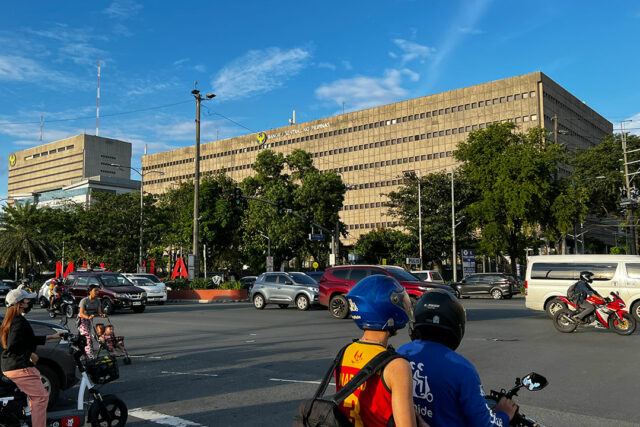
PHILIPPINE STAR/BOY SANTOS

By Kenneth Christiane L. Basilio, Reporter

A HOUSE of Representatives committee will take up on Wednesday a proposal to suspend excise tax collections on petrol, a congressman said on Monday, seeking its swift approval to pave the way for plenary passage before Congress goes on a month-long break next week.

The House Ways and Means Committee will discuss measures to suspend excise tax collections on fuel products and is expected to pass them the same day, said Marikina Rep. Romero “Miro” S. Quimbo, who heads the panel, as lawmakers aim to quickly authorize President Ferdinand R. Marcos, Jr. to cut petrol duties and ease rising fuel costs that threaten to drive up living expenses.

“There will be a break next week and we won’t be able to pass it if we don’t finish it by Wednesday,” he told reporters in Filipino. “Unless an emergency session is called, the President will have no tools, equipment or weapons to address rising gas prices.”

“What we’re facing is economic contraction.”

Proposals to suspend or scrap petrol duties have gained traction in Congress as expected fuel hikes loom, with the Iran war entering its second week after initial US and Israeli strikes on Iranian targets throttled energy exports from the Middle East, home to five of the world’s top 10 oil producers.

The expanding war has severely disrupted global oil trade as energy shipments through the Strait of Hormuz remain subdued after Iran closed access to the critical chokepoint where roughly a fifth of the world’s oil and gas shipments pass, stoking concerns over the conflict and raising fears of higher living costs.

The Philippines is a net importer of oil and is highly sensitive to sharp fluctuations in global oil prices. About 98% of the country’s crude oil imports come from the Middle East, according to Department of Energy data.

Energy Secretary Sharon S. Garin said Philippine petrol companies have agreed to spread out fuel hikes this week, she told lawmakers at a congressional hearing.

Temporarily halting the collections of excise tax on fuel products would benefit the public, she said. “Any excise tax reduction is helpful.”

A 2017 law previously allowed the government to suspend the collection of excise tax on petroleum products when world oil prices reach $80 per barrel for three months, but the provision lapsed six years ago.

REVENUE LOSSES
Finance Undersecretary Karlo Fermin S. Adriano said suspending excise tax collections may lead to P136 billion in foregone revenue if implemented from May to December. The move could widen the government’s budget deficit and raise the country’s debt, according to a Department of Finance (DoF) presentation.

“This can be higher if we start in March or April,” Mr. Adriano told lawmakers.

Mr. Quimbo said revenue losses are inevitable under the proposal but argued the move must be taken despite the hit, warning that keeping the levy in place would continue to stoke price increases that threaten economic activity.

“It could be offset by value-added tax collections,” he said. The Finance department forecasts the government could collect an additional P16 billion if Dubai crude oil hits $80 per barrel, P25.4 billion at $85, P26.6 billion at $90 and P37 billion if prices reach $100 per barrel.

DoF data presented during the congressional briefing showed that the government collected an average of P116 billion in value-added tax from fuel products from 2021 to 2025.

“If you don’t do anything, it’s going to be worse,” Mr. Quimbo said. “If you don’t remove the tax, prices will climb even higher, and no one will buy commodities anymore, and taxes won’t be collected if that happens.”

The purchasing power of the Philippine peso could be shaved by P1 for every P100 if oil prices stay at $100 a barrel in March, Department of Economy, Planning, and Development (DEPDev) Undersecretary Rosemarie G. Edillon said, adding that scrapping the excise tax could soften the impact but would not be enough to offset the blow to consumer spending power.

“We recommended a full package of interventions to the President,” she told lawmakers, advising the need to conserve fuel and provide targeted subsidies for the agriculture sector.

The Iran war could also push inflation higher if hostilities persist, she added, noting that March inflation could range from 4.5% to 5.1% under the agency’s baseline projection and rise as high as 6.3% to 7.5% in its “extreme case” scenario.

April inflation could reach 4.5% to 4.8% under the agency’s baseline scenario and climb to 6.4% to 7.5% in its worst‑case projection, Ms. Edillon said. The full-year consumer price index could breach the 2%-4% target of the central bank, settling at 4% to 4.2% for its baseline projection, she said.

She added that DEPDev projected 2026 inflation could reach 4.5% to 4.8% under its worst‑case scenario.

Prices of electricity could increase by 16% if the Iran war persists, Ms. Edillon said. “That’s significant if this keeps on going and if we don’t intervene.”

She added diesel prices could climb to as high as P96.76 per liter this month under the agency’s worst-case scenario and P91.19 per liter in April. For its baseline scenario, diesel could hit P74.22 per liter in March and P67.33 in April.

Meanwhile, gasoline prices could reach P70.20 per liter this month and P64.59 in April under its baseline scenario, she added.

Ms. Garin said the Philippines is exploring direct talks with foreign governments and local oil companies are seeking alternative suppliers as the conflict in Iran enters its second week, noting that current stockpiles are sufficient to last until April.

The country’s petrol stockpile and inbound shipments could withstand weeks of disruption if unrest in the Middle East drags on, and the government is continually preparing to prevent shortages that could weigh on economic activity.

“We are hoping it’s just one more week,” Ms. Garin said, warning that a continuous fuel increase may affect economic output. “A price change of two weeks will have a longer effect on our economy because prices will readjust and fares will go up.”

US President Donald J. Trump has signaled that military action against Iran would continue “as long as necessary” to curb Tehran’s nuclear ambitions and pursue regime change. White House Press Secretary Karoline Leavitt on Saturday said achieving Washington’s objectives could take “four to six weeks.”

Ms. Edillon told BusinessWorld that DEPDev is updating its assessment of the Iran war’s impact on gross domestic product.

Meanwhile, Mr. Quimbo said he will also push for the regulation of the oil industry, which has been deregulated since 1988.

“What’s worrying is the lack of power of the government to try and control gasoline prices,” he said in Filipino. “I’m going to take it up with the House leadership so we can have a bipartisan initiative to bring it back.”

He said government agencies such as the Energy department have “no real power” to penalize oil companies profiting from higher oil prices.

Rate hikes unlikely for now despite oil shock, MUFG says

BW FILE PHOTO

By Katherine K. Chan, Reporter

THE BANGKO SENTRAL ng Pilipinas (BSP) is unlikely to hike rates in the near term even as oil price shocks due to the ongoing war in the Middle East are expected to weigh on inflation and the peso, MUFG Global Markets Research said.

“Will BSP hike rates if the crisis worsens and oil prices spike further? We think the answer is likely “no” right now, but the key distinction is whether this is a temporary supply-side shock perhaps analogous to COVID lockdowns, or proves something more permanent with the potential to raise inflation expectations over time,” MUFG Senior Currency Analyst Michael Wan said in a report on Monday.

Deutsche Bank Research said the economic impact of costlier oil may prompt Asian central banks to be more hawkish.

“Although most Asian economies have reduced their reliance on Iranian oil to negligible levels, they remain vulnerable to both inflation and growth shocks from higher oil prices,” it said in a report on Monday. “For now, Asian central banks are likely to view this as an inflationary shock, warranting a more hawkish bias.”

On Friday, BSP Governor Eli M. Remolona, Jr. said Philippine inflation could breach 4% if oil hits $100 a barrel, adding that if fuel prices rise sharply and persistently, they could be forced to tighten their policy stance anew.

The Monetary Board last hiked borrowing costs in October 2023. It began its current easing cycle in August 2024 and has lowered rates by a total of 225 basis points (bps), bringing the key policy rate to its lowest in over three years at 4.25%.

Brent crude oil price hit over $100 per barrel (/bbl) on Monday, the first time in over three years, as the ongoing war in the Middle East continued to disrupt oil trade from the region.

This puts Philippine inflation at risk of breaching the 4% mark this year until 2027 if this price level is sustained, said MUFG’s Mr. Wan.

“Our current base case forecast is for the BSP to cut rates twice more to 3.75%, likely in June and October, but this is predicated on the crisis resolving by March 2026 and for oil prices to move to $70/bbl by 2Q2026. A scenario of sustained oil prices at $90/bbl will likely see inflation breach the upper end of the BSP’s inflation target of 4% in 2026 before coming down to 3.2% in 2027.”

He said if the conflict is prolonged and results in “something more permanent in terms of destruction to global economic and energy supply capacity,” the central bank may need to raise rates again.

“We could well see more permanence in inflation rates (and not just price levels) and hence inflation expectations, and warrant a policy rate response, despite being accompanied by far weaker growth prospects.”

Meanwhile, Jose Mari Lacson, head of macroeconomics and impact investing at ATRAM Trust Corp., told BusinessWorld in a phone interview last week that they will revisit their BSP rate projections amid emerging risks to inflation due to oil shocks from the ongoing Middle East conflict.

ATRAM sees Philippine inflation averaging 3.2% by yearend, but he said it could end closer to 4% if the war lasts around three to six months.

Mr. Lacson said the BSP’s policy path would likely depend on the duration of the ongoing war in the Middle East and when government spending will recover, adding that a rebound in the first quarter would give the central bank “more reason” to stand pat.

He added that the peso could test new lows, potentially hitting P60 versus the dollar, if the Iran conflict is prolonged.

“So, right now, again depending on how long this goes, because our vulnerability is in our imports. Oil accounts for a substantial part of our imports bill,” Mr. Lacson said. “So, if oil surges back to, say, peak levels, this can push our peso closer to P60.”

Despite having record-high dollar reserves in February, Mr. Remolona said on Friday that the central bank does not have much appetite to intervene in the foreign exchange market as they only step in if inflationary risks emerge from the peso’s depreciation.

MUFG’s Mr. Wan likewise said the peso may weaken to over P60 per dollar if oil prices continue to soar, especially if the dollar stays strong and the US Federal Reserve becomes hawkish.

“From a FX (foreign exchange) and rates perspective, we think USD/PHP could trade between P59-P60 levels with $90 oil prices, P60-P61 levels with $100 oil prices, and above that if coupled with a stronger dollar and/or a hawkish Fed,” he said.

He added that higher oil prices could also cut gross domestic product (GDP) growth as besides inflation and the currency, the ongoing Middle East conflict could also impact energy-intensive sectors like manufacturing, transportation, travel, and food production, as well as remittances from migrant Filipinos, which help drive domestic consumption.

“Our current GDP forecasts for the Philippines of 4% in 2026 and 6% in 2027 are already below consensus, but if oil prices were to spike to $100/bbl on a sustained perspective, GDP may easily fall closer to 3.7% in 2026 and 5.7% in 2027, after incorporating the lagged impact of higher oil prices to the economy. If oil prices were to spike to $130/bbl, GDP will likely be cut by more than 1%, with GDP growth coming in at 3.4% and 5.4% in 2026 and 2027, respectively,” Mr. Wan said.

“Once again, these are probably under-estimates, and the negative impact could well be bigger after incorporating indirect spillovers which are much harder to accurately estimate now. How the Philippine government responds through fiscal policy support moving forward will also be key.”

The Asian Development Bank (ADB) also said it expects the war in Iran to drive up inflation in the Philippines.

“Smaller energy-importing economies, including the Philippines, Pakistan, and Sri Lanka, are likely to experience comparatively stronger macroeconomic effects,” ADB Chief Economist Albert F. Park said via X over the weekend.

“In these economies, higher oil prices tend to transmit rapidly into inflation and exchange rate pressures through widening current account deficits and increased foreign currency demand,” he added.

The ADB sees five ways the war could impact Asian countries: rising energy prices, currency depreciation, shipping and global trade disruptions, slower export growth, and aviation and logistics disruptions.

It said these economies should focus on stabilizing prices rather than aggressively tightening monetary policy, as it can add to financial volatility.

“Shielding consumers from higher domestic energy costs through price controls or subsidies could risk distorting market incentives and undermining the efficient allocation of resources,” said Mr. Park.

“Central banks should prioritize exchange rate smoothing and liquidity provision before tightening monetary policy aggressively, especially where inflation pressures originate externally,” he added.

The ADB also said that Asian countries should implement targeted fiscal measures toward vulnerable households rather than blanket measures, as they can “weaken fiscal positions without addressing underlying price pressures.”

ECONOMIC RECOVERY
China Banking Corp. Chief Economist Domini S. Velasquez said the government’s spending catch-up plan could spur economic recovery this year, but the ongoing crisis in Iran presents fresh risks.

“That 4.4% [growth] last year, it’s really a fiscal constraint. So, the government is saying they will spend more this year. They will spend the whole budget. So, we see an upside for this year,” she said on Money Talks with Cathy Yang on One News on Monday.

Asked about the impact of oil shocks on the country’s growth prospects, Ms. Velasquez said: “It is a downside but as mentioned, if we address it through the proper subsidies, targeted subsidies, time-bound, it might not be a fiscal drag, and we can spend more on other priorities.”

She said the government should provide fuel subsidies, particularly for oil-dependent sectors like transport, agriculture and fisheries, or allow fare increases for public transport, instead of cutting the excise tax on oil.

“Addressing the concerns of the transport sector immediately would be most effective, I would say, as opposed to maybe a rollback of excise taxes, which usually benefits the higher income segment.”

ATRAM’s Mr. Lacson added that an anticipated rebound in infrastructure spending as early as next quarter could drive the Philippine economy’s rebound in the coming months, following a slump late last year due to a graft scandal involving government projects.

“So, our assumption here is that by the second quarter, we’ll already see public construction or infrastructure spending (starting) to recover,” he said. “Meaning, not fully back to normal, but heading that way (or to) the path to recovery.”

In November 2025, infrastructure spending slumped by 45.2% year on year to P48 billion, latest Department of Budget and Management data showed, marking the fifth straight month of annual declines amid corruption allegations tied to government flood control projects. This dragged public investment, which was among the primary reasons for the GDP growth slowdown last year.

Mr. Lacson said infrastructure spending may remain sluggish this quarter but may begin to show some signs of growth in the second quarter.

“And the reason for this is because… I think the government is cognizant that they need to maintain a certain level of infrastructure spending to support growth,” he said. “Because if not, the long-term implications can be worrisome.” — with Justine Irish D. Tabile


Shipping lines hike rates by up to 25% as fuel prices soar

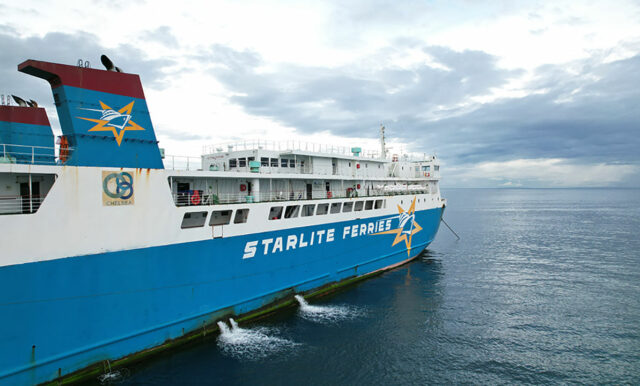
STARLITEFERRIES.COM

By Ashley Erika O. Jose, Reporter

THREE regional shipping lines are raising passenger and cargo rates by up to 25% following a surge in fuel costs triggered by the closure of the Strait of Hormuz, which pushed global oil prices above $100 per barrel.

While the Philippine Ports Authority (PPA) reported that maritime gateways remain physically operational, the sector is reeling from escalating bunker costs that have forced these companies to revise their fare matrices to offset rising diesel and kerosene prices.

Starlite Ferries, Inc., a unit of Chelsea Logistics and Infrastructure Corp., announced in a Monday advisory that both passenger and cargo rates would increase by up to 25% starting March 10.

“The price of fuel has been steadily increasing since January of this year. On top of that, there is an abrupt high spike of fuel price that was implemented during the first week of this month and an impending big-time price hike in the coming weeks due to the ongoing conflict in the Middle East,” Starlite Ferries said.

Starlite operates vital maritime corridors including Batangas, Calapan, Cebu, and Surigao.

Other regional operators followed suit. Montenegro Shipping Lines, Inc. will implement a 10% to 20% increase in passenger and vehicle rates across its routes starting March 23. FastCat, Inc. operated by Archipelago Philippine Ferries Corp., revised its fare matrix upward for both passengers and vehicles beginning March 6.

FastCat serves Batangas, Mindoro, Cebu, and Surigao, while Montenegro also covers Batangas to Mindoro routes and several key Visayas and Mindanao corridors.

The fare adjustments follow a dire forecast from the Department of Energy (DoE), which projected domestic diesel prices would rise by P17.50 to P23 per liter and kerosene by P32 to P36 per liter.

These domestic increases are a direct result of global oil prices breaching the $100-per-barrel mark after the closure of the Strait of Hormuz, a primary global shipping corridor.

While the PPA maintained that the nation’s major terminals continue to operate without reported disruptions, the regulator warned that ongoing tensions in the Middle East present significant economic risks.

The PPA also said that rising bunker costs and freight rates could eventually weigh on cargo volumes across the archipelago if the situation persists.

First Gen scales down investment in Prime Infra hydro portfolio to P61.9B

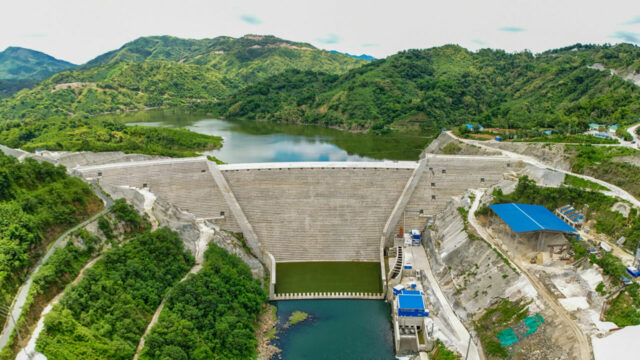
The Upper Wawa Dam in Rizal — PRIMEINFRA.COM

FIRST GEN CORP. has scaled down its planned investment in the pumped storage hydropower portfolio of Razon-led Prime Infrastructure Capital, Inc. (Prime Infra) to P61.88 billion from the P75 billion previously announced.

Under the revised definitive agreements executed on March 6, the Lopez-led power company will now acquire a 33% equity interest in the portfolio, a reduction from the 40% stake originally disclosed in February.

This adjustment in the final investment terms followed what the company described as “following discussions and negotiations” between the participating entities.

The deal targets two massive developments certified as an “energy project of national significance”: the 1,400-megawatt Pakil Pumped Storage Hydroelectric Power Project in Laguna and the 600-megawatt Wawa Pumped Storage Hydroelectric Power Project in Rizal.

First Gen President and Chief Operating Officer Francis Giles B. Puno previously said that the 2,000-megawatt portfolio will “complement its existing assets,” which currently include the 132-megawatt Pantabangan-Masiway and 165-megawatt Casecnan hydroelectric plants.

This alliance deepens the strategic ties between the two entities, following an earlier P50-billion transaction where Prime Infra acquired a 60% stake in First Gen’s gas assets.

The total consideration of P61,875,000,000 is structured to support the long-term development of the projects, which are targeted for operations by 2030.

The payment schedule includes an initial P16.5 billion, a portion of which will be held in escrow pending corporate restructuring.

Two additional tranches backed by Standby Letters of Credit totaling P24.75 billion are due in April 2027 and April 2029.

A contingent balance of P20,625,000,000 is scheduled to be paid in portions “as and when the PHEI (Prime Hydropower Energy, Inc.) board of directors will deem it necessary for use by the projects.”

Upon completion of the transaction and a necessary corporate restructuring of Prime Hydropower Energy, Inc., First Gen will indirectly own 33% of the Pakil project and 28.71% of the Wawa project.

The companies expect to close the deal within the year, pending approval from the Philippine Competition Commission.

Until the restructuring is finalized, Prime Infrastructure will issue irrevocable proxies to First Gen subsidiary FGEN Aqua Power Holdings, Inc. for its 33% share in the relevant entities. This partnership allows First Gen to expand its 3,700-megawatt diverse energy portfolio into critical pumped storage technology. — Sheldeen Joy Talavera

Art in the Park marks 20 years

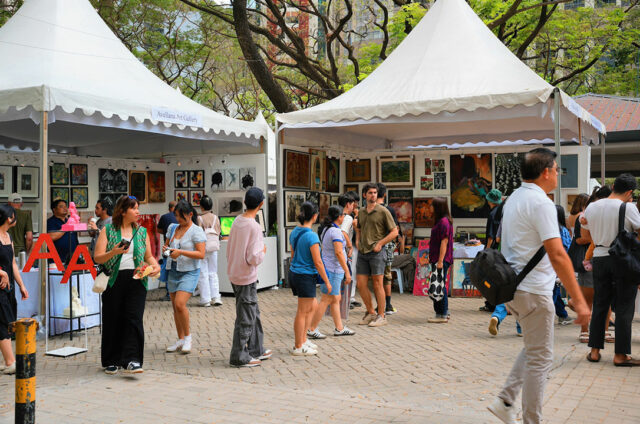
SCENES from Art in the Park 2025 — FACEBOOK.COM/ARTINTHEPARKPH

THERE will once again be a chance to see art on a nice summer day out this month at the Jaime Velasquez Park in Salcedo Village, Makati City.

For its milestone 20th edition, Art in the Park will present 55 exhibitors representing galleries, art collectives, independent art spaces, and student groups, all showcasing the diversity of Filipino art. It will run from 10 a.m. to 10 p.m. on March 15, Sunday.

In addition to entrance to the fair being free, prices for artworks are capped at P70,000, with many art lovers able to score coveted pieces for even less. “It has always been about accessibility and appreciating art in an unintimidating setting, and through the years we’ve stayed true to that,” said Art in the Park co-founder Trickie Lopa, at a Feb. 27 media roundtable in Pablo Bistro, Makati City.

This year, the outdoor fair will continue to give its share of the proceeds to the Museum Foundation of the Philippines, to support projects and initiatives that preserve and promote the nation’s cultural and historical heritage.

“I’m happy we’re still here after 20 years,” Art in the Park co-founder Lisa Periquet told BusinessWorld. “That’s the best thing about it — our longevity and how we adapted. The park has changed so many times, and we’re still here. There’s so much history now.”

FEATURED ARTISTS
Every year the fair highlights a number of artists whose works are shown in special exhibits around the park.

This year’s featured artist is Ayka Go, a Filipino contemporary visual artist known for her delicate work with paper.

Ms. Go, who is celebrated for her collages and ethereal paintings reinterpreted from three-dimensional forms, will be presenting “a world of memory and materiality.”

“I chose to do something a bit playful because it’s Art in the Park,” she said. “There are so many artists now with such diverse practices. It’s great to be a part of something that is flourishing.”

She explained that her recent works reflect how she is “finding her footing in the process of artmaking” following a personal health crisis. Visitors will be able to appreciate her intricate view of paper and the craftsmanship that goes into representing it through painting and collage.

“The thing with artmaking is that when you keep doing it, it becomes a form of therapy,” she added.

For Ms. Lopa, choosing different artists each year to focus on is a great way to see how Filipino art is evolving.

“Looking back, the artists that have shown with us since 2006 have become big names,” she said. “Art in the Park really allows us to discover an artist and appreciate their artistry.”

ANNIVERSARY MILESTONE
In honor of its 20th anniversary, the fair will offer visitors a rare opportunity to acquire works by several artists who have headlined the event in previous years.

The lineup of special exhibit artists joining Ayka Go are: Bjorn Calleja, Carlo Tanseco, Demi Padua, Jomike Tejido, Marina Cruz, Anna Bautista, AR Manalo, Charlie Co, Manny Garibay, Pepe Delfin, TRNZ, Clarence Chun, Lynyrd Paras;

Yvonne Quisumbing, Zean Cabangis, Maxine Syjuco, Richard Quebral, Robert Alejandro, Rodel Tapaya, Willie De Vera, Beth Parrocha, Eugene Jarque, Lydia Velasco, Yeo Kaa, Dex Fernandez, Pete Jimenez, Jacob Lindo, Mac Valdezco;

Distort Monsters, Leeroy New, Nasser Lubay, Isaiah Cacnio, Antipas Delotavo, Jr., Henrielle Baltazar Pagkaliwangan, Joy Mallari, Mark Justiniani, Tessy Pettyjohn, Jon Pettyjohn, Joey de Castro, Kabunyan de Guia, Agnes Arellano, Daniel dela Cruz, Bea Camacho, and Ambie Abaño.

Their works will also be available in a commemorative portfolio box, which features a collection of special edition prints. In a nod to the special occasion, works showcased under the special exhibit are exempt from the event price cap.

Meanwhile, the gallery exhibitors are: Ang INK, Archivo 1984, Art Agenda, Art for Space, ART LAB: Atelier Cesare & Jean Marie Syjuco, Art Toys PH, Art Underground, Art Verité Gallery, ArtBeat Collective, Avellana Art Gallery, Boston Art Gallery, Cartellino, Cornerstone Pottery (EJ Espiritu), The Crucible Gallery, De La Salle-College of Saint Benilde, FA Collective, Fuse Projects, Galerie Anna, Galerie Artes, Galerie Stephanie, ILCP Art Space, iStorya Studios, J Studio, Jon and Tessy Pettyjohn, KASIBULAN, Komiket, Kulay Art Group, Kunstwerk Painting Works, L’arc en Ciel;

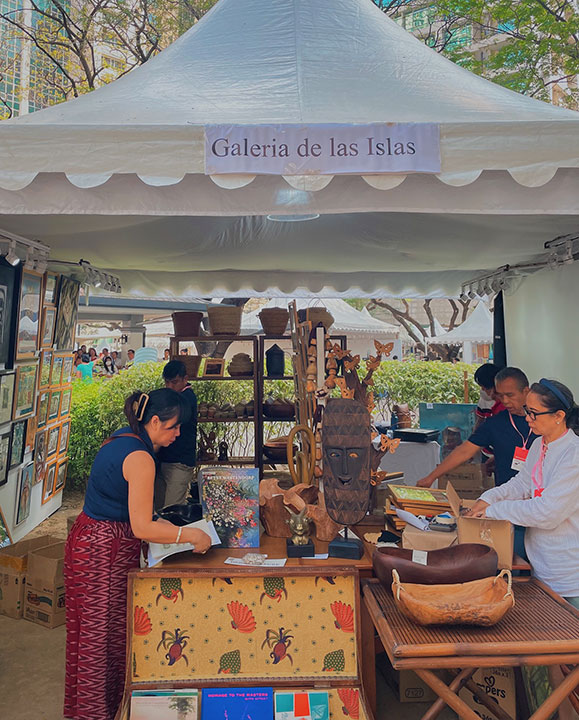
M A G, NEST Gallery, Nineveh Artspace, Obras Ongpin, Orange Project, the Pintô Art Museum and Arboretum, Qube Gallery, Resurrection Furniture, Sheerjoy Collective, Sierra Madre Gallery (Joey De Castro), Silahis Arts and Artifacts (formerly Galeria de las Islas), Space Encounters Gallery, Super Duper Gallery, The Authenticity Zero Collective, The METRO Gallery, The Mighty Bhutens, The Photography Collective, The Thursday Group, Tin-Aw Art Projects, UP Artists’ Circle, Urban Sketchers Manila, VeryGood Gallery, Village Art Gallery, Vinyl on Vinyl, and White Walls Gallery.

A diverse lineup of food and beverage concessionaires will offer visitors everything from artisan coffee and craft cocktails to choice local and other eats. Musical sets and live performances are also scheduled throughout the day.

BPI Credit Cardholders can purchase artworks through Flexiplay with flexible installment terms of up to six months at 0% interest.

Admission to the art fair is free. For more information, visit www.artinthepark.ph or @artintheparkph on Facebook and Instagram. — Brontë H. Lacsamana

Meralco taps South Korean expertise for early-stage nuclear project dev’t

(L-R) KEXIM Chairman and Chief Executive Officer (CEO) Kiyeon Hwang, Meralco Chairman and CEO Manuel V. Pangilinan, and KHNP CEO Dae Wook Chun. — MERALCO

MANILA ELECTRIC CO. (Meralco) has signed a memorandum of understanding (MoU) with Korea Hydro & Nuclear Power (KHNP) and the Export-Import Bank of Korea (KEXIM) to collaborate on the development of nuclear energy projects in the Philippines.

The partnership aims to leverage South Korean expertise to evaluate the feasibility of nuclear power through a multi-faceted approach.

Under the agreement, the three organizations will conduct joint discussions on reactor design and engineering, exchange technical and regulatory information, and work to “strengthen the Philippines’ nuclear legal and institutional frameworks.”

The scope of the MoU also covers early-stage project development, including “public acceptance initiatives, project planning, and site selection studies.”

The companies will focus on business and financial modeling, with KEXIM specifically exploring “potential financing structures and credit facilities” for Meralco’s prospective projects.

Meralco Chairman and Chief Executive Officer Manuel V. Pangilinan highlighted the strategic importance of the collaboration, saying “Partnering with KHNP and KEXIM gives us access to proven global expertise and enables us to study technology, business models, and financing options with greater depth. This MoU marks an early but consequential step in this important process.”

He also said that nuclear energy is a critical component of the company’s long-term strategy to ensure energy security.

“Nuclear energy is a way to diversify our portfolio and reinforce energy security, while offering a degree of insulation from fuel market fluctuations,” he said.

He added that Meralco’s initiative is “complementary to the Philippine government’s efforts to lay the groundwork for its nuclear power program” as the utility provider assesses how the technology can best contribute to its future operations.

KHNP, a subsidiary of Korea Electric Power Corp., is currently the largest power generation company in South Korea, while KEXIM serves as the nation’s state-owned official export credit agency.

Meralco is the country’s biggest private electric distribution utility, serving 39 cities and 72 municipalities. It also has interests in power generation through wholly owned units and equity stakes.

Its controlling shareholder, Beacon Electric Asset Holdings, Inc., is partly owned by PLDT Inc. Hastings Holdings, Inc., a unit of PLDT Beneficial Trust Fund subsidiary MediaQuest Holdings, Inc., has an interest in BusinessWorld through the Philippine Star Group, which it controls. — Sheldeen Joy Talavera

ADVERTISEMENT
ADVERTISEMENT