Home Blog Page 1923

ADB backs Ayala’s EV charging network with $100-M loan

ACMOBILITY

THE Asian Development Bank (ADB) has approved loans of up to $100 million, or around P5.9 billion, for Ayala Corp. subsidiary AC Mobility Holdings, Inc. (AMHI) to build an electric mobility (e-mobility) ecosystem in the country.

The loan application was “approved” on Nov. 20, the multilateral development bank said on its website on Thursday.

The Ayala Electric Mobility Ecosystem Project sought an $85-million ordinary-capital-resources loan and a $15-million concessional loan from the ADB.

“Subsidiary AC Mobility Holdings, Inc. (AMHI) will be utilizing the ADB’s loan proceeds to support the procurement and installation of electric vehicles charging network (EVCN) nationwide of up to 1,700 EVCS (electric vehicle charging stations) to develop an e-mobility ecosystem in the country,” the uploaded loan document said.

AMHI aims to drive the country’s transition to EV over the next five to seven years by expanding its product offerings.

The project began its pre-construction phase this year and is expected to fully operate in 2032, the document said.

“The typical rated power capacity of one EVCS is at least seven kilowatts (kW) for AC output and a maximum of 120 kW for DC output,” it added.

AMHI said it has already installed 35 charging stations registered with the Department of Energy within the National Capital Region, Cordillera Administrative Region, and Regions III, IV-A, VI, VII, and XI.

“The project will cover the proposed new EVCS installations of AMHI… The location of proposed new EVCS installations for January 2024 to July 2025 [is] expanding AMHI’s EVCN coverage to five additional regions,” it said.

These locations include the Ilocos Region, Central Luzon, Bicol Region, Eastern Visayas, and SOCCSKSARGEN (South Cotabato, Cotabato, Sultan Kudarat, Sarangani, and General Santos City), while other sites for installation are yet to be identified by AMHI.

AMHI also said it is considering installing EVCS in non-Ayala properties, provided that the sites meet its criteria.

This initiative aligns with Republic Act 11697, also known as the Electric Vehicle Industry Development Act, which sets quotas for EV adoption in organizations with vehicle fleets to support domestic manufacturers and encourage EV adoption.

One key component of the law is the comprehensive roadmap for the EV industry, which aims to establish the Philippines as a producer and exporter of EVs by 2040.

Under this, the baseline scenario target is a 10% EV share of the vehicle fleet by 2040. Under the clean-energy scenario, the target is at least a 50% EV share.

Ayala Corp. has integrated EVs into its portfolio. It became the official distributor of Kia, Volkswagen, and BYD EVs in the Philippines in 2023. — Aubrey Rose A. Inosante

How Metro Pacific Water is addressing Iloilo’s rising demand

METRO PACIFIC WATER President and Chief Executive Officer Andrew B. Pangilinan

By Sheldeen Joy Talavera, Reporter

METRO Pacific Water (MPW) is deploying new water solutions in Iloilo City to address the increasing demand, according to the company’s president.

“We have a long way to go in terms of providing the basic water needs for every Filipino, but that is our main objective — we want to give each Filipino an adequate supply of treated water,” MPW President and Chief Executive Officer Andrew B. Pangilinan said in an interview with BusinessWorld.

“We will continue to have discussions with local government units, even on the commercial side, and we will look for ways to come up with new solutions, such as desalination, in providing water and wastewater services to the country,” he added.

MPW is set to develop a P5-billion desalination plant in Iloilo City in partnership with France-based water and wastewater management solutions provider Suez.

The desalination plant is designed to produce 66.5 million liters of water per day.

Mr. Pangilinan said they are targeting to commence construction of the project in January next year, with completion slated for early 2027.

MPW earlier said that Metro Iloilo is “undergoing rapid economic and population growth,” which is putting a “strain” on the existing water resources.

The company signed a joint venture agreement with Metro Iloilo Water District in 2018 for the 25-year concession for the rehabilitation, expansion, and improvement of the water distribution system and wastewater management facilities.

The joint venture, Metro Pacific Iloilo Water, serves Iloilo City and the municipalities of Pavia, Leganes, Sta. Barbara, Cabatuan, Oton, San Miguel, and Maasin.

“Admittedly, for the past few years that we’ve been there, there’s really a water shortage. So right now, the most viable solution, the fastest solution, is putting up a desalination plant,” Mr. Pangilinan said.

He said desalination is the most viable option since other traditional sources, such as surface water and groundwater, are no longer viable in Iloilo due to pollution.

“We still have several groundwater sources being maintained, but they are already showing signs of degradation, so we really need to find a better water source, and right now, desalination is the most viable one,” he said.

A desalination plant is designed to take seawater and remove the salinity to produce fresh water, Mr. Pangilinan said.

Once successful, the company is open to using the project as a guide to replicate it in other areas.

MPW is the water infrastructure investments subsidiary of Pangilinan-led conglomerate Metro Pacific Investments Corp. (MPIC).

MPIC is one of the three key Philippine units of Hong Kong-based First Pacific Co. Ltd., the others being Philex Mining Corp. and PLDT Inc. Hastings Holdings, Inc., a unit of PLDT Beneficial Trust Fund subsidiary MediaQuest Holdings, Inc., has a majority share in BusinessWorld through the Philippine Star Group, which it controls.

PHL’s DigiPlus edges closer to Brazil market entry

FOR THE FIRST nine months, DigiPlus posted a 314% growth in net income to P8.75 billion from P2.1 billion in 2023, led by its retail games, new product offerings, and cost efficiencies. — DIGIPLUS.COM.PH

DIGITAL GAMING company DigiPlus Interactive Corp. is nearing its Brazil expansion after a subsidiary passed the gaming license qualification stage.

DigiPlus Brazil Interactive Ltda., a subsidiary of DigiPlus Interactive, has successfully passed the initial requirements for obtaining a federal gaming license from the Brazilian Ministry of Finance’s Secretariat of Awards and Bets (SPA), the listed company said in a regulatory filing on Thursday.

“This milestone advances DigiPlus into the final stages of the licensing process, bringing it closer to participation in Brazil’s newly regulated iGaming sector, one of Latin America’s most dynamic and rapidly growing gaming markets,” the company said.

DigiPlus has 30 days to complete post-qualification regulatory requirements, including platform certification and license fee payments.

Once completed, the SPA will issue the final list of operators authorized to operate from Jan. 1, 2025 onwards.

“As we navigate the final steps of the licensing process, we remain confident in our ability to align with Brazil’s regulatory requirements and introduce world-class gaming experiences to this dynamic market. This underscores our dedication to expanding into a new region while maintaining our focus on the Philippines as our core market,” DigiPlus Chairman Eusebio H. Tanco said.

DigiPlus filed for the gaming license in August, citing Brazil’s population of over 200 million as well as its potential as one of the fastest-growing gaming markets in Latin America.

Last year, Brazil passed legislation that formed a regulatory framework for its online betting market, which included a condition that operators should have a Brazilian partner with at least a 20% stake in the business.

DigiPlus President Andy Tsui said in a recent virtual briefing that the gaming license in Brazil, valid for five years, will cost around $6 million.

“We understand that Brazil has a big population, which is about two times that of the Philippines, and also has a deep-rooted passion for sports. We understand that the market size is about $2 billion for 2024 and is expected to grow about 15% to 20% over the next five years, so the market size may reach around $4 billion by 2029,” he said.

“We can leverage our existing platform and make necessary changes to meet the local compliance requirements. We’ll continue to explore different options to enter the market. We are also exploring options to work with a local partner so that we can kick-start a little faster,” he added.

For the first nine months, DigiPlus posted a 314% growth in net income to P8.75 billion from P2.1 billion in 2023, led by its retail games, new product offerings, and cost efficiencies.

Revenue increased by 223% to P51.56 billion from P15.98 billion in 2023.

On Thursday, DigiPlus shares rose by 1.3% or 26 centavos to P20.20 apiece. — Revin Mikhael D. Ochave

Eddie Romero’s legacy celebrated for his birth centennial

EDDIE ROMERO with his son Joey Romero on a film set.

IN 1976, the film Ganito Kami Noon, Paano Kayo Ngayon? by director Eddie Romero – much later proclaimed National Artist for Film – was released, eventually becoming a beloved classic due to its take on Filipino identity and culture set in the Spanish colonial era.

At recent talks about the film’s legacy, family, friends, and scholars of Mr. Romero’s works discussed the humor, drama, and historical insight that made his filmography so memorable.

Filmmaker Joey Romero told attendees about his father’s invaluable contributions to film as well as his enduring spirit as a storyteller.

“You can be anything you want to be as long as you like what you’re doing and strive to be good, if not the best at it. You can be a carpenter but be darn good at it and like it,” the younger Mr. Romero recounted his father’s words to him at the centennial celebration on Nov. 20 in Makati City.

Marking what would have been his 100th year, the event honored the life and legacy of Eddie Romero. It was prefaced on Nov. 15 by a screening of Ganito Kami Noon, Paano Kayo Ngayon? at the University of the Philippines Diliman in Quezon City, where students got to discuss it with film historian and author Nick Deocampo.

Mr. Deocampo posited that Ganito Kami Noon, Paano Kayo Ngayon? captures the spirit of Filipino culture, identity, and resilience, so much so that it is the only document in the UNESCO Memory of the World National Register for the Philippines, at least as of now.

“I would call it a masterpiece of Philippine cinema because of its powerful themes — from the portrayal of social and regional personalities to the representation of women navigating gender norms — and the holistic depiction of the birth of the Philippine republic,” he said at the Nov. 20 event.

This sensitivity to his country’s sense of identity recurs throughout Mr. Romero’s works, including the epic Aguila (1980), which spans generations to explore the impact of colonization and war on the Filipino spirit.

Both films, restored by ABS-CBN’s Sagip Pelikula and FPJ Film Archive, respectively, have been screened throughout the year.

“It’s important that Filipinos, especially students and younger generations, get to experience how film doesn’t just tell a story; through semiotics, or the language of signs, it can embody a legacy, a piece of history, and make a statement about Filipino culture and spirit,” Mr. Deocampo said.

In addition to these, Eddie Romero’s Kamakalawa (1981), while still unrestored due to extensive damage to its surviving copies, also represents the Philippines — this time from a pre-colonial perspective, immersing viewers in indigenous mythology and social structures.

Beyond his films, Mr. Romero was also involved in advocating for Philippine cinema through the Movie Workers Welfare Foundation (Mowelfund).

“The most important thing he instilled in us was putting others above oneself,” his son Ancel Romero recalled at the tribute. He added that his father “didn’t believe that true success was about fame or wealth,” instead putting emphasis on strong values.

For Mr. Deocampo, celebrating the elder Romero’s legacy does not end at centennial celebrations. “His film’s inclusion in the UNESCO Memory of the World National Register is but one part of preserving humanity’s cultural treasures. There are many other films and cultural documents that need to be properly archived and preserved,” he said.

“Without these, how will we remember what it is to be Filipino?” — Brontë H. Lacsamana

Robinsons Retail plans to boost store count over next 5 years

JGSUMMIT.COM.PH

ROBINSONS Retail Holdings, Inc. (RRHI) targets to ramp up its store openings over the next three to five years as part of its strategic growth initiatives, a company official said.

“In the next three to five years, we plan to accelerate our store openings and increase the top line,” RRHI Vice-President for Corporate Planning and Investor Relations Gina R. Dipaling said during a virtual briefing on Wednesday.

“On margins, it’s largely driven by changes in category mix, increasing the share of private label products and imported products in our stores, and also leveraging our size,” she added.

Ms. Dipaling said that RRHI is expanding its pet retail business, adding that it has seen higher sales.

“Our pet retail business is actually one of the fastest-growing businesses that we are operating right now. We’ve seen strong sales traction,” she said.

“We actually plan to further improve our pet retail business by enhancing the products that we offer, such as grooming services. We are also looking at opening more new stores in 2025,” she added.

She said RRHI is also boosting the expansion of its mini-mart store Robinsons Easymart and hard discount store O!Save Trading Philippines Corp.

“We are also accelerating the expansion of our neighborhood supermarket called Robinsons Easymart. We carry around 3,000 to 6,500 stock keeping units (SKUs) in Robinsons Easymart, so you can actually fulfill your full shopping list versus that of the hard discounters, where they only offer around 500 to 600 SKUs,” she said.

“O!Save is actually accelerating its expansion. By the end of this year, there will be 400 stores in Luzon. There’s a plan to open another 200 to 300 stores next year,” she added.

Founded in 2021, O!Save is a hard discount supermarket chain operated by HD Retail Holding Pte. Ltd., in which RRHI has a 23% stake.

Ms. Dipaling said RRHI is also pushing for lower rents to improve the operations of underperforming stores.

“On the cost side, we just have to negotiate with our vendors to lower the rents so we can turn around the business. But we are actually operating efficiently. We just have to negotiate with our vendors for nonperforming stores to have rent concessions,” she said.

As of the end of September, RRHI has 2,413 stores consisting of 758 food stores, 1,101 drugstores, 50 department stores, 225 DIY stores, and 279 specialty stores. It also has 2,163 franchised stores of The Generics Pharmacy.

RRHI shares were unchanged at P36.50 per share on Thursday. — Revin Mikhael D. Ochave

IC says only agents with regular license can sell insurance cover

BW FILE PHOTO

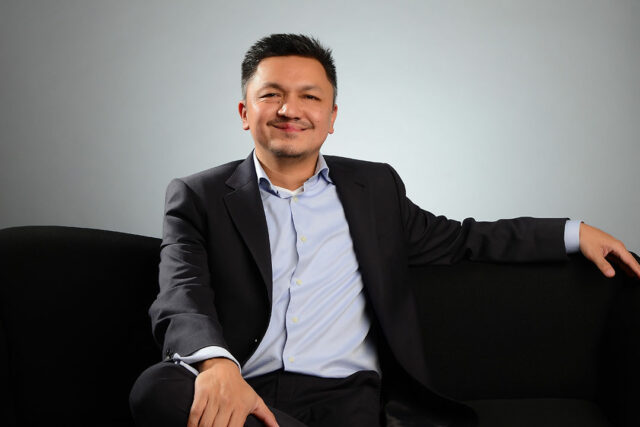
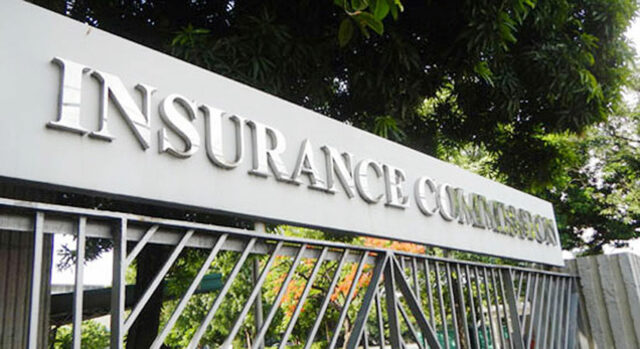
THE Insurance Commission (IC) has stopped issuing provisional licenses to insurance agents to protect consumers from fraud.

Only agents with regular licenses may sell policies to the public, Insurance Commissioner Reynaldo A. Regalado said in a circular on Thursday.

“Considering the procedure and evaluation period for the issuance of agents’ licenses under the Enhanced Licensing System, there is no longer a need for these provisional licenses,” he said. “The issuance of this circular letter is also part of the IC’s initiatives on consumer protection.”

Licenses of insurance agents are processed within seven working days based on the Ease of Doing Business and Efficient Government Service Delivery Act of 2018 and issuances by the Anti-Red Tape Authority.

The IC circular said life and nonlife insurers’ applications for an insurance agent’s license must be submitted with the required documents and correct licensing fees so they could be processed.

“We remind the insuring public to only transact with duly licensed insurance agents,” Mr. Regalado said, adding that payment of commissions to unlicensed agents is punishable under another IC circular.

He also urged public to report people without a license who transact or try to do business with them.

The Philippines had 261,422 life insurance and 16,274 nonlife insurance agents with active licenses as of Nov. 21, according to data posted by the commission on its website. — Aubrey Rose A. Inosante

PESONet celebrates 7 Years of revolutionizing digital payments in PHL 

PESONet, the country’s trailblazing digital payment system, marks its seventh anniversary with a renewed commitment to transforming how Filipinos send and receive money. Over the past seven years, PESONet has played a vital role in enabling secure, reliable, and efficient electronic funds transfers, making financial transactions more accessible for individuals, businesses, and institutions nationwide.

Since its inception, PESONet has simplified the lives of millions, eliminating long queues and paperwork by providing an intuitive, seamless platform for transferring funds. With the support of an extensive network of participating banks and e-money issuers, PESONet has empowered users with the ability to send money swiftly and securely from the comfort of their homes or workplaces.

Unparalleled Convenience and Efficiency

PESONet offers same-day fund transfers for transactions made before its three daily settlement cutoffs, ensuring that recipients receive their money without delay. Whether sending money to loved ones, paying for goods and services, or managing day-to-day financial transactions, PESONet delivers an unmatched level of convenience and reliability.

For businesses, PESONet streamlines payment processes, enabling effortless disbursement of salaries, supplier payments, and customer collections. By simplifying cash flow management and reducing administrative burdens, PESONet helps businesses focus on growth and operational efficiency.

Commitment to Security and Accessibility

Security is at the heart of PESONet’s operations. The system adheres to stringent industry standards, employing advanced encryption and authentication protocols to ensure users’ financial information remains protected. Filipinos can trust PESONet to safeguard their transactions, giving them peace of mind with every transfer.

PESONet is also an advocate for financial inclusion, providing a platform that bridges the gap for individuals who may not have access to traditional banking services. By doing so, it fosters greater participation in the digital economy and contributes to the development of a more inclusive financial system.

Looking Ahead: Expanding Reach and Capabilities

As PESONet celebrates this milestone, it continues to collaborate with the Bangko Sentral ng Pilipinas (BSP), the Philippine Payments Management, Inc. (PPMI), and its partner financial institutions. Together, they aim to expand PESONet’s reach, enhance its capabilities, and ensure a smooth user experience for all.

Join the Digital Payment Revolution

Explore the ease and efficiency of PESONet by visiting your bank or e-wallet provider’s website or mobile app. Experience how PESONet is reshaping digital payments for the betterment of every Filipino.

PESONet is proud to have been at the forefront of the digital payment revolution for seven years. As we look to the future, we remain steadfast in our mission to innovate and provide Filipinos with a reliable, secure, and inclusive digital payment ecosystem.

Join PESONet today and experience the future in payments.

For more information you may visit www.philpayments.org.ph or your favorite bank’s/EMI online banking platform or website.


Spotlight is BusinessWorld’s sponsored section that allows advertisers to amplify their brand and connect with BusinessWorld’s audience by publishing their stories on the BusinessWorld Web site. For more information, send an email to online@bworldonline.com.

Join us on Viber at https://bit.ly/3hv6bLA to get more updates and subscribe to BusinessWorld’s titles and get exclusive content through www.bworld-x.com.

Expectations for Wicked were impossibly high. It soars above them

ARIANA GRANDE and Cynthia Erivo in a scene from Wicked: Part I.

By Esther Zuckerman

Movie Review
Wicked
Directed by Jon M. Chu

MANY of us assumed a Wicked movie was never going to actually happen. There had been talk of turning the beloved Broadway musical about the Wicked Witch of the West into a movie at least as far back as 2010. Even after the project was formally announced in 2016, it’s taken nearly a decade for the film to actually hit theaters.

Almost miraculously, all that time has paid off. Despite the delays, despite the questionable choice to split the story into two parts (yes, this movie is technically Part One), Wicked is largely a triumph, a spectacle designed to appeal to longtime fans of the show and draw in new ones for huge box-office numbers.

In a crowded Thanksgiving market, which also includes Gladiator II and Moana 2, Wicked looks like it’s going to be the main attraction. This will be good news for Universal Pictures, which is riding high after becoming the highest-grossing studio of 2023, a feat capped by winning best picture for Oppenheimer. So far this year, Disney Co. has it beaten with a winning streak that includes Deadpool & Wolverine and Inside Out 2. Wicked could be the juice Universal needs to pull ahead again.

The film, directed by Jon M. Chu, is emotionally effective and sumptuous and features a revelatory performance from the pop star Ariana Grande. She glows on screen, finding comic moments wherever she can as chirpy Galinda, with a golden age of Hollywood flare for performance. Sure, sometimes the film is a little cheesy and overwrought, but that’s always been Wicked’s sweet spot.

If, for some reason, you haven’t been cornered by an eager Broadway obsessive belting out “Defying Gravity” in the past 20 years and are unaware what Wicked is about, the plot goes something like this: Elphaba, played here by the silken-voiced Cynthia Erivo, is a girl with green skin who arrives at Oz’s Shiz University (just a regular college, though this is Oz, so… everyone is magic) and is forced to be roommates with Galinda, a perky blonde queen bee. They immediately hate one another, sing about it, and then become friends. Meanwhile, the talking animals in Oz — it’s a thing, just go with it — are mysteriously losing their ability to speak and being confined to cages. Elphaba senses foul play afoot and plans to use a long-sought-after audience with the Wizard (Jeff Goldblum) to speak her mind. There’s also a love triangle involving bad boy Fiyero (Jonathan Bailey, dreamy in tight pants), who seems like the perfect match for popular Galinda but secretly has eyes for Elphaba.

But are you really here for the plot? You are not. You are here for the lavish, kinetic song and dance numbers, written by composer Stephen Schwartz.

Chu, who also directed In the Heights and has a knack for staging big musical sequences, pulls out all the stops here. As Fiyero croons his seductive “Dancing Through Life” in Shiz’s library, the ensemble performs acrobatics in a rotating bookcase. During the tune when Galinda and Elphaba belt about their loathing for one another (“What Is This Feeling?”), Chu employs a split screen that feels like something out of Bye Bye Birdie to show them hilariously warring. Later, he creates a delightful pink fantasia for Grande to bop around during “Popular,” then uses an intricate diorama while applying shadows effectively in the Wizard’s “A Sentimental Man.” (Don’t know these songs? You will — they’ll be stuck in your head for months, maybe even years, if you have children.)

The frame in the movie is often filled with dancers, who occupy the impressive fantasyland sets. Production designer Nathan Crowley takes the familiar aesthetic of Oz from the 1939 Judy Garland film and makes it a bit more florid — the buildings almost swirl with ornate patterns.

Frustratingly, Chu sometimes undercuts his own excellent work by excessively backlighting his images, leaving them undersaturated, but most of the time you can simply get swept up in the choreography.

Still, Wicked’s biggest appeal is in its individual performances. It is a marvel of casting: Erivo, a Tony winner for The Color Purple, gives Elphaba a tenderness and sorrow that seeps away as she learns to embrace her power. When she sings ballads like “The Wizard and I” or “I’m Not That Girl,” her clear tones sound deeply vulnerable. Elsewhere, Bailey makes a captivating cad with a heart of gold; Michelle Yeoh is regal as the imperious teacher Madame Morrible; and Goldblum is a mix of sweet and sleazy as the Wizard.

And yet it’s Grande who steals the show. In many ways, Wicked: Part One, which covers the first act of the musical, is a better showcase for Galinda than it is for Elphaba. (Yes, Galinda later changes her name to the more familiar Glinda.) Galinda is both the co-lead and the comic relief, and Grande plays her spoiled haughtiness with a dash of innocence. She flings her tiny body around and tosses her hair flirtatiously at Fiyero, while imbuing the melodies with hints of her own pop star vocal inflections. And while Grande nails the comedy, she also allows Galinda’s insecurities to creep into her eyes, which is what makes her performance so affecting.

It’s worth noting that Wicked does end with a “to be continued” card after Erivo performs Elphaba’s bone-shaking war cry, leaving the audience in awe. And though there is more story to come, you don’t leave feeling shortchanged. The characters are given rich arcs that should keep fans satiated until (the invariably much darker) part two drops next year. Wicked will likely never win over skeptics or those who have an allergy to earnestness, but longtime devotees of the admittedly silly but big-hearted musical will fall in love bringing newcomers into their club. It’s just the dose of magic that Hollywood needs this season.

Wicked is now showing in Philippine theaters with an MTRCB Rating of PG. Bloomberg

PSE net income jumps 53% in third quarter

PHILIPPINE STAR/EDD GUMBAN

THE Philippine Stock Exchange, Inc. (PSE) saw its third-quarter net income rise by 53% to P242.23 million from P158.14 million last year, driven by higher earnings from its investments.

The market operator’s revenue dropped by 11.1% to P320.6 million from P360.47 million a year ago, the PSE said in a recent stock exchange disclosure.

Costs and expenses rose by 15.8% to P202.33 million.

For the first nine months, the market operator grew its net income by 11.2% to P640.25 million from P575.65 million last year, led by growth in other income.

Other income rose by 90.8% to P326.17 million due to higher fair value estimates of the company’s investments in equity funds and dollar-denominated bonds.

Revenue fell by 5.2% to P1.04 billion, while total expenses rose by 11.4% to P618.47 million.

PSE President Ramon S. Monzon said the market operator is optimistic that easing inflation and interest rates will pave the way for capital raising next year.

He added that high interest rates and recent market volatility have prompted companies to opt out of their capital raising plans from the equities market in the last few months.

“Given the remaining offerings in the pipeline, the number of capital raising activities and the total amount raised in 2024 will definitely be lower year-on-year,” he said.

“We recognize the need to increase liquidity in the stock market. To this end, we are continuously working to introduce various products to attract more investors. We also urge the government to pass capital market legislative reforms, including the bill that seeks to reduce stock transaction tax,” he added.

The PSE is targeting six initial public offerings and up to P150 billion in capital raising next year.

On Thursday, PSE shares fell by 0.56% or P1 to P178.70 per share. — Revin Mikhael D. Ochave

UnionBank leads the charge in AI-driven customer experience at DigiCon 2024

Ana Delgado, UnionBank’s Senior Executive Vice President and Head of Institutional Banking

UnionBank, a leader and pioneer in digital banking, shared its expertise on transforming customer experience with AI and innovation at the 9th annual Digital Congress (DigiCon) held last October 2024 at the Newport Performing Arts Theatre in Metro Manila.

Organized by the Digital Marketing Association of the Philippines (DMAP), this year’s DigiCon, with the theme “REVOLUTION”, brought together industry leaders, digital innovators, and enthusiasts to explore the power of technology in reshaping marketing and customer experience. Ana Delgado, UnionBank’s Senior Executive Vice President and Head of Institutional Banking, took to the stage as a keynote speaker, delivering valuable insights in her talk “AI to Fly: Changing the Way We Bank in an AI-Driven World”.

Delgado emphasized UnionBank’s commitment to providing hyper-personalized banking, focused on creating experiences that align with the unique needs of its expanding customer base of over 15 million. “Our goal is to leverage technology to offer our customers meaningful interactions that enhance their experiences alongside our exceptional team,” she added.

She urged people to view AI using a different lens—not as an automated intelligence that does not require any human intervention, but instead as an assistive intelligence that can be used by people to support decision-making.  “The true value of AI doesn’t lie in what it can do, but rather in how we’re going to leverage it to deliver meaningful customer experiences, whatever industry you work in.”

The congress provided a platform for thought leaders and innovators to discuss emerging trends, share insights, and foster collaboration. Topics ranged from digital transformation strategies to the impact of AI on customer engagement, reinforcing the need for businesses to adapt to the ever-evolving digital landscape.

Union Bank of the Philippines is regulated by the Bangko Sentral ng Pilipinas https://www.bsp.gov.ph.  For more information on UnionBank, you can contact us through our Customer Service Hotline at (+632) 8841-8600 or visit the website at www.unionbankph.com, and follow for updates on Facebook, X (formerly Twitter), Instagram, or YouTube.


Spotlight is BusinessWorld’s sponsored section that allows advertisers to amplify their brand and connect with BusinessWorld’s audience by publishing their stories on the BusinessWorld Web site. For more information, send an email to online@bworldonline.com.

Join us on Viber at https://bit.ly/3hv6bLA to get more updates and subscribe to BusinessWorld’s titles and get exclusive content through www.bworld-x.com.

Beep payments for BGC buses launched by Mastercard, AFPI

File photo
BW FILE PHOTO

By Luisa Maria Jacinta C. Jocson, Reporter

MASTERCARD Philippines and AF Payments, Inc. (AFPI), the company that created Beep cards, have launched their tap-and-go payment option for commuters in Bonifacio Global City (BGC), Taguig City.

“We can now use Mastercard credit, debit and prepaid cards at BGC buses,” Mastercard Philippines Country Manager Simon Javier A. Calasanz told a news briefing on Thursday.

“It is the first international payment network to enable tap-and-go payment options in public transport in Metro Manila,” he added.

Mastercard cardholders can now pay for their bus fares on Bonifacio Transport Corp. buses by tapping their cards on validator machines.

This is the first phase of Mastercard and AFPI’s partnership to provide contactless payments across other transport systems, such as EDSA buses and MRT-3.

“That’s just the start,” AFPI President and Chief Executive Officer Jonathan Juan D. Moreno said. “We need to show (it’s manageable) because BGC is a self-contained entity. Then we go for a bus system as extensive as EDSA and then we’ll try rail.”

The partnership seeks to boost digital payments and promote cashless transactions in the country. “It’s really the cash that we’re trying to eliminate,” he said.

About 11 million Beep cards have been issued in the Philippines, half of which remain active.

“We feel that it still is going to be dominated by the stored value card. But we want to give the market a choice,” Mr. Moreno said.

He said there might need to be an adjustment in Beep card transaction fees as the agreement with the government to provide free services comes to a close next year.

“We, in fact, pay the government to provide the service for free,” he said. “And that ends next year. This has been a public service of the Ayala and MVP group that they’ve been providing for free.”

He said they are studying how to fairly price the services. “It has to be viable. As I said, even if this is a public good, it’s undertaken by a private entity like ourselves. We have to have a sustainable economic model to make this go on.”

Mr. Moreno said they are also looking into upgrading the chips used in Beep cards. “We’re now getting regulatory approval already.”

The new chips will be more secure and use more advanced technology but will not cost more, he added.

Ridley Scott’s Gladiator II is bigger and messier than the first

PAUL MESCAL in Gladiator II.

By Esther Zuckerman

Movie Review
Gladiator II
Directed by Ridley Scott

IN 2000, Ridley Scott’s Gladiator made perhaps the ultimate dad movie. The story of the Roman general-turned-slave Maximus Decimus Meridus, played by Russell Crowe, reduced grown men to tears with its portrayal of honor in the face of cowardice, and went on to win best picture at the Oscars the next year. Crowe also got a best actor trophy for his stoic take on a wronged man who stands up for himself.

Now, 24 years later, Scott returns with Gladiator II, the latest legacy sequel to come out of Hollywood and one that’s guaranteed to be a crowd-pleaser. These days everyone is feeling very argumentative, but the Roman Empire as imagined by Scott offers ridiculous fun for the whole extended clan (depending on your ability to stomach lots of bloodshed). Sure, the message of the movie will play differently depending on who’s watching. Is it a tale of a lone man overthrowing tyrannical madness? Or a plea for a return to old values? Or does any of that matter when you’re just there to have a good time? Are you not, as Maximus famously said, entertained?

Gladiator II is ultimately a bigger, more bombastic, and thematically messier movie than Gladiator, but it thrives on excellent performances and Scott’s knack for capturing ferocious fight sequences.

The film takes place 16 years after the events of Gladiator. Rome is ruled by brothers Geta and Caracalla (Joseph Quinn and Fred Hechinger, both terrifying and hilarious), a pair of authoritarian emperors with painted faces, who want to extend their reach as far as possible and bide their time by attending lavish parties. (Caracalla literally walks around with a monkey on his back.) The plot gets underway when these power-hungry dimwits send general Marcus Acacius (Pedro Pascal) to conquer Numidia in Northern Africa.

In what will ultimately be bad news for Rome’s ruling class, it turns out that Numidia is where Lucius lives. The first film introduces Lucius as the bright-eyed son of blond beauty Lucilla (Connie Nielsen), who moviegoers of a certain age will remember as the lover of Crowe’s Maximus and sister of Joaquin Phoenix’s Commodus, the weaselly, incest-inclined emperor who ascends to the throne after killing his father.

Now played by internet idol Paul Mescal, Commodus’ nephew is all grown up with thighs for days. Lucius’ wife is killed during the sack of Numidia, while Lucius is captured and eventually sold to Denzel Washington’s Macrinus, a charming arms dealer with a double ear piercing and, just as formidable, a stable of gladiators for hire.

Macrinus decides to use Lucius’ untamable fury at the Roman establishment to his advantage. If Lucius wins in the Colosseum, Macrinus, a former slave himself, can increase his own status — which seems even more likely as he notices the interest Lucilla takes in his champion. Complicating things further, she is now married to Acacius (the general), who’s not as bad a guy as one might expect; he’s frustrated with the current state of Rome and plotting to unseat the chaotic emperors who act purely on impulse and bloodlust. Whew! Can you see where this is going?

This twisty, busy narrative narrows into one overall question: whether Lucius, the grandson of emperor Marcus Aurelius, will accept his birthright and step up to lead Rome down a righteous path, or whether he will be too consumed by his anger to save the place from tyranny. Unsurprisingly, he makes the obvious choice. This ultimate simplicity saps the poignancy of its predecessor, but it makes it easy to graft whatever ideology you want onto it.

Mescal, known for sensitive turns in indie films such as Aftersun and All of Us Strangers, plays Lucius with wild eyes and a sturdy physicality that makes him feel impenetrable in the ring but unpredictable outside it. Lucius is less inherently noble than his predecessor Maximus — his own desire for revenge threatens to overtake his heroism, making him more compelling as eye candy, I mean as a protagonist. For most of the film, he’s acting only in his own self-interest, his mind singularly focused on destruction.

If there’s any one reason to see Gladiator II, it’s to watch what Washington does as Macrinus. Clad in gilded robes, rings adorning most of his fingers, the lauded actor tears into his dialogue like he’s biting a piece of perfectly cooked steak. He evolves into the main villain of the piece — outranking the frivolous Geta and Caracalla in evil machinations — and whenever he flashes that trademark smile or prances about, he’s even more captivating than the brutal battles that Scott stages (which are, to be clear, extremely fun).

Sure, some of the CGI animals that enter the arena don’t exactly look like they’re from nature, especially the sharks that circle underneath the ships during a sequence in which the Colosseum is filled with water for a very confined naval battle. Still, if you’re looking for ruthless and surprising hand-to-hand combat with muscles rippling and ripping, Scott has that for you in spades.

There was a recent meme about men constantly thinking about the Roman Empire, a generalization implying that dudes can’t get enough power plays in togas. In some ways, Gladiator II will prove that meme right. Though it’s all wildly inaccurate historically — Scott clearly doesn’t care — getting sucked into the melee is easy. For a moment this fall, everyone will be thinking about Rome.

The movie is opening in the Philippines on Dec. 4 with an R-16 MTRCB rating. — Bloomberg