Home Blog Page 192

Taiwan says US drone orders not impacted by Middle East war

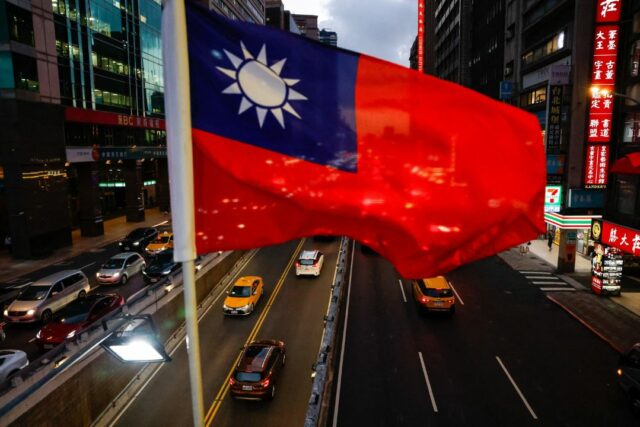
A Taiwan flag can be seen on an overpass ahead of National Day celebrations in Taipei, Taiwan, Oct. 8, 2025. — REUTERS/ANN WANG

TAIPEI — An order for four advanced US-made MQ-9B “SkyGuardian” drones is on track and hasn’t been affected by the war in the Middle East, Taiwan’s air force said on Tuesday.

The air force said in a statement that the order for the drones, made by General Atomics and designed for surveillance and target acquisition, is proceeding according to schedule. It has previously said it expects delivery of the first two later this year.

The US and Israeli attack on Iran, on top of the Russian invasion of Ukraine and Israel’s military operations in Gaza, has seen the US draw down billions of dollars’ worth of weapons stockpiles.

The United States is Taiwan’s main source of weapons, and Taipei has repeatedly complained of delivery delays due to snarled supply chains dating back to the COVID pandemic, including of F-16V fighter jets.

“Deliveries have not been affected by the fighting in the Middle East,” the air force statement said.

“The military remains in close contact with the US side to ensure progress stays on track and to effectively strengthen overall national defense capabilities.”

The MQ-9 series of drones has been widely used in combat situations, including by Israel over Gaza.

Speaking to reporters earlier on Tuesday at parliament, Taiwan Defense Minister Wellington Koo said the government had not been approached by the US about transfers of weapons to the Middle East.

If any of Taiwan’s US-made weapons were to be redeployed, that would only happen if the US side made a request, he added.

“But so far, because of the US-Iran war, they have not approached us about making use of any of our related equipment,” Mr. Koo said.

Democratically governed Taiwan is facing increased military pressure from China, which views the island as its own territory. Taiwan’s government rejects Beijing’s sovereignty claims.

South Korea cannot stop US forces in Korea from redeploying some weapons, President Lee Jae Myung said on Tuesday, after reports that some US Patriot missile defense systems were being sent to the conflict in the Middle East. Reuters

Ultrahuman Ring Air: one smart ring to track them all

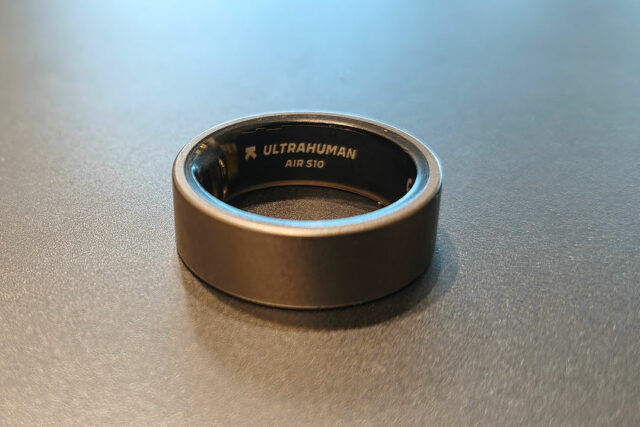
The Ultrahuman Ring Air is available in ten sizes with six different metallic finishes. — ED G. GERONIA

The wearables market has grown by leaps and bounds in the post-pandemic period. As a distinct category of devices, they’re one of the smallest and most compact. It’s a big challenge for any company going into wearables since they need to significantly invest in their engineering and software development.

The Ultrahuman Ring Air is the smart device for those who may be hesitant or a bit on the fence with it comes to fully committing to smart devices. Not to stir any debates with the smartwatch wearing camp, but the Ring Air is as unobtrusive as any wearable can get. Another value proposition is the freedom to wear a traditional watch or go watch free but stil have a wearable.

It’s available in ten sizes for that will fit a wide variety of fingers. In order to get the right size, users can determine their ring size with an available sizing kit from Ultrahuman prior to ordering.

As a wearable, getting the right size is crucial for this smart right that is made from jet-fighter grade titanium. The inner band is made from medical grade epoxy resin which houses the complex electronics containing the sensors, processor, and battery. The ring is coated with a tungsten carbide layer for added durability and scratch resistance.

Bundled with the ring is a compact magnetic charging dock that connects via USB-C to a power source. It takes around an hour and a half to two hours to fully charge the ring. In terms of battery life, the ring lasts anywhere from 4 to 6 days depending on power usage mode. A critical mode can even extend battery life further.

Using the Ultrahuman Ring Air is as easy as installing the app which is an essential component and wearing the ring. It is recommended that the ring is worn even during sleep for complete tracking. 

Inside the ring is a slight hump which contains the PPG sensor which monitors the heart rate and blood oxygen levels. Other sensors include a 6-axis sensor for motion tracking and a skin temperature sensor. 

For meaningful data analysis, the ring needs to be worn at least for two weeks. It is recommended that it is also worn daily for continuous health data analysis.

The sensors can work together to give the users their core metrics which are broken down into sleep, movement, and dynamic recovery which is an indicator of overall well-being. The Ring Air can take a snapshot of various health markers such as active hours, resting heart rate, temperature deviation, and restorative sleep among others.

The ring can suggest when is the optimal time to sleep or even the ideal time to have coffee without affecting your sleep. A weekly digest helps collect all the data and compares it with the previous week so users can monitor their progress in the areas of sleep efficiency, heart rate variability, movement, active hours etc. 

The data that the app can display can be overwhelming and may seem to blend into each other but tapping on the upper right corner of the data point displays a tooltip.

While the main Ultrahuman app with all of its robust monitoring functionality is fully subscription-free, other optional data points called PowerPlugs which give the Ring Air extra functionality can be installed. A lot of these PowerPlugs are mostly free and may be useful for other users and have specific functions like tracking menstrual cycle and ovulation for women. 

With retail price of P22,500, the Ultrahuman Ring Air belongs in the same price bracket as an upper midrange to premium smartwatch. As a premium wearable, the Ring Air is an all-in-one solution for those who want an advanced yet discreet health and sleep tracker. — Ed G. Geronia Jr.

Oil sinks 7% as Trump predicts Middle East de-escalation

MODELS of oil barrels and a pump jack are displayed in this illustration photo taken on Feb. 24, 2022. — REUTERS

LONDON — Oil prices plummeted 7% on Tuesday after soaring to a more than three-year high in the previous session as US President Donald Trump predicted the war in the Middle East could end soon, easing concerns about prolonged disruptions to oil supplies.

Brent futures fell $6.79, or 6.9%, to $92.17 a barrel at 0840 GMT, while US West Texas Intermediate (WTI) crude was down $6.55, or 6.9%, to $88.22 a barrel. Both contracts fell as much as 11% earlier before paring some losses.

Oil surged past $100 a barrel on Monday to the highest since mid-2022, as supply cuts by Saudi Arabia and other producers during the expanding US-Israeli war on Iran stoked fears of major disruptions to global supplies.

Prices later retreated after Russian President Vladimir Putin held a call with Mr. Trump and shared proposals aimed at a quick settlement to the war, according to a Kremlin aide, easing concerns about supply.

Mr. Trump said on Monday in a CBS News interview that he thought the war against Iran was “very complete” and Washington was “very far ahead” of his initial four- to five-week estimated time frame.

“Clearly Trump’s comments about a short-lived war have calmed markets. While there was an overreaction to the upside yesterday, we think there is an overreaction to the downside today,” said Suvro Sarkar, energy sector team lead at DBS Bank, adding that the market was underappreciating risks at these levels for Brent.

“Murban and Dubai grades are still well above $100 per barrel, so practically nothing much has changed in terms of ground realities,” he added, referring to benchmark Middle Eastern oil grades.

In response to Mr.Trump, Iran’s Islamic Revolutionary Guards Corps said they would “determine the end of the war,” and Tehran would not allow “one liter of oil” to be exported from the region if US and Israeli attacks continued, state media reported on Tuesday, citing the IRGC’s spokesperson.

Meanwhile, Trump is considering easing oil sanctions on Russia and releasing emergency crude stockpiles as part of a package of options aimed at curbing spiking global oil prices, according to multiple sources.

“Discussions around easing sanctions on Russian oil, comments from Donald Trump hinting that the conflict could eventually de-escalate, and the possibility of G7 countries tapping strategic oil reserves all pointed to the same message – that oil barrels will somehow continue to reach the market,” Priyanka Sachdeva, a Phillip Nova analyst, said in a note on Tuesday.

“Once traders sensed that supply routes could still be maintained, the initial ‘panic premium’ that had pushed prices above the $100 mark yesterday started to fade, and oil prices quickly pulled back.”

Goldman Sachs said because the situation remains fluid, it was not changing its oil price forecast for Brent at $66 per barrel in the fourth quarter 2026 and WTI at $62 per barrel.

G7 nations had said on Monday they were prepared to implement “necessary measures” in response to surging global oil prices but stopped short of committing to the release of emergency reserves. — Reuters

German exports record sharpest decline since May 2024

A GERMAN national flag flies atop the illuminated Reichstag building in Berlin, Germany Dec. 9, 2022. — REUTERS

BERLIN — German exports recorded their sharpest decline in more than a year and a half in January due to falling demand from China and Europe, federal statistics office data showed on Tuesday.

Exports shrank by 2.3% in January compared with the previous month to 130.5 billion euros ($152.06 billion), their biggest fall since May 2024.

Analysts polled by Reuters had expected a 2.0% decrease.

Imports fell even more sharply than exports in January, plunging 5.9% to 109.2 billion euros, marking their largest decline since April 2020.

Analysts had predicted slight growth of 0.2%.

UNITED STATES REMAINS MAIN DESTINATION
The majority of January exports once again headed to the United States, where goods worth 13.2 billion euros were delivered.

That was 11.7% more than in December, even as the high tariffs introduced by President Donald Trump weighed on demand for German-made goods.

“US tariffs are still weighing on exports and will probably only show their full impact this year, notwithstanding the new uncertainty since the Supreme Court’s ruling,” ING economist Carsten Brzeski said.

With the additional shock from weaker China demand and increased competition, as well as surging energy prices as a result of the Iran war, Germany faces an array of headwinds, he said.

German trade with China slumped. Exports fell by 13.2% to 6.3 billion euros.

Exports to European Union countries also fell by 4.8% to 71.6 billion euros. ($1 = 0.8582 euros) — Reuters

Aramco sees ‘catastrophic consequences’ for oil markets if Hormuz strait remains blocked

The logo of Saudi Aramco is pictured outside Khurais, Saudi Arabia, Oct. 12, 2019. — REUTERS

DUBAI — Saudi Arabia’s Aramco, the world’s top oil exporter, said on Tuesday there would be “catastrophic consequences” for the world’s oil markets if the Iran war continues to disrupt shipping in the Strait of Hormuz.

Oil shipments have been largely blocked from traversing through the shipping artery, where normally roughly 20% of the world’s oil would pass through daily. Iran’s Revolutionary Guards said on Tuesday they would not allow “one liter of oil” to be shipped from the Middle East if US and Israeli attacks continue.

“There would be catastrophic consequences for the world’s oil markets and the longer the disruption goes on … the more drastic the consequences for the global economy,” Aramco CEO Amin Nasser told reporters on an earnings call.

“While we have faced disruptions in the past, this one by far is the biggest crisis the region’s oil and gas industry has faced.”

WIDE RANGE OF SECTORS MAY BE HIT
The crisis has not only upended the shipping and insurance sectors but also promises to have drastic domino effects on aviation, agriculture, automotive, and other industries, he added.

Global crude benchmark Brent, which rocketed to a more than three-year high of nearly $120 a barrel on Monday, was trading around $92 on Tuesday following comments by US President Donald Trump predicting the war could end soon.

Mr. Trump warned that the US would hit Iran much harder if it blocked exports from the vital energy-producing region.

He has also said the US Navy could escort ships in the Gulf to guarantee safe passage. But the Navy’s capacity to do that is unclear, with some vessels engaged in carrying out strikes against Iran and shooting down its missiles.

NO EXPORTS FROM THE GULF
Mr. Nasser noted global inventories of oil were at a five-year low and said the crisis will lead to drawdowns at a faster rate, adding that it was critical that shipping in the strait resumed.

At present, Aramco is not exporting oil from the Gulf as ships cannot load cargoes from there. But the company, which does not disclose its exact crude output, is meeting the majority of its customers’ needs, he said.

The East-West pipeline is being used to transport Arab Light and Arab Extra Light crude grades to the Red Sea port of Yanbu. The pipeline is expected to reach its full capacity of 7 million barrels per day in the next couple of days as customers re-route, he added.

In addition to the pipeline, Aramco is also able to direct crude towards domestic demand, he noted.

A small fire from an attack last week on Aramco’s Ras Tanura refinery, its largest domestically, was quickly extinguished and brought under control, Mr. Nasser said, adding that the refinery was in the process of being restarted.

His comments come after Aramco reported a 12% drop in annual profit mainly due to lower crude prices. It also announced it would repurchase up to $3 billion worth of shares in its first-ever buyback. — Reuters

Airlines flag higher ticket prices as fuel costs take toll

STOCK PHOTO | Image by Stefan Fluck from Unsplash

Australia’s Qantas Airways and Air New Zealand said on Tuesday they are hiking fares due to the Middle East conflict, underscoring how global airlines are struggling to cope with the sudden and soaring costs of fuel.

Jet fuel prices, which were around $85 to $90 per barrel prior to the conflict, have increased sharply to between $150 and $200 per barrel in recent days, New Zealand’s flag carrier said as it suspended its financial outlook for 2026 due to uncertainty over the conflict.

The US-Israeli war on Iran has sent oil prices surging, upending global travel, pushing airline tickets on some routes sky-high, sparking fears of a deep travel slump and the potential for the widespread grounding of planes.

Highlighting the chaos around Middle Eastern airspace, planes arriving into Dubai were briefly placed in a holding pattern on Tuesday morning due to a potential missile attack, flight tracking service Flightradar24 said on X. The planes eventually landed.

Qantas said that in addition to increasing international fares, it was exploring options to redeploy capacity to Europe as airlines and passengers seek to evade disruptions in the Middle East, where drone and missile fire have curtailed flights.

The Australian airline said its flights to Europe are more than 90% full in March, compared to the usual 75% at this time of year.

Airfares have soared on Asia-Europe routes due to airspace closures and capacity constraints, and Hong Kong’s Cathay Pacific Airways said on Tuesday it was adding extra flights to London and Zurich in March.

Air New Zealand said it had raised one-way economy fares by NZ$10 ($6) on domestic routes, NZ$20 on short-haul international services and NZ$90 on long-haul flights, with further price, network and schedule changes possible if jet fuel costs remain elevated.

Hong Kong Airlines said on its website it would raise its fuel surcharges by up to 35.2% from Thursday, with the sharpest increase on flights between Hong Kong and the Maldives, Bangladesh and Nepal where charges will rise to HK$384 ($49) from HK$284.

Cathay Pacific said it reviewed its fuel surcharges on a monthly basis. It kept them flat last month at $72.90 each way on flights between Hong Kong and Europe and North America before the conflict began.

Vietnam Airlines has asked local authorities to remove an environmental tax on jet fuel to help it maintain operations. The Southeast Asian nation’s government said Vietnamese airlines’ operating costs have risen 60% to 70% due to the rise in jet fuel prices and fuel suppliers were facing difficulties in meeting airline demand.

AIRLINE SHARES STABILIZE AFTER SELLOFF
In a move that lifted some airline stocks, US President Donald Trump said on Monday the war could be over soon, sending oil prices down to around $90 a barrel on Tuesday from a high of $119 on Monday.

In Asia, airline shares showed signs of stabilising, with Qantas up 0.5%, Korean Air Lines rising nearly 9% and Cathay Pacific up more than 4%. All had recorded sharp drops on Monday.

Fuel is the second-largest expense for air carriers after labour, typically accounting for a fifth to a quarter of operating expenses. Some major Asian and European airlines have oil hedging in place, but U.S. airlines largely stopped the practice over the last two decades.

CONFLICT TAKES TOLL ON TRAVEL INDUSTRY
High fuel prices could have severe implications for the global travel industry, with airlines already navigating tight airspace as pilots reroute to avoid the Middle East conflict and capacity on popular routes fills up.

Combined, Emirates, Qatar Airways and Etihad normally fly about one-third of the passengers from Europe to Asia and more than half of all passengers from Europe to Australia, New Zealand and nearby Pacific Islands, according to Cirium.

South Korea’s HanaTour Service said it has been cancelling group tours that include flights to the Middle East and it is waiving cancellation fees for affected customers. All Middle East-related tours for March will be suspended, it added.

In Thailand, the Ministry of Tourism forecast that if the conflict drags on for more than eight weeks, the country will lose a total of 595,974 tourists and 40.9 billion baht ($1.29 billion) in tourism revenue. — Reuters

Globe and Ayala Foundation launch CENTEX Digital Education wallet on GlobeOne to bridge learning gaps in public schools

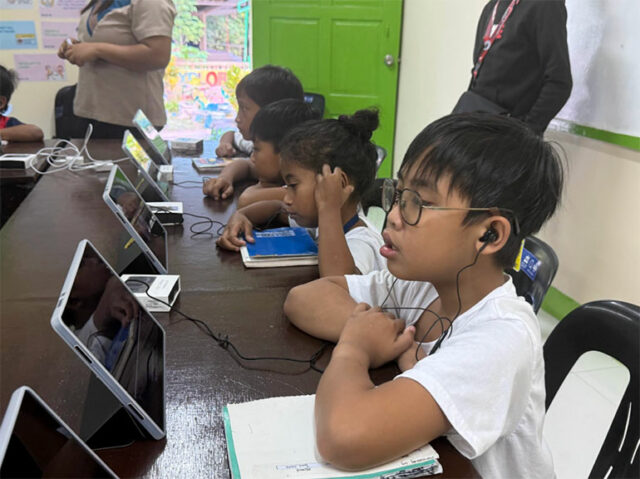
When you donate your Globe Rewards points to CENTEX, you become part of a community working alongside schools and DepEd to strengthen teaching, support learners, and close learning gaps — one classroom at a time. — Photo courtesy of Ayala Foundation, Inc.

Globe, alongside the Department of Education and local government units, is supporting the continued expansion of Ayala Foundation’s CENTEX Digital Education program, reinforcing a shared commitment to improving access to quality digital learning for Filipino learners. The program introduces a “High Touch, High Tech” approach to education, combining digital modules, in-person coaching, and Professional Learning Communities — enabling teachers to use digital tools and real-time data to deliver targeted instructional support based on students’ actual learning needs.

CENTEX Digital Education is built on the belief that technology alone is not enough, and that meaningful improvement requires a strong support system anchored in real-time data — so instruction can be adjusted, timely, and responsive to each learner and sustained by community engagement. In its pilot phase in San Marcelino, Zambales, the program showed a 13.8 percentage point improvement in math learning outcomes among students in treatment schools compared to control schools within just 12 weeks.

“Learning improves when technology is paired with care, guidance, and accountability,” said Yoly Crisanto, Chief Sustainability and Corporate Communications Officer at Globe. “CENTEX Digital Education reflects our commitment to help teachers lead confident digital classrooms and ensure students learn at the right level, not just move through the system.”

The program empowers educators to become confident, data-driven mentors who can address individual learning needs, helping build a thriving, learning community for both teachers and students.. It also exposes students early to digital tools that build future-readiness and confidence in learning.

“CENTEX is about helping students learn better by supporting the teachers who guide them,” said Tony Lambino, President of Ayala Foundation. “By strengthening teacher capacity and using data to inform instruction, we help teachers differentiate learning and provide support that responds to each student’s needs.”

Globe customers can support the initiative through Globe Rewards or GoGIVE. Donations fund the setup of Digital Learning Labs, support connectivity, and help integrate platforms such as Khan Academy for personalized learning.

Ayala Foundation’s CENTEX Digital Education program brings together the Department of Education and local school communities: We work hand-in-hand to create meaningful change grounded in our partners’ needs and contexts. Join our shared work by donating your Globe Rewards points. Photo courtesy of Ayala Foundation, Inc.

To support Ayala Foundation through GoGIVE:

  1. TapGoGIVEon the GlobeOne app.
  2. Select Building Learning Communities through CENTEX Digital Education as your advocacy to start earning hearts.
  3. Support your advocacy automatically every time you use mobile data.

More than 8,000 students and over 300 public school teachers are expected to directly benefit from the program. The model also builds local teacher-leaders and secures support from LGUs and DepEd, making the initiative scalable and sustainable across the public school system. Through this partnership, Globe continues to champion digital inclusion in education, making sure no child is left behind in today’s evolving learning landscape.


Spotlight is BusinessWorld’s sponsored section that allows advertisers to amplify their brand and connect with BusinessWorld’s audience by publishing their stories on the BusinessWorld Web site. For more information, send an email to online@bworldonline.com.

Join us on Viber at https://bit.ly/3hv6bLA to get more updates and subscribe to BusinessWorld’s titles and get exclusive content through www.bworld-x.com.

Irrigators’ Associations key to food security, infra rollout — NIA

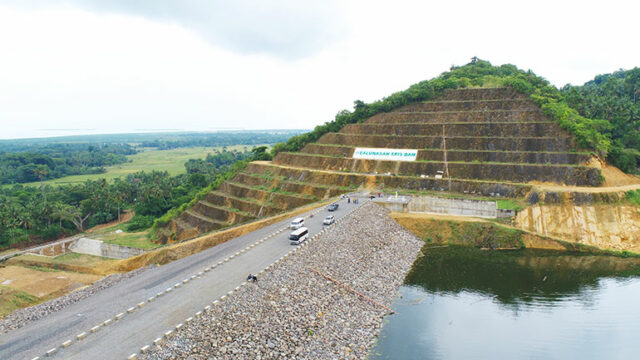
Built for function and resilience.The Calunasan Small Reservoir Irrigation Project (SRIP) in Bohol provides year-round irrigation while helping regulate water flow during extreme weather conditions.

The National Irrigation Administration (NIA) is powering its drive toward food security through a renewed focus on modern irrigation systems, climate-resilient infrastructure, and, most critically, closer collaboration with farming communities on the ground.

In recent years, the Agency has moved beyond traditional project delivery toward a more proactive, systems-based approach — standardizing operations, improving oversight, and adopting data-driven planning to ensure that irrigation services remain reliable amid increasingly variable weather conditions.

“At the end of the day, irrigation is about reliability for farmers,” said NIA Administrator Engr. Eddie Guillen. “When water delivery is predictable, farmers can focus on planting and harvesting, not disruptions.”

Productivity vs. disruption

By managing both water storage during heavy rains and controlled releases during dry spells, NIA’s irrigation systems help reduce risks from flooding and drought, allowing farming communities to focus on productivity rather than disruption. At its core, the effort is straightforward: stabilize water supply across seasons so farmers can plant and harvest with greater certainty.

Projects such as the Union Water Impounding Dam in Cagayan and the Calunasan Small Reservoir Irrigation Project (SRIP) in Bohol illustrate this approach. Designed as multi-purpose facilities, these systems provide year-round irrigation to surrounding barangays while also serving as flood-control structures that protect farms and communities during extreme weather events.

Paired with weather monitoring, modern farm equipment, and technical support, these irrigation networks form part of a broader push to improve agricultural resilience and long-term food security.

Farmers’ IAs at the core

Central to NIA’s strategy is its partnership with Irrigators’ Associations (IAs) — organized groups of farmers who collectively manage, operate, and maintain communal irrigation systems.

These associations function as NIA’s on-the-ground partners, bridging national programs with community realities. Composed of farmers themselves, IAs coordinate water distribution schedules, monitor system conditions, and relay operational concerns directly to field offices, ensuring that local needs are addressed quickly and practically.

In many areas, IAs also serve as hubs for cooperation. bringing together farmers, local government units, and partner agencies to exchange information, organize maintenance activities, and adopt improved farming practices.

Work on community development continues. Irrigators’ Associations hold meetings to coordinate irrigation schedules, share information on farming technologies, and work with NIA and the Department of Agriculture on local needs.

More accessible, more responsive

Through these IAs and farmer collectives, government support becomes more accessible and responsive. Training programs, technical assistance, and agricultural initiatives from NIA and the Department of Agriculture (DA) are disseminated directly within communities, helping farmers adopt more efficient and sustainable methods.

NIA reinforces these partnerships through institutional support and incentive mechanisms, including awards for high-performing associations, livelihood assistance, and the turnover of model farms.

IA’s may also access financing through partner institutions such as the Land Bank of the Philippines, including low-interest programs that help fund farm inputs and equipment.

Beyond irrigation operations, many associations have contributed to broader community improvements — from maintaining local facilities to supporting small rehabilitation works that help climate-proof existing systems.

Said Engr. Guillen: “Taken together, these efforts highlight a simple principle: irrigation infrastructure works best when the people who depend on it are actively involved in its management.”

A collaborative model for modern irrigation

For NIA, the partnership with IAs reflects a broader shift in how irrigation services are delivered — not solely as top-down infrastructure projects, but as shared systems sustained by both engineers and farmers.

In the past three years under Engr. Guillen, the NIA has emphasized practical coordination and reliability: strengthening water access, improving system uptime, and ensuring that projects continue delivering benefits long after construction is completed.

An engineer by training who comes from an agricultural region, Engr. Guillen said the goal is to keep programs grounded in day-to-day realities.

“Our partnership with Irrigators’ Associations helps us understand local conditions better and deliver infrastructure and technologies that directly support farmers’ livelihoods,” he said. “When irrigation systems are dependable, communities become more resilient.”

Building toward food security

As the Philippines continues to prioritize food security and climate adaptation, irrigation remains one of the most fundamental enablers of stable agricultural output.

Reliable water access allows for more predictable cropping cycles, reduces vulnerability to weather shocks, and supports higher productivity across farming areas — factors that ultimately contribute to steadier supply for markets and households.

Through continued investment in climate-resilient infrastructure, stronger institutional systems, and sustained collaboration with farmer collectives, NIA aims to reinforce its role as a key partner in the country’s agricultural development.

Across the country, that partnership is increasingly visible — not only in dams and canals, but in organized groups of farmers working together to manage the water that sustains their livelihoods.


Spotlight is BusinessWorld’s sponsored section that allows advertisers to amplify their brand and connect with BusinessWorld’s audience by publishing their stories on the BusinessWorld Web site. For more information, send an email to online@bworldonline.com.

Join us on Viber at https://bit.ly/3hv6bLA to get more updates and subscribe to BusinessWorld’s titles and get exclusive content through www.bworld-x.com.

Okada Manila hosts media and KOLs appreciation event to mark seven consecutive years of Forbes 5-Star excellence

President and COO Nobuki Sato opened the program by thanking media and influencers for their continued support in sharing Okada Manila’s story with a wider audience.

Okada Manila, the Philippines’ Forbes 5-Star integrated resort, welcomed leading members of the media and digital creator community for its annual Media and Influencers’ Appreciation Night at Sinag, Coral Wing. The gathering recognized the continued partnership between the resort and the storytellers who help spotlight Manila as a vibrant destination for world-class hospitality and entertainment.

Held under the theme “Auspicious Fortune,” the evening coincided with Okada Manila’s seventh consecutive year as a Forbes 5-Star Integrated Resort and The Retreat Spa’s fourth consecutive year as a Forbes 5-Star Spa. The celebration also welcomed the Lunar New Year, bringing together media partners and executives to mark shared milestones and look ahead to new opportunities for tourism and storytelling in the year ahead.

Robert Scott, Vice President of Hotel Operations, shared an update on Okada Manila’s ongoing room enhancement program, a strategic initiative aimed at further elevating the guest experience while sustaining the standards behind its Forbes 5-Star recognition.

President and COO Nobuki Sato opened the program by thanking media and influencers for their continued support in sharing Okada Manila’s story with a wider audience. He noted that the resort’s sustained Forbes recognition reflects a culture of consistency, discipline, and service excellence that continues to define the brand.

Joining the celebration were key members of Okada Manila’s leadership team, including Ms. Shirley Tam, Executive Vice-President of Casino Marketing; Ms. Reddy Leong, Vice-President of Corporate Marketing and Communications; Mr. Andreas Balla, Vice President of Food and Beverage; Mr. Robert Scott, Vice-President of Hotel Operations; and Mr. Alvaro Ramos, Assistant Vice-President of Retail Operations.

During the evening, Mr. Robert Scott, Vice President of Hotel Operations, shared an update on Okada Manila’s ongoing room enhancement program, a strategic initiative aimed at further elevating the guest experience while sustaining the standards behind its Forbes 5-Star recognition. Several floors have already been refreshed with refined interiors, warmer tones, upgraded lighting, and enhanced in-room features designed to create a more comfortable and contemporary stay. The improvements also introduce intuitive technology and operational upgrades that support efficiency and sustainability, reinforcing Okada Manila’s commitment to continually refining the guest journey.

The celebration continued with a traditional Lo Hei prosperity toss led by the resort’s executives, symbolizing abundance and shared success for the year ahead. Guests also enjoyed dinner, live entertainment, and interactive activities throughout the evening, along with raffle draws featuring dining experiences, spa treatments, and overnight stays at the resort.

More than a festive gathering, the appreciation night reaffirmed Okada Manila’s commitment to working closely with media and key opinion leaders to promote Manila as a dynamic tourism and lifestyle destination. By sharing milestones, experiences, and new developments with its partners, the integrated resort continues to contribute to the city’s growing profile as a hub for hospitality, entertainment, and world-class experiences.

Stay updated on Okada Manila’s latest events, milestones, and offerings. Visit https://okadamanila.com/ or follow Okada Manila on social media.


Spotlight is BusinessWorld’s sponsored section that allows advertisers to amplify their brand and connect with BusinessWorld’s audience by publishing their stories on the BusinessWorld Web site. For more information, send an email to online@bworldonline.com.

Join us on Viber at https://bit.ly/3hv6bLA to get more updates and subscribe to BusinessWorld’s titles and get exclusive content through www.bworld-x.com.

White supremacist content grips teens plotting attacks in Southeast Asia

STOCK PHOTO | Image by Carlos Andrés Ruiz Palacio from Pixabay

SINGAPORE/JAKARTA — When police detained an Indonesian teenager accused of bombing his high-school campus in Jakarta in November, he had a life-size toy rifle inscribed with “welcome to hell” and the names of white supremacist mass killers.

The November 7 attack, which injured 96 people, may have been the first in the country inspired by white supremacists but police fear it won’t be the last.

At least 97 youths – the youngest just 11 – are being monitored after coming under the influence of content glorifying mass violence and white supremacists spread largely on messaging app Telegram, Indonesian police told Reuters in March.

At least two were planning acts of violence following the Jakarta bombing, according to the police.

And it’s not just Indonesia. Across Southeast Asia – home to hundreds of millions of people of different ethnicities and faiths – police are grappling with a surge in teenagers plotting violence inspired by white supremacists such as Christchurch mosque attacker Brenton Tarrant, according to interviews with security officials in Indonesia, Singapore, Malaysia, Thailand and the Philippines.

Singapore’s domestic intelligence agency has detained four youths since December 2020 on grounds that they subscribed to “violent far-right extremism ideologies” and were planning attacks. Far-right extremism has since been named by the city-state’s Internal Security Department (ISD) as a top threat.

None of the teenagers Singapore and Indonesia are monitoring are white. Some were plotting attacks they believed would protect the existing racial and religious composition of their countries, according to ISD statements on the detentions. Others, three Indonesian security officials say, were inspired by the violence of far-right attackers, even if they didn’t have similar grievances.

In every instance in Singapore and Indonesia reviewed by Reuters, the teenagers were alleged by authorities to have been radicalized through social media posts and communities.

Many of the young people who have been detained or placed under monitoring appear to be disillusioned and lonely individuals “turning towards a nihilistic worldview after being radicalized by far-right messaging”, said Pravin Prakash, who researches Southeast Asia at the Center for the Study of Organised Hate, a Washington think-tank.

The Jakarta suspect, according to Indonesian authorities, had posted online video footage of his campus alongside Nazi symbols and text that appeared to be inspired by “Highway to Hell” from the rock band AC/DC: “Don’t need no reason, ain’t nothing I’d rather do. I am on the highway to hell and all my friends are going to be there.”

Telegram groups, in particular, had provided the young people with a sense of belonging, according to Indonesian police.

That platform often doesn’t take action on content that authorities have reported as extremist, said police commissioner Mayndra Eka Wardhana, a spokesperson for the counter-terrorism squad.

Telegram spokesperson Remi Vaughn said in response to questions that the platform “has an open channel of communication with Indonesian authorities” and “removes any content that breaches Telegram’s terms of service whenever reported.”

Telegram “supports the right to peaceful free speech, but calls to violence are explicitly forbidden,” Vaughn added.

Southeast Asian security and police agencies are coordinating efforts, marking the first regional cooperation on this type of radicalization, according to officials from Singapore and Indonesia.

KILLER MEMES
All the Indonesian teens authorities identified as being radicalized were affiliated with the “true crime community”, a popular internet subculture.

In channels linked to the community, users share memes and other content that glorifies killers like Tarrant, whose name was found on the Jakarta suspect’s toy rifle, according to screenshots shared with Reuters by police and a separate review of four such groups.

Some online posters also traded bomb-making tutorials and egged each other on toward violence, screenshots of their conversations show.

White supremacist content has also spread across other platforms, though often with a localized twist. Posts, for instance, may feature Southeast Asian iconography alongside Nazi symbols.

Reuters viewed hundreds of such videos from Southeast Asian users on TikTok showcasing racist caricatures of Chinese people and other minorities such as Rohingya Muslims alongside phrases like “TCD,” or “Totally Cheerful Day” and “TRD,” or “Total Refreshing Day.”

The phrases appear to be code calling for “Total Chinese Death” or “Total Rohingya Death”, said Saddiq Basha of Singapore’s S. Rajaratnam School of International Studies (RSIS), who has tracked such content since 2024.

One popular video by an Indonesian user featuring the hashtag #TCD has been viewed over 542,000 times. The creator did not respond to a request for comment.

Western white supremacist groups have used phrases like “TND/Totally Nice Day” and “TJD/Totally Joyful Day” to advocate the extermination of black and Jewish people, according to anti-discrimination groups like the Anti-Defamation League.

TikTok removed the Indonesian user’s post, as well as similar content identified by Reuters, after the news agency sent the platform questions about its moderation policies.

“There is no place on our platform for those dedicated to spreading beliefs or propaganda that encourage violence or hate,” a company spokesperson said.

Two people working on online-safety teams at TikTok told Reuters they were not familiar with the existence of policies on moderating posts that featured localized takes on white supremacist slogans and had been unaware of such content. They were interviewed on condition of anonymity because they were not authorized to speak to media.

The TikTok spokesperson said the platform blocks “certain keywords from appearing as search suggestions to reduce their visibility if we find that they are being used as coded language” and consults with Southeast Asian advisors on online safety.

Tech companies have focused on moderating Islamist content in Southeast Asia, sometimes to the point where they fail to account for other extremist posts, said Chasseur Group director Munira Mustaffa, who has advised Southeast Asian governments and social media platforms on combating extremism.

“While the concept of neo-Nazism lies in the assertion that the white race reigns supreme, these ideas are easily adaptable into local context,” she said, adding that teens who successfully carry out attacks believe they will gain status in their online communities.

Among the youths authorities say were radicalized by algorithms is Nick Lee Xing Qiu, who was detained last year by the ISD as an 18-year-old on suspicion of plotting attacks against Singapore’s Malay Muslim minority.

The agency said algorithms on unspecified platforms had recommended far-right extremist content to him.

Reuters couldn’t reach Lee, who is being held under a law that permits his detention without trial. The news agency also couldn’t identify a legal representative to direct questions to.

Lee and another teenager, who was separately detained and has not been named, self-identified as “East Asian supremacists”, ISD said in statements about their cases.

The youths had in their online posts referenced the neo-Nazi “great replacement theory” – which posits that white populations are being forcibly replaced by minorities – and claimed to be inspired to fight back, according to ISD.

YOUTH REHABILITATION
Mayndra, the Indonesian counter-terrorism official, said authorities were worried that teenagers radicalized by the violence of extremist content could be targeted by “terror groups” for recruitment.

Many of the teenagers in detention or under monitoring in Indonesia and Singapore are under the age of majority or have not successfully perpetrated acts of violence.

The Jakarta bombing suspect, for instance, is being held by child protective services while authorities construct their case, according to police spokesperson Budi Hermanto.

The suspect has not been charged or entered a plea, the official said.

“My hope, if it’s possible, is do not punish him, just give him counselling so he can be a better person,” Rudianti, a family member of the Jakarta suspect who goes by one name, told Reuters.

Indonesia this month announced plans to restrict social-media access for children under the age of 16, in a move that Mayndra said would also help combat youth radicalization though it was not a complete solution.

In Singapore, authorities have turned to the Religious Rehabilitation Group (RRG) to work with some teenagers detained for plotting far-right attacks. The non-profit was set up by Muslim scholars in 2003 to rehabilitate suspected Islamist militants and is staffed by volunteer educators.

The group counsels young detainees and prepares them for national exams, said Ahmad Helmi Bin Mohamad Hasbi, an RRG counsellor and expert on radicalism at RSIS.

RRG worked with Singapore’s first far-right extremist detainee, who was held in 2020 at the age of 16 for allegedly planning machete attacks on two mosques. He was released from rehabilitation in 2024.

Groups like RRG will have to contend, however, with the speed at which some Southeast Asian extremists are gaining influence globally.

Just a month after the Jakarta bombing, a 15-year-old Russian was accused of stabbing a Tajik migrant child to death in the Moscow area.

The Russian had written a manifesto, which was published on Telegram and authenticated by researchers with the Global Project on Hate and Extremism, a U.S.-based non-profit.

In it, the Russian suspect labelled the Indonesian teen a hero. He also argued that if non-white youths could execute such attacks, white supremacists should be capable of more. — Reuters


Philippine firms brace for rising costs as oil surge drags peso

Buildings in the Central Business District (CBD) in Makati City, the Philippines. Photographer: VEEJAY VILLAFRANCA/BLOOMBERG

Philippine companies are bracing for higher costs as oil’s spike above $100 a barrel drags the peso to a record low, heightening the risks for an economy heavily reliant on fuel imports from the Middle East.

“I can’t imagine anyone not being afraid of what we’ve been reading,” Sergio Ortiz-Luis Jr., head of the Philippine Exporters Confederation Inc., said on Monday. The group, comprised of about 4,000 exporters and service providers, was already dealing with the uncertainty on US tariffs before fuel costs climbed, though members have not indicated plans to reduce output, he added.

While a weaker currency bodes well for exporters, it inflates the import cost of manufacturers in the Southeast Asian nation. Many Philippine producers buy their raw materials and components overseas to ship out finished goods such as electronic products which comprise about half of the country’s shipments.

The Philippines imports nearly all of its oil needs and the commodity’s surge past $100 a barrel stoked inflation fears in the country and across the region, many of them also net oil importers. Exacerbated by the dollar’s haven appeal, currencies in emerging Asia retreated, with the peso touching a record low.

The Philippine Chamber of Commerce and Industry warned that a sharp jump in pump prices would be difficult to absorb. A P20 (34 US cents) per liter increase, set to take effect this week, would cause fuel, logistics and transport costs to surge, and businesses may have to pass those on to consumers, Ferdinand Ferrer, head of the chamber, told GMA News TV.

Other companies are looking to absorb the extra cost. Miner Global Ferronickel Holdings Inc. plans to adjust rates for its contractors to cover higher fuel prices, according to Dante Bravo, president of the company. “We are still able to get some fuel supply at the moment,” he said.

2GO Group Inc., one of the country’s largest logistics operators controlled by conglomerate SM Investments Corp., said it has measures in place to help manage volatility in fuel prices.

President Ferdinand Marcos Jr. is seeking emergency authority from Congress to slash taxes on petroleum products and has enforced a four-day work week from Monday for government offices to save on energy. — Bloomberg

Trump says war could be over soon, as Iran rallies behind new hardline leader

Smoke rises after reported Iranian missile attacks, following strikes by the United States and Israel against Iran, in Manama, Bahrain, February 28, 2026. — REUTERS/STRINGER TPX IMAGES OF THE DAY

DUBAI/JERUSALEM/DORAL Florida — US President Donald Trump on Monday predicted the war in the Middle East could be over soon, even as Iran’s hardliners staged a show of loyalty to new Supreme Leader Mojtaba Khamenei in a sign that it was not prepared to back down any time soon.

The conflicting signals sent markets on a rollercoaster, with oil prices surging and stock markets nosediving before swinging in the other direction after Mr. Trump’s comments and reports of a possible ease in sanctions on Russian energy.

Mr. Khamenei, 56, a Shi’ite cleric with a power base among the security forces and their vast business empire, has been declared unacceptable by Mr. Trump, who has demanded Iran’s unconditional surrender.

Mr. Trump said the war would continue until Iran is “totally and decisively defeated,” but predicted it would be over soon.

“It’s going to be finished pretty quickly,” he told Republican lawmakers. “We’ve already won in many ways, but we haven’t won enough,” he said.

Mr. Trump did not, however, define exactly what victory in the war would look like.

Iranian state media showed large crowds in several cities rallying behind the new leader, waving Iranian flags and holding portraits of his father Ali Khamenei, the supreme leader killed by an Israeli strike on the war’s first day.

In Isfahan, state TV reported the sound of nearby explosions from apparent airstrikes as loyalists gathered in the historic Imam Square, chanting “God is the Greatest” below a stage with portraits of Ali and Mojtaba Khamenei.

In a further sign of defiance, Iran’s military said it would step up its missile strikes.

POLITICAL SYSTEM RALLIES BEHIND NEW LEADER
Politicians and institutions issued pledges of loyalty to the new supreme leader, whose wife, son and mother also died at the start of the US-Israeli air onslaught according to Iranian state media.

“We will obey the commander-in-chief until the last drop of our blood,” a defense council statement said.

Iranians reached by telephone were divided, with supporters of the authorities hailing the choice as a declaration of defiance and opponents fearful it would dash their hopes for change.

“I am so happy that he is our new leader. It was a slap in the face to our enemies that thought the system will collapse with the killing of his father. Our late leader’s path will continue,” said university student Zahra Mirbagheri, 21, from Tehran.

Many Iranians had initially celebrated the elder Khamenei’s death, weeks after his security forces killed thousands of anti-government protesters in the worst domestic unrest since the era of Iran’s 1979 revolution. But there has since been little sign of anti-government activity, with activists fearful of taking to the streets while Iran is under attack.

“The (elite Revolutionary) Guards and the system are still powerful. They have tens of thousands of forces ready to fight to keep this regime in place. We, the people, have nothing,” said Babak, 34, a businessman in the central city of Arak who asked to keep his family name confidential.

Israel says its war aim is to overthrow Iran’s system of clerical rule. US officials mainly say Washington’s aim is to destroy Iran’s missile capabilities and nuclear program, but Mr. Trump has said the war can end only with a compliant Iranian government.

Israel had said it would kill whoever succeeded the elder Khamenei unless Iran ended its hostile policies.

OIL SURGES, THEN DIPS BACK
The war has effectively shut the Strait of Hormuz, a chokepoint for a fifth of global oil and liquefied natural gas, leaving tankers unable to sail for more than a week and forcing producers to halt pumping as storage fills.

Brent crude futures jumped about 7% to settle at their highest price since 2022 after soaring by as much as 29% during the session, as Saudi Arabia and other OPEC members cut supplies. But prices fell in post-settlement trade.

The price of gasoline has particular political resonance in the United States, where voters cite rising costs as a top concern ahead of the November midterm elections, when Mr. Trump’s Republicans will try to keep control of Congress.

A Reuters/Ipsos poll released Monday found 67% of Americans expect gas prices to rise over the coming months, and only 29% approve of the war.
After speaking with Russian President Vladimir Putin, Mr. Trump said the United States will waive certain oil-related sanctions to ease the shortage. According to multiple sources, that could mean a further easing of sanctions on Russian oil, which could complicate efforts to punish Moscow for its war in Ukraine.

Other options include a possible release of oil from strategic reserves or restricting US exports, sources said.

OIL REFINERY HIT
Tehran was choked in black smoke after an oil refinery was hit, an escalation in strikes on Iran’s domestic energy supplies. World Health Organization chief Tedros Ghebreyesus warned the fire risks contaminating food, water, and air.

Turkey said on Monday NATO air defenses had shot down a ballistic missile that was fired from Iran and entered Turkish airspace, the second such incident of the war. Iran did not immediately comment on the report.

Turkey, Iran’s neighbor with NATO’s second-largest army, had warned Tehran on Saturday against attacking again, but it has not suggested it wants to formally call on bloc members for further protection.

Israel’s military said it had launched new attacks in central Iran and struck the Lebanese capital Beirut, where Israel has extended its campaign after the Iran-backed militia Hezbollah fired across the border.

US-Israeli attacks have killed at least 1,332 Iranian civilians and wounded thousands, according to Iran’s UN ambassador. Lebanon has reported more than 400 people killed there, with nearly 700,000 people fleeing their homes.

In Israel, ambulance workers said one man died from shrapnel wounds at a construction site near Tel Aviv’s international airport, raising to 11 the death toll from Iranian strikes. — Reuters

ADVERTISEMENT
ADVERTISEMENT