Home Blog Page 1846

Senator who enforced Duterte drug war may seek interim Senate refuge
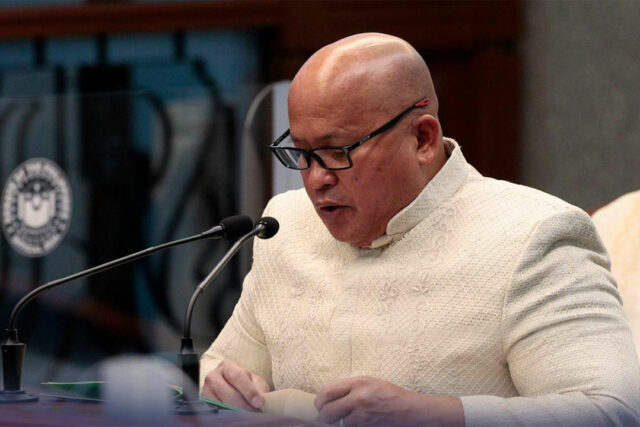
SENATOR RONALD "BATO" DELA ROSA — FACEBOOK.COM/SENATEPH

By Adrian H. Halili, Reporter

A PHILIPPINE senator who enforced former President Rodrigo R. Duterte’s deadly war on drugs as his police chief may seek refuge in the Senate amid a looming arrest order from the International Criminal Court (ICC), according to the Senate president.

Senator Ronald “Bato” M. Dela Rosa could not be arrested by authorities if he is within the Senate premises “in defense of the institution and (as an) institutional courtesy,” Senate President Francis G. Escudero told a news briefing on Monday.

“It’s not for me to stop Senator Bato from coming (to the Senate),” he said. “That’s his decision,” he added, noting that Mr. Dela Rosa would have to know first what his legal remedies would be based on the ICC action.

Philippine police arrested Mr. Duterte last week after the warrant issued by the ICC, and was flown from a chartered jet bound for The Hague in The Netherlands hours later.

The ICC arrest warrant says that as President, Mr. Duterte created, funded and armed the death squads that carried out the murders of drug dealers and users.

During his six years in office, 6,200 suspects were killed during anti-drug operations, by the police’s count. Human rights groups say the death could be as many as 30,000.

He could become the first former Asian head of state to go on trial at the ICC, which has set his trial for Sept. 23.

Mr. Escudero said former Senate presidents had also given senators sanctuary to give them time to figure out their judicial remedies.

“The Senate’s decision was not based on law but based on what is called institutional courtesy,” he said. “The Senate will not allow any of its members to be arrested inside the Senate, especially if there is a session.”

“This courtesy will not be forever, it is only as long as he is given enough time to clarify or decide on his legal remedies,” he added.

Last week, Mr. Dela Rosa said he would seek protection from the Senate should the ICC issue a warrant for his arrest.

“What I told him (is that) we will try to afford him every opportunity to avail himself of legal remedies that he is entitled to,” Mr. Escudero said.

The ICC has been investigating Mr. Duterte and his cohorts for alleged crimes against humanity in connection with his anti-illegal drug campaign as mayor of Davao City and for the first three years of his presidency, when the Philippines was still a member of the ICC.

In 2018, the tough-talking leader withdrew the Philippines from the ICC’s founding treaty when it started looking into allegations of systematic extrajudicial killings. It took effect in 2019.

‘DUE DILIGENCE’
A Philippine lawmaker cannot be arrested under Section 11, Article VI of the 1987 Constitution, which says that a senator or congressman will, in all offenses punishable by not more than six years of imprisonment, be privileged from arrest while Congress is in session.

However, Congress went on a four-month break last month for the 2025 midterm elections and will reconvene for a two-week session on June 2.

Mr. Duterte made his first appearance before the international tribunal on March 14, via video link, where judges informed him about his charges.

Political analysts urged the Senate to exercise “due diligence” in giving Mr. Dela Rosa protection from a potential ICC arrest warrant.

“It’s an institutional prerogative of the Senate to provide a safe haven for its members,” Gary D. Ador Dionisio, dean of De La Salle College of Saint Benilde School of Diplomacy and Governance, said in a Facebook Messenger chat. “However, this prerogative should be viewed as legally and morally tenable. Senate President Escudero should exercise due diligence and sound judgment in addressing the request of Senator Bato.”

The constitutional provision is meant to ensure that lawmakers could still do their job while Congress is in session, free from fear of persecution or harassment, said Arjan P. Aguirre, who teaches political science at Ateneo de Manila University.

“Senator Dela Rosa’s intention here is basically to evade his possible arrest in connection with the ICC case,” he said. “Should (the Senate president) grant this request, this will certainly backfire and hurt the Senate as an institution.”

Maria Ela L. Atienza, a University of the Philippines political science professor, said protecting the senator would not look good for the Senate president or the Senate as a whole.

“They will be accused of double standards because they did not protect Leila M. de Lima, a sitting senator who was accused of made-up charges during the presidency of Duterte,” she said in a Viber message.

“She was in jail for years until released due to courts invalidating all cases against her and the Senate as a body never lifted a finger to raise her rights and question her imprisonment,” she added.

Ms. De Lima was indicted for drug trafficking after she started a Senate investigation of Mr. Duterte’s drug war. She was accused of abetting the illegal drug trade inside the national penitentiary in Muntinlupa during her time as Justice secretary.

Meanwhile, Mr. Aguirre said the Philippines should rejoin the ICC because it could hold accountable any powerful actors that could undermine the country’s institutions.

“We know very well that this is really possible since it is easy to control our law enforcement agencies and other offices tasked to initiate the investigation and prosecution of political misgivings and abuse of power,” he said.

Mr. Dionisio noted that if the Philippines respects international law, it should recognize the warrant of arrest issued by the ICC.

Philippine civilians to hold concert in South China Sea

PHILIPPINE STAR/MICHAEL VARCAS

By Kenneth Christiane L. Basilio, Reporter

A COALITION of Philippine activists on Monday said it had organized a civilian convoy that will head to contested areas of the South China Sea in late May to deliver supplies to Philippine vessels and perform a “sea concert.”

The Atin Ito (This is Ours) coalition said it is still finalizing the details of the voyage, but it is planning to start the trip to the Spratly Islands on May 25.

The mission will last three days, Rafaela David, president of party-list group Akbayan and co-convener of the coalition, told a news briefing.

The groups would deliver supplies to Filipino fishermen and troops and hold a concert to assert Philippine sovereignty over certain features of the disputed waterway, she added.

“We’ll just announce our final itinerary and route as we move forward,” she said in Filipino. “But what’s clear to us is that it will remain at the heart of the Kalayaan Island Group,” she added, referring to the Filipino name for the Spratlys.

“So in that area, we’re setting up the prospecting site where we’ll have jamming sessions and a concert,” she added.

The Philippines and China have been at loggerheads over disputed features in the South China Sea, which Beijing claims almost in its entirety. A 2016 ruling by a United Nations-backed court ruled that its claims are illegal.

Ms. David said they decided to hold a sea concert as a “creative form” of protest against China’s encroachment of Philippine waters.

The Chinese Embassy in Manila did not immediately reply to a Viber message seeking comment.

“Music is a potent form in showing solidarity and in letting China hear that the voices of Filipinos are united,” she said.

The group is inviting artists from other Southeast Asian nations to participate in the sea concert, which they plan to broadcast on social media, Ms. David said. “We are targeting artists from other claimant states.”

The sea, parts of which are also claimed by Brunei, Indonesia, Malaysia and Vietnam, is a vital waterway for more than $3 trillion of annual ship-borne commerce.

The coalition will be in “constant communication” with Philippine authorities to ensure the safety of volunteers and participating artists during their sail, Ms. David said. They did not seek approval from the Philippine government for their planned voyage, she added.

“We’re able to prepare for different scenarios, making sure that our convoy will be safe and secure.”

Atin Ito coalition’s civilian flotilla last year delivered food and fuel to Filipino fishermen in the South China Sea but failed to sail closer to Scarborough Shoal, a rocky atoll and prime fishing patch inside the Philippines’ exclusive economic zone (EEZ), due to the presence of Chinese ships there.

The civilian mission to the South China Sea will likely elicit a reaction from Beijing, said Rommel Jude G. Ong, a retired rear admiral and praxis professor at the Ateneo de Manila University’s School of Government.

“Whatever we do in the West Philippine Sea, whether it’s this civilian mission or the usual government activities, will always trigger a reaction,” he told BusinessWorld in an interview in Filipino, referring to regions of the sea within Manila’s 200-nautical mile exclusive economic zone.

“Even if we don’t do anything, their harassment continues. So all the more we need to speak up,” Ms. David said.

Manila has accused China’s coast guard of aggression at sea, while Beijing is furious over what it calls repeated provocations and territorial incursions by its neighbor’s coast guard.

The Philippine government should modernize its naval and coast guard assets to counter China’s encroachment of its EEZ, Mr. Ong said.

“They should restore the budget for the modernization of our forces… The coast guard also needs to be modernized. Unfortunately, this is a numbers game when it comes to ships,” he added.

The Philippines, while unable to match China’s maritime presence in the South China Sea, should demonstrate its commitment by maintaining visible presence and ensuring its maritime features are not abandoned, Mr. Ong said.

“We need to be conscious that even if we can’t match them, at the very least, we must not abandon the area,” he said. “As long as there is one vessel in that area representing the Philippines, that is already sufficient.”

The Philippine’s Environment department last week said it would conduct biodiversity research at Reed Bank and Commodore Reef in the South China Sea.

The agency would also set up a marine scientific research station at Pag-asa Island as part of the eight stations across the country’s biogeographic regions, Environment Secretary Maria Antonia Yulo-Loyzaga told a security forum. 

2024 report cites surge in killings of Philippine trade union leaders

KILUSANG MAYO UNO FB PAGE

By Chloe Mari A. Hufana,Reporter

VIOLATIONS of freedom of association and union rights remain widespread in the Philippines despite government reforms and international scrutiny, according to a report by the Federation of Free Workers and the Danish Trade Union Development Agency released on Monday.

The 2024 report detailed a surge in threats, harassment, red-tagging, and extrajudicial killings of trade union leaders, raising concerns about the country’s commitment to upholding international labor standards.

The findings come two years after the International Labour Organization’s (ILO) High-Level Tripartite Mission visited the Philippines to investigate systematic violations of labor rights, including the targeting of trade unionists under the government of ex-President Rodrigo R. Duterte.

While the Philippine government initially agreed to a set of reforms, labor groups argued the measures taken so far are insufficient, with many of the most serious violations continuing.

“The state of labor rights and freedom of association in the Philippines remains critical, marked by ongoing violations that occur with impunity,” according to the 98-page report.

“Despite the recommendations from the ILO High-Level Tripartite Mission, the government has not implemented meaningful reforms to address these abuses or dismantle the entrenched culture of impunity,” it said, adding that the government’s “persistent failure” to probe labor-related violence has weakened the legal frameworks designed to protect workers’ rights.

The tripartite roadmap on freedom of association, the establishment of an inter-agency body for labor rights and the issuance of omnibus guidelines on freedom of association and civil liberties remain superficial an ineffective, according to the report.

While these initiatives were initially framed as significant steps toward strengthening labor rights, workers continue to face systematic repression, it added.

Reports between February 2023 and December 2024 showed that extrajudicial killings, abductions, red-tagging and harassment remain rampant.

The tripartite freedom of association roadmap, which promised better coordination among government agencies, employers and labor groups, has yet to deliver meaningful progress, it noted.

Trade unions reported that violations remain widespread, and the mechanisms for addressing complaints have failed to hold perpetrators accountable.

Similarly, the guidelines on freedom of association, which aimed to regulate law enforcement and military interventions in labor disputes, lack enforceability.

These guidelines do not include penalties for violations, allowing security forces to continue harassing union leaders without consequence, the federation said.

It also slammed the capacity-building initiatives of the Labor department for failing to reach the very organizations that have suffered the most from labor rights abuses.

Many unions whose leaders were killed after being tagged as communists were excluded from government training sessions on freedom of association, it added.

“Rather than implementing substantive reforms to safeguard labor rights, the government has repeatedly downplayed these incidents or justified them as necessary for national security,” it said.

“For instance, despite assurances that the tripartite freedom of association roadmap would enable effective monitoring and resolution of labor rights abuses, documented cases between February 2023 and December 2024 indicate that violations continue unabated.”

Sustained advocacy, stronger legal protections and global pressure on the Philippine government are critical to break the cycle of repression and ensure that workers’ rights to organize and demand economic justice are fully upheld, the labor group said.

The report called for an end to killings, enforced disappearances, red-tagging and harassment of trade unionists, alongside thorough investigations and swift resolution of cases, including the release of detained trade unionists and the dismissal of fabricated charges.

It also demanded a review of the state’s anti-insurgency campaign, which it said has been weaponized against labor organizers, and stronger protection for freedom of association in both the public and private sectors.

On the legislative front, the labor group sought the repeal of the Anti-Terrorism law, which it said has been misused to criminalize labor organizing, as well as the passage of a Human Rights Defenders law, Security of Tenure law, and Anti-Union Interference law to protect workers from unfair dismissal and union-busting tactics.

Judicial reforms are also necessary, including engaging the Supreme Court chief justice in a high-level dialogue to enhance worker protection, developing a “writ of manggagawa (worker)” and addressing legal obstacles to prosecuting those responsible for labor-related killings and abductions.

The report was conducted with funding from the European Union.

Marcos-Duterte feud won’t affect engagement with investors — PCO

By John Victor D. Ordoñez, Reporter

THE GOVERNMENT of President Ferdinand R. Marcos, Jr. is not worried about the political squabble between the Marcos and Duterte clans over the International Criminal Court’s (ICC) probe of former President Rodrigo R. Duterte’s drug war affecting state engagement with foreign investors, according to the Presidential Communications Office (PCO).

“Foreign investors prefer a country and leaders who follow the law,” PCO Undersecretary Clarissa A. Castro told a news briefing on Monday, citing the tough-talking leader’s arrest and trial before the ICC over his deadly drug war that has killed thousands of drug suspects.

“They do not support harboring individuals involved in crimes against humanity, specifically murder. Foreign investors do not approve of sheltering people involved in such crimes.”

Mr. Duterte, who sat as president from 2016 to 2022, was arrested last week in Manila, marking the biggest step yet in the ICC’s probe into his alleged crimes against humanity during an anti-illegal drug crackdown that killed thousands and drew condemnation around the world.

The ICC has been investigating Mr. Duterte for crimes he allegedly committed when he was Davao City mayor and during the first three years of his government, when the Philippines was still a party to the international tribunal.

Philippine Chamber of Commerce and Industry (PCCI) Chairman George T. Barcelon earlier told reporters that it may be “too early to tell” if the Mr. Duterte’s arrest will affect the Philippine business environment.

Leonardo A. Lanzona, who teaches economics at the Ateneo de Manila University, said this could have a positive effect as it could be viewed as an adherence to the rule of law.

“There is probably no negative effect (in investor engagement), but there can be a positive effect. Whatever is the motivation of the government in allowing Duterte to fly off to The Hague, the decision of sending him there is one step towards accomplishing the rule of law, a principle investors would adhere to.” Mr. Lanzona said in a Facebook Messenger chat.

In a separate Viber message, Calixto V. Chikiamco, Foundation for Economic Freedom president, said the squabble will not likely affect sentiment, noting investors will mainly be driven by factors, such as the Philippines’ openness to foreign investments, quality of infrastructure, market size, and tax policies, among others.

“The Duterte-Marcos political conflict and Duterte’s trial are also unlikely to cause political instability and destabilization. Marcos enjoyed a large mandate from the electorate (the largest majority since the 1987 People Power Revolution). Therefore, instability is not in the cards,” he said.

In the same briefing, the PCO official said that the government would file cases against those inciting rebellion and uprising against the administration at political rallies, citing the need distinguish these from free speech.

This comes after Senator and former national police chief Ronald M. dela Rosa at a pro-Duterte rally criticized the government’s cooperation with the International Criminal Police Organization in carrying the ICC’s arrest warrant against the firebrand leader.

Vice-President and the former President’s daughter Sara Duterte-Carpio earlier accused the government of abandoning her office at an event for overseas Filipino workers in Hong Kong.

“We will not stop them from expressing their feelings, as long as it does not escalate to causing alarm and can be considered sedition or inciting sedition,” Ms. Castro said.

She also urged former Presidential spokesperson Herminio L. Roque, who is in the Netherlands as part of Mr. Duterte’s legal team before the international tribunal, to come home and face accusations of his supposed involvement in Philippine offshore gaming operators (POGOs).

“But perhaps it would be better to challenge him to return because, right, they say, ‘Bring home former President Duterte.’ So maybe people should also shout, ‘Bring home Roque,’” she said.

Mr. Marcos earlier issued an executive order to ban POGOs due to their links to organized crime such as human trafficking.

The House of Representatives’ so-called “quad-committee” ordered Mr. Roque’s arrest and detention after being cited for contempt the second time for failing to submit subpoenaed documents necessary to the panel’s probe in relation to POGOs.

At a Zoom briefing with reporters, Mr. Roque said he would seek asylum in the Netherlands amid the House’s arrest order against him.

“I’m sorry I cannot come home, I have to defend my president,” he said.

The war on drugs was Mr. Duterte’s signature campaign policy that swept him to power in 2016 as a maverick, crime-busting mayor who delivered on promises he made during vitriolic speeches to kill thousands of drug pushers.

The firebrand leader said he used a death squad composed of gangsters and rich people who killed criminals in Davao City but denied giving out rewards for these killings.

The Philippine government estimates that at least 6,117 drug dealers were killed in police operations. Human rights groups say as many as 30,000 drug suspects died.

“No one is above the law, no matter how high the office they once held,” Fides M. Lim, a human rights advocate and convenor of the political prisoner group Kapatid, said in a Viber message. “If he truly believes in his actions, let him face the charges in court rather than play the victim.”

SolGen recuses from Duterte lawsuit

PHILSTAR FILE PHOTO

THE OFFICE of the Solicitor General (OSG) on Monday said it has withdrawn from representing Philippine government officials in a consolidated petition seeking to declare former President Rodrigo R. Duterte’s arrest as illegal. 

The move was confirmed by Solicitor-General (SolGen) Menardo I. Guevarra and Supreme Court Spokesperson Camille Sue Mae L. Ting.

“As of 1:03 p.m. today, March 17, 2025, the Supreme Court received the OSG’s manifestation of recusal from the consolidated habeas corpus petitions filed by former President Duterte’s children,” Ms. Ting told reporters in a Viber chat.

“The SC also received a motion to drop Solicitor General Menardo Guevarra as party respondent,” she added.

Mr. Duterte’s three children — Paolo, Sebastian and Veronica — asked the high court last week to declare their father’s arrest illegal and sought his release from The Hague. Mr. Duterte was arrested on March 11 through a warrant issued by the International Criminal Court (ICC). He is accused of crimes against humanity and murder following his deadly war on drugs that allegedly killed thousands of Filipinos suspected of illegal drug activities.

The OSG, tasked to represent government officials in lawsuits, noted that in 2018, the Philippine government, under Mr. Duterte, moved to withdraw from the ICC, which took effect a year later.

“In steadfast adherence to this sovereign decision, the OSG has consistently maintained, both in its submissions before the ICC and in its public statements, that the case of the Philippines was not admissible and that the ICC failed to timely exercise its jurisdiction,” the nine-page manifestation read.

“The Philippine Government has no legal obligation to cooperate with the ICC nor recognize any process emanating from the ICC following the effectivity of the country’s withdrawal from the Rome Statute.”

Executive Secretary Lucas P. Bersamin, Justice Secretary Jesus Crispin C. Remulla, Philippine National Police (PNP) Chief Police General Rommel D. Marbil, and PNP-Criminal Investigation and Detection Group chief Major General Nicolas D. Torre III were among the respondents of the petitions. — Chloe Mari A. Hufana

Manalo joins India dialogue

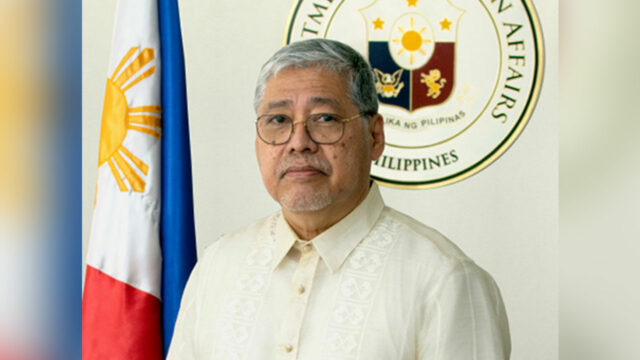
ENRIQUE A. MANALO — DFA.GOV.PH

FOREIGN AFFAIRS Secretary Enrique A. Manalo will be in India this week to participate in a dialogue on geopolitical and geoeconomics issues, the Department of Foreign Affairs (DFA) said on Monday.

In a statement, the DFA said that Mr. Manalo will travel to New Delhi, India to participate in the 10th Raisina Dialogue from March 17 to 19.

“The dialogue is hosted annually by the Observer Research Forum of India and the Ministry of External Affairs of India. It is the country’s flagship international conference on the most pressing geopolitical and geoeconomic issues,” it added.

“It brings together prominent high-level officials, policymakers and strategic thought leaders,” the DFA said. “It is the first time that the Secretary will be participating in the Raisina Dialogue.”

Mr. Manalo is also scheduled to conduct bilateral meetings with foreign ministers at the sidelines of the conference.

He will also have an “interactive session with members of the business community, and visit the Philippine Embassy in New Delhi to observe its e-Visa operations.” — Adrian H. Halili

PHL pursues peaceful foreign policy

PHILIPPINE COAST GUARD PHOTO

THE GOVERNMENT of Philippine President Ferdinand R. Marcos, Jr. is committed to pursuing a peaceful foreign policy even as it remains firm in defending Manila’s sovereignty, House of Representatives Speaker Ferdinand Martin G. Romualdez said on Monday.

He said the government’s foreign policy’s posture is geared toward deepening economic ties with other countries to help spur the Philippine economy.

“Under the Marcos administration, we have pursued a foreign policy of peace, pragmatism, and partnership, building stronger alliances while standing firm in defending our sovereignty,” he said.

“We have strengthened economic ties with partners across Asia, the United States, Europe, and the Middle East, securing investments and trade agreements,” he added.

Mr. Marcos has sought closer ties with the US and other Western countries, upending the foreign policy of his predecessor Rodrigo R. Duterte, who aligned the Philippines with China.

Mr. Romualdez said the House under his leadership has passed “landmark legislation” that he touted as helping the Philippines’ push towards becoming “stable, resilient and globally competitive,” such as the law that created the country’s sovereign wealth fund and measures upholding national sovereignty. — Kenneth Christiane L. Basilio

MRT operations extended

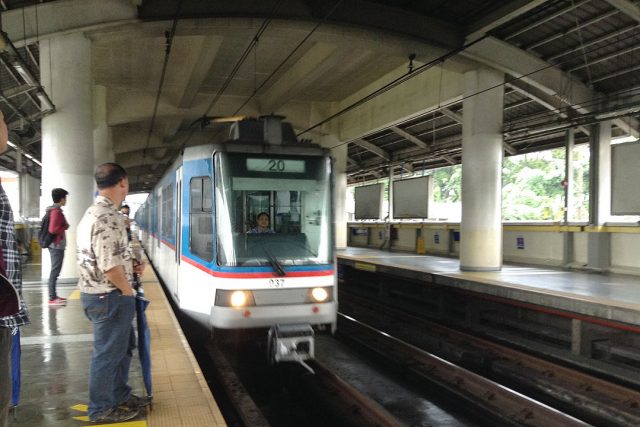
THE NIGHT SERVICE operations of the Metro Rail Transit Line 3 (MRT-3) will be extended by at least an hour, the Transportation department said.

In an advisory on Monday, the Department of Transportation (DoTr) said it has ordered to extend the operations of MRT-3 and the deployment of additional trains during peak hours.

However, the DoTr has yet to announce the implementation date of MRT-3’s operations extension.

Last week, Party-list Rep. Percival V. Cendaña urged the DoTr to extend the operations of MRT-3, Light Rail Transit (LRT), and EDSA bus carousel operation hours to accommodate commuters amid the heavy traffic flow in Metro Manila.

During weekdays, the first train of MRT-3 from North Avenue station operates from 4:36 a.m. to 9:30 p.m.; while the first train from Taft Avenue station operates starting 5:18 a.m. to 10:11 p.m.

Last year, the Transportation department announced plans to bid out the MRT-3 operations and maintenance concession within the first quarter of the year.

The Sobrepeña-led Metro Rail Transit Corp. (MRTC) is set to turn over MRT-3 to the government by July upon the expiration of its build-operate-transfer agreement.

The government previously expressed its intention to privatize MRT-3 before the contract expires this year.

The DoTr said it is carefully evaluating its privatization options for MRT-3, with the Asian Development Bank assisting in assessing whether to pursue a solicited or unsolicited approach for the project. –Ashley Erika O. Jose

Comelec asked to act on disqualification cases

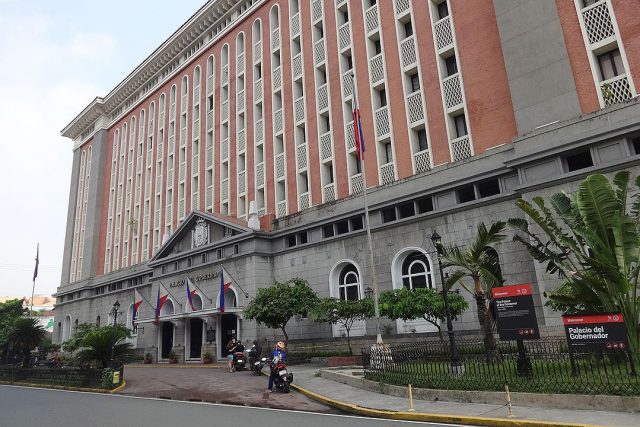
PALACIO del Gobernador, where the Comelec holds office — PATRICK ROQUE

A PHILIPPINE SENATOR on Monday urged the Commission on Elections (Comelec) to hasten its handling of simple disqualification cases and petitions for denial of due course, ahead of the local campaign period which is scheduled to start on March 28.

“With the elections just a few months away, Comelec must act swiftly to clear its backlog… They need to act swiftly so they can fulfill their commitment to addressing all pending cases before election day,” Senate Minority Leader Aquilino “Koko” L. Pimentel III said in a statement.

He added that Comelec’s backlog could be significantly reduced if simpler matters were resolved first, freeing up time for the poll body to concentrate on more complicated cases.

“Prompt decisions on simple cases would not only help prevent bottlenecks in Comelec’s decision-making process but also strengthen public confidence in the fairness of the electoral system,” Mr. Pimentel said.

“They should begin with the cases that are easiest to decide. That will set the pace for handling the more complicated ones,” he added.

Comelec Spokesperson John Rex C. Laudiangco did not immediately reply to a Viber message seeking comment.

The Philippines is set to conduct its mid-term national and local election on May 12 (Monday). Up for grabs are 12 spots in the 24-seat Senate and 317 congressional seats. Thousands of local officials will also be elected. — Adrian H. Halili

Gov’t to build 3,000 housing units in Cebu

PHILSTAR FILE PHOTO

THE DEPARTMENT of Human Settlements and Urban Development (DHSUD) is looking to build 3,000 housing units in Toledo City, Cebu, as part of its flagship housing project.

“The DHSUD, together with the city government of Toledo and the Pag-IBIG Fund, sign a tripartite memorandum of agreement for a housing project under President Ferdinand R. Marcos, Jr.’s flagship Pambansang Pabahay para sa Pilipino Program (4PH) on Friday, marking a major step toward providing decent yet affordable housing for Toledohons,” it said in a statement posted on its Facebook page last week.

The property will also have open spaces, parking lots and other amenities.

The Home Development Mutual Fund or Pag-IBIG will provide financing support for the program.

In his message, DHSUD Secretary Jose Rizalino H. Acuzar said that the 4PH program seeks to address homeownership concerns in the country, such as high costs.

A flagship program of the Marcos administration, the 4PH Program aims to construct one million housing units annually until 2028, with the price range of housing units at P580,000 to 1,150,000.

The Philippines’ housing need is projected to jump to 22 million by 2040, according to a report by the United Nations Human Settlements Programme. — Beatriz Marie D. Cruz

Fraud audit sought over BARMM’s alleged anomalous P6.4-B spending

@BANGSAMOROGOVT

A HOUSE of Representatives committee on Monday urged the Commission on Audit (CoA) to start a fraud investigation into the Bangsamoro Autonomous Region in Muslim Mindanao’s (BARMM) use of its P6.4-billion support fund amid corruption concerns.

State auditors could investigate BARMM’s alleged misuse of its multi-billion fund, which was allegedly disbursed to barangays allied with the regional government’s administration, Assistant Majority Leader and Lanao del Sur Rep. Zia Alonto Adiong said.

“Maybe it’s [time] that we invite the attention of the CoA central to conduct the necessary auditing procedures that they would tend to do to assess, monitor the utilization of the P6.4-billion local government support fund in the BARMM,” he told during a House public accounts hearing on Monday, based on a statement.

The House public accounts panel in January opened an inquiry into the alleged fund misuse, which was raised by Mr. Adiong during his privilege speech earlier that month. He said that bank accounts of over 400 barangays in Lanao del Sur province received funds amounting P500,000 to P2.5 million from the support fund. — Kenneth Christiane L. Basilio

Marcos urged to raise minimum wage to P200

PNA FILE PHOTO

THE TRADE Union Congress of the Philippines (TUCP) on Monday called on President Ferdinand R. Marcos, Jr. to push for and sign into law a measure increasing the daily minimum wage to P200 after he raised the daily subsistence allowance for military personnel by P200.

“April is shaping up to be a month of train, jeepney, bus, water, and power  price hikes — yet Congress expects us to wait until June, when only six session days remain, to pass this badly-needed wage increase which has been even below the poverty line and the daily healthy food requirement for over three decades now?” the TUCP said in a statement.

The group said current minimum wages are not enough to keep Filipinos from living in poverty.

The President on March 14 issued Executive Order (EO) 84 that raised the subsistence allowance for enlisted personnel of the Armed Forces of the Philippines (AFP) to P350 from P150.

The order said the existing allowance for the military was “no longer adequate to meet the daily sustenance of an active-duty soldier, which is essential for their well-being and performance of their duties.”

The House Commitee on Labor earlier approved a bill that would grant a P200 across-the board wage increases for private sector workers.

The Senate approved a bill increasing the daily minimum wage in the private sector by P100 in February last year. — John Victor D. Ordoñez

ADVERTISEMENT
ADVERTISEMENT