Home Blog Page 184

PCCI backs emergency powers to curb drastic swings in fuel prices

THE Philippine Chamber of Commerce and Industry (PCCI) said it supports granting President Ferdinand R. Marcos, Jr. the authority to stabilize fuel prices and reduce the burden on consumers.

In a statement on Tuesday, PCCI President Ferdinand A. Ferrer said the private sector is asking the government to temporarily mitigate the impact of higher fuel prices, citing the likely follow-on impact on goods and logistics prices as well as fares.

President Ferdinand R. Marcos, Jr. last week said he plans to ask Congress to grant him emergency powers to reduce excise taxes on petroleum products if fighting in the Middle East keeps oil prices higher for much longer.

The Philippines imposes excise taxes to boost revenue. Excise taxes on petroleum products were increased in three tranches from Jan. 1, 2018 to Jan. 1, 2020 by the Tax Reform for Acceleration and Inclusion (TRAIN) law.

Between 2018 and 2020, the biggest excise tax increases were applied to diesel, liquefied petroleum gas and bunker, with rates rising from P2.50 to P6 per liter.

Mr. Ferrer said: “We support whatever means — whether reducing excise tax, VAT (value-added tax), or tapping other funding sources — because we are in a crisis.”

Oil firms will increase gasoline prices by between P7 and P13 per liter, diesel prices by P17.50-P24.25, and kerosene by P32 to P38.50 per liter, the Department of Energy said on Tuesday.

The hikes will result in pump prices ranging from P53.10-P73.40 per liter for gasoline, P63-P87.44 per liter for diesel, and P92.17-P125.17 per liter for kerosene.

“When fuel prices increase, the cost of moving goods increases immediately, and so do the prices of transporting goods,” Mr. Ferrer said.

He added “that the private sector has started implementing cost-saving measures — like carpooling, work-from-home arrangements, adjusting air-conditioning settings, a greater resort to bulk purchasing, and investing in renewables. Beatriz Marie D. Cruz

Extra P50 million sought for farmer, fisherfolk fuel subsidy

PHILIPPINE STAR/ RYAN BALDEMOR

THE Department of Agriculture (DA) said it will request the immediate release of an additional P50 million to supplement its fuel subsidy fund after crude oil prices spiked to nearly $120 per barrel before falling back on Monday.

Agriculture Assistant Secretary Arnel de Mesa said the release of the funds would allow the DA to deploy P150 million allocated for fuel assistance to farmers and fisherfolk amid rising global energy prices due to the fighting in Iran.

“The P50 million is ready for implementation in the coming days. The P100 million has already been released to the DA,” Mr. De Mesa told reporters late Monday.

He said that based on advice from the Department of Budget and Management, the remaining funds may be requested once the initial tranche is depleted.

Meanwhile, Mr. De Mesa said the implementing agencies — the Bureau of Fisheries and Aquatic Resources and the Bureau of Agricultural and Fisheries Engineering have been directed to accelerate the disbursement of the initial P100-million tranche.

The fuel subsidy program is intended to cushion farmers and fisherfolk from rising production costs caused by elevated fuel prices, which affect farm machinery operations and fishing activities.

The program allocates P75 million for farmers and an equal amount for fisherfolk, benefiting nearly 15,000 farmers and 24,000 fisherfolk.

To qualify for the subsidy, farmers must be enrolled in the Registry System for Basic Sectors in Agriculture  and must either own or rent farm machinery that uses fuel, such as tractors, harvesters, or irrigation pumps.

Fisherfolk beneficiaries must own or operate fishing boats with a capacity of three gross tons or below, while using fishing gear that complies with fisheries regulations.

The subsidy will be distributed through the Interventions Monitoring Card (IMC) issued to qualified beneficiaries. The card allows farmers and fisherfolk to withdraw their fuel assistance at accredited fuel stations.

For beneficiaries located in remote or far-flung areas where IMC transactions may not be accessible, the DA said fuel vouchers will be issued instead, which can be redeemed at participating fuel outlets. — Vonn Andrei E. Villamiel

PCIC to seek P7.5-B budget in 2027, extension of charter

THE Philippine Crop Insurance Corp. (PCIC) said it is seeking a P7.5-billion budget for next year to expand insurance coverage for farmers, and an extension of its charter, which is set to expire in 2028.

PCIC President Jovy C. Bernabe said the proposed budget represents a P1-billion increase from the current P6.5 billion, which would allow the state insurer to cover an additional 500,000 farmers.

“For every P1 billion in additional funding, we can cover around 450,000 to 500,000 more farmers across various sectors,” he told reporters.

Mr. Bernabe said any additional coverage will be allocated 60% to rice, 20% to corn, and 10% to high-value crops.

“Most subsistence farmers really (cultivate) rice and corn, so that’s where we concentrate — on the marginalized,” he added.

The PCIC received an additional P2 billion in funding this year, allowing it to raise the indemnity for farmers that suffer total crop losses.

“With the increase in budget for this year, the usual P20,000 per hectare for rice and corn that we pay for total loss (was) raised it to P25,000 to increase the indemnity for our farmers. That’s a 25% increase,” Mr. Bernabe said.

Meanwhile, the PCIC said it is optimistic that Congress will approve the extension of its charter, which is set to expire in 2028.

“We’re being supported by many legislators in both the House and the Senate. They have filed bills for the extension of the PCIC charter, and we are hopeful that it will be extended,” Mr. Bernabe said.

PCIC was created by Presidential Decree No. 1467 in 1978, which initially set the state insurer’s corporate life at 50 years.

Mr. Bernabe said legislators are considering granting PCIC a perpetual charter, which would not only extend the agency’s mandate indefinitely but also include provisions to strengthen its operations.

He said the proposed changes call for the digitalization of PCIC services and encourage partnerships with private insurance companies.

“The PCIC will also be encouraged to collaborate with private insurance companies so they can also participate in agricultural insurance,” Mr. Bernabe added. — Vonn Andrei E. Villamiel

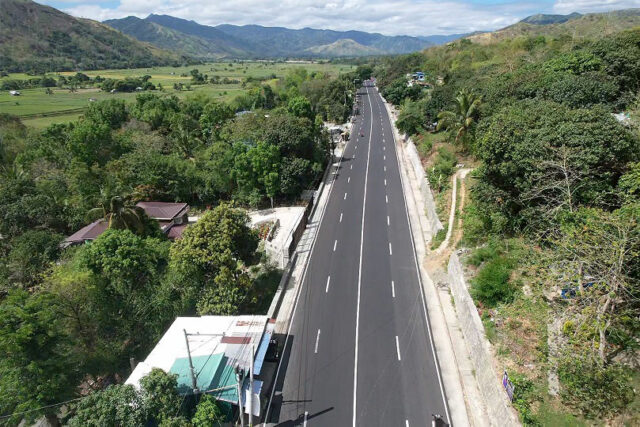
Maharlika Highway initial repairs targeted for early April completion

DPWH.GOV.PH

THE Department of Public Works and Highways (DPWH) said it hopes to finish initial repairs on the Maharlika Highway project before early April in anticipation of the Easter travel season.

“We need to finish this before Holy Week. The highway from Quezon all the way to Leyte must be passable by then,” Public Works Secretary Vivencio B. Dizon said in a statement on  Tuesday.

Easter Sunday falls on April 5 this year. The week of Easter is typically marked by extensive use of the roads by travelers heading to and from their home provinces, and by vacationers.

The DPWH is also planning to start the bidding process for more extensive rehabilitation work on the highway in April or May, with construction due to start by June.

The Maharlika Highway starts in northern Luzon and terminates in Zamboanga, linked by ferry crossings between Bicol and Samar as well as Leyte and Surigao.

The DPWH said it will suspend one-way traffic schemes on the highway next week. The lane closures were effected to allow for the temporary repairs, Mr. Dizon said.

Last month, the DPWH said the temporary repairs  include patching stretches of uneven road.

The DPWH has said it engaged foreign consultants to help draft the rehabilitation plan to allow for suitable new technologies to be incorporated in the build, in order to bring the repaired road up to international standards. — Ashley Erika O. Jose

DoF urges Senate to find other means to fund agencies supported by travel tax

CLARK INTERNATIONAL AIRPORT

THE Department of Finance (DoF) asked the Senate to find alternative sources of funding for programs that could be affected by the removal of the travel tax.

“The department fully supports the complete abolition of the travel tax. It is important to ensure that any reform is carefully assessed between fiscal and development context,” Undersecretary Karlo Fermin S. Adriano said at a Senate hearing on Tuesday.

Collections from travel tax fund the Tourism Infrastructure and Enterprise Zone Authority (TIEZA), which receives about 50% of the proceeds, followed by the Commission on Higher Education (CHED), which receives 40%, and the National Commission for Culture and the Arts 10%.

“The proposal needs to consider how these programs can be sustainably funded,” he added.

Mr. Adriano said TIEZA could be funded by the General Appropriations Act.

The DoF estimates  revenue to be foregone with the abolition of travel tax at between P6.28 billion and P9.34 billion, Mr. Adriano said.

The tax is P1,620 for economy class air passengers and P2,700 from first class passengers flying internationally.

The Senate Ways and Means Committee is considering a number of measures on the future of the travel tax.

Suspending the travel tax was designated as priority legislation for the 20th Congress.

Senator Pilar Juliana S. Cayetano, who heads the panel, said the committee is considering five bills seeking to abolish the travel tax, five bills to exempt Filipinos and ASEAN nationals, and two bills exempting Filipinos traveling in economy class. One bill proposes a senior citizen discount and another would exempt travel vloggers.

“Our work here must strike a balance between removing barriers to mobility and protecting sustainable funds for programs currently supported by this tax,” she said.

Senator Joel J. Villanueva noted that the Philippines is bound by the ASEAN Tourism Agreement for the phasing out of travel levies and travel taxes on nationals of ASEAN Member States traveling to other ASEAN Member States.

“The ASEAN Tourism Strategic Plan likewise emphasizes making cross-border travel more seamless and cost-competitive, and strengthening travel facilitation across the region,” he said at the hearing.

Mr. Villanueva said programs currently funded by the travel tax may be supported via the national budget. — Adrian H. Halili

Building materials retail price growth in Metro Manila steady in Feb.

WILCON DEPOT/BW FILE PHOTO

THE RETAIL price growth of construction materials in the National Capital Region was steady in February with an acceleration in electrical materials prices offset by a slowdown in painting materials and related compounds, the Philippine Statistics Authority (PSA) reported on Tuesday.

Citing preliminary data, it said year-on-year growth in the construction materials retail price index (CMRPI) for Metro Manila remained at 1.2% in February, in line with the average in the year to date.

The February reading exceeded the 1.1% year-earlier level.

Compared to January readings, growth accelerated in the subindices of electrical materials (2.1% in February from 1.9% a month earlier), masonry materials (1.1% from 1%), plumbing materials (0.8% from 0.7%), and miscellaneous construction materials (1.1% from 0.9%).

Meanwhile, the PSA said slower price growth compared to a year earlier was noted in the indices for painting materials and related compounds (1.8% from 2.1%) and tinsmithry materials (1.9% from 2%).

The CMRPI is based on 2012 constant prices. — Matthew Miguel L. Castillo

Frozen fish import quota set at 250,000 MT

PHILIPPINE STAR/RYAN BALDEMOR

THE DEPARTMENT of Agriculture (DA) said it capped frozen fish imports at 250,000 metric tons (MT) this year, citing the role of imports in stabilizing market prices.

Agriculture Secretary Francisco P. Tiu Laurel, Jr. signed Department Circular No. 12, which sets the guidelines for issuing certificates of necessity to import (CNI) fish and fishery products for 2026.

The CNI allows the entry of more than 60 fishery commodities of various species, following a recommendation by the National Fisheries and Aquatic Resources Management Council (NFARMC).

The DA said the NFARMC reviewed the 2026 supply and demand outlook for fish and fishery products and endorsed the cap of 250,000 MT.

Only accredited importers may bring in fish. These include institutional buyers, licensed importers during off and closed fishing seasons, and importers participating in the Kadiwa ng Pangulo program.

Importers must secure a sanitary and phytosanitary import clearance (SPSIC) before shipment. The DA will begin issuing SPSICs on Aug. 1, with approved permits validity for 60 days from the date of issuance.

“In no case shall the date of loading at the port of embarkation in the country of origin, as reflected in the bill of lading, be earlier than the date of issuance of the SPSIC,” according to the circular.

The DA said 10,000 MT from the allocated volume for the off-season and closed fishing season is reserved for Kadiwa distribution.

The distribution ratio for the remaining allocations is 80% for commercial importers and 20% for associations or cooperatives.

The DA added that imported fishery products must be stored only in cold facilities licensed by the Bureau of Fisheries and Aquatic Resources. — Vonn Andrei E. Villamiel

ASEAN to sign digital economy deal in Nov.

ASEAN.ORG

MEMBERS of the Association of Southeast Asian Nations (ASEAN) are expected to sign the Digital Economy Framework Agreement (DEFA) by November, the Department of Trade and Industry (DTI) said.

On the sidelines of a briefing on Tuesday, Marie Sherylyn D. Aquia, director of the Bureau of International Trade Relations, said DEFA negotiations are expected to conclude by mid-2026.

“Hopefully by the first half of the year, the text is clean and legally scrubbed,” she said. “Then it will go through the domestic approval processes of the various ASEAN countries.”

“In the case of the Philippines, it will have to be ratified,” Ms. Aquia said.

Delegates are still fine-tuning and negotiating several DEFA articles, she said.

The signing of the DEFA is a priority economic deliverable for the Philippines while it chairs ASEAN.

Alongside DEFA negotiations, the ASEAN is also convening a Legal Experts Meeting for the agreement.

“They will review the agreed provisions to ensure clarity, consistency, and readiness of the text before it is signed in November on the sidelines of the ASEAN Summit,” Ms. Aquia said.

After its signing, the DEFA will likely take effect next year, she noted.

The DEFA is set to be the world’s first region-wide and binding agreement on the digital economy and electronic commerce.

It also seeks to promote measures for online consumer protection; personal data protection; cybersecurity cooperation; and safeguards against online scams.

The agreement is also expected to address frictions in cross-border payments, benefiting the region’s micro, small and medium enterprises.

The ASEAN’s digital economy is expected to grow to $2 trillion by 2030.

Following the DEFA talks, ASEAN will organize the Preparatory Senior Economic Officials Meeting, which will review agenda items to be tackled at the ASEAN Economic Ministers’ Retreat.

The participants will discuss tariff uncertainties and the escalating Persian Gulf crisis. — Beatriz Marie D. Cruz

29 Filipinos cross from UAE to Oman as Marcos steps up OFW repatriation

DMW.GOV.PH

TWENTY OVERSEAS Filipino workers (OFWs) and nine of their dependents crossed from the United Arab Emirates (UAE) to Oman on Tuesday, part of Manila’s accelerated effort to bring home citizens as regional conflict escalates, Migrant Workers Secretary Hans Leo J. Cacdac said.

The group, which includes eight children, was expected to arrive in the Philippines later in the day.

“These OFWs will be home tonight,” Mr. Cacdac said, noting that the move comes amid heightened Middle East tensions following missile and drone attacks targeting the UAE.

The Philippines condemned the strikes, calling them violations of sovereignty and threats to regional peace.

The Department of Foreign Affairs said Manila “unequivocally” supports the UAE’s efforts to protect nationals and residents and reaffirmed its commitment to promoting de-escalation and regional security.

Local authorities reported that 12 missiles and 17 drones launched by Iran last Monday were intercepted by UAE forces, but four people were killed and 117 injured.

The crisis has put the country’s 2.41 million OFWs in the Middle East under added strain, particularly the roughly 975,000 residing in the UAE.

Workers face uncertainty over safety, job security and timely remittance transfers — a critical income source for Philippine households.

Malacañang said the government has accelerated repatriation efforts as part of its contingency measures.

Palace Press Officer Clarissa A. Castro said in a livestreamed briefing from New York that the administration is prioritizing land-based evacuations to mitigate risks from bombings and airstrikes.

“The President considered the possible danger if our fellow citizens were flown home immediately while attacks continued between the countries involved in the [war],” she said in Filipino.

Aside from the group from the UAE, recent operations include 16 OFWs traveling from Tel Aviv to the Egyptian border via Eilat to catch a flight from Cairo to Muscat and onward to Manila, with estimated arrival at 9:30 p.m. on March 11.

Ms. Castro said commercial flights were being arranged, including Emirates Airlines departures from Dubai, alongside a chartered repatriation flight from Riyadh, expected as early as March 14.

The administration is also investigating the conduct of its personnel abroad after a viral video showed an employee of the Migrant Workers Office in Bahrain allegedly mistreating OFWs.

President Ferdinand R. Marcos, Jr. has ordered a formal administrative inquiry. “A public servant should not abuse their power. There is no excuse for arrogance or indifference to our fellow citizens,” Ms. Castro said. The employee has been recalled to the home office.

To keep families connected, the government launched a free call program for Filipinos in Iran, Iraq, Saudi Arabia and the UAE, with stations also planned in Philippine malls.

Ms. Castro said the multi-pronged approach reflects a broader commitment to safeguard OFWs amid the Middle East crisis.

The Migrant Workers department said the latest batch of Filipinos returning from the UAE arrived safely in Manila on Sunday night, March 8, via Emirates flight EK 334, following the Feb. 28 resurgence of hostilities in the region.

Ms. Castro said the accelerated repatriation reflects Mr. Marcos’ concern over the potential dangers posed by attacks in the region.

The Middle East is a major source of remittances for the Philippines. Disruptions caused by conflict could affect the flow of funds that support daily household spending, education, and healthcare.

Authorities are coordinating with host governments to secure safe passages, provide temporary shelters and deliver emergency financial and legal assistance. — Adrian H. Halili and Erika Mae P. Sinaking

UN chief backs PHL’s Security Council bid

REUTERS

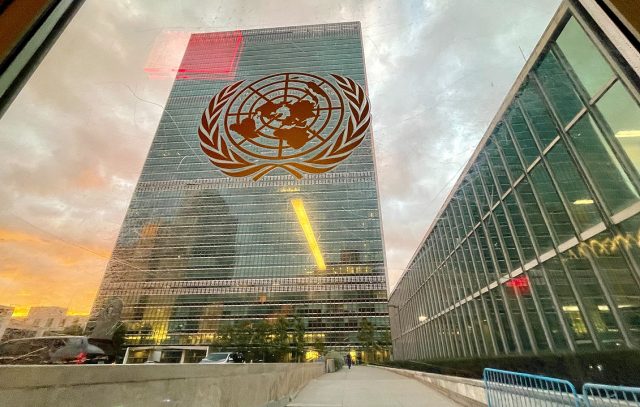
THE Philippines has secured the backing of United Nations (UN) Secretary-General Antonio Guterres for its bid for a nonpermanent seat on the UN Security Council for 2027-2028, the Presidential Palace said on Tuesday.

Palace Press Officer Clarissa A. Castro said President Ferdinand R. Marcos, Jr. met with Mr. Guterres at the UN headquarters in New York on Monday, where the two discussed Manila’s campaign for the seat ahead of the June 3 election at the UN General Assembly.

Ms. Castro said the UN chief praised the Philippines’ role in promoting peace and democracy and highlighted its leadership as chairman of the Association of Southeast Asian Nations.

She said the UN chief had also cited Manila’s support for international law, particularly the United Nations Convention on the Law of the Sea.

She said Mr. Guterres described the Philippines as a “bridge builder” within the UN and expressed hope that the country’s voice would continue to be heard in the organization.

“He also wished the President the best in campaigning for our candidature,” she told a livestreamed briefing from New York. “He wants to see and hear the voice of the Philippines in the UN as loud as possible.”

Ms. Castro added that Mr. Marcos reaffirmed the Philippines’ commitment to the UN during the meeting, noting that the country is one of the organization’s founding members.

To secure a seat on the Security Council, the Philippines must obtain a two-thirds majority vote from the UN General Assembly.

The discussions also touched on developments in the Bangsamoro Autonomous Region in Muslim Mindanao, with Mr. Marcos updating Mr. Guterres on preparations for the region’s first parliamentary elections scheduled for September.

Meanwhile, the President addressed the 70th session of the Commission on the Status of Women, where he discussed women’s education, safe working environments and economic empowerment.

Following his engagements at the UN, the President held private business meetings with potential investors in sectors including healthcare as part of his working visit to New York, Ms. Castro said. — Erika Mae P. Sinaking

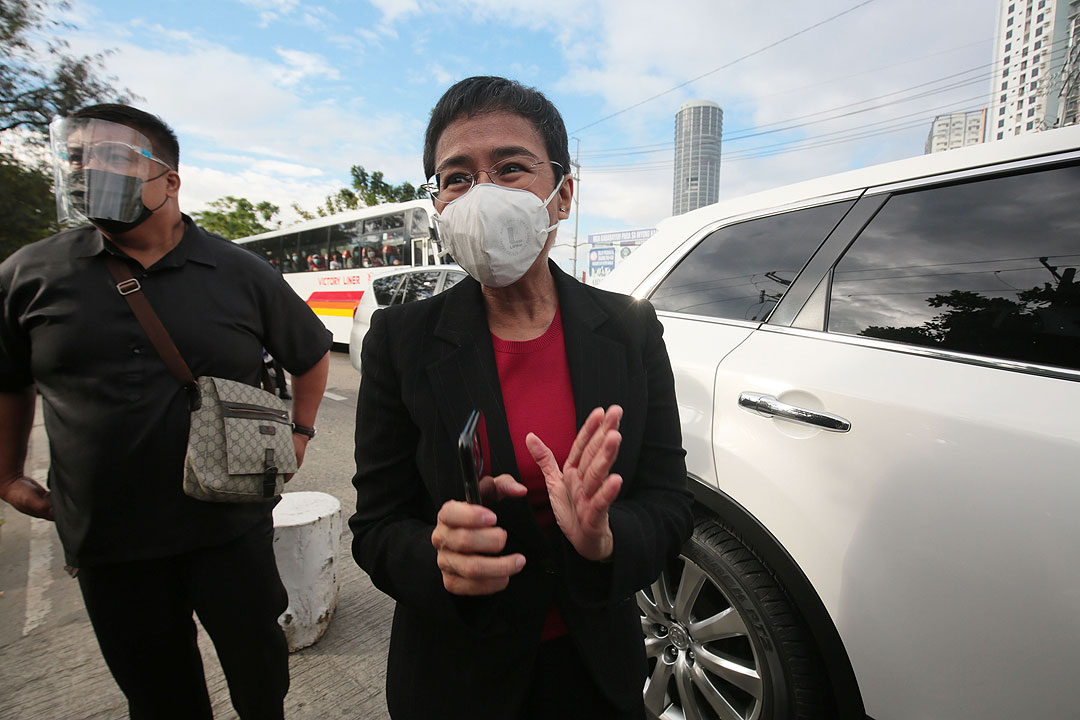
Philippine solicitor general seeks journalist’s acquittal

MARIA A. RESSA — PHILIPPINE STAR/MICHAEL VARCAS

THE OFFICE of the Solicitor General (OSG) has asked the Supreme Court to acquit Nobel laureate Maria A. Ressa and former Rappler researcher Reynaldo Santos, Jr. in their cyberlibel case, citing a recent high court ruling that shortened the period for filing such charges.

In a statement on Tuesday, the OSG, headed by Darlene Marie B. Berberabe, said it had filed a manifestation and motion on March 9 urging the court to reverse the conviction.

The government’s top lawyer said the criminal case filed against Ms. Ressa and Mr. Santos in early 2019 was already barred by the statute of limitations under the latest legal doctrine.

The recommendation follows a recent ruling by the Supreme Court that set the prescriptive period for cyberlibel at one year. The clarification departs from an earlier interpretation of a 2018 decision that had been understood by some courts to allow a 15-year period for prosecution.

“Prescription is the legal time limit within which a criminal information must be filed,” the OSG said. “Once that period lapses, the state can no longer prosecute.”

Government lawyers said the rule on prescription is meant to encourage diligence among prosecutors while protecting defendants from the burden of defending against stale charges.

The case stems from an article published on the news website run by Ms. Ressa that was updated in 2014 and later discovered by the complainant in 2016. Under the one-year prescriptive period, the filing of charges in 2019 would have come too late.

The OSG said it had questioned the shorter prescriptive period but now accepts the one-year limit set by the high court, describing it as providing a “workable, predictable limiting principle” for determining when cyberlibel cases may be filed.

“The OSG’s mandate in criminal proceedings is not confined to seeking convictions,” the office said. “It includes assisting the courts in arriving at a just and legally correct disposition, grounded on the Constitution, statutes, and controlling jurisprudence even, especially when the law requires acquittal.”

The office said cyberlibel remains punishable under Philippine law, particularly given the speed and reach of online content.

However, the one-year period helps balance the state’s interest in protecting reputation and privacy with constitutional guarantees of free speech and press freedom.

The OSG said it respects the independence of the Judiciary and will abide by the Supreme Court’s final ruling on the case.

Ms. Ressa and her news website Rappler were acquitted of tax fraud by a trial court in 2023.

Rappler earned a reputation for its intense criticism of former President Rodrigo R. Duterte and his deadly war on drugs. Ms. Ressa had accused the government of political harassment and of attacking press freedom. — Erika Mae P. Sinaking

Palace says Philippines won’t rejoin ICC

PHILIPPINE STAR/JOHN FELIX M. UNSON

THE PHILIPPINES has no plan to rejoin the International Criminal Court (ICC), Malacañang said on Tuesday, reiterating the government’s position as proceedings against former President Rodrigo R. Duterte continue in The Hague.

“The President’s stance has not changed,” Palace Press Officer Clarissa A. Castro told a livestreamed briefing from New York in Filipino. “We are still not rejoining the ICC at this time.”

The Philippines withdrew from the ICC on March 17, 2019, a year after the government moved to revoke its ratification of the Rome Statute, the treaty that established the court.

Mr. Duterte initiated the withdrawal in March 2018 following the ICC prosecutor’s preliminary examination into alleged crimes linked to his administration’s anti-drug campaign.

Despite the country’s exit, the ICC retained jurisdiction over alleged crimes committed while the Philippines was still a member of the court.

Mr. Duterte has been in The Hague since his arrest in March 2025 and is facing charges of crimes against humanity for actions tied to the anti-drug campaign during his tenure as Davao City mayor and later as Philippine President.

Pre-trial judges at the ICC are expected to decide whether the case will proceed to a full trial after a recent pre-trial hearing.

The Marcos administration has repeatedly said it would not rejoin the ICC, maintaining that Philippine institutions are capable of addressing legal matters within the country’s jurisdiction.

Ms. Castro reiterated that the President’s position remains unchanged amid international scrutiny of the case.

The ICC, based in The Hague, prosecutes people accused of the most serious crimes under international law, including genocide, crimes against humanity and war crimes. — Erika Mae P. Sinaking

ADVERTISEMENT
ADVERTISEMENT