
How PSEi member stocks performed — March 11, 2026
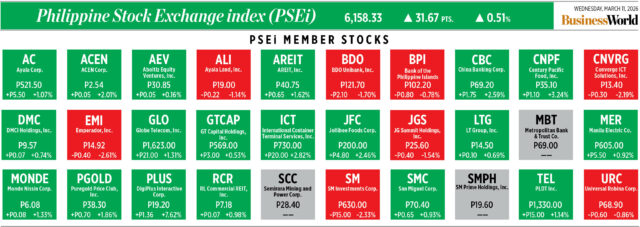
Here’s a quick glance at how PSEi stocks fared on Wednesday, March 11, 2026.


Here’s a quick glance at how PSEi stocks fared on Wednesday, March 11, 2026.

NET INFLOWS of foreign direct investments (FDIs) into the Philippines plummeted to $7.791 billion in 2025, its lowest level in five years, preliminary Bangko Sentral ng Pilipinas (BSP) data showed. Read the full story.

By Alexandria Grace C. Magno, Reporter
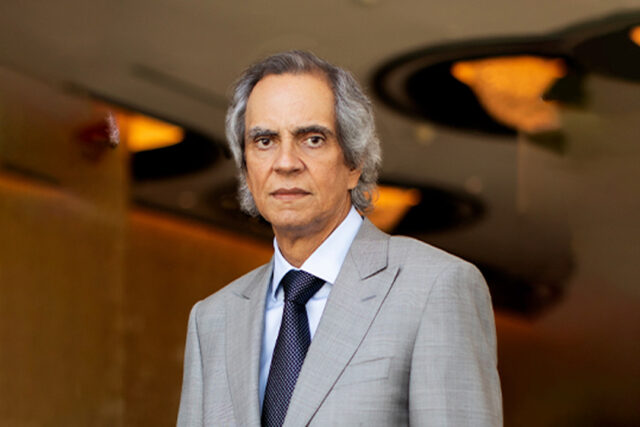
PORTS AND CASINO tycoon Enrique K. Razon, Jr. saw his net worth surge over 50% to $16.5 billion, making him the richest Filipino on Forbes’ 2026 World’s Billionaires List.
According to the Forbes’ list, there were 15 billionaires from the Philippines, led by Mr. Razon.
Mr. Razon climbed 52 spots to 175th out of 3,428 billionaires on the global list, which was topped by tech mogul Elon Musk. He was the only Filipino in the top 200 billionaires in the world.
Based on Forbes’ estimates as of March 10, Mr. Razon’s net worth stood at $16.5 billion, 51.38% higher than $10.9 billion a year earlier.
Mr. Razon is the chairman of International Container Terminal Services, Inc. (ICTSI), the Philippines’ largest ports operator by revenue, with subsidiaries across the Asia-Pacific, Eastern Europe, Africa, and the Americas.
“The substantial rise in Mr. Razon’s net worth reflects the strong stock price performance of ICTSI, which is now the country’s most valuable listed company,” China Bank Capital Corp. Managing Director Juan Paolo E. Colet said in a Viber message.
“Mr. Razon’s rise to the top of the list was largely driven by the surge in ICTSI, whose share price was among the strongest performers on the Philippine Stock Exchange index last year and year-to-date,” DragonFi Securities Equity Research Analyst Jarrod Leighton M. Tin said in an interview.
Mr. Tin noted the rally in ICTSI’s share price has more than offset the sharp drop in the share price of Solaire operator Bloomberry Resorts Corp., where Mr. Razon also has a majority stake.
Mr. Razon has also increased infrastructure investments by acquiring control of Manila Water and has stakes in a gas field and bulk water facilities.
Ramon S. Ang, chairman and chief executive officer of conglomerate San Miguel Corp., ranked 1,189th on the Forbes’ list with an estimated net worth of $3.6 billion. His wealth slipped by 2.7% from $3.7 billion a year ago.
LT Group, Inc. Chairman Lucio C. Tan landed on the 1,223rd spot, with his net worth up by 16.67% to $3.5 billion from $3 billion a year earlier.
Property tycoon and former Senate President Manuel B. Villar, Jr. fell 1,259 spots to 1,376th place from 117th in 2025. He was the highest-ranked Filipino billionaire in the Forbes’ 2025 World’s Billionaires List. His estimated net worth plunged by 81.98% to $3.1 billion from $17.2 billion last year.
“Manny Villar’s net worth declined following the downward revision of Villar Land Holdings Corp.’s previously reported P1.3-trillion revaluation gain, alongside insider-trading allegations that have weighed on the share prices of several other Villar-linked companies,” Mr. Tin said.
The Forbes’ World’s Billionaires List also included the six children of the late Henry Sy, Sr., who founded the SM Group.
Henry T. Sy, Jr. was ranked 1,676th with a net worth of $2.5 billion, followed by Hans T. Sy at 2,274th place with $1.8 billion, Herbert T. Sy at 2,274th as well with $1.8 billion, Harley T. Sy at 2,386th with $1.7 billion, Teresita T. Sy-Coson at 2,481st with $1.6 billion, and Elizabeth T. Sy at 2,600th with $1.5 billion.
Alliance Global Group, Inc. Chairman Andrew L. Tan landed on 2,386th place with a $1.7 billion net worth.
Puregold Price Club founder Lucio L. Co ranked 2,481st with a $1.6-billion net worth, while his wife Puregold Chairman Susan P. Co was at 2,600th place with a $1.5-billion net worth.
Tony Tan Caktiong, chairman of fastfood giant Jollibee Foods Corp., ranked 3,185th with a $1.1-billion net worth.
Gaming, education, and shipping tycoon Eusebio H. Tanco landed on the 3,332nd spot with a $1-billion net worth. He is the chairman of DigiPlus Interactive Corp. and STI Education Systems Holdings, Inc.
This year’s Forbes’ World’s Billionaires List includes a record 3,428 entries, up 400 from last year’s high and the largest since it began in 1987.
The total wealth of the world’s billionaires surged to $20.1 trillion this year from $16.1 trillion in 2025, with 20 people worldwide now holding 12-figure fortunes.
Mr. Musk topped the list for the second year running as the richest billionaire, with a net worth of $839 billion.
The Forbes’ World’s Billionaires List used stock prices and exchange rates from March 1, 2026.

By Erika Mae P. Sinaking and Kenneth Christiane L. Basilio, Reporters
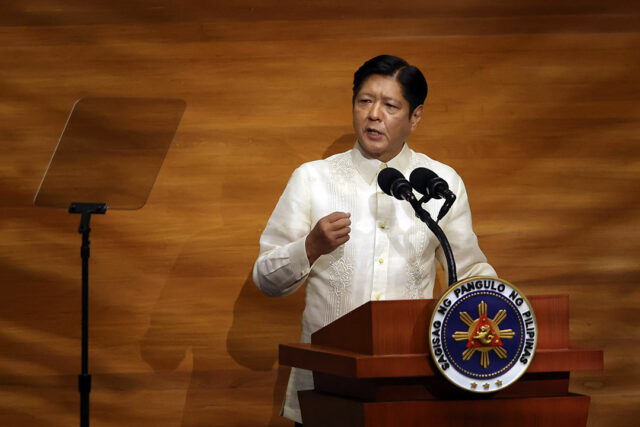
THE Philippine government is seeking additional fuel suppliers to help stabilize domestic supply as global oil markets remain volatile, President Ferdinand R. Marcos, Jr. said on Wednesday.
“We are talking to many other countries who we normally do not buy oil from,” Mr. Marcos told a livestreamed briefing from New York City.
He said the government hopes to reach agreements that would allow the Philippines to secure additional fuel shipments and diversify its sources of supply.
The President said the country’s fuel inventory remains sufficient for now, with stocks available locally and more shipments already on the way.
“In terms of supply, we are in good shape,” he said. “Not only do we have inventory in the Philippines, we also are awaiting some supplies coming in that are in transit.”
Authorities are monitoring the incoming shipments to ensure they do not pass through high-risk areas, Mr. Marcos added, noting that the possible closure of the Strait of Hormuz has not yet been factored into the country’s supply outlook.
Despite stable supply expectations, domestic consumers are already facing higher fuel costs as global oil prices push pump prices upward.
The Department of Energy said kerosene prices could reach P122.67 per liter by March 12 after a cumulative increase of P36.
Diesel prices are expected to settle at about P84.75 per liter following a total hike of P24.25 over three days, while gasoline Ron 91 may rise to around P60.85 per liter.
The adjustments are part of a series of staggered increases announced for the week of March 10 to 16 as local fuel retailers respond to higher international oil prices.
“We are trying to keep prices down, but there is an inevitable effect,” Mr. Marcos said. “When oil goes up, everything goes up.”
Global crude prices recently climbed above $100 per barrel before easing to below $90, he added, noting that uncertainty remains over how long the Iran war will last and how long prices will stay elevated.
Because higher fuel costs feed into the prices of goods and services, the President said the government is seeking emergency powers from Congress that would allow it to intervene if global oil prices remain above $80 per barrel for an entire month.
Possible measures include suspending excise taxes on petroleum products and expanding subsidies for sectors most affected by rising energy costs.
The government’s fuel subsidy program is expected to roll out next week, authorities said, as the government tries to cushion the impact on public transport operators and other vulnerable sectors.
‘NOT NORMAL’
Transport groups said they might hold off on requesting fare increases if the government proceeds with tax relief and financial assistance.
Jeepney drivers are already losing P400 to P500 a day because of higher fuel costs, according to Mar S. Valbuena, chairman of transport group Manibela.
“The increase in petroleum products is not normal,” he told lawmakers at a hearing in the House of Representatives. “If this rise in fuel prices continues, we may lose even more of our income.”
Drivers typically earn about P800 a day, meaning the latest price increases are cutting deeply into their take-home pay, he added.
Fuel retailers have raised pump prices several times this year as global oil costs climbed. This week’s adjustments, ranging from P7 to as much as P38.50 per liter, mark the 11th straight increase for diesel and kerosene and the ninth for gasoline.
Mr. Valbuena said transport groups could request a P2 fare increase but described it as a last resort because higher fares could trigger broader inflation.
“Requesting a fare increase is our last resort,” he said, urging lawmakers to quickly approve a measure that would allow the government to suspend excise taxes on fuel so drivers can retain more of their earnings.
Other transport groups echoed the concern. Orlando Marquez, Sr., national president of the League of Transportation Operators of the Philippines, said operators have long sought fare adjustments to offset rising operating costs.
Meanwhile, George Jalandoni, president of the UV Express Association, said shuttle van operators should also be included if authorities decide to raise public transport fares.
“I hope that UV Express vans will be included in the fare increase,” he told lawmakers, noting that operators are also struggling with higher fuel expenses.
Officials from the Land Transportation Franchising and Regulatory Board said the agency is reviewing several pending fare petitions.
Greg G. Pua, Jr., a board member of the regulator, told lawmakers that authorities would act quickly if fare adjustments become necessary.
“Almost all of them have pending petitions,” he said. “We assure [everyone] that we will act immediately and leave no one behind.”
Arsenio M. Balisacan, head of the Department of Economy, Planning, and Development, on Tuesday warned that inflation could accelerate to as much as 5.1% this month as higher oil prices raise transportation and logistics costs across the economy.

THE Philippine government has repatriated the first group of overseas Filipino workers (OFWs) from Iran as it prepares two chartered flights to bring home more workers from the Middle East, President Ferdinand R. Marcos, Jr. said on Wednesday.
“There are two flights that we are planning,” he said at a livestreamed briefing from New York City. The first flight will operate out of Riyadh for Filipinos in Saudi Arabia, Kuwait and Bahrain. The second will depart from Fujairah in the United Arab Emirates (UAE) to transport workers from Dubai, he added.
The Fujairah flight is scheduled for March 13, with an expected arrival in Manila later that evening or early on March 14. Mr. Marcos said the decision to charter these flights follows a slight improvement in regional safety.
“We are arranging charter flights because the situation has eased up a bit,” he said. “Now that the Emirates has deemed it safe to fly, it should be safe enough also for us to charter airplanes to accommodate other Filipinos who wish to return home.”
Migrant Workers Secretary Hans Leo J. Cacdac will join the Dubai flight to provide an on-the-ground assessment of conditions, Mr. Marcos added.
The government is also facilitating land crossings from the UAE, Israel and Oman. Sixteen OFWs from Israel who crossed into Egypt were expected to arrive in Manila on Wednesday evening via a chartered flight arranged by the Department of Migrant Workers (DMW).
The Department of Foreign Affairs confirmed that nine Filipinos evacuated from Iran arrived in the Philippines on March 10 and 11.
Five were minors aged 2 to 14. The repatriation was coordinated through Philippine embassies in Tehran and Ankara, Turkey, which facilitated the land crossing and onward flights amid regional tensions.
These evacuees were among 11 Filipinos moved from Iran into Van, Turkey, following coordinated US and Israeli missile strikes against Tehran’s military assets on Feb. 28.
The strikes were aimed at curbing Iran’s nuclear program and pursuing regime change, and reportedly resulted in the death of Iranian leader Ayatollah Ali Khamenei.
In retaliation, Iran launched missile and drone attacks against US and Israeli bases across Gulf states, including Iraq, the UAE, Kuwait, Bahrain, Qatar and Saudi Arabia.
The DMW said 36 OFWs from Oman arrived safely via Oman Air flight WY843 on Wednesday. The group included 24 workers, eight dependents, and four additional OFWs from Oman and Dubai.
“The airspace in their country of origin is very limited so they found a way to cross the border to a country where they could fly, and now, they’re here,” Mr. Cacdac said in a separate statement.
Mr. Marcos noted that the Department of National Defense and Civil Aviation Authority of the Philippines would assist in all repatriation efforts, ensuring that distressed and affected workers are safely returned amid geopolitical uncertainties in the Middle East. — Erika Mae P. Sinaking and Adrian H. Halili
PRESIDENT Ferdinand R. Marcos, Jr. on Wednesday said the Philippine government is coordinating with Portuguese authorities to bring home former Congressman Elizaldy S. Co, a fugitive in a high-profile flood control and infrastructure scandal.
“We have to ask the assistance of the country where he is, which is presently Portugal,” Mr. Marcos said during a livestreamed presidential briefing from New York City.
The President added that Philippine authorities had requested international support through the International Criminal Police Organization (Interpol).
“We have already issued a red notice with Interpol and continue to coordinate with the Portuguese authorities to have him brought home,” he said in Filipino.
Mr. Co was declared a fugitive from justice by the Sandiganbayan, the country’s anti-graft court, last month after repeatedly evading arrest and failing to appear in hearings for graft and malversation charges.
The cases relate to an allegedly anomalous P289.4-million road dike project in Oriental Mindoro, which was intended to strengthen flood defenses in the province but has since drawn scrutiny over irregularities and suspected misappropriation of public funds.
The Sandiganbayan also canceled Mr. Co’s passport following his failure to cooperate with the proceedings.
The former lawmaker has remained outside the Philippines since President Marcos announced a nationwide crackdown on anomalous flood control and infrastructure projects during his 2025 State of the Nation Address.
That address highlighted several allegedly corrupt contracts across the country, including projects that were either incomplete, overpriced or linked to officials accused of bypassing procurement rules.
Authorities said the goal is to restore public trust and ensure that funds intended for disaster prevention and public works reach their intended purpose.
Legal experts and anti-graft advocates have said the high-profile nature of the case underscores broader challenges in the Philippines’ infrastructure governance.
Officials have stressed that bringing fugitives like Mr. Co to justice is a critical signal that the government is committed to enforcing accountability, particularly in projects funded by public money.
Interpol’s red notice, an international request to locate and provisionally arrest a suspect pending extradition, is the latest step in the Philippine government’s effort to ensure Mr. Co faces the pending graft and malversation charges.
Philippine authorities continue to work with Portuguese counterparts to facilitate his return, while monitoring other international channels to prevent fugitives from evading justice.
The Co case remains a focal point in the administration’s campaign against corruption in infrastructure, particularly in projects related to flood control, disaster mitigation, and climate resilience. — E.M.P. Sinaking
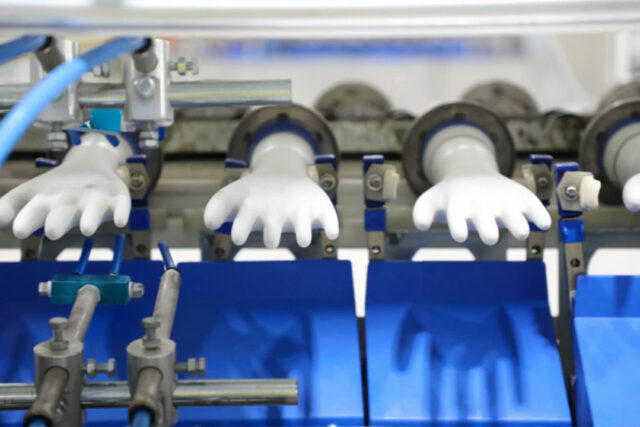
ILLINOIS-BASED US Medical Glove Co. plans to invest about $200 million to build a production hub in the Philippines that could create more than 2,000 jobs, President Ferdinand R. Marcos, Jr. said on Wednesday.
The planned facility will produce medical gloves and other supplies for healthcare providers and the military, he said at a livestreamed briefing from New York.
“They have sent representatives to the Philippines [and are] already starting [preparations] to build their first plant,” Mr. Marcos said. “They want to expand further.”
The amount is $200 million at least in the beginning, he said, noting that the company has secured a local partner to support its operations. “But we’re already talking about the larger investment,” he added.
Mr. Marcos said the project could help position the Philippines as a producer and exporter of medical supplies rather than a net importer.
Company officials told him that the manufacturing process could be deployed quickly, with production able to begin within 48 hours once a facility is completed and equipment is installed.
The investment discussion was among the outcomes of the President’s two-day working visit to New York City, where he met business leaders and investors on the sidelines of the 70th session of the Commission on the Status of Women and a special plenary meeting of the United Nations General Assembly.
During the trip, Mr. Marcos also met executives from JPMorgan Chase & Co. including Chairman and Chief Executive Officer Jamie Dimon to discuss economic cooperation and global financial market developments.
The bank shared insights on rapid advances in artificial intelligence and the need for governments and institutions to prepare for its impact on economies, industries and labor markets, Mr. Marcos said.
The discussion highlighted the growing importance of technological readiness, cybersecurity resilience and workforce upskilling to remain competitive in a rapidly changing global environment, he added. — Erika Mae P. Sinaking

THE Senate Ways and Means Committee on Wednesday said it is awaiting the House of Representatives’ third reading approval of the measure granting the President power to suspend or reduce the excise tax on petroleum products.
“The Constitution requires that the tax measures emanate in the House, so I have to wait for the House to pass the bill on third reading and transmit it to the Senate,” Senator Pilar Juliana S. Cayetano, who heads the panel, told reporters in mixed English and Filipino.
“I won’t be able to sponsor it until the House passes their version,” she added.
Ms. Cayetano said the committee is still refining its draft of the measure, particularly on the conditions that would trigger a suspension or reduction of excise taxes and the point for its lifting.
She added that the panel is pushing for a one-month average trigger period to suspend or lower petroleum taxes.
“If it’s longer than that, the price is not so relevant if the average period is too long. So, if you make it a one-month average, then you will immediately reflect the increase in price,” she said.
Ms. Cayetano added that the committee is also looking to provide the Department of Energy (DoE) with powers to penalize abusive fuel retailers prematurely increasing prices.
“We are reviewing now if the DoE needs extraordinary powers to suppress those taking advantage,” the senator said.
President Ferdinand R. Marcos, Jr. last week urged Congress to grant him emergency powers to lower the excise tax on petroleum products to protect consumers from rising fuel prices amid the escalating conflict in the Middle East.
The Philippines, a net importer of oil, is bracing for further price spikes as the war between the United States, Israel, and Iran escalates causing further pressure in oil prices and supply. — Adrian H. Halili
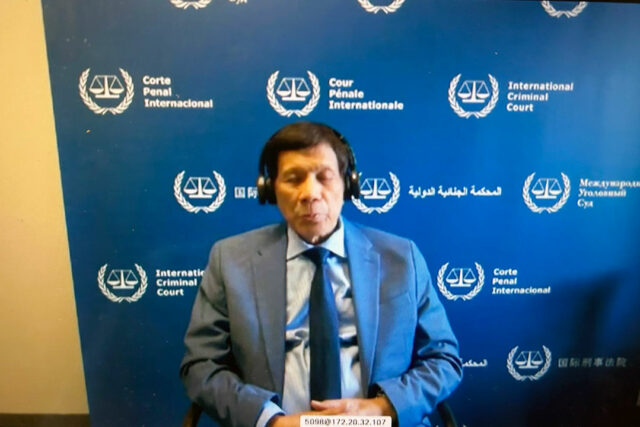
INTERNATIONAL prosecutors investigating former President Rodrigo R. Duterte have asked judges to clarify the roles of six Filipino lawyers who have appeared alongside his defense team, citing concerns that their presence could have a chilling effect on the investigation.
In a formal request dated March 10, the Office of the Prosecutor at the International Criminal Court (ICC) requested that the Pre-Trial Chamber I order Mr. Duterte’s defense to confirm on the record whether these individuals are official members of the legal team.
The request follows a confirmation-of-charges hearing in which the defense publicly introduced six lawyers — Salvador C. Medialdea, Salvador S. Panelo, Martin B. Delgra III, Silvestre H. Bello III, Alfredo Cereza Lim, and Caesar R. Dulay — as a group that has “ably assisted and supported” the former president’s case.
Prosecutors argued that they have a strict duty to “take appropriate measures to protect the safety, physical and psychological well-being, dignity and privacy of victims and witnesses.”
They are asking the court to confirm that the group will not have access to non-public filings or privileged meetings with Mr. Duterte in detention. — Erika Mae P. Sinaking
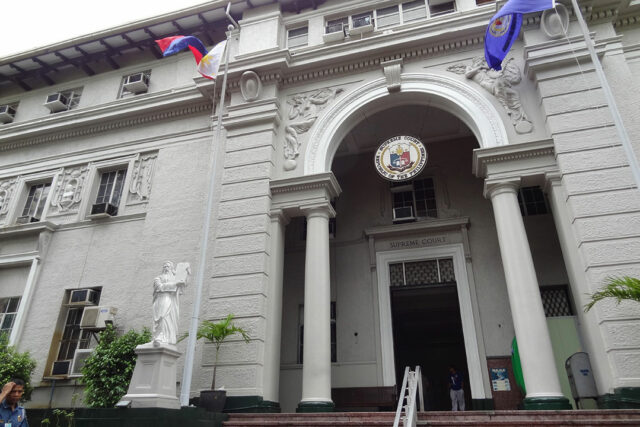
THE Supreme Court (SC) has upheld the authority of the Department of Justice (DoJ) to implement stricter rules for filing criminal cases, dismissing a petition that sought to nullify the new evidentiary standards in legal filings.
In a Nov. 11, 2025 decision, made public on Wednesday, the SC en banc affirmed Department Circular No. 015, issued by former Justice secretary and now Ombudsman Jesus Crispin C. Remulla, which requires state prosecutors to find “prima facie evidence with reasonable certainty of conviction” before bringing a case to court.
This higher standard replaces the previous “probable cause” requirement.
The High Court ruled that the petition filed by a lawyer was “meritless,” noting that by raising the bar for criminal charges, the rules aim to shield individuals from groundless trials and conserve judicial resources by ensuring only cases likely to result in conviction reach the courtroom. — Erika Mae P. Sinaking

THE Department of Trade and Industry (DTI) said it is pushing for the suspension of government-imposed charges on port and cargo logistics, as the escalating conflict in the Middle East threatens to drive up prices of basic goods.
“We recommend the temporary suspension of government shares on port and cargo logistics handling costs imposed by the Philippine Ports Authority, Cebu Ports Authority, and the Subic Bay Metropolitan Authority,” Trade Secretary Ma. Cristina A. Roque told a Senate hearing.
The agency also recommends imposing a temporary moratorium on toll fees for cargo and delivery vehicles transporting basic and prime commodities.
“We acknowledge that the prices actually will increase, not because of the product itself, but because of the cost of logistics,” she added.
The Trade secretary said that DTI will convene the National Price Coordinating Council on Mar. 13 to discuss possible mitigation measures amid the Middle East conflict.
She said that local manufacturers and retailers have also informed the DTI that they have inventory that could last for the next two months.
She said that field offices have been ordered to tighten price and supply monitoring nationwide to ensure that the prices of basic goods and prime commodities remain at reasonable prices.
She added that the agency will also sign a memorandum of understanding with 30 logistics companies to ensure that they keep prices low in cases of crises and calamities.
“The DTI remains committed to safeguarding consumer welfare and maintaining a stable and competitive business environment,” Ms. Roque said.
She added that the agency will keep close coordination with local industries, manufacturing basic necessities and prime commodities. — Adrian H. Halili
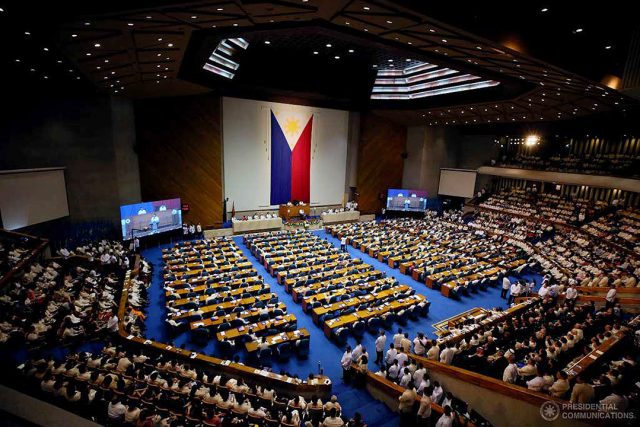
A CONGRESSMAN said on Wednesday the version of an anti‑political dynasty bill passed by a House committee could dislodge more than 5,000 politicians tied to political families nationwide, dispelling concerns that the chamber’s version is ineffective.
In a statement, Lanao del Sur Rep. Ziaur-Rahman Alonto Adiong said around 54.8% of elective posts are held by politicians from 4,239 political families, citing data from the Congressional Policy and Budget Research Department.
“Given the data we have, we can see that it is inaccurate to say that the committee version will not have an impact,” he said. “The numbers say otherwise.”
“The evidence proves that the second-degree provision strikes the right balance: it is stringent enough to open real opportunities for new leaders while remaining implementable,” he added.
Lawmakers are currently assessing bills aimed at curbing political dynasties. The House last week approved a similar measure that analysts have described as weaker as it allows families to monopolize seats across the government.
Analysts previously told BusinessWorld the chamber’s version has lapses and would still allow political families to proliferate.
President Ferdinand R. Marcos, Jr. has made limiting political dynasties a priority after public criticism over alleged misuse of billions of pesos in congressional district funds earmarked for Public Works projects, making it part of his governance reform agenda.
Such a bill has long been pushed in Congress but has repeatedly faltered for a lack of support from a legislature dominated by political families. Eight of 10 lawmakers belong to dynasties, according to a report by the Philippine Center for Investigative Journalism. — Kenneth Christiane L. Basilio
