Home Blog Page 1819

Speaker Romualdez asked to reveal state aid beneficiaries

PHILSTAR FILE PHOTO

HOUSE OF REPRESENTATIVES Speaker Ferdinand Martin G. Romualdez should disclose the beneficiary list of a state financial aid program to open its implementation and impact to public scrutiny, a former Finance department official said on Wednesday.

Ex-Finance Undersecretary Cielo D. Magno issued the challenge to Mr. Romualdez amid scathing public criticism for the Ayuda para sa Kapos ang Kita Program (AKAP), a social welfare scheme providing cash assistance to low-income workers.

The office of Mr. Romualdez did not immediately respond to a Viber message seeking comment.

“As taxpayers, we should know who these beneficiaries are, how much they actually received from the program, and who were targeted to receive assistance,” she said in a Facebook Messenger chat.

“There has to be a clear evaluation on the first year of implementation of the project since the President decided to keep the funding for it,” said Ms. Magno.

AKAP was formulated in 2023 by Mr. Romualdez and Party-list Rep. Elizaldy S. Co, who heads the House appropriations panel. It was meant as a stop-gap measure for Filipinos with limited income.

President Ferdinand R. Marcos, Jr. has included AKAP in the 2025 national budget despite concerns that it could be exploited for vote-buying and fuel patronage politics as the midterm election approaches.

“There is potential for misuse here since the government has admitted that there is no clear framework or structure for its implementation,” Ms. Magno said. “We’ve also seen politicians… going around the country distributing AKAP.” 

Meanwhile, a bill seeking to institutionalize the cash aid program was filed last month, a move that Southern Leyte Rep. Christopherson M. Yap said could make the country’s social welfare system more responsive during times of crisis.

The proposal “represents a significant step forward in the government’s efforts to alleviate poverty and promote social justice,” Mr. Yap said in House Bill (HB) No. 11176, which he filed on Dec. 5, 2024.

The bill empowers the Social Welfare department and local government units (LGUs) to be the implementation agencies of AKAP.

Mr. Marcos has placed AKAP under “conditional implementation” for 2025, with the aid program to be implemented by the Social Welfare and Labor departments, and socioeconomic planning agency, according to a Dec. 30 statement by the Presidential Palace.

The proposed law stated that “low-income individuals” could avail of “outright cash assistance” under the Department of Social Welfare and Development (DSWD) for food, medical, funeral, and financial relief needs.

“Financial assistance may be in the form of outright cash ranging from P1,000 to P15,000 subject to the assessment of the DSWD social worker. For assistance above P15,000 a Guarantee Letter approved by the DSWD Secretary or his representative shall be given,” the bill stated.

In its current form, AKAP provides one-time cash assistance worth between P3,000 and P5,000 to workers whose income falls below the poverty threshold.

Meanwhile, the bill authorized LGUs to provide cash assistance specifically designated for the purchase of rice for eligible beneficiaries.

“The amount of rice assistance that can be given to qualified beneficiaries shall be equivalent to half of the cost of 25 kilograms of rice based on the suggested retail price from the Department of Agriculture,” the bill added.

The Marcos administration should instead look at “focusing on solutions that will directly manage inflation” instead of implementing more dole-out programs, said Ms. Magno. “Distributing aid will not help address the problems brought about by inflation.”

The government should rationalize its social protection programs instead of institutionalizing AKAP, she added, taking note of the existence of Pantawid Pamilyang Pilipino Program (4Ps), a national poverty reduction program.

“The question really is we have a working program like 4Ps, what is the need for another one like AKAP?” — Kenneth Christiane L. Basilio


Adopt growth mindset — Marcos

A FIREWORK display can be seen from a building in Kalaw, Manila in celebration of the New Year. — PHILIPPINE STAR/WALTER BOLLOZOS

PRESIDENT Ferdinand R. Marcos, Jr. on Wednesday urged Filipinos to adopt a growth-focused mindset as they welcomed a new year.

He said the year 2025 is an opportunity “to learn from the lessons of the past and apply the wisdom gained to better oneself.”

“It is our desire for our citizens to embrace this outlook and adopt an introspective and growth-focused mindset that balances the realities of yesterday and the promises of tomorrow,” he said in a statement.

Mr. Marcos claimed that Filipinos showed “resilience” in the face of challenges in the previous months.

“Reflecting on the resilience we have shown in overcoming them, it is crucial for our progress to esteem such moments as hallmarks of the extraordinary strength we gain through solidarity and perseverance,” he said.

“Let us draw inspiration from the innumerable acts of courage, compassion, and bayanihan that we have witnessed in the face of adversity,” he added.

“Only then can we fortify the bonds that connect us, truly rebuild what has been lost, and realize a Bagong Pilipinas where dreams flourish and every Filipino thrives.”

Vice-President Sara Z. Duterte-Carpio, in her New Year statement, described 2024 as a year that challenged the nation’s resiliency.

“The year 2024 tested our resilience and shaped us as a people who stand for justice and progress,” she said in a video statement.

She urged Filipinos this year to face various challenges “as a nation that continues to trust in God” and that “works together for the progress and well-being of our families.” — Kyle Aristophere T. Atienza

DoH logs over 140 firework injuries

IAN SCHNEIDER-UNSPLASH

THE PHILIPPINE Health department on Wednesday said it had recorded over 140 fireworks-related injuries after the New Year celebration, bringing the total cases during the holiday season to over 300.

The number of cases from Dec. 22, 2024 to Jan. 1, 2025 declined by 34% to 340, from 519 a year earlier, the Department of Health (DoH) said in a statement.

The 141 fireworks-related injuries booked on Jan. 1 were 64% lower compared to last year, it added.

The majority, or 239, of the cases were aged 19 and below, while 100 were aged 20 and above, DoH said.

It said 202, or 59%, of the cases used illegal firecrackers such as boga or a PVC cannon, 5-star, and piccolo.

DoH said 299 patients with firecracker injuries were male, while 41 were female.

Using firecrackers could lead to amputation of body parts, hearing loss, blindness, poisoning, burns, permanent lung damage, and even death from severe injuries, according to the health agency.

DoH has said boga, 5-Star, and piccolo were the leading causes of fireworks-related injuries. — Kyle Aristophere T. Atienza

Monitor social media, Comelec told

A person using a smartphone is seen in front of displayed social media logos in this illustration taken on May 25, 2021. — REUTERS

THE PHILIPPINES’ Commission on Elections (Comelec) should rigorously monitor social media platforms as the 2025 midterm election approaches to curb artificial intelligence (AI)-generated disinformation, according to an election watchdog.

Comelec should set up a dedicated body tasked to solely monitor social media platforms, which should be supported by nongovernment organizations and key government agencies, Rona Ann V. Caritos, executive director of election watchdog Legal Network for Truthful Elections (LENTE), said via e-mail.

The poll body last year issued a resolution to rein in the use of social media and AI of election candidates amid concerns of misuse. It mandated politicians to disclose AI use for campaign ads, while prohibiting the spread of false information for the sake of electioneering.

“The Comelec should conduct systematic social media monitoring with a dedicated Social Media Monitoring Unit within its Education and Information Department, supported by civil society organizations, partner Government agencies, social media platforms, and other experts,” she said.

Ms. Caritos added that Comelec should coordinate with social media platforms and state agencies, such as the Department of Information and Communications Technology, to foster a collaborative approach toward addressing AI-driven disinformation.

Filipinos are set to elect half of the influential 24-seat Senate and a new set of party-list and district representatives for the 2025 midterm election, where all local and regional posts throughout the country are also up for grabs. — Kenneth Christiane L. Basilio

AI to customize learning — experts

PHILIPPINE STAR/ MIGUEL DE GUZMAN

ARTIFICIAL INTELLIGENCE (AI) is expected to further personalize Filipino students’ learning, which could help address the country’s worsening learning crisis, according to industry experts.

Ryan Lufkin, vice-president of global academic strategy at Instructure, said that the ability of AI to provide a more “personalized” learning experience in the next few years would help address bottlenecks in the education sector.

“That personalized learning experience, we’re going to do more and more, I think, in the next year or two with how we deliver just an experience that is specific to you,” he said in a video interview.

The Philippines has been hard-pressed to keep up with other countries’ adoption of AI amid its potential to bridge the learning and workforce skills gap.

“AI addresses educational gaps by providing personalized learning experiences and identifying areas where students need additional support,” Danda Crimelda Buhain-Garcia, chief external affairs officer at REX Learning, said in an e-mail.

“By leveraging AI, we can enhance the quality of education and address the issues highlighted by the PISA (Programme for International Student Assessment) results.” The Philippines ranked 77th out of 81 countries in the Organisation for Economic Co-operation and Development’s (OECD) 2022 PISA for 15-year-old learners. This meant Filipino students showed low proficiency in reading, mathematics, and science.

REX Learning said it recently partnered with PowerSchool, a US-based cloud K-12 (Kindergarten to Grade 12) software, to adopt its Schoology Learning System.

Integrating advanced technologies, such as PowerSchool’s software, has helped revolutionize REX Learning’s approach to providing knowledge tools, according to Ms. Buhain.

“Through PowerSchool’s Schoology Learning system, we have been able to personalize learning pathways, ensuring that each student receives an education tailored to their unique needs and capabilities.”

PowerSchool provides a unified platform for managing educational activities as it streamlines workflows for both students and teachers. It has resulted in increased student engagement, better academic performance, and higher satisfaction scores among teachers and students.

Included in the partnership is REX Learning’s adoption of PowerSchool’s AI assistant, PowerBuddy. The tool is expected to enable teachers to quickly assess a student’s learning style, strengths, and areas for improvement.

To date, Schoology is being used in over 100 REX-affiliated schools, serving 83,126 students.

“Our goal is to expand the platform’s (PowerSchool) reach across various regions in the Philippines, prioritizing areas that are in dire need of technological advancement in education.”

For its part, Instructure has been working on improving how it provides content for student users through its learning platform, Canvas LMS (Learning Management System).

“The idea that if it could actually, specific to you, understand where you’re struggling and provide additional resources and additional micro-learning tools,” Mr. Lufkin said.

“These are all things that we’ve talked about with our customers as things that we want to explore and potentially deliver in the future.”

However, educational institutions need to get rid of their skepticism of AI to fully utilize its benefits, analysts said.

According to Mr. Lufkin, educational institutions are responsible for teaching their students the proper use of AI, knowing that this will be used even as they enter the workforce.

“We still have to face that challenge that not all educators, not all institutions really are recognizing AI as a positive tool,” he said in a video interview.

Mr. Lufkin noted that many educators remain skeptical of AI and “really still continue to focus on the fact that it’s a cheating tool.”

“Realistically, students are going to be using these tools throughout their educational cycle, but well into their careers as well. So, we need to make sure that we’re preparing students to use them in their careers,” he added.

To maintain academic integrity, schools must emphasize the role of AI as a “supportive tool” instead of a replacement for human judgment and creativity, Ms. Buhain said. — Beatriz Marie D. Cruz

2 killed in Zamboanga City shootout

STOCK PHOTO | Shooting gun photo created by senivpetro - www.freepik.com

COTABATO CITY — Two men armed with pistols were killed in a shootout with a policeman they approached and shot along a highway in Barangay Ayala in Zamboanga City on Tuesday.

Officials of the Zamboanga City Police Office and Brig Gen. Bowenn Joey M. Masauding, director of the Police Regional Office-9, were quoted in Wednesday radio reports as saying that the slain duo possibly aimed to divest Master Sgt. Ryan F. Mariano of his service pistol, but the plot turned haywire and left them dead.

Mr. Masauding said Mr. Mariano, who was wounded in the ensuing gunfight, is a member of an anti-narcotics team under the Zamboanga City Police Station 9.

One of the two men who attacked Mr. Mariano died instantly from multiple bullet wounds while the other was declared dead on arrival by physicians in a hospital where emergency responders brought him for treatment.

Police investigators and local officials are together trying to identify the slain gunmen with the help of military intelligence agents under the Western Mindanao Command in Zamboanga City. — John Felix M. Unson

Villager killed in Cotabato grenade attack

COTABATO CITY — A villager was killed in a grenade explosion that ripped through a roadside carnival in Barangay Marbel in Matalam town in Cotabato at about midnight on Tuesday.

Col. Gilbert B. Tuzon, Cotabato provincial police director, told reporters on Wednesday that the blast fatality, 32-year-old Romel Presto Cabiso, died in a hospital where emergency responders rushed him for treatment.

Mr. Cabiso was standing close to one of the carnival stalls at about two meters away from where a fragmentation grenade, hurled from a distance by a still unidentified bomber, landed and went off.

The explosion triggered panic among carnival-goers and villagers in houses around.

Matalam Vice-Mayor Ralph Ryan H. Rafael, a senior member of their inter-agency, multi-sector municipal peace and order council, and Cotabato Gov. Emmylou T. Mendoza had separately condemned the incident and called on the police to identify its perpetrator for prosecution.

The two officials both provided initial essential support the family of Mr. Cabiso and assured to help facilitate his burial.

Ms. Mendoza had offered a monetary incentive for any informant who could help the police identify the persons behind the grenade attack. — John Felix M. Unson

2024 budget deficit likely to be within ceiling

PHILIPPINE STAR/EDD GUMBAN

By Aubrey Rose A. Inosante, Reporter

THE National Government’s (NG) budget deficit likely came in within the P1.52-trillion ceiling in 2024 as spending expected to have surged in December, analysts said.

“Possible, as a function of government spending growth, which tends to pick up towards the end of the year, as seen in recent years,” Rizal Commercial Banking Corp. Chief Economist Michael L. Ricafort said.

The Bureau of the Treasury reported that the budget deficit widened to P1.18 trillion in the first 11 months, from P1.11 billion a year earlier.

In November, the budget deficit more than doubled to P213 billion due to weak revenue collections and a pickup in spending.

Mr. Ricafort noted that the risk remains of a breach of the ceiling with large budget deficits of at least P300 billion posted every December since 2020.

He noted the “record monthly budget deficit” of P401 billion posted in December 2023.

John Paolo R. Rivera, senior research fellow at the Philippine Institute for Development Studies, said the NG is “likely to hit its P1.5-trillion deficit ceiling for 2024.”

“While spending will increase, stronger-than-expected revenue collections and efforts to manage non-essential spending might help keep the deficit within target,” Mr. Rivera said via Viber message.

He also said the budget deficit for the remaining month will “remain elevated” but expects revenue to improve towards year’s end due to corporate tax settlements and other collections, “but may not be enough to offset the spending surge.”

He called the P4.38-trillion revenue target “challenging but achievable” if the collections in the last month remain strong.

“This is because December typically sees a surge in government spending, particularly for infrastructure projects, social services, and year-end bonuses for government employees. This seasonal trend will likely push spending higher,” he added.

“The projection in the Philippine Development Plan is for the budget deficit to be lower this year due to increased tax take, but we will still have an actual deficit,” Ateneo School of Government Dean Philip Arnold P. Tuaño told BusinessWorld on Wednesday.

A surplus — in which government revenue outweighs spending, would be difficult this year, he said.

“Since this is an election year, we expect expenditures to significantly increase at the start of the year before slowing just before elections,” Mr. Tuaño said.

Meanwhile, Public finance expert Zyza Nadine M. Suzara said the actual deficit will depend largely on the government’s spending efficiency.

She said that the NG often accelerates its disbursements towards the end of the year to prevent unspent funds from being returned to the Treasury.

However, Ms. Suzara said a lower-than-programmed deficit is also not necessarily a good thing especially if revenue targets are not exceeded.

“Since the government isn’t actually expecting excess revenue, the lower-than-programmed deficit might be due to inefficiency,” she added.

For 2025, the budget deficit may narrow slightly but will remain substantial, Mr. Rivera said, due to increased revenue collections from tax measures such as the value-added tax (VAT) on digital services and measures targeting luxury consumption.

President Ferdinand R. Marcos, Jr. recently signed Republic Act No. 12023, which imposes a 12% VAT on foreign digital service providers and aims to collect P105 billion between 2025 and 2029.

He also said that stronger economic growth this year could boost revenue but any slowdown whether due to global headwinds or domestic challenges could negatively affect collections.

“The expected deficit in 2025 will be slightly less than P1.200 trillion so the required financing might be lower,” Mr. Tuaño said, adding that lower interest rates in the previous months allow the NG to raise the needed resources.

Budget priorities may be hostage to political schemes

PRESIDENT FERDINAND R. MARCOS, JR. — PRESIDENTIAL COMMUNICATIONS OFFICE

THE GOVERNMENT’S 2025 spending plan may not support the administration’s social and economic priorities as “budget politics” continues to affect allocations, GlobalSource Partners said.

“These budget politics in the Philippines are no less than a zero-sum game,” GlobalSource Country Analysts Diwa C. Guinigundo and Wilhelmina C. Mañalac said in a report.

“Because in maintaining the favorite items of legislators for public works projects, there can only be so much left to be allocated to education, health and other key social amelioration projects possibly even transgressing the Constitution and the laws of the land,” they said.

On Dec. 30, President Ferdinand R. Marcos, Jr. signed the P6.326-trillion budget bill while vetoing P194 billion worth of line items. He also rejected P168.24 billion in “unprogrammed” spending items, which will go through only if the government finds sufficient revenue.

The budget gave the highest allocation of P1.055 trillion to education, followed by the Department of Public Works and Highways (DPWH) with P1.007 trillion.

The bicameral conference committee version of the bill gave the DPWH P1.1 trillion compared to P737-billion budget of the Department of Education (DepED), in violation of the constitution, which requires that education receive top priority in public spending.

“On the basis of President Marcos’ pronouncements on the budget, he vowed to restore the amounts slashed from the DepEd expenditure program. However, he seems to be convinced that the zero subsidy for Philippine Health Insurance Corp. (PhilHealth), should remain,” the opposition-affiliated 1 Sambayan pressure group said.

Mr. Guinigundo and Ms. Mañalac, noting that the subsidy reduction was justified by the health insurer’s P400 billion in reserve funds, called this reasoning “absurd” because the reserve funds are intended to cover any PhilHealth liabilities that may arise.

“Other civic organizations including the Makati Business Club also found objectionable the retention of the AKAP (Ayuda para sa Kapos ang Kita program) or the social amelioration fund,” they added, noting that these funds are prone to abuse.

“In the first place, if AKAP is for the poor and should be retained, several quarters are in a quandary why in the first place the health subsidy to PhilHealth was zeroed out when better coverage from the health insurance directly benefits the poor.”

The GlobalSource analysts said that with the reduction in infrastructure projects, it may look like the education sector will be receiving a slightly higher priority in compliance with the Constitution. However, PhilHealth’s zero subsidy puts the 2025 budget in violative of the Constitution and various laws.

“In the absence of a law on confidential and intelligence funds, appropriations for these items are also questionable. It is also obvious that the President decided not to touch the higher allocations to both the House of Representatives and the Senate,” they said.

They warned that programs addressing poverty, education quality, health, income inequality, and fiscal sustainability are likely to worsen.

“In keeping the fundamental allocations and priorities of the original version, the President seems to have failed to address 1Sambayan’s call for him to ‘reconvene the bicameral conference committee’ and correct those “glaring anomalies” in the budget,” they said.

According to the Department of Budget and Management, the spending plan increased 10.1% from the year-earlier P5.768 trillion.

However, social services spending, which will provide funding for education, culture and manpower development, health, social security, welfare, and employment, was not given increased allocations and stayed at P2.121 trillion.

Meanwhile, economic services funding grew to P1.853 trillion, followed by general public services at P1.083 trillion and debt servicing P876.7 billion. — Aubrey Rose A. Inosante

Modest crop and livestock growth expected in 2025

PHILSTAR FILE PHOTO

THE gross value added (GVA) of crops and livestock is expected to post modest growth this year with the La Niña producing above-normal rainfall, the University of Asia and the Pacific (UA&P) Center for Food and Agribusiness (CFA) said.

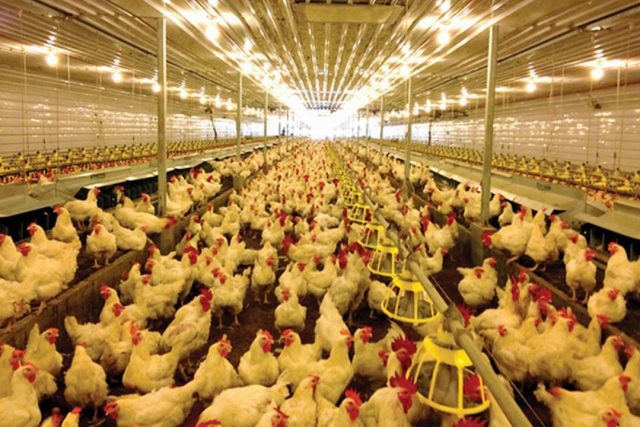
In a report, the CFA estimated that crop and livestock GVA will grow by up to 1% in 2025, with poultry posting 5-6% growth. However, fisheries growth is expected to slow to 0.5%.

The CFA said that it expects increased food demand and higher spending this year due to the elections, especially during the campaign period.

“The election also presents an opportunity to push for needed reforms in the agriculture sector. Good governance is crucial to effectively implement agriculture programs,” it said.

“A downside is that La Niña conditions, accompanied by above-normal rainfall, are seen to last until early 2025 and may affect agricultural activities,” it added.

“Overall, the UA&P-CFA projects a 2024 decline of 1-2% in agriculture as against the 1.2% growth last year (2023),” it added.
In the first nine months of 2023, crops, livestock, and fisheries declined 4.2%, 3.3%, and 1% respectively. Meanwhile, poultry and agri-activities and services posted 6.6% and 2.9% growth, respectively.

Through the nine months, GVA in agriculture and fisheries declined by 1.5%.

Meanwhile, the CFA estimates crops to end 2024 with a 3.5% to 4.5% decline in GVA, while livestock and fisheries are projected to post 2.5-3.5% and 1.5-2.5% declines, respectively.

The working range for GVA in agriculture and fisheries is a decline of between 1% and 2%.

The CFA said the bright prospects in agriculture include high-value crops, seaweed farming, free-range poultry, precision farming, root crops, organic certification, food processing, solar-powered irrigation, indigenous products, and agritourism.

“These growth areas have the potential to thrive and become significant contributors to the agricultural economy given strategic investments, market linkages, and strong government support coupled with private sector collaboration,” it said. 

“Addressing supply chain gaps, market access, and climate challenges can also further enhance the sector’s contribution to food security and economic growth,” it added.

However, it noted that the Philippines should embrace innovation to address outdated practices, limited infrastructure, climate vulnerabilities, and resource constraints.

“Agriculture is no longer just about growing crops or raising livestock; it is about cultivating innovation, nurturing sustainability, and harvesting opportunities for global progress,” the CFA said.

“By embracing innovation, investing in education and infrastructure, supporting farmers, and promoting sustainable practices, the agriculture sector can be transformed into a robust foundation for food security, economic growth, and rural development,” it added. — Justine Irish D. Tabile

Initial 2,000 hectares of Iwahig penal colony to be turned over for economic zone conversion

PHILSTAR FILE PHOTO

By Justine Irish D. Tabile, Reporter

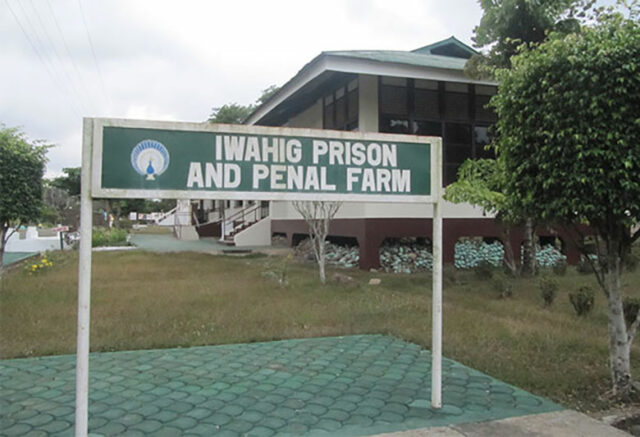
THE Philippine Economic Zone Authority (PEZA) said that it is ready to receive the initial 2,000 hectares of the Iwahig Prison Penal Farm early next year for conversion into an economic zone.

The conversion of the Palawan site is the result of a partnership with the Bureau of Corrections (BuCor).

“BuCor is ready to turn over to PEZA the initial 2,000-hectare area for ecozone development complete with topography and geohazard maps and the verified survey reports identifying the bounds of the property,” PEZA Director General Tereso O. Panga told BusinessWorld via Viber.

“We will formalize our memorandum of agreement (MoA) and usufructuary agreement by early next year,” he added.

Earlier this year, PEZA and BuCor signed a memorandum of understanding (MoU) for the conduct of due diligence in the establishment of ecozones in BuCor properties.

Under the MoU, PEZA and BuCor will collaborate in attracting investment and creating economic opportunities by establishing ecozones registered with PEZA in penal colonies.

According to BuCor, the idle land that could be used to set up ecozones could total 32,300 hectares.

These include 25,000 hectares in Iwahig, 7,000 hectares in Sablayan, Mindoro, and 300 hectares at the national penitentiary in Muntinlupa City.

“The next step is the MoA and usufructuary agreement for the assignment of the 2,000-hectare area to PEZA. Afterwards, we will go through the proclamation process,” he said.

“It will need to go through Presidential proclamation before we can invite locators to invest in the megazone,” he added.

Next year, PEZA is targeting 30 ecozone proclamations, nearly double this year’s proclamations.

The investment promotion agency proclaimed 16 ecozones involving investment of P5.637 billion in 2024.

According to PEZA, the target is to develop ecozones in more rural areas, noting that the growth areas for ecozone development are Calabarzon, Region 3, Cebu, and Mindanao.

Some 27 ecozones have been proclaimed during the Marcos administration, involving investment worth P9.715 billion.

Copra meal project set for W. Visayas expansion

PHILSTAR FILE PHOTO

THE Department of Agriculture (DA) said it will expand its Protein-Enriched Copra Meal (PECM) commercialization project to the Western Visayas to boost livestock production there.

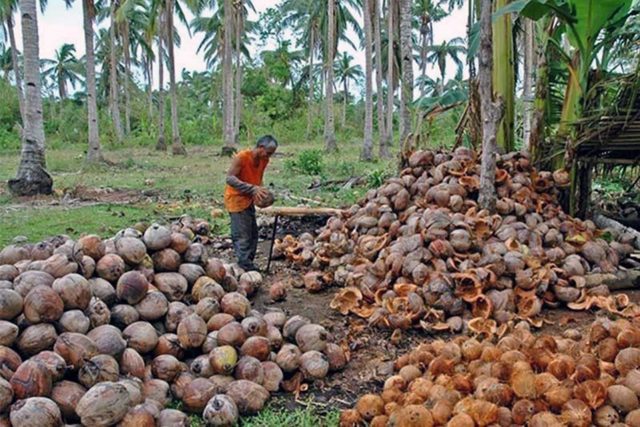
The PECM, initially rolled out in Regions IV A and 9, is aimed at mitigating the rising costs of animal feed by using copra meal, a by-product of coconut farming, as a substitute for imported soybean meal.

Agriculture Secretary Francisco P. Tiu Laurel, Jr. said that the expansion of the project will help farmers and feed producers in the region who are facing rising prices of traditional feed ingredients.

“The program not only helps reduce feed costs but also supports the local economy by creating new markets for coconut by-products, which are often underutilized,” he said in a statement on Wednesday.

Developed by the University of the Philippines-Los Baños Biotech Center employing a solid-state fermentation process, the PECM enhances copra meal’s protein content to 45%, bring it up to par with soybean meal.

According to the DA, feeding trials of the enriched copra meal, which include 200 kilos of PECM per ton of finfish feed and 100 kilos per ton of shrimp feed, returned a 3.9% and 0.4% reduction in feed costs compared to conventional commercial feed.

PECM was launched in 2022 to address supply disruptions caused by the pandemic and the Russian-Ukraine war.

“While COVID-19 has passed, the Russia-Ukraine conflict continues to disrupt global feed ingredient supply chains, keeping prices for essential commodities like soybean meal, feed wheat, and corn elevated,” DA said.

“Russia and Ukraine together account for about 30% of global feed grain supply, further exacerbating the pressure on feed prices,” it added.

The Philippine Statistics Authority reported that hog production in the Western Visayas dropped 23% to 158,471 metric tons (MT) in 2023.

Meanwhile, carabao production in the region increased 3.9% to 17,159 MT, cattle production flat at 19,007 MT, and goat production rose 11% to 7,105 MT.

In 2023, duck production in the region decreased 1.9% to 2,722 MT, and duck egg production fell 5.4% to 4,306 MT.

Chicken production in the Western Visayas last year increased 4.8% to 131,926 MT, while chicken egg output rose by 7.9% to 40,015 MT.

“By expanding the copra meal initiative, the DA aims to strengthen food security, improve local feed production, and promote more efficient use of agricultural by-products in livestock farming,” it said. — Justine Irish D. Tabile