Home Blog Page 179

Philippines jobless rate jumps to over three-year high of 5.8% in January
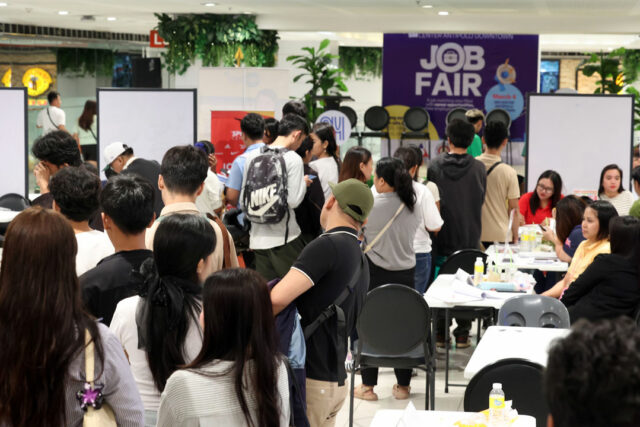
Applicants attend a job fair in Antipolo City, March 4, 2026. — PHILIPPINE STAR/MIGUEL DE GUZMAN

By Erika Mae P. Sinaking, Reporter

The Philippines’ unemployment rate climbed to 5.8% in January 2026, marking its highest level in more than three years, as the labor market cooled after the holidays, the Philippine Statistics Authority (PSA) said on Friday.

Preliminary results from the January 2026 Labor Force Survey (LFS) showed the number of unemployed Filipinos rose to 2.96 million, from 2.17 million in the same month last year, and 2.26 million in December 2025.

PSA Assistant Secretary Divina Gracia L. Del Prado said that the January unemployment rate was the highest recorded since June 2022, when unemployment stood at 6.0%.

The January jobless rate was higher than the 4.3% in January 2025, and the 4.4% in December 2025.

“Usually in our time series, after the Christmas season, our employment rate really goes down… because there are no longer available jobs,” Ms. Del Prado told a livestreamed news briefing.

“Because in December, of course, there are lots of jobs available for our labor force. But month on month, the number of unemployed increased by 695,000. And most of the reasons for this are that people got tired — maybe they were exhausted from working in December, or believing that there are no jobs available,” she added.

The quality of employment also saw a shift, as the underemployment rate — the proportion of those with jobs but seeking more hours — stood at 13.2% in January 2026. This was a tad lower than the 13.3% underemployment rate in January 2025, but higher than the 8% in December 2025.

About 6.35 million Filipinos were considered underemployed persons in January, slightly decreased from the 6.47 million underemployed in January 2025, and 2.42 million seen in December 2025.

The country’s employment rate fell to 94.2% in January 2026, down from 95.7% in January 2025 and 95.6% in December 2025. This was also the lowest employment rate recorded since June 2022 when it stood at 94%.

The number of employed persons in January 2026 fell to 47.94 million, a decline from 48.49 million employed in the same month last year, and 49.43 million in December 2025.

The labor force participation rate (LFPR) eased to 62.3% in January 2026, translating to 50.89 million Filipinos in the labor force. This was lower than the 63.9% (50.65 million) recorded in January 2025, and the 64.4% in December 2025.

JOB LOSSES

On a year-on-year basis, the agriculture and forestry sub-sector lost 1.42 million jobs in January, driven by a drop in the cultivation of paddy rice, corn, and leafy vegetables. Wholesale and retail trade followed with the loss of 729,000 jobs, while fishing and aquaculture shed 140,000 positions.

On the other hand, several sectors posted annual gains in January, led by administrative and support service activities (+403,000), public administration and defense (+342,000), manufacturing (+326,000), and transportation and storage (+160,000).

Month on month, agriculture and forestry jobs plummeted by 1.76 million, while wholesale and retail trade also saw a month-on-month decrease of 888,000 jobs, followed by construction (-199,000), education (-154,000), and accommodation and food service activities (-140,000).

Ms. Del Prado pointed to weather disruptions as a contributing factor, specifically the impact of Typhoon Ada on regions such as Bicol, Eastern Visayas, and Caraga.

Despite the overall job losses, some sub-sectors showed resilience month-on-month. Manufacturing added 546,000 jobs, while other service activities grew by 248,000, and transportation and storage increased by 238,000 from December 2025 to January 2026.

Regarding the quality of remaining jobs, wage and salary workers continued to make up the bulk of the workforce at 68.8%, followed by the self-employed without employees at 24.7%. Within the wage-earner group, private establishments employed 78.5%, while the government accounted for 14.3%.

Among all regions, South Cotabato, Cotabato, Sultan Kudarat, Sarangani, and General Santos City (SOCCSKSARGEN) recorded the highest employment rate at 96.0% in January 2026, while Bicol region posted the lowest at 91.8%.

On the other hand, Bicol region logged the highest unemployment rate in the country at 8.2%.

Eight regions recorded unemployment rates exceeding the 5.8% national average, including Eastern Visayas (7.7%), Zamboanga Peninsula (6.7%), Caraga (6.53%), Negros Island Region (6.50%), provinces of Caveat, Laguna, Batangas, Rizal, and Quezon or CALABARZON at 6.4%, Northern Mindanao at 6.1%, and the National Capital Region at 6.0%.

SUPPORT FOR WORKERS

Department of Economy, Planning, and Development (DEPDev) Secretary Arsenio M. Balisacan said in a statement that the government is intensifying support for the workforce amid “elevated geopolitical tensions and global uncertainties” due to the Iran war.

“Our priority is clear: create more and better jobs at home, strengthen industries, equip our workers with the skills needed for higher-value employment, and ensure that those affected by global disruptions, including OFWs, can transition smoothly into productive opportunities here in the Philippines,” Mr. Balisacan said.

PSA’s Ms. Del Prado warned that the spike in fuel prices could further impact the labor market.

“When the price of oil spikes, businesses, some of them, no longer hire or some of them, lay off. So, it might affect our labor market,” she said.

“Those [migrant workers] who were repatriated [from the Middle East] will also come back home, they will become part of the labor force. Or some of them, not in the labor force, but if they will become part of the labor force and they are unemployed, then they will increase the total number of unemployed and of course the unemployment rate,” she said, adding this will be reflected in the data in the coming months.

Benjamin B. Velasco, an assistant professor at the University of the Philippines Diliman School of Labor and Industrial Relations, said that the big jump in the unemployment rate means that the private sector is not generating enough jobs.

“The unemployment rate for January 2026 should be a wakeup call to the Marcos Jr. administration to shift priorities in its economic and employment agenda,” Mr. Velasco told BusinessWorld in a Facebook messenger chat.

“In the long-term, we need an industrial policy that is state-led and incentivizes labor-intensive and jobs-creating industries and sectors that cater to the domestic market,” he said.

“Things are going to get even worse before they get any better given Trump’s war in Iran which has led to a global economic crisis,” he added.


Manila Water, Maynilad to raise water rates in April

Residents fetch water from a tanker in this file photo. -- Photo by Edd Gumban, The Philippine Star

By Sheldeen Joy Talavera, Reporter

Customers in Metro Manila and nearby areas will have to brace for higher water bills starting April as the regulator approved the two concessionaires’ applications for rate hikes due to foreign exchange movements.

The Metropolitan Waterworks and Sewerage System Regulatory Office (MWSS RO) approved a rate hike of P0.04 per cubic meter (cu.m.) for Manila Water Co. Inc., and an increase of P0.09 per cu.m. for Maynilad Water Services, Inc., the agency said in a statement on Friday.

Customers served by Manila Water in the east zone who consume 10 cu.m. or less will see their water bills go up by P0.14. Those consume up to 20 cu.m. and 30 cu.m. will have to pay an additional P0.29 and P0.58, respectively.

Meanwhile, Maynilad customers in the west zone who consume 10 cu.m. or less will see an upward adjustment of P0.27 in their bills next month. Those who consumes up to 20 cu.m. and 30 cu.m. will see their bills increase by P1 and P2.07, respectively.

The tariff increase will have less impact on low-income households who are beneficiaries of the enhanced lifeline program of Manila Water and Maynilad.
The upward adjustments were approved as part of the foreign currency differential adjustment (FCDA).

The FCDA is a tariff mechanism which allows water concessionaires to regain losses or return gains by the movement of peso against other foreign currencies. The companies pay foreign currency-denominated concession fees to MWSS, as well as loans that are used to finance projects to expand and improve water and sewerage services.

Meanwhile, the MWSS RO penalized Maynilad amounting to P42.57 million for the prolonged water service interruptions that occurred in the southern portion of the west concession area last month.

The regulator said that investigation showed that the company failed to meet its service obligation of providing uninterrupted 24-hour supply of water at a minimum pressure of seven pounds per square inch to 98,331 customers within the Putatan Water Treatment Plant and Poblacion Water Treatment Plant Supply Zones.

As a result, Maynilad will have to refund P432.92 per affected water service connection, to be reflected in customers’ water bills by next month.

Manila Water serves the east zone network of Metro Manila, covering parts of Marikina, Pasig, Makati, Taguig, Pateros, Mandaluyong, San Juan, portions of Quezon City and Manila, and several towns in Rizal province.

Maynilad serves parts of Manila, Quezon City, and Makati, as well as Caloocan, Pasay, Parañaque, Las Piñas, Muntinlupa, Valenzuela, Navotas, and Malabon. It also supplies water to the cities of Cavite, Bacoor, Imus, and the towns of Kawit, Noveleta, and Rosario in Cavite province.

Metro Pacific Investments Corp., which has a majority stake in Maynilad, is one of three Philippine units of First Pacific Co. Ltd., the others being Philex Mining Corp. and PLDT Inc.

Hastings Holdings, Inc., a unit of PLDT Beneficial Trust Fund subsidiary MediaQuest Holdings, Inc., has an interest in BusinessWorld through the Philippine Star Group, which it controls.

16 global microinsurance executives, regulators to learn from Pioneer Insurance

Pioneer Insurance welcomes international Microinsurance Master delegates representing 10 countries from across the globe.

Sixteen insurance executives, regulators, and market enablers representing 10 countries have arrived in the Philippines to learn about microinsurance practices from Pioneer Insurance as the company hosts Microinsurance Master 2026, a global accelerator program focused on advancing financial inclusion.

The Microinsurance Master program starts with a two-week immersion at Pioneer and is followed by three months of follow-up mentoring by industry leaders to help participants implement their key takeaways and accelerate their activities. It entails classroom learning, field immersion, and expert mentorship designed to deepen their understanding of inclusive insurance models and expand protection for the unserved and underserved.

The Philippines has become a regular venue for the international program. With Pioneer recognized as the global standard for microinsurance, it was the chosen host for Microinsurance Master program in 2018, 2019, 2022, and 2024, before welcoming another batch this year. This year’s cohort brings together participants from Belgium, Equatorial Guinea, Ethiopia, France, Ghana, Kenya, South Africa, United Kingdom, and Zambia.

Through the years, Pioneer has already inspired over 150 decision makers in 48 countries.

Microinsurance Master Founder Bert Opdebeeck shares, “We are delighted to return to Pioneer Insurance. What makes its microinsurance journey impressive is how they consistently put their clients at the center of all its decisions while building solid partnerships.”

Pioneer Insurance Group Head and CARD Pioneer Microinsurance, Inc. (CPMI) Co-Founder Lorenzo Chan welcomed the delegates and emphasized the importance of community immersions and customer-centricity in designing products that truly meet the needs of the underserved.

“People will say that you never know what it’s like to be in someone’s position unless you walk in their shoes. To serve our market better, we encourage our Microinsurance Team to go and live with our clients,” Mr. Chan shared.

Following this approach, the Microinsurance Master participants are scheduled to take part in a community immersion in Pampanga to meet farmer families who have benefitted from CPMI’s products. Field visits will also be held at key microinsurance touchpoints, including CARD MRI centers, Cebuana Lhuillier Pawnshop, SM Business Center, and Motortrade stores, giving them a closer look at how inclusive insurance solutions reach communities on the ground.

Mr. Chan added that Pioneer continues to pursue both sustainability and social impact through its work in microinsurance.

“We want to combine profit with purpose without losing sight of what really matters,” he said.

Meanwhile, Melinda Grace Labao, President and CEO of CARD Pioneer Microinsurance, Inc. (CPMI), expressed appreciation to fellow advocates of financial inclusion who traveled to the Philippines to participate in the program, challenging them to approach the program with an open mind and collaborative spirit.

“Together, through collaboration and shared purpose, we can continue to expand protection for those who need it most,” Ms. Labao said. “Together, we can strengthen partnerships, scale responsibly, and push the boundaries of what is possible in financial inclusion.”

Through Microinsurance Master 2026, Pioneer continues to inspire action by sharing firsthand insights on how microinsurance programs are designed, distributed, and delivered within communities. By opening its doors to global practitioners, Pioneer aims to strengthen collaboration and encourage the replication of its success for underserved populations around the world.


Spotlight is BusinessWorld’s sponsored section that allows advertisers to amplify their brand and connect with BusinessWorld’s audience by publishing their stories on the BusinessWorld Web site. For more information, send an email to online@bworldonline.com.

Join us on Viber at https://bit.ly/3hv6bLA to get more updates and subscribe to BusinessWorld’s titles and get exclusive content through www.bworld-x.com.

Philippines seeks oil law review as high prices threaten nation

A motorist pays a gas attendant at a gas station on March 1, 2026. — PHILIPPINE STAR/RYAN BALDEMOR

The Philippines is looking to review a nearly 30-year old law that liberalized its oil industry, as the government aims to have a better grip on fuel prices that have shot higher due to the Iran war.

Energy Secretary Sharon Garin has backed proposals by some lawmakers to review a 1998 law that she said left the industry “totally unregulated,” threatening the import-dependent nation.

“It’s about time that we revisit that — learning from what’s happening now (and) in previous years when there were oil problems in the other side of the world,” Ms. Garin said in an interview with Bloomberg Television’s Yvonne Man and David Ingles on Friday.

“Unregulated market works when the circumstances are good. In good times, it’s a good market to have. In bad times, it’s a bad market to have,” she added. “There has to be a balance in the powers of the Department of Energy.”

The Philippines, which imports nearly all of its oil requirements, will likely see another round of substantial increase in fuel prices next week, with power costs set to rise by 16% in April, according to Ms. Garin. Those price spikes could fan inflation further, which already accelerated to the highest in more than a year in February.

“The Philippines cannot survive in an environment where the international market dictates its price,” she said, also pointing to efforts by the Southeast Asian nation to boost the share of renewable power in its energy mix.

Philippine oil companies are looking at sourcing supply from countries beyond the Middle East, but the energy chief said that’s proving to be difficult.

“It’s not about the supply, it’s about the price,” Ms. Garin said. “And if you do buy one, you have to find the ship that’s willing to sail to your country and the price of the logistics is increasing day to day. Insurance is high also. So there’s so much to consider.”

Other Asian countries are also restricting fuel use and telling citizens to avoid panic-buying as the world’s biggest energy-importing region is particularly exposed as the war in the Middle East curtails access to oil and fuel from the Persian Gulf. — Bloomberg

Philippine lawmaker raises alarm over obesity as study shows 41% of adults overweight

Rep. Janette L. Garin at the presentation of the Epidemiological Burden and Cost of Obesity in the Philippines (EpiCOb-PH) study in Mandaluyong City, Mar. 9, 2026. — EDG ADRIAN A. EVA

A Philippine lawmaker on Monday sounded the alarm over the country’s rising obesity problem, following a recent study that found about 41% of the 72 million Filipino adults — translating to 29.5 million people — are classified as overweight or obese.

“Forty-one percent is very alarming. I was surprised because I never expected it to be that high,” Janette L. Garin, Deputy Speaker and representative of Iloilo’s 1st district, said in reaction to the findings of the Epidemiological Burden and Cost of Obesity in the Philippines (EpiCOb-PH) study, which was also released on the same day during a multi-sectoral forum.

The study was led by Dr. Madeleine de Rosas-Valera and funded by Novo Nordisk Pharmaceutical (Philippines) Inc. It also found that more than four in 10 Filipino adults are already at increased risk of obesity-related health problems.

Ms. Garin said the findings of the study “are a sound of alarm and a red flag for our country,” noting that Filipinos currently face high out-of-pocket healthcare expenses, while public healthcare spending is largely directed toward curative care rather than preventive care.

The Iloilo representative said it is timely for the government to work together and address the problem of obesity by providing the right information down to schools and communities.

Ms. Garin committed to pushing for programs and budget allocations for health to curb the number of obese Filipinos to about 10% from 41%, noting that such a persistently high figure would be “a bad legacy for the country.”

Meanwhile, she told BusinessWorld that she is looking into including lessons about misleading marketing of food that contributes to obesity in the school curriculum. Ms. Garin said she will pursue this through legislation or through the lower house’s oversight powers.

“Pwede siyang ipasok sa curriculum. We have to start orienting the parents and teachers kasi doon magsisimula. We have to let them know what they are feeding or what they are eating [It can be included in the curriculum. We have to start orienting parents and teachers because that is where it begins. We have to let them know what they are feeding their children or what they themselves are eating],” Ms. Garin said on the sidelines of the presentation of the EpiCOb-PH study.

On the recent push to amend the Tax Reform for Acceleration and Inclusion (TRAIN) Law to raise taxes on sweetened beverages and include previously exempted sweetened and flavored milk, Ms. Garin said discussions on taxation are difficult to pursue amid ongoing global economic challenges.

“Napaka-mahirap na tumbukin natin ang taxes especially when it relates to food [It is very difficult to directly raise taxes, especially when it relates to food],” Ms. Garin said.

“Maybe we can discuss about taxation in the future kasi para ngayon, if we talk about that baka mamaya, mas malaking impact sa ekonomiya [Maybe we can discuss taxation the future, because for now, if we talk about that, it might have a bigger impact on the economy later],” she added.

The representative also said the lower house could explore other ways to curb obesity, such as imposing penalties on unhealthy foods and making measures to increase public awareness of foods that contribute to obesity.

The EpiCOb-PH study was conducted to address the gap in research on obesity’s demographic distribution and economic burden in the country. It used a modeling approach that combined multiple national data sources.

Researchers used data from the National Nutrition Survey and the Expanded National Nutrition Survey from 1993 to 2023 to estimate obesity’s current and future trends, as well as its health impacts.

TRILLION-PESO COST OF OBESITY

The EpiCOb-PH study also found that obesity is estimated to have cost the Philippines around P1.9 trillion in 2025, equivalent to 7.3% of the country’s gross domestic product (GDP) that year. The cost could rise to as much as P2.7 trillion if overweight-related expenses are also included.

Of the total cost, P551 billion was attributed to healthcare expenses, which could reach P790 billion when overweight cases are included.

These cover direct medical costs such as hospital confinement, based on normative estimates assuming patients are diagnosed and treated according to medical guidelines.

Non-medical costs were also taken into account, reaching P165.39 billion, including expenses such as transportation.

Productivity losses, including workdays missed due to obesity-related conditions, were estimated at P1.17 trillion.

The cost of obesity was computed through a specialized cost-of-illness model that integrated findings from a previous epidemiological burden study, Dr. John Paul Caesar delos Trinos, chief scientific officer and principal at metaHealth Insights and Innovations Inc., a consulting agency that organized the forum, said.

The analysis was also supported by secondary data, including published literature, online resources, and consultations with experts.

To curb the economic cost of obesity, Mr. delos Trinos said that food warning labels could be improved to indicate high levels of obesity-inducing ingredients such as fat, sugar, and salt.

Meanwhile, he urged the Philippine Health Insurance Corporation (PhilHealth) to include obesity in its primary care package, YAKAP.

For government offices and workplaces, he also suggested incorporating wellness initiatives for employees.

“This cannot be addressed by one institution or one sector alone. It cannot just be researchers conducting studies, publishing them, and then calling it a day. This will really require collaboration between different sectors,” Mr. delos Trinos said during his presentation in mixed English and Filipino. — Edg Adrian A. Eva

DITO shows support for MSMEs via local community flea market

Gabby Cui (extreme left), Head of MSME, DITO BizBayan, with STP founders at the South Trading Post milestone celebration. — DITO TELECOMMUNITY

DITO Telecommunity Corp. said it powered the connectivity needs of the local community flea market South Trading Post (STP) for its key events, reflecting its continued commitment to digitally empower local businesses.

Among these was STP’s milestone event on February 27, celebrating the second anniversary of its merchant community, powered by DITO BizBayan, the telco’s business unit for micro, small, and medium enterprises (MSMEs).

The event capped a series of STP activities over the past months, starting with the STP 2nd Southversary, which ended on November 9, 2025, and most recently the Love You So Matcha event, held until February 15, 2026.

DITO BizBayan powered all STP events’ connectivity needs by supporting merchant operations and event production, while enabling digital payments, the company said. It also assisted with social media engagement and other connectivity requirements for exhibitors and organizers.

Gabby Cui, head of MSME for DITO BizBayan, said STP shows how modern markets blend offline and online business seamlessly.

“With DITO’s 5G connectivity, we’re helping MSMEs power cashless payments, connect with customers in real time, and create meaningful experiences,” Mr. Cui said. He added that through the telco’s digital solutions, they aim to make every event successful and memorable for both merchants and their customers.

Meanwhile, Justin Francisco, co-founder of STP, described the telco’s support as “transformative” for the community and its stakeholders.

DITO said its strong and expanding 5G network enables businesses and communities to access stable, scalable digital infrastructure that drives growth and innovation. It added that the partnership with STP reflects its commitment to strengthening local business ecosystems and ensuring seamless, tech-enabled experiences for merchants and customers. — Edg Adrian A. Eva

ASEAN must strengthen resilience against shocks from Middle East crisis, Philippine trade secretary says

The ASEAN Philippines 2026 logo is seen in this file photo. — PPA POOL/NOEL B. PABALATE

MANILA — Philippine Trade Secretary Cristina Roque said on Friday the conflict in the Middle East underscores how deeply interconnected the global economy has become, with geopolitical tensions triggering immediate economic shocks.

Opening an ASEAN economic ministers’ meeting, she stressed that the goal is to strengthen regional resilience and deepen integration so the Southeast Asian bloc can navigate global shifts with coordination and foresight, rather than merely reacting to them. — Reuters

Cuba to release 51 prisoners in Vatican-brokered deal

A CHIMNEY is set up on the roof of the Sistine Chapel, ahead of the conclave, at the Vatican, May 2, 2025. — REUTERS

HAVANA — Cuba said on Thursday it will release 51 prisoners in the coming days under an agreement with the Vatican, at a time the Communist government has come under increasing pressure from the United States to reform its one-party rule.

The prisoner release follows two weeks after Foreign Minister Bruno Rodriguez met with Pope Leo in the Vatican and at a time when Cuba faces a severe economic crisis, one aggravated by US President Donald Trump’s imposition of a virtual oil blockade on the Caribbean island.

“In the spirit of goodwill and the close and fluid relations between the Cuban state and the Vatican, with which communication has historically been maintained regarding the review and release of prisoners, the Cuban government has decided to release 51 people sentenced to imprisonment in the coming days,” the Foreign Ministry said in a statement.

“All have served a significant portion of their sentences and have maintained good conduct in prison,” it said.

Cuba said it has granted pardons to 9,905 inmates since 2010 while granting early release to another 10,000 in the past three years.

In March 2025, it granted early release to 553 prisoners in another Vatican-brokered deal.

But human rights groups say the Communist government is holding hundreds of political prisoners, with estimates varying. It was unclear how many of the 51 prisoners subject to the latest release have been held on common crimes or charges related to public displays of dissent.

“This sovereign decision is a common practice in our criminal justice system and has characterized the humanitarian trajectory of the revolution, which this time coincides with the approach of the religious celebrations of Holy Week,” Cuba said.

The Cuban government has always rejected any suggestion it makes decisions under US pressure. The timing of Thursday’s announcement happens to coincide with the most intense pressure campaign applied by Washington in decades. On Jan. 3, the US captured Venezuelan President Nicolas Maduro, removing from power Cuba’s most important foreign benefactor.

Mr. Trump in recent weeks had made a series of threatening statements, saying either that Cuba was on the verge of collapse or eager to make a deal with the United States. On Monday he said Cuba may be subject to a “friendly takeover,” then added, “it may not be a friendly takeover.”

“Wouldn’t really matter because they’re really down to … as they say, fumes. They have no energy, they have no money,” Mr. Trump told reporters in Doral, Florida.

The Cuban government has denied that any official talks are underway with the United States, but has yet to explicitly deny press reports that US officials were in talks with Raul Guillermo Rodriguez Castro, the grandson of former Cuban President Raul Castro, who is 94 and still wields great influence. — Reuters

Both sides trade strikes and threats as the Iran war approaches the two-week mark

Iran’s new supreme leader, Mojtaba Khamenei, the second son of late Iran's Supreme Leader Ayatollah Ali Khamenei, attends a rally in Tehran, Iran, May 31, 2019. — via REUTERS/HAMID FOROOTAN

DUBAI/BEIRUT – The leaders of Iran, Israel and the United States all voiced defiance and vowed to fight on as the Middle East war approached the two-week mark on Friday, killing thousands of people, disrupting the lives of millions of others and shaking financial markets.

New Iranian Supreme Leader Mojtaba Khamenei issued his first comments, read out by a television presenter on Thursday, vowing to keep the Strait of Hormuz shut and calling on neighboring countries to close US bases on their territory or risk Iran targeting them.

“I assure everyone that we will not neglect avenging the blood of your martyrs,” said the hardline cleric, who is close to Iran’s top military force. It was not clear why he did not appear in person.

Israeli Prime Minister Benjamin Netanyahu held his first news conference since the US and Israeli airstrikes on Iran started on February 28, taking questions via video-link and issuing a veiled threat to kill Mr. Khamenei and defending the military assault.

“I will not detail the actions we are taking. We are creating the optimal conditions for toppling the regime but I won’t deny that I can’t tell you with all certainty that the people of Iran will topple the regime – a regime is toppled from the inside,” Mr. Netanyahu said.

“But we can definitely help and we are helping.”

The prospect that one of the most severe disruptions ever to global energy supplies could endure sent oil prices up about 9% to $100 a barrel on Thursday, helping drive down US stocks.

The S&P 500 notched up its biggest three-day percentage drop in a month, and shares in Asia were also under pressure on Friday.

In an effort to stabilize global energy markets, the US on Thursday issued a 30-day license for countries to buy Russian oil and petroleum products currently stranded at sea.

“The temporary increase in oil prices is a short-term and temporary disruption that will result in a massive benefit to our nation and economy in the long-term,” Mr. Bessent said in the statement, echoing earlier comments from President Donald Trump.

US POLITICAL FALLOUT

Mr. Trump, who has already declared that the US and Israel won the war, said the United States stood to make significant money from oil prices driven higher because of supply issues tied to the closure of the Strait of Hormuz, through which a fifth of global oil normally passes.

“The United States is the largest Oil Producer in the World, by far, so when oil prices go up, we make a lot of money.” Stopping Iran from having nuclear weapons was far more important, he said on social media.

Mr. Trump’s comments angered opposition Democrats, who accused the Republican president of caring too little about the war’s impact on average Americans and demanded more information about civilian casualties, particularly a strike that killed dozens of children at an Iranian girls’ school.

Trump’s administration has not provided a public assessment of the expected cost or duration of the war, which is unpopular with the American public, or a strategy for Iran after the fighting stops. The president and top aides have also given conflicting reasons for starting to fight.

The death toll has risen to more than 2,000 people, most in Iran. Almost 700 have died in Lebanon, where Israel has targeted central Beirut and ordered residents out of a swathe of the south in an offensive against the Iran-backed Hezbollah group.

Drones have been reported flying into Kuwait, Iraq, the United Arab Emirates, Bahrain and Oman, undermining US and Israeli claims to have knocked out much of Iran’s stock of long-range weapons.

In Iraq, US Central Command said it was carrying out rescue efforts after one of its refueling aircraft went down in an incident that involved another aircraft but was not the result of hostile or friendly fire. The Islamic Resistance in Iraq, ​an ​umbrella group of ⁠Iran-backed ​armed factions, claimed responsibility for downing the aircraft.

France’s President Emmanuel Macron said one soldier had died and several were wounded during an attack in northern Iraq, hours after an Italian base was also targeted in the area.

Two tankers were set ablaze in the Iraqi port of Basra earlier this week after being hit by suspected Iranian explosive-laden boats and other ships have been struck in the Gulf near the Strait of Hormuz.

IRAN SECURITY FORCES ‘EVERYWHERE’

Inside Iran, residents said security forces were increasing their presence to demonstrate continued control.

“Security forces are everywhere, more than before. People are afraid to come out, but supermarkets are open,” teacher Majan, 35, said by phone from Tehran.

Israel and the United States have called on Iranians to rise up and topple their clerical rulers.

Many Iranians want change and some openly celebrated the elder supreme leader’s death, after his forces had killed thousands of anti‑government protesters in January. But there has been no sign of organized dissent while the country is under attack.

Iran’s message is that its strategy now is to impose prolonged economic shock to force Mr. Trump to back off. A spokesperson for Iran’s military command said on Wednesday the world should prepare for oil prices of $200 a barrel.

US Energy Secretary Chris Wright said on Thursday he did not expect that to happen, but did not totally rule it out. “I would say unlikely, but we are focused on the military operation and solving a problem,” Wright told CNN. — Reuters

US allows countries to buy Russian oil stranded at sea for 30 days

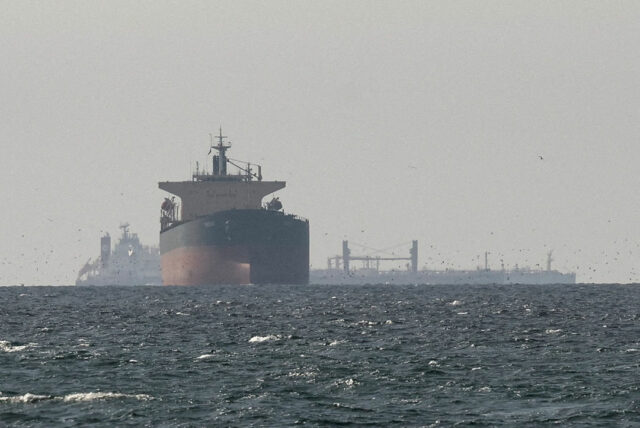
Tankers sail in the Gulf, near the Strait of Hormuz, as seen from northern Ras al-Khaimah, near the border with Oman’s Musandam governance, amid the US-Israeli conflict with Iran, in United Arab Emirates, March 11, 2026. — REUTERS

THE UNITED STATES issued a 30-day license for countries to buy Russian oil and petroleum products currently stranded at sea in what Treasury Secretary Scott Bessent said was a step to stabilize global energy markets roiled by the Iran war.

The announcement comes a day after the US Energy Department said that the US would be releasing 172 million barrels of oil from the strategic petroleum reserve in an effort to curb sky-rocketing oil prices in the wake of the war in Iran.

That release was part of a broader commitment by the 32-nation International Energy Agency to release 400 million barrels of oil. The agency said earlier on Thursday that he war in the Middle East was creating the biggest oil supply disruption in history.

Mr. Bessent, in a statement on X released hours after benchmark oil prices shot above $100 a barrel, said the measure was “narrowly tailored” and “short-term” and would not provide significant financial benefit to the Russian government.

“The temporary increase in oil prices is a short-term and temporary disruption that will result in a massive benefit to our nation and economy in the long-term,” Mr. Bessent said in the statement, echoing President Donald Trump.

Thursday’s license, which authorizes the delivery and sale of Russian crude oil and petroleum products loaded on vessels as of March 12, will remain valid through midnight Washington time on April 11, according to the text of the license posted on the Treasury Department’s website.

The US Treasury previously issued a 30‑day waiver on March 5 specifically for India, allowing New Delhi to buy Russian oil stuck at sea.

Among other measures to tame energy prices, Mr. Trump has already ordered the US International Development Finance Corporation to provide political risk insurance and financial guarantees for maritime trade in the Gulf and said the US Navy could escort ships in the region.

In another attempt to control prices, the Trump administration is considering temporarily waiving a shipping rule known as the Jones Act to ensure energy and agricultural products can move freely between ​US ports, the White House said. Waiving the rule would allow foreign ships to ​carry fuel between US ​ports, potentially lowering ⁠costs and speeding deliveries.

“The president is taking every action he can to lower prices … unsanctioned oil that’s at sea to get that into the market, continuing to push our own producers to drill and expand production as fast and as far as they can, providing regulatory relief, and you’re going to see more and more in the days to come,” White House Deputy Chief of Staff Stephen Miller told Fox News’ “Primetime” program on Thursday.

There were about 124 million barrels of Russian-origin oil on water across 30 different locations globally as of Thursday, Fox News reported, adding that the US license would provide around five to six days of supply when taking into account the daily loss of oil from the Strait.

Mr. Trump said earlier on Thursday the United States stood to make significant money from oil prices driven higher by the war, prompting criticism from some lawmakers who accused him of caring only about rich people.

US and Israeli strikes on Iran and the subsequent response by Tehran have widened regional tensions and paralyzed shipping through the Strait of Hormuz, disrupting vital Middle East oil and gas flows and sending energy prices higher.

Raising the stakes for the global economy, Iran’s Islamic Revolutionary Guard Corps says it will block oil shipments from the Gulf unless the US and Israeli attacks cease. — Reuters

Oil shock may prompt BSP rate hike

A GAS STATION is seen along Norzagaray Road in San Jose del Monte, Bulacan, March 8, 2026. — PHILIPPINE STAR/RYAN BALDEMOR

By Katherine K. Chan, Reporter

OIL PRICE SHOCKS may prompt the Bangko Sentral ng Pilipinas (BSP) to hike its policy rate as early as its next meeting in April amid the risk of inflation breaching the central bank’s target band in March, an economist said.

Security Bank Chief Economist Angelo B. Taningco sees the BSP reversing its policy path in April but ruled out an off-cycle move as the central bank has “room to wait.”

“In this episode of an oil shock, it is more broad-based. It also affects the other energy supplies, natural gas. And there are ripple effects coming from this because of the shipping disruption at the Strait of Hormuz, which I think will not be reopened anytime soon,” Mr. Taningco told Money Talks with Cathy Yang on One News on Thursday.

“So, in that regard, to basically manage inflation expectations, I think that a rate hike is warranted,” he added.

If realized, it would be the first time in over two years or since October 2023 that the central bank will tighten its monetary policy. 

The BSP has been on an easing path since August 2024, delivering a total of 225 basis points (bps) in cuts to bring the key interest rate to 4.25%.

BSP Governor Eli M. Remolona, Jr. has opened the door for a potential rate hike once oil price hits over $100 per barrel amid concerns that it could bring inflation above 4% or the upper end of their target band.

The Monetary Board’s next policy meeting is on April  23.

Local fuel retailers on Tuesday raised oil prices by double digits for the first round of their planned staggered hikes.

Gasoline prices were increased by P7 to P13 per liter, while diesel prices were up P17.50 to P24.25 per liter and kerosene by as much as P32 to P38.50 per liter.

This came after Brent crude oil price topped $100 per barrel on Monday for the first time in over three years as the ongoing Middle East war disrupted oil trade.

The United States and Israel’s attacks since late February triggered Iran to block off the Strait of Hormuz, fueling volatility in global oil markets due to concerns over major oil price spikes or shortages. The strait serves as a vital chokepoint where nearly a fifth of the world’s oil supply passes through.

Mr. Taningco said the Philippines is only experiencing price-driven shocks and not supply issues as “we still have in the world a glut of oil supply.”

“It’s just that chokepoint in the Middle East has really disrupted the flow of oil and other energy supplies, and therefore we have this price shock,” he added.

Still, Mr. Taningco said it is unlikely for oil prices to soar to $200 per barrel, adding that it has yet to reach the $140-per-barrel worst-case scenario anticipated by the market.

Meanwhile, ING Economics said insufficient buffers and wide current account deficit exposes the Philippines to more risks amid sharp oil price swings, citing the 17% climb in local gasoline prices.

“The Philippines is likely to feel higher oil prices sooner than most Asian counterparts, such as Thailand or Indonesia, given its modest fuel buffers, rapid domestic price pass‑through and a structurally wider current account deficit,” Deepali Bhargava, regional head of research for Asia-Pacific at ING, said in a commentary published late on Wednesday.

Inflation has been on an uptrend since December last year, accelerating to 2.4% in February as costlier oil, particularly fuel and liquefied petroleum gas, weighed on households’ pockets.

According to Ms. Bhargava, how quickly elevated energy costs will translate into higher prices in transport, electricity and food will determine the country’s inflation trajectory.

“In our scenario of sustained oil disruptions for a month, CPI (consumer price index) inflation for the Philippines is expected to inch closer to the upper end of 4% of the BSP’s target range,” she said.

Ms. Bhargava said this may warrant a prolonged pause by the BSP, ending its nearly two-year easing cycle.

Meanwhile, the ING analyst sees the Philippines hitting its growth target at 5.2% despite uncertainties from last year’s graft scandal and the Middle East war.

“We maintain our 2026 GDP forecast at 5.2%, with a meaningful upturn expected only in the second half of the year,” Ms. Bhargava said.

“We anticipate weak growth pressures to persist in the first half of 2026, at least, as ongoing investigations and unresolved political and oil price uncertainty continue to weigh on both business confidence and broader economic sentiment.”

Last year, Philippine gross domestic product (GDP) expanded by just 4.4%, the lowest since 2020, as the flood control corruption issue took a toll on investments, government spending and household consumption.

For Mr. Taningco, the ongoing oil crisis calls for long-term government reforms beyond short-term solutions such as subsidies or excise tax suspension to prevent a drag on growth.

“These short-term solutions in terms of fuel subsidy and even the suspension of the tax on fuel (have) to be time-bound and well-targeted. And that has to be, I think, communicated clearly,” he said.

“In addition, you have to push through with the other governance reforms that will help boost investor confidence and be able to at least temper the potential weakening of demand-side growth,” he added.

Such reforms could help the Philippine economy recover and potentially attain the low end of the government’s 5%-6% growth target for the year, Mr. Taningco said.

Rising fuel prices pinch Filipino households and businesses

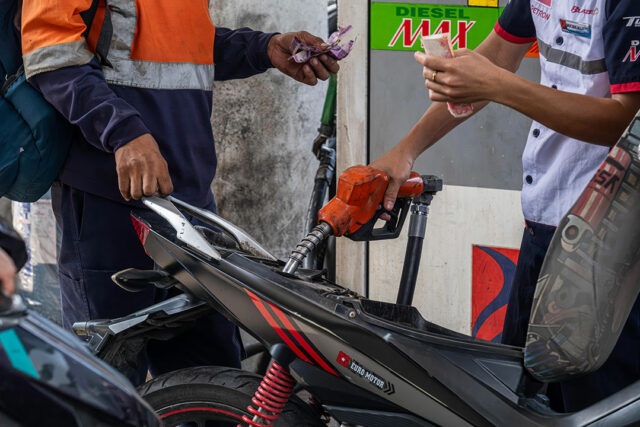
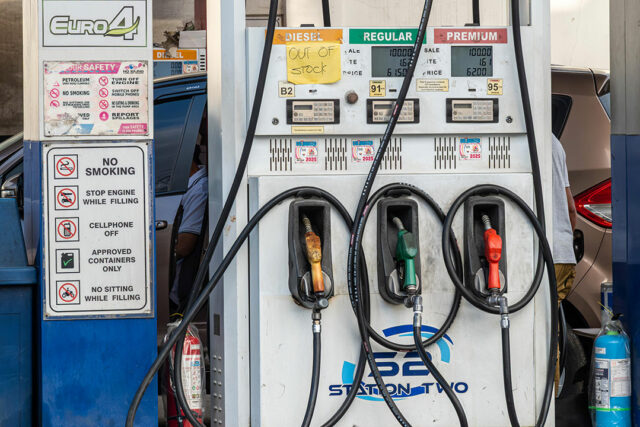
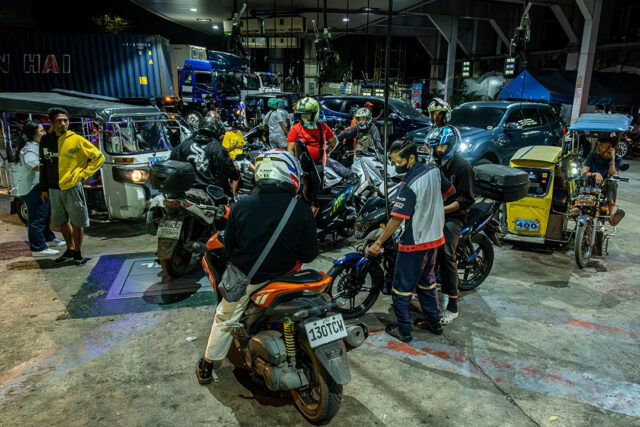
Motorists fill up their tanks at a gasoline station in Pasay City, March 9, 2026. — PHILIPPINE STAR/RYAN BALDEMOR

By Norman P. Aquino, Special Reports Editor and Ashley Erika O. Jose, Reporter

ON A HUMID Thursday afternoon in Las Piñas City near the Philippine capital, jeepney driver Michael I. Resuello, 48, watched the diesel pump at the RedStar Fuel station in Pilar Village tick past P70 per liter, up from P48 just weeks ago.

“The fuel is just too expensive,” he told BusinessWorld in Filipino, wiping sweat from his brow. Before the crisis, he said, he could fill a 35-liter tank for less than P1,700 for his Alabang-Baclaran route.

“Now, I have to gas up as often as four times a day because of my limited budget,” he said, as the pump stopped at P250 for 3.33 liters of diesel.

Daily earnings barely cover household expenses, and rising oil prices are forcing families and small businesses alike to rethink budgets. For millions of Filipinos, soaring energy costs are no longer a distant headline — they’re an immediate financial strain.

The Philippines imports nearly all of its crude from the Middle East. The US-Israel strikes on Iranian targets and Tehran’s retaliatory attacks have disrupted global oil flows, pushing Brent crude above $100 per barrel at the start of March, the highest since mid-2022.

On Thursday, Brent futures climbed 6.19% or $5.69 to $97.67 a barrel after Iranian explosive-laden boats hit two Iraqi fuel oil ​tankers in its waters, causing them to catch fire, Reuters reported, citing Iraqi security officials.

Analysts warn that continued instability near the Strait of Hormuz, a chokepoint for one-fifth of the world’s oil, could drive prices even higher, intensifying inflation and eroding household purchasing power.

Families are expected to feel the impact on daily commutes, electricity bills and food prices in the coming days.

Oil companies have agreed to stagger price increases, but diesel could balloon by as much as 62% to about P96.76 per liter in March, while gasoline prices could rise by 52% to about P88.79 per liter under a more severe scenario, according to the Department of Economy, Planning, and Development (DEPDev).

Mr. Resuello’s household is trimming discretionary spending to cover higher energy costs.

“People are cutting back where they can,” he said. “My grandkid and I need to cut back on eat-outs to Jollibee from now on. Everything costs more, even the basics.”

Inflationary pressures are compounded by the peso, which recently fell to a record low of P59.50 against the dollar.

The Iran war could trim 0.2-0.3 percentage point from Philippine economic growth this year, DEPDev Secretary Arsenio M. Balisacan said on Tuesday.

He added that inflation could quicken to as much as 5.1% this month and to 4.8% in April based on the agency’s baseline scenario, with full-year inflation settling at 4-4.2% — above the central bank’s target.

In a worst-case scenario where oil prices hit $140 this month and stay above $80 until September, DEPDev said inflation could hit as high as 7.5% in March and April, bringing the full-year print to as much as 4.8% and affecting consumer spending and corporate margins.

CORPORATE STRAIN
Philippine businesses are also bracing for impact. Shipping and logistics firms face steep bunker fuel costs, while manufacturers reliant on energy-intensive processes are weighing price adjustments. Retailers and food distributors are expected to pass higher energy costs to consumers, and utilities will have to contend with increased generation expenses.

Transport, industrial, and consumer goods sectors have been hit hard in financial markets. The Philippine Stock Exchange index (PSEi) recently dipped to near six-month lows, dragged down by shares of transport, manufacturing, and energy companies.

The slump reflects investor concerns over inflation, profit margins, and potential monetary tightening.

The Department of Energy said strategic stockpiles and inbound shipments could cover demand until at least April, even amid prolonged disruptions. President Ferdinand R. Marcos, Jr. on Wednesday said the government is exploring alternative suppliers while monitoring logistics to prevent shortages.

Lawmakers are debating excise tax relief for petroleum products. A lapsed provision previously allowed the government to suspend excise taxes when global oil exceeded $80 per barrel for three months. Finance officials estimate that suspending duties from May to December could cut revenues by roughly P136 billion.

The Bangko Sentral ng Pilipinas, which cut its benchmark interest rate last year to support growth, is monitoring inflation. Sustained oil shocks above $100 per barrel could prompt tighter monetary policy to safeguard price stability.

Overseas Filipino workers, particularly in the Middle East, are also affected. While remittance flows remain robust, heightened geopolitical tensions raise concerns about workplace safety, contract disruptions, and timely money transfers — key income sources for millions of families.

Businesses and households are recalibrating strategies for an energy-constrained environment. Companies are exploring efficiency measures, fuel hedging, and renewable energy alternatives.

Meanwhile, households are rethinking spending priorities and conserving energy wherever possible.

Mylene M. Villanueva, who runs a mom-and-pop store along a busy street in the same village, has had to contend with slower sales since Monday.

“Filipinos are spending less,” Ms. Villanueva, 52, said in an interview, sitting idly in her store that used to be full of customers.

Her daily sales have dropped to P15,000 from P30,000, she told BusinessWorld. “It feels like money has just disappeared.”

Economists caution that if tensions persist, inflationary pressures could last through much of 2026, potentially slowing economic growth.

“The war will likely push inflation upward and slightly dampen economic growth, as energy costs feed into transportation, logistics and food prices, reducing household purchasing power,” John Paolo R. Rivera, a senior research fellow at the Philippine Institute for Development Studies, said in a Viber message.

He said state measures such as temporary excise tax cuts, targeted fuel subsidies and staggered oil price increases could help soften the immediate shock from the crisis, but these must remain strategic to prevent fiscal strain.

“The oil shock may persist while geopolitical tensions continue, although such spikes are often volatile rather than permanent,” he added.

“You have to consider two things: how big the changes are and how often they happen,” Nigel Paul C. Villarete, a senior adviser on public-private partnerships at Libra Konsult, said in a Viber message.

Global oil prices are volatile, and small fluctuations occur frequently, while large swings are rarer. It is the larger shifts that require careful management, he pointed out.

FINANCIAL MARKETS
Rising oil prices have triggered sell-offs in the stock market. Investors are factoring in the impact on corporate earnings and consumer spending.

The PSEi plunged 4.97% or 314.19 points to 6,006.22 on March 9, its lowest close since Dec. 19, 2025. Heavy foreign selling was reported, while bond market yields climbed, reflecting caution amid global risk. The peso’s depreciation compounds the effect, making imported commodities costlier.

Energy-intensive industries including shipping, airlines, and petrochemicals are most exposed.

Some analysts see potential for structural shifts. Renewable energy adoption, energy-efficient transport and alternative fuels could gain traction as companies seek to reduce exposure to volatile oil prices.

“In addition to conserving oil and petroleum, the structural transition to renewable energy — solar, wind, geothermal and hydroelectric, among others — together with the growing use of electric and hybrid vehicles, will lessen dependence on imported oil,” Michael Ricafort, chief economist at Rizal Commercial Banking Corp., said in a Viber message.

Rising fuel prices are pushing more people to consider cycling in cities where it is practical. Companies are also expanding work-from-home schemes to help cut commuting costs.

“While the government should consider short-term relief for the transport industry and commuters, the country is overdue for more sustainable solutions,” Patricia Mariano, director and co-founder of AltMobility PH, said via Viber.

Ms. Mariano said the government could have invested more over the past four years in active transport and public transit, which could have eased the impact of fuel price swings on commuters.

For people like Mr. Resuello, the effects are immediate. Higher fuel prices mean rising daily costs and difficult choices. “We just have to keep moving,” he said. “Even if it costs more, the work must go on.”