Home Blog Page 1782

NGCP: Grid ready to integrate 10,260 MW of new power capacity

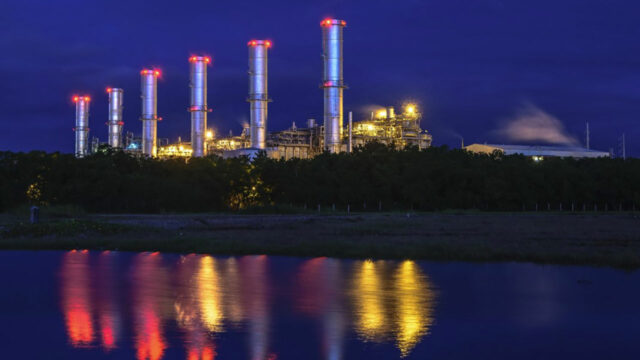
PHILSTAR FILE PHOTO

THE NATIONAL GRID has an available transmission capacity of 10,260 megawatts (MW) for integrating new power generation assets, according to the National Grid Corp. of the Philippines (NGCP).

In Luzon, upcoming power plants can supply up to 6,573 MW to the grid, NGCP data showed.

Currently, existing power plants connected to the Luzon grid have a total dependable capacity of 18,068 MW.

In the Visayas, power plants are delivering 3,178 MW, leaving 2,281 MW of transmission capacity available for connection.

Meanwhile, the Mindanao grid has a total capacity of 4,697 MW, with 3,291 MW utilized by existing power plants. This leaves 1,406 MW of available transmission capacity.

The available capacity can accommodate 6,586.73 MW of committed power projects set to come online this year, based on Department of Energy (DoE) data as of end-January.

The additional capacity from these projects is expected to support the DoE’s projected peak demand of 14,769 MW for Luzon, 3,111 MW for the Visayas, and 2,789 MW for Mindanao this year.

In a previous briefing, NGCP Spokesperson Cynthia P. Alabanza said the company and the DoE will adjust their power outlook following the recent yellow alert declaration.

“What we saw is generation driven. NGCP has no control over generation. The only preparedness that NGCP has in such situations is to ensure that our lines do not fail simultaneously,” Ms. Alabanza said in Filipino.

NGCP has reiterated the need for additional non-intermittent baseload power sources to maintain grid stability.

“As the transmission service provider and grid operator, NGCP can only provide an overview of the current supply-and-demand situation and dispatch any and all available power,” the company said. — Sheldeen Joy Talavera

A celebration of versatility

CANDICE ADEA in Alice Reyes’ “Amada” — JOJO MAMANGUN

ARDP restages ‘Amada’ and other rare gems

FOR National Artist for Dance Alice Reyes, there is excitement in seeing the next generation of dancers take on both classic and modern pieces, requiring the exact versatility that Alice Reyes Dance Philippines (ARDP) revels in with their vast repertoire.

This April, the company will show off the fruit of their hard work with PAGDIRIWANG: Sayaw Alay sa Sining, a mixed-bill program that restages seven pieces of various genres. One of these is Ms. Reyes’ own dance “Amada,” first choreographed in 1969 and last staged in 2017.

“I love passing these dances down to the new generation of artists, who will give it a life of their own. We train a lot of our new dancers by recalling older dancers and choreographers to teach them,” she told BusinessWorld at a press conference in Makati early in March.

“Amada” is based on a short story by Nick Joaquin titled “Summer Solstice,” set in the 19th century. It follows the aristocratic Doña Amada and Don Rafael who find their lives changed when the former attends the women-only summer-solstice festival Tadtarin.

Considered an iconic piece in Philippine dance history, Ms. Reyes’ choreography extracts the tension within the original story and translates it into a push-and-pull between traditional male dominance and rising female power. It features music by National Artist for Music Lucrecia Kasilag and set and costume design by National Artist for Theater Design Salvador Bernal.

Ms. Reyes highlighted how “Amada” requires “powerful body and hair movements” to express tension, authority, and opposition. “It’s why the lead role requires a dancer with long hair,” she explained.

The upcoming restaging is made even more special because it is the farewell performance of multi-awarded ballerina Candice Adea, who will take on the titular role before she retires from dance.

“For years, Candice did ‘Amada’ and she did an amazing job. She recently retired as a soloist from the Western Australian Ballet, and this will be her last time on the Philippine stage. We’re taking advantage of that,” said ARDP Artistic Director Gonelson Yadao.

“She’s a very important figure in Philippine dance because she has really made strides for us here and abroad,” he added.

A STRONG VISION
Starting its 4th season with a set of seven masterful works by renowned choreographers is ARDP’s show of strength with regard to its vision. It represents “what Alice Reyes has always wanted for a dance company,” according to ARDP President Liliane “Tats” Manahan.

“It’s a company that doesn’t settle for one thing, but can do multiple genres. Through the years, Alice has stuck with that,” she said.

In a media preview, dancers showed a glimpse of four of the pieces, including “Amada.”

Kun-Yang Lin’s “Moon” stands out as the only solo. First choreographed in 1994 and last staged in 2021, it features Dan Dayo as a priest of an ancient culture paying homage to heavenly deities with a spiritual yet ecstatic dance mixing Eastern movements with modern expression.

Augustus “Bam” Damian III’s “C’est La Cie,” in its world premiere, has a group of dancers, led by Sarah Alejandro and Monica Gana, explore explosive, neo-classical styles of dance.

Norman Walker’s “Songs of a Wayfarer,” premiered in 1973 and last staged in 2017, follows up with a more pensive and sorrowful pace, backed by Gustav Mahler’s music. It tells a story of unrequited love, with the man grieving over his lover’s marriage to another.

“Mixed-build programs are important because it allows our dancers to have a balance of what they can do in our repertoire. It’s how the likes of Monica (Gana) and Ejay (Arisola) can take on this piece, among others,” said Ms. Reyes.

The other three pieces that weren’t shown at the preview are Carlo Pacis’ “Nocturne” which is a tender yet controlled pas de deux; Adam Sage’s “Glinka’s Valse,” known for its dynamic rhythm showcasing one male dancer and seven female dancers; and Denisa Reyes’ “Muybridge/Frames,” an abstract ballet inspired by sequential motion photographs as if in a moving picture show.

Mr. Yadao emphasizes that the company is versatile because of how its dancers are trained to “articulate movement clearly.”

“It’s why more senior dancers and choreographers are important in showing them the right steps. We remember based on muscle memory, and we can share the nuances that might not be initially obvious from watching a performance,” he said.

PAGDIRIWANG: Sayaw Alay sa Sining will be staged on April 4 and 5 at 2 and 7:30 p.m. at the Globe Auditorium of the Maybank Performing Arts Theater in Bonifacio Global City, Taguig. Tickets are available via TicketWorld. — Brontë H. Lacsamana

Jollibee plans $300-million notes issuance

BW FILE PHOTO

LISTED Jollibee Foods Corp. (JFC) plans to raise at least $300 million through a dollar-denominated senior unsecured guaranteed notes issuance to refinance debt.

“The $300 million is the minimum if you want to be listed in indexes,” JFC Chief Financial Officer Richard Shin said in a virtual briefing on Tuesday when asked about the planned issuance.

“We don’t have just local investors. We also have international investors. The debt capital market is very excited because we’re a very low credit risk company. If you go lower than that, it’s very hard to get attraction from some of the larger investors,” he added.

Mr. Shin also said JFC would issue senior bonds instead of perpetual bonds.

“The reason for that is it’s more cost-effective as a senior bond versus a perpetual bond. Our covenants are all in a very good place. We want to do what’s best for shareholders by securing the lowest cost,” he said.

“This pertains to our perpetual bond amounting to $396 million that was due in January… We’ve taken $96 million out of the $396 million and converted that into very favorable rate term peso loans onshore,” he added.

On Monday, JFC said it tapped multiple banks for a planned Regulation S five-year US dollar-denominated senior unsecured guaranteed notes issuance.

Regulation S issuances are securities offered outside the United States that are not registered under the US Securities Act or any US state securities laws.

Mr. Shin said JFC would use the proceeds from the issuance for refinancing.

“It’s just refinancing what’s coming up for maturity. Most of our businesses have shifted already or are shifting to the franchise model,” he said.

“Going forward, we’ll have fewer and fewer capital expenditure (capex) requirements for store expansions,” he added.

Jollibee Worldwide Pte. Ltd., a wholly owned subsidiary of JFC, appointed JP Morgan Securities Asia Pte. Ltd. and Morgan Stanley Asia Pte. as joint global coordinators and bookrunners for the issuance.

It also tapped BPI Capital Corp. and Hongkong and Shanghai Banking Corp. Ltd. (HSBC) Singapore branch as joint lead managers and bookrunners.

For 2025, JFC allocated a capex budget of P18 billion to P21 billion to support its target of opening up to 800 new stores.

As of end-2024, JFC operates 9,766 stores worldwide, including 3,382 in the Philippines and 6,384 international branches.

JFC shares dropped by 3% or P7.20 to P232.80 apiece on Tuesday. — Revin Mikhael D. Ochave

Hong Kong, China art sales drop a third as high-end market slows

GUESTS VIEW an artwork by Yue Minjun at Art Basel Hong Kong 2024. — BLOOMBERG/KEITH TSUJI/GETTY IMAGES

AUCTION HOUSES in Hong Kong and mainland China made a third less in modern and contemporary art sales last year due to a dearth of ultra-high-end artworks on the market as vendors wait for a rebound in prices.

Auction sales fell 33% to $576 million in 2024 compared with the previous year, the lowest level since 2017, according to a report released Thursday in Hong Kong by law firm Mishcon de Reya and art market research and analysis firm ArtTactic.

A major driver of the drop was the small number of artworks for sale worth more than $1 million, the report said. The impact was most visible at the ultra-high-end — art worth $10 million or more — where there were just six sales totaling $114 million. In comparison, in 2021, 28 works in this category sold for a total of $456 million.

“This drop in supply reflects a broader lack of confidence among vendors of high-value pieces, many of whom are waiting for a resurgent market,” the report said, adding that the global art market had developed an over-reliance on the $1-million-plus segment. “This dependence has made the market overly vulnerable to the buying patterns of a small pool of ultra-wealthy collectors.”

The report brings the market into focus as Art Basel Hong Kong, one of the most important fairs for contemporary art, is set to take place in the Asian financial hub next week. About 240 galleries from 42 countries and territories will attend the event.

Chinese-French master Zao Wou-Ki led the $1-million-plus category in 2024 with sales of $49 million, with Japanese contemporary artist Yayoi Kusama ranking second with $46 million in sales, the report showed. Claude Monet, Mark Rothko, and Vincent van Gogh also featured in the top 10.

Despite the slump in expensive artwork sales, consignments under $50,000 gained popularity among collectors in the region. Lots sold for less than this price jumped 70% from 2022, while auction sales by value increased more than 17% over the past two years.

“The softening at the upper end of the market has stimulated activity at more accessible price segments,” the report said. “This evolution not only highlights the adaptability of the market, but has opened avenues for new collectors, particularly from Millennial and Gen Z demographics.” — Bloomberg

Batanes goes cash-lite powered by LANDBANK, provincial gov’t

Business owners and vendors in Batanes now accept payments through a Quick Response (QR) code following the launch of LANDBANK’s Cash-Lite Batanes initiative, designed to transform the province into a digital payment hub.

LANDBANK, in partnership with the Provincial Government of Batanes, is leading this Province’s shift towards a cash-lite economy by expanding access to innovative digital payment solutions. This initiative reinforces the Bank’s commitment to financial inclusion, ensuring residents, businesses, and local government units (LGUs) benefit from seamless and secure cashless transactions.

Through the Cash-Lite Batanes initiative, Ivatans and tourists can now enjoy safe, efficient, and hassle-free transactions across the province using LANDBANK’s mobile and electronic payment services, while reducing reliance on physical cash.

Currently, 1,665 business establishments and over 4,900 Ivatans—including tricycle drivers, social protection program beneficiaries, students, and households—are potential candidates for onboarding under this initiative. The Bank aims to equip them with their own LANDBANK accounts by year-end, ensuring broader financial access and inclusion.

“The Cash-Lite Batanes initiative advances our efforts to bring financial services closer to underserved communities. Despite geographical challenges and infrastructure constraints, this initiative proves that digital transformation is possible with strong local government support and proactive community engagement, making modern banking accessible even in remote areas,” said LANDBANK President and CEO Lynette V. Ortiz.

LANDBANK President and CEO Lynette V. Ortiz (7th from right) and Director Virginia N. Orogo (9th from right), alongside Batanes Vice Governor Ignacio C. Villa (5th from right), Provincial Administrator Justine Jerico H. Socito (3nd from right), and Provincial Human Resource Officer Annamarie A. Rosas (4th from right), lead the launch of the Cash-Lite Batanes initiative on March 8, 2025.

LANDBANK President and CEO Ortiz and Director Virginia N. Orogo, together with Batanes Vice Governor Ignacio C. Villa, Provincial Administrator Justine Jerico H. Socito, and Provincial Human Resource Officer Annamarie A. Rosas, led the launch of the Cash-Lite Batanes initiative on 08 March 2025, coinciding with the Provincial Government’s International Women’s Day celebration.

They were joined by Basco Mayor German Caccam, Ivana Mayor Celso B. Batallones, Uyugan Mayor Jonathan Enrique V. Nanud Jr., Sabtang Mayor Prescila A. Babalo, LANDBANK Executive Vice Presidents Liduvino S. Geron, Ma. Celeste A. Burgos, and Leila C. Martin, Senior Vice President Catherine Rowena B. Villanueva, Chief of Staff and First Vice President Atty. Nikkolas G. Tolentino, First Vice President Eden B. Japitana, and Vice President Liza J. Melendez.

As the first bank to establish its presence in Batanes, LANDBANK is actively onboarding merchants, business establishments, and cardholders onto digital channels, enabling local enterprises—from small vendors to large retailers—to accept QR payments. This enhances business efficiency and elevates customer experience, positioning Batanes as a leader in digital adoption for remote communities.

The Provincial Government of Batanes has played a key role in driving the success of LANDBANK’s Cash-Lite Batanes initiative. To accelerate the shift to digital payments, the local government has introduced ordinances aligned with the Paleng-QR Ph Program of the Bangko Sentral ng Pilipinas (BSP), mandating the adoption of QR PH digital payments among businesses and transport providers.

In collaboration with local units and agencies, the Provincial Government is also enhancing infrastructure to support the transition towards a cash-lite community. A key initiative includes the deployment of 72 new Wi-Fi modems—sponsored by the Department of Information and Communications Technology (DICT)—to local government units to address Internet connectivity concerns.


Spotlight is BusinessWorld’s sponsored section that allows advertisers to amplify their brand and connect with BusinessWorld’s audience by publishing their stories on the BusinessWorld Web site. For more information, send an email to online@bworldonline.com.

Join us on Viber at https://bit.ly/3hv6bLA to get more updates and subscribe to BusinessWorld’s titles and get exclusive content through www.bworld-x.com.

Megawide launches P6-B share offering

MEGAWIDE.COM.PH

SAAVEDRA-LED infrastructure conglomerate Megawide Construction Corp. will open the offer period for its preferred shares, valued at up to P6 billion, on Wednesday, March 26, until April 4.

“We intend to use the proceeds from the offer to refinance our Series 4 preferred shares, fund our growth projects — particularly in real estate — and support general corporate purposes,” Megawide Chief Financial Officer Jez G. Dela Cruz said in a statement on Tuesday.

The company received a permit to sell its Series 6 preferred shares from the Securities and Exchange Commission (SEC) on March 24.

Priced at P100 per share, the issuance consists of a base offer of 30 million preferred shares totaling P3 billion, with an oversubscription option of up to 30 million additional shares also worth P3 billion. The targeted listing date is April 14.

The issuance carries dividend rates of 7.6283%, 7.9606%, and 8.2993% for Series 6A, 6B, and 6C, respectively.

“The initial results of the book building were very encouraging and indicate a strong vote of confidence in Megawide’s long-term prospects,” Mr. Dela Cruz said.

Megawide tapped PNB Capital and Investment Corp., RCBC Capital Corp., and Security Bank Capital Investment Corp. as joint issue managers, joint lead underwriters, and joint bookrunners for the offering.

“We are very thankful to the regulatory bodies for giving us the green light to proceed with this offering. We are also grateful to the syndicate for working tirelessly, amid prevailing market conditions, to ensure that we complete all requirements within the prescribed timetable and secure this go-ahead,” Megawide Chairman and Chief Executive Officer Edgar B. Saavedra said.

As of end-2024, Megawide’s order book stands at P43.5 billion. Its real estate unit, PH1 World Developers, Inc., is expanding into cities such as Cavite, where an improving public transport network supports strong end-user demand.

Megawide is also developing the Cavite Bus Rapid Transit project, which will traverse several cities in the province, including Imus and Trece Martires, with a dedicated line through the Parañaque Integrated Terminal Exchange.

On Tuesday, Megawide shares fell by 0.88%, or two centavos, to P2.24 apiece. — Revin Mikhael D. Ochave

First Philippine Holdings signs P10-B loan deal with BDO

FPHC.COM

LOPEZ-LED holding company First Philippine Holdings Corp. (FPH) has secured a P10-billion loan from Sy-led BDO Unibank, Inc. to support its capital requirements.

FPH said it executed a 10-year term loan agreement with BDO, which has a one-year availability period.

“It will be used to fund general corporate and other working capital requirements,” FPH said in a regulatory filing on Tuesday.

For the first nine months of last year, FPH’s consolidated net income declined by 19% to P19.4 billion from P24 billion in 2023 due to lower operating earnings driven by margin compression and weaker results from its power generation business.

The conglomerate’s nine-month revenue edged up by 0.3% to P124.6 billion, supported by stronger real estate sales.

FPH has core business interests in clean and renewable energy, real estate, manufacturing, construction, healthcare, and education.

On Tuesday, FPH shares were unchanged at P57.50 apiece. — Revin Mikhael D. Ochave

Treasury fully awards dual-tenor bond offer

BW FILE PHOTO

THE GOVERNMENT made a full award of its dual-tenor Treasury bond (T-bond) offer on Tuesday at average rates broadly in line with secondary market levels, with investors locking in still-high yields amid expectations that the Bangko Sentral ng Pilipinas (BSP) will soon resume its monetary easing cycle.

The Bureau of the Treasury (BTr) raised P35 billion as planned via its dual-tranche T-bond offering as total bids reached P75.32 billion, or more than twice the amount placed on the auction block.

Broken down, the Treasury borrowed the programmed P10 billion via the reissued seven-year bonds, with total bids reaching P41.483 billion or more than four times the amount on offer.

The bonds, which have a remaining life of three years and 26 days, were awarded at an average rate of 5.779%. Accepted yields ranged from 5.765% to 5.79%.

The average rate of the reissued papers went down by 11.5 basis points (bps) from the 5.894% fetched for the series’ last award on Jan. 28. However, this was well above the 3.625% coupon for the issue.

This was also 0.19 bp below the 5.7809% fetched for the same bond series and 9.33 bps lower than the 5.8723% quoted for the three-year bond — the benchmark tenor closest to the remaining life of the issue — at the secondary market before Tuesday’s auction, based on PHP Bloomberg Valuation Service (BVAL) Reference Rates data provided by the BTr.

The strong demand for the reissued seven-year bonds prompted the BTr to open its tap facility window to raise P5 billion more via the papers.

Meanwhile, the government likewise raised P25 billion as planned from the reissued 25-year T-bonds it auctioned off on Tuesday, with total bids reaching P33.837 billion.

The notes, which have a remaining life of 24 years and nine months, were awarded at an average rate of 6.476%. Accepted yields ranged from 6.37% to 6.58%.

The average rate rose by 14.2 bps from the 6.334% fetched for the series’ last award on Jan. 28 and was likewise 10.1 bps higher than the 6.375% coupon for the issue.

This was also 4.13 bps above the 6.4347% seen for the same bond series and 17.22 bps higher than the 6.3038% quoted for the 25-year bond at the secondary market before Tuesday’s auction, BVAL Reference Rates data provided by the BTr showed.

“Both were awarded within expected range, although the 25-year was awarded at the higher end while the three-year was at the lower end.

This just shows that the market has a strong appetite for shorter tenors ahead of the expected Monetary Board rate cut next month,” a trader said in a text message.

Market players were also locking in relatively higher returns before the latest round of cuts in banks’ reserve requirement ratios takes effect on Friday, which would free up about P330 billion in liquidity that could go into government securities and cause yields to drop, Rizal Commercial Banking Corp. Chief Economist Michael L. Ricafort added in a Viber message.

BSP Governor Eli M. Remolona, Jr. said in an interview with Bloomberg Television on the sidelines of the HSBC Global Investment Summit in Hong Kong on Tuesday that there is a “good chance” that the Monetary Board will cut rates by 25 bps at their April 10 meeting.

He reiterated that the BSP remains on an easing cycle and could bring down borrowing costs by as much as 75 bps this year depending on data.

The central bank has reduced benchmark interest rates by a cumulative 75 bps since it began its rate-cut cycle in August last year, with its policy rate currently at 5.75%.

The BSP in February unexpectedly kept rates unchanged in a “prudent” move amid uncertainties stemming from the Trump administration’s policies.

Mr. Ricafort said these uncertainties are likely affecting demand for longer bond tenors, as seen in Tuesday’s auction result, with investors preferring to place their funds in debt with shorter maturities.

“Shorter-dated tenors such as the three-year bond and those at the belly of the yield curve are more attractive for many investors compared to the longest tenors such as the 25-year bond due to higher market risks involved in holding on to these debt for a longer number of years while yields are similar or not that far from the shorter-dated tenors,” he said.

The government borrows from local and foreign sources to help fund its budget deficit, which is capped at P1.54 trillion or 5.3% of gross domestic product this year. — A.M.C. Sy

The Philippine Housing Roadmap, 2025 to 2040

WIKIMEDIA-PATRICK ROQUE

(Part 2)

There are realistic expectations that if the Philippine’s GDP grows at an average of 6-8% in the next 20 years, our economy can attain High-Income status during the decade of 2040 to 2050, at least from the standpoint of average per capita income in US dollars. It is possible, though, that the income distribution will still be so skewed in favor of the rich that there could still be millions of households living below the poverty line and suffering from poor housing conditions.

That is why it is very important that the recently formulated Philippine Housing Roadmap, 2025 to 2040 by the Center for Research and Communication in tandem with the four leading housing and real estate associations, i.e., the Subdivision and Housing Developers Association (SHDA), the Organization of Socialized and Economic Housing Developers of the Philippines (OSHDP), the National Real Estate Association (NREA), and the Chamber of Real Estate and Builders’ Association (CREBA), address the very important issue of socialized and economic housing for lower-income households.

As we saw in the first part of this two-part series, it is important to mobilize funding and private investment to boost public and socialized housing. To achieve this, the government budget should be increased for projects targeting marginalized sectors.

At the same time, responsive price ceilings and income tax holidays should be implemented to support developers, along with improving provisions in the Pambansang Pabahay Para sa Pilipino, or 4PH, program to encourage active participation in affordable housing. There should also be efforts to expand government guarantees and explore developmental funding through securitization and Real Estate Investment Trusts (REITs). Moreover, in order to bridge affordability gaps, direct subsidies are essential, with a focus on providing interest and loan subsidies for socialized, economic and low-cost housing.

It is encouraging that in 2025, despite the global economic volatility resulting from the policies being implemented by the Trump Administration in the US, Philippine inflation is averaging less than 3%, making lower interest rates possible. There is a possibility that Philippine interest rate policy can partly decouple itself from that of the US Federal Reserve System.

The Philippine’s economic growth, while remaining steady over the last two or three decades, has yet to register the sustained double-digit growth rates achieved by countries like China, South Korea, and Thailand which allowed them to significantly bring down poverty incidence to single digit levels (Malaysia, for example, has had close to zero poverty incidence for some time now). Our own poverty incidence in 2023 was 22.4% for the whole population and 16.5% for households. These high levels of poverty had adverse implications on the nation’s capacity to provide affordable housing for all, indicating that much of the economic growth benefited only a few and has not trickled down. Unlike in other countries where growth has been driven primarily by foreign direct investments, investments in infrastructure, early focus on agricultural and countryside development, and on an outward-looking economy, the Philippine economic growth has been largely driven by consumption expenditure on the demand side and services on the production side.

The Philippine economy has inordinately relied on its domestic market for a long time to insulate it from global market turmoil and sustain growth, albeit at single-digit levels. An economy’s capacity to sustain and support long-term growth, however, is usually preceded, among others, by significant and sustained capital formation or investment flows. The Philippines continues to miss wave after wave of major foreign direct investments (FDIs) flows into Southeast Asia. The bulk of FDIs pouring into the ASEAN is captured by Vietnam, Indonesia, and not to mention Singapore. Only in 2021 did FDIs in the Philippines exceed the $10 billion level. Its major sources of dollar inflows are overseas Filipino workers’ remittances and business process outsourcing-information technology earnings.

Before 2040, double-digit growth rates for industry and services are feasible. Services will remain a primary driver of growth with retail trade, digitization, ICT, transport, logistics, banking and finance leading the way, accounting for 60-65% of the economy. The share of the industry sector is expected to significantly increase to about 30-35% over the years, given the emergence of major investments in construction activities, energy, road infrastructure, and info-infrastructure networks (i.e., smart cities), and agribusiness-related manufacturing (e.g., construction materials from bamboos). Agriculture and fisheries’ share will continue to decline to 5% as is typical of economies moving up to high-income levels. Much of the agricultural and aquacultural outputs, however, will be focused on high-value crops and commodities such as bananas, pineapples, coffee, cacao, mangoes, avocado, and high-value coconut products such as coconut water, milk, and sugar.

As regards regional dispersal of income and employment, the National Capital Region (NCR) will be growing less rapidly than the other major regions like Calabarzon, Central Luzon, Western Visayas, and Davao. Other promising regions with at least a 7% growth rate in the last three years are the Cordillera Administrative Region (CAR), the Ilocos, and Cagayan Valley. With industries more widely dispersed and in-migration growing, the emerging and future mega-regions will continue to grow and will be catching up with the NCR. Except for the NCR and the Bangsamoro Autonomous Region in Muslim Mindanao or BARMM, the regions that usually corner a substantial share of the GDP are those that attract in-migration, such as those mentioned above. Increased urbanization will characterize the higher-growth regions, especially Calabarzon, Central Luzon. Western Visayas, and Davao.

In terms of the number of households, the 2021 Family Income and Expenditure Survey (FIES) estimated a count of 26.3 million households in the entire country. This is 6.7% higher than the 2018 FIES count, indicating that there were 580,097 new households formed per annum during those three years. Based on the projection of Philippine Statistics Authority, the country will be looking at about 33 million households by 2050. The average sizes of households range from a low of 3.8 members in the NCR to a high of 5.9 in BARMM with 4.1 as the most frequent. Household income sources have shifted more towards wages and salaries, rendering the labor force more vulnerable to inflation. Moreover, economic downturns that result in job losses or wage stagnation make it difficult to acquire housing, especially for those without alternative income sources or significant savings.

Among the key long-term trends that affect housing demand that have to be monitored closely is the direction of government spending. It is expected that the Government in the next few years until 2040 will focus on catching up to improve the physical infrastructure of the nation.

Since the previous Duterte Administration initiated the Build, Build, Build Program, more public resources have been allocated towards enhancing connectivity within and between islands. Fortunately, the Marcos Jr. Administration is determined to continue this, giving the highest priority to infrastructure development. Unfortunately, the government’s ability to spend big amounts on infrastructure is limited by the high debt-to-GDP ratio of 61% that resulted from the COVID-19 pandemic.

There will be much effort made to attract FDIs into infrastructure which will be the primary focus of government spending (together with education and health) until 2040. By 2030 onwards, upon completion of many key infrastructure projects, the Philippine economy is expected to grow faster and attain the double-digit growth rates that are needed to significantly reduce poverty.


Bernardo M. Villegas has a Ph.D. in Economics from Harvard, is professor emeritus at the University of Asia and the Pacific, and a visiting professor at the IESE Business School in Barcelona, Spain. He was a member of the 1986 Constitutional Commission.

bernardo.villegas@uap.asia

Presenting a woman in progress

RIGHT Where I’m Meant To Be (2024) by Kara Pangilinan

Kara Pangilinan blends empathy and evolution

THE VARIOUS facets of a woman’s life, constantly marked by change and complexity, inspired 31-year-old artist Kara Pangilinan in the creation of the works included in her fourth solo exhibition and biggest one to date.

Her offering for Women’s Month is a culmination of observations of her own progress, and the evolution she has seen in other women, translated into paintings filled with patterns in nature. Ms. Pangilinan’s latest works on canvas are on view as part of Conrad Manila’s regular “Of Art and Wine” series at the hotel’s Gallery C.

The paintings included in the aptly titled Woman in Progress exhibit depict figures of women in various emotional states, told by the surrounding intricate leaves and lace detailing that Ms. Pangilinan is known for, a style dubbed “elaborate expressionism.”

“I poured heart and soul, lines and patterns, into all of this, which people have said is the signature look of my works. I think these details represent our thoughts and emotions. To me, it’s a release,” she said at the exhibit’s launch in mid-March.

“For this exhibit, I was deeply inspired by all the women around me who are going through so many changes every day,” she added.

The exhibit’s title may give the impression that the artist is talking about her own progress, but she clarifies that it refers to the evolution experienced by many women. Her belief is that the dynamism in women’s lives is “what makes us powerful and worth celebrating.”

The paintings, mainly acrylic and ink on canvas, intertwine the woman’s journey with nature.

For example, two of the biggest works present an interesting contrast: Right Where I’m Meant to Be portrays a woman at ease in a colorful, lush garden, while Imposter Syndrome shows a woman in a monochromatic jungle, her posture uncertain and her eyes obscured.

“Everybody has seasons in life. For myself, I’m newly married and building a home, but around me I see new moms, empty nesters, people taking on new projects. There are changes that we all go through, and through this exhibit, I want to remind everybody that we should embrace every single version of ourselves,” she explained.

Though Ms. Pangilinan started her journey as a visual artist in 2011 with ink drawings sold to classmates, it took a lot of work to get to where she is now. Her first solo exhibit in 2016 saw her aunts and uncles as her very first buyers.

A full-time painter since 2019 and married since 2020, the twists and turns of life have given her a lot to express, she said.

“The timing of everything really helped the theme actually, because I’ve been changing so much and there are so many things going on,” Ms. Pangilinan explained. “We all need that validation that we’re doing well so that we can keep moving forward. That’s what I want to share.”

Of Art and Wine: Woman in Progress is on view at Conrad Manila’s Gallery C until May 10. — Brontë H. Lacsamana

SN Aboitiz Power starts construction of battery storage project in Benguet

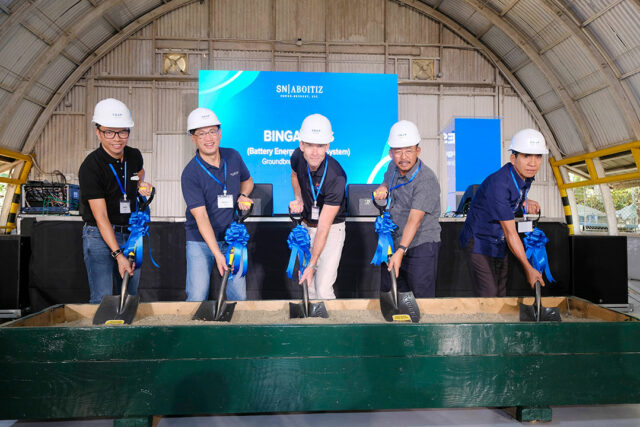
(L-R) Scatec EVP-Asia Andy Ana, SNAP President and Chief Executive Officer Joseph Yu, Norwegian Ambassador to the Philippines Christian Lyster, Energy Assistant Secretary Mario Marasigan, and Itogon Mayor Bernard Waclin.

SN Aboitiz Power (SNAP) Group, a joint venture between Norwegian firm Scatec and Aboitiz Power Corp., has started construction of its 40-megawatt (MW) Binga battery energy storage system (BESS) in Itogon, Benguet.

In a media release on Tuesday, the company said it had broken ground on the facility, which will be co-located with the 140-MW Binga Hydroelectric Power Plant.

The Binga BESS is SNAP’s first battery storage project in Benguet and its third overall.

“We are proud to break ground on our first BESS in Benguet and the first BESS facility to reach financial close and start construction in the Cordillera Administrative Region. This project underscores our commitment to innovation, sustainability, and the country’s energy transition,” SNAP President and Chief Executive Officer Joseph Yu said.

The company said the project is part of its strategy to integrate complementary technologies with its hydro assets, contributing to a more resilient and secure energy market in the Philippines.

A BESS stores electricity from the grid using batteries and releases it when needed to support supply or enhance power quality. It helps stabilize the grid by managing fluctuations in renewable energy generation.

SNAP tapped GEDI China Energy as the engineering, procurement, and construction contractor for the Binga BESS.

The project adds to SNAP’s 24-MW Magat BESS and the ongoing development of the 16-MW Magat BESS Phase 2, bringing the company’s total battery storage capacity to 80 MW by 2026.

Last month, SNAP secured financing from the Bank of the Philippine Islands, China Banking Corp., and BDO Unibank, Inc. for the Binga BESS and 16-MW Magat BESS. — Sheldeen Joy Talavera

Embracing our identity as a maritime nation

FREEPIK

There are many ways to characterize the Philippines as a nation. We have a young, robust population. We are the second-largest archipelagic country. We have more sea than land, and our coastline is the fourth-longest in the world. We belong to the 18 mega-diverse countries in the world. We are a maritime nation.

The current administration of President Ferdinand Marcos, Jr. has acknowledged our identity as a maritime nation. Our maritime identity is “an intrinsic and undeniable part of the national Filipino character,” he said during the ceremonial signing of the historic Philippine Maritime Zones Act and the Philippine Archipelagic Sea Lanes Act in November last year.

And when he talked about the Comprehensive Archipelagic Defense Concept (CADC) during the Shangri-La Dialogue, Asia’s premier defense summit held in Singapore in May 2024, he said it was intended to bolster the Philippines’ capacity to protect its waters and maritime resources.

Indeed, the opportunities for a maritime nation such as ours are immense. Our resources are vast, and our potential is high. We would be able to enhance food security by promoting responsible fisheries and aquaculture, drive economic growth by expanding marine-based industries such as tourism and shipbuilding while creating more jobs, and strengthen energy security through offshore wind projects.

As a result, the Philippines can generate more jobs, boost local industries, and improve the quality of life for its people while ensuring the sustainable use of its vast marine resources.

During his second State of the Nation Address in 2023, President Marcos Jr. emphasized the need to develop the blue economy. This directive is embodied in Senate Bill 2450, or the Blue Economy Act, considered priority legislation. The bill aims to adopt the blue economy as a framework for the sustainable and responsible use of the country’s marine resources, positioning them as a key pillar of the national economy.

It is also expected to boost local industries and generate jobs by promoting sustainable ocean-based economic activities such as fisheries, aquaculture, marine tourism, shipbuilding, renewable energy, and maritime logistics.

A specific provision is the establishment of Blue Economic Zones (BEZs) to encourage investments and economic activities in the country’s coastal and maritime areas. These zones will serve as hubs for marine-based industries and help ensure the sustainable management of the country’s vast ocean resources.

But while there are opportunities, there are also threats. This is why alongside exploring and maximizing the potential of the Philippines’ blue economy, we also need to be mindful of the risks confronting us as a maritime nation.

These threats come in different forms and are multi-faceted.

We have to deal with overfishing and habitat degradation — years of irresponsible exploitation of resources have led to these conditions. Climate change is also causing adverse effects on our seas and corals, posing risks to their sustainability.

Finally, there are increasingly aggressive and provocative actions in the West Philippine Sea. These acts threaten our sovereign rights and access to vital areas and resources. They prevent the Philippine economy from maximizing the benefits from resources within our Exclusive Economic Zone. They try to make a mockery of the rules-based international order and insult the values and principles that the Philippines and other members of the international community hold dear.

They also put the safety and livelihood of Filipino fisherfolk in peril.

In order to address these threats and to continue working toward achieving the potential of our blue economy, the Philippines is correct to adopt a comprehensive and coordinated approach that integrates maritime security, environmental protection, and sustainable economic policies.

We are fortunate to be able to collaborate with like-minded countries. Another blue-economy nation that comes to mind is France, with its extensive expertise in harnessing its own and the marine resources of its territories. By forging stronger partnerships with France, the Philippines can harness its maritime resources more effectively to ensure long-term economic growth while safeguarding its marine environment.

The French Embassy in the Philippines has partnered with the Stratbase Institute in organizing a hybrid event titled “Strengthening Philippines-France Cooperation for a Sustainable Blue Economy.”

The event, happening this Friday, March 28, will focus on strategic blue economy industries where strengthened bilateral cooperation between France and the Philippines could promote growth. It will bring together key stakeholders from the government, diplomatic community, the academe, and think tanks to discuss challenges and actions needed to unlock the potential of the Philippines’ blue economy.

I look forward to the conversations we will have in this event. The avenues for discussion and collaboration are as vast as the potential of our seas. We have now identified this growth area, bolstered by pronouncements from the Executive and initiatives from the Legislative. Now we are emboldened by the show of cooperation and partnership by an established blue nation as France, and driven by a desire to maximize the benefits of our resources and channel them to the ultimate good of our people.

Let’s make our blue economy work, because this is who we are.


Victor Andres “Dindo” C. Manhit is the president of the Stratbase ADR Institute.