Trust as the foundation of sustainability
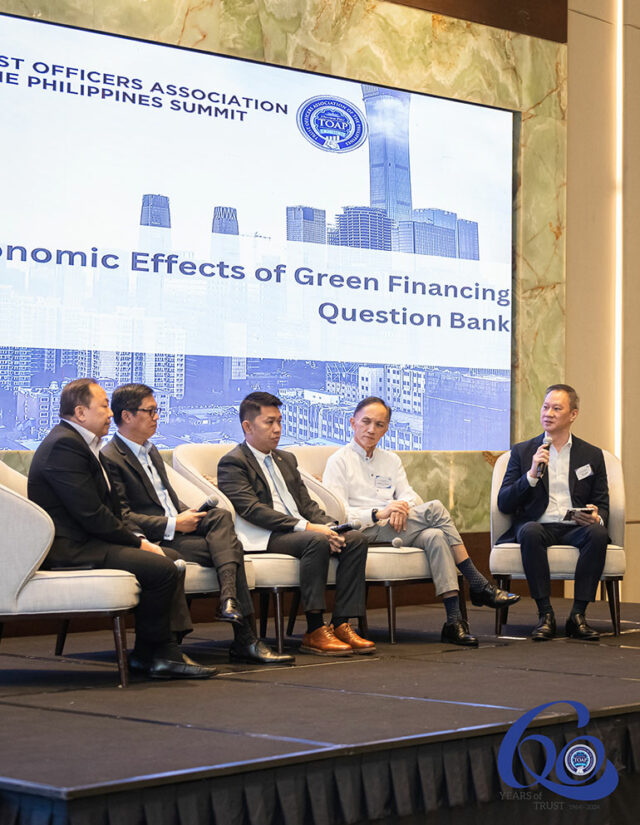
By Bjorn Biel M. Beltran, Special Features and Content Assistant Editor, BusinessWorld
For quite some time now, the investment community has been in a near-constant state of agitation. Coming from the throes of the pandemic, dealing with its aftermath in the skyrocketing inflation and interest rates, and facing global geopolitical conflicts that disrupted economies worldwide, investors are understandably wary of any further risks to their portfolios.
For a developing economy like the Philippines, however, this presents a problem. The country needs both foreign and local investors to fuel its economic momentum. It is in attracting engaged and deep-pocketed investors can it bolster the development of the high-impact industries (e.g., renewable energy, manufacturing, or infrastructure), which is much needed to sustain its long-term prosperity.
But in a global investment landscape dominated by uncertainty, such a task is difficult.
The limits of digital financial inclusion
In an interview with BusinessWorld, Rafael G. Ayuste, Jr., who has previously served as the president of the Trust Officers Association of the Philippines, noted how in the past twelve months, those investing in equities were far more likely to lose money rather than earn.
“Out of the 37 [equity] funds in the market, only 11 are giving you a positive return. The remaining 26 are actually giving you negative returns on your investment. So basically, what it’s saying is that there’s a higher chance that you will lose money than a chance of gaining money on your investment,” he said.
Technology has made the investment market more accessible than ever. Mr. Ayuste pointed out that fintech brand GCash has popularized the idea of micro-investments by allowing anyone with an account to invest in the market for as low as P50.
The popular e-wallet platform announced last year that it has taken on as many as 800,000 investors since launching the service, collectively earning more than P12 million as of July 2024. This was corroborated by the Philippine Stock Exchange, which noted that more retail traders created accounts to invest in the local bourse because of the platform.
“But even with that access, without understanding, without financial education, the advantages of that digital platform are actually quite limited,” Mr. Ayuste said.
Accessibility without financial literacy is a double-edged sword, he noted. Without a solid understanding of risk, many first-time investors may become disillusioned after experiencing losses, potentially pushing them away from investing altogether.
A more financially literate investor base would be better equipped to diversify into safer, fixed-income assets like bonds. But, without proper education, many will remain vulnerable to current market volatility—and miss out on building long-term wealth.
The Trust Officers Association of the Philippines (TOAP), established in 1964, is one of the country’s oldest and most respected professional organizations in the financial sector. It serves as the unifying body for institutions engaged in trust, investment management, and fiduciary services, with all member-institutions licensed by the Bangko Sentral ng Pilipinas (BSP).
TOAP works closely with the BSP and other regulatory bodies to address emerging issues, shape industry regulations, and ensure that the Philippine trust and investment management sector evolves responsibly while prioritizing the interests of the investing public. One of the key missions of the association is to promote the continued development of the Philippine capital markets through financial literacy and sustainability.
Mr. Ayuste stressed that financial education should be embedded in the grassroots level, targeting younger generations who can still develop better financial habits, unlike older generations who were introduced to digital finance without a foundational understanding of saving and investing.
“Education has to go very deep into the psyche of the Filipinos,” he said, adding that it is a difficult mindset shift for Filipinos used to the instant gratification of modern life. “Investing does not give you a reward immediately. It takes time. Maybe half a year. Maybe one year, maybe five years. That’s the length of time that you need to see your investment grow.”
The bigger picture of sustainability
Speaking broadly, Mr. Ayuste noted that the role of trust officers today is more important than ever.
“The volatility is a staple. We see volatility as part of our day-to-day activities. Managing volatility or being able to ride through volatility is a staple for the trust and asset management industry,” he said.
An investment is inherently a long-term proposal. Trust officers and asset managers need to look forward into perpetuity to ensure they uphold their fiduciary duty. Sustainability, then, is a natural fit.
“The Philippines is ranked 17th in terms of risk arising from climate change. We are an archipelago that is used to typhoons, used to flooding in the cities and the countryside. Unfortunately, because we have been too resilient, we have somehow decided that we will just go with the flow,” he said.
Just as financial literacy empowers investors to make informed decisions, it also plays a crucial role in shaping investment behaviors that align with long-term sustainability. Environmental, social, and governance (ESG) investing should thus play a bigger role in financial decision-making. Mr. Ayuste said that the Philippines must encourage investments in companies with strong ESG principles, ensuring that economic growth aligns with climate resilience and sustainability.
He lamented that ESG awareness in the country is still low, as Filipino investors still prioritize return on investment rather than long-term sustainability.
“We are just at the tip of the iceberg between looking at the return potential of an investment and ESG. We are still leaning towards the return on investment; but in the long term, we should start looking at ESG as a strong component of our investment portfolio,” he noted.
To drive meaningful change, financial institutions, regulators, and investors must work together to integrate ESG into investment strategies, ensuring that profitability and sustainability go hand in hand. And as stewards of the country’s capital, the trust and investment management industry play a role in pushing forward.
The trust professionals in TOAP, in particular, are uniquely positioned to take up the mantle. In an era of growing uncertainty, helping investors manage risk and protecting the interests of the investing public—all while fostering sustainability—are all part of the association’s primary responsibility.
“It goes back to financial education,” Mr. Ayuste said. “Not just investing for the return on investment, but the investing for the future as well.”
This article is in the special edition of BusinessWorld In-Depth digital magazine, in celebration of Trust Consciousness Week. To get the full issue for FREE, visit https://bworld-x.com/product-category/bw-in-depth-industry-report.
Spotlight is BusinessWorld’s sponsored section that allows advertisers to amplify their brand and connect with BusinessWorld’s audience by publishing their stories on the BusinessWorld Web site. For more information, send an email to online@bworldonline.com.
Join us on Viber at https://bit.ly/3hv6bLA to get more updates and subscribe to BusinessWorld’s titles and get exclusive content through www.bworld-x.com.


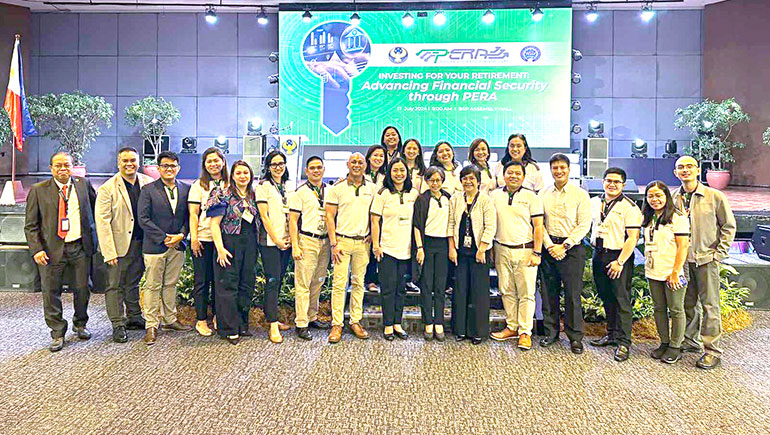 Similarly, TOAP is committed to advocating for responsible investing practices to align investments with its environmental, social, and governance (ESG) criteria. In this regard, the association actively promotes the Personal Equity and Retirement Account (PERA) Act of 2008, a voluntary retirement savings program that supplements the existing retirement benefits from the Social Security System (SSS) and the Government Service Insurance System.