Home Blog Page 178

House bill against political dynasties could bar 5,000 officials, lawmaker says
PCOO

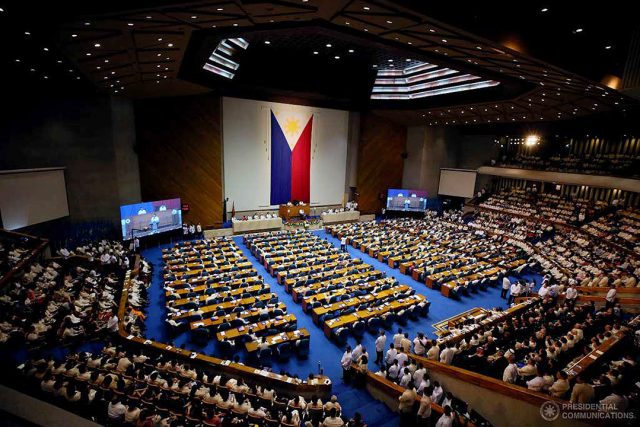
A CONGRESSMAN said on Wednesday the version of an anti‑political dynasty bill passed by a House committee could dislodge more than 5,000 politicians tied to political families nationwide, dispelling concerns that the chamber’s version is ineffective.

In a statement, Lanao del Sur Rep. Ziaur-Rahman Alonto Adiong said around 54.8% of elective posts are held by politicians from 4,239 political families, citing data from the Congressional Policy and Budget Research Department.

“Given the data we have, we can see that it is inaccurate to say that the committee version will not have an impact,” he said. “The numbers say otherwise.”

“The evidence proves that the second-degree provision strikes the right balance: it is stringent enough to open real opportunities for new leaders while remaining implementable,” he added.

Lawmakers are currently assessing bills aimed at curbing political dynasties. The House last week approved a similar measure that analysts have described as weaker as it allows families to monopolize seats across the government.

Analysts previously told BusinessWorld the chamber’s version has lapses and would still allow political families to proliferate.

President Ferdinand R. Marcos, Jr. has made limiting political dynasties a priority after public criticism over alleged misuse of billions of pesos in congressional district funds earmarked for Public Works projects, making it part of his governance reform agenda.

Such a bill has long been pushed in Congress but has repeatedly faltered for a lack of support from a legislature dominated by political families. Eight of 10 lawmakers belong to dynasties, according to a report by the Philippine Center for Investigative Journalism. — Kenneth Christiane L. Basilio


BIR seizes P382-M illegal cigarette manufacturing materials

REUTERS

THE Bureau of Internal Revenue (BIR) has seized about P400 million worth of illegal cigarette manufacturing materials, which could have evaded over P90 million in excise taxes.

In an operation with the Bureau of Customs and the Philippine National Police on March 5 and 6, the BIR recovered over P382 million worth of materials and 4.8 million BIR excise tax stamps, noting that some were counterfeit with identical serial numbers.

“Based on initial estimates, the counterfeit stamps could have been used to produce untaxed cigarettes resulting in approximately P93.771 million in potential excise tax losses to the government,” the BIR said in a statement on Wednesday.

The raid was conducted in a warehouse within the Golden Haojia Industrial Compound in Apalit, Pampanga, which was not registered with the revenue district office of Apalit, according to the BIR.

“Illicit tobacco operations deprive the government of critical tax revenues, distort fair competition in the market, and expose consumers to unregulated products,” the BIR said.

The bureau also noted that the illegal materials, if not confiscated, could have led to “significant” foregone revenue and undermined local registered tobacco businesses.

“The BIR will continue to strengthen enforcement against illicit cigarette operations that undermine legitimate businesses and deprive the government of much-needed revenues for public services,” BIR Commissioner Charlito Martin R. Mendoza said in a statement. — Katherine K. Chan

Nearly P70-million illegal drugs seized in Clark 

PHILSTAR FILE PHOTO

THREE Chinese nationals were nabbed for carrying about P70 million worth of illegal drugs at the Clark International Airport, the Bureau of Customs (BoC) said.   

The BoC seized a total of 99 packs of marijuana from the foreigners weighing over 15 kilograms (kg) and valued at nearly P69.8 million.   

“During routine passenger profiling, the individuals were directed for X-ray screening. Suspicious images prompted a 100% physical inspection, which led to the discovery of a combined total of 99 transparent vacuum-sealed plastic packs containing dried leaves and fruiting tops suspected to be marijuana, commonly known as kush,” the BoC said.   

The Chinese nationals arrived in Clark from Bangkok, Thailand and were supposedly headed to Hong Kong.   

According to the BoC, the three suspects were also arrested after authorities from the Clark Inter-Agency Task Force Against Illegal Drugs determined that they had violated Republic Act No. 9165 or the Comprehensive Dangerous Drugs Act of 2002.   

In a separate operation on March 7, the BoC, alongside the Philippine Drug Enforcement Agency and the Philippine Coast Guard, intercepted 80 boxes or a total of 800 kg of marijuana worth P1.2 billion from Thailand at the Manila International Container Port.

“This interdiction is the result of careful risk assessment, intelligence coordination, and the diligence of our frontline personnel,” Customs Commissioner Ariel F. Nepomuceno said in a statement. “In line with the President’s directive to address drug smuggling, we are strengthening inspections and working closely with our partner agencies to prevent the entry of illegal drugs through our ports.” — Katherine K. Chan

FedEx relocates service centers near NAIA

FEDEX.COM

LOGISTICS provider Federal Express Corp. (FedEx) has relocated its key service centers near the Ninoy Aquino International Airport (NAIA) to help streamline international shipments.

The FedEx Worldwide Service Center (WSC) is now located just minutes from NAIA terminals 1-4, while the FedEx Manila Gateway was moved to Asinan 2A-3, SM Asinan Warehouse Complex, La Huerta in Parañaque City.

“We’re enabling Philippine businesses to scale globally with confidence and enhancing the end-to-end experience for exporters and importers,” FedEX Philippines Managing Director Maribeth Espinosa said in a statement.

“By expanding our presence in the high-access NAIA hub, we’re helping customers benefit from faster, more seamless connectivity,” she said.

The WSC will provide customers with more options for excess baggage, souvenirs, and time-sensitive shipments.

It will serve travelers, e-tailers, micro, small, and medium-sized enterprises, and large firms engaged in both business-to-consumer and business-to-business cross-border trade.

The FedEx Manila Gateway will support logistics operations across Metro Manila, including specialized shipments. It complements the company’s existing gateway in Clark, Pampanga.

FedEx has recently expanded its FedEx Authorized Ship Centers to over 300 locations nationwide.

“These facilities improve connectivity, support seamless international deliveries and returns, and provide digital tools that empower Philippine businesses to reach customers worldwide faster and more efficiently,” FedEx said. — Beatriz Marie D. Cruz

Stocks extend climb as bargain hunting continues

REUTERS

PHILIPPINE STOCKS were up for a second straight day on Wednesday on buying momentum as investors took advantage of lower valuations following the market’s sharp drop, with improved sentiment on Wall Street also providing a boost.

The Philippine Stock Exchange index (PSEi) increased by 0.51% or 31.67 points to close at 6,158.33, while the broader all shares index went up by 0.59% or 20.42 points to end at 3,428.03.

“The PSEi ended higher as the market extended its recovery, with investors taking advantage of bargain prices following recent declines, while sentiment slightly improved after a mixed finish on Wall Street,” Regina Capital Development Corp. Head of Sales Luis A. Limlingan said in a Viber message. “Despite the gains, buying remained selective and cautious as lingering global uncertainties continued to keep overall market sentiment guarded.”

“The local bourse mirrored positive cues from ASEAN (Association of Southeast Asian Nations) peers as investors took advantage of attractive valuations of select issues following the recent market sell-off triggered by the ongoing Iran conflict in the Middle East,” AP Securities, Inc. said in a market note.

The PSEi has fallen from its recent highs as the war in the Middle East entered its second week, with oil supply concerns threatening inflation expectations.

Shares steadied on Wednesday following a retreat in oil prices, but contradictory signals from the US-Israeli war on Iran kept investors anxious over the risks to inflation and global growth, Reuters reported.

Brent crude futures swung between gains and losses in volatile trade, falling 0.4% to $87.45 per barrel, while US crude was up 0.3% at $83.67 a barrel.

Still, regional stocks found some reprieve, with MSCI’s broadest index of Asia-Pacific shares outside Japan up 1.4%, while the Nikkei rose 1.7% and South Korea’s Kospi advanced 1.75%.

US stock futures also pushed higher after a mixed cash session overnight, with Nasdaq futures and S&P 500 futures adding about 0.2% each.

Investors remain on edge as the Middle East conflict threatens to freeze global energy trade and ignite a price shock — a risk that world leaders are scrambling to address.

Four of six sectoral indices closed higher on Wednesday. Mining and oil jumped by 4.66% or 834.12 points to 18,719.51; services increased by 2.36% or 65.75 points to 2,845.23; industrials went up by 1.27% or 112.30 points to 8,904.11; and property climbed by 0.23% or 4.81 points to 2,044.62. Meanwhile, holding firms went down by 0.79% or 37.24 points to 4,670.21, and financials decreased by 0.42% or 8.40 points to 1,956.18.

Advancers outnumbered decliners, 131 to 66, while 57 names closed unchanged.

Value turnover rose to P7.95 billion on Wednesday with 1.37 billion shares traded from the P7.49 billion with 1.4 billion issues that changed hands on Tuesday.

Net foreign selling went down to P219.41 million from P498.05 million in the previous session. — Alexandria Grace C. Magno with Reuters

FTA talks with EU seen concluding by midyear

REUTERS

THE PHILIPPINES is hoping to conclude negotiations on a free trade agreement (FTA) with the European Union (EU) by the middle of the year, Trade Secretary Ma. Cristina A. Roque said.

“By this year we will be able to conclude, hopefully by June or July, the EU FTA. This will be a game changer for a lot of the industries in the Philippines,” she said during the ASEAN Business Environment Forum on Wednesday.

“If we conclude by June or July, we will sign (the FTA) by next year.”

The Philippines also looking to finalize pending FTAs with Canada and Chile this year, Ms. Roque said.

“For Chile, we might be able to sign this year,” she noted.

The Philippines is looking to conclude FTA negotiations with the EU soon, ahead of the expiry of Philippine eligibility for the EU’s Generalized Scheme of Preferences Plus (GSP+) scheme in 2027.

Over 70% of Philippine exports are shipped to markets with active FTA and GSP arrangements.

The Philippines could have access to additional exports of about $12 billion once the EU FTA is finalized, the DTI said last month.

“We must find a way to be competitive globally, and an FTA is the direction that our President is taking,” Ms. Roque said.

The Philippines is under pressure to diversify its trading partners in the wake of the disruptions caused by US tariffs as well as ongoing wars.

The government is seeking to conclude 20 FTAs by the end of the Marcos administration.

The DTI is also working closely with the Asian Development Bank in developing the ASCEND Program in support of the ASEAN Semiconductor roadmap, creating strategic investment pathways, and promoting R&D to make ASEAN a global hub for high-tech manufacturing, Ms. Roque said.

The DTI is launching P3-billion export business expansion fund on March 12 to help boost exporters’ access to capital, Ms. Roque said.

She said exporters that tap the fund require no collateral, with a one-year grace period on both principal and interest.

The agency is also exploring measures to digitalize manual processes, streamline business processes, and increase transparency in all regulatory dealings. — Beatriz Marie D. Cruz

DoE bats for power to freeze biofuel requirement

REUTERS

THE Department of Energy (DoE) expressed support for a Senate measure that would allow the government to suspend on an emergency basis  the biofuel-content requirement for fuel blends, with the chamber also hearing objections to any plans to import biofuel.

“If anything happens, we can extend (our supply) by adding more biofuel (to the official blend). We could also temper a sharp increase in prices by having more biofuel, especially in gas,” Energy Secretary Sharon S. Garin said at a Senate hearing.

The Senate Energy Committee is discussing Senate Bill No. 1485 or the proposed Murang Langis Act, which seeks to grant the government flexibility in setting the proportion of biofuel in the fuel blend, to shield consumers from the surging price of petroleum products.

Ms. Garin added that the DoE is proposing to allow biofuel imports if the price of domestically produced biofuels exceeds that of conventional fuel by at least 5%.

“We will limit (imports) to a certain period so that it is not institutionalized, only on certain circumstances,” she said.

“The proposal is to allow it when the price (of domestic biofuel) exceeds that of pure fuel, pure gas by 5%, for a maximum of one year,” Ms. Garin added.

Renato P. Cabati of the Ethanol Producers Association of the Philippines said suspending the mandatory use of biofuels may affect the income of sugar producers. He said biofuel accounts for up about 13% of sugar farm income.

Philippine Coconut Authority Administrator Dexter R. Buted recommends that the DoE to adopt an agreed-upon trigger for suspending the biofuel blend requirement.

“We believe that without a standardized computation method, price comparisons may be misleading and could lead to inconsistent implementation of the proposed suspension threshold,” he told the hearing.

Mr. Buted said that there should also be appropriate mitigation measures to protect coconut farmers and workers from an influx of imported biofuel.

The Philippines is bracing for further fuel price shocks after the US and Israel attacked Iran, constricting the shipment of petroleum products from the Persian Gulf. — Adrian H. Halili

Sugar producers push for biofuels as means of mitigating fuel price volatility

UNSPLASH

SUGAR MILLERS are urging stronger government support for biofuels, saying bioethanol blending can help cushion the Philippines from volatile global oil prices.

In a statement, the Philippine Sugar Millers Association (PSMA) said using bioethanol in gasoline reduces reliance on imported petroleum products and helps stabilize pump prices.

“Every liter of bioethanol blended into gasoline displaces a liter of imported oil exposed to geopolitical risk,” PSMA Executive Director Jesus L. Barrera was quoted as saying in the statement.

Mr. Barrera said the increased use of bioethanol, which is primarily derived from sugar and molasses, will provide an “immediate and practical buffer” for motorists and the broader economy from global supply disruptions.

The PSMA said global oil markets have become increasingly volatile due to the fighting in and around Iran.

The Biofuels Act of 2006 requires all liquid fuels sold in the country for use in motors and engines must be blended with biofuels. Since 2012, gasoline has been sold as 10% bioethanol blend.

Aside from reducing reliance on imported oil, the PSMA said bioethanol also improves gasoline quality by serving as an oxygenate and octane enhancer that promotes cleaner combustion and better engine performance.

Compared with imported synthetic additives, bioethanol is cleaner and more cost-effective, the group added.

The PSMA said the biofuel program also provides economic support to the domestic sugar industry and rural communities.

Aurelio Gerardo Valderrama, Jr., president of the Confederation of Sugar Producers Associations, said the biofuel industry serves as a stable market for sugarcane-derived products and supports the livelihoods of sugar farmers.

“Maintaining the domestic bioethanol blending mandate ensures that fuel expenditures stay within the local economy while sustaining the livelihoods of farmers and workers,” he said in the statement.

Separately, the Sugar Regulatory Administration (SRA) said it met with various industry participants, including millers and producers, to discuss suggestions for establishing government-mandated minimum farmgate and millgate prices for sugar.

In a statement, the SRA said sugar producers are also urging the government to control imports of artificial sweeteners and to roll out a sugar-buying program at pre-determined prices. 

The SRA said it is collating recommendations from sugar producers on measures that the government can take to mitigate the effects of the war in the Middle East.

“The groups anticipate the increase in fuel, fertilizer, and other input costs, and how the government could possibly help,” the SRA said. — Vonn Andrei E. Villamiel

GSIS to offer solar panel loans of up to P500,000

The Government Service Insurance System headquarters in Pasay, Philippines. May 28, 2012. — BW FILE PHOTO

THE GOVERNMENT Service Insurance System (GSIS) said on Wednesday it will offer a financing program allowing government employees to finance their solar panel installations.

The Ginhawa Solar Energy Loan (GSEL) allows government workers to borrow up to P500,000 to install solar panel systems in their homes, the GSIS said in a statement.

The program supports the push for energy conservation as volatile fuel prices raise electricity costs due to fighting in the Persian Gulf, the GSIS said.

“This loan allows our members to invest in solar energy for their homes and generate substantial savings on their electricity bills while paying it back over five years at a competitive interest rate,” President and General Manager Jose Arnulfo A. Veloso said.

The GSEL charges a 5% annual interest rate, payable over five years in 60 equal monthly installments, with no service fee. Anyone taking on a P500,000 loan would have a monthly amortization bill of P10,416.67.

“Solar panel systems financed under the program will come with three years of insurance coverage against fire, earthquake, lightning, and typhoon at no cost to the borrower. The coverage takes effect once the member notifies GSIS and submits proof that installation has been completed,” GSIS said.

The state pension fund’s board of trustees approved a P12.5-billion allocation for the program, with an additional P60 million to cover insurance.

The GSEL will run for an initial three-year period, after which GSIS will evaluate its performance to determine whether the program should be extended. All applications will be processed entirely through the GSIS Touch mobile app.

To qualify for the program, GSIS members must have either a permanent, regular, or non-career status and have been in government service for at least three years.

Members installing solar panels have the option to avail of the government’s net metering system, which allows households to sell excess electricity back to the grid.

The GSIS reported net income of P138 billion in 2025, after gross revenue hit P344 billion and non-life gross premiums hit P11.4 billion. — Aaron Michael C. Sy

PHL infra spending needs to be better distributed, AMRO says

PHILIPPINE STAR/MICHAEL VARCAS

THE PHILIPPINES should direct its infrastructure spending towards less-developed regions, the ASEAN+3 Macroeconomic Research Office (AMRO) said.

“(H)igher local infrastructure spending significantly boosts economic growth, consistent with international evidence,” AMRO said in a report on Wednesday.

“In particular, targeting infrastructure spending toward less-developed regions would generate particularly high returns, while governance and implementation capacity constraints need to be carefully addressed,” it added. 

In 2025, the economy slumped after corruption allegations involving public works officials, legislators and private contractors forced extra scrutiny of many infrastructure projects.

The Department of Budget and Management (DBM) reported that infrastructure spending plunged 45.2% year on year to P48 billion in November.

Slow government spending, especially on infrastructure, as well as weak investments and household consumption caused gross domestic product (GDP) growth to slump to 3.9% in the third quarter and to 3% in the fourth quarter.

Over the full year, GDP expanded to a post-pandemic low of 4.4%.

AMRO noted that most infrastructure projects are in developed areas such as Metro Manila, Cebu and Davao, leading to “regional disparities.”

“This spatial imbalance reflects the enduring legacy of centralized planning and the tendency for investment decisions to favor (developed areas),” AMRO said.

“These patterns underscore the challenge of ensuring that the benefits of national infrastructure programs are equitably distributed and highlight the critical role of local governments in bridging infrastructure gaps across regions,” it added.

In a separate commentary, AMRO said governments in the ASEAN+3 region should spend more efficiently.

“As fiscal space narrows, governments will need to shift decisively from ‘spending more’ to ‘spending better’ by reallocating funds away from low-impact uses, prioritizing high-return investment, and strengthening the institutions that translate budgets into measurable outcomes,” AMRO Group Head and Lead Economist Seung Hyun Hong said.

“If executed effectively, this shift can help countries enter the next decade with stronger fiscal credibility and greater economic dynamism, raising potential growth, reducing fiscal risks, and rebuilding public trust — thereby reinforcing the state’s long-term financing capacity.”

The DBM wants infrastructure spending to account for 4.3% of GDP this year or about P1.3 trillion, lower than its earlier target of 5.1%. — Katherine K. Chan

More funding sources being explored for farmer, fisherfolk fuel subsidies

PANGASINAN CORPORATE FARMING PROGRAM — PANGASINAN.GOV.PH

THE Department of Agriculture (DA) said it is studying ways to further fund the fuel subsidies for farmers and fisherfolk due to the continued rise in fuel prices.

Agriculture Assistant Secretary Arnel V. de Mesa said the DA is considering tapping unutilized appropriations and the Presidential Assistance for Farmers and Fisherfolk (PAFF) program to supplement the P150 million currently available for fuel subsidies.

Mr. De Mesa said the DA is reviewing unused fuel subsidy funds from 2025 that could be redirected to support more beneficiaries.

“Instead of returning it to the Treasury, we are studying whether we can retain it within the DA so it can be released to our farmers and fisherfolk,” he told reporters at a briefing on  Wednesday.

Mr. De Mesa said unutilized fuel subsidy funds have been estimated at nearly P100 million.

The DA is also looking at possible support from the P10-billion PAFF program, which provides financial assistance to farmers and fisherfolk, particularly during calamities.

“We are studying if the funding can be tapped if the surge in oil prices can be classified as (a calamity),” he said.

Mr. De Mesa said the PAFF program is scheduled for rollout in the second or third quarter, but the DA is already working on “how it can be tapped if the problems in the Middle East are prolonged.”

The DA said it is hoping to release an initial P100 million in fuel subsidies this month and will request the additional P50 million for release by the Department of Budget and Management.

The combined P150-million fuel subsidy allocation is expected to benefit nearly 15,000 farmers and 24,000 fisherfolk.

Separately, Mr. De Mesa said the DA has formed a team to assess the fertilizer supply. The group will be chaired by Agriculture Undersecretary for Operations Roger V. Navarro and will include representatives from Planters Products, Inc.

“The price of fertilizer is starting to rise. That is due to higher freight costs and because synthetic fertilizer is fuel- and natural gas-based,” Mr. De Mesa said.

He said the newly formed group will study and recommend alternatives to synthetic fertilizer as well as procurement mechanisms that could help secure cheaper inputs.

“They will also recommend other ways for the government to procure synthetic fertilizer at lower prices, such as through government-to-government transactions,” Mr. De Mesa said. — Vonn Andrei E. Villamiel

Philippine pharmaceutical market seen at P759 billion by 2030

PFIZER.COM

THE PHILIPPINE pharmaceutical market is expected to grow to P759 billion by 2030, regulatory and financing barriers seen as the main brake to growth, according to Fitch Solutions unit BMI.

The projection implies a compound annual growth rate of 7.6%, it said.

“These interconnected challenges create a significant deterrent to pharmaceutical research investment in the Philippines, potentially delaying critical clinical studies that could address specific health needs of the population,” BMI said.

The Philippine pharmaceutical market remains import-dependent, it said.

In 2025, the Philippines had a pharmaceutical trade deficit of $2.3 billion due to limited manufacturing capacity.

The deficit can also be explained by the high value of imports of advanced biologics and specialty drugs, from the US and European Union.

BMI added that the domestic industry largely focuses on generic formulations and basic medication.

“Most concerning is the country’s nearly complete reliance on imported active pharmaceutical ingredients, particularly from China and India,” it added.

The Philippines also faces systemic challenges that hinder pharmaceutical research and design activities, BMI said.

It cited gaps in both financial resources and skilled human capital to carry out advanced pharmaceutical research, which “limits the country’s ability to move beyond basic manufacturing into higher-value innovation activities.”

BMI also noted regulatory issues that limit market entry.

“While the FDA (Food and Drug Administration) officially targets a 254-day timeline for drug approvals and Certificate of Product Registration issuance, the actual process frequently extends to two to four years,” it said.

BMI also noted the lack of coordination in government, particularly the Intellectual Property Office of the Philippines and the FDA.

“This institutional fragmentation prevents effective resolution of patent disputes prior to the market entry of generic pharmaceuticals, creating legal uncertainty that affects innovator companies seeking to protect their investments,” it said.

These bottlenecks delay clinical studies that could address specific health needs of the population and limit the country’s ability to boost innovation.

BMI noted that recent foreign investments in the pharmaceutical industry have been critical.

“These investments focus on manufacturing capacity building, with multinational pharmaceutical companies establishing or expanding local production facilities, bringing technology transfer opportunities for complex drug manufacturing,” it said.

BMI cited the Philippine Chamber of Pharmaceutical Industry and the FDA’s plans to introduce a green lane to expedite regulatory processes for pharmaceutical companies looking to operate in the Philippines.

The framework seeks to streamline the review process, clear up the documentation requirements, and ensure closer coordination between regulators and manufacturers.

“The initiative supports broader government goals of reducing import dependence, enhancing national health security and promoting sustainable industrial growth,” BMI said. — Beatriz Marie D. Cruz

ADVERTISEMENT
ADVERTISEMENT