Home Blog Page 1739

Rains add to challenge for Myanmar quake relief, toll at 3,471

Commuters drive past a building that collapsed, in the aftermath of a strong earthquake, in Mandalay, Myanmar, March 30, 2025. — REUTERS

BANGKOK — Rains fell on parts of earthquake-hit Myanmar over the weekend, which aid agencies said could complicate relief efforts and raise the risk of disease as the United Nations (UN) aid chief said more tents were needed to shelter those left homeless.

The death toll from the powerful quake that hit on March 28 rose to 3,471, state media reported, with 4,671 people injured and another 214 still missing.

Aid agencies have warned the combination of the unseasonable rains and extreme heat could cause outbreaks of disease, including cholera, among quake survivors who are camping in the open.

“Families sleeping outside the ruins of their homes while bodies of loved ones are pulled from rubble. Real fear of more quakes,” visiting UN aid chief Tom Fletcher said in a post on X.

“We need to get tents and hope to survivors as they rebuild their shattered lives,” he said, adding strong, coordinated action was the key to saving as many lives as possible.

Myanmar’s neighbors, such as China, India and Southeast Asian nations, are among those that dispatched relief supplies and rescuers over the past week to aid the recovery effort in quake-hit areas that are home to about 28 million people.

The United States, which was until recently the world’s top humanitarian donor, has pledged at least $9 million to Myanmar to support earthquake-affected communities but current and former US officials say the dismantling of its foreign aid program has affected its response.

Three US Agency for International Development (USAID) workers who had traveled to Myanmar after the quake were told they were being let go, Marcia Wong, a former senior USAID official, told Reuters.

“This team is working incredibly hard, focused on getting humanitarian aid to those in need. To get news of your imminent termination — how can that not be demoralizing?” Ms. Wong said.

In neighboring Thailand, authorities said that country’s death toll from the quake had risen to 24. Of those, 17 died at the site of a skyscraper in the capital, Bangkok, that collapsed while under construction. A further 77 were still missing there.

CEASEFIRE BREACHES
Myanmar’s military has struggled to run the country since overthrowing the government of Nobel laureate Aung San Suu Kyi in 2021, leaving the economy and basic services, including healthcare, in tatters, a situation exacerbated by the quake.

The civil war that followed has displaced more than 3 million people, with widespread food insecurity and more than a third of the population in need of humanitarian assistance, the UN says.

While a ceasefire was declared on Wednesday, the UN Office of the High Commissioner for Human Rights said on Friday the junta was restricting aid in areas that did not back its rule. It also said it was investigating reported attacks by the junta against opponents, including after the ceasefire.

A junta spokesperson did not respond to calls seeking comment.

Free Burma Rangers, a relief group, told Reuters on Saturday that the military had dropped bombs in Karenni and Shan states on Thursday and Friday despite the ceasefire announcement, killing at least five people.

The victims included civilians, according to the group’s founder, David Eubank, who said there had been at least seven such military attacks since the ceasefire. — Reuters

Remote sitio farmer-turned-fishpond owner empowered by LANDBANK, DA

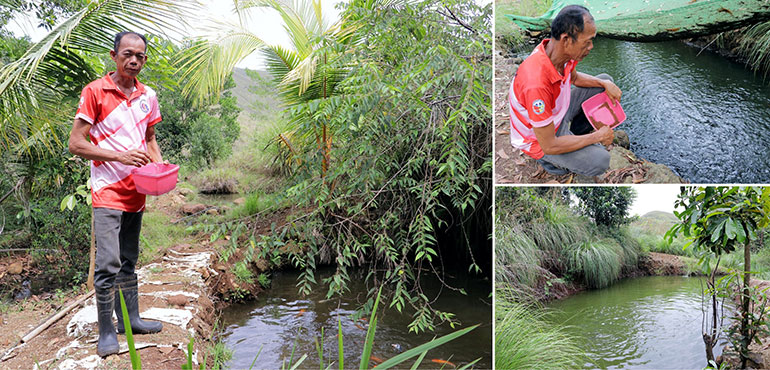
Farmer Eric A. Janolino from the Municipality of Opol in Misamis Oriental ventured into tilapia farming and expanded his income with the financial assistance extended by LANDBANK and the Department of Agriculture under the Agricultural Competitiveness Enhancement Fund (ACEF) Lending Program.

For over 30 years, Eric A. Janolino has dedicated his life to farming palay, corn, and various vegetables in the remote sitio of Tingkulan in Barangay Bagocboc. As someone without formal education, farming was the only way Eric knew to support his growing family. Yet, despite decades of hard work, life was a constant uphill battle.

To fund each planting season, Eric used to rely on informal lenders who charged exorbitant and crippling interest rates, often leaving him with little to no profit after the harvest. This made it nearly impossible to improve his farming methods or invest in the necessary resources to grow his livelihood.

Adding to his struggles, Eric lived in an isolated community with limited access to government services. The barangay is accessible only by motorcycle, requiring a 30-minute ride along rugged, unpaved roads and crossing several rivers from the town proper. This makes transporting crops to the market both difficult and costly, eating further into his already limited earnings.

In search of better income, Eric tried his luck in Manila, taking on jobs as an electrician and security guard. But he felt out of place in the bustling city, and his heart pulled him back to the fields he had always called home. Returning to farming, however, presented the same persistent struggles — high-interest loans and limited resources left him with little to provide for his wife and three children.

A new beginning

Hope came in 2023 when Eric learned about the financial assistance available for small farmers like him, facilitated by LANDBANK in partnership with the Department of Agriculture (DA). Under the Agricultural Competitiveness Enhancement Fund (ACEF) Lending Program, he secured a P100,000 loan with a low annual interest rate of 2%, or only about P2,000 for the entire year.

Eric was guided by LANDBANK and DA through every step of securing the loan — something he never thought possible due to his limited reading and writing skills.

“Dati, kanya-kanyang diskarte ang mga tao dito para magkaroon ng puhunan sa pagsasaka. Pero noong dumating ang LANDBANK, ipinaliwanag nila kung paano kami makakapag-avail ng murang pautang sa ilalim ng ACEF program. Hindi na kami nahirapan sa pagbabayad ng malalaking interes sa 5-6,” Eric shared.

Eric used the loan from LANDBANK to construct three fishponds and purchase fingerlings to start tilapia farming, which provided him with a stable source of income to support his family.

With LANDBANK’s financial support, Eric ventured into tilapia farming and invested in building three fishponds, under the guidance of the Bureau of Fisheries and Aquatic Resources (BFAR) Region 10. To ensure success, he completed a BFAR training on tilapia production, equipping him with the knowledge and skills to maximize his new venture.

A ripple effect of growth

The impact of tilapia farming on Eric’s life was profound. His once meager earnings for his family grew into a steady and reliable income. He invested his profits to buy a carabao and a horse to help transport goods to market, raised pigs for extra income, and even renovated their home. Most significantly, Eric was able to send his children to school — something he once thought was out of reach.

“Malaki ang pasasalamat ko sa LANDBANK dahil hindi sila nag-atubiling tumulong sa katulad naming mga mahihirap. Ngayon, meron na kaming mga hayop na pangkargada sa aming mga produkto at pang-araro ng bukid, kaya malaki talaga ang naitulong ng LANDBANK sa aking pamilya. Anuman ang iyong kalagayan at pangangailangan, nandiyan sila para magbigay ng tulong at suporta,” Eric said.

Motivated by the opportunities provided by LANDBANK and the DA, Eric inspired his fellow farmers to achieve the same success. Fourteen other farmers from his barangay availed themselves of the affordable credit facilities under the ACEF Lending Program and embraced tilapia farming. Like Eric, they soon began to see their livelihoods — and their incomes — flourish, enabling their families to better meet their needs and secure a brighter future.

Empowering small farmers and fishers nationwide

LANDBANK serves as the conduit bank of the DA in implementing the ACEF Lending Program, which aims to boost the productivity of marginalized agricultural players through the extension of accessible credit assistance, among other support initiatives.

Under the Program, farmers and fishers can borrow up to P1 million, while cooperatives, associations, and micro, small, and medium enterprises (MSEs) may access loans up to P5 million for the purchase of farm inputs and equipment, as well as the acquisition or establishment of agri-based production and processing machinery, equipment, and facilities.

As of December 2024, LANDBANK has released a total of P14 billion in loans under the ACEF Lending Program benefitting 95,301 borrowers nationwide, 98% of which are small farmers and fishers.


Spotlight is BusinessWorld’s sponsored section that allows advertisers to amplify their brand and connect with BusinessWorld’s audience by publishing their stories on the BusinessWorld Web site. For more information, send an email to online@bworldonline.com.

Join us on Viber at https://bit.ly/3hv6bLA to get more updates and subscribe to BusinessWorld’s titles and get exclusive content through www.bworld-x.com.

What pulls your credit score down

A credit score is a number that estimates how likely someone repays loans. Khriztina T. Lim, COO and co-founder of personal finance app Lista, talks about the factors that bring it down.

Interview by Aaron Michael Sy
Video editing by Arjale Queral

JuanHand emerges as a top trusted and hassle-free choice for Filipino borrowers

A recent study by Agile Data Solutions, Inc., a market research firm specializing in consumer behavior analytics, recognizes JuanHand as one of the most trusted and hassle-free online lending apps in the country, reinforcing its reputation as a go-to choice for borrowers seeking seamless and secure financial solutions.

The study, which surveyed 3,544 respondents through the Hustle PH mini app, revealed that JuanHand is among the top brands with the most significant increases in awareness, trial, and brand preference among online lending platforms (OLPs).

In a landscape where trust is a critical factor due to concerns over unethical and illegal digital lenders, JuanHand sets itself apart by prioritizing security, transparency, and customer-first services. This commitment resonates with users, as 56% of respondents rated JuanHand as trustworthy and reliable, while 53% recognized it as a safe and secure lending option. Additionally, 46% of respondents who currently use a different primary lending app agreed that JuanHand provides a more user-friendly experience than their current provider, highlighting its dedication to making digital lending more accessible and convenient for Filipinos.

Filipinos’ Evolving Borrowing Behavior

The study also found a shift in consumer borrowing habits: Filipinos now primarily use online loans for daily expenses and bill payments rather than debt consolidation. This evolution signals the growing role of lending apps in supporting financial flexibility and short-term cash flow management.

Six years ago, over 85% of JuanHand users borrowed for financial assistance, commonly known as “Pantawid hanggang sweldo.” Now, over 30% of borrowers use loans for business-related purposes, such as e-commerce and online selling. This trend illustrates how Filipinos are leveraging lending as a tool for financial growth — using borrowed funds to generate income rather than merely covering immediate expenses. JuanHand continues to adapt to these evolving needs by offering tailored solutions that empower Filipinos to take control of their finances.

Shaping the Future of Digital Lending

Social media continues to be a powerful driver in financial education and consumer engagement. Facebook remains the most widely used platform among OLP users, while TikTok has emerged as a crucial tool in increasing app downloads and strengthening brand trust. By leveraging these digital platforms strategically, JuanHand enhances financial literacy and raises customer awareness, helping Filipinos make smarter financial choices.

“At JuanHand, we believe that responsible lending goes hand in hand with financial education. By engaging with Filipinos on platforms they trust and use daily, we empower them to make smarter financial choices and build a more secure future,” said Francisco ‘Coco’ Mauricio, CEO and President of JuanHand.

As the demand for reliable and consumer-friendly lending solutions continues to grow, JuanHand remains committed to offering Filipinos a credible and safe borrowing experience. With loans of up to P50,000, affordable rates, and minimal requirements, JuanHand makes borrowing easy — users can apply with just one valid ID and receive approval in as fast as five minutes.

With digital engagement, financial literacy, and competitive loan offerings at the core of its services, JuanHand is set to remain a leading player in the evolving online lending landscape.

Visit www.juanhand.com or follow JuanHand on Facebook and TikTok to stay informed and financially empowered.


Spotlight is BusinessWorld’s sponsored section that allows advertisers to amplify their brand and connect with BusinessWorld’s audience by publishing their stories on the BusinessWorld Web site. For more information, send an email to online@bworldonline.com.

Join us on Viber at https://bit.ly/3hv6bLA to get more updates and subscribe to BusinessWorld’s titles and get exclusive content through www.bworld-x.com.

9 in 10 Filipinos are literate — PSA

The basic literacy rate among those five years old and older Filipinos was estimated at 90%, the Philippine Statistics Authority (PSA) reported, citing data from latest survey results.

According to the PSA’s 2024 Functional Literacy, Education, and Mass Media Survey (FLEMMS), about 93.1 million Filipinos out of 103.5 million of the total population are considered to be literate on a basic level.

Levels of Literacy in the PhilippinesThe PSA defines “basic literacy” as the ability of a person to read and write a simple message in any language or dialect with understanding, and to compute or perform basic mathematical operations.

On the other hand, functional literacy is classified as the ability of a person to read, write, compute and comprehend and includes higher level of comprehension skills, such as integrating two or more pieces of information and making inferences based on the given information.

Functional literacy rate was at 70.8% or about 60.2 million Filipinos out of 85 million aged 10 to 64, the PSA said.

Females recorded a basic literacy rate of 90.9% while males posted a basic literacy rate of 89%.

Those in the 20-24 age group were the most literate at the basic level with a 96.1% rate, while those aged 60 and over were the least at 76.2%.

Seven out of 18 regions posted higher basic literacy rates than the national average.

Central Luzon led with a basic literacy rate of 92.8%. It was followed by Cordillera Administrative Region (CAR, 92.7%), Calabarzon (92.6%), Central Visayas (92.1%), National Capital Region (NCR, 92%), Northern Mindanao (90.8%), and Davao Region (90.2%).

Meanwhile, four regions surpassed the functional literacy rates at the national level. These were CAR (81.2%), NCR (79.9%), Calabarzon (77.3%), and Central Luzon (73%).

The FLEMMS is conducted every five years, and the latest edition is the seventh in the series of literacy surveys that started in 1989. The 2024 survey was conducted between September to October 2024. — Matthew Miguel L. Castillo

Philippines eyes more chips, food exports to US as tariff milder

Infineon Technologies AG's 150 mm SiC wafer on display during the opening of the company's site of a new semiconductor complex in Kulim, Malaysia, on Thursday, Aug. 8, 2024. Photographer: Samsul Said/Bloomberg

The Philippines is seeking to increase its exports to the US after President Donald Trump imposed tariffs on Manila that are lower compared with its regional peers.

Manila is setting its sights on more shipments of semiconductors, coconut and mango products to the US, Trade Secretary Cristina Roque said in an interview with Bloomberg Television’s Haidi Stroud-Watts on Friday.

“Compared to our ASEAN neighbors, we have an edge in terms of lower tariff rate,” Ms. Roque said. The Philippines is also pushing for a bilateral free trade agreement with its longtime ally to deepen economic ties, she added.

While Trump’s sweeping tariffs triggered global anxiety, the Southeast Asian nation viewed the move with “guarded optimism” and sought to capitalize on the levies that are lower relative to its Asian neighbors.

The 17% tariff on Philippine exports of goods to the US is the second lowest in Southeast Asia after Singapore’s 10%, and smaller compared to Vietnam’s 46% levy and Thailand’s 36%.

Manila isn’t as heavily reliant on external trade as neighbors Vietnam and Thailand, with exports of goods and services accounting for only over a quarter of Philippine economic output, according to the latest World Bank data.

Months before the tariff announcement, Philippine economic managers projected a 6% growth in goods exports this year, but the central bank forecast late last month only a 1% expansion. — Bloomberg

March inflation slows to near 5-year low

A stall sells assorted varieties of rice inside a market in Quezon City. — PHILIPPINE STAR/MIGUEL DE GUZMAN

By Aubrey Rose A. Inosante, Reporter

Inflation eased to its lowest annual rate in nearly five years in March, as food and transport costs rose at a slower pace.

Preliminary data from the Philippine Statistics Authority (PSA) showed the consumer price index rose to 1.8% in March, easing from the 2.1% in February and 3.7% a year ago.

It was within the 1.7%-2.5% forecast from the Bangko Sentral ng Pilipinas (BSP), but slightly below the 2% median estimate in a BusinessWorld poll of 18 analysts last week.

Inflation rates in the Philippines

The March print was the lowest in 58 months or since the 1.6% logged in May 2020 at the height of the coronavirus pandemic.

For the first quarter, inflation averaged 2.2%, well within the central bank’s 2-4% target.

National Economic and Development Authority (NEDA) Secretary Arsenio M. Balisacan said the continued decline in inflation shows the effectiveness of government efforts to stabilize prices.

“While the inflation rate continues to ease and remain within the target range, we commit to monitoring risks and shocks, particularly on anticipated electricity rate hikes and higher prices of fish and meat, and addressing them through timely and targeted interventions,” he said.

Core inflation, which excludes volatile prices of food and fuel, eased to 2.2% in March from 2.4% in the previous month and 3.4% a year prior.

“The main reason for the lower inflation rate in March 2025 compared to February 2025 is the slower increase in the prices of food and non-alcoholic beverages, which rose by 2.2%,” National Statistician Claire Dennis S. Mapa said in mixed English and Filipino on Friday.

The food and non-alcoholic beverages index rose to 2.2% in March, slowing from 2.6% in February and 5.6% in the same month in 2024.

Food inflation further eased to 2.3% in March from 2.6% a month ago and 5.7% the year prior.

This was mainly due to cereals and cereal products, which declined to 5.2% in March from the 3% drop in February and a reversal of the 17.3% increase in the same month last year.

Rice inflation further contracted to 7.7% in March from the 4.9% decline in February. This was the lowest rice inflation since the 8.4% contraction in March 2020, Mr. Mapa said.

How much did each commodity group contribute to March inflation?

“Rice prices have significantly decreased, as you may remember that when the tariff reduction started, the drop in rice prices was quite slow. But this March, there has been a substantial decrease — overall rice reduction is -7.7%,” Mr. Mapa said.

Executive Order 62, which took effect in July 2024, slashed tariffs on rice imports to 15% from 35% until 2028 to curb inflation.

The Department of Agriculture (DA) in February declared a food security emergency on rice, which authorized the National Food Authority to release buffer stocks at subsidized prices.

The DA also further lowered the maximum suggested retail price (MSRP) of 5% broken imported rice to P49 per kilo from P52 per kilo, starting March 1.

According to Mr. Mapa, the average price of regular milled rice nationwide fell by 9.8% to P46.09 in March compared to P51.11 in the same month last year.

The average price of well-milled rice slipped by 7.4% to P52.25 from P56.44 in March 2024.

Meanwhile, the price of special rice fell to P60.15 per kilo from P64.75 in the same month a year earlier.

Mr. Mapa noted the annual price growth of meat and other parts of slaughtered land animals, particularly pork meat. It eased to 8.2% in March from 8.8% in the previous month.

At the same time, transport inflation was also a source of slower inflation in March, as it contracted to 1.1% from the 0.2% drop in February.

Gasoline prices declined at a faster pace to 7.5% in March from the 4.7% drop in the month prior. Diesel costs also dropped at a quicker pace to 5% in March, from the 3.4% dip in February.

In March, pump price adjustments stood at a net decrease of P1.50 a liter for gasoline, P1.10 a liter for diesel and P2.40 a liter for kerosene.

“Also contributing to the decrease in transport inflation is the slower increase in the prices of other passenger transport by road, which had an inflation rate of 0.2%. This specifically includes tricycle fares,” Mr. Mapa said.

Mr. Mapa also noted the slower annual growth in the restaurants and accommodation services index to 2.3% in March from 2.8% a month ago.

Meanwhile, the PSA cited meat of pigs with 2.8% inflation rate as main contributor to the March inflation. This was followed by restaurants, cafe and the like, meat of poultry (10.8%), rentals (1.6%) and other pelagic fish (2.4%).

“In our food basket, meat prices are high, followed by fish. Vegetables have slightly decreased but remain relatively high. The high meat prices are primarily due to pork, which has been triggered by supply issues related to ASF (African Swine Fever),” Mr. Mapa said.

Meanwhile, inflation for the bottom 30% of income households further decelerated to 1.1% in March from 1.5% in February and 4.6% a year ago.

Consumer prices in the National Capital Region (NCR) eased to 2.1% in March from 2.3% in February. Outside NCR, inflation slowed to 1.8% from 2%.

Rizal Commercial Banking Corp. Chief Economist Michael L. Ricafort attributed the slower inflation in March to better weather conditions that slowed down the increase in food and vegetable prices, particularly rice.

He noted world rice prices are at the lowest in over three years or since November 2021.

Mr. Ricafort also cited the stronger peso versus the US dollar that reduced import prices and overall inflation, as well as lower global crude oil prices.

Analysts said the March inflation print gives the central bank room to cut interest rates at next week’s meeting.

“More benign inflation at 1.8% in March 2025 or already slightly below the lower end of the 2%-4% BSP inflation target would support monetary easing particularly possible -0.25 BSP rate cut as early as the April 10 BSP rate-setting meeting,” Mr. Ricafort said in a Viber message.

The BSP unexpectedly kept rates steady at its February policy review, opting to keep the benchmark at 5.75%. This after it delivered three straight 25-bp cuts at each of its meetings in August, October and December.

“Target consistent inflation and slowing growth momentum should be enough to convince the Bangko Sentral ng Pilipinas to cut rates by 25 basis points next week,” Nicholas Antonio T. Mapa, chief economist at Metropolitan Bank & Trust Co., said on social media platform X.

BSP Governor Eli M. Remolona, Jr. earlier said a rate cut is still “on the table” at the Monetary Board’s meeting this month, signaling “a few more” rate cuts for the rest of the year.

As tax hit looms, UK employers prepare to push up prices

REUTERS/TOBY MELVILLE/FILE PHOTO

BROADSTAIRS, England – Pub owner Philip Thorley sees only one direction for his prices once a tax hike for British employers kicks in next week: up. That may be bad news for the Bank of England, which plans to lower interest rates to help the sluggish economy.

Thorley, who owns 18 hospitality sites around the seaside town of Broadstairs, said he could not absorb all the extra cost, which follows a painful run of inflation in recent years.

“We feel as though we’ve been fighting Mike Tyson with one hand tied behind our back,” Mr. Thorley said as drinkers in his Cramptons sports bar watched cycling and cricket on screens.

“We’re not a sponge. At some point we’ve got to look at it and say enough’s enough.”

Many business owners are bracing for the 25 billion-pound ($33 billion) hike in employers’ social security contributions – announced in October by finance minister Rachel Reeves and which comes into force on Sunday.

Ms. Reeves has described her first budget, which included the biggest package of tax increases in three decades, as a “once-in-a-generation” change to invest in public services and modernizing the economy.

On Wednesday, she told lawmakers that there were costs to her tax changes but being irresponsible with the public finances would be worse.

The social security hike will be felt keenly in hospitality, where two-thirds of workers are part-time and have mostly earned too little for employers to pay the contributions.

But from the start of the tax year on April 6 the threshold drops sharply, to 5,000 pounds a year from 9,100 pounds for workers aged over 21. The contributions rate will also rise.

At Cramptons, only four of 30 staff outside the kitchen earn more than the existing threshold. From next week, almost all of them will.

“It is going to be really difficult for us … to swallow this,” said Mr. Thorley, who employs about 400 people, many of them young workers. “However, we’re not going to … be making knee-jerk reactions. We’re going to try to be pragmatic about it.”

Mr. Thorley recently increased his drinks prices by 5% following an annual price hike by beer suppliers. He expects a similar rise will be needed to cover most of the tax increase.

The British Beer & Pub Association estimates the average price of a pint will go up by 21 pence – taking it above five pounds – due to the tax hike and other changes.

On April 1, Britain’s minimum wage went up by nearly 7%, with bigger increases for younger workers.

Hospitality firms are also facing a cut to COVID-era relief from a commercial property-related tax.

HIRING HIT TOO
The difference between labor costs paid by employers and employees’ take-home pay – the so-called tax wedge – is lower in Britain than among European peers, a result of decades of government policy to prioritize hiring.

But a push to narrow that difference would not be pain-free.

While some firms are planning to automate more – retailer Currys has said it will replace paper price labels with electronic labelling – most employers are considering less hiring and slower wage increases in response to Reeves’ budget.

Steve Hardeman, owner of Clevedon Fasteners which makes parts for construction and engineering firms, said the social security and minimum wage increases were the equivalent of adding two people to his staff of 28.

Rory O’Keefe, commercial director at medical device maker Europlaz, said his firm hired two people on fixed-term rather than permanent contracts and would take three students on short-term placements instead of finding graduates.

The Bank of England is waiting to see what impact the budget changes will have.

Governor Andrew Bailey and colleagues say they expect to keep cutting interest rates after three careful reductions since August, fewer than in the euro zone and United States.

Last month the BoE stressed the uncertainties hanging over the economy. They include the risk of a global trade war, which could cause a slowdown and weaker inflation. That risk grew as U.S. President Donald Trump announced a sharp increase in tariffs on imports from around the world on Wednesday .

BoE surveys of British businesses, however, have shown the most common responses to Reeves’ budget will be higher prices and to absorb the hit in profit margins.

Rob Wood, a former BoE economist, said the central bank risked underestimating the price impact of the changes, which were likely to add half a percentage point to an inflation rate already under pressure from other one-off costs, and might even push it above 4% later this year from just under 3% now.

That would be a lot lower than inflation of 11% in 2022 but more than double the BoE’s 2% target.

“The Bank of England would normally look through one-off inflation rises,” Mr. Wood, now chief UK economist at Pantheon Macroeconomics, said. “But one-off or temporary inflation has become a bit of a dirty word since COVID, after central banks misjudged this pretty heavily through 2022 and 2023.”

Rising inflation expectations among households and businesses mean the BoE cannot count on pay deal restraint, especially if Reeves’ tax increase fuels further price rises.

“If you had to pick a time to make this change, I wouldn’t have done it now,” Mr. Wood said. — Reuters

Singapore disappointed with 10% tariffs, will seek negotiation with the US: trade minister

STOCK PHOTO | Image from Rawpixel

SINGAPORE – Singapore’s trade minister said the wealthy financial hub was disappointed that the U.S. had imposed a 10% tariff on its exports despite it having a free-trade agreement and running a trade deficit with the United States.

Singapore could take countermeasures under the free-trade agreement in force since 2004, but has chosen not to do so, Trade Minister Gan Kim Yong told a press conference on Thursday.

“Retaliatory import duties will just add cost to our imports,” he said, noting that the government would be reviewing its economic forecasts because of the worsening situation.

Mr. Gan said Singapore will try to engage the U.S. to understand President Donald Trump’s areas of concern and see if they can be resolved.

“If there are no specific concerns, then it’s more difficult to argue or to negotiate,” he said.

Singapore was hit by Trump’s 10% base tariff on imports, albeit much lower than neighbors in Southeast Asia where six countries were hit with tariffs of between 32% and 49%. The U.S. had a goods trade surplus of $2.8 billion with Singapore last year, an 84.8% increase over 2023, according to the United States Trade Representative website.

Mr. Gan, who is also Singapore’s deputy prime minister, said the city-state’s data showed the U.S. trade surplus with Singapore amounted to a “substantial” $30 billion in 2024. He did not elaborate. — Reuters

Hackers strike Australia’s largest pension funds in coordinated attacks

FLATART-FREEPIK

SYDNEY – Hackers targeting Australia’s major pension funds in a series of coordinated attacks have stolen savings from some members at the biggest fund, according to a source with knowledge of the matter, and compromised more than 20,000 accounts.

National Cyber Security Coordinator Michelle McGuinness said in a statement she was aware of “cyber criminals” targeting accounts in the country’s A$4.2 trillion ($2.63 trillion) retirement savings sector and was organizing a response across the government, regulators and industry. It was still unclear how many pension funds and members were affected.

AustralianSuper, the country’s largest fund managing A$365 billion for 3.5 million members, confirmed that up to 600 member passwords had been stolen to access accounts and commit fraud.

“We took immediate action to lock these accounts and let those members know,” AustralianSuper’s Chief Member Officer Rose Kerlin said, urging all members to check their online balances.

Four AustralianSuper members had a combined A$500,000 drained from their balances and transferred to other accounts that did not belong to them, according to the source, who was not authorized to speak publicly about the matter.

AustralianSuper did not respond immediately to a request for comment.

Australian Retirement Trust, the second-largest fund managing A$300 billion for 2.4 million members, said it had detected “unusual login activity” affecting “several hundreds” of accounts. It locked impacted accounts as a precaution, though there were no suspicious transactions or changes made.

Rest Super, the default industry pension fund for retail workers, with A$93 billion of assets under management, said it suffered an attack that impacted around 20,000 accounts, or around 1% of its 2 million members.

“Over the weekend of 29-30 March 2025, Rest became aware of some unauthorized activity on our online Member Access portal,” Rest CEO Vicki Doyle said.

“We responded immediately by shutting down the Member Access portal, undertaking investigations and launching our cyber security incident response protocols.”

Insignia Financial, which manages A$327 billion, said a “malicious third-party” attempted to access online pension accounts on its Insignia Financial Expand platform. There had been no financial impact at this stage to members, an Insignia spokesperson said.

Hostplus, which has more than 1.8 million members and A$115 billion under management, also confirmed it suffered an attack. A spokesperson said no member losses had occurred but that it was still investigating the extent of the incident.

Prime Minister Anthony Albanese said he had been briefed about the hacks and said there would be a “considered” response from government agencies in time. He added that such attacks were a “regular issue” in Australia, with one occurring every six minutes.

Australia’s largest not-for-profit hospital and aged care provider St Vincent’s Health, private health insurer Medibank MPL.AX and telecom Optus have all suffered major breaches.

The government in 2023 committed A$587 million to fund a seven-year strategy to improve the cybersecurity of citizens, businesses and agencies. — Reuters

How financial institutions determine creditworthiness

Creditworthiness is how a lender judges if a borrower can and will repay a loan. Aaron M. Villegas and Khriztina T. Lim, co-founders of personal finance app Lista, explain how financial institutions determine an individual’s creditworthiness.

Interview by Aaron Michael Sy
Video editing by Arjale Queral

South Korea’s ousted leader Yoon loses reckless gamble with martial law

South Korean President Yoon Suk-yeol. — REUTERS

SEOUL – South Korea’s ousted leader Yoon Suk Yeol, a brash ex-prosecutor who came to power by repeatedly defying setbacks and taking gambles, ultimately fell victim to political recklessness that led him to impose martial law, former colleagues say.

Dogged by personal scandals involving his wife, a bitter row with political opponents whom he called communist sympathizers, and party-room rifts, Yoon was removed from the presidency on Friday in the third year of his five-year term.

The Constitutional Court upheld Yoon’s impeachment by parliament, ruling unanimously that he violated his constitutional duty by briefly declaring martial law on December 3 with no justifiable grounds.

Mr. Yoon, 64, still faces a criminal trial on charges of masterminding insurrection when he mobilized troops to try to shut down an opposition-led parliament that he accused of trying to destroy the country.

He denies wrongdoing, arguing in court that his six-hour attempt at martial law was to protect the country from “anti-state forces.”

Mr. Yoon used his legal career as a launchpad for elected office, according to a former colleague, winning the presidency in 2022.

“Yoon Suk Yeol was the most powerful prosecutor-general ever,” said Han Dong-soo, a former judge who was head of internal inspection at the prosecutors’ office under Yoon. “He used the office to carry out his plan to become president and in doing so, his actions were daring.”

Mr. Han recalls the future president remarking at a dinner he hosted with free-flowing drinks in 2020: “If I had gone to the military academy, I would have staged a coup.”

Mr. Yoon led high-profile investigations of the politically powerful, billed as a crusade against corruption that launched him into the public eye and generated the support that led to his victory in the presidential election.

But once in the presidency, he struggled to emulate his courtroom victories. Instead, he became increasingly embittered by unrelenting battles with opponents that drew out a recklessness that a former prosecution rival said was his defining trait.

By the time Mr. Yoon briefly imposed martial law in December, he was badly bruised politically.

SCANDALS, ‘AMERICAN PIE’
Mr. Yoon’s presidency was overshadowed by scandals involving his wife, Kim Keon Hee, who was accused of inappropriately accepting a Christian Dior handbag as a gift.

Mr. Yoon apologized after his conservative party suffered a crushing parliamentary election defeat last year, blamed on the scandal. But he continued to reject calls for a probe into the affair and into an allegation of stock price manipulation involving his wife and her mother.

The prosecutors’ office that investigated the allegations did not press charges against the first lady.

The past year was marked by repeated clashes with the opposition Democratic Party, while Mr. Yoon’s pro-business policies and initiatives to tackle an ageing society remained stymied. His 2025 budget was slashed by an opposition angry over his refusal to answer lingering questions about his wife.

Mr. Yoon’s struggles at home contrasted with his relative success internationally.

His push to reverse a decades-long diplomatic row with neighboring Japan and join Tokyo in three-way security cooperation with their key mutual ally, the United States, are widely seen as his signature foreign policy achievement.

Mr. Yoon’s ability to bond on a personal level, seen as the trait that gave him his early career success, was on full display at a White House event in 2023, when he took the stage and belted out the 1970s pop hit “American Pie” for an astonished then-President Joe Biden and a delighted crowd.

SHAMANS, HIGH SCHOOL BUDDIES
Born to a well-to-do family in Seoul, Yoon excelled at school and entered the elite Seoul National University to study law. But his penchant for partying caused him to repeatedly fail the bar exam before passing on the ninth try at age 30.

Mr. Yoon shot to national fame in 2016 when, as the chief investigator probing then-President Park Geun-hye for corruption, he was asked if he was out for revenge and responded that prosecutors were not “gangsters”.

The role he played in jailing Park and his surprise appointment as head of the powerful Seoul Central District Prosecutors’ Office marked the start of a dizzying rise to power.

Two years later, as prosecutor-general, he spearheaded a corruption probe of a close ally to the next president, Moon Jae-in. That made him a darling of conservatives frustrated with Moon’s liberal policies, setting Yoon up to be a candidate for president in 2022.

His term got off to a rocky start when he pushed ahead with moving the presidential office from the traditional Blue House compound to a new site, sparking questions whether it was because of a feng shui belief that the old compound was cursed. Yoon denied any involvement by himself or his wife with a shaman.

When Mr. Yoon refused to fire top officials after a 2022 Halloween crowd crush killed 159 people, he was accused of protecting his “yes men”. One was Safety Minister Lee Sang-min, a graduate of Yoon’s high school.

Another alumnus of the Choongam High School in Seoul was Kim Yong-hyun, who spearheaded the presidential office move, then served as the presidential security service chief and later as defense minister. Kim, the main figure advising Yoon to declare martial law, was also charged with insurrection. He too denies the charges.

Shin Yul, a Myongji University political science professor, said Mr. Yoon’s downfall, political near-demise was likely due to him listening to the wrong people and that he probably “still thinks he did the right thing” in declaring martial law. — Reuters

ADVERTISEMENT
ADVERTISEMENT