Home Blog Page 1681

Blockchain Student Alliance to fill education gaps in universities
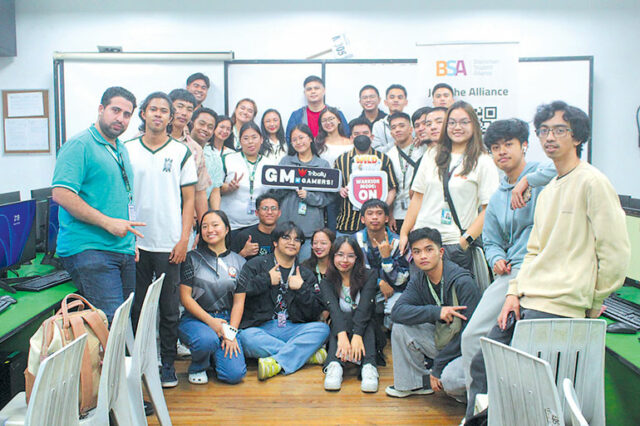
To address persisting gaps in students’ understanding and practical application of the technology, Bitskwela launched the Blockchain Student Alliance (BSA) to provide students with hands-on experience and knowledge on the fundamentals of blockchain technology, its real-life applications, and cryptocurrencies in the digital economy.

Backed by Sonic Labs, a rising leader in blockchain innovation, the program equips students with practical skills through Sonic University, an educational initiative designed to simplify blockchain concepts and make them accessible to developers and users. Its goal is to empower individuals to explore opportunities and build careers in the growing blockchain industry.

The BSA, led by its head Andrea Pilapil and Bitskwela CEO Jiro Reyes, conducted workshops for more than 500 students in various universities, including Mapua University in Intramuros, Manila Central University, Tangos National High School, University of Southeastern Philippines, and University of the Cordilleras from October to November.

“While students showed increasing curiosity and enthusiasm about blockchain, many still lack the hands-on experience needed to fully understand its tools and practical use cases. Blockchain education is often confined to conceptual knowledge, and there’s a pressing need to bridge that gap with practical and project-based learning,” Ms. Pilapil said.

One of the key challenges, according to Ms. Pilapil, is educating non-tech students about blockchain’s potential.

“Blockchain is often limited to tech students, while non-tech students miss out on the wider potential of blockchain applications, such as its use in fields like supply chains, healthcare, and even voting systems,” said Ms. Pilapil.

Hermoso Tupas, Jr., an instructor from the University of Southeastern Philippines, echoed the statement and emphasized the importance of educating students about blockchain.

“It is crucial as students are the innovators of tomorrow,” he said. “Blockchain’s relevance grows daily, and fostering awareness of its potential use cases should be introduced to students, empowering them to become advocates for its application.”

According to Ms. Pilapil, universities need to integrate blockchain education into their curricula, particularly through interdisciplinary approaches.

“Learning this technology can be better integrated through introductory courses in fields like business, economics, and computer science, along with practical, project-based learning to help students gain hands-on experience in building blockchain solutions. Interdisciplinary programs should also explore its use in industries such as healthcare, finance, and supply chain,” she said.

Bitskwela sees promising potential for expanding blockchain-related programs in universities, including creating research and innovation hubs, hosting blockchain hackathons and competitions, and integrating blockchain modules into non-tech programs to showcase their real-world applications and create opportunities for students across various fields.

The edutech firm plans to continue the BSA tour in 2025, focusing on hosting more hands-on workshops and interactive activities to further connect students with industry leaders, providing greater exposure to the blockchain ecosystem.

Lista launches ‘The Credit Club’ to educate young Filipinos on credit health and financial empowerment

From left to right: Vlademir Dela Cruz, SVP Business Development and Communications Group at CIC; Ninotchka Sulit, director-head of FinTech Sales at TransUnion; Arra Santos, senior fintech relationship manager at TransUnion; Aaron Villegas, co-founder at Lista; Khriz Lim, co-founder at Lista; Yash Sokhal, sales manager, FinTech at CIBI Information, Inc.; and Josh Mortega, vice-president, Head of FSI at CIBI Information, Inc.

Lista, the fastest-growing financial management app in the Philippines, recently marked its third anniversary with the launch of The Credit Club, an initiative aimed at bridging the gap in financial literacy and providing greater accessibility to credit information for Filipinos.

Executives from Credit Information Corp. (CIC), Credit Information Bureau, Inc. (CIBI) and TransUnion Philippines have joined Lista in empowering and inspiring fellow Filipino millennials and Gen Zs to take control of their financial habits through credit awareness.

Filipino students represent the Philippines in F1 in Schools Global STEM Challenge

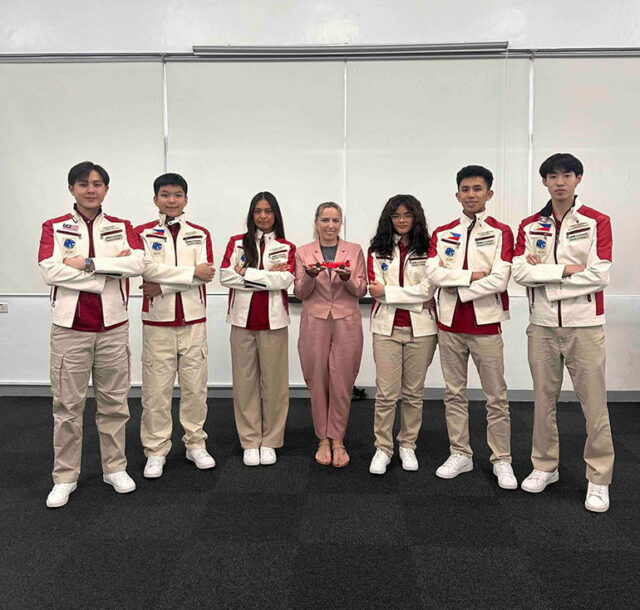
L-R: Lau Li Khai, Aaron Gabriel Chua, Sofia Margaret Gorospe, Jenna Storey, Tara Bahukhandi, Neo Angelo Gatlabayan, and Gian Andre Benjamin Gaisano Anggala

Six talented STEM students from the British School Manila have competed in the F1 in Schools Global STEM Challenge, which took place from Nov. 21 to 28 in Dhahran, Saudi Arabia.

This milestone marks the first time a Filipino team, AGILAS, has participated in the prestigious global competition.

The AGILAS team is composed of senior students Neo Gatlabayan, Gian Andre Benjamin Gaisano Anggala, Lau Li Khai (Marcus), and Sofia Margaret Gorospe, alongside junior Aaron Gabriel Chua and sophomore Tara Bahukhandi. The team is guided by their adviser, Jenna Storey, as they prepare to showcase Filipino innovation on the international stage.

“This is our first time competing, and we didn’t know what to expect, but everything is coming together,” shared Mr. Gatlabayan, the team’s managing director and chief engineer. “We’re about to register our cars, and we’re good to go. It feels incredible to be the first Filipino team here.”

Ms. Bahukhandi, marketing and promotions lead, expressed pride in representing the Philippines. “It’s inspiring to see competitors from all over the world. Being on an international stage makes me incredibly proud to represent the Philippines in STEM,” she said.

Mr. Lau, chief finance officer and director of research & design, shared his excitement about meeting teams from around the world. “We saw a few teams at the airport, and it’s thrilling to know we’ll be competing alongside so many talented individuals,” he said.

F1 in Schools is a global, not-for-profit competition that encourages students to develop and showcase their STEM skills by designing, building, and racing miniature Formula 1 cars.

Teams are evaluated in areas such as car speed, engineering quality, branding, marketing, project management, and verbal presentation skills, making it a comprehensive platform for young innovators.

The AGILAS team’s participation not only highlights the growing importance of STEM education in the Philippines but also paves the way for more Filipino students to pursue careers in science, technology, engineering, and mathematics.

Southern comfort (and convenience)

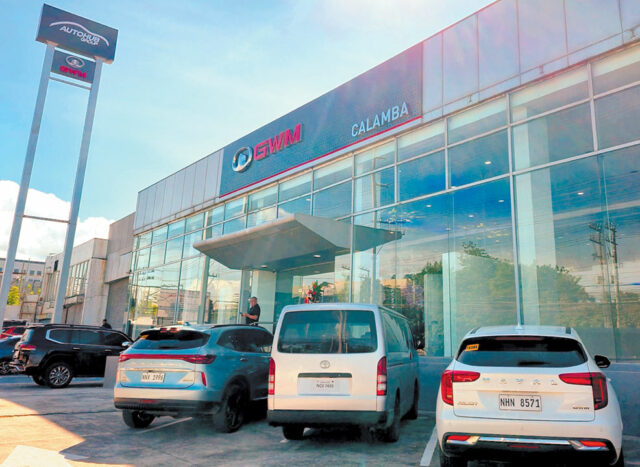
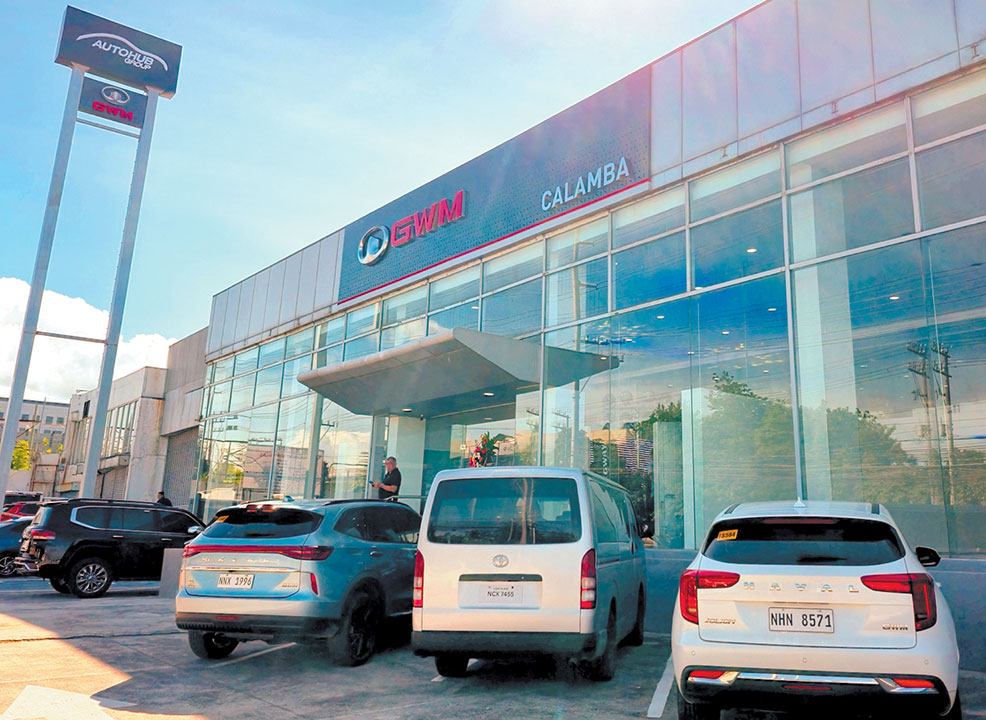
The Autohub Group-operated GWM Calamba is located along Maharlika Highway, Calamba, Laguna. — PHOTO BY HAZEL NICOLE CARREON

GWM continues expansion with new Calamba dealership

By Hazel Nicole Carreon

GREAT WALL MOTORS (GWM) Philippines continues to solidify and widen its presence in the country with the opening of its newest dealership — this one located along Maharlika Highway, in Calamba, Laguna. It targets a growing market in this part of Laguna, in addition to nearby provinces such as Batangas and Cavite.

Operated by the Autohub Group, the newly inaugurated GWM Calamba is a 3S (sales, service, and spare parts) facility which boasts a modern showroom that can display up to four vehicle units. Its particularly spacious service area, which will be shared by other Autohub-operated brands in Calamba, will be fully open by January. It is the third GWM establishment of the Autohub Group, following the opening of dealerships in Makati and Santa Rosa, Laguna. Another GWM-Autohub location is slated to open in Dasmariñas, Cavite in the first quarter of 2025.

“The opening of GWM Calamba is a testament of our commitment to our brand,” said Autohub Group President Willy Tee Ten in his speech at the inauguration ceremony. “It shows that we believe in the GWM brand, and we are here to make sure that it becomes successful.”

GWM Calamba is open from Monday to Sunday, 8:30 a.m. to 5:30 p.m.

Distributed by the Luxuriant Automotive Group, Inc. (LAGI), GWM made its entry in the Philippines in 2023. Since then, the China-headquartered car maker has gained significant traction in the local market with its diverse lineup of vehicles which include the Haval H6 hybrid SUV, Haval Jolion subcompact crossover, Ora electric hatchback, Tank 300 SUV, and Cannon pickup truck. The brand’s focus on cutting-edge technology, stylish design, and outstanding performance is said to have resonated with a segment of Filipino car buyers.

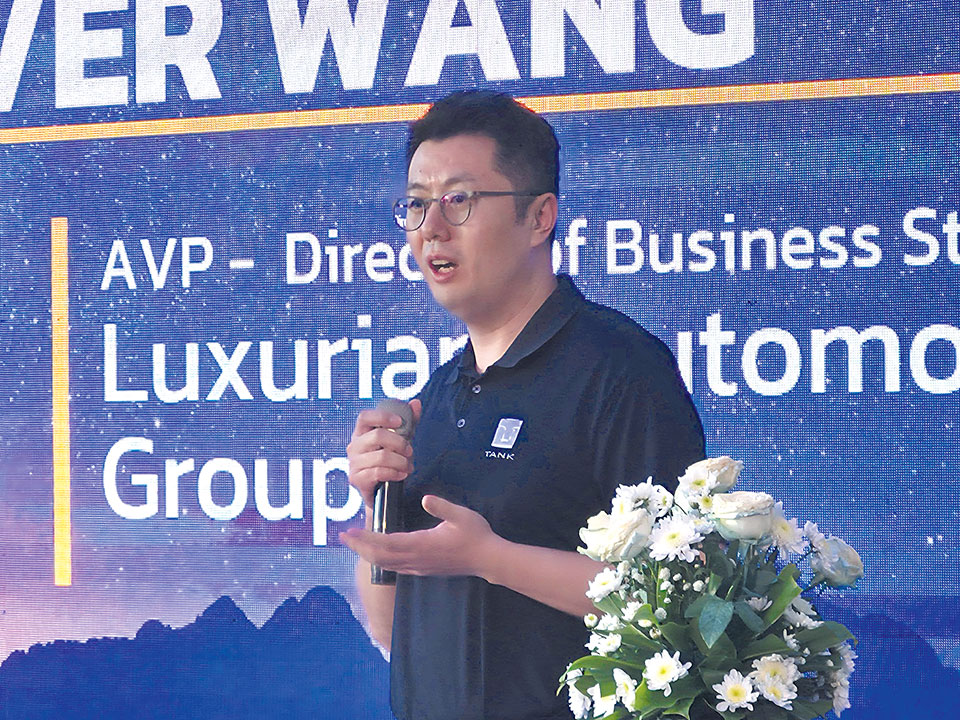
According to LAGI Assistant Vice-President and Director of Business Strategy River Wang, GWM in 2023 sold 1.23 million units globally and generated US$24 million in revenues. “Until now, GWM is still growing bigger,” the executive maintained. “We are planning to bring more models to the Philippine market, so we are looking forward to a better performance next year.”

With the inauguration of GWM Calamba, the brand now has a robust network of 16 dealerships nationwide, enabling it to reach more customers and provide quality after-sales support.

For more information, visit gwm.com.ph.

PSE: Trump policies to dictate path of PHL stocks

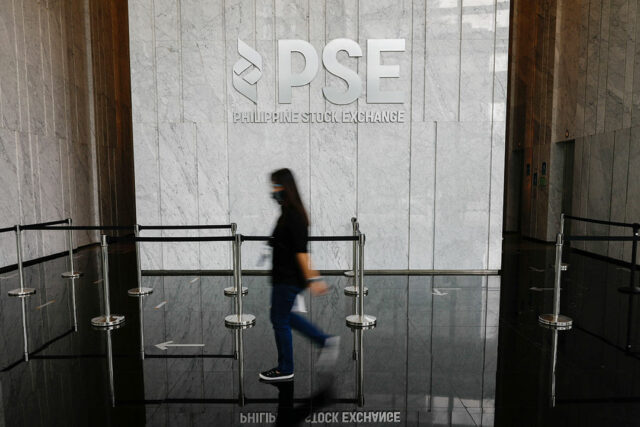
The lobby of the Philippine Stock Exchange in Taguig City, Sept. 30, 2020. — REUTERS

US PRESIDENT-ELECT Donald J. Trump’s economic policies would likely drive Philippine stocks in 2025 after geopolitical tensions weighed on the bourse for much of 2024, according to the Philippine Stock Exchange (PSE).

“One of the investment considerations at this time is the direction of economic policies of the new US administration,” Ramon S. Monzon, president and chief executive officer at the PSE, said in a statement at the weekend. “An outcome favorable to the Philippines may help spur foreign buying and create the market condition listing applicants are waiting for.”

He said internal and external “economic and geopolitical headwinds” weighed on the market, prompting listing applications to defer their initial public offerings (IPO).

The PSE earlier said it expects companies to raise  P120 billion in capital on the bourse including from six IPOs in 2025 amid increased market activity.

The real estate investment trust company of SM Prime Holdings, Inc., Prime Infrastructure Capital, Inc., Maynilad Water Services, Inc., and GCash are some of the big names said to be planning IPOs in 2025.

Mr. Trump will take his oath as US president on Jan. 20. During the campaign, he vowed to increase tariffs on European Union nations, Mexico, Canada and China.

There were three IPOs this year by OceanaGold (Philippines), Inc., Citicore Renewable Energy Corp., and NexGen Energy Corp. The bourse raised P82.37 billion in capital this year, 42% lower than in 2023.

The PSE index finished the year at 6,528.79, 1.2% or 78.75 points higher than its 2023 close. The PSE MidCap and PSE Dividend Yield indexes also rose 29.1% and 22.4%, respectively.

The daily average value turnover gained 0.1% to P6.1 billion. Domestic market capitalization at year-end also increased 11.2% to P14.57 trillion from a year earlier. Net foreign selling fell 5% to P23.18 billion from last year.

The service index had the biggest increase at 29.7%.

Mr. Monzon said the PSE would continue to improve stock market liquidity. It plans to launch global Philippine depositary receipts and last week, it announced its takeover of Philippine Dealing System Holdings Corp. (PDS) in a deal worth P2.32 billion.

The market operator said it would buy 3.87 million PDS shares at P600 each for a 61.92% stake as part of its plan to unify local capital markets. It has a 20.98% stake in PDS.

“This acquisition aims to create operational synergies by establishing a unified marketplace for fixed income and equity products, and a single platform for capital raising, among others,” he said in the statement. “We will also remain active in our IPO campaign to get more companies listed on the stock market.”

The PSE seeks to launch the depositary receipts — peso-denominated instruments that represent an economic interest, but not voting rights, in an underlying security listed in an overseas exchange — in the first quarter of 2025. — Revin Mikhael D. Ochave

PHL coffee import forecast downgraded 7.9% by USDA

REUTERS

THE US Department of Agriculture (USDA) downgraded its projection for Philippine coffee imports by 7.9% to 5.8 million 60-kilogram (kg) bags in the 2024-2025 marketing year (MY), which ends in June.

The USDA’s December forecast for Philippine coffee imports compares with the June estimate of 6.3 million bags. It is also lower than the expected 5.85 million bags of coffee imports for MY 2023-2024.

According to the report, the USDA expects the Philippines to import 5 million bags of soluble coffee in MY 2024-2025, down 9% from the June estimate but level with the 5 million bags of soluble imports in MY 2023-2024.

The Philippines typically imports the majority of its coffee needs as domestic production cannot meet demand. Philippine-grown coffee can service about 38% of market requirements.

The Philippines is the fourth-largest coffee importer after the European Union (45 million 60-kg bags), the US (23.9 million bags), and Japan (7.25 million bags).

Meanwhile, the USDA maintained its MY 2024-2025 projection for Philippine coffee production at 450,000 60-kilogram bags. This was also the projection for MY 2023-2024.

The USDA also downwardly revised its projections for Philippine coffee consumption to 6.55 million bags from 7.05 million bags previously estimated for MY 2024-2025.

The USDA reported that world coffee production will be 6.9 million bags higher than the previous marketing year to 174 million bags in MY 2024-2025 due to higher output in Vietnam and Indonesia.

“World exports are forecast (to be) modestly higher as gains in Vietnam and Indonesia more than offset reduced shipments from Brazil,” it said.

According to the report, Vietnam production is estimated to rebound by 2.6 million bags to 30.1 million in MY 2024-2025. Vietnam’s bean exports are also expected to rebound by 1.8 million bags to 24.4 million due to higher available supply.

The Philippines imports most of its coffee requirements from Vietnam.

Meanwhile, the USDA said global consumption is expected to rise to 168.1 million bags due to increasing demand in the EU, the US, and China. — Justine Irish D. Tabile

The winners of the MMFF 2024

STILL FROM Green Bones

ON Friday, the winners of this year’s edition of the Metro Manila Film Festival (MMFF) — its 50th — were announced, with the prison drama Green Bones bagging most of the prizes.

The complete list of winners follows:

Best Picture: Green Bones

2nd Best Picture: The Kingdom

3rd Best Picture: My Future You

4th Best Picture: Isang Himala

Best Director: (Shared) Crisanto Aquino for My Future You and Michael Tuviera for The Kingdom

Special Jury Prize: (Shared) Topakk and Isang Himala

Best Actress: Judy Ann Santos, Espantaho

Best Actor: Dennis Trillo, Green Bones

Best Supporting Actor: Ruru Madrid, Green Bones

Best Supporting Actress: Kakki Teodoro, Isang Himala

Best Child Performer: Sienna Stevens, Green Bones

Breakthrough Performance: Seth Fedelin, My Future You

Special Jury Prize (Performance): Vice Ganda, And the Breadwinner is…

Best Screenplay: Ricky Lee and Angeli Atienza, Green Bones

Best Musical Score: Vincent de Jesus, Isang Himala

Best Sound: Ditoy Aguila, Strange Frequencies: Taiwan Killer Hospital

Best Original Theme Song: “Ang Himala ay Nasa Puso” for Isang Himala, written by Vincent de Jesus and Ricky Lee.

Best Editing: Vanessa Ubas de Leon, My Future You

Best Cinematography: Neil Daza, Green Bones

Best Production Design: Nestor Abrogena, The Kingdom

Best Visual Effects: Riot Inc., The Kingdom

Gender Sensitivity Award: And the Breadwinner is…

FPJ Memorial Award: Topakk

Gatpuno Antonio J. Villegas Cultural Award: The Kingdom

Best Student Short Film: University of Makati, Saan Aabot ang 50 Pesos mo?

2nd Best Student Short Film: University of Malabon

3rd Best Student Short Film: University of the Philippines Mindanao

Best Float: Topakk and Uninvited

Trump’s art of the deal and China’s art of the trade war

REUTERS

As the world awaits how US President-elect Donald Trump will weaponize trade, it is useful to understand how the US and China have wielded trade sanctions in the past to achieve their foreign and domestic policy goals.

The US has often used trade sanctions to deal with issues such as nuclear proliferation, human rights abuses, or geopolitical aggression, and now under Trump, to reduce trade deficit and bring back jobs to the US. The US, for example, has imposed sanctions on Iran to curb its nuclear program and on Russia following its annexation of Crimea. During Trump’s first presidency, he imposed tariffs on $250 billion worth of Chinese goods, targeting sectors like technology, steel, and consumer goods. These measures were designed not only to pressure Beijing on what the US claimed as intellectual property theft, human rights violations, and unfair trade practices but also to incentivize US companies to shift production to the US.

Similarly, China has also wielded trade sanctions as an instrument of foreign policy. Since 2010, China has imposed sanctions against 15 countries including Australia, Japan, South Korea, Norway, the Philippines, Mongolia, Canada, Lithuania, and the United States. These sanctions vary in motivation, scope, target, and duration, but their strategies tend to be ambiguous and informal but also proportional, conditional, and ultimately pragmatic. If President Trump has the art of the deal, China has the art of the trade war.

Historically, China tended to wield trade sanctions over what it claims as infringements of its core interests — territorial integrity, political stability, economic priorities, and national security. In 2012, for example, Beijing imposed trade sanctions — that lasted four years — on the Philippines after it filed a case against China over the Scarborough Shoal in the South China Sea. When Norway awarded the 2010 Nobel Peace Prize to Chinese dissident Liu Xiaobo, China blocked Norwegian salmon exports for six years. In 2016, China imposed sanctions on Mongolia after the Dalai Lama’s visit, targeting Mongolian mining exports with administrative delays. South Korea experienced a similar response when it deployed the THAAD missile defense system in 2016. China retaliated by restricting tourism, banning Korean cultural products, and increasing inspections on South Korean goods — a move that cost the South Korean economy an estimated $7.5 billion over six years. In 2020, after Australia called for an independent investigation into the origins of COVID-19 and banned Huawei from its 5G rollout, China imposed broad sanctions on Australian coal, barley, beef, and wine estimated at over $20 billion worth of exports.

In all of these cases, trade sanctions were eventually eased as a result of policy shifts or changes in political leadership in sanctioned countries. These examples illustrate the range and conditional nature of China’s trade sanctions. Economic pressure is applied strategically, and sanctions are often lifted when target countries adjust policies, offer diplomatic concessions, or prioritize economic cooperation with Beijing.

While China’s motivations are predictable — to protect its core interests — its sanctions strategy is often ambiguous and informal. Unlike Western powers, which publicly announce and justify sanctions — even with Trump’s trade deficit reduction project — China often attributes trade disruptions to technical or regulatory issues.

When Mongolia hosted the Dalai Lama in 2016, Chinese authorities cited vague “technical delays” to restrict Mongolian mining exports. Similarly, restrictions on Australian and Philippines agricultural goods were framed as regulatory inspections rather than retaliatory measures.

Moreover, China often employs informal tools such as administrative delays, increased inspections, and unofficial pressures on businesses. In its 2021 dispute with Lithuania over the establishment of a Taiwanese representative office, China suspended trade flows without formal announcements and pressured multinational firms to sever ties with Lithuanian suppliers. This strategy — highly effective but difficult to contest through legal channels — highlights China’s ability to leverage its vast market informally.

Notably, China’s trade sanctions also tend to be tit for tat but proportional, calibrated to maintain pressure while avoiding full-scale economic disruption. For example, during Trump’s first presidency, the 2018 trade war with China showcased a proportional use of tariffs to address perceived trade imbalances. Tariffs were imposed on $250 billion worth of Chinese imports, targeting sectors such as technology, steel, and consumer goods, while China retaliated with tariffs on $110 billion worth of US goods, focusing on agriculture and automobiles, politically sensitive goods in the US.

While China’s sanctions strategy tends to be ambiguous, informal, proportional, and conditional, it is ultimately pragmatic. For instance, China has maintained robust trade relations with countries despite ongoing territorial disputes. Bilateral trade with India, for instance, reached $135 billion in 2022 despite continued tensions along the border which have since been settled this year. Trade with the US remains robust despite trade rivalry. Similarly, China remains Vietnam’s largest trading partner, even as both countries vie for contested claims in the South China Sea. The same with the Philippines although China has already warned it is running out of patience. Trade with Taiwan further underscores this dynamic. Despite Beijing’s political stance that Taiwan is a breakaway province, economic ties remain significant. In 2022, Taiwan’s exports to China accounted for 40% of its total exports, dominated by semiconductors vital to China’s technology ambitions. These cases point to the complexities of China’s trade relationships and China’s pragmatic balancing act between strategic competition and economic interdependence.

The economic impact of China’s sanctions often depends on the targeted country’s reliance on Chinese markets. Smaller economies, or those with concentrated export dependencies, are more vulnerable. South Korea’s deployment of the THAAD missile defense system in 2016 led to restrictions on tourism, entertainment, and consumer goods, costing South Korea an estimated $7.5 billion over six years. However, countries capable of diversifying their trade relationships can mitigate the effects. Australia’s experience with China illustrates this point. After facing sweeping trade restrictions, Australia redirected coal exports to India and barley to the Middle East, demonstrating that sanctions can sometimes accelerate trade diversification rather than achieving their intended outcome.

China’s trade sanctions must be seen within its broader foreign policy strategy, which balances punitive measures with economic incentives. Alongside sanctions, China uses tools such as favorable trade agreements, foreign direct investment (FDI), and development aid to strengthen ties with friendly states and win over rivals. The Belt and Road Initiative (BRI) exemplifies Beijing’s efforts to expand geopolitical influence through economic engagement. China’s vast outbound tourism sector has also emerged as a lever of economic diplomacy, rewarding or penalizing countries based on bilateral ties.

While China’s sanctions strategy offers flexibility, it also raises concerns about international trade norms. The World Trade Organization (WTO) provides mechanisms for resolving formal trade disputes, but China’s informal measures often fall outside its regulatory framework. Japan’s 2012 WTO victory against China’s rare earth export restrictions highlighted these limitations. Although China complied with the ruling, the case underscored the challenges of addressing politically motivated trade disruptions through existing global mechanisms. This is not to say that China has completely abandoned the WTO. In fact, it recently filed in the WTO several cases against the US and EU over the imposition of tariffs on Chinese electric vehicles.

In short, China’s art of the trade war seems to be a combination of discretion, informality, ambiguity, proportional escalation, conditionality, pragmatism, and reliance on global institutions as it suits its purpose. This strategy allows Beijing to exert economic pressure, provide flexibility while avoiding overt escalation. Its effectiveness will depend on the economic resilience of targeted countries, their ability to diversify trade relationships, and the broader geopolitical context. While sanctions impose costs, they also carry risks for China, including disruptions to its own supply chains and the potential for countries to deepen ties with alternative partners.

On my next op-ed, I will speculate on the possible economic impacts if China imposes sweeping trade sanctions on the Philippines and when it might do so.


Eduardo Araral is an associate professor at the Lee Kuan Yew School of Public Policy, National University of Singapore. This op-ed is written in his personal capacity.

Peso volatility vs dollar likely to continue in 2025

BW FILE PHOTO

By Luisa Maria Jacinta C. Jocson, Reporter

THE PESO could continue to see volatility in 2025 amid uncertainties over the policy direction of US President-elect Donald J. Trump’s administration and its potential impact on inflation and global interest rates.

The local unit closed at P57.845 versus the dollar on Friday, the last trading day of 2024, strengthening by 12.5 centavos from its P57.97 finish against the greenback on Thursday.

This was the peso’s best close in three weeks or since it ended at P57.735 on Dec. 6.

Week on week, it jumped by 96.5 centavos from its P58.81-a-dollar finish on Dec. 20.

However, year on year, the peso weakened by P2.475 or 4.28% from its end-2023 finish of P55.37 versus the greenback.

In 2024, the peso closed at its record low of P59 thrice (on Nov. 21, Nov. 26, and Dec. 19.) as the dollar surged on bets of slower rate cuts by the US Federal Reserve amid inflation concerns. It has yet to breach this all-time low, which was first set in October 2022.

Even with its slight loss on Friday, the US dollar was headed for an almost 7% annual gain, as traders anticipated robust US growth, as well as tax cuts, tariffs and deregulation by the incoming administration of Mr. Trump, would make the Federal Reserve cautious on rate cutting well into 2025, Reuters reported.

The peso’s depreciation this year was due to the “combined impact of global and domestic factors,” Philippine Institute for Development Studies Senior Research Fellow John Paolo R. Rivera said.

The dollar was supported by the Fed’s hawkish stance, he said. The US central bank began its easing cycle in September with an outsized 50-basis-point (bp) cut and followed it up with 25-bp reductions at each of its November and December meetings, bringing the fed funds rate to 4.25%-4.5%, with Fed Chair Jerome H. Powell signaling cautiousness about that future cuts due to elevated inflation.

“This created downward pressure on the peso as investors favored dollar-denominated assets over peso,” Mr. Rivera said.

The peso’s weakening in 2024 was largely in line with other currencies due to the dollar’s surge following Mr. Trump’s US presidential election win.

“The stronger US dollar versus global currencies in recent months was largely due to the Trump factor that could lead to more protectionist policies that could, in turn, lead to fewer Fed rate cuts,” he said.

“The Philippines also continued to post a current account deficit, driven by elevated import bills and a slower-than-expected recovery in exports,” Mr. Rivera added. “While OFWs’ (overseas Filipino workers) remittances remained resilient, they were insufficient to offset the imbalance.”

Geopolitical concerns also drove safe-haven demand for the greenback, he said.

“Persistent geopolitical tensions, including the aftermath of the conflict in Ukraine and concerns over China’s economic slowdown, also contributed to global risk aversion, strengthening the dollar further.”

Domestic inflation conditions and the Bangko Sentral ng Pilipinas’ (BSP) own rate-cutting cycle also affected the peso’s movement against the dollar, Mr. Rivera said.

“For 2024, inflation remained a threat, limiting the BSP’s ability to aggressively cut interest rates. As the BSP moved cautiously with its easing cycle, the interest rate differential widened, adding pressure on the peso,” he said.

In August, the BSP delivered its first rate cut since 2020, slashing benchmark borrowing costs by 25 bps. It made two more 25-bp reductions at its October and December meetings for cumulative cuts worth 75 bps that brought the policy rate to 5.75%.

BSP Governor Eli M. Remolona, Jr. earlier said they are watching the peso closely and have been a bit more active in the markets than usual, intervening in small amounts in the past months amid the stronger dollar.

2025 OUTLOOK
Analysts said the peso’s weakness against the greenback could persist in 2025.

Jonathan L. Ravelas, senior adviser at professional service firm Reyes Tacandong & Co., said volatility is seen to “reign in 2025 amid Trump 2.0.”

“If the Fed begins cutting interest rates as expected by mid-2025, the US dollar could weaken, providing some relief for the peso. However, the pace and timing of these rate cuts will be critical,” Mr. Rivera said.

“Expected Fed rate cuts for 2025 could potentially lead to some healthy downward correction in the US dollar, based on Fed rate cycles,” Mr. Ricafort said.

Mr. Powell said earlier this month that US central bank officials “are going to be cautious about further cuts” after an as-expected quarter-point rate reduction, Reuters reported.

Traders are pricing in 37 basis points of US rate cuts in 2025, with no reduction fully priced into money markets until May.

The BSP’s “ability to balance its easing cycle with inflation risks and external pressures will play a major role” in the peso’s movement against the dollar in the coming months, Mr. Rivera added.

“Faster rate cuts without considering global trends could exacerbate peso weakness.”

Mr. Remolona has signaled further easing in 2025 but noted that delivering 100 bps worth of rate cuts might be “too much.”

The central bank will likely keep reducing rates in “baby steps” as it is still carefully monitoring upside risks to inflation, the BSP chief added.

“We expect the depreciation to get worse if the government does not implement the right policies,” Leonardo A. Lanzona, an economics professor at the Ateneo de Manila University, said.

Mr. Lanzona noted that the country’s “continued dependence… on imports has increased the value of the foreign currency to increase.”

“This raises the foreign exchange rate which in turn induces the rise of inflation expectations, thereby reinforcing the depreciation,” he added.

Mr. Rivera said the peso could trade at the P57 to P59 range in the first half of 2025.

“(There is) potential for recovery in the latter half if global monetary conditions ease and the Philippine economy shows resilience. We need to be watchful of the Fed’s monetary policy decisions, the BSP’s moves, and progress on trade and investment reforms.” — with Reuters

Q&A: ‘People want cars that are more rewarding’

United Asia Automotive Group, Inc. Chief Marketing Executive Lyn Manalansang-Buena at the launch event of Lynk & Co in March — PHOTO BY KAP MACEDA AGUILA

UAAGI Chief Marketing Executive Lyn Buena says Lynk & Co is targeting a growing middle class

Interview by Kap Maceda Aguila

WHEN IT was formally launched in the Philippines last April at the Manila International Auto Show (MIAS), Lynk & Co (distributed by United Asia Automotive Group, Inc. or UAAGI) wanted to change the average car buyer’s notion that China-headquartered car marques are known for delivering value for money and hardly anything else — certainly not the characteristics associated with more premium brands. Lynk & Co leverages its affinity with the Volvo and Geely brands, being a joint venture of both.

For one thing, Lynk & Co vehicles “are designed and built using advanced architectural platforms such as CMA, SEA, and BMA. These platforms allow for model scalability and adaptability in light of new energy solutions, such as translation of Lynk & Co’s designs to accommodate new electric vehicle technologies,” according to a company release.

“(It is a) premium, global vehicle (brand) that ticks all the right boxes in terms of design aesthetic, safety, and modern connectivity,” UAAGI Group Managing Director and Lynk & Co Philippines Brand Head Froilan Dytianquin had said during the Lynk & Co preview ahead of the MIAS launch.

Meanwhile, UAAGI Chairman Rommel Sytin said that the brand “not only elevates UAAGI’s entire auto brand portfolio, but also allows us to cater to a wider audience of Filipino motorists and their discerning tastes and preferences.”

We caught up with UAAGI Chief Marketing Executive Lyn Manalansang-Buena on the sidelines of the inauguration of Lynk & Co’s fourth operational dealership — this one located along Quezon Avenue. Paramount Cars, Inc. President Jessica Lee-Sy had noted in her speech that the country today boasts 21 Chinese car brands, with more poised to enter the market.

We asked Mrs. Manalansang-Buena how Lynk & Co intends to stand out in this crush of competitors, and more. Here are excerpts from our interview:

VELOCITY: How do you see the industry shaping up, and how does Lynk & Co position itself differently from the other Chinese brands that are out there? What particular segment of the buying market are you eyeing?

LYN MANALANSANG-BUENA: I agree it’s a crowded marketplace now, but at the end of the day, I think it has a lot to do with the product that you offer. We’re very fortunate because Lynk & Co, in cooperation with its mother company Geely, has produced very premium cars. Because of a rising middle class, a lot of people are going to want cars that are more rewarding — not just a basic tool that can get you from point A to point B. That’s exactly what Lynk & Co offers, something that will make you feel good about your purchase — (providing) an environment that you’re happy with. It’s something that I feel is a significant proposition for a new breed of middle-class workers in the Philippines. There’s a lot of discovery about brands that are not as known but offer good technology, premium environment, and safety. I think that’s a very strong proposition in terms of our lineup in Lynk & Co.

What’s the timeline for growing the network?

We have two dealerships that will open by the first half of next year, and our plan is to have eight open showrooms by the end of 2025, conservatively. We have partners north and south of NCR. That’s the plan: To have more presence in very specific areas where we feel the market is ready for a brand like Lynk & Co.

You’re planning to release electrified options as well. Are seeing you an uptick in demand from your customers and the industry in general for electrified powertrains?

Because of the distinct profile of the Lynk & Co audience, I think they’re one of the first adopters. They’re among the first to embrace new things, new technologies — so long as it makes sense, because they’re also very discerning. As long as we can make sense of that, the infrastructure is ready, the technology and after-sales are supported which is what we have in UAAGI — because UAAGI is very well known for its exceptional after-sales services across our four brands — I think yes, we are doing those steps. We are being cautiously optimistic, but we’re reading the market very well because it evolves fast. We want to make very calculated, smart moves whenever we choose a product to introduce.

Global Miranda pushes crypto adoption through education

ARLONE P. ABELLO

By Revin Mikhael D. Ochave, Reporter

ARLONE P. ABELLO, founder and chief executive officer at Global Miranda Miner Group, is pushing investor education to boost the adoption of cryptocurrencies in the Philippines.

“We should orient every Filipino,” he said in an interview. “It is a multi-stakeholder approach. It takes a community to educate someone. I think everyone needs to have a concerted effort on what digital assets are all about.”

“We want to have a continuous level of education. We’re telling Filipinos that it doesn’t end with the stock market and mutual funds,” he added.

Before his cryptocurrency journey, Mr. Abello was senior director of operations for Telus International, Inc.

“I was bored with the Philippine stock market. There’s no volume. Then I said why don’t I dabble into cryptocurrency? There’s volume and liquidity. Volume is the kingmaker on trading setups,” he said.

“Cryptocurrency, particularly Bitcoin, is the greatest equalizer between a first-world country and a third-world country. I’m just looking forward to educating people,” he added.

Mr. Abello said he wants to remove the stigma of cryptocurrency and help people avoid scams through increased investor education.

“I’m seeing slow but steady adoption,” he said. “From an adoption standpoint, we’re slowly getting there. The goal is for Filipino traders to introduce Bitcoin to their families. If I educate one college student, I am confident that the family is already protected against scams.”

Mr. Abello said the presence of GCrypto on mobile wallet GCash and local cryptocurrency wallets and exchanges Coins.ph and Philippine Digital Asset Exchange has helped boost crypto adoption in the country.

“The infrastructure is already there. Although people don’t believe it, at least they don’t ignore cryptocurrency. From a learning standpoint, awareness is already present,” he said.

“Investors need to be financially mature. They need to have emergency funds — six months’ worth of their operating expenses. They need to have insurance before going to speculative assets,” he added.

In November, Coins.ph said its trading volume grew more than 10 times year on year with more users after the surge in Bitcoin’s value.

Mr. Abello said the Philippines should also have clear regulations on cryptocurrency trading. “We should also have regulatory clarity in the Philippines. At some point, people are still walking on eggshells. It’s like you’re walking on landmines.”

“Clear guidelines will help entice more participants into cryptocurrency,” he added.

The Securities and Exchange Commission (SEC) issued draft rules on cryptocurrency providers on Dec. 20. The draft is open for public comment until Jan. 18, 2025.

Under the rules, crypto providers must be a SEC-registered stock corporation, have at least four staff members living in the Philippines and meet the minimum capital requirements.

Mr. Abello said cryptocurrency adoption is expected to be boosted under US President-elect Donald J. Trump.

“I expect over the next 24 to 36 months that more institutions are going to be opening just because the upcoming US president is a proponent of Bitcoin,” he said. “The Philippines usually mirrors the blueprint in the US.”

Bitcoin hit a record high above $107,000 on Dec. 17 after Mr. Trump reiterated plans to create a US bitcoin strategic reserve, stoking the enthusiasm of crypto bulls.

Pasteurizers, rubber sheeters scarcest agricultural equipment at barangay level

PHILSTAR FILE PHOTO

PASTEURIZERS and rubber sheeters were among the least available equipment in barangays as of 2022, according to the Philippine Statistics Authority (PSA).

In a census report posted on Saturday, the PSA said that only 511 barangays own pasteurizers, which are used in milk and juice processing, while only 541 barangays own rubber sheeters.

The 2022 Census of Agricultural and Fisheries Availability of Agricultural, Aquaculture, and Fisheries Machinery, Equipment, and Services in Barangays also revealed that threshers are the most available piece of equipment in barangays.

“Threshers were present in 19,583 (46.6%) barangays, or nearly half of all barangays covered in the 2022 Census of Agricultural and Fisheries,” the PSA said.

According to the PSA, the province of Ilocos Sur  had the highest thresher coverage at 88.7%, or 681 out of 768 barangays.

Following threshers are transplanters, which were present in 17,813 barangays, and rice mills,  present in 12,376 barangays.

“On the other hand, the availability in barangays of feed mills for livestock, poultry, and aquaculture grew significantly by 35.1% during the same period,” it added.

The most common facilities were traditional fish landing centers, which were found in 9,130 barangays, followed by layer farms (5,080 barangays) and nurseries (4,402 barangays).

“Between 2013 and 2023, there has been considerable growth in the presence of agriculture, aquaculture, and fishing facilities across barangays. This expansion is particularly pronounced for fish landing centers, which significantly grew by 159.2%,” the PSA said.

“Similarly, an increase in facilities to improve volume of poultry and fishery species was observed, particularly the poultry layer farm and aquaculture hatchery, which surged by 77.7%,” it added.

As of 2023, stores or sellers of feed for livestock and poultry were found in 22,727 barangays, while fertilizer and pesticide stores were found in 11,730 and 10,469 barangays, respectively.

The census also revealed an increased availability of rental services for farm machinery and veterinary and para-veterinary services, which grew 22.3% and 13%, respectively.

Meanwhile, individual money lenders, which were present in 20,020 barangays, emerged as the primary providers of financial credit assistance to farmers and fisherfolk in 2023.

The census showed that the number of agricultural households hit 7.07 million in 2022, up 32% from 2012.

Of the total, 3.38 million households were engaged in crop farming, 1.39 million families were engaged in livestock or poultry farming, and 2.31 million households were engaged in both.

The number of agricultural operators also increased 33.3% to 7.41 million in 2022, almost half of which were exclusively involved in crop farming.

However, the census revealed a 19.2% decline in the number of households with livestock and poultry and an 18.7% decline in the number of livestock and poultry farm operators. — Justine Irish D. Tabile