Home Blog Page 1671

Foreign digital service providers reminded of VAT sign-up deadline

REUTERS

THE Bureau of Internal Revenue (BIR) said non-resident foreign digital service providers (DSPs) have until June 1 to register for value-added tax (VAT) in compliance with the digital services law.

According to Revenue Regulations No. 014-2025, non-resident DSP will be subject to VAT starting June 2.

“The Commissioner of Internal Revenue may further extend the deadlines on the transition period prescribed in these Regulations as may be deemed necessary,” the BIR said.

Such entities may register via the VAT on Digital Services portal or through the Online Registration and Update System.

In October, President Ferdinand R. Marcos, Jr. signed Republic Act No. 12023, which imposes a 12% VAT on DSPs, both resident and nonresident.

About P7.25 billion is expected to be collected from this law this year, another P21.37 billion in 2026, and a further P26.27 billion in 2029, the Department of Finance said.

Under the law, the digital services include search engines, e-marketplaces, cloud services, online media and advertising, online platforms, or digital goods. — Aubrey Rose A. Inosante

World Bank sees PHL growing at below-6% pace until 2027

REUTERS

THE Philippine economy is likely to grow at a sub-6% pace until 2027 amid an expected slowdown in global activity due to the shift in US trade policy, the World Bank said.

In a Macro Poverty Outlook report, the World Bank lowered its gross domestic product (GDP) forecast for the Philippines to 5.3% this year from a 6% projection issued in December, citing the likely slowdown in global activity.

It also forecast a 5.4% growth rate for 2026 followed by 5.5% in 2027.

These would all fall short the government’s 6-8% growth targets for this year until 2028, and below its revised 5.7% performance in 2024.

“Growth is projected to average 5.4% through 2027, anchored on private domestic demand,” the World Bank said.

“Safeguarding growth amid heightened external uncertainty and raising growth potential require reforms that strengthen climate resilience, increase investments, and boost productivity,” it added.

Secretary Arsenio M. Balisacan of the Department of Economic Planning and Development (DEPDev) has said that the lower end of the government’s target band is still “achievable” even in the face of global uncertainty.

The World Bank said US trade policy may hinder exports and manufacturing.

“Supportive macroeconomic policies and stronger domestic demand conditions underpin growth prospects. However, trade policy uncertainty could dampen trade and investment prospects,” it said.

US President Donald J. Trump announced a 17% tariff on goods imported from the Philippines, the second-lowest rate in Southeast Asia.

Mr. Trump later paused these tariffs for 90 days, but the baseline 10% tariff on almost all US imports remains in effect.

The Philippines exported $12.14 billion worth of goods to the US in 2024.

Mr. Balisacan has said that exports could possibly increase by 1.5% under the 10% tariff regime during the 90-day pause, as China grapples with a tariff of 125%.

The World Bank identified heightened trade policy uncertainty and its combined impact on global growth as main downside risks.

“Financial markets represent a related source of risk: prolonged uncertainty could trigger capital flight,” it said.

Meanwhile, improvements in domestic activity as inflation eases may bolster the upside.

“Coupled with a negative external demand shock, this could accelerate the path of monetary policy loosening, supporting private domestic demand,” the bank said.

The World Bank still expects Philippine growth to remain among the strongest in the region, driven by its positive outlook on private domestic demand.

According to its East Asia and Pacific (EAP) Economic Update report released on April 25, the Philippines is expected to become the second-fastest growing economy in Southeast Asia in 2025, behind Vietnam (5.8%).

The World Bank also expects domestic activity to benefit from a healthy labor market that will boost private consumption and services.

In the first quarter, inflation averaged 2.2%, well within the central bank’s 2-4% target range.

“Lower rice prices, and a more benign outlook for oil prices are expected to keep inflation contained. This is expected to alleviate pressure on households, potentially stimulating consumption growth,” it said.

This will also leave room for the Bangko Sentral ng Pilipinas (BSP) to lower interest rates further, the World Bank said.

The BSP paused its easing cycle in February but cut rates by 25 basis points at its April 10 meeting. This brought the target reverse repurchase rate to 5.5% from 5.75% previously.

“Meanwhile, investment growth will remain anchored on public infrastructure and the implementation of reforms that liberalized investment in key sectors,” it said.

The World Bank also projected private consumption — which accounts for around three-quarters of GDP — to grow by 5.2% this year, followed by increases to 5.4% in 2026 and 5.5% in 2027.

On the other hand, government consumption will likely grow 8% this year alone, followed by 7.1% in 2026 and 6.7% in 2027.

Infrastructure spending is also expected to exceed 5% growth over the medium term.

Meeting the government’s medium-term fiscal targets will require additional tax reforms and a commitment to reduce spending, it said. — Aubrey Rose A. Inosante

How climate transition planning shapes a sustainable future

IN BRIEF:

• While climate-related disclosures have improved, they still fall short of the necessary pace to effectively combat climate change.

• A significant number of companies recognizes the risks associated with climate change, yet only a small percentage has developed actionable plans to address these challenges.

• To facilitate a sustainable future, businesses must take bold and immediate steps toward decarbonization and energy transition.

The pressing challenge of climate change demands swift and decisive action; however, many companies are lagging in their efforts to achieve net-zero emissions in line with the 2015 Paris Agreement. According to the 2024 EY Global Climate Action Barometer, only 41% of large companies worldwide have established a transition plan aimed at mitigating climate change, even as global temperatures rise.

Moreover, a significant number of organizations hesitates to set long-term greenhouse gas (GHG) reduction targets, with just over half (51%) committing to goals that extend beyond 2030. The Barometer further reveals that only 36% of companies have incorporated climate-related financial impacts into their financial statements, despite 67% having performed scenario analyses that indicate an understanding of potential climate risks.

This gap between corporate intentions and tangible actions on decarbonization is alarming. Now in its sixth year, the Barometer provides a critical assessment of global advancements in climate-related disclosures. While there has been a significant rise in disclosure coverage — from 61% in 2018 to 94% in 2024 — the quality of these disclosures has not kept pace. In 2024, the average quality score for disclosures is only 54%, an increase from 31% in 2018.

ASSESSING CLIMATE DISCLOSURES
Various factors contribute to companies’ reluctance to providing comprehensive climate disclosures. Concerns about disclosing sensitive business information, the potential for accusations of greenwashing, and fears of legal repercussions from stakeholders can all deter transparency. Some organizations may not have made adequate progress on climate initiatives to present a favorable narrative.

Companies’ climate disclosures are significantly influenced by regulations. The relaxation of environmental regulations during the Trump administration may discourage some companies to report climate-related information. Additionally, the EU Simplification Omnibus Package could impact climate reporting by narrowing the scope of companies obliged to comply with sustainability-related EU directives. This reduction in regulatory requirements and priority may lead to decreased transparency in climate disclosures among affected companies.

INDUSTRY TRENDS AND INSIGHTS
Regulatory developments and increasing pressure from stakeholders are fostering improvements in the quality of climate disclosures across various sectors. However, the Barometer highlights a concerning lack of urgency among companies to take meaningful action against the climate crisis. Despite this, some progress in climate disclosures has been noted, primarily driven by regulatory changes.

HIGH PERFORMERS AND UNDERACHIEVERS
Countries with robust climate reporting regulations, such as the UK (with a quality score of 69%) and the EU (60%), demonstrate enhanced disclosure quality and a greater likelihood of having transition plans in place. Conversely, limited advancements in countries like India, the US, and China raise concerns, given their substantial contributions to global emissions.

The Middle East, Southeast Asia, and India continue to lag in both disclosure quality and coverage, although all three regions have experienced improvements of over 20% since last year’s study. Companies are increasingly motivated to report to meet stakeholder expectations regarding climate action and the integration of sustainability into their business strategies.

In the Philippines, companies are still mainly driven by compliance with the Securities and Exchange Commission’s (SEC) regulatory requirements for sustainability reporting. Leading companies though have disclosed their climate strategy, targets and commitments, demonstrating their capacity for more comprehensive climate disclosures. Having an established regulation in place will serve as a catalyst for companies to enhance their climate reporting practices.

PREPAREDNESS FOR ISSB STANDARDS
The International Sustainability Standards Board (ISSB) has rolled out voluntary standards that many jurisdictions are planning to adopt. As a result, the proportion of companies disclosing in accordance with the IFRS S2 Climate-related Disclosures recommendations has risen significantly.

The highest readiness scores for ISSB adoption were recorded in Taiwan and the UK (both at 68%), reflecting the proactive measures taken by these jurisdictions.

In the Philippines, the adoption of ISSB standards will be implemented in phases, beginning with mandatory disclosures in 2027 covering 2026 data. This rollout will be tiered according to market capitalization. In addition, the SEC, in collaboration with the Philippine Stock Exchange, Inc. (PSE), is actively developing the Philippines Sustainability Reporting Roadmap this year. This initiative seeks to create a structured and globally aligned approach to sustainability reporting within the country, potentially driving companies to enhance their climate disclosures. Given this, it is anticipated that an increasing number of companies will also begin aligning their sustainability disclosures with IFRS S2.

ECONOMIC IMPLICATIONS OF CLIMATE RISKS
Many companies are reluctant to recognize the financial implications of climate-related risks in their financial statements. While most disclosures are qualitative descriptions of these risks, some companies choose to conduct climate scenario analysis. This approach assists them in evaluating the potential impacts of climate change and translate those effects into quantifiable financial implications.

The Barometer indicates that only 36% of surveyed companies have acknowledged climate-related financial impacts, a modest increase from 33% last year. This stagnation is concerning, particularly given that the average GDP for the 51 assessed countries is projected to decline by 35% by 2100 without further climate action. Only 17% of companies in the Americas recognize that climate risk could significantly impact their financial performance, despite the high risk of adverse effects on GDP in the US and Canada.

PATHWAYS TO ACHIEVING SUSTAINABILITY
The current level of transition planning and target-setting is insufficient to enable decarbonization and mitigate the severe consequences of climate change. Only 41% of companies have developed transition plans, while 21% lack a plan but have indicated intentions to create one.

Organizations with transition plans generally exhibit higher-quality climate disclosures. However, the inaction on transition planning contradicts the ambitious climate objectives many companies have established. A significant majority (83%) of companies has set short-term targets aimed for achievement by 2030.

C-LEVEL CONSIDERATIONS
Despite the challenges companies face in transitioning to net-zero, they can accelerate their efforts. First, integrating transition planning into the core business strategy is essential. This involves developing a comprehensive, actionable plan based on science-based targets that includes clear short- and long-term goals for Scope 1, 2, and 3 emissions. Additionally, companies should incorporate climate risk into their financial statements. By adopting quantitative analysis to measure climate-related risks and opportunities, organizations can ensure a direct link to financial reporting. This connection will help them identify potential financial impacts and explore new business opportunities that arise from climate action.

Moreover, companies may look at other climate-related opportunities that they can take advantage of such as investing in renewable energy, supporting innovative technology solutions, and participating in carbon credit markets to offset their emissions. By actively pursuing these opportunities, companies can contribute to climate change mitigation while also enhancing their competitive advantage in the market.

Finally, leveraging data effectively is crucial for informed decision-making. By capturing and analyzing relevant data, companies can enhance their real-time decision-making capabilities and better prepare for future climate challenges. This includes comprehensive reporting on TCFD pillars and GHG emissions, which can aid in setting net-zero targets and developing strategies to mitigate climate risks.

TACKLING THE GROWING CLIMATE CRISIS
The 2024 EY Global Climate Action Barometer highlights the pressing need for companies to significantly improve their climate-related disclosures to effectively tackle the growing climate crisis. Organizations must prioritize the development of robust transition plans, ensure that their scenario analyses are integrated with financial reporting, and establish scientifically grounded targets for both the short and long term.

By taking these essential steps, businesses can not only align with global climate goals but also position themselves as leaders in the transition to a sustainable future.

This article is for general information only and is not a substitute for professional advice where the facts and circumstances warrant. The views and opinions expressed above are those of the author and do not necessarily represent the views of SGV & Co.


Benjamin N. Villacorte is the sustainability services leader of SGV & Co.

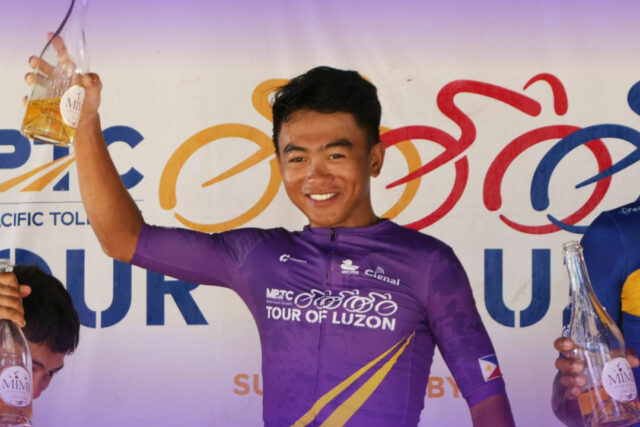
Cajucom tops 168.76-km Stage 4

EAN CAJUCOM — FACEBOOK.COM/TOUROFLUZONCYCLING

MPTC Tour of Luzon: Great Revival

CLARK, PAMPANGA — Ean Cajucom is riding his bike as if it’s the outer space of his astronaut dreams.

The 22-year-old Victoria Cycling’s fast-rising star is conquering the MPTC Tour of Luzon: Great Revival as if it’s his universe after claiming his second stage victory — a windy and rolling 168.76-kilometer (km) Stage Four that started in Agoo, La Union and ended here on Sunday.

“If I had become an astronaut, I wouldn’t have won here,” said Mr. Cajucom, who, for the second straight day, emerged victorious in another frantic mass finish.

Mervin Corpuz of MPT Drivehub, a nephew of former Tour champion Santy Barnachea who happens to also be their team director, took second while Aidan James Mendoza of Go for Gold was third with identical times of three hours, 32 minutes and 45 seconds.

Part of that 101-rider peloton was South Korean Joo Dae Young of Gapyeong Cycling Team, who will continue to wear the yellow or leader’s jersey in Monday’s hilly 160.6-km Stage Five that will start here, make a U-turn in New Clark City in Capas, Tarlac and end here.

It was another spectacular effort for Mr. Cajucom, whose elder brother John Mark Camingao is a Tour veteran, after he also reigned supreme in the Vigan-San Juan Stage Four the day before.

Mr. Cajucom later credited his supernova performance to Victoria’s European training and races last year.

“Our European training really helped. We were given a great training program as well as proper nutrition, it was really a big factor for us,” he said after receiving heaps of praise from their team director and former Tour king Joshua Cariño.

Now on its halfway mark, Mr. Joo was still on top in the 1,074-km, eight-stage race with a total clocking of 10:37:12 while Standard Insurance’s Ronald Oranza remained at No. 2 with a 10:41:42 time, or four and a half minutes behind.

Rounding out the top 10 in the overall general classification race were Mr. Mendoza (10:41:48), Exodus Army’s Dominic Perez (10:41:55), Mr. Corpuz (10:41:56), Standard’s George Oconer (10:41:58), MPTD’s Rustom Lim (10:42:06), Standard’s Jan Paul Morales (10:42:33), Malaysia’s Mohammad Faiz Fakhri (10:42:39) and MPTD’s Junreck Carcueva (10:42:40).

Because of his recent feat, Mr. Cajucom zoomed to 12th with a total time of 10:42:45 from 32nd the day before.

In the team race, Standard Insurance still led the way with an overall aggregate of 42:49:24, or 19 seconds ahead of MPT Drivehub in 42:49:43.

Completing the team top 10 were Exodus Army (42:50:37), Go for Gold (42:50:38), Malaysia Pro Cycling (42:51:01), 7-Eleven Cliqq Roadbike Philippines (42:51:11), DReyna Orion Cement (42:51:42), Bryton Racing Team (42:52:38), Dandex T-Prime (42:52:44) and Victoria Sports (42:52:49).

But the Navy Men received bad news when Junrey Navarra, their best climber, was ruled out the rest of the way due to an ankle sprain he sustained during a 14-rider spill in Stage Three. — Joey Villar

EJ Obiena finishes seventh in Xiamen leg of Diamond League

EJ OBIENA — REUTERS FILE PHOTO

FILIPINO pole-vaulter EJ Obiena continued to grope for form after he finished seventh on the same night Olympic and world champion Armand Duplantis struggled in the Xiamen leg of the Diamond League in China on Saturday.

The World No. 4 from Tondo in Manila managed just a 5.62-meter (m) clearance after failing 5.72 m thrice.

Mr. Duplantis failed to hit the 6m plateau and recorded 5.92 m, but it was enough to win the super Swede the gold.

Greek Emmanouil Karalis, the Paris Olympic bronze winner, took second while Dutch Menno Vloon wound up third after the former edged the latter via countback when the two ended with identical 5.82 m.

The Asian champion and record-holder will have another chance to challenge Mr. Duplantis in the Shanghai Leg of the Diamond League set May 3 at the Shanghai Stadium. — Joey Villar

Djokovic hints at Madrid farewell after crashing out in second round

MADRID — Three-time champion Novak Djokovic may have played at the Madrid Open for the last time after crashing out in the second round to Italian Matteo Arnaldi on Saturday, with the Serbian admitting he did not know if he would return.

Arnaldi beat fourth seed Djokovic, 6-3, 6-4, to reach the third round. The result condemned the 37-year-old, who received a bye in the opening round, to his third consecutive defeat.

Djokovic, who has been chasing a 100th tour-level title, was handed a shock defeat in the Miami Open final in late March before his second-round Monte Carlo exit earlier this month.

All three defeats came in straight sets.

“Obviously after you lose a match you don’t feel good, but I’ve had a few of these this year where I lose in the first round, unfortunately,” Djokovic told a press conference.

“I think the positive thing is that I really enjoyed myself more than I have in the Monte-Carlo or some other tournament, so that’s a good thing.

“But obviously still level of tennis is not where I would like it to be. But it is what it is. I lost to a better player.”

Djokovic, who made his Madrid debut in 2006 and won the tournament in 2011, 2016 and 2019, was looking for his first win on clay since defeating Carlos Alcaraz to win gold at the Paris Olympics.

Asked whether he just played his last match in Madrid, Djokovic said: “It could be. It could be. I’m not sure if I will come back. So, I don’t know, I don’t know what to say.

“I mean, I’ll come back, maybe not as a player. I hope it’s not, but it could be.”

Djokovic won three out of the four major titles in 2023 but has not been able to reproduce that kind of form since, being shut out of the game’s biggest tournaments last year as Jannik Sinner and Carlos Alcaraz claimed took majors apiece.

“(It’s) kind of new reality for me, I have to say. You know, trying to win a match or two, not really thinking about getting far in the tournament,” Djokovic added.

“It’s a completely different feeling from what I had in 20-plus years of professional tennis, so it’s kind of a challenge for me mentally to really face these kind of sensations on the court, going out early now regularly in the tournaments.

“But that’s, I guess, the circle of life and the career, eventually it was going to happen.”

The former world number one owns ATP Masters 1000 records for most wins (414), semifinals (79), finals (60) and titles (40) — Reuters

Game 4 plot thickens as T-Wolves hold 2-1 lead over LA Lakers

IF THE PLAYOFF series between the Los Angeles (LA) Lakers and Minnesota Timberwolves were a movie, it might be hard to determine how to label it.

Drama? Yes. Action? Also, yes. Thriller? You bet.

But this series has no script, so it’s anyone’s guess what will happen when the teams meet for Game 4 of their Western Conference quarterfinals series on Sunday afternoon in Minneapolis.

The Timberwolves hold a 2-1 lead in the best-of-seven series after closing strong for a 116-104 win in Game 3 on Friday night.

Now, the Lakers will try to even the series before the teams head to Los Angeles for Game 5. On the other hand, the Timberwolves would love to grab a 3-1 series lead and put the Lakers’ backs against the wall.

The Lakers likely will turn to LeBron James to lead the way. James comes off a terrific performance in which he scored 38 points and drained five 3-pointers to keep his team in contention for as long as he could.

Timberwolves guard Anthony Edwards, who also shined in the fourth quarter, marveled at James’ ability.

The big question for the Lakers is whether Luka Doncic will be able to join James on a star level in Game 4. Doncic averaged 34 points per game in the first two games of the series, but he was bothered by a stomach bug on Friday and missed 10 of 16 shots. — Reuters

Top seeds

The conference top seeds took care of business on Sunday. The Cavaliers made mincemeat of the Heat, jumping to a double-digit lead close to the end of the first quarter and all but making the outcome a foregone conclusion by halftime. For the Thunder, meanwhile, much more work had to be done versus the gritty Grizzlies — who were without top scorer and playmaker Ja Morant — before the win could be secured; that said, they managed to sweep the competition and become the first playoff participants to advance past the first round.

Indeed, the Cavaliers have backed up their pacesetting standing in the regular season by continuing to dominate the Heat; the latter displayed trademark grit in advancing past the play-in tournament and gain a playoff slot, but have so far proven unable to duplicate the winning formula that provided success last December. Not for nothing did the wine and gold emerge victorious by a whopping 37 points on Sunday, and by an aggregate 67 through the four-game series; never mind that they competed at hostile Kaseya Center in the absence of starting guard Darius Garland. And on Tuesday, they have an opportunity to finish the job with a fourth straight triumph against the black and red.

Certainly, the same holds true for the Thunder. Armed with the best record in the National Basketball Association, they rode on the consistency of Most Valuable Player candidate Shai Gilgeous-Alexander to bring out the broom against the determined but overmatched Grizzlies. The last two encounters may have been too close for comfort, but they kept their pristine slate all the same and claimed a seat in the semifinals by an average margin of 19.5. They await either the Nuggets or the Clippers, whose own best-of-seven affair is tied at two apiece.

At this point, there seems to be no impediment for the Cavaliers and Thunder to live up to billing and meet in the Finals. Nonetheless, league annals are replete with shocking consequences overriding supposed certainties. It’s one thing to look the part, and quite another to play the part. So far, they have done both with aplomb, but time will highlight their capacity — or lack thereof — to translate their early gains into ultimate achievement.


Anthony L. Cuaycong has been writing Courtside since BusinessWorld introduced a Sports section in 1994. He is a consultant on strategic planning, operations and human resources management, corporate communications, and business development.

Rome and the world bid farewell to Pope Francis with massive funeral and humble burial

An image of Pope Francis and information including his year of death and birth is displayed, at the Basilica of Santa Maria Maggiore, in Rome, Italy, April 21, 2025. — REUTERS

VATICAN CITY — Presidents, royalty and simple mourners bade farewell to Pope Francis on Saturday at a solemn funeral ceremony, where a cardinal appealed for the pontiff’s legacy of caring for migrants, the downtrodden and the environment to be kept alive.

US President Donald Trump, who had clashed with the pope on those issues, sat with the rows of foreign dignitaries on one side of Francis’ coffin in the vast St. Peter’s Square.

On the other side sat cardinals who will pick Francis’ successor at a conclave next month, deciding if the new pope should continue with the late pontiff’s push for a more open Church or cede to conservatives who want to return to a more traditional papacy.

The Argentine pope, who reigned for 12 years, died at the age of 88 on Monday after suffering a stroke.

“Rich in human warmth and deeply sensitive to today’s challenges, Pope Francis truly shared the anxieties, sufferings and hopes of this time,” said Italian Cardinal Giovanni Battista Re, who presided over the funeral Mass.

In spiritual language, the 91-year-old Re gave a simple message: there was no going back. The first pontiff from Latin America had been “attentive to the signs of the times and what the Holy Spirit was awakening in the Church,” he said.

Francis repeatedly called for an end to conflict during his papacy. His funeral provided an opportunity for Trump, who is pushing for a deal to end Russia’s war with Ukraine, to meet Ukrainian President Volodymyr Zelenskiy inside St. Peter’s Basilica.

Applause rang out as Francis’ coffin, inlaid with a large cross, was brought out of the basilica and into the sun-filled square by 14 white-gloved pallbearers at the start of the Mass.

The Vatican estimated more than 250,000 people attended the ceremony, cramming the square and the roads around.

The crowds clapped loudly again at the end of the service when the ushers picked up the casket and tilted it slightly so more people could see.

Aerial views of the Vatican showed a patchwork of colours – black from the dark garb of the world’s leaders, red from the vestments of some 250 cardinals, the purple worn by some of the 400 bishops and the white worn by 4,000 attending priests.

After the funeral, as the great bells of St. Peter’s pealed in mourning, the coffin was placed on an open-topped popemobile and driven through the heart of Rome to St. Mary Major Basilica.

Francis, who shunned much of the pomp and privilege of the papacy, had asked to be buried there rather than in St. Peter’s — the first time a pope had been laid to rest outside the Vatican in more than a century.

The burial itself was conducted in private.

The popemobile left the Vatican from the Perugino Gate, a side entrance just yards away from the Santa Marta guesthouse where Francis had chosen to live, instead of the ornate Renaissance apartments in the papal palace.

Crowds estimated by police as numbering some 150,000 lined the 5.5-km (3.4-mile) route to St. Mary Major. The scene resembled many popemobile rides Francis took in his 47 trips to all corners of the world.

Some in the crowd waved signs and others threw flowers towards the casket. They shouted “viva il papa” (long live the pope) and “ciao, Francesco” (goodbye, Francis) as the procession made its way around Rome’s ancient monuments, including the Colosseum.

TRUMP MEETS ZELENSKIY
The last time Trump had met Zelenskiy was in the White House in late February, when he gave him a public dressing down, but Saturday’s encounter appeared more cordial.

In one photograph released by Zelenskiy’s office, the two men were sitting close together on red-backed chairs, leaning towards each other as they talked in the marble-floored church.

A White House official said they had a “very productive discussion” and Zelenskiy called it a “good meeting”.

Among the other heads of state who attended the funeral were the presidents of Argentina, France, Gabon, Germany, the Philippines and Poland, together with the prime ministers of Britain and New Zealand, and many royals, including the king and queen of Spain.

Francis’ death ushered in a meticulously planned period of transition, marked by ancient ritual, pomp and mourning. Over the past three days, around 250,000 people filed past his open coffin, laid out before the altar of the cavernous basilica.

Choirs at the funeral sang Latin hymns and prayers were recited in various languages, including Italian, Spanish, Chinese, Portuguese and Arabic, reflecting the global reach of the 1.4-billion-member Roman Catholic Church.

Many of the faithful camped out overnight to try to secure spots at the front of the crowd, while others hurried there in the early morning.

“When I arrived at the square, tears of sadness and also joy came over me. I think I truly realised that Pope Francis had left us, and at the same time, there is joy for all he has done for the Church,” said a French pilgrim, Aurelie Andre.

FAREWELL, ‘FRANCISCUS’
Francis, the first non-European pope for almost 13 centuries, battled to reshape the Church, siding with the poor and marginalised, while challenging wealthy nations to help migrants and reverse climate change.

“Francis left everyone a wonderful testimony of humanity, of a holy life and of universal fatherhood,” said a formal summary of his papacy, written in Latin, and placed next to his body.

Traditionalists pushed back at his efforts to make the Church more transparent, while his pleas for an end to conflict, divisions and rampant capitalism often fell on deaf ears.
The pope carried his desire for greater simplicity into his funeral, having rewritten the elaborate, book-long funeral rites used previously.

He also opted to forego a papal tradition of three interlocking caskets made of cypress, lead and oak. Instead, he was placed in a single, zinc-lined wooden coffin.

His tomb has just “Franciscus”, his name in Latin, inscribed on the top. A reproduction of the simple, iron-plated cross he used to wear around his neck hangs above the marble slab.

Attention will now switch to who might succeed him.

The secretive conclave is unlikely to begin before May 6, and might not start for several days after that, giving cardinals time to hold regular meetings beforehand to sum each other up and assess the state of the Church, beset by financial problems and ideological divisions. — Reuters


OECD calls for review of Philippine GOCCs

In this photo illustration, the Organisation for Economic Co-operation and Development (OECD) logo is displayed on a smartphone screen. Credit: Jaque Silva / SOPA Images via Reuters Connect

The Organisation for Economic Co-operation and Development (OECD) called for a review of state-run firms’ operations amid an overlap of their regulatory and commercial functions.

In a policy paper, “Supporting State-Owned Enterprises Reform in the Philippines,” the OECD noted the importance of a clear separation between these functions to mitigate potential conflicts of interest.

“Such overlapping mandates underscore the continued need for careful functional reviews of each government-owned and -controlled corporations (GOCCs) operations to ensure competitive neutrality and avoid market distortions,” it said.

Among the GOCCs with dual roles are the Philippine Amusement and Gaming Corporation (PAGCOR), the Philippine Ports Authority (PPA), the Civil Aviation Authority of the Philippines, and the Laguna Lake Development Authority. These entities operate both as commercial entities and regulators.

“The Philippine Competition Commission (PCC) has authority to investigate anti-competitive behavior, although it has not yet taken enforcement actions towards GOCCs,” the OECD said.

The OECD also urged the government to improve inter-agency collaboration, particularly between the Governance Commission for GOCCs (GCG) and the PCC to boost the detection and prevention of anti-competitive practices.

“Reviewing public procurement processes which tend to favor state-owned enterprises, including through direct government contracts, could help address competitive neutrality,” it added.

Under the law, the GOCCs are subject to the Philippine Competition Act (PCA) of 2015 and the GOCC Governance Act of 2011. The latter law mandates a “clear separation” between its functions to enable a level playing field with the private sector performing similar commercial activities.

Despite the law, these overlapping functions continue. OECD said in a report in 2021 that the Philippine Development Plan flagged long-standing government-owned monopolies, government-authorized monopolies, and government control over the entry and expansion of market players.

The OECD said these can be seen in sectors like electricity transmission, water distribution systems, and build-and-operate arrangements for transport facilities, including road services, railways, and air and sea transport.

However, some GOCCs have already expressed the need to end its dual functions.

PAGCOR Chairman and Chief Executive Officer Alejandro H. Tengco earlier said the GOCC is determined to split its dual role of regulator and operator by 2026.

“By decoupling, we will be able to show the world that we are fair, that there is no conflict of interest,” he said in a press briefing in February.

Last year, business groups and members of the Joint Foreign Chambers (JFC) has called for the passage of a Senate bill that will separate the commercial and regulatory functions of the PPA.

House Bills 1400 and 8055, which seek to split the regulatory and commercial functions of the PPA, is still pending in Congress.

The PPA said it has implemented the separation of its regulatory and operational functions by privatizing port operations through the Port Terminal Management Regulatory Framework.

Meanwhile, the OECD said that the number of GOCCs has started to decline with only 119 with total assets of P11.6 trillion, from 158 GOCCs in 2011.

It added that the size of the portfolio will go down to 117 after the expected privatization of Davao International Airport Authority and Maharlika Investment Corporation.

The OECD also reiterated that the state-run banks such as the Land Bank of the Philippines (LANDBANK) and the Development Bank of the Philippines (DBP) are potential candidates for listing at the Philippine stock exchange.

“As of March 2025, there were no listed GOCCs in the Philippines, although some GOCCs do have the potential to become listed,” the OECD said. — Aubrey Rose A. Inosante

Master Siomai to offer flexible business opportunities at Franchise Asia Philippines 2025

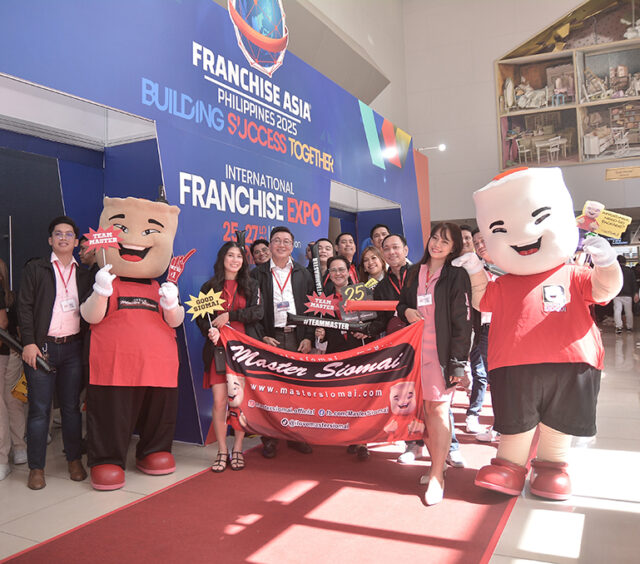
Franchise Asia Philippines 2025 is drawing significant attention this week as it brings together entrepreneurs, business leaders, investors, and experts at the SMX Convention Center in Pasay City.

The Franchise Asia Philippines Expo is scheduled to run from April 25 to 27, with hundreds of exhibitors from key industries such as food, retail, health, education, wellness, and logistics. It also features international pavilions, including participants from Korea, Malaysia, Singapore, Thailand, and Taiwan.

One of the key exhibitors at the expo is Master Siomai. Known for its straightforward business model, the brand has become a popular choice for entrepreneurs looking to invest in a food-based franchise that is easy to operate and is positioned in high-traffic locations.

Master Siomai plans to showcase the benefits of owning a franchise with an established brand during the expo. The company aims to attract potential franchisees by highlighting the low barriers to entry and strong market presence of its business model. The brand aims to inspire attendees to take the first step toward starting their own food business by offering a simple, proven franchise opportunity.

For aspiring business owners, the Master Siomai brand offers two distinct franchise models: the flagship concept and the more budget-friendly Siomai on the Go (SIOGO) option. These two models cater to different market needs, giving entrepreneurs options that align with their financial goals and business plans.
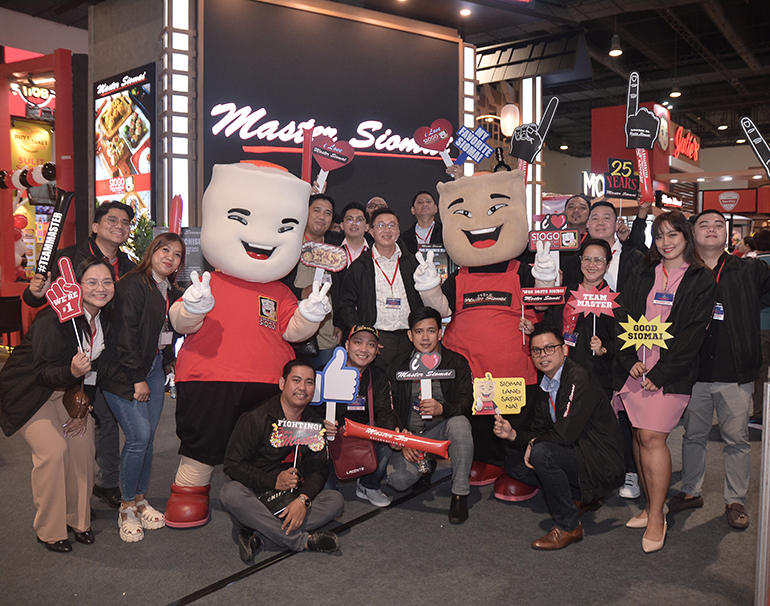
Bringing street food to a bigger market

At Franchise Asia Philippines 2025, entrepreneurs will have the chance to explore the business models of Master Siomai. The flagship concept is well-established and recognized for its high-quality product offerings. Having gained customer trust and loyalty nationwide, Master Siomai is an attractive choice for franchisees who want to tap into an established market.

SIOGO, on the other hand, provides a more affordable entry point into the food business. Designed around a compact food stall setup, SIOGO is ideal for those looking to operate in high-traffic street-side or on-the-go locations.

Master Siomai’s franchise system continues to attract attention due to its efficient structure and straightforward business model. The company has built a solid reputation, backed by years of consistent performance in the local food industry. Its operational approach is clear and manageable, covering day-to-day processes, customer service, and marketing efforts. The system is structured in a way that allows franchisees to focus on growth instead of learning everything from scratch.

Each franchisee receives comprehensive training before beginning operations. Support continues after launch, allowing new business owners to access assistance as needed. This level of guidance reduces the trial-and-error phase for many entrepreneurs, especially those entering the food industry for the first time.

During the expo, company representatives will be present to explain the business model in full. Attendees can speak directly with franchise consultants to understand the steps involved in applying, the requirements, and what kind of support they can expect after signing on. The booth will also give visitors a chance to see how the setup works in practice.

The brand will also offer exclusive discounts and special promotions to those who express interest in becoming part of the franchise network. It is an ideal time for prospective franchisees to make the leap into business ownership, with the added benefit of exclusive pricing and offers available only during the event.

The popularity of Master Siomai comes not just from the business model but also from the product itself. Master Siomai is the only food stall business with six variants of siomai to offer customers. Its siomai, particularly the pork and shrimp variant, is well-known for its consistent quality and flavor. Many Filipinos are familiar with the sight of Master Siomai carts in malls, terminals, and various public locations. The strong presence of the brand adds to its appeal among new business owners who want visibility from the beginning.

As more people look for low-maintenance food businesses, Master Siomai’s booth is expected to draw a crowd. Its low start-up cost and easy-to-operate format gives people the option to build at their own pace while having access to an established system. The franchise model allows new owners to begin small and scale operations depending on performance and available resources; and it also allows those with long-term plans to expand without requiring major upfront commitments.
Master Siomai’s participation in this year’s expo matches the event’s theme, “Building Success Together,” highlighting the brand’s continued support in helping Filipinos pursue business ventures that are scalable and easier to manage. Apart from the main exhibition area, the event also features business seminars and networking sessions. These aim to guide attendees on how to select the right franchise or convert their own business into one. Seminar topics include brand development, digital marketing, operational systems, finance, logistics, sustainability, and human resource management. All sessions are held in the meeting rooms of the SMX Convention Center.

Entrance to the expo is free for those who register online. More information, including the registration link, is available at www.franchiseasiaph.com/expo.


Spotlight is BusinessWorld’s sponsored section that allows advertisers to amplify their brand and connect with BusinessWorld’s audience by publishing their stories on the BusinessWorld Web site. For more information, send an email to online@bworldonline.com.

Join us on Viber at https://bit.ly/3hv6bLA to get more updates and subscribe to BusinessWorld’s titles and get exclusive content through www.bworld-x.com.

BDO books P19.7-billion net profit in Q1

BW FILE PHOTO

BDO UNIBANK, Inc. saw its net income rise by 6.49% in the first quarter on the back of the sustained performance of its core businesses.

Despite a strong start to the year, however, the listed lender expects the central bank’s ongoing easing cycle to hit its margins, although the outlook remains broadly positive, BDO President and Chief Executive Officer Nestor V. Tan said at a briefing following their annual stockholders’ meeting on Friday.

BDO’s net profit climbed to P19.7 billion in the first quarter from P18.5 billion in the same period in 2024, the Sy-led bank said in a disclosure to the stock exchange on Friday. This translated to a return on average common equity of 13.8%.

“Despite economic uncertainties arising from US tariffs and trade policies, the Philippines is expected to remain resilient being a domestic and consumption-based economy. Notably, BDO remains well-positioned to navigate potential risks and achieve sustainable growth and profitability with its strong business franchise, market leadership, and robust capital position,” the bank said.

Net interest income rose by 6% to P47.8 billion in the three months ended March from P44.9 billion driven by growth in its earning assets.

Non-interest earnings increased by 21% year on year to P18.6 billion from P15.4 billion on higher fee-based income.

BDO’s gross customer loans expanded by 11.7% to P3.26 trillion at end-March from P2.92 trillion a year prior as it saw growth across all market segments. Consumer loans grew by 17.3%, middle market loans went up by 12.7%, and corporate loans increased by 8.7%.

The bank’s nonperforming loan (NPL) ratio stood at 1.77%, while NPL coverage was at 143%.

On the funding side, deposits increased by 6% year on year to P3.8 trillion from P3.63 trillion, with its current and savings account or CASA ratio at 70%.

BDO’s assets expanded by 7% to P4.9 trillion as of March from P4.57 trillion a year prior.

Shareholders’ equity increased by 12% to P594.1 million. BDO’s common equity Tier 1 ratio was at 14.4%, up from P13.6% in the same period last year.

Mr. Tan said they expect the Bangko Sentral ng Pilipinas’ (BSP) monetary easing cycle to affect their earnings this year. In 2024, BDO’s net profit increased by 11.73% to a record P82.02 billion.

“When rates are lowered, then of course we get a squeeze on the margin, and that will impact our net interest income… When rates go down, most of our term loans are actually benchmarked against risk-free rates. So therefore, when rates go down, our yields go down,” he said.

“Once spreads are affected, then net income, even though volume is there, will be affected.”

The BSP on April 10 cut benchmark interest rates by 25 basis points (bps) to bring the policy rate to 5.5%, putting its easing cycle back on track after an unexpected pause in February.

The central bank has now slashed borrowing costs by a cumulative 100 bps since it kicked off its rate-cut cycle in August last year.

BSP Governor Eli M. Remolona, Jr. has said that they are considering further reductions this year in “baby steps” or increments of 25 bps. There are four more Monetary Board policy meetings this year, with the next one scheduled for June 19.

Still, the negative impact on its margins could be offset by strong consumer loan growth and lower funding costs, Mr. Tan said.

“On the positive side is improvement in the funding. When reserves were lowered in the latter part of March, it had a positive impact on our funding cost,” he said. “If you have higher growth in consumer [loans], you tend to have higher yields. But the flip-side is you’ll have higher nonperforming loans, losses.”

“When you have more consumer loans, you have a higher delinquency rate. Therefore, it’s natural that your NPLs will go up. The problem, though, is that if banks become reckless, then they are not able to get enough return from the NPLs. Then they will start to have problems. But it’s not a solvency problem. Banks have enough capital. It’s going to be an earnings problem.”

Mr. Tan added that they expect sustained loan and fee income growth, even as global trade uncertainties may affect the corporate segment.

“My view on loan growth is that you have steady demand on the consumer side. But the real drivers will be the middle market and large corporations… We put on hold a lot of capital expenditures during the pandemic and we haven’t seen them normalizing… So, we’re expecting them to normalize. Towards the fourth quarter of 2024, we have seen the pipeline of capital expenditures increasing,” he said.

“In terms of loan growth, this is where we see the impact of the tariff. Large corporates, which are normally the ones that go into huge infrastructure projects and capital expenditures, are now down to high single-digits… They are not abandoning investments, but with the tariffs and with all of the actions happening with Trump 2.0, some of them have opted to defer,” he added.

The bank could also post “slightly elevated” operating expenses as they continue to invest in technology, Mr. Tan said.

“[Our] capital [is] sufficient to support growth. We’re not looking at any potential capital-raising in the near future. We can generate enough to support growth,” he said. “We will need to refinance the maturing obligations that we have, and we will also consider looking at funding on the dollar side of the business should there be some impact of CMEPA (Capital Markets Efficiency Promotion Act).”

The Senate in January passed the CMEPA on third and final reading. The measure aims to boost capital market investments by lowering the stock and documentary stamp taxes and removing preferential the tax rates for passive income.

BDO last tapped the domestic market in July 2024, raising P55.7 billion from its third offering of peso-denominated ASEAN Sustainability Bonds. — A.M.C. Sy

ADVERTISEMENT
ADVERTISEMENT