Home Blog Page 1628

PHL digital lending market seen growing to $1 billion this year

CHRISTINA WOCINTECHCHAT-UNSPLASH

THE PHILIPPINES’ digital lending market could surpass $1 billion by the second half of the year, with growth to be driven by high demand for online financial services, a study by Digido showed.

This is bigger than Digido’s estimate of a $796-million value at end-2024 and the $693 million recorded in 2023, it said in a statement on Tuesday.

The Philippines’ digital lending market has been growing at an average of 28% or $68 million annually from 2013 to 2023, it added.

“Our latest findings affirm the majority of Filipinos’ growing pivot towards digital sources of credit as part of their personal finance management. We are optimistic that these lending segments will be able to maintain their high growth rates in view of its accessibility for the financially underserved, progressive government support and various projects promoting further digitalization,” Digido Business Development Manager Rose Arreco said.

“This growth trend is also largely determined by the fact that a third of the country’s population is from Generation Z — a segment certainly ready to fully accept innovative solutions in the field of financial technologies for mobile applications,” Ms. Arreco added.

The online lending market includes digital banks and non-bank digital lenders.

Broken down, nonbank digital lenders are expected to make up 55.2% of the market by the second half of this year for a $556.5-million value.

On the other hand, digital banks are seen to have a 44.8% share equivalent to $451 million.

Meanwhile, Digido said the total number of application downloads for both nonbank digital lenders and digital banks likely grew by 56.4% year on year to 73.5 million in 2024 as app downloads in the first 10 months already hit 58.9 million. — AMCS

My research on the politics of smell divided the internet — here’s what it’s actually about

IN NOVEMBER, I celebrated finishing my PhD. After three and a half years of writing and research, it was an occasion I wanted to share with my academic network, so I posted a photo of myself holding a physical copy of my PhD thesis on X. The post amassed 120 million views and sparked a lot of anger in response to its title: Olfactory Ethics: The Politics of Smell in Modern and Contemporary Prose.

The title received criticism from those who were wilfully misrepresenting the nature of the research. “Smells are racist,” became a misguided refrain. One user commented that it was a study of “why it’s racist and/or classist to not like it when people exhibit body odors consistent with poor hygiene.”

My thesis studies how certain authors of the past century used smell in literature to indicate social hostilities, such as prejudice and exploitation. It also connects this to our real-world understanding of the role the sense plays in society.

For instance, in The Road to Wigan Pier (1936), George Orwell states that “the real secret of class distinctions in the West” can be summed up in four frightful words: “The lower classes smell.” Orwell proceeds to unpick the harm that this kind of messaging causes and how we might combat it.

It is well-documented that smell has been used as a justification for expressions of racism, classism, and sexism. Since the 1980s, researchers have been assessing the moral implications of perceptions and stereotypes related to smell.

My thesis adds to this work by assessing the contributions of a selection of books and films that take smell seriously. In each of the texts I considered, smell takes on a role beyond mere sense perception.

I include examples from well-known works by George Orwell, Vladimir Nabokov, J.M. Coetzee, and Toni Morrison, as well as notable recent examples, such as Bong Joon-ho’s film, Parasite.

I suggest that smell very often invokes identity in a way that is meant to convey an individual’s worth and status. In Parasite, for instance, a working-class man overhears his employer say that his “smell crosses the line,” which the director describes as a moment when “the basic respect you have for another human being is being shattered.”

Some authors draw on a long history of discrimination based on smell to explore its relevance in contemporary society. For example, during the transatlantic slave trade, Black slaves were said to emit a foul smell, a misconception that contributed to their dehumanization.

In Toni Morrison’s novel, Tar Baby (1981), which is set in the present day, one of the protagonists uses these racist associations, stating “I know you’re an animal because I smell you” to a Black female character.

I’ve found that it is hard to counter such ideas that people have about certain smells being associated with particular identities. This might be down to the strong emotional and bodily reactions produced by smell.

We tend to think that our desire to avoid bad smells is an instinctual, protective mechanism, but evidence suggests that we are taught which smells to find disgusting, since, the disgust response is almost entirely lacking in children under the age of two. The sense of smell, then, is shaped by society and is influenced by the prejudices that pervade it.

I also make a case for the personal and social functions of reading and critically engaging with literature in which authors closely engage with smell. The texts I consider in my thesis introduce readers to new ways of understanding their own sense of smell.

For example, in Sam Byers’ 2020 novel, Come Join Our Disease (2021), the characters thoroughly embrace bad odors and draw attention to the harmless nature of doing so.

I suggest, then, that books and films don’t just record political aspects of smell, they can also foster and test new insights into our own sense of smell.

That many commenters were initially unconvinced that smell could possibly be a fruitful topic of academic discussion speaks to the widespread devaluing of smell. Ultimately, smell is one of the main ways almost all of us engage with the world and it deserves more of our attention. — The Conversation via Reuters Connect


Amelia Louks is a research supervisor in English Literature at the University of Cambridge.

MTek to boost partner hospitals to 100 this year

FACEBOOK.COM/MTEKLABS

BIOTECHNOLOGY STARTUP Manila HealthTek, Inc. (MTek) seeks to bring its precision medicine diagnostic services to 100 local hospitals and standalone laboratories this year through unit PrimeDx, Inc., according to its founder.

“PrimeDx is paving the way for exceptional healthcare partnerships,” Raul V. Destura, founder and chief executive officer at MTek, said in a Viber message.

The unit is working with 47 hospitals and standalone laboratories and would expand to 100 partners by 2025, he added.

Set up in 2013, MTek develops and makes portable diagnostic kits for infectious diseases such as the coronavirus, African swine fever, salmonella, dengue and typhoid fever.

PrimeDx is known for its molecular and personalized genetic testing, including next-generation sequencing and whole exome sequencing.

“Aside from us developing the technology, we can also provide the service attached to the technology, and then we partner with all of these labs,” Mr. Destura told BusinessWorld on the sidelines of an event last month.

“Independently setting it all up makes it very expensive, and that’s one way to make diagnostic testing more accessible to a lot of people,” he added.

Laboratory tests cost as much as P6,050, depending on the type of test, according to online platform PinoyMedical. Prices are higher for more sophisticated procedures.

Also part of MTek, Inc.’s healthcare service providers is Neural Mechanics, Inc., which uses artificial intelligence-based image analytics for chest X-rays and mammography.

Neural Mechanics supports tertiary hospitals with its precision health intelligence system, which helps improve their diagnostic capabilities and promote timely and accurate treatment.

Meanwhile, Genamplify Technologies, Inc., serves as MTek’s principal sales and distribution arm.

In November, MTek launched its state-of-the-art Industry 4.0-enabled manufacturing facility focused on molecular diagnostics and point-of-care technologies.

“This comprehensive business expansion reflects Manila Healthtek, Inc.’s commitment to evolving healthcare delivery through innovation, technology and strategic partnerships,” the company said. — Beatriz Marie D. Cruz

A Tale of two crocs

Lacoste’s “CROCODILE” mark in the High Court of Delhi case

The holiday season has, once again, come and gone.

For both small and big businesses alike, this is an opportune time to boost their products and end the year with a good sales record. And in the battle of brands in today’s highly consumerist world, a business’ trademark or logo is a powerful weapon in being able to stand out and attract the attention of target customers. However, things can get difficult when two different enterprises are not only engaged in similar types of businesses, but also have similar, if not identical, logos.

That is precisely the issue that confronted the Supreme Court in the case of Lacoste S.A. v. Crocodile International Pte Ltd. (Decision) promulgated on Nov. 6, 2023 and released on Sept. 10, 2024.

Through its highly publicized Decision, the Supreme Court put an end more than 23 years of litigation which began when Lacoste S.A. (Lacoste) opposed the application of Crocodile International Pte Ltd. (Crocodile) seeking to register the “CROCODILE AND DEVICE” mark here in the Philippines in 2004.

Lacoste argued that its business would be heavily damaged by the registration of Crocodile’s trademark that is supposedly confusingly similar to its own “CROCODILE” mark. Meanwhile, Crocodile asserted that there were substantial differences in the appearance and overall impression between its logo and Lacoste’s preventing any likelihood of confusion among consumers.

To determine the presence of confusing similarity between the two “CROCODILE” marks, the Supreme Court applied the Dominancy Test. This test focuses on “the similarity of the prevalent or dominant features of the competing trademarks that might cause confusion, mistake, and deception in the mind of the purchasing public.” The Supreme Court then determined the “CROCODILE” device to be the dominant elements of both Lacoste’s and Crocodile’s marks.

Ruling in favor of Crocodile, the Supreme Court held that there is no confusing similarity between the two competing marks considering their “pronounced differences.” Specifically, Lacoste’s “CROCODILE” mark is right-facing while Crocodile’s “CROCODILE” device is left-facing with the word “Crocodile” in a stylized format above it. The Supreme Court further observed that both marks are easily distinguishable considering that Lacoste’s “CROCODILE” mark is “solid” except for its scutes or large scales “depicted in white inverted triangles” while Crocodile’s “CROCODILE” device is “not solid, but rather, more like a drawing.” And instead of scutes, Crocodile’s “CROCODILE” device is “depicted with various scale patterns from the base of the head up to the tail.”

The Supreme Court’s Decision in the Lacoste case drew considerable attention both among local and international intellectual property law practitioners. In fact, during the 2024 Asian Patent Attorneys Association (APAA) council meeting held in Pasay City on Nov. 18-21, 2024, one of the notable updates discussed during the conference’s Trademarks Committee Meeting was the Philippine Supreme Court’s Decision in the Lacoste case vis-à-vis the High Court of Delhi’s decision in a trademark dispute involving the same parties.

Similar to the Lacoste case, the High Court of Delhi’s decision ended more than two decades of litigation between Lacoste and Crocodile in India stemming from a trademark infringement suit filed by Lacoste way back in 2001. Lacoste also argued there that a likelihood of confusion among consumers is apparent given that Crocodile’s mark, consisting of a left-facing crocodile, is an exact mirror image of Lacoste’s logo featuring a right-facing crocodile. On the other hand, Crocodile echoed its prior agreement with Lacoste for the coexistence of the two companies’ marks in Asia.

However, unlike the Philippine Supreme Court, the High Court of Delhi ruled in favor of Lacoste noting that “the visual and conceptual parallels between the [competing] marks support a strong case for trademark infringement, underscoring the importance of protecting the distinctiveness of the Lacoste trademarks.” As a result, Crocodile is barred from manufacturing, selling, offering for sale, or advertising any products bearing the disputed trademark, which is noticeably different from the subject of the dispute before our Supreme Court.

In sum, the Lacoste cases in the Philippines and India highlight the dynamic and ever-evolving nature of trademark jurisprudence in the field of intellectual property law. And it is interesting to observe the trajectory of its development in the coming years, especially as businesses are expected to rely more on their intellectual property, including their trademarks or logos, to better position themselves in an intensely competitive market. Thus, as we move past the holiday season, may we remember that behind every trademark or logo we encounter every day is a story worth knowing.

This article is for informational and educational purposes only. It is not offered and does not constitute legal advice or legal opinion.


Norberto O. Sarigumba III is an associate of the Intellectual Property department of the Angara Abello Concepcion Regala & Cruz Law Offices (ACCRALAW).

nosarigumba@accralaw.com

8830-8000

Retiro Golden Foods secures partial relief from tax penalties

CTA.JUDICIARY.GOV.PH

THE COURT of Tax Appeals (CTA) partially granted Retiro Golden Foods, Inc.’s petition against the Bureau of Internal Revenue (BIR), ordering the cancelation of over P175 million worth of deficiency income tax, value-added tax (VAT), and compromise penalties.

The CTA Second Division partially granted Retiro’s petition for review, upholding the deficiency expanded withholding tax (EWT) and withholding tax on compensation (WTC) assessments but canceling the deficiency income tax, VAT, and compromise penalties.

The assessments for deficiency income tax, VAT, and compromise penalties, totaling P175,650,029.17, were declared null and void, and the BIR was prohibited from collecting these amounts.

The tribunal ordered the firm to pay the BIR the basic amount of P40,226.21 and P31,394.72 plus surcharges and interest under the National Internal Revenue Code (NIRC) for its deficiency EWT and WTC for 2017.

“It is notable in the Administrative Protest that while [Retiro] provided the applicable law, rules, and regulations, or jurisprudence on which its protest was based, these were only against the deficiency income tax and VAT assessments, and compromise penalties,” the nine-page ruling released on Jan. 2 read.

“[Retiro] is painfully silent as far as the deficiency EWT and WTC assessments are concerned,” it added in the decision penned by Justice Maria Rowena Modesto-San Pedro.

The tax court found that the formal letter of demand (FLD) was a valid demand for payment as it indicated a due date and clearly stated that penalties would accrue if the deficiency taxes remained unpaid.

While the court acknowledged that the company’s administrative protest against the FLD was valid despite not being signed, it noted that the protest only addressed the deficiency income tax and VAT assessments and compromise penalties, but not the EWT and WTC.

However, the court determined the BIR failed to properly consider the company’s arguments and evidence submitted in response to the preliminary assessment notice (PAN) for the deficiency income tax and VAT assessments and compromise penalties, violating the company’s right to due process.

The court noted the BIR merely made a general statement that the company failed to provide sufficient documentary evidence without specifying which documents were needed to conduct a fair investigation.

It cited the case, Commissioner of Internal Revenue versus Avon Products Manufacturing, Inc., saying the BIR must provide reasons for rejecting a taxpayer’s explanations and cannot ignore evidence without reason.

The case stemmed when Retiro was assessed deficiency income tax, VAT, EWT, WTC, and compromise penalties for 2017.

The total initial assessment was P173,230,046.62, which was later adjusted to P175,748,493.78, including interest.

The company received a letter of authority (LoA) on July 25, 2019, followed by a PAN on Dec. 22, 2020.

It filed a reply to the PAN on Jan. 5, 2021, but received an FLD on Jan. 18, 2021, reiterating the assessments. It filed an administrative protest against the FLD on Feb. 17, 2021, which was denied by the BIR on March 22, 2021.

Retiro then filed a petition for review with the CTA on May 19, 2021, seeking the cancellation of the tax assessments. — Chloe Mari A. Hufana

National Government outstanding debt

THE NATIONAL Government’s (NG) outstanding debt rose to a fresh high of P16.09 trillion as of end-November, partly reflecting the impact of the peso depreciation on the value of foreign obligations, the Bureau of the Treasury (BTr) said. Read the full story.

National Government outstanding debt

Arts & Culture (01/08/25)


PETA announces new company leaders

ENDING their creative tenure are the “Tres Marias” who have led Philippine Educational Theater Association (PETA) for decades, Beng Cabangon, CB Garrucho, and Maribel Legarda will be passing the torch to a new set of leaders who will carry on PETA’s vision: Melvin Lee as president, Anj Heruela and Michelle Ngu-Nario as executive directors, and J-mee Katanyag as artistic director.


Keka Enriquez, Yvonne Quisumbing, Renato Orara at Silverlens

THE first exhibitions at Silverlens Gallery in Manila this year will be Keka Enriquez’s Points and Endings and Yvonne Quisumbing’s Sanctuary, running from Jan. 9 to Feb. 5. On display at the same time will be Renato Orara’s Entangled Pairs, ahead of its Silverlens New York run from Jan. 16 to March 1. Mr. Orara’s collection consists of 100 lifelike ballpoint pen drawings of everyday objects. The consecutively made renderings are paired and split from their counterparts across two continents.


Sunset Boulevard set for Asia premiere in Singapore

THE new production of Andrew Lloyd Webber’s Tony Award-winning Sunset Boulevard, starring Sarah Brightman, will be making its Asia Premiere in Singapore on Feb. 7. It will run until Feb. 23 at the Sands Theatre of Marina Bay Sands. Ms. Brightman as Norma Desmond will take the stage alongside Draxl as Joe Gillis, Robert Grubb as Max Von Mayerling, Ashleigh Rubenach as Betty Schaefer, Jarrod Draper as Artie Green, and Paul Hanlon as Cecil B. DeMille. The production is presented by Base Entertainment Asia.


MM Yu, Julieanne Ng exhibits at MO_Space

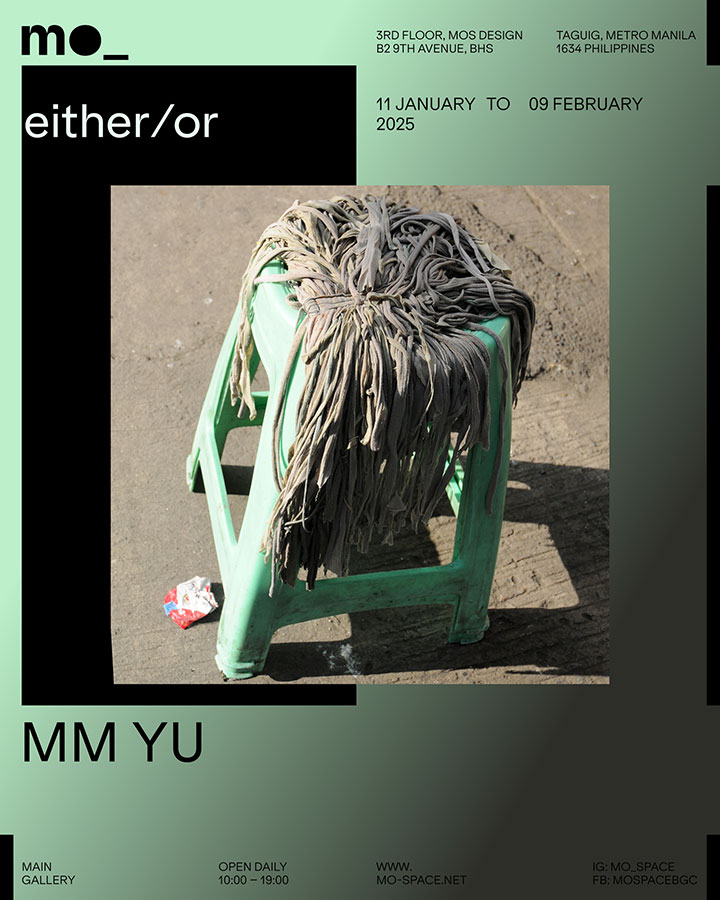
FROM Jan. 11 to Feb. 9, two artists will be presenting their works at the MO_Space Gallery in Bonifacio Global City, Taguig. At the Main Gallery is MM Yu’s either/or, highlighting the artist’s unique approach to photography and image-archiving through the concept of recollection in personal snapshots. At Gallery 2, Julieanne Ng’s A Glimpse Across the Fleeting Light invites viewers to the periphery of the artist’s incense series, with a focus on the candle as a tool, which she transforms into a printmaking matrix. Both exhibits will run until Feb. 9.


NCCA spotlights piña weaving in its annual calendar

THE heritage practice of weaving the piña fabric of Aklan is featured in the 2025 wall calendar of the National Commission for Culture and the Arts (NCCA). The handloom weaving of the pineapple textile, estimated to be about two centuries old and practiced by the Aklanon people in northwestern Panay Island in the Visayas, was recently inscribed in the United Nations Educational, Scientific and Cultural Organization Representative List of the Intangible Cultural Heritage of Humanity. The calendar features the different steps and stages in making the textile, through photographs taken by Gerald Marcfred Dillera and texts by cultural researcher Roel Hoang Manipon.


Silverlens brings Pacita Abad, Pio Abad to S.E.A. Focus

FOR its first art fair of 2025, Silverlens Gallery will return to S.E.A. Focus with a presentation of Filipino diaspora artists Pacita Abad and her nephew Pio Abad. It will mark the first time they are presented together in Singapore, with the elder Abad represented by prints produced during her three-month residency in Singapore in 2003 and the younger Abad contributing his ink-on-paper drawings that examine personal and political entanglements. The show runs from Jan. 18 to 26 at Tanjong Pagar Distripark, Singapore.


The Lord of the Rings – A Music Tale in Singapore

ASIAN FANS of J.R.R. Tolkien’s iconic fantasy saga will soon have the chance to see the critically acclaimed The Lord of the Rings — A Musical Tale which will make its Asia premiere in Singapore starting Aug. 12 at the Sands Theatre of Marina Bay Sands. Tickets will go on sale starting Jan. 10.

Exodus by big Wall Street banks from top climate group worries advocates

LONDON/NEW YORK — US lenders have been rushing in recent weeks to leave one of the world’s top banking sector climate coalitions, drawing scorn from campaigners who worry the industry is losing resolve to take action on fossil fuels.

Goldman Sachs broke ranks to announce on Dec. 6 it was leaving the Net-Zero Banking Alliance (NZBA) and was soon followed by Wells Fargo, Citi, Bank of America and Morgan Stanley. The exit of some of the world’s biggest lenders means the NZBA, whose members aim to align their financing with the global climate fight, now includes just JPMorgan among the Big Six US banks.

The exodus ended unhappy marriages for most after Republican politicians warned that membership in the group, particularly if it led to reduced financing for fossil fuel companies, could breach antitrust rules.

Banks that have pulled out may now reduce their commitments to climate-friendly policies, said Patrick McCully, senior analyst for energy transition at Reclaim Finance.

“The key thing to watch will be weakening of their existing targets and policies,” said Mr. McCully, noting some banks had ambitious targets for decreasing emissions. Still, he did not expect banks to announce publicly any such changes.

While the NZBA had sought at various times to tailor its rules to keep the large and systemically important banks onboard, most recently last year, the efforts were ultimately not enough.

Jeanne Martin, head of banking program at advocacy group ShareAction, said those leaving were sending a signal to the market that climate change has become even less of a priority for them.

“This is concerning when they are among the world’s largest providers of financing to fossil fuels,” she said.

A spokesperson for JPMorgan, the last remaining major US bank in the alliance, said it regularly evaluates its memberships of such groups, without commenting on whether it plans to join the exodus. The other US members are smaller: Amalgamated Bank, Areti Bank and Climate First Bank.

While none cited it as a factor, hanging over the exits was a two-year-long US backlash against environment, social and governance investing. A group of Republican politicians, many of them state attorneys general, have accused members of potential breaches of antitrust rules.

Such pressure stepped up after a Republican clean sweep in November’s US elections heralded the return of Donald J. Trump as president, with investors including BlackRock recently facing legal challenges over their climate efforts.

For their part, the banks largely avoided giving a direct reason for needing to leave the NZBA, instead saying they remained committed to helping clients transition to a low-carbon economy and disclosing their actions.

Analysis of December syndication fee income from loan and bond issuance by financial think tank the Anthropocene Fixed Income Institute showed each of the US leavers earned more from fossil fuel than green energy.

“As a first cut, some of these banks… can pretty easily say ‘nothing has changed’ as they are still in a make-more-money-from-fossil-fuel mode,” said AFII Chief Executive Ulf Erlandsson.

A study entitled “Banking on Climate Chaos” from 2024 suggested the six biggest US banks were all among the top-20 global lenders to fossil fuel companies.

Despite the exits, the largest US banks had all made “strong climate commitments” through the NZBA and investors would continue to push for more information about their efforts, said Mindy Lubber, chief executive of nonprofit Ceres.

“Ceres will continue supporting banks as they set and achieve targets and implement transition plans. Banks are key to supporting the global goal of net zero emissions and to the economic opportunities that are arising from the transition.”

Following the mass exit by US lenders, the NZBA still has 142 members from 44 countries with $64 trillion in assets, with 80 European banks accounting for the largest share of the dollar figure. Banks remaining in the coalition include HSBC, Barclays and BNP Paribas.

A spokesperson for the NZBA was not immediately available for comment.

Given previous tussles over where to set the bar for NZBA membership, the exit of the US banks offered an opportunity for those who want to be more ambitious, Mr. McCully said.

“European banks have complained that they’d love the NZBA guidelines to be stronger but the US members just won’t let it happen — so (it is) now time for the Europeans to step up and show that they weren’t just using US obstructionism as an excuse for foot-dragging,” he said on LinkedIn. — Reuters


How PSEi member stocks performed — January 7, 2025

Here’s a quick glance at how PSEi stocks fared on Tuesday, January 7, 2025.


Philippines views China’s monster ship ‘with concern’; coast guard on standby

CHINA COAST GUARD VESSEL 5901, nicknamed the “monster ship,” off the coast of Capones Island, Zambales on Jan. 4, 2025. — PHILIPPINE COAST GUARD

THE PHILIPPINES on Tuesday said it views with alarm the presence of China’s largest coast guard ship within its exclusive economic zone (EEZ), vowing to continue sea patrols.

“We view it with concern,” Executive Secretary Lucas P. Bersamin told a news briefing at the presidential palace. “So far, we have been challenging the presence of that monster ship.”

The Philippine Coast Guard (PCG) on Monday said the “erratic movements” of the 165-meter-long China Coast Guard (CCG) vessel 5901, which Manila calls a “monster ship,” within the Philippine EEZ indicate it is not engaged in innocent passage.

“The Coast Guard, our Coast Guard, has always been very alert in following up the presence of that monster ship,” said Mr. Bersamin, who heads the National Maritime Council.

While there has been no confrontation, it calls for continued vigilance, he added.

The Philippines would pursue diplomatic means to resolve its sea dispute with China, including the filing of protests and engaging with the Chinese government in high-level talks, Mr. Bersamin said.

The Philippine Coast Guard earlier said the Chinese vessel was “conducting a law enforcement operation, claiming jurisdiction over these waters as belonging to the People’s Republic of China.”

The monster ship was last spotted 65 nautical miles southwest of Los Frailes Island in Zambales province in northern Philippines.

The PCG said the 44.5-meter BRP Cabra has “remained steadfast” in challenging China’s assertion, “diligently tailing and shadowing CCG-5901 to uphold Philippine sovereign rights.”

It said the Philippine Coast Guard vessel continues to send radio challenges to the Chinese ship.

China’s largest coast guard ship was positioned 54 nautical miles off Capones Island in Zambales, the PCG said on Sunday, citing Canada’s dark vessel detection system.

After Philippine authorities detected the ship, PCG Commandant Ronnie Gil L. Gavan promptly ordered the dispatch of BRP Cabra along with a PCG helicopter and PCG caravan “to verify the incursion and assert their presence.”

The PCG earlier called the ship’s presence an act of Chinese “intimidation, coercion and aggression.”

“We have all our assets pointed at this monster ship. The moment it (carries out) any provocative action, it will be met with appropriate response,” Jonathan E. Malaya, spokesman for the National Security Council, told state television on Monday.

The Chinese Embassy in Manila did not immediately respond to a request for comment.

Ties between China and the Philippines have soured in the past few years, with spats frequent as Manila under President Ferdinand R. Marcos, Jr. pushes back at what it sees as aggression by Beijing. China has accused the Philippines of repeated encroachment in its waters.

China claims most of the South China Sea, a key conduit for $3 trillion of annual ship-borne trade, as its own territory, with a massive coast guard presence in and around the EEZs of neighbors Vietnam, the Philippines and Malaysia.

Beijing rejects a 2016 ruling by the Hague-based Permanent Court of Arbitration that said those expansive maritime claims were illegal.

The PCG had ordered the Chinese vessel to leave the area, warning it has no authority to operate there, according to a video it shared. In its radioed response, the Chinese ship said it was conducting law enforcement duties within its jurisdictional waters.

“This is part of China’s intimidation, coercion, aggression and deception. They are showcasing their ship to intimidate our fishermen,” Mr. Malaya said, adding that the Philippine maritime presence would be boosted to support fishermen. — K.A.T. Atienza with Reuters

State urged to sustain efforts to purge POGOs

PHILSTAR FILE PHOTO

A PHILIPPINE senator on Tuesday urged the government to fast-track the purging of Philippine Offshore Gaming Operators (POGOs), citing the need to look into offshoots of these outfits masquerading as other business entities after the state outlawed them.

In a statement, Senator Sherwin T. Gatchalian said many POGOs have turned into other businesses such as business process outsourcing companies, resorts and restaurants to hide their illegal activities.

“More than ever, we need to sustain our efforts to clear out all criminal syndicates that are products of POGOs,” he said. “We must stay the course to ensure a safer and more secure Philippines for all Filipinos.”

Justice Secretary Jesus Crispin C. Remulla on Sunday said the government is still on the hunt for 11,000 illegal POGO workers who failed to leave the country by December.

Philippine President Ferdinand R. Marcos, Jr. earlier ordered a total ban on POGOs due to their links to organized crime such as human trafficking. This was in line with his order during his third State of the Nation Address to shut down POGOs by year-end.

Philippine Amusement and Gaming Corp. (Pagcor) Chairman and Chief Executive Officer Alejandro H. Tengco had said the government was on track to shut down POGO firms by year-end.

The Pagcor chief last month said there were only 17 POGOs in operation, down from 298 licensed POGOs in 2019.

Mr. Gatchalian also cited the need to find these 11,000 POGO workers who evaded deportation since they are likely to end up involving themselves in more criminal activities and illegal operations.

“We can safely assume that these illegal aliens are onto something unlawful and vigilance of everyone is necessary to ensure that such activities are arrested, and these aliens are deported as soon as possible,” he said.

Solicitor General Menardo I. Guevarra has said his agency had been canceling fake birth certificates used by foreigners who are linked to criminal syndicates.

The Office of the Solicitor General will also go after illegally acquired properties and other assets in the country linked to POGO operations.

Interior and Local Government Secretary Juanito Victor C. Remulla, Jr. earlier said shuttering POGOs would not leave a big dent on the economy, saying only 0.25 of 1% of the country’s economic output would be affected by the closures.

“All law enforcement agencies, in close coordination with local government units, as well as the general public must remain vigilant against the presence of POGO offshoots disguised as legitimate business entities,” Mr. Gatchalian said. — John Victor D. Ordoñez

Peso strengthens on Trump tariff debate, faster-than-expected inflation

FREEPIK

THE PESO climbed on Tuesday as the dollar weakened on doubts regarding US President-elect Donald J. Trump’s planned tariffs and following faster-than-expected Philippine headline inflation last month.

The local unit closed at P58.185 per dollar on Tuesday, strengthening by 8.5 centavos from its P58.27 finish on Monday, Bankers Association of the Philippines data showed.

The peso opened Tuesday’s session stronger at P58.15 against the dollar. Its worst showing was its closing level of P58.185, while its intraday best was at P58.02 versus the greenback.

Dollars exchanged increased to $1.87 billion on Tuesday from $1.74 billion on Monday.

“The dollar-peso closed lower as it tracked the dollar correction overnight and due to higher-than-expected local CPI (consumer price index),” a trader said by phone.

The dollar was generally weaker on Tuesday due to debate regarding Mr. Trump’s promised tariffs, Rizal Commercial Banking Corp. Chief Economist Michael L. Ricafort said in a Viber message.

The US dollar eased towards a one-week low versus major peers on Tuesday as traders considered whether Mr. Trump’s proposed tariffs would be less aggressive than promised, Reuters reported.

On Monday, the greenback slid against the euro and sterling following a report in the Washington Post that Mr. Trump’s aides were exploring plans that would apply tariffs only on sectors seen as critical to US national security.

The US dollar index eased 0.25% to 108.03 as of 0730 GMT, after dropping to as low as 107.74 overnight, its weakest since Dec. 30.

Meanwhile, Philippine CPI rose by an annual 2.9% in December from 2.5% in November, but was slower than 3.9% a year prior.

This was within the central bank’s 2.3%-3.1% forecast for the month but was slightly faster than the 2.7% median estimate in a BusinessWorld poll of 13 analysts.

For Wednesday, the trader sees the peso moving between P58 and P58.40 per dollar, while Mr. Ricafort expects it to range from P58.10 to P58.30. — A.M.C. Sy with Reuters