Home Blog Page 1619

It’s not Max, it’s HBO Max: Streaming service flips name again
TWO YEARS AGO Warner Bros. Discovery, Inc. ditched the HBO brand from the title of its flagship streaming service, counting on the name Max to convey the media company’s broad reach of programming.

On Wednesday, the company decided the globally known name behind shows like The Last of Us and Game of Thrones has appeal after all.

“Today, we are bringing back HBO, the brand that represents the highest quality in media, to further accelerate that growth in the years ahead,” Warner Bros. Chief Executive Officer (CEO) David Zaslav said in a statement, reversing his own decision from 2023.

The return to HBO Max also marks an “implicit promise” by the company to deliver unique and premium content, Warner Bros. Discovery (WBD) said on Wednesday.

The switcheroo puts HBO, the network behind some of the most-praised and talked-about shows on TV, front and center in efforts to attract a worldwide audience to the company’s paid streaming service. With millions of TV viewers shutting off their cable subscriptions, streaming has become the future for media giants like Warner Bros. and Walt Disney Co.

Leading up to the service’s launch in the spring of 2020, there was much internal debate about the name. Eventually, executives decided to name it HBO Max, a way of incorporating the storied HBO cable brand — known for popular, edgy hits like The Sopranos — while positioning the new product as a premium service that would cost more than rivals Netflix or Disney+.

This followed Warner Bros. Discovery’s move to merge HBO dramas and top franchises like Harry Potter with lifestyle-focused content from Discovery under one service.

But from the outset sign-ups were sluggish, and many consumers were confused by the branding and how HBO Max differed from the company’s existing streaming products, HBO Go and HBO Now.

In 2023, following WarnerMedia’s merger with Discovery Inc., Mr. Zaslav announced the HBO name would be dropped in favor of a more generic brand that would appeal to a broader audience in theory. The goal was to offer a more appealing product and to help retain viewers who typically canceled their subscriptions after watching the latest season of their favorite show.

The re-branding left many observers scratching their heads. Critics derided the move, saying it jettisoned a brand famous for prestige television to promote shows like Dr. Pimple Popper and 90 Day Fiancé alongside its more upscale programming.

Even Ted Sarandos, co-CEO of Netflix, called the move a surprise. “I would have never guessed HBO would have gone away. They put all that effort into one thing that they can tell the consumer — it should be HBO,” he said in a Variety interview in March.

Recently, much of the streaming service’s buzz has come from HBO shows, including the third season of The White Lotus, which was a massive hit. Max is also home to franchises like Harry Potter, A24 films, and iconic broadcast-TV shows like Friends.

Warner Bros.’s streaming business has added 22 million subscribers over the past year and the company expects to have more than 150 million by the end of 2026. Shows including The White Lotus and The Pitt helped it amass 5.3 million streaming subscribers in the January-March quarter, taking its total to 122.3 million and an adjusted profit of $339 million.

A key driver of that growth has been international expansion. After rolling out Max in over 70 countries last year, WBD plans to launch the service in the UK, Ireland, Italy and Germany.

The company announced the latest change, which will be effective this summer, at its annual presentation to advertisers in New York. In other words, the Max experiment is over. — Bloomberg/Reuters

G20 is too elite. There’s a way to fix that though — economists

WIKIMEDIA.ORG

The G20 claims to be “the premier forum for international economic cooperation.”

But is it?

As scholars of global economic governance, we are skeptical of this claim. Here are our main reasons.

• The G20 is insufficiently representative of the 193 member states of the United Nations plus the small number of non-member states.

• It is a self-selected group of 19 countries and the European and African Unions.

• It has no mandate to act or speak on behalf of the international community.

• It has no transparent or formal mechanisms through which it can communicate with actors who do not participate in the G20 but have a stake in its deliberations and their outcomes.

The growing tensions in the world make it more urgent to improve the efficacy of the G20. Firstly, because there is growing evidence of the loss of interest in global cooperation. Secondly, because rich states are cutting their official development assistance and are failing to meet their commitments to help countries deal with loss and damage from climate impacts and make their economies more resilient to shocks.

And thirdly, because rich countries are also reluctant to discuss financing sustainable and inclusive development in forums like the upcoming Fourth Financing for Development Conference or the UN, where all states can participate. They prefer exclusive forums like the G20.

Here, after briefly describing the structure of the G20, we argue that its lack of representation is a major problem. We offer a solution and argue that, as chair of the G20 this year, South Africa is well placed to promote this solution.

WHAT IS THE G20 AND HOW DOES IT FUNCTION?
The G20 was established in the late 1990s in the wake of the East Asian financial crisis. Its members were invited by the US and Germany based on a proposal from the Canadian government. Initially only finance ministers and central bank governors of major advanced and emerging economies were involved. After the financial crisis of 2008-2009 it was upgraded to summit level with the same membership.

A summit is held annually, under the leadership of a rotating presidency.

The group accounts for 67% of the world’s population, 85% of global GDP, and 75% of global trade. The membership comprises 19 of the “weightiest” national economies plus the European Union and the African Union. The 19 national economies are the G7 (the US, Japan, Germany, the UK, France, Italy, Canada), plus Australia, China, India, Indonesia, the Republic of Korea, Russia, Turkey, Saudi Arabia, South Africa, Mexico, Brazil, and Argentina. These countries are permanently “in.” The remaining 90% of countries in the world are excluded unless invited as “special guests” on an ad hoc basis.

Representatives of a select group of international organizations including the International Monetary Fund, the World Bank, the Organization for Economic Cooperation and Development (OECD) and the World Trade Organization also participate, together with those from some UN entities.

The G20’s work is managed by a troika consisting of the current president with the assistance of the past president and the incoming president. In 2025 this troika consists of South Africa as the current chair, Brazil as the past chair, and the US, which will become the G20 president in 2026. The G20 has no permanent secretariat.

The consistency in G20 membership has proven to be an advantage because it helps foster a sense of familiarity, understanding and trust at the technical level among the permanent members. This is helpful in times of crisis and in dealing with complex problems.

But its exclusivity and informal status have limited its ability to address major challenges such as the global response to the economic and health consequences of the COVID-19 pandemic. This is because an effective response required agreement and coordinated action by all states and not just those in the G20.

A SOLUTION
We think that the governance model of the Financial Stability Board offers a solution.

The Financial Stability Board was established under the umbrella of the G20 in 2009. Its job is to coordinate international financial regulatory standard-setting, monitor the global financial system for signs of stress, and to make recommendations that can help avert potential financial crises.

It is also an exclusive club. Its membership consists of the financial regulatory authorities in the G20 countries plus those in a few other countries that are considered financially systemically important.

However, unlike the G20, the Financial Stability Board has made a systematic effort to learn the views of non-members. It has established six Regional Consultative Groups, one each for the Americas, Asia, the Commonwealth of Independent States, Europe, the Middle East and North Africa, and sub-Saharan Africa.

The objective is to expand and formalize the Financial Stability Board’s outreach activities beyond its membership and to better reflect the global character of the financial system.

The regional consultative groups operate in a framework which promotes compliance within each region with the Financial Stability Board’s policy initiatives. The framework enables the group members to share among themselves and with the board their views on common problems and solutions and on the issues on the board’s agenda.

Importantly, each regional group is co-chaired by an official from a Financial Stability Board member and an official from a non-member institution.

Applying this model to the G20 would allow the current G20 membership to continue, while obliging the members to establish a consultation process with regional neighbors. This would create a limited form of representation for all the world’s states.

It would also empower the smaller and weaker members of the G20 because it would enable them to speak with more confidence and credibility about the challenges facing their region.

This arrangement would also establish a limited form of G20 accountability towards the international community.

NEXT STEPS
As chair of the G20 chair for 2025, South Africa is well placed to promote this solution to the group’s representation problem. It should work with the African Union to establish an African G20 regional consultative group. South Africa and the African Union could invite each African regional organization to select one representative to serve on the initial consultative group.

South Africa could also commit to convey the outcomes of G20 regional consultative group meetings to the G20.

South Africa can then use this example to demonstrate to the G20 the value of having a G20 regional consultative group and advocate that other regions should adopt the same approach.

THE CONVERSATION VIA REUTERS CONNECT

Danny Bradlow is a professor/senior research fellow at the Centre for Advancement of Scholarship, University of Pretoria. In addition to his position at the University of Pretoria, is the senior G20 advisor, South African institute of International Affairs.

Robert Wade is a professor of Political Economy and Development at the London School of Economics and Political Science.

Citicore Renewable Energy’s Q1 net income rises 15.4% to P137.89M

CREC.COM.PH

LISTED renewable energy developer Citicore Renewable Energy Corp. (CREC) booked an attributable net income of P137.89 million for the first quarter (Q1), up 15.4% from the previous year, driven by higher electricity sales.

Revenues grew by 40.7% year on year to P1.41 billion, buoyed by the increase in electricity sales and service fees, based on the company’s financial report.

For the first three months, electricity sales increased by 46.7% year on year to P1.21 billion due to an expanded customer base.

“Our double-digit growth in electricity sales is a testament to the market’s belief in Citicore’s ability to deliver end-to-end renewable energy solutions for our climate-conscious customer base,” CREC President and Chief Executive Officer Oliver Tan said in a media release on Thursday.

Service fees more than doubled to P1.21 billion, while lease income remained at the same level as last year at P162.34 million.

Operating expenses, on the other hand, increased by 16% to P31.81 million versus last year’s P27.36 million due to some outside services procured during the period.

CREC, directly and through its subsidiaries and joint ventures, manages a diversified portfolio of renewable energy generation projects, power project development operations, and retail electricity supply services.

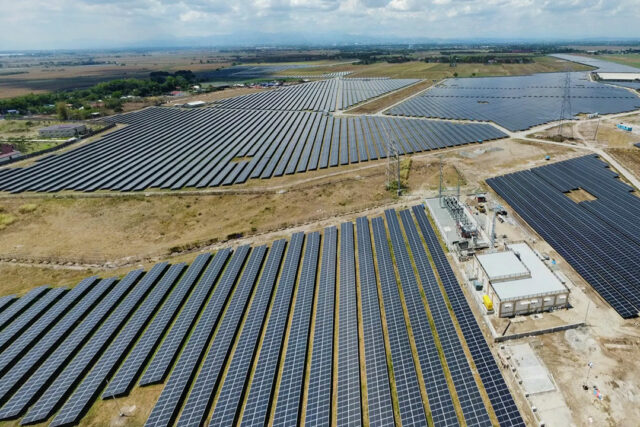
At present, the company holds a combined gross installed capacity of 285 megawatts from its solar facilities across the Philippines.

The company is expecting its first gigawatt (GW) of projects to come online this year. This goal is part of the company’s vision to energize 5 GW of renewable energy within five years. 

The company is currently constructing solar projects in Batangas, Pangasinan, Pampanga, Quezon, and Negros Occidental.

“The energization of our first gigawatt is a game changer for CREC, solidifying our role as a major force in the Philippine renewable energy sector,” Mr. Tan said.

Shares of the company climbed 1.07% to P3.79 apiece on Thursday. — Sheldeen Joy Talavera

Overseas Filipinos’ Cash Remittances

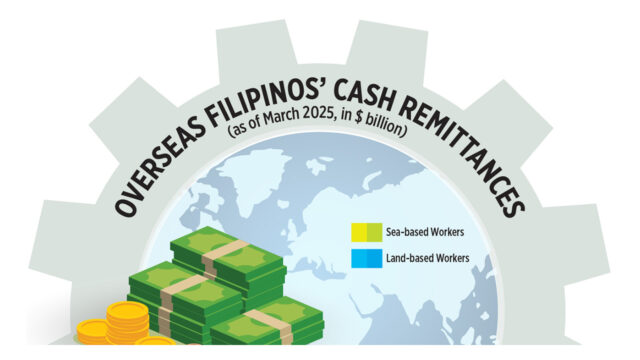
MONEY SENT HOME by migrant Filipinos rose 2.6% in March from a year earlier, the Bangko Sentral ng Pilipinas (BSP) said on Thursday, though this was the slowest growth in nine months. Read the full story.

Overseas Filipinos’ Cash Remittances

CNN revisits streaming with new subscription service this fall

THREE YEARS after canceling the short-lived CNN+ streaming service, Warner Bros. Discovery, Inc. is launching a new online offering built around its 24-hour news network.

The service shown to advertisers on Wednesday in New York will deliver on-demand and live programming to paying subscribers. It will be included within a new subscription level called All Access and debut this fall. Viewers will be able to access the programming on mobile apps, TV, and online. Existing cable-TV subscribers won’t be charged, according to a statement from the company.

CNN Chief Executive Officer Mark Thompson also said the company is planning a free weather app called CNN Weather.

Like other TV networks, CNN is trying to find new ways to attract viewers and generate revenue as customers switch to streaming and drop traditional pay-TV subscriptions.

It’s been there before. The company poured $300 million into building a streaming platform called CNN+ in 2022, but the service shut down after only a month because of low viewership. CNN currently has live news and select programming on Warner Bros.’s Max streaming app, which is being renamed HBO Max.

The new service will be linked to a digital news subscription that CNN introduced in October, charging $4 a month for unlimited access to articles.

In the first quarter, CNN ranked third among the major cable news networks in prime-time viewers and total-day audience, trailing No. 1 Fox News and MSNBC.

In January, CNN laid off 6% of its workforce, or around 200 people, as part of a plan to focus more on digital audiences and go deeper into streaming. — Bloomberg

BAP partners with BAIPHIL to upskill banking industry workforce

THE BANKERS Association of the Philippines (BAP) has partnered with the Bankers Institute of the Philippines (BAIPHIL) to help upskill its member banks’ employees and management.

Under the memorandum of understanding (MoU), BAP and BAIPHIL will hold capacity-building sessions on topics including banking laws, rules and regulations; risk management; investment and trust banking; treasury operations; cybersecurity; and sustainable finance, among others.

“As the banking industry continues to evolve due to changes in the operating environment, there is a need for the industry’s workforce to develop their capabilities to stay ahead. The MoU with BAIPHIL serves to achieve this objective by ensuring each individual in the industry can maximize their potential in their respective lines of work,” BAP President Teodoro K. Limcaoco said in a statement.

“With this MoU, we are aligning our learning and development initiatives with the real and emerging needs of the industry. It is grounded in resilience, digital fluency, and ethical leadership. This is not just about skills training. It is about shaping a generation of professionals who can lead with clarity and purpose in an increasingly complex world. We are proud to work with BAIPHIL in turning this vision into a concrete and sustained program,” BAP Education Committee Chair Jerry G. Ngo said.

BAP and BAIPHIL will also collaborate to do research on banking, finance and economic-related matters and for projects on digital finance, financial literacy, financial inclusion, and sustainable finance.

“The need to upskill one’s capabilities is greater than before, given the ongoing trend of further disruption that would take place in the banking industry. It is likely that the industry five to ten years from now may be entirely different from what it is today. Therefore, BAIPHIL looks forward to working with BAP to ensure the success of the MoU — ensuring Philippine banks remain one step ahead of the curve,” BAIPHIL President Iñigo L. Regalado III said. — AMCS

Your car shouldn’t look like it pumped iron at the gym

WIKIMEDIA.ORG

By Chris Bryant

SMALLER CARS are an obvious fix for crowded cities, limited resources and a warming planet. Yet they’ve become an endangered species, as tougher regulations made them uneconomical to produce and we gravitated towards muscular SUVs.

A continent that built iconic, utilitarian, and wildly popular city cars, like the Fiat Cinquecento and Mini in the 1950s, needs to make tiny cars appealing and affordable again. Smarter rulemaking and financial incentives can help.

In Europe, the market share of small “A-segment” cars (like the Fiat Panda and Hyundai i10) has shrunk to the lowest in at least 20 years, according to figures shared with Bloomberg Opinion by data provider JATO Dynamics.

Automakers axed their smallest vehicles to protect profit margins and focused on larger, heavier, and more expensive models, thereby denying their youngest and elderly clients a new ride.

In the birthplace of autos, Germany, the average cost of a new car has soared to around €57,000 (more than the average gross income); prices in Italy, Spain, and France aren’t far behind.

Larger, more expensive cars are partly a consequence of stricter safety and pollution rules, and hence all the technology modern vehicles must contain. (The number of people killed in road traffic accidents fell 16% in the past decade, so tougher regulation has also been beneficial.) 

And of course, they’re also a result of the trend for high-riding SUVs, which now account for more than half of European car sales; this has created a vicious cycle whereby car buyers worried about the consequences of colliding with an SUV buy one to protect themselves.

For readers in the US, where a variety of ill-conceived fuel economy and tax incentives spurred the rise of gargantuan pickup trucks, the notion that Europe’s cars are oversized must seem quaint.

But the upshot of bigger, pricier wheels is a shrinking market: Just 13 million new vehicles of all sizes were registered across the European Union, the UK, Switzerland, and Norway in 2024, or around 3 million fewer than prior to the pandemic.

Manufacturers have threatened to close car plants or have outsourced production to less expensive countries; meanwhile, consumers who can’t afford a new vehicle are making do with an older, dirtier one, hampering the goal of reducing emissions. The average age of vehicles on the EU’s roads has risen to 12.5 years.

Speaking to French newspaper Le Figaro last week, Renault SA Chief Executive Officer Luca de Meo made a worthwhile suggestion to revive Europe’s car market: less onerous regulation for small vehicles.

“There are too many rules designed for larger and more expensive cars, which does not allow us to make small cars under acceptable profitability conditions,” he said.

“Is lane-departure warning absolutely necessary in cars that spend 95% of their time in the city?” De Meo asked. He was referring to the so-called GSR-2 standards, a package of measures that came into force last year, mandating features like autonomous emergency braking and speed warnings in all new vehicles. These require sensors and on-board cameras that further inflate the cost of building a car.

De Meo also bemoaned how in crash tests compact models also have “to react like a high-end sedan with a hood three times longer.”

I’m wary of the safety implications of a regulatory carveout but his idea shouldn’t be dismissed out of hand.*

Europe already has less onerous rules for so-called quadricycles like the Citroën Ami and Fiat Topolino whose speed is limited to 45 km/hour; both cost less than €10,000.

In Japan so-called kei cars that have a maximum 3.4 meter length, small engines, and weigh only a few hundred kilos account for almost 40% of new sales.

Their success is explained by a variety of purchasing, maintenance, and parking incentives, but in case you’re wondering, these diminutive vehicles are also surprisingly safe and fun to drive.

Establishing another regulatory category in Europe would likely be time-consuming, but there’s no reason why Europe shouldn’t consider similar financial incentives for buyers of small cars or penalize those who opt for a large SUV, or both.

France has introduced weight-adjusted car taxes and parking charges, for example. Revising carbon-pollution targets to better reflect lifecycle emissions (in other words, including those generated in manufacturing and recycling) would also drive uptake of smaller cars.

From a consumer standpoint, it’s regrettable that Europe’s tariffs on Chinese EVs have stifled a potential source of cheap imports.

So it’s imperative European automakers find efficiencies and sell vehicles consumers can afford — if necessary by cooperating with Chinese manufacturers or seeking outside software expertise, as Stellantis NV and Volkswagen AG have done. 

Batteries are getting cheaper, and these efforts are beginning to bear fruit. The Renault 5 E-Tech, which costs around €25,000 for the basic version, is a great example of the affordable yet stylish vehicles Europe needs (albeit as part of the slightly larger B-segment).

There’s even a 540hp “mini-supercar,” the Renault 5 Turbo 3E costing €155,000, which deep-pocketed owners are encouraged to customize to the max.

Smaller and much cheaper EVs are in the offing, including the Renault Twingo E-Tech and VW ID. Every1, which are expected to cost less than €20,000 when they go on sale in 2026 and 2027, respectively. Both will be produced in Europe.

In other words, small cars look poised for a comeback. But they might need a push.

BLOOMBERG OPINION

*See this study for how such a new regulatory category might be designed — https://www.gerpisa.org/system/files/acte_43_gerpisa_0.pdf

Incoming legislators urged to work on living wage

PHILIPPINE STAR/ANDY G. ZAPATA JR.

By Adrian H. Halili, Reporter

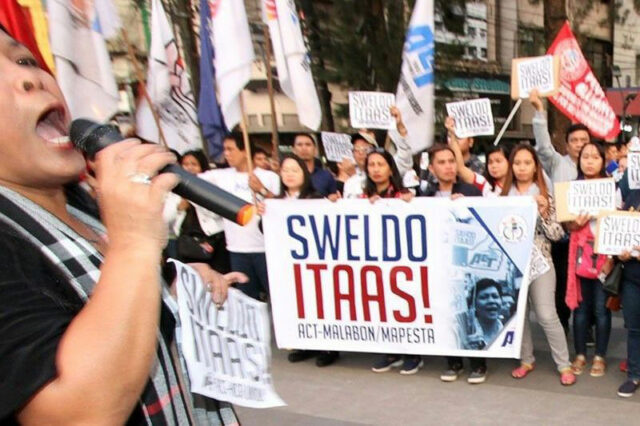
NEWLY ELECTED legislators need to work on measures that ensure a living wage and security of tenure, labor analysts said.

Benjamin B. Velasco, assistant professor at the University of the Philippines (UP) Diliman School of Labor and Industrial Relations, said members of the 20th Congress need to respond to the labor market’s wish list.

“Surveys before and during the elections consistently reveal two burning demands. One is wages and prices, another is jobs and livelihoods,” Mr. Velasco told BusinessWorld via Messenger.

The Philippines elected 12 new Senators in the 24-seat Senate and hundreds of new members of the 315-seat House of Representatives on Monday. They are set to take office in July, when the 20th Congress officially begins.

Mr. Velasco said legislators need to ditch the regional wage system and set national minimum wage.

He cited “the Constitutional mandate for a living wage rather than confusing and contradictory 10-point criteria of the existing Wage Rationalization Act.”

Federation of Free Workers President Jose G. Matula called for wages sufficient to sustain families.

“This is the first step toward establishing a National Living Wage and moving away from the outdated and fragmented regional wage system under Republic Act (RA) 6727, which has institutionalized wage inequality across the country,” Mr. Matula said via Viber.

RA 6727, or the Wage Rationalization Act, tasks Regional Tripartite Wages and Productivity Boards to determine wage levels in their respective jurisdictions.

In his Labor Day address, President Ferdinand R. Marcos, Jr. supported regional wage increases instead of a legislated wage hike, citing the potential impact of a uniform national wage on businesses, jobs, and the economy.

Labor groups have argued that a legislated wage hike is needed to help workers deal with rising costs. Wage hike bills have stalled in Congress.

Last year, the Senate approved a bill for a P100 daily wage increase for all minimum wage earners in the private sector, regardless of region or industry.

On the other hand, the House of Representatives, in January, endorsed a consolidated bill proposing a P200 across-the-board daily wage increase for private sector workers.

Mr. Matula urged the 20th Congress to ban contractualization both in the private and public sectors, ensuring workers have regular and permanent employment status.

“Workers in government also deserve security of tenure, just like those in the private sector. Labor-only contracting, contracts of service, job orders, and agency work should no longer be the norm,” he added.

UP’s Mr. Velasco said that a law on security of tenure needs to regulate all forms of contractual employment and make regular work the norm instead of the exception.

In contractual schemes, employment is terminated before six months, the period which by law triggers regular employee status.

Mr. Matula said that the government should allocate P100 billion to fund micro, small, and medium enterprises in rural areas to support employment.

“Supporting small businesses is key to generating sustainable and decent employment across the regions,” he added.

MSpectrum to power Landers Quezon City, Cebu with new solar rooftops

In photo are (L-R) MSpectrum Chief Operating Officer Patrick Henry T. Panlilio, MSpectrum President and Chief Executive Officer Ma. Cecilia M. Domingo, Southeast Asia Retail Chief Financial Officer Noel Niño S. Utanes, and Southeast Asia Retail Chief Operating Officer Pieter Dhoni Lukman.

MSPECTRUM, Inc., a wholly owned solar subsidiary of Manila Electric Co. (Meralco), is set to install two new solar rooftop projects at Landers Superstore retail chains in Quezon City and Cebu City.

The solar firm will install a 600-kilowatt-peak (kWp) solar rooftop project at Landers Cebu, projected to generate approximately 960,000 kWh of power annually.

Meanwhile, MSpectrum will develop a 930-kWp solar rooftop facility at Landers Fairview, expected to generate 1.19 million kWh of power each year.

“These installations will significantly help reduce carbon emissions, optimize energy consumption, and generate cost savings that can be reinvested into enhancing customer experiences and operational efficiency,” MSpectrum President and Chief Executive Officer Ma. Cecilia M. Domingo said.

MSpectrum said it has worked with Southeast Asia Retail over the past year by installing solar rooftop systems across multiple Landers locations.

“This solar initiative is not only about reducing operational costs, but also about contributing to the country’s efforts in promoting clean energy,” Southeast Asia Retail Chief Operating Officer Pieter Dhoni Lukman said.

With eight years in the industry, MSpectrum has installed more than 80 megawatts of solar rooftop projects, estimated to power around 40,000 households.

Meralco’s controlling stakeholder, Beacon Electric Asset Holdings, Inc., is partly owned by PLDT Inc.

Hastings Holdings, Inc., a unit of PLDT Beneficial Trust Fund subsidiary MediaQuest Holdings, Inc., has an interest in BusinessWorld through the Philippine Star Group, which it controls. — Sheldeen Joy Talavera

Monetary policy still viable in ‘tokenized’ system, project shows

NEW YORK — Central banks should still be able to conduct monetary policy effectively and perhaps be even nimbler in a more decentralized financial system, according to the findings of a joint report released on Wednesday by the New York Federal Reserve and the Bank for International Settlements.

The report said a prototype system designed to conduct monetary policy in a financial system reliant on new, more automated systems “successfully responded and instantaneously carried out the intended operation under the varying market conditions, consistent with the central bank’s desired liquidity environment.”

The prototype created for the study showed there’s even the possibility of central bank monetary policy working even better under a decentralized financial system. The project came out of work done by the New York Fed’s Innovation Center and the Bank for International Settlements’ Innovation Hub, as part of the Project Pine effort.

“Central banks could use smart contracts to easily and quickly create new facilities or adjust existing ones to optimize the implementation of monetary policy in a tokenized environment,” which means future operations could be “nimbler in uncertain conditions and potentially reduce frictions between the time of announcements and offerings,” the report said.

Tokenization refers to assets with digital tokens on a blockchain.

The report noted that the research was conducted in conjunction with inputs from a number of central banks and its setup was generically oriented rather than tailored to the operations and goals of a particular central bank. The project was undertaken as part of preparatory efforts to make sure central banks will be ready for any future changes in financial markets.

The prototype system covered by the report is designed to perform most of the key technical functions that monetary policy does now to achieve central bank policy goals.

While there is no current threat to how central banks now intervene in markets to set interest rates and manage market liquidity, rising decentralizations and new technologies, some of which are in use already, could change that at some point.

“If the private financial sector adopts tokenization on a broad scale in wholesale markets, central banks may need to participate in novel financial market infrastructures and interact with digital tokens to continue effectively implementing monetary policy,” the report said.

Decentralized financial systems could also create “emerging challenges” for money created by the central bank, the report said. In terms of central bank operational issues “the additional complexity of central bank operations has increased incentives to use technology to automate tasks and processes.” At the same time, “central banks still face a challenge in integrating automated processes with those that require human judgment.” — Reuters

Letter to the Editor

WHO.INT

Dear Editor:

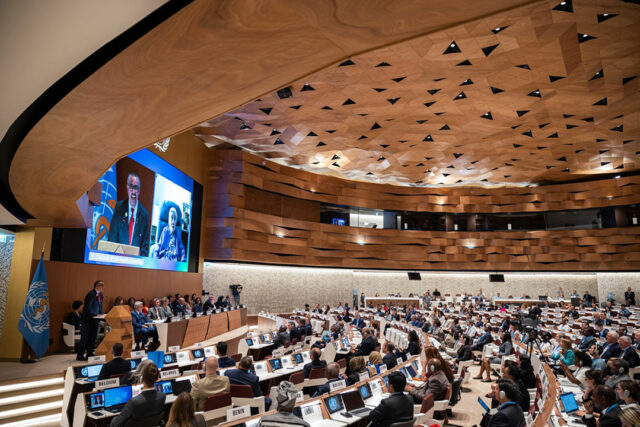
The 78th World Health Assembly (WHA), the most important annual forum on global health, will take place from May 19-27, 2025, in Geneva, Switzerland. Despite Taiwan’s significant public health expertise and advanced technology, which bring considerable value to the world, Taiwan remains excluded from the international health system due to China’s obstruction.

Taiwan is able and willing to contribute to the international community. During COVID-19, Taiwan demonstrated its commitment to public health as well as the reliability of its epidemic prevention system. Separately, Taiwan has accumulated a great deal of experience and best practices in international medical assistance. For years, Taiwan has donated critical medical supplies and offered up-to-date and intensive training to medical personnel of partner countries, including the Philippines. Such efforts highlight Taiwan’s advanced public health system and medical capacity.

Take diabetes, one of the major causes of death in the Philippines, for example. Taiwan has continued to invest in the prevention, screening, early diagnosis, intervention, and self-health management of the disease. By helping its diplomatic allies to improve local primary healthcare, medical service capacity and public health education, Taiwan has increased resilience around the world to better prevent and control diabetes, among other noncommunicable diseases.

Furthermore, Taiwan possesses advanced medical capabilities and extensive experience with providing humanitarian aid and international disaster relief. Over the past decades, Taiwan has continued to provide humanitarian assistance and disaster relief aid to the Philippines, including a recent case in October 2024, donating 500 tons of rice, relief goods and $150,000 to help the affected areas recover after tropical storm Trami hit severely the Philippines.

Taiwan’s isolation from the WHA is not only unjustified but also undermines global public health. By excluding Taiwan, the World Health Organization (WHO) has severely jeopardized the right to health of the 23.5 million people of Taiwan. Regrettably, WHO’s stance even undermines its own efforts to make global health architecture more comprehensive. This hinders global prevention, preparedness, and response to health emergencies.

China is using its distortion of United Nations General Assembly (UNGA) Resolution 2758 and WHA Resolution 25.1 as a way to exclude Taiwan from the WHO and its related technical meetings and mechanisms, including WHA. In fact, neither UNGA Resolution 2758 nor WHA Resolution 25.1 can justify Taiwan’s exclusion from WHO. These resolutions do not mention Taiwan, nor do they authorize the People’s Republic of China (PRC) to represent Taiwan at the UN or its subsidiary bodies. These resolutions have nothing to do with Taiwan and do not address the issue of Taiwan’s representation in the UN. Only Taiwan’s democratically elected government can represent the people of Taiwan in international organizations.

We urge WHO and all relevant parties to recognize Taiwan’s considerable contributions to global public health and the human right to health. It is imperative that WHO adopt a more open-minded approach and demonstrate flexibility, adhering to the principles of professionalism and inclusivity.

With geographic proximity and cultural closeness, Taiwan and the Philippines are natural partners and friends. While Taiwanese people cherish the spirit of sharing and caring, Filipinos value the tradition of Bayanihan, a way of life that fosters unity, trust and support. Therefore, I use this blend word “Taiwanihan” to demonstrate the strong ties between Taiwan and the Philippines, as well as the shared values of our two countries in the spirits of helping one another. Please join us in supporting Taiwan’s participation in the WHA, so that Taiwan can continue to help and contribute to the world.

Amb. Wallace Minn-Gan Chow
Representative
Taipei Economic and Cultural Office
in the Philippines

FATF ‘gray list’ exit: benefits and issues

The financial community welcomed the recent news that the Financial Action Task Force (FATF) removed the Philippines from its money laundering “gray list.” The benefits of this development are definitely welcome, but we also need to be aware that there are concerns raised by civil society organizations (CSOs) on allegations of state overreach in the counter-financing of terrorism (CFT) enforcement

The FATF, an international policy-making body, monitors global efforts to combat financial crimes. When a country is gray-listed, it means the FATF recognizes that jurisdiction’s commitment to addressing deficiencies but also notes that the existing measures are inadequate or not effectively implemented. For the Philippines, its gray list inclusion stemmed from concerns over its capacity to prevent illicit financial flows, enforce regulations, and prosecute financial crimes effectively.

The Philippines was first gray-listed in the year 2000, and then again in June 2021. The reasons for this included the weak implementation of the Anti-Money Laundering Act (AMLA), lack of effective supervision of designated nonfinancial businesses and professions, insufficient beneficial ownership transparency, and poor prosecution and conviction rates in money laundering cases. While the Philippines had a legal framework in place, its enforcement, monitoring, and risk-based supervision mechanisms were lagging.

To be removed from the gray list, several reforms were implemented. The AMLA was amended in January 2021 to strengthen the Anti-Money Laundering Council’s powers. This included the authority to impose sanctions, conduct more rigorous investigations, and enforce the submission of suspicious transaction reports. The Philippines increased efforts in registering beneficial owners of corporations, thereby reducing the risks of shell companies being used for illicit finance.

Another key development was the tighter supervision of sectors vulnerable to money laundering, such as casinos, real estate, and legal professionals. The country also committed to improving its capacity to investigate and prosecute complex financial crimes. Law enforcement agencies were trained further, and inter-agency cooperation was enhanced to support a whole-of-government approach. Additionally, the country worked closely with international partners to track cross-border financial flows and recover assets linked to criminal activity.

The benefits are significant. First, being removed from the gray list helps restore international confidence in the Philippines’ financial system. Foreign investors and financial institutions are wary of engaging with countries that are under increased FATF monitoring as this could drive up risk and compliance costs. Delisting therefore improves the country’s investment climate and facilitates smoother international financial transactions. It also helps Philippine banks retain and expand correspondent banking relationships, which are crucial for global trade and remittances.

On a broader level, strengthening the Philippines’ anti-money laundering and counter-terrorism financing framework contributes to national security and good governance. It enables the government to better detect corruption, tax evasion, and other illicit activities, leading to improved public trust and institutional integrity.

A counterpoint to this good news, however, are allegations that “the government has weaponized targeted financial sanctions and the criminalization of terrorism financing against development workers, human right defenders, and CSOs as retaliation for their outspoken criticism of anti-people policies and their advocacy for economic, social and cultural rights.” Some critics argue that the implementation of such laws may have been used to suppress dissent, criminalize activism, and restrict civic space.

These critics raise valid points, especially considering broader global concern about how anti-terrorism laws can be misused. The passage of the Anti-Terrorism Act of 2020 and related enforcement actions under the CFT framework have been accompanied by allegations of “red-tagging” — labeling individuals or organizations as communist sympathizers or terrorists without due process. Some CSOs have reported frozen bank accounts, surveillance, and administrative burdens that hinder legitimate operations. These actions, critics argue, create a chilling effect, undermining democratic participation and the role of civil society in holding governments accountable.

International standards — such as those of the FATF — emphasize the importance of ensuring that CFT regulations do not undermine fundamental freedoms. The FATF Recommendation 8, for example, calls for a proportionate, risk-based approach to regulating nonprofit organizations, to avoid unnecessarily disrupting legitimate charitable activities.

Whether these issues diminish the accomplishment of being removed from the FATF gray list depends on perspective. From a purely technical standpoint, the Philippines’ progress may still be considered a success. However, if the measures used to achieve this progress violate civil liberties or disproportionately target non-threatening entities, it raises ethical and governance concerns. It also poses a reputational risk: international partners and watchdogs may question the integrity of reforms that are perceived to harm democratic space.

Ensuring that CFT enforcement respects civil liberties is not only a moral imperative but also essential to the long-term credibility and sustainability of the country’s financial and democratic institutions. A more nuanced and risk-sensitive approach to monitoring nonprofit organizations should be developed, differentiating between those that are high-risk and those engaged in legitimate, lawful advocacy or humanitarian work.

While the Philippines deserves recognition for the technical and institutional improvements that contributed to its removal from the FATF gray list, the allegations of state overreach cannot be ignored. They highlight the need to strike a careful balance between security and human rights. The government should commit to transparency, ensure due process in investigations, and consider the role of civil society in the implementation of CFT regulations.

The views expressed herein are his own and do not necessarily reflect the opinion of his office as well as FINEX.


Benel Dela Paz Lagua was previously EVP and Chief Development Officer at the Development Bank of the Philippines. He is an active FINEX member and an advocate of risk-based lending for SMEs. Today, he is independent director in progressive banks and in some NGOs.