Home Blog Page 1591

Nine medical technology firms expected to register with PEZA within the year

PHILSTAR FILE PHOTO

NINE medical technology companies will pursue registrations with the Philippine Economic Zone Authority (PEZA) within the year, according to the Medical Device Association of the Philippines (MDAP).

MDAP President Luis Ramon V. Rodriguez said attracting investment from original equipment manufacturers and device assemblers will help reduce import dependence.

“There are companies that are trying to find their way to PEZA to do assembly. There is a Malaysian company, a Taiwanese company, an Israeli company, and a Korean company,” he said.

The companies include LKL International Bhd, Graceheal Medic Sdn Bhd, Star Medik Group, Bell Comm International, EPI Academy, Tyson Bio, Karuna Enterprise Sdn, Man&Tel Co. Ltd., and Tuttnauer.

PEZA Director General Tereso O. Panga said that aside from the medical device companies, some Malaysian pharmaceutical companies are also looking at setting up manufacturing operations in economic zones.

“So out of the nine companies, it is LKL that is ready for filing. It is a big Malaysian company specializing in hospital furniture and beds. The others are expected to apply this year,” he said via Viber.

“LKL has found an ecozone location; it is not Victoria Industrial Park (VIP), but I will convince the others to locate in VIP,” he added, referring to the country’s first pharmaceutical ecozone.

According to Mr. Rodriguez, the Philippine medical device market is forecast at P130 billion this year.

“However, we are too dependent on imports. I think (import dependence) is 99.2%, so almost everything,” he said, noting that the sources of imports are China, Japan, the US, South Korea, and Indonesia.

He said that currently local production is limited to prototype units and disposables such as surgical gloves, syringes, and needles.

“So hopefully we can have companies that would come to the Philippines and do assembly or even manufacture,” he added.

According to Mr. Rodriguez, opportunities lie in digital health and artificial intelligence integration, local manufacturing, and innovation. — Justine Irish D. Tabile

Solicited bid considered for air navigation control system

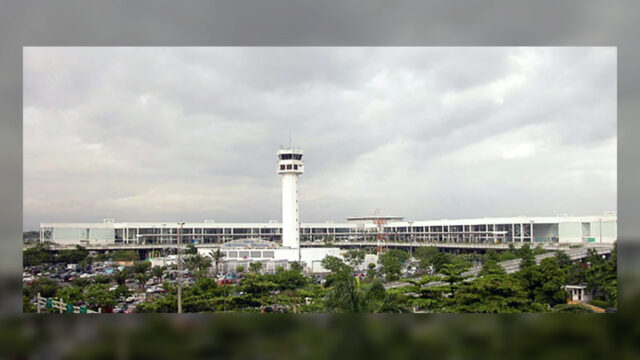
PHILSTAR FILE PHOTO

THE Department of Transportation (DoTr) is considering whether to offer an air traffic navigation project via the solicited route, the Public-Private Partnership (PPP) Center said.

PPP Center Deputy Executive Director Jeffrey I. Manalo said the DoTr is in the pre-feasibility study stage in deciding on a solicited scheme.

The PPP Center website describes the Air Traffic Services (ATS)-Air Navigation Services (ANS) project as including the financing, design, construction, operations and maintenance of the system, which will regulate Philippine airspace as well as international airspace that the Philippines is responsible for managing.

“The private sector concessionaire would take over, modernize, and upgrade existing ATS-ANS facilities of the Civil Aviation Authority of the Philippines, including radar, communications facilities, and control centers. The private sector concessionaire will also construct new facilities to cover the country’s airspace,” the PPP Center said.

ComClark Network and Technology Corp. has said that it intends to resubmit its unsolicited proposal to take over the management of the Philippine air navigation, traffic, and control system.

ComClark’s P29.82-billion unsolicited proposal was rejected by the DoTr. The company said in February that it will submit additional documents to complete its unsolicited proposal. 

The PPP Center’s Mr. Manalo said ComClark has made no new submissions to date.

Nigel Paul C. Villarete, senior advisor at technical advisory group Libra Konsult, Inc. said the air traffic navigation project must be offered through solicited mode.

“This kind of project is broader in scope, covering the entire national airspace and includes certain security concerns. The government needs to provide and embed specific security measures in the terms of reference,” Mr. Villarete said via Viber.

“It should be noted that air navigation services have a much wider scope than airport services and also encompass broader national security concerns; thus, it would be in the country’s best interest to prepare the Terms of Reference and make the decision to tender this out for PPP once that decision has been made,” he said.

Mr. Villarete said going the solicited route would be faster and beneficial for the government.

“In the unsolicited mode, the proposal is dictated by what the proponent wants.  So if a government agency wants to go into public-private-partnership, why not just bid it out specifying exactly what it wants rather than wait for some private entity to dictate its offer,” he said. — Ashley Erika O. Jose

Chips, agri in focus for Tokyo trade mission

CHRIS RIED-UNSPLASH

THE Department of Trade and Industry (DTI) said it will focus on semiconductors and agricultural products during its next trade mission to Tokyo this month, which will also involve the review of the Japan-Philippines Economic Partnership Agreement (JPEPA).

“The next trade mission is Tokyo. For Japan, usually the focus is semiconductors and also coconut. Retail is also coming to the Philippines especially with the CREATE MORE,” Trade Secretary Ma. Cristina A. Roque told reporters on the sidelines of an event on Tuesday, referring to the new law on investment incentives.

President Ferdinand R. Marcos, Jr. last year signed the CREATE MORE Act, which reduces the corporate income tax rate to 20% from 25% for registered business enterprises.

Ms. Roque said that the JPEPA is also expected to be discussed during the trade mission.

“We have to take that up also, because there are some other agricultural products that we want to push,” Ms. Roque said.

In 2024, the DTI said that the JPEPA should be reviewed to factor in developments in digital trade, intellectual property, sustainable development, and the possible cooperation arrangement focusing on innovation and technological development.

JPEPA is the Philippines’ first bilateral free trade agreement, entered into in 2008. JPEPA covers trade goods, rules of origin, customs procedures, investment, movement of natural persons, intellectual property, and government procurement. — Ashley Erika O. Jose

Cold storage joint venture hurdles competition regulator

THE Philippine Competition Commission (PCC) said it approved a joint venture of a group of cold chain storage and real estate companies with a Singapore holding company.

According to PCC, the deal was approved after it found “that the transaction will not result in a substantial lessening of competition in the relevant markets.”

“The approval of the joint venture is expected to enhance cold storage capacity, thereby strengthening competition in the Philippine cold chain sector,” PCC said.

The deal involves Singapore’s Canopy Investments Pte. Ltd., Mets Logistics, Inc., Mets En Co., Inc., Einstee Realty, Inc., Marssha Realty Development and Trading Corp., Magnificent Trio Properties, Inc., and Mets Cold Storage Systems, Inc.

It is expected to expand Mets Logistics’ cold storage capacity in the Philippines, with Canopy entering as a new financial partner through its subscription for new shares in Mets Cold Storage.

According to the PCC, it reviewed three markets that can be potentially affected by the deal, which are dry storage and warehousing services, land leasing for commercial and industrial use, and office leasing services.

“Following its assessment, the commission found no competition concerns in the joint venture since there will be no overlap in any of the services offered by the companies involved and the reorganization merely involves intra-group transfers,” the PCC added.

Mets Logistics operates cold chain facilities, while the property companies — Einstee Realty, Marssha Realty, and Magnificent Properties — are engaged in commercial storage property management.

Prior to Canopy’s entry, Mets Logistics will undergo internal restructuring in which it will transfer its cold storage and logistics businesses to Mets Cold Storage.

The property firms will also transfer the land and cold storage facilities of the operations while retaining ownership of other properties. — Justine Irish D. Tabile

When the BIR waits too long

Tax assessments can be a significant source of worry and concern for taxpayers. The process, from submitting the required documents to dealing with the multiple notices from the Bureau of Internal Revenue (BIR), can feel overwhelming. Certain provisions of the law, particularly regarding due process, can also be misunderstood, considering several amendments that have been introduced over the years. This may result in missed opportunities for both the taxpayers and the BIR at some stages of the assessment and collection process.

With respect to the collection process, the general understanding of most is that the BIR has five years from the date of issuance of the assessment to pursue collection, whether through the BIR’s issuance of a warrant of distraint or garnishment, or by a proceeding in court. The period is normally reckoned from the date of issuance of the Final Assessment Notice (FAN). However, as ruled by the Supreme Court (SC), certain instances may suspend the running of the period, or in some cases, a shorter period may apply.

In 2022, the SC held that the BIR is only given a three-year period to collect taxes, instead of the usual five-year period, if the assessment was duly issued within the three-year period. In the case that produced the ruling, the taxpayer received a FAN within the three-year period. Unfortunately, the taxpayer failed to timely file a protest and the BIR proceeded to issue the Final Decision on Disputed Assessment (FDDA). The taxpayer filed a request for reconsideration of the FDDA with the BIR, but the request was denied by the BIR five years later. Thereafter, the BIR proceeded to enforce collection of the assessment.

After taking into consideration the above timelines, the SC held that the CIR’s right to collect taxes had prescribed. Particularly in that case, the three-year period, rather than the five-year period, applies since the assessment was issued within the ordinary three-year prescriptive period. In its decision, the SC referred to a 2014 case, where the High Court clarified that in cases where assessments are issued within the three-year ordinary period, the CIR only has an additional three years to collect the taxes, either through distraint, levy, or court action. The three-year collection period starts when the assessment notice is released, mailed, or sent to the taxpayer.

Notably, the 2014 decision is anchored on Batas Pambansa Blg. (BP) 700, an old law which shortened the statute of limitations for both assessment and collection of taxes from five years to three years. However, the three-year period under BP 700 was subsequently reverted to five years upon the effectivity of the 1997 Tax Code, or Republic Act 8424. Unlike the 2014 case, which covered the taxable period 1992, the 2022 case covered the taxable period 2010, when the 1997 Tax Code was already effective. It is interesting that the SC similarly applied the three-year period in the latter decision. Considering that SC decisions form part of the law, it is important to take note of these to ensure that the parties observe the applicable due process requirements moving forward.

Lastly, in the 2022 case, the SC ruled that the FDDA cannot be considered as a collection letter. Collection efforts must be initiated by distraint, levy, or court proceedings. This requires the issuance of a warrant of distraint and levy, which must be served on the taxpayer, or the filing of a judicial action. In this case, no warrant of distraint or levy was served, nor were there any judicial proceedings initiated within the prescribed period. Therefore, the BIR’s right to collect the deficiency taxes had lapsed.

This case highlights the critical importance of strictly observing the prescriptive periods for both assessment and collection of taxes. It also serves as a cautionary tale for taxpayers and the tax authorities alike, emphasizing once again that for taxpayers that a timely filed protest to the FAN is critical, while for the BIR, delays or procedural lapses in enforcement can render even a valid tax assessment unenforceable. Understanding these legal timelines is essential in protecting their respective rights and resolving tax assessments.

The views or opinions expressed in this article are solely those of the author and do not necessarily represent those of Isla Lipana & Co. The content is for general information purposes only, and should not be used as a substitute for specific advice.


Edelweiss Chua is a manager at the Tax Services department of Isla Lipana & Co., the Philippine member firm of the PwC network.

edelweiss.chua@pwc.com

NU Bulldogs clinch 10th straight finals in UAAP men’s volleyball

NATIONAL UNIVERSITY BULLDOGS — UAAP/JOAQUI FLORES

Games on Sunday
(Smart Araneta Coliseum)
1 p.m. — FEU vs NU (Men Finals)
5 p.m. — NU vs DLSU (Women Finals)

AND the National University (NU) dynasty is still standing loud and proud in the UAAP men’s volleyball realm.

Four-peat champion NU took care of business against University of Santo Tomas, 25-23, 25-23, 25-23, to clinch its 10th straight finals appearance in the UAAP Season 87 men’s volleyball knockout on Wednesday at the Smart Araneta Coliseum.

The NU Bulldogs dropped the Final Four series opener, 24-26, 25-27, 25-19, 18-25, but still made the most out of their twice-to-beat advantage as the second seed to march on behind a proven and tested pedigree.

NU needed only 85 minutes to seal the deal, thus arranging a best-of-three titular showdown against No. 1 seed Far Eastern University (FEU) starting on Sunday at the Smart Araneta Coliseum.

FEU, with a similar win-once bonus, on Saturday made short work of No. 4 De La Salle University, 24-26, 25-23, 25-19, 25-20, to take the first finals seat.

And as much as the Bulldogs had a harder time figuring out the fourth-seeded Golden Spikers, whom they swept last finals and twice this season, one win was enough to propel them to record-breaking 10th straight finale stint.

Leo Ordiales fired 20 points while Jade Disquitado added 14 as NU erased the nine consecutive finals appearances of Santo Tomas in the 90s to 2000s from Season 57 to 65. NU also tied the record of La Salle women’s team for the longest streak in UAAP volleyball history.

NU did, repelling every resistance from Santo Tomas in a gutsy sweep — especially in the second set where it unleashed a 4-0 closeout to erase a 21-23 deficit capped by a hit from returning ace Buds Buddin.

Mr. Buddin missed the last two games due to an ankle sprain and contributed seven points in the big win that kept the Bulldogs’ five-peat alive.

Two-time MVP Josh Ybañez and Game 1 hero Gboy de Vega had 14 and 12 points, respectively, in the Golden Spikers’ early exit this time after a runner-up finish last season. — John Bryan Ulanday

Frayna gets another World Cup chance in tough India chessfest

WGM JANELLE MAE FRAYNA — FACEBOOK.COM/WGMJANELLE

FINISHING half a point short of claiming a return trip to the FIDE World Cup, the Philippines’ Woman Grandmaster (WGM) Janelle Mae Frayna gets another chance, albeit, with a more difficult route on this one as she leads lean but mean seven-strong Philippine team in the Asian Individual Chess Championships that was unveiled last night in Al Ain, United Arab Emirates.

The country’s first and only WGM to date will shoot for one of the two berths to the World Cup set Oct. 31 to Nov. 27 in New Delhi, India in the 105-player field.

Ms. Frayna gave it her best in the Zonal Championships in Mongolia last week but finished only fifth and half a point short of snaring that one World Cup berth staked in the event.

The 28-year-old Army personnel from Albay gets a second chance but she, however, admits the field will be tougher since the dreaded Russians are joining the annual event for the first time after they switched from Europe to Asia two years ago.

“We’ll do our best even though it’s going to be a very tough field with India, China and even Russia, in the list,” said Ms. Frayna, who thanked the Philippine Sports Commission for financing their participation in the 10-day meet.

There will be 19 Russians in the open section and 13 in the women’s class including its top three seeds Leya Garifullina, Velentina Gunina and Olga Girya.

Ms. Frayna is seeded 20th.

Joining her were Woman International Masters Jan Jodilyn Fronda, Bernadette Galas and Marie Antoinette San Diego.

A total of 10 slots will be available in the open section where the country will be represented by GM Daniel Quizon and IMs Pau Bersamina and Jem Garcia. — Joey Villar

Tyrese Haliburton drains winning 3 as Pacers finish off comeback vs Cavs

TYRESE HALIBURTON grabbed his own missed free throw and buried a 3-pointer with 1.1 seconds remaining, giving the visiting Indiana Pacers a 120-119 win over the short-handed Cleveland Cavaliers in Game 2 of the Eastern Conference semifinals, taking a commanding lead in the series on Tuesday night.

The Pacers scored the final eight points after Donovan Mitchell made two free throws to push Cleveland’s lead to 119-112 with 57 seconds left. Baskets by Aaron Nesmith and Pascal Siakam made it a one-possession game, and Andrew Nembhard stole the subsequent inbounds pass from Max Strus.

Haliburton drew a foul with 12.4 ticks remaining, making his first free throw to make it 119-117, then grabbed his miss on the second. He dribbled beyond the arc before making the 3-pointer to complete Indiana’s comeback from 20 points down.

Mitchell amassed 48 points, nine assists, five rebounds and four steals for the top-seeded Cavaliers, who were without NBA Defensive Player of the Year Evan Mobley (left ankle sprain), All-Star point guard Darius Garland (left big toe sprain) and key reserve De’Andre Hunter (right thumb sprain).

Cleveland lost the first two games of a series at home for the first time since 1996, when it was swept by the Knicks in a best-of-three matchup. The Cavaliers have won just 7 of 13 home games during their current three-year playoff streak.

Nesmith and Myles Turner each scored 23 points and Haliburton had 11 of his 19 points in the fourth quarter. Bennedict Mathurin added 19 points and Nembhard collected 13 points, 13 assists and seven rebounds, along with eight turnovers, for fourth-seeded Indiana.

Mitchell, a six-time All-Star, scored 12 points in the first, 15 in the third and 12 in the fourth in an electrifying performance. He made 15 of 30 field goal attempts and was 17-of-21 on free throws, setting career highs in free throws made and attempted.

Strus had 23 points and Jarrett Allen posted 22 points and 12 rebounds for the Cavaliers, who led 81-61 midway through the third. Sam Merrill scored 14 off the bench.

Power forward Mobley and Hunter were both injured on Sunday in Game 1 on consecutive fourth-quarter possessions that were not deemed fouls. Garland has not played since April 23 against the Heat.

Mobley landed on the foot of Turner, who slid under him on a shot, while Hunter dislocated his thumb while falling after his dunk was blocked by Mathurin.

Atkinson, named NBA Coach of the Year earlier this week, expressed his displeasure in three-minute responses on Monday after practice and before the game, eliciting a response from Carlisle.

“Nobody wants to see players get hurt,” Carlisle said. “That disturbs the hell out of us.” — Reuters

Warriors lose Stephen Curry, still beat Timberwolves in Game One

BUDDY HIELD scored 24 points as the Golden State Warriors held on for a 99-88 win over the Minnesota Timberwolves in Game 1 of their Western Conference semifinals series on Tuesday night in Minneapolis, despite losing star Stephen Curry to injury.

Jimmy Butler notched a double-double with 20 points and 11 rebounds for the seventh-seeded Warriors, who won for the second time in three nights after eliminating the Houston Rockets in a seven-game, first-round series. Draymond Green finished with 18 points and eight rebounds.

Anthony Edwards missed his first 10 shots from the field but finished with 23 points and 14 rebounds for Minnesota, which appeared rusty after a five-day break between games. Naz Reid scored 19 points off the bench and Julius Randle finished with 18 points.

Curry left in the second quarter because of a left hamstring strain and did not return. Curry scored 13 points in 13 minutes on 5-for-9 shooting overall and 3-for-6 shooting from 3-point range before his injury.

Curry appeared to sustain the injury after driving for a layup. He favored his left leg after the shot and lifted his arm to signal to the bench that something felt wrong.

Minnesota trailed by as many as 23 points but pulled within single digits in the fourth quarter. A 13-2 run by the Timberwolves cut their deficit to 85-76 with 6:02 remaining.

On the next possession, Hield drilled one of his five 3-pointers from the left quarter to increase the Warriors’ lead back to 12 points. Butler followed with a driving jump shot to put Golden State on top 90-76 with 5:19 remaining and the Warriors maintained a comfortable lead the rest of the way.

Golden State held a commanding 80-60 advantage at the end of the third quarter.

Golden State led 44-31 at the half as Minnesota scored only 11 points in the second quarter. — Reuters

India launches strikes on Pakistan; Islamabad says Indian jets downed

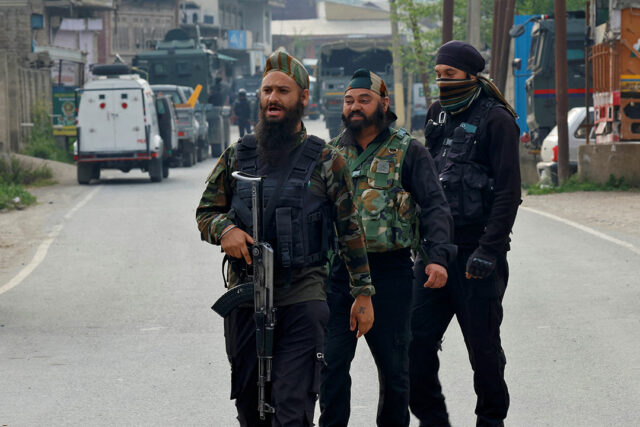
INDIAN security force personnel stand guard near the site of a fighter jet crash in Wuyan in south Kashmir’s Pulwama district, May 7, 2025. — REUTERS

MUZAFFARABAD, Pakistan/NEW DELHI — India attacked Pakistan and Pakistani Kashmir on Wednesday and Pakistan said it had shot down five Indian fighter jets in the worst fighting in more than two decades between the nuclear-armed enemies.

India said it struck nine Pakistani “terrorist infrastructure” sites, some of them linked to an attack by Islamist militants on Hindu tourists that killed 26 people in Indian Kashmir last month.

Islamabad said six Pakistani locations were targeted, and that none of them were militant camps. At least 26 civilians were killed and 46 injured, a Pakistan military spokesperson said.

Indian forces attacked the headquarters of Islamist militant groups Jaish-e-Mohammed and Lashkar-e-Taiba, an Indian defence source told Reuters.

“India has demonstrated considerable restraint in selection of targets and method of execution,” the Indian defense ministry said in a statement.

Pakistan said Indian missiles hit three sites and a military spokesperson told Reuters five Indian aircraft had been shot down, a claim not confirmed by India.

However, four local government sources in Indian Kashmir told Reuters that three fighter jets had crashed in separate areas of the Himalayan region during the night.

All three pilots had been hospitalized, the sources added. Indian defence ministry officials were not immediately available to confirm the report.

Images circulating on local media showed a large, damaged cylindrical chunk of silver-coloured metal lying in a field at one of the crash sites. Reuters could not immediately verify the authenticity of the image.

Islamabad called the assault a “blatant act of war” and said it had informed the UN Security Council that Pakistan reserved the right to respond appropriately to Indian aggression.

“All of these engagements have been done as a defensive measure,” Pakistan military spokesperson Ahmed Sharif Chaudhry said. “Pakistan remains a very responsible state. However, we will take all the steps necessary for defending the honor, integrity and sovereignty of Pakistan, at all cost.”

The South Asian neighbors also exchanged intense shelling and heavy gunfire across much of their de facto border in the Himalayan region of Kashmir, police and witnesses told Reuters.

Hindu-majority India and Islamic Pakistan have fought two of their three wars since independence in 1947 over Muslim-majority Kashmir, which both sides claim in full and control in part.

‘OPERATION SINDOOR’
Since a 2003 ceasefire, to which both countries recommitted in 2021, targeted strikes between the neighbors are extremely rare, especially Indian strikes on Pakistani areas outside Pakistani Kashmir.

But analysts said the risk of escalation is higher than in the recent past due to the severity of India’s attack, which New Delhi called “Operation Sindoor”. Sindoor is the Hindi language word for vermilion, a red powder that Hindu women put on the forehead or parting of their hair as a sign of marriage.

US President Donald J. Trump called the fighting “a shame” and added, “I hope it ends quickly.” The State Department said Secretary of State Marco Rubio spoke to the national security advisers of both nations, urging “both to keep lines of communication open and avoid escalation.”

UN Secretary-General Antonio Guterres called for maximum military restraint from both countries, a spokesperson said. China, which neighbors both India and Pakistan, also called for restraint.

The Pakistani army’s shelling across the frontier in Kashmir killed seven civilians and injured 35 in the Indian sector of the region, police there said.

Indian TV channels showed videos of explosions, fire, large plumes of smoke in the night sky and people fleeing in several places in Pakistan and Pakistani Kashmir. Reuters could not independently verify the footage.

In Muzaffarabad, the capital of Pakistani Kashmir, damage from the Indian strike was visible at sunrise. Security forces surrounded a small mosque in a hill-side residential neighborhood which had been hit, with its minaret collapsed.

All schools in Pakistani Kashmir, the national capital Islamabad, and much of Indian Kashmir and the populous Pakistani province of Punjab were ordered closed on Wednesday in the aftermath of the strikes.

Imran Shaheen, a district official in Pakistani Kashmir, said two mortars landed on a house in the town of Forward Kahuta, killing two men and injuring several women and children. In another village, a resident had been killed in firing, Mr. Shaheen said.

Pakistani Prime Minister Shehbaz Sharif said Islamabad was responding to the Indian attacks but did not provide details. Pakistan’s populous province of Punjab declared an emergency, its chief minister said, and hospitals and emergency services were on high alert.

A Pakistani military spokesperson told broadcaster Geo that two mosques were among the sites hit by India. The Pakistani defense minister told Geo that all the sites were civilian and not militant camps.

He said India’s claim of targeting “camps of terrorists is false”.

After India’s strikes, the Indian army said in a post on X on Wednesday: “Justice is served.”  

STOCK FUTURES, AIRLINES IMPACTED
A spokesperson for the Indian Embassy in Washington told Reuters that evidence pointed “towards the clear involvement of Pakistan-based terrorists in this terror attack,” referring to the April tourist killings.

India said two of three suspects in that attack were Pakistani nationals but had not detailed its evidence. Pakistan denied that it had anything to do with the April killings.

News of the strikes impacted Indian stock futures mildly, with the GIFT NIFTY at 24,311, 0.3% below the NIFTY 50’s last close of 24,379.6 on Tuesday.

Several airlines including India’s largest airline, IndiGo, Air India and Qatar Airways cancelled flights in areas of India and Pakistan due to closures of airports and airspace.

Indian National Security Advisor Ajit Doval spoke to US Secretary of State Marco Rubio and other senior Indian officials briefed counterparts in Britain, Russia, Saudi Arabia and the United Arab Emirates, an Indian source told Reuters.

The Indian strike goes far beyond New Delhi’s response to previous attacks in Kashmir blamed on Pakistan. Those include India’s 2019 air strike on Pakistan after 40 Indian paramilitary police were killed in Kashmir and India’s retaliation for the deaths of 18 soldiers in 2016.

“Given the scale of the Indian strike, which was far greater than what we saw in 2019, we can expect a sizable Pakistani response,” said Michael Kugelman, a Washington-based South Asia analyst and writer for the Foreign Policy magazine.

“All eyes will be on India’s next move. We’ve had a strike and a counter-strike, and what comes next will be the strongest indication of just how serious a crisis this could become,” he said. — Reuters


Vatican conclave to pick new pope; world awaits white smoke

A CHIMNEY is set up on the roof of the Sistine Chapel, ahead of the conclave, at the Vatican, May 2, 2025. — REUTERS

VATICAN CITY — Roman Catholic cardinals began the task on Wednesday of electing a new pope, locking themselves away from the world until they choose the man they hope can unite a diverse but divided global Church.

In a ritual dating back to medieval times, the cardinals filed into the Vatican’s frescoed Sistine Chapel after a public Mass in St. Peter’s Basilica and started their secret conclave for a successor to Pope Francis, who died last month.

No pope has been elected on the first day of a conclave for centuries, so voting could continue for several days before one of the red-hatted princes of the Church receives the necessary two-thirds majority to become the 267th pontiff.

There was only one ballot scheduled on Wednesday. Thereafter, the cardinals can vote as many as four times a day.

They will burn their ballots, with black smoke from a chimney on the roof of the chapel marking an inconclusive vote, while white smoke and the peeling of bells signaling that the 1.4-billion member church has a new leader.

The pope’s influence reaches well beyond the Catholic Church, providing a moral voice and a call to conscience that no other global leader can match.

At a Mass in St. Peter’s Basilica on Wednesday morning before entering the conclave, the cardinals prayed that God would help them find a pope who would exercise “watchful care” over the world.

In a sermon, Italian Cardinal Giovanni Battista Re told his peers they must set aside “every personal consideration” in choosing the new pontiff and keep in mind “only … the good of the Church and of humanity.”

Re, the dean of the College of Cardinals, is 91 and will not enter the conclave, which is reserved for cardinals under the age of 80.

Cardinals in recent days have offered different assessments of what they are looking for in the next pontiff.

While some have called for continuity with Francis’ vision of greater openness and reform, others have said they want to turn the clock back and embrace old traditions. Many have indicated they want a more predictable, measured pontificate.

A record 133 cardinals from 70 countries will enter the Sistine Chapel, up from 115 from 48 nations in the last conclave in 2013 -— growth that reflects Francis’ efforts to extend the reach of the Church to far-flung regions with few Catholics.

No clear favorite has emerged, although Italian Cardinal Pietro Parolin and Filipino Cardinal Luis Antonio Tagle are considered the front-runners.

NO EAVESDROPPING
However, if it quickly becomes obvious that neither can win, votes are likely to shift to other contenders, with the electors possibly coalescing around geography, doctrinal affinity or common languages.

Among other potential candidates are France’s Jean-Marc Aveline, Hungary’s Peter Erdo, American Robert Prevost and Italy’s Pierbattista Pizzaballa.

Re suggested the cardinals should look for a pope who respected the diversity within the Church. “Unity does not mean uniformity, but a firm and profound communion in diversity,” he said in his sermon.

As in medieval times, the cardinals will be banned from communicating with outsiders during the conclave, and the Vatican has taken high-tech measures to ensure secrecy, including jamming devices to prevent any eavesdropping.

The average length of the last 10 conclaves was just over three days and none went on for more than five days. A 2013 conclave lasted just two days.

The cardinals will be looking to wrap things up quickly again this time to avoid giving the impression that they are divided or that the Church is adrift.

Some 80% of the cardinals who enter the Sistine Chapel on Wednesday were appointed by Francis, increasing the possibility that his successor will in some way continue his progressive policies despite strong pushback from traditionalists.

Among their considerations will be whether they should seek a pope from the global south where congregations are growing, as they did in 2013 with the Argentinian Francis, hand back the reins to Europe or even pick a first US pope. — Reuters

‘What’s left to bomb?’ Israel’s plan to expand campaign strikes fear into Gazans

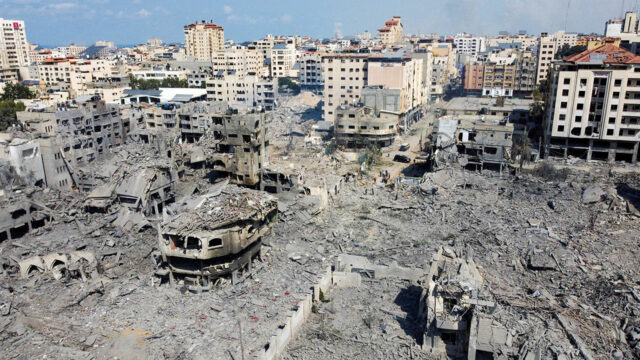
A view shows houses and buildings destroyed by Israeli strikes in Gaza City, Oct. 10, 2023. — REUTERS

CAIRO — Israel’s plan to expand its Gaza offensive, displace people within the enclave and take control of aid distribution has horrified Gazans who already have endured multiple displacements and food shortages during 19 months of conflict.

Israel has been blocking all aid from entering Gaza since March 2 with the collapse of a two-month ceasefire with Hamas that had improved Gazans’ access to food and medicine and allowed many of them to go home.

For Aya, a 30-year-old Gaza City resident who returned home with her family during the ceasefire after months in the southern part of the strip, Israel’s announcement on Monday raised fears of being killed or indefinitely displaced.

“Are we going to die this time?” she said in a message on a chat app.

“Are they going to displace us again? Are we going to end up in Rafah, and will this be the last time, or are they going to force us out of Gaza after Rafah?” she said, referring to the Rafah area in southern Gaza, next to Egypt’s border.

Attending a funeral on Monday for several people killed in an Israeli airstrike on a building in Gaza City, Mohammed al-Seikaly said things were so dire it was hard to imagine how Israel could further intensify its assault.

“There is nothing left in the Gaza Strip that has not been struck by missiles and explosive barrels,” he said. “I’m asking in front of the whole world: ‘What’s left to bomb?’”

On Tuesday, Israeli military strikes killed at least 46 Palestinians across Gaza, local health authorities said. Medics said at least 29 people, including women and children, were killed at a school housing displaced families in the Bureij camp in the central Gaza Strip.

Medics said the school was hit twice within a few hours.

After the first airstrike, the Israeli military said it had struck terrorists operating from a command center used for storing weapons and planning and staging attacks against Israel. There was no immediate army comment after the second attack.

Israeli Prime Minister Benjamin Netanyahu said the expanded military operation would be “intensive” and involve holding seized territories and moving Palestinians “for their own safety.”

DEARTH OF FOOD
One Israeli official said the plan would involve moving the civilian population southward and controlling aid distribution to prevent food from falling into the hands of Hamas, the Islamist militant group whose attack on Israel in October 2023 triggered Israel’s military operation in Gaza.

The United Nations Office for the Coordination of Humanitarian Affairs rejected the plan on Tuesday as “the opposite of what is needed”.

Tamer, a man from Khan Younis in the southern half of the Strip, said he feared Israel could impose its own triage system to decide who would get food.

“Will they arrest people and kill others before they let the rest into the areas they designate?” he said.

Gaza’s 2.3-million people are struggling with a dearth of food, with many eating only once a day. The World Food Programme said on April 25 it had run out of food stocks in the Strip.

Flour often can’t be found, but when a rare sack is available it can cost as much as $500, up from 25 shekels ($7) before the war, Aya said.

“They are starving us so we can agree to anything. We want an end to the war. Let them take their prisoners (Israeli hostages) and end the war. Enough,” she added.

Some residents have been eating weeds or leaves, while fishermen have turned to catching sea turtles and selling their meat.

Israeli officials have said there is still enough food in Gaza, though the head of Israel’s military has warned the political leadership that supplies must be let in soon, public broadcaster Kan reported.

Hamas, which has run Gaza since 2007, accuses Israel of “using food as a weapon in its war against the people of Gaza.”

The war began on October 7, 2023, when Hamas killed 1,200 people and took 251 hostage, according to Israeli tallies.

Israel’s campaign has killed more than 52,000 Palestinians, mostly civilians, according to Hamas-run health authorities, and reduced much of Gaza to ruins. — Reuters