Home Blog Page 1535

First offshore wind production by 2028 ‘doable’ if all goes well

BUHAWIND.COM.PH

By Sheldeen Joy Talavera, Reporter

GETTING production out of the first offshore wind farms by 2028 is considered “doable” with close coordination between regulators and project proponents, according to Danish technical consultancy firm K2 Management (K2M).

“The 2028 completion of the first offshore wind sounds aggressive but it is also doable, but that does require all the stakeholders to closely collaborate (to achieve) the 2028 targets,” Scott Hsu, K2M director for Taiwan and the Philippines, told BusinessWorld.

The Philippines is hoping to generate its first output from offshore wind by 2028 as it bids to diversify its energy mix and reduce dependence on fossil fuels.

“If all the resources (from the) government and private sector are in place, I think the Philippines, with all that sea area, has a lot of potential to play a major role in the future electricity production,” he said. “But that (depends on the speed of) the auctions… (and whether) the authorities and the private sector come together.”

The Department of Energy (DoE) is planning to hold its fifth green energy auction (GEA-5) focused on offshore wind by the third quarter of 2025.

The auction is expected to ensure market access for offshore wind developers, to establish to their funders that they can tap long-term demand.

As of October 2024, the government has awarded 92 offshore wind contracts with 68 gigawatts (GW) of potential capacity. Of the total, 21 contracts representing 19.2 GW were awarded to foreign-owned companies.

The DoE said it is assisting 16 offshore wind frontrunners who have committed to deliver a total of more than 16 GW of new capacity.

“The offshore wind success requires all stakeholders’ efforts. And then transparent and supportive policy is very important from the government side,” Mr. Hsu said.

The banking industry also plays a crucial role in offshore wind development, he said.

“It is very important for (the banks) to be actively participating in the financing… That will be the only way to turn this financial investment into a successful project,” he said.

He said ports are also needed to serve as logistics hubs throughout the life cycle of the projects.

The DoE has said that the Philippine Ports Authority has committed and allocated funds for repurposing and expanding Currimao port in Ilocos Norte, the Port of Batangas, and the Jose Panganiban port in Camarines Norte.

These ports were identified as critical to offshore wind development due to their proximity to high-potential wind energy sites.

According to the World Bank’s 2022 Offshore Wind Roadmap for the Philippines, the country’s offshore wind resources are estimated at a potential 178 GW.

New clearance fees for other sweeteners delayed 

PHILIPPINE STAR/MIGUEL DE GUZMAN

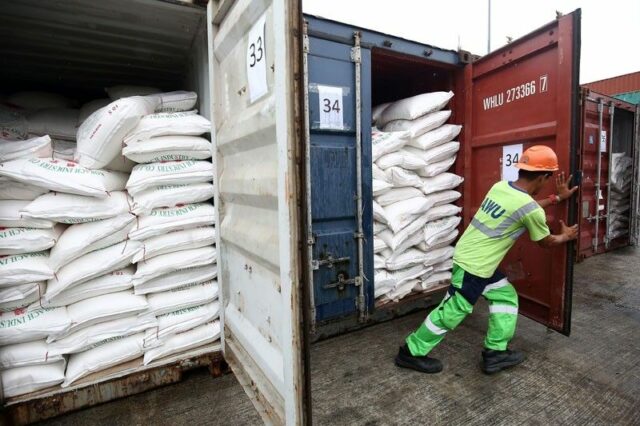
THE Sugar Regulatory Administration (SRA) has deferred a new set of fees it had planned to collect starting this weekend for clearances to import a number of non-sugar sweeteners.

Sugar Order (SO) No. 6 had originally been set to take effect on Feb. 1 but encountered resistance from food and beverage manufacturers who objected to the additional cost.

The order imposes a P60 per metric ton clearance fee on sucrose, lactose, glucose, maltose, maple syrup, honey and caramel, and flavored syrups, among others.

The Philippine Confectionery Biscuit Snack Food Association and the Beverage Industry Association of the Philippines had written to the SRA, citing concerns over the fees.

The decision to defer had been arrived at during a Jan. 23 board meeting, pending consultations with industry, the SRA said.

In a statement on Thursday, the Federation of Philippine Industries (FPI) warned of the sugar order’s possible impact on prices.

FPI President Jesus L. Arranza said SO 6 could also increase the “cost of doing business and adversely affect consumers.”

“The SRA order has the potential to trigger ripple effects, like congestion at the ports, leading to additional demurrage fees that would hurt the makers of confectioneries and beverages in terms of production delays and additional costs,” he added.

The SRA has said that the order is intended to help document and better monitor the entry of imported non-sugar sweeteners, and not to restrict their entry, while domestic sugar producers have long agitated for limits on imports of non-sugar sweeteners.

“There is no need to add another bureaucratic layer if the goal is only to gather data because import records are already available from the Bureau of Customs,” Mr. Arranza said.

SRA Administrator Pablo Luis S. Azcona said by telephone: “The Department of Agriculture (DA) took it upon itself to sit down with the people who wrote us letters and to see if their concerns are valid or speculative.”

Mr. Azcona said that the order will not cause delays in the processing of import clearances.

“We have been issuing import clearances for fructose under Tariff Code 1702 since 2017, and there have been no reports of delays or disruptions to business operations,” he added.

He called the clearance fees “minimal” and estimated them to account for about 0.08% of manufacturers’ costs.

He added that the SRA is also set to implement an online portal for import clearance applications.

“We welcome the opportunity to sit with them and find solutions to their concerns,” Mr. Azcona added. — Adrian H. Halili

Textile industry revival seen starting with developing tropical fabric niche

A YOUNG woman makes inaul, the traditional Maguindanawan woven cloth, in this 2018 photo. — SARANGANI PROVINCIAL GOVERNMENT

By Justine Irish D. Tabile, Reporter

THE PHILIPPINES could revive its textile industry by establishing a niche in “tropical fabrics,” the Board of Investments (BoI) said.

BoI Executive Director for Industry Development Services Ma. Corazon H. Dichosa added that the garments and textile industry roadmap is making slow progress following the disruptions of the pandemic.

“We launched it prior to the pandemic, and the implementation was a bit slow because, first of all, we do not have textiles,” she said on the sidelines of the 2025 National Textile Convention.

She said the lack of capacity is what opens the door to imports.

“I think it is very critical that we revitalize our textile industry … So right now what we are looking at is to start with creating a niche for a lot of tropical fabrics,” she said.

“If we scale it up, (tropical fabrics will be) premium and higher-value … We think that if we want to create a market for our garments again, it could be a starting point,” she added.

Garments from the Philippines used to have a ready market in the US before 1995 due to the Quota Regime, she said. However, the Philippines lost share to China after quotas were removed.

“We have a higher cost of production here, but if we start with tropical fabrics, which are something only available to us and have unique designs, that’s something that we can actually create a niche in,” she said.

“And hopefully that also establishes the Philippines again as another garment player globally and regionally. And then from there, we expand,” she added.

January is Philippine Tropical Fabrics month, organized by the Department of Science and Technology’s Philippine Textile Research Institute (PTRI). This year, the observance centers on circularity and sustainable fashion.

“Circularity is actually our (pathway) to attain a level of sustainability for the textile industry … The use of natural fibers is one step by which we actually eliminate and reduce our dependence on synthetics,” PTRI Director Julius L. Leaño, Jr. said.

“When you talk about exports, you talk about volume, quality, and sustainability. Right now, you won’t be able to export hand-woven products if they’re made of polyester,” Mr. Leaño said.

He said the market is evolving, and the Philippines needs to ensure it is not be “caught flat-footed.”

“This is our strategic competitive advantage, and together with our colorful products and weave patterns, we really have our own niche in global markets,” he added.

He said consumers are part of the solution, because without prodding they tend to buy cheap products.

“Economies of scale are really our arbiter for this kind of industry, particularly for textiles, because as long as your production is small, it is really more expensive,” he said.

Raymond Girard R. Tan, De La Salle University’s Vice Chancellor for Research and Innovation, said the sustainability of the textile industry will not only protect the Philippine environment but make exports more competitive.

“The Philippines exports only about 20% of the output of its textile and allied industries. By comparison, if you look at nearby countries of similar size and gross domestic product, Vietnam exports 50 times as much in terms of dollar value from its textile sector,” he told a panel discussion.

“And what that tells us, even though it seems like bad news at first, is it gives us a sense of how much we can scale up and cause economic growth if we get our act together. There is plenty of potential to create new livelihood opportunities if we can tap into this lucrative export market,” he added.

He said that adapting circularity in textiles will be crucial, as export markets will eventually close their doors to companies that cannot prove that their products are at least minimally green.

“The premium will become smaller and smaller, to the point, for example, that if you’re trying to export to the European Union, companies there are going to have to vet their supply chains (to favor) those that have better practices,” he said.

“I would encourage everybody to think not in terms of sustainability as hindering economic growth, but (as something that) will open doors if we consider just how big the export market is,” he added.

CAAP to focus navigation system upgrades on hardware this year

THE Civil Aviation Authority of the Philippines (CAAP) said it will focus on hardware upgrades to its communications, navigation, surveillance and air traffic management (CNS/ATM) systems this year. 

“For 2024, … we completed the software upgrade. What we want to happen now is to complete the hardware upgrade,” CAAP Director General Manuel Antonio L. Tamayo said.

He said CAAP is planning to tap the loan extended by Japan International Cooperation Agency (JICA) for this upgrade program.

“The primary concern is funding. However, we have savings from the JICA fund that was supposed to be used in constructing the existing CNS/ATM. JICA extended the loan; now we have approximately P2.1 billion (available),” he said.

This system upgrade, which was integrated last year — is part of CAAP’s program to enhance the air traffic management system, making air traffic operations more efficient and reducing delays.

The CAAP embarked on the system upgrades following the power outage that hit CAAP facilities in 2023, which affected thousands of passengers. — Ashley Erika O. Jose

Business groups urge Senate to pass Konektadong Pinoy bill

PHILSTAR FILE PHOTO

BUSINESS GROUPS have renewed their call for the Senate to pass the Konektadong Pinoy bill before the 19th Congress steps down, after President Ferdinand R. Marcos, Jr. certified the bill as urgent.

“Versions of the Konektadong Pinoy bill, or the proposed Open Access in Data Transmission Act, have passed on third reading in the House of Representatives for three Congresses since the 17th Congress,” they said in a joint statement on Thursday.

“Movement of the legislation stalled in the Senate in previous years,” it said, adding that the bills chances of passing have improved “thanks to strong backing from President Marcos.”

The Konektadong Pinoy bill, or Senate Bill No. 2699 was one of the two bills certified as urgent by the Office of the President earlier this week, along with the measure postponing the parliamentary elections in the Bangsamoro Autonomous Region in Muslim Mindanao.

“With Konektadong Pinoy certified as urgent, the fate of this landmark digital connectivity legislation now rests in the hands of Senator Alan Peter Cayetano, chairman of the Committee on Science and Technology,” the business groups said.

“Stakeholders look forward to Senate President Francis G. Escudero leading the passage of the bill now that it has been certified as urgent,” they added.

The Konektadong Pinoy bill aims to encourage more entrants seeking to participate in the digital infrastructure buildout by simplifying the licensing process for network providers.

The National Telecommunications Commission is tasked by the bill with regulating the data transmission industry.

“The Philippines has consistently ranked poorly in global and regional information and communication technology rankings, including the Digital Competitiveness Index and Network Readiness Index,” the business groups said.

“Philippine internet is one of the slowest but also one of the most expensive in the world. Poor digital connectivity can be attributed to outdated laws that discourage investment and prevent new players from putting up much-needed internet infrastructure, especially in the countryside,” they added.

The groups that signed the joint statement include the Alliance of Tech Innovators for the Nation, the American Chamber of Commerce of the Philippines, the Analytics & Artificial Intelligence Association of the Philippines, the Asia Open RAN Academy, the Association for Progressive Communications, Better Internet PH, and the Canadian Chamber of Commerce of the Philippines;

Democracy.net.ph, Employers Confederation of the Philippines, European Chamber of Commerce of the Philippines, Fintech Alliance.PH, Foundation for Media Alternatives, Global Digital Inclusion Partnership, Institute for Social Entrepreneurship in Asia, and the Internet Society;

The Japanese Chamber of Commerce and Industry of the Philippines, Korean Chamber of Commerce Philippines, National ICT Confederation of the Philippines, Philippine Association of Multinational Companies Regional Headquarters, Inc., Philippine Cable and Telecommunications Association, Inc., the Philippine Chamber of Commerce and Industry, and Philippine Exporters Confederation, Inc. — Justine Irish D. Tabile

Chip firms could get top-tier perks in CREATE MORE IRR

PHILSTAR FILE PHOTO

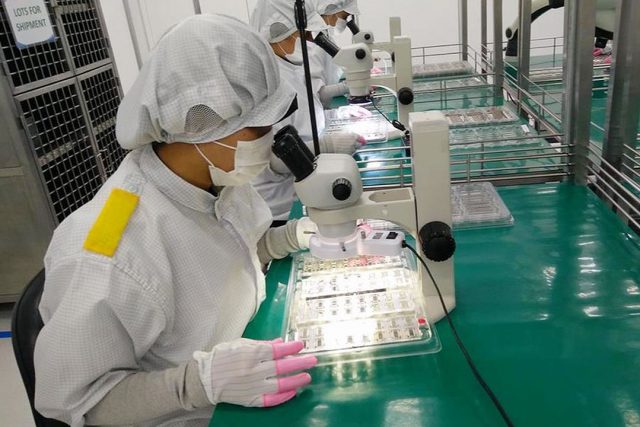
THE Philippine Economic Zone Authority (PEZA) said semiconductor industry investors are considered strong candidates for being classified into the top tier of fiscal-incentive recipients.

“For strategic, high-value and high-tech semiconductor manufacturing and services-related activities, the government may consider granting outright Tier 3 incentives — instead of the usual Tier 1 or Tier 2,” PEZA Director-General Tereso O. Panga said via Viber.

President Ferdinand R. Marcos, Jr. said last week that his government is considering inserting a special provision favoring semiconductor companies in the Implementing Rules and Regulations (IRR) of Republic Act (RA) No. 12066 also known as the CREATE MORE Act.

Mr. Marcos signed the CREATE MORE Act in December. The interim IRR was released last month.

Tier 3 investors, according to the interim IRR, are export enterprises approved by the Foreign Investment Review Board (FIRB), eligible for a six-year income tax holiday (ITH) plus 20 years of an enhanced deduction rate (EDR) regime or special corporate income tax (SCIT), or 26 years of EDR/SCIT if they are in Metro Manila.

The corresponding incentives are a seven-year ITH followed by 20 years of EDR/SCIT, or 27 years of EDR/SCIT if they are in metropolitan areas adjacent to the National Capital Region; and a seven-year ITH plus 20 years of EDR or SCIT, or 27 years of EDR/SCIT if they are in other areas.

Domestic enterprises approved by FIRB may avail of a six-year income tax holiday (ITH) plus 20 years of EDR/SCIT, or 26 years of EDR if they are in Metro Manila; a seven-year ITH followed by 20 years of EDR, or 27 years of EDR if they are in metropolitan areas adjacent to the National Capital Region; and a seven-year ITH plus 20 years of EDR, or 27 years of EDR if they are in other areas.

Classifying chip companies into Tier 3 is expected to attract leading integrated circuit (IC) makers and printed circuit board (PCB) designers, as well as AI and robotics companies, Mr. Panga said.

“This will complement and diversify our existing strengths in Outsourced Semiconductor Assembly and Test (OSAT), and Assembly, Testing, and Packaging (ATP).”

Mr. Panga also urged the FIRB to release “as soon as possible” the guidelines that will authorize the President to grant longer ITH and SCIT periods and other incentives for highly desirable and strategic projects investing a minimum of P50 billion or those employing at least 10,000.

“This could be game changer as we leverage the ally-shoring strategy to be able to attract wafer fab and big-ticket semiconductor and other manufacturing companies that will be shifting production out of China, Mexico or Vietnam in light of President Trump’s policy shifts to reduce the US trade deficit and to de-risk the global supply chain,” he said.

The President brought up with the Private Sector Advisory Council-Education and Jobs Sector Group last week the absence of a specific provision on incentives for the semiconductor companies in the CREATE MORE law, while detailing incentives for industries like car manufacturing.

“We’ll do it through the IRR, perhaps. Because it took us such a while to get the CREATE MORE in the first place,” Mr. Marcos said at the meeting, according to a statement released by his office.

Mr. Marcos signaled possible incentives for semiconductor locators after US President Donald J. Trump took office on Jan. 20.

The US and the Philippines under then President Joseph R. Biden committed to boosting their semiconductor partnership, particularly under the provisions of the US CHIPS Act.

“We support the President’s push for the grant of specific incentives to accelerate growth and expansion of the semiconductor and electronics industry,” Mr. Panga said.

“This can be addressed within the framework of the CREATE & CREATE More laws, including the Strategic Investment Priority Plan (SIPP).”

He said the FIRB is currently drafting the CREATE More IRR in consultation with the investment promotion agencies (IPAs).

Electronics is the single biggest export of the Philippines, accounting for nearly 60% of merchandise exports. The bulk of these exports are finished semiconductor products that are incorporated into electronic devices.

Semiconductor exports fell 33.1% to $1.91 billion in November, amid soft global demand.

Semiconductor locators have been “one of the long-term and consistent investors” in PEZA economic zones, and account for 15% of gross domestic product, Mr. Panga said.

He said PEZA also accounts for 56% of the country’s commodity exports, “the biggest of which come from the semiconductor and electronics sector.” — Kyle Aristophere T. Atienza

P30-billion industrial park planned for New Clark City

New Clark City

THE Bases Conversion and Development Authority (BCDA) said it tapped Science Park of the Philippines, Inc. (SPPI) to develop a P30-billion industrial park in New Clark City.

The BCDA on Thursday signed a 50-year lease agreement with SPPI on Jan. 23. The park is expected to create 30,000 new jobs and generate P1.9 billion in tax revenue for the government, the BCDA said.

BCDA President and Chief Executive Officer Joshua M. Bingcang said the jobs include those in food production, textiles, automotive parts, electric vehicles, semiconductors, and data centers.

SPPI operates six sites in Central Luzon, Southern Luzon and the Central Visayas. — Justine Irish D. Tabile

Peso rises as market awaits US GDP report

BW FILE PHOTO

THE PESO appreciated against the dollar on Thursday as players took positions before the release of US gross domestic product (GDP) data overnight.

The local unit closed at P58.28 per dollar on Thursday, strengthening by 14.5 centavos from its P58.425 finish on Tuesday, Bankers Association of the Philippines data showed.

The peso opened Thursday’s session slightly weaker at P58.43 against the dollar, which was also its worst showing. Its intraday best was P58.29 versus the greenback.

Dollars exchanged decreased to $1.33 billion on Thursday from $1.66 billion on Tuesday.

Philippine financial markets were closed on Jan. 29 (Wednesday) for the Lunar New Year holiday.

The peso closed higher on expectations of weaker fourth-quarter US GDP growth, the first trader said in a phone interview.

The local unit was initially weaker following the lackluster Philippine GDP data released earlier on Thursday, the trader noted. The Philippine economy grew by 5.6% in 2024, missing the government’s 6-6.5% full-year target.

“The peso appreciated from easing expectations of a US Federal Reserve rate hike as Fed Chair Jerome H. Powell dismissed such possibility,” the second trader said in an e-mail.

For Friday, the second trader said the peso could rise further on potentially weak US GDP data.

The first trader expects the peso to move between P58.10 and P58.50 per dollar, while the second trader sees it ranging from P58.25 to P58.40.

US economic growth likely slowed in the fourth quarter as imports surged and a strike at Boeing hurt spending on aircraft, though strong domestic demand will probably keep the Federal Reserve on a shallow interest rate cut path this year, Reuters reported.

The advance gross domestic product report from the Commerce department on Thursday was also expected to show consumer spending maintaining a robust pace of growth last quarter. Consumer spending is being underpinned by a resilient labor market, which is churning out solid wage gains.

While the fourth-quarter growth pace would mark a slowdown of the brisk pace notched in the July-September quarter, the economy last year defied dire predictions of a recession that had been fanned by the US central bank hiking rates by 5.25 percentage points in 2022 and 2023 to quell inflation.

The Fed on Wednesday left its benchmark overnight interest rate in the 4.25%-4.5% range, having reduced it by 100 basis points since September. It removed a reference to inflation having “made progress” toward the Fed’s 2% inflation goal.

Mr. Powell told reporters that the economy “is strong overall.” Dissatisfaction with the economy swept US President Donald J. Trump to victory in the Nov. 5 election.

GDP likely increased at a 2.6% annualized rate last quarter after accelerating at a 3.1% pace in the July-September quarter, a Reuters survey of economists showed. Estimates ranged from a 1.7% pace to a 3.2% rate.

The survey was concluded before data on Wednesday showed the goods trade deficit vaulted to a record high in December, which prompted the Atlanta Fed to slash its GDP forecast to a 2.3% rate from an earlier estimate of 3.2%.

Growth for the full year was estimated at 2.8%. The economy grew 2.9% in 2023.

The Fed has forecast only two rate cuts this year, down from the four it had projected in September, when it embarked on its policy easing cycle.

That reflected uncertainty over the economic impact of fiscal, trade and immigration policies from the new Trump administration. Economists view the planned tax cuts, broad tariffs on imports and mass deportations of undocumented immigrants as inflationary. They expect economic growth to falter by the second half and inflation to rise. — A.M.C. Sy with Reuters

PSEi declines further on GDP miss, cautious Fed

BW FILE PHOTO

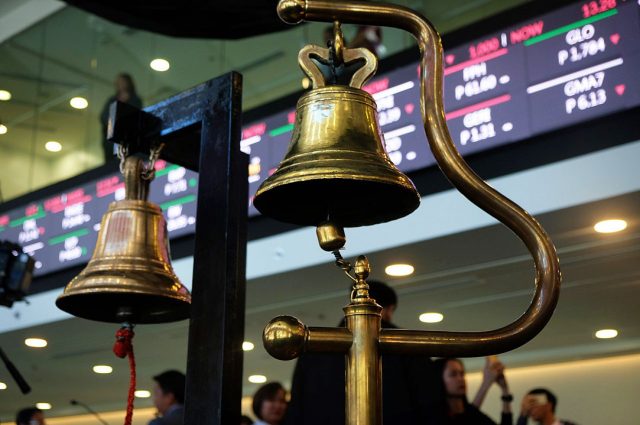
THE BENCHMARK stock index dropped on Thursday to move closer to bear territory after Philippine economic growth in 2024 missed the government’s target for a second straight year and with the US Federal Reserve signaling a cautious stance amid inflation risks.

The Philippine Stock Exchange index (PSEi) fell by 0.74% or 45.81 points to end at 6,107.66, while the broader all shares index declined by 0.66% or 24.20 points to close at 3,599.32.

This was the PSEi’s lowest close in nearly 15 months or since it ended at 6,078.03 on Nov. 6, 2023. It is now down by 19.68% from its latest high of 7,604.61 recorded on Oct. 7, 2024, putting it closer to bear territory, which is at least a 20% decline from the benchmark’s most recent peak.

“The local market extended its drop to its fourth straight day as the Philippines’ 2024 economic growth disappointed investors,” Philstocks Financial, Inc. Senior Research Analyst Japhet Louis O. Tantiangco said in a Viber message.

Philippine gross domestic product (GDP) expanded by 5.6% in 2024, below the government’s 6-6.5% growth target. This was also a tad slower than the 5.7% median estimate yielded in a BusinessWorld poll of 18 economists and analysts but was slightly faster than the 5.5% growth in 2023.

“Philippines shares tumbled after the Federal Reserve kept interest rates unchanged in its first policy decision of the year. The Fed maintained the federal funds rate at 4.25% to 4.50%, with its post-meeting statement signaling a cautious stance on persistent inflation,” Regina Capital Development Corp. Head of Sales Luis A. Limlingan said in a Viber message.

The US central bank held interest rates steady on Wednesday and Federal Reserve Chair Jerome H. Powell said there would be no rush to cut them again until inflation and jobs data made it appropriate, Reuters reported.

After the Fed lowered rates three times in the latter part of last year, inflation has largely moved sideways in recent months, but “remains elevated,” the central bank’s policy-setting Federal Open Market Committee said in a statement.

Fed officials say they largely believe the progress in lowering inflation will resume this year, but have now put rates on hold as they await data to confirm it.

Back home, majority of sectoral indices ended in the red on Thursday. Mining and oil declined by 3.12% or 238.04 points to 7,376.44; holding firms retreated by 2.11% or 110.11 points to 5,095.29; financials went down by 1.05% or 22.99 points to 2,150.46; and industrials sank by 0.79% or 69.19 points to 8,621.41.

Meanwhile, property climbed by 0.67% or 15.25 points to 2,289.51 and services went up by 0.48% or 9.57 points to 1,964.95.

Value turnover dropped to P4.95 billion on Thursday with 1.11 billion shares traded from the P5.64 billion with 1.53 billion issues exchanged on Tuesday.

Decliners beat advancers, 118 versus 76, while 36 names were unchanged.

Net foreign selling stood at P398.32 million on Thursday, a reversal of the P199.32 million in net buying recorded on Tuesday. — R.M.D. Ochave with Reuters

Marcos seeks Trump immigration talk, offers ‘deal’ with China on US missiles

PRESIDENT FERDINAND R. MARCOS, JR. — PCO.GOV.PH

PHILIPPINE President Ferdinand R. Marcos, Jr. on Thursday said he plans to meet with US President Donald J. Trump to discuss various issues including immigration, in an effort to influence policy that he said could affect a large number of Filipinos in the US.

“We will see how we can influence policymaking in terms of immigration,” Marcos said without saying when that meeting would take place.

Mr. Trump has clamped down on immigration, vowing to undo the policies of his predecessor that he said enabled the large influx of undocumented immigrants.

The Department of Foreign Affairs (DFA) has said it is impossible for about 300,000 undocumented Filipinos in the US to be deported in the next four years.

“About a few hundred Filipinos have been sent home,” Mr. Marcos said in Filipino. “This is something that we have to work through and hopefully resolve because the Filipinos in the United States, especially, have really [become an] important part already of their workforce.”

Speaking with reporters on various topics, Mr. Marcos also said he would return a Typhon missile system to the US if China ceased what he said was aggressive and coercive behavior, including claiming features in the South China Sea.

China has opposed the US deployment of the missile system for exercises in the Philippines, a defense ally of Washington, and has repeatedly called for its withdrawal.

“I don’t understand the comments on the Typhon missile system,” Mr. Marcos said. “We don’t make any comments on their missile systems and their missile systems are a thousand times more powerful than what we have.”

“Let’s make a deal with China: Stop claiming our territory, stop harassing our fishermen and let them have a living, stop ramming our boats, stop water cannoning our people, stop firing lasers at us and stop your aggressive and coercive behavior and I’ll return the Typhon missiles,” he added.

China, which claims sovereignty over most of the South China Sea, has repeatedly accused Philippine vessels of encroachment on its territory. Bilateral ties are at their worst in years after repeated confrontations and heated diplomatic rows.

The Chinese Embassy in Manila did not immediately respond to a request for comment on the President’s remarks.

The Typhon missile system was deployed by US forces to the Philippines in April last year as part of their Balikatan or “shoulder-to-shoulder” military exercises, and has since stayed in the country.

The launchers were redeployed to a new location in the Philippines, which officials declined to disclose, Reuters reported last week.

RADIO CHALLENGE
Meanwhile, the Philippine Coast Guard said its largest ship had been issuing hourly radio challenges to a Chinese vessel near the coast of Zambales province.

“The BRP Teresa Magbanua is actively and resolutely addressing the unlawful presence of the China Coast Guard (CCG) vessel with bow number 3304 within the Philippines’ exclusive economic zone (EEZ),” it said in a statement on Wednesday night.

The actions of CCG 3304 “violate the Philippine Maritime Zones Act, the United Nations Convention on the Law of the Sea (UNCLOS), which China has ratified, as well as the 2016 arbitral award,” the PCG said.

“It is worth noting that the PCG vessel successfully pushed CCG 3304 further away from Zambales, achieving an approximate distance of 85-90 nautical miles (157 to 167 kilometers),” it added.

The Philippine Coast Guard (PCG) on Tuesday night said it had sent the 97-meter BRP Teresa Magbanua to monitor Chinese vessels near the coast of Zambales province in the country’s north. Teresa Magbanua replaced the 44-meter vessel BRP Cabra, which arrived at Subic Port on Tuesday morning to unload the body of a fisherman that it recovered on Monday.

Teresa Magbanua can displace 2,265 tons of water, compared with 12,000 tons for China Coast Guard ship 5901, the largest coast guard cutter in the world.

The PCG on Monday night accused China Coast Guard (CCG) 3304 of shadowing its ship that was rescuing a distressed fishing boat near the Zambales coast.

It said Cabra navigated through heavy waves to retrieve the body of a Filipino fisherman using its crane.

“It is crucial to note that the Chinese Coast Guard vessel CCG 3304, despite being aware of the distress call from the Filipino fishermen, engaged in shadowing that hindered the PCG vessel’s efforts to recover the body,” the PCG earlier said.

The Philippines has accused China of intimidating Filipino fishermen near Scarborough Shoal and normalizing its “illegal presence” after Beijing sent its monster ship into the Philippine EEZ on Jan. 4.

A United Nations-backed court in The Hague voided China’s expansive claim in the South China Sea in 2016, as it ruled the shoal is a traditional fishing ground for Filipino, Chinese and Vietnamese fishermen. — Kyle Aristophere T. Atienza with Reuters

House committee approves P200 daily wage increase

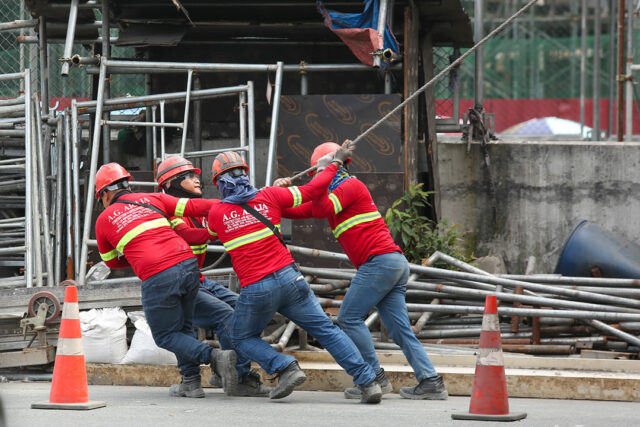
PHOTO SHOWS workers at a construction site in Quezon City on Thursday. The House labor committee has approved a bill for a P200 across-the-board daily wage hike. — PHILIPPINE STAR/NOEL B. PABALATE

By Kenneth Christiane L. Basilio, Chloe Mari A. Hufana and John Victor D. Ordoñez, Reporters

A HOUSE of Representatives committee on Thursday approved a bill that seeks to grant a P200 across-the-board wage increase for private-sector workers, nudging the bill forward after it was mothballed for eight months.

The House labor committee unanimously approved an unnumbered substitute bill, consolidating three measures that seek to raise wages by P150 to P750.

“The House… deemed it necessary to propose a wage increase for our workers due to rising prices,” Rizal Rep. Juan Fidel Felipe F. Nograles, who heads the House labor body, told reporters in Filipino after the bill’s approval.

The power or mandate to pass laws belongs to both Houses of Congress,” Labor Secretary Bienvenido E. Laguesma told BusinessWorld in a Viber message. “If the proposed wage hike bill becomes a law, the duty and obligation of the Labor department is to implement it.”

Minimum wages in the Southeast Asian nation are set by regional wage boards. But slow and meager increases amid rising prices have prompted lawmakers to push the legislated wage increase. The Senate approved a counterpart proposal for a P100 daily wage increase for private-sector workers in February last year.

“All employers in the private sector, whether agricultural or nonagricultural, regardless of capitalization and number of employees, shall pay their workers an across-the-board wage increase in the sum of P200 a day upon the effectivity of this act,” according to a copy of the bill.

The Labor department must inspect the payroll and financial records of Philippine companies to check compliance. Noncompliant employers face imprisonment of up to four years and a fine of as much as P100,000.

“The employer concerned shall be ordered to pay an amount equivalent to double the unpaid benefits owed to employees.”

The House labor committee pushed a P200 wage increase to boost 5 million minimum wage earners out of poverty, Deputy Speaker and Party-list Rep. Raymond Democrito C. Mendoza, who authored the bill, said in a statement.

“At present, everyone is below the poverty threshold, except in the National Capital Region,” he told reporters in Filipino. “All regions will be over the threshold [once the bill is enacted].”

A family of five needed at least P13,873 a month to meet minimum basic food and nonfood needs in 2023, according to the Philippine Statistics Authority. There are about 2.9 million Filipino families living in poverty.

Only 16% of all Filipino workers stand to benefit from the proposal, Sergio R. Ortiz-Luis, Jr., president of the Employers Confederation of the Philippines (ECoP), told reporters via teleconference. “Let’s leave it to the Regional Wage Boards. We’re quite sad that it’s being pushed again now.”

“What needs to be known is that out of the 52 million workers in the labor market, only 16% would benefit from the legislated wage hike. The other 84% are from the informal sector,” he said in Filipino.

There were 49.54 million employed Filipinos in November 2024, according to latest government data.

Mr. Ortiz-Luis said businesses are at risk of shutting down if the wage hike order is signed into law. “There’s only one remedy — they’ll try to raise their prices if the market can handle it, reduce their workforce, or if they really can’t manage, they’ll just close down.”

“For the benefit of a few, we will sacrifice the economy,” he added.

Mr. Nograles said they are looking at supporting micro, small and medium enterprises (MSME) that would be affected by the wage hike.

“That’s a separate matter because our bill is only about the wage increase,” he said in Filipino. “We need a separate law or policy to support MSMEs.”

Mr. Mendoza urged President Ferdinand R. Marcos, Jr. to certify the wage hike bill as urgent to fast-track its approval. Congress will adjourn for four months next week to give way for the 2025 midterm elections.

Senate President Francis “Chiz” G. Escudero said they would work with the House to refine the bill.

“Although we have only nine session days left, I welcome the openness of the House, at this time, in passing this Senate-initiated measure,” he told reporters in a Viber message. “I look forward to working with them on this.”

“I will instruct committee secretaries to monitor House hearings so the members of the Senate can be kept abreast [of developments],” he added.

The Regional Tripartite Wages and Productivity Board of the National Capital Region in July last year approved a P35 minimum wage hike for workers in Metro Manila, bringing the daily pay for nonagricultural workers to P645.

BETTER THAN NOTHING
This was way lower than the petitions filed by labor groups seeking monthly pay increases of P597 to P750.

Labor groups welcomed the House committee’s approval of the P200 wage hike, but said it is still far from a livable minimum wage.

“For too long, wages have been stagnant — stuck longer than EDSA traffic — while prices of basic goods like rice, gas and transportation including Social Security System and Philippine Health Insurance Corp. contributions continue to climb like they’re in a race we never signed up for,” Jose Sonny G. Matula, president of the Federation of Free Workers, said in a statement.

The labor group said it remains firm in seeking a “true living wage” under the 1987 Constitution —“one that ensures workers can live with dignity, provide for their families and keep up with rising costs.”

The proposed P200 wage increase is better than nothing, University of the Philippines Diliman School of Labor and Industrial Relations Assistant Professor Benjamin B. Velasco told BusinessWorld.

“While people will suspect that this is just electioneering by the House leadership, the labor movement should grab the opportunity to push its wage campaign and get ordinary workers on board and develop a movement,” he said in a Facebook Messenger chat.

“A P200 wage hike will be good for workers and the economy because it will boost consumer purchasing power and boost gross domestic product. Even big businesses and MSMEs will benefit,” he added, noting that the last across-the-board hike was in 1989, when the daily minimum wage was raised to P64 from P25.

Employers Confederation of the Philippines Governor Arturo C. Guerrero III said the wage hike is being pushed ahead of the midterm elections in May.

Wage hikes must go through the wage boards, he told BusinessWorld by telephone, noting that the Philippines has the second-highest daily minimum wage in Southeast Asia.

At least 14 wage boards issued daily wage increases of P21 to P75 for private sector workers in 2024, according to the Labor department.


Senator pushes raw ore export ban to spur processing

APEXMINES.COM

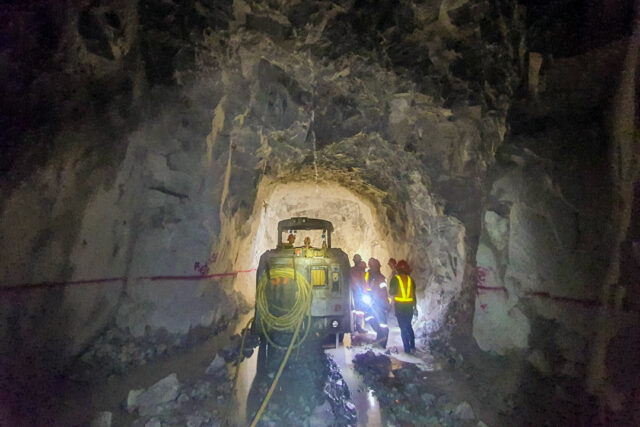
A PHILIPPINE senator on Thursday said a proposed export ban on raw ores would boost the country’s mineral processing capacity, responding to the Chamber of Mines of the Philippines’ concerns about potential mine closures and joblessness.

Senator Joseph Victor “JV” G. Ejercito told a news briefing the ban under a Senate-approved priority bill that seeks to rationalize the mining fiscal regime would lead to the construction of more mineral processing plants in the country.

“The rationale is for the mining firms to establish their processing plants because we want the finished product instead of just putting out raw materials for export,” he said in mixed English and Filipino.

“And if they process these (minerals) here, that will result in more employment and additional revenue. We patterned this after the Indonesian mining sector.”

The deputy majority floor leader said lawmakers would decide whether to keep the clause in a bicameral conference committee once the measure is passed on third reading.

The Senate on Monday approved on second reading Senate Bill No. 2826, which seeks to set up a five-tier margin-based royalty and windfall profit system for the mining industry, which is expected to raise the government’s share in mining profits.

Under the law, mining companies pay corporate income tax, excise tax, royalty, local business tax, real property tax and fees to indigenous communities.

“So, we’ll see if we can extend the time to set up their factories and processing plants to seven years instead of five, which the chamber thinks is too short,” Mr. Ejercito said.

The Chamber of Mines on Wednesday backed the bill’s approval but called on senators to scrap the raw ore export ban, saying it would lead to hundreds of thousands of Filipino workers losing their jobs.

The mining group said mining companies are unlikely to finish building their plants within five years, adding that the ban could disrupt mineral trading.

The bill calls for a five-tier margin-based royalty system ranging from 1% to 5%, while the five-tier windfall profit tax system will range from 1% to 10%. 

The House of Representatives approved its version of the bill in September.

Under House Bill No. 8937, large-scale miners inside mineral reservations must pay the government only 4% of their gross output, while the Senate version requires them to pay 5%.

The House version proposes an eight-tier margin-based royalty regime of 1.5% to 5% and a 10-tier windfall profit tax system of 1% to 10%.

Mr. Ejercito also pushed the construction of more power plants to address high power costs that mining companies are worried about. “I’m hoping that in the next three years of the administration, we can focus on infrastructure and energy.”

“We need more power plants, stable but cheap energy, and with this development (new mining fiscal regime), it is with further urgency that the government needs to act on this.”

The Department of Finance expects to generate P6.26 billion in additional annual revenue from the revised mining tax regime. — John Victor D. Ordoñez