Home Blog Page 1533

MGen plans full capacity in Batangas by end of May

MERALCOPOWERGEN.COM.PH

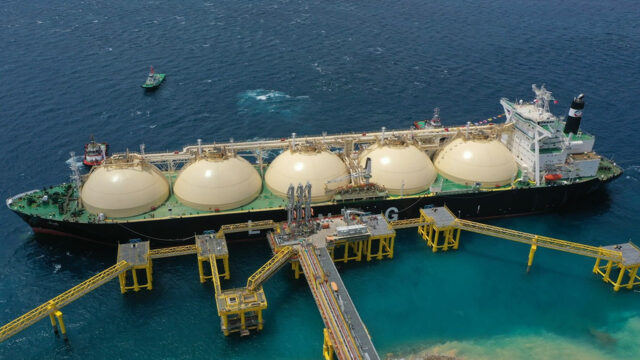
MERALCO POWERGEN CORP. (MGen), the power generation unit of Manila Electric Co. (Meralco), said it is on track to operate its gas-fired power plants in Batangas at full capacity of 2,500 megawatts (MW) by the end of the month.

“By the end of May, 2,500 MW of gas capacity will be available. That facility will be fully operational at capacity,” MGen President and Chief Executive Officer Emmanuel V. Rubio said last week.

With a combined generating capacity of 850 MW, Excellent Energy Resources, Inc.’s (EERI) Units 1 and 2 are already fully operational and able to generate power. Meanwhile, Unit 3 is awaiting the issuance of a provisional authority to operate from the Energy Regulatory Commission.

EERI, along with South Premiere Power Corp. (SPPC), are jointly owned by MGen, Aboitiz-controlled Therma NatGas Power, Inc. (TNGP), and San Miguel Global Power Holdings Corp. (SMGP).

The three energy companies acquired the Batangas liquefied natural gas (LNG) import and regasification terminal owned by Linseed Field Corp., which will “process, handle, and deliver the LNG requirements of the power plants of SPPC and EERI.”

EERI and SPPC are contracted to Meralco for its power supply requirements under 15-year power supply agreements.

The two plants implemented a three-day temporary shutdown from March 29 to 31 to facilitate mechanical activities at Linseed’s LNG terminal for the completion of the first onshore LNG storage tank.

Meralco’s controlling stakeholder, Beacon Electric Asset Holdings, Inc., is partly owned by PLDT Inc. Hastings Holdings, Inc., a unit of PLDT Beneficial Trust Fund subsidiary MediaQuest Holdings, Inc., has an interest in BusinessWorld through the Philippine Star Group, which it controls. — Sheldeen Joy Talavera

Mazda PHL scales up pangolin protection advocacy

The Mazda BT-50 Pangolin Edition is priced at P1.85 million. — PHOTO FROM MAZDA PHILIPPINES

Endemic endangered species continues to get support

By Joyce Reyes-Aguila

MAZDA PHILIPPINES is continuing its mission to associate its BT-50 Pangolin 4×4 pickup truck with the conservation of the endangered species endemic to the archipelagic province of Palawan.

Far from being just a marketing move, Mazda Philippines designated the vehicle as the mobility partner of the Katala Foundation, Inc. (KFI), a nongovernmental organization in Palawan that cares for threatened animals, including the Philippine Pangolin.

Mazda Philippines President and CEO Steven Tan recognized the work of German biologist Dr. Sabine Schoppe and KFI, which she established. “Their group is living every day of their lives to protect the pangolins,” the executive told media and key opinion leaders at a dinner the brand hosted for Dr. Schoppe. “That’s why when we learned of their cause, we said we will do whatever we can to help. So we did.”

Mr. Tan narrated to guests how Mazda Philippines discovered KFI’s use of an old Mazda pickup truck in its daily operations. To support their cause, the brand provided the group a new BT-50 pickup truck in 2020, and again in 2024.

Dr. Schoppe described the BT-50 as “not just a truck but a commitment to conservation.” She told guests, “The relationship we have is completely special because Steven and Mazda named the car after the pangolin.” She added that while other brands would name vehicles after certain animals “to show that it’s a tough car, they really don’t think about conservation.”

The biologist continued, “The BT-50 Pangolin was made because the (species) needed attention, conservation, and awareness. It (symbolizes) reliability and trust. It’s something we need if we do the work we do. We go out day and night, rain and shine, so we have to rely on the vehicle and that’s what we found in the BT-50. It’s a partnership that is a benefit for all of us and most especially for the pangolin.

She concluded, “So, thanks to Mazda Philippines, there is hope. And I hope many others will take this as an example. Maybe other businesses can get an idea from this.”

Along with the pangolin, KFI is focused on protecting the Philippine Cockatoo, Palawan’s forest turtle, porcupine, and hornbill, the Calamian Deer, and the Balabac chevrotain or pilandok, according to its site. The World Wildlife Crime Report 2024 of the United Nations Office on Drugs and Crime ranked the pangolin as the second-most trafficked animal globally, after the rhinoceros.

The Mazda BT-50 pickup is powered by a turbocharged 3.0-liter diesel engine that develops 190ps and 450Nm of torque, mated to a six-speed automatic transmission. Exclusive to the Pangolin Edition is Rough Terrain Mode that combines a shift-on-the-fly 4×4 system and electronic rear differential lock for challenging conditions. The pickup’s refreshed look features hexagon inserts on the front grille inside a black metallic signature wing and front skid plate, new LED headlamp cluster and LED fog lamp housing, and a redesigned front bumper with an integrated air curtain for improved aerodynamic efficiency.

Mr. Tan said Mazda Philippines will donate P1,500 to KFI for each BT-50 unit (any variant) sold from May 1, 2025 to April 30, 2026. It also provided Dr. Schoppe an opportunity to speak about their cause at its recent dealers’ night at the New World Hotel in Makati. She said that every purchase of the BT-50 Pangolin reflects the “commitment the dealer has, the buyer has, and we all have for conservation.” The Mazda BT-50 3.0L 4×4 AT Pangolin sells for P1.85 million while the BT-50 3.0L 4×2 AT is priced at P1.55 million.

Advancing sustainable development: The role of farmed animal welfare in achieving the SDGs

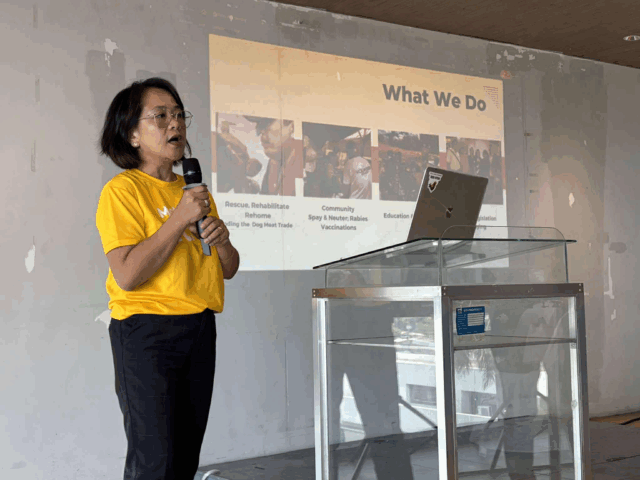
President and Program Director of AKF, Atty. Heidi Caguioa delivering the presentation on how farm animal welfare satisfies the SDGs

The Animal Kingdom Foundation (AKF) gave a platform to farm animal welfare in the recently concluded organizational meeting of the Central Luzon Regional Stakeholders’ Chamber on the Sustainable Development Goals (SDGs) at Tarlac City, Tarlac.

The Department of Economy, Planning and Development (DEPDev), with the Central Luzon Regional Development Council-Private Sector Representatives (RDC III PSRs), organized this meeting centered on encouraging and highlighting nongovernmental organizations in Region III to come up with programs that would help support the fulfillment of the SDG commitments. AKF, through its President and Program Director Atty. Heidi M. Caguioa, highlighted how improving farm animal welfare in egg-laying systems and aquacultures contributes to the satisfaction of the SDGs.

By talking about AKF’s farm initiatives, Atty. Caguioa sets the tone for the relevance of animal welfare to be imperative for attention. AKF accomplished this by spotlighting egg-laying hens through their “Cage-Free, Go Cruelty-Free” campaign and for the fishes through the “Better Fish, Tomorrow” campaign.

AKF’s “Cage-Free, Go Cruelty-Free” campaign aims to give hens better living conditions by promoting alternative housing in the form of “cage-free systems.” Cage-free is a housing system where hens can exhibit their natural and locomotory behaviors with ample space provided. Atty. Caguioa emphasized that a stressed hen will most likely produce a stressed egg.

On the other hand, “Better Fish, Tomorrow” seeks to promote awareness through education and the development of accessible materials for fisherfolk on fish welfare. Atty. Caguioa made an example of fish sold in wet and dry markets. “Kapag tayo bumibili ng isda, gusto natin yung gumagalaw pa kasi mukhang fresh. Ang hindi natin alam, naghihingalo na yung isda kasi hindi na makahinga,” she explained how this basic thinking shows the public has an outdated conception of fish sentience. AKF’s partnership with the National Fisheries Research and Development Institute (NFRDI) of the Bureau of Fisheries and Resources (BFAR) bore “FishKwela.” An institutional first, paving the way to mainstreaming fish welfare among the stakeholders.

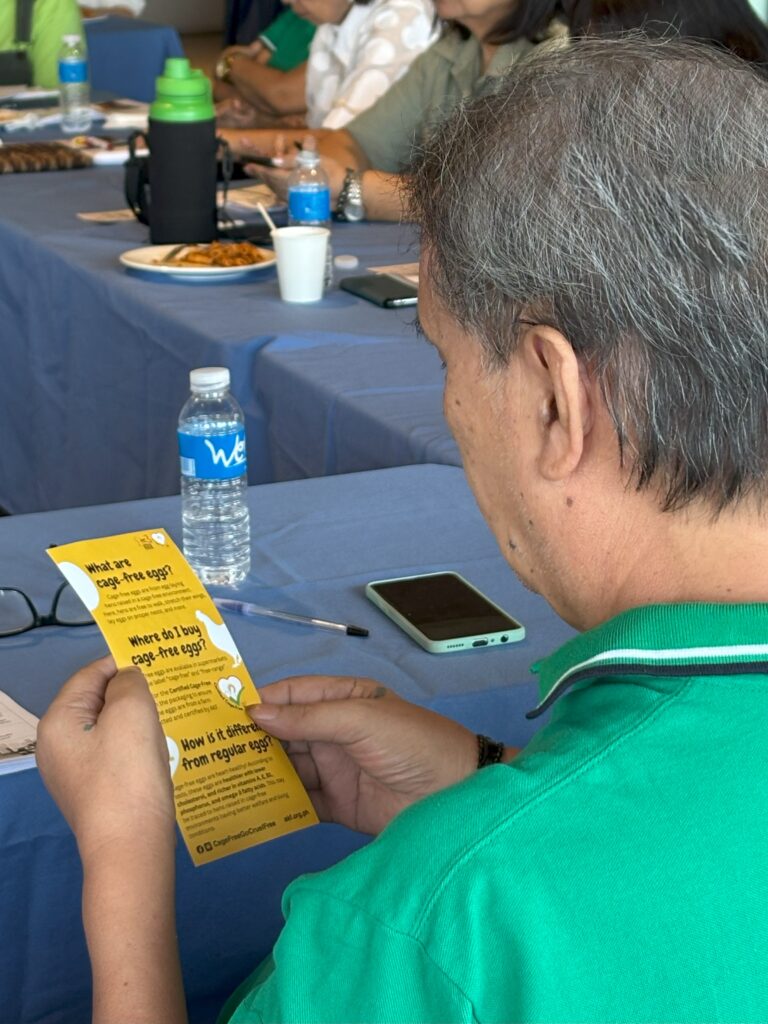
A flyer on “Cage-Free, Go Cruelty-Free,” one of AKF’s campaigns, was handed out during the presentation.

As the world strives to meet the SDGs, incorporating farm animal welfare practices can be a meaningful advancement in this global effort. Cage-free and fish welfare initiatives are closely connected to various Sustainable Development Goals, highlighting their crucial role in fostering a more sustainable, ethical, and equitable food system.

AKF’s presentation positively sparked the discussion on how, more than ever, enhancing human health and welfare is tied to shedding light on the issues of animals on farms. Atty. Caguioa emphasized that multiple SDGs touch on the relevance of animal welfare in how it contributes to overall human health and welfare.

As for her closing thoughts, Atty. Caguioa said that the discourse surrounding animal welfare should be extended beyond dogs and cats. Farm animal welfare should be seriously tackled as another important consideration because of its impact on human health, the environment, the economy, as well as food safety and production.

For more information about AKF’s campaigns, visit their respective Facebook pages @cagefreegocruelfree for “Cage-Free, Go Cruelty-Free” and @betterfishtomorrow for “Better Fish, Tomorrow.”

To learn more about AKF, you may visit www.akfrescues.org/.


Spotlight is BusinessWorld’s sponsored section that allows advertisers to amplify their brand and connect with BusinessWorld’s audience by publishing their stories on the BusinessWorld Web site. For more information, send an email to online@bworldonline.com.

Join us on Viber at https://bit.ly/3hv6bLA to get more updates and subscribe to BusinessWorld’s titles and get exclusive content through www.bworld-x.com.

IWG says economic uncertainty may push demand for flexible workspaces

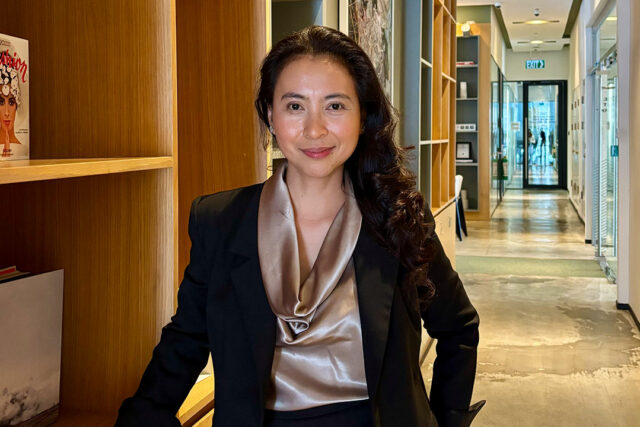
ROWENA NATIVIDAD — INTERNATIONAL WORKING GROUP PLC

By Beatriz Marie D. Cruz, Reporter

MULTINATIONAL office space provider International Working Group Plc (IWG) is looking to bolster its presence in the Philippines as geopolitical and economic uncertainties may prompt companies to adopt more flexible and cost-efficient workspace strategies, the company’s new country manager said.

“Global economic shifts, including the increased tariffs, are causing an increase in operational costs as well,” IWG Country Manager for the Philippines Rowena Bravo-Natividad said in a virtual interview with BusinessWorld.

“These uncertainties may push companies to diversify their operations, which may lead to more investments coming into the Philippines and expanding into new countries, exploring a satellite office setup.”

Since assuming the role of country manager for the Philippines in April, Ms. Natividad has been leading IWG as it navigates global shifts in the flexible workspace market.

“We’ve actually been receiving inquiries from other parts of Asia and the US who may have an office existing in those particular locations, but they would want to be able to diversify.”

Last month, US President Donald J. Trump imposed reciprocal tariffs on key trading partners but implemented a 90-day tariff pause while maintaining a 10% baseline tariff.

The Philippines was originally assigned a 17% tariff before the pause, the second lowest in Southeast Asia.

More foreign entities have integrated hybrid work into their company culture as part of risk management strategies, Ms. Natividad said.

She added that the rise of startups has also fueled demand for cost-effective and flexible workspace solutions in the country.

“So, that’s where IWG comes in as a solution provided to these companies in times of uncertainties.”

Flexible workspaces are expected to account for 30% of corporate real estate portfolios worldwide by 2030, according to property consultancy Jones Lang LaSalle Incorporated.

Ms. Natividad said her background in finance helped her recognize the critical role of flexible workspaces in the future of office work.

“My interest in flexible workspaces actually sparked from my previous experience leading [IWG’s] commercial finance function across regional markets,” she said. “I saw firsthand how businesses were shifting towards more agile and cost-effective solutions.”

Since joining IWG in 2015, she has held several key positions, including commercial finance director for IWG Philippines and global finance director at IWG’s Global Service Center, supporting C-suite decisions in over 120 countries.

She also served as head of partnership growth for IWG Philippines, playing a significant role in expanding the firm’s presence in the country.

As IWG Philippines’ new country manager, Ms. Natividad said her strategy is anchored on three pillars: accessibility, adaptability, and strategic partnerships.

“We’re expanding our national footprint to ensure companies, whether large enterprises or startups, can find flexible workspaces closer to where their employees are working and living,” she said.

The company also plans to tailor its workspace offerings to evolving business needs. These include enterprise-grade disaster recovery sites, virtual offices, and fully managed space-as-a-service solutions.

Finally, IWG Philippines is looking to collaborate further with local developers to build and launch more sites aligned with its growth trajectory, Ms. Natividad said.

By positioning itself as a strategic partner rather than just a space solutions provider, IWG can support its customers’ desire for long-term value creation, she added.

IWG is also focused on building its regional presence, particularly in the Greater Manila area due to its proximity to the capital and its large workforce population, Ms. Natividad said.

She also cited untapped potential in areas like Pangasinan, Bacolod, and General Santos City.

“The coworking space sector in our country is poised for continued growth, supported by favorable government policies, changing work dynamics, as well as economic expansion.”

Globally, companies are in the “golden era” of flexible working, Ms. Natividad said.

“A lot of professionals today seek more than just a desk, but spaces that put emphasis on well-being, flexibility, smart technology, collaboration, and the sense of community,” she added.

IWG is one of the largest coworking space providers worldwide, known for brands such as Regus, Spaces, and HQ. It serves nearly eight million customers across 4,000 locations in more than 120 countries.

Since January, IWG Philippines has opened five new locations in Pampanga, Batangas, Cavite, Makati, and Cebu.

The company plans to open 12 additional locations this year, with eight under the Regus brand, three for Spaces, and one under its HQ brand.

By the end of 2025, IWG targets a total of 50 coworking spaces in the Philippines. It currently operates 38 locations.

As of May 13, the company has signed agreements for eight new centers, which will be located in Cebu, Cavite, and the cities of Makati, San Juan, and Quezon City.

“The shift to flexible work is no longer a trend. I would say it’s a fundamental change, and IWG is well-positioned to lead this transformation in the Philippines.”

Across its Philippine locations, IWG has maintained an occupancy rate of 80% over the last 18 months, Ms. Natividad said.

“We want to maintain that same minimum occupancy level, if not exceed it, so I would say [our target is] conservatively 80%.”


Converge rallies business leaders in Cyber Resilience Event

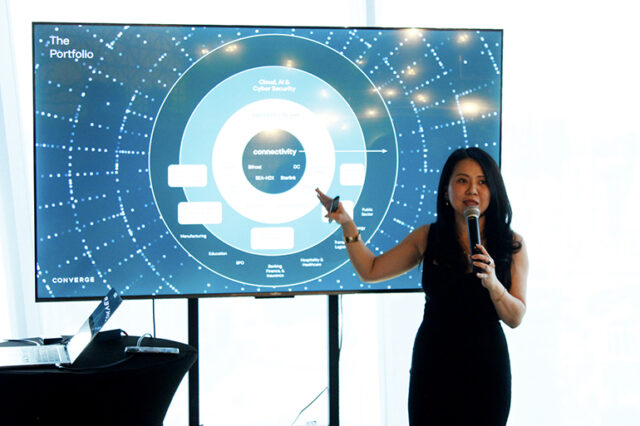
Aside from the power and risks of AI, Converge Chief Commercial Advisor Sherie Ng discussed Converge Global Business Group’s portfolio of products and services.

With the growing urgency to strengthen digital defenses in the face of relentless cyber threats in the Philippines, the country’s leading fiber broadband and technology solutions provider, Converge, has stepped up to lead the conversation on resilience and showcased its latest innovation at an event with the theme “Cyber Resilience Check: Are You Ready for the Next Cyberattack?” this past Friday at the Grand Hyatt Manila.

Converge’s Cyber Resilience event focused on enhancing organizational preparedness against these cyber threats in the age of artificial intelligence. The event highlighted the importance of being ready for the next cyberattack in the current digital landscape while emphasizing the critical intersection of cybersecurity, AI, and the need to build a profound digital resilience.

Building on this concept, Converge’s Chief Commercial Advisor Sherie Ng spoke on “The Age of Intelligence: Why AI Is Everyone’s Business” during her keynote speech. She opened her talk by discussing the rapid rise of artificial intelligence and the accompanying risks and dangers of its even quicker widespread adoption.

Ms. Ng’s keynote tackled how the power of AI, while transformative and efficient, is a double-edged sword that must be wielded responsibly.  She followed with an introduction on cybersecurity, current trends, the growing sophistication of cyberattacks, and challenges faced by both businesses and individuals. Converge’s Chief Commercial Advisor, who also serves as its Managing Director for Converge Global Business Group, concluded that leaders must ensure that AI literacy and adoption are embedded across all levels to gain a competitive edge through faster insights and quicker adaptation to market demands.

Meanwhile, Chief Technology Officer of Google Cloud Security & Mandiant in APJ, Steve Ledzian’s presentation “Boardroom Conversations” addressed a persistent challenge often confronted by cybersecurity experts today: nontechnical boards struggling to understand, address, and govern cyber risk. Framed by the question “Can you correct your board’s misconceptions on cyber risk?”, the talk addressed the most common misunderstandings in cybersecurity, such as compliance and infrastructure issues, and tips on how to fortify digital spaces beginning from the executive board.

Steve Ledzian, chief technology officer of Google Cloud Security & Mandiant in APJ, conducted a tabletop exercise where participants simulated responding to a live cyberattack scenario.

Packed with C-suite leaders in an exclusive setting, the event drew attention to the increasingly important role that decision-makers play in their companies’ cybersecurity strategies. Mr. Ledzian’s interactive exercise gave emphasis to both the technical aspects needed to respond to incidents and the significance of executive-level awareness during digital crises.

“Cybersecurity and resilience are essential tools for Philippine organisations in this fast-paced and expanding digital economy, which is increasingly a target for cyber threats. It’s imperative for businesses to move beyond reactive measures and adopt a preemptive, security-first approach. This means not only investing in advanced security technologies but also cultivating a culture of awareness and engagement throughout the organization. Readiness is key—understanding potential threats, having robust incident response plans, and regularly testing systems. Converge and Google Cloud Security are committed to supporting this journey with our cutting-edge solutions and expertise,” he explained.

The occasion’s main feature was a cybersecurity tabletop exercise titled “Cyber Extortion Simulation” led by Mr. Ledzian, where participating business leaders, C-suite executives, and IT experts simulated responding to a live cyberattack scenario from a chief information security officer’s perspective.

The real-time simulation placed the participants as the decision makers during an active attack on their e-commerce companies. Faced with digital threats like ransomware and cyberextortion, the audience was tasked to navigate through the crisis with limited information, under time pressure, and was made aware of the consequences of their actions once the activity was finished. The exercise served as a wake-up call, showing just how quickly things can spiral during a cyberattack—and why being prepared can make all the difference.

Converge’s cybersecurity solutions

As an effort to further strengthen the country’s digital defenses and help protect businesses against cyberattacks, Converge launched several solutions during its Cyber Resilience event, ranging from proactive assessments to rapid incident response tools designed to empower organizations with comprehensive protection and preparedness strategies.

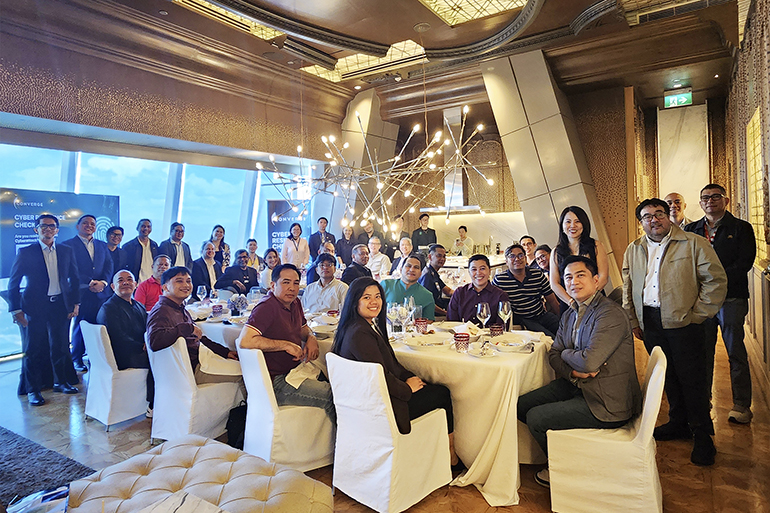
Converge’s Cyber Resilience Event was attended by business leaders, C-suite executives, and IT experts of top Philippine companies.

Among the new offerings is the Zero Dollar Security and Vulnerability Retainer, which provides organizations with a biannual pre-attack surface management assessment. The product helps identify security risks and digital vulnerabilities, perfect for companies beginning to map out or looking to bolster their cybersecurity strategies.

Converge also introduced its Ransomware Defense Assessment to help businesses evaluate their ransomware preparedness and receive advice on security gaps. To complement this service, the company also made its Full Tabletop Exercise service available to test organizations and enhance their incident response capabilities in a controlled environment.

Businesses looking to revamp their digital protection can also benefit from Converge’s Incident Response Retainer to gain priority access to industry-leading experts and rapid incident response services in the event of a breach. Similarly, Cyber Crisis Communications Service equips executives and communication teams with the proper tools and strategies to manage reputational risks before they escalate.

For a more holistic and scalable solution to cyber threats and risks, the Converge Security Operations (SecOps Platform) brings unified threat detection, investigation, and response to a company’s digital space using the power of artificial intelligence.

With these tools in place, Converge is making it easier for businesses to take proactive steps in securing their digital assets and building long-term resilience. For more information about Converge’s latest products, visit www.convergeict.com. To explore tailored connectivity and technology solutions, reach out to the Converge Global Business Group at globalbusiness@convergeict.com.


Spotlight is BusinessWorld’s sponsored section that allows advertisers to amplify their brand and connect with BusinessWorld’s audience by publishing their stories on the BusinessWorld Web site. For more information, send an email to online@bworldonline.com.

Join us on Viber at https://bit.ly/3hv6bLA to get more updates and subscribe to BusinessWorld’s titles and get exclusive content through www.bworld-x.com.

Celebrity handbag brand Rodo now in the Philippines

KENDALL JENNER, Jennifer Lopez, Jenna Ortega, Eva Longoria, Julia Roberts — Rodo, a heritage Italian brand, certainly has a mouthwatering list of clients. Filipinos can now own some of the bags, for the brand is now in Rustan’s.

On May 16, Rodo’s Chief Executive Officer and owner Gianni Dori was at Rustan’s Makati flagship to open a pop-up featuring his family’s handbags. The brand was started by his father Romualdo (the first two letters of his name form the brand) in 1956 in Italy, specializing in handbags made of wicker.

Immediately after the privations of the postwar period, many Italian brands formed iconic products due to shortages: think of Nutella padding out chocolate with hazelnuts, or Gucci making handles out of bamboo. Mr. Dori, in an interview with Businessworld, recalled that before his father, wicker was used for baskets and hampers, but, “My father had this very new idea in the ’50s to use this technique to make handbags.” In recent years, while producing top-quality handbags in leather, they’ve paid tribute to their roots by producing shoes with wicker details. “I think it’s very important in these days to really maintain an identity of your own brand,” he said.

To this day, everything they make is made in Italy. “Everything is made in Italy… this for us is synonymous with quality.” In the same way, the company is still owned and operated by the family, unlike many of their Italian contemporaries who have since been swallowed up by conglomerates. “I think that you can still maintain certain values on a very high level,” he said. Next year, the company celebrates 70 years since its founding — the Italian government is awarding them next year for their long heritage. “We have been able to do this because of the passion that me and my brother have put into this business — and now, my son and my niece, they’re going to follow the same.”

“You need a passion to do this business.”

While we have a list of some of Rodo’s most public celebrity clients, he says about the woman who chooses Rodo: “Our customer is someone who is not looking for logos — they appreciate the quality and the beauty of the design of Rodo.”

He remembers his father hosting a group of wealthy Japanese women at their home. One of them, a wife of the head of a Japanese watch brand, was asked by the senior Mr. Dori why she didn’t wear logos. The Japanese woman said, “Mr. Dori, my taste level is good enough that I don’t need any of them.”

Catch Rodo’s handbags and shoes at Rustan’s Makati — the pop-up displays include photos of the celebrity who wore that particular handbag. — JL Garcia

Sound pick-and-drop solutions

Harman/Kardon Philippines Brand Manager Kat Tiu introduces the marque during its Philippine launch. — PHOTO BY KAP MACEDA AGUILA

Harman/Kardon makes it a lot easier to upgrade your car audio

By Kap Maceda Aguila

SOMETIMES it seems that car audio — experienced through your speakers — is a totally different, separate domain from the actual car that you’re driving. You might have gotten the car of your dream (or budget), and you’re truly satisfied with the drive, the space, the whole nine yards.

But when you turn the radio on or connect your mobile device and select your favorite tune, the sound seems — off. That can be a function of a sub-par entertainment system or, more possibly, the speakers it’s connected to. The fact of the matter is that stock speakers are the least of your OEM’s concern. They are car makers, after all.

Of course, there is a dizzying array of after-market routes you could go — many of which entail going to a shop and consulting a professional audio installer who will then set things up for you. This can take a while and might get a little costly, to be honest. Depending on your aspiration, this is a legitimate option, of course.

A more straightforward and simpler way is to purchase speakers you can just “drop in.” Just remove the offending woofers and replace them with better-built ones — sans the hassle and extra cost. That’s what after-market specialist Waido Marketing and Distribution, Inc. are proffering with the launch of the Harman/Kardon line of speakers.

“For over 70 years, Harman/Kardon has brought its expertise in delivering the best in-cabin listening experience, blending together the most advanced award-winning technologies with seamless, carefully crafted mechanical designs that befits only the best vehicles on the market,” the distributor said in a statement.

At the launch, four vehicles were fitted Harman/Kardon solutions. A BAIC B30 Dune received a Flow 600CF for front mid-bass and tweeters and rear speakers, and the Feel 700 for the underseat subwoofer. A BMW X5 bannered the Flow 600CF and 300S for front mid-bass and tweeters, Flow 300S for both the front mid-range and rear speakers, and two sets of the Flow 80 as underseat subwoofers. Third was a Lexus IS 300h with a Fit 3F for the front mid-range, tweeter and center channel, Flow 80 for the front mid-bass, Fit 6 for the rear speakers, and Flow 80 for the rear subwoofer. Lastly, a Toyota Fortuner was installed with a Flow 601CFS for the front mid-bass and tweeters, Flow 300S for the front mid-range, Flow 600CF for the rear speakers, Feel 700 for the underseat subwoofer, and Flow 80 for the rear subwoofer.

While the upgrade to the sound was noticeable — in varying degrees, depending on the vehicle’s head unit — the best part was clearly the fact that these solutions only had to be installed. No additional components were needed. The improvement was immediate.

The Harman/Kardon Flow is made with aluminum Deep Ceramic Composite (DCC) cones coupled with the brand’s Plus One technology (to provide clarity and prevent distortion and colorization) and deliver “the most natural and detailed experience of any in-car system.” A very small separate outboard crossover system “allows the two-way component system to operate as a full three-way system with the addition of the three-inch Harman/Kardon Flow midrange.”

The Harman/Kardon Fit line have speakers accommodating “high-resolution audio and are enhanced by glass filter woofer cones.” These also get the Plus One tech, and “edge-driven textile tweeters that deliver smooth and detailed high frequencies that ensure exceptional performance.” The Fit speakers are also sustainably made with post-consumer recycled materials.

Harman/Kardon is no silver bullet that removes all of your car audio woes, but it certainly makes its case for being the best solution if you want a significant upgrade right now — sans the hassle of a complicated build.

For more information, visit or message Harman Kardon Car Audio-Philippines on Facebook, or follow its account (harmankardoncaraudioph) on Instagram.

Rates of T-bills, bonds may end mixed as market jitters linger

STOCK PHOTO | Image by RJ Joquico from Unsplash

RATES of the Treasury bills (T-bills) and Treasury bonds (T-bonds) to be auctioned off this week could end mixed to track the swings seen in secondary market yields following Moody’s move to cut the United States’ credit rating.

The Bureau of the Treasury (BTr) will auction off P25 billion in T-bills on Monday, or P8 billion each in 91- and 182-day papers and P9 billion in 364-day papers.

On Tuesday, the government will offer P30 billion in reissued 20-year T-bonds with a remaining life of 13 years and eight months.

T-bill and T-bond rates could follow the mixed week-on-week movements at the secondary market after Moody’s downgraded the US’ credit rating, Rizal Commercial Banking Corp. Chief Economist Michael L. Ricafort said in a Viber message.

The rating downgrade put US Treasuries under pressure, which also affected the local bond market, the first bond trader said.

Secondary market yields last week were mostly mixed, with rates of short tenors mostly inching lower and those of longer tenors rising, following the movements of US Treasuries after Moody’s cut the triple-A US credit rating on May 16.

On Friday, rates of the 91- and 182-day T-bills went down by 5.75 basis points (bps) and 1.59 bps week on week to end at 5.4551% and 5.6098%, respectively, based on PHP Bloomberg Valuation Service Reference Rates data as of May 23 published on the Philippine Dealing System’s website. Meanwhile, the 364-day paper rose by 4.02 bps to close at 5.7398%.

On the other hand, the 20-year bond jumped by 20.45 bps week on week to end at 6.4771%.

Benchmark 10-year US yields, which influence mortgage rates as well as borrowing costs for companies and consumers, rose to over 4.5% early on Monday last week but the sell-off then moderated, Reuters reported. On Tuesday, the bond market sell-off continued, with the 10-year yield last seen at 4.48%, slightly above where it closed on Monday.

Longer-dated 30-year yields rose more sharply, hitting a high of over 5% on Monday, the highest since November 2023, and flirting with that level again on Tuesday.

On Friday, the 30-year US bond yield, which on Thursday hit the highest since October 2023, fell in response to fresh tariff fears.

The yield was down 2.2 bps at 5.042%. The yield on benchmark US 10-year notes fell 3.6 bps to 4.517%.

The first bond trader said the ongoing volatility in global bond markets could cause the BTr’s offering of reissued 20-year T-bonds to be “met with caution, enough to force a rejection.”

The second bond trader likewise said the bond offering could be “poorly received.”

Both traders expect the reissued 20-year bonds to fetch yields of 6.50% to 6.70%.

Meanwhile, Mr. Ricafort added that T-bill yields could mostly ease to track secondary market rates following the latest rate cut signals from the Bangko Sentral ng Pilipinas (BSP) chief.

BSP Governor Eli M. Remolona, Jr. said on Friday that the Monetary Board could cut rates two more times this year, with the next reduction on the table as early as next month.

“Maybe two more cuts. Not necessarily consecutive. Still 25 basis points (bps) at a time, given what we know about what’s going on,” Mr. Remolona said. “The hard part is we don’t know. It’s new territory for most central banks. That’s the most uncomfortable part.”

He said easing inflation gives them “plenty of room” to cut, although they don’t want to cut “too much” as this could stoke prices anew.

The Monetary Board in April cut benchmark interest rates by 25 bps to bring the policy rate to 5.5%. It has now reduced borrowing costs by a cumulative 100 bps since beginning its easing cycle in August last year.

There are four remaining Monetary Board policy meetings this year scheduled for June, August, October and December.

Last week, the BTr raised P25 billion as planned from the T-bills it auctioned off as total bids reached P78.388 billion or more than thrice the amount on offer.

Broken down, the Treasury borrowed the programmed P8 billion via the 91-day T-bills on Monday as tenders for the tenor reached P24.1 billion. The three-month paper was quoted at an average rate of 5.515%, down by 3.1 bps from the previous auction. Tenders accepted by the BTr carried yields of 5.505% to 5.522%.

The government likewise made a full P8-billion award of the 182-day securities it auctioned off as bids for the paper amounted to P34.328 billion. The average rate of the six-month T-bill was at 5.612%, 3.8 bps lower than last week, with accepted rates ranging from 5.599% to 5.622%.

Lastly, the Treasury raised P9 billion as planned via the 364-day debt papers as demand for the tenor totaled P19.96 billion. The average rate of the one-year T-bill rose by 4.7 bps to 5.702%, with the bids awarded having yields of 5.65% to 5.712%.

Meanwhile, the 20-year T-bonds to be offered on Tuesday were last auctioned off on Aug. 20, 2024, where the BTr raised P25 billion as planned at an average rate of 6.103%, below the 6.75% coupon rate.

The Treasury is looking to raise P260 billion from the domestic market this month, or P100 billion via T-bills and P160 billion through T-bonds.

The government borrows from local and foreign sources to help fund its budget deficit, which is capped at P1.54 trillion or 5.3% of gross domestic product this year. — A.M.C. Sy with Reuters

The future of ASEAN, US and China trade

BW FILE PHOTO

(Part 1)

At the end of the month, ASEAN leaders will convene in Kuala Lumpur, where on top of the agenda will be the future of trade between ASEAN and the US, between ASEAN and China and among ASEAN members. Collectively, ASEAN-US trade in 2024 amounted to about $555 billion compared with $968 billion for ASEAN-China trade.  

The first part of this series will look at the status of bilateral trade negotiations among individual ASEAN countries and the US. Part 2 will look at the implications for ASEAN-China trade and Part 3 will look at implications for intra-ASEAN trade.

Vietnam: With the fourth-largest trade surplus with the US ($123.5 billion in 2024), Vietnam faces the steepest threatened duty of 46%. Hanoi has moved decisively. It held high-level talks in May and has already cut tariffs on many US goods. Vietnam is also cracking down on Chinese products routed through its ports to dodge US tariffs — a key American gripe. In return, it seeks to preserve critical export sectors (electronics, apparel) that have boomed thanks to US markets. The negotiations are accelerating: a second round of talks in Washington went through late May. Vietnam is dangling big-ticket deals to please Washington — from state oil firm PetroVietnam agreeing to buy more ExxonMobil crude, to Vietnamese companies planning new factories in the US. Officials hint a deal is within reach, as both sides aim to avoid a 46% tariff that would “disrupt Vietnam’s growth” and upend supply chains for US firms manufacturing there. 

Indonesia: Southeast Asia’s largest economy had about $18 billion of US goods surplus last year. It faces a 32% tariff threat. Jakarta’s negotiators, led by economics tsar Airlangga Hartarto, insist on a “fair and square” deal serving Indonesia’s interests. They’ve adopted a pragmatic tone — no retaliation, just quick engagement. Indonesia has offered to buy an extra $18 billion to $19 billion in US commodities like wheat, soybeans, LPG and crude oil, effectively vowing to erase its surplus. It also just loosened its local content rules (cutting the required local input in government purchases from 40% to 25%) to address a top US complaint. In talks, Jakarta is pushing for US investment and tech cooperation in areas like critical minerals, agriculture tech and healthcare. American officials, meanwhile, seek removal of Indonesian nontariff hurdles — from import licensing to its new rule forcing exporters to park earnings onshore. Indonesia hopes moving first will earn goodwill (President Trump has hinted at favoring early movers). As Finance Minister Sri Mulyani put it, Jakarta expects its swift concessions to be “rewarded” by Washington — perhaps via a tariff reprieve or a selective trade deal that spares key Indonesian goods.

Malaysia ships far more to America than it buys. US imports from Malaysia were $52.5 billion in 2024 versus $27.7 billion exports to Malaysia. That $25-billion deficit translated into a 24% US tariff threat. Kuala Lumpur reacted with a charm offensive. Trade Minister Tengku Zafrul Aziz raced to Washington in April, signaling Malaysia is “open to negotiate” on reducing its surplus and even exploring a broader trade agreement. Talks began in earnest in May, including sideline meetings at APEC in Korea. Though bound by a nondisclosure pact, Zafrul says discussions cover strategic sectors like aerospace and semiconductors, which are central to Malaysia’s economy. Indeed, chips are Malaysia’s lifeblood — nearly half its exports to the US (especially semiconductor devices and equipment) have been exempted from the tariffs. That buffers the immediate impact. Still, Malaysia is keen to protect its role in tech supply chains. The government is reportedly prepared to address US nontariff concerns and is even considering cuts to its own import duties in exchange for tariff relief. As ASEAN’s chairman this year, Malaysia also floats the idea of US-ASEAN cooperation. Washington has asked how the bloc might respond. Optimistically, officials say a “win-win” solution is in sight before the 90-day pause expires.

Thailand was slapped with a roughly 36% to 37% tariff threat — unsurprising given America’s sizable $45-billion trade deficit with Bangkok last year. Thai exports of vehicles, machinery and electronics to the US are hefty, while imports, mostly aircraft and soybeans, lag. The Thai government has been quieter publicly, but it is also in talks. Local media report that US negotiators are pressing Thailand to open its market further — for example, easing auto import restrictions and agricultural quotas — to address the imbalance. Bangkok’s leverage is its strategic value: it hosts major US firms and is a regional hub for automobile and hard disk drive production. There are hints Thailand may agree to buy more American planes and arms (bolstering its aging F-16 fleet, for instance) as part of a deal. Like others, it could also reduce certain tariffs. Thailand imposes high duties on pickup trucks and food imports to show “reciprocity.” With elections and political changes fresh in 2024, Thai leaders are keen to avoid an economic shock from US tariffs that could knock a projected 3% growth off course. An accord that boosts US imports while preserving Thailand’s US-oriented factories, which employ hundreds of thousands, would be a delicate balance, but both sides have an incentive to find a common ground.

The Philippines is unique among ASEAN-6: it enjoys a relatively modest US trade surplus of about $4.8 billion. Manila was hit with the lowest tariff rate in the region (17%), and a large share of its exports — notably electronics like semiconductors — are exempt from the duties. This positions the Philippines, in theory, to gain as investors divert supply chains away from harder-hit neighbors. But Filipino officials aren’t celebrating. They worry Trump’s tariffs could crimp the economy and sap funds for defense. The Philippines has been deepening military ties with Washington to deter China’s maritime claims, including pursuing a $5.6-billion purchase of F-16 fighter jets. Manila has sent a delegation to negotiate “on the basis of mutual benefit.” Signs point to a deal where the Philippines commits to buying US military hardware and other goods, thereby plowing its surplus back into America. The Philippine ambassador neatly framed it: the jet sale would turn its $4.8-billion surplus into “a $1-billion surplus in favor of the United States.” That “quid pro quo” logic is driving many of these negotiations. Given its lower risk profile, the Philippines is also eyeing opportunities: with only a 17% levy and only two-thirds of exports subject to it, it could attract orders and investments that might flee higher-tariff neighbors. But to capitalize, it must urgently improve infrastructure and logistics at home — a reminder that trade windfalls require domestic reforms.

Singapore stands apart in ASEAN. It has had a free trade agreement with the US since 2004 and ran a goods trade surplus in America’s favor — around $2.8 billion in 2024. Thus, Singapore isn’t targeted by Trump’s “reciprocal” tariffs beyond the 10% base duty across the board. In fact, Washington often holds up Singapore as a model free-trader with near-zero tariffs. Still, Singapore has skin in the game. As ASEAN’s financial and shipping hub, it benefits from regional stability, and it will suffer if US-China tensions or beggar-thy-neighbor tariffs upend Asian supply chains. Singapore is also a linchpin in strategic sectors: it’s a major semiconductor manufacturer and pharmaceutical producer for the US market. Tellingly, chips and pharma ingredients were exempted from Trump’s tariff plan precisely to avoid disrupting supplies. In negotiations, Singapore’s role is more as a facilitator and honest broker — it can help coordinate an ASEAN response and advise neighbors on navigating US demands, drawing on its close ties with Washington. Economically, Singapore’s focus is on preserving the free flow of goods and technology and diplomatically to maintain ASEAN centrality. It may seek US assurances that new export controls or security measures, like those Section 232 probes into chips and pharma, won’t unwittingly hamstring Singaporean industries that are vital links in US supply chains. In short, while not under the tariff gun, Singapore is working to keep the US-ASEAN trade web intact, and to remind everyone that multilateral trade ideals need not be dead in the water.

In Part 2 of the series, I will look at the implications of these dynamics for ASEAN-China trade and in Part 3, at implications for intra-ASEAN trade.


Eduardo Araral, Jr. PhD is an associate professor at the Lee Kuan Yew School of Public Policy, National University of Singapore. This op-ed is written in his personal capacity.

ICTSI shares decline despite developments

ICTSI.COM

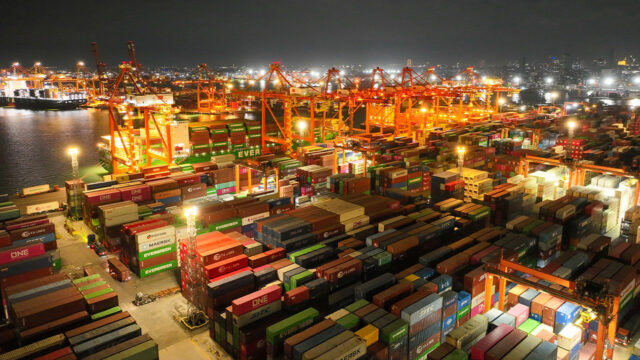
SHARES in International Container Terminal Services, Inc. (ICTSI) declined last week despite developments involving its overseas units aimed at boosting capacity.

Data from the Philippine Stock Exchange (PSE) showed that ICTSI was the most actively traded stock from May 19 to 23, with P4.74 billion worth of 11.65 million shares changing hands.

ICTSI shares closed at P404 apiece on Friday, down 1.5% from P410 on May 16. The services index declined by 1.1%, while the benchmark PSE index fell by 0.8%.

Year to date, the listed port operator gained 4.7%, outperforming the 1.3% growth in its sector and reversing the PSE’s 1.8% decline.

Toby Allan C. Arce, head of sales trading at Globalinks Securities and Stocks, Inc., said ICTSI’s weekly movement may have been driven by global uncertainties, sector-specific headwinds, and profit-taking.

“Persistent inflationary concerns, fluctuating interest rates, and geopolitical tensions continue to weigh on global and regional markets, leading to cautious investor sentiment,” Mr. Arce said in a Viber message.

He added that the services sector remains vulnerable to headwinds such as lower trade volumes and currency volatility, which likely impacted ICTSI along with its peers.

“[As for profit taking], ICTSI’s robust performance over the past year may have prompted profit-taking among short-term investors, adding to selling pressure,” he said.

Still, year-to-date gains may be attributed to strategic expansions, improved operating efficiency, and strong positioning in the global port sector.

“The company’s ability to sustain profitability and grow net income reflects strong management and effective cost controls, which appeal to investors despite broader market challenges,” Mr. Arce said.

He added that recent stock movements also reflect macroeconomic risks and logistics-related developments.

“While global stock markets are grappling with inflationary pressures and mixed macroeconomic data, developments related to shipping and logistics have affected ICTSI. But the company’s positive updates have helped sustain investor confidence,” he said.

Last week, ICTSI said its Mexican unit, Contecon Manzanillo S.A. (CMSA), had acquired two quay cranes and four hybrid rubber-tired gantry cranes as part of its terminal expansion efforts.

Once fully commissioned, the new quay cranes will allow CMSA to simultaneously handle three vessels with lengths of up to 400 meters.

CMSA aims to handle more than two million twenty-foot equivalent units (TEUs) annually.

In Poland, ICTSI is investing over $84 million through the Baltic Container Terminal (BCT) in Gdynia.

The company recently completed Phase 1 of a major upgrade at the Helskie Quay, involving a $42-million investment in a 400-meter quay with a 15.5-meter depth, new crane rails, hydrotechnical structures, roads, and utility networks.

Phase 2 will begin in September, with the commissioning of an additional 100 meters of quay and the entry into service of a newly expanded turning basin.

ICTSI’s attributable net income rose by 14.1% year on year to $239.54 million in the first quarter, while consolidated revenues increased by 12.9% to $773.91 million.

Mr. Arce projects ICTSI’s second-quarter net income at $207 million, supported by continued revenue growth and capacity expansion.

“Continued revenue growth from expanded terminal capacities, coupled with strategic investments, suggests a net income of $207 million in Q2 2025. However, exchange rate volatility and potential operational disruptions remain key risks,” he said.

For the week, Mr. Arce identified support at P395 and resistance near P430. — Abigail Marie P. Yraola

Paris court convicts Kim Kardashian jewel heist thieves

A FRENCH court on Friday convicted the jewel thieves who in 2016 tied up US reality TV star Kim Kardashian at gunpoint before making off with her $4-million engagement ring and other booty.

Ten people were in the dock, accused of involvement in the Paris heist. Robbers wearing ski masks and disguised as police tied up the billionaire celebrity before making off with the ring, given to her by her then-husband, rapper Kanye West (now known as Ye), and other jewels. Ms. Kardashian traveled to Paris to testify earlier this month, telling the court she had thought she was going to die.

The mixed panel of judges and jury convicted eight of the ten for crimes directly linked to the theft, while another defendant was found guilty of illegal weapons charges. One person was acquitted.

The heaviest sentences were handed down to five defendants who participated directly in the heist, with the mastermind of the robbery, 69-year-old Aomar Ait Khedache, getting a three-year jail sentence.

Ms. Kardashian’s lawyers said that she accepted the court’s ruling.

“I am deeply grateful to the French authorities for pursuing justice in this case. The crime was the most terrifying experience of my life, leaving a lasting impact on me and my family,” she said in a statement. “While I’ll never forget what happened, I believe in the power of growth and accountability and pray for healing for all.”

During her court appearance, she said she forgave Mr. Khedache, who had asked for forgiveness in a letter.

The thieves were dubbed the “grandpa robbers” by the press as many were of or near retirement age. At the time, the robbery was considered the biggest in France for more than 20 years. — Reuters

Free limited-edition STI Kit for Subaru WRX buyers

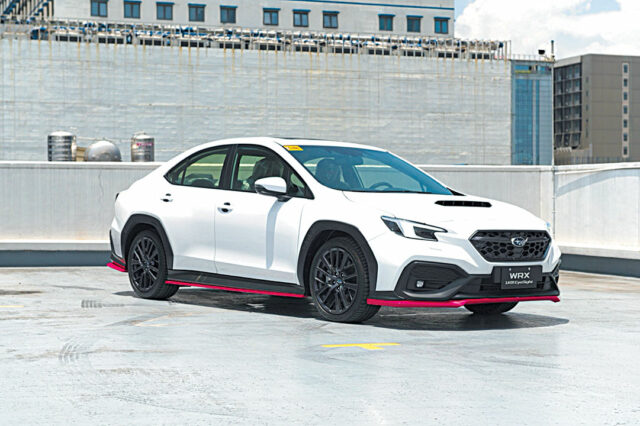
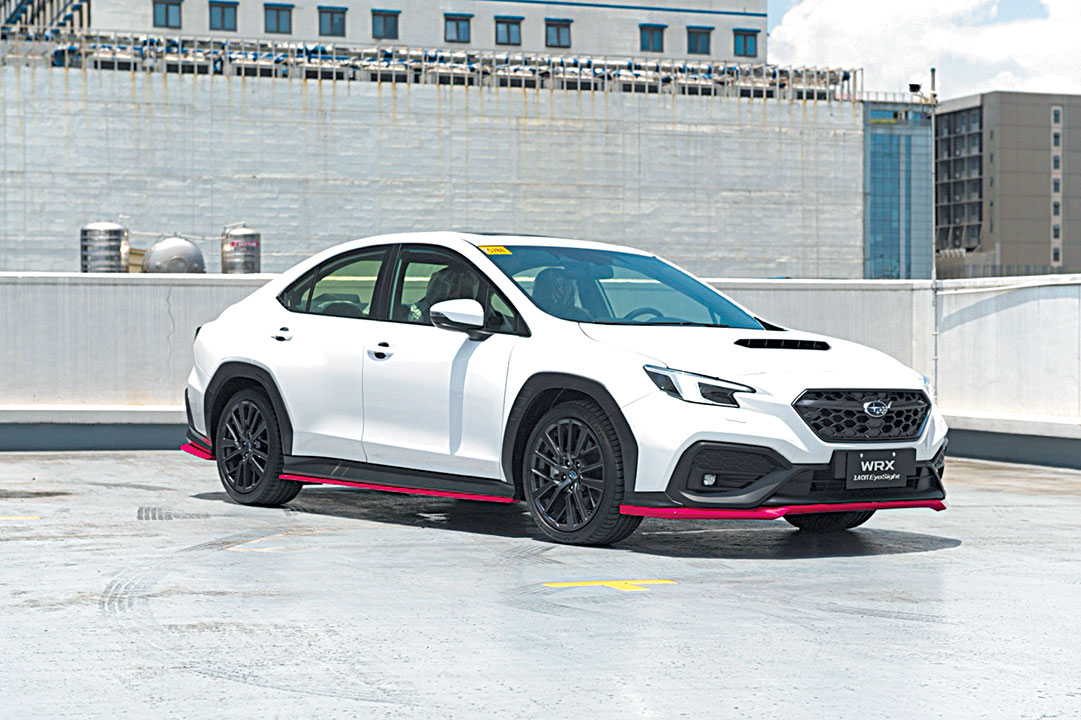
Subaru WRX Sedan with Cherry Red STI Kit — PHOTO FROM MOTOR IMAGE PILIPINAS

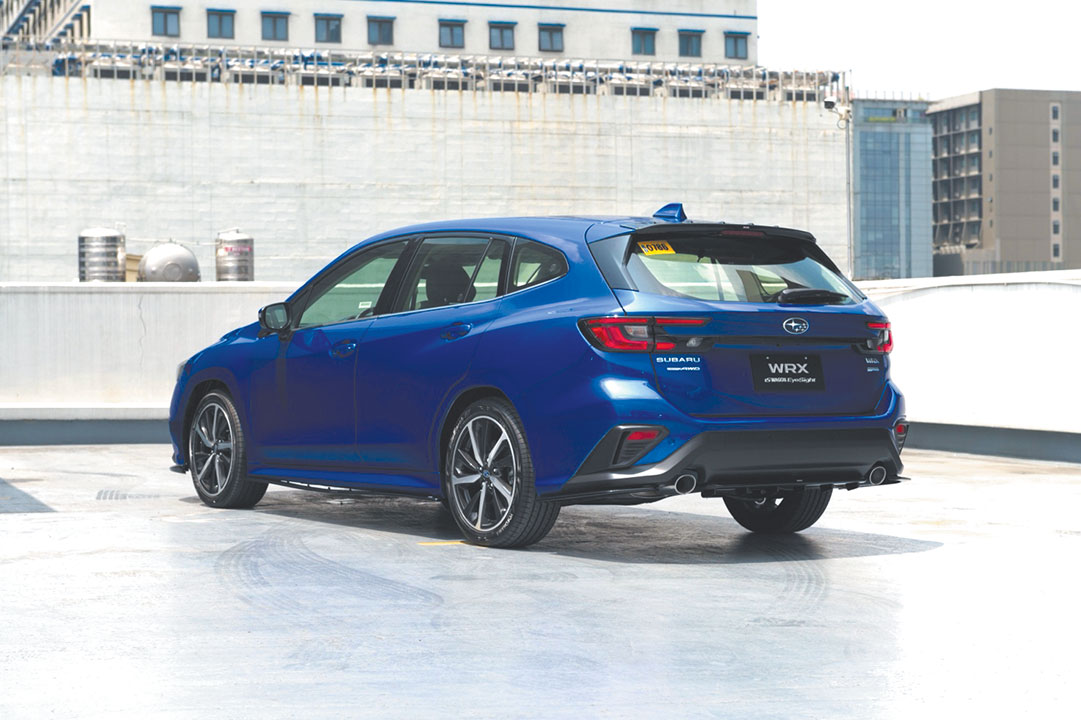
MOTOR IMAGE PILIPINAS, INC. (MIPI), exclusive distributor of Subaru vehicles in the Philippines, is offering the first 14 customers who will get a Subaru WRX a free STI Kit beginning last week. The enhancements, either black or red, are designed to suit either the sedan or wagon versions.

Based on the Subaru Impreza, the WRX is one of the brand’s heritage models. Originally designed for the 1992 World Rally Championship, over the years it has turned into an accessible sport compact car. The WRX is powered by a 2.4-liter direct-injection turbo engine with “ample torque, and the SI-Drive performance transmission which achieves sporty driving beyond expectation through the new powerful engine and a quick, direct shift feel.” Its safety “encompasses quick detect danger, safety on highway or dirt track, a collision-safe body, and eCall or SOS switch.” These create the sporty space expected of a WRX.

“The WRX has always had a special place in the hearts of every Subarist. To many, it is even considered a dream ride, which is why we wish to make it a memorable experience for them as they drive one home,” said MIPI Country Manager Karl Castillo. “This May, we are offering an STI parts and accessories package, without additional cost, to all our new WRX customers. Furthermore, new WRX STI buyers will have 20% discount offer on PMS parts for two years.”

For more information, follow and like Subaru Philippines’ official social media accounts: Facebook (@subaruasiaph) and Instagram (@subaru.philippines).

ADVERTISEMENT
ADVERTISEMENT