Home Blog Page 1531

Actual TP Audit: What the BIR flags and key takeaways

In our previous articles and public seminars on transfer pricing (TP), we’ve consistently emphasized that it was only a matter of time before the Bureau of Internal Revenue (BIR) actively incorporated transfer pricing into its regular tax audits. That time has now come. In this article, we’ll explore the key issues flagged by the BIR in an actual transfer pricing audit, how the taxpayer was able to address these findings, and what steps can be taken to prevent similar issues in the future.

FACTS OF THE CASE
The taxpayer is a domestic corporation established in 2022. It is engaged in call center services providing support, consulting and maintenance exclusively for the parent company. Despite being newly incorporated, the taxpayer received a Letter of Authority (LoA) from the BIR to examine its compliance for 2023 — barely a year into its operations.

After the audit was conducted, the BIR alleged that the taxpayer had underdeclared its revenue. This finding was based on a discrepancy observed in the taxpayer’s 2023 Audited Financial Statements (AFS), where the total reported cost of services, administrative, and other expenses (herein referred to as “fully loaded costs”) amounted to approximately P100 million, while the declared revenue was only P90 million. The BIR questioned how the company could incur higher expenses than its reported income, raising concerns about potential unreported revenue.

Then, the BIR applied a standard industry markup of 10% on fully loaded costs, which, according to the BIR, is consistent with industry norms for business process outsourcing (BPO) companies. Applying the 10% industry markup on the P100 million fully loaded cost resulted in an adjusted revenue of around P110 million. Hence, the difference between the adjusted revenue and declared revenue amounting to P20 million constituted undeclared income subject to regular corporate income tax.

WHAT COULD TRIGGER THE BIR AUDIT?
While it may seem surprising for a newly established company to undergo a tax audit, it’s not entirely uncommon. One possible trigger for the BIR’s scrutiny could be the taxpayer’s reported net loss in 2023. In fact, this is one of the audit triggers specifically identified in Revenue Audit Memorandum Order (RAMO) No. 1-2019.

Loss declarations, particularly during a company’s early years, often attract closer scrutiny from the BIR. This is especially true for BPO companies, which are generally expected to report positive earnings, as their service fees are typically structured based on fully loaded costs plus a markup. A reported net loss in such cases may prompt the BIR to question the accuracy and appropriateness of the transfer pricing policies applied.

TRANSFER PRICING RULES AND LOSSES
RAMO No. 1-2019 explains that companies incur losses for a variety of economic and business reasons, such as startup losses, market penetration costs, and research and development failures. However, an independent company typically would not endure continuous losses without taking appropriate measures to correct the situation within a reasonable time. The fact that a related or associated company continuously suffers losses may be an indication that it is not being compensated fairly.

In determining whether the losses are acceptable, it is important to ensure that the controlled transaction entered into is commercially realistic and makes economic sense. A taxpayer needs to establish that the losses are commercial in nature within the context of its characterization. In this regard, a taxpayer is expected to maintain contemporaneous documentation which outlines the non-transfer pricing factors contributing to the losses incurred.

RESOLVING THE TP AUDIT
a. On the fully loaded costs

In the case at hand, the taxpayer’s transfer price to its parent company was based on fully loaded costs, excluding non-recurring startup expenses, plus a markup. However, the BIR, in its audit, failed to exclude these non-recurring startup costs from the P100 million fully loaded costs reported in the AFS before applying the industry-standard BPO markup.

Fortunately, the taxpayer had prepared a comprehensive transfer pricing policy and intercompany agreement that clearly outlined its fee structure. The taxpayer said that startup costs are not subject to arm’s length markup, citing the Organisation for Economic Co-operation and Development’s Transfer Pricing Guidelines for Multinational Enterprises and Tax Administrations (2022), which provide that a taxpayer seeking to enter a new market or expand (or defend) its market share might temporarily incur higher costs (e.g., due to startup costs or increased marketing efforts) and hence achieve lower profit levels than other taxpayers operating in the same market. Additionally, it is typical that startup costs may result in temporary losses within that period. As stated in OECD Guidelines: “…associated enterprises, like independent enterprises, can sustain genuine losses, whether due to heavy startup costs, unfavorable economic conditions, inefficiencies, or other legitimate business reasons.”

Moreover, the application of the arm’s length principle ensures similar tax treatment between members of multinational groups and independent enterprises. In practice, an independent enterprise would not be expected to bear the startup costs of a contracted, unrelated service provider.

The taxpayer’s TP documentation (TPD) played a crucial role in explaining the pricing methodology to the BIR. That said, it is essential for taxpayers to ensure that the terms of their agreements — particularly pricing provisions — are consistent with the actual conduct of the parties. To mitigate future risks, taxpayers are strongly advised to conduct an annual review of their operations to confirm that the actual financial results reported in the AFS align with the terms of their transfer pricing agreements.

b. On the markup rate

Regarding the appropriateness of the 10% standard BPO markup rate imposed by the BIR, the taxpayer was able to present robust TPD demonstrating that the actual markup it applied to its fully loaded costs fell within the arm’s length range observed among independent comparable companies.

The 10% rate cited by the BIR was at the higher end of that range and, therefore, not reasonable to impose on the taxpayer. This is particularly true given the taxpayer’s business profile as a captive or limited-risk service provider, which typically warrants a lower markup. Additionally, the taxpayer was newly established, in contrast to the mature, independent companies used as comparables. These factors supported the propriety of the taxpayer’s actual markup and helped justify its pricing position during the audit.

KEY TAKEAWAYS
Many taxpayers still fail to maintain proper TPD, such as benchmarking analyses, often due to the perceived complexity, lack of awareness, or the belief that non-compliance penalties are minimal. However, maintaining robust documentation is essential. It not only supports the arm’s length nature of related party transactions but also provides a clear audit trail and strengthens a taxpayer’s position during BIR audits.

Taxpayers should avoid complacency in dealing with related parties. Cost and pricing arrangements must be backed by written agreements and aligned with actual business operations. While we commend BIR’s efforts to look at the dealings among related parties, it’s equally important that assessments are grounded in a thorough understanding of taxpayer data.

Ultimately, tax audits should be seen as opportunities by taxpayers to enhance compliance and by the BIR to foster greater awareness and promote responsible tax practices among businesses.

Let’s Talk TP is an offshoot of Let’s Talk Tax, a weekly newspaper column of P&A Grant Thornton that aims to keep the public informed of various developments in taxation. This article is not intended to be a substitute for competent professional advice.


Lorenzo Miguel A. Soriano is a manager from the Tax Advisory & Compliance division of P&A Grant Thornton, the Philippine member firm of Grant Thornton International Ltd.
pagrantthornton@ph.gt.com

Marcos urges ASEAN to fast-track code of conduct in South China Sea

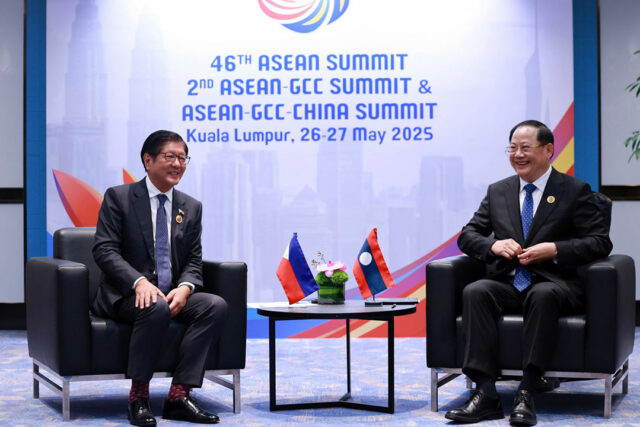
PHILIPPINE President Ferdinand R. Marcos, Jr. met with Laos Prime Minister Sonexay Siphandone on May 26 as part of the 46th ASEAN Summit and Related Meetings at the Kuala Lumpur Convention Centre. — MARK BALMORES/PPA POOL

By Chloe Mari A. Hufana, Reporter

Philippine President Ferdinand R. Marcos, Jr. on Monday asked his fellow Southeast Asian leaders to adopt a legally binding code of conduct (CoC) in the South China Sea, warning that rising sea tensions and uncertainty threaten hard-won regional gains.

Speaking at the 46th Association of Southeast Asian Nations (ASEAN) Summit plenary in Kuala Lumpur, Mr. Marcos said the code, which has languished in negotiations for over two decades, should be finalized amid growing risks of miscalculation in contested waters.

“We underscore the urgent need to accelerate the adoption of a legally binding code of conduct to safeguard maritime rights, promote stability and prevent miscalculations at sea,” he said.

As Southeast Asia grapples with rising geopolitical tensions, trade disruptions and the intensifying impact of climate change, Mr. Marcos also urged fellow leaders to embrace inclusive development and accelerate climate action.

He said inclusivity should be the foundation of sustainable growth, adding that ASEAN should boost cooperation to withstand economic and environmental shocks.

“In this increasingly interconnected world, we find ourselves, and our gains, at risk when our current stability is challenged,” he said.

The South China Sea remains one of the region’s most volatile flashpoints, with overlapping sea claims from China, the Philippines, Vietnam, Malaysia, Brunei, Indonesia and Taiwan.

While ASEAN and China agreed on a Declaration of Conduct in 2002, progress toward a binding framework has been repeatedly delayed by legal, political and strategic differences.

Josue Raphael J. Cortez, an ASEAN Studies lecturer at the De La Salle-College of St. Benilde, said among the legal and geopolitical obstacles that prevented ASEAN and China from signing the code was the United Nations Convention on the Law of the Sea (UNCLOS), as Beijing remained wary of it during its early years.

“China was pretty new in the United Nations when negotiations for the convention commenced, and during that period, China had already seen how the negotiations themselves were veering more towards the [benefit] of developed and powerful countries,” he said in a Facebook Messenger chat.

“This mistrust of the power of UNCLOS has been reflected in the Permanent Court of Arbitration’s (PCA) ruling, hence the continuous action of China to exhibit that the disputed waters are theirs and not the Philippines’,” he added.

Apart from UNCLOS, Mr. Cortez said the fact that Vietnam, Indonesia and Brunei are also claiming parts of the area hinders the formal CoC.

“The stark difference between us and our neighbors, though, is the fact that we decided to bring it up to the Permanent Court of Arbitration,” he said. “Indonesia, on the one hand, given its vibrant ties with China, recognizes implicitly that they are also a state party to this, yet it has never become a subject of discussion between the two countries.”

Mr. Marcos’s call for a legally binding CoC is a powerful message, Mr. Cortez said, noting that it might be an implicit hint of what may come during the Philippines’ tenure as ASEAN chairman in 2026.

“The discussion for [a code of conduct] will be at the forefront of discussions between Southeast Asian leaders,” Mr. Cortez said. “Despite the pragmatism of this move, it still shows that diplomacy is the primary tool we are utilizing in addressing the issue we are facing currently with China.”

He added that the Philippine government is still more than ready to enter a dialogue and fast-track the much-delayed CoC.

‘FUTURE OF WORK’
Meanwhile, Mr. Marcos called for deeper private-sector collaboration and investments to drive the ASEAN transition to a future-ready, digitally integrated economic hub, emphasizing human capital development, responsible artificial intelligence (AI) and trade facilitation.

During his address to the ASEAN Business Advisory Council (BAC) meeting, Mr. Marcos cited the critical role of upskilling and digital literacy in preparing ASEAN’s labor force for the future, adding that boosting human capital would position it as a competitive, innovation-driven economic bloc.

“Preparing our people for the future of work is essential,” he said in a separate speech. “By prioritizing digital literacy, student mobility and upskilling, this initiative will help strengthen our region’s human capital.”

Mr. Marcos also backed efforts to streamline the ASEAN Trade in Goods Agreement while urging balanced regulation through strategic trade management to keep regional trade both open and secure.

Also on Monday, Speaker Ferdinand Martin G. Romualdez called on lawmakers across ASEAN to unite in defending maritime sovereignty, empowering citizens and leading their transformation through progressive legislation.

Speaking at the 14th ASEAN Leaders’ Interface with Representatives of the ASEAN Inter-Parliamentary Assembly at the Kuala Lumpur Convention Center, the presidential cousin cited the critical role of legislative institutions in upholding peace, prosperity and a rules-based international order.

“We must move as one — translating ASEAN’s collective aspirations into concrete policies that empower our workers, farmers and fisherfolk, protect our seas, connect our digital economies and defend the rules-based international order,” he said.

Central to his message was a strong endorsement of UNCLOS, which he said should be upheld to guarantee peace, security and sovereignty across the region, especially amid rising global tensions and maritime threats.

Mr. Romualdez also urged ASEAN lawmakers to embrace their role as bridge-builders, fostering collaboration across nations, cultures and generations.

Philippines says China likely won’t harass civilian convoy to Thitu

AN AERIAL photo of Philippine-occupied Thitu Island, locally known as Pag-asa, in the contested Spratly Islands. — REUTERS

By Kenneth Christiane L. Basilio, Reporter

THE Philippine Coast Guard (PCG) on Monday said it does not expect Chinese vessels to harass a civilian-led sail to Thitu Island in the South China Sea, but it will deploy ships to prevent incidents at sea.

“I’m not just optimistic that such harassment will not happen, but logically they’re not going to do that,” PCG spokesman Jay Tristan Tarriela told a news briefing. “Our deployment is not because we are expecting an aggressive response from the Chinese Coast Guard.”

Harassing the M/V Kapitan Felix Oca, which will carry civilians to Philippine-occupied Thitu Island (Pag-asa Island) would draw international condemnation and lead to reputational costs for Beijing, he added.

The PCG will send its 97-meter BRP Melchora Aquino and 44-meter BRP Malapascua to escort the Atin Ito (This is Ours) civilian contingent, which will hold a sea concert on Thitu in the Spratlys.

The Philippines has a military outpost on Thitu Island and a small Filipino community has lived there since 1971.

Tensions between Manila and Beijing flared again last week after a Chinese coast guard ship used a water cannon on a Philippine civilian ship and bumped against it at Sandy Cay, which is near Thitu Island.

China claims nearly all of the potentially mineral- and oil-rich South China Sea based on a 1940s nine-dash line map that overlaps with the exclusive waters of the Philippines and neighbors like Vietnam and Malaysia.

A United Nations-backed tribunal in 2016 voided China’s sweeping claims for being illegal, a ruling that Beijing does not recognize.

Chinese vessels would likely try to block the Philippine civilian ship from reaching Thitu Island, Mr. Tarriela said. “Every time they do this, the reaction that we see from China is they increase their deployment of maritime forces… to break their spirit and maybe block the convoy.”

The Chinese Embassy in Manila did not immediately reply to a Viber message seeking comment.

Confrontations between Manila and Beijing near other disputed features have involved the use of water cannons and sideswipes by Chinese vessels on Philippine ships. The Philippines has condemned such acts as aggressive and unlawful, while China insists its actions are meant to defend its sovereignty.

The PCG will “recalibrate” its deployment of ships supporting the civilian mission to prevent raising tensions, Mr. Tarriela said.

“Sometimes what happens is our coast guard vessels become a magnet for Chinese coast guard vessels,” he said in mixed English and Filipino. “If the China Coast Guard will try to get near the Philippine Coast Guard vessels… we will stay farther from the civilian ship.”

“But in the instance that the China Coast Guard will veer close to the civilian ship and appear to block it, that’s the time the Philippine Coast Guard will go near to ensure that no incident will happen between the Atin Ito and Chinese vessels,” he added.

SMS, app eyed to notify traffic violators under no-contact apprehension policy

A CLOSED-CIRCUIT TELEVISION (CCTV) at Main Avenue in Cubao, Quezon City. — PHILIPPINE STAR/ MICHAEL VARCAS

By Adrian H. Halili, Reporter

THE Metropolitan Manila Development Authority (MMDA) on Monday said it might use text messaging or an online app to notify violators under its no-contact apprehension program.

“We are in the process of implementing a text notice with a telecommunication company and the Land Transportation Office,” MMDA Chairman Romando S. Artes said in a livestreamed news briefing. “We will have a meeting on this in the coming days.”

The agency started enforcing the policy again on Monday on Metro Manila’s major highways after the Supreme Court partially lifted a temporary restraining order issued in 2022.

The MMDA had filed a motion for reconsideration through the Office of the Solicitor General to lift the restraining order.

The MMDA had logged more than 800 no-contact apprehension violations as of 6 p.m., the MMDA said in a Viber group chat. He added that the MMDA is also set to launch an online app as an alternate platform to notify traffic offenders.

“We are also set to launch an app where (motorists) can verify if they were caught,” he said. “We will also have an information drive on where they can pay their fines.”

Mr. Artes said the adoption of an app or short message service (SMS) notification would hasten the agency’s delivery of notices of violation.

Before the high court’s restraining order, the MMDA had sent out violation notices through the Philippine Postal Corp., which took five to seven days to be delivered.

The no-contact apprehension policy (NCAP) covers the capital’s major roads including the Epifanio de los Santos Avenue (EDSA), C5, Buendia, Roxas Boulevard, Marcos Highway, Katipunan, Commonwealth Avenue, Quezon Avenue and West Avenue.

Meanwhile, senators urged the MMDA to ensure the fast and transparent implementation of its no-contact apprehension program and ensure that concerns about its implementation are addressed.

Senate President Francis “Chiz” G. Escudero raised concerns on the slow delivery of the violation notices.

“The whole process is taking a long time, and the notices of violation are being sent via snail mail,” he said in a statement. “It is possible that when the notice of violation arrives, the motorist will no longer remember the alleged violation.”

He added that the MMDA should use e-mails to speed up the process.

The Senate chief also called on the agency to fix problematic lane markings, traffic lights and signages along major highways because these will be the bases of violations and apprehension under the new setup.

“Penalizing motorists based on unclear, confusing, blurred traffic signs would give rise to suspicion that the program is really about monetizing the mistakes of drivers,” Mr. Escudero said.

“The government should not profit from penalties caused by vague traffic directions. This is primarily about raising the level of road discipline and not raising revenues,” he added.

Senator Mary Grace Poe-Llamanzares pushed a dedicated, independent board to review the motorist appeals.

“There should also be a dedicated independent review board within the MMDA with qualified traffic commissioners,” she said. Ms. Poe said motorists should be notified of any changes in traffic regulations.

“If a no U-turn or a one-way street policy was changed, there should be a 15-day advance notice period before the no-contact apprehension program starts in the area,” she added.

The NCAP monitors and penalizes traffic violations through the use of surveillance cameras and other digital monitoring systems, lessening the need for physical apprehension by traffic enforcers.

By removing in-person interactions, the initiative seeks to safeguard the safety of drivers and traffic enforcers while also encouraging discipline among drivers, reducing traffic congestion and minimizing potential for corruption.

Pasay, San Juan post highest literacy rates in 2024

People cross a pedestrian lane on their way to a mall in Manila. — PHILIPPINE STAR/RYAN BALDEMOR

PASAY City recorded the highest basic literacy rate while the City of San Juan posted the highest functional literacy rate in the country in 2024, the Philippine Statistics Authority (PSA) said in a report.

Pasay City posted the highest basic literacy rate among all highly urbanized cities (HUCs) at 96.2%, while the City of San Juan led in functional literacy rate with 94.5%.

Both are in the National Capital Region (NCR), which recorded an average basic literacy rate of 92% and an average functional literacy rate of 80%. These are higher than the national average of 90% and 70.8%, respectively.

The PSA defines “basic literacy” as the ability of a person to read, write, and comprehend a simple message in any language or dialect, and to compute or perform basic mathematical operations; while functional literacy refers to the ability of a person to read, write, and compute at a higher level such as integrating two or more pieces of information and making inferences based on the given information.

Basic literacy is measured for those aged five years and older, while the functional literacy rate covers those aged 10 to 64.

Other national leaders among HUCs in basic literacy were the City of Cagayan de Oro (96.1%), City of San Juan (95.5%), City of Pasig (95.5%), City of Mandaue (95.2%), and Pateros (95.1%).

HUCs that led in functional literacy in 2024 were City of Baguio (89.8%), City of Pasig (89.1%), Pateros (88.1%), and City of Makati (87.3%).

At the provincial level, Apayao recorded the highest basic literacy in 2024 with 95.2%, followed by Benguet, excluding the City of Baguio (94.9%), Romblon (94.6%), Nueva Ecija (94.23%), and Bohol (94.22%).

Benguet, excluding the City of Baguio, (87.9%) outpaced Apayao (86.8%) in functional literacy. They were followed by Rizal (82.1%), Romblon (81.9%), and Batangas (81.3%).

Tawi-Tawi, Davao Occidental, Basilan, Northern Samar, and Sarangani were recorded as the country’s provincial laggards in literacy posting illiteracy rates of 30.5%, 21%, 19.8%, 19.5%, and 15.7%, respectively, in 2024.

The 2024 edition of the report is the seventh in the FLEMMS series, the country’s literacy survey that is conducted every five years starting in 1989. The 2024 survey was conducted between September to October 2024. — Matthew Miguel L. Castillo

DoJ wants Roque passport canceled

HERMINIO “HARRY” L. ROQUE — PHILSTAR FILE PHOTO

THE Department of Justice (DoJ) initiated the cancellation of the passport of a former Rodrigo R. Duterte spokesman, currently facing charges for human trafficking linked to illegal Philippine offshore gaming operators (POGOs), its chief said on Monday.

Justice Secretary Jesus Crispin C. Remulla said the DoJ filed the cancellation of Herminio “Harry” L. Roque’s passport before the Angeles City Regional Trial Court.

If approved, the court would order the Department of Foreign Affairs (DFA) to cancel Mr. Roque’s passport.

“It would limit his options. I think he even holds two or three passports — someone told me that,” Mr. Remulla told reporters in Filipino during an ambush interview. “What’s important is that he will be compelled to account for what he’s done here and defend himself.”

Mr. Remulla noted that once the tribunal grants the cancellation of Mr. Roque’s passport, he will be considered an undocumented alien and will be subject to deportation proceedings.

“He will be an undocumented alien, though that depends on whether the Netherlands grants him asylum. But I doubt it, because the Netherlands is one of the countries strongly opposed to human trafficking,” he added in Filipino.

The DoJ chief said that proceedings have not started yet for Mr. Roque, but he is already fleeing, suggesting an admission of guilt.

Mr. Roque did not immediately respond to a Viber chat seeking comment.

The former human rights lawyer is currently in the Netherlands, seeking asylum for alleged political persecution.

He is facing charges of qualified human trafficking and human trafficking before the Angeles City Regional Trial Court in connection with illegal POGOs operating in Porac, Pampanga. — Chloe Mari A. Hufana

Probe of 2025 elections sought

PHILIPPINE STAR/EDD GUMBAN

A RESOLUTION calling for an investigation on the alleged irregularities that happened during the Philippine midterm elections was filed at the House of Representatives on Monday, claiming that “technical anomalies” experienced by the country’s automated election system disenfranchised voters.

“The 2025 National and Local Midterm Elections were plagued with various issues — ranging from major technical anomalies to massive voter disenfranchisement — as reported by election watchdog groups,” House Resolution No. 2291, filed by Party-list Reps. Raoul Danniel A. Manuel, France L. Castro and Arlene D. Brosas, stated.

Ms. Castro and Ms. Brosas lost when they ran for senator in the 2025 polls.

The Commission on Elections (Comelec) said they will cooperate with Congress should it pursue an investigation on the alleged issues that hounded the elections.

“Comelec is ready to appear before Congress if and when called upon to lay down the facts,” the poll body’s spokesman John Rex C. Laudiangco told reporters in a Viber message, noting that this year’s election was “the most successful” since the Philippines automated its voting process.

Millions of Filipinos voted on May 12 to elect national and local officials, but technical glitches such as ballot rejections, scanner malfunctions and feeding jams disrupted the process, according to poll watchdog Legal Network for Truthful Elections.

“Reports of independent electoral watchdogs and advocates… flagged as many as 1,593 election violations during the recently conducted elections,” Kabataan Party-list said in a separate statement.

The resolution also alleged that the overseas voting process violated the law due to a lack of means for migrant Filipinos to verify their ballots and raised concerns on the different source code versions used in automated counting machines.

The poll results’ integrity were also questioned in the resolution, citing that the transmission of election outcomes to transparency servers monitored by poll watchdogs were “significantly delayed.” — Kenneth Christiane L. Basilio

Documentary stamp tax removal mulled

PHILIPPINE STAR/KRIZ JOHN ROSALES

A WINNING congressional candidate said he will seek the removal of the documentary stamp tax (DST) on personal documents, citing its negligible contribution to the government’s coffers while it unduly burdens ordinary Filipinos.

“We’re not touching the DST on bank loans, insurance policies, or property sales,” Raymond Adrian E. Salceda, who won as district representative of Albay, said in a statement on Monday. “This is about cleaning up the tax code and giving people relief from needless compliance costs.”

The bill that he will file in the 20th Congress, which will start in mid-July, would amend seven provisions of the Philippines’ revenue code to make it clear that documents involved in commercial and financial transactions would only be taxed by DST.

Mr. Salceda said the fiscal impact of his proposal is “negligible,” noting that the bulk of DST revenue came from formal financial transactions, which collected P116.3 billion in 2022, with revenues generated on personal documents accounting for less than P1 billion. — Kenneth Christiane L. Basilio

PAGCOR commits to fund military infra projects

PAGCOR Chairman and Chief Executive Officer Alejandro H. Tengco is welcomed by Army Lt. Col. Percival R. Alcanar (left) during the Officer Candidate School’s Rites of Passage Ceremony on May 24 at Camp O’ Donnell in Capas, Tarlac. — PAGCOR.PH

THE Philippine Amusement and Gaming Corporation (PAGCOR) vowed continued support to finance infrastructure projects for the Armed Forces of the Philippines, its top official said.

In a statement on Monday, the gaming firm said the Chairman made this promise over the weekend the traditional Rites of Passage Ceremony of the Philippine Army Officer Candidate School (OCS) at Camp O’Donnell in Capas, Tarlac.

“When we invest in the Armed Forces, we invest in peace, democracy, and national resilience,” PAGCOR Chairman and Chief Executive Officer Alejandro H. Tengco said.

OCS Commandant Col. Harold Cabunoc said the school need more facilities amid the implementation of the Army’s One Training Factory concept, which caused officer candidates from all over the country to flock to Camp O’Donnell.

The OCS produces 650 to 700 officer candidates per year, exceeding the Philippine Military Academy.

“However, the school’s infrastructure has yet to keep pace. Our barracks were built for 400 students but are now housing 600, and some rooms meant for four are occupied by six.”

Among the projects proposed by OCS for PAGCOR’s support are the construction of an auditorium, a fitness gym and two new barracks that can fill an additional 400 cadets. — Aubrey Rose A. Inosante

BoC, Guess team up vs fake goods

CUSTOMS.GOV.PH

THE Bureau of Customs (BoC) has partnered with Guess Group to curb the counterfeit market in the market, while pushing for the crackdown of infringing online posts.

In a statement on Monday, the BoC said the representatives of the Guess Group with Legal Head Kristian Nico Acosta along with the officials revisited several warehouses in Divisoria, Manila and seized 1.73 million pieces of fake items, worth P15.8 billion.

The Guess Group confirmed that a “significant portion” of the seized goods were unauthorized reproductions of their brand.

“The BoC-Intellectual Property Rights Division’s efficient, tech-driven processes and collaborative spirit with brand owners like Guess show how government and private sector can work hand-in-hand to protect consumers and promote fair competition,” Mr. Acosta said.

He also noted the E-Commerce Memorandum of Understanding signed in 2024, which pushed for the proactive monitoring or taking down of infringing online posts as well as ensured  “that those behind them are held accountable through legal action.”

“We are serious about our mission to keep counterfeit goods out of the country. This is about protecting the public, supporting legitimate businesses, and ensuring a level playing field in the market,” BoC Commissioner Bienvenido Y. Rubio said.

He further warned the public about the health and safety risks, as well as the economic harm posed by counterfeit products.

Mr. Acosta also calls for consumers to defer from purchasing counterfeit items and noting that legitimate businesses and distort fair competition in the market. — Aubrey Rose A. Inosante

Revilla eyes cyber-libel case vs social media personalities

PHILSTAR FIEL PHOTO

LOSING Senatorial candidate Ramon “Bong” B. Revilla, Jr. plans to file cyber-libel complaints against social media personalities for alleged proliferation of fake news regarding his involvement on the multibillion-peso pork barrel scam, his lawyer said on Monday.

“After consulting with his family, Senator Revilla has decided to defend his and the family’s reputation by exercising the legal remedies for people whose reputations are harmed through online platforms,” Raymond A. Fortun, the legal counsel of Mr. Revilla told reporters at a news briefing, without specifying names.

He added that certain individuals and group continued to vilify the outgoing Senator by spreading fake posts that he had been convicted and ordered by the Sandiganbayan to return P124.5 million

The social media posts were meant to “damage” the Senator’s “good name and reputation,” he said, adding it affected Mr. Revilla’s standing in the 2025 midterm elections.

Mr. Revilla had lost his bid for re-election placing 14th with 11.98 million votes, according to official tallies from the Commission on Elections.

“We need to file a case against those people, and they should be held accountable for this. Because we cannot fool the people, the truth needs to be told,” Mr. Revilla said in a phone call with reporters.

The Senator alleges that these social media personalities have spread false claims regarding his involvement in the Priority Development Assistance Fund (PDAF) scam, where public funds were funneled to bogus projects from 2004 to 2012.

The senator was charged with 16 counts of graft and corruption by the Sandiganbayan and earning P224.5 million in kickbacks through the pork barrel scam. The antigraft court, in 2021 and 2018, acquitted Mr. Revilla of all graft cases.

Mr. Fortun added that the senator intends to file five to 10 cyber-libel complaints against the social media personalities within the week.

“Senator Revilla will be filing the appropriate charges specifically cyber libel against certain individuals…(He) will be coordinating with the (National Bureau of Investigation) to find out the bona fides of these people,” he said. — Adrian H. Halili

Soldiers hurt in clash awarded with medals

COTABATO CITY — The Army’s 6th Infantry Division had awarded merit medals to the two soldiers wounded in an ambush during an election security mission in Shariff Aguak, Maguindanao del Sur.

The awardees, 2nd Lt. Kent M. Carreon and Cpl. Kevin D. Galanza, both of the Army’s 33rd Infantry Battalion, were on their way to a polling site in a secluded area in Barangay Kuloy in Shariff when they figured in an encounter with gunmen positioned along the route, two days before the May 12 elections.

Major Gen. Donald M. Gumiran, commander of the Army’s 6th Infantry Division, told reporters on Monday, that he personally pinned the medal to Mr. Carreon and Mr. Galanza in a simple ceremony at the Camp Siongco Hospital in Datu Odin Sinsuat, Maguindanao del Norte, where their bullet wounds are being treated.

“They deserve the citations. They were both wounded in action, in line of duty,” Mr. Gumiran said.

The 33rd Infantry Batatalion, a unit of the 601st Infantry Brigade under 6th ID, covers Shariff Aguak and nearby towns that have “election hotspots,” home to Moro clans locked in deep-seated political rivalries. — John Felix M. Unson