THE BANGKO SENTRAL ng Pilipinas (BSP) is expected to cut benchmark interest rates further this year to support the economy amid a fragile global environment as inflation continues to ease.
ING Bank sees the BSP slashing borrowing costs by 75 basis points (bps) more, it said in a report.
“A lower-than-expected inflation trajectory, stronger-than-expected local currency, and high real rates — combined with uncertainty on global growth — all suggest a deeper rate cut cycle,” ING Bank’s economics unit said.
“We now expect the policy rate to reach 4.75% by the end of the year, which should contain peso appreciation.”
For its part, Bank of America (BofA) Global Research said in a separate report that it expects the central bank to deliver two more cuts in the coming months.
“We think the BSP will cut its policy rate at least 50 bps more for the balance of 2025, with the next cut likely on its June 19 meeting,” it said.
“The Bangko Sentral ng Pilipinas has returned to an easing bias, as policy and growth outlook have cleared up. GDP (gross domestic product) growth in the Philippines continues to stay weak and with the decline in oil and rice prices, inflation is set to stay low for an extended period, giving BSP room to ease further,” BofA Global Research added. “With the policy rate presently at 5.5%, the monetary policy stance would now appear restrictive.”
It expects the Philippine economy to expand by 5.5% this year and 5.6% in 2026, which are both below the government’s 6-8% growth target for those years.
Philippine GDP expanded by 5.4% in the first quarter, slightly faster than the 5.3% growth in the prior three-month period but slower than the 5.9% pace in the same quarter last year.
Department of Economy, Planning, and Development Undersecretary Rosemarie G. Edillon said that GDP needs to expand by at least 6.2% in the remaining three quarters to reach 6% growth — the low end of the government’s 6-8% growth target — by yearend.
BofA Global Research said that most central banks in the Association of Southeast Asian Nations (ASEAN) region have delivered rate cuts this quarter, resuming their easing cycles following the “heightened uncertainty” earlier this year.
“We expect this dynamic to continue, as relative stability in financial markets coupled by some breather on trade risks gives a window of opportunity for ASEAN central banks to cut rates further.”
Last month, the Monetary Board slashed benchmark interest rates by 25 bps to bring the policy rate to 5.5%, putting its rate-cut cycle back on track after an unexpected pause in February as officials considered the potential impact of the broad uncertainty brought about by the Trump administration’s shifting trade policies on the Philippine economy.
The BSP has now cut borrowing costs by 100 bps since it began its easing cycle in August last year.
Last week, BSP Governor Eli M. Remolona, Jr. said that the Monetary Board could deliver two more 25-bp cuts this year, with the next reduction on the table as early as next month’s meeting.
The BSP chief said cooling inflation gives them “plenty of room” to ease their policy stance further, although they don’t want to cut “too much” as this could stoke prices anew.
After the June 19 review, the Monetary Board’s remaining meetings are scheduled for August, October and December.
Meanwhile, ING said that the peso may weaken anew in the coming months following its recent surge as market risks due to global trade developments could affect the economy.
“While the Philippines is largely a domestic demand-driven economy, tariffs and the global trade slowdown are likely to impact export growth and BPO (business process outsourcing) business negatively in 2025,” it said.
“Balance of payments (BoP) weakness persisted into the first quarter of 2025. Consequently, we anticipate the PHP to exhibit a mild depreciation bias,” it added. “However, this view could be challenged by potential further dollar weakness and comments from the BSP indicating limited intervention to curb peso strength in such a scenario.”
The central bank earlier said it normally refrains from intervening in the foreign exchange market and only does so in “small amounts” when necessary to curb speculation and keep markets orderly.
The peso has been trading at the P55 level this month due to broad dollar weakness after moving around the P57-P58 range for most of the first quarter as Mr. Trump’s policy announcements following his return to the White House in January roiled global financial markets.
The local unit last week hit near two-year highs as the dollar was under pressure after Moody’s Ratings cut the United States’ triple-A credit rating but has since weakened.
On Thursday, the peso closed at P55.73 against the greenback, down by 25.5 centavos from Wednesday’s finish, after a US court ruling blocking most of Mr. Trump’s “Liberation Day” reciprocal tariffs announced in April lifted the dollar.
Year to date, the peso is still up by P2.115 or 3.8% from its end-2024 close of P57.845. — Luisa Maria Jacinta C. Jocson
A WORKER adjusts a machine at a manufacturing facility in Manila, Dec. 10, 2008. — REUTERS
By Justine Irish D. Tabile, Reporter
THE PHILIPPINE Economic Zone Authority (PEZA) is hoping to attract more Chinese investments in key sectors, including electronics and automotive, amid increased interest from Beijing.
PEZA Director-General Tereso O. Panga said he is participating in an investment mission in Shenzhen, which will last until Friday.
“They have good reception for the Philippines. In fact, investments from China were bigger compared to Japanese investments for the January-to-April period,” Mr. Panga told BusinessWorld.
Asked what the areas of interest for the mission are, he said, “electronics, electric vehicles, automotive, renewable energy, storage solutions, and textiles, among others.”
As of end-2024, PEZA hosted 118 Chinese locators accounting for over P8 billion in investments and more than 16,000 jobs.
Mr. Panga noted that investments coming from the United States, South Korea, and China have increased in the first few months of 2025 despite lingering geopolitical uncertainties.
In the January-to-April period, PEZA approved P63.523 billion in investment pledges, surging by 112.06% from P29.955 billion in the same period last year.
Most of the investments came from South Korea, the US, and China, which accounted for P10.45 billion, P2.53 billion, and P2.17 billion, respectively.
These brought total investment approvals under the Marcos administration to P574 billion, which are expected to create over 160,000 jobs.
PEZA is also eyeing proclamations of at least 30 new economic zones this year, particularly in Central Luzon, Cebu, and Mindanao.
INVESTMENT FACILITATION Facilitating investments, improving the business environment, and streamlining government processes will help propel Philippine gross domestic product (GDP) growth to as high as 8-10%, according to the Research, Education, and Institutional Development (REID) Foundation, Inc.
“We can start dreaming of 8% towards the second half of the next administration. But right now, I think we should be happy to increase that by at least 6.5%,” Ronilo M. Balbieran, e-commerce, digitalization, infrastructure, policy, and planning specialist at REID, told reporters on the sidelines of an Anti-Red Tape Authority (ARTA) event on Thursday.
“I believe that we will hit 6.5% growth within the next three years, and hitting 8% will be in the first half of the next administration. But the challenge is to have it consecutively, and I think we can hit that in the second half of the next administration.”
However, this high-growth path can only be achieved if the government is able to “completely, consistently, and systematically” implement its streamlining and digitalization efforts, Mr. Balbieran said.
“If you are able to facilitate the creation of businesses and registration of investments for them to fully realize their investment plans, then actual businesses and jobs will be created and incomes will be earned that will lead to increased consumption,” he said.
“That is what is called the circular flow of income, where you can actually expand the economy because you will have production, employment, and income spending. That is the role of the government: to make sure that the circular flow of income continues to circulate.”
Apart from streamlining processes, he said the government should further push digitalization through the passage of the E-Governance Act.
“First you streamline, and then you digitalize. Because even if you streamline, if you do not digitalize, people will still be going to the government offices,” Mr. Balbieran said.
If the government can deliver interconnected services, including sharing information across agencies, businessmen and potential investors will be able to save time on documentary and other regulatory requirements.
“If that time is saved, it can be refocused on actually creating more ideas for businesses and how to create the next product. It’s a waste if you’re in line at a government agency when you could have just been thinking about team building and strategic planning for the company,” he said.
“That will let them actually create more ideas. Business creation is nothing but creating ideas for what the people need and then producing them so that jobs are created and incomes are made.”
This is essential for the more “sophisticated” sectors like transportation, telecommunications, mining, and energy, he added.
“Those are crucial industries in which, although we have actually made significant progress in streamlining the processes and reducing documentary requirements, I think there is much reform to be made moving forward. We still have a lot to improve.”
ARTA Secretary Ernesto V. Perez said his office is working with the Asian Development Bank in uploading the end-to-end inventory of regulations for renewable energy (RE) and digital connectivity by the second quarter for easier reference for potential investors.
“The cost of doing business in the country is quite high, so by doing this, we will be able to reduce the energy cost by streamlining the permitting process for RE and digital infrastructure projects,” he said.
“This is a policy-based loan arranged by the Department of Finance… We are also working out other sectors like responsible mining, water management, mining, semiconductors, and socialized housing,” he added.
These sector-focused initiatives are on top of the 30,000 regulations that will be uploaded in the Philippine Business Regulation Information System (PBRIS) through their partnership with the University of the Philippines (UP) Office of the National Administrative Register (ONAR), Mr. Perez said.
Government agencies are required to register their regulations with the UP ONAR, which ARTA can tap through the partnership to expedite the process of filling up the PBRIS.
Rice is sold for P20 per kilo at Pasay Public Market in Pasay City, May 13, 2025. — PHILIPPINE STAR/RYAN BALDEMOR
By Luisa Maria Jacinta C. Jocson, Senior Reporter
TARIFF SCHEMES like seasonal duties are not enough to stabilize rice supply in the Philippines, the Asian Development Bank (ADB) said, citing the need for structural reforms to better protect farmers and still keep prices affordable.
“Tariffs alone won’t fix the country’s rice woes,” ADB Senior Director for Agriculture, Food, Nature and Rural Development Qingfeng Zhang told BusinessWorld in an e-mail.
“While prices have since eased — dropping from a 24.4% peak to near-zero inflation — local farmers are feeling the strain,” he added.
While the government has deployed several measures to bring down prices of the staple grain, Mr. Zhang said there is a need for systemic changes.
“The government has declared a food emergency, released buffer stocks, imposed price ceilings on imports, and sought stronger trade ties with Vietnam. These steps have helped, but structural fixes are needed,” Mr. Zhang said.
In July last year, rice import tariffs were slashed to 15% from 35% to tame inflation.
The Department of Agriculture (DA) in February also declared a food security emergency on rice, which authorized the National Food Authority to release buffer stocks at subsidized prices.
The department also lowered the maximum suggested retail price (MSRP) of 5% broken imported rice to P49 per kilo from P52 per kilo, starting March 1.
“A smarter import strategy — flexible, responsive, and data-driven — is key,” Mr. Zhang said.
Farmers’ groups have been proposing the possibility of a seasonal tariff, which should be strategically timed to not clash with the height of the harvest season.
Mr. Zhang said this type of tariff is “higher during harvest to protect domestic crops, lower in lean months to stabilize prices.”
“It’s a pragmatic middle path — if well-timed and transparent,” he added.
Seasonal tariffs could be a viable strategy, but this needs to be part of a “broader, integrated policy mix,” he said.
Seasonal tariffs are a kind of variable duty rather than fixed.
“The higher seasonal tariff should be put in place at least a month before the harvest season and then revert to the lower off-season level after harvest,” Federation of Free Farmers National Director Raul Q. Montemayor said.
To implement this kind of tariff, the DA must set a target price for palay (unmilled rice) during the harvest period. For example, this can be set at P24 per kilogram.
“Then they compute how much would be the price of milled rice given that palay is bought at P24 per kilo.Let’s say this is computed at P45 per kilo (for) milled rice,” Mr. Montemayor said.
“So, the tariff rate should be set such that imported rice plus costs will sell at or near P45 per kilo.”
Department of Economy, Planning, and Development Secretary Arsenio M. Balisacan told BusinessWorld earlier that they are open to adopting a seasonal tariff scheme if there are no operational or legal impediments, as this would help stabilize farmers’ incomes.
The DA this week said it will propose to economic managers a gradual increase in the rice import tariffs by the next harvest.
However, it wants the current 15% tariff to be retained until the end of the second quarter to keep rice prices from rising further.
Mr. Zhang said the end-goal should be to “make rice affordable without undermining those who grow it.”
“In the medium run, it is important for the government to support diversification to higher value crops for the financial viability of farmers,” Mr. Zhang said.
“To balance supply needs and farmer welfare, the government could gradually adjust tariffs, invest in irrigation, storage, R&D, and boost farmer support through credit, insurance, mechanization, and technology.”
He also recommended a cluster farming approach, which if supported by the Agriculture department can “help realize the economy of scale in rice production.”
In April, rice inflation further contracted to 10.9% from the 7.7% decline in March.
Data has shown the average price of a kilo of regular milled rice nationwide declined by 13.3% year on year to P44.45 in April, while well-milled rice dropped by 10.4% to P50.54. Special rice went down by 6.2% to P60.69 per kilo.
However, Mr. Montemayor also noted that retail prices of rice have been going down mainly because of the drop in global prices.
“But the trading margin from the import price up to retail has not changed significantly and is still elevated compared to the P13-15 per kilo margin in the past,” he said.
US dollar banknotes are seen in this illustration taken July 17, 2022. — REUTERS
GOVERNMENTS in Asia and Europe are raising far less debt in US dollars than usual, preferring to issue at home as they avoid exposure to rising US yields, currency volatility and broader concerns about US government finances.
According to Dealogic data, issuance of dollar bonds by non-US sovereigns dropped 19% to $86.2 billion in the first five months of this year compared with the same period last year, marking the first decline in three years.
The January-May dollar bond issuance by the governments of Canada and Saudi Arabia fell 31% and 29% to $10.9 billion and $11.9 billion, respectively, while issuance by Israel and Poland declined 37% and 31% to $4.9 billion and $5.4 billion.
At the same time, Dealogic data showed global sovereigns’ local currency bond issuance had climbed to a five-year high of $326 billion so far this year.
This drop in dollar bond issuance comes at a time when global investors are pulling back from US assets, partly in response to tariffs and as they question US financial dominance and safety.
Johnny Chen, portfolio manager at William Blair’s emerging markets debt team, said the rise in local currency issuance is largely driven by falling domestic interest rates as inflationary pressures ebb, noting that India, Indonesia and Thailand have all cut their benchmark interest rates this year.
“In India’s case, the local currency debt market has also matured further with the inclusion of Indian local currency debt in global bond indices. This development has likely expanded the investor base, prompting more local currency issuance in 2025,” he said.
Brazil is considering issuing its first sovereign bonds in yuan, two government sources said, after President Luiz Inacio Lula da Silva’s visit to Beijing concluded with a wave of Chinese investment announcements and a currency swap agreement.
Brazil’s sovereign US dollar bond issuance has dropped 44% to $2.4 billion this year, data showed.
Saudi Arabia raised €2.25 billion ($2.36 billion) through a euro-denominated bond sale, including its first tranche of so-called green bonds, as part of its global medium-term note program, aligning with its strategy to diversify away from dollar-linked financing.
“The challenge with the onshore local currency is that those issuances tend to be much smaller, they’re less liquid,” said Kenneth Orchard, head of international fixed income at T. Rowe Price, based in London. “But we think over time there are going to be more international investors in those markets.” — Reuters
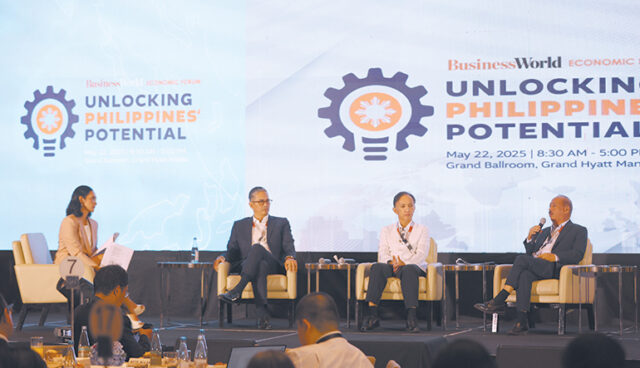
BusinessWorld Economic Forum 2025 once again gathered the Philippine business community over timely discussions last May 22 at the Grand Hyatt Manila in Bonifacio Global City, Taguig. — Photo by Philippine Star/Ryan Baldemor
BusinessWorld Economic Forum 2025 tracks PHL’s path to maximizing potential
By Bjorn Biel M. Beltran, Special Features and Content Assistant Editor
For decades, the Philippines has been called a country of potential, one compared to a tiger, emerging from its dormancy, poised to rise.
But, potential is not destiny. To believe that the economy’s rewards are guaranteed is dangerous and harmful to those whose very livelihoods depend on its realization. What potential is, in essence, is a promise; and promises demand effort if they are to be kept.
At this year’s BusinessWorld Economic Forum held at the Grand Hyatt Manila in Bonifacio Global City, Taguig on May 22, the nation’s leaders gathered together to confront that matter head-on: How do we move from potential to performance, from promise to permanence?
Under the theme “Unlocking Philippines’ Potential,” the forum engaged policy makers, economists, top executives and business leaders from various industries in a whole day of discussions about where the country’s economic growth is heading and what challenges must be addressed.
BusinessWorld President and CEO Miguel G. Belmonte — Photo by Philippine Star/Ryan Baldemor
“For many years now, the Philippines has been bucking global trends,” Miguel G. Belmonte, president and CEO of BusinessWorld, said in his opening speech. “It has been showing consistent economic growth e ven during times of hardship and global crisis. We have a young, talented, and growing population that can sustain that growth for years to come. We have a government that is forward-thinking and is committed to values of sustainability and a vision to bring the country into a new era of progress.”
“Today, we as a country find ourselves at a moment of great promise and great struggle. The choices we make now — how we unlock that inherent potential — will define the nation we become.”
A time of profound transformation
Few countries in the region can match the Philippines’ youthful demographics, expanding digital economy and macroeconomic resilience. Yet, myriad obstacles stand between the country and its vision for the future. Global issues, such as fragmenting trade and commerce due to United States’ (US) tariffs, labor conventions being overturned by automation and artificial intelligence (AI), the growing demand for sustainable energy, and the increasing urgency of climate change, make a smooth development anything but certain.
Opening the forum with his keynote speech, Arsenio M. Balisacan, secretary of the Department of Economy, Planning, and Development (DEPDev), said that the narrative of the Philippine economy is a hopeful one — an economy that is resilient and fundamentally sound yet facing deep structural headwinds that demand urgency.
Department of Economy, Planning, and Development Secretary Arsenio M. Balisacan — Photo by Philippine Star/Ryan Baldemor
“We live in a time of profound transformation where influential megatrends disrupt the global landscape, posing risks but presenting opportunities to economies such as the Philippines,” he said, adding that these interconnected and complex forces are pushing nations to adapt.
“The Philippine economy today stands at the crossroads,” Mr. Balisacan said. “Standing here begs the questions: Where do we go? What policy choices do we make? How well do these deliberate choices position our nation at the global stage? Finally, what kind of economy, society, and future are we committed to building in response to the complex process shaping our world?”
The country has the capability to succeed, but it must act decisively to overcome its deep-seated vulnerabilities, especially in matters of investment, infrastructure, and human capital. Dr. Andrew Tsang, country economist for the Philippines at the ASEAN+3 Macroeconomic Research Office (AMRO), offered an external perspective on this current inflection point.
ASEAN +3 Macroeconomic Research Office Country Economist for the Philippines Dr. Andrew Tsang — Photo by Philippine Star/Ryan Baldemor
“Where does the Philippines currently stand? According to the latest World Bank classification, the Philippines remains a lower-middle-income country, while the gross national income (GNI) per capita must increase by another 6.8% to cap from its 2023 level to achieve the upper-middle-income status,” he said in his keynote speech.
“Encouragingly, the country is on track to achieve this milestone by 2026 with expected real GDP (gross domestic product) growth about 5.5% annually from 2024 to 2026. Actually, 2024 has [garnered] 5.7% of real GDP growth, and we expect a slightly faster growth this year and the next.”
“Our growth is the envy of the world,” Special Assistant to the President for Investment and Economic Affairs Frederick D. Go emphatically agreed in his keynote address.
He noted that there is much cause for optimism despite all the challenges facing the global economy.
Special Assistant to the President for Investment and Economic Affairs Frederick D. Go — Photo by Philippine Star/Ryan Baldemor
“Despite global headwinds, investor confidence is rising in our country,” he said. “Growth is strong and resilient; and more importantly, the message is going out all over the world, especially at home, that we are open and ready for business and are welcoming investments.”
The BusinessWorld Economic Forum 2025 explored each of these in-depth, both the challenges and the opportunities. From the issues affecting Philippine industries and society on a local and global scale, to executive perspectives on issues like artificial intelligence and the energy transition.
The first panel discussion, titled “Building An Inclusive and Resilient Future for the Philippines,” dove into strengthening the country’s economic foundation so it can better respond to challenges such as financial disruptions, health emergencies and natural disasters.
On the “Elevating Energy Transition in the Philippines” panel, the forum discussed the country’s growing electricity demand and the shift to renewable energy.
The third panel discussion, “Tariffs, Trade and Trump: How A Second Term Could Hit the Philippines,” examined how the Trump administration could influence — and was influencing — trade and investment flows between the US and the Philippines.
A fireside chat explored the perks and perils of artificial intelligence in “Navigating AI Adoption in the Philippines.”
Finally, the panel titled “Vision 2030: Accelerating The Nation’s Competitiveness Toward Economic Success” mapped out how different sectors can collaborate to boost the Philippines’ position on the global stage by the next decade.
Sustaining momentum amid a turbulent world
“Geopolitical tensions are redrawing supply chains amid shift in power dynamics between major trading partners and economic giants. This has significantly raised uncertainty in the global economic landscape,” Mr. Balisacan said on the challenges facing the global economy.
This year’s BusinessWorld Economic Forum garnered nearly 300 attendees, including three keynote speakers and 16 panelists. — Photo by Philippine Star/Ryan Baldemor
For the Philippines, he mentioned that there are two very clear hurdles that the country must overcome to secure its future: the economic risk and the climate risk.
“Our economy’s long-term competitiveness will hinge on how quickly we transform toward climate-resilient growth,” he said.
Mr. Balisacan of DEPDev noted that the country’s growth so far has been the result of the accumulation of various factors working in its favor, particularly those of human capital and labor. To sustain it and reach projected growth rates ranging from 7%-7.5% over the medium term, however, demands investment.
“Let me emphasize that this estimate is contingent on a range of structural factors, including the country’s investment climate, quality of human capital, technological diffusion, and institutional effectiveness,” he said. “Sustaining growth and building resilience require deliberate actions to reinforce the economy’s growth pillars moving forward.”
These pillars are necessary to transition the country to high-income status by 2050, one of the major goals of the Philippine government. AMRO’s Mr. Tsang noted that to achieve it, much needs to be done to upgrade the nation’s competitiveness and productivity.
“Whenever the Philippines can achieve this high-income country target will depend on how well the country adjusts the long-term structural challenge and implement a comprehensive strategy for upgrading the productivity and enhancing the country’s competitiveness,” he said.
Mr. Tsang pointed out that the past coronavirus disease 2019 (COVID-19) pandemic highlighted many of the crucial structural issues that hold back the Philippine economy, and not much has improved since then.
“The country relies on outdated infrastructure and insufficient logistic networks. The labor skill mismatches the new technology release, which caused the lower productivity growth of the economy,” he said.
From an outsider’s perspective, Mr. Tsang noted that certain sectors of the economy, like the business process outsourcing-information and communications technology (BPO-ICT), tourism, and semiconductor industries, are open windows of opportunity. But, to fully tap into their potential, there is much to be done.
For instance, as a leading country in providing business outsourcing services, the Philippines benefits from the English-speaking operation in setting up the front of global call centers. However, to maintain its leading role in business outsourcing, the Philippines’ digital industry must look towards upgrading their services, such as expanding the scope of business outsourcing to business analytics, as well as asserting to adopt digitalization and leveraging AI.
Tourism can be a key driver of growth as well. Mr. Tsang noted it is possible to attract more international tourists, but only if investment in infrastructure and international promotion are sufficient to support it.
Finally, he said that the semiconductor industry is one of the country’s best assets as it is its best export sector. However, to further integrate into global supply chains, the industry needs massive investments to maintain a product base to meet rapidly growing global demand.
“All these opportunities should be supported by strengthening investment, upskilling the workforce, and ensuring stable and forward-looking regulation,” he said.
“The Philippines stands at a critical moment now. It is possible to turn today’s challenge into future of opportunities, However, to respond effectively to the changing global economy, decisive action is required.”
CignalTV Anchor Dr. Danie Laurel hosted this year’s BusinessWorld Economic Forum. — Photo by Philippine Star/Ryan Baldemor
A golden opportunity
For the government’s part, they have not been idle. Mr. Go outlined several of the key measures that the Marcos administration has implemented to support the Philippines’ growth.
The CREATE MORE (Corporate Recovery and Tax Incentives for Enterprises to Maximize Opportunities for Reinvigorating the Economy) Act, designed to enhance the ease, reduce the cost, and improve the predictability of doing business in the Philippines, is the centerpiece. The law provides fiscal incentives for investors through income tax holidays, enhanced deductions, and special corporate income tax schemes.
Critically, it also restores the power of investment promotion agencies (IPAs) to approve smaller projects, decentralizing decision-making and speeding up approvals. Mr. Go emphasized that this legislation is a direct result of listening to industry stakeholders and addressing all the pain points of doing business in the country.
“CREATE MORE is a result of our President’s many meetings with the industry stakeholders, asking them what their challenges are, what their concerns are,” he said. “CREATE MORE is a game-changer, a clear signal to the world that the Philippines means business.”
Complementing CREATE MORE, the government also launched initiatives like Green Lanes for Strategic Investments, which fast-track permits for high-priority projects. As of April 2025, over 200 projects worth P5 trillion have been certified, with a large portion focused on renewable energy — a key sector for future development.
Under the newly enacted Public-Private Partnership (PPP) Code, the government has modernized outdated infrastructure laws to actively encourage private sector participation. This has already borne fruit, with the successful privatization of three major airports, including the long-stalled Manila International Airport, and new airports in the Visayas and Mindanao. As of last April, 226 PPP projects worth P3 trillion are under implementation, with 187 more in the pipeline, signaling robust momentum.
Photo by Philippine Star/Ryan Baldemor
This is further bolstered by the Build Better More Program, comprising 212 flagship infrastructure projects valued at P9.8 trillion. These projects span sectors critical to inclusive growth — connectivity, energy, agriculture, water, health, and education — and are intended to catalyze broad-based economic development across the archipelago.
“The Philippines today has never been more open to investments and more welcoming to the private sector than it is today under the administration of President Bongbong Marcos,” Mr. Go said.
“We now have the most liberal, dynamic and forward-looking investment policy environment in our nation’s history. Opportunities abound. Let us not let this golden opportunity pass us by.”
The BusinessWorld Economic Forum 2025 was presented by BusinessWorld Publishing Corp., together with Ayala Corp., ACEN Corp., Metro Pacific Investments Corp., and PLDT, Inc.; and was sponsored by BDO Capital and Investment Corp.; DigiPlus Interactive Corp.; Federal Land NRE Global, Inc.; First Gen Corp.; GCash; GT Capital Holdings, Inc.; Megawide Construction Corp.; Megaworld Corp.; SM Investments Corp.; SM Supermalls; United Coconut Planters Life Assurance Corp. (Cocolife); Development Bank of the Philippines; Filinvest Alabang, Inc.; Filinvest Development Corp.; FWD Life Insurance Corp.; Globe Telecom, Inc.; McDonald’s Philippines; Manila Electric Co.; Meralco PowerGen Corp.; National Grid Corporation of the Philippines; San Miguel Corp.; SGV & Co.; Shell Pilipinas Corp.; and Toyota Motor Philippines Corp.
Partner organizations include the Asian Consulting Group, American Chamber of Commerce of the Philippines, Bank Marketing Association of the Philippines, British Chamber of Commerce of the Philippines, French Chamber of Commerce and Industry Philippines, European Chamber of Commerce of the Philippines, Financial Executives Institute of the Philippines, JLCG Creative and Marketing Solutions, Management Association of the Philippines, Team Executive Decisions Events, Philippine Chamber of Commerce and Industry, Philippine Franchise Association, Philippine Retailers Association, and media partners One News and The Philippine STAR.
Panel 2 (L-R): BusinessWorld Corporate Editor Arjay L. Balinbin (moderator), Vincent Martin C. Villegas of First Gen Corp., Miguel G. De Jesus of ACEN, Atty. Monalisa C. Dimalanta of Energy Regulatory Commission, and Rowena Cristina L. Guevara of the Department of Energy
By Mhicole A. Moral, Special Features and Content Writer
The energy sector remains the country’s top contributor to greenhouse gas emissions, with a share of 56.9%. If current consumption patterns continue, national energy use could triple by 2040. Projections show an annual increase of 5.02%, potentially pushing consumption to the equivalent of 99.3 million tons of oil.
The Philippines will also require 54,655 megawatts (MW) by 2040 — more than three times the demand in 2020, which stood at 15,282 MW. The steady climb in demand means the country must shift course toward cleaner alternatives.
Energy transition was among the discussions at the BusinessWorld Economic Forum 2025 last May 22. A panel of key figures from both the government and the private sector discussed the future of energy in the Philippines.
According to Department of Energy (DoE) Undersecretary Rowena Cristina L. Guevara, energy transition does not mean an abrupt shutdown of coal facilities. Instead, it must involve a planned and measured shift to green energy.
“Transition has to be calculated and calibrated,” Ms. Guevara told the panel. “We do not want this to impact the economic growth of the country by suddenly turning off our coal-fired power plants.”
The undersecretary shared that the government plans to move in phases by maintaining current coal capacity while slowly bringing in cleaner energy sources over the next few decades. However, she acknowledged that renewable energy cannot carry the full load for now.
“While renewable energy has made impressive strides in recent years, the country can’t rely on it entirely yet,” she explained. “We have already awarded over 1,400 renewable energy service contracts — that’s more than 160 gigawatts, but we currently only have 28 gigawatts installed. The real challenge is turning those contracts into real projects that generate electricity.”
Miguel G. De Jesus, ACEN’s managing director and chief operations officer for the Philippines, emphasized that energy transition means dealing with the real-time effects of the climate crisis, which continues to affect energy supply and infrastructure reliability.
“We’re trying to move from fossil fuel-based systems to renewable ones, but it’s not just about replacing one with the other,” he said. “It’s important to remember that we’re not just dealing with energy supply. We’re also dealing with the climate crisis — the very thing we’re trying to fix. But that crisis itself puts extra pressure on our systems.”
Energy Regulatory Commission (ERC) Chairperson and Chief Executive Officer Atty. Monalisa C. Dimalanta said the concept of energy transition is not new in the Philippines. She pointed out that one of the biggest shifts already happened years ago.
“Aside from the energy transition currently happening, one big transition that has really had an impact on our rates is a transition from a public-sector-driven to a private-sector-driven industry,” she said.
While private companies now lead in building and investing in energy projects, Atty. Dimalanta said the government continues to shape the industry’s direction. For example, the DoE sets renewable energy targets and lays down the policy framework, while the ERC regulates pricing and checks that market practices remain fair.
Meanwhile, First Gen Corp. Senior Vice-President and Chief Revenue Officer Vincent Martin C. Villegas explained the energy shift involves big bets on long-term projects and cleaner technology.
“Returns for renewable energy investments today are far better than what we’ve seen in the past,” Mr. Villegas said. “The cost of setting up clean energy projects has also come down. The difference in cost compared to traditional systems is now just around 7%.”
As the country adds more renewables to the grid, the industry leaders also acknowledged that fossil fuels will be part of the mix for now — especially for baseload supply during peak demand.
Renewable energy by numbers
The country’s renewable energy share in power generation rose from 22% to 26% from 2021 to 2023, with added 7,200 megawatts of renewable energy capacity. The government now aims to push that share to 35% by 2030.
“Based on our multiple committed projects, we have about 9.5 megawatts of solar energy and we have about 7.5 megawatts of wind. That’s about 18 megawatts,” Ms. Guevara said.
While 18 MW may sound small compared to the country’s total power needs, the DoE official said this number only covers projects marked as “committed,” which already have funding and are being built. Once finished, they will supply power directly to the national grid.
Aside from these projects, the DoE also tracks a much larger number of projects still in earlier stages, such as those in application or undergoing feasibility studies.
“If you do the numbers… we’re going to get the 35% RE target,” the undersecretary said.
Meanwhile, Atty. Dimalanta mentioned the sharp rise in solar panel installations through the government’s net-metering program. The net-metering program allows households and businesses to install solar panels and sell excess electricity back to the grid.
“Between 2022 and 2023, net-metering installations jumped by 121%. That’s consumers taking charge of their own material and energy destiny. They are producing their own power from solar.”
During the same period, Atty. Dimalanta noted that retail competition in the electricity market grew by 8%-10%, with more consumers choosing their electricity providers, especially those offering renewable sources.
“There’s a push from both sides of the equation,” she said. “From the supply side, there are market mechanisms from the DoE, such as auctions. Now, consumers are choosing to be supplied by renewables. And if they can’t be supplied, they’ll reduce their own cost.”
Since many rooftop solar installations are not formally reported, Mr. De Jesus believes the actual number of systems in place are bigger than what they know.
“We’ve been doing some studies just looking at the change in demand. When you install rooftop solar, the demand on the grid drops,” the ACEN executive explained. “That drop is what we monitor. We estimate somewhere between 300 and 500 megawatts have already been installed. That’s not a small amount — that’s already a power plant.”
In addition, Mr. Villegas said private firms are adjusting fast to changes in the energy market, especially when consumer demand shifts toward cleaner sources.
“The numbers make sense, and it’s quite exciting because we see a lot of different states — both utility-scale solar power and high-level interest in solar,” he said. “There’s excitement this year because we have all these mechanisms available. Hopefully, the private sector will work together to make this happen.”
Creating effective policies
The DoE is currently working on a “coal transition policy” in response to a directive from President Ferdinand R. Marcos, Jr. Ms. Guevara said the planned policy will outline how the Philippines can gradually scale down its dependence on coal without compromising the stability of the power grid or slowing down economic growth.
While details remain under development, she said the policy is aligned with the country’s commitment to its Nationally Determined Contribution under the Paris Agreement, which includes lowering greenhouse gas emissions.
“Phasing down coal isn’t just about reducing emissions. It’s also about making sure the lights stay on and that businesses can keep running,” Ms. Guevara said.
At the same time, the government is preparing to launch a massive push for full electrification. About 6% of households nationwide still live without electricity, with many located in remote areas or communities served by electric cooperatives that face financial difficulties.
The undersecretary said the DoE estimates that P100 billion will be needed to bring electricity to every household in the country. The agency’s internal simulations suggest that the initial P100-billion investment could yield P400 billion in economic returns, as improved access to electricity boosts productivity and household income, especially in rural and underserved areas.
“We believe every peso invested here pays off four times over,” Ms. Guevara said. “We hope that when we talk about the energy transition, it should always include full electrification of the country.”
On the other hand, Mr. De Jesus mentioned that businesses are no longer waiting for regulations to tell them when or how to shift. Instead, they are reacting to a call from their customers to reduce carbon emissions and adopt more sustainable practices.
“We’re seeing really a groundswell of businesses looking to transition. It’s not quite at the household level yet, where we would like the truth to be arrived, but it’s moving,” he explained.
Implementing energy projects
Despite the optimism on paper, industry players said implementation remains the hardest part.
“Energy transition is coming, but it won’t come easy,” said Mr. Villegas. “The process is stressful. Timelines are tight, planning is complex, and regulation adds to the pressure.”
The First Gen executive said many projects are ready in theory, but turning them into functioning infrastructure means clearing roadblocks that still stand in the way. Among them are delays in permits, unpredictable power pricing, and disputes over land use.
“There are a lot of backups that are meant to be used,” Mr. Villegas added. “What is on us is to deliver quality and hard-to-know projects.”
Similarly, Mr. De Jesus said the private sector is eager to respond to policy shifts, but timing is often tricky.
“Sometimes it takes a little bit of time for the private sector to get ready,” he explained. “There’s quite a bit of work that needs to be done to make sure that projects are ready and right to be put forward.”
Mr. De Jesus said planning solar or wind farms isn’t as simple as it sounds. Companies need to do due diligence on potential risks, especially when it comes to grid connection and financial exposure.
“It’s not just about breaking ground,” he said. “You have to think about whether transmission lines can handle the output and whether investors are comfortable with the risks.”
Both industry leaders agree that careful coordination between the government and private companies is needed to turn plans into reality.
Cost of energy transition
Energy players weigh the fair returns for investors and manageable prices for consumers as they consider funding new projects.
“There are ways in which you can think about project risk on the basis of the pattern that you have,” Mr. De Jesus said. “There’s no expectation that you have 100% certainty around these projects, and increasing rates so significantly puts unfair pressure upon the public.”
The executives in the panel say the real challenge may not be on how fast it brings in clean power, but on how well it prepares both the systems and the workforce to support the transition. Therefore, the country must prepare its resources to manage the complexities involved in integrating renewable technologies on a wider scale.
Meanwhile, the government remains focused on making sure the transition does not push electricity costs beyond what households and businesses can afford, according to Atty. Dimalanta.
“If we ask consumers, it’s not the emissions target that they are concerned with. It’s not that we are not concerned about our global commitments on emissions, but our main job is to make sure that only reasonable rates are passed on to our consumers.”
“Rate rising is always there, and I think it will always be a tricky situation,” Atty. Dimalanta explained. “That’s where we really weigh in or balance the stakeholders’ interest — the generator’s interest and also consumer protection.”
The ERC has to consider both the long-term financial guarantees needed by renewable energy developers and the direct impact of electricity prices on households. To ease the burden on both regulators and consumers, Atty. Dimalanta emphasized the value of market-based programs to directly negotiate rates with renewable energy suppliers without going through traditional regulated channels.
“We’re preparing the consumers for a safe entry into that space,” she said. “Until we get to a time that we have that level of maturity among our consumers and suppliers, we need to make sure no one takes advantage of those entering for the first time.”
For now, the ERC continues to keep investor interest alive while making sure consumers don’t bear the cost of progress too soon.
“We are giving guarantees to large-scale renewable projects,” Atty. Dimalanta added. “We also need to think about the impact that will be borne by the consumers 20 years down the road.”
Derick Ohmar Adil, Globe Telecom Senior Director - AI Data Governance
Globe executive stresses need for stronger governance, nurtured talent
By Mhicole A. Moral, Special Features and Content Writer
Despite growing global attention on artificial intelligence (AI), the Philippines continues to face significant challenges in adopting the technology on a wider scale. While some industries have shown early signs of progress, many businesses and individuals remain uncertain about how to begin using AI tools effectively.
Industry leaders addressed the issue during the BusinessWorld Economic Forum on May 22, where they discussed the current state of AI integration in the country. One of the speakers, Derick Ohmar Adil, senior director of AI Data Governance at Globe Telecom, shared his insights into how local organizations view AI and the barriers preventing broader adoption.
Mr. Adil said there is limited direction for businesses looking to implement AI. The primary issues include a lack of knowledge, guidance, and practical frameworks. Many companies remain unsure which AI tools are applicable to their operations or how to integrate the technology into existing processes.
“Most of the people we do business with are excited about AI, but they do not know where to start. Fifty-four percent are unsure how AI will be perceived or how they could use it to their advantage,” he noted. “It is difficult to begin, especially if they do not know where to start.”
Among the few major companies in the Philippines that adopted AI early, Globe Telecom has applied the technology in several areas, including network performance improvement, application development, and employee productivity tools. Mr. Adil noted that AI is also being used to personalize services for Globe’s customers.
“We started to use artificial intelligence to optimize our network, to improve our applications, and to be more productive,” he explained. “It is not just about making more revenue — it is about improving products and fixing service issues.”
However, this is not the case for most businesses in the Philippines, particularly small and medium-sized enterprises. Many remain on the sidelines due to the absence of clear policies, educational initiatives, and technical support.
Building trust through governance
Some countries have already implemented strong artificial intelligence governance models, but the Philippines has yet to establish clear governance frameworks.
Currently, efforts to regulate AI solely focus on safeguarding data privacy, preventing misuse, and ensuring compliance with national laws. Experts believe this is only the beginning, and that more structured and detailed governance frameworks are necessary.
Mr. Adil said good governance is not solely about creating policies. It should prioritize users and clients rather than align with the interests of specific institutions.
“Governance is about assessing the impact on people, on society,” he explained. “The challenge is constantly evaluating how these policies and AI systems affect the public and ensuring they meet people’s needs.”
The Globe executive emphasized that such policies come with responsibility and that governance cannot succeed without public trust.
“Trust is really a matter of course,” he explained. “Our customers choose brands they truly need — brands that share their values.”
In other words, building trust between technology providers and users will determine the success of AI governance in the Philippines. Industry players like Globe recognize that effective governance must balance the potential of technology with its possible risks to people.
“We need to embed security and privacy to properly respond to AI. It should be a core part of AI systems, not an afterthought,” he shared.
Mr. Adil also shared that users must be clearly informed about how AI systems use their data. Companies and organizations need to establish clear internal procedures to manage risks associated with AI.
Focusing on people and talent
Too many organizations are pursuing the latest artificial intelligence tools without fully understanding their relevance or effectiveness in specific areas, according to Mr. Adil.
“Not every problem needs AI. Not everything that looks like AI is actually AI,” he said. “We need to look at this in every context.”
The Globe executive shared the biggest challenge in AI adoption is not the technology itself but the people who shape how it is used and whether it brings real value. He emphasized that success in artificial intelligence relies heavily on training the right talent and enforcing strong governance, rather than simply spending large amounts of money on new tools or platforms.
“We need to invest in smarter, more grounded resources that can truly address real issues. It is not about spending more. We need to be more deliberate about where we invest,” Mr. Adil said.
He added that the real power of AI lies in its human element — those who build, manage and apply it. Without a trained and responsible workforce, the technology may fall short or even create new problems instead of solving existing ones.
“It is more about people and talent. We need to ensure we bring individuals into AI training who are passionate about it,” he explained. “There are many things you can do with AI, but those efforts must include strong training programs to develop skilled workers who can handle it responsibly.”
The future of AI, according to Mr. Adil, depends on how well the country can train and manage the human minds behind the machines. He believes governments, businesses and educational institutions must collaborate to create a strong foundation for AI success.
PLDT Enterprise SVP and Enterprise Business Head Patricio S. Pineda III — Photo by Philippine Star/Russel Palma
By Mhicole A. Moral, Special Features and Content Writer
The Philippines is on track to grow its artificial intelligence (AI) industry to a projected $3.5 billion by 2030. With a compound annual growth rate estimated at 28.5%, the country’s AI market is expected to rise from its current estimated value of $772 million. The potential growth could bring in an additional $92 billion to the nation’s gross domestic product (GDP), marking a possible 12% increase over the same period.
Experts believe the rapid expansion of AI technology could drive broad economic gains, especially if industries begin adopting these tools more widely and with clear objectives.
During the BusinessWorld Economic Forum 2025 held on May 22, the fireside chat titled “Navigating AI Adoption in the Philippines” featured insights from key players in the industry. Derick Ohmar Adil, senior director of AI Data Governance at Globe Telecom; and Patricio S. Pineda III, senior vice-president and Enterprise Business head at PLDT Enterprises, addressed the current state of AI in the country and what needs to happen for it to develop further.
According to both executives, the Philippines is still at the beginning of its journey with artificial intelligence. While there is high interest in the technology, there is a lack of understanding about how to implement it effectively within existing systems.
Mr. Adil explained that many businesses show enthusiasm about AI but are unsure about where to begin, which slowed actual adoption among key sectors.
“Most [businesses] are excited about what is being said about artificial intelligence,” Mr. Adil added. “But they do not know where to start. It is the common thing I hear.”
Such disconnect is not limited to small businesses, as large corporations are still in the early stages of understanding how AI can fit into their structures. That is why real-world application of AI is still at a low level.
The Globe executive described the current situation as “the starting line,” with significant room for growth and experimentation. He believes AI offers measurable benefits, and the challenge now is to convince more businesses to begin experimenting with it.
Meanwhile, Mr. Pineda shared that AI has become more accessible, and many people use it every day without realizing it. Improved processing speeds, better machine learning models, and the growing availability of user-friendly tools are making it easier for companies to experiment with AI. Speech-to-text and text-to-speech features, for example, are now being used in customer service, transcription, and accessibility services.
“Any time you click on your mobile, that’s AI. Any time you type something into Google and you get suggestions, that’s AI,” he said.
Mr. Pineda also explained that people often benefit from AI through small features in mobile applications or customer service chatbots, even if they are not directly aware of it.
Still, both speakers pointed out that adopting AI is not as simple as downloading a new software. Companies need the right infrastructure and employee training. Without those, AI cannot function as a useful business tool.
Embracing AI in key industries
AI adoption in the country is currently concentrated in four key areas: customer service, logistics, data processing, and creative services, according to the experts. Businesses adopting AI technologies are now already gaining advantages, including improved operational efficiency, faster decision-making, and cost reduction.
“With AI, you can now do things with your own devices that used to take teams of people,” said Mr. Pineda. “That’s something both private companies and public services can use to get better results.”
In contrast, sectors and companies that delay AI adoption may fall behind, potentially worsening existing economic disparities. Many local companies, especially small and medium-sized enterprises, remain hesitant due to uncertainty about where to begin.
“In the business sector, there are many areas where if you are not doing anything about AI right now, you are already on the back side of the curve,” Mr. Adil explained.
While advanced technologies are accessible, the underlying infrastructure required to support them is still inconsistent. In rural areas, internet access remains unreliable. Electricity issues also persist. These factors limit the ability of industries such as agriculture and regional healthcare to take advantage of emerging technologies, despite the availability of advanced tools in global markets.
Another major challenge identified by both experts is the absence of a structured approach toward AI integration. Most Philippine companies still do not have a road map for how to apply AI in their operations.
In addition, “AI hallucination,” where systems generate false or misleading information that appears legitimate, can harm individuals or organizations if not addressed through proper training and checks.
Mr. Pineda suggested rethinking job definitions entirely. It is no longer enough to insert AI tools into traditional roles. Companies need to reshape workflows and expectations, making room for oversight, critical review, and collaboration between human workers and AI systems.
Both experts also shared the existing shortage of professionals with the right skills to work with AI systems. This leads to the perception that AI might replace jobs, rather than improve how tasks are performed. Instead, AI should be seen as a tool to assist human workers and improve productivity.
They suggest that public and private institutions must invest in educational programs that teach employees how to work with AI technologies, not fear them. Without a clear and unified effort to promote AI literacy and capability, the country risks falling further behind more digitally mature economies.
Currently, AI training is concentrated in a few institutions, mainly universities and technical schools with strong information technology departments. Some companies in the business process outsourcing and IT sectors offer in-house upskilling programs, but these efforts are not enough to cover the broader workforce.
Mr. Adil explained AI adoption will only succeed if the country closes its digital gaps. These conditions put large portions of the population at risk of being left behind. A larger investment in education is needed — not only to train future AI developers but also to educate workers, policy makers, and the general public.
Good governance in AI
AI adoption is directly connected to long-term national competitiveness, particularly if both the private and public sectors begin using the technology more systematically. However, many efforts may never reach their full potential without a unified support system.
“AI governance is so important,” Mr. Pineda said. “It is about the system we use. You have to have the right mix of voices — the government, the people, the market.”
Governance, in this context, refers to the systems of rules, standards and practices that regulate AI development and usage. It includes data privacy laws, ethical guidelines, system accountability and safeguards against algorithmic bias. Without strong governance, companies operate in silos, which can create inconsistent practices and open doors to potential misuse.
Experts said no central policy guides the country’s approach to AI. The lack of regulation leaves private companies in a position where they must create their own rules, which do not always align with one another or with global standards.
In fact, the National Government has yet to enact a comprehensive bill on AI. Although the Department of Information and Communications Technology (DICT) has signaled plans for an AI road map, no specific timeline or structure has been provided. In the absence of clear rules, experts fear potential misuse of technology.
“AI is not something you can ignore,” Mr. Pineda said. “It’s already here. You just have to decide how you’re going to use it — and who gets to say how it’s used.”
In the private sector, decisions about AI implementation occur within limited circles, including only corporate boardrooms and select policy-making bodies. Such exclusivity creates a gap between those creating AI tools and the communities affected by them.
Expanding the conversation to include a wider range of voices, such as educators, workers, and local government units, is necessary. Doing so helps prevent policies that favor only specific sectors or regions and ensures AI development benefits broader society.
“We should make sure that we are making a policy for a national solution,” said Mr. Adil. “Governance is there to act as far as we could fly. We need to be able to make sure that we get support to be able to support the business of the client.”
He also explained that national support would offer companies the direction they need and reassure consumers and investors. Confidence in how data is collected and used is essential. Without it, people are less likely to trust AI-powered platforms, regardless of how useful they might be.
Both executives explained that AI adoption becomes easier when the public understands the rules and trusts how they are enforced. Policy is particularly important for sectors such as healthcare, education, and public safety, where the margin for error is smaller and public expectations are higher.
They also urged government institutions to adopt AI within their own operations to show that the technology is practical and effective. If the government demonstrates responsible AI use, it becomes easier to convince the public and private sectors to follow. The effort also sends signal to international investors that the country is ready to participate in global tech markets under stable and transparent guidelines.
The current interest in AI may be the first step, but real progress depends on execution. Unlocking the country’s potential in AI will require action from both the government and the private sector, the experts concluded.
Panel 1 (L-R): Francis C. Gotianun of Filinvest Hospitality Corp., Monica L. Trajano of Aboitiz InfraCapital Economic Estates, Robert Dan J. Roces of SM Investments Corp., and Joseph Nino “Jay” C. Young of GCash — Photo by Philippine Star/Ryan Baldemor
By Angela Kiara S. Brillantes, Special Features and Content Writer
Thriving businesses are grounded on solid economies, with fundamentals enabling each to make a significant contribution to national development. But with uncertainties rising globally and locally, businesses are leaning towards resilience strategies to ensure their progress ahead.
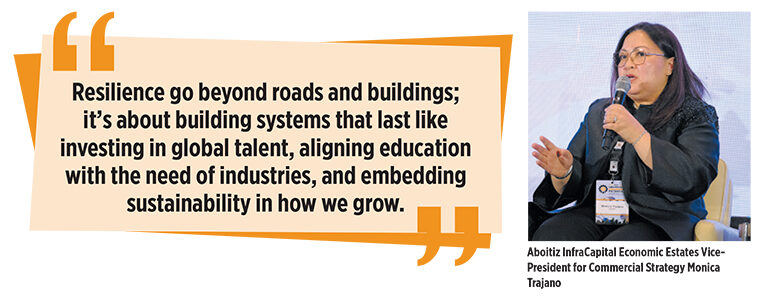
These strategies were explored by representatives from various industries who joined the first panel discussion of this year’s BusinessWorld Economic Forum, with the theme “Building an Inclusive and Resilient Future for the Philippines.” Speakers for the panel discussion included Francis C. Gotianun, senior vice-president of Filinvest Hospitality Corp.; Monica L. Trajano, vice-president for commercial strategy of Aboitiz InfraCapital Economic Estates; Robert Dan J. Roces, an economist at SM Investments Corp.; and Joseph Nino “Jay” C. Young, investment partnerships and business development head of GCash.
The panel discussion explored how the executives define resilience, both in the context of organizations and the individual.
Resilience and inclusivity go hand in hand, particularly when looking at long-term growth in the business landscape. In her opening statement, Ms. Trajano of Aboitiz InfraCapital Economic Estates, pointed out that as growth remains concentrated in the corporate world, resilience is a long game that involves being adaptive, responsive to shocks, and creating value beyond the business itself.
“Resilience go beyond roads and buildings; it’s about building systems that last like investing in global talent, aligning education with the need of industries, and embedding sustainability in how we grow,” Ms. Trajano said. “In this way, our role has evolved, from being the developers of that economy to enablers of ecosystems that support both business continuity and community upliftment. In Aboitiz InfraCapital, we are focused on creating environments where businesses can grow confidently.”
On measuring resilience and inclusivity in households, Mr. Roces of SM Investments identified three key indicators: when individuals are able to switch jobs easily, when they are able to set up businesses easily, and when they contribute to better government revenue.
Investing in people
In order to boost resiliency, making proper investments is imperative, especially amidst economic risks and uncertainties. As the business landscape continues to evolve, so too must the ability of these businesses to adapt to constant change.
Mr. Gotianun of Filinvest Hospitality Corp. emphasized the importance of making a prudent approach in businesses by investing in their systems and their people to effectively manage risks and build resilience.
Photo by Philippine Star/Ryan Baldemor
“There’s always been a lot of uncertainty in business, there’s always risk, there’s always [something that needs] changing. But we take lessons over the years, and we’re just enhancing them,” the senior vice-president said. “This is a virtual cycle that we’ve been doing over the many years. It’s just a matter of being prudent, being mindful, making sure that we’re looking at all the information out there, try to make sure making the best decision and always making sure that we invest and uplift people.”
Ms. Trajano added that being data-driven is crucial during economic uncertainties. This means making smart and strategic decisions aligned with environmental shifts and understanding customer needs.
“We need to be able to understand fully [and] make data-driven decisions to replicate what works, and stay prudent so that we’re able to manage risks in that sense and relative to growth — not necessarily expansion, but really growing what matters to our customers. So, it’s understanding through listening what their needs are.”
“Expansion is taking a look at what the smart moves are relative to what’s happening in our environment and understanding what our core purpose is,” Ms. Trajano added. “Resiliency for us means that we invest in future-proofing, investing in sustainable infrastructure and workforce readiness,” she added.
Furthermore, the panel finds upskilling the workforce, particularly equipping employees with the necessary skills to adapt to new technologies and industries, as a means to future-proof their businesses.
“Future-proofing will be very important,” Mr. Roces said. “That doesn’t necessarily include the infrastructure, but the need for upskilling does. It’s very important to upskill people with the new infrastructure. That actually forms part of the resilience package.”
The SM Investments economist stressed that resilient companies are powered by their people — the workforce. With a skilled and talented workforce, companies are improving organizational performance, ultimately driving themselves towards success.
“If you’re looking at a resilient company, you’re seeing one that’s not only surviving in terms of the numbers, but you’re also seeing people who aren’t leaving. You’re looking for more talent to come into the company,” he added.
Investing in people also goes beyond the workforce, as the financial sector is responding to economic uncertainties by intensifying financial education among consumers, according to Mr. Young of GCash. This way, the sector informs and educate many Filipinos toward sound financial decisions, as well as financial security and certainty for themselves and their households.
“In GCash, we will continue to bring more financial products to Filipinos, intensifying how we are able to educate them and make them more engaging that can help them survive their rainy days and have something for their one day,” Mr. Young said.
Navigating expansion
The panel also underscored opportunities for expansion in the Philippine industry. Ms. Trajano, for instance, noted increasing global investor interest, driven by the country’s “business as usual” stance and scalability. With foreign investments, collaborative pursuits and consistent policy and regulation must be visible.
“If everybody works together, there’s better confidence,” Ms. Trajano said. “It’s on us and the partnerships that we forge in the government, going out together to make sure that we’re still consistent not just in policy making but in execution. I think that’s actually key because we are in a very good position and we have the right fundamentals. It’s the sustaining part that we need to be working on.”
Photo by Philippine Star/Ryan Baldemor
Even in economic estates, the Philippine industry showcases its capability to cater to the domestic market. Many Philippine companies are leading by a sheer number in terms of economic activities.
“In terms of area, 51% of the companies that are there are Japanese, but in terms of number, the most are Filipino companies, not just because they are exporting but they’re also catering to domestic enterprises. Even in recent years, that is the demonstration of the capability of the Philippine industry — to be able to scale and cater to the domestic market but also export,” Ms. Trajano said.
Mr. Gotianun added that expanding services to small and medium enterprises (SMEs) or small entrepreneurs is another considerable approach. He suggested economic zones tailored for them, as well as improving the ease of doing business and other government support. “That’s a way to unlock productivity that we need for the country,” he said.
In the financial landscape, recent technological advancements have significantly improved access to financial products and services, contributing to better financial security and inclusivity across the country. According to Mr. Young, digital wallets like GCash act as gateways to financial services, such as savings, investments, and insurance, among others. This year, it is set to expand and launch new products that are more sector-specific, further adapting to customers evolving needs.
“So, it’s really democratizing financial services for Filipinos. And I think that’s what Filipinos need in this time of uncertainty — it’s the security and certainty through financial products that are easy to understand, affordable, and very accessible through GCash,” Mr. Young said.
Panel Discussion 3 (L-R): BusinessWorld Senior Reporter Luisa Jocson (moderator), Allan B. Gepty of the Department of Trade and Industry, Danilo C. Lachica of SEIPI, and Diwa C. Guinigundo of GlobalSource Partners Philippines — Photo by Philippine Star/Russel Palma
By Jomarc Angelo M. Corpuz, Special Features and Content Writer
The Philippines faces both prospects and perils with Donald J. Trump’s second term as United States (US) President. With billions worth of goods and services traded yearly, coupled with a thriving business process outsourcing industry that employs millions of Filipinos, the country’s economic ties with the US run deep. Consequently, any major policy shift in Washington — whether in trade, immigration, or foreign investment — could have ripple effects on the Philippine economy.
These concerns were among the key issues tackled during the third panel discussion at the BusinessWorld Economic Forum on May 22 at the Grand Hyatt Manila, where the conversation weighed in on the implications of Trump’s second term for the Philippines and the broader ASEAN region.
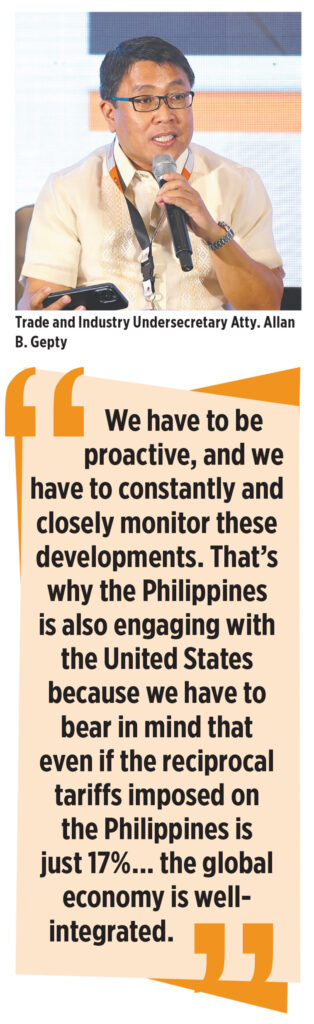
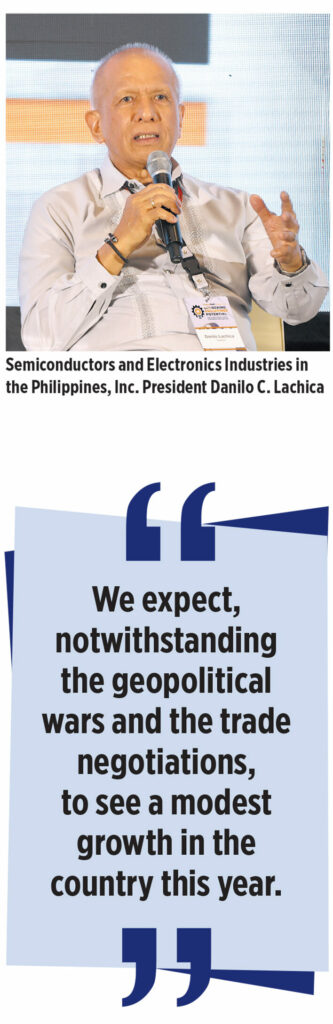
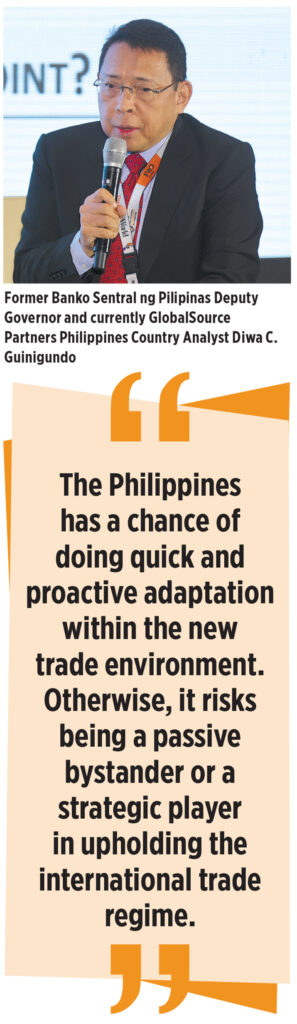
Themed “Tariffs, Trade, and Trump: How a Second Term Could Hit the Philippines,” the discussion gathered experts from both the private and public sectors, including the Department of Trade and Industry Undersecretary for the International Trade Group Atty. Allan B. Gepty, Semiconductors and Electronics Industries in the Philippines, Inc. President Danilo C. Lachica, and GlobalSource Partners Philippines Country Analyst and former Bangko Sentral ng Pilipinas Deputy Governor Diwa C. Guinigundo.
In his opening statement, Mr. Gepty discussed how the global economy is facing challenges ranging from the effects of the pandemic, fast-paced advancement of technology, adoption of inward trade policies by some countries, and geopolitical tensions that cause a lot of uncertainties for policy makers, investors, and businesses.
Photo by Philippine Star/Russel Palma
“To maintain stability, countries and economies should refrain from adapting and implementing measures that veer away from the general rules of conducting trade. To do so posits uncertainties and, if not well-managed, can send adverse repercussions across our economies, affecting businesses, investments, global supply chain, and even the rules-based trading system itself,” Mr. Gepty added.
Meanwhile, Mr. Lachica spoke at length about the electronics industry’s role as an economic driver in the country despite contractions caused by the pandemic during his opening spiel. He also expressed his optimism on the Corporate Recovery and Tax Incentives for Enterprises to Maximize Opportunities for Reinvigorating the Economy (CREATE MORE) Law, which he said declared that the Philippines is open to business once again.
“So, there is hope. In fact, we were going to continue to go to CREATE MORE road shows, but we were kind of distracted by the reciprocal tariffs and the like. But you know, we’re employing about 3 million direct and indirect workers. We expect, notwithstanding the geopolitical wars and the trade negotiations, to see a modest growth in the country this year,” Mr. Lachica said.
For his opening segment, Mr. Guinigundo gave an overview of the effects of Mr. Trump’s tariffs on the US, such as raised prices and a possible recession, as well as what the Philippines can do to take advantage of the relatively low reciprocal tariffs imposed by the US to boost the economy.
“The Philippines has a chance of doing quick and proactive adaptation within the new trade environment. Otherwise, it risks being a passive bystander or a strategic player in upholding the international trade regime. The US will not wait for us to take full advantage of the lower reciprocal tariff or the substantial exemption of certain product lines. Our competitors are still too busy with shifts and enhancing their competitiveness. It’s important, therefore, for the Philippines to sustain the pace of structure and policy reforms,” Mr. Guinigundo explained.
Proactive stance
The most pressing topic discussed by the panel centered on the difference between Mr. Trump’s first and second terms, with comparisons of trade policies, and even the possibility of a free-trade agreement between the Philippines and the US.
Mr. Gepty analyzed the two terms in the context of positioning the country in the Southeast Asia region and on policy direction. He mentioned that the Philippines would like to pose itself as one of the manufacturing hubs of Asia, citing economic reforms by the current and previous administrations, which have led to some companies relocating to the country. On policy, direction, Mr. Gepty noted the country’s desire to expand its market, enjoy preferential market access, and become a bigger player in the global supply chain.
“We have to be proactive, and we have to constantly and closely monitor these developments. That’s why the Philippines is also engaging with the United States because we have to bear in mind that even if the reciprocal tariffs imposed on the Philippines is just 17%, which is lower compared to the other countries in the region, except for Singapore, the fact remains that the global economy is well-integrated,” he said.
Speaking as the representative of the electronics industry, Mr. Lachica downplayed some of the concerns surrounding Mr. Trump’s more protectionist policies’ impact on the Philippines. He reasoned that the Philippines had become a bigger exporter of electronics to the US since Mr. Trump became the president, and he explained that Mr. Trump’s reciprocal tariffs are actually due to trade deficits.
Photo by Philippine Star/Russel Palma
“For us, the posture is to negotiate and maybe bring to recollection and bring to recognition the value of the Philippines as far as the US is concerned. What do I mean? We’re part of the first island chain: Japan, Korea, Taiwan, Philippines. So, we have a strategic value in the Pacific strategy of the United States. It’s not just a matter of the economic value of the dream but of the military strategic value of the Philippines in terms of the US Pacific strategy,” Mr. Lachica added.
Improving sectors
Additionally, Mr. Guinigundo stressed the importance of improving several sectors in the country, such as the investor base, logistics, and human capital, to fully take advantage of negotiations and free-trade agreements that the government can pursue.
“How can we expect people to come here and invest when they know that in 10-20 years, the kind of human capital that we’re going to have, the kind of managers and workers, and even political leaders, are weak in reading, math and science, and their critical thinking is much less desirable. I think the challenge there is really to shape up and do the agenda of developing our industrial base through some kind of policy,” he said.
Photo by Philippine Star/Russel Palma
As for the sectors in the Philippine economy most likely to be affected by trade disruptions, Mr. Guinigundo pinpointed industries with tight margins and tariff-sensitive products like garments and footwear. To help ease the burden on these sectors, he recommended that the government provide market access, reduce the cost of doing business, and improve connectivity.
While Mr. Lachica did commend the administration for designating the semiconductor industry as a priority sector, he did mention several improvements that can help his line of business become a more competitive exporter. He suggested using embedded power supplies to reduce the cost of energy, building industrial parks in the middle of economic corridors to help with logistic costs, and improving the labor force to remain competitive with neighbors.
Similarly, Mr. Gepty advocated for the alignment of the Philippines’ industrial and trade policies, explaining that the endgame of a robust industrial sector is to export more products to other countries.
“Nowadays, we have to bear in mind that, because of the supply chain, technically, there is no such thing as made in one country alone. So, one product is designed in America; it is assembled in another country; owned by one company or another, with products, components, and elements being supplied by different companies. So, for the Philippines, we are very particular about that because we want to level up when it comes to our participation in the global value chain,” he explained.
As the world waits and sees how a second Trump term might unfold, the message from the panel was clear: the Philippines must be proactive, strengthening its industries, investing in people, and staying engaged with key partners to potentially turn global uncertainty into opportunity and make sure it doesn’t get left behind.
Panel Discussion 4 (L-R): Cignal TV Anchor Dr. Danie Laurel (host and moderator), Alfredo S. Panlilio of the Management Association of the Philippines, Eduardo V. Francisco of BDO Capital, and Ruben J. Pascual of the Philippine Chamber of Commerce and Industry — Photo by Philippine Star/Russel Palma
By Jomarc Angelo M. Corpuz, Special Features and Content Writer
The Philippine economy has found its footing once again after experiencing sudden lows caused by the coronavirus disease 2019 (COVID-19) pandemic. After marking the country’s steepest annual gross domestic product (GDP) decline of 9.5% in 2020, the country has recovered and expanded consistently, posting GDP growth rates above 5.5% in each of the last four years.
However, experts suggest that the next five years leading up to 2030 may become even more critical for the Philippines to secure its place as a globally competitive economy. Amidst talks about the country becoming a high-income economy, the focus now shifts to the administration and its policy makers, along with their strategies to steer clear of the so-called middle-income trap plaguing nations unable to transition around the world.
Access to capital, policy reforms, workforce preparedness, and other ways to accelerate the Philippines’ growth and avoid pitfalls were discussed for the fourth panel discussion at the BusinessWorld Economic Forum on May 22 at the Grand Hyatt Manila.
Discussing “Vision 2030: Accelerating The Nation’s Competitiveness Toward Economic Success,” experts for the final panel discussion included Management Association of the Philippines (MAP) President Alfredo S. Panlilio, BDO Capital President Eduardo V. Francisco, and Philippine Chamber of Commerce and Industry (PCCI) Secretary-General Ruben J. Pascual, with Cignal TV News Anchor Dr. Danie Laurel as moderator.
For his opening statement, Mr. Panlilio spoke about the critical hurdles the Philippines must overcome to fulfill its “Vision 2030,” a term he used to describe a future where every Filipino enjoys a life that’s secure, comfortable, and full of opportunity.
Photo by Philippine Star/Russel Palma
Among the challenges he pointed out were the lack of innovation-driven growth, which he said is key to global competitiveness as nnovation empowers businesses and startups as well as encourages productivity. Mr. Panlilio also mentioned the lack of investments in human capital, which can be done by equipping Filipinos with future-ready skills and improving educational systems. Equally important, he advocated for the fostering of a robust digital infrastructure to boost the efficiency and accessibility of services across all sectors.
“Let us build upon our strengths and create a thriving economy that is sustainable, inclusive, and resilient. Together, we can unlock the full potential of our nation for the benefit of the Filipino people,” he said.
Similarly, Mr. Francisco echoed Mr. Panlilio’s statement on the need for improvement in the country’s human capital, stating that the standards of graduates in colleges have gone down due to automatic passing grades. Other topics the BDO Capital executive discussed in his opening statement include the need to simplify bureaucratic processes in starting businesses and building infrastructures, as well as the projects in several sectors that BDO Capital has been conducting in partnership with the government.
“We should already be moving in the faster lane, but we still can’t get ourselves into the fourth gear or the fifth gear. We’re still on first and second; and hopefully, we can do something [right] there to help businesses and the economy,” Mr. Francisco said.
Mr. Pascual, for his part, noted the problems that each government, since the Arroyo administration, missed and what Ferdinand R. Marcos, Jr. continues to miss during his term as president.
Photo by Philippine Star/Russel Palma
The first of these is poverty and income inequality. The PCCI official noted that despite campaign promises aimed at addressing the issue, the Philippines is still plagued with infrastructure deficiencies, financing gaps, and bureaucratic delays.
Fiscal irresponsibility is another problem, Mr. Pascual mentioned, pointing out that unchecked government spending and inefficient allocation of resources. He also mentioned the failure of improving agriculture, noting issues with shortages of rice and high prices of goods.
The neglect of human capital development, he continued, is reflected by a big skills mismatch compared to what industries actually need. Mr. Pascual also noted the decline of industries in the manufacturing sector and the loss of opportunities to neighboring countries.
“At the heart of everything will be digital transformation. It will address poverty. It will address agriculture. It will address education. It will address infrastructure and governance for the country,” Mr. Pascual advocated during his speech.
A major point of discussion during the panel discussion is how the Philippines can leverage its demographic dividend to address the talent deficit in its human capital. With a young and growing population, the country has a unique opportunity to build a future-ready workforce — but only if strategic investments are made in education, skills training, and job creation.
PCCI’s Mr. Pascual emphasized the need for the government to improve basic education and begin focusing on science, technology and math, much like replicating or optimizing the Philippine Science High School system. For the private sector, he suggested emulating efforts from neighboring countries that have constantly upskilled their workers and generated workers ready for modern jobs.
Meanwhile, MAP’s Mr. Panlilio spoke about the need to adapt to technology by upskilling workers in the business process outsourcing and manufacturing industry. He also encouraged the use of automation and artificial intelligence to adapt to what the world will need.
“Everything goes back to technology. Technology’s evolution is just so quick, and we need to continue to adapt. It’s even affecting private companies. We’re all in various stages of that spectrum. Some of us are more advanced; some not. These are the things that we should invest more in,” Mr. Panlilio said.
On the other hand, BDO Capital’s Mr. Francisco expressed his dismay at the new graduates colleges are producing, citing his observations of the hiring process in companies where the basic requirements are almost down to having the ability to read and write. He posited that sometimes he just hires people with a basic understanding and intelligence in the hopes of retraining them.
Another concern the panel delved into is the need to improve digital infrastructure and whether the country can truly be considered a “digital hub.” While the Philippines has made strides in digital adoption and boasts a strong online presence through its young, tech-savvy population, the panelist noted that significant challenges remain.
“If you talk about broadband, cables, etc., telcos have done a lot; and even in far-flung areas, you can have internet. The next step to that is digitalizing your systems — computerizing. That is harder because those are not off-the-shelf packages anymore. Maybe large corporations can do that, but the MSMEs (micro, small, and medium enterprises) cannot. So, maybe that’s where we need to focus on,” Mr. Panlilio said.
Conversely, Mr. Francisco revealed the efforts that telco companies are making to improve connectivity in the country, while also acknowledging the financial and competitive challenges they face in expanding digital infrastructure. He noted that despite covering 97% of the country through wireless networks and ongoing investments in data centers, telcos struggle to further invest due to rising costs and limited flexibility in pricing.
“I think there’s a push to make the country a digital hub. But it can’t just be pushed by the private sector. It is a country setting, like what the government did for BPOs (business process outsourcing companies) before. You have to go out there and market the country, and say that we are well-positioned to be one,” Mr. Francisco added.
One of the most frequently raised concerns is how to attract more investors to the country to make Vision 2030 a reality. In this regard, Mr. Pascual reiterated some of the biggest concerns faced by investors who may want to invest in the country.
“Some are really very basic. One is energy; our cost is really too high. Second is the inconsistent economic policies that the past governments have been implementing and that have created insecurities among investors. Third is the way we do business, which is a big question for us,” he said.
Unlocking the Philippines’ potential and paving the path toward becoming a high-income economy by 2030 demands urgent and decisive action. While ambitious, with the right investments in people, infrastructure, technology, and governance, Vision 2030 can become the Philippines’ next great leap forward.
COPENHAGEN INFRASTRUCTURE PARTNERS, founded in 2012, manages funds invested in offshore and onshore wind, solar PV, biomass, energy-from-waste, transmission, distribution, reserve capacity, storage, advanced bioenergy, and Power-to-X. — CIP.COM
By Sheldeen Joy Talavera, Reporter
AYALA-LED ACEN Corp. is set to enter the offshore wind sector through the acquisition of a 25% minority stake in a 1,000-megawatt (MW) offshore wind power project in Camarines Sur being developed by Danish firm Copenhagen Infrastructure Partners (CIP).
ACEN signed definitive agreements with CIP’s Growth Markets Fund II for the planned investment, subject to regulatory approvals, the listed company said in a disclosure on Thursday.
CIP, through its local affiliate Copenhagen Infrastructure New Markets Fund Philippines Corp., was the first 100%-foreign-owned entity awarded wind energy service contracts by the Department of Energy (DoE) in 2023.
The $3-billion San Miguel Bay Offshore Wind Power Project is part of CIP’s Philippine portfolio, which also includes a 650-MW project in Northern Samar and a 350-MW project in Dagupan, Pangasinan.
The company expects to invest $5 billion in its wind power projects in the Philippines.
In 2023, the San Miguel Bay project was certified as an energy project of national significance and was granted Green Lane status by the Board of Investments, qualifying it for expedited permitting.
“Offshore wind is poised to play a vital role in diversifying the country’s energy mix. ACEN is pleased to partner with CIP, a global leader in the offshore wind sector. We look forward to collaborate on this trailblazing initiative,” ACEN President and Chief Executive Officer Eric T. Francia said.
Robert Helms, partner at CIP’s Growth Markets Fund II, said that it entered into a partnership with ACEN as “one of the most experienced renewable energy developers in the Philippines.”
“Together with CIP’s offshore wind expertise, we believe that ACEN’s experience and domestic and international track record in project execution and stakeholder management will set a strong foundation for successful development of the Camarines Sur offshore wind project, including anticipated participation in the upcoming first offshore wind auction,” Mr. Helms said.
CIP is aiming to make the Camarines Sur project among the first operational offshore wind farms in the Philippines, in support of the government’s goal of generating the country’s first offshore wind output by 2028.
The World Bank’s 2022 Offshore Wind Roadmap for the Philippines estimates the country’s offshore wind potential at more than 178 gigawatts (GW). The DoE is currently supporting various offshore wind developers, including CIP, whose total proposed capacity exceeds 16 GW.
“The collaboration between the two companies is poised to establish a benchmark for offshore wind in the region and unlock further potential for large-scale clean energy projects,” ACEN said.
Juan Paolo E. Colet, managing director of China Bank Capital Corp., described the acquisition as a “powerhouse partnership” for offshore wind development in the Philippines.
“CIP is a global leader in the field while ACEN is a homegrown renewable energy champion. Their combined global and local expertise and resources will be very important in executing one of the most complex renewable energy projects in the country,” he said in a Viber message.
Having CIP and ACEN as project sponsors “will certainly help attract a strong syndicate of banks to finance such a landmark undertaking,” Mr. Colet said.
ACEN said the investment will contribute to its 7-GW attributable renewables portfolio composed of operational, under-construction, and committed projects. The company aims to increase this to 20 GW by 2030.



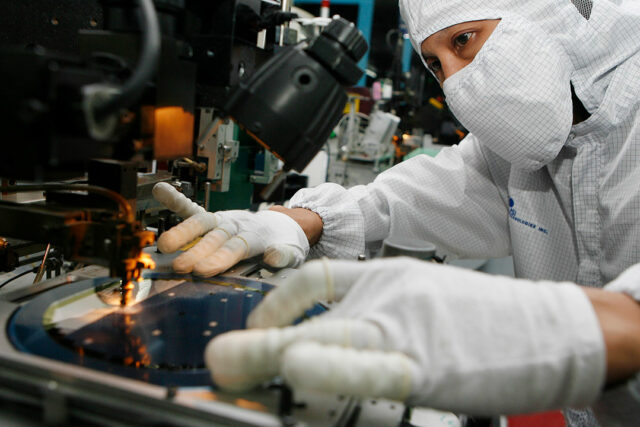
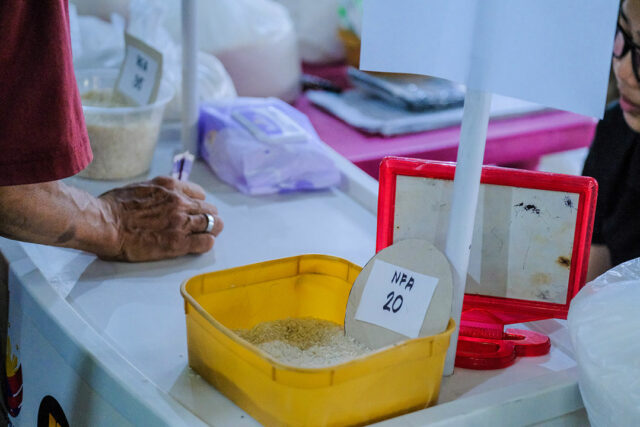


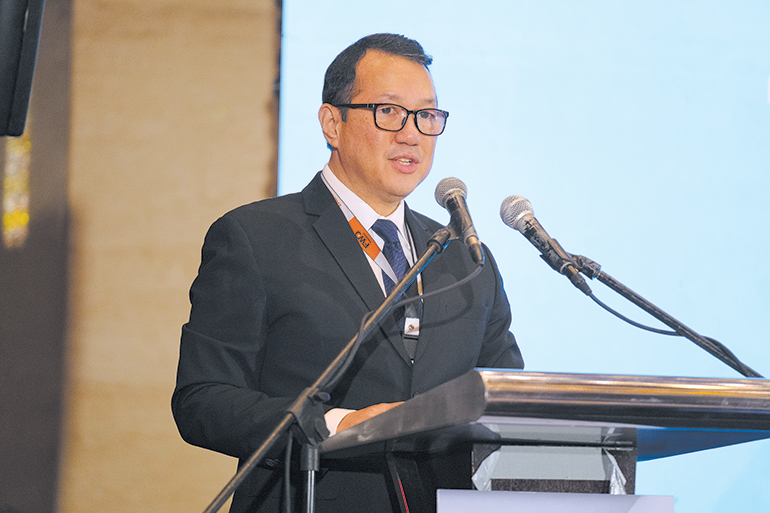
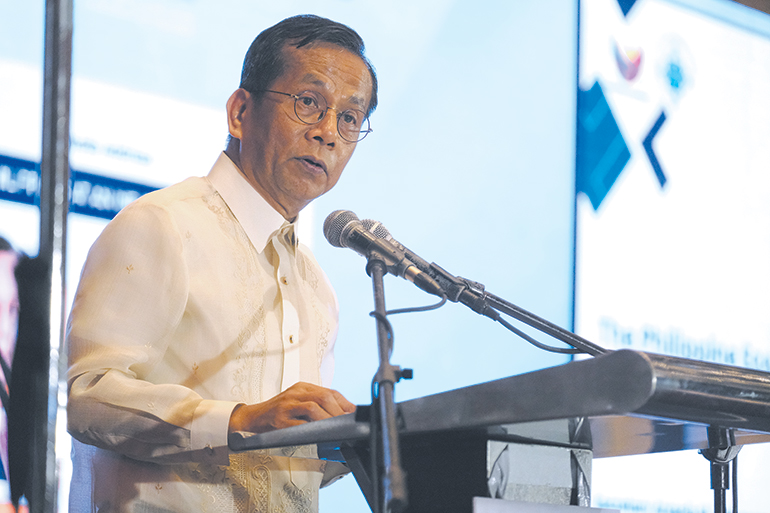
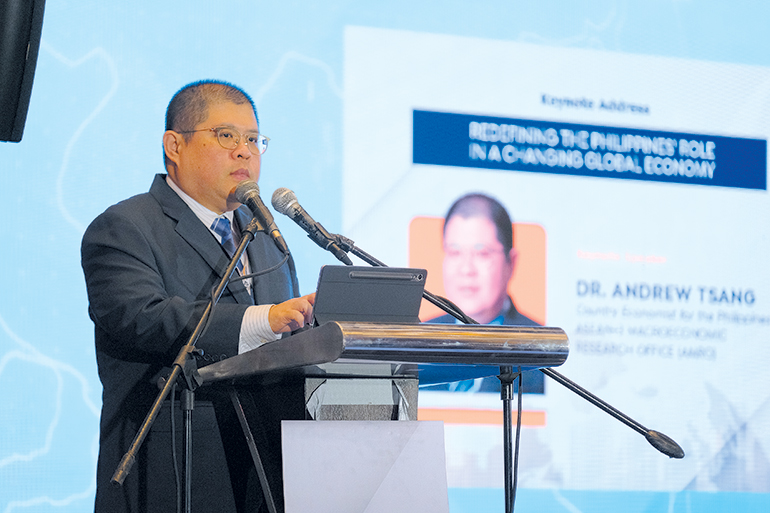
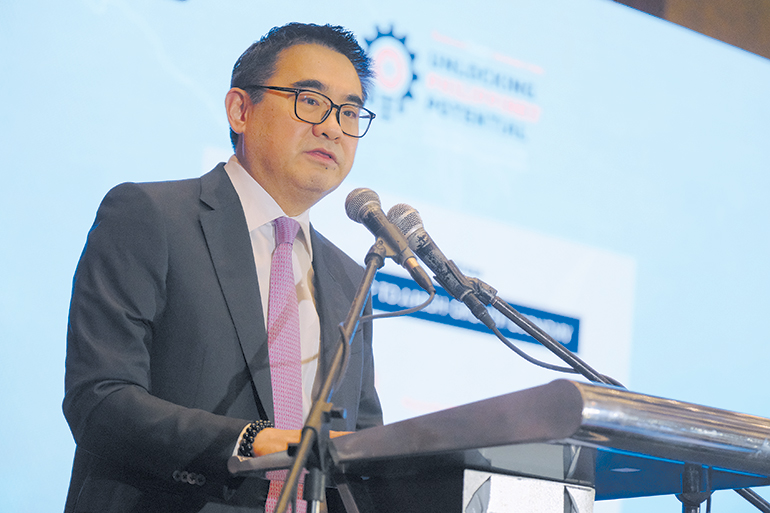



 Partner organizations include the Asian Consulting Group, American Chamber of Commerce of the Philippines, Bank Marketing Association of the Philippines, British Chamber of Commerce of the Philippines, French Chamber of Commerce and Industry Philippines, European Chamber of Commerce of the Philippines, Financial Executives Institute of the Philippines, JLCG Creative and Marketing Solutions, Management Association of the Philippines, Team Executive Decisions Events, Philippine Chamber of Commerce and Industry, Philippine Franchise Association, Philippine Retailers Association, and media partners One News and The Philippine STAR.
 “Transition has to be calculated and calibrated,” Ms. Guevara told the panel. “We do not want this to impact the economic growth of the country by suddenly turning off our coal-fired power plants.”
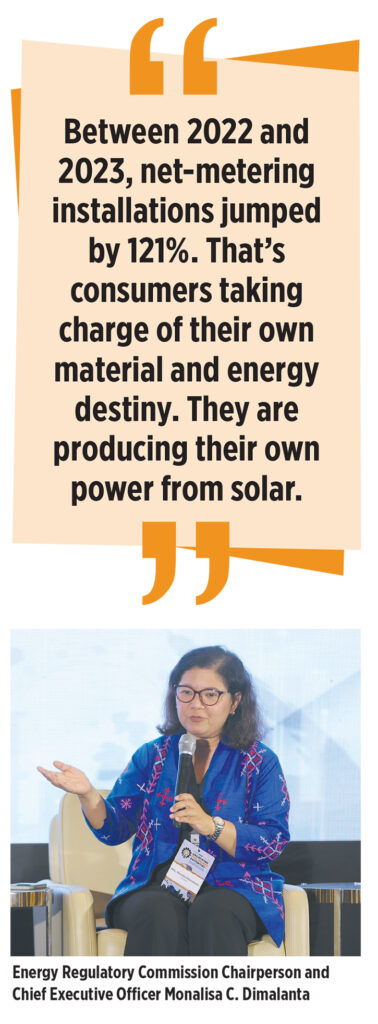 Meanwhile, Atty. Dimalanta mentioned the sharp rise in solar panel installations through the government’s net-metering program. The net-metering program allows households and businesses to install solar panels and sell excess electricity back to the grid.
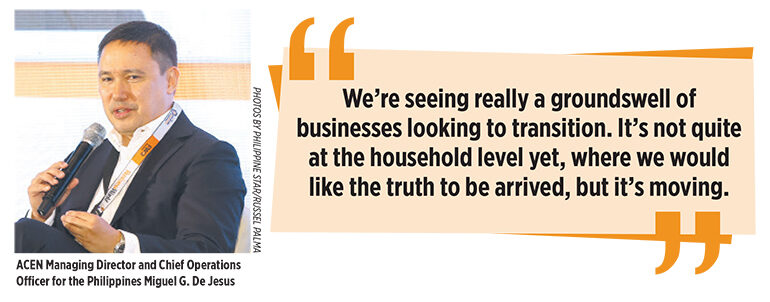 On the other hand, Mr. De Jesus mentioned that businesses are no longer waiting for regulations to tell them when or how to shift. Instead, they are reacting to a call from their customers to reduce carbon emissions and adopt more sustainable practices.
 “There are a lot of backups that are meant to be used,” Mr. Villegas added. “What is on us is to deliver quality and hard-to-know projects.”
 For now, the ERC continues to keep investor interest alive while making sure consumers don’t bear the cost of progress too soon.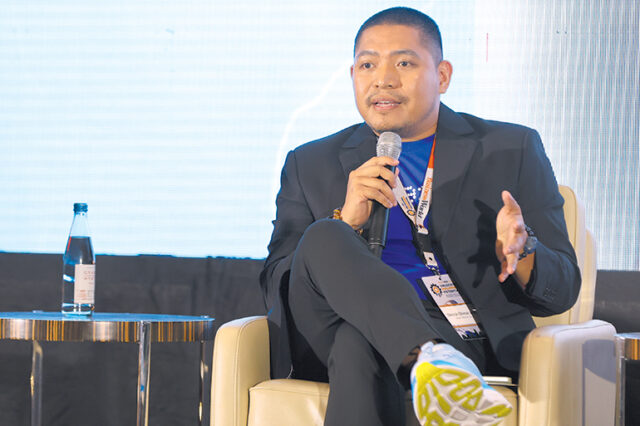
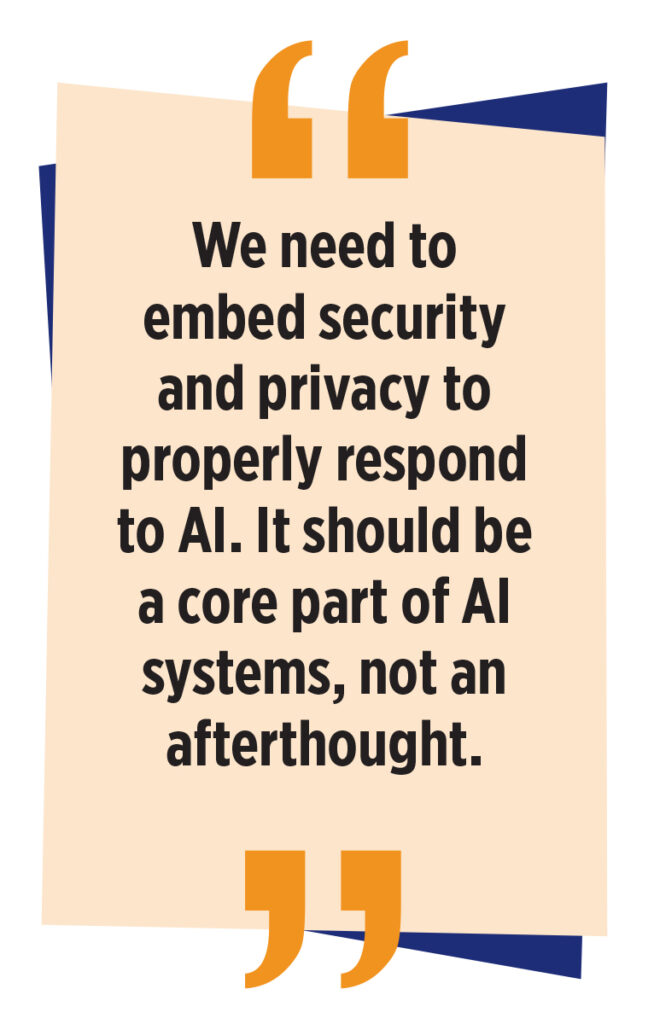 “Governance is about assessing the impact on people, on society,” he explained. “The challenge is constantly evaluating how these policies and AI systems affect the public and ensuring they meet people’s needs.”
 In addition, “AI hallucination,” where systems generate false or misleading information that appears legitimate, can harm individuals or organizations if not addressed through proper training and checks.
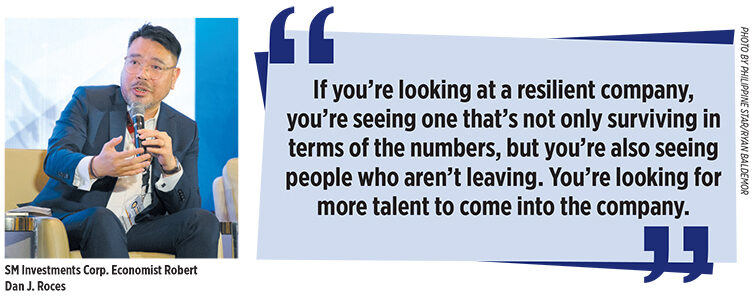 On measuring resilience and inclusivity in households, Mr. Roces of SM Investments identified three key indicators: when individuals are able to switch jobs easily, when they are able to set up businesses easily, and when they contribute to better government revenue.
 “In GCash, we will continue to bring more financial products to Filipinos, intensifying how we are able to educate them and make them more engaging that can help them survive their rainy days and have something for their one day,” Mr. Young said.