Home Blog Page 1501

Bill seeking OFW reintegration hurdles House panel

Overseas Filipino workers (OFWs) are seen at the Ninoy Aquino International Airport Terminal 3. — PHILIPPINE STAR/WALTER BOLLOZOS

A House of Representatives committee on Monday approved a measure seeking to create a framework providing long-term support for returning overseas Filipino workers (OFW), including financial support and psychosocial support.

The House overseas workers affair committee approved an unnumbered committee report that consolidated seven bills that sought to provide “reintegration” support for OFW returnees.

“What makes this measure so important is that it directly addresses what many OFWs worry about, what happens after the contract ends, after they come home,” Party-list Rep. Jude A. Acidre, who heads the House overseas workers panel, said.

“Reintegration isn’t just about giving them seminars or token programs. It’s about building a future they can look forward to,” he added.

Returning OFWs would be given access to government-arranged job fairs to help them search for employment opportunities while in the country, according to a copy of the bill obtained by BusinessWorld.

OFWs would also be granted civil service eligibility appropriate for their level of education attainment and job skills and experience, it added. — Kenneth Christiane L. Basilio

Four dead in Zamboanga sea mishap

COTABATO CITY — Four excursionists, including two children, drowned after a pump boat carrying them and 10 others capsized in the sea near Barangay Cabgan in Tambulig, Zamboanga del Sur on Saturday.

The Tambulig Municipal Disaster Risk Reduction and Management Office and police officials in the municipality and in the Zamboanga Del Sur Provincial Police Office on Monday confirmed the incident left two women, a preschooler and an elementary pupil dead.

Local executives had told reporters that the victims were from Barangay Balas in Aurora, Zamboanga del Sur, out for an excursion, when the apparently overloaded pump boat carrying them was overturned by big waves caused by sudden strong winds.

Barangay officials, fishermen and a team from the Tambulig police force found late Saturday three of the four pump boat passengers who were swept away by waves.

The two women were declared dead on arrival at a hospital where emergency responders rushed them for treatment. The third victim, an elementary pupil, died in the hospital later, according to barangay officials in Cabgan and personnel of the Tambulig Municipal Police Station.

The fourth missing boat passenger was found early Sunday floating lifeless near an offshore fish cage not too distant from the scene of the sea mishap. — John Felix M. Unson

IPA targets set for review after Q1 slowdown

By Justine Irish D. Tabile, Reporter

THE Department of Trade and Industry (DTI) will meet with investment promotion agencies (IPAs) to review their investment approval targets after the slowdown recorded in the first three months.

“We are still going to meet regarding that. But we are still really pushing, just like how we normally do,” Trade Secretary Ma. Cristina A. Roque said.

“Even in business, you always try to maintain (targets) or go higher. We do not wait until the last minute for us to really think of what measures to take,” she added.

In the first quarter, seven of the 13 IPAs reported approved investments worth P181.93 billion, down 43.7% from a year earlier.

For 2024, approved investments hit P1.958 trillion, up 32.7%.

Asked if the IPAs can match the P1.958 trillion in investment approvals posted in 2024, Ms. Roque said, “Of course we are hoping for that. I mean, that was what we hit last year, so this year, we should be able to replicate that.”

“We just have to make sure that we get it done. So we will really talk about it,” she added.

She said the IPAs will be evaluating the impact of US President Donald J. Trump’s reciprocal tariffs.

In April, Mr. Trump imposed tariffs on most trading partners, with a 17% duty set for Philippine goods. The reciprocal tariffs have since been suspended until next month, with a 10% rate applying to most countries in the interim.

“Our exports to the US are also substantial, right? So, that’s also another thing that we have to consider. But we try to look at the positive side. We try to be more strategic also in our approach to make sure that we reach our target,” Ms. Roque said.

In 2025, the Board of Investments (BoI) and the Philippine Economic Zone Authority (PEZA), which accounted for 93.8% of the approved investments last year, are hoping to raise P1.75 trillion and P250 billion worth of investment pledges, respectively.

As of May, the BoI has approved P329.52 billion in investment pledges. PEZA had approved P63.52 billion worth of pledges as of April.

Aside from roadshows and investment promotion missions, Ms. Roque said that she is also hoping for a newly signed joint memorandum circular (JMC) to drive investments.

“We are really making sure that it is a whole of government approach. All agencies are aware that we need to work together to at least achieve the goal of making it easy for anyone who wants to get their business moving,” she added.

On Monday, government agencies signed the JMC for the Investment Facilitation Network (INFA-Net), which is designed to harmonize investment facilitation strategies and improve support for investors.

“INFA-Net, formerly known as the Investments Promotion Unit Network, has evolved substantially since its establishment in 2007,” Ms. Roque said.

“Of the original 27 agencies that signed the first memorandum of agreement, we now have 38 member agencies working together to address common investor concerns from permitting and taxation to customs procedures and incentives,” she added.

Secretary Frederick D. Go, the special assistant to the President for investment and economic affairs, who is one of the JMC signatories, said that the document signifies the commitment of government agencies to creating an environment conducive to investments.

“From day one the administration of President Ferdinand R. Marcos, Jr. has been putting in place reforms to position the Philippines as an attractive investment destination in Southeast Asia to be able to provide thousands if not millions of jobs for our countrymen,” Mr. Go said.

He said that the government is currently being challenged by the high investment pledges booked last year.

The P1.958 trillion in 2024 approved investments “becomes the base that we have to beat in 2025 and all the way to 2028,” he said.

“All the more we need this kind of joint undertaking to really convince the investors that we are serious about improving the ease of doing business and improving the predictability of doing business,” he added.

He said that JMC is meant to improve the investment climate in the Philippines and make the country Southeast Asia’s “economic superstar.”

Economic sabotage probe ordered against AirAsia’s travel agency

BW FILE PHOTO

THE Department of Transportation (DoTr) is considering filing economic sabotage charges against AirAsia MOVE, the online travel agency (OTA) of AirAsia group, for allegedly setting fares at unreasonably high levels.

At a briefing on Monday, Transportation Secretary Vivencio B. Dizon said the DoTr is investigating complaints after ticket prices booked via AirAsia MOVE of up to P39,000 one way to and from Tacloban. 

“This is absurd. This is a criminal act on the part of AirAsia MOVE because when you compare with other (online tickets), prices are way different even for the same date,” Mr. Dizon said.

A complaint was filed by Leyte Rep. Richard Frank I. Gomez, who booked one-way Philippine Airlines tickets from Tacloban to Manila via AirAsia MOVE that cost around P77,704 for two individuals, Mr. Dizon said, noting that plane tickets directly booked on the Philippine Airlines website would only cost around P49,507.

AirAsia MOVE allows users to book flights, hotels and other travel services.

Mr. Dizon said the DoTr is now in talks with the Department of Information and Communications Technology and the anti-cybercrime division of the Philippine National Police to block access to AirAsia MOVE’s website as well as its Philippine mobile application.

“This Office has determined that AirAsia MOVE has engaged in the unauthorized sale of airline tickets for carriers in the Philippines at prices exceeding the approved fare structures established by the CAB (Civil Aeronautics Board),” the DoTr said in a cease-and-desist order against AirAsia MOVE dated May 26.

The DoTr has also ordered AirAsia MOVE to cease from offering, promoting, or selling tickets of Philippine carriers at prices that exceed the approved fare structure set by the CAB. 

AirAsia MOVE said Republic Act No. 776 gives the CAB the authority to regulate air carriers, and does not cover foreign-based OTAs.

Nevertheless, AirAsia MOVE Chief Executive Officer Nadia Omer said that it will cooperate with the Philippine government.

“MOVE also clarifies that it does not manually set or manipulate airfares in light of the fare discrepancy issues. As an OTA, MOVE displays flight inventory and pricing data as provided by its authorized upstream suppliers, including third-party aggregators and Global Distribution Systems (GDS),” Ms. Omer said in a statement on Monday. 

The discrepancies in fares displayed for certain routes which include flights operated by Philippine Airlines were caused by temporary lags in data synchronization, AirAsia MOVE said.

“MOVE welcomes the opportunity to proactively engage with relevant authorities to provide clarity on the issue and asks for due process to take its course for the benefit of all passengers booked via the platform,” it said. — Ashley Erika O. Jose

Questions raised over sustainability of FTI pork direct-sourcing model

PHILIPPINE STAR/ RYAN BALDEMOR

By Kyle Aristophere T. Atienza, Reporter

FOOD TERMINAL, Inc.’s (FTI) limited resources could limit its ability to execute its direct-sourcing program to influence pork prices, analysts said.

The FTI is intervening in the pork market by buying hogs directly from farms and delivering them to slaughterhouses. It later distributes the meat to retailers who agree to charge consumers prices that reflect the lack of middlemen in the supply chain.

The program “will fail given limited resources in the hands of FTI, the number of employees it has available to engage in procurement, selling, and pricing of meat to be bought,” former Agriculture Undersecretary Fermin D. Adriano said via Viber.

The FTI is also overseeing the government’s P20-per-kilo rice program.

The National Food Authority sells its rice at P33 per kilo, leaving the FTI and its partner local government units splitting the P13 subsidy for the rice that will be sold to the vulnerable segments of the population at P20.

The Office of the President has given the FTI a P5-billion budget for the rice program to help pay for the subsidy and the logistics costs.

Agriculture Secretary Francisco Tiu Laurel, Jr. last week told reporters that the FTI has the funding to carry out the direct-sourcing scheme for pork, without incurring losses.

However, he said the Department of Agriculture (DA) is seeking P500 million as “standby” funding to allow for the rollout to be conducted at scale. The goal is to procure 150,000 metric tons of hogs by year’ end.

“Why not just allow big groceries and supermarkets to import and sell at lower prices?” Mr. Adriano said.

Retailers participating in the direct-sourcing scheme will be allowed to charge a margin of P30-P50 per kilo.

In this manner, the FTI seek to influence pork prices by forcing parts of the supply chain, including non-participating retailers, to match its pricing.

Jose Enrique A. Africa of think tank Ibon Foundation said while the effort to intervene in the market should be part of a broader program to bring down commodity prices, the FTI may not be able to influence the pork market at scale.

“The initiative to reduce pork prices with direct sourcing to influence pricing by middlemen could be a small part of the solution, but only if the FTI has sufficient resources to influence the pork market,” he said via Facebook Messenger.

“However, the minuscule P500-million budget proposed procures just a fraction of 1% of total pork demand and cannot lower prices across the country or over an extended period,” he added.

“The risk of inefficiencies and leakages rises the weaker is institutional capacity and the poorer is oversight,” he added.

The FTI’s Taguig property remains on the list of government assets being considered for privatization, with the 24-hectare site valued at P58 billion.

Ayala Land, Inc. (ALI), in a disclosure to the bourse in March, confirmed that it had “inquired with the Department of Finance of their future plans on the remaining 24-hectare FTI property in Taguig City.”

“However, we wish to clarify that this was an exploratory discussion with no firm agreements or commitments,” ALI said. The company had bought part of the FTI site for P24.3 billion in 2012.

Mr. Africa, meanwhile, said the pilot test of the direct-sourcing program with Thai group CP Foods indicates that “it will be big producers, including big foreign producers, that will benefit from the scheme and not small Filipino hog-raisers.”

Mr. Laurel said last week the expansion of the direct-sourcing program complements the restoration of the maximum suggested retail price (MSRP) for pork either by the end of July or early August.

The MSRP — imposed in March at P350 per kilo for pork leg/ham and shoulder, P380 for pork belly, and P300 for fresh carcasses — will remain unchanged when the program resumes.

Hog producers had lobbied for the lifting of the price cap, citing the continuing impact of African Swine Fever (ASF) on production.

Compliance with the MSRP was below 5% as of May 2, just before the price caps were paused.

“It must be made clear that the first pork MSRP imposition failed because of low compliance at the middle of the value chain,” SINAG Executive Director Jayson H. Cainglet said via Viber.

“Buying more hogs at the farm level and supplying slaughtered pigs to retailers is an admission that the problem of high pork prices emanates from the huge gap of farmgate prices to retail prices,” he added.

Government intervention should not come at the cost “of further lowering farmgate prices.”

“Hog raisers have complied despite the difficulties of low farmgate price, especially backyard raisers, who have had to deal with the high cost of biosecurity measures, or the losses when farms are hit by ASF,” he said.

Mr. Cainglet said under a pork MSRP, backyard raisers and small commercial farms bear the brunt of the resulting weakening of the farmgate price as they sell only a few days every four months.

On the other hand, large commercial farms have the capacity to sell live hogs daily, he noted.

Viajeros and retailers have assured profits daily. They also do not face the risk of exposure that hog raisers face on a daily basis if pigs succumb to animal diseases or the culling of the whole farm if ASF is found,” Mr. Cainglet said.

Mr. Cainglet said despite increasing imports, which are equivalent to 50-55% of pork consumption, retail prices remain high.

“The threat to import more pork, similar to the case of rice prices last year, will never (result in) lower pork prices.”

“Only the importers will benefit, and the hog industry will struggle even more.”

In a market inspection carried out by the DA and the Department of Trade and Industry in Muntinlupa on Thursday, pork belly was found to be selling for P450-P490 per kilo.

Hog production in the first quarter declined 3.7% year on year to 403.79 thousand MT on a liveweight basis. The decline narrowed from the 4.3% contraction posted a year earlier.


EDSA rehab plan scrapped in favor of new technology

PHILIPPINE STAR/MIGUEL DE GUZMAN

THE GOVERNMENT agencies with rehabilitating Epifanio de los Santos Avenue (EDSA) will ditch the conventional building methods they had planned to employ and will pursue a new approach, including the possible use of new technology, the Department of Transportation (DoTr) said.

“We cannot do the project in a conventional way. The rebuild as presented will not be followed. It will be scrapped, the President ordered us to change the whole plan to find a better way,” Transportation Secretary Vivencio B. Dizon said at a briefing on Monday.

President Ferdinand R. Marcos, Jr. has ordered the postponement of the rehabilitation by one month. It had originally been scheduled to start in mid-June.

Mr. Marcos on Sunday suspended the planned rehabilitation and ordered a new approach that will minimize inconvenience to the public and the impact on the economy.

The P8.7-billion rehabilitation had been initially expected to take two years.

“We need a better way to ensure that our people are not inconvenienced for two years. (Mr. Marcos) wants it done in six months or if possible, less than a year,” Mr. Dizon said.

The EDSA rehabilitation project led by the Department of Public Works and Highways aims to reconfigure EDSA into a green and walkable highway. The DoTr and the Metropolitan Manila Development Authority are also among the agencies tasked with executing the project.

Mr. Dizon has assured that there will be no change in the project cost.

Nigel Paul C. Villarete, senior adviser on public-private partnerships at the technical advisory group Libra Konsult, Inc., said new technologies to expedite construction should have been considered at the project’s inception.

“It’s not as if the existing technologies are difficult to find, assess, and choose,” Mr. Villarete said via Viber.

“This should also teach us to perform holistic evaluation and analyses of major transportation projects so as to ensure that economic benefits are kept to the fullest and not degraded by delays,” he said.

Mr. Villarete also said exploring the most appropriate technology and approach in implementing a project should not take much time. — Ashley Erika O. Jose

SRA seeks emergency powers to curb Negros pest infestation

RLMIRAS–NCPC.CAFS.UPLB.EDU.PH

THE Sugar Regulatory Administration (SRA) said on Monday that it has sought emergency powers to contain a pest infestation on Negros island, which accounts for 60% of Philippine sugar production.

The spread of Red-Striped Soft Scale Insects (RSSI) in Negros that was declared an infestation on May 22 is now considered “alarming,” warranting the emergency powers bid.

The SRA said it wants to deploy P1.5 million for pesticides purchases pending assistance from the Department of Agriculture (DA).

The SRA wants emergency powers to fast-track procurement and distribution of pesticides “given the strict regulations of the Commission on Audit regarding procurement.”

RSSI was first detected in late March in northern Negros Occidental. It has since spread to over 424.82 hectares of sugarland as of May 30.

RSSI has the potential to reduce sugar yields by nearly 50%.

The SRA said it has sought the help of other government agencies including the DA, Bureau of Plant and Industry, the provincial government of Negros Occidental and affected local government units.

The National Crop Protection Center at the University of the Philippines Los Baños has identified at least five insecticides with the potential to curb the infestation — buprofezin, dinotefuran, phenthoate, pymetrozine, and thiamethoxam.

The use of the pesticides in sugar farms is subject to the issuance of an emergency-use permit by the Fertilizer and Pesticide Authority.

The SRA said in late May that it has applied for the permit. — Kyle Aristophere T. Atienza

Exporters certified to avail of CREATE MORE perks

BANGSAMORO.GOV.PH

THE Department of Trade and Industry’s Export Marketing Bureau (EMB) awarded on Monday the first set of certificates for export-oriented enterprises (EOEs).

Trade Undersecretary Ceferino S. Rodolfo said the certifications help exporters qualify for incentives offered by the Corporate Recovery and Tax Incentives for Enterprises to Maximize Opportunities for Reinvigorating the Economy (CREATE MORE) Act.

“Under sections six, seven, and eight of the law, the EMB has been entrusted with a special responsibility, and this is to certify enterprises that meet the 70% export sales threshold,” Mr. Rodolfo said.

The certification qualifies EOEs for value-added tax (VAT) zero rating on local purchases and VAT-exempt goods imports, provided these are directly attributable to their export activities.

“These incentives are not just technical adjustments to our VAT regime. They are a clear signal that the Philippine government is serious about supporting our exporters by improving our business environment,” he said.

“The CREATE MORE Act restores and enhances critical tax incentives that reduce the cost of doing business and allow exporters to reinvest in innovation, sustainability, and growth,” he added.

On Monday, CREATE MORE EOE certificates were awarded to Dole Philippines, Inc., Philsaga Mining Corp., Krystle Exports, Inc., and Bosch Service Solutions, Inc.

“These companies are certified and have successfully met the over 70% export threshold requirement under the CREATE MORE Act,” according to Secretary Frederick D. Go, special assistant to the President for investment and economic affairs.

“It will send a strong signal to our stakeholders that CREATE MORE is real, is working, and is happening,” he added.

He identified CREATE MORE as a “game-changing reform” that improves ease of doing business, reduces costs, and restores predictability for investors.

“As we, together with the investment promotion agencies, go on a road show to promote CREATE MORE throughout the world, we hope that the bandwagon effect of investing in the Philippines really takes place so that we can really build a sustainable economic growth story for our country,” he said.

He said that the next stops for the CREATE MORE road show are the US, Japan, the Middle East, the European Union, and China.

Mr. Go said that he is satisfied with the work of the investment promotion agencies last year.

“I think the investment promotion agencies are doing a good job. In my opinion,” Mr. Go said.

However, he said that the government must work “doubly hard” this year to beat the P1.9 trillion in approved investments last year.

“That now becomes the new statistic that we have to beat. It’s a very challenging number. So, we have to work doubly hard,” he said.

“Every year we try to beat our own record. But with every performance, it becomes more difficult … And it is a difficult situation now because of the US tariffs,” he added.

He also said that he hopes for the EOE certifications to help in attracting more investors.

“This sends a signal to everybody else that if you are qualified you can avail of the CREATE MORE Act benefits and help boost the export industry,” he said. — Justine Irish D. Tabile

PHL obtains €250-M funding from France to support climate action

PHILIPPINE STAR/MARTIN RAMOS

THE Department of Finance (DoF) said the Philippines has obtained a €250 million worth of concessional funding from France, via the Agence Française De Développement (AFD), to support climate action initiatives.

In a statement on Monday, the DoF said CCAP2 is co-financed by the Asian Development Bank (ADB) contributing €449.12 million and the Japan International Cooperation Agency pitching in ¥35 billion.

The Climate Change Action Plan, Subprogram 2 (CCAP2) assists vulnerable sectors in the transition to a resilient, low-carbon economy.

“(This) is a vote of confidence in the Filipino people and our shared vision of a greener, safer, and more resilient future,” Finance Secretary Ralph G. Recto said.

An earlier phase, CCAP1, ran from January 2020 to March 2022.

The first subprogram was supported by the ADB and the AFD, which contributed $250 million and €150 million, respectively.

The CCAPs are three subprograms that support various climate-related policy reforms.

“With this agreement, we strengthen our strategic cooperation on climate action, reinforce our institutional capacities, and accelerate the delivery of real, lasting change — especially for the most vulnerable,” Mr. Recto said.

On June 2, the ceremonial exchange for CCAP2 was executed by Mr. Recto and French Ambassador Marie Fontanel.

“France and the Philippines stand once again united in their commitment to address the urgent challenges of climate change, environmental degradation, and ocean protection,” the Ambassador said in a statement.

The AFD works to curb poverty and promote sustainable development. — Aubrey Rose A. Inosante

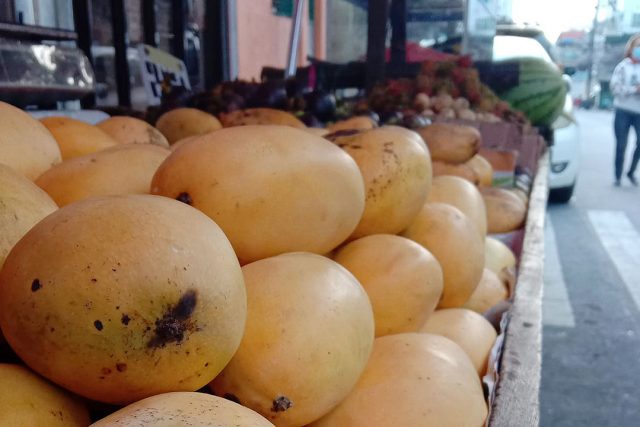
Italy touted as potential market for mangoes

FRUTAS DELIVERY FACEBOOK PAGE

THE PHILIPPINES is positioning Italy as a potential market for its mangoes, the Department of Agriculture (DA) said.
The Philippines recently dispatched its first mango shipment to Italy amounting to about half a ton.

The Department of Agriculture (DA) said small Filipino business owners in Rome were behind the mango order, sourced from farms in Pangasinan.

“Philippine mango farms already comply with Italy’s strict plant health standards, making this expansion feasible and sustainable,” it said.

Production of mangoes amounted to 90.94 thousand metric tons in the first quarter, the lowest total since 2010.

The DA said the first shipment of mangoes to Italy could “open the door for more investment, from both government and the private sector, to strengthen the competitiveness of Philippine mangoes globally.”

Mangoes have been identified as the flagship of Philippine commodity under the Food and Agriculture Organization’s (FAO) One Country One Priority Product initiative, which helps countries in developing green and sustainable value chains for their signature produce.

The DA said it has included mangoes in the FAO’s Hand-in-Hand Investment Initiative, which matches donor and development support with national agricultural plans. — Kyle Aristophere T. Atienza

Introducing the SEC Zuper Easy Registration Online (ZERO)

It has been a little over a year since I wrote an article about the guidelines of the Securities and Exchange Commission’s (SEC) eAMEND Portal.

eAMEND, or the Electronic Application for Modification of Entity Data portal, is a user-friendly online filing and submission amendment portal that facilitates the acceptance, processing, approval for payment, and issuance of the digital copy of the Certificate of Amendment of a corporation. It basically cancels the manual completion and submission of hard copies of the application documents in cases in which an entity will need to amend its Articles of Incorporation (AoI) or By-laws (BL), among others.

In relation thereto, when I was an associate, I had the chance to complete the incorporation process of a subsidiary firsthand via eSPARC or the Electronic Simplified Processing of Application for Registration of Company. I entered the basic information required for the company I was setting up in the eSPARC portal, and then the SEC examiners reviewed the application. When everything was in order, the examiner approved the application and automatically issued a digital AoI, BL, and Certificate of Incorporation, all online. It greatly reduced the application and submission time compared to the “old-school” or traditional manual collation and submission of application documents. However, the manually signed AoI, BL, and other incorporation documents still had to be personally submitted to the SEC.

Honestly, I thought that eSPARC was already advanced, but the Commission has more great things in mind that will make the setting-up process “zuper” easy. With the SEC’s digital transformation initiative, and in keeping with the current laws, rules, and regulations under the Republic Act (RA) No. 11032, or the Ease of Doing Business and Efficient Government Service Delivery Act, and RA 8792, or the Electronic Commerce Act, it issues SEC Memorandum Circular (MC) No. 3-2025, which requires the use of SEC ZERO, or the Zuper Easy Registration Online.

As background, in July 2024, the SEC issued MC No. 10-2024. This circular provides an option for stakeholders to create an account in eSECURE and/or digitally authenticate documents using the eSAP Portal. It requires the creation and registration of an eSECURE or the Electronic SEC Universal Registration Environment account for all individuals who wish to use and access the online services of the SEC. Moreover, it also introduces the eSAP or Electronic Submission Authentication Portal. This portal allows users of the credentialed eSECURE accounts to digitally authenticate SEC-related documents.

Additionally, SEC ZERO now links both eSECURE and eSAP. In this connection, it now allows applicants to digitally authenticate the system-generated forms for incorporation via eSAP. This means that the online submission of digitally authenticated documents via eSAP is acceptable as duly authenticated paper documents for purposes of SEC transactions. The use of the eSAP on electronic documents shall be accepted as an equivalent alternative to the authentication of a person on a written document. The documents digitally authenticated via the portal must be maintained in their original form and should be submitted electronically to the SEC for validation.

The portal also eliminates the need for physical signing and notarization of the registration documents. Currently, hard copies of application documents must be printed in several copies and forwarded to the signatories. Once signed, these documents must be manually notarized by a notary public.

The last point I personally appreciate is that it also eliminates the submission of hard copies of these registration documents. Hence, SEC ZERO now introduces a complete, end-to-end, digital, and paperless registration process. The digitally authenticated certificate of incorporation will be generated by the system and will have the same validity as the original certificate.

As of now, the SEC ZERO covers only the registration of a domestic company, whether the shareholding is all Filipino or with foreign equity, a One Person Corporation and those with two to 15 incorporators. It unfortunately does not include domestic lending and domestic financing companies. For other companies that are not covered, Sec. 3.2 of the MC provides that applicants will need to follow the regular processing guidelines under the eSPARC for three months from its implementation or until July 2025. With this provision, we expect that the SEC will again surprise us and issue a circular that will cover foreign corporations, domestic lending companies, and financing companies.

The issuance of SEC ZERO brings healthy competition with other government offices such as the BIR, SSS, PhilHealth, Pag-IBIG, and with the local government units. With the implementation of SEC ZERO, we can see the Commission’s commitment to providing effective technological modernization in a stakeholder’s transactions. This is a very welcoming development, especially for foreign investors who prefer a quick result when securing the certificate of incorporation. It greatly eliminates the traditional submission of documents, which must be manually signed and personally submitted to the SEC. It does not only streamline the applicants’ process, but it also reduces the SEC’s manual process of printing and issuing the relevant proof of incorporation documents, as these items will now be produced digitally.

Let’s Talk Tax is a weekly newspaper column of P&A Grant Thornton that aims to keep the public informed of various developments in taxation. This article is not intended to be a substitute for competent professional advice.


Alexander M. Querido, Jr. is a manager of the Tax Advisory & Compliance division of P&A Grant Thornton, the Philippine member firm of Grant Thornton International Ltd.

business.development@ph.gt.com

Swedish Maja Stark captures US Women’s Open for 1st major title

MAJA STARK of Sweden holds the Harton S. Semple Trophy after winning the 80th LPGA US Womens Open. — REUTERS/ZUMA PRESS WIRE/JEFF M. BROWN

MAJA STARK has won tournaments around the world, but a professional victory in the United States eluded her.

Now she’s a US Women’s Open champion.

Stark carded an even-par 72 to win the second major of the year by two shots on Sunday at Erin Hills in Erin, Wis.

The 25-year-old from Sweden led the championship by one stroke through 54 holes and outlasted World No. 1 Nelly Korda, who got within a shot of the lead before petering out on the back nine.

“I just didn’t want to get ahead of myself. I thought there’s still a lot of golf left to be played,” Stark said. “I just felt like people are going to pass me probably, and I just had to stay calm through that.

“I didn’t look at the leaderboards until I was on like 17. I caught a glimpse of it. It was nice.”

Stark posted a 7-under-par 281 for the week. Korda (71) tied for second with Japan’s Rio Takeda (72) at 5 under, and South Korea’s Hye-Jin Choi carded a 68 to claim a share of fourth place at 4 under with countrywoman Mao Saigo (73) and China’s Ruoning Yin (70).

Korda had a 2-under front nine to get to 6 under for the championship. Stark was nursing a one-stroke lead over Korda when she birdied No. 11 from 14 feet.

Korda bogeyed the par-3 13th and birdied the next hole, but only after an eagle opportunity slid by.

Stark made a two-putt birdie at No. 14 to get to 9 under and had enough cushion to absorb bogeys at the difficult Nos. 17 and 18, where she missed each fairway.

“You need to kind of think about every shot here,” Stark said of the difficult course setup. “Maybe not the tee shot on 10. I think that’s fine. But everything else, you’ve just got to have your brain working for you, whereas like on normal weeks, you can kind of bail out. Here, not really.”

Stark has six wins to her name on the Ladies European Tour. One of those, the ISPS Handa World Invitational in Northern Ireland, was co-sanctioned by the LPGA and earned her a tour card in 2022.

Before Sunday, the highlight of Stark’s minimal major resume was placing second to Korda at the 2024 Chevron Championship. Now, she is just the third Swedish woman to win a US Women’s Open after Liselotte Neumann and golf legend Annika Sorenstam.

“It’s so cool. They texted me yesterday and just kind of said, ‘Bring it home,’” Stark said. “That was already cool to just get those texts. Just looking at all the names on the trophy. I love the US Opens. I’m so happy that it’s mine now.”

Korda came up short of a would-be third major victory. She earned her best finish at a US Women’s Open and her third top-10 after she missed the cut last year.

“To have that showing last year definitely put a dagger into my heart, but that’s just golf,” Korda said. “You’re going to lose more than you win a majority of the time. I feel like I actually learn a lot about myself and my game and where I need to improve playing the US Women’s Open because it does test every part of your game.

“It’s also super motivating… to see where my game’s at. Hopefully I can continue trending in the right direction for a long season ahead.”

Takeda made an early double bogey in an otherwise solid round to stay close to the top of the leaderboard all day. She tied for ninth at this championship last year in her major debut and followed that with a T2 on Sunday.

“This is a major, of course, and it is a big tournament. So I always thought that I would like to do my best here,” Takeda said.

Julia Lopez Ramirez of Spain played in the final pairing with Stark after shooting a 68 on Saturday. She struggled from the outset and finished 1 over for the event after a triple-bogey 8 on the final hole destined her to a score of 79. — Reuters

ADVERTISEMENT
ADVERTISEMENT