Home Blog Page 1465

Maynilad IPO valuation not finalized — Pangilinan

MANUEL V. PANGILINAN — BW FILE PHOTO

THE VALUATION of the initial public offering (IPO) of west zone concessionaire Maynilad Water Services, Inc. remains subject to adjustments, according to its chairman.

“The initial numbers are tentative. So, don’t be surprised if they adjust it. But they’re close to make a final determination,” Maynilad Chairman Manuel V. Pangilinan said on the sidelines of Manila Electric Co.’s annual stockholders’ meeting on Tuesday.

Mr. Pangilinan said the number of shares may still change as “some of the shareholders might decide to sell down a bit.”

He added that the pricing at which the shares will be offered may be finalized by June.

“So, just watch for that space. We want to launch within the year, para matapos na ang obligasyon to offer 30%,” the executive said.

Based on its latest prospectus draft dated May 14, Maynilad has reduced the size of its planned IPO to P45.8 billion, slightly lower than the up-to-P49 billion indicated in its initial prospectus.

The revised IPO comprises up to 2.29 billion common shares, down from the earlier maximum of 2.46 billion shares. The indicative maximum price remains at P20 per share.

The updated prospectus includes a primary offer of up to 1.66 billion common shares, an overallotment option of up to 249.05 million primary common shares, an upsize option of up to 354.7 million secondary common shares, and 24.9 million primary common shares to be offered to Hong Kong-based investment holding firm First Pacific Co. Ltd., which is also led by Mr. Pangilinan.

This compares with the previous allocation of up to 1.78 billion primary common shares, an overallotment option of up to 266.31 million primary common shares, an upsize option of up to 379.29 million primary common shares, and 36.31 million primary common shares for First Pacific.

The latest timetable shows that the listing date has been moved to July 17 from the earlier target of July 10.

The notice of final offer price to regulators is scheduled for July 1, while the offer period will run from July 3 to 9.

Net proceeds from the IPO will be used to fund Maynilad’s capital expenditure requirements for its water, wastewater, and customer service and information system projects through 2026. A portion of the proceeds will also be allocated for general corporate purposes.

Maynilad operates under a 25-year legislative franchise granted by Republic Act No. 11600, signed into law on December 10, 2021.

The law requires Maynilad to offer at least 30% of its outstanding capital stock within five years from the grant of the franchise.

Metro Pacific Investments Corp., which holds a majority stake in Maynilad, is one of three Philippine subsidiaries of First Pacific Co. Ltd., alongside Philex Mining Corp. and PLDT Inc.

Hastings Holdings, Inc., a unit of PLDT Beneficial Trust Fund subsidiary MediaQuest Holdings, Inc., has an interest in BusinessWorld through the Philippine Star Group, which it controls. — Sheldeen Joy Talavera

Arts & Culture (05/28/25)


MCAD questions notions of time in exhibit

THE exhibition Moments of Delay, engages with the complications of our understanding of time and the contemporary moment, through a range of formats — exhibition-making, workshops, artist-led activities, and panel discussions. Held at the Museum of Contemporary Art and Design (MCAD) Manila, it brings together 14 artists: Allan Balisi, Rocky Cajigan, Lesley-Anne Cao, Ronyel Compra, Uri de Ger, Celine Lee, Christina Lopez, Neo Maestro, Corinne de San Jose, Joar Songcuya, Cristian Tablazon, Tambisan sa Sining, Tropikalye, and Miguel Lorenzo Uy. The exhibit and its various programs run until Aug. 24 at the MCAD in College of Saint-Benilde, Malate, Manila.


Jinju silk lanterns at Korean Cultural Center

THE Korean Cultural Center in the Philippines (KCC), in partnership with the Jinju City Government, has put up the exhibit Lights of Korea: Jinju Silk Lanterns, showcasing glowing artistry and heritage. More than just lanterns, the intricate silk masterpieces from Jinju City invite viewers to experience Korean culture in a whole new light. The exhibit is part of the 2025 Touring K-Arts Program supported by Korea’s Ministry of Culture, Sports, and Tourism and the Korea Foundation for International Cultural Exchange. The exhibit runs until July 31 at the KCC Exhibition Hall in Taguig City.


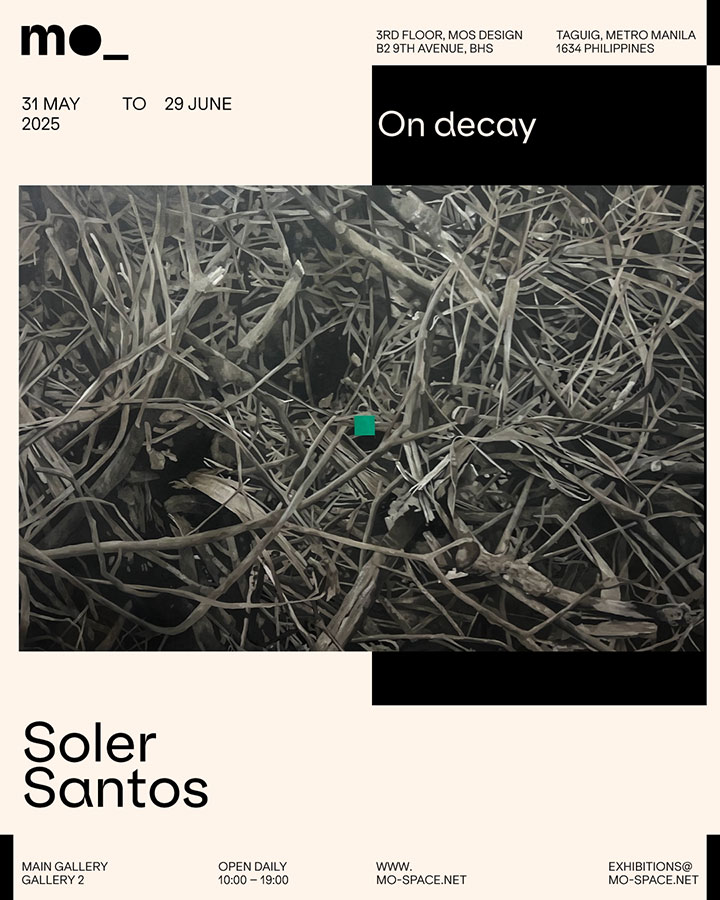
Soler Santos’ photos showcased at MO_Space

THE ephemerality of nature takes the spotlight in Soler Santos’ photographs, which depict both the environment and humans who inhabit these spaces. His exhibit, On decay, raises questions about temporality, ecological vulnerability, and the relationship between humanity and its surroundings. The goal is for viewers to “sit with their perceptions of decay, and reconsider the thought of it as an endpoint, and reframe it, instead, as a site of meaning, memory, and aesthetic possibility.” The exhibit runs from May 31 to June 29 at MO_Space, Bonifacio High Street, BGC, Taguig.


Come From Away to take the stage in Circuit Makati

THE hit Broadway musical Come From Away is set to be staged at the Samsung Performing Arts Theater at Circuit Makati from June 6 to 29. Come From Away tells the true story of 7,000 airline passengers who found themselves unexpectedly grounded in Gander, Newfoundland in the aftermath of Sept. 11. The Philippine production stars Cathy Azanza-Dy, Caisa Borromeo, Garrett Bolden, Mikkie Bradshaw-Volante, Becca Coates, Steven Cadd, Mayen Cadd, Rycharde Everley, Topper Fabregas, Sheila Francisco, Carla Guevara Laforteza, Menchu Lauchengco-Yulo, Gian Magdangal, George Schulze, and Chino Veguillas. Michael Williams is directing, with Rony Fortich is the musical director. Tickets are available on Feb. 22 via TicketWorld, starting at P900.

Zarah Juan turns campaign tarps into bags

BW FILE PHOTO

ZARAH JUAN, a Philippine social enterprise, is upcycling discarded tarpaulin materials from election campaigns into fashionable tote bags.

The initiative started after the 2022 presidential elections, when Zarah D. Juan, the creative director, saw potential in discarded campaign tarpaulins that would have otherwise ended up in landfills.

“I said, ‘OK, why don’t we create a design that is fresh and innovative in a way that people would enjoy and use every day?’” she said in an interview. “So I was very ambitious in thinking that if we created a bag out of tarp bags, we would be able to help the environment.”

After that election, the Zarah Juan brand managed to upcycle about 20,000 bags from tarpaulins over a year.

Ms. Juan said they also plan to upcycle campaign tarpaulins from the May 12 midterm elections.

“That’s our main goal again — to upcycle as much as we can so that we can lessen the impact of tarp waste on our dumpsites,” she said. “And the only thing we will change is that we’re releasing new designs. So, it’s going to be a series of bags.”

The Metropolitan Manila Development Authority (MMDA) earlier said 11.8 tons of campaign-related materials, such as posters and tarpaulins, were removed just days after the elections.

If left in landfills, plastic tarpaulins can release harmful microplastics and persist for 500 to 1,000 years.

Zarah Juan gets tarpaulins from local governments such as Quezon City to send them to their production networks, including the Quezon City Jail Female Dormitory, where prisoners cut and clean them.

They have also tapped communities in Bulacan and Quezon City for printing, assembling and sewing. The products are then returned to the company for quality checks and sold on its website and at SM stores.

“It gives me joy as a designer to be able to tickle people’s minds a bit in terms of their perception of the bag, and then give them joy when they realize, ‘Wow, these are actually upcycled, printed, used tarps,’” Ms. Juan said.

She said the company plans to hire more people, especially Filipino prisoners. She also wants more companies to step up and prioritize environmental sustainability, which can go hand in hand with profits. — Edg Adrian A. Eva

BSP OKs 11 bank branches in Q4

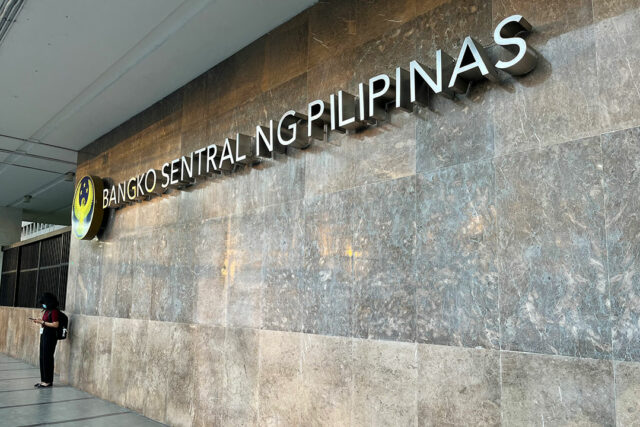
Bangko Sentral ng Pilipinas main office in Manila — BW FILE PHOTO

THE BANGKO SENTRAL ng Pilipinas (BSP) approved 11 regular bank branches in the fourth quarter.

The Monetary Board okayed applications for new banking offices of seven banks — three universal and commercial banks, two thrift banks and two rural and cooperative banks — in the fourth quarter, according to a circular letter dated May 7.

The BSP also approved applications to set up 13 branch-lite units in the period.

The central bank allowed Security Bank Corp. to open five new regular branches located in cities in Pampanga, Bacolod, Rizal, Batac City and Tandag City. It also approved the bank’s branch-lite unit in Pasay City.

The Monetary Board also approved the application of the Philippine Trust Co. to put up four regular branches located in General Santos City, Muntinlupa City, Tarlac City and Tuguegarao City.

Bank of Commerce was also allowed to open five branch-lite units — three in Pasay City, one in General Trias City, and another in Malay, Aklan.

Meanwhile, the BSP also approved First Consolidated Bank, Inc.’s application to set up a regular branch in Capiz.

Legazpi Savings Bank, Inc. also secured approval for six branch-lite units located in Butuan City, Misamis Oriental, Davao City, Koronodal City, Pagadian City and Leyte.

The central bank also granted the application of East West Rural Bank, Inc. for a regular branch in Davao City. It also allowed the opening of a branch-lite unit for Rural Bank of Rizal (Zamboanga del Norte), Inc. in Lapu-Lapu City.

Meanwhile, sixteen lenders opened new banking offices during the fourth quarter.

Among universal and commercial banks, BDO Unibank, Inc. opened 12 regular branches during the period while Security Bank opened 13 regular branches and one branch-lite unit. — Luisa Maria Jacinta C. Jocson

Amending the Universal Health Care Act should be top priority of 20th Congress

FREEPIK

As the nurse aide helped me get settled in my hospital bed the day after Election Day, she noticed the indelible ink on my index finger. “Sir, you were able to vote in spite of your condition? I hope your candidates won,” she said as she tried to open a friendly conversation with me. I responded by asking if her own candidates won. She said happily, “Yes, Bam Aquino and Kiko Pangilinan.” Then she added, sounding apologetic, “Also Bong Go. I voted for him because of his Malasakit program. A relative of mine benefitted largely from it.”

That must be the same reason why 29.6 million out of 55.9 million total voters (53%) voted for Bong Go. As a senator, he identified himself as an ardent advocate for public health. During the campaign period, he highlighted the continued expansion of health-related services during his first term as senator. “Malasakit Center, that’s a law that we passed,” he boasted. He projected himself to the electorate as “Mr. Malasakit.”

Malasakit Centers provide financial assistance to the indigent and financially incapacitated patients without their having to go out of the hospital to seek assistance from the participating agencies — the departments of Health and of Social Welfare and Development, PhilHealth, the Philippine Charity Sweepstakes Office, and the Philippine Amusement and Gaming Corp.

Usually, the topnotcher among the winning senatorial candidates is either a veteran politician like Frank Drilon in 2016 and Cynthia Villarin in 2019, or a popular entertainment personality like Tito Sotto in 1992, Bong Revilla in 2010, and Robinhood Padilla in 2022.

Bong Go is not either of the two. Go rose into prominence when Davao City Mayor Rodrigo Duterte ran for president in 2016. He came to be known as the loyal aide of Mayor Duterte. When Mayor Duterte was elected president, Bong Go continued to serve as his aide.

In 2019, President Duterte endorsed Bong Go as a candidate for senator. He placed third in that year’s senatorial race. Upon his election to the Senate, President Duterte directed him to set up a center by which government medical assistance would be given to indigent Filipinos. The first Malasakit Center opened in February 2018.

Upon his election as senator in 2019, Go continued to promote the Malasakit Center. He authored a bill in the Senate that would institutionalize the Malasakit concept. President Duterte signed into law on Dec. 3, 2019, the Malasakit Center Act, also known as Republic Act No. 11463.

The law obliges the government to establish Malasakit Centers in all hospitals under the Department of Health (DoH). The law also authorizes the Philippine National Police to set up such facilities. It is clear from the provisions of the law that Malasakit Centers are not healthcare delivery facilities. They are pay stations in hospitals.

Go’s emergence as topnotcher among the winning senatorial candidates indicates that free or affordable healthcare is the main concern of the citizenry. The amendment of the Universal Health Care (UHC) Act, RA 11223, should therefore be the top priority of the incoming 20th Congress. RA 11223 was intended to establish a healthcare delivery system that would provide affordable quality healthcare services for all citizens of the Philippines.

The World Health Organization (WHO) constitution of 1948 declared health a fundamental human right. In 2015, the United Nations adopted a resolution urging developing economies to institute universal healthcare by 2030.

UHC means affordable, acceptable, available, and accessible healthcare services for all citizens of the Philippines. For UHC to achieve its goal, several factors must be in place, including: a strong, efficient, well-run health system that meets priority health needs, meaning healthcare facilities like hospitals and primary care units, and a sufficient number of well-trained health workers like doctors, nurses, and medical technicians to provide the services.

Quality healthcare makes UHC a large expense for governments. It is usually funded by general income taxes like in the United Kingdom and Cuba, where government-owned hospitals and government-employed professionals provide healthcare for free. Every citizen gets the same quality of healthcare.

While the Philippine government also owns hospitals and employs healthcare workers, their numbers fall way short of those required to provide the health services needed by the 112 million Filipinos. In many parts of the country, farm workers, market vendors, food stall operators, tricycle/jeepney drivers, and retail store attendants who fall ill do not get proper medical attention due mainly to the inaccessibility of a healthcare facility.

WHO recommended there be 20 hospital beds per 10,000 population. Based on DoH data, all regions have insufficient beds relative to the population except for Metro Manila.

WHO had advised our legislators to implement universal healthcare fully in 2030 when the country’s health delivery system would be capable of servicing UHC. But Senators JV Ejercito, Sonny Angara, Nancy Binay, and Cynthia Villar, who were all running for re-election in 2019, rushed a universal healthcare bill to President Duterte for his signature so that they could present UHC in the elections of 2019 as their gift to the Filipino people. President Duterte signed into law Republic Act No. 11223, or An Act Instituting Universal Health Care for All Filipinos.

RA 11223 does not require the expansion of the country’s healthcare delivery system to provide affordable quality healthcare services for all citizens of the Philippines. It automatically enrolled all Filipino citizens in PhilHealth. As mentioned above, almost all regions have insufficient hospital beds relative to the population.

So, many patients are turned away by government hospitals. Poor folks denied admission just go home to their shack or hut, treat themselves with herbal remedies or consult the neighborhood arbolaryo (herbalist/healer).

The public hospitals are overcrowded, so income earners seek medical attention in private hospitals. Most of them were established for profit. Their payment system is independent of the strict guidelines observed in government-owned hospitals. As the physician-stockholder of private hospitals enjoys full discretion in using the hospital’s facilities, his practice is influenced by the incentives available to him.

He may recommend longer hospital confinements and much more surgery than necessary. When generic drugs are as efficacious, he prescribes the newest and therefore more expensive medicine, for which act he is rewarded by the manufacturer with a fully-paid-for vacation abroad disguised as attendance of a medical convention.

A number of medical directors of non-profit and philanthropic medical institutions in the US have said much of the waste and excess utilization that takes place in laboratory, radiology, and pharmacy may be unnecessary and even potentially dangerous. The extra but unnecessary services and wonder drugs account for the findings of the researchers of the Philippine Institute of Development Studies — that PhilHealth members pay 60% of their hospital bill out of pocket.

In my case, I paid 78% of the total bill, which was net of the 20% senior citizen discount. In previous hospital episodes, before the benefit packages were upgraded, I sometimes paid as much as 92%. The painful fact is that the country has not really instituted universal healthcare.

The amended UHC law should require the government to build more healthcare facilities, to be funded by general income taxes, sin taxes, the Philippine Charity Sweepstakes Office, and the Philippine Amusement and Gaming Corp. The law should also require the facilities to be manned by professionals employed by the government. That way, Filipino can avail themselves of free or affordable healthcare services. There would be no need for Malasakit Centers because the facilities are Malasakit Centers themselves.


Oscar P. Lagman, Jr. was country manager for a health insurance company. He also had substantive participation in USAID healthcare projects.


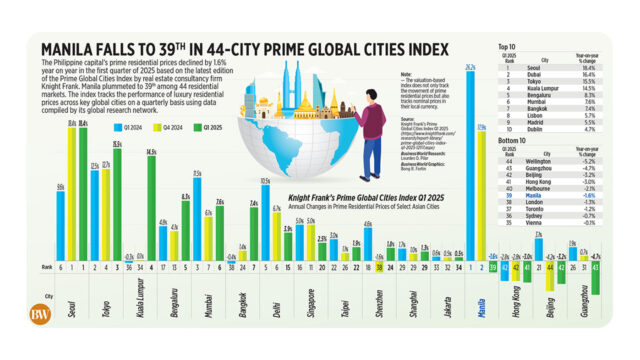
Manila falls to 39th in 44-city Prime Global Cities Index

The Philippine capital’s prime residential prices declined by 1.6% year on year in the first quarter of 2025 based on the latest edition of the Prime Global Cities Index by real estate consultancy firm Knight Frank. Manila plummeted to 39th among 44 residential markets. The index tracks the performance of luxury residential prices across key global cities on a quarterly basis using data compiled by its global research network.

Manila falls to 39<sup>th</sup> in 44-city Prime Global Cities Index

Metro Pacific Iloilo Water sets P1.3-B investment to upgrade infrastructure

Metro Pacific Iloilo Water

METRO PACIFIC ILOILO WATER (MPIW), the water distribution utility serving Iloilo, has earmarked over P1.3 billion in investments this year to upgrade its water infrastructure.

“A substantial portion of our 2025 investment is focused on pipeline rehabilitation to curb non-revenue water, caused by aging infrastructure, poor pipe conditions, and illegal connections,” MPIW Chief Operating Officer Angelo David Berba said in a media release on Tuesday.

The company is advancing five water infrastructure projects: Service Improvement of Diversion Road Phase 1 and Service Expansion of Brgy. San Rafael; HS Jaro Total Pipe (Phase 1 and 2) Replacement Project; Asset Replacement of Gate Valve, Manhole, and Valve Box Cover; Service Improvement (Non-Revenue Water Reduction) of Q. Abeto to R. Mapa St.; and Service Improvement of Iloilo City Proper Phase 2, expecting a recovery of approximately 15 to 20 million liters per day.

Service expansion plans will cover Pavia and the districts of Molo, Mandurriao, and Jaro in Iloilo City.

MPIW is the joint venture company of Metro Iloilo Water District (MIWD) and Metro Pacific Water (MPW) aimed at enhancing water services in Iloilo City and surrounding areas.

MPW signed a joint venture agreement with MIWD in 2019 for a 25-year concession covering rehabilitation, expansion, and improvement of the water distribution system and wastewater management facilities.

The joint venture currently serves over 250,000 concessionaires across Iloilo City and neighboring municipalities, including Maasin, Cabanatuan, Sta. Barbara, Pavia, Oton, Leganes, and San Miguel.

Since taking over water distribution operations in 2019, Mr. Berba said MPIW has reduced non-revenue water from 60% to 40%, with ongoing initiatives driving further improvement.

To date, the company has laid nearly 35,000 linear meters of new pipelines as part of expansion and rehabilitation projects, with an additional 36,000 linear meters currently underway.

The pipeline replacement aims to improve water distribution efficiency further and significantly reduce water losses in high-demand areas, increasing service connections by 20% to date. — Sheldeen Joy Talavera

Spain returns artwork seized during Civil War

MADRID — Last week Spain returned paintings belonging to a former Madrid mayor that were seized for their protection during the 1936-39 Civil War and never returned under Francisco Franco’s dictatorship.

The seven paintings had been kept in several museums throughout Spain, including the Prado Museum in Madrid, where the handover ceremony to the family of Pedro Rico, Madrid’s mayor as the Civil War broke out, took place on Thursday evening.

In 2022, the Prado published a list of artworks that had been seized during the war and set up a research project to track down their legitimate owners.

The government has identified more than 6,000 items, including jewelry, ceramics, and textiles, as well as some paintings, sculptures, and furniture, which were safeguarded during the war by Republican forces fighting Mr. Franco’s Nationalists and never returned by Francoist institutions when he came to power.

“It’s a very important moment of justice and reparation that the Spanish government is doing for their families,” said Culture Minister Ernest Urtasun.

The paintings returned to Mr. Rico’s family nine decades later were mainly scenes of everyday life by 19th-century artists such as Eugenio Lucas and his son Lucas Villaamil.

Francisca Rico said she was very moved by the restitution of the paintings belonging to her grandfather, who was mayor between 1931-1934 and then in 1936 and who died in exile in France.

“(They’re) finally doing what should have been done long ago,” she said. — Reuters

Gen Z Filipino farmer pushes soilless farming

ALMIRA LOUISE S. MARTINEZ

J.H.B. ZAPATA Integrated Farm, a hydroponic farm in Pampanga province north of the Philippines, wants young Filipinos to venture into soilless farming, using nutrient-rich water instead, as the country grapples with food security amid its dwindling farmers.

“You can do farming under the shade because you just need to place the plant on the pump,” farm owner John Harold B. Zapata, 24, told BusinessWorld in an interview. “Since it’s a soilless cultivation, you won’t touch soil and worms.”

Starting a hydroponic farm also requires minimal capital, he said.

Mr. Zapata started building his DIY (do-it-yourself) greenhouse in 2021 with less than a thousand pesos in capital and recyclable materials from the junk shop such as scraps of wood, bamboo and plastic sheets.

Before that, he armed himself with knowledge about hydroponic farming by joining Facebook groups and online forums on the subject. “I didn’t know anything about farming. I just knew I wanted to try,” he said.

The average age of Filipino rice farmers is 56 and climbing, and analysts predict a critical shortage of farmers in the next decade as young people show less interest in agriculture, threatening food security.

The problem is compounded by increasing farm input costs. Fertilizers, pesticides, machinery and irrigation systems are becoming more expensive, eating away at farmers’ modest profits.

The agriculture and forestry sectors had the most year-on-year employment decline in February, with 950,000 workers lost mainly due to typhoons that devastated farmlands, according to the local statistics agency.

Hydroponics is the farming technique of growing plants using a water-based nutrient solution instead of soil. It uses 90% less water than traditional farming and occupies minimal space.

After four years, Mr. Zapata’s greenhouse grew to a 1,700-square-meter farm, housing more than 2,000 heads of lettuce, basil, and arugula.

“People do not ask where the lettuce came from,” he said. “They do not ask if it came from an expensive greenhouse. What matters is that the produce is good.”

Mr. Zapata offers workshops and training for beginners interested in starting a hydroponic farm. Each session costs P2,000, which includes starter seeds and a marketing guide.

He has taught more than a hundred students since February and aims to reach a thousand by year-end.

“We just wanted to produce vegetables before,” he said. “Now, I want to produce not just vegetables but also a new generation of growers.” — Almira Louise S. Martinez

Mr. Zapata is one of the “changemakers” of the Movers of Tomorrow, a storytelling platform launched by MPT Mobility, the innovations arm of Metro Pacific Tollways Corp. (MPTC).

MPTC is the tollways unit of Metro Pacific Investments Corp., one of three key Philippine units of Hong Kong-based First Pacific Co. Ltd., the others being Philex Mining Corp. and PLDT, Inc.

Hastings Holdings, Inc., a unit of PLDT Beneficial Trust Fund subsidiary MediaQuest Holdings, Inc., has a majority stake in BusinessWorld through the Philippine Star Group, which it controls.

AUB partners with Taptap Send for remittances via HelloMoney e-wallet

ASIA United Bank Corp. (AUB) has partnered with remittance platform Taptap Send to enable overseas Filipino workers (OFWs) to send money to the Philippines via its e-wallet HelloMoney.

Under the partnership, OFWs in more than 15 countries, including the United States, Canada, the United Kingdom, and the United Arab Emirates, can use the Taptap Send app to send money to HelloMoney e-wallets by selecting AUB as the receiving partner, which their beneficiaries in the Philippines can use for transactions.

“At HelloMoney, our goal has always been to simplify everyday financial transactions for Filipinos. Through our partnership with Taptap Send, we are now able to bridge the distance between OFWs and their families in a way that is fast, secure, and cost-effective,” AUB Operations and Technology Group Head Wilfredo E. Rodriguez, Jr. said in a statement on Tuesday.

Taptap Send will also offer special promotions and discounts for first-time users that will send funds to HelloMoney accounts.

“Taptap Send has gained popularity amongst Filipino OFWs for its zero sending fees, competitive exchange rates, and easy-to-use app experience…The collaboration reflects both companies’ shared mission of financial inclusion and empowerment, connecting Filipino families and communities through fast and reliable digital financial services,” the listed bank said.

AUB’s net income rose by 34.45% year on year to P3.14 billion in the first quarter.

Its shares closed unchanged at P69.95 on Tuesday. — A.M.C. Sy

BSP issues new rules on peso FX derivatives: Hedging encouraged, speculation restricted

ORIGINAL PHOTOS FROM PEXELS

In April this year, the Bangko Sentral ng Pilipinas (BSP) issued Circular No. 1212, a comprehensive update to the rules on foreign exchange (FX) derivatives involving the Philippine Peso. The circular revises the Manual of Regulations on Foreign Exchange Transactions (MORFXT) and the Manual of Regulations for Banks (MORB), introducing tighter controls and clearer standards for banks and their customers.

At its core, the circular aims to deepen the domestic financial markets while reducing speculative activity. The BSP’s message is clear: FX derivatives are tools for managing real financial risks, not for gaming the currency markets.

DERIVATIVES TO HEDGE, FUND FX TRANSACTIONS
A central feature of the circular is its insistence that FX derivatives (e.g., forwards, swaps, and options) be used solely to hedge actual FX exposures or to cover legitimate funding needs. This includes transactions such as payments for imported goods or servicing of foreign currency loans.

By contrast, speculation is explicitly prohibited. The circular requires that the total amount of FX a customer may hedge using derivatives (or buy on a spot basis) must not exceed the actual amount of the underlying FX exposure. This means that clients cannot use derivatives to bet on the direction of exchange rates. Likewise, once an FX exposure is already fully hedged using deliverable derivatives, the same exposure cannot be used as a basis to purchase additional FX.

This limitation may affect how corporates approach their treasury strategies, particularly those accustomed to entering into derivative structures with leverage or optionality. The key question now becomes: how will banks and clients define, measure, and document an “underlying exposure,” and how will the BSP treat more complex commercial or financial structures that involve foreign currency elements?

REBOOKING OF CONTRACTS RESTRICTED
The circular also addresses the practice of canceling and rebooking non-deliverable FX derivatives. This was previously used by some market participants to manage their FX positions more flexibly, or even opportunistically.

Under the circular, if a non-deliverable contract is pre-terminated or canceled, the customer may only enter into a new one for the same exposure if the original financial terms have materially changed. What qualifies as a sufficient “change” in terms (e.g., refinancing of debt, restructuring of payments, or partial payments) may become a focus of discussions between banks and their clients.

BANKS TO MEET STRICTER STANDARDS
The circular also lays down ground rules for authorized agent banks (AABs) engaging in FX derivatives on their own account. These transactions must be for legitimate economic purposes and conducted only with duly regulated financial institutions. For example, a bank may enter into a non-deliverable forward (NDF) contract with a non-resident counterparty, but must ensure that the transaction is not purely speculative.

This restriction may limit the ability of local banks to act as liquidity providers in the FX market, particularly for peso-linked NDFs, which are widely used offshore. It also raises the question of how the BSP will monitor the economic purpose of a bank’s proprietary trading desk, and whether the broader effect might be reduced liquidity or pricing efficiency in the peso derivatives market.

SCOPE OF HEDGING NARROWED
The BSP has introduced a notable prohibition: Philippine branches of foreign banks and firms may no longer hedge their permanently assigned capital using FX derivatives. This suggests that the BSP views capital assigned to Philippine branches as subject to full exchange rate risk, without recourse to hedging tools. Firms operating through a branch structure may need to revisit how they manage capital at risk due to currency movements, especially if assigned capital is sizable or denominated in foreign currency.

PRACTICAL, STRATEGIC IMPLICATIONS
The Circular’s broader impact will depend on how strictly its rules are enforced and how flexibly BSP interprets compliance in light of evolving market practices. While the BSP has not barred the use of derivatives entirely, it has drawn a sharper line between legitimate hedging and speculative activity.

Corporates with international exposures may find it timely to review their existing FX strategies and consider how exposures are defined and tracked. For banks, the emphasis may now shift toward strengthening internal standards on client eligibility, transaction assessment, and consistency with BSP expectations.

The circular presents both challenges and opportunities. It invites market participants to reconsider how risk is managed and how to do so in a manner that satisfies both commercial needs and regulatory scrutiny. As the circular takes full effect, one thing remains clear: the BSP is committed to a derivatives market that is disciplined, transparent, and grounded in real economic activity. How the private sector adapts to that standard may shape the next phase of FX market development in the Philippines. n

The views and opinions expressed in this article are those of the author. This article is for general informational and educational purposes only and not offered as and does not constitute legal advice or legal opinion.


Ralph Vincent S. Samaniego is an associate of the Corporate and Special Projects department of the Angara Abello Concepcion Regala & Cruz Law Offices (ACCRALAW)

rssamaniego@accralaw.com

8830-8000

Filinvest files with SEC for P8-B preferred share offering

FILINVESTGROUP.COM

GOTIANUN-LED conglomerate Filinvest Development Corp. (FDC) hopes to raise P8 billion through a preferred share offering following the filing of a registration statement with the Securities and Exchange Commission (SEC).

“We are positioning Filinvest for the next phase of sustainable growth by strengthening our capital structure and enhancing financial flexibility,” FDC President and Chief Executive Officer Rhoda A. Huang said in a statement on Tuesday.

“This preferred share offering supports our objective to deepen investments in sectors where we have strong competitive advantages and long-term value creation potential,” she added.

FDC said on Tuesday that it filed the registration statement with the SEC, along with a listing application with the Philippine Stock Exchange (PSE), for the issuance of up to 8 million preferred shares priced at P1,000 per share.

The offering will consist of a base tranche of up to 6 million preferred shares and an oversubscription option of up to 2 million preferred shares. The shares will be offered in up to two series.

Proceeds will be used to refinance existing obligations and support growth initiatives aligned with the conglomerate’s long-term investment strategy.

“This offering is a key component of the company’s capital markets engagement strategy, designed to broaden its investor base and diversify funding sources,” FDC said.

“This aligns with FDC’s strategic direction to unlock value in its core businesses while expanding in high-growth sectors such as affordable, middle-income, and high-end residential markets, consumer banking, hospitality, and power generation,” it added.

The offer period is scheduled from July 21 to July 25, with the listing on the Philippine Stock Exchange expected by Aug. 4.

FDC appointed BPI Capital Corp. as the sole issue manager. BPI Capital, together with BDO Capital & Investment Corp., China Bank Capital Corp., Land Bank of the Philippines, and Security Bank Capital Investment Corp., will serve as joint lead underwriters and bookrunners.

For the first quarter, FDC recorded a 25% increase in attributable net income to P3.6 billion. Total revenue and other income rose by 11% to P29.3 billion, driven by contributions from its banking, real estate, hospitality, and sugar businesses.

FDC has earmarked P24 billion in capital expenditures this year, with 47% allocated for the expansion of its real estate projects.

Shares of FDC were last traded on May 23, closing unchanged at P4.54 apiece. — Revin Mikhael D. Ochave