Home Blog Page 1462

PSEi back at 6,400 level as US, China hold talks

PHILIPPINE STAR/KRIZ JOHN ROSALES

PHILIPPINE STOCKS eked out gains on Monday to bring the bellwether back above the 6,400 mark as investors remain optimistic on the latest round of trade talks between the United States and China.

The main Philippine Stock Exchange index (PSEi) rose by 0.46% or 29.34 points to close at 6,406.13, while the broader all shares index increased by 0.19% or 7.37 points to 3,786.59.

“The local market advanced on the back of hopes that the upcoming US-China trade talks in London would be productive and would eventually lead to better relations between the two,” Philstocks Financial Inc. Research Manager Japhet Louis O. Tantiangco said in a Viber message.

“Hopes of policy easing by the Bangko Sentral ng Pilipinas (BSP) in their meeting next week also helped in the climb,” he added.

Top US and Chinese officials were set to sit down in London on Monday for talks aimed at defusing the high-stakes trade dispute between the two superpowers that has widened in recent weeks beyond tit-for-tat tariffs to export controls over goods and components critical to global supply chains, Reuters reporters.

At a still-undisclosed venue in London, the two sides will try to get back on track with a preliminary agreement struck last month in Geneva that had briefly lowered the temperature between Washington and Beijing and fostered relief among investors battered for months by US President Donald J. Trump’s cascade of tariff orders since his return to the White House in January.

Meanwhile, analysts expect the BSP to cut rates by 25 basis points for a second straight meeting at its June 19 review after headline inflation slowed to an over five-year low of 1.3% in May.

“Philippine shares crossed over the 6,400 mark once again to start the shortened trading week as investors gear up for market-making data ahead,” Regina Capital Development Corp. Head of Sales Luis A. Limlingan added in a Viber message. “In the Philippines, all eyes turn to Friday’s foreign direct investment release, which will offer insight into investor sentiment and capital inflows amid ongoing macro reforms.”

Philippine financial markets are closed on June 12 (Thursday) for Independence Day.

Sectoral indices were mixed. Holding firms climbed by 1.15% or 62.64 points to 5,501.58; services went up by 1.15% or 25.36 points to 2,229.22; and financials increased by 0.61% or 14.35 points to 2,364.09.

Meanwhile, mining and oil declined by 3.7% or 366.37 points to 9,523.15; property sank by 0.81% or 18.64 points to 2,270.76; and industrials fell by 0.44% or 39.75 points to 8,914.

Value turnover went down to P5.07 billion on Monday with 1.08 billion shares traded from the P6.31 billion with 912.52 million issues that changed hands on Thursday.

Decliners outnumbered advancers, 117 versus 85, while 50 names were unchanged.

Net foreign selling reached P205.02 million on Monday, a turnaround from the P85.99 million in net buying recorded on Thursday. — Revin Mikhael D. Ochave with Reuters

Peso drops to near one-month low on US data, US-China talks

BW FILE PHOTO

THE PESO weakened to a near one-month low against the dollar on Monday following strong US labor data and as markets anticipate the latest round of trade negotiations between the United States and China.

The local unit closed at P55.81 against the greenback on Monday, sinking by 19 centavos from its P55.62 finish on Thursday, Bankers Association of the Philippines data showed.

This was its worst finish in nearly a month or since it ended at P55.855 per dollar on May 14.

The peso opened Monday’s trading session sharply weaker at P55.85 per dollar. It dropped to a low of P55.88 intraday, while its best showing was at P55.78 versus the greenback.

Dollars traded declined to $767.8 million on Monday from $1.77 billion on Thursday.

“The peso weakened after the latest US jobs reports showed a robust US labor market despite slowing gains on the US nonfarm payrolls in May,” a trader said in an e-mail.

US job growth slowed in May amid uncertainty about the Trump administration’s import tariffs, but solid wage growth should keep the economic expansion on track and potentially allow the US Federal Reserve to delay resuming its interest rate cuts, Reuters reported.

The ebbing labor market momentum reported by the Labor department on Friday was underscored by sharp downward revisions that showed 95,000 fewer jobs were added in March and April than previously estimated over the two-month period.

The unemployment rate held steady at 4.2% for the third consecutive month because 625,000 people dropped out of the labor force, suggesting a lack of confidence in the jobs market. Surveys have shown that consumers are less optimistic about their prospects of finding a job in the event of being laid off.

Nonfarm payrolls increased by 139,000 jobs last month after a downwardly revised rise of 147,000 in April, the Labor department’s Bureau of Labor Statistics said.

Economists polled by Reuters had expected the survey of establishments to show 130,000 jobs added after a previously reported gain of 177,000 in April. The payrolls count for March was slashed by 65,000 to 120,000.

The economy needs to create roughly 100,000 jobs per month to keep up with growth in the working-age population. That number could drop as US President Donald J. Trump has revoked the temporary legal status of hundreds of thousands of migrants as part of his administration’s immigration crackdown.

The peso was also affected by latest updates on the trade talks between the US and China, Rizal Commercial Banking Corp. Chief Economist Michael L. Ricafort said in a Viber message.

Top US and Chinese officials were set to sit down in London on Monday for talks aimed at defusing the high-stakes trade dispute between the two superpowers that has widened in recent weeks beyond tit-for-tat tariffs to export controls over goods and components critical to global supply chains, Reuters reported.

At a still-undisclosed venue in London, the two sides will try to get back on track with a preliminary agreement struck last month in Geneva that had briefly lowered the temperature between Washington and Beijing and fostered relief among investors battered for months by Mr. Trump’s cascade of tariff orders since his return to the White House in January.

Gathering there will be a US delegation led by Treasury Secretary Scott Bessent, Commerce Secretary Howard Lutnick and US Trade Representative Jamieson Greer, and a Chinese contingent helmed by Vice Premier He Lifeng.

The second-round of meetings comes four days after Mr. Trump and Chinese leader Xi Jinping spoke by phone, their first direct interaction since Mr. Trump’s Jan. 20 inauguration.

For Tuesday, the peso may continue to decline before the release of May US consumer inflation data, the trader said. The US consumer price index (CPI) report will be released on Wednesday.

The CPI report will be one of the last key pieces of data before the Federal Reserve’s June 17-18 meeting. The US central bank is widely expected to hold interest rates steady at that meeting, but traders are pricing in nearly two 25-basis-point cuts by the end of the year.

The trader expects the peso to move between P55.65 and P55.90 per dollar on Tuesday, while Mr. Ricafort sees it ranging from P55.70 to P55.90 on Tuesday. — Luisa Maria Jacinta C. Jocson with Reuters

PHL eyes environmental probe after Chinese ship runs aground off Thitu

AN AERIAL photo of Philippine-occupied Thitu Island, locally known as Pag-asa, in the contested Spratly Islands. — REUTERS

THE Philippine Coast Guard (PCG) on Monday said it would assess the reef damage caused by a Chinese maritime ship that ran aground in shallow waters off Thitu Island in the South China Sea at the weekend.

“The PCG, in collaboration with other relevant organizations, is preparing to carry out an environmental damage assessment on the reef caused by the unlawful presence of the Chinese Maritime Militia in the Philippines’ territorial waters,” it said in a statement.

“The goal of this assessment is to evaluate any potential ecological impacts resulting from this situation,” it added.

The Chinese Embassy in Manila did not immediately reply to a Viber message seeking comment.

The PCG said a Chinese Navy vessel with bow number 16838 had run aground at Pagasa Reef 1 about one nautical mile near Thitu Island, which the Philippines has occupied since 1971, on June 7.

“The Chinese vessel was likely driven into the shallow area due to adverse sea conditions, characterized by wave heights of two to three meters and strong winds,” it said.

Coast guard personnel stationed at the island contacted the grounded Chinese vessel to evaluate its condition and help it move to deeper water.

“Unfortunately, the vessel did not respond to the PCG’s inquiries,” it said.  “After approximately three hours, the vessel was able to free itself without external assistance.”

The PCG said a China Coast Guard vessel had communicated with the grounded ship but did not approach it for fear that it could also be stranded in the shallow waters.

Thitu Island, which the Philippines calls Pag-asa, is the second-biggest island in the disputed Spratly Islands, which China, Taiwan and Vietnam claim in their entirety. The Philippines, Malaysia and Brunei claim parts of the islands.

The Philippines has a military outpost on Thitu Island, where a small Filipino community has lived there since 1971.

A United Nations-backed tribunal based in The Hague in 2016 voided China’s claim to more than 80% of the South China Sea for being illegal.

Manila and Beijing have repeatedly clashed in the disputed waterway, with both sides accusing each other of raising tensions.

Political analysts at the weekend said the Philippines should use if chairmanship of the Association of Southeast Asian Nations (ASEAN) next year as a platform to raise its voice on security issues in the region, including disputes in the South China Sea.

ASEAN Summit meetings could be used as a launchpad for bilateral negotiations with China on a separate Code of Conduct (CoC) in the waterway if regional consensus remains elusive, said Josue Raphael J. Cortez, a diplomacy lecturer at the De La Salle-College of St. Benilde.  A pan-ASEAN-China CoC may take time, he added.

“However, since we are the primary stakeholders in this quest, we can explore the possibility of forging first a bipartite/bilateral treaty with China, and we can use the ASEAN meetings next year as a platform to do initial discussions on how this can be forged,” he said.

Rommel C. Banlaoi, president of the Philippine Society for International Security Studies, said China has agreed to conclude negotiations for a legally binding CoC in the South China Sea by 2026.

“Its conclusion will depend on the details of the CoC, as the devil is always in the details,” he said in a Viber chat.

As chairman of the regional bloc next year, the Philippines could propose items in the coming ASEAN summits but noted that it has no control over the outcomes since the bloc works on a consensus, he added.

During the 46th ASEAN Summit in Kuala Lumpur last month, Philippine President Ferdinand R. Marcos, Jr., urged his fellow leaders to fast-track the adoption of a legally binding South China Sea CoC, warning that rising sea tensions and uncertainty threaten hard-won regional gains.

The South China Sea remains one of the region’s most volatile flashpoints given competing claims over it by China, the Philippines, Vietnam, Malaysia, Brunei and Taiwan.

While ASEAN and China agreed to work on a Declaration of Conduct in 2002, progress toward a binding framework has been repeatedly delayed by legal, political and strategic differences.

The Philippines and China marked the 50th anniversary of their diplomatic relations on June 9.

Formal relations started in 1975, when the late President Ferdinand E. Marcos, Sr. signed a joint communiqué with Chinese Premier Zhou Enlai in Beijing, making the Philippines as one of the first Southeast Asian nations to normalize ties with Beijing amid the Cold War. — A.H. Halili

Senate to finally convene as an impeachment court

VICE-PRESIDENT Sara Duterte-Carpio — OFFICE OF THE VICE PRESIDENT

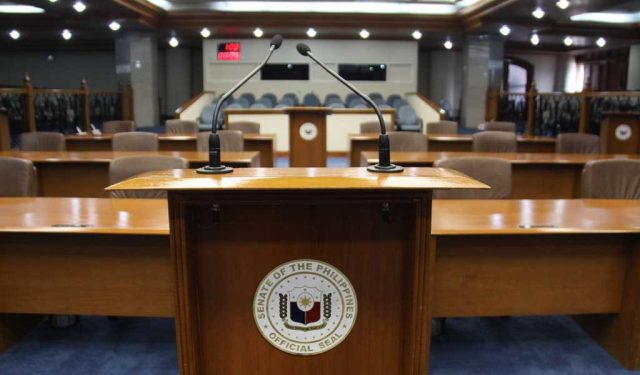
SENATE PRESIDENT Francis “Chiz” G. Escudero on Monday said he would convene the Senate as an impeachment court on June 11 for the trial of Vice-President  (VP) Sara Duterte-Carpio.

“That is what’s on our schedule, and that is what I plan to do,” he told reporters in mixed English and Filipino. “Everything will go through plenary action… That is the plan and that is what we will do.”

The Senate earlier delayed the reading of the charges against Ms. Duterte and its conversion into an impeachment court from June 2 to give way for legislative priorities.

The Senate chief said the impeachment proceedings would likely cross into the next Congress.

“I believe it will pass, but this opinion from the 19th Congress cannot bind the 20th Congress,” he said. “This must be decided by the (next Congress).”

The House impeached the Vice-President on Feb. 5, alleging secret fund misuse, unexplained wealth, acts of destabilization and plotting the assassination of President Ferdinand R. Marcos, Jr. and his family. Ms. Duterte has denied any wrongdoing.

The impeachment complaint was filed and signed by more than 200 congressmen, more than the one-third legal requirement before it could be sent to the Senate.

Mr. Escudero rejected calls for the Senate to fulfill its constitutional mandate to try the Vice-President. Several civil society groups trooped to the Senate building in Pasay City on Monday, urging lawmakers to start the impeachment trial.

“I’ve said this from the beginning. Whether someone is for or against the impeachment, whether they support (Ms. Duterte) or oppose her, I will not listen to them,” he said. “I will do what is right, proper and in accordance with the Constitution and the law, based on what I believe is right.”

The group said the Senate is duty-bound to start the trial as soon as she got impeached by the House.

“What they want us to do is to rush our constitutional duty,” Mr. Escudero said. “We will do (the proceedings), but not at the time they want because they are in a hurry. This is a process that must be followed and is being followed.”

Senator Ana Theresia Hontiveros-Baraquel also called on the Senate president to take his oath as the presiding officer of the impeachment court and to administer the oath to all senators as judges.

“The Senate must not be heedless and callous to the growing calls for the institution to fulfill its mandate and begin the impeachment trial,” she told a separate news briefing, as the 19th Congress adjourns on June 13. A new set of senators will take office in July.

The Makati Business Club (MBC) also called on the Senate to start the impeachment trial.

“We view this issue as a governance issue and a test of public accountability and the rule of law,” it said in a statement.

“If we do not follow the rule of law, how can we expect to attract foreign and even local investors to bring in long-term investments, which would lead to the creation of jobs?” it asked.

The MBC said senators and the Senate as an institution could betray public trust by not providing the VP with a forum to refute the charges against her.

Ms. Duterte’s defense team said it is ready to defend her against baseless accusations.

“The impeachment process must never be weaponized to harass, silence or eliminate political opponents,” it said in a statement. “It is a constitutional mechanism, not a political tool.”

Later in the day, Senator Robinhood “Robin” C. Padilla filed Senate Resolution no. 1371, urging the chamber to terminate the impeachment proceedings against Ms. Duterte.

He said “all pending matters and proceedings shall terminate” once Congress adjourns.

“It is indubitably clear that the matter of the articles of impeachment… and its consideration by the present Senate cannot be fully accomplished by the expiration of the 19th Congress on June 30, 2025, thereby resulting in its termination,” Mr. Padilla, an ally of the Dutertes, said in the resolution. — Adrian H. Halili

Marcos vows to fix teacher shortage, overwork as schools open on June 16

PRESIDENT Ferdinand R. Marcos, Jr. led the Brigada Eskwela 2025 on Monday at the Barihan Elementary School in Malolos City, Bulacan on June 9, 2025. — YUMMIE DINGDING / PPA POOL

PHILIPPINE President Ferdinand R. Marcos, Jr., on Monday reaffirmed his commitment to fixing the country’s chronic teacher shortage, estimated in the tens of thousands, as public schools prepare to welcome about 27 million students on June 16.

During an inspection in Malolos, Bulacan north of the capital for the Education department’s Brigada Eskwela (Student Brigade) program, the President cited the dwindling number of public school teachers.

“One of the things we really lack is teachers,” he said in Filipino, based on a transcript sent by the presidential palace. “Secretary [Juan Edgardo M.] Angara has a program to reduce the administrative duties given to teachers because you became a teacher to teach, not to do bookkeeping.”

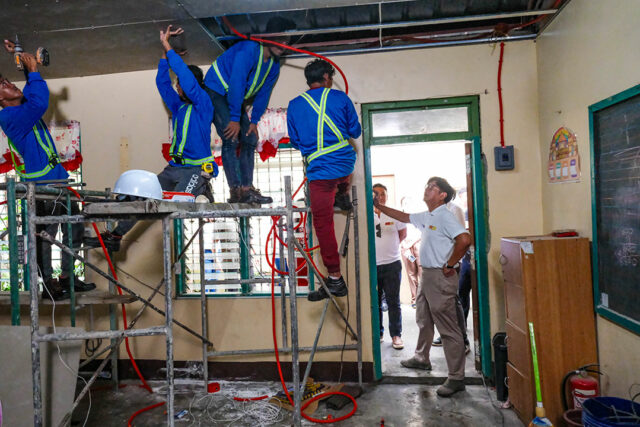
Brigada Eskwela, which runs from June 9 to 13, brings together teachers, parents and volunteers nationwide to prepare public schools for the school year. Parents and students are encouraged to help clean the classrooms, paint the walls and chairs and replace broken fixtures like electric fans and window screens in the face of scarce public funds.

In a separate inspection in San Miguel, Bulacan, the President said the government hired 20,000 new teachers to meet the demand and ease their workload.

He said many school buildings built during the rule of his late father and namesake in the 1970s remain in use even if these were meant to last for 20 to 30 years. “They’re still functional, but we need to seriously look at rehabilitating many of them,” he added.

Mr. Marcos flagged poor sanitation conditions on some campuses, particularly inadequate bathroom facilities and lack of running water, issues he called fundamental to student health and safety.

“That’s not hard to do, except the problem in the schools we visited is that there is no water,” he said. “We have to look into it. Why is there no water when they are paying for the water supply?” he asked in Filipino.

“For me, it’s basic because the children’s health is being affected. They get sick if the bathrooms they use are not clean,” he added.

To help bridge the digital divide, the President cited efforts to integrate technology into classrooms, citing learning platforms such as Khan Academy and the deployment of Starlink satellite internet to connect remote schools.

“Technology is here,” he said. “All you need to do is set it up and plug it in. Wi-Fi is ready. We’ll be rolling this out especially in far-flung areas.”

The president paid tribute to educators, calling them the “real heroes” of the nation. “You became teachers not to get rich or famous, but because you can’t sleep at night unless you’re teaching.”

“Our teachers are truly excellent; it’s likely just a lack of support that’s holding them back. We will give you that support, not just financially, but also through retraining. That’s why we’re working to reduce your administrative duties and similar tasks, so you can focus on teaching effectively,” he added.

A January 2025 report from the Second Congressional Commission on Education (EDCOM 2) has warned about the dire state of basic literacy in Philippine public schools, with students falling four to five years behind the expected reading proficiency for their grade levels.

EDCOM 2 recommended a “teach-at-the-right-level” approach, tailoring instruction to students’ actual learning needs rather than their age or grade. The commission also called for stronger support from the Department of Education in enforcing remedial and foundational programs.

Meanwhile, Mr. Angara told reporters during the same inspection that classes would start on Monday despite the rain.

“It’s already a bit rainy but not as intense as last year,” he said in Filipino, based on a video sent by the palace to reporters. “In 2024, when we opened the school year, almost the entire Metro Manila and [Region IV-A] were flooded.” — Chloe Mari A. Hufana

Right-of-way, nuclear regulatory body and anti-POGO measures hurdle Senate

BW FILE PHOTO

THE PHILIPPINE Senate on Monday approved on third and final reading measures that will hasten infrastructure projects, create a nuclear energy regulatory body, and ban all remnants of Philippine offshore gaming operators (POGOs).

With 23 affirmative votes, senators approved Senate Bill No. 2821, the Accelerated and Reformed Right-Of-Way (Arrow) Act, which will facilitate easier acquisition of right-of-way sites for private infrastructure projects designed for public use.

The measure was identified as among the priorities identified by the Legislative-Executive Development Advisory Council for the 19th Congress.

The bill seeks to amend Republic Act No. 10752, the Right-of-Way Act, to enable the government to private entities to acquire right-of-way.

Earlier, President Ferdinand R. Marcos, Jr. said that right-of-way issues have continued to hinder his administration’s flagship infrastructure projects.

The legislative body also approved on final reading Senate Bill No. 2498, the proposed Philippine National Nuclear Energy Safety Act, with 22 affirmative votes and one negative vote.

The measure seeks to create an independent nuclear energy regulatory body that will control all sources of ionizing radiation, including nuclear and radioactive materials and radiation devices.

Further, with 23 affirmative votes, the Senate approved Senate Bill 2868, the Anti-POGO Act, which will ban all POGOs in the country.

The measure will ensure that all POGO remnants are removed by mandating the forfeiture of all POGO-related properties and equipment to prevent their reuse in illegal operations.

In his third State of the Nation Address, President Marcos announced a total ban on all POGO activities and called for its shutdown by the end of 2024.

Meanwhile, the House quad committee has filed five bills after it concluded its investigation into human rights violations and transnational crimes linked to POGOs.

In a statement on Monday, Party-list Rep. Joseph Stephen S. Paduano, a co-chair of the committee, said the hearing’s findings showed not just administrative failure but deep-rooted vulnerability to foreign criminal syndicates.

The quad comm has drafted House Bill No. 10986, which seeks to classify extrajudicial killing as a heinous crime and provides reparations to the families of victims.

It also sought to prohibit all forms of offshore gaming operations in the Philippines, through House Bill No. 10987, while House Bill No. 10998 proposes penalties on conspiracy and proposal to commit espionage

House Bills No. 11043 and 11117, provides for the civil forfeiture of real estate unlawfully acquired by foreign nationals and empowers the state to cancel fraudulently obtained birth certificates, respectively.

According to Mr. Paduano, the committee had revealed that Chinese nationals were using a birth certificate fraud scheme to operate business and acquire land in the country.

“These unscrupulous individuals would deliberately resort to illegal means… to lend a semblance of legitimacy to their unlawful intentions,” he added.

He added that some POGO operators also served as police officers, which raises concerns on their motives and connections.

“It is plausible that these criminal syndicates are operating in collusion with certain members of the Chinese Communist Party,” Mr. Paduano added. — Adrian H. Halili

MAP warns vs P200 wage hike

PHILIPPINE STAR/RUSSELL A. PALMA

THE Management Association of the Philippines (MAP) on Monday warned that a House of Representatives-approved bill mandating a P200 daily minimum wage hike could put pressure on inflation and threaten the viability of small enterprises, urging lawmakers to revisit the measure before it advances further.

The organization said that while it supports efforts to uplift low-income workers, the pay bump passed by the House last week risks undermining business sustainability, particularly for small and medium-sized enterprises.

“The core issue isn’t low wages, but high living costs,” the group said in a statement. “We believe that attention should be given to the wage-to-cost ratio, not just wages.”

MAP called on the bicameral conference committee to conduct broader consultations with employers, workers, and government agencies and to consider its implications for inflation and the wider economy.

The group also pointed out that the Philippines already has one of the highest minimum wages in Asia, alongside steep prices for essentials like food, electricity, transportation, and housing.

Rather than relying solely on wage hikes, MAP urged policymakers to focus on lowering basic commodity costs and addressing inefficiencies in key sectors.

The group also encouraged employers to voluntarily offer support measures such as covering employees’ social contributions and profit-sharing arrangements.

A bicameral panel will need to reconcile differences between the two chambers before any legislation can be enacted. The Senate proposed a P100 wage increase in its counterpart bill, approved in February last year.

The daily minimum pay for nonfarm workers in the capital region is P645, the highest in the entire country. While the lowest is at the Bangsamoro Autonomous Region in Muslim Mindanao (BARMM) at P361.

The Philippines sets minimum wages regionally through wage boards, but lawmakers argue the system delivers slow and meager increases that fail to keep up with rising costs.

Inflation cooled to an over five-year low of 1.3% in May, bringing the five-month average to 1.9%. This is below the central bank’s 2-4% target band. — Chloe Mari A. Hufana

BI dismisses corruption claims

PHILSTAR FILE PHOTO

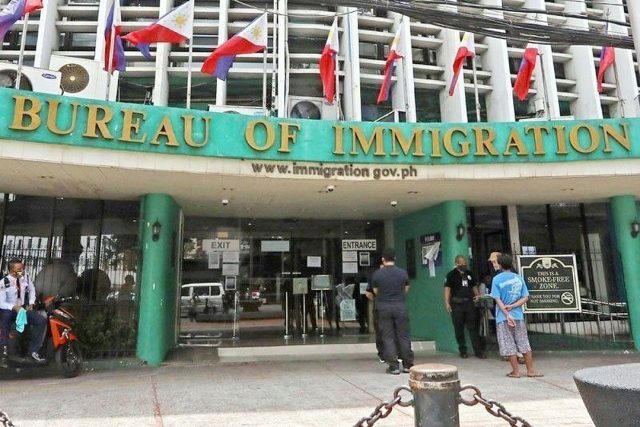
THE Bureau of Immigration (BI) chief on Monday dismissed allegations of corruption and misconduct from anonymous employees, adding the accusations were “orchestrated” and part of a “well-funded campaign” to discredit ongoing reforms within the bureau.

Commissioner Joel Anthony M. Viado, in a statement, affirmed the BI’s commitment to cooperate fully with any national government agency that chooses to investigate the allegations.

The dismissal of the “white paper” follows earlier reports where anonymous BI employees had reportedly approached President Ferdinand R. Marcos, Jr., alleging Mr. Viado had abused his authority by expediting the release of foreign nationals linked to Philippine offshore gaming operators (POGOs) and negotiating the release of foreign workers from a notorious POGO company.

There were also claims that quota visas were being auctioned off under his leadership, on top of issues raised regarding Mr. Viado’s work ethic and alleged violations related to attending meetings concerning the bureau’s e-gates project.

Mr. Marcos last year totally banned all POGOs due to rising illicit activities tied to them, such as trafficking and scamming. 

Palace Press Officer Clarissa A. Castro has not yet responded to a Viber chat seeking comment.

Mr. Viado said the BI has identified the parties responsible for what he calls a “smear campaign,” vowing to “expose these parties at the appropriate time and venue.”

He confirmed Justice Secretary Jesus Crispin C. Remulla is aware of these developments, including the identities and motives of those behind the alleged campaign.

According to Mr. Viado, the bureau had been warned of potential retaliation from “vested interests whose erstwhile prolific underground operations at the BI have been thwarted and halted by our ongoing reforms.”

He also noted that a “handful of employees” subjected to the BI’s “one-strike policy” are believed to be collaborating with these parties.

The commissioner specifically highlighted a senior BI official, now “pretending to be a whistleblower,” who allegedly attempted to pressure his office into releasing a Chinese national with ties to a “powerful political figure from the previous administration.” — Chloe Mari A. Hufana

New sea cargo policy launched

BOC.GOV.PH

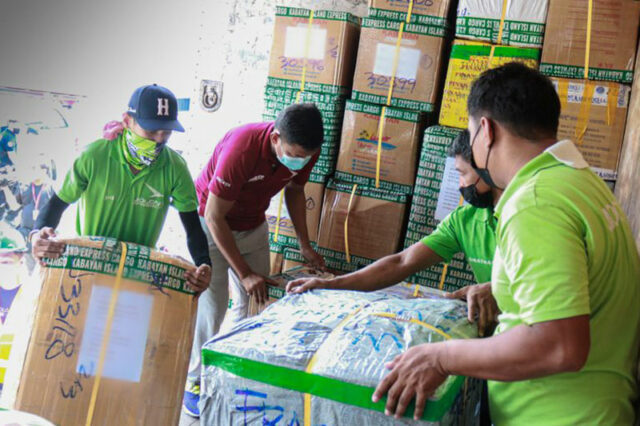
THE Department of Migrant Workers (DMW) and the Bureau of Customs (BoC) on Monday unveiled a new regulatory framework aimed at overhauling the country’s sea cargo forwarding industry in response to mounting complaints over lost, delayed, or undelivered balikbayan boxes.

The agencies signed a Joint Administrative Order that establishes a unified set of rules across multiple agencies for the handling of these boxes and packages sent by millions of overseas Filipino workers (OFWs) to families back home.

The move is intended to protect OFWs from fraudulent freight forwarding schemes and long-standing delays in balikbayan box deliveries, the DMW said in a statement.

It was developed by a multi-agency technical working group, which includes participation from the Department of Finance, Department of Trade and Industry, Department of Transportation, Philippine Ports Authority, and Overseas Workers Welfare Administration.

It creates a complaint and monitoring system, mandates public education campaigns, and sets new standards for accreditation of freight forwarders.

It follows a congressional inquiry led by House Committee on Overseas Workers Affairs Chair Jude A. Acidre, which exposed gaps in regulation and consumer protection. Lawmakers earlier this year directed agencies to draft a coordinated policy solution.

Since 2023, the DMW and BoC said they have facilitated the delivery of more than 9,900 delayed boxes. Last week, an additional 2,500 boxes were received at the Port of Davao and are being delivered free of charge to recipients in Mindanao.

For boxes deemed unrecoverable, the government is offering financial assistance of up to P30,000 per affected worker through its AKSYON Fund. — Chloe Mari A. Hufana

PPA earmarks P400M for Samar port upgrade

THE Philippine Ports Authority (PPA) is earmarking more than P400 million to upgrade a key port in Samar and to establish alternate transport routes between Samar and Leyte, the port regulator said on Monday.

“These initiatives, with a total value of P410 million from the PPA’s Corporate Operating Budget, underscore our commitment to strengthening inter-island connectivity and supporting the economic growth of the Province of Leyte and the broader Eastern Visayas region,” PPA General Manager Jay Daniel R. Santiago said in a media release on Monday.

This came after the implementation of a three-ton weight limit on the San Juanico Bridge by the Department of Public Works and Highways (DPWH), PPA said, noting that it has identified the port of Amandayehan in Basey, Samar as a strategic route due to its proximity to Tacloban port.

PPA said it is set to install about 14 navigational buoys valued at P100 million to support the navigational reliability of the Amandayehan Port, while another P100 million was allocated for the dredging works, and P200 million for the port’s physical expansion to handle more vessels and cargo volume.

PPA said this program aims to provide a solution to the impact of the load restrictions on the San Juanico Bridge.

“It aims to establish long-term, reliable, and resilient transport systems in the region through continuous port modernization, seamless and sustainable connectivity across the country,” PPA said.

Further, the port regulator said it is preparing for the takeover of the Amandayehan port from the local government unit. — Ashley Erika O. Jose

Basilan declared Abu Sayyaf-free

COTABATO CITY — Government officials, including two assistants of President Ferdinand R. Marcos, Jr., declared Basilan as absolutely liberated from the Abu Sayyaf terror group via a symbolic rite on Monday morning.

Army Major Gen. Antonio G. Nafarrete, commander of the Western Mindanao Command (WestMinCom) and Brig. Romeo J. Macapaz, director of the Police Regional Office-Bangsamoro Autonomous Region (PRO-BAR), separately told reporters on Monday that credit for the feat should go to Gov. Hadjiman H. Salliman and Basilan Rep. Mujiv S. Hataman, the 101st Infantry Brigade, and the Basilan Provincial Police Office.

“To all of them we are grateful,” Mr. Nafarrete said.

The event, held at Basilan’s provincial capitol at the border of the adjoining cities of Isabela and Lamitan, was capped off with the destruction of hundreds of assault rifles, some of which were collected from Abu Sayyaf members who surrendered in recent years. The others were voluntarily turned in by Basilan residents in support of the Small Arms and Light Weapons Management Program of the WestMinCom and the Office of the Presidential Adviser on Peace, Reconciliation and Unity.

Presidential Assistant for Peace Reconciliation and Unity Carlito G. Galvez, Jr. and Special Assistant to the President Antonio Ernesto F. Lagdameo, participated in the activity.

Mr. Salliman, who was elected vice governor during the May 12 elections, said it was for the cooperation of the 101st Infantry Brigade under Brig. Gen. Alvin V. Luzon, all units of PRO-BAR in the province, the Police Regional Office-9, traditional and religious leaders and local executives that their province had become totally free from Abu Sayyaf terrorists.

Mr. Saliman said besides the police and the military, two groups, the Moro Islamic Liberation Front and the Moro National Liberation Front also supported their effort of addressing the Abu Sayyaf problem that hounded Basilan for more than two decades.

All of the Abu Sayyaf members who returned to the fold of law had been reintroduced to the local communities, now thriving peacefully as workers in agricultural plantations, as entrepreneurs, fishermen and laborers in markets and as construction workers. — John Felix M. Unson

Road crashes in Baguio City linked to human error

BAGUIO CITY — Human error is the leading cause of traffic accidents in the city, the Baguio City Police Office (BCPO) said, citing that it caused approximately 95% of incidents recorded over the past five months.

Thus, local authorities are calling for strategic interventions seeking to reduce the number of accidents and improve road safety in this mountain tourist enclave.

BCPO Strategic Management Team Chief, Police Col. Judy Jasmin Palicos, though emphasized that human error does not solely refer to driver mistakes but also includes factors such as road conditions, infrastructure, and environmental influences that affect driving performance.

“We need a multi-faceted approach to addressing these incidents, one that involves the active participation of everyone in the community,” Ms. Palicos urged. “By doing so, we can work toward a significant reduction in traffic accidents.”

BCPO data from Jan. 1 to May 27, reveals that there were 375 recorded traffic accidents, a notable increase compared to 322 incidents during the same period last year.

Of these accidents, 307 resulted in property damage, 60 caused physical injuries, and 8 were fatal. While most incidents involved motor vehicles in 356 cases, motorcycles were involved in only 19 accidents.

The majority of accidents, 166, occurred within the central business district area, though incidents were reported in various parts of the city.

Seeking to curb the rising number of accidents, the Baguio police has rolled out its Operation Plan DRIVE, or Discipline, Respect, Infrastructure, Vigilance, and Education, aiming to educate motorists and the public on road safety responsibilities.

Ms. Palicos appealed for support to the initiative and “become proactive agents of change in ensuring safer roads, thereby helping to prevent accidents, injuries, and loss of life.” “We all share the responsibility of keeping our streets safe,” she said. — Artemio A. Dumlao

ADVERTISEMENT
ADVERTISEMENT