Home Blog Page 145

Italy’s justice referendum tests PM Meloni and divided opposition

LEADER of Brothers of Italy Giorgia Meloni is seen at the party’s headquarters, in Rome, Italy, Sept. 26, 2022. — REUTERS

ROME — A forthcoming Italian referendum on judicial reform will test right-wing Prime Minister Giorgia Meloni’s political strength and could give the fragmented opposition the impetus to forge a broad alliance ahead of next year’s general election.

Italians will vote on March 22-23 on a proposal to separate the careers of judges and public prosecutors, splitting the self-ruling High Council of the Judiciary (CSM) into two bodies whose members would be chosen by lot rather than elected.

Though centred on the governance of the judiciary, the referendum has become a political showdown between the government-backed ‘Yes’ camp and the opposition, which supports ‘No’. There is no turnout quorum required to validate the vote.

Analysts say most people are likely to cast their ballots based on political preferences, paying little attention to the substance, after a bruising campaign marked by unfounded claims over the potential impact of the reform from both sides.

“Only a small minority of Italians knows much about the issue. Many will look instead to party and coalition leaders, who are all trying to mobilize their voters to win,” said Fabrizio Masia, the head of pollster EMG.

FRESH MOMENTUM TO THE LEFT
Polls published before a two-week pre-ballot blackout took effect showed the two camps neck-and-neck, with opponents of the reform gaining ground amid suggestions that many right-wing supporters may stay home out of apathy.

Ms. Meloni has ruled out resigning in the event of defeat, a move widely seen as an attempt to discourage opposition voters from turning out in large numbers in the hope of unseating her.

The coalition — which includes her Brothers of Italy party, the League and Forza Italia — remains more popular than the left, which is still struggling to forge a stable alliance around the Democratic Party and the 5-Star Movement.

“A ‘no’ win could give fresh momentum to efforts to build a center-left bloc, also causing trouble within Meloni’s ranks,” said pollster Masia.

If the reform passes, however, Ms. Meloni would receive a major boost, as she nears the end of her term grappling with the fallout from the broadening US-Israeli war on Iran and a stagnant economy.

“A government victory would strengthen its longer-term political project, also in view of the 2027 election,” said Emanuele Massetti, political science professor at Trento University.

BERLUSCONI’S LEGACY
Justice has been a divisive issue in Italy since former centre-right Prime Minister Silvio Berlusconi faced dozens of trials linked largely to his business empire and often accused judges of political bias.

Mr. Massetti said the referendum was the latest chapter in a long-running confrontation between the right and the judiciary, with the issue dividing voters along left-right lines since the era of Mr. Berlusconi, who died in 2023.

The campaign has also pitted Ms. Meloni against magistrates’ union ANM, which says the reform would weaken judicial independence and increase political interference.

The government rejects that criticism, saying the reform is needed to curb the politicised election of CSM members after scandals exposed backroom deals over senior prosecutor appointments.

“The reform aims to make the justice system more modern, fair, accountable and independent, free from political pressure and from the factionalism that has damaged its credibility and authority,” Ms. Meloni told daily Il Dubbio this week. — Reuters

China offers to work with Southeast Asia on energy security

REUTERS

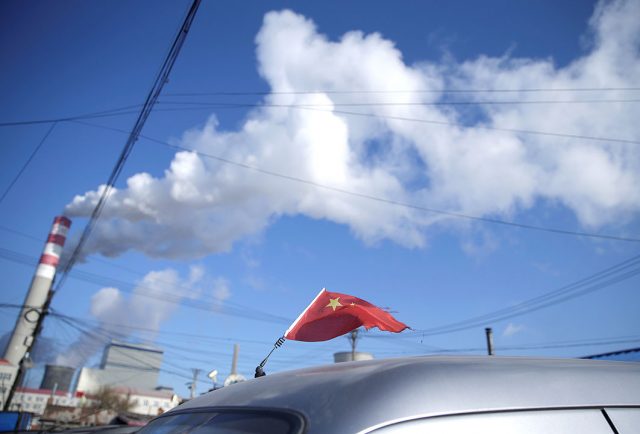
BEIJING — China, home to the world’s biggest oil refining sector, said it was ready to work with Southeast Asia in addressing energy problems stemming from the war in Iran and called on the parties involved to immediately cease military operations.

China’s show of willingness to work with the region of more than 700 million people would be welcome relief to Southeast Asian oil importers after an order by Beijing earlier this month to ban Chinese exports of diesel, gasoline, and jet fuel.

The ban would worsen shortages and further hike prices for some of China’s strategic partner-nations in Southeast Asia, which have already been reeling from supply cuts brought on by the US-Israeli war against Iran.

“The situation in the Middle East has disrupted global energy security,” said Lin Jian, spokesperson at the Chinese foreign ministry, told a regular news conference when asked if Southeast Asian nations had reached out to China for help.

“The countries involved should immediately cease military operations to prevent regional instability from having a greater impact on global economic development,” said Mr. Lin.

“China is willing to strengthen coordination and cooperation with Southeast Asian countries to jointly address energy security issues,” Mr. Lin added.

Any easing of Beijing’s ban could help soothe fuel jitters in countries from the Philippines to Cambodia.

Philippine Energy Secretary Sharon Garin met with the Chinese ambassador to the Philippines on Tuesday to discuss cooperation in energy, a departure from the two countries’ arguing over maritime rights in the South China Sea. — Reuters

Top central banks strike hawkish tone as they convene in war’s shadow

REUTERS

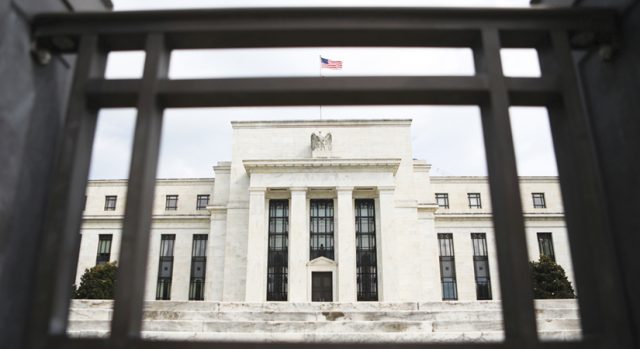
OTTAWA/WASHINGTON/TOKYO — Top central banks from the US, Canada and Japan struck hawkish tones on Wednesday, albeit to varying degrees, as the Iran war drove energy prices sharply higher amid a pivotal week of global central bank meetings.

Having battled a commodities-led inflation spike after Russia’s full-scale invasion of Ukraine in 2022, policymakers are once again walking a tightrope – reining in stubborn price pressures without derailing growth.

The U.S. Federal Reserve, the Bank of Canada and Bank of Japan all opted to hold interest rates steady, yet their leaders made clear they are on alert, wary that rising energy prices could spark a fresh wave of inflation.

“Governing Council will look through the war’s immediate impact on inflation, but if energy prices stay high, we will not let their effects broaden and become persistent inflation,” BoC Governor Tiff Macklem said in opening remarks at a press conference after the bank kept its key rate at 2.25%.

Fed Chair Jerome Powell was equally cautious.

“In the near term, higher energy prices will push up overall inflation, but it is too soon to know the scope and duration of the potential effects on the economy,” Powell said in a press conference following the Fed’s 11-1 decision to maintain its benchmark overnight interest rate in the 3.50%-3.75% range.

Still, Powell’s reluctance to say that risks of a weakening job market posed a greater risk to the Fed’s objectives than inflation helped push market rate-cut expectations into 2027.

Brazil’s central bank was a dovish exception on Wednesday as it kicked off a long-awaited easing cycle with a cautious 25-basis-point cut in its benchmark rate to 14.75%, which is still among the highest in major economies.

The central bank decisions came after the Reserve Bank of Australia hiked rates to a 10-month high and warned of a “material” risk to inflation from the oil price spike.

Stocks slid and oil prices rose sharply on Thursday after a major escalation in the U.S. and Israel’s war with Iran rattled investors, while the BOJ became the latest central bank to warn about the impact of energy costs on inflation.

BOJ Governor Kazuo Ueda said the central bank would not rule out a near-term rate hike if the expected hit to growth from surging oil costs proves temporary, and does not derail progress Japan was making in durably hitting the bank’s price target.

“We need to be mindful that recent developments come at a time when companies are already actively pushing up prices and wages, which suggests they could pass on costs more aggressively than after the war in Ukraine,” Ueda told a news conference.

But analysts expect the rate path for central banks to remain bumpy with no clear end in sight to the conflict that could upend global supply chains, jolt financial markets and hurt corporate sentiment.

“This latest escalation feels like a turning point for markets because the conflict is no longer just about military headlines or Strait of Hormuz closure,” said Charu Chanana, chief investment strategist at Saxo in Singapore.

“It is now hitting the plumbing of the global energy system. What is unsettling markets now is the growing stagflation risk… It means this is no longer just a geopolitical story but a macro one.” — Reuters

Globe strengthens mobile network across Tarlac to keep communities connected

Tarlac, the heart of Central Luzon, is rapidly growing with expanding schools, thriving businesses, and increasing tourism – driving a greater need for reliable mobile connectivity in the province. Residents, enterprises, and visitors are relying more on mobile services for work, learning, and entertainment, making fast and stable internet essential for everyday life.

The province is seeing significant infrastructure and development projects that are shaping its economic landscape. Major initiatives include the Capas-Botolan Road, a 68-kilometer corridor expected to cut travel time between Tarlac and Zambales from three hours to just over an hour by 2025. In Tarlac City, large-scale industrial estates and mixed-use townships are under development, alongside new manufacturing facilities and modern residential-commercial communities. Ongoing investments in Tarlac State University further enhance educational infrastructure, with laboratory refurbishments and building expansions supporting the next generation of talent.

To address this demand, Globe is accelerating network upgrades across the province in 2025 and 2026. Additional LTE and 5G sites are being deployed to deliver faster speed and more consistent mobile experiences throughout Tarlac. The new build and expansion improves coverage and capacity in key municipalities including Tarlac City, Capas, Concepcion, Gerona, Victoria, Paniqui, Mayantoc, San Jose, Moncada, Santa Ignacia, La Paz, Camiling, Bamban, San Clemente, Pura, San Manuel, Ramos, and Anao. Residents can now enjoy smoother browsing, clearer calls, and quicker uploads and downloads, enabling seamless connectivity for work, school, and leisure activities.

Joel Agustin, Head of Service Planning and Engineering at Globe, highlighted the importance of the upgrades. He said that Tarlac blends cultural heritage with modern business and lifestyle opportunities, and Globe is committed to providing seamless connectivity for everyone, whether at work, in school, or exploring the province’s tourism destinations. The new network strengthens coverage and delivers fast, reliable mobile experiences for both residents and visitors.

The enhanced network also allows customers to take full advantage of Globe’s mobile offers. Globe users can enjoy GO+99 and UNLI 5G 50, while TM subscribers can access TM EasySURF50 5G for affordable, dependable connectivity. These offers support streaming, online learning, digital entrepreneurship, and daily communication, making mobile services more accessible and convenient.

Local businesses and institutions also benefit from the network expansion. Companies gain operational efficiency, schools gain better support for digital learning, and tourists experience smoother online access for navigation, bookings, and content sharing. Globe’s continued investments are recognized by independent industry analysis. The company maintains its title as the Most Consistent Network in the Philippines according to Ookla, reflecting the reliability subscribers experience nationwide.

As Tarlac develops into a hub for commerce and tourism, Globe’s network upgrades ensure communities remain digitally empowered. By combining robust infrastructure with accessible mobile services, Globe supports the province’s progress and helps residents stay connected in an increasingly digital world.

For more information about Globe, visit www.globe.com.ph.


Spotlight is BusinessWorld’s sponsored section that allows advertisers to amplify their brand and connect with BusinessWorld’s audience by publishing their stories on the BusinessWorld Web site. For more information, send an email to online@bworldonline.com.

Join us on Viber at https://bit.ly/3hv6bLA to get more updates and subscribe to BusinessWorld’s titles and get exclusive content through www.bworld-x.com.

Year 2 of GCash Run mobilizes collective push for environmental action with runners, DENR-FMB, Silliman University, sustainability partners, green merchants

DENR, led by Secretary Juan Miguel Cuna, is building support for the second year of the GCash Run, recognizing its contributions to nation-building by restoring coastal ecosystems and expanding mangrove conservation through community-driven action. From left are GCash Public Affairs Head Atty. Gret Baltazar; GCash Impact Innovations Head for Sustainability Moya Ganzon; G-Xchange, Inc. Regulatory and Strategic Compliance Head Atty. Jorge Franco Sarmiento; DENR Secretary Juan Miguel Cuna; GCash Public Sector National Government Accounts Manager Alda Lou Cabrera; and DENR-FMB Assistant Director Ray Thomas Kabigting.

GCash is bringing back its commitment to environmental restoration with the second GCash Run this March 2026. Set to take place on March 22, 2026, along Ayala Avenue in Makati City, the GCash Run 2026 builds on last year’s momentum by gathering thousands of participants to translate simple, everyday activities into tangible environmental impact.

A total of 40,500 grey mangrove trees are committed for planting following this event, courtesy of runners, sponsors, and partners. The initiative supports science-based mangrove restoration efforts that protect coastlines, enhance biodiversity, and strengthen climate resilience in vulnerable communities.

Supporting national reforestation mandates

This year, GCash further strengthens the initiative by formalizing its partnership with the Department of Environment and Natural Resources — Forest Management Bureau (DENR–FMB), aligning GCash Run with the government’s national target of planting 1.5 billion trees by 2028. The collaboration also supports mangrove restoration efforts to restore and expand the Philippines’ coastal ecosystems and strengthen the resilience of coastal communities.

“Through GCash Run, we’re making it easier for GCash users and corporate partners to take part in collective environmental action while making nation-building its core mission. Sustainability is a shared responsibility, and when we work together, every step can help create a greener future,” said Moya Ganzon, Head of Sustainability’s Impact Innovations at Mynt, the parent company of GCash.

Thousands of runners are lacing up and gearing up for the second GCash Run on March 22. A total of 40,500 grey mangrove trees will be planted through the support of runners, sponsors, and partners.

Grounded in science, implemented with local communities

GCash, through GForest, continues its long-standing partnership with Silliman University (SU) to ensure that mangrove reforestation efforts are grounded in science and implemented with local communities.

Since 2023, GCash and Silliman University have combined ecological research, site assessment, and community-based implementation in Negros Region. To date, more than 277,456 seedlings have been planted under the program, following science-based restoration methods designed to improve survival rates and long-term ecosystem recovery.

The partnership is now entering its second phase, aiming to plant 1 million mangroves and beach forest trees by 2029.

By leveraging SU’s technical expertise, the initiative ensures that tree species are selected based on site suitability, monitored for growth and survival, and implemented with meaningful community participation — strengthening both environmental outcomes and local livelihoods.

Several media partners are backing the initiative, alongside the Department of Environment and Natural Resources, Silliman University, advocacy groups, event sponsors, green merchants, and other key stakeholders.

From digital action to on-ground impact

GCash Run continues to connect digital engagement with on-ground environmental action. The initiative has also drawn strong support from advocacy organizations and corporate partners.

Advocacy partners include ABS-CBN Foundation, Angat Buhay, Berdeng Kalabaw, Caritas Manila, CRIBS Foundation, One Million Lights, Team Manila, UNICEF, WWF, and Zolo.

A total of twenty eco-marketplace partners will also participate, including Cut the Craft, Wonder Home Essentials, Eco Shift Essentials, For Keeps Clean Beauty, Abel PH, Commune Cafe and Bar, Pili Ani PH, Kangkong King, Simula PH, Malingkat Weaves, Maginhawa Eco-Store, araro.gelato, Planted Bodega, and Odd Cafe.

The GCash Marketplace will showcase the convenience of GCash for Business solutions, including SoundPay, PocketPay, and EasyPOS. Runners can use these to purchase sustainable products, eco-friendly goods, and healthy food.

Event platinum sponsors are eTap Solutions, Globe, IKEA Philippines, Pay&Go, and Smart. Silver sponsors include BPI MS Insurance and Standard Insurance, and bronze sponsors include ECPay, Park Access, REV, and Singlife. Corporate Run Club partners comprise ATRAM, ECPay, eTap Solutions, Globe, STTelemedia Global Data Centres, Pay&Go, PDAX, Seapeak, and Tech Mahindra. 

Official media partners, including the Inquirer Group, Manila Bulletin, BusinessWorld, The Philippine STAR, PhilStar.com, Rappler, Bilyonaryo, and THEPHILBIZNEWS, are supporting this year’s GCash Run as official media partners. 

GCash is encouraged by the growing support from our partners and the 12,000 runners who joined us in this shared commitment to sustainability. GCash Run shows how digital platforms, institutional collaboration, and community action can come together to create measurable environmental impact.

For more information, please visit www.gcash.com.


Spotlight is BusinessWorld’s sponsored section that allows advertisers to amplify their brand and connect with BusinessWorld’s audience by publishing their stories on the BusinessWorld Web site. For more information, send an email to online@bworldonline.com.

Join us on Viber at https://bit.ly/3hv6bLA to get more updates and subscribe to BusinessWorld’s titles and get exclusive content through www.bworld-x.com.

Thailand’s Anutin seeks new mandate as parliament votes on prime minister

PIXABAY

BANGKOK — Thailand’s Anutin Charnvirakul will seek to be elected back to power on Thursday in a parliamentary vote on a prime minister that could usher in a rare period of stability for a country long plagued by political drama and turmoil.

In a stunning turnaround in fortunes for a party that had struggled to make its mark in Thai politics, Mr. Anutin’s Bhumjaithai sprang a surprise with a decisive victory in February’s election after capitalizing on a wave of nationalism arising out of military conflicts with Cambodia last year.

Much of Mr. Anutin’s success comes from his opportunism in seizing on the decline of the once dominant Pheu Thai party, first by abandoning its coalition government then maneuvering swiftly to form his own after a court sacked a second prime minister in the space of just over a year.

After the February election, Bhumjaithai has made a pact with the politically bruised Pheu Thai and teamed up with a motley crew of small parties for an alliance that would control 292 of the current 499 seats in parliament.

“The government coalition is ready to perform its duty in the legislature and executive smoothly to bring prosperity to the country,” Mr. Anutin told a press conference in parliament before the session started.

“We’ll quickly form a cabinet and give a policy statement to solve the problems of the country.”

RIVAL CHALLENGE
To be elected prime minister, Mr. Anutin, 59, needs the support of more than half of the house, or 251 votes. The vote is expected to take place later on Thursday.

Anutin was nominated for premier on Thursday morning and will go head-to-head in the vote against 38-year-old Natthaphong Ruengpanyawut, leader of the People’s Party, the second-placed election finisher.

It is unclear what support Mr. Natthaphong has beyond the 120 seats his party holds, or if a deal has been made with other players. He said last week his intention was to use the vote to present his party’s vision to parliament.

Mr. Anutin, a staunch royalist, has been a mainstay in Thai politics, weathering two decades of upheaval by positioning Bhumjaithai strategically between warring elites entangled in an intractable power struggle, which guaranteed its place in a succession of coalition governments.

If Mr. Anutin prevails, he would for the first time have a clear mandate to lead in a country with a long-stuttering economy shackled by massive household debt, in urgent need of structural reform and facing headwinds from trade uncertainty and the fallout of the US-Israeli war on Iran.

PROSPECT OF STABILITY
Mr. Anutin’s survival instincts and ability to straddle political divides could prove his biggest asset, some analysts say, with Bhumjaithai having been spared the wrath of Thailand’s powerful military and judiciary, the engineers of the downfall of multiple governments and parties.

Napon Jatusripitak, a political scientist at Singapore’s ISEAS–Yusof Ishak Institute, said that with Bhumjaithai set to hold sway over the upper and lower houses and Thailand’s axes of institutional power appearing to be behind Mr. Anutin, the prospects for medium-term stability were good.

“People have strong reasons to believe that this government can last, particularly because it’s the first time in a long while that the referee and the players are on the same side,” Mr. Napon said.

“There’s control,” he said. “And we have a highly fragmented opposition.” — Reuters

Heavy social media usage erodes young people’s wellbeing, report finds

STOCK PHOTO | Image by Julian Christ from Unsplash

HELSINKI — Heavy social media usage appears to contribute to a drop in wellbeing among young people, especially girls, in some English-speaking countries, the World Happiness Report published on Thursday found.

Already, a number of countries across the world are working on plans to curb children’s social media access after Australia in December became the world’s first country to ban social media for children under 16.

The latest research published in the annual World Happiness Report is based on data from US market research company Gallup and other studies, analyzed by a global team led by the University of Oxford in England.

REAL SOCIAL CONNECTIONS MATTER
The report did not establish a direct link.

However, researchers for this year’s version of the report, combined the Gallup data with that from the OECD’s Programme for International Student Assessment and other studies, leading them to conclude heavy social media use appeared to reduce happiness.

“The message coming through loud and clear is that we should try to put the social back into social media,” Professor of Economics at the University of Oxford Jan-Emmanuel de Neve, one of the editors of the World Happiness Report, told Reuters.

Mr. De Neve added that algorithmically-pushed, passively-consumed, and mostly influencer-type content had a more negative impact on users than a platform that connects people socially.

With the caveat that the impact of social media on wellbeing was complex, he said the combined data showed that 15-year-old girls, who used social media platforms for more than five hours a day, reported lower life satisfaction compared to girls of their age who use social media less.

Gallup’s world-wide poll data showed life evaluations, or how people assess their life satisfaction, among under 25-year-olds in the United States, Canada, Australia, and New Zealand have dropped “dramatically”, by almost one point on a 0-10 scale, over the last decade.

By contrast, it found the self-reported life satisfaction of the young in the rest of the world increased on average over the same period.

Gallup’s managing editor Julie Ray said the difference in life satisfaction between the young in the English-speaking countries and the rest of the world was likely related to broader social conditions.

“Social support is one of the strongest predictors of wellbeing, and previous research shows that in some countries younger people report feeling less supported, which may help explain the pattern,” she told Reuters by email. — Reuters

US weighs military reinforcements as Iran war enters possible new phase

PHILIPPINE STAR/ WALTER BOLLOZOS

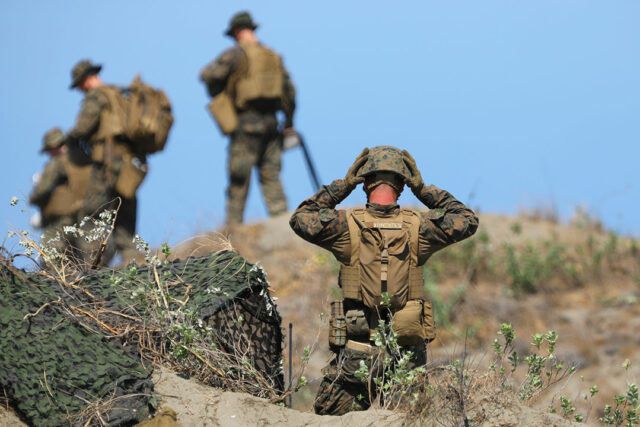
WASHINGTON — President Donald Trump’s administration is considering deploying thousands of US troops to reinforce its operation in the Middle East, as the US military prepares for possible next steps in its campaign against Iran, said a US official and three people familiar with the matter.

The deployments could help provide Mr. Trump with additional options as he weighs expanding US operations, with the Iran war well into its third week.

Those options include securing safe passage for oil tankers through the Strait of Hormuz, a mission that would be accomplished primarily through air and naval forces, the sources said. But securing the Strait could also mean deploying US troops to Iran’s shoreline, said four sources, including two US officials.

Reuters granted the sources anonymity to speak about military planning.

The Trump administration has also discussed options to send ground forces to Iran’s Kharg Island, the hub for 90% of Iran’s ​oil exports, the three people familiar with the matter and three US officials said. One of the officials said such an operation would be very risky. Iran has the ability to reach the island with missiles and drones.

The United States carried out strikes against military targets on the island on March 13 and Mr. Trump has threatened to also strike its critical oil infrastructure. However, given its vital role in Iran’s economy, controlling the island would likely be viewed as a better option than destroying it, military experts say.

Any use of US ground troops – even for a limited mission – could pose significant political risks for Mr. Trump, given low support among the American public for the Iran campaign and Mr. Trump’s own campaign promises to avoid entangling the US in new Middle East conflicts.

Trump administration officials have also discussed the possibility of deploying US forces to secure Iran’s stocks of highly enriched uranium, one of the people familiar with the matter said.

The sources did not believe a deployment of ground forces anywhere in Iran was imminent but declined to discuss specifics of US operational planning. Experts say the task of securing Iran’s uranium stockpiles would be highly complex and risky, even for US special operations forces.

A White House official, speaking on condition of anonymity, said: “There has been no decision to send ground troops at this time, but President Trump wisely keeps all options at his disposal.

“The president is focused on achieving all of the defined objectives of Operation Epic Fury: destroy Iran’s ballistic missile capacity, annihilate their navy, ensure their terrorist proxies cannot destabilize the region, and guarantee that Iran can never possess a nuclear weapon.”

The Pentagon declined to comment.

The discussions come as the US military continues to attack Iran’s navy, its missile and drone stockpiles and its defense industry.

The US has carried out more than 7,800 strikes since launching the war on February 28 and damaged or destroyed more than 120 Iranian vessels so far, according to a factsheet released on Wednesday by the US Central Command, which oversees the roughly 50,000 US troops in the Middle East.

US CASUALTIES
Mr. Trump has said his goals go beyond degrading Iran’s military capabilities and could include securing safe passage through the Strait and preventing Iran from developing a nuclear weapon.

Ground forces could help broaden his options to address those goals, but carry significant risk. Even without any direct conflict in Iran, 13 US troops have been killed so far in the war and about 200 have been wounded, although the vast majority of the injuries have been minor, the US military says.

For years, Mr. Trump has railed against his predecessors for getting involved in conflicts and has vowed to keep the United States out of foreign wars. But more recently he has refused to rule out the possibility of “boots on the ground” in Iran.

A senior White House official told Reuters that Mr. Trump has various options for acquiring Iran’s nuclear material but has not decided how to proceed. “Certainly there are ways in which it could be acquired,” the official said, adding: “He hasn’t made a decision yet.”

In written testimony to lawmakers on Wednesday, Director of National Intelligence Tulsi Gabbard said Iran’s nuclear enrichment program had been obliterated by strikes in June and the entrances to those underground facilities had been “buried and shuttered with cement.”

The sources said the discussions on US reinforcements go beyond the arrival of an Amphibious Ready Group next week in the Middle East, with an attached Marine Expeditionary Unit that includes more than 2,000 Marines.

But one of the sources noted that the US military was losing a significant number of forces with the decision to send the USS Gerald R Ford aircraft carrier to Greece for maintenance after a fire on board the vessel.

Mr. Trump has also oscillated on whether the US should secure the Strait of Hormuz.

After initially saying the US Navy could escort vessels, he called on other countries to help open the key water way. With little interest from allies, Mr. Trump on Wednesday mused about simply leaving.

“I wonder what would happen if we ‘finished off’ what’s left of the Iranian Terror State, and let the Countries that use it, we don’t, be responsible for the so called ‘Strait?,'” Mr. Trump posted on Truth Social. — Reuters

European airlines look to shake off green agenda as fuel prices soar

MARK OLSEN-UNSPLASH

BRUSSELS —European airline chiefs are meeting in Brussels on Thursday under the cloud of war in the Middle East and rising oil prices, looking to push back against the EU’s green agenda and what the industry says are cumbersome rules surrounding sustainable jet fuel.

Citing a lack of available supply and prohibitively high costs, Europe’s airlines are expected to call for regulators to roll back mandates for the use of synthetic sustainable jet fuel (eSAF) starting in 2030, Reuters reported this week.

The lobbying comes after Air France-KLM, Ryanair, Lufthansa, easyJet, and British Airways-owner IAG have for years lamented what they see as an unequal burden on Europe’s airlines, allowing Asian and Middle Eastern carriers a cost advantage.

The green jet fuel industry and environmental groups insist the shift is necessary to reduce the sector’s reliance on oil.

MIDDLE EAST WAR RIPPLES THROUGH SECTOR
While sustainability is in focus, the Iran war and oil prices above $100 a barrel will likely be front and center.

The Middle East conflict, now well into its third ​week, has thrown aviation into turmoil, with flights canceled or rerouted thousands of miles and most airspace over the Gulf still closed amid fears of missile and ​drone attacks.

Jet fuel prices have spiked, pushing up operating costs, with European prices doubling and Asian prices up almost 80% since US and Israeli strikes on Iran began in late February.

Air France-KLM and SAS have already said they will have to hike ticket prices due to the rising cost of jet fuel, while Finnair has warned of the risk of jet fuel supplies running out due to the effective closure of the Strait of Hormuz, a major oil transit route.

Christian Meisner, head of human resources at jet engine maker GE Aerospace, told Reuters the industry is forging ahead with investments in fuel-saving technology despite the uncertainty.

“As serious as things are in the world…. we do not see airlines stopping deliveries of new airplanes,” he said. “What (the crisis) might do is put a more acute focus on efficiency, meaning fuel burn,” he said in an interview.

WINNERS AND LOSERS?
US airlines such as Delta this week warned of higher ticket prices tied to fuel costs since many American carriers have not hedged their fuel costs. Spring travel demand, however, remains strong.

Europe’s leading airlines have largely hedged their jet fuel costs and will be shielded, at least for the next few months, from the price shock triggered by the war.

IATA projected in December that European airlines are set to be the most profitable around the world, surpassing North American airlines this year.

Analysts say European tourists are likely to travel closer to home to cut flight times and avoid flying long-haul over the Middle East. But the jury is out on whether the Gulf conflict will result in a post-war shift towards European carriers over the longer term, given the historic market power of Gulf hubs.

Ryanair’s CEO Michael O’Leary has said the budget carrier is expecting more bookings to travel within Europe, while British Airways is adding more flights to destinations like the Caribbean that avoid flying over Middle Eastern airspace. — Reuters

BSP tracks Mideast war impact on PHL

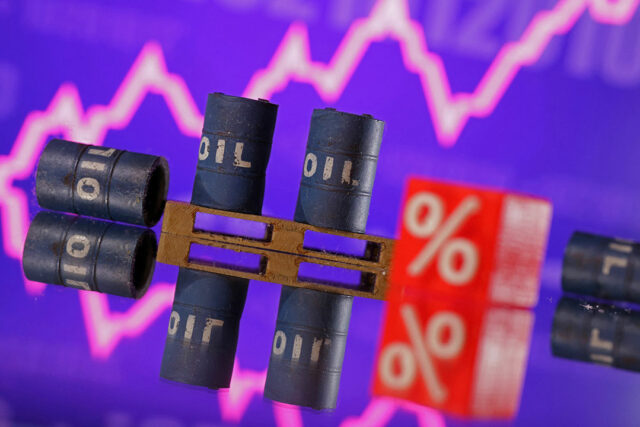
Miniatures of oil barrels and a rising stock graph are seen in this illustration. — REUTERS/DADO RUVIC/ILLUSTRATION

THE BANGKO SENTRAL ng Pilipinas (BSP) said it is closely monitoring the impact of the escalating Middle East war on inflation and the broader economy as it prepares for its April 23 policy meeting.

“Ahead of the monetary-policy meeting on April 23, 2026, the BSP is closely monitoring the impact of the Middle East conflict on Philippine inflation and the economy,” the central bank said in a statement on Wednesday.

“The BSP is assessing the potential impact of higher oil prices on the price of fertilizer, transport fares, and inflation in general,” it added, noting that price stability continues to be its primary mandate.

On Tuesday, BSP Governor Eli M. Remolona, Jr. met with President Ferdinand R. Marcos, Jr. to discuss the Monetary Board’s policy decision during its first policy review this year in February.

Finance Secretary and Monetary Board member Frederick D. Go said on Tuesday that the Board will consider hiking rates next month if oil prices stay elevated.

At the same time, the central bank said it continues to intervene in the foreign exchange market to smoothen out sharp swings and temper inflationary risks as the ongoing war weighs on the peso. 

“This is consistent with a flexible exchange rate policy, with intervention limited to tempering large swings that could affect inflation rather than defending any specific level,” it said.

This came after the local unit slumped to an all-time low of P59.87 against the greenback on Monday, down 13.50 centavos to break its previous record-low finish of P59.735 on Friday.

‘DEFENSIVE RATE HIKE’
Meanwhile, Oxford Economics said the BSP will likely reverse its policy path this year as rising oil prices are expected to stoke inflation. 

In a report released late on Tuesday, Oxford Economics Senior Economist Callee Davis said the central bank might raise its policy rate by the third quarter if the oil price holds above $100 per barrel (/bbl) for two months.

“(A) few economies appear more at risk of implementing defensive rate hikes from (the third quarter) through yearend, including South Africa, the Philippines, Thailand, Indonesia, and Central and Eastern European countries such as Poland and the Czech Republic,” she said.

According to Oxford Economics’ estimates, oil at $100/bbl would bring inflation closer to 4%, while oil at $140/bbl will likely push it above that mark.

If the latter holds true, Ms. Davis said the BSP might lift its key rate as early as the second quarter.

Oil surged past $100/bbl last week to the highest since mid-2022 as supply woes amid the ongoing war in the Middle East drove up prices.

Brent futures stood at $102.27/bbl as of Wednesday morning, while US West Texas Intermediate crude was at $94.67/bbl, Reuters reported.

Mr. Remolona also said earlier that they might tighten monetary policy if the per-barrel cost of oil reaches $100, noting that it could drive inflation beyond the central bank’s 2%-4% target.

If realized, the central bank would be ending its nearly two-year easing cycle to mark its first rate hike in over two years or since October 2023.

The Monetary Board last reduced the benchmark interest rate by 25 basis points (bps) for a sixth straight meeting in February, bringing it to an over three-year low of 4.25%.

It has delivered a total of 225 bps in cuts since it began easing in August 2024.

Local pump prices have also been soaring, with diesel and kerosene prices up for a 12th straight week and gasoline for the 10th week in a row.

Fuel retailers began another round of staggered pump price adjustments on Tuesday. This week, gasoline prices are set to climb by a total of P12.90 to P16.60 per liter, diesel by P20.40 to P23.90 per liter, and kerosene by P6.90 to P8.90 per liter.

These adjustments would push gasoline prices to as much as P91.60 a liter, diesel to P114.90 a liter and kerosene to P143.79 per liter, based on the Department of Energy’s monitoring.

Inflation also picked up for a third straight month to 2.4% in February as elevated energy costs weighed on consumer prices.

However, any tightening cycle would likely be temporary as central banks may resume easing if prolonged oil shocks end up dampening gross domestic product (GDP) growth, Ms. Davis noted.

“Still, this period of tighter monetary policy would be temporary under these scenarios, lasting only until yearend,” she said.

“Even a prolonged increase in oil and gas prices over the medium term is unlikely to fully reverse the current EM (emerging markets) easing cycle, on aggregate, over the next two years, as central banks would likely resume easing if GDP growth weakens significantly under severe, prolonged oil and gas price shock scenarios,” Ms. Davis added.

The Philippines still faces risks to the outlook following the flood control corruption last year that tainted public and investor sentiment and slowed economic activity, leading GDP growth to slump to a post-pandemic low of 4.4%.

Earlier this year, the BSP said the economy may rebound by the second half of the year as recent data pointed to tentative signs of improving business confidence.

However, BSP Deputy Governor Zeno Ronald R. Abenoja said on Tuesday that external shocks from the Middle East war threaten the country’s recovery prospects.

He noted that the degree and duration of oil price surges, which they are monitoring, will determine the central bank’s monetary policy path in the coming months. — Katherine K. Chan

PUV fare hike suspended

Passenger jeepneys are parked at the Tandang Sora Terminal in Quezon City, March 18, 2026. — PHILIPPINE STAR/MIGUEL DE GUZMAN

By Chloe Mari A. Hufana, Reporter

PHILIPPINE President Ferdinand R. Marcos, Jr. on Wednesday suspended the fare increase for public utility vehicles (PUVs), a day before its implementation.

In a video message, Mr. Marcos said he directed the Department of Transportation (DoTr) to defer the hike scheduled for Thursday, adding that now is not the right time to raise fares despite soaring pump prices.

“This may not be the right time to increase fares for our fellow citizens,” he said in Filipino.

The Department of Transportation (DoTr) said it has deferred the implementation of PUV fare adjustments to help ease the burden on commuters.

Transportation Acting Secretary Giovanni Z. Lopez said the agency is exploring other programs and initiatives to support drivers and commuters, such as free rides and the expansion of fuel voucher distribution.

The Land Transportation Franchising and Regulatory Board on Tuesday approved fare increases for PUVs, reflecting the spike in fuel, maintenance and operating expenses since the Iran war began.  It covered jeepneys, provincial and city buses, airport taxis, and transportation network vehicle services.

Mr. Marcos assured transport workers that the government will ramp up support as it began its cash relief distribution for tricycle drivers in the capital region on March 17.

Other PUV workers are scheduled to receive aid in the coming weeks.

“Transport workers should not worry; we will expedite and increase support for you so that you won’t be burdened too much,” Mr. Marcos added.

The DoTr said it is expediting the release of fuel subsidies for qualified PUV drivers and operators as additional assistance.

Mr. Lopez said the DoTr is also coordinating with toll operators for the possibility of offering discounts to motorists.

BusinessWorld sought comments from toll operators Metro Pacific Tollways Corp. and San Miguel Corp. but had not received a response as of deadline.

Meanwhile, transport group Manibela is set to stage a transport strike to protest the government’s suspension of fare adjustments, stressing that this move further burdens drivers already reeling from high pump prices.

“The government should have thought things through before suspending the increase, this would add another burden to our drivers and operators,”  Manibela Chairman Mar S. Valbuena told BusinessWorld on Wednesday.

Mr. Valbuena also noted the approved fare increase was not enough to compensate drivers as fuel expenditure accounts for the majority of drivers’ daily earnings.

The DoTr also clarified that the suspension order applies only to fare adjustments for land transport. The higher fuel surcharge for airlines from April 1-15 remains in effect, along with Maritime Industry Authority’s  authorization for ship operators to collect up to 20% of base fares as a fuel surcharge.

MRT, LRT FARE DISCOUNTS
The President said the operators of the Metro Rail Transit (MRT) and Light Rail Transit (LRT) will also give fare discounts.

“Even if there is a major disruption happening, it will only be felt a little, or we can do it, hopefully, our people will feel nothing in their daily work, among our students who come to school every day,” he added.

Benjamin B. Velasco, an assistant professor at the University of the Philippines School of Labor and Industrial Relations, said the government’s reversal on the fare hike highlights a lack of clear policy coordination, sending mixed signals amid a fuel and cost-of-living crisis.

“Even if the fare hike was suspended, the demand for a wage hike will not be muted since prices of other basic necessities — like food and electricity — are rising still,” he said via Facebook Messenger.

“If the costs of living are increasing, then why are wages not being adjusted too? It behooves the government to also call for a tripartite industrial summit to tackle this concern,” he added.

Mr. Velasco recommended a transport summit to discuss measures such as service contracting and “libreng sakay,” ensuring no operator or worker is unfairly disadvantaged.

NO EMERGENCY POWERS FOR NOW
Also on Wednesday, Mr. Marcos said he is uncertain when or whether he will use the proposed emergency powers to cut fuel excise taxes despite certifying the measure as urgent.

The possible move on fuel excise taxes is contingent on global price movements amid uncertainties from the escalating conflict, he said, noting there are many things to consider.

Both chambers of Congress have already passed separate measures allowing the President to cut or halt the excise tax on fuel under certain conditions.

“That depends. That’s a very complicated calculation,” he told reporters during a market visit in San Juan City. “When the situation calls for it, then we will see when to exercise that power and by how much.”

According to Mr. Marcos, the country has enough supply of oil and food, urging Filipinos not to hoard as “everything is normal.”

Fuel prices spiked on Tuesday, March 17, with gasoline rising by P12.90 to P16.60 per liter, diesel by P20.40 to P23.90 and kerosene by P6.90 to P8.90.

Monitoring by the Department of Energy showed pump prices could climb as high as P91.60 per liter for gasoline, P114.90 for diesel and P143.79 for kerosene.

“Right now, we don’t have a problem with the supply of food, and we don’t have a problem with the supply of petroleum products, including fertilizer for farmers,” Mr. Marcos said in mixed English and Filipino.

Analysts said suspending fuel excise taxes offers limited relief amid global oil volatility, with domestic prices still driven by import costs and Middle East supply disruptions. 

Jonathan L. Ravelas, a senior adviser at Reyes Tacandong & Co., noted that while excise tax cuts provide immediate relief, they are a blunt tool.

“A better approach is targeted support for transport, agriculture, and power, while accelerating fuel diversification,” he said via Viber.

Foundation for Economic Freedom President Calixto V. Chikiamco said that the impact of the suspension would be modest — roughly P10 per liter for gasoline and P6 for diesel.

“It would also reduce much-needed government revenue, which could have funded additional schools or infrastructure,” he said via Viber.

Both analysts cautioned that tax relief alone will not stabilize oil prices or shield consumers from broader cost-of-living pressures.

On March 17, Finance Secretary Frederick D. Go said it is premature to push for a fuel excise tax cut, as the government is still assessing the impact of the ongoing conflict and oil price movements.

Instead of an immediate tax cut, economic managers are prioritizing alternative relief measures, including boosting fuel buffer stocks, rolling out targeted subsidies for transport and vulnerable sectors and coordinating with oil firms to manage price increases.

The Senate approved on third and final reading a bill granting Mr. Marcos the authority to suspend or reduce fuel excise taxes to cushion the impact of rising oil prices.

The measure allows the President to act when the Mean of Platts Singapore crude benchmark averages at least $80 per barrel for a month prior to the order.

The proposal differs from the version passed by the House of Representatives, which requires the declaration of a national emergency or calamity before tax relief can be implemented.

Lawmakers in the House also included additional conditions for the automatic suspension or reduction of excise taxes. — with Ashley Erika O. Jose


Philippines building up fuel stockpiles until May — DoE chief

PHILIPPINE STAR/RYAN BALDEMOR

By Sheldeen Joy Talavera, Reporter

THE PHILIPPINE government and oil companies are already building up fuel inventories for May as early as now, the Department of Energy (DoE) chief said, as the Iran war enters its third week and continues to threaten global oil supply.

Energy Secretary Sharon S. Garin said that the country’s fuel supply is enough to cover demand until end of April but oil companies are now trying to secure stocks for May.

“It’s a liberalized industry. So, oil companies are supposed to make sure that we have stocks, a minimum of 15 days. But actually, they surpassed that. So, they’re ordering now for their May stocks,” Ms. Garin told ANC’s Headstart on Wednesday.

Currently, oil companies are required to maintain at least a 30-day inventory of crude oil and a 15-day inventory of finished petroleum products.

Since the Philippines has very limited domestic oil production to cover demand, local fuel retailers mostly import their supply from the Middle East, the world’s top oil-producing region that is currently being disrupted by the Iran war.

The majority of the finished petroleum products come from Asian countries such as Japan, South Korea, and China, but crude oil is also sourced from the Middle East.

“The stocks for May are supposed to be delivered in April and they’re (oil companies) trying to lock that in. It’s early but we have to do it early in these times. So, oil firms, including the government, are working on the supply for May,” Ms. Garin said.

As a precautionary measure, the government has also moved to assist fuel companies by directing the oil and gas exploration arm of state-run Philippine National Oil Co. to procure at least two million barrels of oil from global markets.

“Because there might be risks that their source might not deliver, so the government is also procuring. So, one million or two million stocks, so we have a buffer,” Ms. Garin said.

“Just in case any of our oil companies fail to procure, we have a reserve for May. So that’s what we’re doing now. We’re slowly locking in some offers. Little by little, we’re trying to make sure that May is covered,” she added.

Aside from existing suppliers, the Energy chief said the Philippines is also tapping other countries in Asia like Malaysia, Brunei, and India. It is also considering sourcing from other markets such as the US, Canada, Russia, or South American countries.

While fuel prices might be cheaper in the latter countries, Ms. Garin said that the end cost of transportation will be “longer and a little more expensive” as deliveries could take up to a month.

TIGHT SUPPLY
Leo P. Bellas, president of Jetti Petroleum, Inc., told BusinessWorld that “almost all oil companies are doing their best to secure cargoes for May.”

“Volume being secured is, at the minimum, based on each oil company’s monthly sales,” he said.

However, increasing the stockpiles remains challenging, as it is constrained by the availability of products in the market.

“Supply is becoming very tight because of run cuts imposed by refineries due to lack of feedstock, and export ban,” Mr. Bellas said.

“Assuming there is no supply problem, the concern will be the capital requirement due to higher cost of importation. The price of diesel has more than doubled already versus prior to the Middle East crisis, and gasoline is now higher by more than 70%,” he added.

Robert Dan J. Roces, an economist at SM Investments Corp., said building up inventories is “a prudent and proactive step” to cushion the country from potential supply disruptions amid the ongoing geopolitical conflict.

“By increasing buffers and exploring alternative suppliers, oil companies can better ensure continuity of supply and reduce the risk of sudden shortages,” he told BusinessWorld in a Viber message.

In the short term, fuel inventory buildup should help mitigate global shocks and prevent abrupt spikes in local pump prices.

“Over the longer term, the focus should shift toward strengthening energy security — such as diversifying import sources, expanding strategic petroleum reserves, and accelerating investments in domestic and renewable energy — to reduce the economy’s vulnerability to external oil shocks,” Mr. Roces said.

Several oil companies are hiking pump prices this week, pushing diesel costs beyond P100 per liter. To alleviate pressure on consumers, some oil companies staggered the implementation of the increases in two to three tranches.

Asked how long the Philippines may experience elevated fuel prices, Ms. Garin said: “It all depends on the war.”

“The worst part is that the effects will be longer. The prices will take longer to go down. The logistics — all the oil fields that they bombed — it will take time to prepare those,” Ms. Garin said. “Maybe another six months after the war, slowly, it will go back to normal — the prices and logistics.”