Home Blog Page 1442

Globe stocks pick up on bargain hunting, stock split announcement

BW FILE PHOTO

SHARES of Globe Telecom, Inc. rose last week as investors showed renewed interest following news of GCash operator Mynt’s stock split approval to increase the number of shares.

Globe was the fifth most actively traded stock last week, with 639,330 shares worth a total value of P1.15 billion traded from June 2 to 5, data from the Philippine Stock Exchange (PSE) showed.

Trading was cut short in observance of the Eid al-Adha celebration on June 6.

Globe shares closed at P1,810 apiece on Friday, up 2.3% from P1,770 on May 30. The services index rose 3.1%, while the benchmark PSE index gained 0.6%.

Year to date, the telecommunications company’s shares lost 17.1%, reversing the 5.9% growth in its sector but outperforming the PSE’s 2.3% decline.

Unicapital Securities, Inc. Equity Research Analyst Peter Louise D.C. Garnace said in an e-mail the stock rebounded last week after trading near its 52-week low, weighed down by soft first-quarter earnings and broad weakness across its business segments.

“We think that the stock’s recovery last week was mainly driven by bargain hunting as Globe has been trading near oversold levels, as well as renewed optimism on GCash’s IPO prospects fueled by Globe Fintech Innovations, Inc. (Mynt)’s stock split announcement,” Mr. Garnace said.

Last week, Mynt, operator of G-Xchange, Inc. (GCash), approved a stock split to increase its common shares ahead of its planned initial public offering (IPO).

In separate disclosures, Globe Telecom, Inc. and Ayala Corp. said Mynt’s board approved an amendment to its articles of incorporation reducing the par value of common shares from P1 each to three centavos per share. This increases the number of authorized common shares to 71.66 billion from 2.15 billion.

The company’s authorized capital stock remains at P2.15 billion, the disclosures said.

Ayala-led Globe owns a 36% interest in Mynt, which owns GCash.

“Globe became one of the most active stocks last week after Mynt’s board approved a stock split, which may increase authorized shares while lowering the potential stock price for GCash’s planned IPO,” Jash Matthew M. Baylon, analyst at First Resources Management and Securities, said in an e-mail.

Mr. Baylon added that Globe’s disclosure of activating 235 new 5G sites in 2025 for artificial intelligence (AI) adoption added volatility to its stock movement last week.

Globe said in a statement it had activated 235 new 5G sites as of the first quarter of 2025, supporting over 9.5 million devices nationwide.

The telecom company said its human resources group fully integrated AI into its recruitment process using HireVue, an AI-powered platform that combines video interviews. AI is essential in providing live operational dashboards, building prioritization, and enabling predictive maintenance across network assets.

Net income attributable to the owners of the parent company rose 2.5% to P6.98 billion in the first quarter, from P6.81 billion in the same period last year.

Mr. Garnace said the recent stock split by Mynt was done in preparation for GCash’s upcoming IPO and to boost market sentiment for Globe, reinforcing expectations of a potential listing in the second quarter or full-year 2026.

“In our view, the substantial increase in the number of shares at a lower par value will provide Mynt the flexibility to issue shares at a more affordable and attractive price to investors. This will make the IPO more accessible to a broader range of investors,” Mr. Garnace said.

“Investors are looking forward to GCash’s IPO. The stock split may be viewed as a way to make the firm more attractive and could add liquidity for its planned IPO. Furthermore, the additional shares may benefit Globe, which received a P1.8 billion revenue contribution from Mynt in the first quarter of 2025,” Mr. Baylon added.

Mr. Baylon said Globe’s revenue for the second quarter is expected to decline by 1% to P44.14 billion due to lower contribution from home broadband services as the market shifts after most customers migrated from fixed broadband to fiber connection.

“For the week, we see Globe trading within the range of P1,750 to P1,850, with P1,750 as support and P1,850 as resistance,” Mr. Baylon said.

“We expect Globe to continue trading sideways with support around P1,750 and resistance at P1,850,” Mr. Garnace said. — Lourdes O. Pilar

Treasury bill, bond rates may be mixed as market eyes BSP meet

BW FILE PHOTO

RATES of the Treasury bills (T-bills) and Treasury bonds (T-bonds) on offer this week could end mixed to track secondary market yield movements amid expectations of further cuts from the Bangko Sentral ng Pilipinas (BSP).

The Bureau of the Treasury (BTr) will auction off P25 billion in T-bills on Monday, or P8 billion each in 91- and 182-day papers and P9 billion in 364-day securities.

On Tuesday, it will offer P30 billion in reissued 10-year Treasury bonds (T-bonds) with a remaining life of seven years and three months.

T-bill yields could be mixed or slightly lower, mirroring the week-on-week movements in comparable secondary market benchmarks, as slower May inflation data released last week bolstered bets of further monetary easing by the BSP as early as this month, Michael L. Ricafort, chief economist at Rizal Commercial Banking Corp., said in a Viber message.

Meanwhile, the reissued 10-year bonds on offer this week could also fetch rates close to secondary market levels, he added.

“We could expect a downward bias for yields on domestic bond issuances this week. This is mainly due to the latest Philippine inflation report, which continued to decline amid easing food prices,” a trader said in an e-mail.

“This report is likely to further solidify expectations of a potential policy rate cut from the Bangko Sentral ng Pilipinas. Both the anticipated policy rate cut and the softer inflation report are likely to push down yields both for the short-term and medium- to long-term bonds,” the trader added.

Reyes Tacandong & Co. Senior Adviser Jonathan L. Ravelas said that T-bill and T-bond yields could move sideways as the market looks ahead to the BSP’s widely expected 25-basis-point (bp) cut at its June 19 review.

At the secondary market, yields on the 91- and 182-day T-bills inched up by 0.83 bp and 1.29 bps week on week to 5.4413% and 5.6097%, respectively, based on the PHP Bloomberg Valuation Service Rates data as of June 5 published on the Philippine Dealing System’s website. Meanwhile, the 364-day debt dropped by 4.39 bps to end at 5.6814%.

For its part, the 10-year T-bond saw its rate go up by 4.28 bps week on week to end at 6.2997%, while the seven-year paper — the benchmark tenor closest to the remaining life of the bonds to be auctioned off on Tuesday — rose by 1.88 bps to yield 6.068%.

Philippine headline inflation slowed to an over five-year low of 1.3% in May from 1.4% in April and 3.9% the same month a year ago, the government reported on Thursday.

This matched the median estimate yielded in a BusinessWorld poll of 17 analysts and was within the BSP’s 0.9%-1.7% forecast for the month.

This also marked the fourth straight month of deceleration and tenth straight month of inflation settling within the central bank’s 2-4% annual target.

For the first five months, inflation averaged 1.9%.

Benign inflation could help justify further BSP rate cuts, with another reduction expected as early as this month’s meeting, analysts said.

BSP Governor Eli M. Remolona, Jr. last month said they are likely to deliver two more 25-bp rate cuts this year, with a reduction on the table at the Monetary Board’s June review.

The BSP in April reduced the target reverse repurchase rate by 25 bps to 5.5%, bringing total cuts thus far to 100 bps since it began its easing cycle in August last year.

Last week, the BTr raised P28.6 billion from the T-bills it auctioned off, higher than the P25-billion plan, as total bids reached P116.316 billion or almost five times the amount on offer.

Broken down, the Treasury borrowed the programmed P8 billion via the 91-day T-bills on Monday as tenders for the tenor reached P31.675 billion. The three-month paper was quoted at an average rate of 5.452%, 1.6 bps lower week on week. Tenders accepted by the BTr carried yields of 5.434% to 5.463%.

The government likewise made a full P8-billion award of the 182-day securities it auctioned off as bids for the paper amounted to P41.655 billion. The average rate of the six-month T-bill rose by 1.4 bps to 5.565%, with accepted rates ranging from 5.553% to 5.579%.

Lastly, the Treasury raised P12.6 billion via the 364-day debt papers, higher than the P9-billion program, as demand for the tenor totaled P42.986 billion. The average rate of the one-year T-bill slipped by 0.8 bp to 5.68%, with bids accepted having yields of 5.65% to 5.69%.

Meanwhile, the reissued 10-year bonds on offer on Tuesday were last offered on May 6, where the government raised P30 billion as planned at an average rate of 6.081%.

The BTr wants to raise P150 billion from the domestic market this month, or P60 billion through T-bills and P90 billion via T-bonds.

The government borrows from local and foreign sources to help fund its budget deficit, which is capped at 6.1% of gross domestic product this year. — A.R.A. Inosante

A new weaving center depends on you

A SOCIAL enterprise promoting indigenous weaving techniques in modern clothing is seeking help — they hope to raise between P5 million to P10 million, and it all hinges on one night: a benefit fashion show called Weave It to Life on July 27 at The Manila Hotel.

Kandama, a social enterprise once located in Kiangan, Ifugao, has helped local women find employment and preserve local craft (specifically, woven cloth) since its founding in 2016. Unfortunately, they have lost the Julongan Weaving Center which they occupied.

“We’re doing this show largely because of a great challenge that they’ve faced,” said Kandama Chief Executive Officer, Founder, and TOYM (The Outstanding Young Men) awardee Victor Baguilat, Jr. in a speech during a press conference in Intramuros on June 2. “We were just evicted from our weaving center.”

In a later interview during the day, he said that it was because the land and structure they occupied, which they did not own, was going to be turned into a church for the community. “It was a very anxious moment in my life, and in the (lives) of the weavers.”

“A lot of the social impact that we produce revolves around the weaving center,” he added.

“We have to raise P5 million,” he said. “To run the entire program, I think will probably be around P5 million to P10 million, to make it a more sustainable weaving center.” He elaborated that the P5 million would be the baseline to buy a lot and build near the former weaving center. “We really have to have our own property,” he added. Operational expenses, such as equipment and paying the weavers, raise the cost to P10 million.

He says that 100% of Kandama’s proceeds goes to the weaving center. Proceeds from the show will directly support the construction and operational startup of the new Julongan Weaving Center. Its partner for the event, JCI Manila, will take care of the planned center’s architecture, according to Mr. Baguilat. If everything goes well, the center could be up in six months.

The benefit show will feature Kandama’s newest collection, “Executive Outlaws,” which merges urban tailoring with ancestral textile traditions.

How will they raise that kind of money in one night? According to a press release, “the event will gather over 500 high-impact guests, including leaders from fashion, philanthropy, government, and media. Sponsors and supporters will be acknowledged on-site and permanently honored through inscriptions on the weaving center’s walls.”

“That show is also the launch for the crowdfunding campaign that we’re doing with The Spark Project,” said Mr. Baguilat.

In his speech, he said, “The heart of our social enterprise is not the weaving center: it’s really the people, the weavers, and the partners behind it. Whether or not we have a weaving center, we know that we can always find a way to build one.

“We’re beyond the physical infrastructure. The heart of the weaving center is really the spirit.”

Ticket prices for the event range from P5,000 for Bronze to P10,000 for Gold: Heritage Patron. For details and ticket sales, check out https://kandamacollective.com/.JL Garcia

How digital banks reshape the Philippine financial landscape

STOCK PHOTO | Image by ijeab from Freepik

By Abigail Marie P. Yraola, Deputy Research Head

EMBRACING digital banking was a leap the Bangko Sentral ng Pilipinas (BSP) took since it began opening its doors to the idea of fully digital banks to operate in the country alongside traditional banks.

In December 2020, the BSP released guidelines on the establishment of digital banking licenses and by 2021, it approved six digital banks: Overseas Filipino Bank, Tonik Digital Bank, Inc., UNO Digital Bank, GoTyme Bank,  Maya Bank, Inc., and UnionDigital Bank, Inc.

Shortly after, it then imposed a three-year pause in granting licenses for the central bank to monitor the banks’ performances.

The central bank believes that these banks are key drivers for financial inclusion and will contribute innovative financial solution.

Fast forward, these frontrunners will now face competition as the BSP allow four more banks to operate, meaning, a total of 10 banks will hold digital licenses, wherein the four will probably be fully operational by next year.

Issued on Dec. 26 last year, the BSP Circular No. 1205 approved the issuance of digital banking licenses, including the conversion of existing bank’s license to digital bank license beginning Jan. 1, but still subject to prudential limits and conditions.

“This move further advances BSP’s agenda on greater financial inclusion and digital transformation by encouraging the entry of new players with robust, distinctive customer value propositions and innovative business models,” the BSP said in an e-mail.

This proves the central bank’s significant efforts and initiatives to support the growth of digital banking.

Additionally, it shows that digital banks are positioned for growth and reshape the financial landscape in the country, however, it would raise a concern on how these banks will leverage its potential while managing risks and establishing fair competition in the banking industry.

DIGITAL BANKS vs. TRADITIONAL BANKS
George N. Manzano, an economist from the University of Asia and the Pacific, said that digital banks are not necessarily threats but rather should be seen as complementary players that can better serve specific market segments, which includes the unbanked, tech-savvy clients, or small digital entrepreneurs.

“To stay relevant and competitive, traditional banks may find it strategic to establish digital bank subsidiaries. This allows them to test new models, reach underserved markets, and offer a full suite of services that cater to both traditional and digital-first customers,” Mr. Manzano said in an e-mail.

He added that instead of viewing digital banking as a zero-sum game, the future may lie in finding synergies and complementarities between the two approaches.

For Reinielle Matt M. Erece, an economist at Oikonomia Advisory and Research, Inc., while digital banks emerge, this doesn’t mean that it will replace traditional banking institutions and practices in the short term.

He added that there are still a lot who are concerned with security and still prefer face-to-face transactions for availing their banking needs plus poor digital infrastructure is also a reason why consumers will favor traditional banks.

For UnionDigital Bank, the rise of digital banks is not a disruption to traditional financial institutions, but as a complementary force that expands the reach and depth of financial services across the country.

“We believe that the BSP’s initiative to issue digital banking licenses is a bold and necessary step to bridge the gap in financial access. It’s not about replacing traditional banks — it’s about working alongside them to build a more inclusive, resilient, and future-ready financial ecosystem for every Filipino,” it said in an e-mail.

For Greg Krasnov, founder and chief executive officer of Tonik Digital Bank, digital banks are fundamentally shifting how banking services are accessed, delivered, and scaled.

“Traditional institutions have historically relied on physical infrastructure and manual processes, with a focus on affluent segments and corporate clients, [while] digital banks, by contrast, are mobile-first, data-driven, and designed for scale across underserved mass-market segments,” Mr. Krasnov said in an e-mail interview.

MORE PLAYERS
Mr. Krasnov explained that the lifting of the moratorium reopens a crucial avenue for innovation in the sector. This, he added, is a positive step that recognizes the need for increased competition, better services, and broader coverage — especially for consumers who are underbanked or entirely excluded.

Manish Bhai, founder and president and chief executive officer at UNO Digital Bank, said that the interest from new players confirms that the country is a highly promising market for digital banking.

“The central bank’s decision to reopen the window — this time with stricter differentiation requirements — is a clear sign of confidence in the sector’s long-term potential,” Mr. Bhai said in an e-mail.

For Shailesh Baidwan, Maya Group president and Maya Bank cofounder, the central bank has set a high bar for new applicants, requiring them to present unique value propositions, innovative business models, and demonstrate their readiness to operate sustainably.

He further explained that this rigorous licensing process ensures that only players who can set themselves apart and contribute to the financial ecosystem — particularly by reaching untapped or underserved segments — will be granted a digital banking license.

“The added focus on value and innovation aligns with the BSP’s vision of advancing financial inclusion through meaningful, differentiated services,” he said.

The entry of more digital banks can enhance competition and financial inclusion, provided that the regulatory capacity of the central bank is strong enough to manage the associated risks, Mr. Manzano said.

He highlighted that the core issue lies in supervision if the BSP can effectively oversee digital banks, especially in areas such as credit risk, cybersecurity, and compliance.

However, he cautioned that if supervision capacity is limited, the risk of destabilizing the system increases.

“In that case, stricter entry requirements would be prudent. The long-term viability of these banks will depend on both their business models and the strength of the regulatory environment,” he said.

PITFALLS IN REGULATORY COMPLIANCE
The BSP said that digital banks are facing various operational and regulatory challenges as they navigate the nascent of their operations. Among these, is the need for sustained investment in cybersecurity infrastructure to protect against increasingly sophisticated cyberthreats.

Additionally, maintaining strong capital buffers to support rapid business growth, and the establishment of comprehensive risk management frameworks tailored to digital banking operations is crucial.

The central bank also highlighted that strengthening risk management capabilities across key areas, including credit, technology, and internal control functions (such as audit and compliance is significant.

It added that enhancing these core areas is vital for sustaining financial soundness and aligning operations with long-term business strategies.

For UNO’s Mr. Bhai, compliance in digital banking is multifaceted but mainly, the challenge is balancing the speed of technology with the rigor of regulatory expectations.

He added that while digital banks operate in real time, regulations tend to prioritize stability and thoroughness over speed.

“As digital banks begin to serve more previously unbanked and underbanked customers, the regulatory framework will naturally evolve,” he said.

Additionally, these new segments may have different needs, vulnerabilities, and risk profiles and forward-looking institutions must be prepared to adapt “and that means building with compliance baked into the company’s DNA from day one.”

Meanwhile, Maya’s Mr. Baidwan reiterated that the central bank has been clear and consistent in laying out the regulatory requirements for digital banks.

“These standards — whether around capitalization, governance, cybersecurity, or consumer protection — are straightforward and aligned with the broader goal of ensuring trust and stability in the financial system,” he said.

He emphasized that similar with any fully regulated bank, the challenge is not in understanding the requirements, but in executing them consistently.

He also pointed out that for the new players, building the necessary infrastructure can be demanding, particularly in areas like risk management, compliance systems, and IT security.

INCREASED COMPETITION
The BSP said that the emergence of these digital banks is expected to intensify competition within the banking sector, particularly regarding product innovation, service delivery, and customer experience.

Traditional banks, which are burdened by high costs of maintaining extensive branch networks, may struggle to compete effectively in terms of market reach unless they accelerate their digital transformation and innovate their product and service offerings.

“While this heightened competition may exert downward pressure on traditional banks’ margins, it also presents an opportunity for them to modernize, enhance operational efficiencies, and better align with evolving consumer demand for digital financial services,” the central bank said.

Latest BSP data showed that as of end-March, digital banks’ total assets reached P125.49 billion, higher than the P96.9 billion posted a year earlier.

Meanwhile, these banks posted a combined net loss of P1.04 billion during the first quarter from a net loss of P2.07 billion a year earlier.

In comparison with traditional banks, Oikonomia’s Mr. Erece said that to remain profitable and competitive in the long run, traditional banks must embrace digital transformation to meet the demands of customers seeking efficiency, convenience, and speed.

“Traditional banks will still have robust revenue streams from traditional users such as older demographics and larger institutions,” he said.

For Maya, with banking penetration in the country still low, access to formal credit for individuals and small businesses is still highly limited.

“The vast majority of loans from the banks are extended to corporates, while consumers and small businesses have limited access to unsecured credit. These gaps underscore the ongoing need for inclusive, accessible, and technology-driven financial solutions.”

For Tonik Bank, traditional banks have focused on corporate lending and high-net-worth retail customers, while overlooking unsecured consumer credit and small businesses.

Given this, Mr. Krasnov explained that the gap exists due to legacy banks lack the operational models and risk appetite needed to profitably serve these markets.

“Digital banks are now capturing that opportunity by deploying alternative data, automated underwriting, and embedded distribution models like payroll deduction or point-of-sale lending.”

He said that these models are structurally better suited to serve the mass market at scale.

For UNO Bank, the biggest shift is not only technological but also behavioral.

“Customers today expect more from their banks. It’s no longer a seller’s market. It’s a buyer’s market — driven by expectations shaped by seamless experiences in retail, transport, entertainment, and logistics,” Mr. Bhai explained.

He further explained that banks are no longer just compared to other banks but to the best digital experiences available.

Digital banks, he added, are structurally designed to meet these expectations.

“With leaner cost bases and modern tech stacks, we deliver faster onboarding, lower fees, and deeply personalized services — especially for mobile-first and underserved segments.”

However, he pointed out that this shift is not a zero-sum game. Traditional banks will still hold advantages — such as capital scale, brand equity, and long-standing client relationships.

“Institutions that can’t evolve may see margin compression and market share loss, especially among younger, more digital native users.”

ECONOMIC GROWTH ‘DRIVERS’
Digital banking services can improve access to credit, leading to higher consumer spending and potential business expansions which are both vital to economic growth.

“A well-managed growth of credit to pair along with growth in productivity leads to faster economic growth. In addition, more players mean more competition and hopefully leads to better services and even job generation if more players are willing to enter the space,” Mr. Erece said.

UNO Bank’s Mr. Bhai said that the entry of new digital banks has the potential to contribute to long-term economic growth — but not by simply increasing the number of players.

“The real value lies in how these banks expand access to new services capital, especially for individuals and small businesses that the traditional system often overlooks.”

Moreover, he said that digital banks are structurally better equipped to cater to the evolving nature of work. As more people earn income through freelance platforms, remote work, and digital entrepreneurship, there is a need for financial institutions that can understand and support non-linear income patterns, thin-file customers, and real-time financial needs.

Meanwhile, Mr. Krasnov of Tonik Bank said that access to formal credit is a proven driver of household resilience and economic activity, explaining that when consumers can borrow safely — whether to manage expenses, invest in education, or purchase durable goods — it stimulates consumption and improves quality of life.

Similarly, when small business can access working capital, they grow and have increased profits and hire more staff.

“Digital banks, by lowering the cost of service delivery and expanding reach, have a unique role in catalyzing this type of growth,” he said.

He said that digital banks can drive both broader access and better quality — and that’s the engine of long-term impact.

For Maya Bank, digital banks have the potential to support long-term economic growth, particularly if players can meaningfully reach underserved segments, enable financial activity, and introduce innovation that deepens trust and engagement in the financial system.


Imported rice MSRP to be reduced to P43 per kg

REUTERS

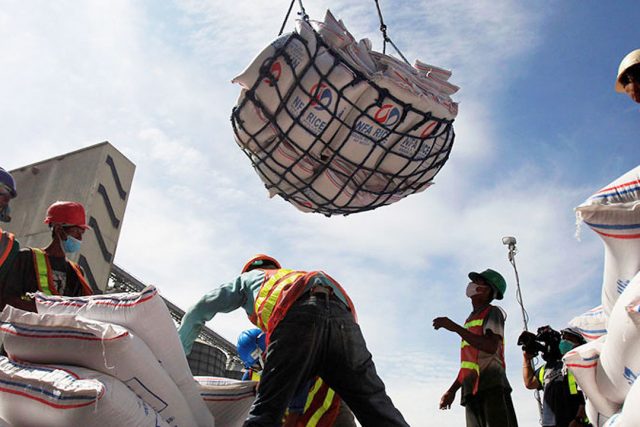
THE Department of Agriculture (DA) said on Sunday that it will lower the maximum suggested retail price (MSRP) for imported rice to P43 per kilo from P45 starting July 1.

Agriculture Secretary Francisco P. Tiu Laurel, Jr. said the reduction is “in response to the recent decline in global rice prices.”

“This food security initiative has helped tame inflation, allowing the central bank to reduce interest rates to drive economic activity and create jobs.”

Rice inflation continued to decline, falling 12.8% in May from the 10.9% decline a month prior.

The DA said it is also set to adjust the prices of rice sold under its rice-for-all program, in which rice with 5% broken-grain content sells for P43, 25% broken P35, and 100% broken P33.

The MSRP was first implemented in January to reflect the reduction in imported rice tariffs to 15% from 35% in July.

The pricing scheme also coincided with a drop in world rice prices following India’s lifting of its export ban on non-basmati white rice.

The initial MSRP for 5% broken imported rice was set at P58 per kilo on Jan. 28 and was gradually lowered to P45 by March 31.

The DA has also been expanding a government-subsidized P20-per-kilo rice program for disadvantaged consumers, which it wants to sustain until the end of President Ferdinand R. Marcos, Jr.’s term in 2028.

The program has benefited 9,487 households or almost 40,000 individuals as of June 4.

With the price of NFA rice at P33 per kilo, Food Terminal, Inc. and a partner local government unit will need to pay P6.50 each to close the P13 gap.

For rice sold in state-backed Kadiwa outlets, the FTI absorbs P9 for every kilo of rice sold.

Mr. Laurel said Speaker Ferdinand Martin G. Romualdez has instructed House of Representatives policy and budget experts to conduct an in-depth review on the feasibility of making the subsidized-rice measures permanent.

He said the House leadership affirmed its “readiness to draft legislation to institutionalize the program.”

The DA is seeking an P18-billion budget for the program in 2026. — Kyle Aristophere T. Atienza

Stop destroying the UHC Law

ORIGINAL PHOTO FROM PNA

It is often said that this country has many laws that are laudable but have suffered in implementation.

Some laws fall victim to a change in administration. The succeeding Executive and Congress simply refuse to fund the laws through appropriations. Such was the fate of the Responsible Parenthood and Reproductive Health Act which got no funding from a Tito Sotto-led Senate.

The Universal Health Care (UHC) law offers a different example of how good legislation gets destroyed.

The UHC Act was passed in February 2019, and its Implementing Rules and Regulations were signed a year later. The UHC implementation thus ran into a two-year pandemic. The health sector faced the tough challenge of responding to the pandemic and setting in motion the UHC reforms at the same time. Evidently, the health of the whole population was the priority through preventing disease and flattening COVID-19.

After the pandemic, the Philippine Health Insurance Corp. (PHIC or PhilHealth) funds intended for UHC implementation but unused during the pandemic fell prey to a Congress looking for “excess, unused funds,” to fund pet projects or pork barrel. Congress grabbed P89.9 billion of PhilHealth’s reserve funds.

Congress further escalated its war on “unused” health funds by imposing a punishing 50% cut in funding for PhilHealth’s indirect members in the 2024 General Appropriations Act (GA) item for PhilHealth.

Not content with defunding 50% of the support for PhilHealth, Congress removed PhilHealth from the 2025 GAA. The national budget did not provide a single peso for the poor, seniors, and disabled.

Congress did not forget to grab credit for the health system by moving PhilHealth’s funds to the patronage-heavy Medical Assistance for Indigent and Financially Incapable Patients (MAIFIP). In 2024-2025 PhilHealth got P27 billion from the budget for the poor (indirect contributors) while MAIFIP received P99 billion. This is a gross distortion of the Social Health Insurance program enshrined in the UHC law.

Like lambs, the previous PhilHealth managers and the board took all this punishment. Further, to pacify the public and counteract the political fallout, despite PhilHealth’s shrinking budget, they cranked out benefit packages that were rushed and clearly unsustainable.

CONSEQUENCES OF DEFUNDING, FACE-SAVING BENEFITS
In 2024, PhilHealth suffered a loss in its operations, the first since 2011 when it paid out P34.934 billion in benefits while gaining only P33.294 billion in premiums, a loss of P1.64 billion.

Last year, PhilHealth suffered its largest annual loss at P29.799 billion after paying out P234.520 billion and earning only P204.097 billion.

As a consequence, PhilHealth’s liabilities (net of its reserves) at the end of 2024 now stand at P941.749 billion, from P663.706 billion the previous year.

When she saw that PhilHealth’s liabilities stood at P663 billion in 2023, Supreme Court Justice Amy Lazaro-Javier remarked: “I will show you the report of CoA (Commission on Audit) which shows that PhilHealth is bankrupt, actually.”

This 29% increase in liabilities in the year when benefits ballooned to P185 billion and, worse, when the National Government took away P60 billion should prompt Congress to withdraw the proposed legislation amending the UHC law that includes reducing premiums by an effective 30% for both the workers and the poor.

PHILHEALTH FACING BANKRUPTCY
The amendment on the premium, if made effective this year, will see a reduction in PhilHealth’s income of around P160 billion (from direct members exclusively). At the same time PhilHealth will probably be paying out P240.5 billion (payouts are increasing by 30% per year), leading to at least a P90 billion loss for PhilHealth’s this year. The loss will increase to P150 billion in 2026, with premiums frozen at reduced rates.

By 2026, PhilHealth’s reserves may not be able to cover even one year’s operations in 2027, forcing the health insurance corporation to seek relief from government. Why reduce rates now when PhilHealth will ask for relief in two years’ time?

MORE ANTI-POOR LEGISLATION ON THE WAY
But the amendments to the UHC law do not just concern premiums. There is increasing pressure to lift the regulatory guardrails such as the necessary positive recommendation of the Health Technology Assessment (HTA) team, which will lead to unregulated proliferation of medicines, supplies, technologies, and procedures that have not passed through the HTA process.

Another amendment seeks to blow up the health system into 1,500 parts, giving every mayor and governor a slice of the health system pie, making the health system that much more inefficient. Failure in the local health systems run by local government units will only result in increased privatization of the health system, leading to higher costs and leaving out the poorest.

Apart from amendments to the UHC law, Congress is destroying UHC through other means. It is also considering destroying the source of funding for UHC, the Sin Tax Reform Law. The House of Representatives has approved a bill that will lower tobacco taxes and eventually remove the automatic increase in tax rates for inflation adjustment. This means a reduction in long-term funding for PhilHealth, since the bulk of the tobacco excise tax is earmarked for PhilHealth.

All in all, we ask Congress to change course. Do not destroy UHC. Implement it now.


Juan Antonio “Jeepy” Perez III, a doctor of Medicine, specializes in public health administration, primary healthcare, and has worked with nine Health Secretaries and three NEDA Secretaries since 1992. He was undersecretary for Population and Development and executive director of the country’s Commission on Population and Development up to Sept. 8, 2022, when he retired. He occasionally writes for Action for Economic Reforms.

Vietnow

Previewing the midsize all-electric SUV that is the VinFast VF8 in Ho Chi Minh City. — PHOTO BY KAP MACEDA AGUILA

How EV specialist VinFast intends to make its mark in the PHL

AMID A GLUT of Chinese brands now numbering more than 20, is there a place under the Philippine sun for Vietnam-headquartered electric vehicle specialist VinFast?

In the rear seat of a VinFast VF8 midsize SUV, we head to our hotel amid a light afternoon rain in Ho Chi Minh. The traffic strangely feels like in Manila, with a deluge of motorbikes crisscrossing the thoroughfares, and aggressive drivers insinuating themselves into lanes. The all-electric VF8 occasionally beeps to alert our driver when vehicles get too close, or are coming up from the rear and blind side.

Our quick jaunt in Vietnam involves rather brief seat time behind the wheel, though I must admit it is a pleasant experience to occupy the second row of the five-seater SUV around the size of the Toyota Fortuner. We are driven to and from our appointments in the city still known by its old moniker, Saigon — appreciating both the newer commercial districts and older sections as if in a snapshot of the bygone wartime era.

Bookended by the larger E-segment SUV VF9 and smaller C-segment SUV VF7, the D-class VF8 stretches 4,750mm, is 1,667-mm tall, 1,934-mm wide, and gets a wheelbase length of 2,950mm. The latter figure usually dictates cabin space, and we find the VF8’s to be comfortably generous. To complete the list of stats, VF8 has a trunk capacity of 376 liters with the second-row seatbacks up, and 1,373 liters when folded. Pop open the hood for a “frunk” (front trunk) with an additional 88 liters of volume to accommodate other stuff you may want to bring with you.

Saturday finds us at a makeshift proving ground a few minutes by car from our hotel at the Landmark 81 — developed by VinHomes which is, yes, owned by VinGroup. This, in turn, also owns VinFast. The VinGroup empire is headquartered in Hanoi, and has interests in real estate development, retail, and “services from healthcare to hospitality.”

The affable Malaysian driving instructor and training specialist Kenvin Low guides me on a demonstration run through the obstacles at the course, which include a wading pool which submerges the VF8 in around 200mm to 300mm of the wet stuff, a suspension test, a 30-degree metal ramp where we get to try out hill start assist as well as experience the ease of the vehicle’s ascent, navigate through a tight section using the 360-degree camera system, and execute an emergency brake test after a pedal-to-metal sprint. The course is reasonable for a quick glimpse at several abilities, but I reserve a complete judgment on the VF8 after I have a longer stint behind the wheel. I see the promise though, with the low NVH (noise, vibration, and harshness) as a direct offshoot of the two electric motors — one on each axle — certainly a welcome sensation. The suspension can still be tweaked for greater comfort, if I’m being honest. The humid and hot weather though is quick work for the air-conditioning — cool and adequate for our party of four in the SUV.

Following this year’s Manila International Auto Show where the VF6 subcompact SUV was unveiled, VinFast Philippines elucidated a “three-pronged” strategy to underpin its growth aspirations in the country.

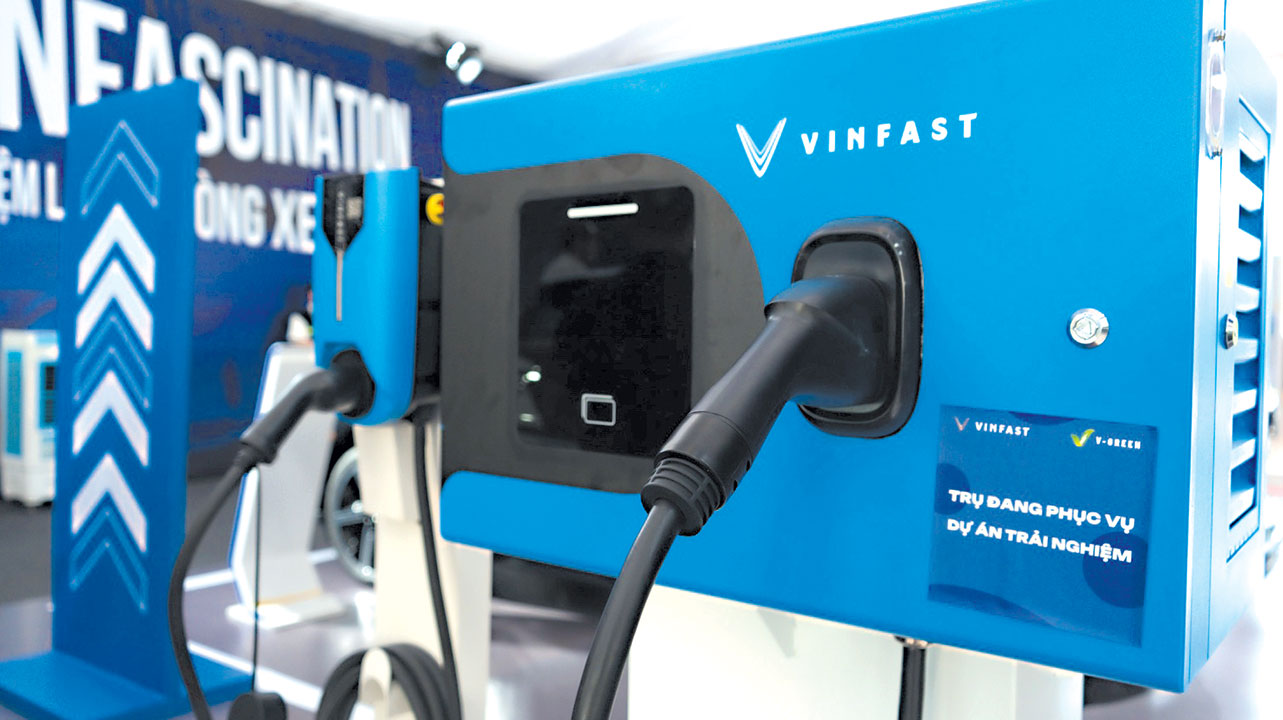
First, the company committed to offer free public charging at VinFast stations “through 2027,” in order to “reduce the immediate operating costs and (to reassure) potential buyers.” It is doing this through a separate but affiliated (VinGroup) firm V-Green, a global charging network developer, which is said to be working on installing 15,000 DC electric vehicle charging ports nationwide by the end of the year. “For context, as of March 2025, the country has a total of over 900 public charging stations,” said VinFast Philippines. This lofty aspiration is predicated on the Vietnam model, where VinFast is said to have installed some 200,000-plus charge points.

Next, VinFast is helping allay doubts as to the quality of its vehicles by firmly standing behind them. “To ease concerns about long-term value, VinFast introduced a buyback program that guarantees up to 90% of the vehicle’s original price, depending on how long it’s been owned. This applies across the entire lineup, not just premium models,” its official statement had continued.

Lastly, the brand revealed the forging of partnerships with financial institutions to aid in acquisition through “more flexible payment terms” and to ease the “high upfront cost” of customers. In addition, VinFast is continuing to grow its local footprint — committing to opening “more than 60 new showrooms this year.”

To date, there are 10 VinFast showrooms now open in the country: VinFast ASEANA, VinFast Bacolod, VinFast Alabang, VinFast Cainta, VinFast EDSA, VinFast Iloilo, VinFast Isabela, VinFast La Union, VinFast Manila Bay, and VinFast Urdaneta.

Back to the VF8, there’s no clear timeline yet when the SUV model will arrive in the country, but the safe bet is that it will make an appearance sooner or later — particularly if VinFast wants to tick as many price point boxes as possible while deploying the aforementioned charging network.

Banks’ assets rise to P26.89 trillion at end-April

The main office of the Bangko Sentral ng Pilipinas in Manila. — BW FILE PHOTO

THE Philippine banking industry’s total assets rose by 5.5% year on year as of end-April, preliminary data from the Bangko Sentral ng Pilipinas (BSP) showed.

Banks’ combined assets rose to P26.89 trillion as of end-April from P25.48 trillion in the same period a year ago.

However, month on month, total assets inched down by 2.7% from P27.64 trillion as of end-March.

Banks’ assets are mainly supported by deposits, loans, and investments. These include cash and due from banks as well as interbank loans receivable (IBL) and reverse repurchase (RRP), net of allowances for credit losses.

The banking sector’s total loan portfolio inclusive of IBL and RRP jumped by 10.2% to P14.85 trillion from P13.47 trillion in the comparable year-ago period.

Net investments, or financial assets and equity investments in subsidiaries, increased by 8.8% to P8.03 trillion as of end-April from P7.38 trillion in the same period in 2024.

Net real and other properties acquired climbed by 12.7% year on year to P119.88 billion from P106.41 billion.

On the other hand, cash and due from banks fell by 24.7% to P1.91 trillion as of end-April from P2.54 trillion in the previous year.

Banks’ other assets slipped by 0.1% to P1.984 trillion from P1.986 trillion.

Meanwhile, the total liabilities of the banking system amounted to P4.63 trillion as of end-April, up by 3.1% from P4.49 trillion in the year prior.

Bulk of banks’ liabilities were deposits, which increased to P19.77 trillion at end-April from P19.004 trillion a year prior. Peso-denominated deposits stood at P16.35 trillion, while foreign currency deposits were at P3.42 trillion.

Rizal Commercial Banking Corp. Chief Economist Michael L. Ricafort said banks’ total assets continued to be driven by double-digit growth in lending.

“Loan growth slowed down for the largest banks based on the latest data as of April, but still more than twice gross domestic product growth, as consumer loans even grew faster year on year,” he said.

Outstanding loans of universal and commercial banks grew by 11.12% year on year to P13.25 trillion in April, the slowest growth in five months. Consumer loans jumped by 24% to P1.67 trillion in April, a tad faster than the 23.9% increase recorded a month prior.

Mr. Ricafort said further monetary easing here and abroad could spur demand for loans, which would in turn boost bank assets.

“Further BSP and Federal Reserve rate cuts for the coming months could further reduce financing costs that could help increase the demand for loans, as well as support banks’ trading gains on fixed income investments,” he added.

BSP Governor Eli M. Remolona, Jr. has said a rate cut is on the table at the Monetary Board’s June 19 policy review. The central bank has so far slashed interest rates by 100 basis points since it began its easing cycle in August last year. — Luisa Maria Jacinta C. Jocson

Nighttime skincare that works

HUMANHEARTNATURE.COM

By Zsarlene B. Chua

Product Review
Human Nature Overnight Elixir
and Radiant Grace Night Cream

NIGHTTIME is when skin does its most intensive repair work, and not enough is said about the importance of a good sleep routine and using the right products to ensure that your skin has the components it needs to repair itself. But if you’re like me, whose sleep routine is often out of whack, the right products are pulling double duty — helping make up for lost rest while supporting the skin’s natural renewal cycle.

When Human Nature reached out to ask if I’d try their newest night line, I was genuinely interested. I’ve used their products consistently over the years for their balance of affordability and effectiveness. Their Sunflower Beauty Oil, as well as the Hydrating and Nourishing facial washes and toners, have long been staples in my routine.

Now, Human Nature is leveling up — evolving to meet a wider range of skincare needs. Over the years, the brand has been introducing more active ingredients into its formulations, including ceramides, hyaluronic acid, Vitamin C, and even bakuchiol, a plant-based alternative to retinol.

Their newest line is no different, as the Radiant Grace Night Cream (P995/45 ml) and Overnight Elixir (P995/30 ml) feature bakuchiol, known for improving skin texture and appearance of fine lines, with the added benefit of being gentler than traditional retinoids.

To note, this isn’t the first time the brand has dabbled in bakuchiol in their products as they introduced their Sunflower Beauty Oil with Bakuchiol (P299.75/30 ml) two years ago — a product I’ve enjoyed and continued to buy sporadically.

Unlike that earlier, more targeted product, the Overnight Elixir is a facial oil that takes a broader, more holistic approach. Rather than centering on a single active ingredient, it functions as a multi-tasking cocktail — combining a range of skin-nourishing oils and active ingredients designed to support hydration, repair, and barrier resilience. While bakuchiol is present, it is listed in the last third of the ingredients list, suggesting it is used at a lower concentration.

The formula leans more heavily on a blend of botanical oils, including their signature sunflower oil, along with rosehip, avocado, passion fruit, soybean, rose, lavender, elemi, and rosemary oils. These oils are rich in antioxidants, fatty acids, and vitamins, contributing to overall skin conditioning and glow. Rather than targeting a single issue, the elixir is built to support a more well-rounded nighttime routine, especially for those dealing with dryness, dullness, or early signs of aging. As it is, the elixir may not be potent enough for those who want products specifically targeting deeper fine lines or more advanced concerns.

Bakuchiol is more prominently featured in the Radiant Grace Night Cream, appearing in the first half of the ingredients list. The cream also contains ceramides, which help strengthen the skin barrier, and Vitamin C, known for brightening age spots.

When used together, the elixir and the night cream pack quite a punch by combining targeted active ingredients with rich nourishing oils to support skin repair, hydration, and overall radiance. But routines are personal, and effectiveness depends on individual skin needs and concerns, so I’m not saying that you need to use these two products in tandem, as I believe that any good product can and should stand on its own against and in combination with other brands.

What I did like about the two products is that the elixir reminded me of Kiehl’s Midnight Recovery Concentrate (P3,500/30 ml), a facial oil focused on nighttime skin recovery and a personal favorite despite its higher price point. Both the Human Nature Overnight Elixir and Midnight Recovery Concentrate lean on that lavender scent to make it relaxing, and the blend of botanical oils helps keep the skin hydrated overnight. This makes them perfect for dry-to-normal skin like mine, but may feel too oily for those with combination-to-oily skin.

The Radiant Grace Night Cream, meanwhile, is like an upgraded version of their Ceramide Skin Renewing Night Cream (P299.75/50 ml), not only in price point but also in the effects it promises as Radiant cream is touted to not only strengthen the skin barrier (like the ceramide cream) but also help in the skin’s recovery efforts overnight due to Vitamin C and bakuchiol.

According to the brand’s product page, the Radiant Grace Night Cream and Overnight Elixir are recommended for those with more mature skin or (in my opinion) for individuals who already have an established anti-aging skincare routine — like me — who know what works for their skin. This also reflects Human Nature’s move to expand their line, incorporating more advanced active ingredients to address a wider range of skincare needs for more mature skin.

If you’re still working out how to introduce retinoids into your routine or are looking to start an anti-aging regimen, I’d suggest trying the Ceramide Night Cream and the Sunflower Beauty Oil with bakuchiol first. They offer a gentler introduction at a lower price point, allowing you to see how your skin reacts before moving on to more advanced products.

Overall, I did and do like the two new products as they offer a balanced combination of effective ingredients and nourishing oils, supporting skin hydration, repair, and a more radiant complexion without harsh effects. They also feel luxurious on the skin, and I have been waking up with a noticeably softer, more refreshed complexion in the past few weeks that I’ve been using them. However, visible results require consistent, long-term use, and it remains to be seen whether I will make them a regular part of my routine.

Human Nature products are available online at humanheartnature.com, e-commerce sites, and in select stores nationwide.


Zsarlene Chua is a former BusinessWorld reporter who is now a fledgling PR girl. She’s all about skincare, makeup, and video games — and occasionally food. None of the products she reviews are the writer’s clients. Contact the author at zsarlene.chua@gmail.com.

Digital peso in the Philippines: Ready or not?

CRECENCIO I. CRUZ

By Lourdes O. Pilar, Researcher

CHEAPER cross-border remittances, greater financial inclusion, enhanced liquidity management, reduced settlement risks, and financial stability support are the many promises of central bank digital currency (CBDC) to the country’s financial landscape. But would a digital peso work in the Philippine financial system?

A CBDC is a form of digital currency issued by a country’s central bank. It was like cryptocurrencies, except that its value is fixed by the central bank and is equivalent to the country’s fiat currency.

Last year, the country’s central bank completed its testing phase for Project Agila, its prototype wholesale CBDC.

Rizal Commercial Banking Corp. (RCBC) views the potential adoption of a CBDC as a strategic move toward modernizing the Philippine financial ecosystem.

“CBDCs provide a secure, efficient, and transparent alternative to physical cash, enabling real-time, government-backed digital settlements that enhance the integrity of payments nationwide,” said Angelito M. Villanueva, RCBC executive vice-president and chief innovation and inclusion officer.

China Banking Corp. (Chinabank) recognizes that the adoption of wholesale CBDC technology can bring significant benefits to the banking system.

“Through Project Agila, we have observed that wholesale CBDC (wCBDC) can facilitate 24/7 domestic fund transfers, leading to enhanced efficiency in interbank settlements and faster turnaround times for financial transactions,” said Delfin Jay M. Sabido IX, Chinabank chief innovation and transformation officer.

There are two types of CBDC, wholesale and retail. Financial institutions are the primary users of wholesale CBDCs in which the BSP is introducing in the country, while retail CBDC are for consumers’ and businesses’ use.

Financial institutions included in the pilot study see CBDCs as a powerful enabler and have the potential to promote broader financial inclusion.

“Designed with offline capabilities, CBDCs can reach unbanked populations in geographically isolated and disadvantaged areas. Even without internet access, individuals can transact digitally using feature phones or offline wallets via SIM toolkit, Bluetooth, or QR-based solutions,” Mr. Villanueva of RCBC said.

Mr. Villanueva also added that CBDCs also enable direct government-to-person disbursements, bypassing the need for a bank account and ensuring aid reaches the intended recipients fast and securely.

“Underbanked and underserved Filipinos can indirectly benefit from wholesale CBDCs through micro, small, and medium enterprises, cooperatives, lending institutions, and the government sector. These entities can leverage the efficiencies and capabilities of wholesale CBDCs to provide better financial services and support to their communities,” said Mr. Sabido of Chinabank.

HOW IT WORKS
According to Mr. Villanueva, the BSP selected Hyperledger Fabric, a distributed ledger technology, as the foundation for pilot testing due to its ability to record, synchronize, and share data across a network of participants. This makes it ideal for off-hours inter-institutional fund transfers — such as during evenings, weekends, holidays, or when the PhilPaSSplus system is offline.

The selection was based on its strengths in security, system access, 24/7 availability, interoperability, and programmability — all critical to building a resilient CBDC infrastructure.

RCBC said that digital access alone isn’t enough. In areas with limited or no internet connectivity, hybrid solutions will be essential. This includes offline-capable CBDC transactions and mobile-based technologies like SIM toolkit integration.

Equally important is the human element. As the country undergoes digital transformation, trusted community intermediaries are critical to bridge the gap.

The project aims to assess the technology’s viability and its potential to improve financial operations, but some advantages and disadvantages were experienced by banks in the implementation of CBDC during pilot testing.

RCBC’s participation in the Project Agila pilot presents a unique opportunity to explore the real-world functionality and potential of a wCBDC. The pilot demonstrated key benefits, including faster settlement speeds, reduced reliance on clearing intermediaries, and greater transaction transparency.

“However, the pilot also surfaced important challenges, such as the need to integrate CBDC systems with legacy banking infrastructure, which often lacks built-in interoperability,” said Mr. Villanueva.

Broad adoption will require extensive user education and strategic change management to avoid fragmentation and ensure alignment across financial institutions, Mr. Villanueva added.

Chinabank experienced several positive outcomes, including the ability to conduct programmable transactions tailored to specific systems using smart contracts, faster interbank settlements, and expanded flexibility in fund management.

“These developments have the potential to significantly improve transaction efficiency and operational risk management,” said Mr. Sabido

He added that areas for further study may include the need for robust cybersecurity measures to protect against potential threats, the requirement for comprehensive staff training to ensure smooth adoption, and the necessity to update existing regulatory frameworks to accommodate new technological advancements.

READY OR NOT?
As one of the Philippines’ most digitally progressive banks, RCBC is strongly positioned to lead in the CBDC and digital finance space.

“RCBC has built a proven track record in delivering innovative, inclusive, and impactful financial technologies. We’ve shown that innovation and inclusion can — and must — go hand in hand. We have launched groundbreaking platforms designed to bring banking closer to every Filipino,” Mr. Villanueva said.

Chinabank’s participation in Project Agila has enabled it to thoroughly assess their technical, operational, and strategic capabilities in adopting wCBDC technology.

“Chinabank continues to monitor developments closely and will carefully evaluate future requirements, opportunities, and challenges as the project progresses. We remain committed to adapting and evolving our systems to ensure readiness for innovative financial technologies,” Mr. Sabido said.

The BSP said that the project will likely be launched by 2029, still within the six-year term of BSP Governor Eli M. Remolona, Jr.

Mega Prime sets over P1-B capex for projects

MEGAPRIMEFOODS.COM.PH

MEGA PRIME FOODS, INC. has allocated over P1 billion for capital expenditure (capex) this year to support new projects.

“For capex this year, we are building a lot of new developments, so it will be more than P1 billion, 20-30% higher than last year,” Mega Prime President and Chief Executive Officer Michelle Tiu Lim-Chan said on the sidelines of the company’s 50th Anniversary event on Friday.

“We are investing in the Philippines because we want to generate more jobs and improve the economy of the Philippines,” she added.

She said the company is focusing on developing its information technology and automation systems to improve operational efficiency and maintain the quality of its sardines.

A portion of the capex will also be used to build new boats, refurbish old boats, and for dry docking.

Meanwhile, Mega Prime is targeting double-digit growth in revenues and market share.

“Target growth for revenues is 28%. And we are tracking well so far,” said Mega Prime Chief Growth and Development Officer Marvin P. Tiu Lim.

In a previous statement, he said the company aims to increase Mega Sardines’ market share to at least 30% by year-end, up from 26% in 2023.

Ms. Tiu Lim-Chan said a 28% topline growth would be higher than usual for the company.

“It will be primarily driven by our 50th year promotion and the Jimm’s Coffee acquisition,” she added.

For its promotion, the company is giving away P50 million to consumers who purchase Mega Sardine cans with special codes on the lids.

“They can win instant GCash, or they can also win a raffle every month for either a car or P1 million. So, we are very excited and hopeful that this will help boost sales and also help penetrate a lot of people throughout the nation,” Mr. Tiu Lim said.

On acquisitions, he said the company is in ongoing talks with several firms, particularly in the health and wellness segment.

“What we really want is to transform the business into a health and wellness business because it is a waste if we do not take care of our nutrition,” he said.

Asked about the timeline for the planned acquisition, he said, “The timeline is as soon as possible because we really want to grow. It is going to be hard to just grow organically, so we need to grow through acquisitions.”

He clarified that the funding for the acquisition will not come from this year’s capex.

The company is also targeting to increase exports to 10% of its business.

“Exports are not big. They are only around 5% now. But we really want to grow it to 10%. Because the base is growing, the domestic market is growing, so the export market needs to catch up with that,” Ms. Tiu Lim-Chan said.

Mega Prime currently exports to 30 countries, mostly those with large overseas Filipino worker populations. — Justine Irish D. Tabile

European Union open to lowering tariffs on US fertilizer in trade talks

REUTERS

BRUSSELS — The European Union (EU) is open to lowering tariffs on US fertilizer imports as an offer in trade talks with the Trump administration, but will not weaken its food safety standards in pursuit of a deal, EU agriculture commissioner Christophe Hansen told Reuters.

“That is definitely an option,” Mr. Hansen said, of reducing US fertilizer tariffs.

“That will be on the table. And I think that would be a huge way forward, and an offer as well to the US,” he said in an interview with Reuters, adding that whether that would mean zero tariffs, or a reduction of current rates, would need to be negotiated.

US exports face the EU’s standard tariffs of 5.5% on imports of ammonia, and 6.5% on nitrogen fertilizer, as well as an extra 29.48 euro-per-ton anti-dumping duty on US urea ammonium nitrate (UAN).

UAN comprised around three quarters of EU imports of US fertilizer last year, EU trade data show.

Reducing tariffs could boost Europe’s purchases of US fertilizer, to fill a gap as the EU cuts supplies from Russia.

Around 24% of the EU’s nitrogen fertilizer imports came from Russia in 2023, while the US accounted for 8%, EU data show.

“I believe most of the Europeans would prefer buying fertilizer from the US than from Russia,” Mr. Hansen said.

The EU will hit nitrogen-based fertilizer from Russia with tariffs rising to 100% over three years, a level that would effectively halt annual trade flows currently worth 1.3 billion euros.

Mr. Hansen said the EU was also open to discussing increasing its purchases of hormone-free beef from the US, and a deal to have zero-for-zero tariffs on EU and US wines.

But he said the bloc would not compromise on its stringent food safety standards as it seeks a deal.

“I don’t see room for maneuver to roll back our high quality standards. But of course, on other points, on other products, we are very open to negotiations,” Mr. Hansen said. — Reuters