
Creative economy’s share in GDP steadies at 7.3% in 2024

THE VALUE of the Philippines’ creative economy neared P2 trillion in 2024, the statistics agency said on Thursday. Read the full story.

THE VALUE of the Philippines’ creative economy neared P2 trillion in 2024, the statistics agency said on Thursday. Read the full story.
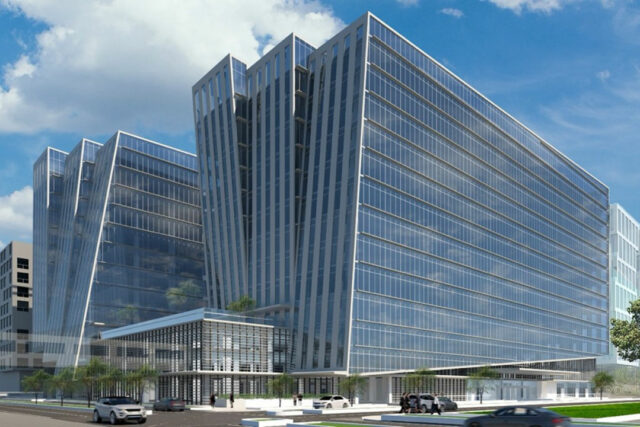
SM PRIME HOLDINGS, INC. expects to complete the SixE-com Center office development in Pasay City by 2026, aligning with its portfolio expansion amid anticipated demand growth.
SM Offices, the property developer’s office business unit, is investing P5 billion in the construction of SixE-com Center, which will be located within the SM Mall of Asia (MOA) complex, SM Prime said in a regulatory filing on Thursday.
SixE-com Center is a pre-certified Leadership in Energy and Environmental Design (LEED) Gold development featuring over 60,000 square meters of leasable space across two linear towers.
“We expect office vacancy rates to peak in 2025 as the market adjusts after the Philippine offshore gaming operators (POGOs) exit. With business outlook improving and interest rates easing, we see demand picking up by 2026,” SM Offices Head and SM Prime Vice-President Alexis L. Ortiga said.
“POGOs are not part of our tenant mix. Our office towers are designed for clients that prioritize operational efficiency, employee well-being, and sustainability,” he added.
Designed by globally renowned architectural firm Arquitectonica, the office project is a mixed-use development with integrated lifestyle amenities, including SM’s signature E-Com Center “Prism Plaza” sky garden and a retail arcade.
SixE-com Center will have direct access to major transport links, including the upcoming Metro Rail Transit Line 3 and Light Rail Transit Cavite Extension. It will also be within walking distance of SM Mall of Asia and SMDC residential towers via elevated bridgeways.
SM Offices has maintained strong occupancy levels, driven by demand from traditional companies, multinationals, and firms in business process outsourcing and knowledge process outsourcing.
As of 2024, SM Offices operates 22 office towers with about 1.6 million square meters of gross floor area, approximately 667,000 square meters of which are in the MOA complex.
On Thursday, SM Prime shares rose by 1.24% or 30 centavos to P24.40 per share. — Revin Mikhael D. Ochave

TO GRASP the aberration of US foreign policy under President Donald Trump, consider an abbreviated history of America’s shifting attitudes toward just one country, Canada. And start with Ronald Reagan, who stood for the original and genuine version of “peace through strength.”
When signing a free-trade agreement with Canada in 1988, Reagan marveled at the world’s longest land border. “No soldier stands guard to protect it,” the 40th president said. “Barbed wire does not deface it. And no invisible barrier of economic suspicion and fear will extend it.” Canadians and Americans, Reagan remarked on another occasion, are “more than friends and neighbors and allies; we are kin.”
In the current context, three things are notable about Reagan’s sentiments. The first is that most Americans really like Canadians, even if they also struggle to see them as distinct, because Canadians can easily seem like “nicer” versions of Americans. The second is that Reagan oversimplified what has historically been a complicated, often competitive and sometimes contentious relationship. The third is that Americans, in both of those ways, have long regarded Canadians roughly as Russians used to view Ukrainians.
Fast forward to 1999, when the TV series South Park captured the dark side of this ambivalence as only satire can. A gathering of Colorado parents, generally cranky about what Trump would later call “American carnage,” breaks into a chorus. Our kids are failing and we’re frustrated in life: It can’t be our fault, so it must be someone else’s. Ergo, as the chorus has it, “Blame Canada.” As one soloist riffs, “they’re not even a real country anyway.” If South Park were Russian, the song might have been about Ukraine.
That episode aired when Vladimir Putin began his rise to autocratic power in Russia. Then as now, he was convinced that Ukraine isn’t a real country but a historical appendage of the Russian World. He mixed that notion with his premise that world politics is about dominance, and with his method (learned during his years as a KGB agent) of using lies, especially big lies, to get and wield power at home and abroad.
Enter Trump. For his motto in foreign policy, he’s adopted Reagan’s “peace through strength.” In practice, his approach to diplomacy and strategy is the opposite of Reaganism. Where the Gipper stood for freer trade, Trump stands for economic warfare by tariff. Where POTUS 40 sided unequivocally with America’s allies and stared down its adversaries, 47 disdains friends and flirts with foes. Where Reagan talked and acted kind toward weaker interlocutors such as Ottawa and tough toward menacing ones such as Moscow, Trump does the inverse.
In all those ways, Trump is much closer in worldview to Putin than to Reagan. Hence his repeated insinuations — with echoes of Putin’s threats in the years leading up to his invasion of Ukraine — to annex Canada as the 51st state. Some Canadians, not always tongue-in-cheek, are talking about a looming “Canschluss” (a portmanteau of Canada and Anschluss, Adolf Hitler’s annexation of Austria).
Trump’s preferred tool to effect a Canschluss seems to be economic coercion. Other American presidents have occasionally used anti-dumping duties to nudge Canada to drop its own trade barriers, notably those on lumber and milk; that is legitimate. But when Trump keeps toggling punitive and ruinous tariffs, on and off and on again, he’s after something else: subjugation.
Many of Trump’s threats would hurt America just as much as Canada. His administration has said that it might kick Canada out of the Five Eyes*, a group of countries which share intelligence that could save lives, including those of Americans. It has hinted that the US might pull out of the North American Aerospace Defense Command, in which Canada and the US jointly monitor the northern skies and seas for threats from Russia, China, North Korea, or other bogeys.
In wrapping this campaign into a narrative, Trump has absorbed propaganda lessons from Putin. When the Kremlin prepares to subdue a target such as Ukraine, it first weaves elaborate webs of lies, disinformation, and conspiracy theories. For example, Moscow has variously pretended that Ukraine is led by terrorists, Satanists, and neo-Nazis. What matters to Putin isn’t whether such narratives make sense, but whether they can be used to confuse and dominate. And that’s what Trump has picked up.
One lie that Trump has chosen to assail Canada is that the country is a kingpin in the fentanyl trade that kills tens of thousands of Americans every year. The supply lines of this opioid stretch from Chinese labs to Mexican cartels and (via smugglers who are mostly American) to consumers in the US. Some people have also carried fentanyl across the US-Canadian border, in both directions. But the amount that is smuggled southward is negligible, around 0.2%. If there is a lethal smuggling problem at the border, it goes the other way and involves American guns killing Canadians.
“Portraying Canada as America’s fentanyl enemy is a conspiracy theory,” thinks Timothy Snyder, a historian of Eastern Europe and tyranny. Combined with another big lie — that Canada does not really exist as a nation — it is, he concludes, “a step in a policy designed to soften up Canada for annexation.” When American pundits react mainly by pondering whether Canada would dye Washington politics bluer, they only add to the Canadian shock.
Canada’s politics, unsurprisingly, are in upheaval, as Canschluss dominates the upcoming general election. A new prime minister, Mark Carney, has second thoughts about a contract to buy 88 American-made F-35 fighter jets and is simultaneously wooing Canada’s European partners, with an eye to alternative alliances. Many Canadians are boycotting American goods; some are booing the US anthem at sports games.
It’s hard to overstate what an unprovoked and unnecessary disaster the situation already is. Nobody who voted for Trump last year did so to punish or annex Canada — or indeed Greenland, Panama, or any other place that Trump is picking on. America and the world have many urgent problems, but nobody of sane mind ever thought that the Canadian border was on that list.
Wantonly and whimsically, Trump has alienated and antagonized the people whom Reagan and many Americans long considered not only friends, neighbors, and allies but kin. Nothing about any of this is rational, wise, or normal — and it certainly has nothing to do with “strength.” It is the behavior of a global bully running amok, and just getting started.
BLOOMBERG OPINION
*The US, UK, Canada, Australia and New Zealand. –
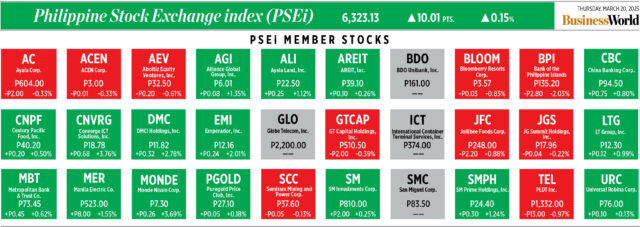
Here’s a quick glance at how PSEi stocks fared on Thursday, March 20, 2025.


By Adrian H. Halili, Reporter
THE PHILIPPINES’ top prosecutor on Thursday denied having colluded with the International Criminal Court (ICC) to pave the way for former President Rodrigo R. Duterte’s trial for crimes against humanity over his deadly drug war.
The government of President Ferdinand R. Marcos, Jr. did not plan his predecessor’s arrest and surrender to the international tribunal, Justice Secretary Jesus Crispin C. Remulla told a Senate foreign relations committee hearing investigating last week’s events.
“We did not assist the ICC,” he told senators. “We never had contact with them. The investigation that they conducted was through their own methods and we did not, in any way, assist them.”
“We are not members of the ICC, so whatever relationship we have with the ICC is at arm’s length if we have to talk to them. But we have never spoken with them,” he added.
Local police arrested Mr. Duterte after the ICC ordered his arrest and sought the help of the International Criminal Police Organization (Interpol). The tough-talking leader was arrested shortly after arriving from Hong Kong and was put on a chartered plane to the Netherlands on March 11.
The ICC has been investigating Mr. Duterte and his cohorts for crimes against humanity that he allegedly committed when he was still the mayor of Davao City and for the first three years of his presidency, when the Philippines was still a member of the international tribunal.
The war on drugs was Mr. Duterte’s signature campaign platform that swept the mercurial, crime-busting former prosecutor to power in 2016, and he soon delivered on promises made during vitriolic speeches to kill thousands of drug dealers and users.
Senator Maria Imelda R. Marcos, who heads the committee, questioned the jurisdiction of the international court over Mr. Duterte, whose family she considers close friends.
“The Senate will seek answers,” the presidential sister told the hearing. “And if there is indeed wrongdoing, we will put up safeguards so this never happens again.”
The Philippines under Mr. Duterte withdrew from the ICC’s founding treaty in 2019 when it started looking into allegations of systematic extralegal killings.
Mr. Marcos earlier said his government was just doing its job in carrying out the ICC arrest warrant and cooperating with Interpol, adding that it was nothing personal.
During Mr. Duterte’s six years in office, 6,200 suspects were killed during anti-drug operations, by the police’s count. Human rights groups say the deaths could be as many as 30,000.
He could become the first former Asian head of state to stand trial at the ICC, a court that has largely handled cases from African nations.
Several Duterte allies have questioned the validity of his arrest, citing the countries’ exit from the international tribunal’s Rome Statute.
Mr. Remulla noted that despite the Philippines’ withdrawal from ICC, it still has jurisdiction over people and not countries.
“Jurisdiction of the ICC is throughout the world,” he said. “We belong to a community of nations that is tied together by a legal system called the International Humanitarian Law. It is something adopted by more than 150 countries.”
“The ICC tries people for individual crimes, not states. So, the Philippines, as a state, cannot be called upon by the ICC to do something for them. But when the ICC is running after individuals who are Filipino citizens, then that obligation becomes another kind of obligation,” he added.
Defense Secretary Gilberto Eduardo Gerardo C. Teodoro, Jr. also said his agency did not have a hand in Mr. Duterte’s arrest. “No government agency, [including] the Department of National Defense, cooperated with the ICC,” he told senators.
National Security Adviser Eduardo M. Año said the same thing at the hearing.
Earlier, Mr. Marcos said the government would not help the ICC “in any way, shape or form,” since it had no jurisdiction over the Philippines.
Interior Secretary Juanito Victor C. Remulla said the President and members of his Cabinet had only discussed rumors about his arrest warrant from the tribunal.
Mr. Duterte made his first appearance before the ICC on March 14 via video link, where judges informed him about his charges. The ICC scheduled his trial for Sept. 23.
Vice-President Sara Duterte-Carpio joined Thursday’s Senate hearing virtually and said the arrest of her father was “patently an illegal” that was orchestrated by the Marcos government to “demolish political opponents.”
“This is all about politics,” she said.
The ICC, a court of last resort, says it has jurisdiction to prosecute alleged crimes that took place before a member’s withdrawal.
By John Victor D. Ordoñez, Reporter
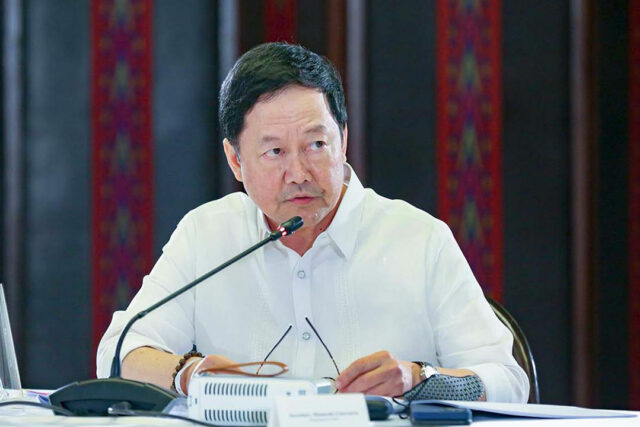
PRESIDENT Ferdinand R. Marcos, Jr. will not ask Solicitor General (SolGen) Menardo I. Guevarra to resign after he recused himself from Supreme Court lawsuits seeking to declare former President Rodrigo R. Duterte’s arrest as illegal, according to the Presidential Communications Office.
“When I asked him if SolGen would resign, he said: ‘I am not asking for his resignation.’ That’s all he said,” palace spokesperson Clarissa A. Castro told a news briefing on Thursday. “So, his trust in Solicitor General Menardo Guevarra remains.”
Supreme Court spokesperson Camille Mae L. Ting told reporters last week Mr. Guevarra had inhibited himself from representing state officials accused by Mr. Duterte’s children of having illegally enforcing his arrest and detention before he was flown to The Hague.
The country’s top lawyer earlier said he would leave it to the President to decide whether to keep him.
Justice Secretary Jesus Crispin C. Remulla told a forum on Wednesday Mr. Guevarra did not get his permission to withdraw from the lawsuits.
Mr. Duterte’s children — Sebastian, Paolo and Veronica — filed separate petitioners before the High Court seeking the firebrand leader’s release.
The tough-talking leader, who was President from 2016 to 2022, was arrested last week in Manila, marking the biggest step yet in the ICC’s probe of his alleged crimes against humanity during an anti-illegal drug crackdown that killed thousands and drew condemnation around the world.
The Hague-based tribunal has been investigating him for crimes he allegedly committed when he was Davao City mayor and during the first three years of his government, when the Philippines was still a party to ICC.
Last week, the Supreme Court rejected Mr. Duterte’s plea for an injunction on the government’s cooperation with the ICC.
Both Sebastian and Veronica said their father had been illegally arrested and was being detained by the ICC, which they said does not have jurisdiction over the Philippines.
Meanwhile at a virtual news briefing, Vice-President Sara Duterte-Carpio, who is in the Netherlands with her father, chided personnel from the Armed Forces of the Philippines for allowing the arrest to happen under “questionable circumstances.”
“Even more disturbing is the silence of the Armed Forces of the Philippines (AFP),” she said. “Why did the AFP stand idly by when a former commander in chief was taken from a military base under questionable circumstances?”
“If a former President can be taken without due process, what stops them from doing the same to any other Filipino?” she asked.
The Vice-President, whom and House of Representatives impeached in February, said she was still performing her duties online, and that bringing her father back from home is a duty she needs to carry out.
The war on drugs was the signature campaign platform that swept the mercurial Mr. Duterte to power in 2016. During his six years in office, 6,200 suspects were killed during anti-drug operations, by the police’s count.
Activists and human rights group say as many as 30,000 drug suspects died.
“I don’t want to stay here because my children are in the Philippines and my work is there,” Ms. Duterte said in mixed English and Filipino. “But as Vice-President, I also have a duty to a fellow countryman, a Filipino citizen who is being held against his will here at the ICC detention center.”

PRESIDENT Ferdinand R. Marcos, Jr. has vetoed a bill that seeks to declare the province of Pampanga as the culinary capital of the Philippines, citing potential discrimination against other provinces.
In a veto message to Senate President Francis “Chiz” G. Escudero dated March 12, the President cited the need for more studies and a historical basis to give Pampanga in the country’s north the distinction.
“In consideration of the possibility that the enrolled bill may cause discrimination, regional bias and loss of diversity, I am constrained to veto the abovementioned enrolled bill,” he said.
Mr. Marcos said the designation could “offend sensibilities in other provinces that are equally proud of their culinary contributions.”
Senator Manuel “Lito” M. Lapid, who filed the Senate version of the bill, had pushed for the bill’s approval before the plenary, saying the province has become “synonymous with Philippine cuisine,” with dishes such as sisig, tocino and kare-kare.
“We want to recognize the uniqueness of each region,” presidential spokesperson Clarissa A. Castro told a news briefing on Thursday. “That’s why it was vetoed — not to deny that Pampanga has great food and culture, but to acknowledge the excellence of every region.”
“If one region is declared as having the best or most delicious food, others, especially foreigners who want to visit the Philippines, might think that only one region is worth visiting for its local cuisine,” she added.
Senator Mark A. Villar, who sponsored the Senate bill, said the bill only seeks to recognize the province’s contribution to the country’s culinary history and does not seek exclusivity.
“The richness in terms of regional differences is the strength of our Filipino cuisine,” the President said.
“I extend my unwavering support to the leadership of both Houses of Congress for working in unison with the Executive and I look forward to more beneficial legislation that would highlight our unique culture without sacrificing our diversity,” he added. — John Victor D. Ordoñez
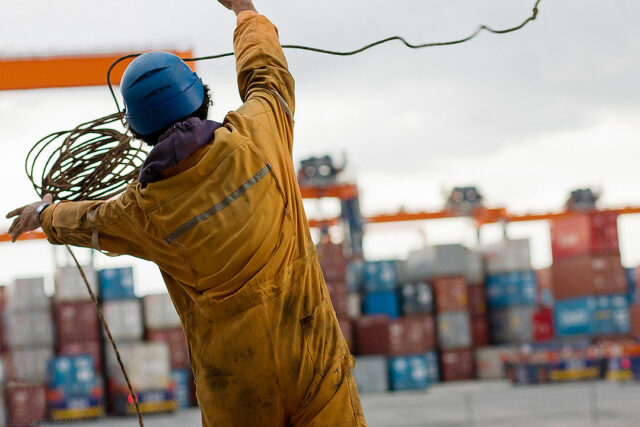
A LABOR group leader on Thursday asked the Supreme Court (SC) to declare provisions of the Magna Carta for Filipino Seafarers unconstitutional for being discriminatory and in violation of the equal protection clause.
In a petition, dated March 20, Federation of Free Workers President Jose Sonny G. Matula referred to Section 59 of Republic Act (RA) No. 12021, which imposed an “unjust” bond requirement on seafarers as a precondition for the execution of monetary awards.
“The Highest Court has consistently ruled that classifications must be based on substantial distinctions that are relevant to the law’s purpose. Section 59 fails this test because it arbitrarily singles out seafarers, imposing an additional financial hurdle that other workers do not face,” Mr. Matula said in a separate statement.
According to the petition, using the Agarang Kalinga at Saklolo para sa mga OFWs na Nangangailangan (AKSYON) Funds for the payment of premiums of the bond requirement violates the Constitution for appropriating public funds for private purposes.
AKSYON Fund, under Department of Migrant Workers Act, RA No. 11641, is created to provide legal, medical, financial, and other forms of assistance to overseas Filipino workers (OFWs), including repatriation, shipment of remains, evacuation, rescue, and any other analogous help or intervention to protect the rights of Filipino nationals.
“Section 59 of the Magna Carta for Seafarers deviates from the purpose of the AKSYON Fund by allowing the Department of Migrant Workers to also use the AKSYON funds for the payment of premiums of the bond requirement,” the petition read said.
The petition claimed the Magna Carta of Seafarers violates the principles of equal protection and due process by imposing an unjust financial burden on seafarers in enforcing claims they have already won, a requirement not imposed on other workers.
He urged the High Court to declare Section 59 unconstitutional and called on labor groups to support legal action to safeguard seafarers’ right to claim their rightful benefits without facing unconstitutional barriers.
Moreover, the petitioner noted the law usurped the exclusive power of the SC, citing Section 60, which prohibited non-lawyers to act as legal representatives of seafarers before labor courts and provided a compensation cap of not more than 10%.
The provision, which sets limitations on the appearance of lawyers and stipulation of legal fees, runs contrary to the constitutional prerogative of the SC to promulgate rules concerning pleading, practice, and procedure in all courts.
Mr. Matula also asked the top court to issue a temporary restraining order and a writ of preliminary injunction to stop the implementation of both sections and the implementing rules and regulations, pending resolution of the petition. — Chloe Mari A. Hufana
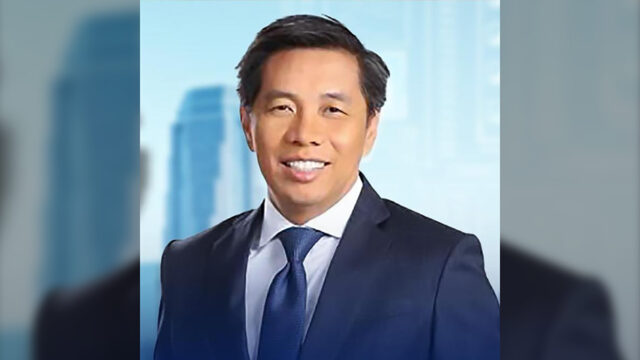
PHILIPPINE President Ferdinand R. Marcos, Jr. has named former UnionDigital Bank President and Chief Executive Officer Henry Rhoel R. Aguda as secretary of the Department of Information and Communications Technology (DICT), according to the Presidential Communications Office (PCO).
Mr. Aguda, who served as the digital infrastructure lead at the Private Sector Advisory Council, will replace former DICT chief Ivan John E. Uy, the PCO said in a statement. Mr. Uy did not give a reason for his resignation.
The new DICT chief was a director of Insular Health Care and chief technology officer at Globe Telecom, Inc., the Government Service Insurance System and Digtel Telecommunications Philippines, Inc.
He got his juris doctor and mathematics degree from the University of the Philippines and took graduate studies in advanced management at Harvard Business School and a strategic alliance program at Wharton School of the University of Pennsylvania.
Mr. Aguda also managed the corporate data network of Manila Electric Co. — J.V.D. Ordonez

THE PESO strengthened against the dollar on Thursday after the US Federal Reserve kept benchmark borrowing costs steady as expected and reiterated that they are in no rush to resume their rate-cut cycle.
The local unit closed at P57.222 per dollar on Thursday, rising by 7.8 centavos from its P57.30 finish on Wednesday, Bankers Association of the Philippines data showed.
The peso opened Thursday’s session stronger at P57.20 against the dollar. It traded higher than Wednesday’s close the entire day, posting an intraday low of just P57.255. while its best showing was at P57.11 versus the greenback.
Dollars exchanged went down to $1.296 billion from $1.72 billion on Wednesday.
“The dollar-peso closed higher after the Fed kept rates unchanged while Chairman Powell signaled a cautious approach amid uncertainties over inflation and the US economy,” a trader said in a phone interview.
The peso was also supported by lower global crude oil prices and US Treasury yields, Rizal Commercial Banking Corp. Chief Economist Michael L. Ricafort said in a Viber message.
For Friday, the trader expects the peso to move between P57 and P57.30 per dollar, while Mr. Ricafort sees it ranging from P57.10 to P57.30.
The Trump administration’s initial policies, including extensive import tariffs, appear to have tilted the US economy toward slower growth and at least temporarily higher inflation, Federal Reserve Chair Jerome H. Powell said on Wednesday, drawing the ire of President Donald J. Trump, Reuters reported.
Mr. Trump posted late on Wednesday on his Truth Social platform: “The Fed would be MUCH better off CUTTING RATES as US Tariffs start to transition (ease!) their way into the economy. Do the right thing.”
Earlier, in explaining why rates were being kept unchanged, Mr. Powell described the uncertainty faced by Fed policy makers as “unusually elevated.”
With overall sentiment sliding due to policy “turmoil,” prices are projected to rise faster than previously expected at least in part, and perhaps largely, because of Mr. Trump’s plans to impose duties on imports from US trading partners, Mr. Powell said after the Fed announced it had held its benchmark overnight rate steady in the 4.25%-4.5% range.
While Fed policy makers still expect the central bank to deliver two quarter-percentage-point rate cuts by the end of this year, matching their projection in December, that is largely due to weakened economic growth offsetting higher inflation, and what Mr. Powell called the “inertia” of not knowing what else to do given the muddled outlook.
There is “just really high uncertainty. What would you write down?” when making projections, Mr. Powell told a press conference after the Fed’s latest two-day policy meeting. “I mean it’s just… really hard to know how this is going to work out.”
“We understand that sentiment is quite negative at this time, and that probably has to do with turmoil at the beginning of an administration that’s making big changes,” Mr. Powell said.
Mr. Powell’s remarks and the Fed’s latest set of policy maker projections was heavily influenced by what has transpired since Mr. Trump took office on Jan. 20 with a vow to impose the import tariffs.
Data released along with the latest policy and economic projections showed Fed officials in near unanimity that the outlook was less certain than usual, and that risks considered balanced as of the Fed’s Jan. 28-29 meeting were now tilted towards slower growth, higher joblessness, and higher inflation.
“We now have inflation coming from an exogenous source,” said Mr. Powell, using a term economists employ to describe an outside shock, in this case tariffs that could, if Mr. Trump follows through with all his plans, lift the average tax rate on imports to levels not seen since the Great Depression.
The Fed cut its benchmark interest rate by a full percentage point last year, but has kept rates on hold this year as it waits for further evidence that inflation will continue to fall, and, more recently, for more clarity about the impact of Mr. Trump’s policies.
“We’re not going to be in any hurry to move,” Mr. Powell said. “Our current policy stance is well-positioned to deal with the risks and uncertainties we face… The right thing to do is to wait here for greater clarity about what the economy is doing.” — A.M.C. Sy with Reuters

THE MAIN INDEX rose on Thursday as both the US Federal Reserve and the Bangko Sentral ng Pilipinas (BSP) said they expect to resume their monetary easing cycles this year despite uncertainty stemming from the Trump administration’s trade policies.
The bellwether Philippine Stock Exchange index (PSEi) rose by 0.15% or 10.01 points to close at 6,323.13 on Thursday, while the broader all shares index slipped by 0.10% or 4.03 points to 3,745.32.
“The local market rose further on the back of the positive cues from Wall Street. This came as the Fed maintained its outlook of two policy rate cuts for this year,” Philstocks Financial, Inc. Senior Research Analyst Japhet Louis O. Tantiangco said in a Viber message. “Hopes that the Bangko Sentral ng Pilipinas will cut their policy rates at their April meeting also gave the market a boost.”
“Philippine shares made modest gains ahead of the FTSE rebalancing and after the Fed reaffirmed its outlook for two rate cuts in 2025, keeping rates at 4.25% to 4.5% despite expectations of higher inflation and slower growth. Fed Chair Jerome H. Powell downplayed the inflationary impact of tariffs, calling it transitory,” Regina Capital Development Corp. Head of Sales Luis A. Limlingan said in a Viber message.
Asia shares edged up on Thursday after a Wall Street rally as investor sentiment was lifted by the prospect that the Federal Reserve could still deliver two rate cuts this year, Reuters reported.
The Fed on Wednesday left rates unchanged in a widely expected decision, but maintained its projection for two quarter-percentage-point rate cuts by the year-end.
Meanwhile, BSP Governor Eli M. Remolona, Jr. told Bloomberg News on Wednesday that the Monetary Board could resume its easing cycle at their April 10 meeting following the surprise pause at their February review.
Mr. Remolona added that the BSP could deliver 50 basis points (bps) in cuts this year.
The Philippine central bank has brought down benchmark borrowing costs by a cumulative 75 bps since it began its easing cycle in August last year.
Most sectoral indices closed higher on Thursday. Mining and oil surged by 6.06% or 546.34 points to 9,548.32; property increased by 0.98% or 21.97 points to 2,261.97; industrials went up by 0.49% or 43.59 points to 8,832.88; services rose by 0.17% or 3.58 points to 2,057.36; and holding firms climbed by 0.13% or 7.04 points to 5,228.74.
Meanwhile, financials went down by 0.42% or 10.40 points to 2,440.62.
Value turnover went down to P5.6 billion on Thursday with 1.06 billion shares exchanged from the P7.84 billion with 966.38 million issues traded on Wednesday.
Advancers beat decliners, 103 against 98, while 44 names were unchanged.
Net foreign buying dropped to P166.83 million on Thursday from P392.22 million on Wednesday. — R.M.D. Ochave with Reuters

FINANCE Secretary Ralph G. Recto said the budget surplus recorded in January is unlikely to continue in the following months.
Asked if the surplus will be sustained in the runup to the elections, Mr. Recto told BusinessWorld: “No. Our deficit target this year is 5.3% of the GDP (gross domestic product).”
The government in January posted a P68.4-billion budget surplus, down from the P88-billion surplus a year earlier, the Bureau of the Treasury (BTr) reported on Tuesday.
The target deficit-to-GDP ratio is lower than the 5.7% target last year, and the government aims to further reduce this to 3.7% in 2028.
The midterm elections for national and local positions are scheduled for May 12.
Rizal Commercial Banking Corp. Chief Economist Michael L. Ricafort noted that the January surpluses of recent years typically follow “large deficits” in December.
The surplus will likely revert to a deficit in the following months.
The BTr also reported that revenue collection in January grew 10.75% to P467.1 billion, while government expenditure rose 19.45% to P398.8 billion.
Mr. Recto told reporters on Wednesday that the government is on track with fiscal consolidation efforts.
“We’re on the path. We surpassed our revenue targets. Last year, we had the highest revenue-to-GDP ratio in the last 27 years. That’s very good.”
Mr. Recto added that the Department of Finance will continue with its privatization efforts.
“We will be happy if we hit our target,” Mr. Recto said on Thursday via Viber when asked if the government will meet its P210.8-billion non-tax collection goal for 2025.
Non-tax revenue fell 19.16% to P29.6 billion, while tax collections rose 13.6% to P437.5 billion in January.
Mr. Recto said the proposed Excise Tax on Single-Use Plastics is still a priority.
The plastics tax is one of the priority bills in the Legislative-Executive Development Advisory Council common legislative agenda for the 19th Congress.
Mr. Recto also said higher spending during the elections will help the government meet its growth target of at least 6%.
This is the lower end of the government’s 6-8% target band for 2025, with the deficit projected at P1.534 trillion or 5.3% of GDP. — Aubrey Rose A. Inosante
