IT IS ALARMING how quickly the numbers of HIV/AIDS cases have risen in just the past few years here in the Philippines. Despite being still officially tagged as a low-HIV prevalence country, with less than 0.1% of the adult population estimated to be HIV-positive, more new cases are being reported today than even two years ago. As of April 2015, the Department of Health (DoH) AIDS Registry reported 24,936 cumulative cases. In that same month, there were 560 new cases reported, showing a 42% increase compared to the same period the previous year. Within the years of 2001 to 2015, the number of cases diagnosed per year increased 37 times, from just 174 cases diagnosed in 2001 to 6,552 new cases within the first 10 months of 2015 alone.
TOKYO — Japan’s techno trail-blazer Ken Ishii rocks huge crowds the world over and leads a glamorous, jet-set life — but the superstar DJ insists he’s a “bit of a nerd” at heart.
IN THE DEBATE over climate change, there is one group you don’t hear much from: economists. The failure of climate economics to make a difference in the public discussion about climate policy should be a concern for the profession.
LITTLE HAS CHANGED in Bacuit Bay, home of three of the four El Nido Resorts (ENR), in the last millennium. Its craggy limestone cliffs have been that way for the last 250 million years. All that might have changed in the 1960s and ’70s when commercial logging and fishing became the area’s main sources of revenues but because the bay was declared a turtle sanctuary and eventually a protected area, its biodiversity and natural balance has been maintained.
I WAS SCANNING the Internet, carefully noting down links to Lenten recollections, spiritual readings, and inspirational talks to recommend to my family for our Holy Week vacation, when I came across a most delightful 5-minute digital video that thoroughly made me declare an intermission from the very serious task I had assigned myself.
THE number of jobless Filipinos last January dropped to a 10-year low. Based on the preliminary results of the latest quarterly Labor Force Survey (LFS) of the Philippine Statistics Authority (PSA), the unemployment rate fell to 5.8% from 6.6% in January of last year, thinning the ranks of the jobless to 2.469 million.
The Philippines’ digital adaptation can almost be completely attributed to the dramatic acceleration since the pandemic, which pushed both government and enterprises to adopt cloud technologies at scale. Yet, a pressing question has emerged regarding the safety of cloud technologies abroad: Should more of the country’s data and computing power move back home?
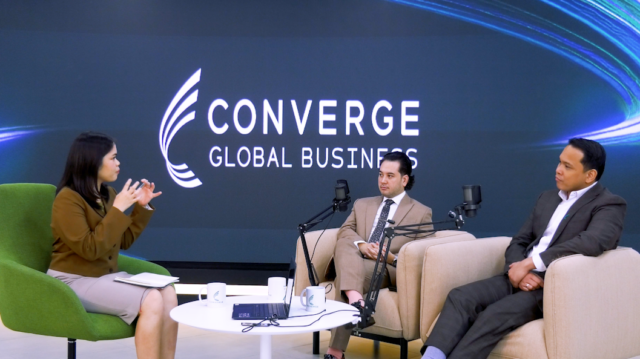
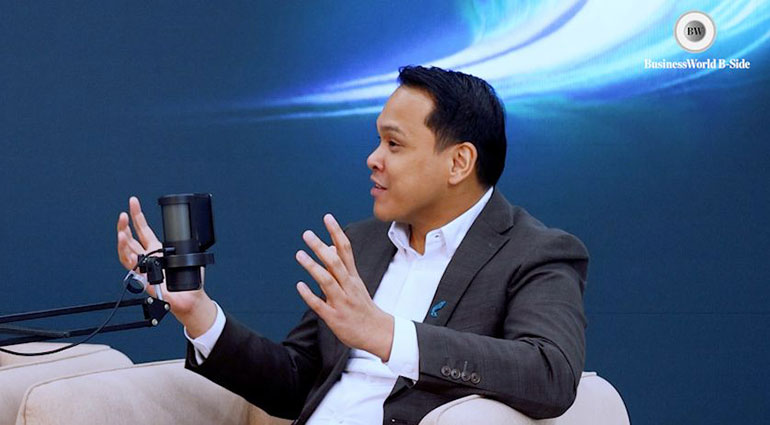
In the first episode of “Where the Digital World Converges: Conversations on Cloud,” a BusinessWorld B-Side collaboration with Converge Global Business, Converge Studios Chief Executive Officer James Mendoza and National Privacy Commission (NPC) Deputy Commissioner Atty. Jose Belarmino outlined why in-country cloud infrastructure could become the answer to the nation’s security, cost structure, and digital economy.
National Privacy Commission (NPC) Deputy Commissioner Atty. Jose Belarmino
For Atty. Belarmino, offshore hosting immediately raises jurisdictional concerns. When Filipino data is stored abroad, it becomes subject to foreign legal regimes. Courts or regulators in another country may gain lawful access to that data, limiting Philippine control.
Aside from these concerns, he also raised operational risks. Global cloud outages in recent years have disrupted financial and healthcare services locally, effectively “importing” foreign disruptions into the country.
“I say it as a confidence thing because I think data sovereignty, or having your data hosted onshore as compared to having your data hosted offshore, also increases or decreases the confidence of the citizens of the country. So, it’s not just a matter of a technical issue, but also it’s a question of perception and assurance,” Atty. Belarmino explained.
Meanwhile, Mr. Mendoza raised rudimentary challenges hindering the country’s ambitions to host its own cloud infrastructures. Among the pressing issues are real estate, power supply, and computing capacity, noting that there is a big shortage of semiconductors in the global market.
Converge Studios Chief Executive Officer James Mendoza
“Building it is one thing; having an economic model is one thing. But, how will you secure it—not just physically and digitally but also throughout its operation. Running these things is a 24/7, 365 deal, right? That’s why these big hyperscalers from both the East and the West have poured billions and billions of dollars into this infrastructure, which we call the public cloud, because it’s really a very difficult thing to do,” Mr. Mendoza said.
In terms of security, both speakers stressed that there is no silver bullet. Mr. Belarmino noted that 100% cybersecurity is impossible. Instead, robust frameworks, such as encryption, multi-factor authentication, zero-trust architecture, and regular vulnerability assessments, must be continuously strengthened. Artificial intelligence, while used by threat actors, can also enhance defensive capabilities.
“I don’t think there will ever be a system that’s 100% secure because all these cyber actors, threat actors would find ways to enter your system [and] exfiltrate data. So, the way to combat that is to really intensify and make your security measures and tools as robust as it can be,” he said.
Economically, one of the speakers revealed the benefits the country could receive from cloud adaptation. Mr. Mendoza estimates that P75-100 billion annually is spent on cloud and related services by the government and enterprises, much of which flows abroad. He noted that capturing even part of that domestically could stimulate local jobs, innovation, and a stronger digital ecosystem.
“That’s the economic impact of having a robust and proper in-country cloud ecosystem. And, of course, there’s a force multiplier there because now you’re able to multiply the businesses that are around that kind of ecosystem,” he emphasized.
Both experts envisioned a hybrid future where mission-critical workloads, disaster recovery backups, and sensitive datasets are hosted locally, while using the strengths of global providers for specialized services. This right blend, they believe, can enhance resilience and bargaining power, with part of the success hinging on talent.
“We need to be very creative or be very nimble in terms of what we teach our students. AI is not the foe. It’s the enemy. It’s an accelerator. I like to think of it as an equalizer because now you have the entire wealth of human knowledge at your fingertips. It hasn’t happened to a country like the Philippines in forever. The question is how to maximize that,” Atty. Belarmino concluded.
Listen to the full episode on BusinessWorld B-Side on Spotify or watch on BusinessWorld’s official YouTube channel.
Spotlight is BusinessWorld’s sponsored section that allows advertisers to amplify their brand and connect with BusinessWorld’s audience by publishing their stories on the BusinessWorld Web site. For more information, send an email to online@bworldonline.com.
Join us on Viber at https://bit.ly/3hv6bLA to get more updates and subscribe to BusinessWorld’s titles and get exclusive content through www.bworld-x.com.
He was holding it, caressing it. A man, a stranger, wearing short shorts, sunglasses, and cap, was masturbating in a jeepney I was riding in Manila. The other passengers were all women. Some were oblivious, but I, I was sitting in front of him and saw him doing it. As quick as I could, I hopped off. I didn’t call anyone for help, but only texted a friend to tell her the story. It was infuriating, at the same time frightening.