VICE-PRESIDENT SARA DUTERTE-CARPIO — PHILIPINE STAR/ RYAN BALDEMOR
MANILA – Philippine Vice President Sara Duterte must be tried, and ultimately convicted, over serious charges, including an alleged threat to have the president killed, prosecutors argued in a submission to a Senate impeachment court on Friday.
Ms. Duterte is facing removal from her post and a lifetime ban from office if convicted. She has denied wrongdoing and maintains her impeachment is politically motivated and the result of an acrimonious falling out between her and President Ferdinand Marcos Jr.
Lower house prosecutors said the weight of the evidence against Ms. Duterte justifies a full-blown trial, rejecting her defense that the allegations against her in an impeachment complaint were unsubstantiated.
“The severity of the charges leaves no room for technical evasion. A trial is not only warranted but necessary to reinforce justice, uphold democratic principles, and affirm that no individual, regardless of rank of influence, stands above the law,” they said in their response to Ms. Duterte’s defense.
“It is obvious from a simple reading of (Duterte’s response), which relies on misleading claims and baseless procedural objections, that the only legal strategy of the defense is to have the case dismissed and avoid trial,” the prosecutors said.
Ms. Duterte, who was impeached by the lower house in February, has described the impeachment complaint as unconstitutional and “nothing more than a scrap of paper.”
Included in the complaint were allegations she misused public funds while vice president and education secretary and had plotted to assassinate Marcos, the first lady and the house speaker based on remarks during a November press conference about hiring an assassin.
Ms. Duterte’s impeachment is widely seen in the Philippines as part of a broader power struggle ahead of the 2028 election, which Mr. Marcos cannot contest due to a single-term limit for presidents and will likely seek to groom a successor to protect his legacy. Mr. Marcos has distanced himself from the impeachment.
Ms. Duterte, the daughter of former President Rodrigo Duterte, is expected to run for the presidency in 2028 if she survives the impeachment and would be a strong contender. – Reuters
Sol and Luna finally get a chance to talk more in the next episode of Si Sol at si Luna.
While Puregold Channel’s digital series Si Sol at Si Luna keeps viewers riveted by its soulful storytelling and cinematic touch, fans of romantic dramas are fascinated by how it deals with the complex nature of love and relationships. Is right timing essential to romantic happiness? Will a strong attraction between two disparate personalities suffice when complications arise?
In its fourth episode, “Signs,” Si Sol at Si Luna finally brings Sol (Zaijian Jaranilla) and Luna (Jane Oineza) together in a moment that feels both familiar and momentous. After days of quick glances and missed connections aboard their daily commute, the two finally speak and something shifts. Luna tells Sol she will agree to be part of his film only if fate intervenes again. No numbers. No social media. If they meet again, and only then.
Episode 4 ends with a cinematic moment: they meet again. And with that, viewers are left breathless with anticipation, their hearts set for what could be not just a creative partnership, but a slow-burning, unexpected love story.
Luna agrees to join Sol’s film project, sparking hints of a budding romance between the two.
Still, viewers wonder, can love bloom when you’re a decade apart?
The Highs:
New POVs: You learn from each other. Different life stages = totally fresh perspectives
Exciting contrast: One brings stability, the other spontaneity. And that push-pull? Chef’s kiss.
Emotional depth: Being challenged by someone older or younger often compels us to reflect, grow, and feel more deeply.
Ben, Luna’s team leader, offers steady support as she goes through grief.
The Hurdles:
Different priorities: One is chasing career goals while the other wants to settle down.
Clashing ideals: Ideas on commitment, timelines, or what “forever” means can get tricky — or downright messy.
Pop culture gap: Yes, even your meme references might fall flat.
For Gen Zs like Sol, love can be fluid, hopeful, and idealistic; for older millennials like Luna, love sometimes comes with heartbreak, hard lessons, and vulnerability.
Joao Constancia, who plays Ben in the series, agrees that there are advantages and disadvantages to dating outside of your generation. “For the pros, an older partner may offer maturity, flexibility, and stability. They know the importance of having more quality, rather than quantity, time together. However, misunderstandings may also ensue as you come from different perspectives in life.”
Meanwhile, Joao says “a younger partner would have more energy and willingness to learn and experience new things. But immaturity and financial instability may complicate matters.”
Cheena Crab, who plays the snarky and fun character Bridgette, chimes in: “Age isn’t the main factor; it’s the mindset, values, and connection that matter. Dating someone older might offer maturity and stability, while someone younger might bring fresh energy and spontaneity. In the end, what really counts is mutual respect, clear communication, and being aligned with what you both want.”
Sol tries to make amends with Ara after unintentionally hurting her.
Marnie Lopez, the loving Manang Boneng, is grateful to be part of Si Sol at si Luna because she feels that this narrative on love imparts lessons that should be shared.
“Hindi ako na-awkward sa topic. Noong nabasa ko ang script at kinukuwento ni Direk Dolly, I already felt very close na to the character of Luna kasi napagdaanan ko lahat ‘yon. And I also feel for Zaijian kasi all my relationships talaga have been with younger men. Alam ko ‘yung pakiramdam nila. I want to tell this story to the world, at i-share ‘yung learnings natin from this kind of relationship — that whatever happens, you may choose who you love, and you may choose if you stay or leave.”
In the next episode, ‘A Good Story,’ watch for the promise and pitfalls of pursuing a relationship outside of your generation.
Tune in to Si Sol at si Luna, streaming every Saturday at 7 p.m., on the Puregold Channel on YouTube.
For more updates and behind-the-scenes content, subscribe to Puregold Channel on YouTube, like @puregold.shopping on Facebook, and follow @puregold_ph on Instagram and X, and @puregoldph on TikTok.
Spotlight is BusinessWorld’s sponsored section that allows advertisers to amplify their brand and connect with BusinessWorld’s audience by publishing their stories on the BusinessWorld Web site. For more information, send an email to online@bworldonline.com.
Join us on Viber at https://bit.ly/3hv6bLA to get more updates and subscribe to BusinessWorld’s titles and get exclusive content through www.bworld-x.com.
Hundreds gather to champion behavioral-based cybersecurity in the Philippines
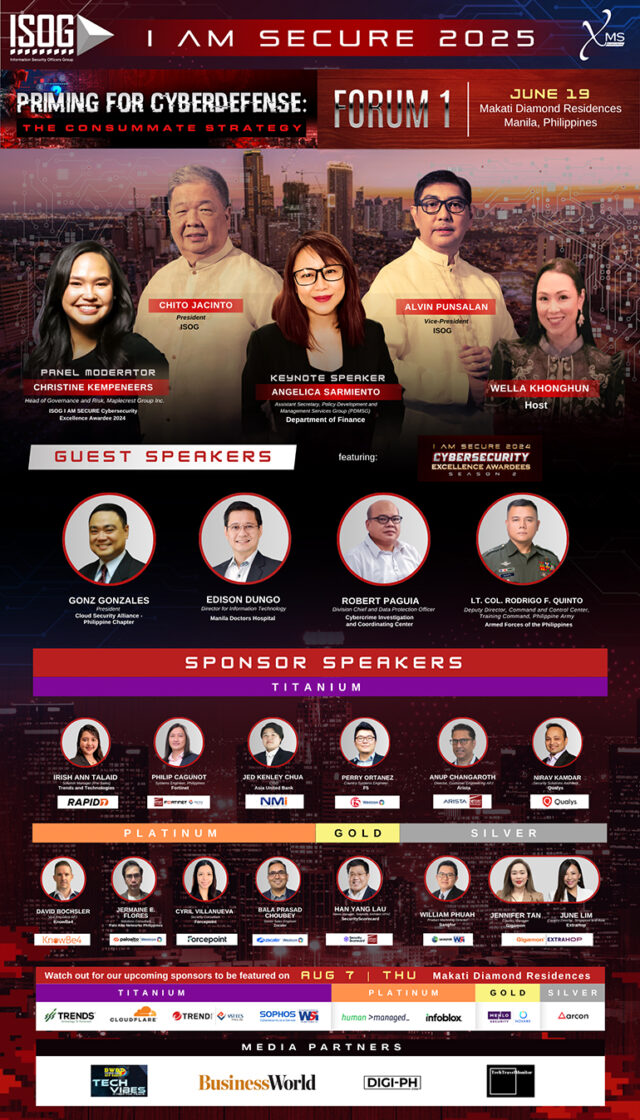
FORUM 1, the flagship event of the I AM SECURE 2025 cybersecurity awareness series, marked a powerful start with the successful execution of its hybrid event held at Makati Diamond Residences. Centered on the theme, “Priming for Cyber Defense: The Consummate Strategy,” the event gathered hundreds of cybersecurity professionals, experts, and industry leaders to explore cognitive used case strategies for cyber defense.
In his welcome address, ISOG President Chito Jacinto emphasized the forum’s growth since its 2023 debut at the same venue. “It’s inspiring to return to this venue where our journey began. From a single ballroom to an entire floor — this growth reflects the strength of our cybersecurity community. Our new direction on cognitive priming empowers individuals to instinctively recognize and respond to threats. ISOG remains steadfast in building a cyber-ready Philippines.”
ISOG Vice-President and Security Bank CISO Alvin Punsalan delivered a strategic road map for national cyber defense. “To prime our defenses, we must strengthen cross-sector collaboration, adopt a Zero Trust mindset, and mobilize our cybersecurity community. Through I AM SECURE, we protect, we lead, and we inspire. Together, we secure our nation’s digital future.”
Keynote speaker Assistant Secretary Angelica I. Sarmiento of the Department of Finance set the tone with her talk, “Increasing Cybersecurity Defenses in Financial Institutions in the Era of AI,” emphasizing proactive policies and innovation in safeguarding critical sectors.
Thought Leadership in Focus: Two high-impact panel discussions anchored the day’s agenda, moderated by Christine Kempeneers, Head of Governance and Risk at Maplecrest Group and a 2024 ISOG Cybersecurity Excellence Awardee.
Panel 1: “The Role of Psychological Priming in Cybersecurity Awareness Programs” featured Titanium sponsors as panelist who explored how behavioral science enhances user training and resilience.
Panel 2: “Building a Cybersecurity Culture Through Priming Techniques” featured Platinum sponsors and special guest Edison as panelist. The discussion focused on embedding behavioral strategies into organizational culture.
Distinguished Speakers and Awardees
Among the esteemed speakers and panelists were recipients of the ISOG 2024 Cybersecurity Excellence Awards, including: Edison Dungo, Director for Information Technology, Manila Doctors Hospital; Lt. Col. Rodrigo F. Quinto, Deputy Director, Command and Control Center, Training Command, Philippine Army, Armed Forces of the Philippines; and Robert Paguia, Division Chief and Data Protection Officer, Cybercrime Investigation and Coordinating Center.
The event also welcomed insights from Cloud Security Alliance — Philippine Chapter President Gonz Gonzales, representing one of I AM SECURE’s key alliances for 2025.
Sponsors Showcase Innovation and Collaboration
Titanium Sponsors: F5’ Country Systems Engineer (via Westcon) — Perry Ortanez, (NMI) — Jed Kenley Chua, CISO of Asia United Bank, Rapid7 — Irish Ann Talaid, Solution Manager and Pre-Sales of Trends and Technologies, Arista’s Director and Customer Engineering, APJ (via Netsec) — Anup Changaroth, Qualys’s Security Solutions Architect — Nirav Kamdar, Fortinet’s Systems Engineer (via Netsec & VST-ECS) — Philip Cagunot
Gold Sponsor: SecurityScorecard’s Senior Manager and Solutions Architect, APAC(via Netsec) — Han Yang Lau
Silver Sponsors: Sangfor’ Product Marketing Director, (via WSI) — William Phuah, Gigamon & ExtraHop’s Country Manager and Country Director of Singapore and Asia, Jennifer Tan, and June Lim
Additional highlights the forum also featured:
Launch of the official I AM SECURE social media and website, a digital hub for event cybersecurity updates, speed networking, interactive raffles, and a festive closing ceremony with a grand draw.
Media partners were BusinessWorld, DWDD AFP Radio, DIGI.PH, and Tech Travel Monitor.
Event curation by XMS, long-time partner of ISOG for I AM SECURE driven events
What’s Next? The momentum continues with Forum 2, scheduled for Aug. 7, 2025, again at Makati Diamond Residences. The next wave of stakeholders includes Trends and Technologies, Sophos, Cloudflare, Trend Micro, Human Managed, Infoblox, Menlo Security, and Arcon, among other key players.
Spotlight is BusinessWorld’s sponsored section that allows advertisers to amplify their brand and connect with BusinessWorld’s audience by publishing their stories on the BusinessWorld Web site. For more information, send an email to online@bworldonline.com.
Join us on Viber at https://bit.ly/3hv6bLA to get more updates and subscribe to BusinessWorld’s titles and get exclusive content through www.bworld-x.com.
“Rather than pursuing a traditional four-year bachelor’s degree, people opt for micro-credential programs to enhance their skills, improve employability, and increase earning potential in a competitive labor market.
Noel Jeffrey M. Torregoza, head of academics at MAPUA Malayan Digital College, told BusinessWorld that combining micro-credential certificates with relevant work experience can help people be on par with college degree holders.
Interview by Almira Martinez Video Editing by Jayson Mariñas
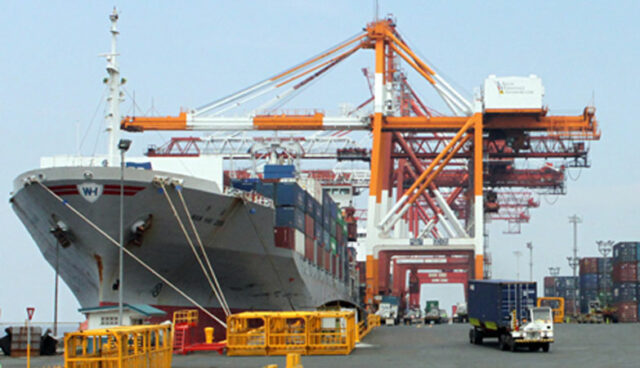
The Philippines’ trade deficit in goods further slimmed to a three-month low in May as exports grew while imports continued to fall, the Philippine Statistics Authority (PSA) reported on Friday.
Preliminary data from the PSA showed the country’s balance of trade in goods — the difference between the values of exports and imports — reached a deficit of $3.29 billion in May from the $4.73-billion gap in the same month last year.
It also slowed down from the revised $3.97-billion deficit in April.
The trade deficit in May was the narrowest in three months or since the $2.97-billion gap recorded in February.
The country’s monthly trade balance has been in the deficit for 10 years or since the $64.95-million surplus recorded in May 2015.
May’s figure brought the trade-in-goods deficit to $19.68 billion in the five months to May, narrower than the $20.72-billion gap in the same period last year.
“Exports managed to grow solidly, helped along by robust demand for electronics as well as a healthy gain for agro-based exports,” Metropolitan Bank & Trust Co. Chief Economist Nicholas Antonio T. Mapa said in an e-mail.
He added that imports shrank in May due to lower value of oil imports, while raw materials inbound shipments fell.
“Crude oil prices are down on a year-on-year basis, even after the recent uptick in crude oil. Raw materials were lower but we did see a bright spot for consumer imports which was positive, reflecting a still upbeat outlook for household spending this year,” Mr. Mapa said.
Outbound shipments of Philippine-made goods expanded by 15.1% year on year to $7.29 billion in May.
This was export’s fifth straight month of expansion this year and the highest since 28.2% climb recorded in April last year.
By value, May’s export haul was the highest level in 31 months or since the $7.75 billion logged in October 2022.
The country’s export of electronic products, which include semiconductors, amounted to $3.85 billion in May, up by 8% from $3.56 billion a year ago.
This segment remained the country’s top export commodity after accounting for more than half of total exports in May.
Outbound sales of other manufactured goods climbed 70.6% to $583.06 million, while other mineral products inched up by 0.9% to $308.16 million.
The United States cornered most of Philippine-made goods in May with $1.104 billion (15.3% share). It was closely followed by Hong Kong ($1.108 billion or 15.2% share) and Japan ($1.04 billion or 14.3% share).
Meanwhile, the country’s merchandise imports continued to decline for the second straight month in May after contracting by 4.4% annually to $10.58 billion.
It was the sharpest fall in 11 months or since the 7.2% drop recorded in June 2024.
May’s import value was the lowest in three months or since the $9.76 billion in February.
Imports of electronic products went up by 8% to $2.35 billion in May. This accounted for more than a fifth of the total import bill in May.
Mineral fuels, lubricants and related materials, meanwhile, shrank by 39.6% to $1.17 billion in May, while imports of transport equipment rose by 17.1% to $1.05 billion.
China was the country’s top source of imports with $3.15 billion (29.7% share) that month. Indonesia trailed with $904.27 million (8.5% share) and Japan ($807.89 million or 7.6% share).
Exports climbed by 10.8% to $34.20 billion in the five months to May, while imports increased by 4.4% to $53.87 billion. These year-to-date expansions were above the government’s downwardly revised targets of a 2% drop in exports and a 3.5% growth in imports this year.
“Year to date export numbers have been encouraging; however, we remain cognizant of looming risks in the form of the US imposed global tariffs, which could slow demand for exports from the Philippines or exports from other countries that make use of Philippine made components,” Mr. Mapa said.
“We are also keeping our eye on import trends, as weak import growth is largely tagged to year-on-year lower oil prices and modest gains in capital imports,” he added.
On the other hand, Philippine Exporters Confederation, Inc. President Sergio Ortiz-Luis, Jr., said that the Philippines is well-positioned amid trade tensions and should look to “maintain its posture” for optimal growth rates in imports and exports for the rest of the year.
US President Donald J. Trump declared increased reciprocal tariffs on the majority of the country’s trading partners in April. Philippine exports are subject to the second-lowest rate in Association of Southeast Asian Nations at 17%.
However, the implementation of these tariffs has been suspended for 90 days, lasting until July, while a standard 10% tariff continues to apply.
Mr. Ortiz-Luis added that the conflict between Israel and Iran will have minimal effects on the country’s trade performance because of the truce struck by the two countries.
“The only problem is fuel,” he told BusinessWorld in a phone interview. “If [prices] are going to go down next week, hopefully the situation can be [stabilized].”
A war broke out in the oil-rich Middle East after Israel attacked Iran’s nuclear sites last June 13. US’ Mr. Trump announced a ceasefire last week, easing concerns over potential disruptions to the critical Strait of Hormuz shipping corridor, Reuters reported.
Quezon City is screening its first-ever RainbowQC Pride Film Festival from June 25 to 27, showcasing a lineup of local and international queer films in celebration of Pride Month.
“It is a stand-alone event dedicated to queer cinema, showcasing international and local films that reflect the diversity and complexity of LGBTQIA+ (lesbian, gay, bisexual, transgender, queer or questioning, intersex, asexual, and others) experiences,” Maria Eleanor R. Juan, Quezon City District 6 councilor and gender rights advocate, said during the first Pride Month celebration of Fisher Mall in Quezon City.”
In a separate video released by the local government, Quezon City Mayor Maria Josefina G. “Joy” Belmonte said the film festival is currently screening five full-length feature films and four short films.
“(These are) well-curated films representing different countries all over the world, showcasing the queer experiences of all our LGBTQIA+ community members. There is something for everyone,” Ms. Belmonte said.
The RainbowQC Pride Film Festival, curated by QCinema Artistic Director Ed Lejano, offers a thorough selection of local and international films, including The Wedding Banquet (USA), Some Nights I Feel Like Walking (Italy, Philippines, Singapore), Cocoon (Germany), and Consequences (Slovenia).
Since Wednesday, the film festival has been rolling at Cinema 12 and Cineplex 18 in Gateway Mall 2, Cubao, Quezon City.
It is set to wrap up on Friday with a special free screening of short films, featuring works such as Abutan Man Tayo ng House Lights by Apa Agbayani, A Catholic Schoolgirl by Myra Angeline Soriaso, the river that never ends by JT Trinidad, Microplastics by Lino Balmes, and Water Sports by Whammy Alcazaren.
“We encourage everyone to come here and join us, whether you are a member of the community or an ally. You’ll learn so much from these films, and of course, ipagpapatuloy natin ang laban sa pagkakapantay-pantay (we will continue the fight for equality),” Ms. Belmonte said.
Though the final credits are about to roll on the film festival this Friday, the Quezon City government is gearing up for an even grander celebration — the 2025 edition of Lov3Laban: Pride PH Festival, the country’s biggest and perhaps most highly anticipated annual Pride Month event, set to take place this Saturday at the University of the Philippines Diliman.
Last year’s Love Laban 2 Everyone Pride PH Festival in Quezon City drew an estimated 228,000 attendees to the Quezon Memorial Circle. – Edg Adrian A. Eva
The country’s total gross savings in 2024 climbed by 16.7% from a year earlier, the Philippine Statistics Authority reported on Thursday.
At current prices, gross national savings, the difference between gross national disposable income and the combined household and government spending, totaled P7.70 trillion, up from the P6.60 trillion in 2023.
This accounts for 26% of gross national income in 2024, higher than the 24% recorded a year earlier.
Overall economic output grew last year, with the gross domestic product (GDP) showing a revised growth rate at 5.7% and gross national income (GNI) at 7.7% in real terms, respectively.
At current prices, GDP and GNI also expanded by 8.8% and 10.8% in 2024, respectively.
During the period, household spending rose year on year by 8.2% to P20.14 trillion. Government spending likewise saw an increase of 11% to P3.84 trillion.
In 2024, the Philippines’ gross national disposable income rose by 10.5% to P31.68 trillion from P28.66 trillion in the previous year. The figure was obtained by subtracting the GNI from the net difference between current transfers to and from the rest of the world.
GNI per capita at current prices stood at P264,804. This was higher than P241,065 in 2023 and P210,228 in 2022.
Broken down by institutions, nonfinancial corporations accounted for more than half of the gross savings last year with P4.96 trillion, followed by financial corporations (25.7% share with P1.98 trillion), households including nonprofit institutions serving households (NPISHs) (5.1% share with P393.31 billion), and general government saving (4.7% share with P364.98 billion).
Oikonomia Advisories and Research, Inc. Economist, Reinielle Matt M. Erece said in an email that the uptick in saving last year was primarily driven by higher interest rates which led households and businesses to “reduce spending and hold their money in banks to take advantage of the interest rate.”
Before the Bangko Sentral ng Pilipinas (BSP) began its easing cycle in August of last year, benchmark interest rates remained steady at 6.5%.
Since then, the BSP has trimmed key rates for three straight meetings last year but paused at its February meeting. The central bank slashed policy rates by 25 basis points each in April and June meetings bringing down the key rate to 5.25%.
“Inflation rate is low and continues a downward trend. This creates an expectation among households to postpone current consumption and save more since prices in the future are expected to further decline,” Tereso S. Tullao, Jr., director at De La Salle University-Angelo King Institute for Economic and Business Studies, said in a separate email.
Mr. Tullao added that better economic performance and low unemployment rates may also be attributable to higher saving as it moves in line with income.
The country’s unemployment rate dropped to 3.8% in 2024, the lowest figure since the 7.8% in 2005.
“It is possible that households increased their consumption marginally, but they may be putting their remittances in financial instruments, thus increasing their savings,” Mr. Tullao said.
He said that a stable economy driven by low inflation and unemployment rates are the key to sustained national savings.
Mr. Erece said that the trend in increased spending may be continued if price levels are managed and more investments to bolster income growth are made.
For this year, Mr. Erece said that growth in savings may not match the level seen in 2024.
“Rate cuts may encourage more loans to be taken and reduce money that is kept in financial institutions as savings,” he said.
The Consolidated Accounts present a summary of transactions and relationships among the various flows of the economy, while the Income and Outlay Accounts are compiled for the four institutional sectors, namely, financial and nonfinancial corporations, general government, and households including nonprofit institutions serving households. — Matthew Miguel L. Castillo
Retail price growth of general goods in the National Capital Region (NCR) eased further in May, the Philippine Statistics Authority (PSA) said on Friday.
Citing preliminary data, the PSA said price growth in Metro Manila, as measured by the general retail price index (GRPI), edged up by 0.8%, easing down from 0.9% in April and the 2% growth posted a year earlier.
In the first five months, the GRPI averaged 1.1%, slowing down from the 2.1% posted in the same period last year.
“The downtrend was primarily driven by the slower annual increase observed in the index of food at 1% in May from 1.2% in April,” the PSA said.
Slower annual increases were noted in the indices of the following commodity groups during the month: chemicals, including animal and vegetable oils and fats (1.8% from 1.9%), manufactured goods classified chiefly by materials (0.7% from 0.8%), machinery and transport equipment (0.1% from 0.2%), and miscellaneous manufactured articles (0.8% from 0.9%).
Meanwhile, price growth in May was steady in beverages and tobacco (3.3%) and mineral fuels, lubricants and related materials (-4.7%).
The only commodity that picked up in May was crude materials, inedible except fuels to 0.8% from 0.6%.
The GRPI is based on 2012 constant prices.
The PSA uses the GRPI as a deflator in the National Accounts, particularly in the retail trade sector, and serves as a basis for forecasting. — Lourdes O. Pilar
As the United States prepares to mark its 250th anniversary in 2026, Brand USA, the nation’s official destination marketing organization, and America250 announced a strategic partnership to inspire international audiences to explore the nation’s rich history, heritage, and culture throughout the anniversary year.
“Brand USA is proud to partner with America250 to showcase the significance of this historic celebration to the world,” said Fred Dixon, president and CEO of Brand USA. “With our expertise in international marketing and storytelling, Brand USA is uniquely positioned to highlight the spirit and significance of America250 globally. Through this partnership, we’ll inspire travelers to connect with the places, people, and moments that define our nation — and invite them to be part of this historic milestone.”
As an official America250 Supporting Partner, Brand USA will work to amplify anniversary programming and broaden the reach and impact of the celebration.
“As we look ahead to America’s 250th anniversary, we’re thrilled to partner with Brand USA to invite the world to experience this momentous milestone,” said Ari Abergel, Executive Director of America250. “This collaboration reflects our shared commitment to honoring our past, celebrating our present, and inspiring a future grounded in the American Spirit. Together, we’re bringing America’s story to life for global audiences in unforgettable ways.”
The announcement follows the recent launch of Brand USA’s new global tourism campaign, America the Beautiful, which invites the world to discover the breathtaking landscapes and authentic experiences found across the country. As part of this effort, Brand USA will spotlight the anniversary celebration through curated travel itineraries and compelling storytelling that connect visitors to the people and places that embody the American spirit.
Brand USA offers a range of resources to help international travelers explore the stories, places, and experiences that will define America’s 250th anniversary.
Spotlight is BusinessWorld’s sponsored section that allows advertisers to amplify their brand and connect with BusinessWorld’s audience by publishing their stories on the BusinessWorld Web site. For more information, send an email to online@bworldonline.com.
Join us on Viber at https://bit.ly/3hv6bLA to get more updates and subscribe to BusinessWorld’s titles and get exclusive content through www.bworld-x.com.
TOKYO – SoftBank Group CEO Masayoshi Son on Friday said he wants the Japanese technology investment group to become the biggest platform provider for “artificial super intelligence” within the next 10 years.
“We want to become the organizer of the industry in the artificial super intelligence era,” Son told shareholders at the group’s annual shareholder meeting.
Son likened his aim to the position of dominant technology platform providers such as Microsoft, Amazon and Alphabet’s Google, which benefit from a “winner takes all” dynamic.
At previous public appearances Mr. Son has described artificial super intelligence as AI technology that is able to exceed human capabilities by a factor of 10,000.
SoftBank has returned to making the aggressive investments that made Son’s name, such as an early bet on Alibaba, but that at times spectacularly backfired, like its massive investment in failed shared office provider WeWork.
Its AI-related deals this year include acquiring U.S. semiconductor designer Ampere for $6.5 billion and the underwriting of up to $40 billion of new investment in ChatGPT maker OpenAI.
Mr. Son said SoftBank’s total agreed investment in OpenAI now stood at $32 billion since first investing in Autumn 2024 and that he regretted not investing earlier. He also said he expected OpenAI to eventually list publicly.
“I’m all in on OpenAI,” Mr. Son said.
SoftBank had owned around 5% of Nvidia until it sold the stake in 2019, before ChatGPT generated a surge in AI interest at the end of 2022. Nvidia now dominates AI chipmaking and has become one of the world’s most valuable companies.
Son’s latest spending spree follows years of retrenchment after the high-growth tech startups into which SoftBank had invested billions of dollars through its Vision Fund investment vehicles crashed in value from 2022.
Fortunes changed again when SoftBank raised some $5 billion listing chip designer Arm in September 2023. The rise in the British firm’s share price since has boosted the group’s assets, against which SoftBank can take out debt to fund new investment.
Son said SoftBank was committed to prudent investment and that, throughout the peaks and troughs, SoftBank has maintained the financial resources and user base such that it can take risks at times.
Earlier in June it raised $4.8 billion from the sale of some shares in T-Mobile. – Reuters
Nike said it would cut its reliance on production in China for the U.S. market to mitigate the impact from U.S. tariffs on imports, and forecast a smaller-than-expected drop in first-quarter revenue, sending its shares up 11% in extended trading.
U.S. President Donald Trump’s sweeping tariffs on imports from key trading partners could add around $1 billion to Nike’s costs, company executives said on a post-earnings call after the sportswear giant topped estimates for fourth-quarter results.
China, subject to the biggest tariff increases imposed by Trump, accounts for about 16% of the shoes Nike imports into the United States, Chief Financial Officer Matthew Friend said.
But the company aims to cut the figure to a “high single-digit percentage range” by the end of May 2026 as it reallocates China production to other countries.
Consumer goods is one of the most affected areas by the tariff dispute between the world’s two largest economies, but Nike’s executives said they were focused on cutting the financial pain.
Nike will “evaluate” corporate cost reductions to deal with the tariff impact, Friend said. The company has already announced price increases for some products in the U.S.
“The tariff impact is significant. However, I expect others in the sportswear industry will also raise prices, so Nike may not lose much share in the U.S.,” said David Swartz, analyst at Morningstar Research.
RUNNING FINDS ITS FOOTING
CEO Elliott Hill’s strategy to focus product innovation and marketing around sports is beginning to show some fruit with the running category returning to growth in the fourth quarter after several quarters of weakness.
Having lost share in the fast-growing running market, Nike has invested heavily in running shoes such as Pegasus and Vomero, while scaling back production of sneakers such as the Air Force 1.
“Running has performed especially strongly for Nike,” said Citi analyst Monique Pollard, adding that new running shoes and sportswear products are expected to offset the declines in Nike’s classic sneaker franchises at wholesale partner stores.
Marketing spending was up 15% year-on-year in the quarter. On Thursday, Nike hosted an event in which its sponsored athlete Faith Kipyegon attempted to run a mile in under four minutes.
Paced by other star athletes in the glitzy and live-streamed from a Paris stadium, Kipyegon fell short of the goal but set a new unofficial record.
Nike forecast first-quarter revenue to fall in the mid-single digits, slightly better than analysts’ expectations of a 7.3% drop, according to data compiled by LSEG.
Its fourth-quarter sales fell 12% to $11.10 billion, but still beat estimates of a 14.9% drop to $10.72 billion.
China continued to be a pain point, with executives saying a turnaround in the country will take time as Nike contends with tougher economic conditions and competition.
The company’s inventory was flat year-over-year at $7.5 billion as of May 31. – Reuters
SAN FRANCISCO – Apple on Thursday changed rules and fees in its App Store in the European Union after the bloc’s antitrust regulators ordered it to remove commercial barriers to sending customers outside the store.
Apple said developers will pay a 20% processing fee for purchases made via the App Store, though the fees could go as low as 13% for Apple’s small-business program.
Developers who send customers outside the App Store for payment will pay a minimum fee of 5% and at most 15%. Developers will also be able to use as many links as they wish to send users to outside forms of payment.
The changes are aimed at trying to help Apple avoid paying daily fines of 5% of its average daily worldwide revenue, or about 50 million euros ($58 million) per day after being given 60 days to show it was in compliance with the bloc’s Digital Markets Act. Apple has already paid 500 million euro ($580 million) fine levied by EU antitrust regulators in April.
“The European Commission is requiring Apple to make a series of additional changes to the App Store. We disagree with this outcome and plan to appeal,” Apple said in a statement.
In a statement, the European Commission said it will now review Apple’s changes for compliance with the Digital Markets Act.
“As part of this assessment the Commission considers it particularly important to obtain the views of market operators and interested third parties before deciding on next steps,” the Commission said in a statement.
In a statement posted on social media site X, Tim Sweeney, CEO of Epic Games, which fought a protracted antitrust lawsuit with Apple, called Apple’s changes “a mockery of fair competition in digital markets. Apps with competing payments are not only taxed but commercially crippled in the App Store.”
Apple did not immediately respond to a request for comment on Mr. Sweeney’s remarks. – Reuters











 As an official America250 Supporting Partner, Brand USA will work to amplify anniversary programming and broaden the reach and impact of the celebration.
 Brand USA offers a range of resources to help international travelers explore the stories, places, and experiences that will define America’s 250th anniversary.