Home Blog Page 1364

PSC’s Gregorio seeks private sector support by putting a foundation

THERE was nothing fancy about the instructions given to him by President Ferdinand R. Marcos, Jr. when Patrick Gregorio was handpicked to take over as the new Philippine Sports Commission (PSC) chairman.

And he vowed to implement it.

“Improve facilities, take care of athletes, healthy citizenry, these were my marching orders from the President,” said Mr. Gregorio during Tuesday’s turnover ceremony that was graced by his predecessor Richard Bachmann at the agency’s office inside the Rizal Memorial Sports Complex.

Of course, winning in international competitions is also a priority.

“More gold medals, more victories. How to improve our fifth place finish in the last SEA (Southeast Asian) Games,” he said.

Mr. Gregorio is also planning on seeking private sector support by putting up a foundation similar to the Manny V. Pangilinan Sports Foundation where happens to be its first president.

“There were already people who called me and asked me how they can help,” he said.

Mr. Gregorio also stressed there wouldn’t be immediate changes in the structure of the government sports-funding agency currently, saying it would just need “fine-tuning, tweaking.”

“This is a 35-year-old agency and already has people in place. If we change it and put in new people, it’s like bringing a new platoon into war without knowledge of the terrain,” he said.

While stressing the need to give more help to the country’s super athletes like gymnast Carlos Yulo, tennis’ Alexandra “Alex” Eala, pole-vaulter EJ Obiena and other Olympic sports, Mr. Gregorio promised not to discriminate on non-Olympic disciplines.

“We know there’s a tug-of-war between Olympic and non-Olympic sports. For me, they’re equally as important,” he said.

He also promised a livelier PSC.

“Expect changes. Don’t expect anything less than a vibrant and exciting transformation,” he said. — Joey Villar

ROS, San Miguel eye Game 4 win to level the semis series of the PBA Philippine Cup

Games on Wednesday
(MOA Arena)
5 p.m. – Ginebra vs San Miguel (Semis Game 4)*
7:30 p.m. – Rain or Shine vs TNT (Semis Game 4)*
* Ginebra and TNT lead series, 2-1

ONE win away or back to square one?

Going down 1-3 in a race-to-four is an extremely difficult predicament to get out of and win, especially against high-caliber opponents like grand slam-seeking TNT and Barangay Ginebra.

Thus Rain or Shine (ROS) and the San Miguel Beermen are hell-bent on preventing the Tropang 5G and the Gin Kings, respectively, from burying them to such a deep hole in the PBA Philippine Cup semifinal series.

Instead, the Elasto Painters and the Beermen are plotting to force a stalemate with their respective rivals at 2-2 in tonight’s Game 4 hostilities at the MOA Arena.

After conceding the first two matches, ROS broke through against TNT last Sunday, 107-86, pouncing on the absence of Tropang 5G rifleman RR Pogoy (hamstring injury).

“Our best chance is to make this series long,” said E-Painters coach Yeng Guiao, whose youth-laden charges are determined to break TNT’s stranglehold after 1-4 losses in the semis of the previous Governors’ Cup and Commissioner’s Cup.

“If it becomes a short series, we lose. So at least we win (Game 3); we know it’s going to five games. If we win (Game 4), it’s going to six games. The longer we stretch it, the better for us.”

TNT counterpart Chot Reyes underscored the importance of matching ROS’ intensity — something that was lacking in their previous defeat.

“Rain or Shine came out and wanted the game so much more. They were a lot more aggressive and we were not able to match it. Evidence — we took three free throws the whole game. We lack aggressiveness, I guess,” he said.

The Beermen, meanwhile, found themselves trailing the Gin Kings after a 90-100 setback in the Game 3 tiebreaker.

Ginebra, runnerup to TNT in the first two conferences of the Season 49, braces for San Miguel’s fightback.

“We know San Miguel, they’re a veteran team, they know what to do coming from a loss. So we just have to be ready sa Game 4,” said Gin Kings ace Scottie Thompson. — Olmin Leyba

LeBron James

In a move that once again shifts the National Basketball Association landscape, LeBron James has officially exercised his $52.6 million player option for the 2025–26 season. On surface, it signifies another year with the Lakers; his age and price tag make him difficult to move — assuming he even wants to do so by waiving the no-trade clause in his contract. All the same, it redefines his terms of engagement with the purple and gold and reshapes the final chapter of his storied career.

To be sure, agent Rich Paul has made clear that “LeBron wants to compete for a championship,” and that he will be “closely monitoring the Lakers’ moves” to ensure that the roster for what could be his valedictory campaign stacks up  with the best in the league. Perhaps it means his commitment is contingent:

He’s invested in the future — but only if that future brings him closer to the Larry O’Brien Trophy. Needless to say, the pressures on the front office include a tacit promise of meaningful court time to son Bronny James while still constructing a legitimate title contender.

Certainly, James’ decision places the ball squarely in general manager Rob Pelinka’s court. For all the cap space he eats up, the Lakers are expected to make bold, strategic moves in their bid to acquire key rotation pieces. And that’s assuming they get to retain the ones that enabled them to finish third in the highly competitive West last season. Already, erstwhile vital cog Dorian Finney‑Smith is bent on exploring free agency — which may well mean a higher cost of retention.

At 40, James has continued to defy time. His norms of 24.4 points, 8.2 assists, and 7.8 rebounds in 70 games netted for him a record 21st All-NBA selection. If there’s anything his recent dinner in New York — where wife Savannah reportedly expressed she wants him “to f—ing retire in the next year or so” — reveals, however, it’s that the end is near in practical AND emotional terms. Meanwhile, his opt-in choice maximizes his legacy and leverage. Once again, he chooses to wield his power to influence offseason moves. And, as always, everybody else lies in wait.


Anthony L. Cuaycong has been writing Courtside since BusinessWorld introduced a Sports section in 1994. He is a consultant on strategic planning, operations and human resources management, corporate communications, and business development.

Japan says it won’t sacrifice farm sector for tariff deal after Trump rice complaints

STOCK PHOTO | Image by Vinn Koonyosying from Unsplash

TOKYO — Japan will not sacrifice the agricultural sector as part of its tariff talks with the United States, its top negotiator said on Tuesday, after President Donald J. Trump complained that the key Asian ally was not buying American rice.

Mr. Trump’s comment, made in a social media post on Monday, comes as Tokyo scrambles to convince the US to scrap a 25% tariff on Japanese cars and a 24% reciprocal tariff on other Japanese imports. The reciprocal tariff has been paused until July 9, but Japan has yet to secure a trade deal after nearly three months of negotiations.

While the auto sector is Japan’s top employer and exporter, the farm sector has traditionally been an important voting bloc for Prime Minister Shigeru Ishiba’s Liberal Democratic Party, which faces key upper house elections on July 20.

“I have repeatedly stated that agriculture is the foundation of the nation,” top trade negotiator and Economy Minister Ryosei Akazawa told a press conference.

“In negotiations with the United States, our stance remains unchanged: We will not engage in talks that would sacrifice the agricultural sector,” he said, adding that he would continue to negotiate with his US counterparts to protect Japan’s national interests.

Mr. Akazawa, who returned from his seventh trip to Washington a few days ago, declined to say whether rice was part of those discussions.

Mr. Trump wrote on Truth Social that Japan’s reluctance to import American-grown rice was a sign that countries have become “spoiled with respect to the United States of America.”

“I have great respect for Japan, they won’t take our RICE, and yet they have a massive rice shortage,” he wrote.

AMERICAN RICE IMPORTS RISE
Japan has in fact imported historically high volumes of US rice in recent months as domestically grown rice has skyrocketed in price since last year, hurting consumers.

But Tokyo caps tariff-free imports of staple rice — which is consumed at meals as opposed to rice used for feed or ingredients in other products — at 100,000 metric tons (MT) a year and imposes a levy of ¥341 ($2.37) per kilogram for anything beyond that. That amount is a fraction of Japan’s total annual consumption of about 7 million MT.

While Farm Minister Shinjiro Koizumi has lamented the influx of foreign rice as a threat to Japan’s food security, the government has brought forward a tender usually held in September for this year’s first 30,000 tons of tariff-free staple rice imports as part of efforts to lower domestic prices.

Results of that tender, held on June 27, showed applications for 81,853 MT, or nearly three times as much as the amount auctioned. Of the total tendered, 25,541 MT was from the US, followed by 1,500 MT from Australia and 708 MT from Thailand.

Tariffed imports have also increased. In May alone, private companies imported some 10,600 MT of staple rice, of which about three-quarters came from the US, Finance Ministry data shows.Reuters

Taiwan to simulate Chinese invasion in major drill

A NAVY miniature is seen in front of displayed Chinese and Taiwanese flags in this illustration taken April 11, 2023. — REUTERS

TAIPEI — Taiwan will simulate a Chinese blockade and invasion of the democratic island in its annual military and civil defense drills next week, as President Lai Ching-te warned on Tuesday the island was already facing China’s “war without gun smoke.”

The annual Han Kuang exercises starting on July 9 will last for 10 days and mobilize more than 22,000 reservists, both unprecedented in length and scale. Taiwan is facing ramped-up military pressure by China which considers the separately governed island as its own despite Taiwan’s strong rejection.

Addressing soldiers in a video ahead of Han Kuang, Mr. Lai said in recent years Taiwan has been constantly preparing for a “war without gun smoke” such as Chinese infiltration and disinformation attacks.

“However, there is no need to worry because the democratic, free, and prosperous Taiwan of today is the result of the Taiwanese people’s courage, conviction, and action in fighting their way through various challenges, and the unity and resilience of the Taiwanese people has been demonstrated.”

Tung Chih-hsing, head of the defense ministry’s joint combat planning department, said drill scenarios included “joint fire attack and the sea ferry of the landing group by the Communist Army” and Taiwan’s armed forces will practice building up a “chain of strikes” with naval and air precision attacks.

“We are demonstrating our determination and ability to defend ourselves with practical actions,” Mr. Tung told a press briefing in Taipei, adding the armed forces will upgrade its combat readiness level if China launches “targeted drills” in response.

Civil defense drills will be held alongside Han Kuang, including issuing missile alerts and evacuation drills that will temporarily shut business and suspend traffic in major cities including the capital Taipei.

China’s Taiwan Affairs Office did not immediately respond to a Reuters request for comment.

Mr. Lai has since June given three speeches in what will be a series of 10 on “uniting the country” ahead of a July 26 recall vote for around one quarter of parliament’s lawmakers — all from the main opposition Kuomintang (KMT) party.

Beijing had angrily rebuked some of Mr. Lai’s recent remarks as the two capitals clashed over their competing interpretations of history in an escalating war of words over what Beijing views as provocations from Taiwan’s government.

Civil groups involved in the recall campaign has framed the election as a no-confidence vote against what they see as Beijing-friendly lawmakers who are working to undermine Taiwan’s democracy, a position strongly rejected by the KMT. — Reuters

France, Spain among countries to agree to tax premium flyers, private jets

Rob Hodgkins/CC BY-SA 2.0/Wikimedia Commons

SEVILLE, Spain — A group of countries including France, Kenya, Spain and Barbados pledged on Monday to tax premium-class flying and private jets in a bid to raise funds for climate action and sustainable development.

As many richer nations scale back official development aid for countries, even as extreme weather events increase in frequency and severity, some are looking to find new sources of financing, including by taxing polluting industries.

The announcement on the opening day of a United Nations (UN) development summit in Seville, Spain, was one of the first to emerge from the “Sevilla Platform for Action” that aims to deliver on the renewed global financing framework agreed ahead of the event.

“The aim is to help improve green taxation and foster international solidarity by promoting more progressive and harmonized tax systems,” the office of Spanish Prime Minister Pedro Sanchez said in a statement.

The initiative, which was co-signed by Sierra Leone, Benin, Antigua and Barbuda and Somalia, will get technical support from the European Commission, the Global Solidarity Levies Task Force said in a separate statement.

Launched in November 2023 to explore new forms of taxation that could help support developing countries’ efforts to decarbonize and protect themselves against the impacts of climate change.

As well as an aviation tax, which could raise billions of dollars, the task force said in a recent report that other sectors that could potentially be taxed more include shipping, oil and gas, cryptocurrencies and the super-rich.

“Many of the ideas are not new, as different countries have had such levies,” Kenya’s President William Ruto said.

“What we need here is political will. We cannot keep talking about change without implementing it. The world is watching and expecting real outcomes.”

Rebecca Newsom of environmentalist group Greenpeace called the move “an important step towards ensuring that the binge users of this undertaxed sector are made to pay their fair share.”

She added that the “obvious” next step was to hold oil and gas corporations to account. — Reuters

USAID cuts may cause over 14 million additional deaths by 2030, study says

Visitors walk up a stair during the opening of the restoration project at the historic Bimaristan Al-Muayyad Sheikh, one of the oldest hospitals following extensive renovations carried out in partnership between Egypt’s Tourism and Antiquities Ministry and the United States Agency for International Development (USAID) in Old Cairo, Egypt Aug. 18, 2024. — REUTERS

WASHINGTON — Deep funding cuts to the US Agency for International Development (USAID) and its potential dismantling could result in more than 14 million additional deaths by 2030, according to research published in The Lancet medical journal on Monday.

President Donald J. Trump’s administration, since taking office in January, has made funding cuts to USAID and its aid programs worldwide in what the US government says is part of its broader plan to remove wasteful spending.

Human rights experts and advocates have warned against the cuts. USAID funding has had a crucial role in improving global health, primarily directed toward low and middle-income countries, particularly African nations, according to the study.

The study estimated that over the past two decades, USAID-funded programs have prevented more than 91 million deaths globally, including 30 million deaths among children.

Projections suggest that ongoing deep funding cuts — combined with the potential dismantling of the agency — could result in more than 14 million additional deaths by 2030, including 4.5 million deaths among children younger than 5 years, the study in The Lancet said.

Washington is the world’s largest humanitarian aid donor, amounting to at least 38% of all contributions recorded by the United Nations. It disbursed $61 billion in foreign assistance last year, just over half of it via USAID, according to government data.

“Our estimates show that, unless the abrupt funding cuts announced and implemented in the first half of 2025 are reversed, a staggering number of avoidable deaths could occur by 2030,” the study said.

US Secretary of State Marco Rubio said in March the Trump administration canceled over 80% of all programs at USAID following a six-week review.

The remaining approximately 1,000 programs, he said, would now be administered “more effectively” under the US State department and in consultation with Congress. — Reuters

Despite 62% workplace AI adoption, Filipino Workers stay for friends than features, study finds

In a striking contradiction to Silicon Valley’s tech-first workplace revolution, new research reveals that as AI adoption soars to 62% across Filipino workplaces, employee retention depends more on workplace friendships than cutting-edge features.

The finding emerges from the 2025 State of HR Report prepared by Sprout Solutions and BS Works—the country’s most comprehensive workforce study involving 3,819 employees—unveiled at the State of HR Summit 2025.

The research exposes what analysts call “The Great AI Retention Paradox”: while companies pour resources into AI-powered productivity tools, workers stay or leave based on fundamentally human factors.

The numbers tell a compelling story: Employees with three or more workplace friendships are 40% more likely to remain beyond five years, while those citing “sadness at leaving colleagues” as a retention factor outnumber those motivated by salary increases 3:1.

The connection-retention formula

The research reveals “The 3 C’s of AI-Era Retention”: Connection, Contribution, and Community. Organizations scoring highest across these human-centered metrics show 35% lower turnover rates, even when offering below-market compensation.

Connection: Employees embedded in one to three workplace social groups demonstrate significantly longer tenure, with each additional meaningful relationship correlating with eight months of extended employment.

Contribution: Workers reporting clear purpose and meaningful contribution stay 2.3 times longer than those focused primarily on career advancement or salary growth.

Community: Organizations fostering informal support networks see retention rates climb despite offering fewer remote work options than competitors.

“Companies implementing AI to boost efficiency while neglecting human connection are optimizing for the wrong variables,” explained Patrick Gentry, CEO of Sprout Solutions.
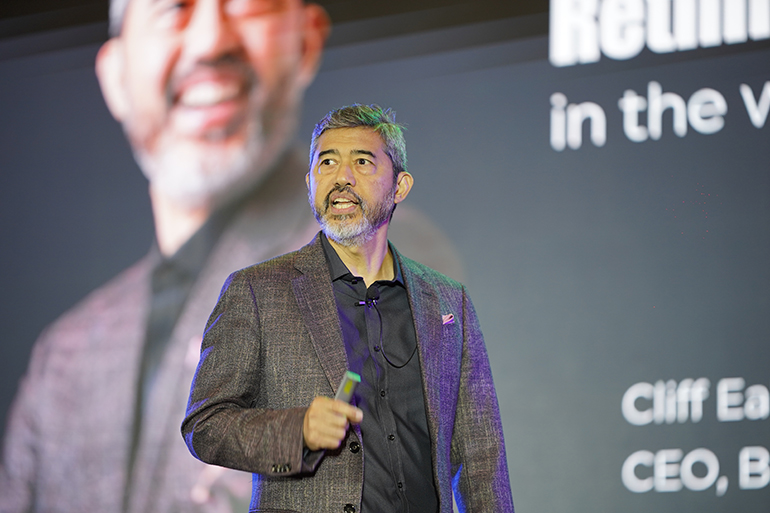
Generational divide reveals leadership evolution

The study uncovers striking generational differences challenging traditional management. While Baby Boomers prefer independent, low-context leadership environments, Millennials and Gen Z gravitate toward collaborative, high-context workplace cultures—coinciding with AI-augmented work environments.

“Gen Z workers don’t want AI to replace human interaction—they want it to enable deeper collaboration,” noted Maria Lourdes Ann “L.A.” Cruz, VP of People at Lufthansa Technik Philippines. “The most successful organizations use AI to create more time for meaningful human connection, not less.”

The AI readiness gap

Despite widespread adoption, research reveals a critical implementation divide. Organizations perceived as “AI-ready” show three times higher tool adoption rates and significantly better retention outcomes. However, readiness depends less on technology infrastructure and more on change management and cultural preparation.

This aligns with recent MIT research showing successful AI implementation correlates more strongly with organizational culture than technical capability—positioning the Philippines data as a leading indicator for global workforce trends.

Global implications for the $720B talent crisis

The findings arrive as global organizations grapple with what McKinsey estimates as a $720 billion annual cost from employee turnover. While most retention strategies focus on compensation and benefits, the Philippine data suggests a fundamentally different approach.

“If these patterns hold globally, we’re looking at a complete rethinking of retention strategy,” said Kislay Chandra, chief operations officer of Sprout Solutions. “The solution isn’t more sophisticated AI tools—it’s more sophisticated human connection.”

Actionable framework for leaders

Based on the research, Sprout and BS Works developed the “HUMAN Protocol” for AI-era retention:

  • Host regular cross-functional social interactions
  • Understand individual purpose and contribution motivations
  • Measure and foster workplace friendship networks
  • Align AI implementation with human connection goals
  • Nurture interest-based communities and support groups

Early adopters report 25% improvement in retention metrics within six months.

Building on success

The State of HR Summit 2025, co-presented with BS Works, brought together more than 500 HR and business leaders at Manila’s Crowne Plaza Galleria. The event featured panels on “Lead to Last: Retaining Talent Through Empowered Leadership” with executives from Tala, Canva, and Lufthansa Technik Philippines, exploring practical applications of the research findings.

The summit builds on the momentum of five consecutive annual State of HR events hosted by Sprout Solutions, while introducing new data-driven insights for organizations navigating the intersection of AI adoption and human-centered workplace culture.

The event also saw the unveiling of Sidekick Central, a multi-functional AI platform offering specialized AI-Sidekicks for HR, payroll, management, and employee support that will help teams achieve up to 40% productivity gains and reduce repetitive admin across operations.


Spotlight is BusinessWorld’s sponsored section that allows advertisers to amplify their brand and connect with BusinessWorld’s audience by publishing their stories on the BusinessWorld Web site. For more information, send an email to online@bworldonline.com.

Join us on Viber at https://bit.ly/3hv6bLA to get more updates and subscribe to BusinessWorld’s titles and get exclusive content through www.bworld-x.com.

Despite 62% workplace AI adoption, Filipino workers stay for friends than features, study finds

In a striking contradiction to Silicon Valley’s tech-first workplace revolution, new research reveals that as AI adoption soars to 62% across Filipino workplaces, employee retention depends more on workplace friendships than cutting-edge features.

The finding emerges from the 2025 State of HR Report prepared by Sprout Solutions and BS Works — the country’s most comprehensive workforce study involving 3,819 employees — unveiled at the State of HR Summit 2025.

The research exposes what analysts call “The Great AI Retention Paradox”: while companies pour resources into AI-powered productivity tools, workers stay or leave based on fundamentally human factors.

The numbers tell a compelling story: Employees with three or more workplace friendships are 40% more likely to remain beyond five years, while those citing “sadness at leaving colleagues” as a retention factor outnumber those motivated by salary increases 3:1.

The connection-retention formula

The research reveals “The 3 C’s of AI-Era Retention”: Connection, Contribution, and Community. Organizations scoring highest across these human-centered metrics show 35% lower turnover rates, even when offering below-market compensation.

Connection: Employees embedded in one to three workplace social groups demonstrate significantly longer tenure, with each additional meaningful relationship correlating with eight months of extended employment.

Contribution: Workers reporting clear purpose and meaningful contribution stay 2.3 times longer than those focused primarily on career advancement or salary growth.

Community: Organizations fostering informal support networks see retention rates climb despite offering fewer remote work options than competitors.

“Companies implementing AI to boost efficiency while neglecting human connection are optimizing for the wrong variables,” explained Patrick Gentry, CEO of Sprout Solutions.

Generational divide reveals leadership evolution

The study uncovers striking generational differences challenging traditional management. While Baby Boomers prefer independent, low-context leadership environments, Millennials and Gen Z gravitate toward collaborative, high-context workplace cultures — coinciding with AI-augmented work environments.

“Gen Z workers don’t want AI to replace human interaction — they want it to enable deeper collaboration,” noted Maria Lourdes Ann “L.A.” Cruz, VP of People at Lufthansa Technik Philippines. “The most successful organizations use AI to create more time for meaningful human connection, not less.”

The AI readiness gap

Despite widespread adoption, research reveals a critical implementation divide. Organizations perceived as “AI-ready” show three times higher tool adoption rates and significantly better retention outcomes. However, readiness depends less on technology infrastructure and more on change management and cultural preparation.

This aligns with recent MIT research showing successful AI implementation correlates more strongly with organizational culture than technical capability — positioning the Philippines data as a leading indicator for global workforce trends.

Global implications for the $720B talent crisis

The findings arrive as global organizations grapple with what McKinsey estimates as a $720 billion annual cost from employee turnover. While most retention strategies focus on compensation and benefits, the Philippine data suggests a fundamentally different approach.

“If these patterns hold globally, we’re looking at a complete rethinking of retention strategy,” said Kislay Chandra, chief operations officer of Sprout Solutions. “The solution isn’t more sophisticated AI tools — it’s more sophisticated human connection.”

Actionable framework for leaders

Based on the research, Sprout and BS Works developed the “HUMAN Protocol” for AI-era retention:

  • Host regular cross-functional social interactions
  • Understand individual purpose and contribution motivations
  • Measure and foster workplace friendship networks
  • Align AI implementation with human connection goals
  • Nurture interest-based communities and support groups

Early adopters report 25% improvement in retention metrics within six months.

Building on success

The State of HR Summit 2025, co-presented with BS Works, brought together more than 500 HR and business leaders at Manila’s Crowne Plaza Galleria. The event featured panels on “Lead to Last: Retaining Talent Through Empowered Leadership” with executives from Tala, Canva, and Lufthansa Technik Philippines, exploring practical applications of the research findings.

The summit builds on the momentum of five consecutive annual State of HR events hosted by Sprout Solutions, while introducing new data-driven insights for organizations navigating the intersection of AI adoption and human-centered workplace culture.

The event also saw the unveiling of Sidekick Central, a multi-functional AI platform offering specialized AI-Sidekicks for HR, payroll, management, and employee support that will help teams achieve up to 40% productivity gains and reduce repetitive admin across operations.


Spotlight is BusinessWorld’s sponsored section that allows advertisers to amplify their brand and connect with BusinessWorld’s audience by publishing their stories on the BusinessWorld Web site. For more information, send an email to online@bworldonline.com.

Join us on Viber at https://bit.ly/3hv6bLA to get more updates and subscribe to BusinessWorld’s titles and get exclusive content through www.bworld-x.com.

SM Prime Earns Top ESG Honors at 15th Asian Excellence Awards

The 15th Asian Excellence Awards honors companies and executives across Asia who demonstrate exemplary performance in governance, business ethics, environmental responsibility and investor engagement.

SM Prime Holdings, Inc. (SM Prime), one of Southeast Asia’s leading integrated property developers, was honored with six major awards at the 15th Asian Excellence Awards held by Corporate Governance Asia on June 27 in Hong Kong. The recognition affirms SM Prime’s leadership in advancing environmental sustainability, sound corporate governance and strong investor engagement in the region.

Among the accolades received were the Sustainable Asia Award, Best Environmental Responsibility and Best Investor Relations Company – Philippines. These awards reflect SM Prime’s integrated approach to climate resilience and stakeholder engagement.

In addition to corporate honors, SM Prime’s leadership team was individually recognized for excellence in governance and capital market engagement. President Jeffrey C. Lim was named Asia’s Best Chief Executive Officer for Investor Relations, while John Nai Peng C. Ong was recognized as Asia’s Best Chief Finance Officer for Investor Relations and Compliance Officer. Alex D. Pomento was also awarded Best Investor Relations Professional.

“These recognitions reflect our continued focus on sustainability, transparency and long-term value creation,” said Jeffrey C. Lim, President of SM Prime. “We are committed to developing resilient communities while upholding strong corporate governance and aligning our growth with the evolving expectations of our stakeholders.”

Now in its 15th year, the Asian Excellence Awards honors companies and executives across Asia who demonstrate exemplary performance in governance, business ethics, environmental responsibility and investor engagement. This year’s theme, “The Role of Asian Corporations on Climate Neutrality,” highlights the growing urgency for credible, ESG-driven leadership in the region.

SM Prime’s strong showing at this year’s awards underscores its role as a key contributor to sustainable urban development in the Philippines—anchoring growth in climate-aligned innovation, inclusive stakeholder value and good governance practices.


Spotlight is BusinessWorld’s sponsored section that allows advertisers to amplify their brand and connect with BusinessWorld’s audience by publishing their stories on the BusinessWorld Web site. For more information, send an email to online@bworldonline.com.

Join us on Viber at https://bit.ly/3hv6bLA to get more updates and subscribe to BusinessWorld’s titles and get exclusive content through www.bworld-x.com.

Funko: A hub for pop culture in the Philippines

“Because of the vibrant passion of Filipino fandom and pop culture geekdom, Funko is opening its first Southeast Asia store in the Philippines — at SM Mall of Asia, Pasay City.

Andy Clempson, Funko Asia-Pacific’s vice-president for sales, tells BusinessWorld that the Philippines is their number one market in Asia, making it the optimal place to showcase collectibles for Disney, Marvel, DC, anime, and almost a thousand other licensed brands.

Interview by Bronte Lacsamana
Video editing by Arjale Queral

Digital Halo’s MNL1: Asia’s next data infrastructure powerhouse

Digital Halo data center ribbon-cutting ceremonies led by Trade and Industry Secretary Cristina Aldeguer-Roque

The race for digital infrastructure dominance in Southeast Asia just welcomed a new contender — with Digital Halo’s launch of MNL1, the Philippines’ first A.I. and hyperscale-ready data center, officially operational as of June 3, 2025.

Strategically situated in Cainta, Rizal, just outside Metro Manila, MNL1 marks the first of several state-of-the-art facilities planned by the company, which is backed by a US$400-million commitment from global private equity firm Partners Group and co-investor Arch Capital.

This milestone comes at a time when enterprises, governments, and tech providers are under increasing pressure to modernize their IT infrastructure. From artificial intelligence to cloud-native services, the demands on servers, storage, and connectivity are outpacing traditional data center capabilities.

MNL1 directly addresses these pain points by offering a facility engineered for scale, uptime, and environmental resilience. Located on elevated, stable terrain far from flood plains, fault lines, and volcanoes, the 3.75-hectare campus is designed to serve as a regional hub for mission-critical operations. Its location strikes a balance between accessibility and safety, ideal for businesses operating in Metro Manila.

From a technical standpoint, the data center boasts a planned 70-MW power capacity, making it ideal for high-density deployments, hyperscale colocation, and large-scale AI workloads. Early adopters include hyperscalers, enterprise-level clients, public sector entities, and multinational cloud providers.

Kai Goh, Digital Halo Co-Founder and CEO

What differentiates MNL1 is not just hardware — it’s leadership and strategy. Maricar Burgos-Nepomuceno, former head of Vitro data centers, brings decades of industry experience to the helm of Digital Halo’s Philippine operations. She leads a local team supported by an international bench of experts based in Singapore, whose members previously served in senior roles at Equinix and Keppel — names that resonate strongly in global data infrastructure.

The launch event was graced by Trade Secretary Cristina Aldeguer-Roque, Swiss Ambassador Nicola Bruhl, and prominent leaders from finance, technology, and telecommunications sectors. Each attendee received a bespoke piña barong, symbolizing the merging of global ambition with Filipino identity — a powerful brand statement for a company seeking both domestic relevance and international credibility.

MNL1 is the cornerstone of a larger regional expansion strategy. Construction has already begun on JHB1, Digital Halo’s Malaysia facility, which will help form an interconnected network of hyperscale centers across Asia.

According to Digital Halo, the goal is to provide scalable colocation and infrastructure-as-a-service options, allowing customers to outsource data needs while focusing on core business functions. This model reflects broader shifts in the market, where agility, redundancy, and speed-to-scale have become non-negotiable.

In short, Digital Halo is making a clear wager: that the Philippines can — and should — play a central role in the future of digital infrastructure in Asia. And with MNL1, that future just got a little closer.


Spotlight is BusinessWorld’s sponsored section that allows advertisers to amplify their brand and connect with BusinessWorld’s audience by publishing their stories on the BusinessWorld Web site. For more information, send an email to online@bworldonline.com.

Join us on Viber at https://bit.ly/3hv6bLA to get more updates and subscribe to BusinessWorld’s titles and get exclusive content through www.bworld-x.com.

ADVERTISEMENT
ADVERTISEMENT