Home Blog Page 1334

Sound Sphere AI Run raises awareness on hearing health at UP Diliman

The finish line at the Sound Sphere AI Run.

Hundreds of participants gathered at the University of the Philippines Diliman last March 16 for the inaugural “Sound Sphere AI Run: Changing Mindsets, Changing Lives,” in celebration of National Hearing Month.

Organized by Manila Hearing Aid, the event brought together doctors, professionals, families, and individuals to promote hearing health awareness and highlight innovations in hearing technology.

The main stage of the Sound Sphere AI Run, serving as the center for discussions and inspiring stories about hearing health.

Beyond the race, Manila Hearing Aid set up booths offering free hearing tests and information on hearing protection. These interactive stations educated attendees on the risks of hearing loss, the benefits of early detection, and strategies for maintaining auditory health.

According to Dr. Liza Abaño-Robles, president of Manila Hearing Aid, the event was designed not only to support individuals with hearing loss but also to educate the public on early detection and prevention.

Dr. Liza Abaño-Robles, president of Manila Hearing Aid, kicks off the Sound Sphere AI Run with an inspiring message on the importance of hearing health and innovation in audiology.

“Our mission has always been to help individuals achieve better hearing and a better quality of life. Many people assume hearing loss is only a concern for those already affected, but awareness and prevention are just as important,” Dr. Abaño-Robles added.

She also noted that many Filipinos do not realize how exposure to loud environments can cause long-term damage. “In the Philippines, awareness about hearing health remains low. Many people do not realize that hearing loss is not just part of aging. Exposure to loud noise — whether from concerts, clubs, or daily activities — can cause irreversible damage.”

Carlos Jose Bate, general manager of Manila Hearing Aid, wraps up the Sound Sphere AI Run, celebrating the success of the event and its impact on hearing health awareness.

A 2020 study by the University of Santo Tomas reported that 15% of Filipinos experience moderate to severe hearing loss. Many cases go undiagnosed until the impairment affects daily activities, according to the Manila Hearing Aid president.

“Hearing health is not something you should delay. Just like any medical condition, early diagnosis is crucial,” Alyssa Patricia Co-Ong, product audiologist at Phonak, told BusinessWorld. “When someone loses their ability to hear clearly, it’s not just a physical issue; it affects their emotional and mental well-being as well.”

Alyssa Patricia Co-Ong, in-country product audiologist for Sonova Asia, demonstrates the advanced features of Phonak’s latest hearing aid.

“Filipinos are very sociable,” she added. “We’re always in the community, engaging in activities that involve gatherings. When you have hearing loss and cannot fully participate, it can lead to feelings of isolation.”

Advancing hearing technology

One of the event’s highlights was the introduction of the Phonak Audéo Sphere Infinio, an AI-powered hearing aid designed to make conversations clearer by filtering out background noise, even in busy environments.

“This run is more than just a race — it’s a movement to inspire change and champion hearing accessibility,” Dr. Abaño-Robles said. “With the launch of the Phonak Audéo Sphere Infinio, we are introducing a breakthrough innovation that improves the listening experience for individuals with hearing loss.”

Utilizing the DEEPSONIC chip, the device differentiates speech from surrounding noise in real-time, allowing users to hear effortlessly from any direction. The technology also reduces listening fatigue, making communication smoother and more natural.

Influencer Andrea Kyra Mahinay wears her Phonak hearing aid during the Sound Sphere AI Run.

Designed for individuals with active lifestyles, the AI-powered hearing aid addresses hearing imbalances that can affect movement, situational awareness, and overall well-being.

“Our hearing aids are all about lifestyle. We want people with hearing loss to enjoy a good quality of life. We don’t want them to miss out on hobbies, work, or school,” Ms. Co-Ong explained.

Breaking the stigma

Experts at the Phonak Dome guide attendees through hands-on demonstrations and trials of Phonak’s AI-powered hearing aids.

Dr. Abaño-Robles stressed that many individuals neglect early signs of hearing loss. “We take our hearing for granted. But as we age, it naturally declines — just like vision. The earlier we protect it, the better.”

Manila Hearing Aid offers free hearing aid trials, allowing individuals to experience the benefits before making a commitment. The process begins with a diagnostic test, followed by a trial period where patients can wear the device in real-life settings such as shopping malls.

“As we age, our ability to pick up speech over noise decreases. Early testing can help us manage these changes and find the right support,” the Manila Hearing Aid president added.

The Phonak Dome as an interactive space for participants to explore and experience the latest hearing aid technology firsthand.

She also advised people to be mindful of their hearing health by avoiding excessive noise exposure.

“If you’re in a loud environment, try to limit exposure. When you have a cold, don’t ignore it, as an infection can lead to long-term damage. Even something as simple as blowing your nose too hard or experiencing air pressure changes on flights can affect your ears.”

Similarly, Ms. Co-Ong advocated for regular hearing checkups. “Hearing health is not something you should delay. The moment you experience any difficulty, see a doctor and get tested right away.”

On the other hand, the Phonak product audiologist acknowledged the persistent stigma surrounding hearing aids, noting that many people hesitate to seek help due to concerns about appearance or social perception.

“You cannot put a price on quality of life,” Ms. Co-Ong emphasized. “If you have hearing loss, don’t be ashamed. Wearing a hearing aid is just like addressing any other medical condition — it helps you stay connected with family, friends, and the world around you.”


Spotlight is BusinessWorld’s sponsored section that allows advertisers to amplify their brand and connect with BusinessWorld’s audience by publishing their stories on the BusinessWorld Web site. For more information, send an email to online@bworldonline.com.

Join us on Viber at https://bit.ly/3hv6bLA to get more updates and subscribe to BusinessWorld’s titles and get exclusive content through www.bworld-x.com.

Philippine wild card Alex Eala stuns Madison Keys

ALEX EALA — GLOBE

Australian Open champion Madison Keys was dumped out of the Miami Open third round on Sunday, falling 6-4 6-2 to Philippine wild card Alexandra Eala, while Novak Djokovic earned a record-setting 411th ATP Masters 1000 level match win.

For 19-year-old Eala, the upset victory over the American fifth seed extended her dream run in Miami where she has now toppled two Grand Slam champions having beaten 2017 French Open winner Jelena Ostapenko in the second round.

“I am just in disbelief,” she told Tennis Channel. “I knew I could win from the start but the chances were low given that she is a great player, but I think my belief and the trust I had in myself is what pushed me through.”

Eala, who has trained at Rafa Nadal’s academy in Mallorca since she was 13, required a medical timeout for what appeared to be a leg injury but was a force from the baseline against Keys, who reached the Indian Wells semi-final last week.

Up next for Eala, who has not dropped a set in Miami, will be Spanish 10th seed Paula Badosa, a 6-3 7-6(3) winner over Dane Clara Tauson.

Former champion Iga Swiatek earned a 7-6(2) 6-1 win over Belgian 27th seed Elise Mertens that made the Polish second seed the first player to reach the last 16 of a WTA 1000 event in 25 consecutive appearances.

Swiatek built a seemingly comfortable 5-2 lead in the first set but Mertens managed to claw back to 5-5 before the Pole ran away with the tiebreaker and breezed through the second frame.

CONFIDENCE HIGH
“I’m happy that I got my level up in the tiebreaker to close it in two sets. Also in the second set I felt like I was playing good, big confidence,” said Swiatek. “Yeah, overall I’m happy with the performance and how I worked through some issues.”

Up next for Swiatek will be Ukrainian Elina Svitolina, who beat Czech 15th seed Karolina Muchova 6-2 3-6 6-2 and is looking to build on her run to the Indian Wells quarter-final where she lost to eventual champion Mirra Andreeva.

American fourth seed Jessica Pegula rallied to beat Russian Anna Kalinskaya 6-7(3) 6-2 7-6(2) and will face Ukraine’s Marta Kostyuk in the fourth round.

Six-times champion Djokovic moved into the fourth round with a 6-1 7-6(1) triumph over Argentine lucky loser Camilo Ugo Carabelli that moved the Serbian fourth seed ahead of Nadal and into top spot on the all-time list of Masters 1000 match wins.

Djokovic, who is also seeking a record seventh Miami title, will next face Lorenzo Musetti after the Italian 15th seed beat Canada’s Felix Auger-Aliassime 4-6 6-2 6-3.

In other men’s action, Bulgarian 14th seed Grigor Dimitrov, who lost in last year’s final, was a 6-7(3) 6-4 7-5 winner over Russian Khachanov and set up a clash against either Belgian David Goffin or American Brandon Nakashima.

American Sebastian Korda upset Greek ninth seed Stefanos Tsitsipas 7-6(4) 6-3 and will next face either Spaniard Jaume Munar or Frenchman Gael Monfils. — Reuters

SM Investments Corp.’s Annual Stockholders’ Meeting to be held on April 30


Spotlight is BusinessWorld’s sponsored section that allows advertisers to amplify their brand and connect with BusinessWorld’s audience by publishing their stories on the BusinessWorld Web site. For more information, send an email to online@bworldonline.com.

Join us on Viber at https://bit.ly/3hv6bLA to get more updates and subscribe to BusinessWorld’s titles and get exclusive content through www.bworld-x.com.

Lower IPO float creates uneven field

BW FILE PHOTO

By Revin Mikhael D. Ochave, Reporter

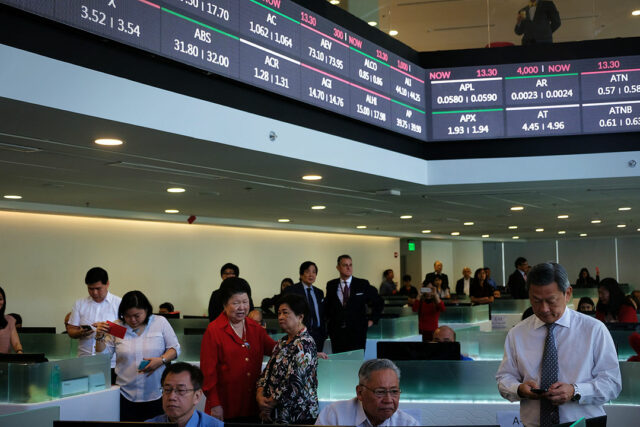
THE RECENTLY ANNOUNCED move of the Philippine Stock Exchange (PSE) to lower the minimum public ownership (MPO) for large initial public offerings (IPOs) may not be good for investor confidence as it creates an “uneven playing field,” stock market analysts said.

“It’s not good optics for the PSE, since they have been fairly active in penalizing companies that fall below public float requirements, and this might be viewed as the regulator bending the rules a little bit to accommodate big corporate interests,” AP Securities, Inc. Research Head Alfred Benjamin R. Garcia said in a Viber message.

Unicapital Securities, Inc. Research Head Wendy B. Estacio-Cruz said in a Viber message that the lower MPO creates an uneven playing field.

“If exemptions become the norm, it might create an uneven playing field where larger firms get more leniency than smaller ones, potentially discouraging fair competition,” she said.

PSE President and Chief Executive Officer Ramon S. Monzon said last week that the market operator has secured approval from the Securities and Exchange Commission (SEC) to lower the public float requirement to encourage undecided companies to proceed with their listing plans.

IPO-bound companies can initially comply with a 15% public float, as long as they commit to raising the public float to 20% within two years.

Mr. Monzon has said the move is not permanent and will be revisited in the coming years.

“We have a two-year window, then if that’s not working, we will extend it for another two years,” he added.

The PSE’s move comes as GCash, controlled by Globe Fintech Innovations (Mynt), plans to go public later this year.

Bloomberg quoted Globe Telecom, Inc. President and Chief Executive Officer and Mynt Chairman Ernest Cu as saying that the GCash IPO will partly depend on regulators agreeing to lower the public float to 10-15% for bigger offerings.

However, Mr. Garcia said relaxing the public float requirement for IPOs is not in line with ongoing efforts to improve corporate governance standards in the country.

“A lower percentage of public ownership means that the public is a smaller minority that can easily be overruled or ignored when making corporate decisions,” he said.

“It would also have long-term implications in terms of the attractiveness of the Philippine market to investors. The requirement to raise the public ownership level up to 20% would also provide an overhang for those subscribing to the IPO, since there is a sure dilution of your stake in the next two years,” he added.

Ms. Estacio-Cruz said a prolonged lower public float may also “lead to reduced stock liquidity and higher price volatility, making the market less attractive for retail investors.”

Rizal Commercial Banking Corp. Chief Economist Michael L. Ricafort said in a Viber message that the lower public float for IPO-bound firms should only be a temporary relief.

“This could be a temporary regulatory reprieve while there is market volatility that somewhat reduced market interest. It could be reinstated after some time especially once market conditions improve, since these are part of market reforms,” Mr. Ricafort said.

“However, there should be a delicate balance to encourage more companies to list shares in a challenging market environment,” he added.

Meanwhile, China Bank Capital Corp. Managing Director Juan Paolo E. Colet said in a Viber message that the recent move by the PSE will help persuade some companies that are facing difficulty in meeting the 20% MPO.

“Ideally, we would like listed companies to have a high public float to enable more investors to participate in wealth creation, promote better corporate governance standards, and enhance market liquidity,” he said.

“Public float and liquidity are particularly important to foreign investors and are critical criteria for inclusion in global and regional equity indices. Thus, if we would like to attract more foreign capital flows into our stock market, it would make sense to promote measures and cultivate conditions that boost public ownership and trading levels,” he added.

The local bourse has yet to see an IPO this year. However, some of the expected public listings include GCash, Pangilinan-led water concessionaire Maynilad Water Services, Inc., and Cebu-based fuel retailer Top Line Business Development Corp.

The PSE is expecting six IPOs this year.

Federal Reserve pause may delay further BSP easing — analysts

THE EXTERIOR of the Marriner S. Eccles Federal Reserve Board Building is seen in Washington, D.C., US, June 14, 2022. — REUTERS

By Luisa Maria Jacinta C. Jocson, Reporter

THE US Federal Reserve’s latest pause and cautious stance could push the Bangko Sentral ng Pilipinas (BSP) to delay its own easing cycle, analysts said.

“If this policy drift continues, that would somewhat limit the pace of monetary easing by the BSP,” GlobalSource Partners country analyst Diwa C. Guinigundo said in a Viber message.

“While some people dream of a US Fed-delinked BSP, we believe the BSP will correctly be guided by data and information to avoid a possible market backlash from a reduced interest rate differential between the US Fed and the BSP.”

The US central bank last week held its benchmark overnight rate steady in the 4.25%-4.5% range amid expectations of rising prices as President Donald J. Trump threatens to impose tariffs on all its trading partners.

While Fed policy makers still expect the central bank to deliver two quarter-percentage-point rate cuts by the end of this year, that is largely due to weakened economic growth offsetting higher inflation, and what Fed Chair Jerome H. Powell called the “inertia” of not knowing what else to do given the muddled outlook, Reuters reported.

“Clearly, the US Fed tilted in favor of sustaining economic growth over its second goal of maintaining price stability even as it described it as ‘elevated,’” Mr. Guinigundo said.

John Paolo R. Rivera, a senior research fellow at the Philippine Institute for Development Studies, said the Fed’s decision signals a “more cautious but still dovish stance, driven by persistent inflation risks and elevated economic uncertainties.”

“This approach suggests the Fed wants to retain flexibility, which could influence emerging markets like the Philippines to also proceed more cautiously with monetary easing,” he added.

Investment banker and Managing Director at China Bank Capital Corp. Juan Paolo E. Colet also noted that while the Fed is expected to resume easing eventually, there is still “a lot of uncertainties on the timing and magnitude of rate cuts.”

This could prompt the BSP to slow its own pace of rate cuts, analysts said.

“While both the US and the Philippines are struggling with serious domestic political and economic issues, foreign investors would always be conscious of interest rate differentials which, in turn, could trigger capital flows and weakness in the peso,” Mr. Guinugundo said.

The Philippine central bank last month kept its key rate on hold at 5.75%, citing the risk of global trade uncertainties. Since August, it reduced interest rates for three straight meetings for a total of 75 basis points (bps) worth of rate cuts.

“For BSP, this could delay its own rate cuts slightly, especially if the Fed’s caution leads to short-term volatility in capital flows or pressure on the peso,” Mr. Rivera said.

He said the central bank will need to balance the inflation outlook and economic growth against risks of a depreciating peso and weakening investment outflows if it moves ahead of the Fed.

The peso closed at P57.33 per dollar on Friday, weakening by 10.8 centavos from its P57.222 finish on Thursday.

“The Fed’s decision not to lower policy rates will keep the US at the same level of strength and thus easing of rates on our part will cause our peso to depreciate,” Leonardo A. Lanzona, an economics professor at the Ateneo de Manila University, said in an e-mail.

“Once we reduce our policy rates, investors will likely shift their position to the US dollar. Furthermore, high tariffs in the US can limit our exports making the demand for the peso lower, thus reinforcing the possibility of a depreciation.”

The US dollar is considered a safe-haven currency as investors often flock to the dollar during times of financial crisis.

Mr. Guinigundo also noted through the exchange rate pass-through, which could be inflationary. This means there is scope for the BSP to “imbibe more cautiousness into its calculus,” he added.

Though it expects annual inflation to remain within the 2-4% target, the BSP has said there is a chance inflation could overshoot the target range in the second half of this year amid base effects.

The central bank also earlier flagged the potential inflationary pressures from higher global oil and non-oil prices, peso depreciation, and recent above-expectation inflation readings.

Accounting for risks, the BSP forecasts inflation to average 3.5% this year and next year.

“Thus, the combined high tariffs and the low interest rates in the US makes it very difficult for the BSP to ease interest rates as the peso depreciation and prospective increase in aggregate demand can cause inflation,” Mr. Lanzona said.

“Easing the interest rate will still be acceptable if it raises consumption to spur growth. What we do not need is a substantial decrease that can cause significant inflation because of these developments.”

RATE CUT OUTLOOK
The BSP could cut by a total of 50 bps this year, Mr. Guinigundo said, “all other things being equal.”

“We are sure the market has already priced in such magnitude of monetary easing on top of the monetary expansion through the aggressive reduction in the required reserve ratio.”

“With such dual steps by the BSP, that should challenge the domestic banks to respond and start easing their lending rates and further improve the credit condition faced by Philippine business,” he added.

For his part, Mr. Rivera said that the timing and pace of rate cuts could be delayed to the latter half of the year.

“This would give the BSP more clarity on inflation trends and Fed actions while avoiding financial market instability,” he said.

“A delay in easing could keep borrowing costs higher for longer, slightly slowing domestic demand, but it would also anchor currency stability and maintain investor confidence in the short term.”

He added that the BSP may choose to adopt a “gradual and data-dependent approach to avoid undue risk to financial and external stability.”

“If local inflation continues to trend lower and the peso remains stable, the BSP can diverge a bit from the Fed in terms of timing by cutting rates ahead, as long as our country maintains a minimum 100-bp policy rate differential with the US,” Mr. Colet said.

He expects the Monetary Board to cut by 25 bps at its next rate-setting meeting on April 10, as well as another 25-bp cut by the second half.

External debt service burden rises to $17.2 billion in 2024 — BSP data

JOHN GUCCIONE-PEXELS

THE COUNTRY’S external debt service burden jumped to $17.16 billion in 2024, according to preliminary data from the Bangko Sentral ng Pilipinas (BSP).

Central bank data showed debt servicing on external borrowings climbed by 15.6% to $17.16 billion last year from $14.85 billion in 2023.

Broken down, amortization payments rose by 15.3% to $8.94 billion in 2024 from $7.76 billion in the previous year.

Meanwhile, interest payments increased by 15.9% year on year to $8.22 billion in 2024 from $7.1 billion in 2023.

The BSP said that the debt service burden represents principal and interest payments after rescheduling.

This includes principal and interest payments on fixed medium- and long-term credits including International Monetary Fund credits, loans covered by the Paris Club and commercial banks’ rescheduling, and New Money Facilities.

It also covers interest payments on fixed and revolving short-term liabilities of banks and nonbanks.

However, the debt service burden data exclude prepayments on future years’ maturities of foreign loans and principal payments on fixed and revolving short-term liabilities of banks and nonbanks.

Latest data from the BSP showed the Philippines’ outstanding external debt rose by 9.8% to $137.63 billion as of end-December 2024 from $125.39 billion in the same period in 2023.

This brought the external debt-to-gross domestic product (GDP) ratio to 29.8% at the end of 2024, higher than 28.7% at end-2023.

At end-2024, the external debt service burden as a share of GDP stood at 3.7%, up from 3.4% in the previous year.

The BSP’s external debt data cover borrowings of Philippine residents from nonresident creditors, regardless of sector, maturity, creditor type, debt instruments or currency denomination.

Rizal Commercial Banking Corp. Chief Economist Michael L. Ricafort said the rise in external debt payments was due to the National Government’s need to finance the budget deficit amid relatively higher interest rates.

“Large amounts of borrowings since the pandemic also increased both principal and interest payments, as some of them already started to mature,” he said.

“However, most of the country’s external debts are mostly medium- to long-term, thereby making debt servicing more manageable,” he added.

The NG’s budget deficit narrowed by 0.38% to P1.506 trillion in 2024 from P1.512 trillion in 2023. However, it exceeded the P1.48-trillion deficit ceiling set by the Development Budget Coordination Committee.

“Going forward, future external borrowings would be a function of budget deficit performance in the coming months amid tax and other fiscal reform measures to help narrow the budget deficit,” Mr. Ricafort said.

Further policy easing by the BSP could also help ease interest payments, he added.

From this year to 2027, the NG plans to source at least 80% of its borrowing program from domestic sources, and 20% from foreign lenders. The government previously adopted a 75:25 borrowing mix. — Luisa Maria Jacinta C. Jocson

PHL gross borrowings inch up to P213B in Jan.

BW FILE PHOTO

THE NATIONAL Government’s (NG) gross borrowings inched up in January amid a rise in domestic debt, the Bureau of the Treasury (BTr) said.

Data from the BTr showed that the total gross borrowings in the first month of 2025 rose by 4.92% to P213.14 billion from P203.15 billion a year prior.

Domestic debt accounted for the bulk or 71.41% of total gross borrowings for the month.

In January, gross domestic borrowings stood at P152.2 billion, up 7.56% from P141.51 billion in the same month in 2024.

This consisted of fixed-rate Treasury bonds amounting to P140 billion and Treasury bills worth P12.2 billion.

On the other hand, gross external debt slipped by 1.14% to P60.94 billion in January from P61.65 billion in the same month last year.

Broken down, program loans stood at P56.29 billion and project loans were at P4.65 billion.

“Primarily to finance the budget deficit, as some of the borrowings by the NG may also be frontloaded, just like the $3.29-billion global bond sale amid market volatility brought about by [Donald J.] Trump’s tariffs/protectionist policies,” Rizal Commercial Banking Corp. Chief Economist Michael L. Ricafort said.

In January, the BTr said the Philippines raised $3.29 billion from the sale of the US dollar and euro-denominated bonds.

For 2025, the government set the financing program at P2.545 trillion, where 80% will come from local lenders and 20% will be sourced from foreign sources.

Mr. Ricafort said future NG borrowings supported by fiscal reform measures could help to narrow the budget deficit, while rate cuts from the US Federal Reserve and the Bangko Sentral ng Pilipinas may ease interest payments. — Aubrey Rose A. Inosante

Bytes and Bites: How AI and agriculture can shape a sustainable future

By Mon Abrea

In this modern world of ubiquitous apps and voice-controlled robots, the future and past collide. The avant-garde processes and programs perfected by technology fuel the rise of artificial intelligence (AI), while agriculture — rooted in tradition and necessity — remains a cornerstone of human survival. Despite their differences, both industries offer immense opportunities for growth, innovation, and sustainability.

AI’s contributions to health, transportation, manufacturing, food and farming, education, and public services are undeniable. From diagnosing diseases and optimizing supply chains to personalizing education and automating administrative tasks, AI simplifies life through apps, automation, and chatbots. However, challenges around labor displacement, skill requirements, and environmental impacts must be managed through thoughtful regulation and strategic tax incentives.

Meanwhile, agriculture is experiencing a global shift from animal-based to plant-based production, driven by health, environmental, and ethical considerations. Innovations like plant-based meat alternatives are gaining traction, ensuring a stable food supply while reducing the environmental footprint of traditional livestock farming. Governments worldwide play a critical role in safeguarding food security, especially in times of crisis.

The Philippines: Tapping into AI and Agriculture for Food Security

As an agriculture-dependent nation, the Philippines has significant potential to integrate AI into its agricultural sector. The intersection of AI and agriculture presents a vital opportunity to address pressing challenges, particularly food security.

AI is revolutionizing agriculture globally, offering solutions to enhance farming methods, improve productivity, and bolster food systems. In Africa, for example, AI is transforming traditional farming practices.

  • Nigeria: Farmers use an AI-powered chatbot that offers real-time farm management advice, predicts loan repayment capabilities, forecasts input demands, and optimizes pricing strategies. This tool helps farmers make informed decisions, improving their productivity and profitability.
  • Kenya: The introduction of the world’s first solar-powered device with AI capabilities helps detect and predict crop pests and diseases. This innovation not only provides early warnings but also offers carbon-neutral, affordable solutions to agricultural challenges, promoting sustainable and resilient farming.

In the Philippines, adopting AI in agriculture could similarly enhance productivity and resilience. However, high implementation costs remain a barrier, particularly for small-scale farmers. While the government has ambitious plans to digitize agriculture through technologies like automated irrigation systems, much of this vision has yet to be realized.

Public-Private Partnerships: A Path to Progress

To accelerate AI adoption in agriculture, public-private partnerships are crucial. Combining government initiatives with private sector expertise and funding can generate the resources needed to modernize the sector. Such collaborations could democratize access to advanced technologies, enabling Filipino farmers to increase yields and improve their livelihoods.

Recently, the National Economic and Development Authority (NEDA) allocated P100 million for four agri-tech projects aimed at boosting productivity and ensuring food security. One project leverages AI for impact-based forecasting to support rice-based farming communities — a critical step in optimizing agricultural practices.

The Department of Science and Technology-Advanced Science and Technology Institute (DoST-ASTI) also launched the Gul.AI Project, merging information and communications technology with agriculture. The project uses plant boxes equipped with sensors to collect data on water pH, humidity, temperature, light, and live imaging — providing farmers with valuable insights for crop management.

The government’s Philippine Development Report 2023 underscores its commitment to digital transformation in agriculture. The Republic Act No. 11981 or Tatak Pinoy (Proudly Pinoy) Act led to the launch of two pivotal initiatives:

  1. National AI Strategy Roadmap 2.0 (NAISR): Aims to integrate AI across sectors, including agriculture, to drive economic growth and improve quality of life;
  2. Center for AI Research (CAIR): Focuses on using AI to address industrial challenges, boost innovation, and support sustainable development.

These initiatives are laying the groundwork for the country’s digital future. However, sustained collaboration among agencies like NEDA, DoST, and the Department of Trade and Industry (DTI) is essential to scale these efforts.

The Role of Global Carbon Tax in Driving Sustainability

A Global Carbon Tax could significantly influence sustainability initiatives in agriculture. By imposing taxes on carbon emissions, this mechanism encourages industries — including agriculture — to adopt greener practices. In the context of AI and agriculture:

  • Incentivizing Green Tech: Businesses that implement AI solutions to reduce carbon footprints could benefit from tax incentives, promoting widespread adoption.
  • Funding for Innovation: Revenues from the carbon tax could fund research and development of AI tools tailored for sustainable agriculture.
  • Supporting Farmers: Subsidies or grants could help farmers transition to eco-friendly technologies, bridging the gap between traditional practices and modern innovations.

For the Philippines, a carbon tax framework aligned with global standards could support national climate goals and enhance food security. Through AI integration and a robust tax policy, the country could lead by example in creating a resilient agricultural system that addresses both economic and environmental challenges.

A Sustainable Future Within Reach

AI’s transformative power, coupled with effective tax policies like the Global Carbon Tax, can build a sustainable and resilient agricultural ecosystem. Small, deliberate actions today — such as fostering collaborations, investing in technology, and enacting climate-smart policies — can yield significant rewards for future generations.

With a clear vision, collaborative spirit, and unwavering commitment to sustainability, the Philippines can turn its agricultural potential into a robust foundation for national growth and global leadership in climate action.

A Call to Action: 2025 International Tax and Investment Conference

The conversation around AI, agriculture, and sustainability will continue at the 2025 International Tax and Investment Conference (ITIC) on March 26 at the Manila Marriott. This year’s conference will bring together global thought leaders, policymakers, industry experts, and innovators to promote ESG investing in the Philippines. 

I look forward to sharing insights, learning from thought leaders and game-changers, and inspiring change — one byte and bite at a time. REGISTER HERE: https://itic2025.helixpay.ph/.


Spotlight is BusinessWorld’s sponsored section that allows advertisers to amplify their brand and connect with BusinessWorld’s audience by publishing their stories on the BusinessWorld Web site. For more information, send an email to online@bworldonline.com.

Join us on Viber at https://bit.ly/3hv6bLA to get more updates and subscribe to BusinessWorld’s titles and get exclusive content through www.bworld-x.com.

SFA Semicon Philippines Corp. to hold Annual Stockholders’ Meeting on April 25 via Zoom


Spotlight is BusinessWorld’s sponsored section that allows advertisers to amplify their brand and connect with BusinessWorld’s audience by publishing their stories on the BusinessWorld Web site. For more information, send an email to online@bworldonline.com.

Join us on Viber at https://bit.ly/3hv6bLA to get more updates and subscribe to BusinessWorld’s titles and get exclusive content through www.bworld-x.com.

EPIC 2025 opens with $100-M funding pool as prize for the best global startups

The Hong Kong Science and Technology Parks Corp. (HKSTP) has launched the ninth edition of the Elevator Pitch International Competition (EPIC 2025), inviting global startups to compete for funding and growth opportunities in Asia’s innovation ecosystem. Set for Nov. 3 to 7 at Hong Kong’s Kai Tak Cruise Terminal, the event will see finalists deliver 60-second pitches showcasing their breakthrough ideas.

This year’s competition offers an expanded platform for innovation, featuring a targeted investment pool of $100 million — double last year’s amount — alongside a US$240,000 cash prize.

In addition to its original focus on FinTech, EPIC 2025 introduces two new tech tracks: Digital Health Tech and Green Tech. These additions reflect the competition’s broader mission to support solutions addressing some of the world’s most pressing challenges, including healthcare access, climate resilience, and environmental sustainability.

The competition is open to mid- to late-stage startups under 10 years old that are operating in Digital Health, FinTech, or GreenTech. Eligible companies must be registered businesses with plans to expand their research, development, or operations into Hong Kong or the Greater Bay Area (GBA). Applications are open until June 17, 2025 at 11:59 p.m. Hong Kong time (GMT+8).

Following the close of applications, startups will take part in a series of online regional pitch rounds in July, covering North America, Europe, and the Asia-Pacific region. Finalists will be announced in August and flown to Hong Kong for the Grand Finale, which will take place from Nov. 3 to 7 at the Kai Tak Cruise Terminal during EPIC Week.

EPIC Week will feature a series of immersive events leading up to the finale, including business and investment matching, networking opportunities, and curated industry tours that offer participants a deeper look into Hong Kong’s innovation and technology ecosystem.

Finalists will also take part in Tech Spotlight, an exclusive showcase where selected startups present their solutions directly to investors and corporate leaders for real-time feedback and potential partnerships. As part of its regional integration efforts, HKSTP will also host GBA Exploration, a guided program designed to help participants understand and access business opportunities across the Greater Bay Area.

Albert Wong, CEO of HKSTP, said, “Hong Kong is at the forefront of global innovation, where we engage entrepreneurs in addressing the imperative, and EPIC being the origin of many world-first technologies, HKSTP will continue offering haven for startup resources to intersect, and invites like-minded partners to join us on the transformative journey.”

EPIC 2024 drew 603 entries from 47 economies, and with a larger prize pool and more comprehensive programming, this year’s edition aims to reach even greater heights. For more information and to apply, visit epic.hkstp.org.


SparkUp is BusinessWorld’s multimedia brand created to inform, inspire, and empower the Philippine startups; micro, small and medium enterprises (MSMEs); and future business leaders. This section will be published every other Monday. For pitches and releases about startups, e-mail to bmbeltran@bworldonline.com (cc: abconoza@bworldonline.com). Materials sent become BW property.

Raising the bar in condotel development with Anchor Land’s market leadership

Located in the country’s top tourism hotspots, Savea condotels benefit from the increasing demand for accommodations and promising potential for value appreciation.

Amidst a rapidly changing market, leisure-oriented developments such as condotels have proven to be one of the most sought-after investments. With the strong resurgence of interest in travel — whether for business, leisure, or medical tourism — the demand for high-quality accommodations continues to grow. This shift has reinforced the need for condotels that go beyond traditional hospitality, combining luxury experiences and sustainable income-generating opportunities.

As a leader in luxury real estate, Anchor Land continues to redefine condotel development through innovation and strategic foresight. Expanding its reach in the sector with its premium brand, Savea Condotel, the industry leader further raises the bar, offering not just five-star hospitality but also future-proof investments.

Situated in Sought-After Destinations

Drawing from its experience in developing and elevating key districts, such as the luxurious Admiral Complex, the developer will soon introduce Savea Condotel in some of the country’s premier locations — from prime waterfront districts such as Central Roxas Boulevard to the enchanting shores of renowned island destinations, such as Boracay, Coron, and San Vicente, Palawan.

These strategic locations consistently show high demand for upscale accommodations while benefiting from continued infrastructure and economic development, driving long-term appreciation for investors.

Every aspect of Savea Condotel is intentionally designed with guests’ and investors’ holistic well-being in mind fostering personal, physical, and financial wellness.

Curated for Holistic Wellness

As a trailblazer in real estate, Anchor Land continuously adapts to the evolving needs of modern travelers and discerning investors. Recognizing the growing emphasis on health and well-being, the developer has thoughtfully designed Savea Condotel to nurture every aspect of wellness — from the physical to the personal and financial.

Founded on its expertise in building luxury developments, Anchor Land has conceptualized each Savea condotel to feature masterful architectural designs inspired by the natural splendor of each destination, highlighting the most distinct features of the property’s surroundings.

Guests will soon enjoy Savea Condotel’s meticulously crafted spaces that offer the most luxurious wellness experiences.

Beyond its aesthetic flair, these premium condotels offer world-class spaces that foster a sense of balance and rejuvenation. With social nooks to encourage guests to spend time with loved ones, fully-equipped amenities to nourish physical wellness, and convenient access to five-star leisure experiences, each property is crafted to deliver a luxurious, wellness-centered experience for guests and investors.

Signature Brand of Handcrafted Luxury

With hospitality expert Gel Gomez at the helm, Admiral Hospitality Management, Inc. delivers exceptional guest experiences and expert property management.

Following its success with five-star residential and hospitality properties — including the iconic Admiral Hotel — Anchor Land brings its expertise and meticulous attention to detail in their development of Savea Condotel.

Through its newly established Admiral Hospitality Management, Inc. (AHMI) the developer is set to deliver exceptional guest experiences, featuring internationally recognized dining, world-class leisure, and seamless white-glove service in every Savea condotel.

For investors, this translates to a high-value, income-generating asset with unparalleled peace of mind. Backed by a trusted industry leader, Savea offers a meticulously curated collection of upscale condotels designed for sustained long-term returns and premium hospitality experiences.

Optimized for Hands-Free Operations

As the pioneer of rentvestment in the Philippines, Anchor Land continues to lead the industry in developing rental-ready properties designed for seamless operations. With Savea Condotel, the company integrates its deep expertise in property investment with a streamlined, business-driven approach to hospitality management.

Through AHMI, Savea Condotel ensures that every aspect of condotel operations — from marketing and guest services to property maintenance and revenue optimization — is professionally managed. This hands-free model allows investors to generate passive income with confidence while benefiting from the strong capital appreciation of an Anchor Land development.

Blending luxury hospitality and sustainable investments, Savea Condotel offers the opportunity to own a future-proof asset in the most iconic destinations.

The Future of Condotel Investments

By combining strategic locations, wellness-focused designs, and expert property management, Savea sets a new standard for condotel developments — offering not just luxury hospitality, but a future-proof asset in a rapidly evolving market.

As Anchor Land continues to redefine industry standards, the developer’s new venture pushes the boundaries for condotels — offering a future-proof asset and sustainable passive income alongside an elevated experience for next-gen investors and modern travelers alike.

For updates and more information on Savea Condotel and other Anchor Land hospitality developments, visit https://anchorland.com.ph/ or follow the developer on their official social media pages.


Spotlight is BusinessWorld’s sponsored section that allows advertisers to amplify their brand and connect with BusinessWorld’s audience by publishing their stories on the BusinessWorld Web site. For more information, send an email to online@bworldonline.com.

Join us on Viber at https://bit.ly/3hv6bLA to get more updates and subscribe to BusinessWorld’s titles and get exclusive content through www.bworld-x.com.

IdeaSpace appoints new executive director

Alwyn Rosel, a startup ecosystem veteran, is the new executive director of IdeaSpace and QBO Innovation.

IdeaSpace, the startup accelerator and early-stage venture investment arm of the MVP Group of Companies, announced the appointment of Alwyn Rosel, a startup ecosystem veteran, as the new executive director of Idea-Space and QBO Innovation, succeeding Jay Fajardo.

Backed by 13 years of industry experience, Ms. Rosel has been with QBO Innovation for the last four years, serving as the deputy director. She previously held senior positions at startup enablers AIM-Dado Banatao Incubator and UPSCALE Innovation Hub, as well as VXI Global. She also worked at Singapore-based startup and tech media platform e27.

“I am elated to receive the news of my appointment as executive director of IdeaSpace and QBO at a time when we are celebrating National Women’s Month. I would like to thank the management for their trust and confidence in me. I take on this challenge and opportunity to serve the startup community. The cornerstone of my work is to sustain the ecosystem so that we help more startups that have immense potential to contribute to the economy and national development,” Ms. Rosel said.

IdeaSpace and QBO Innovation President Rene ‘Butch’ Meily expressed his confidence in Rosel’s leadership. “Alwyn has been with the QBO and IdeaSpace team for four years. I am confident that she has the dedication and strategic vision to do the job. At the same time, I want to thank Jay Fajardo for his contributions to steering the ship during a crucial time.”

Over the last 13 years, IdeaSpace | QBO has been a cornerstone of the startup landscape, investing over P300 million in resources and supporting more than 35 startups. It has also incubated over 250 startup companies, supported more than 700 organizations, and won 15 awards. Currently, it is conducting 100+ programs and capacity-building activities annually for the benefit of QMMUNITY startups.

Ms. Rosel will succeed Jay Fajardo, who became instrumental in streamlining the organizational structure and sharpening the strategic vision of IdeaSpace and QBO, defining the distinct roles of each entity for stakeholders and the broader startup ecosystem.

Reflecting on his tenure, Mr. Fajardo said, “I’m very happy to have had the opportunity to lead the remarkable team at IdeaSpace and QBO, reinforcing our role as a pivotal driver of the Philippine startup ecosystem. We believe that the organization has regained clarity in its mission, and now deserves dedicated, full-time leadership to take it to even greater heights.”

IdeaSpace | QBO remains committed to fostering innovation and supporting startups through key partnerships. It is actively working on the Regional Startup Enablers for Ecosystem Development (ReSEED) Program with the Department of Science and Technology (DoST), and collaborating on strategic initiatives with Smart-PLDT Innovation Generation and the US Embassy in the Philippines.


SparkUp is BusinessWorld’s multimedia brand created to inform, inspire, and empower the Philippine startups; micro, small and medium enterprises (MSMEs); and future business leaders. This section will be published every other Monday. For pitches and releases about startups, e-mail to bmbeltran@bworldonline.com (cc: abconoza@bworldonline.com). Materials sent become BW property.