Home Blog Page 1332

The linens of summer

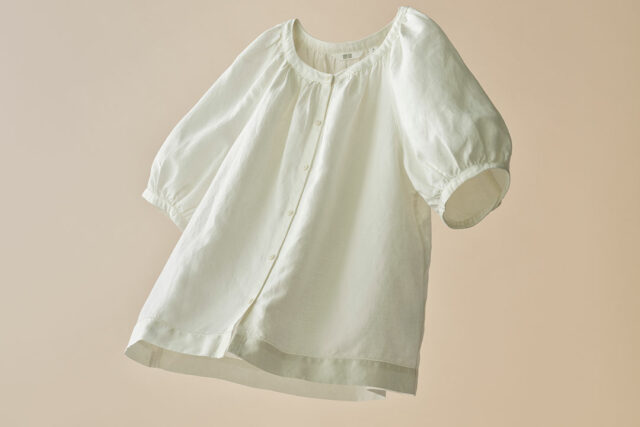
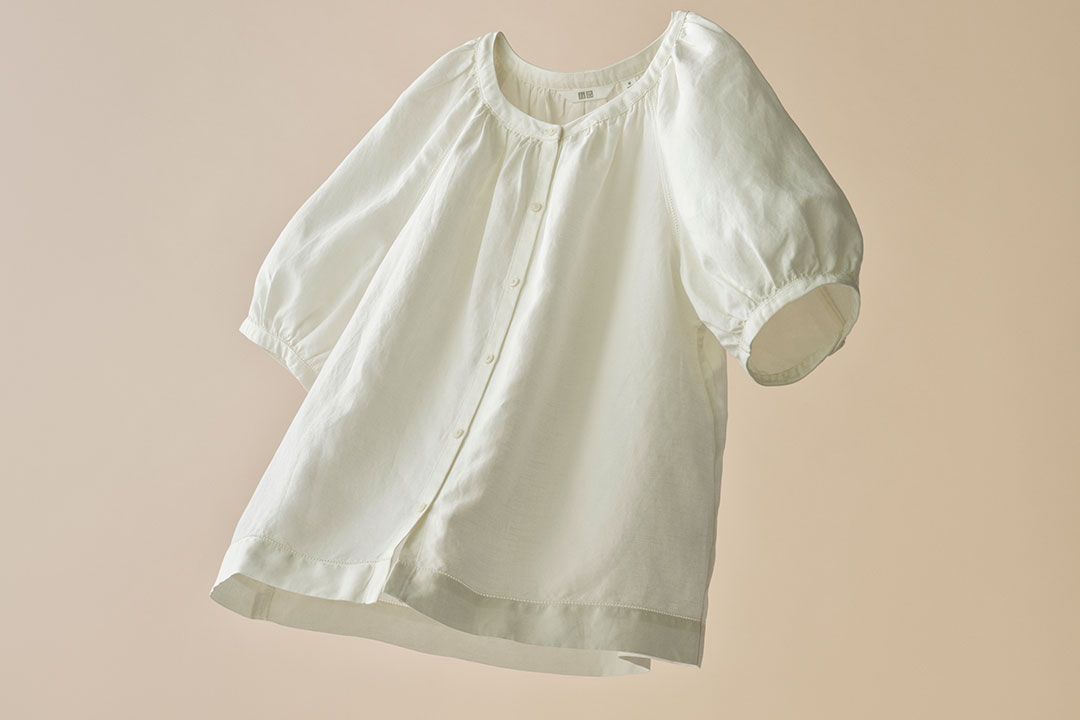
UNIQLO emphasized the easy breeziness of their Spring/Summer 2025 collection emphasizing their linen lines, namely Uniqlo Premium Linen, Linen Blend, and Cotton Linen.

In an event at BGC’s Manila House on March 6, held as a collaboration with Vogue Philippines, the magazine’s Fashion Director Pam Quiñones, Uniqlo local celebrity partner actress Jasmine Curtis-Smith, and Uniqlo Head of Public Relations and Sustainability Reichelle Vergara talked about the collections.

The Linen Blend line, made from linen and rayon, has a smoother drape with reduced wrinkling. Meanwhile, the Cotton Linen line, composed of linen and cotton, combines breathability with added structure.

The Premium Linen line is made from flax certified by the independent European Flax certification body, ensuring quality and traceability. “An important part of the Uniqlo LifeWear philosophy is the production of responsibly sourced, environment-friendly pieces,” said Uniqlo’s Ms. Vergara in a statement. “When we make our Premium Linen, we ensure a meticulous level of quality control and a thoughtful manufacturing process. The European Flax is primarily rain-fed except in special cases, uses fertilizers and pesticides responsibly through rotational cropping, and utilizes all parts of the plant to reduce waste.”

The line shows the properties that made the fabric important in human life for thousands of years: the fabric breathes by absorbing sweat and drying quickly, perfect for our hot climate.

Ms. Vergara, in an interview, told BusinessWorld about the emphasis on the fabric’s being made from European flax. “The feel also is different. Of course, the structure,” she said. “All of them really have that ‘personality’ of being breathable,” she said about the rest of the line.

CARING FOR LINEN
The talk that day delved into caring for your linen: the light fabric does have the propensity to crumple, and care for natural fabrics in this day and age has become trickier. Ms. Curtis-Smith simply said, “Just follow the washing instructions, guys.”

Ms. Vergara elaborated, “It’s good to wash it in cold water — just not hot water.” She also said to avoid harsh detergents, and to air-dry linen clothing.

Ms. Curtis-Smith discussed during the program about her preference for linen: “I like to look for pieces that are effortless,” she said. For the brand’s linen collection, she says, “When it comes to the dresses, the long sleeves… it moves with you. It breathes with your body. You feel like you’re always in constant flow and motion.” — JLG

Meralco eyes 4.5% growth in energy sales volume for 2025

PHILSTAR FILE PHOTO

POWER distributor Manila Electric Co. (Meralco) said it targets to increase its energy sales volume by 4.5% this year.

The company is targeting at least 56,000 gigawatt-hours (GWh) in energy sales this year, according to Ferdinand O. Geluz, senior vice-president and chief revenue officer at Meralco.

Clark Electric Distribution Corp., 65% owned by Meralco, is expected to contribute an additional 600–700 GWh, Mr. Geluz told reporters last month.

However, the first half of 2025 may be challenging, as the company will be coming off a high base of 9% growth in energy sales volume last year.

“So, in the first quarter, [energy sales volume growth] would be relatively flat, but by the second quarter, it will start to [increase],” Mr. Geluz said.

In 2024, Meralco’s energy sales volume rose by 6.4% to 54,325 GWh from 51,044 GWh in the previous year, driven by warmer temperatures due to El Niño and sustained customer energizations.

This exceeded the company’s target of 53,473 GWh for 2024.

Meanwhile, Meralco’s subsidiary, Meralco PowerGen Corp. (MGen), is expanding its renewable energy portfolio with the planned construction of MTerra Solar 2.

Although the project has not been finalized, Meralco Chairman and Chief Executive Officer Manuel V. Pangilinan said the company is securing a property in Batangas.

“So far, not yet as big as the first,” Mr. Pangilinan told reporters on the sidelines of a briefing last week.

MGen Renewable Energy, Inc. (MGreen), the renewable energy arm of MGen, holds a controlling stake in SP New Energy Corp. (SPNEC).

The company is developing a 3,500-megawatt-peak solar power plant and a 4,500-megawatt-hour battery energy storage system in Central Luzon, which is said to be the world’s largest of its kind.

SPNEC informed the local bourse last week that its parent, MGen, is considering a potential initial public offering for MGreen, including the possibility of injecting assets into SPNEC.

“As part of this review, the board of MGen approved the engagement of professional advisors to assess and determine the feasibility and structure of such a transaction, including compliance with applicable regulatory requirements,” the company said.

Meralco’s controlling stakeholder, Beacon Electric Asset Holdings, Inc., is partly owned by PLDT, Inc. Hastings Holdings, Inc., a unit of PLDT Beneficial Trust Fund subsidiary MediaQuest Holdings, Inc., has an interest in BusinessWorld through the Philippine Star Group, which it controls. — Sheldeen Joy Talavera

Lexus goes to Baguio

Lexus RX — PHOTO FROM LEXUS PHILIPPINES

LEXUS PHILIPPINES is set to showcase its luxury electrified models up north with the Lexus Roadshow making a stop in Baguio from March 21 to 23, at the Baguio Country Club.

Guests can get up close and personal to the Lexus NX, a midsized SUV hybrid featuring a blend of performance, luxury, and efficiency. A 2.5-liter hybrid powertrain is put to work, offering “smooth and powerful performance.” The NX interior is decidedly premium, with advanced technology, high-quality materials, and comfort-focused features like a larger touchscreen, enhanced audio system, and sophisticated driver assistance systems. It is positioned for “those looking for a refined and eco-friendly driving experience,” said Lexus Philippines in a release.

Also on display is the Lexus RX which is, like the NX, an all-wheel-drive vehicle. One of the best-selling models of the lineup, the RX is a luxury hybrid SUV with premium interiors, advanced technology, and offers “unparalleled comfort.” The signature spindle body design also allows excellent airflow to keep the vehicle cool.

Guests can also view the Lexus LBX, one of the newest models in the Lexus portfolio. The LBX is a subcompact luxury crossover that combines bold styling, advanced technology, and hybrid efficiency in a more accessible package. The LBX offers a sleek design, premium features, and a hybrid powertrain that delivers excellent fuel economy while maintaining a smooth and dynamic driving experience.

There will also be the UX 300e, a fully electric compact luxury SUV, offering a smooth, efficient drive with modern tech and a stylish design. It combines eco-friendly performance with premium features for a refined urban driving experience. Moreover, Baguio Country Club now has an EV charging station by Lexus which is compatible with Type 2 charging ports. This is part of Lexus’ commitment to electrification.

During the event, guests can enjoy specially curated refreshments from Kate Reed’s pasty by BCC while engaging with Lexus consultants for an exclusive personalized experience.

Paris Fashion Week: Saint Laurent offers fresh shapes and bright fabrics

YOUTUBE.COM/@YVESSAINTLAURENT

Chanel riffs the black bow; LV shows strong shoulders; slick leather at Hermes; Beckham shows curled hems; Stella McCartney’s feminine power suits; Dior’s ruffles

PARIS — Anthony Vaccarello, creative director of French fashion house Yves Saint Laurent, showed a runway lineup of evening-appropriate minidresses in bright colors and round, voluminous gowns, capping over a week of fashion shows in Paris.

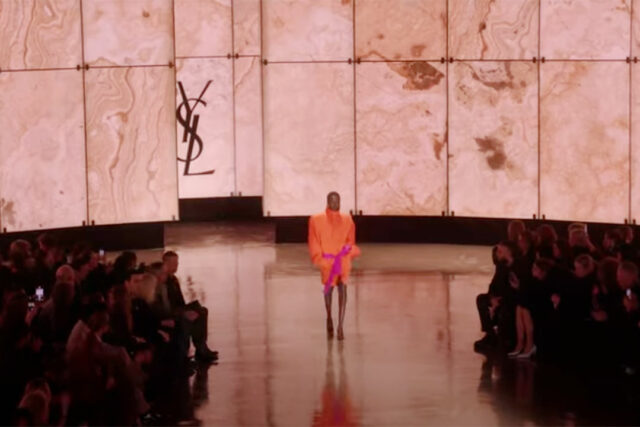
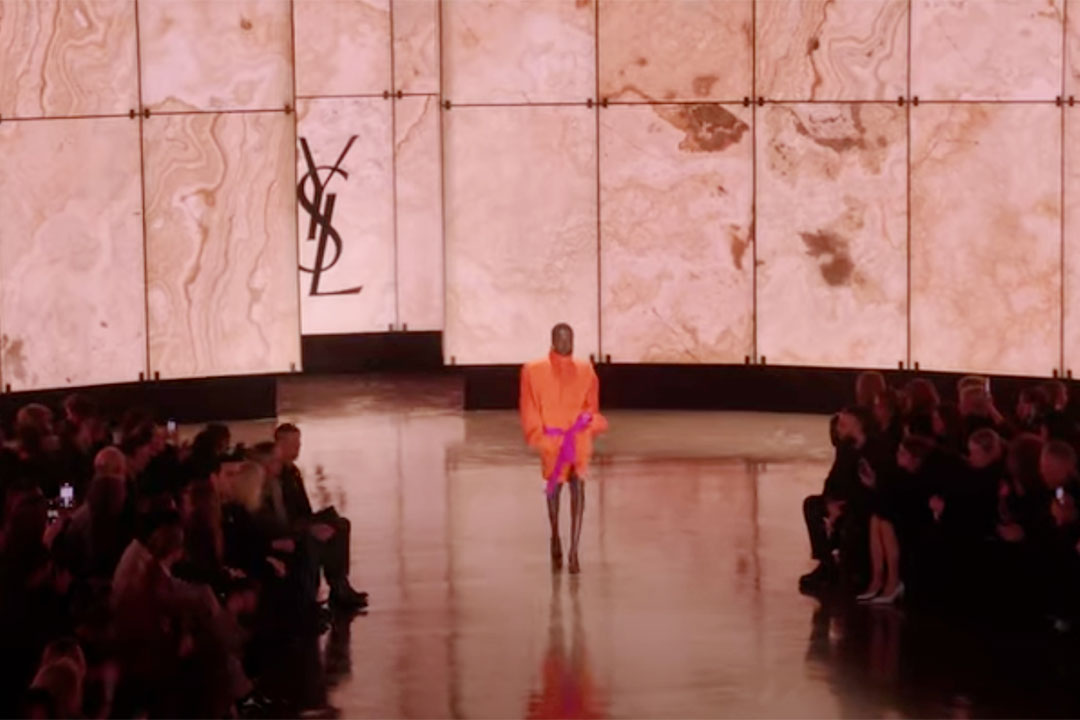
Held near the Eiffel Tower after nightfall, the first model marched out on towering sling-back heels, her hands thrust deep into the pockets of a short dress in bright, marigold orange. The shoulders were broad and the sleeves were wide, while a tall collar rose to the model’s jaw line. Similar silhouettes followed, in colors like fuchsia, teal or yellow. (See the show here: https://www.youtube.com/watch?v=gqOeWBxN4_Q)

“Instead of speaking through ornament or padding, fabrics and precise construction shape the garments,” the Kering-owned label wrote in notes about the winter collection.

Partway through the show, the focus on volumes suddenly shifted to below a dropped waist, with a series of silky slip dresses that ballooned into hulking, rounded shapes that floated down the runway.

There were also trim, transparent dresses in a lightweight silicone fabric, with leopard or floral prints. Model Bella Hadid paraded a bright blue dress in stretchy lace.

Front row guests included famous Parisians Betty Catroux, Catherine Deneuve, Carla Bruni and Charlotte Gainsbourg.

CHANEL
Trim, tweed tailored suits and flowing dresses adorned by decorative black bows showcased Chanel’s fall-winter runway collection in Paris. (See the show here: https://www.chanel.com/us/fashion/collection/fall-winter-2025-26/ )

Under the soaring glass-and-steel dome of the Grand Palais, models strode through a sparse set, built around an enormous black ribbon sculpture curling up into the air.

Kicking off the show were suit jackets and mini-skirts or shorts in tweed, all in monochrome, some covered by dresses or skirts in sheer fabric with extra ruffles emphasizing the hem.

Black bows embellished the looks, whether tied under the neck, worn as hair attachments or fixed to brimmed hats, skirts or thick-heeled boots.

Moving away from the strict palette of black and ivory, the French fashion house also showed chunky knits in raspberry or mint green and a red tweed ensemble in the form of a bustier minidress, trousers and over-the-elbow gloves.

There were also glossy, black overcoats, oversize pearl accessories and a puffer jacket — distinctly Chanel, with rows of bows.

Chanel fans are awaiting the arrival of Matthieu Blazy, who fills the high-profile designer role left vacant since the departure of longtime Karl Lagerfeld collaborator, Virginie Viard, last June.

Blazy, whose first show will be in October, is credited with the recent success of Kering-owned Bottega Veneta.

LOUIS VUITTON
Louis Vuitton designer Nicolas Ghesquiere brought his Paris audience to the Gare du Nord for his fall-winter runway presentation, showing an eclectic and futuristic mix of styles that featured 1980s-flavored shoulders and scrunched boots along with a wide array of handbags.

Models marched through rows of seated guests as if charging through a bustling train station — only they were just across the street from the Paris train station, in an indoor courtyard. (See the show here: https://eu.louisvuitton.com/eng-e1/magazine/articles/women-fall-winter-2025-show )

The first model wore bright red trousers with a gathered, elastic waist, cinched at the ankles and paired with a colorful blouse that was covered with a smoky, translucent raincoat. Her hair was teased out, brushed mostly to one side.

Other sporty looks followed, including nylon jackets with hoods and zippered pockets that contrasted with dressier styles like lacy slip-dresses and skirts with piles of ruffled layers.

The LVMH-owned label, which welcomed guests with a clip from Kraftwerk’s “Trans-Europe Express” on repeat, added images from the album cover to some looks.

At the end of the show, French First Lady Brigitte Macron leapt out of her seat to embrace Ghesquiere. Macron, who sat alongside the family of LVMH CEO Bernard Arnault, is known to wear Vuitton for official outings.

HERMES
Hermes Nadege Vanhee presented a fall-winter 2025 collection of glossy coats, dresses, and trousers in dark-colored leather on Saturday, showing the sleek styles on a dirt-covered runway in Paris. (See the show here: https://www.hermes.com/us/en/content/338474-women-fall-winter-2025-runway-show/ )

Held at the Garde Republicaine, the sprawling stables of the French capital’s mounted gendarmes or police, the fashion house built a set with curved walls that resembled a Richard Serra sculpture — but were covered in brown felt.

Attendants raked the catwalk before the start of the show and the models strode out in riding boots, the toes stretched out into points, their silky hair bouncing.

They paraded skirts and micro shorts with tassels, a cropped jacket with quilted panels and long coats lined with felted wool, zippers running down the back — all of it in leather.

Extra layers came in the form of ribbed knit gloves that covered the arm and piles of sweaters worn like scarves around the neck and cinching outerwear. Contrasting with the mostly all-black looks were a few styles in beige, a brown marbled pattern molded into a fitted dress and a coat and trouser ensemble in bright green leather.

VICTORIA BECKHAM
Victoria Beckham showed a line-up of sleek, monochrome looks featuring curled hems and collars for her fall/winter catwalk outing, held in a stripped-down building in the center of Paris. (See the show here: https://www.youtube.com/watch?v=pZ_XJ5HwxgA

. The show itself starts at the 40-minute mark.)

Models marched steadily through the bare set in square-toed shoes — some flat, others with spiked heels — parading minimalist suits with long lapels that stretched down below the navel, tapered trousers, shoulder-baring dresses and long overcoats.

There were mini dresses, overcoats, and suit jackets with striking, rolled-up hems, while sweaters and jackets had collars similarly curled up at the neck.

Long, fluid dresses were trim, snug at the waist, contrasting with an elegant, bulked-up leather coat in taupe, worn like a minidress. Completing the looks were thick, curvy glasses and roomy tote bags.

After the finale, which was accompanied by a melancholy soundtrack, Beckham walked out for her bow and blew a kiss to her audience. Her family was seated together in the front row.

STELLA MCCARTNEY
Stella McCartney drew her audience to an office building for her namesake label’s winter 2025 runway outing on Wednesday, showing a feminine line-up of power suits with low waisted trousers and broad-shouldered jackets along with glittering eveningwear. (See the show here: https://www.youtube.com/watch?v=VFhJDcXpHnA

Guests including French First Lady Brigitte Macron, actor Cameron Diaz and designer and movie producer Tom Ford were greeted on an upper floor with a sweeping view of the outskirts of Paris and a packet of sticky notes on their seats, which were arranged around desks, water coolers, and hulking copy machines.

Model Natalia Vodianova opened the show, wearing an all-grey ensemble — a double-breasted jacket, paired with glossy boots that rose above the knees and matching gloves, her hair pulled into a neat ponytail. Adding texture, thick, hooded sweaters, jeans and suits embellished with tassels and elaborately draped minidresses followed.

“I was thinking the best of, the best of, the best of,” Ms. McCartney said after the show, noting she sought to relay her label’s day-to-night designs for her first show as an independent designer.

Ms. McCartney, who famously does not use leather or fur, in January announced she was repurchasing LVMH’s minority stake in her label, but continues to advise LVMH on sustainability matters.

“It’s just always been the goal, always the dream, and it’s the right time,” she said of the split.

For last week’s show, which featured pole dancers performing in sparkling leotards, Ms. McCartney said she wanted to put the spotlight on exotic dancing — rather than exotic skins, the use of which has “just got to end.”

DIOR
Christian Dior creative director Maria Grazia Chiuri presented a lineup of ruffled styles for the French fashion house’s fall-winter runway show, set to a dramatic backdrop of fiery meteorites, smoking icebergs, and a giant, prehistoric bird. (See the show here: https://www.youtube.com/watch?v=7vIiT07fMn8  )

The set was orchestrated by American director Robert Wilson, who sent models marching through changing scenery — under hovering rocks, pointy mountains of ice and across a striped runway.

They wore sharp-tipped boots, tailcoats and bustiers worn like shields, with knee-high socks, hair pulled into ponytails tucked into the clothing.

Ruffled collars, lace and sheer fabrics added softness to the designs, which included references to past creative directors, including a T-shirt marked “J’adore Dior” in a nod to John Galliano.

Held in a temporary structure set up in the Tuileries Gardens of the Louvre Museum, the show drew crowds and screaming fans angling for a view of celebrities, who included K-pop group Blackpink’s Jisoo.

At the end of the show, the models returned to the stage in pairs, and paused, facing the audience as feathers floated from the ceiling.

When the models left, the spotlight lit one of the entrances, and Chiuri emerged for her bow, prompting cheers from the audience. — Reuters


ABP Group enters Manila, citing urgent cybersecurity needs

PHILIPPINE STAR/ MIGUEL DE GUZMAN

ABP GROUP, a Singapore-based cybersecurity provider, has opened an office in Manila, citing the Philippines’ rapid digital growth and the urgent need for stronger cybersecurity frameworks. 

“The Philippines is experiencing rapid digital growth, and with that comes the urgent need for stronger cybersecurity frameworks,” said Sun Yi, chief executive officer of ABP Group, in a statement.

“We are excited to bring our expertise to the market, working alongside businesses and institutions to enhance their security posture and ensure the Philippines’ resilient digital future.” 

About 41% of Philippine businesses cited the lack of cybersecurity experts as the top challenge in addressing cybersecurity threats, according to a joint report by cybersecurity firm Fortinet and the ASEAN Innovation Business Platform (AIBP). 

ABP Group provides security solutions tailored to address risks in the evolving threat landscape.

Sunnic, a technology company under ABP Group, offers advanced cryptographic solutions to secure critical infrastructure for banks, governments, and enterprises.

“With a strong focus on post-quantum cryptography (PQC), Sunnic provides expert advisory services to help organizations develop and implement robust data and identity protection strategies.”

ABP Cyber delivers end-to-end solutions spanning security design, integration, and intelligence-driven managed security.

ABP Securite, a value-added distributor (VAD), specializes in cybersecurity and network performance.

“By providing cutting-edge solutions alongside expert professional services, maintenance and support, and cloud administration, ABP Securite optimizes IT infrastructures, enabling businesses to enhance security, improve performance, and future-proof their digital operations.”

In the last six months of 2024, organizations in the Philippines faced an average of 4,003 cyberattacks per week, exceeding the Asia-Pacific average of 2,870, according to cybersecurity solutions firm Check Point Software Technologies Ltd. 

“With a strong presence across Asia, ABP Group brings to the Philippines its specialized business entities, each playing a crucial role in fortifying digital security,” it said. — Beatriz Marie D. Cruz

I dreamed a dream: A BSP decoupling from the US Fed funds policy

BW FILE PHOTO

The Bangko Sentral ng Pilipinas (BSP) paused the reduction of the benchmark rate at 5.75% in the first policy meeting last month. No surprise here, after the US Federal Reserve Board (Fed) paused its Fed Funds rate at 4.50% in January. The slew of monetary easing by the Fed since September 2024 came to a halt. But the growth rate of the Philippine economy slowed down to 5.6%, lower than the rosy average 6% of official and private forecast, and the inflation rate at 2.10%, the expectation was more easing. But the BSP paused the easing trend for fear of reducing the gap between the Fed funds rate and the BSP policy rate which could bring about capital flight from Philippine papers to US Treasuries.

The US Fed entertains more goals in its Fed fund rate decisions than does the BSP. Foremost among US Fed goals is that the US dollar being a global reserve currency, the Fed must maintain an attractive return to its investors in US Treasuries to stem the de-dollarization trend. That is how the USA raises the wherewithal to finance its trade deficit.

The BSP, by contrast, is concerned primarily with price stability and, with that achieved, secondary goals like economic growth and poverty reduction may be entertained. I don’t totally agree with this hierarchy of goals but that is the law. Price stability is the metric for which the BSP governor can be summoned by the Congress to account if inflation meanders too much higher than expectation. On the other hand, if the BSP policy rate violates the acceptable risk premium between itself and the Fed funds rate (5.75% – 4.50%), we risk being placed in the rear-view mirror of arbitrage chasing portfolio investors and disruption in the stock market. Thus, we run the risk of missing our own county-specific targets, say the growth of poverty reduction target, if we slavishly follow the Fed funds rate movement. Our monetary authorities have made the threat of adverse arbitrage response the tail that wags our monetary policy.

It is reassuring though that BSP is aware of the tradeoff of piggybacking our monetary policy to that of the US Fed. This is the subject of the HSBC Global Research report authored by Aris Dacanay and Lenny Jin. It reported that the BSP Governor admitted that the pause in monetary easing was a decision that they took very seriously precisely because it could be easily construed as humoring vulture capital profit over growth of the economy and poverty reduction. That is not a reason to call the BSP Governor to account. But the Governor admitted that it may resume monetary easing when the “clouds of uncertainties clear.” That resumption unfortunately could be a long way off.

With the onset of US President Donald Trump’s second term — which includes the “total reset” waged against the overreach of DEI (diversity, equity, and inclusion) policies of the previous administration, the weaponization of monetary and trade policies as the posture of the MAGA (Make America Great Again) Republicans, the overtures for the US takeover of Gaza, Canada, the Panama Canal, and Greenland, and the resulting retaliation and walk-back frenzy — the world has just stepped into the uncharted territory of the non-ergodic universe where uncertainty is Knightian or Keynesian. In the familiar ergodic universe we have become used to, the states of the world are known or knowable and the governing probability distributions are well-defined though still to be revealed. To say it mildly, the state of the world in 2025 has turned Hobbesian (from Thomas Hobbes’ Leviathan) and our best course of action is to keep our guns loaded and our powder dry. With the deployment of aggressive weaponization of foreign and trade policy echoing the trade war that deepened and prolonged the Great Depression in the early 1930s, we no longer know who our friends and who our enemies are. Canada is rewarded with a warlike 25% tariff for its friendship and lasting loyalty; Australia is being enveloped in the fallout. Kissinger’s oft-repeated quip has now become the norm: “To be an enemy of America is dangerous, to be its friend is fatal!”

Since we opened our capital account in the early 1990s, ostensibly to improve our performance in attracting foreign investment, the Philippines’ monetary arena have become a playground for the disruptive vagaries of arbitrage chasers. Then Prime Minister of Malaysia Mahathir Mohammed declared a war against these speculative vultures in 1998 to the great outcry of arbitrage chasers and their neo-liberal allies (led by George Soros). Mahathir of course pushed the capital control pedal to the metal to frustrate arbitrage chasers. The verdict, so condemnatory of Mahathir in 1998, has slowly heaved in favor of Mahathir over Soros.

In National Bureau of Economic Research (NBER) Working Paper #30944, Paul Bergin and others using data for 45 countries from 1985 to 2019, found that strategic capital account policies (capital controls) combined with reserve accumulation policies associate positively and strongly with growth in real GDP and TFP (total factor productivity). It appears that the presence of tight capital controls results in a one-to-one correspondence between the growth of reserves and the level of net exports which requires the expansion of the traded goods sector and which has a knock-on effect on TFP.

Our own experience with capital account liberalization is that while we attracted a tons of portfolio investment and its disruptive effects, we failed to improve our direct foreign investment share in the ASEAN. Indeed, the Asian Financial Crisis was exacerbated many times in the Philippines by the capital account liberalization as local banks soaked up on dollar borrowings which eventually they could themselves not service and this became a national liability. Their stop-go cyclical nature tended to exacerbate the boom-and-bust trajectory of the pre-2000 Philippine economy.

As observed, the BSP paused the expected easing of monetary policy at 5.75%. Pausing the expansionary policy when the economy is losing growth momentum, and inflation is in some remarkable quietude (2.1% in February) went contrary to market expectation. Together with many observers, I have expected BSP to continue the reduction of the BSP interest rate.

If ever there was a good time to remind ourselves of our monetary independence, this was it. Instead, the BSP bowed to the arc of history, having surrendered our monetary independence to humor the arbitrage chasers. Still, we take comfort in the BSP governor’s intimation that this decision was not taken lightly. As little as this was, it seems a ray of hope. A reason perhaps to dream that the BSP will finally decouple from the Fed on monetary policy.

But rather than quiver in fear, we need to build our own muscles. Others have gone before us to superior results. When economic growth is the performance criterion, the emerging evidence seemed to favor the fixed exchange rate. Frankel et al. (2019) found that growth performance tends to be negatively related to de facto flexible exchange rate regimes and tends to be positively related to either de facto fixed exchange rate or “systematic managed floating” (intermediate exchange rate regime) regimes. This latter supports a perception of “greater price stability” and consequently more stable macro policy under a fixed exchange rate. Herein is the reason why so-called “currency manipulators” seem to exhibit better results than currency neutralizers.

A “currency manipulator” is a pejorative label attached by the US Treasury or State Department to an economy characterized by a persistent trade surplus (especially against the US) atop a refusal to allow the domestic currency to appreciate. As of November 2024, several countries — China, Japan, South Korea, Singapore, Taiwan, Vietnam, and Germany — were in the US Treasury/State Department watchlist of potential currency manipulators. Vietnam was warned by the US State Department of currency manipulation when it refused to let the Vietnamese Dong appreciate despite an emerging trade surplus. If you ask me, those in the currency manipulator fraternity are among the stellar performers in the development arena.

So, is there a BSP decoupling from the US Fed monetary policy in our future? Yes, but only in my dreams despite the sans pareil Lea Salonga song (“I dreamed a dream” from Les Miserables) goes: “But there are dreams that cannot be and there are storms we cannot weather.”

Perhaps so in the ergodic universe we have long been accustomed to, but perhaps not in the emerging non-ergodic universe. After all, who dared dream that Rodrigo Duterte would ever be whisked to The Hague, Netherlands to face the ICC tribunal?


Raul V. Fabella is a retired professor of the UP School of Economics, a member of the National Academy of Science and Technology and an honorary professor of the Asian Institute of Management. He gets his dopamine fix from bicycling and tending flowers with wife Teena.

Toyota new vehicle warranty extended to 5 years

PHOTO FROM TOYOTA MOTOR PHILIPPINES

TOYOTA MOTOR PHILIPPINES (TMP) recently announced the commencement of its “Toyota Five-Year Warranty” program — applicable to all Toyota vehicles sold from Jan. 1, 2025 onwards. Previously, Toyota vehicles were covered by a three-year/100,000-km warranty. With the new coverage, customers get up to two years/40,000km of additional warranty provided that they are able to avail of the minimum number of periodic maintenance services (PMS) sessions during the three-year warranty period, with at least one PMS visit per year at any Toyota dealer. All Toyota models released from Jan. 1, 2025 onwards and all Toyota vehicles under contract with Kinto One or Kinto One Business starting on the same date qualify for the Toyota Five-Year Warranty.

Customers who avail of at least six PMS visits at any Toyota dealer with at least one PMS visit per year during the three-year/100,000-km warranty period will qualify for additional full coverage for the fourth year, which has the same coverage as the three-year/100,000-km warranty.

However, customers who will avail of less than six PMS sessions will qualify for the Fourth-Year Limited Coverage additional warranty on the condition that they were able to make three to five PMS visits with at least one PMS per year at any Toyota dealer. The limited-coverage additional warranty does not cover wear-and-tear parts related to suspension, steering, and the brake system.

Customers able to avail of the full-coverage additional warranty on the fourth year are eligible for an additional one-year/20,000-km extension on the fifth year, provided they were able to make at least two PMS visits during the fourth year of ownership. Vehicles of customers that were only able to avail of one PMS session during the fourth year of ownership are qualified for a limited-coverage additional warranty.

For more information, contact a Toyota dealership. The complete list of authorized Toyota dealerships is available at https://www.toyota.com.ph/dealer. Updates on Toyota products, services, events, and promos are also available through Toyota Motor Philippines’ social media platforms: Facebook (ToyotaMotorPH), Instagram (toyotamotorph), and X (toyotamotorph). TMP also has a ToyotaPH community on Viber.

Rates of T-bills, bonds to move sideways before Fed meeting

BW FILE PHOTO

RATES of the Treasury bills (T-bills) and Treasury bonds (T-bonds) to be auctioned off this week may be mixed before the US Federal Reserve’s policy meeting.

The Bureau of the Treasury (BTr) will auction off P22 billion in T-bills on Monday, or P7 billion each in 91- and 182-day papers and P8 billion in 364-day papers.

On Tuesday, the government will offer P30 billion in reissued 10-year T-bonds with a remaining life of eight years and 10 months.

T-bill and T-bond rates could track the mixed movements in the secondary market last week amid expectations that the US central bank can resume its easing cycle this year amid slowing inflation despite the uncertainties brought by the Trump administration’s policies, Rizal Commercial Banking Corp. Chief Economist Michael L. Ricafort said in a Viber message.

The T-bond offer could see “good demand” and fetch rates ranging from 6.175% to 6.225%, a trader said via e-mail.

“The Federal Open Market Committee meeting [this] week will be the next catalyst,” the trader said.

At the secondary market on Friday, the 91-, 182-, and 364-day T-bills eased by 2.03 basis points (bps), and 0.6 bp, and 0.21 bp week on week to end at 5.2499%, 5.5675% and 5.792%, respectively, based on PHP Bloomberg Valuation Service Reference Rates data published on the Philippine Dealing System’s website.

Meanwhile, the 10-year bond rose by 2.04 bps week on week to close at 6.2301%.

The US central bank will review its policy settings on March 18-19. Fed policy makers are universally expected to leave rates in their current 4.25%-4.5% range when they meet this week, and traders are also betting against a rate cut at their May meeting, Reuters reported.

Investors will pay particularly close attention to the Fed’s own projections for inflation, unemployment and the path of rates, due to be published at the end of their two-day policy-setting meeting. In December Fed policy makers forecast two interest-rate cuts this year.

Pricing of short-term interest-rate futures still reflects an expectation for a June start to Fed rate cuts, with likelier than not a total of three quarter-point reductions by the end of the year.

Last week, the BTr raised P30.8 billion from the T-bills it auctioned off, higher than the P22-billion plan, as total bids reached P90.598 billion, more than four times as much as the amount on offer.

The strong demand prompted the government to double the accepted noncompetitive bids for the 91- and 182-day securities to P5.6 billion and to P6.4 billion for the 364-day T-bill.

Broken down, the Treasury borrowed P9.8 billion via the 91-day T-bills, higher than the P7-billion plan, as tenders for the tenor reached P35.628 billion. The three-month paper was quoted at an average rate of 5.178%, declining by 10.5 bps from the previous auction, with the BTr only accepting bids with this yield.

The government also made a P9.8-billion award of the 182-day securities, above the programmed P7 billion, as bids stood at P30.05 billion. The average rate of the six-month T-bill was at 5.48%, 13 bps lower than the yield fetched in the previous week, with accepted rates ranging from 5.49% to 5.568%.

Lastly, the Treasury raised P11.2 billion via the 364-day debt papers, more than the P8 billion placed on the auction block, as demand for the tenor totaled P24.92 billion. The average rate of the one-year debt inched up by 0.3 bp to 5.773%, with bids accepted carrying yields of 5.755% to 5.779%.

Meanwhile, the T-bonds to be auctioned off on Tuesday were last offered on Feb. 18, where the BTr raised P30 billion as planned at an average rate of 6.118%, lower than the 6.25% coupon rate.

The Treasury is looking to raise P147 billion from the domestic market this month, or P22 billion from T-bills and P125 billion from T-bonds.

The government borrows from local and foreign sources to help fund its budget deficit, which is capped at P1.54 trillion or 5.3% of gross domestic product this year. — A.M.C. Sy with Reuters

Louis Vuitton to branch into beauty products, taps makeup star Pat McGrath

PARIS — Louis Vuitton, the world’s biggest fashion label, will begin selling beauty products this fall and has tapped British makeup artist Pat McGrath to lead creative direction for the new venture, expanding its offer as the industry seeks new avenues of growth to offset a current slump.

The move by the LVMH-owned label, announced in a statement on Wednesday last week, comes as the fashion industry, including LVMH, faces its slowest sales in years, struggling in particular to reignite interest from younger, inflation-weary shoppers.

A number of high-end fashion houses including Hermes, Valentino, and Celine, which is also owned by LVMH, have branched out in recent years into makeup, which even at the high end, where lipsticks can cost over $50, is more affordable than fashion handbags that are priced upwards of $1,000.

Ms. McGrath, whose makeup company Pat McGrath Labs sells concealers in over 30 color shades, is well-known for her influence in the fashion industry.

For John Galliano’s Maison Margiela fashion show last year, one of the industry’s buzziest runway outings in recent years, she famously made models look like dolls, adding a glossy sheen to their faces that resembled porcelain.

Vuitton, which already sells perfumes, will launch 55 lipsticks, 10 lip balms, and eight eyeshadows in over 100 brand stores around the world.

Production will be in France and the label will also make leather goods for the products. Vuitton made vanity cases in the 19th century and in the 1920s sold powder compacts, brushes, and mirrors. — Reuters

BSP bills fetch mixed rates

BW FILE PHOTO

YIELDS on the Bangko Sentral ng Pilipinas’ (BSP) short-term securities ended mixed on Friday, with rates moving sideways and both tenors going oversubscribed.

The BSP bills fetched bids amounting to P176.724 billion on Friday, above the P140-billion offer and the P172.312 billion in tenders for the P130 billion auctioned off in the previous week. The central bank made a full P140-billion award of its offer.

Broken down, tenders for the 28-day BSP bills reached P58.659 billion, higher than the P50-billion offer and the P52.228 billion in bids for the same volume auctioned off the week prior. The central bank awarded P50 billion in one-month papers as planned.

Accepted yields ranged from 5.825% to 5.89%, narrower than the 5.809% to 5.9% band seen a week earlier. This caused the average rate of the one-month securities to inch up by 0.96 basis point (bp) to 5.857% from 5.8474% previously.

Meanwhile, bids for the 56-day bills amounted to P118.065 billion, above the P90-billion offering but lower than the P120.084 billion in tenders for the P80-billion offered by the central bank in the previous week. The BSP made a full P90-billion award.

Banks asked for yields ranging from 5.84% to 5.874%, narrower and lower than the 5.85% to 5.9% margin seen a week prior. With this, the average rate of the securities dropped by 1.87 bps to 5.8576% from 5.8763% logged in the previous auction.

The central bank uses the BSP securities and its term deposit facility to mop up excess liquidity in the financial system and to better guide market rates.

The BSP bills were calibrated to not overlap with tenors of the Treasury bills and term deposits also being offered weekly.

Data from the central bank showed that around 50% of its market operations are done through the short-term BSP bills.

Short-term instruments offer more stability and predictability, the BSP has said. These are also considered high-quality liquid assets, giving banks more flexibility.

BSP securities can also be traded in the secondary market. — Luisa Maria Jacinta C. Jocson

CTA denies Green Cross’ P118-M tax refund petition

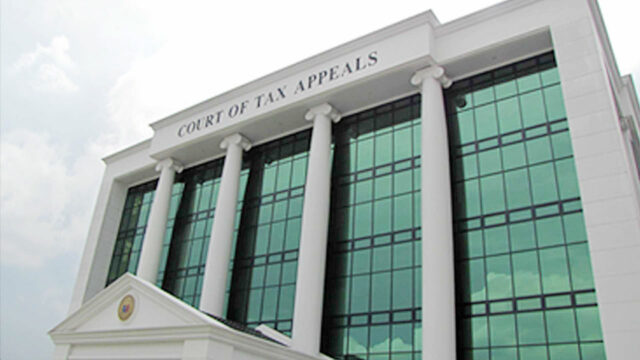
CTA.JUDICIARY.GOV.PH

THE COURT OF TAX APPEALS (CTA) has denied Green Cross, Inc.’s tax refund claim, affirming the imposition of excise taxes and related value-added tax (VAT) on its taxable goods, totaling nearly P118 million.

The court en banc affirmed an earlier ruling that denied Green Cross’ request for a refund of P117,973,507.78 covering November 2018 to December 2019.

It ruled that the company’s cologne products and splash colognes qualify as “toilet waters” and are subject to excise tax under prevailing tax laws.

The tribunal held that the repeal of Revenue Regulations (RR) No. 8-84 — which defined “toilet waters” as scented preparations with more than 3% essential oils — was implicitly superseded by subsequent amendments to the National Internal Revenue Code (NIRC) of 1977, particularly Executive Order (EO) No. 273 in 1987.

EO No. 273 reclassified the tax on “perfumes and toilet waters” from a percentage tax to an excise tax.

The court said the rules and regulations governing the percentage tax under the old law are inconsistent with the policy framework for excise tax under Section 150(b) of the NIRC of 1997.

“Since the language of the statute is plain and unambiguous, there is no need for further interpretation or to examine legislative intent,” the 22-page ruling promulgated on March 3, 2025, read.

“The law must be applied as written. Following the valid and binding interpretation made by the CIR in RMC No. 17-02, cologne products and splash colognes are considered ‘toilet waters,’ which are non-essential goods subject to the 20% excise tax imposed by Section 150(b) of the NIRC of 1997, as amended,” it added.

The ruling was penned by Presiding Judge Roman G. Del Rosario.

The tribunal reiterated that colognes are classified as “non-essential goods” under the tax code.

It emphasized that Section 150 of the NIRC explicitly imposes an excise tax on toilet waters, which are categorized as “non-essential goods” without any price-based qualifications. The common understanding of “non-essential goods” refers to their function rather than their market value.

The case originated when Green Cross, Inc. filed a Petition for Review on May 8, 2024, seeking to reverse the Decision dated Nov. 22, 2023, and the Resolution dated April 16, 2024, issued by the CTA Special Second Division.

These prior rulings had denied Green Cross’ Petition for Review, which sought the refund of P117,973,507.78 for alleged erroneously paid excise taxes on the removals of cologne products and splash colognes, as well as VAT imposed on these excise taxes.

Green Cross argued that its cologne products should not be taxed as “toilet waters” under Section 150(b) of the NIRC of 1997, as amended, asserting that the older definition under RR No. 8-84 should still apply.

The Bureau of Internal Revenue (BIR) maintained that Green Cross was liable for these taxes based on BIR Ruling No. 043-2000, which classified colognes as “toilet waters” subject to excise tax.

After the CTA Special Second Division denied Green Cross’ refund claim, the company elevated the case to the CTA en banc, which ultimately upheld the ruling. — Chloe Mari A. Hufana

The growing youth epidemic of alcohol, tobacco, and vape use: A call for higher health taxes

WILD VIBES-UNSPLASH

On March 5, leading doctors and public health advocates gathered at the Philippine Medical Association (PMA) headquarters in Quezon City to sound the alarm on the growing epidemic of alcohol, tobacco, and vape consumption among Filipino youth. With the 2025 elections looming, they issued a challenge to aspiring lawmakers: Will they stand for public health, or will they allow industries that profit from harm and addiction dictate policy?

The evidence presented at the event was nothing short of alarming. According to data from the National Nutrition Survey data, alcohol and tobacco consumption among adolescents aged 10 to 19 doubled between 2021 and 2023. This means hundreds of thousands more Filipino youths are picking up smoking, vaping, and alcohol drinking at an early age. They are falling prey to industries that market these harmful substances.

The human toll of addiction and disease as expressed in the economic cost of alcohol and tobacco consumption is staggering. Action for Economic Reforms’ (AER) research estimates that the total economic burden of these harmful products reaches P1.05 trillion, or 5% of GDP annually. This cost stems from direct healthcare expenditures for treating diseases caused by alcohol and tobacco, the larger impact of lost productivity due to illness and premature death, and the broader social consequences of alcohol, including road crashes, domestic and community violence, and law enforcement costs.

To put this number into perspective, P1.05 trillion is larger than the combined 2025 budgets for the departments of Education and Health. It is a cost borne not just by those who consume alcohol and tobacco, but by every Filipino taxpayer who funds public hospitals, subsidizes healthcare programs, and deals with the economic burden caused by preventable diseases.

Despite this immense financial burden, excise tax collections from alcohol and tobacco in 2021 amounted to only P266.6 billion — barely a quarter of the damage these industries inflict on our economy and society. Companies that manufacture and market alcohol and tobacco products should be held accountable and taxed accordingly. The revenue from these taxes should then be funneled directly into Universal Health Care, as well as treatment and cessation programs to break the cycle of addiction.

Aggressive marketing tactics are a major factor behind the rising prevalence of alcohol and tobacco use among young people. Flavored vape products, cheap alcohol, and celebrity- and influencer-driven promotions are all designed to attract and hook young people. Without stronger regulations and higher excise taxes, the next generation will continue to be the primary target of these industries.

Time and again, the evidence has shown that higher excise taxes on alcohol and tobacco reduce consumption, especially among price-sensitive groups such as young people. Increasing these taxes is a dual-purpose policy: it deters use and generates much-needed revenue for healthcare services.

Yet despite overwhelming evidence supporting higher taxes, current policymakers remain hesitant — largely due to industry pressure.

The recent House Bill 11360 (which has been criticized as the Sin Tax Sabotage Bill), threatens to roll back hard-won gains by making cigarettes more affordable. If passed, the bill could lead to an additional 1.86 million smokers over the next decade while costing the government at least P176.5 billion in lost revenues.

What we need is increasing sin taxes. Tax rates must reflect the true cost from consumption of alcohol, tobacco, and vape products reflect their true cost to society.

With the elections fast approaching, voters must demand accountability from candidates. Where do they stand on Sin Taxes? Will they prioritize the health and well-being of the Filipino people, or will they bow to corporate interests?

This is a public health issue. It is also an issue of governance, integrity, and leadership.

To those running for office in 2025: Stand with the people, not with the industries profiting from harm. Support higher taxes on alcohol, tobacco, and vapes. Protect our youth. Safeguard the future of our nation.


AJ Montesa is a program officer for research and heads the tax policy team of Action for Economic Reforms.