Home Blog Page 1310

US coffee, orange juice prices could surge if Trump’s Brazil tariffs stick

REUTERS

LONDON/NEW YORK — US consumers face sharp price rises on food staples like coffee and orange juice if the Trump administration sticks to its plan to slap 50% tariffs on all imports from Brazil, traders and experts said.

US President Donald Trump launched new tariffs last week which included raising duty on Brazilian imports to 50% from 10%, effective Aug. 1, despite the US having a $7.4-billion trade surplus with Brazil, according to US Census Bureau data.

In terms of agricultural commodities, Brazil’s produces nearly half the world’s arabica coffee and is by far the world’s largest orange juice producer, accounting for 80% of global exports, industry data shows.

It is also the world’s top sugar producer, but does not ship significant volumes to the US.

“With (US sugar) consumption at 11.185 million tons, a 50% increase on 312,000 tons of (Brazil) sugar shouldn’t have a large impact. The bigger impact will be in coffee and orange juice. I’m thinking Acai berries as well,” according to sugar analyst Michael McDougall, pointing out that Mr. Trump may yet row back on his plan.

The overwhelming majority of US Acai imports come from Brazil, the world’s largest producer, according to a report by Grand View Research.

US Commerce Secretary Howard Lutnick said last month during a Congress hearing that some natural resources that are not available in the US, such as tropical fruits and spices, could be exempt from tariffs, depending on negotiations with the countries producing and exporting them.

“I don’t think it would be economically feasible to sell Brazilian coffee to the US with the 50% tariff. Let’s see how this will evolve, but it would be very complicated,” according to the Brazil head of a major global commodities trader.

Around a third of the coffee consumed in the US, the world’s largest drinker of the beverage, comes from Brazil, which has in recent years been shipping about eight million 60 kg bags a year there, according to industry groups.

More than half of the orange juice sold in the US comes from Brazil.

The US has become more dependent on orange juice imports in recent years due to a sharp decline in domestic production, particularly in Florida, due to the citrus greening crop disease, hurricanes and spells of freezing temperatures.

A report issued by the US Department of Agriculture earlier this year forecast the US orange harvest would hit an 88-year low in the 2024/25 season while production of orange juice would slump to a record low.

Brazil also exports a modest amount beef to the US, and the tariff has been welcomed by US cattle producers.

“We fully support this tariff on Brazil. Brazil’s exports (have) contributed to the shrinking of our US cattle industry. We need to rebuild and reduce our nation’s dependency on imported food. This is a step in the right direction,” R-CALF USA said.

In terms of energy, Brazil is the world’s second largest producer of the cane or corn-based biofuel ethanol.

Brazil produced some 35 billion liters of ethanol in 2024, but exported less than 6%, of which only some 300 million liters went to US, according to a report from BTG Pactual.

Energy major Shell is exposed to Brazil’s biofuel market via Raizen, a joint venture between itself and Brazilian conglomerate Cosan, while BP is exposed as it now has full ownership of Brazilian sugar and ethanol producer BP Bunge Bioenergia.

In a letter to Brazilian President Luiz Inacio Lula da Silva setting out his tariff plan, Mr. Trump criticized what he saw as Brazil’s attacks on free elections, social media platforms and digital trade activities of US companies. — Reuters

Paris Fashion Week: Giorgio Armani Privé shows glittering black velvet; Chanel shows haute couture in private salon setting

YOUTUBE.COM/@FASHIONFEED

PARIS — Giorgio Armani showed his latest Privé haute couture collection at the label’s gilded Paris headquarters on Tuesday last week, displaying black velvet evening wear with shimmery touches on the runway — once again, without the Italian designer, who continues to rest at home.

“In twenty years of Armani Privé, this is the first time I haven’t been to Paris,” Mr. Armani, who turned 91 on Friday, said in a statement from the label.

The designer was also absent from his label’s fashion shows in Milan last month — a first for the Italian designer famous for his hands-on approach — following a report from Italian newswires that he had spent some days in a Milan hospital.

For Tuesday’s show, Mr. Armani said he oversaw details including fittings and makeup remotely, through a video link. Though he felt ready to travel, doctors advised he extend his rest, he added.

Held at the label’s sprawling mansion in the heart of the wealthy Triangle d’Or neighborhood of Paris, the show drew crowds to the streets angling for photos of arriving guests.

Inside, models walked slowly through a maze of rooms, parading black velvet pantsuits and slender dresses. There were tailcoats, oversized bows, and glittering embellishments. Towering black velvet heels added a feminine touch to more masculine looks, while sharp-shouldered suit jackets contrasted with bustier tops in various forms. (Watch the show here: https://tinyurl.com/y5c2z9z6 )

CHANEL
Chanel showed its latest collection of haute couture in an all-beige salon set at the Grand Palais in Paris on Tuesday, its last runway presentation by the design studio before the debut of new creative director Matthieu Blazy expected in September. (See the show here: https://tinyurl.com/3vd2zjps)

Models emerged from an ornate entrance, parading long-skirted dresses in soft toned tweeds, with touches of sparkles and tufts of feathers. They wore tight buns and tall boots, which left U-shaped heel indentations in the plush carpet.

Colors were muted, mostly ivory, beige, and brown, but one silky dress came in a pale silvery blue, worn under a short, yellow-toned bomber jacket with a prominent, feathery collar.

The show was held in the Salon d’Honneur, a smaller space of the freshly restored Grand Palais, marking a contrast with the soaring, central exhibition hall usually favored by the label.

Facing a prolonged slump, many labels in the high-end fashion industry are renewing their design approach, with Kering-owned Gucci and Balenciaga, and LVMH’s Dior among labels that have recently named new designers.

After the show, guests lingered, making their way slowly down grand staircases, stopping for photos of the building’s elaborate ironwork and gilded wall decorations.

The Paris fall-winter haute couture fashion shows ran through Thursday, featuring runway outings from labels Schiaparelli, Iris van Herpen, and Imane Ayissi, as well as Maison Margiela and Balenciaga. — Reuters

Stronger together: Fighting schistosomiasis through partnerships

STOCK PHOTO | Image by Pch.vector from Freepik

Schistosomiasis (SCH) and soil-transmitted helminthiasis (STH) are among the world’s most persistent neglected tropical diseases (NTDs) — a group of conditions that disproportionately affect the world’s poorest populations and carry serious health, social, and economic consequences. Both diseases are considered infectious diseases of poverty, targeting vulnerable groups, including children and pregnant women, in tropical and subtropical regions.

STH is caused by parasitic roundworms such as Ascaris lumbricoides (giant roundworm), Trichuris trichiura (whipworm), and hookworms. SCH, meanwhile, is caused by a blood fluke, which remains endemic in the Philippines. Infected individuals may suffer from anemia, nutritional deficiencies, gastrointestinal distress, cognitive impairment, stunted growth, and delayed development particularly in children.

These diseases are of significant public health concern in the Philippines. Both SCH and STH are endemic in 28 provinces, and their impact on child development and school performance is particularly troubling. Stunting caused by these parasitic infections impairs children’s learning outcomes and undermines their future potential.

According to the World Health Organization (WHO), schistosomiasis spreads when individuals come into contact with freshwater sources contaminated by parasite larvae released by snails. The infection cycle is perpetuated when infected individuals excrete parasite eggs through urine or feces into bodies of water. Once inside the body, the larvae mature into adult worms. Their eggs can become lodged in organs, triggering immune responses and causing tissue damage.

People are most commonly exposed during daily agricultural, domestic, occupational, or recreational activities that involve contact with contaminated water. Symptoms range from abdominal pain and diarrhea to blood in the stool, with liver enlargement often seen in more advanced cases.

Fortunately, schistosomiasis is both treatable and preventable.

Since 2007, Merck has been at the forefront of global efforts to eliminate SCH through its Schistosomiasis Elimination Program. In collaboration with WHO, Merck has donated over 1.5 billion tablets of praziquantel, enabling treatment for more than 600 million school-aged children, primarily in sub-Saharan Africa.

In the Philippines, Merck is working with the University of the Philippines Manila (UPM) Neglected Tropical Diseases Study Group, led by Dr. Vicente “Jun” Belizario, and the PHAPCares Foundation, the social responsibility arm of the Pharmaceutical and Healthcare Association of the Philippines (PHAP). Together, they are advancing interventions for SCH and STH control in two municipalities in Agusan del Sur.

The collaborative project focuses on strengthening the diagnosis and treatment of SCH and STH, improving water, sanitation, and hygiene (WASH) practices, and implementing community-based health interventions to reduce infection rates and break the transmission cycle.

“Our mission to control SCH and STH is aligned with the United Nations Sustainable Development Goals, particularly those promoting good health and well-being,” said Martha Paiz Herrera, General Manager and Managing Director of Merck Philippines.

Merck’s initiatives reflect its broader mission to improve health and advance scientific progress. Through enhanced access to diagnostics, treatment, and health education, the company addresses urgent public health challenges in underserved communities. By supporting sustainable and equitable healthcare systems, Merck helps build stronger foundations for both physical well-being and long-term community development.

Ms. Paiz Herrera emphasized that Merck’s partnership with PHAPCares is rooted in a shared commitment to health equity. The Foundation delivers critical resources to underserved populations, especially during national health emergencies and natural disasters.

“The values we share — compassion, integrity, and service — have made our collaboration especially impactful,” she said. “Our joint work on SCH illustrates how partnerships grounded in shared purpose can drive meaningful and lasting public health change.”

She further highlighted the unique value PHAPCares brings to the partnership: local expertise, deep community relationships, and the agility to respond effectively to emerging needs. “Their understanding of the local context ensures that our programs are not only well-received but also effectively implemented. Together, we deliver targeted, responsive interventions that create lasting impact.”

Ms. Paiz Herrera considers their work in Agusan del Sur a powerful tool for improving health outcomes and economic resilience. She stressed that access to timely healthcare and health education empowers individuals to make informed decisions — reducing both disease burden and associated costs.

“Executive leadership plays a vital role in setting strategic priorities and mobilizing support at all levels,” she said. “It also means being present. During my visit to Agusan del Sur, I witnessed firsthand the transformation our efforts bring. I met local leaders, parents, and teachers whose passion and collaboration reinforced the importance of our work. Leadership is also about listening and connecting with the communities we serve.”

By tackling diseases like SCH and STH, these partnerships help children stay in school and adults remain productive, thus laying the foundation for healthier, more self-reliant communities.


Teodoro B. Padilla is the executive director of Pharmaceutical and Healthcare Association of the Philippines which represents the biopharmaceutical medicines and vaccines industry in the country. Its members are in the forefront of research and development efforts for COVID-19 and other diseases that affect Filipinos.

How does the Philippines’ philanthropic environment compare with its peers in the region?

The Philippines received an overall score of 3.76 out of 5 in the 2025 edition of the Global Philanthropy Environment Index (GPEI), which assessed the enabling environment for philanthropy across 95 economies. The country performed better than the global average score of 3.60.

How does the Philippines’ philanthropic environment compare with its peers in the region?

How PSEi member stocks performed — July 11, 2025

Here’s a quick glance at how PSEi stocks fared on Friday, July 11, 2025.


Shares may drop as PHL negotiates US tariff plan

BW FILE PHOTO

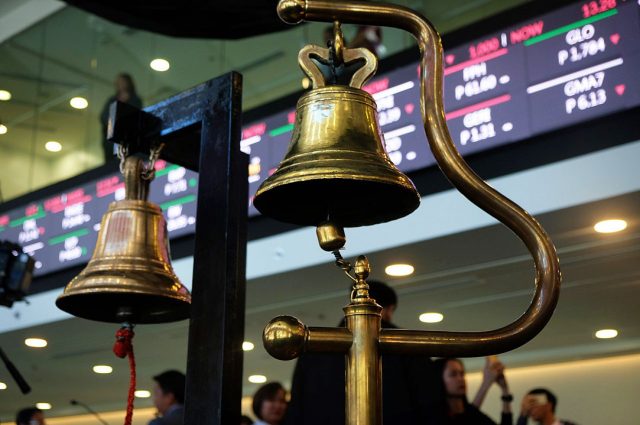
PHILIPPINE SHARES could decline further this week as the market awaits developments on government efforts to negotiate the United States’ plan to impose a “reciprocal” tariff rate of 20% on our exports to the world’s largest economy starting next month.

On Friday, the Philippine Stock Exchange index (PSEi) inched down by 0.05% or 3.32 points to 6,459.88, while the broader all shares index rose by 0.07 point to 3,812.53.

Week on week, the PSEi rose by 1.01% or 64.31 points from the 6,395.57 finish on July 4.

“Global markets were rattled… by US President Donald J. Trump’s ‘Tariff Tuesday,’ which included a proposed 20% tariff on Philippine goods,” online brokerage 2TradeAsia.com said in a market note.

“The local market managed to post gains and make technical progress last week. However, the last two trading days showed that tariff threats present downside risks to the bourse,” Philstocks Financial Inc. Research Manager Japhet Louis O. Tantiangco said in a Viber message.

For this week, Mr. Tantiangco said tariff concerns will remain in focus.

“The US’ planned 20% tariffs against the Philippines is still expected to weigh on sentiment. Hence, investors are expected to watch out for clues on the Philippines’ trade negotiations with the US. Signs of progress may help lift the local market. But lack of positive trade talk developments may pull the market lower,” he said.

On Friday, Foreign Affairs Secretary Ma. Theresa P. Lazaro confirmed that President Ferdinand R. Marcos, Jr. will visit Washington from July 20-22 to meet with Mr. Trump to discuss several issues, including the tariff rate.

“Investors may also watch out for our overseas Filipino workers’ cash remittance data next week for clues on the local economy,” Mr. Tantiangco added.

He placed the PSEi’s major support at 6,400 and major resistance at 6,600.

“Chart-wise, the local market is now trading above its 200-day exponential moving average (EMA), which is taken as a positive sign. The moving average convergence divergence line is so far moving upwards above the signal line, reflecting short-run bullish momentum,” he said.

“With the lingering global trade risks, however, the market may still test its 200-day EMA this week. How the market defends its position above the 200-day EMA could play a significant factor on what its direction is going to be moving forward.”

Rizal Commercial Banking Corp. Chief Economist Michael L. Ricafort said in an e-mail that the PSEi’s immediate support is 6,330-6,370 and immediate resistance is 6,500.

“The markets are still on a wait-and-see mode if Mr. Trump would be willing to compromise and settle for lower negotiated tariffs during the trade negotiations,” Mr. Ricafort said.

2TradeAsia.com put the PSEi’s immediate support at 6,300 and resistance at 6,500-6,550. — Revin Mikhael D. Ochave

Diversified trade ties urged in face of Trump tariff letdown

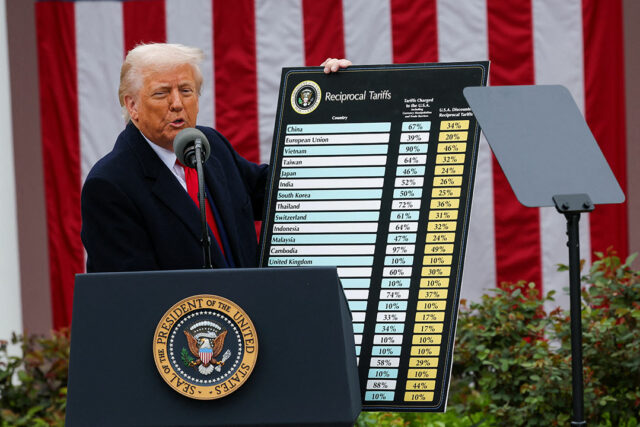
US PRESIDENT Donald Trump delivers remarks on tariffs in the Rose Garden at the White House in Washington, DC, April 2, 2025. — REUTERS

By Chloe Mari A. Hufana, Reporter

THE PHILIPPINES should expand its trade relations with ASEAN, China, and the European Union (EU) in response to the 20% tariff imposed by the US, regardless of the outcome of President Ferdinand R. Marcos, Jr.’s visit to Washington next week, an academic said.

Josue Raphael J. Cortez, who lectures on diplomacy at the College of St. Benilde, said the Philippines needs to prepare to trade with alternative partners if negotiations with the US falter.

The new tariff is higher than the 17% rate initially assigned to the Philippines in early April.

“Should ASEAN members fail to achieve their aim to lower the tariffs, bolstering trade ties with their neighbors would be the way to go,” he said via Messenger chat. “It is high time that the bloc members strengthen their trading with one another because trade has been stagnant for the longest time at roughly 20-30%.”

Philippine exporters are not expected to be competitive at the 20% tariff, while the narrower differential relative to export competitors also weakens the case for relocating factories here.

Ahead of the Washington meeting, Mr. Cortez said Manila must prepare fallback options if talks fail to result in a tariff rollback.

China remains the Philippines’ largest trading partner, with the US coming in third, but the territorial dispute with Beijing complicates the prospect of deeper cooperation.

“Further deepening our economic ties with it can be a boon or a bane for us,” Mr. Cortez said.

The South China Sea remains a source of friction with China, with ties between Beijing and Manila at their worst in years in the face of frequent ship-to-ship confrontations in the Philippine exclusive economic zone.

The tariff uncertainty highlights the urgency of bringing ASEAN economies deeper into their integration project.

“It is high time that ASEAN members once again strengthen trading with one another, especially if they fail to achieve their aim of lowering tariffs with external partners,” Mr. Cortez said.

President Donald J. Trump imposed fresh tariffs on key members of the 10-nation bloc, with Vietnam managing to lower its rate to 20% from 46% in April.

Mr. Cortez also pointed to the EU as a potential alternative economic partner should negotiations with the US turn sour. The EU is the Philippines’ fourth-largest trading partner and a major source of foreign direct investment.

“Given that we are aligned with it both politically and economically, it will also be a good opportunity for us to further solidify our relationship,” he added.

Successful negotiations with Washington this month would bolster Mr. Marcos’ diplomatic standing ahead of his State of the Nation Address later this month, according to Mr. Cortez.

“It will not simply show how influential he is as the chief architect of Philippine foreign policy. It may also reflect his regime’s commitment to international norms and standards,” he said.

A successful negotiation with Washington may signal that Manila is a viable partner for open markets, willing to adjust and adapt to changing times, he noted.

“Despite nuanced views, with some arguing that we are heavily reliant on Washington, we still ascertain as a country that should we find something debilitating to our interests, we will not hesitate to utilize all the possible means for us to renegotiate something for ourselves,” he added.

According to a Reuters report last week, Foreign Affairs Secretary Ma. Theresa P. Lazaro confirmed the first meeting between the two presidents.

Ms. Lazaro told Reuters the fresh tariffs will be discussed, among others, with a Philippine delegation bound for Washington this week to negotiate.

A White House official earlier told Reuters the meeting was set for July 22. Philippine officials have announced the dates for the Marcos visit as July 20-22.

The US goods trade deficit with the Philippines widened to $4.9 billion in 2024, a 21.8% increase from 2023.

SEC affirms ‘deemed approved’ status of applications if processing timelines missed

BW FILE PHOTO

THE Securities and Exchange Commission (SEC) said it affirmed the “deemed approved” status of applications if the commission misses the processing timelines set for such transactions.

In Memorandum Circular (MC) No. 7, issued on July 10, the SEC said in the absence of written notice of delay or deficiency, pending applications or requests for a license, permit, certification, accreditation, or authorization will be considered approved if the commission fails to act within the prescribed period.

“This is provided that all required documents were submitted based on the appropriate provided checklist for the transaction,” according to the MC.

The SEC’s citizen’s charter sets a timeline of three working days for simple transactions or routine applications involving minimal discretion. Complex transactions or those that need evaluation or coordination have a processing deadline of seven working days. 

Transactions deemed “highly technical” or those that involve financial or legal review or multiple clearances should be processed within 20 working days.

Applications governed by a special law should be processed within the timeline specified in the law.

The citizen’s charter conforms to the timelines set in the Ease of Doing Business Act or Republic Act No. 11032.

“The processing time shall be reckoned from the submission of complete documentary requirements,” according to the MC.

“All departments and offices of the commission shall ensure that processes and requirements are necessary, consistent, and simplified,” the SEC said.

“Piecemeal document requests and comments shall not be tolerated, and every action shall be in line with the commitment to both compliance and convenience for stakeholders,” it added.

Earlier this month, President Ferdinand R. Marcos, Jr. directed the SEC to streamline its procedures, remove bureaucratic bottlenecks, and reduce transaction costs within its control to support the implementation of the Capital Markets Efficiency Promotion Act.

One of the law’s provisions is the reduction of the stock transaction tax to 0.1% from the previous 0.6% to boost stock market activity. — Revin Mikhael D. Ochave

GOCC subsidies down nearly 19% in May

PSALM

SUBSIDIES provided to government-owned and -controlled corporations (GOCCs) fell 18.73% year on year in May to P7.92 billion, the Bureau of the Treasury (BTr) said.

The Treasury reported that month on month, May subsidies dropped 45.57% from April.

The National Government (NG) extends subsidies to GOCCs to help fund operational expenses not covered by their revenue.

In May, the National Irrigation Administration (NIA) topped the subsidy list with P3.54 billion or 44.72% of the total.

The National Electrification Administration received P1.25 billion and National Food Authority (NFA) P750 million.

The Philippine Fisheries Development Authority was granted P724 million in subsidies in May. It did not receive subsidies in the previous month.

State-run firms on the subsidy list included the Philippine Heart Center (P385 million), the Sugar Regulatory Administration (P208 million), the Philippine Coconut Authority (P170 million), the Philippine Rice Research Institute (P133 million), the National Kidney and Transplant Institute (P124 million), and the Philippine Children’s Medical Center (P120 million).

Other GOCCs obtaining subsidies exceeding P50 million include the Development Academy of the Philippines (P77 million), the Light Rail Transit Authority (P74 million), the Cultural Center of the Philippines (P60 million), the Lung Center of the Philippines (P59 million), the National Dairy Authority (P58 million), the Philippine Institute for Development Studies (P44 million), the Center for International Trade Expositions and Missions (P27 million) and the Philippine Institute of Traditional and Alternative Health Care (P20 million).

Those receiving less than P20 million were the People’s Television Network, Inc. (P18 million), the Metropolitan Waterworks and Sewerage System (P14 million), the Aurora Pacific Economic Zone and Freeport Authority (P10 million), the Philippine Tax Academy (P10 million), the Philippine Center for Economic Development (P9 million), and the Subic Bay Metropolitan Authority (P8 million).

The Southern Philippines Development Authority, The Tourism Infrastructure & Enterprise Zone Authority, and the Zamboanga City Special Economic Zone Authority all received P7 million in May. 

Receiving no subsidies were the Land Bank of the Philippines, the Small Business Corp., the National Housing Authority, the National Power Corp., the Philippine National Railways, the Bases Conversion Development Authority, the Intercontinental Broadcasting Corp.-13, the Philippine Crop Insurance Corp., the Power Sector Assets and Liabilities Management Corp. (PSALM), and the Tourism Promotions Board.

“This could be part of the fiscal reform measures to (limit) subsidies to GOCCs (to) priority and mission-critical items for economic growth and development,” Rizal Commercial Banking Corp. Chief Economist Michael L. Ricafort said over the weekend.

In order to plug the budget deficit, profitable state-run firms with surpluses have been requested to remit more dividends, he said.

As of May 15, the Department of Finance had collected P76 billion in GOCC dividends.

In the first five months, the budget deficit widened 29.41% year on year to P523.9 billion, as the government accelerated spending on infrastructure and social programs.

In the first five months, GOCC subsidies hit P45.05 billion, down 21.03% from a year earlier.

The NIA was the top recipient in the five months with P15.34 billion. This was followed by PSALM (P8 billion) and the NFA (P3.75 billion).

In a separate report, PIDS, the government think tank, urged the government to repurpose the NIA’s idle irrigation water rights for broader public use, including household supply and other municipal needs.

PIDS reported that more than 1.3 million liters per second of irrigation water, intended for farmland — now goes largely unused as many agricultural areas have been converted into residential and commercial communities. — Aubrey Rose A. Inosante

BIR, LANDBANK offer easier foreign DSP VAT payments

REUTERS

THE Bureau of Internal Revenue (BIR) and the Land Bank of the Philippines (LANDBANK) said they signed an agreement to streamline the payment of value-added tax (VAT) by foreign digital service providers (DSPs).

“This Memorandum of Agreement (MoA) outlines the agreement between two government agencies to collaborate in the collection of Value-Added Tax on Digital Services (VDS) through a dedicated portal,” the BIR said in a statement over the weekend.

The MoA was signed on July 8.

The BIR previously extended the registration of all non-resident digital service providers to July 1 due to the unavailability of the VDS portal and the online registration and update system.

President Ferdinand R. Marcos, Jr. signed the law imposing VAT on DSPs in October.

“LANDBANK will serve as the solution provider for the VDS portal to establish a platform where foreign DSPs can file and pay their VAT,” the BIR said.

As of the end of May, BIR collections rose 13.8% to P1.35 trillion.

The Department of Finance has said that the government will generate P102.12 billion in revenue from the VAT on DSPs between 2025 and 2028. — Aubrey Rose A. Inosante

Farmers wary of tariff concessions to US

REUTERS

By Kyle Aristophere T. Atienza, Reporter

FARMERS said any tariff concessions extended to the US on agricultural goods will favor “privileged importers” while harming workers and the environment.

“We reject any response that leads to a race to the bottom — slashing tariffs on key agricultural commodities, weakening labor protections, or compromising environmental standards,” Samahang Industriya ng Agrikultura spokesman Jayson H. Cainglet said via Viber.

“Trade policy must be shaped by the national interest, not by external pressure or short-term market gains of a few privileged importers,” it said.

Philippine officials are set to fly to the US this week for negotiations to convince President Donald J. Trump not to impose a 20% tariff on imports from the Philippine exports starting Aug. 1.

Secretary Frederick Go, the President’s adviser on investment, said last week that  the Philippines is pursuing a bilateral deal with the US, up to and including a free trade agreement.

Mr. Cainglet noted that negotiators from the Philippines have failed to consult farmers.

“We strongly caution against rushing into such a deal without considering its broader implications for our domestic economy,” he said.

The proposed 20% US tariff rate for Philippine goods was higher than the 17% rate announced by Mr. Trump in April.

At that time, the Department of Agriculture (DA) said it was diversifying the markets for its agriculture exports in preparation for higher US tariffs.

In a July 7 statement, the DA noted that “international market access is expanding” for Philippine farm goods.

“Durian, mangoes, and avocados have secured new export approvals, while tamban (a type of sardine) has been officially recognized by the EU Codex, paving the way for broader sardine exports.”

The Philippines charges a 34% tariff on US goods. Its trade surplus with US amounted to $4.9 billion in 2024.

Mr. Cainglet said Philippine exports that will be affected the most by the new US tariff rate are semi-processed goods like coconut oil, desiccated coconut, canned pineapple, and coconut water.

The Philippine Coconut Authority (PCA) said in a statement on Sunday that it met on July 8 with chief executives of leading coconut processing firms, who “stressed the importance of continued negotiations with the US to reduce tariff barriers.”

“Major processors pledged to back PCA’s replanting initiatives, assuring international buyers that the Philippines can maintain a stable supply of high-quality coconut products,” it said.

While global demand for coconut products “continues to grow,” climate change and international trade regulations “present new challenges for producers,” it added.

“A unified strategy is key to protect farmer livelihoods and maintain the country’s dominant market position.”

Mr. Cainglet urged the government to prioritize the welfare of producers over that of importers and traders in its negotiations with the US.

“The US tariff should be viewed as a signal of how the US is protecting its own farmers, manufacturers, and domestic markets,” he said.

“Tariffs, when used strategically, can serve as essential tools to support local agricultural production, promote industrial growth, protect jobs, and preserve rural livelihoods.”

PCCI calls for sanctions on spot market defaulters

BW FILE PHOTO

THE Philippine Chamber of Commerce and Industry (PCCI) is calling on the Energy Regulatory Commission (ERC) and the Independent Electricity Market Operator of the Philippines (IEMOP) to hold to account parties defaulting on spot market transactions.

According to the business group, the costs resulting from Wholesale Electricity Spot Market (WESM) members defaulting on payments are being passed on to consumers through higher electricity prices while imposing burdens on compliant participants.

“These defaults distort market signals and expose law-abiding market players to significant financial risk,” it said.

“Imposing the burden on compliant WESM members effectively penalizes those who fulfill their financial obligations while relieving delinquent members of their responsibility,” it added.

Citing WESM rules, the PCCI said IEMOP has the authority to suspend and deregister defaulting members if their financial obligations remain unfulfilled after receiving default and suspension notices.

“IEMOP should implement a policy framework that ensures defaulters are held accountable and that compliant members are protected from bearing the cost of others’ failures,” PCCI said.

The group also pushed for greater transparency in billing systems of retail electricity suppliers (RES), particularly on WESM-related charges for contestable consumers.

“The group proposed that electricity bills issued by RES providers clearly itemize WESM charges — including energy transactions, line rentals, feed-in tariff components, and net settlement surplus allocations,” the PCCI said.

“This would provide contestable customers — now encompassing a wider base under the expanded Retail Competition and Open Access (RCOA) — with a better understanding of how charges are computed,” it added.

According to the group, the transparency will help contestable customers make informed decisions while promoting greater competition within the energy sector.

“As the energy market continues to evolve … fair enforcement of rules and transparent billing practices are essential to building a more accountable and efficient power sector that benefits both suppliers and consumers,” it added. — Justine Irish D. Tabile

ADVERTISEMENT
ADVERTISEMENT