Home Blog Page 1282

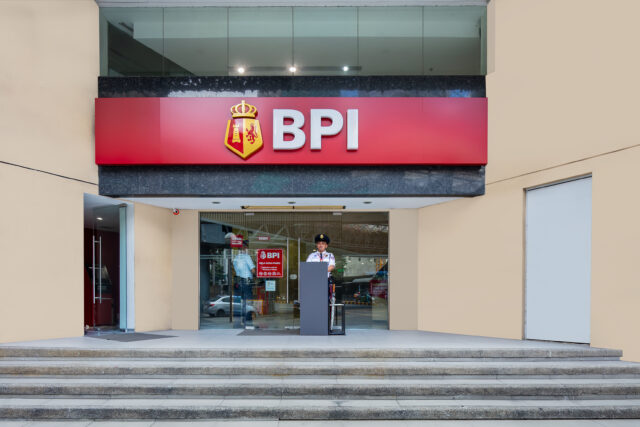
BPI starts offering of 5-, 10-year dollar bonds

BANK of the Philippine Islands (BPI) on Thursday kicked off its offering of dual-tenor dollar-denominated bonds from which it is looking to raise at least $300 million.

The bank is offering five- and 10-year Regulation S senior unsecured fixed-rate notes, it said in a disclosure to the stock exchange.

“The notes will be issued via one or more drawdowns under BPI’s $3-billion medium-term note program and will be listed on the Singapore Exchange Securities Trading Ltd. (SGX-ST). Pricing of the notes is expected within the day,” it said.

BPI will settle and list the bonds on the SGX-ST on April 7.

The five-year bonds are targeted to be priced at 130 basis points (bps) above the five-year US Treasury yield, while the initial price guidance for the 10-year notes is at 115 bps above the rate of the corresponding US Treasury benchmark.

Proceeds from the issuance will be used “for refinancing and general corporate purposes,” the bank said.

BPI earlier said it is looking to raise at least $300 million via the offer. The offering comes after the bank held a series of meetings with fixed income investors on Wednesday.

The bonds will be sold at a minimum investment amount of $200,000 and in denominations of $1,000 thereafter.

BPI Capital Corp. is the sole global coordinator for the issue. It is also part of the joint bookrunners for the transaction, along with BofA Securities, Inc., The Hongkong and Shanghai Banking Corp. Ltd., JPMorgan Chase & Co., and UBS AG.

BPI tapped SyCip Salazar Hernandez & Gatmaitan as its legal adviser as to Philippine law, while the joint bookrunners’ counsel is Romulo Mabanta Buenaventura Sayoc & de los Angeles.

Meanwhile, Milbank (Hong Kong) LLP is the legal adviser of the joint bookrunners for English law.

S&P Global Ratings on Wednesday assigned a “BBB+” long-term issue rating to the bond offer, which is in line with BPI’s issuer rating.

BPI last issued dollar bonds in March 2024, which marked its return to the offshore market after five years. The bank raised $400 million from an offering of senior unsecured five-year notes, higher than the initial $300-million plan, as tenders reached $1.3 billion.

The Regulation S bonds were also issued out of BPI’s medium-term note program and were priced at 5.25%. They were likewise listed on the SGX-ST.

BPI’s attributable net income rose by 20.04% to a record P62.05 billion last year from P51.69 billion in 2023 as increases in both its net interest and non-interest income led to double-digit revenue growth.

The bank’s shares went down by 30 centavos or 0.22% to close at P134.50 apiece on Thursday. — Aaron Michael C. Sy

Araneta group taps MPower for power supply

Present during the ceremonial signing recently held at the ibis Styles Araneta City were (L-R) MPower Head of Commercial Operations Ray Fabros, MPower Senior Assistant Vice-President and Retail Sales Head Eddie John Adug, MPower First Vice-President and Head Redel M. Domingo, Novotel and ibis Styles Manila Cluster General Manager Maria Manlulu-Garcia, ACI, Inc. Senior Vice-President of Operations Antonio Mardo, and ACI, Inc. Senior Vice-President of Business Development John Castelo.

MPOWER, the local retail electricity supplier of Manila Electric Co. (Meralco), has entered into a new retail power agreement with the Araneta group to supply electricity to its newest hotel.

In a media release on Thursday, MPower said it has renewed its contract with ACI, Inc. to power its buildings in Quezon City and cover the power requirements of ibis Styles Manila.

ACI is the corporate unit that owns and manages Araneta City, a mixed-use development with retail, entertainment, residential, and office spaces, while Araneta Hotels focuses on developing and managing hospitality ventures within the district.

“The Araneta group is committed to excellent customer service and operational efficiency. Our long-time partnership with MPower secures a reliable energy supply across our multiple properties, allowing us to deliver the highest level of service to our guests,” said Maria Manlulu-Garcia, general manager of Novotel & ibis Styles Manila. 

ACI has been a partner of MPower since the latter began operations in June 2013. In 2018, MPower was also tapped to supply electricity to Araneta Hotels, Inc.

“The enduring partnership and trust given to us in powering Araneta City inspire MPower to continuously explore new avenues for growth and innovation, ensuring we deliver even greater value to our partners,” said Meralco First Vice-President and MPower Head Redel M. Domingo. 

Under the Competitive Retail Electricity Market (CREM), qualified power customers consuming at least 500 kilowatts are allowed to choose their energy supplier based on their specific requirements.

MPower recently entered into retail supply agreements with Megasoft Hygienic Products, Inc., Mega Land Prime Estate Corp., SM Retail, Inc., and ABS-CBN Corp. to support the power needs of their facilities.

The company serves contestable customers, including top corporations within Meralco’s franchise area. It holds more than a 25% share of the CREM within Meralco’s franchise area.

Meralco’s controlling stakeholder, Beacon Electric Asset Holdings, Inc., is partly owned by PLDT Inc.

Hastings Holdings, Inc., a unit of PLDT Beneficial Trust Fund subsidiary MediaQuest Holdings, Inc., has an interest in BusinessWorld through the Philippine Star Group, which it controls. — Sheldeen Joy Talavera

Facets of a woman the focus of Project Headshot photo exhibit

RFLXN photos and videos on Project Headshot Clinic’s page on Instagram. — INSTAGRAM.COM/HEADSHOTCLINIC

INNER STRENGTH, vulnerability, and versatility are the aspects of women that people must see, said Filipina leaders at the launch of a photo exhibit commemorating International Women’s Month.

Project Headshot Clinic organized the shoot that showcases the faces of over 20 different women, each with their own successful business or advocacy. The exhibit, titled RFLXN: The Many Faces of a Woman, was launched on March 26 at the Shangri-La Mall in Mandaluyong City.

The event also marked Project Headshot Clinic’s 18th anniversary as a digital platform that utilizes thematic headshots to further advocacies.

Niccolo Cosme, its founder and creative director, told BusinessWorld that the theme was inspired by the different facets of a woman.

“I really believe that each facet should be celebrated,” he said. “When we were shooting it, I was directing it in such a way that was empowering for them, telling them to appreciate their own beauty, their strength, their courage. Most of them said it was therapeutic at some point, and very reflective, hence the title of the show.”

The photoshoot utilized a mirror installation designed and built by Mykefrancis Oropesa Mayores, in collaboration with DHB Glasses and Mirrors.

Mr. Cosme noted that the hazy effect of the photos was not due to a digital filter, but an acetate placed on the lens to mimic haze.

“It’s not Photoshopped at all. I wanted to veer away from our usually highly digital work, and stay true to the photography itself. I made sure the experience the women had during the shoot was special and intimate, in a confined space surrounded by black walls,” he said.

The photographs on display at the East Wing Atrium of Shangri-La Mall have a QR code next to them, where mallgoers can access videos with music to get a full glimpse of the women in motion.

Most importantly, the QR code also links to the advocacies of the women.

Bea Rose Santiago, who was Miss International 2013, said at the launch that she carried not just the mantle of a beauty queen, but is a kidney failure survivor.

“We celebrate every version of us. As a beauty queen, I once stood on stage with a crown, but life had other plans. I faced kidney failure, a battle that tested my spirit and self-worth. Now, I’m celebrating the third year of my kidney anniversary, a living testament of resilience, second chances, and the power of a woman who refuses to give up,” she said.

Pinay Girlboss, the partner community of the exhibit, is an online platform that educates women on skills for personal and professional growth through courses and workshops.

“We want people to share the messaging that each of these faces are embodying,” said Marie Field Faith, Pinay Girlboss’ founder. “We even have Bai Rohaniza ‘Honey’ Sumndad-Usman, who is so brave to be teaching in conflict areas.”

Ms. Sumndad-Usman is not only a Maranao princess, but she also founded the Teach Peace Build Peace Movement in Mindanao. She said that empowering initiatives should not be confined to Women’s Month, with “many women in a never-ending battle all year long.”

Phoebe Fructuoso, another strong leader of an advocacy, also got her headshot for the exhibit. She founded PAVE Philippines (Promoting Awareness & Victors Empowerment), a non-profit organization dedicated to end rape culture and promote mental health awareness among gender-based violence survivors.

“The fight to end gender-based violence is on all of us. Every voice raised and every action taken brings us closer to a world where women no longer have to fight for safety and dignity,” she said.

Mr. Cosme told BusinessWorld that he is proud of the 18 years that Project Headshot Clinic has spent using photography to push important messages. The first campaign they did was for World AIDS Day back in 2008.

“During its inception, I wasn’t very sure what it was. All I knew was that I wanted to take pictures of people,” he explained. “I realized that it can’t be popular, or just about vanity or style. I felt like there has to be some sort of weight, some purpose. Now, we’re doing it for women.”

RFLXN: The Many Faces of a Woman runs at Shangri-La Mall’s East Wing Atrium until March 30. — Brontë H. Lacsamana

Seth Rogen’s The Studio makes Hollywood insiders of us all

By Esther Zuckerman

TV Review
The Studio
Apple TV+

FOR THOSE of us who spend our days thinking about movies (and the industry that makes them), there are plot lines in Apple TV+’s new series The Studio that can feel a little too real.

Take for instance the pilot: Matt Remick, played by Seth Rogen, a co-creator of the show, is appointed the head of the fictional Continental Studios. Matt is a corporate stooge who thinks of himself as a guy who loves the art of film, so when his boss (Bryan Cranston) demands he make a movie about the Kool-Aid man, Matt goes ahead and tries to recruit Martin Scorsese (who actually cameos) to direct. The plan fails spectacularly.

Matt’s attempt to have it both ways is disastrously funny, thanks to highbrow gags about Scorsese’s work and the sheer fun of watching an anxious Rogen get humiliated. It’s also painfully real: Art dies in the face of commerce, in this fictional Hollywood as well as in the real one.

Rogen co-directed every episode with his longtime creative partner, Evan Goldberg; they and their fellow writers, Peter Huyck, Alex Gregory, and Frida Perez, stylishly mine humor from the pain of the movie business. The question is: Will anyone outside the industry care? I’m biased, but I think so.

That’s because the creators have figured out a way to mix their satire with a snappy, broadly appealing energy centered around physical comedy and antic set pieces.

Yes, The Studio features a lot of in-the-know talk about the scoop-hungry Hollywood journalist Matt Belloni of Puck News, but it also has Rogen pratfalling, a ton of cursing and people getting way too high on mushrooms — you know, the kind of goofy stuff that’s been a staple of the star’s milieu for years.

As much as The Studio is about movies and the people who love and make them, it also understands that its medium is television. Unlike most shows these days, its structure is genuinely episodic. Each half-hour finds Matt getting himself into a new scrape, which keeps the action zipping right along and ensures no setup gets tired.

After pissing off Marty, Matt pivots to enraging director Sarah Polley (likewise playing herself) in the second episode, titled “The Oner.” Matt is on set to observe Polley direct what is supposed to be the bravura tracking shot at the end of her latest movie, which stars Greta Lee of Past Lives. Matt, a ball of nerves who mistakenly believes his filmmaking opinions matter, keeps messing everything up.

Cleverly, the entire episode is also shot in a “oner,” one continuous take executed beautifully by cinematographer Adam Newport-Berra. Newport-Berra’s work is key to the entire affair, giving it an intentionally retro ’70s vibe that evokes the days of Robert Evans even though the jokes are about artificial intelligence and Amazon takeovers. (The Studio wears its influences on its sleeve: Cranston’s chief executive officer, Griffin Mill, shares the same name as Tim Robbins’ character in Robert Altman’s The Player.)

Matt is surrounded by an eccentric group of fellow execs, including his bro-y buddy Sal (Ike Barinholtz), who only cares about the bottom line, and his acolyte Quinn (Chase Sui Wonders), who wishes she were working at a cooler place, like A24. Catherine O’Hara, meanwhile, is a dizzy delight as the executive Matt replaced, now bitterly working as a producer, and Kathryn Hahn barrels into scenes in an array of tacky, animal-print clothing as marketing guru Maya. 

Pretty much every episode features at least one major guest turn from a star playing a version of him or herself. (When Rebecca Hall shows up and isn’t playing Rebecca Hall, it’s genuinely disorienting.) The famous people who’ve joined Rogen and Goldberg’s circus include Olivia Wilde, Zac Efron, Anthony Mackie, Dave Franco, Ice Cube, and Zoë Kravitz. Kravitz’s performance in the finale is arguably the most fun of the bunch — she really lets loose.

All these appearances could feel lazy on the part of The Studio — and occasionally I did get distracted trying to figure out how each person is connected to the actual Rogen — but they go a long way to rooting this fictionalized Hollywood in reality. That’s because the show also cleverly features filmmakers who aren’t as recognizable, like Owen Kline, who made the critically acclaimed but little seen indie Funny Pages. He plays himself, flummoxed by the crass questions of the profit-obsessed businessmen.

The Studio has its hangups. It has to walk a fine line between being too inside-baseball and just knowing enough, and as a result its dialogue can sometimes feel a little obvious to, well, people like me. The characters overly explain terms their real life counterparts wouldn’t have to describe. And Matt is a little too hangdog, a little too likable, a little too much of a Seth Rogen type to be fully believable as the kind of exec who would rise through the ranks in this town. Anytime Matt shows a hint of braggadocio, it inevitably fades in the face of a new crisis, as Rogen’s character has to fight to extricate himself from the situation with his dignity intact. (His dignity is rarely spared.)

Although Matt’s principles are thin and he’s quick to cave to the demands of the market, you ultimately root for him. He does seem to have a nostalgic notion of the magic of the movies, even as he’s selling his soul to make IP slop. A studio exec worth cheering for? Now that’s a fantasy. — Bloomberg

Robinsons Offices tops off Cybergate Dumaguete

ROBINSONS OFFICES, the office development arm of Robinsons Land Corp. (RLC), topped off Cybergate Dumaguete, a premium office building integrated with a retail podium, on March 20. — BW FILE PHOTO

ROBINSONS OFFICES, the office development arm of Robinsons Land Corp. (RLC), topped off Cybergate Dumaguete, a premium office building integrated with a retail podium, on March 20. 

Robinsons Cybergate Dumaguete is a three-level office development atop a four-story retail podium, offering 7,200 square meters of gross leasable area (GLA). It is designed for high-density office operations, particularly business process outsourcing (BPO) firms. 

“Cybergate Dumaguete features thoughtfully planned office layouts, dual-entry lobbies for ease of access, and direct connectivity to Robinsons Dumaguete at the ground level, ensuring seamless integration between office and retail environments,” the company said in a statement on Thursday.

RLC noted that the building’s flexible, BPO-grade floor configurations optimize operational efficiency and support various tenant requirements.

The development incorporates sustainable features, including a variable refrigerant flow (VRF) air-conditioning system, energy-efficient LED lighting, and low-emissivity (Low-E) glass windows to reduce solar heat gain. It also includes a rainwater harvesting system for irrigation and toilet flushing, dual-piping infrastructure, and low-flow fixtures to enhance water conservation.

Tenants will have views of the Cuernos de Negros mountain range, including Mount Talinis. The building also features inclusive design elements such as spacious ramps and a 1:1 elevator-to-floor ratio for improved accessibility. 

A dedicated public transport terminal within the complex enhances connectivity across Negros Oriental and nearby provinces. The site is 15 minutes from Dumaguete-Sibulan Airport and accessible via ferry.

“Recognized as a ‘Next Wave City’ for BPO investments, Dumaguete is rapidly evolving into a service-oriented economy, offering tremendous potential for growth in a dynamic, well-supported environment,” RLC said. — Beatriz Marie D. Cruz

Philippine bond market contracts in Q4

BW FILE PHOTO

THE PHILIPPINE bond market contracted in the fourth quarter of 2024 due to a decline in issuances as the government front-loaded its borrowings, the Asian Development Bank (ADB) said in a report.

The ADB’s March 2024 Asia Bond Monitor report showed that outstanding local currency (LCY) bonds declined by 0.6% to $223 billion (P12.9 trillion) in the fourth quarter of 2024 versus the 3.8% growth in the prior three-month period.

The Philippine bond market was one out of just two markets out of the 10 making up the emerging East Asia region that posted quarter-on-quarter (q-o-q) contractions, with the other being Thailand (-0.1%).

Still, year on year, the country’s outstanding LCY bonds expanded by 7.5%.

“Contractions in the stock of government bonds and central bank securities dragged down the LCY bond market at the end of December. The decline was driven by reduced issuance from the government and the central bank during the quarter,” the ADB said.

“LCY bond issuance contracted in the fourth quarter on reduced issuance for all bond segments. Total LCY bond issuance fell 19.2% q-o-q to P2.4 trillion ($41 billion),” it added.

Meanwhile, year on year, LCY bond issuances grew by 3.8%, the report showed.

Outstanding Treasury and other government bonds slipped by 0.1% from the previous quarter to $187 billion, making up 83.5% of the total, while outstanding central bank securities went down by 11.7% to $14 billion.

“The issuance of Treasury and other government bonds declined 48.2% q-o-q due to the government’s reduced borrowing after meeting its financing needs in the prior quarters.

Meanwhile, outstanding corporate debt increased by 2.6% quarter on quarter to $23 billion (10.5% of the total) due to fewer maturities, the ADB said.

This came despite lower corporate bond issuances in the period.

“Total corporate bond issuance dropped 63.3% q-o-q in the fourth quarter largely due to the exceptionally high issuance volume in the previous quarter,” it added.

The ADB said the investor base of the Philippine bond market was among the least diverse in emerging East Asia at end-2024, with its debt stock mostly held by banks and investment houses and contractual savings institutions and tax-exempt institutions. 

“Foreign-currency-denominated sustainability bond instruments remained prevalent in the Philippines’ sustainable bond market in the fourth quarter of 2024,” it added. “By the end of December, sustainability bonds accounted for 83.2% of the market’s total sustainable debt stock, approximately 71% of which were denominated in a foreign currency.”

“At the end of Q4 2024, total outstanding sustainable bonds grew 4% q-o-q to $11.3 billion, with the public and private sectors each contributing a roughly equal share of the market.”

The report showed that the emerging East Asian LCY bond market grew by 3.1% quarter on quarter and 9.6% year on year to $26.31 trillion at end-December.

Vietnam posted the fastest quarterly and annual growth rate at 5% and 18.9%, respectively, although its bond market was the smallest in the region.

In terms of size, the People’s Republic of China had the largest LCY bond market at $21.25 trillion.

“This rapid expansion in Q4 2024 was primarily supported by continued issuance of government bonds in the People’s Republic of China, which were aimed at supporting the slowing economy. Increased public and private sector issuance in Hong Kong, China; the Republic of Korea; and Singapore also contributed to growth in the region’s overall LCY bond stock during the quarter,” the ADB said.

The multilateral lender said risks to financial conditions in the emerging East Asia region are tilted to the downside due to uncertainty stemming from the Trump administration’s shifting trade policies.

“Uncertainty in US economic policies could affect the financial conditions outlook via negative investor sentiment as well as higher-for-longer interest rates in the US. As flagged by officials of the Federal Reserve and the ECB (European Central Bank), changes in trade policies and associated rising tariffs could lead to higher costs, possibly disrupting disinflation patterns,” the ADB said.

“Additionally, larger-than-expected shifts in US immigration (more restrictive) and fiscal (more expansionary) policies could also potentially hinder the disinflationary process. Persistent inflation could slow easing cycles in advanced economies. The US’ prolonged higher interest rates presented challenges to regional financial stability during the review period via capital outflows. Delayed easing action in the US may affect regional central banks’ easing cycles, slowing the decline in borrowing costs and weighing on growth.”

Slowdown concerns in China could also weaken regional market sentiment, the ADB added. — A.M.C. Sy

Value of InstaPay, PESONet transactions rises to P3.45 trillion at end-February

STOCK PHOTO | Image by David Dvořáček from Unsplash

THE COMBINED VALUE of transactions done via InstaPay and PESONet jumped by 36% as of end-February, data from the Bangko Sentral ng Pilipinas (BSP) showed.

Transactions coursed through the two automated clearing houses climbed to P3.45 trillion as of end-February from P2.54 trillion in the same period in 2024.

The volume of transactions done via InstaPay and PESONet surged by 61% to 325.45 million in the same period from 202.1 million a year ago.

The value of transactions done through PESONet rose by 29.6% to P1.99 trillion at end-February from P1.53 trillion a year prior.

The volume of transactions likewise increased by 18.2% year on year to 18.7 million from 15.8 million.

Meanwhile, the value of InstaPay transactions stood at P1.46 trillion at end-February, higher by 45.8% from P1 trillion in the previous year.

The total volume of transactions that went through the payment gateway also jumped by 64.7% to 306.8 million from 186.3 million.

PESONet and InstaPay are automated clearing houses that were launched in December 2015 under the central bank’s National Retail Payment System framework.

PESONet caters to high-value transactions and may be considered as an electronic alternative to paper-based checks.

Meanwhile, InstaPay is a real-time, low-value electronic fund transfer facility for transactions up to P50,000 and is mostly used for remittances and e-commerce.

“The continued strong growth in InstaPay and PESONet transactions could reflect the continued strong growth in the country’s online business transactions,” Rizal Commercial Banking Corp. Chief Economist Michael L. Ricafort said.

“This may also reflect the increased use of e-wallets by Filipinos that are also interconnected with the banking system, electronically though InstaPay and PESONet.”

Latest central bank data showed digital payments made up 52.8% of the volume of retail transactions in 2023, higher than the 42.1% share in 2022.

In terms of value, 55.3% of retail transactions in 2023 were done online, higher than the 40.1% the year prior.

The BSP said the increase in digital payments was driven by wider use of online transaction channels among people and businesses, with the coronavirus pandemic accelerating the shift.

“More people may have found more value and convenience in using InstaPay and PESONet as alternatives to using checks and other over-the-counter banking transactions,” Mr. Ricafort said.

The faster growth in these online transactions could also reflect “increased financial literacy of Filipinos that also facilitated more investments and capital market transactions locally and also with the rest of the world.”

The central bank wants online payments to make up 60-70% of the country’s total retail transaction volume by 2028. — Luisa Maria Jacinta C. Jocson

Cebu Air income down 68% in 2024 on higher expenses

CEBUPACIFICAIR.COM

CEBU AIR, Inc., the operator of budget carrier Cebu Pacific, reported a net income of P2.64 billion for 2024, down 68.3% from P8.34 billion in 2023, as rising costs outpaced revenue growth. 

In its regulatory filing on Thursday, Cebu Air said total revenues grew 15.4% to P98.19 billion from P85.09 billion in 2023. 

Passenger revenue increased 13.5% to P65.15 billion from P57.4 billion, while cargo revenue rose to P5.54 billion. Ancillary revenue expanded to P27.51 billion from P23.69 billion. 

However, total expenses surged to P89.84 billion from P77.72 billion, weighing on profitability. 

“We have always been optimistic about the potential of Philippine aviation, driven by the country’s strong economic, geographic, and demographic advantages. Strategic investments in our fleet and hubs have been key to Cebu Pacific’s growth,” said Cebu Pacific Chief Financial Officer Mark Julius V. Cezar. 

In October 2024, Cebu Pacific finalized a P1.4-trillion ($24 billion) aircraft order with Airbus SE for up to 152 aircraft.

“By capitalizing on these opportunities early, we’ve positioned ourselves as leaders in both the domestic and international markets. This solid foundation gives us great confidence as we look ahead to 2025, where we anticipate continuing our rapid growth and improving both operational and financial performance,” Mr. Cezar said.

In 2024, Cebu Pacific carried 24.5 million passengers, an 18% increase from 2023, with a seat load factor of 84.4%.

The airline expanded its route network, securing a 54.1% share of the domestic market and 20.6% of the international market in 2024.

At the local bourse, shares in Cebu Air closed 45 centavos or 1.34% higher at P33.95 apiece. — Ashley Erika O. Jose

The rice farmers and their rice farms

PHILIPPINE STAR/KJ ROSALES

(Part 2)

“The Philippine Rice Industry Road Map – 2030,” published by the Department of Agriculture in 2018, includes a comparative analysis of rice farming productivity in the Philippines, Vietnam, and Thailand. The comparison was made on the basis of the relevant data from the more productive provinces in each country, as shown in the accompanying table.

The comparison clearly shows that the Philippine production cost per kilo of rice is higher. But at the same time, the rice produced expressed in tons per hectare is lower, particularly compared with Thailand where the rice production per hectare is double that of the Philippines. It is a double whammy for the Philippines: incurring higher cost but producing lower output.

The roadmap does not provide more details from which we can determine the factors of production causing the large comparison differences. These details are necessary when formulating Philippine public policy choices to improve the current dismal situation. However, it is safe to assume that one of the factors, if not the single one that makes the greatest impact, is the comparative average rice farm size.

THE SIZE OF FARMS
The average Philippine rice farm size at 1.4 hectares in 2018 — and which is probably even smaller today — is so small that it is more likely that the average farm size in the two other countries mentioned is larger than that of the Philippines. Size is a major factor in production. When scaled up, size or capacity produces higher productivity per unit of measure. Therefore, smaller farm size is a major factor in the much lower productivity that the Philippines derive from its rice farms.

There are two things that stand out from the information and analyses made in Parts 1 and 2 of this essay. One is the very small average size of our rice farms which, in my view, is a major factor that causes the very low productivity of our rice farms. And the other is the current miserable economic condition of most of our rice farmers, both the landowning farmers and non-landowning farmers, but especially the latter.

No matter what we do in trying to increase rice farming productivity, it will not result in a significant improvement if we do not endeavor to substantially increase the size of our farms. Try to picture it yourself — there is nothing much one can do to raise productivity in a piece of farmland measuring 1.4 hectares or less, whether farming is mechanized or not. In fact, by just increasing the farm size itself, and using the same method of production as before, it will already produce higher productivity. Such is a natural result of scaling up.

We can only increase the average rice farm size by removing the present legal limit in the ownership of farmland, which is presently five hectares per person. By removing this limit — or increasing it substantially — the marketplace will do the rest in increasing farm size. There will be buyers who see good profits in large-scale agriculture production because of economies of scale and its suitability to full mechanization, two factors which will certainly lead to much higher productivity. And there will be sellers when they see an attractive price, which increased demand usually produces. To make these buying and selling activities more vigorous, it is necessary that we also remove any present restrictions in the disposal of farmland acquired by the beneficiaries of the past land reform program.

There is nothing that prevents us from removing the present farm size limit or increasing it to a much larger size. Having gone through a land reform program, however imperfectly it was executed, we have duly performed our social obligation to our landless countrymen. I believe then that there is no longer any impediment in removing or increasing the farm size limit. We must absolutely do so if we want to improve our rice farming productivity to a high degree.

A BASIC INCOME
Let me now turn to the rice farmers, both landowners and non-landowners. As mentioned before, most of them have an annual income that is below the poverty threshold. They need help to escape from this pitiful condition.

This observation recalls my earlier commentary suggesting that the government adopt a program of providing poor Filipinos with a basic income. This program will cover all poor families whose annual income is within the poverty threshold. To be clear, the program coverage will include, in addition to the rice farmers, all other farmers, owning the farmland or not, and the urban poor. This program will replace the present 4Ps, the amount of which given per family is miniscule.

I realize that such a program is very controversial because some believe that the beneficiaries would tend to become lazy and would just spend part of the money in consuming alcohol and engaging in other vices. However, I recall from my readings that the reviews of similar programs adopted by some countries did not indicate a significant occurrence of such results. Moreover, the adoption of public policy must be dictated by the benefits it brings to the great majority and must not be deterred by the consideration of the anticipated bad behavior of the few.

The current poverty threshold for a family of five people has increased to P166,000 per year (rounded off this comes to P13,873 per month) as determined by the Philippine Statistics Authority (PSA) in 2023. For purposes of illustration, let’s get a fraction of that amount to be given as basic income to poor families. Say, P4,000 per month or P48,000 per year for each poor family. That translates to P144 billion per year based on the reported 3 million poor families in 2023 as similarly determined by the PSA. I believe that this total amount per year of P144 billion is affordable and therefore doable. Moreover, this total amount should decline as we move towards the future.

Nowadays, it should not be difficult to manage such a program as cash transfers can be done electronically and therefore quickly with minimum human intervention, reducing substantially the probable occurrence of corruption.

An important matter to consider is that such a total amount will be spent by the beneficiaries for basic consumption, such as food and clothing, which are locally produced using substantially local materials and employing local labor. Such consumption, taken alone by itself, will certainly add to economic growth.

In sum, removing or increasing substantially the present legal limit in the ownership of farmland will significantly increase productivity in the production of rice and other agricultural crops and produce.

Giving the Filipino poor a meaningful basic income does not result in a wasteful use of money. On the contrary, doing so helps the poor, especially the farmers, in improving their living conditions which, in turn, provides a contribution, in no small measure, to economic growth.

(See Part 1 here: https://tinyurl.com/2c7zn9dd)


Benjamin R. Punongbayan is the founder of Punongbayan & Araullo. Contact him at (ben.punongbayan@ph.gt.com).

Survey says: Most Pinoys are looking to get wet this summer

PHILIPPINE STAR/NOEL PABALATE

IT IS TIME to go swimming — which is something most people are looking forward to doing this summer, according to a survey. And summer is officially here, according to the Philippine Atmospheric, Geophysical and Astronomical Services Administration (PAGASA) on March 26.

“The shift of wind direction from northeasterly to easterly due to the establishment of the high pressure area (HPA) over the Northwestern Pacific signifies the termination of the Northeast Monsoon over most parts of the country and the start of the dry season,” said the weather bureau. “With this development, the day-to-day weather across the country will gradually become warmer, though isolated thunderstorms are also likely to occur,” said the statement.

And just as summer officially arrived, a national survey by public opinion firm WR Numero was released detailing what Filipinos are most excited to do this summer.

More than two in five Filipinos (44%) are eager to go swimming this summer, according to the survey, while one in three Filipinos reported that they prefer to stay at home amid the summer heat, opting instead to watch movies, listen to music, or read books.

Other preferred activities include learning a new life skill (13%), engaging in outdoor activities like hiking (12%), going to public places for leisure, entertainment, or learning (10%), traveling or going on vacation locally (8%), and playing sports (6%).

Foreign travel was attractive to 3% of respondents — 4.8% in Classes A, B, and C favored foreign travel as a summer escape, while 5% of Class D approved of this activity.

Learning new artistic hobbies like painting or playing a musical instrument placed the lowest on the list, as only 1.7% of respondents were interested across Classes A, B, C, and D.

Younger Filipinos prefer swimming this summer, with 48% of those 30 and below and 44% of those 31 to 59 looking forward to getting wet.

In contrast, 45% of Filipinos 60 and above prefer to stay home. Among other activities, 18% of seniors and 15% of those 31 to 59 are interested in learning new skills, while 15% of the youngest group prefer hiking.

Swimming is also the top summer activity across income groups, with 59% of Class A, B, C, and D, and 39% of Class E choosing the activity. The survey also shows Class E has the highest preference for staying home at 36%.

Summer activity preferences vary by region. In Luzon (outside the capital), 68% of Filipinos look forward to swimming, while 38% in the Visayas and 34% in Metro Manila prefer staying home. In Mindanao, preferences are split evenly, with 33% favoring both staying home and swimming.

The nationwide, non-commissioned survey, conducted from Feb. 10 to 18 this year, was done through face-to-face interviews with a nationally representative sample of 1,814 Filipinos aged 18 and older. The survey has a margin of error of ±2% at a 95% confidence level. At the subnational level, the margin of error is ±6% for the National Capital Region, ±5% for North and Central Luzon, ±5% for South Luzon, ±5% for the Visayas, and ±5% for Mindanao, all at the same 95% confidence level.

The complete Volume 2025 Issue 1 report is set to be released this March. The issue will feature the complete survey findings on the current state of public opinion on the upcoming 2025 general elections, the impeachment of Vice-President Sara Z. Duterte, and other issues concerning the nation and the world. — JLG

Bank of Makati eyes steady profit growth

BANKOFMAKATI.COM.PH

BANK OF MAKATI (A Savings Bank), Inc. looks to sustain its profit growth this year as it aims to channel funds to be freed up by the upcoming cut in reserve requirement ratios (RRR) to ramp up its lending, its top official said.

Bank of Makati President Luis M. Chua said their net income grew by about 20% year on year in 2024, meeting their target, even as they fell behind some of their loan segment goals.

“We would not disclose right now our exact target, but definitely it should be more than what we are getting in the previous years,” Mr. Chua told BusinessWorld on the sidelines of an event this month when asked about their profit outlook for this year.

Based on its balance sheet posted on its website, the bank’s return on equity was at 19.8% at end-2024, down from 19.14% at end-September 2024.

Return on assets rose to 8.11% from 7.82% in the same periods, while net interest margin declined to 19.73% from 22.1%.

The official said the bank aims to use the liquidity to be released via the Bangko Sentral ng Pilipinas’ (BSP) RRR cut to fund its loans.

“Thrift banks would always go for consumer loans… because they’re the most profitable,” Mr. Chua said.

The BSP will bring down the RRR of thrift lenders by 100 basis points (bps) to 0% effective March 28. The reserve ratio for universal and commercial banks and nonbank financial institutions with quasi-banking functions will also be cut by 200 bps to 5%, while that for digital banks will be slashed by 150 bps to 2.5%.

Rural and cooperative banks’ RRR has been at 0% since October, the last time the BSP cut reserve requirements.

The RRR is the portion of reserves that banks must hold onto to ensure they can meet liabilities in case of sudden withdrawals. Lower ratios mean they have more funds to lend to borrowers.

“We are optimistic about housing loans. Although I think some of the banks have already slowed down, but we are still optimistic about housing loans. Also, simply because our portfolio is still small,” Mr. Chua said.

“But for other consumer loans, particularly, we will be still strong with motorcycle loans as we have been leading in that particular area. All the rest will be typical loans,” he added.

About 70-80% of Bank of Makati’s loan portfolio is made up of motorcycle loans.

The thrift bank is also targeting to launch a digital banking app by mid-year to expand its reach, Mr. Chua said.

Bank of Makati’s gross loan portfolio grew to P39.81 billion at end-2024 from P36.57 billion at end-September, according to its balance sheet.

Its gross nonperforming loan (NPL) ratio improved to 13.77% at end-2024 from 14.89% at end-September. Its gross NPL coverage ratio, meanwhile, went down to 46.34% from 51.37%.

Bank of Makati had assets worth P53.38 billion at end-2024. — A.M.C. Sy

CloudStaff sets up operations in Davao’s Damosa IT Park

DAMOSALAND.COM

DAVAO-BASED property developer Damosa Land, Inc. (DLI) said Australian outsourcing firm CloudStaff will open an office at Damosa IT Park.

“CloudStaff’s entry into Damosa IT Park reinforces our vision of making Davao one of the top outsourcing hubs in the country,” DLI President Ricardo F. Lagdameo said in a statement on Thursday.

“More than just providing office spaces, we are enabling companies to operate in an environment that supports business growth, promotes employee well-being, and contributes to the city’s economic expansion,” he added.

Damosa IT Park, located along J. P. Laurel Avenue in Davao City, is the first Philippine Economic Zone Authority (PEZA)-accredited IT park in Southern Mindanao.

Designed to meet the needs of global IT-BPO firms, the park offers PEZA incentives, energy-efficient office spaces, and seamless connectivity, DLI said.

“The integration of modern workspaces, green areas, and accessibility to key commercial and residential hubs ensures that businesses operating in the park benefit from both operational efficiency and employee well-being,” it added.

CloudStaff said it chose Davao for its latest expansion due to its highly skilled workforce, cost-efficient operations, and business-friendly environment.

“We chose Davao as our 14th site in the Philippines because of its rich pool of highly skilled talent, its growing infrastructure, and the strong support from the local community,” said Miki Carbonel, global chief recruitment officer for CloudStaff.

Founded in 2005, CloudStaff initially focused on software development for Western firms.

It now employs 6,000 staff members and contractors across 17 offices worldwide, with operations in the Philippines, India, and Colombia.

DLI said it will continue developing world-class spaces that attract industry leaders and create opportunities for local talent, according to Mr. Lagdameo.

“With Damosa Land at the forefront of Mindanao’s real estate and business transformation, the company remains focused on attracting more global enterprises, creating high-value employment, and positioning Davao as a premier investment hub,” the developer said. — Beatriz Marie D. Cruz