Home Blog Page 1231

SEC hopes for Maynilad’s P49-B IPO by midyear

MAYNILAD WATER SERVICES, INC.

THE Securities and Exchange Commission (SEC) is hoping the P49-billion initial public offering (IPO) of Pangilinan-led Maynilad Water Services, Inc. will proceed by midyear.

“We’re hoping it really pushes through middle of the year,” SEC Commissioner McJill Bryant T. Fernandez told reporters last week.

“We’re waiting for the subsequent submissions in relation to their application,” he added.

Maynilad is targeting an offer period from June 25 to July 2, with a listing date on July 10, based on its latest prospectus dated March 14. The final offer price will be disclosed to regulators on June 24. The IPO will involve up to 2.46 billion common shares priced at a maximum of P20 each.

Despite tariff uncertainties, Maynilad Chairman Manuel V. Pangilinan said the company is pushing through with its market debut this year.

“We have to go public by the early part of 2027. We just want to probably finish and comply with the franchise law of Maynilad. I’d like to encourage them to proceed,” he said.

Maynilad’s legislative franchise requires it to publicly offer at least 30% of its outstanding capital stock by January 2027.

The Philippine Stock Exchange expects six IPOs this year, though only one listing has been completed so far — Cebu-based fuel retailer Top Line Business Development Corp. in April.

On the planned GCash IPO, Mr. Fernandez said the SEC has not had any formal or informal discussions with the mobile wallet platform or its underwriters. He noted that no IPO-related filings have been submitted to the commission.

“Formally or informally, we haven’t had any discussion with GCash,” he said.

Last month, Globe Telecom, Inc. signaled potential delays in GCash’s public listing, citing tariff-related uncertainties. Globe holds a 36% stake in Globe Fintech Innovations, Inc. (Mynt), which operates GCash through G-Xchange, Inc.

In March, the SEC approved a 15% initial public float for select companies seeking to go public through exemptive relief, subject to strict conditions. The move followed a request by GCash for regulatory relief from the 20% minimum public float requirement for IPOs.

Separately, Mr. Fernandez said the SEC is currently reviewing three companies under its strategic regulatory sandbox, established through SEC Memorandum Circular No. 9 issued in April last year.

The sandbox program aims to develop the Philippine financial market by allowing companies to test innovative products and services in a controlled live environment before full-scale adoption.

“We’re looking at three. We have a new one. We have approved the two. We’re just waiting for the respective platforms to be completed. They have to develop their information technology (IT) platform. We want to launch,” he said.

“These will be capital market- and IT-related. Online and capital market. For the third one, it is not approved yet. We raised questions on their proposal, but offhand, we’re favorably considering them, except that we have to refine,” he added.

Metro Pacific Investments Corp., which holds a majority stake in Maynilad, is one of three Philippine subsidiaries of Hong Kong-based First Pacific Co. Ltd., along with Philex Mining Corp. and PLDT Inc.

Hastings Holdings, Inc., a unit of PLDT Beneficial Trust Fund subsidiary MediaQuest Holdings, Inc., has an interest in BusinessWorld through the Philippine Star Group, which it controls. — Revin Mikhael D. Ochave


San Miguel Food and Beverage, Inc. to conduct virtual Annual Meeting of Stockholders on June 4

NOTICE OF ANNUAL MEETING OF STOCKHOLDERS 

June 4, 2025

The 2025 Annual Meeting of the Stockholders of San Miguel Food and Beverage, Inc. (the “Company”) will be held on June 4, 2025, Wednesday, at 2:00 p.m. As unanimously approved by the Board of Directors at its meeting on March 5, 2025, the Company will not hold a physical meeting. The meeting will be conducted virtually and streamed live through the Company’s website at https://www.smfb.com.ph/stockholdersmeeting_2025. Stockholders can therefore only attend the meeting by remote communication, by voting through the sending of ballots, or the appointment of a proxy.

The agenda of the meeting is as follows:

  1. Call to Order
  2. Certification of Notice and Quorum
  3. Approval of the Minutes of the 2024 Annual Stockholders’ Meeting
  4. Presentation of the Annual Report and Approval of the 2024 Audited Financial Statements
  5. Ratification of Acts and Proceedings of the Board of Directors and Corporate Officers
  6. Appointment of External Auditor and Ratification of External Auditor Fees
  7. Election of the Board of Directors
  8. Other Matters
  9. Adjournment

The Company’s Definitive Information Statement on SEC Form 20-IS with its annexes (the “DIS”), including Management’s Discussion and Analysis of Financial Position and Financial Performance, 2024 Audited Consolidated Financial Statements and interim unaudited financial statements for the first quarter of 2025, has been posted on the website and can be accessed via the QR code below. It may also be found at PSE Edge.

The rationale and explanation of each relevant Agenda item requiring shareholder approval may be found in Appendix 1 of the Notice attached to the DIS. The Company’s dividend policy, acts and resolutions of the Board of Directors from June 5, 2024, and draft of the minutes of the 2024 annual stockholders’ meeting for approval, may likewise be found in the DIS. The said draft of the minutes is also separately posted on the website at https://www.smfb.com.ph/disclosures. Questions and comments may be sent by email to smfbasm@sanmiguel.com.ph.

Votes will be cast through ballots or proxies, the deadline for submission of which is May 21, 2025.  A sample of a ballot/proxy is attached to the DIS and available for download at the website. For an individual, your ballot/proxy must be accompanied by a valid government-issued ID with a photo. For a corporation, your proxy must be accompanied by a Corporate Secretary’s certification setting the representative’s authority to represent the corporation in the meeting. Ballots and proxies may be sent through email at smfbasm@sanmiguel.com.ph or by mail to the office of SMC Stock Transfer Service Corporation (STSC) at the 2nd Floor, SMC Head Office Complex, 40 San Miguel Avenue, Mandaluyong City 1550. Proxies need not be notarized. Validation of proxies will be on May 28, 2025, 10:00 a.m. at the office of STSC. Only the stockholders attending through proxies or who have submitted ballots, all of whom have been validated to be stockholders of record of the Company as of May 5, 2025, will be considered in computing stockholder attendance at the meeting and in determining quorum.

The Company’s 2024 Annual Report on SEC Form 17-A is available for download at https://www.smfb.com.ph/disclosures, as well as at PSE Edge. Upon written request, the Company will provide the stockholder with a copy of the Annual Report, DIS, and/or 2025 first quarter report on SEC Form 17-Q, at no cost.

(Sgd.)  

Alexandra Victoria B. Trillana 

Corporate Secretary


Spotlight is BusinessWorld’s sponsored section that allows advertisers to amplify their brand and connect with BusinessWorld’s audience by publishing their stories on the BusinessWorld Web site. For more information, send an email to online@bworldonline.com.

Join us on Viber at https://bit.ly/3hv6bLA to get more updates and subscribe to BusinessWorld’s titles and get exclusive content through www.bworld-x.com.

Philippine Innovation Hub: Pioneering a new era of entrepreneurship

DPWH.GOV.PH

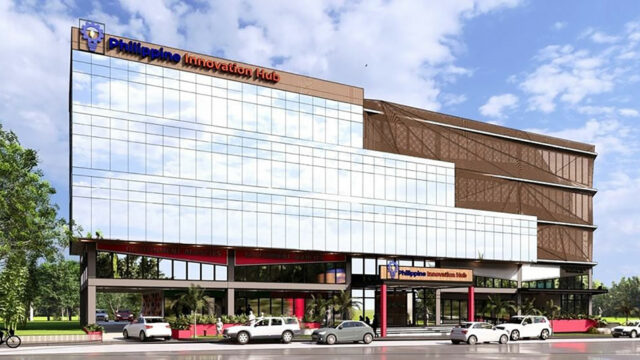
The Philippine Innovation Hub, known as iHub-MEC, marks a significant milestone in the country’s push to become a regional leader in innovation and entrepreneurship. Spearheaded by the Department of Trade and Industry (DTI) and National Development Co. (NDC) with the office of Marikina Rep. Stella Luz A. Quimbo, the groundbreaking facility in Marikina City is more than just a physical space; it’s a national catalyst for startup and MSME growth.

STRATEGIC INITIATIVE
iHub-MEC is aligned with key legislative efforts, such as the Innovative Startup Act (RA No. 11337) and Philippine Creative Industries Act (RA No. 11904). These policies reflect the government’s commitment to fostering innovation, supporting creative industries and positioning Filipino entrepreneurs to thrive globally.

The Innovative Startup Act established the Startup Venture Fund (SVF), empowering the government to co-invest in promising local startups. Meanwhile, the Philippine Creative Industries Act supports emerging sectors such as animation, multimedia and gaming — key focus areas of the Innovation Hub.

COMPREHENSIVE ECOSYSTEM
Beyond its infrastructure, iHub-MEC provides a robust suite of support services designed to bridge gaps in funding, market access and technology. The hub delivers incubation and acceleration programs tailored to the needs of startups and MSMEs, helping them build scalable, globally competitive businesses.

This ecosystem is designed to promote collaboration among entrepreneurs, government agencies, industry partners and academic institutions, creating a fertile ground for disruptive innovation that benefits both the public and private sectors.

FLOOR-BY-FLOOR FACILITIES
The five-story, 20,000 square-meter facility offers a variety of dedicated spaces for entrepreneurial development.

Ground floor — A dynamic venue for culinary and fashion startups, featuring an open kitchen for product testing and a showroom for Marikina’s iconic footwear and fashion products.

Second floor — A one-stop-shop for government services, streamlining regulatory processes. It also includes retail spaces where startups can pilot and test-market their products.

Third floor — A creative hub for the gaming, animation and multimedia industries, equipped with high-end tools to support digital content creation.

Fourth floor — A technology-driven floor catering to tech startups, offering access to high-performance computing and tools for advanced research and development.

Fifth floor — A networking and investment zone with meeting rooms and an auditorium for pitch sessions and investor engagement activities.

SIGNATURE PROGRAMS
To ensure comprehensive support, iHub-MEC delivers a variety of programs tailored to different stages of the entrepreneurial journey.

Inventive insights — provide foundational workshops and events in partnership with industry experts, focusing on actionable insights, innovation trends and strategic foresight.

Spark sessions — support early-stage entrepreneurs through design thinking, organizational development and interactive forums such as fireside chats and workshops.

Elevate up — aims to scale promising startups and MSMEs by forging partnerships with global organizations and academic institutions, preparing them for international expansion.

Capital carnival — connects startups to diverse funding sources including government agencies, private venture capital firms and the SVF, facilitating crucial financial support for scaling. This is also our corporate venture program.

Progressive startup development — engages private sector incubators and accelerators to deliver government-funded incubation and acceleration programs aligned with the hub’s strategic goals.

FUTURE OF INNOVATION
iHub-MEC is not merely a facility; it is a strategic platform to drive economic transformation. Its ultimate vision is to produce globally competitive startups that can elevate the Philippine innovation ecosystem to world-class standards. By providing shared services, fostering collaboration and supporting high-growth potential ventures, the hub seeks to replicate the success of global innovation centers in Southeast Asia and beyond.

The Philippine Innovation Hub aims to be the birthplace of transformative ideas, where Filipino founders turn vision into reality and innovation becomes a powerful force for national progress.


Jerahmeel Fandrall B. Chen is member of the NextGen Committee of the Management Association of the Philippines. He is the corporate executive officer of Philippine Innovation Hub and chief innovation officer of National Development Co.

map@map.org.ph

innovation@ndc.gov.ph

DragonFi pushes for better retirement plans for Filipinos

Sir Jon Bworld

By Revin Mikhael D. Ochave, Reporter

JON CARLO C. LIM

STOCK BROKERAGE DragonFi Securities, Inc. is working to improve retirement plans for Filipinos by encouraging the adoption of Personal Equity and Retirement Accounts (PERA).

“What we wanted to solve was the pension gap because only 20% of senior citizens are covered by the Social Security System (SSS) and Government Service Insurance System (GSIS), and the average monthly payout is P5,000,” DragonFi Co-Founder and Chief Executive Officer Jon Carlo C. Lim said in an interview with BusinessWorld.

“PERA solves multiple problems. It is the closest thing we have to a silver bullet. True economic democratization is retirement accounts because they create generational wealth,” he added.

DragonFi, launched in May 2023, is the stock brokerage arm of DoubleDragon Corp. (DD), an investment holding and real estate company.

PERA is a voluntary retirement savings program that supplements existing retirement benefits from the SSS, GSIS, and employer-sponsored plans. Created under Republic Act No. 9505 or the PERA Act, the program offers tax advantages that are not available through other retirement investment products, encouraging more Filipinos to save.

DragonFi became the first PERA administrator accredited by the Securities and Exchange Commission (SEC) in January. The company is preparing to launch its PERA offerings next month.

DragonFi’s accreditation followed the release of guidelines for the accreditation of PERA market participants in September of the previous year. As a PERA administrator, DragonFi will assist investors in opening, managing, and tracking their PERA accounts.

Mr. Lim noted that the benefits of PERA include a higher contribution limit and a 5% tax credit on contributions. He further explained that PERA enables tax-free growth, as all investment earnings and reinvestments are exempt from income taxes. Additionally, PERA funds are not subject to estate tax, as they do not form part of the estate in the event of the account holder’s death.

“We need to create an investing culture in the Philippines because Filipinos are not prepared for retirement. You have to incentivize that through tax benefits, and PERA achieves that,” Mr. Lim said.

“There’s no other investment vehicle more powerful than PERA because of its tax-advantage nature. But to drive mass adoption, you need to employ technology,” he added.

Mr. Lim, a graduate of the University of Chicago Booth School of Business, has over 20 years of experience in financial markets and has delivered above-benchmark returns through his investment strategies.

According to DragonFi’s website, a PERA investor could potentially earn P356,000 per year from dividends, assuming the investor contributes P50,000 annually to a PERA account for the next 30 years, earning an average dividend yield of 5% per year, with an annual capital appreciation of 3%.

With PERA, DragonFi said Filipinos could invest in a variety of financial products, including stocks, real estate investment trusts, and unit investment trust funds.

“It creates an investing culture, which drives liquidity and volume in the Philippine Stock Exchange, thereby strengthening our capital market. All associated elements of the capital market rise in tandem. That’s how you foster economic democratization,” Mr. Lim said.

Mr. Lim pointed to a growing demand for investment among Filipinos, citing other financial products such as the Home Development Mutual Fund’s (Pag-IBIG) Modified Pag-IBIG II (Pag-IBIG MP2) savings program.

“There’s clear evidence. Look at how many people invest in Pag-IBIG MP2. It’s sort of becoming the default investment. But PERA is even more powerful because the investor is already ahead by 15%, 20%, or 25% the moment they put it in PERA, as long as it’s part of the compensation package,” he said.

In February, DragonFi Co-Founder and DD Chairman Edgar “Injap” Sia II pledged a P10-million matching grant fund to encourage more Filipinos to invest in PERA.

The grant will support 2,000 Filipinos aged 18 to 35. Each participant who contributes the first P5,000 to their PERA account will receive an additional P5,000 in matching funds, effectively doubling their investment.

“We are building that ecosystem that will allow Filipinos to invest seamlessly, easily, and efficiently. I really want to be the go-to investment app for Filipinos,” Mr. Lim said.

“We want to create an investment culture, and the way to drive mass adoption is by using cutting-edge technology,” he added.

As of end-2024, accumulated contributions to PERA rose by 24% to P491.4 million, up from P396.3 million at the end of 2023, according to Bangko Sentral ng Pilipinas data.

PERA contributors also increased by 6.4%, reaching 5,912 as of end-2024, compared to 5,555 the previous year.

The majority, or 4,211, of the accumulated PERA contributions came from employee contributions, followed by contributions from overseas Filipino workers at 789, and self-employed contributions at 912.

BPI pioneers use of Retail Aggregation Program, powers branches with clean energy

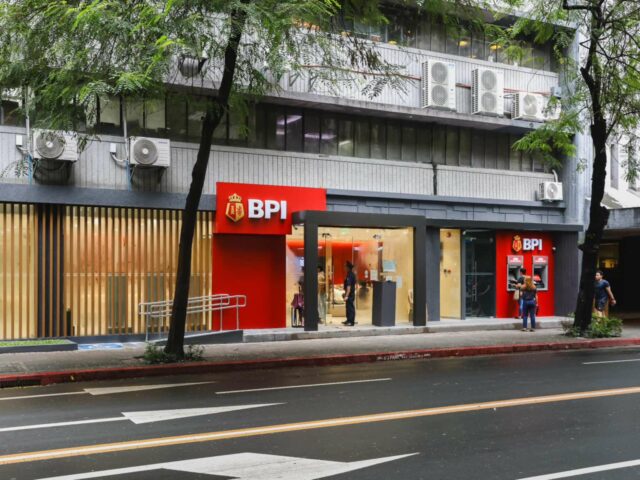
BPI’s Legazpi Salcedo Branch will be one of the 70 branches powered by renewable energy.

Reinforcing its position as a leader in sustainable banking, the Bank of the Philippine Islands (BPI) has become the first bank in the Philippines to adopt the Retail Aggregation Program (RAP), transitioning 70 of its branches to renewable energy through a strategic partnership with ACEN Renewable Energy Solutions (ACEN RES).

Spearheaded by the Department of Energy, the RAP enables multiple electricity end-users to combine their power requirements to reach the 500-kilowatt threshold needed to directly negotiate energy supply contracts with licensed retail electricity suppliers. The program fosters competitive pricing and gives businesses the flexibility to choose renewable energy sources.

“We are proud to mark another milestone for BPI as the first bank in the Philippines to access the Retail Aggregation Program. This initiative reinforces our long-standing commitment to sustainability and innovation, from being pioneers in sustainable financing as early as 2008 to securing EDGE certifications for our branches,” said Eric Luchangco, BPI Chief Finance Officer and Chief Sustainability Officer.

“Our partnership with ACEN RES, along with the support of key stakeholders, enables us to lead by example in the transition to renewable energy. This is not just a one-time achievement, but another step forward in our journey toward building a more sustainable and inclusive Philippines,” Luchangco added.

Measurable impact on sustainability

Further advancing its green operations, BPI will be shifting its Binondo Corporate Office in Manila to renewable energy through the Green Energy Option Program (GEOP)—a government initiative that allows end-users with a monthly average peak demand of at least 100 kW to source electricity exclusively from renewable sources. The Binondo office will be the fourth BPI corporate building to fully transition to clean energy, following BPI Buendia Center, BPI Consumer Center, and BPI Operations Center.

BPI’s adoption of RAP will cover approximately 263,000 kWh per month for 70 branches, while the Bank’s adoption of GEOP will supply around 110,000 kWh per month for the Binondo office. Combined, these programs are projected to reduce carbon emissions by 172.3 metric tons each month—on top of the 515 metric tons of carbon emissions reduced from 786,294 kWh per month already sourced from renewable energy by BPI’s three other green-powered offices.

Scaling up green operations

Looking ahead, BPI plans to expand its use of renewable energy across more branches and facilities, aiming to convert to renewable use all eligible sites under either the RAP or GEOP. This expansion is a key component of BPI’s roadmap toward fully sustainable operations, all in support of its mission to help build a better Philippines—one family, one community at a time.


Spotlight is BusinessWorld’s sponsored section that allows advertisers to amplify their brand and connect with BusinessWorld’s audience by publishing their stories on the BusinessWorld Web site. For more information, send an email to online@bworldonline.com.

Join us on Viber at https://bit.ly/3hv6bLA to get more updates and subscribe to BusinessWorld’s titles and get exclusive content through www.bworld-x.com.

Ben&Ben preps for world tour

FACEBOOK.COM/BENANDBENMUSIC

NINE-PIECE band Ben&Ben are set to kick off a global album tour this May and June, with shows in Cebu, Bacolod, and Davao — then off to Singapore and the US.

The Filipino folk pop group has amassed a total of 5.5 million listeners on Spotify.

Their tour is named after their latest album, The Traveller Across Dimensions. Following the Philippine leg, overseas shows will take place in Singapore and California later in the year. Other possible locations may be announced in the future.

“I think the reason we picked these places and cities to begin our tour is we are doing something very different production-wise. It’s not as easy to transport,” said Miguel Benjamin Guico (one of two of the lead vocalists and acoustic guitarists for the band), at a press conference in Mandaluyong on May 6.

“That’s why we’re conservative na lima lang muna tapos baka kapag may gustong dumagdag diyan (to start off with five then maybe if others want to join), then we’re welcome to add,” he explained.

The band is composed of Mr. Guico and his twin brother Paolo Benjamin (lead vocals, acoustic guitar), Poch Barretto (lead guitar, backing vocals), Jam Villanueva (drums), Agnes Reoma (bass), Andrew de Pano (percussion, backing vocals), Toni Muñoz (percussion, lead vocals), Keifer Cabugao (violin, vocals), and Patricia Lasaten (keyboard).

It was in December when Ben&Ben released the concept album alongside an immersive animated concert experience by Puppeteer Studios, centered on the fictional story of Liwanag. This character, and her journey through the three dimensions of Light, Energy, and Feel, will be returning for the world tour.

Their setlist will focus on tracks from Ben&Ben’s third album, mixed with some of their past hits. The Traveller Across Dimensions was released on Nov. 29, 2024, with “Could Be Something” and “Tomorrow with You” being fan favorites.

Written by the twin Guico brothers, all 12 songs are from the perspective of the Liwanag character, who relates her experiences in each of the Dimensions.

As for the band’s evolution, they expressed how they’ve also grown over the past eight years, just like Liwanag. Their latest work, including the single “Saranggola” released in April, features bolder electronic sounds.

“For this album, we wanted to try really embracing it and making it more obvious for some of the songs in this album,” said electric guitarist Mr. Barretto. “With the electronic sounds, we can still play it live and create the sounds. It still serves the song.”

For bassist Ms. Reoma, the key to the longevity of a band with nine members is communication. “What I like and what I am proud about our band is that when we have misunderstandings, we are able to do the work that needs to be done,” she said.

She pointed to one “Ben” (Miguel Benjamin), who tends to be the mediator in conflicts, which the other members agreed with.

“Over the years we have developed a dynamic, that the baseline is that we talk about it,” said the other “Ben,” Paolo Benjamin.

The Traveller Across Dimensions World Tour begins on May 24 at the Waterfront Cebu City Hotel & Casino in Cebu. Tickets, with prices ranging from P2,000 to P6,500, are now available via smtickets.com.

Ticket details for the June 8 show at the University of St. La Salle in Bacolod and the June 22 show at the SMX Convention Center in Davao have yet to be announced.

The two shows after that will be outside of the Philippines: at the Thunder Valley Casino Resort in Lincoln, California, USA, on July 12; and at the Arena@Expo in Singapore on Dec. 14. — Brontë H. Lacsamana

High power costs weigh on industrial sector growth

ÜMIT YILDIRIM-UNSPLASH

By Beatriz Marie D. Cruz, Reporter

PROPERTY consultants remain optimistic about the Philippines’ industrial sector growth this year amid the entry of high-value manufacturers, but caution that high power costs continue to pose significant risks.

“From 2020 to 2023, we have toured more than 20 Chinese companies from China, but only one proceeded to expand in the Philippines, while more than half went to Vietnam,” Jettson P. Yu, founder and chief executive officer at property consultancy firm PRIME Philippines, told BusinessWorld in an interview.

Mr. Yu said many of these companies abandoned expansion plans in the Philippines due to high electricity costs.

Republic Act No. 9136, or the Electric Power Industry Reform Act of 2001, aimed to privatize the country’s power sector and mandated the removal of cross-subsidies within and between grids and customer classes to reflect the true cost of power delivery.

To stimulate demand for industrial spaces, Mr. Yu urged the government to subsidize manufacturers’ power costs.

“The industrial sector is a sleeping giant that is about to be awakened only if we play our cards right,” he said.

PRIME Philippines estimates the country will require at least 50 million square meters (sq.m.) of industrial space by 2035 to meet rising demand from the manufacturing, logistics, and data center sectors. This projection was shared during the firm’s 2024 property market briefing in February.

Joey Roi Bondoc, director and head of research at Colliers Philippines, said high-value manufacturers in sectors such as electric vehicle (EV) batteries, steel, and tires are expanding in North, Central, and South Luzon.

“The profile of manufacturers there is really improving, attracting billions of dollars in capital and employing more Filipinos,” he said.

Mr. Bondoc highlighted Clark and Bulacan as potential pharmaceutical manufacturing hubs and described the EV sector as a “sunshine industry” for the Philippines.

However, he said the Philippines must enhance its competitiveness as an investment destination to attract manufacturers relocating from countries affected by higher US tariffs.

The United States imposed a 17% tariff rate on Philippine exports, significantly lower than the 32% to 49% tariffs levied on some Southeast Asian neighbors.

“A lot of government officials are saying that ‘Because higher tariffs are imposed on other manufacturing hubs across the region, the Philippines will likely attract them.’ But the question here is how immediate will we be able to attract all these foreign manufacturers?” Mr. Bondoc said in a phone call.

To create an enabling environment for foreign investors, Mr. Bondoc said the Philippines must improve ease of doing business, enhance infrastructure, develop its workforce, and offer better wages.

He added that the proposed Foreign Lease Investors Act, which seeks to extend land leases for foreigners to 99 years from the current 75 years, is expected to boost demand for industrial spaces. The measure was approved by Congress last year but is still awaiting the signature of President Ferdinand R. Marcos, Jr.

Between 2025 and 2027, approximately 400 hectares of new industrial space will be delivered in the Calamba, Laguna, and Batangas corridor, according to Colliers data.

Things are about to get complicated for the Fed

FREEPIK

By The Editors

For the Federal Reserve, the test posed by the global pandemic may soon seem easy compared with handling the current administration’s wildly fluctuating trade policy. The central bank wisely left short-term interest rates unchanged on Wednesday, saying it needs to see what happens next. The trouble is that greater clarity on the outlook for tariffs won’t resolve a rapidly approaching dilemma.

The Fed’s dual mandate is to secure low inflation and maximum employment. New tariffs, even if lower than the White House first threatened, might make it impossible to do both.

The decision to leave the policy rate at 4.25% to 4.5% was unanimous and widely expected. As Chair Jerome Powell explained, inflation has fallen to within sight of the central bank’s 2% target. With a jobless rate of 4.2%, the economy is close to “full employment.” As things stand, monetary policy is therefore about right.

But things are about to get a lot more complicated. For as long as it lasts, the uncertainty surrounding the administration’s tariff plans is a problem in itself. In all likelihood, it’s already causing companies to postpone investments and delay new hiring. It will worsen consumer anxieties about rising prices and a weakening economy. Even if the new trade barriers are lower than expected, it will compound their direct effects.

The problem for the Fed isn’t confined to judging exactly how these pressures will affect prices and employment, difficult as that will be. Worse is that the outlook will dictate contradictory responses. Tariffs will certainly raise prices at the outset; if this initial spike in inflation threatens to become persistent, the appropriate policy will be higher interest rates. But tariffs and related supply-side disturbances will also tend to suppress output and employment, in which case the appropriate policy is lower interest rates.

So what’s the Fed to do?

As Powell has suggested, it will have to assess which part of its dual mandate — stable prices or maximum employment — is more under threat. This is why the Fed sees stagflation as its worst nightmare: It might have to raise interest rates to restrain inflation even though unemployment is climbing, or lower them to avoid a recession even though inflation is going up. Whatever it does, its choices will be a focus of fierce political controversy. And as it tries to do this impossible job, it can expect to be heckled by a White House unwilling to trust its judgment.

Investors, calm for now, continue to think interest rates will be cut by roughly three-quarters of a point later this year. But if the risks to the dual mandate remain equally weighted, it might make sense to leave interest rates unchanged for longer, even as both inflation and unemployment move up. An unnerving prospect. The best way to avoid it is for the administration to wrap up its trade talks as quickly as possible, deem them an unqualified success, roll back its tariff threats and declare the subject closed.

Unlikely? No doubt — but one can hope.

BLOOMBERG OPINION

Data center power usage seen to grow by 28% to 89 MW

BW FILE PHOTO

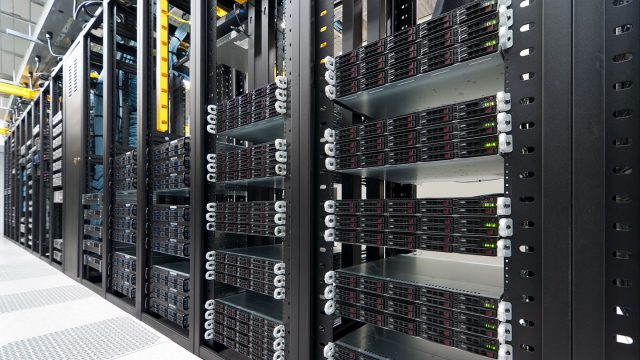
DATA CENTERS are expected to consume approximately 89 megawatts (MW) of electricity this year, driven by the growth of new facilities, according to the Data Center Association of the Philippines (DCAP).

“This year, we’re looking at growth in the capacity of utilization. Power usage in the data center is going to grow to 89 MW… That’s a 28% compound annual growth rate (CAGR). That’s good growth. With all the new data centers coming online, we’re growing to meet the future demand that is coming,” DCAP Co-Founder Steven Davis told BusinessWorld.

Last year, data centers used 68 MW of power.

Mr. Davis noted that power companies, such as Aboitiz Power Corp., Manila Electric Co. (Meralco), and First Gen Corp., are adapting to meet the needs of the data center industry.

“Power companies have done a great job adapting. They have established processes for how to apply for power at that level — how to provision it, execute it, and utilize it,” he said.

Data centers are critical facilities for companies with significant data processing and storage needs.

Currently, key players in the data center industry include PLDT Inc. and ST Telemedia Global Data Centres Philippines (STT GDC). PLDT, through VITRO Inc., operates 11 data centers, while STT GDC has seven.

DCAP is targeting a total data center capacity of 1 gigawatt (GW) by 2029, which is expected to require an estimated total investment of about $18 billion.

“As we grow and reach that goal of 1 GW, it’s going to be an $18-billion investment. We already have companies looking at 100 MW and 300 MW sites, which is fantastic,” Mr. Davis said.

“We are starting to gain attention because all the users are here. We’re starting to gain attention because the government is amenable. The power’s available. We have the space and property. Everything is heading in our direction, signaling that we could become the secondary digital infrastructure hub for Southeast Asia,” he added.

DCAP emphasized that the Philippines is set to emerge as a significant player in the global data center market, driven by “a combination of technological advancements, favorable economic conditions, and a rapidly growing digital economy.”

“For global operators, the Philippines offers a strategic location in Southeast Asia with growing demand for cloud services and an underserved market,” it said.

“By expanding into the country, operators tap into a rapidly growing digital economy, diversify their regional footprint, and benefit from competitive land and power costs,” it added. — Sheldeen Joy Talavera

Islamic banks given 3 years to set liquidity plans

BW FILE PHOTO

THE BANGKO SENTRAL ng Pilipinas (BSP) is looking at putting Islamic banks under an observation period of up to three years as they come up with a plan to manage their liquidity risks.

This would give them time to “strategize” on their liquidity risk management system including the choice of liquidity tools to mitigate the risks from their business activities,” it said in a draft circular.

“Likewise, this will be an opportune time for the Islamic interbank and money market system as well as the secondary markets for Islamic funds/products to develop and gain traction as the market players gradually meet the set regulatory standards,” it added.

The BSP had set an industry-wide observation period from June 9, 2021 to Dec. 31, 2024, and planned to set a minimum liquidity coverage ratio and net stable funding ratio of 100% for Islamic banks by Jan. 1, 2025.

Compliance with the liquidity ratios will be evaluated on a bank-wide basis,” the BSP said.

Islamic banking units will not be required to submit separate reports on these ratios, it said, adding that their liquidity positions, activities and transactions would be consolidated into the bank-wide reports submitted by the conventional bank proper.

“As the domestic Islamic banking market is still in its early stage of development, the Bangko Sentral shall adopt a flexible approach in regulatory compliance, including the submission of required reports,” it added.

Under the draft circular, financing provided by Islamic banks and units will be treated like loans from a conventional bank, while sukuks will be treated like debt instruments.

The BSP is also proposing to remove Islamic banks’ transitory period for reaching their minimum capital requirements.

It previously required a transitory period of up to five years for universal and commercial bank units that wish to avail themselves of an Islamic banking unit.

Six months before the transitory period ends, conventional banks allowed to operate an Islamic banking unit must also submit a capital buildup plan, as well as periodic reports on its status.

The central bank is also proposing to set an observation period of up to three years to help Islamic banks and units get used to financial reporting requirements.

Under the draft circular, Islamic banking units need not pay any fees to open in existing branches or branch-lite units.

“Banks are required to notify the appropriate supervising department of the Bangko Sentral on the opening of an Islamic banking unit in their existing branches or branch-lite units at least 10 banking days prior to the opening,” the BSP said. — Aaron Michael C. Sy

The Who to say goodbye with North America tour

LEGENDARY rock band The Who announced their final tour of North America on Thursday, saying after six decades of making music, all good things must come to an end.

Famous for hit songs including “Baba O’Riley,” “My Generation,” and “Behind Blue Eyes,” the band was formed in 1964 and made up of Roger Daltrey, Pete Townshend, John Entwistle, and Keith Moon.

Lead singer Mr. Daltrey, 81, said it was every musician’s dream in the early 1960s to make it big in the US charts.

“For The Who, that dream came true in 1967 and our lives were changed forever,” he said. “Musical freedom! Rock gave us a feeling of generational rebellion.”

Guitarist and songwriter Mr. Townshend, 79, the other surviving member of the original lineup, said: “Roger and I are in a good place, despite our age, eager to throw our weight behind this fond farewell to all our faithful fans.”

He said he hoped some new fans might jump in to see what they have been missing for the last 57 years.

Mr. Daltrey said the band would have to play classic hits “Won’t Get Fooled Again,” “Baba O’Riley” and “Behind Blue Eyes,” but the rest of the setlist was “up for grabs.”

The tour, scheduled for August and September, is named “The Song Is Over,” after a 1971 song they had never played live until a few weeks ago.

“Roger always comes up with really great names for tours, but I think that this one is rather poignant,” Mr. Townshend told reporters.

The duo was unable to confirm whether there would be a similar tour in the UK or Europe.

After all, even the world’s biggest rockers can’t escape doctor’s orders.

“I’ve been ordered by my voice specialist ‘you’ve got to have a day off after every gig and then after every three gigs you have to have two days off,’” said Mr. Daltrey. — Reuters

RLC expects NUSTAR Hotel to boost Cebu’s tourism appeal

TOURISM SECRETARY Christina Garcia-Frasco was the guest of honor during the formal opening of NUSTAR Hotel, the country’s first and only ultra-luxury Filipino hotel in Cebu. The photo shows (from left) Roel Constantino, general manager for hotels, NUSTAR Resort and Casino Cebu; Robinsons Land Corp. (RLC) President Mybelle V. Aragon-GoBio; RLC Robinsons Hotels & Resorts Senior Vice-President and Business Unit General Manager Barun Jolly; and NUSTAR Chief Operating Officer Sean Knights.

ROBINSONS Land Corp. (RLC) has officially opened NUSTAR Hotel in Cebu, marking the latest addition to its Robinsons Hotels and Resorts portfolio as part of efforts to enhance the Philippines’ presence in the global hospitality market.

In a statement, RLC described the hotel as a blend of business vision and cultural pride, designed to bolster Cebu’s appeal while reinforcing the country’s position on the international hospitality map.

NUSTAR Hotel is RLC’s second major hospitality development within the NUSTAR Integrated Resort in Cebu City.

The hotel features 223 guestrooms and suites, ranging in size from 52 square meters (sq.m.) to 225 sq.m., with room rates starting at P17,000.

The hotel’s opening aligns with RLC’s goal to promote Cebu as a premier travel destination, according to RLC President and Chief Executive Officer Mybelle V. Aragon-GoBio.

Cebu recorded approximately 5.1 million tourist arrivals in 2024, representing 68% of the 7.5 million visitors in Central Visayas.

Tourism Secretary Christina Garcia-Frasco noted the hotel’s role in reinforcing Cebu’s status as a top global tourism destination, citing the region’s marine sanctuaries, cultural heritage, and historic towns.

NUSTAR Resort and Casino, a five-star integrated resort developed by Universal Hotels and Resorts, Inc. (UHRI), includes the newly opened hotel. UHRI, a privately owned company under the Gokongwei group, is the estate owner and operator of NUSTAR in Cebu, with RLC partnering in hotel and mall management operations.

On May 9, RLC’s stock price declined by 0.83%, or 10 centavos, to close at P12.12. — Beatriz Marie D. Cruz